Promoting cleantech innovation for climate action in Senegal
Part I: Project Information GEF ID
10715 Project Type FSP
Type of Trust Fund GET
CBIT/NGI CBIT No NGI No Project Title
Promoting cleantech innovation for climate action in Senegal Countries
Senegal Agency(ies) UNIDO
Other Executing Partner(s)
Directorate of Environment and Classified Establishments (DEEC) within the Ministry of Environment and Sustainable Development (MEDD)
Executing Partner Type Government
GEF Focal Area Climate Change Taxonomy
International Waters, Sustainable Urban Systems and Transport, Climate Change Mitigation, Focal Areas, Climate Change, Sustainable Development Goals, Influencing models, Convene multi-stakeholder alliances, Demonstrate innovative approache, Transform policy and regulatory environments, Strengthen institutional capacity and decision-making, Deploy innovative financial instruments, Stakeholders, Communications, Behavior change, Awareness Raising, Public Campaigns, Strategic Communications, Beneficiaries, Private Sector, SMEs, Large corporations, Financial intermediaries and market facilitators, Individuals/Entrepreneurs, Capital providers, Type of Engagement, Information Dissemination, Consultation, Partnership, Participation, Civil Society, Academia, Gender Equality, Gender Mainstreaming, Women groups, Sex-disaggregated indicators, Gender results areas, Participation and leadership, Capacity Development, Knowledge Generation and Exchange, Access to benefits and services, Capacity, Knowledge and Research, Innovation, Learning, Indicators to measure change, Knowledge Generation, Workshop, Training, Professional Development, Knowledge Exchange, North-South, South-South, Peer-to-Peer, United Nations Framework Convention on Climate Change, Paris Agreement, Nationally Determined Contribution, Agriculture, Forestry, and Other Land Use, Energy Efficiency, Renewable Energy, Financing, Technology Transfer, Climate Change Adaptation Sector
Technology Transfer/Innovative Low-Carbon Technologies Rio Markers
Climate Change Mitigation Climate Change Mitigation 2 Climate Change Adaptation Climate Change Adaptation 0
Submission Date 12/9/2021
Expected Implementation Start 7/15/2022
Expected Completion Date 7/14/2027
Duration 60In Months Agency Fee($) 295,317.00
A. FOCAL/NON-FOCAL AREA ELEMENTS Objectives/Programs Focal Area
Outcomes Trust
Fund GEF
Amount($) Co-Fin Amount($)
CCM-1-4 Promote innovation and
technology transfer for sustainable energy breakthroughs for cleantech innovation
GET 3,108,607.00 11,150,000.00
Total Project Cost($) 3,108,607.00 11,150,000.00
B. Project description summary
Project Objective
To promote an innovative approach for switching to clean energy technologies and solutions in small and medium enterprises (SMEs) and startups through a strengthened cleantech ecosystem in Senegal
Project
Component Financin
g Type Expected
Outcomes Expected
Outputs Tru
st Fun d
GEF Project Financing(
$)
Confirmed Co- Financing($
)
Project Component
Financin g Type
Expected Outcomes
Expected Outputs
Tru st Fun d
GEF Project Financing(
$)
Confirmed Co- Financing($
)
1.
Transforming early-stage innovative cleantech solutions into scalable enterprises
Technical Assistanc e
1.1 Early- stage cleantech innovations are
accelerated under consideration of equality
1.1.1 Based on GCIP approach, guidebooks are developed for Senegal (including mapping of cleantech solutions, identification and
prioritization of actions in accordance with national strategies for climate change and energy) 1.1.2 A pool of cleantech innovation and entrepreneurshi p experts (trainers, mentors and judges) is trained and certified to support the Senegalese cleantech innovation and entrepreneurshi p accelerator (15-30 experts accredited, at least 35%
women) 1.1.3. Five (5) annual cycles of the national competition- based cleantech innovation and entrepreneurshi p accelerator conducted
GET 944,828.00 3,500,000.0 0
Project Component
Financin g Type
Expected Outcomes
Expected Outputs
Tru st Fun d
GEF Project Financing(
$)
Confirmed Co- Financing($
)
Technical Assistanc e
1.2 Start-ups and SMEs are supported through advanced and gender- responsive business growth and investment facilitation services
1.2.1 Targeted business growth support services provided to selected cleantech enterprises towards (3-5 per year)
commercializati on
1.2.2
Enterprises (up to 25) are connected to financing opportunities and provided with tipping- point investment facilitation support
1.2.3 Mentoring and partnership support provided to cleantech enterprises for global market expansion
GET 449,054.00 1,600,000.0 0
Investme nt
1.2.4 Innovative early-stage financing mechanism designed and established to support the deployment and scale-up of cleantech solutions
GET 963,165.00 3,000,000.0 0
Project Component
Financin g Type
Expected Outcomes
Expected Outputs
Tru st Fun d
GEF Project Financing(
$)
Confirmed Co- Financing($
)
2. Cleantech innovation and
entrepreneursh ip ecosystems (CIEE) strengthening and
connectivity
Technical Assistanc e
2.1 Cleantech innovation and
entrepreneursh ip ecosystems in Senegal strengthened
2.1.1 National cleantech innovation and entrepreneurshi p support institutions (i.e., funding
agencies and industry associations etc.) are trained to promote cleantech innovations and entrepreneurshi p
2.1.2.
Recommendatio ns on policies and regulations to promote cleantech innovation and entrepreneurshi p developed (gender- responsive) 2.1.3 Platform for ecosystem players established to promote linkages, collaboration and to facilitate the generation, exchange and dissemination of knowledge products
GET 280,880.00 1,405,000.0 0
Project Component
Financin g Type
Expected Outcomes
Expected Outputs
Tru st Fun d
GEF Project Financing(
$)
Confirmed Co- Financing($
)
3. Knowledge management and project coordination
Technical Assistanc e
3.1 Efficiency and
sustainability of the project ensured through project coordination, knowledge management, communicatio n and advocacy
3.1.1 Technical operational guidelines developed (based on GCIP) and implemented 3.1.2 Project knowledge management, communication and advocacy strategy is developed (based on GCIP) and applied 3.1.3 The Senegalese web platform is developed and operated to connect national ecosystem players, and linked to the GCIP global web platform
GET 56,846.00 200,000.00
Project Component
Financin g Type
Expected Outcomes
Expected Outputs
Tru st Fun d
GEF Project Financing(
$)
Confirmed Co- Financing($
)
Technical Assistanc e
3.2 Impact and progress of the project tracked and reported
3.2.1
Environmental and social impacts of the project estimated, tracked and reported 3.2.2 Capacity enhancements of the Project Executing Entity to ensure long-term sustainability, retention of institutional knowledge and ability to engage funding partners in a more
harmonized and consistent manner.
3.2.3 Project progress monitoring and reporting as per UNIDO and GEF guidelines conducted 3.2.4.
Independent mid-term review and terminal evaluation conducted
GET 275,948.00 950,000.00
Sub Total ($) 2,970,721.
00
10,655,000.
00
Project Management Cost (PMC)
GET 137,886.00 495,000.00
Sub Total($) 137,886.00 495,000.00
Total Project Cost($) 3,108,607.00 11,150,000.00
Please provide justification
C. Sources of Co-financing for the Project by name and by type Sources of
Co- financing
Name of Co-financier Type of Co- financing
Investment
Mobilized Amount($)
GEF Agency UNIDO Grant Investment
mobilized
50,000.00
GEF Agency UNIDO In-kind Recurrent
expenditures 150,000.00 Recipient
Country Government
Ministry of Environment and Sustainable
Development
Grant Investment
mobilized 5,000,000.00
Recipient Country Government
Ministry of Environment and Sustainable
Development
In-kind Recurrent
expenditures 4,000,000.00
Recipient Country Government
Bureau de Mise ? Niveau (BMN)
In-kind Recurrent expenditures
250,000.00
Recipient Country Government
Bureau de Mise ? Niveau (BMN)
Public Investment
Investment mobilized
500,000.00
Other ECOWAS Centre for
Renewable Energy and Energy Efficiency (ECREEE)
In-kind Recurrent
expenditures 1,200,000.00
Total Co-Financing($) 11,150,000.00 Describe how any "Investment Mobilized" was identified
The co-financing modalities were discussed with interested entities, i.e. the Ministry of Sustainable Development during the PPG phase. With regard to "Investment Mobilized", in the framework of these discussions, it was agreed that: a) MEDD will provide co-financing in the total amount of 9 million USD, of which 4 million USD as in-kind contribution and 5 million USD a cash contribution to be provided within the lifecycle of the project via budgetary appropriation, which will be utilised to support project activities (in particular, these funds will be used for activities and initiatives aiming to improve the cleantech and innovation ecosystem under the umbrella of Component 2 and Component 3); b) UNIDO will provide a grant in the amount of 50,000 USD as well as in-kind co-financing estimated at 150,000 USD (total contribution of 200,000 USD); c) BMN will provide in-cash (loans/grants/equity) contributions totalling 500,000 USD, leveraged from BMN's network of investors to support the accelerated enterprises
access appropriate financing (grant, loans, equity), and in-kind contributions totalling 250,000 USD; d) ECREEE will provide in-kind contribution in the amount of 1,200,000 USD, leveraged through its portfolio of active projects that have synergies with the Cleantech Senegal project. Due to COVID-19 related restrictions, in-depth stakeholder consultations with the private sector were limited. UNIDO organized online meetings with potential funders from the private sector and other potential sources for co- financing, who indeed showed interest. During project implementation further co-financing is expected to be secured. The GEF grant is focused on supporting the formative stages of cleantech enterprises i.e., prototyping, proof of concept, ecosystems building. Co-financing from the public sector (predominantly in- kind) creates the enabling framework conditions that de-risks the key interventions by the project, in line with the GCIP interventions (to which this project is linked). As was already confirmed by the findings of the Independent Evaluation of the previous GCIP cycles, co-financing in the form of grants, seed funding, equity from angels, venture capital funds, impact investors, crowd funding platforms etc. will be mobilized during the implementation of the project from the private sector in the development, growth and scale-up of the start-ups. In line with GEF Guidelines on Co-financing (https://www.thegef.org/documents/co- financing), paragraph 9, co-financing that will be mobilized from the private sector during the
implementation of the project will be monitored and reported through the regular reporting mechanisms to the GEF. Under the umbrella project of GCIP, project 10461 (to which this project is linked) a strategic partnership will be established between GCIP and the Private Financing Advisory Network - PFAN (www.pfan.net), under which GCIP alumni companies will be systematically connected to PFAN for specialized project development, business coaching and investment facilitation services and introduction to investors, hence mobilize co-financing. Furthermore, in countries where PFAN operates (Senegal included) GCIP activities will be linked to PFAN network of expertise and investors.
D. Trust Fund Resources Requested by Agency(ies), Country(ies), Focal Area and the Programming of Funds Agenc
y Tru
st Fun d
Countr
y Focal
Area Programmi
ng of Funds Amount($) Fee($) Total($)
UNID
O GET Senegal Climat
e Chang e
CC STAR
Allocation 3,108,607 295,317 3,403,924.
00
Total Grant Resources($) 3,108,607.
00 295,317.0
0 3,403,924.
00
E. Non Grant Instrument
NON-GRANT INSTRUMENT at CEO Endorsement
Includes Non grant instruments? No Includes reflow to GEF? No
F. Project Preparation Grant (PPG) PPG Required true
PPG Amount ($) 80,000
PPG Agency Fee ($) 7,200
Agenc
y Trust
Fund Country Focal
Area Programmin
g of Funds Amount($) Fee($) Total($)
UNIDO GET Senegal Climat
e Change
CC STAR
Allocation 80,000 7,200 87,200.00
Total Project Costs($) 80,000.00 7,200.00 87,200.00
Core Indicators
Indicator 6 Greenhouse Gas Emissions Mitigated Total Target Benefit
(At PIF)
(At CEO Endorsement)
(Achieved at MTR)
(Achieved at TE) Expected metric tons of
CO?e (direct) 225000 225000 0 0
Expected metric tons of CO?e (indirect)
1125000 1125000 0 0
Indicator 6.1 Carbon Sequestered or Emissions Avoided in the AFOLU (Agriculture, Forestry and Other Land Use) sector
Total Target Benefit (At
PIF) (At CEO
Endorsement) (Achieved
at MTR) (Achieved at TE) Expected metric tons of
CO?e (direct)
Expected metric tons of CO?e (indirect)
Anticipated start year of accounting
Duration of accounting
Indicator 6.2 Emissions Avoided Outside AFOLU (Agriculture, Forestry and Other Land Use) Sector Total Target Benefit (At PIF) (At CEO
Endorsement) (Achieved
at MTR) (Achieved at TE) Expected metric tons of
CO?e (direct) 225,000 225,000
Expected metric tons of
CO?e (indirect) 1,125,000 1,125,000 Anticipated start year of
accounting
2022 2022
Duration of accounting 10 10
Indicator 6.3 Energy Saved (Use this sub-indicator in addition to the sub-indicator 6.2 if applicable)
Total Target Benefit
Energy (MJ) (At PIF)
Energy (MJ) (At CEO
Endorsement)
Energy (MJ) (Achieved at MTR)
Energy (MJ) (Achieved at TE)
Target Energy Saved (MJ)
Indicator 6.4 Increase in Installed Renewable Energy Capacity per Technology (Use this sub-indicator in addition to the sub-indicator 6.2 if applicable)
Technolog y
Capacity (MW)
(Expected at PIF)
Capacity (MW) (Expected at CEO Endorsement)
Capacity (MW)
(Achieved at MTR)
Capacity (MW) (Achieved at TE)
Indicator 11 Number of direct beneficiaries disaggregated by gender as co-benefit of GEF investment Number
(Expected at
PIF) Number (Expected at CEO Endorsement)
Number (Achieved at MTR)
Number (Achieved at TE)
Female 412 412
Male 763 763
Total 1175 1175 0 0
Provide additional explanation on targets, other methodologies used, and other focal area specifics (i.e., Aichi targets in BD) including justification where core indicator targets are not provided
Part II. Project Justification
1a. Project Description
ment1. Compared to the PIF, the project financing was increased by USD 860,000. This increase in funding brings the financing (from GEFTF) requested for this project to US$ 3,202,018, (excl.
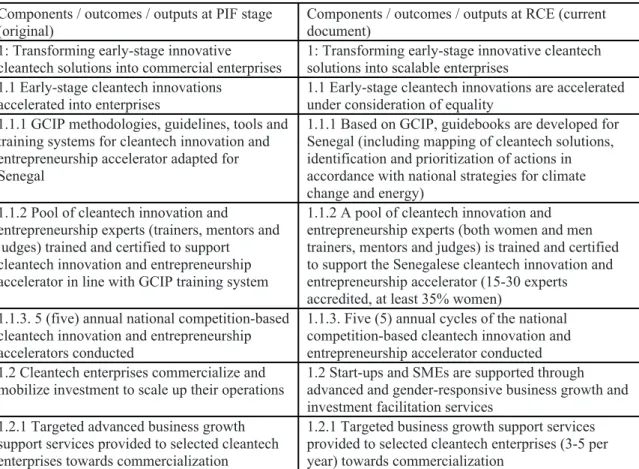
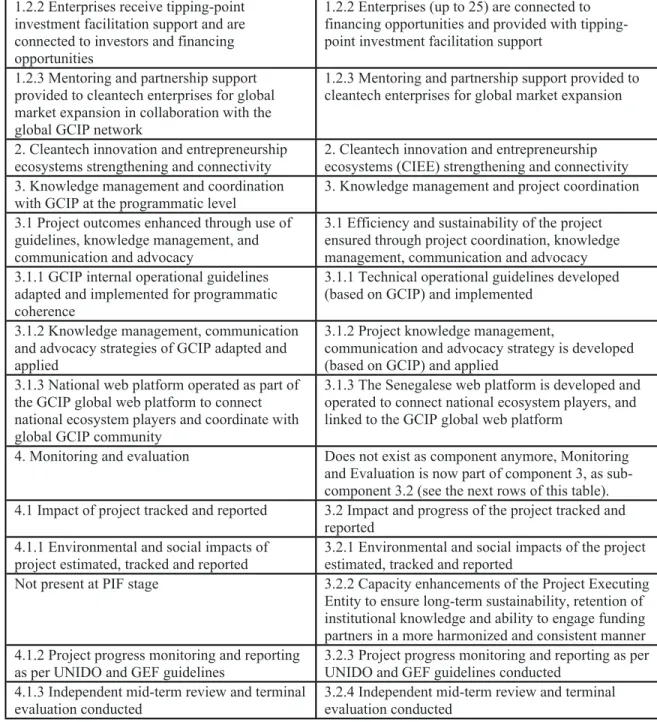
project preparation grant (PPG) and Agency fees for project cycle management services associated with the total GEF grant). This increase is processed in accordance with the marginal adjustment rule for Senegal and is within the allowed maximum ceiling. This increase will allow Senegal to use all of its STAR allocation resources before the completion of the GEF-7 cycle and strengthen the project by enabling more resources to be channelled towards Senegalese enterprises and the wider cleantech ecosystem. With regards to the project design, there were no substantive changes between PIF and RCE version. Indeed, the project design is still consistent with the original PIF and only minor changes have been introduced at the PPG stage. These include: i) some components/outcomes/outputs were merged or split or wording was amended to better reflect the project objective or the aim of the component/outcome/output as well as to better reflect the gender-responsiveness approach of the project, ii) the budget allocation was moderately adjusted, and the attribution of co-financing was revised; ii) an output on capacity building was created (3.2.2). An overview of the main changes is further detailed in the two tables below.
Table 1: Comparison of the project description summary (Table B) between the original description at PIF stage and this RCE version
Components / outcomes / outputs at PIF stage
(original) Components / outcomes / outputs at RCE (current
document) 1: Transforming early-stage innovative
cleantech solutions into commercial enterprises 1: Transforming early-stage innovative cleantech solutions into scalable enterprises
1.1 Early-stage cleantech innovations
accelerated into enterprises 1.1 Early-stage cleantech innovations are accelerated under consideration of equality
1.1.1 GCIP methodologies, guidelines, tools and training systems for cleantech innovation and entrepreneurship accelerator adapted for Senegal
1.1.1 Based on GCIP, guidebooks are developed for Senegal (including mapping of cleantech solutions, identification and prioritization of actions in accordance with national strategies for climate change and energy)
1.1.2 Pool of cleantech innovation and
entrepreneurship experts (trainers, mentors and judges) trained and certified to support cleantech innovation and entrepreneurship accelerator in line with GCIP training system
1.1.2 A pool of cleantech innovation and entrepreneurship experts (both women and men trainers, mentors and judges) is trained and certified to support the Senegalese cleantech innovation and entrepreneurship accelerator (15-30 experts accredited, at least 35% women)
1.1.3. 5 (five) annual national competition-based cleantech innovation and entrepreneurship accelerators conducted
1.1.3. Five (5) annual cycles of the national competition-based cleantech innovation and entrepreneurship accelerator conducted 1.2 Cleantech enterprises commercialize and
mobilize investment to scale up their operations 1.2 Start-ups and SMEs are supported through advanced and gender-responsive business growth and investment facilitation services
1.2.1 Targeted advanced business growth support services provided to selected cleantech enterprises towards commercialization
1.2.1 Targeted business growth support services provided to selected cleantech enterprises (3-5 per year) towards commercialization
1.2.2 Enterprises receive tipping-point investment facilitation support and are connected to investors and financing opportunities
1.2.2 Enterprises (up to 25) are connected to financing opportunities and provided with tipping- point investment facilitation support
1.2.3 Mentoring and partnership support provided to cleantech enterprises for global market expansion in collaboration with the global GCIP network
1.2.3 Mentoring and partnership support provided to cleantech enterprises for global market expansion
2. Cleantech innovation and entrepreneurship
ecosystems strengthening and connectivity 2. Cleantech innovation and entrepreneurship ecosystems (CIEE) strengthening and connectivity 3. Knowledge management and coordination
with GCIP at the programmatic level 3. Knowledge management and project coordination 3.1 Project outcomes enhanced through use of
guidelines, knowledge management, and communication and advocacy
3.1 Efficiency and sustainability of the project ensured through project coordination, knowledge management, communication and advocacy 3.1.1 GCIP internal operational guidelines
adapted and implemented for programmatic coherence
3.1.1 Technical operational guidelines developed (based on GCIP) and implemented
3.1.2 Knowledge management, communication and advocacy strategies of GCIP adapted and applied
3.1.2 Project knowledge management,
communication and advocacy strategy is developed (based on GCIP) and applied
3.1.3 National web platform operated as part of the GCIP global web platform to connect national ecosystem players and coordinate with global GCIP community
3.1.3 The Senegalese web platform is developed and operated to connect national ecosystem players, and linked to the GCIP global web platform
4. Monitoring and evaluation Does not exist as component anymore, Monitoring and Evaluation is now part of component 3, as sub- component 3.2 (see the next rows of this table).
4.1 Impact of project tracked and reported 3.2 Impact and progress of the project tracked and reported
4.1.1 Environmental and social impacts of
project estimated, tracked and reported 3.2.1 Environmental and social impacts of the project estimated, tracked and reported
Not present at PIF stage 3.2.2 Capacity enhancements of the Project Executing Entity to ensure long-term sustainability, retention of institutional knowledge and ability to engage funding partners in a more harmonized and consistent manner 4.1.2 Project progress monitoring and reporting
as per UNIDO and GEF guidelines 3.2.3 Project progress monitoring and reporting as per UNIDO and GEF guidelines conducted
4.1.3 Independent mid-term review and terminal
evaluation conducted 3.2.4 Independent mid-term review and terminal evaluation conducted
Table 2: Comparison of the budget allocation to Components between the original PIF and the RCE version.
Budget allocation at PIF (original) Budget allocation at RCE (current document) Component 1
GEF Project Financing: USD 1,650,000 Co-financing: USD 8,000,000
Component 1
GEF Project Financing: USD 2,357,047 Co-financing: USD 8,100,000
Component 2
GEF Project Financing: USD 250,000 Co-financing: USD 2,000,000
Component 2
GEF Project Financing: USD 280,880 Co-financing: USD 1,405,000
Component 3&4
GEF Project Financing: USD 330,493 Co-financing: USD 909,091
Component 3
GEF Project Financing: USD 332,794 Co-financing: USD 1,150,000 1a. Project Description.
2. In 2011, the United Nations Industrial Development Organization (UNIDO), with the support of the Global Environment Facility (GEF) and the Government of South Africa, successfully
implemented the ?Greening the COP17? project. One of the four Components of the project focused on the design and implementation of the first South Africa Clean Technology Competition (2011 SA Cleantech) for green entrepreneurs (mainly small and medium-size enterprises, further referred to as SMEs) with innovative ideas and concepts in the areas of energy efficiency, renewable energy and green building practices. All participants were given an opportunity to present their solutions and get feedback, while the best ones were offered additional training, mentoring and access to cleantech networking events.
3. This success of the 2011 SA Cleantech encouraged the project expansion into the Global Cleantech Innovation Programme (GCIP) for SMEs, simultaneously implemented in Armenia, India, Malaysia, Pakistan, Turkey and South Africa in 2014. The GCIP takes a competition-based approach to identify a pool of promising entrepreneurs and support them through ongoing mentoring, webinars and networking events to grow their innovative ideas and concepts into full-fledged products and services ready for entering the national and global markets. Under the 2014 competition cycle, a total of 555 applications were received across the six acountries, from which 159 innovative cleantech
entrepreneurs were selected to take part in an accelerator programme. The entrepreneurs were chosen across 4 cleantech categories; 58 in renewable energy (RE), 41 in energy efficiency (EE), 32 in waste to energy (WTE), and 28 in water efficiency.
4. Having progressed through the GCIP, these entrepreneurs were connected with potential customers, investors, partners and policy-makers at national and international levels through Investor Connect events and National Academies. In addition, the very best entrepreneurs from the GCIP were given the opportunity to attend the Cleantech Open Global Forum, held in November 2014 in Silicon Valley, USA, involving more than 100 cleantech exhibitions and networking events, giving the GCIP winners a high level of exposure to broaden their networks and to benefit from the global linkages.
5. In 2015 Thailand joined GCIP and about 10 countries, including Nigeria, Vietnam, Ukraine, Indonesia and Kazakhstan had expressed interest in becoming part of it thereafter. In the period from 2014 to 2016, GCIP received almost 3,000 applications in the 8 countries it was operating, from which 580 entrepreneurs were selected for further acceleration and mentoring, as well as receiving access to investors and media. The growth rate of applications GCIP has received between 2014 to 2015 and 2015 to 2016 was 62.5% and 33% respectively, indicating a strong and constant increase in interest towards the acceleration programme.
6. Building on the success and the lessons learned within GCIP in the first 5 years and taking into account the increased need to accelerate the pace of cleantech innovation, UNIDO together with its counterparts, has developed this project. The project is in line with the GEF?s Climate Change Mitigation Focal Area Strategy under the GEF-7 Programming Directions and the GEF Private Sector Strategy. It is also fully aligned with key national priorities of the Republic of Senegal (R?publique du S?n?gal in French) as well as UNIDO?s mandate to promote inclusive and sustainable industrial development (ISID). The project will also benefit from strong linkages to the GCIP Programme - i.e.
the GEF-UNIDO Global Cleantech Innovation Programme (GCIP), GEF ID 10408, hereinafter referred to as GCIP (the PFD can be accessed at the following link: https://www.thegef.org/project/global- cleantech-innovation-programme-gcip-accelerate-uptake-and-investments-innovative).
1) the global environmental and/or adaptation problems, root causes and barriers that need to be addressed (systems description);
Country context and environmental challenges
7. Senegal has a population of 14.54 million people, which is predominantly rural (64%), with a majority of women and youth (52% women, 71.2% under the age of 19). The country is experiencing high population growth rate of 2.8% annually and recording economic growth that is amongst the highest in Africa that between 2014 and 2018, the rate remained above 6% annually[1]. Accordingly, the country is experiencing a concomitant increase in GHG emissions.
8. GHG emissions from the energy sector have experienced the sharpest increase in comparison to the other sectors changing from 5.6 to 11,59 million tons of CO2e between 2000 and 2016 i.e. more than a 100% increase within 15 years. During the same period, CO2 emissions per capita increased from 0.402to 0.727 tons. The energy sector currently contributes around 33% to the total GHG emissions generated within in the country. Senegal?s primary energy supply is mostly based on fossil fuels (coal and oil) contributes to 64% of total primary energy supply[2]. Furthermore, around 55% of the population in both rural and urban areas is highly dependent on the use of wood fuel for cooking, which is a major driver of deforestation. While 66% of the population has access to electricity, the production of electricity is mostly based on fossil fuel powered plants, which makes the entire power generation dependent on fluctuating petroleum prices. Therefore, as the economy continues to grow, there will be simultaneous growth in energy demand and associated GHG emissions, unless significant decoupling between economic growth and GHG emissions happens.
9. According to the World Resources Institute, agriculture is the most GHG emitting sector in Senegal contributing 34% of the total emissions. Emissions increased since the 1990s by 36%[3], mostly caused by enteric fermentation, manure left on pasture as well as burning savannah. The increase in enteric fermentation is based on the steady expansion of livestock population increasing from some 3 to over 16 million within 10 years[4]. In the past decade, variability of rainfalls has increased to the point where farmers experience damaging effects within the agricultural sector including livestock. Only 7% of cultivated land is irrigated, making Senegalese agriculture heavily dependent on rainfall. These changes in climate are already forcing significant changes in agriculture in the country. As an example, the peanut industry, once the motor of the Senegalese economy, was affected by prolonged drought periods and has now been replaced by the production of cereals such as millet, rice and corn, as well as fruits, vegetables, and cassava. Additionally, increasing temperature causes droughts that take a toll on food security resulting in food shortage, such as witnessed in the past decades[5].
Barriers that need to be addressed
10. With a continuously growing economy and a steady population growth, Senegal is heading towards a high emission trajectory in the coming years. According to the latest Africa Energy Outlook of 2019, Senegal?s economy can grow six fold while limiting its energy demand by a factor of three, if it increasingly integrates sustainable and renewable energy use[6].
11. SMEs[7] are the key driver of economic growth in Senegal, making up for 90% of local businesses represented by some 300,000 entities. The Agency for the Development and Framework of SMEs in Senegal (ADEPME) is the operational arm of the government responsible for the promotion and support of domestic SMES. Within its Support Program for Solidarity Initiatives for Development (PAISD), ADEPME is promoting the cooperation between banks and SMEs, providing a coaching program on business plan development as well as supporting SMEs in credit risk analysis. However, based on a 2017 survey by the World Bank, Senegalese SMEs regard the access to finance as the
biggest barrier to their business, followed by unfair competition from the informal sector and a lack of reliable access to electricity. Despite the recognized importance of innovation in the national economy, there are still a number of challenges that limit Senegalese cleantech SMEs from contributing towards the development and commercialization of cleantech innovations as presented in Table 3 below.
12. Senegal has always accorded importance to the role of research and technology innovation as crucial to economic and social growth. Since the 1970s,the government has made efforts to foster science and technology innovation through creation of dedicated national entities. However, there is not a consolidated, nation-wide Science, Technology and Innovation (STI) policy document, and research mandates and associated institutions are distributed under the supervision of different ministries. At the regional level, Senegal has actively participated in the development and adoption of the STI policy for the ECOWAS. However, the fragmentation of research and innovation institutional frameworks and lack of a consolidated strategy results in the contribution of innovative technology solutions, business models and services to economic development being rather small[8]. The engagement of the private sector in STI and R&D is very minimal. Only few companies in the telecommunications sector contribute to the funding of research and innovation. Most R&D funding is provided by the State in the form of grants to the various research structures (universities, public scientific institutions, higher schools, etc.), postgraduate scholarships and competitive funds. In 2015, 85% for R&D in STI came from the Senegalese government, and only 2% from the enterprises[9].
Table 3: Barriers faced by cleantech SMEs in Senegal
Barriers faced by cleantech SMEs in developing and scaling-up innovative cleantech solutions
I. Limited capacity to develop / scale-up and limited awareness among SMEs & entrepreneurs / investors / regulators and wider ecosystem about cleantech opportunities
Cleantech entrepreneurs or SMEs have limited knowledge on how to develop a successful business plan to transform an idea into a viable business, they lack the set of skills and know-how to transform a cleantech innovation into a viable enterprise, which leads to high rates of failure for early-stage cleantech enterprises.
This fact, if combined with the fewer availability of coaching or mentorship options for cleantech SMEs in order to grow their abilities, has an impact on the chances of turning business ideas into sustainable and long-standing enterprises.
Beyond SMEs and entrepreneurs, the awareness of potential cleantech opportunities should be raised among all stakeholders who participate in the CIEE (from investors to development institutions, associations and policy-makers). Indeed, awareness shall be created at all levels: for policy-makers, investors, private sector, development institutions, associations, etc. since they all contribute and play a role in the market and the CIEE.
In the private sector, there is a lack of awareness about new developments and trends on cleantech innovations related to their operations, manufacturing and distribution, both locally and globally. In addition, limited access to international expertise and limited knowledge of markets and potential partners outside the country reduce the possibility of growth for these companies.
Therefore, having access to a network of connections also complements the creation of capacities.
Results from the online questionnaire show that 52% of the people that answered considered that limited knowledge on how to develop a successful business plan to transform an idea into a viable business is an important barrier for cleantech SMEs / entrepreneurs to grow or sustain a successful business.
2.
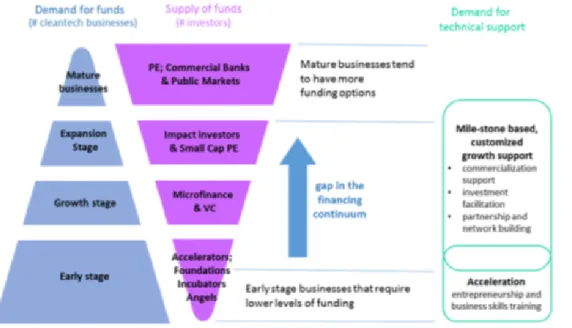
Limited access to finance and availability of innovative financing products for cleantechLimited access to finance is a key barrier for cleantech SMEs in Senegal at the early, growth and scale-up phases since the absence of collateral constitutes one of the biggest burdens in obtaining a loan or securing investments. In fact, it was identified in the general census to the enterprises conducted in 2016 that financing needs were not fully met by the available financing options in the country.
Therefore, most SMEs or entrepreneurs end up relying on their own financing ?sources? such as their own savings, their family or friends. They claim financial institutions (FIs) have too many applicability conditions or requirements that are hard for them to fulfil. In fact, 63% of the respondents to the online questionnaire regarded this as one key barrier to SMEs growth. In addition, the products that FIs offer are not suitable for the cleantech sector applicants (37% of the respondents to the online questionnaire said that FIs do not offer specific financing options to cleantech businesses). For example, commercial banks, public markets as well as venture capital funds tend to invest in low-risk and tested technologies. This makes it difficult for cleantech businesses to access capital for innovation projects that still have technology specific risks and need patient capital or seed and non-dilutive capital.
This also shows that, there is limited knowledge in the FIs about the actual risks of the technologies or about how to effectively measure the risk in order to improve their financial products offer. In terms of risks, there may also be differences between clean technologies themselves: some clean technologies may be innovative in a given country or region but are already a well-known and proven technology at international level (e.g., solar PV irrigation for agriculture), which helps to understand it better and thus estimate any potential risks associated to it.
On the other hand, limited awareness of financial schemes and their respective requirements and procedures available to cleantech SMEs as well as limited government financial incentives to support private sector in advancing and adopting innovations in the cleantech space are also present. The Government of Senegal has recently passed the ?Start-up Act? that intends to encourage new businesses (including cleantech) but there is still a need to improve or operationalize its implementation for this to take a visible effect on the market.
As mentioned in the previous barrier, there are also limited networking opportunities where investors and cleantech enterprises and entrepreneurs can interact and find working opportunities together.
Barriers to CIEE
3.
Lack of mechanisms to coordinate institutional efforts and market actors? interventionsLack of governmental coordination or incentive mechanisms to encourage investments in cleantech SMEs and to coordinate the work of various ecosystem players also have an impact on the
?enabling environment? for companies to grow or be established. In fact, 63% of the respondents to the online questionnaire think the lack of governmental coordination or incentive mechanisms to encourage investments in cleantech SMEs is one key barrier to cleantech growth in the country. Creating the appropriate rules would improve the business environment and increase the interest in the cleantech sector. Policy-makers have the responsibility to provide the legal and regulatory framework as well as the tools to encourage the private sector to invest in the cleantech market.
Additionally, interaction among the different market actors is key for the market to evolve. In Senegal, there are a number of incubators (especially in the universities, that have an interesting project pipeline) and accelerators that provide support to innovative ideas (not all necessary from the cleantech sector) but not all entrepreneurs may be aware of their existence, the incubators do not focus exclusively in the cleantech area or they have some limitation in terms of budget and have to ?leave out? some ideas due to this limitation. If there was an improved coordination, communication and engagement mechanism linking the different actors, a greater number of innovative cleantech ideas would reach the market and would have the opportunity to grow. Such a mechanism would bring about synergies, complementarities and identify opportunities for collaboration. This has to be coupled with the improvement of the institutional framework to anchor and also coordinate the work of the various ecosystem players.
4.
Lack of access to electricity serviceAlthough, as a result of the consultation that took place, the lack of access to electricity is not regarded as a barrier of major concern among the stakeholders -which goes in line with the many efforts done by the Government in increasing national energy access- this may be the case for urban entrepreneurs and SMEs, but not for rural entrepreneurs and SMEs, since in rural areas, electricity access is not universal yet.
5.
Limited or insufficient policy, regulatory and incentive frameworkFostering innovation and entrepreneurship demands a robust and enabling policy and regulatory environment that, in turn, provides a basis for attracting investments. Although the Government has deployed a number of support mechanisms for SMEs, they are still either insufficient or not completely implemented, or there is insufficient awareness about their existence among enterprises, which is more often seen in the case of individual entrepreneurs.
The two most relevant pieces of legislation that exists for the cleantech SMEs are the Start-up Act (passed in 2020) and the adjusted Priority Action Plan under the PSE (also dated 2020) that still have to be fully operationalised. In the case of cleantech, having a framework that would incentivise investment in this sector, is crucial for its growth and will create the enabling environment to encourage innovation, scaling-up of and deployment of projects.
Evidence from the online questionnaire shows that 22% of the respondents think that the local business environment is not attractive for investors. Additionally, specific feedback from the stakeholders obtained at PPG stage with regards to the policy and regulatory environment showed that: i) the framework has to be improved since some of the documents are obsolete, e.g., the Environment Code is from 2001; ii) texts governing RE and EE are not adapted to reality and the actors do not know them sufficiently;
iii) the frame is not appropriate and has gaps to be addressed such as for example a real incentive framework in terms of taxation (e.g., exemption on equipment must be harmonized (via port and airport) to be effective and the Feed in Tariff effectiveness must be also clarified), iv) the framework should support and promote the entrepreneurship through access to finance (e.g., by including bonus, grants, support in seeking interest-free financing, etc.); v) the administrative procedures for the acquisition of space (leases) become a major constraint sometimes; vi) energy costs are also very high; vii) there should be more regulations in the building and industrial sector in order to reach certain level of efficiency, and also tariff should be lowered for more cleantech products such as smart meters; viii) include Good Environmental Governance procedures so the ecology and environmental dimensions are considered in alignment with the inclusive and effective involvement of local communities. The overall conclusion is that even if there is some framework, it still needs to be further strengthened so it becomes fully applicable and in line with the cleantech sector needs, as well as with the climate change national (and international) goals. An article on Climate Policy[10]1 highlights the need to align, especially after the Paris Agreement, the issues of trade in cleantech goods, and the promotion of cleantech industries through industrial policy measures such as local content requirements, in the formulation of (climate) policy. This means there is opportunity to accommodate green industry promotion strategies and, simultaneously, address climate change.
6.
Weak and disjointed cleantech innovation ecosystemThis goes in hand with the need for a coordination mechanism (previously described in barrier V) that is able to support the creation of an enabling environment to propel investment in the cleantech sector. The cleantech innovation ecosystem in the country is in its formative stages where there are a lot of discontinuities and asymmetries. There are incubators, there are accelerators, there is a growing need in the cleantech SME for capacity building, training and finding financial solutions for their businesses, there is interest in cleantech as an option not only for climate change mitigation but also for consolidating sustainable businesses that can support that objective, and there are examples of innovative ideas, many of them run by women and young entrepreneurs, that have the potential to become fruitful enterprises; however, there is a need to establish a mechanism or a system that would make all those involved parties work together in a systematic manner. Although supportive infrastructure like the Kosmos Innovation Center (KIC) exists, the weak ecosystem does not support the systematic transformation of cleantech innovations into enterprises that contribute towards industrial productivity gains and CO2 emission reductions.
7.
Lack of public awareness While there is no doubt that climate change is already affecting the country?s economy and population, there is still a lack of public awareness regarding the fact that cleantech innovation presents an economic opportunity but also helps to reduce GHG emissions. In spite of the fact that there is a number of cleantech business growing in the country that can help increase the awareness about this matter (such as those related to plastic recycling, renewable energy for electricity generation, or applying energy efficiency measures to reduce consumption, etc.), there is still a need to create wider awareness about the benefits derived from the development and utilization of cleantech products, services and business models as a means to put the country on a low GHG emissions and economically sustainable trajectory. Results from the online questionnaire show that 33% of the respondents consider that there are insufficient awareness campaigns or availability of information about cleantech opportunities.8.
Limited mentoring and training opportunitiesA significant barrier to the improvement and growth of the
cleantech market and for the creation of innovative ideas at national level is the lack of trained experts for mentoring start-ups and entrepreneurs involved in this market. There are incubators and government agencies that do provide support or training services to SMEs on business plan development and similar topics, but they have recognized they still need to improve their training curricula and skills in order to better provide supporting services to the business to reach them (this was part of the feedback received during interviews with stakeholders at PPG stage). There is also a lack of information about technology options available at local or international level, best practices, and benchmarks within the enterprises, which could be supplied or transferred by educational institutions and associations.
The 52% of the respondents to the online questionnaire have identified the limited availability of coaching or mentorship for cleantech SMEs to continue growing into a sustainable and long- standing business as one barrier they face. Also, 33% said that there are insufficient alternatives for receiving training on clean
technologies.
2) the baseline scenario and any associated baseline projects;
Baseline: the economy, energy and emissions
13. Senegal is located on the West African coast with a population of about 16.29 million[11]2 where 64% of it lives in rural areas and with a majority of women and youth (52% women, 71.2%
under the age of 19); it is also experiencing high population growth at 2.8% annual rate and recording economic growth that is amongst the highest in Africa, which between 2014 and 2018 remained above 6% annually[12]3, with the implementation of major reform programmes that stimulated investment in key sectors such as agriculture, industry, tourism, transport infrastructure and extractive industries. The Gross National Income (GNI) per capita had reached 1,430 USD in 2020[13]4. The COVID-19 pandemic has impacted the economy and growth slowed down significantly, especially for the tourism and the transport sectors (services sectors), as well as for exports. The services sector remains the main contributor to the Gross Domestic Product (GDP), while the primary sector (agriculture, in particular) represents a key driver of economic growth.
14. The Senegalese economy?s growth has been mostly driven by the implementation of the PSE (Plan S?n?gal Emergent ?Emerging Senegal Plan) which is the reference document for the country?s economic and social development, under a single vision: ?Un S?n?gal ?mergent en 2035 avec une soci?t? solidaire dans un ?tat de droit? (?An emerging Senegal in 2035 with a united society under the rule of law?). The reforms and incentives implemented are meant to encourage investment and creation of businesses. For example, the Business Environment and Competitiveness Reform Programme (Programme de R?formes de l?Environnement des Affaires et de la Comp?titivit?, PREAC) has been under implementation since 2013 and has implemented innovations to enhance the business
environment. For example, the elimination of minimum capital for Limited Liability Companies (LLCs), the creation of one-stop shops for the constitution of a company, the dematerialization of customs procedures, the reduction of taxes for companies that invest, as well as the various tax incentives offered by the Senegalese Investment Code and the free export company regime (no VAT).
It provides specific incentives to stimulate investment in key sectors such as agriculture and agribusiness, fisheries, livestock and related industries, manufacturing, tourism, and mining, among other sectors.
15. In accordance with IRENA figures, Total Primary Energy Supply (TPES) in Senegal in 2018 was dominated by fossil fuels. Data show that 50% of the TPES was from oil, 14% from coal plus others, less than 1% from gas, and the remaining 35% from renewable sources (of which 99% is bioenergy and 1% solar energy) [14]5. The same source of information reveals that, in 2018, RE consumption in Senegal was dominated by bioenergy (97%), associated to households? biomass consumption, and only a small portion of renewable electricity (3%) is produced. Renewable electricity generation in 2019 was from solar energy and bioenergy, together representing 15% of total electricity generation, which was 2,263 GWh5. The renewable share of Total Final Energy Consumption (TFEC) was 36.6%5. Households? biomass consumption largely consists of charcoal and fuelwood, mainly used for cooking. These two energy sources represented 35% of final household energy consumption in 2016[15]6. The country aims at diversifying and promoting alternative fuels and more efficient
technologies for cooking in the domestic sector, as stated in the Nationally Determined Contributions targets, which contributes to preserve forest resources. The high utilisation of biomass explains the relatively high share of renewables in the TFEC. As of 2019, the national overall electricity access rate reached 70.4%[16]7, one of the highest in the subregion. Access to electricity is however not evenly distributed: in the same year, it was as high as 95% in urban areas, but limited to 48% in rural areas, though increasing[17]8.
16. As of 2019, the total installed capacity for electricity generation (both on- an off-grid) is approximately 1,324 MW (estimate based on available data), of which the vast majority is fossil fuel- based. Renewables account for 22% of the generating capacity (the share of solar alone is above 10%).
Senegal has a considerable renewable energy potential, mainly in the form of solar energy (for PV):
most of the country?s territory has a relatively high solar irradiation and receives over 3,000 hours of sunshine per year. The average solar PV potential is in the range of 1,600-1,800 kWh/kWp-year, corresponding to a load factor of about 20%[18]9 - considerably higher than countries where PV has been widely deployed (e.g., Germany). Other noticeable potential sources of energy are bioenergy, hydro and wind (along the coast from Dakar to Saint-Louis, wind speeds of 6 m/s have been measured)[19]10.
17. Senegal has inaugurated its first utility-scale wind power project: the 158 MW Taiba N?Diaye wind farm in 2020 (not included in the previous figures) which will increase the participation of renewables in the generation mix for the coming years. In terms of hydropower potential, some contracts to build hydropower plants in both Senegal and Gambia rivers have been also recently awarded (in 2021) by the Gambia River Basin Development Organisation (128 MW) and by the Senegal River Basin Development Organization (18 MW) which will also increase the renewable capacity for electricity generation in the country. Regarding biomass potential as energy source, a study by the Global Green Growth Institute (2017) shows that current potential is mainly from Typha plant, sugarcane, and municipal waste[20]11. Senegal has made significant progress toward decarbonising the electricity system. Given a rapidly increasing energy demand and the Government?s target of reaching 100% electricity coverage and connection of at least 90% of rural households by 2025 as part of their SEforAll actions[21]12, it will be crucial to continue developing and promoting innovation and
investment in renewable energy projects to reduce dependence on fossil fuels and thus reduce carbon emissions from electricity generation.
18. Senegal?s total 2018 greenhouse gas (GHG) emissions were 34.36 MtCO2e, of which the majority were from the energy sector (34%) and agriculture (32%), followed by emissions from land- use change and forestry (LUCF) (13%), waste (12%), and industrial processes (10%)[22]13. Agriculture emissions have increased mainly due to enteric fermentation, manure left on pasture, and burning savannah, and energy emissions have increased as well, due to more fossil fuel combustion for transportation, fuelwood and charcoal for cooking, and electricity generation[23]14. In line with this, the implementation of cleantech to improve EE may bring additional benefits in terms of reduced demand and, consequently, reduced carbon emissions in the energy sector and agricultural sector but also in other sectors such as transport and buildings. The International Energy Agency (IEA) reports that energy intensity has been decreasing in the African continent in the past 20 years, meaning there is still opportunity to continue that trend and to improve it in specific regions of the continent, such as North Africa, where it has remained more stable throughout that period. The report highlights that in North Africa final energy use in 2018 was dominated by the transport (38%) and residential buildings sectors (27%); while in the rest of the African continent, overall residential buildings accounted for 64% and transport 16% of final energy use. On the other hand, industry represented 25% of final energy use in North Africa and only 13% in Africa overall[24]15.
19. In terms of climate change impacts and vulnerability, it is worth mentioning that climate risks and hazards are present in Senegal with predominance of droughts and floods, but sea-level rise, and coastal erosion are the natural hazards that pose the greatest threat to the country. Climate change will also impact climate-sensitive sectors such as agriculture (70% of production is rainfed), livestock and fisheries, which account for 20% of GDP and employ a majority of the workforce[25]. Also, economic activities such as fishing, tourism, and agriculture are adversely affected by sea-level rise. Increase in pest infestations due to changing climate patterns might spark food shortages and temporary
migrations[26]16.
20. In the Senegalese climate change scenario, there are opportunities to apply innovative approaches and technologies that can lead to mitigating GHG emissions as well as working as an adaptation measure to climate change. This is particularly interesting for the agricultural sector.
Together with other measures, adopting cleaner technologies (?cleantech?) can help tackle the growing trend on GHG emissions while at the same time respond to the increasing energy demand from all sectors. In this context, cleantech is defined as a broad range of solutions (technologies, processes, services, business models, and their combinations) that lead to an increase in positive impact or a decrease in negative impact on climate change through mitigation and adaptation, transition to a low- emission economy, sustainable energy systems, and other dimensions of environmental sustainability.
Climate technology, clean energy technology etc. are subsets of cleantech. Co-benefits of a robust cleantech sector include creation of green jobs, women and youth entrepreneurship, and sustainable income generation. SMEs and start-ups are key promoters of cleantech; it is therefore crucial to create a favourable environment for them to innovate and thrive. The following section focuses on the
entrepreneurship ecosystem and the barriers that prevent SMEs to thrive, with a particular focus on the cleantech sub-sector.
Business, entrepreneurship and barriers
21. The Government of Senegal has conducted a general census to the enterprises in 2016 and issued the final report in 2017 where information was collected about the current status of the
enterprises in the country, regardless of the size. Results show that more than half of the enterprises are dedicated to commercial activities (52%); the rest of them are divided in different sectors (see Figure 1) including textile industries, services, agriculture, etc. According to the mentioned general census, 407,882 economic units were counted, of which nearly 40% was concentrated in Dakar.
Source: ANSD/RGE 2016
Figure 1: Percentage of enterprises per type of activity[27]17
22. The country's economy is dominated by micro and small enterprises, of which 90% are estimated to belong to the informal sector. The distribution of the enterprises and businesses in Senegal in accordance with their size, shows a clear predominance of entrepreneurs (81.8%) and very small businesses (16.4%). Figure 2 shows that they are distributed in: entrepreneurs (entreprenants), very small enterprises (tr?s petites entreprises), small enterprises (petites entreprises), medium enterprises (moyennes entreprises), and large enterprises (grandes entreprises). Each type [28]18 is defined as follows, in accordance with the Senegalese legislation:
a. The Entrepreneur: any natural person exercising, on an individual basis, a professional, civil, commercial, craft, agricultural or service-providing activity, whose annual turnover excluding tax does not exceed: 30,000,000 FCFA for commercial activities; 20,000,000 FCFA for craft and similar activities; 10,000,000 FCFA for the provision of services.
b. Very small enterprises: any person other than a physical or legal entrepreneur, exercising a professional, civil, commercial, craft, agricultural, industrial or service-providing activity, whose annual turnover declared net of tax is less than or equal to 100,000,000 FCFA. The company maintains, at least, a basic accounting system.
c. Small enterprises: any natural or legal person exercising a professional, civil, commercial, craft, agricultural, industrial or service-providing activity, whose annual turnover excluding tax is greater
than 100,000,000 FCFA and less or equal to 500,000,000 FCFA. It keeps accounts either internally or by a Chartered Accountant or by a Chartered Management Center or any other similar accredited accounting services provider.
d. Medium enterprises: any natural or legal person, exercising a professional, civil, commercial, craft, agricultural, industrial or service-providing activity, whose annual turnover excluding tax is greater than CFAF 500,000,000 and less or equal to 2,000,000,000 FCFA. It keeps accounts according to the regular system and is certified by a Chartered Accountant.
Source: ANSD/RGE 2016
Figure 2: Distribution (in percentage) of the enterprises in Senegal in accordance to their size[29]19
23. The majority of the population works in agriculture or fisheries. However, agricultural productivity is low. The main causes of this are poor soil quality and irregular rainfall along with overgrazing and deforestation, all of which are leading to increasing desertification[30]20. Potential RE applications such as for example solar PV irrigation for crops could be useful to support the agricultural sector growth. This is even more relevant if we consider that the sector with the highest number of very small enterprises is the agricultural one, in addition to the cattle breeding and fisheries sectors. Small and medium-size enterprises are mainly found in the construction industry. The table below (Table 4) includes the detailed distribution of enterprises per sector and size. Note the high concentration of very small enterprises in the agriculture, cattle breeding, fisheries sector and food industries, and also of entrepreneurs in the textile industries as well as other industries. These facts could yield potential opportunities to encourage innovation in these sectors to reduce carbon emissions with the adoption of cleantech (i.e., RE and EE). In terms of the form of exploitation (formal or informal), a company is said to be formal when it keeps accounts according to a standardized accounting system. The informal sector occupies a large part of the economy and covers 97.0% of the business units. Whether formal or not, companies are distributed differently depending on the environment and industry. In most sectors, the proportion of informal enterprises is over 95%. Agriculture and textile industries are the most represented in the informal sector with percentages greater than 99%.
Table 4: Concentration (%) of enterprises by size per sector of activity[31]21 Sector of activity Entrepreneurs Very small
enterprises Small
enterprises Medium
enterprises Large
enterprises Total Agriculture, cattle
breeding and fisheries
0.0 99.5 0.3 0.2 0.1 100.0
Food industries 0.0 96.9 2.0 0.6 0.6 100.0
Textile industries 98.1 1.8 0.1 0.0 0.0 100.0
Other industries 87.1 11.5 0.8 0.3 0.4 100.0
Construction and public works
25.4 39.9 16.0 11.7 7.1 100.0
Trade 93.2 5.1 1.3 0.2 0.2 100.0
Transport and
telecoms 48.3 29.7 10.7 5.7 5.5 100.0
Hotels, bars and restaurants
86.9 11.7 0.9 0.3 0.1 100.0
Services provided to
other enterprises 55.2 33.3 7.5 3.0 1.0 100.0
Miscellaneous
personal services 88.8 9.9 0.9 0.3 0.1 100.0
24. The ?Doing business? ranking of the World Bank (WB) puts Senegal in position 123 out of 190 economies ranked for the year 2019[32]22, meaning that there are still challenges to open a business in spite of the Government?s reforms and efforts to encourage investment and
entrepreneurship. In fact, the general census of enterprises conducted by the Government of Senegal in 2017, explored the challenges that were faced to open a business in the country and most answers showed that finding a proper source of finance was one key issue they faced. Most of the enterprises surveyed by the mentioned census state that they had financing needs to improve their premises (62.3%) or to expand their activities (60.8%), especially in the agricultural sector. Analysis of business financing sources reveals that 19.6% of business units included in the census have requested financing from their families or friends, 15.2% (mostly in the informal sector) use micro-credit and 12.6%
participate in tontines[33]. In addition, 6.2% formulated a financing need with banks and 2.6% with support funds. The tontines are usually found among the informal sector workers because they offer a way to save some money without the need to put any collateral. An innovative approach has been proposed by a local Senegalese innovative start-up: MaTontine (http://matontine.com/), who was able to automate the process through an online app and is now able to offer a wide range of financial services to the users, such as micro-credits or insurance products. This example shows that innovation in the way financial products are offered is also of great importance as it enables vulnerable or informal population to have access to financing that adapts to their needs.
25. SMEs play a necessary and vital role in any economy: they provide jobs, exports, contribute to GDP and income distribution, etc. and thus are a strategic piece to build a more sustainable and resilient economy. This is not only true at national level, but also at regional and even international scale - particularly in developing countries and emerging economies. SMEs (as well as entrepreneurs and very small companies) are key drivers of cleantech innovation: they develop and adopt clean technologies, services and products or find alternative ways of applying these in different sectors.
Although there are no clear figures on the actual number of cleantech SMEs active in Senegal, the market is witnessing a significant growth of start-ups in this field. Some relevant examples include plastic recycling, e-waste management and recycling, rubber recycling from worn tyres, rural electrification concessionaires, energy management, Typha and clay-based construction, ecologic warehouses for food storage, among others. Although Senegal?s cleantech innovation and
entrepreneurship ecosystem (CIEE) is gradually improving, it is still in need of support. The fact that there are start-ups and SMEs being established in the country shows that there is a genuine opportunity to contribute to the cleantech market growth.
26. CIEE is defined in this context as the network and interactions among innovation and entrepreneurship stakeholders and the social, economic and policy environment, and their combined influence on the development and commercialisation of cleantech solutions. The CIEE still faces barriers (as detailed in Table 3) to continue growing into a solid are more cohesive market. There is a need to address the barriers that are currently limiting the development and wide adoption of innovative cleantech entrepreneurship. There are several that have been identified and described in Table 3. There is also specific reference in each of the barriers to evidence collected during the PPG stage. A Baseline Assessment was conducted during PPG which included desktop work plus interviews to the local stakeholders and the distribution of an online survey with the intention to verify the existing barriers and get first-hand experiences and opinions from the stakeholders about the different aspects concerning the CIEE in Senegal.
27. Moreover, it is worth mentioning that the General Enterprise Census 2016 carried out by the Ministry of Economy also enquired the participating enterprises about challenges they face to sustain their business. They all said that they have faced at least some constraint. Insufficient demand (production of goods or services flow) was cited as the first constraint they face, followed by lack of suitable premises, excessive taxes and duties, difficulty in sourcing raw materials, difficulty in accessing credit, lack of specialized technology or machinery and spare parts availability, high
transport cost and energy supply difficulties. The sectors who face more difficulties are the agriculture, cattle breeding and fisheries sector (claim that the lack of suitable premises is their main constraint), other industries[2334], textile industry and food industries (they all claim insufficient demand as their main constraint).
28. The most significant constraint identified by businesses in Senegal varies depending on their size: (i) entrepreneurs main constraint has to do with insufficient demand for their products or services (and the need to have suitable premises comes in a close second place); (ii) very small companies quote unsuitable premises as their major hurdle (also the insufficient demand for their products in a close second place); (iii) small and medium sized enterprises identify high taxes and levies as their main constraint. The table below describes all barriers faced by enterprises in accordance with their size as per the mentioned Census 2016 (Table 5).
Table 5: Proportion of companies having declared a constraint according to size (%) (TAKEN from the General Enterprise Census 2017)
Source: ANSD/RGE 2016
29. Senegal has always accorded importance to the role of research and technology innovation as crucial to economic and social growth. Since the 1970s, the government has made efforts to foster science and technology innovation through the creation of dedicated national entities. However, there is not a consolidated, nation-wide Science, Technology and Innovation (STI) policy document, and research mandates and associated institutions are distributed under the supervision of different
ministries. As a result of the fragmentation of the institutional framework and the lack of a consolidated strategy for R&D and innovation, the contribution of innovative technology solutions, business models and services to economic deve
![Figure 1: Percentage of enterprises per type of activity[27] 17](https://thumb-eu.123doks.com/thumbv2/pubdocnet/19830081.0/31.918.150.824.188.595/figure-1-percentage-enterprises-type-activity-27-17.webp)
![Figure 2: Distribution (in percentage) of the enterprises in Senegal in accordance to their size[29] 19](https://thumb-eu.123doks.com/thumbv2/pubdocnet/19830081.0/32.918.156.770.251.617/figure-distribution-percentage-enterprises-senegal-accordance-size-29.webp)
![Table 4: Concentration (%) of enterprises by size per sector of activity[31] 21 Sector of activity Entrepreneurs Very small](https://thumb-eu.123doks.com/thumbv2/pubdocnet/19830081.0/33.918.135.788.133.686/table-concentration-enterprises-sector-activity-sector-activity-entrepreneurs.webp)