ACPD
15, 6481–6508, 2015Effect of atmospheric ageing on volatility and ROS of biodiesel
exhaust nano-particles
A. M. Pourkhesalian et al.
Title Page
Abstract Introduction
Conclusions References
Tables Figures
◭ ◮
◭ ◮
Back Close
Full Screen / Esc
Printer-friendly Version Interactive Discussion
Discussion
P
a
per
|
Discussion
P
a
per
|
Discussion
P
a
per
|
Discussion
P
a
per
|
Atmos. Chem. Phys. Discuss., 15, 6481–6508, 2015 www.atmos-chem-phys-discuss.net/15/6481/2015/ doi:10.5194/acpd-15-6481-2015
© Author(s) 2015. CC Attribution 3.0 License.
This discussion paper is/has been under review for the journal Atmospheric Chemistry and Physics (ACP). Please refer to the corresponding final paper in ACP if available.
E
ff
ect of atmospheric ageing on volatility
and ROS of biodiesel exhaust
nano-particles
A. M. Pourkhesalian1, S. Stevanovic1, M. M. Rahman1, E. M. Faghihi1, S. E. Bottle1, A. R. Masri2, R. J. Brown1, and Z. D. Ristovski1
1
ILAQH and BERF, Queensland University of Technology, Brisbane, QLD 4001, Australia
2
Clean Combustion Research Group, The University of Sydney, NSW 2006, Australia
Received: 2 February 2015 – Accepted: 13 February 2015 – Published: 5 March 2015
Correspondence to: Z. D. Ristovski ([email protected])
ACPD
15, 6481–6508, 2015Effect of atmospheric ageing on volatility and ROS of biodiesel
exhaust nano-particles
A. M. Pourkhesalian et al.
Title Page
Abstract Introduction
Conclusions References
Tables Figures
◭ ◮
◭ ◮
Back Close
Full Screen / Esc
Printer-friendly Version Interactive Discussion
Discussion
P
a
per
|
Discussion
P
a
per
|
Discussion
P
a
per
|
Discussion
P
a
per
|
Abstract
In the prospect of limited energy resources and climate change, effects of alternative
biofuels on primary emissions are being extensively studied. Our two recent studies have shown that biodiesel fuel composition has a significant impact on primary partic-ulate matter emissions. It was also shown that particpartic-ulate matter caused by biodiesels 5
was substantially different from the emissions due to petroleum diesel. Emissions
ap-peared to have higher oxidative potential with the increase in oxygen content and de-crease of carbon chain length and unsaturation levels of fuel molecules. Overall, both studies concluded that chemical composition of biodiesel is more important than its physical properties in controlling exhaust particle emissions. This suggests that the at-10
mospheric ageing processes, including secondary organic aerosol formation, of
emis-sions from different fuels will be different as well. In this study, measurements were
conducted on a modern common-rail diesel engine. To get more information on real-istic properties of tested biodiesel particulate matter once they are released into the atmosphere, particulate matter was exposed to atmospheric oxidants, ozone and ultra-15
violet light; and the change in their properties was monitored for different biodiesel
blends. Upon the exposure to oxidative agents, the chemical composition of the ex-haust changes. It triggers the cascade of photochemical reactions resulting in the par-titioning of semi-volatile compounds between the gas and particulate phase. In most of the cases, aging lead to the increase in volatility and oxidative potential, and the 20
increment of change was mainly dependent on the chemical composition of fuels as the leading cause for the amount and the type of semi-volatile compounds present in the exhaust.
1 Introduction
In the urban environments the most significant contributor to the overall PM burden are 25
envi-ACPD
15, 6481–6508, 2015Effect of atmospheric ageing on volatility and ROS of biodiesel
exhaust nano-particles
A. M. Pourkhesalian et al.
Title Page
Abstract Introduction
Conclusions References
Tables Figures
◭ ◮
◭ ◮
Back Close
Full Screen / Esc
Printer-friendly Version Interactive Discussion
Discussion
P
a
per
|
Discussion
P
a
per
|
Discussion
P
a
per
|
Discussion
P
a
per
|
ronment have been extensively studied which resulted in the classification of Diesel Exhaust (DE) as carcinogenic by International Agency for Research on Cancer (IARC) (World Health Organization, 2013) in 2013. Following this, environmental agencies will tend to implement more stringent regulations to meet air quality standards forc-ing engine manufacturers to further reduce engine emissions. As biodiesel produces 5
significantly less particulate matter (Surawski et al., 2013; Fontaras et al., 2009; Rah-man et al., 2014) along with other economical and environmental advantages(Tinsdale et al., 2010; Kalligeros et al., 2003; Cheng et al., 2008); it may be the available option of the fuel industry in reducing PM emissions.
There are numerous studies reporting that using biodiesel decreases the diesel 10
primary emissions (Bagley et al., 1998; Kalligeros et al., 2003; Knothe et al., 2006; Surawski et al., 2013; Rahman et al., 2014). It is also well established that biodiesel decreases black carbon emissions and increases the Soluble Organic Fraction (SOF) (Rahman et al., 2014; Sidhu et al., 2001). The decrease in particle emissions is also very often followed by the emission of smaller particles (Surawski et al., 2013), while 15
the increase in SOF results in excessive amount of volatile and semi-volatile matter in the exhaust (Sidhu et al., 2001; Liu et al., 2008; Surawski et al., 2011). Both the de-crease in particle size and the inde-crease in SOF are believed to be linked to the inde-crease of OP of particles (Biswas et al., 2009; Surawski et al., 2011).
People in urban and semi-urban environments are mainly exposed to a combination 20
of fresh and aged primary emissions and SOA. The generation of SOA occurs during aging of primary emissions, mainly through oxidation of gas-phase organic compounds that can result either in the formation of new particles or condensation of these com-pounds onto pre-existing particles. (Zielinska et al., 2010; Jathar et al., 2013). Conse-quently, atmospheric fate or ageing of diesel exhaust has become of a great scientific 25
ACPD
15, 6481–6508, 2015Effect of atmospheric ageing on volatility and ROS of biodiesel
exhaust nano-particles
A. M. Pourkhesalian et al.
Title Page
Abstract Introduction
Conclusions References
Tables Figures
◭ ◮
◭ ◮
Back Close
Full Screen / Esc
Printer-friendly Version Interactive Discussion
Discussion
P
a
per
|
Discussion
P
a
per
|
Discussion
P
a
per
|
Discussion
P
a
per
|
Leskinen et al., 2007; Robinson et al., 2007; Weitkamp et al., 2007; Li et al., 2009; Chirico et al., 2010; Miracolo et al., 2010; Nakao et al., 2011; Jathar et al., 2013), still a number of questions remained unanswered. Given the fact that biodiesel produces more of semi-volatile matter and thus the contribution of biodiesels to SOA formation in urban environments could be significant, the atmospheric aging of biodiesel exhaust 5
is yet to be explored in more detail.
Smog chambers are extensively used to conduct ageing experiments on anthro-pogenic aerosols and investigate their potential to form SOA (Izumi and Fukuyama, 1990; Atkinson et al., 1980; Sidhu et al., 2001). Recently, flow-through reactors are drawing a great deal of attention for their advantages over smog chambers. While the 10
use of smog-chambers to study the photochemical ageing processes (Chirico et al., 2010; Leskinen et al., 2007; Miracolo et al., 2011, 2010; Nakao et al., 2011; Samy and Zielinska, 2010; Verma et al., 2009; Wang et al., 2011; Weitkamp et al., 2007) has been shown to be a valuable tool, there are some significant disadvantages associated with their usage. Their size, complexity, high cost and operational time required (typically 15
only one experiment per day) make them impractical when series of experiments need to be conducted. As an alternative to smog chambers, flow-through reactors or “Po-tential Aerosol Mass” (PAM) chambers are becoming very popular among researchers (Kang et al., 2007; Lambe et al., 2011; Keller and Burtscher, 2012). PAM chambers simulate atmospheric photo oxidation processes. Employment of PAM chambers is 20
associated with high oxidant concentrations and short exposure times mimicking few hours to few days of real-time atmospheric oxidation. The short residence time of PAM chambers further enables better control of the oxidant concentrations and minimizes wall losses, which could be significant in smog chambers (Kang et al., 2007). Also the response time in PAM chambers is by far less than that of smog chambers making it 25
easier to observe the effect of changing a control variable. Moreover, experiments
ACPD
15, 6481–6508, 2015Effect of atmospheric ageing on volatility and ROS of biodiesel
exhaust nano-particles
A. M. Pourkhesalian et al.
Title Page
Abstract Introduction
Conclusions References
Tables Figures
◭ ◮
◭ ◮
Back Close
Full Screen / Esc
Printer-friendly Version Interactive Discussion
Discussion
P
a
per
|
Discussion
P
a
per
|
Discussion
P
a
per
|
Discussion
P
a
per
|
So far, the PAM chambers have been used to investigate the potential of combustion generated aerosols to produce SOA including biomass burning (Keller and Burtscher, 2012) and 2-stroke engine exhaust (McWhinney et al., 2011). The potential of biodiesel exhaust gases to cause SOA formation is yet to be studied.
This research investigates the change in volatile organic content and the potential 5
toxicity of biodiesel exhaust particulate matter after ageing in a flow-through reactor. We explore the contribution of photochemical ageing processes on the potential trans-fer of the semi-volatile fraction of biodiesel exhaust from the gas phase to the particle phase and the extent to which semi-volatile compounds are related to chemically ac-tive molecules that contain oxygen or Reacac-tive Oxygen Species (ROS). The study, 10
also aims to find a correlation between the chemical composition of biodiesel and the volatility and toxicity of biodiesel particulate matter while undergoing simulated ageing processes. Specifically the main objective of this work is to critically examine the influ-ence of the carbon chain length, saturation levels and oxygen content of biodiesel Fatty Acid Methyl Ester (FAME) fuel molecules. All the work has been undertaken by inves-15
tigating particle emissions from a common-rail engine using four palm oil biodiesels at different blend percentages.
2 Experimental setup and methodology
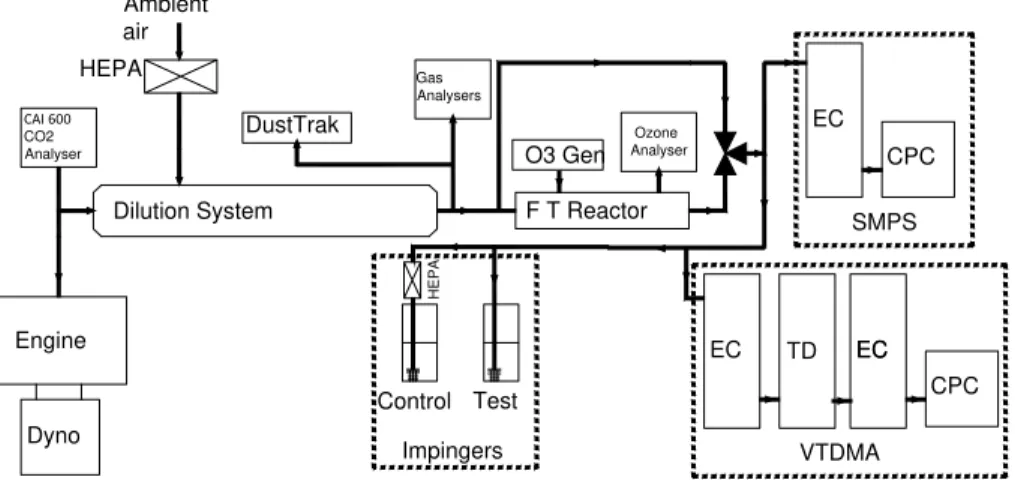
Figure 1 illustrates the experimental setup. The setup was composed of an existing EURO III diesel engine which was mounted on an engine dynamometer within the Bio-20
fuels Engine Research Facility (BERF) at Queensland University of Technology (QUT), and was used as the test bed. The engine was a 6-cylinder, turbo-charged, common-rail, Euro III, compression ignition engine with the displacement volume of 5.9 L. More details of the experimental setup, engine specifications, dilution system along with the chemical and physical properties of fuels used can be found in our previous publication 25
ACPD
15, 6481–6508, 2015Effect of atmospheric ageing on volatility and ROS of biodiesel
exhaust nano-particles
A. M. Pourkhesalian et al.
Title Page
Abstract Introduction
Conclusions References
Tables Figures
◭ ◮
◭ ◮
Back Close
Full Screen / Esc
Printer-friendly Version Interactive Discussion
Discussion
P
a
per
|
Discussion
P
a
per
|
Discussion
P
a
per
|
Discussion
P
a
per
|
through a flow-through reactor (PAM reactor) where the diluted exhaust is mixed with ozone and irradiated with UV light.
The flow-through-reactor was a 1 m long stainless steel cylinder which had four inlet ports and four outlet ports. There were also four lengthwise sampling points to enable measurement along the reactor length. In the centre of the reactor, there was space for 5
a UV tube to irradiate the diesel exhaust. Considering the dimensions of the reactor,
the UV tube as well as the flow rate through the reactor (7±0.5 lpm), the residence
time (treatment time) of the reactor was estimated to be 60±10 s. The amount of time
the exhaust gas was exposed to simulated atmospheric conditions was much less than in the real conditions therefore the concentration of ozone and exposure to UV had to 10
be higher compared to real atmospheric conditions. Based on a previous literature, this residence time approximately correlated to an exposure of at least 2 to 8 h in the at-mosphere (McWhinney et al., 2011). After ageing in the reactor, diesel exhaust went to
a number of different devices capable of measuring a variety of physical and chemical
properties of gases and particles which will be explained later. 15
Purified air was drawn trough the ozone generator (Ozonizer HLO 800) and was injected into the reactor where it was mixed with diluted and cooled diesel exhaust. The flow rate through the ozone generator was restricted using a critical orifice and was measured to be 0.15 lpm. To continuously monitor the concentration of ozone in the reactor an Echotech EC9810 Ozone Analyser was used. The average concentration of 20
ozone in the reactor was kept to be around 0.5±0.1 ppm during ageing experiments.
As mentioned before, to simulate sunlight and reactions induced by the irradiation of UV from the sun (Kang et al., 2007; Keller and Burtscher, 2012), there was a space for a UV tube in the centre of the reactor which was suitable to fit different types of UV light tubes (UV-A, UV-B and UV-C). The UV tube which was used in this study mostly 25
emitted UV light at 253 nm wave length (UVC).
A standard set of gas analyser was used to continuously monitor the concentrations
of CO, CO2 and NOx. More details on the gas analyser set is described in a recent
ACPD
15, 6481–6508, 2015Effect of atmospheric ageing on volatility and ROS of biodiesel
exhaust nano-particles
A. M. Pourkhesalian et al.
Title Page
Abstract Introduction
Conclusions References
Tables Figures
◭ ◮
◭ ◮
Back Close
Full Screen / Esc
Printer-friendly Version Interactive Discussion
Discussion
P
a
per
|
Discussion
P
a
per
|
Discussion
P
a
per
|
Discussion
P
a
per
|
A TSI Dustrak (model 8530) measured the mass concentration of particles to be used to normalize the ROS levels of the diesel exhaust. A Scanning Mobility Parti-cle Sizer (SMPS TSI 3080, with a 3022 CPC) measured the size distribution of diesel
exhaust. A Volatility Tandem Differential Mobility Analyser (VTDMA) consisting of an
electrostatic classifier, a thermo-denuder and an SMPS (in-house designed column 5
with a 3010 CPC) measured the amount of volatile matter in the diesel exhaust parti-cles (Johnson et al., 2008). The VTDMA yielded the change in the diameter of partiparti-cles for six pre-selected sizes: 30, 60, 90, 120, 150, 200 and 220 nm after they have passed
through the thermo-denuder with the temperature set at 300◦C. Using the VTDMA
method, the volatility of particles was compared before and after ageing in the reac-10
tor. The error range for the particle sizing instruments was less than 1 % that led to a maximum 3 % error for the volatility measurements (Pourkhesalian et al., 2014).
To measure the ROS levels of diesel exhaust of different fuel stocks before and
after aging, the BPEA molecular probe (bis(phenylethynyl) anthracene-nitroxide) was applied in-situ. Samples were collected by bubbling aerosol through an impinger con-15
taining 20 mL of 4 µM BPEA solution which used an AR grade dimethylsulphoxide as the solvent. More details on the ROS sampling methodology, theory behind its appli-cation and proof of concept in the case of various combustion sources can be found in previous publications (Miljevic et al., 2010; Stevanovic et al., 2012a, b, 2013; Miljevic et al., 2009).
20
2.1 Fuel selection
In this study four FAME fuels with controlled chemical compositions were tested and
compared to petro-diesel. The fuels differed in terms of iodine value and saponification
value which correspond to saturation degree and oxygen content of the fuels
respec-tively. To differentiate the effects caused by change of saturation degree from those
25
caused by oxygen content, two of the biodiesels had very close saturation levels but
different carbon chain lengths, while the other two biodiesels were the same in terms
ACPD
15, 6481–6508, 2015Effect of atmospheric ageing on volatility and ROS of biodiesel
exhaust nano-particles
A. M. Pourkhesalian et al.
Title Page
Abstract Introduction
Conclusions References
Tables Figures
◭ ◮
◭ ◮
Back Close
Full Screen / Esc
Printer-friendly Version Interactive Discussion
Discussion
P
a
per
|
Discussion
P
a
per
|
Discussion
P
a
per
|
Discussion
P
a
per
|
make 20 and 50 % biodiesel blends. The FAMEs are labeled as C810, C1214, C1618 and C1875, based on the number of carbon atoms in the most abundant fatty acid in that particular biodiesel stock. Some of the most important chemical and physical pros-perities of the fuels can be found in a previous study by Rahman et al. (Rahman et al., 2014).
5
2.2 Operation of the engine
Blends of 100, 50, 20 and 0 % of biodiesel, noted as B100 (pure biodiesel), B50 and B20 and B0 (pure petro-diesel) respectively, were used to run the engine. All the tests were conducted at quarter load and at the engine speed of 1500 rpm.
3 Results and discussion
10
3.1 Volatility measurements
Figure 2 shows the change in Volumetric Volatile Fraction (VVF) of particulate compo-nent before and after exposure to UV light and ozone. It is clearly seen in the figure that the volatility of particles increased after the exposure to oxidative agents. As the vapor pressure of the gases reduces due to photochemical reactions, some of the 15
volatile substances partition form the gas phase into the particle phase resulting in more volatile particles (Leskinen et al., 2007; Donahue et al., 2006; Kroll and Seinfeld, 2008). It was observed that the exposure to oxidative agents did not lead to the forma-tion of nucleaforma-tion mode particles. It is to be noted that in cases when the diluforma-tion ratio is low and there is not enough surfaces available for the partitioning gas to condense on 20
ACPD
15, 6481–6508, 2015Effect of atmospheric ageing on volatility and ROS of biodiesel
exhaust nano-particles
A. M. Pourkhesalian et al.
Title Page
Abstract Introduction
Conclusions References
Tables Figures
◭ ◮
◭ ◮
Back Close
Full Screen / Esc
Printer-friendly Version Interactive Discussion
Discussion
P
a
per
|
Discussion
P
a
per
|
Discussion
P
a
per
|
Discussion
P
a
per
|
already surfaces available for the condensation of gaseous matter. (Shi and Harrison, 1999; Rönkkö et al., 2006)
In Fig. 2 it is clearly visible that the volatility of particles has increased with the in-crease of biodiesel percentage in the blends (Pourkhesalian et al., 2014). While for B20, the amount of volatile matter is quite close to that of B0; the volatility of particles 5
has increased considerably with B50 and B100. These findings were in a good agree-ment with the previous observations, which showed a significant increase in volatility of diesel particulate matter with increasing biodiesel percentage in the blend (Pourkhe-salian et al., 2014; Surawski et al., 2011). Particles produced by the combustion of C810 and C1214 were the most volatile; also the change in volatility of these particles 10
was more significant with increasing percentage of biodiesel in the blend; whereas, the change in volatility was almost negligible for C1875 and all of its blends which was the most unsaturated biodiesel with the longest carbon chain length and lowest oxygen content.
The effect of oxygen content on the volatility of particles with gaseous and liquid
15
diesel fuels was studied previously (Sidhu et al., 2001; Xu et al., 2013; Pourkhesalian et al., 2014) and in our study, the increase of volatile matter in particles is more sig-nificant for more saturated fuels and with more oxygen content; where for C1875 the increase is just within the error range of the instrument.
The volatile fraction and the growth of volatile fraction for 30 nm particles were the 20
largest in almost all cases which showed that more attention is to be paid to smaller particles; not only because of their ability to suspend longer and penetrate deeper in the lung (Sidhu et al., 2001; Liu et al., 2008; Surawski et al., 2011; Cheung et al., 2009), but also because of their probability of carrying more oxidized volatile organics as they age.
25
ACPD
15, 6481–6508, 2015Effect of atmospheric ageing on volatility and ROS of biodiesel
exhaust nano-particles
A. M. Pourkhesalian et al.
Title Page
Abstract Introduction
Conclusions References
Tables Figures
◭ ◮
◭ ◮
Back Close
Full Screen / Esc
Printer-friendly Version Interactive Discussion
Discussion
P
a
per
|
Discussion
P
a
per
|
Discussion
P
a
per
|
Discussion
P
a
per
|
showing that either the amount of volatile matter in the gas phase is very small or they do not undergo photochemical reactions.
To be able to compare cases more easily, we have estimated the total amount of volatile matter that is in the liquid phase for each case and we called it Overall Volatility (OV). To do so, particles are assumed to be spherical. The volume of volatile matter is 5
estimated using VTDMA data and the number concentration of each pre-selection size from SMPS data. The quantity, OV, is expressed through percentage and means that a certain proportion of the PM in the aerosol is composed of volatile matter while the rest is non-volatile (mainly elemental carbon) (Giechaskiel et al., 2009). More details of the concept and the procedure of estimating OV can be found in our recent study 10
(Pourkhesalian et al., 2014).
Figure 3 illustrates the OV of diesel exhaust vs. blend for different biodiesel and com-pared to petro-diesel. As previously observed (Surawski et al., 2011), the volatility of diesel particulate matter increases as the percentage of biodiesel goes higher in the blends. This fact is particularly seen in more saturated fuels with higher oxygen content. 15
Blends of C810 and C1214, which have short carbon chain lengths and high saturation degree, have produced emissions with the most volatile PM; while C1618 and C1875, with longer carbon chain lengths and more carbon double bonds (more saturated fu-els), have produced less and less volatile PM. This can be explained by assuming that the oxygen borne with the molecule of the fuel can cause more oxidized combustion 20
products being of low volatility both in the liquid phase and in the gas phase. Those volatile substances having a lower vapor pressure would condense on soot particles just after the combustion while in the combustion chamber or in the exhaust system, causing the volatile fraction of particle become more significant. The volatile fraction of particles produced by more oxygenated fuels increases more after ageing because 25
ACPD
15, 6481–6508, 2015Effect of atmospheric ageing on volatility and ROS of biodiesel
exhaust nano-particles
A. M. Pourkhesalian et al.
Title Page
Abstract Introduction
Conclusions References
Tables Figures
◭ ◮
◭ ◮
Back Close
Full Screen / Esc
Printer-friendly Version Interactive Discussion
Discussion
P
a
per
|
Discussion
P
a
per
|
Discussion
P
a
per
|
Discussion
P
a
per
|
The two heavier biodiesel fuels which were tested in the study (C1618 and C1875) are more unsaturated, less oxygenated and have a longer carbon chain length and thus are more comparable to petro-diesel. Both of them caused more volatile PM comparing to B0 and their increase in volatility was not as significant as the two other biodiesel fuels in this study
5
PM due to short-length hydrocarbons blends (C810 and C1214) was more volatile before, but also after the ageing process. it can be seen that the carbon chain length of the fuel was a more influential factor on the volatility of PM than saturation degree of the fuel. The reason would be the fact that when the carbon chain length is shorter, the weight ratio of oxygen borne by the fuel molecule will be higher and thus more 10
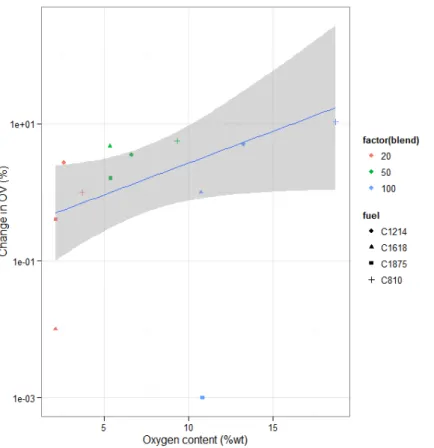
oxidative agent is available for the organics, so the vapor pressure of the products, whether before or after the exposure, will be further lowered as a result of oxidization. To examine this supposition, the oxygen content of all the fuels and blends were either measured or calculated, and then the change in the volatility of PM emitted by each blend (after ageing) was plotted against the oxygen content of the blends (Fig. 4). 15
The effect of oxygen content of the blend on the increase of the volatile matter in the
DPM is evident. Apart from two points (C1618, B100 and C1875, B100) that show low volatility with higher oxygen content; all other blends showed a good correlation between volatility and oxygen content.
The correlations between the variables were analyzed using the linear regression or 20
generalized linear model with a log link function. The validation of model assumptions was performed by the residuals vs. fit values and QQ plots. Modeling and visualizations were carried out using the ggplot2 package in R (Wickham, 2009)
3.2 ROS measurements
Oxidative potential measurement, expressed through ROS concentration of PM can be 25
ACPD
15, 6481–6508, 2015Effect of atmospheric ageing on volatility and ROS of biodiesel
exhaust nano-particles
A. M. Pourkhesalian et al.
Title Page
Abstract Introduction
Conclusions References
Tables Figures
◭ ◮
◭ ◮
Back Close
Full Screen / Esc
Printer-friendly Version Interactive Discussion
Discussion
P
a
per
|
Discussion
P
a
per
|
Discussion
P
a
per
|
Discussion
P
a
per
|
literature so far (Stevanovic et al., 2013), there are some uncertainties related to the nature of chemical species responsible for the measured redox potential and overall toxicity. However, the majority of research in this field reported that organic fraction, more precisely semi-volatile organic content, is in a good correlation with ROS con-centration (Biswas et al., 2009; Miljevic et al., 2010; Surawski et al., 2011)
5
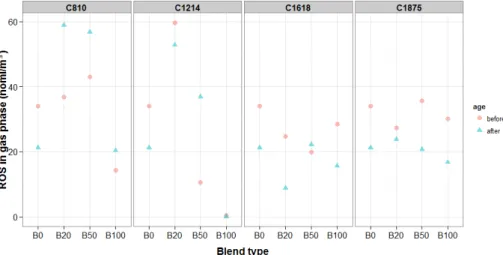
Figure 5 illustrates the oxidative potential of particles for all three biodiesel blends at 25 % load, 1500 rpm before and after the aging process. The points correspond-ing to B0 are repeatedly presented in all blends to ease comparison of petro-diesel particulate oxidative potential with that of other blends. It is evident that aging pro-cess increases potential toxicity of particles by increasing ROS concentration in the 10
case of all four biodiesel as well as petro-diesel. This result is supported by volatility measurements. As stated above, particles become more volatile after aging as a re-sult of oxidation of semi-volatile compounds and their subsequent condensation onto pre-existing particles.
In Fig. 5 it is clearly visible that the change in ROS content after exposure to UV and 15
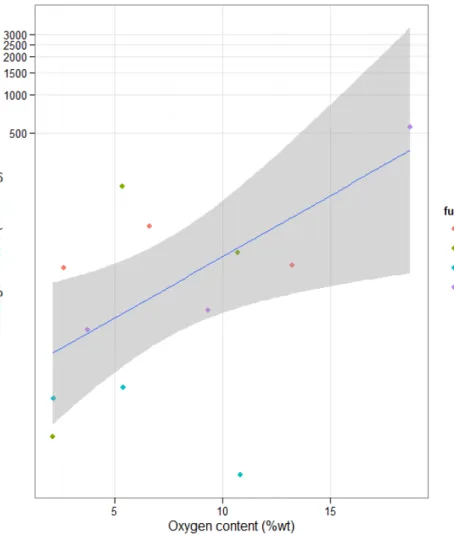
ozone is the most significant in the case of B100 and increase in oxidative potential decreases with the decreasing percentage of biodiesels in blends. To further explore this, the change in ROS concentration was plotted against oxygen content of the fuels. A clear trend between the fuel oxygen content and ROS concentration is evident from Fig. 6. The actual mechanism standing behind this aging transformation and subse-20
quent partitioning remains unclear and is subject to further investigation. However, this graph is showing a clear indication that the amount of increased ROS concentration upon oxidative aging is more significant in the case of PM originating from the com-bustion of molecules with higher oxygen content. To get a further insight into the aging process of tested aerosols, the oxidative potential of the gas phase was measured as 25
ACPD
15, 6481–6508, 2015Effect of atmospheric ageing on volatility and ROS of biodiesel
exhaust nano-particles
A. M. Pourkhesalian et al.
Title Page
Abstract Introduction
Conclusions References
Tables Figures
◭ ◮
◭ ◮
Back Close
Full Screen / Esc
Printer-friendly Version Interactive Discussion
Discussion
P
a
per
|
Discussion
P
a
per
|
Discussion
P
a
per
|
Discussion
P
a
per
|
the case with long chain, unsaturated biodiesels – C1875, C1618 and to some extent to
C1214, as well as with petro-diesel that generally consists of around 75 % of paraffins
and∼25 % of unsaturated compounds (In the literature the average formula for diesel
is C12H23 (Heywood, 1988), corresponding to C12 fuel but with no oxygen).
On the contrary fuels with higher oxygen content show an increase in the oxidative 5
potential of the gas phase. This could be due to the vapor pressure of the oxidized gas phase compounds not being low enough to lead to the condensation onto the particle phase. By looking at the volatility change in respect to aging, it is obvious that the volatility increases upon exposure to UV and ozone for all the fuels. This may mean that in the case of short-chain, saturated biodiesels, aging leads to the condensation 10
of certain species from the gas phase, which further increases OV, but does not carry any ROS potency.
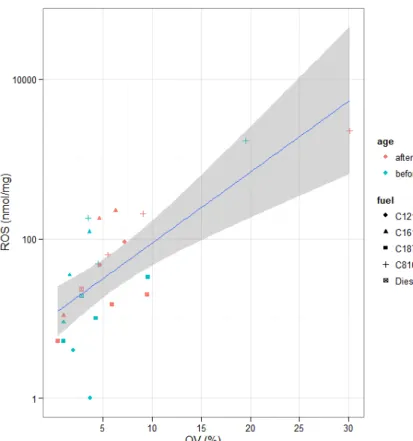
The correlation between overall volatility of diesel particulate matter and the ROS can be seen in Fig. 8. This figure shows the measured ROS levels and volatility of par-ticulate matter for all the modes and blends both before and after ageing. Blue markers 15
are due to fresh particles and red markers are due to aged particulate matter. Par-ticulate matter produced by each fuel is specified using a symbol as can be seen in the legends. This categorization method allows us to easily spot clusters of a color or a symbol. The first observation from Fig. 7 is that the ROS correlates with OV. Note that the correlation is not linear but it is exponential. So a small increase in volatility of par-20
ticulate matter can cause a significant increase in ROS levels. The symbols square and triangle are seen towards the righter and upper side of the figure, which again shows that more saturated fuels with shorter carbon chain length can cause more volatile and particles with a higher oxidative potential. It is also evident that blue markers tend to
move toward the righter and upper side of the figure underlining the exacerbating effect
25
ACPD
15, 6481–6508, 2015Effect of atmospheric ageing on volatility and ROS of biodiesel
exhaust nano-particles
A. M. Pourkhesalian et al.
Title Page
Abstract Introduction
Conclusions References
Tables Figures
◭ ◮
◭ ◮
Back Close
Full Screen / Esc
Printer-friendly Version Interactive Discussion
Discussion
P
a
per
|
Discussion
P
a
per
|
Discussion
P
a
per
|
Discussion
P
a
per
|
4 Conclusion
The objective of this research was to shed some light on the potential of biodiesel ex-haust to generate SOA and to compare the potential toxicity of aged particles caused by biodiesel with that of petro-diesel. The results presented here showed that chemical
composition of the fuel can affect the primary emissions as well as secondary
emis-5
sions. Saturated fuels causing less PM also caused more volatile PM and significantly more semi volatiles in the gas phase with the potential to partition between the gas phase and particle phase upon ageing. Moreover, aged particles from more saturated fuels with higher oxygen content have a higher oxidative potential as expressed through the increase of ROS concentration. Results of this research are in contrast with a few 10
previous studies where it was claimed that use of biodiesel did not tend to increase the level of toxicity of diesel exhaust (Bagley et al., 1998; Jung et al., 2006; Jalava et al., 2012).
This study is not quantitative and cannot be used for SOA prediction within mod-els. However, its qualitative analysis calls for the attention of regulating authorities and 15
contributes to the overall body of knowledge on the effects of fuel composition on both
engine primary as well as secondary emissions. Once emitted to the atmosphere, PM originating from combusted biodiesel will transform and become more toxic than its parent molecules and its overall toxicity will mainly depend on the chemical properties of the fuel. Therefore categorizing all biodiesel fuels in one group, as it is in current 20
regulations, may not be the most appropriate way of classification in respect to their
emissions. Various biodiesel fuels are very different in terms of both physical
proper-ties and chemical compositions which combust differently causing substantially diverse
species in the exhaust gases, particularly in PM and the semi-volatile fraction.
More-over, the exhaust gases from various biodiesel fuels behave differently when reacting
25
cur-ACPD
15, 6481–6508, 2015Effect of atmospheric ageing on volatility and ROS of biodiesel
exhaust nano-particles
A. M. Pourkhesalian et al.
Title Page
Abstract Introduction
Conclusions References
Tables Figures
◭ ◮
◭ ◮
Back Close
Full Screen / Esc
Printer-friendly Version Interactive Discussion
Discussion
P
a
per
|
Discussion
P
a
per
|
Discussion
P
a
per
|
Discussion
P
a
per
|
rent legislations only regulate the nonvolatile fraction of primary particles. There are no regulations for VOCs, semi-volatile matter and the capability of the emissions to form SOA (Giechaskiel et al., 2012). This study points out the necessity of redefining the legislations; and as experiments with flow-through reactors are more reproducible and less costly, they could be used for introduction of more stringent regulations.
5
Acknowledgements. The authors would like to acknowledge the support from the Australian Research Council under Grants LP110200158, DP1097125, DP130104904, DP110105535 and DP120100126. Laboratory assistance from Mr Noel Hartnett and Mr Scott Abbett were also appreciated.
References
10
Atkinson, R., Carter, W. P. L., Darnall, K. R., Winer, A. M., and Pitts, J. N.: A smog chamber and modeling study of the gas-phase nox-air photo-oxidation of toluene and the cresols, Int. J. Chem. Kinet., 12, 779–836, doi:10.1002/kin.550121102, 1980.
Bagley, S. T., Gratz, L. D., Johnson, J. H., and McDonald, J. F.: Effects of an oxidation catalytic converter and a biodiesel fuel on the chemical, mutagenic, and particle size 15
characteristics of emissions from a diesel engine, Environ. Sci. Technol., 32, 1183–1191, doi:10.1021/es970224q, 1998.
Biswas, S., Verma, V., Schauer, J. J., Cassee, F. R., Cho, A. K., and Sioutas, C.: Oxidative potential of semi-volatile and non volatile Particulate Matter (PM) from heavy-duty vehi-cles retrofitted with emission control technologies, Environ. Sci. Technol., 43, 3905–3912, 20
doi:10.1021/es9000592, 2009.
Cheng, C. H., Cheung, C. S., Chan, T. L., Lee, S. C., and Yao, C. D.: Experimental investiga-tion on the performance, gaseous and particulate emissions of a methanol fumigated diesel engine, Sci. Total Environ., 389, 115–124, doi:10.1016/j.scitotenv.2007.08.041, 2008. Cheung, K. L., Polidori, A., Ntziachristos, L., Tzamkiozis, T., Samaras, Z., Cassee, F. R., 25
ACPD
15, 6481–6508, 2015Effect of atmospheric ageing on volatility and ROS of biodiesel
exhaust nano-particles
A. M. Pourkhesalian et al.
Title Page
Abstract Introduction
Conclusions References
Tables Figures
◭ ◮
◭ ◮
Back Close
Full Screen / Esc
Printer-friendly Version Interactive Discussion
Discussion
P
a
per
|
Discussion
P
a
per
|
Discussion
P
a
per
|
Discussion
P
a
per
|
Chirico, R., DeCarlo, P. F., Heringa, M. F., Tritscher, T., Richter, R., Prévôt, A. S. H., Dom-men, J., Weingartner, E., Wehrle, G., Gysel, M., Laborde, M., and Baltensperger, U.: Impact of aftertreatment devices on primary emissions and secondary organic aerosol formation po-tential from in-use diesel vehicles: results from smog chamber experiments, Atmos. Chem. Phys., 10, 11545–11563, doi:10.5194/acp-10-11545-2010, 2010.
5
Donahue, N. M., Robinson, A. L., Stanier, C. O., and Pandis, S. N.: Coupled partitioning, di-lution, and chemical aging of semivolatile organics, Environ. Sci. Technol., 40, 2635–2643, doi:10.1021/es052297c, 2006.
Fontaras, G., Karavalakis, G., Kousoulidou, M., Tzamkiozis, T., Ntziachristos, L., Bakeas, E., Stournas, S., and Samaras, Z.: Effects of biodiesel on passenger car fuel consumption, reg-10
ulated and non-regulated pollutant emissions over legislated and real-world driving cycles, Fuel, 88, 1608–1617, doi:10.1016/j.fuel.2009.02.011, 2009.
Geiger, H., Kleffmann, J., and Wiesen, P.: Smog chamber studies on the influence of diesel exhaust on photosmog formation, Atmos. Environ., 36, 1737–1747, doi:10.1016/s1352-2310(02)00175-9, 2002.
15
Giechaskiel, B., Alfoldy, B., and Drossinos, Y.: A metric for health effects studies of diesel ex-haust particles, J. Aerosol Sci., 40, 639–651, doi:10.1016/j.jaerosci.2009.04.008, 2009. Giechaskiel, B., Mamakos, A., Andersson, J., Dilara, P., Martini, G., Schindler, W., and
Bergmann, A.: Measurement of automotive nonvolatile particle number emissions within the European legislative framework: a review, Aerosol Sci. Tech., 46, 719–749, 2012.
20
Heywood, J. B.: Internal Combustion Engine Fundamentals, Mcgraw-Hill New York, 1988. Izumi, K. and Fukuyama, T.: Photochemical aerosol formation from aromatic-hydrocarbons
in the presence of nox, Atmos. Environ. A-Gen., 24, 1433–1441, doi:10.1016/0960-1686(90)90052-o, 1990.
Jalava, P. I., Aakko-Saksa, P., Murtonen, T., Happo, M. S., Markkanen, A., Yli-Pirilä, P., Haku-25
linen, P., Hillamo, R., Mäki-Paakkanen, J., and Salonen, R. O.: Toxicological properties of emission particles from heavy duty engines powered by conventional and bio-based diesel fuels and compressed natural gas, Particle and Fibre Toxicology, 9, 37, doi:10.1186/1743-8977-9-37, 2012.
Jathar, S. H., Miracolo, M. A., Tkacik, D. S., Donahue, N. M., Adams, P. J., and Robinson, A. L.: 30
ACPD
15, 6481–6508, 2015Effect of atmospheric ageing on volatility and ROS of biodiesel
exhaust nano-particles
A. M. Pourkhesalian et al.
Title Page
Abstract Introduction
Conclusions References
Tables Figures
◭ ◮
◭ ◮
Back Close
Full Screen / Esc
Printer-friendly Version Interactive Discussion
Discussion
P
a
per
|
Discussion
P
a
per
|
Discussion
P
a
per
|
Discussion
P
a
per
|
Johnson, G. R., Fletcher, C., Meyer, N., Modini, R., and Ristovski, Z.: A robust, portable H-TDMA for field use, J. Aerosol Sci., 39, 850–861, 2008.
Jung, H., Kittelson, D. B., and Zachariah, M. R.: Characteristics of SME biodiesel-fueled diesel particle emissions and the kinetics of oxidation, Environ. Sci. Technol., 40, 4949–4955, doi:10.1021/es0515452, 2006.
5
Kalligeros, S., Zannikos, F., Stournas, S., Lois, E., Anastopoulos, G., Teas, C., and Sakel-laropoulos, F.: An investigation of using biodiesel/marine diesel blends on the performance of a stationary diesel engine, Biomass Bioenerg., 24, 141–149, 2003.
Kang, E., Root, M. J., Toohey, D. W., and Brune, W. H.: Introducing the concept of Potential Aerosol Mass (PAM), Atmos. Chem. Phys., 7, 5727–5744, doi:10.5194/acp-7-5727-2007, 10
2007.
Keller, A. and Burtscher, H.: A continuous photo-oxidation flow reactor for a defined measure-ment of the SOA formation potential of wood burning emissions, J. Aerosol Sci., 49, 9–20, doi:10.1016/j.jaerosci.2012.02.007, 2012.
Knothe, G., Sharp, C. A., and Ryan III, T. W.: Exhaust emissions of biodiesel, petrodiesel, neat 15
methyl esters, and alkanes in a new technology engine, Energ. Fuel., 20, 403–408, 2006. Kroll, J. H. and Seinfeld, J. H.: Chemistry of secondary organic aerosol: formation and
evolution of low-volatility organics in the atmosphere, Atmos. Environ., 42, 3593–3624, doi:10.1016/j.atmosenv.2008.01.003, 2008.
Lambe, A. T., Ahern, A. T., Williams, L. R., Slowik, J. G., Wong, J. P. S., Abbatt, J. P. D., 20
Brune, W. H., Ng, N. L., Wright, J. P., Croasdale, D. R., Worsnop, D. R., Davidovits, P., and Onasch, T. B.: Characterization of aerosol photooxidation flow reactors: heterogeneous oxidation, secondary organic aerosol formation and cloud condensation nuclei activity mea-surements, Atmos. Meas. Tech., 4, 445–461, doi:10.5194/amt-4-445-2011, 2011.
Lee, S., Jang, M., and Kamens, R. M.: SOA formation from the photooxidation ofα-pinene 25
in the presence of freshly emitted diesel soot exhaust, Atmos. Environ., 38, 2597–2605, doi:10.1016/j.atmosenv.2003.12.041, 2004.
Leskinen, A. P., Jokinlemi, J. K., and Lehtinen, K. E. J.: Transformation of diesel engine exhaust in an environmental chamber, Atmos. Environ., 41, 8865–8873, doi:10.1016/j.atmosenv.2007.08.021, 2007.
30
ACPD
15, 6481–6508, 2015Effect of atmospheric ageing on volatility and ROS of biodiesel
exhaust nano-particles
A. M. Pourkhesalian et al.
Title Page
Abstract Introduction
Conclusions References
Tables Figures
◭ ◮
◭ ◮
Back Close
Full Screen / Esc
Printer-friendly Version Interactive Discussion
Discussion
P
a
per
|
Discussion
P
a
per
|
Discussion
P
a
per
|
Discussion
P
a
per
|
Lipsky, E. M. and Robinson, A. L.: Effects of dilution on fine particle mass and partitioning of semivolatile organics in diesel exhaust and wood smoke, Environ. Sci. Technol., 40, 155– 162, doi:10.1021/es050319p, 2006.
Liu, Y. Y., Lin, T. C., Wang, Y. J., and Ho, W. L.: Biological toxicities of emissions from an unmodified engine fueled with diesel and biodiesel blend, J. Environ. Sci. Heal.A, 43, 1735– 5
1743, doi:10.1080/10934520802330438, 2008.
McWhinney, R. D., Gao, S. S., Zhou, S. M., and Abbatt, J. P. D.: Evaluation of the effects of ozone oxidation on redox-cycling activity of two-stroke engine exhaust particles, Environ. Sci. Technol., 45, 2131–2136, doi:10.1021/es102874d, 2011.
Miljevic, B., Modini, R. L., Bottle, S. E., and Ristovski, Z. D.: On the efficiency of impingers 10
with fritted nozzle tip for collection of ultrafine particles, Atmos. Environ., 43, 1372–1376, doi:10.1016/j.atmosenv.2008.12.001, 2009.
Miljevic, B., Heringa, M. F., Keller, A., Meyer, N. K., Good, J., Lauber, A., Decarlo, P. F., Fairfull-Smith, K. E., Nussbaumer, T., Burtscher, H., Prevot, A. S. H., Baltensperger, U., Bot-tle, S. E., and Ristovski, Z. D.: Oxidative potential of logwood and pellet burning particles 15
assessed by a novel profluorescent nitroxide probe, Environ. Sci. Technol., 44, 6601–6607, doi:10.1021/es100963y, 2010.
Miracolo, M. A., Presto, A. A., Lambe, A. T., Hennigan, C. J., Donahue, N. M., Kroll, J. H., Worsnop, D. R., and Robinson, A. L.: Photo-oxidation of low-volatility organics found in motor vehicle emissions: production and chemical evolution of organic aerosol mass, Environ. Sci. 20
Technol., 44, 1638–1643, doi:10.1021/es902635c, 2010.
Miracolo, M. A., Hennigan, C. J., Ranjan, M., Nguyen, N. T., Gordon, T. D., Lipsky, E. M., Presto, A. A., Donahue, N. M., and Robinson, A. L.: Secondary aerosol formation from photo-chemical aging of aircraft exhaust in a smog chamber, Atmos. Chem. Phys., 11, 4135–4147, doi:10.5194/acp-11-4135-2011, 2011.
25
Nakao, S., Shrivastava, M., Nguyen, A., Jung, H. J., and Cocker, D.: Interpretation of secondary organic aerosol formation from diesel exhaust photooxidation in an environmental chamber, Aerosol Sci. Tech., 45, 964–974, doi:10.1080/02786826.2011.573510, 2011.
Pey, J., Querol, X., Alastuey, A., Rodríguez, S., Putaud, J. P., and Van Dingenen, R.: Source ap-portionment of urban fine and ultra-fine particle number concentration in a Western Mediter-30
ranean city, Atmos. Environ., 43, 4407–4415, 2009.
ACPD
15, 6481–6508, 2015Effect of atmospheric ageing on volatility and ROS of biodiesel
exhaust nano-particles
A. M. Pourkhesalian et al.
Title Page
Abstract Introduction
Conclusions References
Tables Figures
◭ ◮
◭ ◮
Back Close
Full Screen / Esc
Printer-friendly Version Interactive Discussion
Discussion
P
a
per
|
Discussion
P
a
per
|
Discussion
P
a
per
|
Discussion
P
a
per
|
on the volatility and oxidative potential of biodiesel particulate matter, Environ. Sci. Technol., 48, 12577–12585, 2014.
Rahman, M. M., Pourkhesalian, A. M., Jahirul, M. I., Stevanovic, S., Pham, P. X., Wang, H., Masri, A. R., Brown, R. J., and Ristovski, Z. D.: Particle emissions from biodiesels with different physical properties and chemical composition, Fuel, 134, 201–208, 5
doi:10.1016/j.fuel.2014.05.053, 2014.
Robinson, A. L., Donahue, N. M., Shrivastava, M. K., Weitkamp, E. A., Sage, A. M., Grieshop, A. P., Lane, T. E., Pierce, J. R., and Pandis, S. N.: Rethinking organic aerosols: semivolatile emissions and photochemical aging, Science, 315, 1259–1262, doi:10.1126/science.1133061, 2007.
10
Rönkkö, T., Virtanen, A., Vaaraslahti, K., Keskinen, J., Pirjola, L., and Lappi, M.: Effect of dilution conditions and driving parameters on nucleation mode particles in diesel exhaust: laboratory and on-road study, Atmos. Environ., 40, 2893–2901, doi:10.1016/j.atmosenv.2006.01.002, 2006.
Samy, S. and Zielinska, B.: Secondary organic aerosol production from modern diesel engine 15
emissions, Atmos. Chem. Phys., 10, 609–625, doi:10.5194/acp-10-609-2010, 2010.
Shi, J. P. and Harrison, R. M.: Investigation of ultrafine particle formation during diesel exhaust dilution, Environ. Sci. Technol., 33, 3730–3736, doi:10.1021/es981187l, 1999.
Sidhu, S., Graham, J., and Striebich, R.: Semi-volatile and particulate emissions from the combustion of alternative diesel fuels, Chemosphere, 42, 681–690, doi:10.1016/s0045-20
6535(00)00242-3, 2001.
Stevanovic, S., Miljevic, B., Eaglesham, G. K., Bottle, S. E., Ristovski, Z. D., and Fairfull-Smith, K. E.: The use of a nitroxide probe in DMSO to capture free radicals in particulate pollution, Eur. J. Org. Chem., 2012, 5908–5912, doi:10.1002/ejoc.201200903, 2012a. Stevanovic, S., Ristovski, Z. D., Miljevic, B., Fairfull-Smith, K. E., and Bottle, S. E.: Application 25
of profluorescent nitroxides for measurements of oxidative capacity of combustion generated particles, Chem. Ind. Chem. Eng. Q., 18, 653–659, doi:10.2298/ciceq120113113s, 2012b. Stevanovic, S., Miljevic, B., Surawski, N. C., Fairfull-Smith, K. E., Bottle, S. E., Brown, R.,
and Ristovski, Z. D.: Influence of Oxygenated Organic Aerosols (OOAs) on the oxidative potential of diesel and biodiesel particulate matter, Environ. Sci. Technol., 47, 7655–7662, 30
doi:10.1021/es4007433, 2013.
ACPD
15, 6481–6508, 2015Effect of atmospheric ageing on volatility and ROS of biodiesel
exhaust nano-particles
A. M. Pourkhesalian et al.
Title Page
Abstract Introduction
Conclusions References
Tables Figures
◭ ◮
◭ ◮
Back Close
Full Screen / Esc
Printer-friendly Version Interactive Discussion
Discussion
P
a
per
|
Discussion
P
a
per
|
Discussion
P
a
per
|
Discussion
P
a
per
|
from a compression ignition engine employing two injection technologies and three fuels, Environ. Sci. Technol., 45, 5498–5505, doi:10.1021/es200388f, 2011.
Surawski, N. C., Miljevic, B., Bodisco, T. A., Brown, R. J., Ristovski, Z. D., and Ayoko, G. A.: Ap-plication of multicriteria decision making methods to compression ignition engine efficiency and gaseous, particulate, and greenhouse gas emissions, Environ. Sci. Technol., 47, 1904– 5
1912, doi:10.1021/es3035208, 2013.
Tinsdale, M., Price, P., and Chen, R.: The impact of biodiesel on particle number, size and mass emissions from a Euro4 diesel vehicle, 2010.
Verma, V., Ning, Z., Cho, A. K., Schauer, J. J., Shafer, M. M., and Sioutas, C.: Redox activity of urban quasi-ultrafine particles from primary and secondary sources, Atmos. Environ., 43, 10
6360–6368, doi:10.1016/j.atmosenv.2009.09.019, 2009.
Wang, J., Doussin, J. F., Perrier, S., Perraudin, E., Katrib, Y., Pangui, E., and Picquet-Varrault, B.: Design of a new multi-phase experimental simulation chamber for atmospheric photosmog, aerosol and cloud chemistry research, Atmos. Meas. Tech., 4, 2465–2494, doi:10.5194/amt-4-2465-2011, 2011.
15
Weitkamp, E. A., Sage, A. M., Pierce, J. R., Donahue, N. M., and Robinson, A. L.: Organic aerosol formation from photochemical oxidation of diesel exhaust in a smog chamber, Envi-ron. Sci. Technol., 41, 6969–6975, doi:10.1021/es070193r, 2007.
Wickham, H.: ggplot2: Elegant Graphics for Data Analysis, Springer, 2009.
World Health Organization: Outdoor Air Pollution a Leading Environmental Cause of Cancer 20
Deaths, IARC Scientific Publications, 1–4, 2013.
Xu, Z., Li, X., Guan, C., and Huang, Z.: Characteristics of exhaust diesel particles from different oxygenated fuels, Energ. Fuel., 27, 7579–7586, doi:10.1021/ef401946t, 2013.
Zielinska, B., Samy, S., McDonald, J. D., Seagrave, J., and Committee, H. H. R.: Atmospheric transformation of diesel emissions, Res. Rep. Health Eff. Inst., 147, 5–60, 2010.
ACPD
15, 6481–6508, 2015Effect of atmospheric ageing on volatility and ROS of biodiesel
exhaust nano-particles
A. M. Pourkhesalian et al.
Title Page
Abstract Introduction
Conclusions References
Tables Figures
◭ ◮
◭ ◮
Back Close
Full Screen / Esc
Printer-friendly Version Interactive Discussion
Discussion
P
a
per
|
Discussion
P
a
per
|
Discussion
P
a
per
|
Discussion
P
a
per
|
DustTrak Ambient
air
HEPA
Dilution System
Gas Analysers
Engine
Dyno
F T Reactor
Impingers Control Test
EC CPC
VTDMA
HEPA
EC TD EC
O3 Gen
Ozone
Analyser CPC
SMPS EC
CAI 600
CO2 Analyser
ACPD
15, 6481–6508, 2015Effect of atmospheric ageing on volatility and ROS of biodiesel
exhaust nano-particles
A. M. Pourkhesalian et al.
Title Page
Abstract Introduction
Conclusions References
Tables Figures
◭ ◮
◭ ◮
Back Close
Full Screen / Esc
Printer-friendly Version Interactive Discussion
Discussion
P
a
per
|
Discussion
P
a
per
|
Discussion
P
a
per
|
Discussion
P
a
per
|
ACPD
15, 6481–6508, 2015Effect of atmospheric ageing on volatility and ROS of biodiesel
exhaust nano-particles
A. M. Pourkhesalian et al.
Title Page
Abstract Introduction
Conclusions References
Tables Figures
◭ ◮
◭ ◮
Back Close
Full Screen / Esc
Printer-friendly Version Interactive Discussion
Discussion
P
a
per
|
Discussion
P
a
per
|
Discussion
P
a
per
|
Discussion
P
a
per
|
ACPD
15, 6481–6508, 2015Effect of atmospheric ageing on volatility and ROS of biodiesel
exhaust nano-particles
A. M. Pourkhesalian et al.
Title Page
Abstract Introduction
Conclusions References
Tables Figures
◭ ◮
◭ ◮
Back Close
Full Screen / Esc
Printer-friendly Version Interactive Discussion
Discussion
P
a
per
|
Discussion
P
a
per
|
Discussion
P
a
per
|
Discussion
P
a
per
|
ACPD
15, 6481–6508, 2015Effect of atmospheric ageing on volatility and ROS of biodiesel
exhaust nano-particles
A. M. Pourkhesalian et al.
Title Page
Abstract Introduction
Conclusions References
Tables Figures
◭ ◮
◭ ◮
Back Close
Full Screen / Esc
Printer-friendly Version Interactive Discussion
Discussion
P
a
per
|
Discussion
P
a
per
|
Discussion
P
a
per
|
Discussion
P
a
per
|
ACPD
15, 6481–6508, 2015Effect of atmospheric ageing on volatility and ROS of biodiesel
exhaust nano-particles
A. M. Pourkhesalian et al.
Title Page
Abstract Introduction
Conclusions References
Tables Figures
◭ ◮
◭ ◮
Back Close
Full Screen / Esc
Printer-friendly Version Interactive Discussion
Discussion
P
a
per
|
Discussion
P
a
per
|
Discussion
P
a
per
|
Discussion
P
a
per
|
ACPD
15, 6481–6508, 2015Effect of atmospheric ageing on volatility and ROS of biodiesel
exhaust nano-particles
A. M. Pourkhesalian et al.
Title Page
Abstract Introduction
Conclusions References
Tables Figures
◭ ◮
◭ ◮
Back Close
Full Screen / Esc
Printer-friendly Version Interactive Discussion
Discussion
P
a
per
|
Discussion
P
a
per
|
Discussion
P
a
per
|
Discussion
P
a
per
|
ACPD
15, 6481–6508, 2015Effect of atmospheric ageing on volatility and ROS of biodiesel
exhaust nano-particles
A. M. Pourkhesalian et al.
Title Page
Abstract Introduction
Conclusions References
Tables Figures
◭ ◮
◭ ◮
Back Close
Full Screen / Esc
Printer-friendly Version Interactive Discussion
Discussion
P
a
per
|
Discussion
P
a
per
|
Discussion
P
a
per
|
Discussion
P
a
per
|