FUNDAÇÃO GETULIO VARGAS
ESCOLA DE ADMINISTRAÇÃO DE EMPRESAS DE SÃO PAULO
OVERCONFIDENCE AND CONFIRMATION BIAS: Are future managers vulnerable?
FLAVIO DE OLIVEIRA SORIANO
FUNDAÇÃO GETULIO VARGAS
ESCOLA DE ADMINISTRAÇÃO DE EMPRESAS DE SÃO PAULO
OVERCONFIDENCE AND CONFIRMATION BIAS: Are future managers vulnerable?
Thesis presented to Escola de Administração de Empresas de São Paulo of Fundação Getulio Vargas, as a requirement to obtain the title of Master in International Management (MPGI).
Knowledge field: business internationalization Adviser: Prof. Dr. Isabela Baleeiro Curado
Soriano, Flavio de Oliveira
Overconfidence and confirmation bias: Are future managers vulnerable? / Flavio de Oliveira Soriano – 2015.
82 f.
Adviser: Curado, Isabela Baleeiro.
Dissertação (mestrado) - Escola de Administração de Empresas de São Paulo. 1. Administração de empresas. 2. Processo decisório. 3. Heurística. 4. Confiança. I. Curado, Isabela Baleeiro. II. Dissertação (MPGI) - Escola de Administração de Empresas de São Paulo. III. Título.
FLAVIO DE OLIVEIRA SORIANO
OVERCONFIDENCE AND CONFIRMATION BIAS:
Are future managers vulnerable?
Thesis presented to Escola de Administração de Empresas de São Paulo of Fundação Getulio Vargas, as a requirement to obtain the title of Master in International Management (MPGI).
Knowledge field: business internationalization Approval date:
___/___/___
Committee members:
__________________________________ Prof. Dr. Isabela Baleeiro Curado
EAESP-FGV
__________________________________ Prof. Dr. Sérvio Túlio Prado Júnior
EAESP-FGV
__________________________________ Prof. Dr. Vivian Iara Strehlau
To my family and friends, for their unconditional support
ACKNOWLEDGEMENT
ABSTRACT
Decision makers often use ‘rules of thumb’, or heuristics, to help them handling decision situations (Kahneman and Tversky, 1979b). Those cognitive shortcuts are taken by the brain to cope with complexity and time limitation of decisions, by reducing the burden of information processing (Hodgkinson et al, 1999; Newell and Simon, 1972). Although crucial for decision-making, heuristics come at the cost of occasionally sending us off course, that is, make us fall into judgment traps (Tversky and Kahneman, 1974). Over fifty years of psychological research has shown that heuristics can lead to systematic errors, or biases, in decision-making. This study focuses on two particularly impactful biases to decision-making – the overconfidence and confirmation biases. A specific group – top management school students and recent graduates - were subject to classic experiments to measure their level of susceptibility to those biases. This population is bound to take decision positions at companies, and eventually make decisions that will impact not only their companies but society at large. The results show that this population is strongly biased by overconfidence, but less so to the confirmation bias. No significant relationship between the level of susceptibility to the overconfidence and to the confirmation bias was found.
RESUMO
Tomadores de decisão muitas vezes usam "regras gerais", ou heurística, para ajudá-los a lidar com situações de tomada de decisão (Kahneman e Tversky, 1979b). Esses atalhos cognitivos são tomados pelo cérebro para lidar com a complexidade e pressão de tempo da tomada de decisão, reduzindo assim a carga de processamento de informação (Hodgkinson et al , 1999; Newell e Simon , 1972). Embora fundamental para a tomada de decisões, a heurística tem o custo de, ocasionalmente, nos tirar do curso, isto é, fazer-nos cair em armadilhas de julgamento (Tversky e Kahneman, 1974). Mais de 50 afazer-nos de pesquisa em psicologia tem mostrado que a heurística pode levar a erros sistemáticos, ou vieses, na tomada de decisão. Este estudo se concentra em dois vieses particularmente impactantes para a tomada de decisão - o excesso de confiança e o viés de confirmação. Um grupo específico – estudantes de administração e recém-formados de escolas de negócio internacionalmente renomadas – foi submetido a experimentos clássicos para medir seu nível de suscetibilidade a esses dois vieses. Esta população tende a assumir posições de decisão nas empresas, e, eventualmente, tomar decisões que terão impacto não só nas suas empresas, mas na sociedade em geral. Os resultados mostram que essa população é fortemente influenciada por excesso de confiança, mas nem tanto pelo viés de confirmação. Nenhuma relação significativa entre o excesso de confiança e a suscetibilidade ao viés de confirmação foi encontrada.
TABLE OF CONTENTS
INTRODUCTION ... 11
1. RESEARCH PROPOSAL ... 13
2. A LITERATURE REVIEW OF BIASES AND DECISION-MAKING ... 16
HEURISTICS AND BIASES ... 16
2.1. 2.1.1. System 1 and System 2 ... 17
2.1.2. Heuristics and biases examples ... 19
2.1.3. Relevance of heuristics & biases in this research ... 20
DECISION-MAKING ... 20
2.2. 2.2.1. Difference between judgment and decision-making ... 20
2.2.2. Strategic decisions ... 21
2.2.3. Strategic decision-making process management ... 22
2.2.4. Normative, descriptive, and prescriptive models of decision-making ... 23
2.2.5. Rationality and bounded rationality ... 23
2.2.6. Expected utility theory ... 24
2.2.7. Prospect theory ... 25
2.2.8. Relevance of decision-making in this research ... 25
OVERCONFIDENCE ... 26
2.3. 2.3.1. Causes of overconfidence ... 26
2.3.2. Overconfidence measurement... 27
2.3.3. Usefulness of overconfidence ... 30
2.3.4. Relevance of overconfidence in this research ... 31
CONFIRMATION BIAS ... 31
2.4. 2.4.1. Rationality and Bayes’ Theorem ... 33
2.4.2. Causes of confirmation bias ... 34
2.4.3. Usefulness of confirmation bias ... 38
2.4.4. Relevance of the confirmation bias in this research ... 39
LITERATURE REVIEW CONCLUSION ... 39
2.5. 3. RESEARCH METHODOLOGY ... 40
3.1. PARTICIPANTS ... 40
3.2. MATERIALS ... 41
3.3. PROCEDURE ... 42
3.4. STANDARDS FOR EDUCATIONAL AND PSYCHOLOGICAL TESTING ... 47
3.4.1. Test construction, evaluation and documentation ... 47
3.4.2. Fairness in testing ... 48
3.4.3. Testing applications ... 49
3.5. DATA ANALYSIS ... 49
3.5.1. Descriptive statistics ... 49
3.5.2. Inferential statistics ... 50
3.5.3. T-tests ... 50
3.5.4. Crosstabulation and chi-square tests ... 50
4.1. DISCUSSION ... 59
CONCLUSION ... 63
REFERENCES ... 65
LIST OF FIGURES AND TABLES
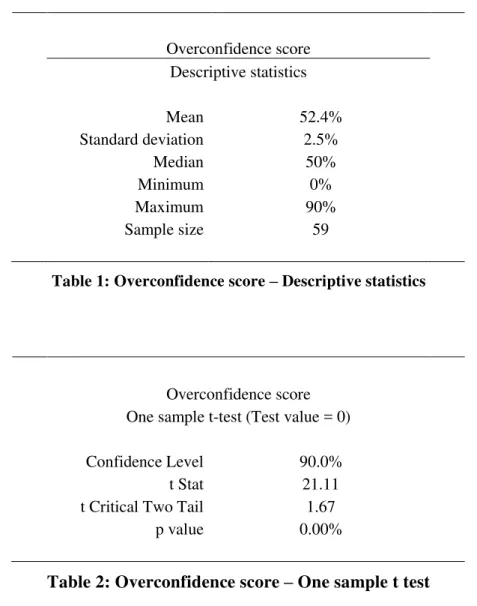
Table 1: Overconfidence score – Descriptive statistics ... 53
Table 2: Overconfidence score – One sample t test ... 53
Table 3: Confirmation bias case study score – Descriptive statistics ... 55
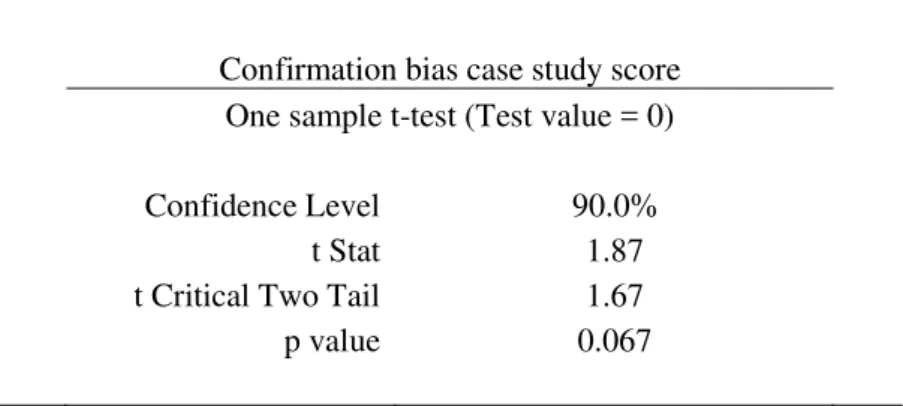
Table 4: Confirmation bias case study score – One sample t test ... 56
Table 5: Confirmation bias CI score – Descriptive statistics ... 56
Table 6: Overconfidence score vs Confirmation Bias Case Study Crosstabulation/Contingency Table ... 57
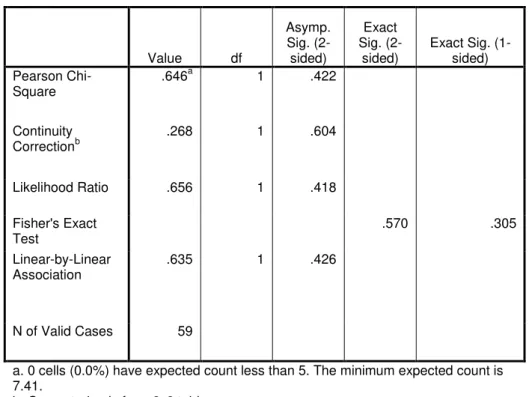
Table 7: Chi-square test Overconfidence score vs Confirmation Bias Case Study... 58
Table 8: Overconfidence score vs Confirmation Bias Inventory Crosstabulation/ Contingency Table ... 58
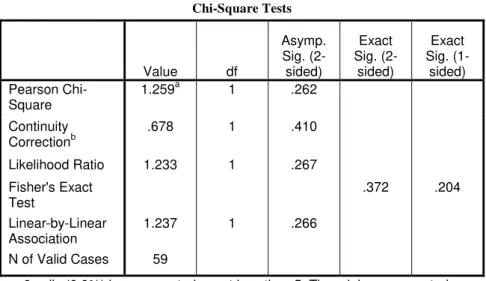
Table 9: Chi-square test Overconfidence score vs Confirmation Bias Inventory ... 59
Figure 1: Use of the service ... 54
Figure 2: Preliminary investment decision ... 54
Figure 3: Final investment decision ... 54
Figure 4: Change of mind (initial vs final decision) ... 54
Figure 5: Confirmation bias case study score ... 55
INTRODUCTION
The human reasoning has many flaws. However, if just a couple of them are to be pointed out guilty of undermining judgment and decision-making, strong candidates would be the overconfidence and the confirmation biases. Jointly, they not only silently lead us to mistakes, but also keep us trapped into our errors, unable to escape even simple self-created fallacies. These biases affect us all, by contaminating our decision-making. This effect is magnified when this flawed decision-making comes from within companies, because this tends to affect not only the company’s employees, clients and supplier, but also society at large. A particular group that is likely to assume decision positions at companies throughout their careers are students and recent graduates from top management schools. The extent to which they are susceptible to the overconfidence and the confirmation biases is a fundamental information not only to raise awareness but also to counteract those biases and promote sounder corporate decision-making.
On one side is the overconfidence bias - the unreasonably high trust in one’s own skills and knowledge. Overconfidence causes people to make decisions and take risks they would not if they had assessed their own abilities objectively, that is, based on facts (Rosenzweig, 2014). To their own good, people should be able to acknowledge when, for instance, they are not sure enough about the probability of a certain outcome. Otherwise, they risk ignoring worst-case scenarios, which can translate into disasters. In the business world, for example, if the decision-maker is overconfident in a demand forecast that is later proved wrong, he might have committed too strongly to production decisions and inventory buildup that destroy value for the company. Project duration and budget estimates are another example. When wildly optimistic due to overconfidence, estimates can distort expect return calculations, causing the misallocation of scarce resources.
centuries. Throughout most of our history, we did not have any strong method to investigate nature and objectively learn about our reality. When we invented the scientific method, we finally had a tool to dig ourselves out of the giant hole of self-deception we had been for millennia (McRaney, 2013). For instance, the widely accepted belief that life was spontaneously generated fell apart after the scientific experiments of Francesco Redi and Louis Pasteur. But up until that point in the 19th century, people used to believe - and confirm that belief with evidence they filtered from reality - that life actually sprang out of nonliving materials that contained Aristotle’s ‘pneuma’, or vital heat. While the human natural bias towards confirmation is to start from a conclusion and to work backward to reinforce initial assumptions, one of the scientific method’s main tenets is to try to disconfirm the so-called null hypothesis. In other words, the truth is sought after by failing to reject the neutral statement. Once men started applying the scientific method systematically, we went from bleeding the sick as an attempt to cure them to travelling in space. The natural enemy of the scientific method and decision-making, however, remains alive and strong in the human mind – the confirmation bias. In spite of the increasing awareness about it, it remains a silent saboteur for most individuals when gathering information and making decisions. Business decision-makers can be victim of the confirmation bias, for instance, when interpreting reviews and opinions of customers in market research. If they themselves believe in a new product, they might overweight positive comments while explaining away negative consumer feedback. In summary, they do not think in a scientific, fact-based manner, which decreases the quality of their decisions and their effectiveness as managers. With a few instances in which they are actually beneficial, the overconfidence and confirmation biases have deleterious effects on judgment and decision-making. For the sake of sounder decisions is imperative to increase the awareness around them.
well-known biases. There was significant support to the hypotheses that management students and recent graduates display both the overconfidence and confirmation biases. There was no significant relationship between the level of overconfidence and the susceptibility to the confirmation biases.
1. RESEARCH PROPOSAL
This is an investigation of whether the overconfidence and confirmation biases are displayed by management students and recent graduates, and if those two biases are at all correlated. This study is organized in five main sessions: research proposal, literature review, research methodology, results and discussion. The research questions are “Are management students susceptible to the overconfidence and confirmation biases? Is the level of susceptibility to those two biases correlated?”
The three hypotheses that guided this study were the following:
H1: Management students and recent graduates display overconfidence in their own knowledge
H2: Management students and recent graduates display a tendency to fall into the confirmation bias
H3: Management students and recent graduates displaying high overconfidence are more likely to fall into the confirmation bias trap1.
Overconfidence in individuals has been measured in experiments by psychologists since several decades, for instance, through the classical experiment of elicitation of confidence intervals (Soll and Klayman, 2004). The confirmation bias has also been
1 Of course, an individual can become overconfident in a specific conclusion as an effect of the confirmation
measured in individuals in a series of different experiments (Jonas et al., 2001). However, the presence of these biases in the particular population of management students and recent graduates has not yet been subject to a published study. Neither, to the extent of my knowledge, has been the existence of a relationship between the two biases for any population whatsoever.
Although nearly all humans are prone to the overconfidence and the confirmation biases, management students and recent graduates are the future leaders of corporations, and their decision-making is bound to impact value creation in society. The overconfidence and confirmation biases can lead business decision-makers away from optimal decision-making in many ways. Damage is greatest in strategic, course-changing decisions. For example, investment decisions in the corporate world are often unsound because of both an unwarranted high confidence of decision-makers (overconfidence) and a tendency to look only for evidence supporting the investment (confirmation bias). Failed investments have not only financial but also human costs, such as unemployment. Therefore, raising the awareness of those reasoning flaws and training management students against them should be a concern of society in general and of business schools in specific.
Individuals vary radically in their susceptibility to decision-making biases, including the overconfidence and the confirmation biases. To understand if they are present in relationship with one another might help individuals and their organizations become more aware to the susceptibility to the confirmation bi/as in the decision-making process, which is harder to assess but it is enormously detrimental to judgment.
2. A LITERATURE REVIEW OF BIASES AND DECISION-MAKING
Some theoretical and empirical foundation is useful to understand the purpose, results and meaning of this research. Again, the specific hypotheses being tested are whether management students and recent graduates are susceptible to the overconfidence and confirmation biases and whether those reasoning flaws appear in relationship with one another. Topics that will be covered in this section are (i) heuristics and biases, (ii) decision-making, (iii) overconfidence, and (iv) confirmation bias.
Heuristics and biases 2.1.
2.1.1. System 1 and System 2
Stanovich and West (2000) characterized two systems in human cognitive functioning: System 1 and System 2. This is a useful framework for organizing what academics have learned about judgmental errors and for drawing some strategies to counteract these biases (Kahneman, 2011). System 1 is automatic, effortless, intuitive, emotional, and implicit. People often call it ‘gut feeling’, and it is the system responsible for dodging an unexpected flying object or getting nervous in a flight turbulence (Caputo, 2013). System 1 learns relationships between simple ideas (“What’s the capital of France?”) and skills such as reading and turning the head towards a loud sound. We can often not refrain from using System 1 (e.g. thinking Paris when we hear “the capital of France”) (Kahneman, 2011). The automatic operations of System 1 creates strikingly complex patterns of ideas, and effortlessly generate impressions and feelings. System 1 mobilizes System 2 when it gets an important or unconventional stimulus, because only System 2 can build thoughts in a systematic manner (Kahneman, 2011). System 1 is responsible for feeding System 2’s beliefs and choices. System 1 comes into play to (in rough order of complexity):
“Detect that on object is more distant than another”
“Orient to the source of a sudden sound”
“Complete the phrase ‘bread and…’ ”
“Make a “disgust face” when shown a horrible picture”
“Detect hostility in a voice”
“Answer to 2+2=? ”
“Read words in a large billboard”
“Drive a car on an empty road”
“Find a strong move in chess (if you area chess master)”
“Understand simple sentences”
“Recognize that a ‘meek and tidy soul with a passion for detail’ resembles an occupational stereotype ”
In many situations, System 2 can take over and overrule the freewill associations and impulses of System 1. System 2 is slower, reflective, determined, conscious, and rational (Kahneman, 2011). It is the system we use when deciding which route to take while planning an itinerary, or which courses to attend the next semester at university (Caputo, 2013). Some examples of System 2’s activities (in rough sequence of complexity) are:
“Brace for the starter gun in a race”
“Focus attention on the clowns in the circus”
“Focus on the voice of a particular person in a crowded and noisy room”
“Look for a woman with white hair”
“Search memory to identify a surprising sound”
“Maintain a faster walking speed than is natural for you”
“Monitor the appropriateness of your behavior in a social situation”
“Count the occurrences of the letter “a” in a page of text”
“Tell someone your phone number”
“Park in a narrow space (for most people except garage attendants)”
“Compare two washing machines for overall value”
“Fill out a tax form”
“Check the validity of a complex logical argument”
(Kahneman, 2011, p. 22)
2.1.2. Heuristics and biases examples
Literature is rife with heuristics and biases examples. Once again, heuristics are ‘rules of thumb’ that help us handling decision situations, at the cost of making us fall into judgment traps more often than we usually acknowledge (Tversky and Kahneman, 1974). Every heuristic has at least one associated bias. Here is a compilation of the main ones:
Heuristic/ Bias
Explanation Researchers
Confirmation People favor confirmatory data when testing hypotheses. In other words, they prefer consonant than dissonant information in relation to their initial belief.
Baron et al., 1988;
Klayman and Ha, 1987 Representati
-veness
People have the tendency to imagine that what we see or will see is typical of what can occur, and they neglect true likelihoods of the events. For instance, when making a judgment, people tend to look for traits that correspond with previously formed
stereotypes. Nisbett and Ross, 1980 Tversky and Kahneman, 1974
Availability People evaluate the probability or frequency of events depending on how readily
occurrences are available in memory. When speculating what could happen, we tend to under or overweight past situations, that is, to attribute the incorrect probability to events. Tversky and Kahneman, 1973 Hogarth, 1980
Anchoring People have the inclination to make
judgments based on an initial estimate as an anchor, and fail to make sufficient
adjustments downwards or upwards later on.
Tversky and Kahneman, 1974 Affect Judgments are mostly evoked by an
emotional evaluation that takes place before any reasoning.
Kahneman, 2003 Bounded
Awareness
In order to avoid information overload individuals often filter information unconsciously and automatically, which leads to occasional neglect of useful, observable, and relevant data.
Bazerman and Chung, 2005
Risk Aversion
People treat risks relating to perceived gains differently from risks relating to perceived losses.
Each heuristic can result in several cognitive biases (Tversky and Kahneman, 1974). The availability heuristic, for instance, leads to the retrivability, the imaginability biases, and others. Some biases stem from complex interactions of different heuristics, such as the overconfidence bias (cf. Hall et al., 2007; Slovic et al., 1977). According to Hogarth (1980) there are 29 separate biases that are likely to come up in decision making, whereas Bazerman (1994) mentions 13 biases found in managerial decision-making.
2.1.3. Relevance of heuristics & biases in this research
This section exposed the fundamental mechanisms of heuristics and biases that are behind the biases that are under test in this research: the overconfidence and confirmation biases. Forty years of research have established a strong link between the processes described as System 1 and System 2 thinking and predictable judgmental errors, and shed a light on the observed results of the experiment that has been conducted in this study.
Decision-making 2.2.
Heuristics and biases are intrinsically related to judgments and decision-making, which have been explored in a vast and varied literature. Next, some useful concepts and discussions will be examined, namely (i) the difference between judgment and decision-making, (ii) the concept of strategic decision-decision-making, (iii) the process management of strategic making, and finally (iv) the main models and theories in the decision-making field.
2.2.1. Difference between judgment and decision-making
Hogarth (1997) judgment relates to how individuals weight information and the usage levels of available information, whereas decision-making is focused on outcomes in terms of a person’s choices and actions, and how those could be improved. Holzworth (2011) sees the difference in terms of research objectives. While judgment analysis focuses on whether people make accurate choices, decision-making analysis concentrates on whether people make rational decisions.
2.2.2. Strategic decisions
Strategic decisions in corporations are a sub-set of decisions in general, and are markedly different from common decisions in the sense that they are made by managers and shape a company’s general direction, commit key resources, and set relevant precedents (Mintzberg, Raisinghani, and Théorêt, 1976). These decisions are affected by the decision-maker’s past knowledge and experiences, the organizational context in which the decision is taken and the environment itself (Mitchell et al. 2011).
long-term goals of a company, and the selection of courses of action and the allocation of resources required for carrying out these goals (Chandler, 1962).
Given that management strategic decisions are markedly ambiguous, uncertain and often unstructured, there is no reason to expect strategists to be free from cognitive biases (Schwenk, 1984). Academics list many biases that are specifically present in strategic decision processes. For instance, Schwenk (1984) categorizes 11 cognitive biases, including single outcome calculation, illusion of control, and prior hypothesis bias. Barnes (1984) identifies five decision biases that affect strategic planners, such as hindsight, judgments of correlation and causality, misunderstanding the sampling process, availability, and representativeness. If strategic decision makers always behaved optimally, costs and benefits would always be correctly weighted, no relevant information would be overlooked, mergers and acquisitions would always be successful and decisions would be duly revised facing new evidence. However, in reality, billions of dollars are wasted year after year because of suboptimal strategic decision-making and the amount of resources at stake in strategic decisions only grows along time (Milkman et al., 2009). In a knowledge-based economy, a worker’s primary deliverable is a good decision. Thus, the interest to reduce strategic decision biases should be also at heart of every strategist. Awareness is necessary to neutralize decision biases, but not sufficient. Deliberate replacement of System 1 with System 2 thinking is imperative to that end (Milkman et al., 2009). Strategies include using weighted linear models to replace intuitive decisions (Dawes, 1971), and taking an outsider’s perspective on the situation (Kahneman and Lovallo, 1993).
2.2.3. Strategic decision-making process management
is useful to separate stages and sub-stages. For instance, on stages of preparation of the decision and decision-making, particular attention should be given not only the competence of the decision-maker, but also the degree of subjectivity involving the decision (Navickas, 2008). The managerial decision-making process is comprehensively analyzed in economics literature by Simon, 1976; Smith, 1988; Buchanan, 1991; Drucker, 1999; Stoner and al., 1999; Pettinger, 2001; Larsen and Mayrhofer, 2006; Marthinsen, 2007.
2.2.4. Normative, descriptive, and prescriptive models of decision-making
People decide in remarkably different ways. Many researchers explored the way individuals make decisions and how they theoretically should make them. Consequently, the range and variety of decision models is vast. Each model can be categorized according to its methodological foundation. Dillon (2006) classifies decision models as normative, descriptive or prescriptive.
A normative model is a prototypical tool for a perfectly rational decision-maker (Dillon, 2006). A normative model induces the decision-maker to act with the goal of maximizing the chances of achieving the target. In other words, to rationally select the alternative with the highest expected utility (Abbas and Matheson, 2009)
A descriptive model addresses how people actually decide in the real world, given their cognitive limitation and uncertainty.
A prescriptive model shows what people should and can do given their cognitive limitations. It is a more modern approach and is tuned to both specific situations, and the characteristics of decision makers.
2.2.5. Rationality and bounded rationality
organizations that their employees follow such normative models for rational decision-making. However, the gap between normative and descriptive decision-making is wide and has grown in recent times (Luce and von Winterfeldt, 1994). Some authors propose that the gap can be closed by persuading decision makers to adopt more normative techniques (Payne et al., 1993). Although it surely would improve the quality of the decision-making, convincing people to actually use those models is a significant barrier. Therefore, some academics believe the best road to take is to start by forming descriptive models – or how people actually make decisions - and use those as the basis for recommendations - hence prescriptive models (Dillon, 2006). One of the recurring topics of descriptive decision-making literature is the concept of Bounded Rationality (or Limited Rationality), which was suggested by Simon (1955). The basic principle of Bounded Rationality is that all rational behavior takes place within certain constraints, including cognitive limitations (Schoemaker, 1980). According to Simon (1955), rational behavior is typified by a decision maker who has a “well-organised and stable system of preferences and a skill in computation that enables him to calculate, for the alternative courses of action that are available to him, which of these will permit him to reach the highest attainable point on his preference scale” (Simon, 1955, p.99). In his work, Simon mentions human physiological and psychological limitations in decision-making, hence starting the tread of Bounded Rationality.
2.2.6. Expected utility theory
when the probabilities are unknown, a person’s own internal estimates of likelihood of different outcomes are used to assess values and probabilities (Savage, 1954). However, even when probabilities are known, people still often ‘disrespect’ utility theory (Davies et al., 2011). In order to explain such violations of the expected utility theory, especially in decisions involving a degree of risk, Kahneman and Tversky (1979a) have developed the prospect theory.
2.2.7. Prospect theory
The Prospect Theory suggests two main aspects in the decision-making process: the value function and the weighting function. The value function appraises prospect gains by measuring the perceived value of each alternative. The expected value can be positive or negative compared to the person’s original viewpoint. In other words, people think in terms of gains and losses compared to the status quo. Value also considers the strength of the change compared to the initial base. For instance, an increase in a prize from $15 to $25 looks a lot more valuable than a growth from $2,215 to $2,225 (Kahneman and Tversky, 1979a). The weighting function is similar to the probability multiplication in expected utility theories, but assumes that people do not objectively assess the likelihood of outcomes. Instead, it predicts that people put much more weight to extreme probabilities than they should rationally. For example, moving from having no chance of getting a fatal disease to having a 1% chance has a much larger impact on decision-making than going from a 50% chance to a 51% chance. It has been also proved that people present a more extreme response to losses than gains of the same magnitude (Kahneman and Tversky, 1979a)
2.2.8. Relevance of decision-making in this research
decisions, the ones that shape the future of individuals and companies. Heuristics and biases are relevant insofar they affect decision-making, and as exposed, they do.
Overconfidence 2.3.
An extensive body of literature in the fields of psychology, economics and finance indicates that people are generally overconfident (Camerer and Lovallo, 1999; Fang and Moscarini, 2005; Garcia, Sangiorgi and Urosevic, 2007; Menkhoff et al., 2006; Barber and Odean, 2001). According to Rosenzweig (2014), overconfidence in the usual language is a term used when something has turned out badly. For psychologists, however, overconfidence refers to a level of confidence that is excessive or “unwarranted” given the objective reality and historical performance (Rosenzweig, 2014). Over 25 years of research shows that, among other consequences, overconfidence leads to suboptimal decisions of managers and investors (Glaser et al. 2013). Overconfidence in the financial sector, for example, causes late option execution (Malmendier and Tate, 2005), a large number of failed acquisitions deals (Doukas and Petmezas, 2007), and overweighting of private information (Friesen and Weller, 2006). In companies, overconfidence in own skills and neglect of competitors’ skills have caused excess market entries (Camerer and Lovallo, 1999). However, even though managerial overconfidence is pervasive, we do not know how much of it is learned and how much is a stable behavioral trait (Billet and Qian, 2008)
2.3.1. Causes of overconfidence
Anchoring and insufficient adjustment
In the original formulation by Kahneman and Tversky (1974), the starting information, or anchor, tends to influence the subsequent adjustment process. Because of insufficient adjustment, individuals leave the final estimates too close to the original anchor. People adjust insufficiently from a starting anchor value (which they generate for themselves) because they stop adjusting once their believe intervals fall within a range of plausible values (Epley and Gilovich, 2006). Hence, overconfidence in numerical estimates can arise from anchoring and insufficient adjustment.
Availability bias
Overconfidence is largely due to people’s innate difficulty in imagining all the events that could actually happen (Russo and Schoemaker, 1992). The availability bias exists because “what is out of sight is out of mind” (Tversky and Kahneman, 1973). Since we fail to imagine all the ways events can unfold, we become excessively confident and overweight the likelihood of the few pathways we can actually imagine.
Hindsight bias
Like the availability bias, the hindsight bias relates to our inability to process all possible future scenarios. We end up believing the world is more predictable than it really is. In hindsight, everything seems to be more likely after it has occurred than it did before (Russo and Schoemaker, 1992).
2.3.2. Overconfidence measurement
Illusion of control
Langer and Roth (1975) introduced the concept of “illusion of control”, and defined it as “an expectancy of personal success probability inappropriately higher than the objective probability would warrant” (p. 311). In situations involving chance, people are inclined to behave as if they were able to control outcomes because of some similarities with skill situations. These similarities include familiarity with the task, selection, competition, involvement, and/or prior knowledge. People have the illusion of control when one or some of these skill-related features are present in a chance situation (Stefan and David, 2013). The perception of controllability is also fuelled by the order of the expected outcomes. If individuals sees a large number of successes at the beginning of a series of events, they tend to grow the illusion of control (e.g. Langer and Roth, 1975; Presson and Benassi, 1996). Therefore, the frequency of reinforcement is another key factor contributing to this illusion and causing overconfidence. In experiments in which pressing a button is often followed by preferred outcomes, people tend to feel the illusion of control, although their actions have no real influence over the results (e.g. Alloy and Abramson, 1979; Tennen and Sharp, 1983; Thompson et al., 2007).
Better-than-average effect
The so-called better-than-average effect is a tendency observed by researchers for people to rank themselves above average in positive attributes and below average in negative attributes (Benoît and Dubra, 2009).
The better-than-average effect is observable either for positive and negative traits. People consider themselves to be above average in regards to intelligence, generosity, friendliness, and politeness, and below average in stupidity, stinginess, unfriendliness and rudeness. The better-than-average-effect has been observed for a wide array of skills, such as driving, verbal communication, social abilities, and performance in easy tests (Pahl and Eiser, 2005; Gold and Brown, 2011).
Since many decades, it is known that most car drivers tend to believe that they have superior driving skills than the average driver (cf. Näätänen and Summala, 1975). Around 70-80% of drivers assessed their abilities to be ‘above average’. Preston and Harris (1965) carried such experiments with drivers who got involved in accidents and drivers without accident history. When asked about their driving ability compared to the average driver, the two groups presented nearly identical levels of overconfidence.
Illusion of knowledge/Confidence Intervals
as overconfidence in one’s own knowledge (Soll and Klayman, 2004). Klayman et al., (1999) reviewed the body of research and improved the method of confidence interval experiments. Their findings confirmed that there are systematic disparities between subjective confidence judgments and observed accuracy.
Overconfidence is pervasive unless interval questions are very easy (Soll and Klayman, 1999). Participants typically show more overconfidence in areas they have a self-declared expertise (Heath and Tversky, 1991), and less in domains in which they deem to be incompetent (Kruger, 1999). It was also noted that the level of observed overconfidence depends on how the question is framed, what is the domain of the question and certainly, whom you are asking the question (Soll and Klayman, 1999). There is a significant heterogeneity in the individual results – some people are consistently overconfident whereas some people are biased with underconfidence (Soll, 1996). It is also know that overconfidence varies depending on the set of questions and how the questions are framed (Juslin et al., 1999; Klayman et al, 1999). Not much is known about on which occasions specifically and why interval estimates are so biased by overconfidence (Soll and Klayman, 2004). However, no one seems to disagree that predictions of uncertain events play a critical role in the decision in applied contexts (Savage, 1954). Winman et al. (2004), stresses the impact of such intervals predictions in real-world decision-making by suggesting:
“Imagine that you intend to purchase a house and ask a financial advisor to predict the interest rate for bank loans over the next year. You could ask him or her to (…) produce an interval, in which it is likely that the interest will fall (…)” (Winman et al., 2004, p. 1167)
2.3.3. Usefulness of overconfidence
agency costs (Libby and Rennekamp, 2012). For Shapira-Ettinger and Shapira (2008), the usefulness of overconfidence is indeed underrated. Although vast economic literature aims at discouraging overconfidence in decision maker, the researchers argue nevertheless that overconfidence has constructive value in a plethora of situations. In special, those in which individuals tend to show a hyperbolic discounting of future utility, which creates imbalances in their preferences over time. By artificially raising the prospect of future rewards, overconfidence can be vital to offset inhibitory effects of inflated preferences for present payouts. Therefore, overconfidence can yield greater incentive, perseverance, performance, and thus higher achievements (Shapira-Ettinger and Shapira, 2008). This is the case of doctors, soldiers and investors, but particularly true for inventors and entrepreneurs, who are among the biggest risk takers in the modern economy (Åstebro et al., 2007). Overconfidence can lead to self-deception and escapism, but those moods can indeed be rational if they prevent the decision-maker from more destructive moods, such as low motivation and despair. Therefore, the deviation from objective reality created by overconfidence may protect the individual’s mental health (Loungeway, 1990).
2.3.4. Relevance of overconfidence in this research
The overconfidence bias is perhaps the single greatest responsible for corporate fiascoes. Overconfidence in psychology means an unwarranted level of confidence in an estimation or likelihood of an event, given expected probabilities based on historical data (Rosenzweig, 2014). Over time, repeated overconfident decisions and actions will most likely have pernicious effects of all sorts on individuals and companies, for instance, overinvestment and losses. Therefore, the awareness of this bias is not only useful but also vital for decision-makers.
Confirmation bias 2.4.
or else by some distinction sets aside and rejects, in order that by this great and pernicious predetermination the authority of its former conclusion may remain inviolate.” (Bacon, 1939/1620, XLVI)
Confirmation bias is potentially the most widely known and accepted type of inferential error registered in the literature on human reasoning (Evans, 1989). If one single problematic aspect of human cognition should deserve maximum attention, the confirmation bias would be among the top candidates (Nickerson, 1998). When people look for new information, this process is often biased towards the individual’s previously held beliefs, expectations and preferred conclusions (Jonas et al., 2001). According to Kassin (2005), “a warehouse of psychology research suggests that once people form an impression, they unwittingly seek, interpret, and create behavioral data that verify it” (Kassin, 2005, p. 219). This routine leads to the preservation of the information seeker’s initial position, even in cases in which the available information goes against this position (Johnston, 1996; Pinkley et al., 1995). In short, confirmation bias is the seeking and interpreting of information in ways that are consonant with existing beliefs, expectations, or hypotheses. It accounts for a significant share of disputes, quarrels, and misunderstanding that happen among people (Nickerson, 1998). It is important to make the distinction between building a case consciously, as attorneys and prosecutors do in court, and inadvertently picking only confirming evidence in a case. Only the latter represents the so-called confirmation bias (Nickerson, 1998).
expected to fairly evaluate the current performance of an employee, and not overly weight prior impressions of the subordinate (Jonas et al., 2001). A teacher is expected not to misread actual performance signals from students as supportive to her initial impressions, and erroneously rank pupils in terms of intelligence (Rabin and Schrag, 1999). Bruner and Potter (1964) conducted a classic experiment in which people were shown blurred pictures that gradually became sharper. Participants started seeing the images at different levels of sharpness, but the speed of the focusing process and the end focus stage were exactly the same for all participants. Amazingly, only one quarter of individuals who began seeing the images at an extreme blurred stage eventually identified them correctly, while more than half of those who started in a light-blur stage correctly identified the images. The scholars then concluded that “interference may be accounted for partly by the difficulty of rejecting incorrect hypotheses based on substandard cues (p.424)."
2.4.1. Rationality and Bayes’ Theorem
Bayes's Theorem (or Bayes’ Law) concerns the rational update of probabilities facing new evidence. A perfectly rational being will always update its beliefs correctly, and never fall in the confirmation bias trap. The theorem is named after Reverend Thomas Bayes (1701–1761), the first person to show how to use new information to update beliefs (Nelson and McKenzie, 2009). Nelson and McKenzie (2009) describe an example of application of the Bayes’ Theorem:
P(pos), where P(pos) = P(pos | d) P(d) + P(pos | ~d) P(~d). Therefore, P(d | pos) = (.90 x .10) / (.90 x .10 + .20 x .90) = .09 / .27 = 1/3.” (Nelson and McKenzie, 2009, p.2)
2.4.2. Causes of confirmation bias
What causes confirmation bias? Is it a matter of protecting one’s ego? Or is it about cognitive limitations? Is it beneficial in any sense? Several mechanisms are at play in the confirmation bias, and interact to cause this ubiquitous phenomenon, such as the desire to believe, the attempt to be consistent and rational, cognitive limitations, positive-testing, overweighting/ underweighting of evidence, the primacy effect, sequential presentation of evidence, selective exposure of information, and the emotional state.
Desire to believe
People find it easier to believe in hypotheses they prefer to be true than in propositions that they would like to be false (Ch’ng, and Mohd, 2010). In an experiment, male participants behaved differently in telephone conversations with female participants that have been described “attractive/unattractive” (Snyder et al., 1977). Their different attitudes evoked more positive responses from women deemed “attractive”. By inadvertently providing evidence for the preferred hypothesis, respondents behaved consistently with the assumption, thus creating a self-fulfilling prophecy (Nickerson, 1998). In other words, people tend to have a desire to believe, which greatly influences the search and evaluation of evidences and favors the confirmation bias.
Consistency and rationality
average’. Researchers then concluded that the participants formed an initial hypothesis about the student’s abilities based on assumptions about the relationship between socioeconomic background and academic skills and then interpreted what they observed in the video to make it consistent with that hypothesis (Darley and Gross, 1983).
Cognitive limitations
People cannot test many hypothesis at the same time, and tend to ignore alternative hypotheses because they simply cannot process differing information simultaneously (Doherty and Mynatt, 1986). According to researchers, this explains why people are adept to select non-diagnostic over diagnostic information in Bayesian decision settings (Doherty and Mynatt, 1986). The problem is that focus on only one hypothesis at a time can lead to the sustaining of a false hypothesis. If an incorrect hypothesis is close enough from being correct, positive reinforcement will strengthen the incorrect hypothesis, and inhibit further search for an alternative hypothesis (Nickerson, 1998).
Positive-testing
In cases in which there is no compelling opposing evidence, individuals are inclined to assume a statement is true (Nickerson, 1998). Surprisingly, people have the tendency to test hypotheses looking only for reinforcing evidence for their favorite hypothesis even when they have no personal interest in confirming this hypothesis. The tendency to concentrate on the positive side only is known as pseudodiagnosticity (Nickerson, 1998; Doherty et al., 1979; Doherty and Mynatt, 1986; Kern and Doherty, 1982; Fischhoff and Beyth-Marom, 1983).
would be more productive for contestants to produce triplets that falsify the assumed rule (e.g. 4-4-5). When the individual only produces confirming triplets, he deprives himself of the possibility to discover that the hypothesis is flawed. In reality, the hidden rule of this game is broader than the one implied by the initial 2-4-6 triplet – namely any sequence in ascending order. Although producing disconfirming triplets is always more diagnostic than confirming ones, participants rarely do so (Baron, 2008). Wason summarized the results of his experiments: "there would appear to be compelling evidence to indicate that even intelligent individuals adhere to their own hypotheses with remarkable tenacity when they can produce confirming evidence for them" (Wason, 1968/1977, p. 313). In subsequent experiments by other researchers intrigued by this finding, participants were asked to decide which of many hypotheses was the right one to explain a certain outcome. Participants tended to ask questions for which the answer would be “yes” if the hypothesis under scrutiny were true (Mynatt et al., 1977; Shaklee and Fischhoff, 1982), hence testing the hypothesis only positively and favoring the confirmation bias.
Overweighting/underweighting of evidence
People have the tendency to attribute greater weights to evidence that is supportive of prior beliefs or opinions than to information that is contradictory. It does not mean completely overlooking disconfirming evidence, but being less open to them and more likely to look for ways to discredit it or explain it away (Nickerson, 1998). Individuals who wish to believe in astrology will have no trouble in finding some predictions that turned out to be true, and this is sufficient to strengthen their belief. Failed predictions are simply ignored and forgotten (Nickerson, 1998). Preferential treatment to evidence is also known as the my-side bias, or the tendency to recall and produce reasons only for the view they support (Baron, 1991; Perkins et al., 1983). In a study, participants were unable to generate arguments against their views spontaneously and only did so when directly requested (Perkins, Farady and Bushey, 1991).
short research reports that were fabricated in a manner that both sides were equally strong represented. Participants were asked to rate the quality of the report, and indeed the reports that were aligned with the person’s prior belief consistently received higher scores. Strikingly, although people were exposed to arguments from both sides, they ended up with even stronger views about their position than previously. Thus, exposure to disconfirming evidence was not only ineffective, but also counterproductive (Lord, Ross and Lepper, 1979). Lehner et al. (2008) investigated the confirmation bias in complex analysis tasks like those found in law enforcement investigations, and intelligence and financial analyses. They argued that most experiments involved simplistic tasks that did not measure real-world confirmation bias, like the triplets experiment from Wason (1960). The scholars used a case study involving an explosion on the battleship USS Iowa. They offered participants pieces of evidence of different lengths and diagnosticity, which could confirm or disconfirm individual’s favorite hypothesis (Lehner et al., 2008). Researchers found that, although participants tend to agree on the interpretation of pieces of evidence, they disagreed on the weighting of the information. Aligned with other studies, participants tended to give more weight to evidence confirming their favorite hypothesis.
Primacy effect
When an individual has to draw a conclusion based on data acquired over time, the information gathered earlier in the process is likely to have more weight than subsequent data (Lingle and Ostrom, 1981; Sherman, Zehner, Johnston and Hirt, 1983). This is known in psychology as the primacy effect and it has also been observed by Francis Bacon centuries ago: “the first conclusion colors and brings into conformity with itself all that come after" (Bacon, 1939/1620, p. 36). The primacy effect reinforces early hypothesis, and favors the confirmation bias.
Sequential presentation of evidence
because when sequentially confronted with additional information, people tend to compare it with one’s prior decision reinforcing the availability of this decision in memory (Hogarth and Einhorn, 1992). Thus remembering the prior decision, increases commitment further to it (cf. Tesser et al., 1995). Individuals generally try to interpret additional data in terms of functional connections that they believe already exists (Kahneman et al., 1982). In the real world, sequential information exposure is much more common than simultaneous (Jonas et al., 2001)
Selective exposure of information
According to the cognitive dissonance theory (Festinger, 1957), once committed to an alternative, individuals favor supportive/consonant information rather than opposing/dissonant information. Psychologists accept that people tend to expose themselves more to information sources that are aligned with prior beliefs than those who do not (Festinger, 1957; Klapper, 1960).
Emotional state
Young et al. (2001) decided to investigate the relationship between confirmation bias and emotional states. They showed that “anger results in relatively less confirmation bias than the comparison emotional states”. When angry, individuals tended to select less hypothesis confirming data than people in sad or neutral states.
2.4.3. Usefulness of confirmation bias
objectively falsified by one piece of data. Those instances have both supporting and contrarian evidence, and the final opinion of the individual depends on the weights one puts on each argument, which in turn depends on personal values. In addition, in many instances the costs of believing a false premise are very different from disbelieving true ones. For example, a medical doctor would be better on the safe side believing a patient has a potentially fatal disease and treating it than not doing anything (Nickerson, 1998).
2.4.4. Relevance of the confirmation bias in this research
Sound businesses depend on sound decisions, which in turn require a balanced search and evaluation of information. Most people, however, fall prey of the confirmation bias and prefer confirmatory evidence to other evidence, putting stakes at unnecessary risk. Awareness of the confirmation bias is paramount to improve the decision-making process’ quality, and this is the reason this bias was selected as the topic of this research.
Literature Review conclusion 2.5.
3. RESEARCH METHODOLOGY
This section presents the methodology of the research, focusing on participants and their profile, materials, procedures and the Standards for Educational and Psychological testing.
3.1.Participants
The population or universe in this study were management students and recent graduates of top management schools, between the ages of 23 and 30 of both genders, diverse national backgrounds, up to 5 years of work experience, and advanced English skills (since the test was administered only in English). This sample was selected because this group is considered the next generation of business leaders, who will influence both the business environment and the world in general with their decision-making.
The sample was selected out the author’s extended network of people falling in the above-mentioned description. The author met these people during his Bachelor in Business Management at FGV-EAESP (São Paulo, Brazil) from 2007 to 2011 and Masters in International Management (FGV/ESADE/The University of Sydney) from 2012 and 2014. Participants were individually recruited mainly via social media between October 27 and November 3, 2014.
Of 80 contacted people, 71 answered to the invitation and 59 provided valid responses to the survey.
12 results were eliminated from the sample for being incomplete or invalid (mainly participants who took too long to answer to some of the questions, indicating potential check on external sources).
The average age in the sample was 24.5 years of age.
27% of the participants were undergraduate students or just completed their undergrad studies, while 73% were masters students or just completed their masters
Respondents were from 21 different nationalities.
Some of the top management schools represented in the sample were: FGV EAESP (Escola de Administração de Empresas da Fundação Getulio Vargas, Brazil), ESADE (Spain), HEC Paris (France), University of St.Gallen (Switzerland), Wirtschaftsuniversität (Austria), Università Commerciale Luigi Bocconi (Italy), Indian Institute of Management Calcutta (India), University of Economics (Czech Republic), Richard Ivey School of Business (Canada), The University of Sydney Business School (Australia) and UCD Michael Smurfit Graduate Business School (Ireland).
3.2.Materials
3.3.Procedure
Participants were not informed about the specific objective of the study (i.e. to measure the relationship of the level of confidence and the susceptibility to the confirmation bias). They were only presented with the following introduction:
Thank you for taking this survey and helping science to advance!
This is a study about how people make choices.
If you wish to receive the results of the study, please leave your e-mail address at the end of
the survey
I promise you'll be in for some surprises about people and about yourself!
It is important that, once you start the survey, you go until the end without interruptions.
Please do not use any external sources to help you answering the questions.
The individual survey responses are anonymous.
The survey was divided into four main sections, starting with (i) a test of overconfidence, followed by (ii) a case study to measure confirmation bias, and (iii) a confirmation inventory questionnaire, and closing with (iv) demographics.
Level of confidence section
In the first part of the questionnaire, people answered to the classical interval confidence questionnaire (Yates, 1990). The questions were modified by the author to avoid easy retrieval of the full answer key online by participants, but were analogous to the original questions and had a comparable level of difficulty. Participants received the following instructions:
For each of the questions below, please provide the NARROWEST RANGE that you are 90%
SURE that contains the correct answer.
In particular, if you have“no idea” then give a very wide range; and if you happen to be quite
certain then give a narrow range.
For instance:
What is the population of Australia?
Then, they were presented the following numerical questions, and asked the lower range and upper range for each one:
1. Albert Einstein’s age at death
2. Length of the Amazon River (in km)
3. Number of Spanish speaking countries in the world
4. Revenue of Walmart in 2013 (in billion USD)
5. Average real state price in upscale areas of London/UK (USD/m2)
6. Weight of an adult blue whale (tons)
7. Year in which Beethoven was born
8. Number of daily passengers in the busiest airport in the world (Atlanta International Airport)
9. Air distance from New York to Berlin (in km)
10. Highest point on Earth (in meters)
The scoring system used in this study is known as the bias score, which is referred to as “calibration-in-the-large” by Yates (1990, p.79). The bias score is calculated by subtracting 90% (confidence level requested) from actual accuracy of estimates. A positive bias score represents overconfidence (Yates, 1990).
For instance, if a respondent gets the right answer encompassed within 6 out of 10 intervals (hence 60% confidence), his level of overconfidence would be 90% - 60% = 30% (thus, it is an overconfident respondent, who probably set unduly narrow intervals). If all intervals encompassed the correct answers (100% confidence), then the individual would have a confidence level of 90% - 100% = - 10% (hence, a slightly underconfident individual who probably set way too broad intervals).
Confirmation bias case study section
CASE STUDY
You are the managing director of a venture capital fund.
Your company typically invests in technology related startups.
Recently, you heard the pitch of two entrepreneurs who presented their venture.
This venture is the first online marketplace where chefs and customers meet to arrange the
cooking for private parties and dinners at home with friends and family.
The marketplace makes money by charging a commission from the chefs on the business
they make.
The entrepreneurs asked for an investment to finish the platform and invest in marketing to
grow it.
The size of the investment is adequate (follows market prices) for the share being sold to the
venture capital fund.
The entrepreneurs declared they have pitched the same idea to three competing venture capital
funds.
Then the participants were asked whether they would use the service and whether they would invest in it (as a preliminary decision).
Would you use this service?
Yes
No
Unsure
Do you think this investment sounds like a good idea (preliminary answer)?
Yes
No
Can you think of any creative name for this venture?
What do you think would be a fair commission (in %) to charge chefs?
In the next stage of the case study, people were presented with the possibility to read up to six short opinions (two- to four-lines long). They were presented the following instructions:
Partners and analysts at your fund have mixed views on this investment.
Now you will be able to read those opinions and make your final decision.
The following options summarize the opinion of partners and analysts
PLEASE SELECT UP TO SIX OPINIONS YOU WOULD LIKE TO READ IN DETAIL BEFORE
YOUR FINAL DECISION
Then a list of six positive and six negative summarized arguments about the investment were listed, and the participant was able to tick up to six of those arguments in order to collect information for the final decision (for the full arguments, please see the Appendix). The case was built in a way that both sides had equally strong arguments.
"We have received good feedback from both users and chefs"
"Margins are incredible and the business is extremely scalable"
"There are low entry barriers for competitors"
"The initial feedback is based on a bad initial sampling"
"We can have a 1st mover advantage"
"The team is excellent"
"There's a risk people will contact chefs directly, and chefs will avoid commission"
"We had a big failure in a marketplace investment some years ago"
"It's a huge market with high growth potential"
"We can increase value for user with original content"
"There are not enough qualified chefs to meet demand"
The score in the case study confirmation was measured in a scale similar to that used by Jonas et al. (2001). The score was calculated as follows:
The numerical difference between the number of confirming and disconfirming pieces of information is the measure of the level of confidence. For example, if the participant decided the investment was a good idea (initial hypothesis), and picked four confirming (positive) opinions and two disconfirming opinions (negative), his level of confidence score would be [4 – 2 = 2]. A perfectly susceptible respondent would, after the initial assessment, only select reinforcing information in the opinions section, hence scoring six in the scale. A completely unbiased respondent would, after the initial assessment, select a balanced three negative and three positive opinions, scoring zero. Finally, a perfectly negatively biased respondent would select only arguments that opposed the initial belief, scoring minus six in the scale. Therefore, the scale goes from minus six (maximum negative bias) to six (maximum positive bias).
Finally, participants were asked to make their final decision regarding the investment.
Now that you have heard some opinions, will you make the investment?
Yes
No
Unsure
Confirmation Inventory section
In order to collect addition data points on confirmation bias, participants were asked questions from the Confirmation Inventory (CI) by Rassin (2008). The CI contains statements related to the confirmation bias, phrased in a way that participants do not judge to be problematic. Therefore, instead of directly asking if the individual “tends to solely give attention to information which supports your idea, while ignoring disconfirming information”, the author used less obvious phrasings such as “I only need a little information to reach a good decision” (Rassin, 2008)
Only six questions - deemed the most revealing - of the CI were asked, to avoid fatigue in respondents. Namely the following:
I only need a little information to reach a good decision
My first impression usually seems to be correct
I usually trust my intuition
Sometimes, I know things before there is actual proof of them
If my reasoning and the physical evidence are in contradiction, I tend to favor my reasoning
Once I have a certain idea, I can hardly be brought to change my mind
The scoring of confirmation inventory (CI) followed a simple addition, where each point on the Likert scale was added up to reach the final score. Thus, the scale went from 0 (“Completely disagree”with all statements) to 24 (“Completely agree” with all statements).
Demographics section
Finally, the demographics of the respondent were asked, comprising gender, age, nationality, and highest level of education.
3.4.Standards for Educational and Psychological Testing
This research was conducted according to the Standards for Educational and Psychological Testing (thereafter Standards) by the American Psychological Association (APA), which provides essential guidelines for the sound and ethical use of testing in psychological research (American Psychological Association et al., 1999). The Standards addresses three major sections: (i) test construction, evaluation and documentation, (ii) fairness in testing and (iii) testing applications.
In this section, the Standards addresses validity, reliability, test development and revision, scaling, test administration and supporting documentation for tests. Validity is referred to as the degree to which theory and evidence support the interpretation of test scores. It is the most important consideration in developing and evaluating tests. Reliability relates to the consistency of the test procedure when repeated on a population. However, since no participant is completely consistent and because of the subjectivity of the test scoring process, there will be always some amount of measurement error. Test development refers to the process of creating a measure of some aspect of a person’s knowledge, skill, interest, attitude, or other characteristics. It includes specifying conditions for administering the test, choosing procedures for scoring the performance, and reporting the score to test users. Scaling support the interpretation of the data to enhance comparability. A critical step in the evaluation of test results is to establish cut points to distribute the sample in categories. Test administration defines directions to participants, testing conditions and detail procedures in order to standardize the test. Supporting documents are used to allow test users and reviewers to assess the suitability of the test. A typical documentation specifies the nature of the test and its use, development process, evidence of validity and reliability, scaling and guidelines for administration (American Psychological Association et al., 1999).
3.4.2. Fairness in testing