UNIVERSIDADE FEDERAL DO RIO GRANDE DO NORTE CENTRO DE CIÊNCIAS DA SAÚDE
PROGRAMA DE PÓS-GRADUAÇÃO EM CIÊNCIAS DA SAÚDE
SAÚDE BUCAL DE IDOSOS INSTITUCIONALIZADOS NO BRASIL
GRASIELA PIUVEZAM
UNIVERSIDADE FEDERAL DO RIO GRANDE DO NORTE CENTRO DE CIÊNCIAS DA SAÚDE
PROGRAMA DE PÓS-GRADUAÇÃO EM CIÊNCIAS DA SAÚDE
SAÚDE BUCAL DE IDOSOS INSTITUCIONALIZADOS NO BRASIL
Tese apresentada ao Programa de Pós-Graduação em Ciências da Saúde, do Centro de Ciências da Saúde, da Universidade Federal do Rio Grande do Norte, como requisito para obtenção do título de Doutor em Ciências da Saúde.
Grasiela Piuvezam
Orientador: Prof. Dr. Kenio Costa de Lima
UNIVERSIDADE FEDERAL DO RIO GRANDE DO NORTE CENTRO DE CIÊNCIAS DA SAÚDE
PROGRAMA DE PÓS-GRADUAÇÃO EM CIÊNCIAS DA SAÚDE
COORDENADORA DO PROGRAMA DE PÓS-GRADUAÇÃO EM CIÊNCIAS
DA SAÚDE: PROFa. DRa. TÉCIA MARIA DE OLIVEIRA MARANHÃO
Catalogação na Fonte. UFRN/ Departamento de Odontologia Biblioteca Setorial de Odontologia Profº Alberto Moreira Campos .
Piuvezam, Grasiela.
Saúde bucal de idosos institucionalizados no Brasil / Grasiela Piuvezam. – Natal, RN, 2011.
148 f. : il.
Orientador: Profa. Dr. Kenio Costa de Lima.
Tese (Doutorado em Ciências da Saúde) – Universidade Federal do Rio Grande do Norte. Centro de Ciências da Saúde. Programa de Pós-Graduação em Ciências da Saúde.
1. Saúde bucal – Tese. 2. Saúde do idoso institucionalizado – Tese. 3.
Autopercepção – Tese. 4. Indicadores básicos da saúde –Tese. 5. Gerodontologia – Tese. 6. Edentulismo – Tese. I. Lima, Kenio Costa de. II. Título.
SAÚDE BUCAL DE IDOSOS INSTITUCIONALIZADOS NO BRASIL
BANCA EXAMINADORA
Presidente da banca: Professor. Dr. Kenio Costa de Lima (UFRN)
Professor. Dr. Luiz Roberto Augusto Noro (UFRN)
Professora. Dra. Iris do Céu Clara Costa (UFRN)
Professora. Dra. Isabela Almeida Pordeus (UFMG)
Professor. Dr. Ângelo José Gonçalves Bós (PUC-RS)
Tese aprovada em 06 de maio de 2011.
DEDICATÓRIA
Dedico este trabalho a Rebeka Souto Brandão Pereira, pelo amor, respeito e
AGRADECIMENTOS
A Deus, pela vida, pela saúde e pela disposição que me permitiram
percorrer todo o Brasil em busca de um sonho: registrar a situação de saúde
bucal dos idosos que são privados da convivência com suas famílias e vivem
em instituições, casas geriátricas e outras formas de lares possíveis.
À minha companheira de vida Rebeka pela delicadeza da nossa
convivência.
Aos meus pais Helio Piuvezam (in memorian) e Terezinha Zacarias
Piuvezam (in memorian), com quem aprendi a ser quem sou e que infelizmente
faleceram durante esse processo de construção da tese. Foram perdas
irreparáveis e insubstituíveis, mas que deixaram uma única certeza a de que
estão me acompanhando sempre desde longe ou perto, em outro plano.
Aos meus queridos irmãos Maisa Piuvezan Pisa e Helio Piuvezam Filho
e Marcia Regina Piuvezam pelo amor, carinho e superação nas fases mais
difíceis da nossa vida em família. E também aos meus cunhados Luiz Pisa e
Rosana Machado.
À minha sogra Dona Lácia e a Dona Erotides Brandão pelo carinho e o
amor sempre presentes em nossa relação.
Às minhas sobrinhas Taisa, Talita, Raquel, Ester, Helena Cristina e
Maria Eugênia, ao meu sobrinho Daniel e ao meu sobrinho-neto Luca Felipe,
pelo nosso amor em família.
Ao meu orientador/amigo ou seria amigo/orientador? Difícil definir... A
e desde então sempre me apoiou na imensa empreitada. Assim, manifesto
minha profunda admiração pessoal e acadêmica.
À professora Dra. Carme Borrel da Agencia de Salud Publica de
Barcelona pela oportunidade de cursar parte do estagio doutoral no exterior e a
CAPES por conceder a bolsa para este estágio, entretanto, essa experiência
não foi possível ser vivenciada em função da minha aprovação no concurso
público para a vaga de professora assistente do Departamento de Saúde
Coletiva da Universidade Federal do Rio Grande do Norte.
Aos colegas e colaboradores cirurgiões-dentistas Marcio Gutemberg
Pereira, Eudivar Correia de Farias Neto, Maria Cecília Aguiar e Diego Leandro
Souza pela inestimável ajuda na coleta dos dados. A Rebeka Souto Brandão
Pereira e a Giovana Fulco pelo apoio no processo de digitação do banco de
dados e a Thiago Silva pela ajuda na transcrição das entrevistas.
Aos queridos professores do Departamento de Saúde Coletiva da
UFRN, onde trabalho, Dr. Mauricio Campelo de Macedo, Dra. Isa Maria Hetzel,
Dr. Paulo Medeiros, Dra. Alice Uchoa, Dra.Elizabete, Dra. Janete Castro, Dr.
Antônio Medeiros Júnior, Dra. Themis, Dra. Nilma Costa Leão, Esp. Evania
Leiros, Ms. Ewerton Brito, Ms. Lavinia Uchoa, Ms. Tatyana Souza, Ms.
Oswaldo Negrão pelo apoio nos tempos da elaboração da presente tese de
doutorado.
Aos professores do Departamento de Odontologia da UFRN, Dr. Angelo
Giuseppe Roncalli, Dra. Maria do Socorro Costa Feitosa Alves, Dra. Íris do Céu
Clara Costa, Dra. Maria Ângela Ferreira, Dra Delane Rego, Dr. Pedrinho, Dr.
Luiz Augusto Noro, Dra. Maisa Paulino e a Neusa Sales pela maravilhosa
Às Professoras Dra. Edna Maria da Silva e Dra. Fernanda Nervo Raffin ,
Pró-Reitora e Pró-Reitora Adjunto de Pós-Graduação dessa Universidade, pelo
suporte acadêmico.
À professora Dra. Tecia Maria de Oliveira Maranhão e ao Prof. Dr.
Eryvaldo Sócrates Tabosa do Egito, coordenadora e vice-coordenador,
respectivamente, do Programa de Pós-Graduação em Ciências da Saúde
dessa Universidade.
Às secretárias Allana, Kaline, Sandra e Zaíde e ao secretário Lucas.
Aos idosos pela gentileza em permitir a realização dos exames bucais e
pelo carinho que demonstraram na nossa rápida convivência.
Aos prefeitos, secretários de saúde, coordenadores de saúde bucal,
diretores de instituições e cuidadores de idosos que possibilitaram a adequada
coleta dos dados.
Ao professor Dr. Renato Veras por ser uma fonte de inspiração para o
meu trabalho acadêmico em função do seu compromisso com o
envelhecimento humano.
Aos professores Dr. Ângelo José Gonçalves Bós, Dra. Isabela Almeida
Pordeus, Dra. Iris do Céu Clara Costa e Dr. Luiz Roberto Augusto Noro que
compuseram junto ao meu orientador Dr. Kenio Costa de Lima a banca de
defesa dessa tese de doutorado.
Ao Conselho Nacional de Desenvolvimento Científico e Tecnológico
(CNPq) e ao Ministério da Saúde pelo financiamento da pesquisa através do
Edital MCT-CNPq / MS – DAB/SAS – No 49/2005, no Projeto de Pesquisa No
“Porque você sabe... Beleza é uma
questão de afetividade.
Quando chega um velho aqui eu olho
e digo:
- Vixe! Que velho feio!
Uma semana depois eu já tô achando
ele lindo!”
Depoimento da Sra. Josefa
Marques Pereira, Diretora da
Sociedade de Assistência São
Vicente de Paula em Arapiraca/AL,
registrado em 27 de setembro de
SUMÁRIO
Dedicatória... IV
Agradecimentos... V
Epígrafe... VIII
Listas de Tabelas... X
Listas de Figuras... XII
Listas de Quadros... XIII
Listas de Abreviaturas... VIV
Resumo... XVII
APRESENTAÇÃO... XVIII
1 INTRODUÇÃO... 01
1.1 Objetivo... 04
1.2 Objetivos específicos... 04
2 REVISÃO DE LITERATURA... 05
3 ANEXAÇÃO DOS ARTIGOS... 11
3.1 Artigo 1... 13
3.2 Artigo 2... 40
3.3 Artigo 3 ... 63
4 COMENTÁRIOS CRÍTICAS E SUGESTÕES... 89
5 APENDICES... 100
5.1. Apêndice 1 – Carta de apresentação da pesquisa às ILPIS... 101
5.2. Apêndice 2 – Termo de Consentimento Livre e Esclarecido... 103
5.3. Apêndice 3 – Resumos publicados em anais de congressos... 105
5.4. Apêndice 4 – Coletânea do registro fotográfico das ILPIS... 106
6 ANEXOS... 112
6.1 Anexo 1 - Modelo do manuscrito de tese (PPGCSA/UFRN)... 113
6.2. Anexo 2 – Parecer de Aprovação do Comitê de Ética em Pesquisa da UFRN. 116 6.3 Anexo 3 – Ficha de avaliação em saúde bucal (OMS)... 117
6.4 Anexo 4 – Protocolo de pesquisa para o GOHAI... 119
REFERÊNCIAS... 122
Abstract... 127
Lista de Tabelas
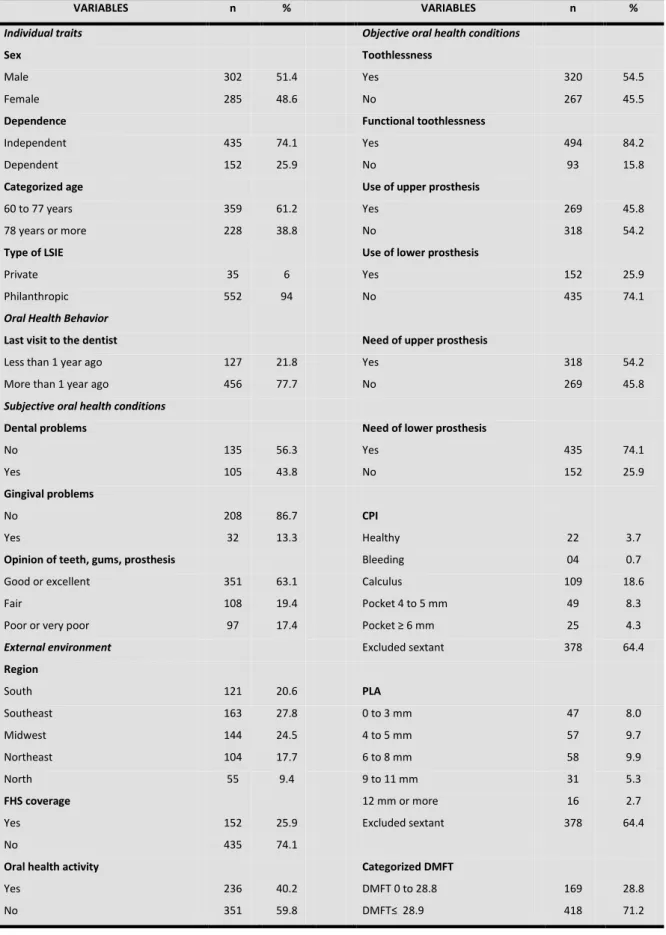
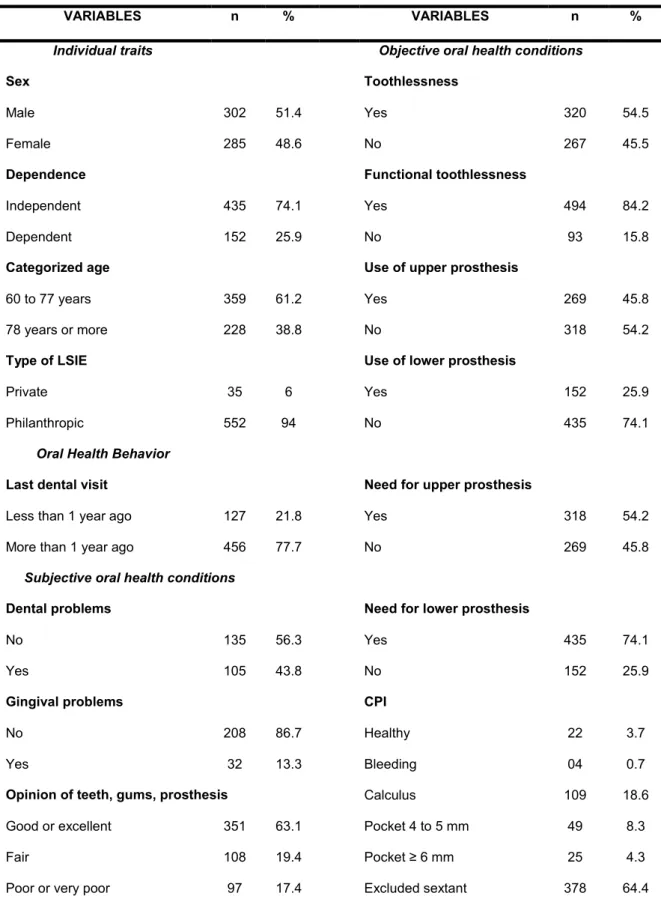
Tabela 1 Characteristics of institutionalized elderly in Brazil, according to
individual traits, objective and subjective conditions, oral health
behavior, and external environment. (Tabela 1 do Artigo 1)
36
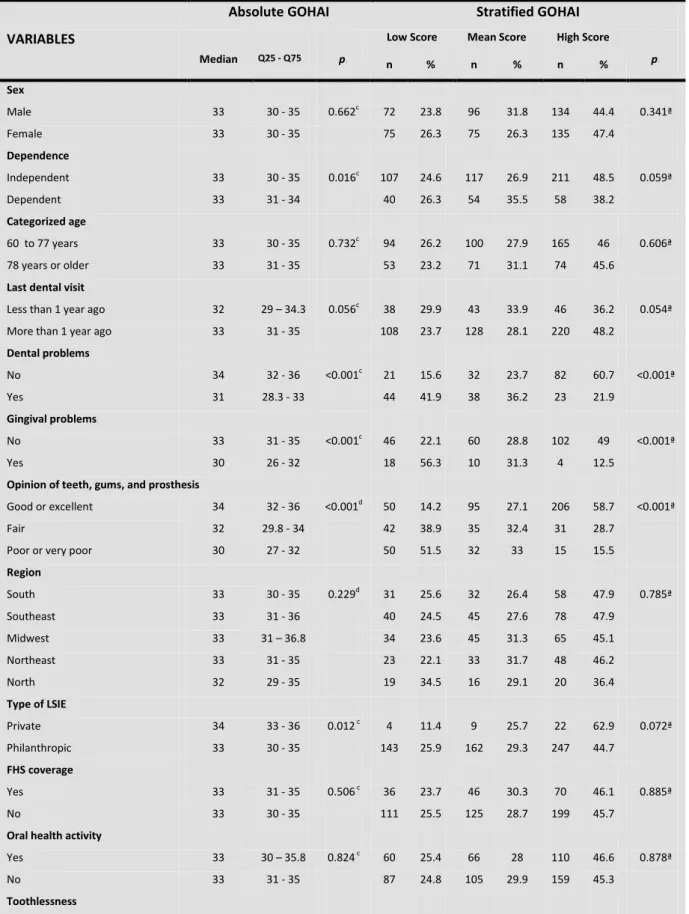
Tabela 2 Bivariate analysis of self-perceived oral health status according
to the Geriatric Oral Health Assessment Index in absolute
(GOHAI Ab) and stratified GOHAI (GOHAI St) values of
institutionalized elderly in Brazil. (Tabela 2 do Artigo 1)
37
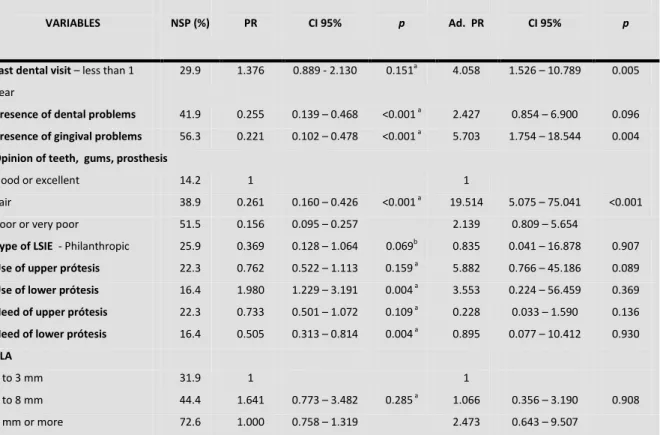
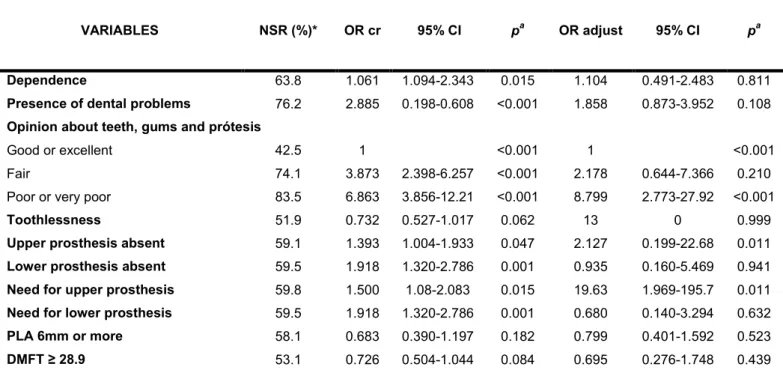
Tabela 3 Multivariate analysis of self-perceived oral health status
according to the Binary Geriatric Oral Health Assessment Index,
categorized as negative and positive (GOHAI Bi) of
institutionalized elderly in Brazil. (Tabela 3 do Artigo 1)
39
Tabela 4 Characteristics of institutionalized elderly in Brazil, according to
individual traits, objective and subjective conditions, oral health
behavior, and external environment. (Tabela 1 do Artigo 2).
58
Tabela 5 Multivariate analysis of the Psychosocial Dimension of the
Geriatric Oral Health Assessment Index in institutionalized
elderly in Brazil. (Tabela 2 do Artigo 2).
60
Tabela 6 Multivariate analysis of the Physical Dimension of the Geriatric
Oral Health Assessment Index in institutionalized elderly in
Brazil. (Tabela 3 do Artigo 2).
61
Tabela 7 Multivariate analysis of the Pain and Discomfort Dimension of
the Geriatric Oral Health Assessment Index in institutionalized
elderly in Brazil. (Tabela 4 do Artigo 2).
Tabela 8 Characteristics of institutionalized elderly in Brazil, according to
individual traits, objective and subjective conditions, oral health
behavior, and external environment. (Tabela 1 do Artigo 3).
84
Tabela 9 Multivariate analysis related to the variable factor “History of
Disease and Missing Teeth” in institutionalized elderly in
Brazil. (Tabela 2 do Artigo 3).
86
Tabela 10 Multivariate analysis associated with the variable factor
“Rehabilitation Needs” in the Brazilian institutionalized elderly.
(Tabela 3 do Artigo 3).
87
Tabela 11 Multivariate analysis of the variable “Extraction needs” in the
institutionalized elderly in Brazil. (Tabela 4 do Artigo 3).
Lista de Figuras
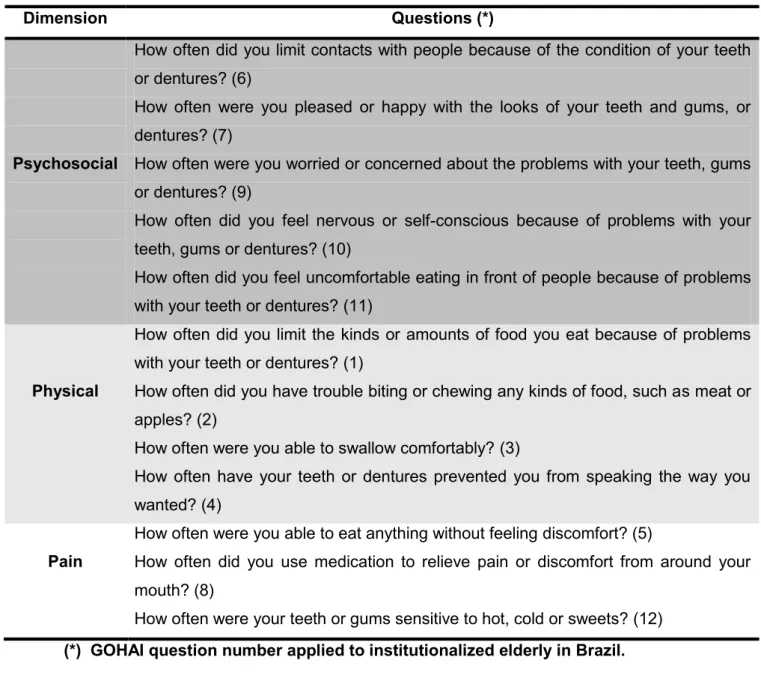
Figura 1 List of GOHAI questions in the psychosocial, physical and pain
or discomfort dimensions. (Figura 1 do Artigo 2)
55
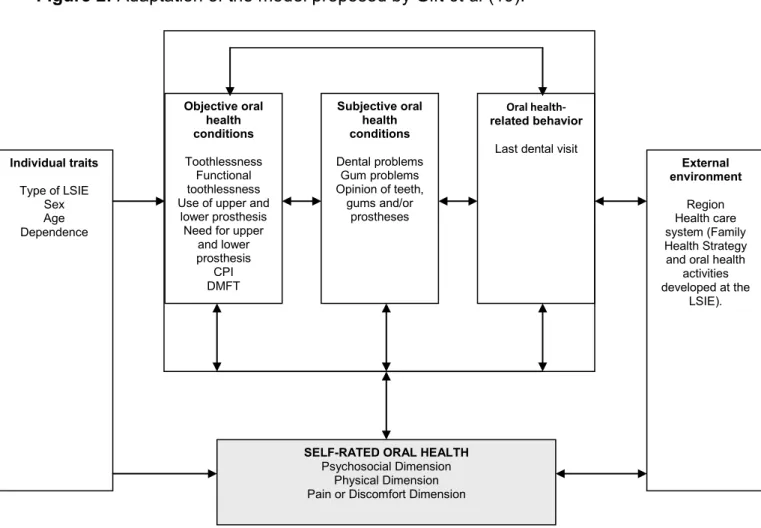
Figura 2 Adaptation of the model proposed by Gift et al. (Figura 2 do
Artigo 2)
56
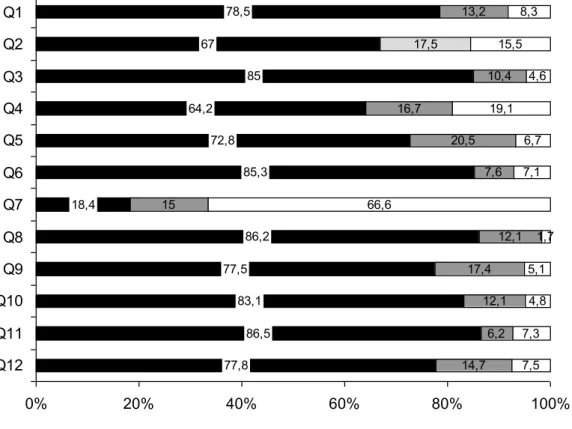
Figura 3 Percentage distribution of the 12 Geriatric Oral Health
Assessment Index (GOHAI) questions, in institutionalized
elderly in Brazil. (Figura 3 do Artigo 2).
57
Figura 4 Schematic representation of factorial analysis. (Figura 1 do
Artigo 3).
83
Figura 5 Mediana da porcentagem de idosos na população geral
encontrada por municípios e Macroregiões. Brasil, 2005.
Lista de Quadros
Quadro 1 Relação das Instituições de Longa Permanência de Idosos
(ILPIS) distribuídas por município e região, capacidade
instalada, número de idosos residentes e investigados. Brasil,
2007-2008.
Lista de Abreviaturas
Ad PR Adjusted Prevalence Ratio
AL Estado de Alagoas
BA Estado da Bahia
CEP Comitê de Ética em Pesquisa
CE Estado do Ceará
CI Confidence Interval
CNPq Conselho Nacional de Desenvolvimento Científico e Tecnológico
CPI Community Periodontal Index
CPI Indice Periodontal Comunitário
CPOD Índice de Dentes Cariados, Perdidos e Obturados
CO Região Centro-Oeste
DAB Departamento de Atenção Básica
Dp Desvio padrão
DMFT Decayed Missing and Filled Teeth Index
ESF Estratégia de Saúde da Família
FDI Federação Dentária Internacional
FHS Family Health Strategy
GO Estado de Goiás
GOHAI Geriatric Oral Health Assessment Index
GOHAI Ab Geriatric Oral Health Assessment Index expressed in absolute values
GOHAI St Stratified Geriatric Oral Health Assessment Index
GOHAI Bi Binary Geriatric Oral Health Assessment Index
IBGE Instituto Brasileiro de Geografia e Estatística
IC Intervalo de confiança
LSIE Long-Stay Institutions for the Elderly
MCT Ministério de Ciência e tecnologia
MG Estado de Minas Gerais
MS Ministério da Saúde
MS Estado do Mato Grosso do Sul
MT Estado de Mato Grosso
N Região Norte
NE Região Nordeste
NPTI Necessidade de Prótese Total Inferior
NPTS Necessidade de Prótese Total Superior
NSP Negative Self Perception
NSR Negative Self-Rating
OHIP Oral Health Impact Profile
OMS Organização Mundial da Saúde
OR Odds Ratio
OR adjust Adjusted Odds Ratio
OR cr Crude Odds Ratio
PA Estado do Pará
PE Estado de Pernambuco
PIBIC Programa Institucional de Bolsas de Iniciação Científica
PIP Perda de Inserção Periodontal
PLA Periodontal Loss of Attachment
PNSPI Política Nacional de Saúde da Pessoa Idosa
PPGCSA Programa de Pós Graduação em Ciências da Saúde
PR Estado do Paraná
PR Prevalence Ratio
RN Estado do Rio Grande do Norte
RO Estado de Rondônia
RS Estado do Rio Grande do Sul
S Região Sul
SAS Secretaria de Atenção à Saúde
SB Saúde Bucal
SB Brasil Projeto Saúde Bucal Brasil
SE Região Sudeste
SISNEP Sistema Nacional de Ética em Pesquisa
SP Estado de São Paulo
SPSS Statistical Packet for Social Science
STROBE Strengthening the Reporting of Observational Studies in Epidemiology
SUS Sistema Único de Saúde
TCLE Termo de Consentimento Livre e Esclarecido
TO Estado do Tocantins
UFRN Universidade Federal do Rio Grande do Norte
VIF Variance Inflation Factors
Resumo
Objetivo: O propósito dessa investigação foi o de estudar as situações
objetivas e de auto-percepção em saúde bucal de idosos residentes em
Instituições de Longa Permanência de Idosos (ILPIS) distribuídos em 11
municípios pertencentes as 5 regiões geográficas do Brasil. Metodologia:
Trata-se de estudo seccional através de um censo com idosos
institucionalizados no Brasil. Foram avaliados 1192 indivíduos, residentes em
36 Instituições de Longa Permanência de Idosos (ILPIS), distribuídas em 11
municípios. Deste universo, 587 (49,2%) responderam ao GOHAI. Foi aplicado
questionário com questões subjetivas e sobre o comportamento em saúde
bucal, além de levantamento epidemiológico seguindo critérios da Organização
Mundial da Saúde (OMS). Foram realizados os testes de Mann-Whitney,
Kruskal-Wallis, Exato de Fisher, Qui-quadrado e Regressão logística múltipla.
Resultados: A idade média foi de 74,98 (+ 9,5). Destes, 51,4% (302) eram do
sexo masculino e 152 (25,9) apresentavam alguma dependência. A média do
CPOD foi de 28,8 (+ 5,5) e 54,5% (320) dos idosos eram edêntulos.
Constatou-se que 54,2% (318) e 74,1% (435) não usam nenhum tipo de próteConstatou-se superior
e inferior, respectivamente. O CPI e PIP mostraram que 64,4% (378)
apresentaram todos os sextantes excluídos. O GOHAI mostrou que 75% (440)
dos indivíduos apresentava auto-percepção positiva em saúde bucal. As
variáveis última visita ao dentista (RP ajust=4,058; IC=1,526-10,789), presença
de problemas gengivais (RP ajust=5,703; IC=1,754-18,544) e opinião sobre os
dentes, as gengivas ou prótese (RP ajust=19,514; IC=5,075-75,041)
permaneceram significativas no modelo após regressão logística múltipla.
Conclusões: Observou-se predomínio da auto-percepção positiva em saúde
bucal em detrimento das precárias condições bucais. Assim, para a população
institucionalizada, o presente estudo recomenda a aplicação de levantamentos
epidemiológicos e de auto-percepção para assegurar adequado planejamento
nas ações de saúde bucal.
Descritores: Saúde Bucal; Saúde do idoso institucionalizado; Auto-Percepção;
APRESENTAÇÃO
“Uma civilização é julgada pelo tratamento que dispensa às minorias”
APRESENTAÇÃO
Os anos passaram... E vivencio em mim e nos outros a precisa
expressão de Goethe ao afirmar que “a idade se apodera de nós de surpresa”
e assim imbricada com a idade vem a maturidade, a beleza e a oportunidade
de apresentar agora a minha tese de doutorado.
Desde o mestrado, venho ao longo do tempo, me debruçando
academicamente sobre o mesmo tema “o envelhecimento humano” e suas
manifestações bucais. Tenho sempre a impressão de que não escolhi esse
tema, mas, sim, fui por ele escolhida, certamente em função de aspectos
pessoais e profissionais.
Propus-me, então, a desenvolver essa pesquisa observando e
analisando aspectos bucais de uma chamada “minoria” dentre os idosos do
nosso país, os institucionalizados. Esse trabalho é, portanto, o resultado de
uma investigação que intenta colocar em relevo essas pessoas que por
inúmeros motivos residem em Instituições de Longa Permanência de Idosos
(ILPI) e direcionar possíveis reflexões sobre o impacto das doenças bucais
nessa população.
A estrutura da presente tese segue um modelo próprio de disposição,
recomendado e proposto pelo Programa de Pós-Graduação em Ciências da
Saúde da Universidade Federal do Rio Grande do Norte (PPGCSA/UFRN)I as
referências bibliográficas encontram-se dispostas de acordo com as normas do
“Vancouver Style”.
A primeira seção, Introdução apresenta brevemente o objeto da
pesquisa, bem como o objetivo desta investigação.
A seção seguinte intitulada Revisão de Literatura tem como tarefa
sistematizar as citações na literatura científica consideradas relevantes para o
projeto de pesquisa.
Na seqüência, são apresentados os três artigos científicos, produzidos e
apresentados em língua inglesa e de acordo com as normas das revistas
escolhidas para a publicação, através da seção Anexação dos Artigos.
A seção chamada Comentários, Críticas e Sugestões encerra a tese e
destina-se a discutir o processo de desenvolvimento do trabalho, além de
1 INTRODUÇÃO
“Nosso verdadeiro estudo é o estudo da condição humana”
1 INTRODUÇÃO
O século XX foi marcado, sobretudo nas últimas décadas, por alterações
na composição etária mundial, evidenciando um intenso processo de
envelhecimento populacional. Neste sentido, as múltiplas conquistas
tecnológicas, sobretudo na área de saúde, as melhorias na qualidade de vida e
a conquista de direitos sociais têm contribuído para o aumento da longevidade
humana e, conseqüentemente, apontado para novas exigências no cuidado à
terceira idade.
Esta alteração no recorte etário mundial torna este segmento
populacional reconhecido pela sociedade e desperta a necessidade de atenção
das áreas médicas e sociais. Para a realidade brasileira este processo de
envelhecimento intensificou-se nas últimas décadas, conforme Veras (2009)(1)
ao afirmar que “o número de idosos no Brasil passou de 3 milhões, em 1960,
para 7 milhões, em 1975, e 20 milhões em 2008 – um aumento de quase 700%
em menos de 50 anos. Conseqüentemente, doenças próprias do
envelhecimento passaram a ganhar maior expressão no conjunto da
sociedade.”
O processo de envelhecimento humano, para a área de saúde,
caracteriza-se como uma complexa área do conhecimento que demanda uma
abordagem interdisciplinar, buscando associar conhecimentos das ciências
médicas, sociais, da psicologia e conhecimentos político-geográficos, dentre
outros, exigindo dos profissionais da saúde uma capacitação específica para o
tratamento deste segmento populacional (2;3).
Especificamente para a Odontologia, em nível mundial, a Federação
Saúde (OMS) criou um Grupo de Trabalho sobre “Odontologia Geriátrica”, que
serviu de estímulo para a realização de pesquisas em todo o mundo. Desde
então, a Odontologia vem despertando para a necessidade de desenvolver
estudos direcionados à terceira idade.
Os dados epidemiológicos em saúde bucal, disponíveis no Brasil
direcionados aos idosos(5-10) demonstraram que a terceira idade no país é
constituída por um grupo de pessoas com quase todos os dentes extraídos,
grande quantidade de bolsas periodontais, lesões de mucosa bucal e uso de
próteses inadequadas.
Entretanto, torna-se oportuno ressaltar que a maioria dos dados
epidemiológicos disponíveis referem-se principalmente à população de idosos
que reside sozinha ou com as famílias, considerando, sobretudo, que os
levantamentos realizados pelo Ministério da Saúde foram de base domiciliar(5;6)
e que, portanto, existe a necessidade de investigar as condições de saúde
bucal daqueles residentes em Instituições de Longa Permanência de Idosos
(ILPI).
Neste sentido, a realização de um estudo de dimensões nacionais à
respeito das condições de saúde bucal dos idosos residentes em Instituições
de Longa Permanência de Idosos (ILPI) buscou fornecer instrumentos para
compreender os impactos das doenças bucais nesta população, além de
apontar direcionamentos para as ações específicas em saúde bucal, visando a
1.1 Objetivos
1.1.1 Objetivo Geral
Estudar e avaliar a situação de saúde bucal de idosos residentes em
Instituições de Longa Permanência de Idosos (ILPIS) distribuídos em 11
municípios pertencentes às 5 regiões geográficas do Brasil, no biênio
2007-2008.
1.1.2 Objetivos Específicos
1. Identificar a situação da saúde bucal dos idosos institucionalizados nas
11 cidades brasileiras;
2. Investigar a auto-percepção em saúde bucal dos idosos
institucionalizados;
3. Buscar associações entre auto-percepção em saúde bucal e as
2 REVISÃO DE LITERATURA
“Conhecer e pensar não é chegar a uma verdade absolutamente certa,
mas dialogar com a incerteza”
2 REVISÃO DE LITERATURA
O envelhecimento da população é um fenômeno de proporções
mundiais. Nos países desenvolvidos, esse processo ocorreu lentamente em
função da evolução econômica e do crescimento do nível de bem-estar, além
da redução das desigualdades sociais. Nos anos mais recentes, esse processo
ganha maior importância nos países em desenvolvimento, com o aumento
acelerado da população de sessenta anos e mais(11).
Especificamente no Brasil, os dados demográficos mostram que o país
apresenta um dos mais agudos processos de envelhecimento populacional
dentre os países mais populosos. A proporção de pessoas idosas com
sessenta anos e mais aumentou de 6,1% (7.204.517 habitantes), em 1980,
para 8,6% (14.536.029 habitantes) em 2000 e para 11% (21.000.000
habitantes) em 2008, correspondendo a um aumento absoluto de 13,8 milhões
de indivíduos(12,13).
Nesta perspectiva, a afirmação de Veras (2009) (1) de que o Brasil é hoje
um “jovem país de cabelos brancos”, se confirma, pois a cada ano, 650 mil
novos idosos são incorporados à população. E ademais, as projeções
populacionais estimam que a população brasileira no ano de 2025 atingirá
cerca de 31,3 milhões de pessoas com idade de sessenta anos e mais(14) e o
país será a sexta maior população idosa do mundo em números absolutos com
a população idosa representando em torno de 13% da população total(15).
Assim, a acelerada mudança na estrutura etária brasileira cria, para o
país, oportunidades para o enfrentamento de problemas gerados pelo
envelhecimento de sua população(16). A literatura e a realidade mostram que à
refere-se aos inúmeros problemas de saúde entre os idosos que desafiam os
sistemas de saúde e de seguridade social(17).
De acordo com Veras (2009) (1), a maior parte desses idosos apresenta
doenças crônicas e alguns com limitações funcionais. Em menos de 40 anos, o
Brasil passou de um cenário de mortalidade próprio de uma população jovem,
para um quadro de enfermidades complexas e onerosas, típica dos países
longevos, caracterizado por doenças crônicas e múltiplas que perduram por
anos, com exigência de cuidados constantes, medicação contínua e exames
periódicos.
Na perspectiva do Estado brasileiro, o aumento da longevidade dos
idosos, acompanhado de suas conseqüências, vem trazendo mudanças nas
políticas públicas nacionais. Destaca-se o Estatuto do Idoso, sancionado em
2003, com o intuito de garantir aos indivíduos idosos os direitos de proteção à
vida e à saúde(18). E, no âmbito da saúde, a Política Nacional de Saúde da
Pessoa Idosa (PNSPI) aprovada em 2006 pelo Ministério da Saúde, que surge
com os objetivos de promover o envelhecimento saudável, manter e melhorar
ao máximo a capacidade funcional dos idosos, prevenir e tratar doenças,
garantindo que esta população permaneça em seu meio social(19).
Assim, apesar dessas iniciativas governamentais, há ainda, para a
sociedade brasileira, um longo caminho a percorrer no sentido de garantir a
todos os cidadãos um envelhecimento com qualidade. Neste sentido, torna-se
premente evidenciar a situação de um grupo específico de idosos, os
institucionalizados. A literatura em nível mundial que aborda a questão da
institucionalização dos idosos mostra que nos países desenvolvidos em torno
geriátricas, abrigos, ou seja, em Instituições de Longa Permanência de Idosos
(ILPI) (20).
No Brasil, esse percentual mostra-se reduzido. Estudo realizado por
Chaimowicz e Greco (1999) (20) na cidade de Belo Horizonte evidenciou que
apenas 0,6% dos idosos viviam em instituições. No ano de 2002, a quinta
caravana nacional de direitos humanos, realizada pela comissão de direitos
humanos da Câmara dos Deputados, que objetivou verificar a condição dos
abrigos e asilos brasileiros para idosos, encontrou que 0,14% dos idosos
brasileiros estavam institucionalizados, cabendo salientar que este percentual
pode estar subestimado em função da existência de instituições não
cadastradas ou clandestinas (21).
A internação do idoso em uma instituição de longa permanência é uma
alternativa em certas situações: necessidade de reabilitação intensiva no
período entre a alta hospitalar e o retorno ao domicílio, ausência temporária do
cuidador domiciliar, estágios terminais de doenças e níveis de dependência
muito elevados(20). Em países da Europa e nos Estados Unidos, a residência
assistida tem se tornado uma solução para moradia dos idosos, por oferecerem
ambientes com suporte, visando atender as necessidades desses
indivíduos(17).
A necessidade de institucionalização para a realidade brasileira tem sido
gerada pela mudança na constituição das famílias em termos numéricos e
etários. No século passado, as famílias eram numerosas, marcadas pelo
grande número de jovens e apenas um ou dois idosos. Na atualidade, as
famílias foram reduzidas numericamente e, proporcionalmente, surge maior
que tinham um ou dois idosos para cuidar, se transformaram em famílias com
quatro ou cinco idosos que necessitam de cuidados diários e que não dispõem
de cuidadores suficientes e, por esse motivo, são compungidos a
institucionalizar seus entes(22).
Nessa realidade da institucionalização, do ponto de vista dos cuidados
em saúde bucal especificamente, a literatura internacional vem demonstrando
que os idosos não recebem regularmente cuidados preventivos específicos
para seus problemas bucais, nem tampouco tratamentos odontológicos,
indicando a necessidade de desenvolver estratégias de promoção de saúde e
de prevenção específicas, dirigidas a eles, com o objetivo de melhorar sua
qualidade de vida (23-25).
No Brasil, os dados relativos à situação de saúde bucal da população
idosa são encontrados no levantamento nacional das Condições de Saúde
Bucal da População Brasileira, o Projeto SB Brasil 2003(6), e mais
recentemente, estes dados foram atualizados através do Projeto SB Brasil
2010(5). Estes levantamentos, embora possuam uma abrangência nacional não
abordam especificamente a população idosa institucionalizada.
Pesquisas realizadas no Brasil em ILPI mostram alguns aspectos das
condições de saúde bucal dos idosos institucionalizados. Estudo desenvolvido
por Roncalli (2001)(26) em ILPI de Natal (RN), mostrou que 66,6% dos
residentes eram desdentados (em pelo menos um dos arcos). Aguiar (2008)
(27)
, na mesma instituição, encontrou em média 3,52 dentes presentes e uma
elevada perda dentária, com o CPO-D atingindo 29,96 dentes, em média.
Estudo realizado no município de Recife (PE) com idosos
os idosos institucionalizados foi 30,37, enquanto para os idosos não
institucionalizados esse valor foi mais baixo, 25,14. Em relação ao edentulismo,
foi constatado que 96,01% e 87,87% dos idosos institucionalizados e não
institucionalizados, respectivamente, apresentavam perdas dentarias(28).
Outra pesquisa, também realizada com idosos institucionalizados e não
institucionalizados no município de Fortaleza (CE) mostrou que em relação ao
número de dentes, 60,4% da população estudada era desdentada total e a
média de dentes presentes na cavidade bucal era de 3,9(29).
Diante desse quadro e buscando aprofundar o diagnóstico das
condições de saúde bucal da população de idosos institucionalizados em
proporções nacionais, o presente estudo foi desenvolvido em 11 municípios
brasileiros, distribuídos nas 5 regiões geográficas com o intuito de conhecer as
condições de saúde bucal dos idosos residentes em 36 Instituições de Longa
Permanência de Idosos considerando as suas peculiaridades. Ademais, os
resultados da pesquisa poderão contribuir para o desenvolvimento de políticas
em saúde bucal adequadas e direcionadas a essa população, em consonância
com a recomendação da Organização Mundial da Saúde (WHO) (30) de que os
3 ANEXAÇÃO DOS ARTIGOS
“A hora que passa é preciosa demais para que lhe percamos a grandeza”
3 ANEXAÇÃO DOS ARTIGOS
Artigo 1) Artigo enviado e aceito para a publicação no periódico Archives
of Gerontology and Geriatrics. ISSN: 0167-4943
Piuvezam G, Lima KC. Self-perceived oral health status in institutionalized
elderly in Brazil.
Artigo 2) Artigo enviado para a publicação no periódico Community
Dentistry and Oral Epidemiology. ISSN: 1600-0528
Piuvezam G, Lima KC. Psychosocial, physical and pain aspects related to oral
health in institutionalized elderly in Brazil.
Artigo 3) Artigo enviado para a publicação no periódico Gerodontology.
Print ISSN:0734-0664. Online ISSN: 1741-2358
Piuvezam G, Lima KC. Factors associated with missing teeth in the Brazilian
3.1 Artigo 1
SELF-PERCEIVED ORAL HEALTH STATUS IN INSTITUTIONALIZED
ELDERLY IN BRAZIL
Grasiela Piuvezama, Kenio Costa de Limab.
a. Federal University of Rio Grande do Norte (UFRN), Assistant Professor in the
Department of Public Health (DSC) and doctoral student in the Postgraduate
Health Sciences Program (PPGCSA-UFRN). Rua General Gustavo Cordeiro de
Farias, S/N, Petrópolis. Natal, RN, 59012-570, Brazil. E-mail:
b. Federal University of Rio Grande do Norte (UFRN), Adjunct Professor in the
Department of Dentistry. Av. Senador Salgado Filho, 1787, Lagoa Nova. Natal,
RN, 59056-000, Brazil. E-mail: [email protected]
Corresponding Author:
Grasiela Piuvezam
Address: Rua General Gustavo Cordeiro de Farias, S/N, Petrópolis. Natal, RN,
59012-570, Brazil
Phone: +55 84 33429750
Fax: +55 84 33429727
E-mail: [email protected]
Collaborators
Grasiela Piuvezam and Kenio Costa de Lima developed the study, collected the
data, performed the statistical analysis, reviewed the literature, and wrote the
Abstract
This study aims to identify self-perceived oral health status in institutionalized
elderly in Brazil, using the Geriatric Oral Health Assessment Index (GOHAI) and
to seek associations with objective and subjective conditions and behavior
related to oral health, individual traits, and environmental factors. A
cross-sectional study using census with institutionalized elderly in Brazil. A total of
1192 individuals were evaluated, and 587 (49.2%) responded to the GOHAI. A
questionnaire and an epidemiological survey were applied. Mann-Whitney,
Kruskal-Wallis, Fisher’s exact, chi-squared, and multiple logistic regression
tests were performed. Mean age was 74.98 years (+ 9.5), 51.4% (302) were
male. Mean DMFT was 28.8 (+ 5.5) and 54.5% (320) of the elderly were
toothless. Categorized GOHAI showed that 75% (440) of the individuals had
positive self-perception of oral health status. Multiple logistic regression
demonstrated that the last visit to the dentist (adjusted PR=4.058;
CI=1.526-10.789), presence of gingival problems (adjusted PR =5.703; CI=1.754-18.544),
and self-rating of teeth, gums, or prosthesis (adjusted PR =19.514;
CI=5.075-75.041) remained significant in the model. Predominance of positive
self-perception of oral health status was observed despite poor oral conditions.
Thus, for the institutionalized population, the present study recommends
epidemiological and self-perception surveys to ensure adequate planning of oral
health strategies.
Keywords: Oral Health Status; Elderly; Institutionalized; Self-Perception; Oral
Introduction
Self-perceived health status is the interpretation that individuals make of
their health status and daily life experiences. This process requires knowledge
about health and disease, mediated by prior experience as well as the social,
cultural, and historical context in which individuals live (Gilbert, 1994).
With respect to the health management process, self-perceived health
status in a population helps guide political and social conditions aimed at
improving both health and quality of life. Therefore, identifying the determining
factors involved in self-perceived oral health status is essential to understanding
behavior and how to assess individual needs (Martins et al., 2009).
In evaluating oral health status, knowing the perspective of individuals
about their own health is an important prerequisite for increasing adherence to
healthy behavior (Benyaminy et al, 2004.; Ferreira et al., 2006; Piuvezam et al.,
2006). In the case of the elderly, this aspect becomes even more relevant,
since, even in countries with programs directed specifically to this age group,
the main reason these individuals do not seek dental treatment is their not
recognizing the need for oral health care (Silva and Fernandes, 2001).
Historically, oral health conditions have been assessed with the help of
epidemiological surveys. As a result, quantitative and objective indicators are
the most widely used. However, measures of quality of life are currently being
used to assess oral health status (Atichinson and Dollan, 1990; Locker, 1997;
Llewellyn and Warnakulasuriya, 2003; John et al., 2004; Reis and Marcelo,
2006; Miura et al., 2010). Among the elderly, subjective aspects have been
gradually increasing in importance, given that oral problems have psychological
Sumi et al., 2010). In this respect, epidemiological criteria have proven to be
insufficient in indicating the level of well being in these individuals in terms of
oral health.
Self-perceived oral health status reflects subjective well-being in
functional, social, and psychological dimensions (Piuvezam et al., 2006; Reis at
al., 2006). To that end, several instruments were developed to measure the
impact of oral health conditions on daily life, the most commonly used with the
elderly being the Geriatric Oral Health Assessment Index (GOHAI) (Atchinson,
1997).
The GOHAI was designed to determine oral health status at two levels.
At the individual level, the literature (Mathias et al., 1993; Atchinson, 1997;
Dolan, 1997; Pinzón-Pulido and Gil Montoya, 1999; Athieh, 2008) has shown
that it can be used as a predictor of the need for a complete oral examination,
besides providing information on symptoms and functional and psychological
problems. At the collective level, it can be an effective, low-cost instrument for
gathering information about oral problems in an elderly population
(Pinzón-Pulido and Gil Montoya, 1999).
Thus, the aim of this study was to identify self-perceived oral health
status in institutionalized elderly in Brazil, using the GOHAI, and to seek
associations between this self-perception and objective and subjective oral
health conditions, behavioral factors, individual traits, and environmental
factors.
Methodology
This is a cross-sectional, quantitative exploratory study conducted with
based on the Strengthening the Reporting of Observational Studies in
Epidemiology (STROBE) protocol (Von Elm et al., 2007) for cross-sectional
studies.
This investigation was approved by the Research Ethics Committee of
the Federal University of Rio Grande do Norte (CEP-UFRN), under SISNEP
0033.0.051.000-06.
The study, characterized as a census of institutionalized elderly, was
conducted with a sample of 11 medium and large Brazilian municipalities,
equally distributed in the 5 geographic regions (North, Northeast, South,
Southeast, and Midwest).
Two cities were randomly drawn from each region, obeying two inclusion
criteria: 1) municipalities with more than 100,000 inhabitants, according to the
Population Projection List of Geography and Statistics Brazilian Institute (IBGE,
2004) for 2005; and 2) municipalities with an elderly population greater or equal
to the median found in each geographic region. The long-stay institutions for the
elderly (LSIE) studied were legally registered private and philanthropic entities.
The definition of elderly was based on chronological delimitation; that is,
persons 60 years of age and over were selected, following legal norms
established by the National Elderly Policy (Brazil, 1996).
Eligibility criteria for the elderly participants were 1) being institutionalized
and 2) being present at the LSIE during the data collection period.
Elderly individuals who presented with cognitive conditions according to
the clinical diagnosis made by the LSIE doctor responded to the Geriatric Oral
Health Assessment Index (GOHAI) (Atchinson, 1997). This index contains 12
between 12 and 36, characterizing the worst and best assessment,
respectively, of self-perceived oral health.
The GOHAI questions refer to three dimensions: the psychosocial
dimension, encompassing aspects of concern over oral health status,
self-image and awareness of health, and limitations of social contacts caused by
oral problems; the physical dimension, involving aspects related to eating,
speaking and swallowing; and the pain or discomfort dimension associated with
orodental status. The GOHAI used in this study was the Brazilian version
validated by Silva (1999), who obtained a Cronbach alpha of 0.65 and 0.76 for
toothed and toothless individuals, respectively.
The dependent variable in this study was GOHAI, which was analyzed
from three perspectives: 1) GOHAI expressed in absolute values (GOHAI Ab),
ranging from 12 to 36 points; 2) stratified GOHAI (GOHAI St): low (12 to 30), fair
(31 to 33) and high (34 to 36), values proportionally equivalent to those
proposed by Pinzón-Pulido and Gil-Montoya (1999); and 3) binary GOHAI
(GOHAI Bi) categorized into negative self-perception for individuals with 30
points or less and positive self-perception for individuals with scores above 31
points. This cutoff point was proposed by Silva et al. (2005), who identified the
group of individuals with the lowest score in the lower quintile of the sample. In
the present investigation, this value (30 points) corresponded to the lower
quartile.
The elderly responded to a questionnaire containing 4 questions, 3 of
which were related to oral health conditions such as the presence of dental or
gingival problems and/or the subjects’ opinion about their teeth, gums, and/or
the last dental visit (Pinzón-Pulido and Gil-Montoya, 1999; Mesas et al., 2008;
Martins et al., 2009).
An epidemiological survey of objective oral health conditions was
conducted using the DMFT index, community periodontal index (CPI),
periodontal loss of attachment (PLA), prosthetic use, and treatment needs
according to criteria established by the World Health Organization (1998). Data
were collected by 5 dentists who underwent the intra and inter-examiner
calibration process with Kappa values between 0.71 and 0.89.
Data on sex, age, and elderly dependence (dependent or independent)
were also collected, according to the clinical diagnosis made by the LSIE
doctor.
A previously elaborated questionnaire was applied to characterize the
LSIEs with respect to the following aspects: location (North, South, Southeast,
Northeast, or Midwest), type of LSIE (philanthropic or private), coverage by the
Family Health Strategy (FHS) program, and oral health activities developed with
the elderly (preventive and curative activities).
Descriptive analysis was carried out using absolute and relative
frequencies of the qualitative variables and means with respective standard
deviations for the quantitative variables. The software Stata 10.0 (Stata corp.,
College Station, Texas, USA) was used for statistical analysis.
The Mann-Whitney and Kruskal-Wallis tests were used in bivariate
analysis to determine the statistical significance between independent variables
and outcomes. Likewise, the Chi-squared and Fisher Exact tests were used to
independent variables on outcome was expressed by the prevalence ratio (PR).
A confidence level of 95% was used for all the statistical tests.
Analysis of the independent effect of intervening variables on outcome
was performed using multiple logistic regression, with binary GOHAI as the
dependent variable, and the forced entry method. All the independent variables
with p<0.25 on the association test were included in the modeling process.
Model fit was determined by the Hosmer – Lemeshow test.
Results
The resident population at the long-stay institutions for the elderly (LSIE)
during the study period numbered 1412 individuals. Of these, 1192 (84.4%)
took part in this investigation, 587 (49.2%) of whom presented with cognitive
conditions when responding to the GOHAI, according to the clinical diagnosis
made by LSIE doctors.
These individuals lived in 36 LSIEs, distributed in 11 Brazilian
municipalities. Slightly more than half (51.4%) were male and age ranged
between 60 and 106 years, with a mean of 74.98 + 9.5. For purposes of
analysis, age was categorized based on the median (Table 1). In relation to the
LSIEs, it was found that most of the elderly (94%) resided in philanthropic
institutions and a minority (25.9%) in institutions covered by the Family Health
Strategy (FHS) program. With respect to oral health action plans developed in
the institutions, the study showed that less than half of the residents received
oral health care such as preventive activities or curative measures (Table 1).
Questionnaire data about behavior and subjective conditions related to
oral health showed that only 20% of the elderly had visited a dentist in the
were responded to by 40.8% of the elderly. The low response rate is explained
by the fact that only respondents who had at least one tooth were required to
respond to these questions. Questions related to teeth, gums, and/or
prostheses had 569 (96.9%) respondents, most of whom reported having a
good or excellent opinion of their mouth.
With respect to the dependent variable, the Geriatric Oral Health
Assessment Index (GOHAI), results show that GOHAI Ab obtained a median of
33 and that 25% and 75% of the individuals had scores of ≤ 30 and ≤ 35,
respectively, indicating that most of the subjects obtained high GOHAI scores.
Analysis of GOHAI proceeded with categorization of the GOHAI St index,
using low (12 to 30), fair (31 to 33) and high (34 to 36) scores as parameters. In
refinement analysis it was categorized into two GOHAI Bi categories of
individuals with negative self-perception (≤ 30 points) and positive self
-perception (>31 points). These analyses showed that 25% (147) of the
individuals obtained low scores or negative self-perceived oral health status and
that 75% of the elderly investigated had positive self-perception, 29.1% (171)
with medium scores and 45.9% (268) with high scores.
Data on the objective conditions of oral health status showed that the
mean DMFT was 28.8 (+ 5.5). For analysis purposes this variable was
categorized based on the mean (Table 1). About half of the individuals
presented with total tooth loss and from the perspective of functional
toothlessness, the situation was even more serious, with 84.2% of the elderly
presenting with 20 or less teeth.
The results are more worrisome considering that prosthesis rehabilitation
use any type of upper or lower prosthesis, respectively. In the case of elderly
who use some type of upper or lower prosthesis, 40.9% (240) use total
prostheses for the upper arch and 21.6% (127) for the lower arch.
With respect to the need for rehabilitation, results confirm that 45.8% did
not need prosthesis in the upper arch, and of those needing one, 38.5% (226)
were total prostheses and 14.1% (83) some type of fixed or removable
prosthesis. In the lower arch, 25.9% did not need any type of prosthesis, and of
those who did, 43.8% (257) needed total prostheses and 27.9% (164) needed
fixed or removable prostheses.
Periodontal conditions were analyzed using CPI and PLA indices, which
were identified by the unhealthiest sextants of each individual. Periodontal
disease showed that 18.6% presented with calculus according to CPI criteria
and 9.9% had attachment loss of 6 to 8 mm, according to PLAresults.
Bivariate analyses considered GOHAI Ab, GOHAI St, and GOHAI Bi as
dependent variables and the others as independent (Table 2).
Multivariate analysis followed, considering GOHAI as the dependent
variable, divided into two categories: positive and negative self-perception
(GOHAI Bi). This variable was chosen because statistical refinement showed
that combining the GOHAI index into two categories resulted in better
classification of the individuals according to GOHAI.
Table 1 shows that absolute GOHAI contained 10 variables with
statistical significance (p<0.05). The number of variables with a statistically
significant association in stratified GOHAI was 8, considering those that were at
the threshold of significance. Binary GOHAI contained only 6 statistically
standpoint, considering that the same variables were assessed in the three
types of analysis.
Prior to conducting multivariate analysis, we found multicollinearity
between candidate variables for the model, using the tolerance test and
variance inflation factors (VIF). CPI and PLA determined such collinearity and,
according to the criterion established, both could take part in multivariate
analysis, given their p-values of 0.25. However, owing to collinearity and the
fact that both assess periodontal conditions, the PLA variable was selected for
its theoretical aspect, since it evaluates periodontal attachment loss over time.
In the case of the elderly population, this variable more adequately represents
the periodontal conditions of these individuals. The statistical aspect was also
considered, since it showed better data distribution. PLA was recategorized in
the logistic regression model to obtain a higher sample number in each
category and to exclude the excluded sextant category, since it does not
represent disease. Table 3 depicts the results of multiple logistic regression
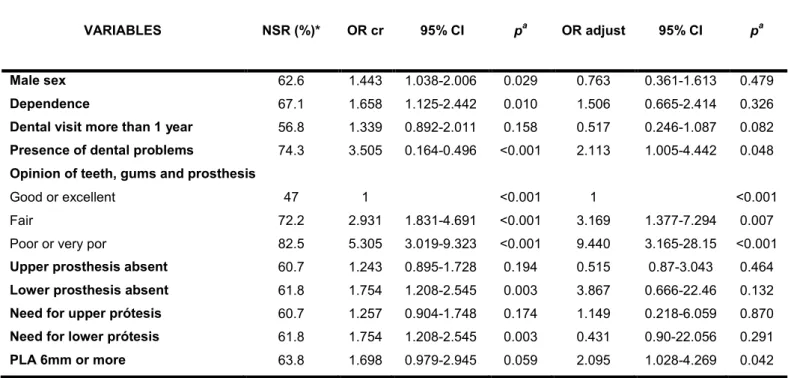
(Table 3).
Thus, considering GOHAI Bi outcomes, analysis showed that the last
dental visit (adjusted PR =4.058; CI=1.526-10.789), gingival problems (adjusted
PR =5.703; CI=1.754-18.544), and fair opinion of teeth, gums, and prosthesis
(adjusted PR=19.514; CI=5.075-75.041) remained significant in the model,
irrespective of the other variables. Model fit, assessed using the
Hosmer-Lemeshow test, showed a value of 0.630.
Discussion
Data concerning the oral health status of the elderly population in Brazil
Population, Project SB Brazil 2003 (Ministério da Saúde, 2004). Although this
survey is national in scope, they do not deal exclusively with the elderly
institutionalized population. The present study investigated this population,
considering its peculiarities, and identified a similar oral health estatusto that of
non-institutionalized individuals.
According to data from SB Brazil 2003 (Ministério da Saúde, 2004), the
elderly population showed mean DMFT of 27.8, similar to the result obtained
here (28.8). With respect to rehabilitation, SB 2003 (Ministério da Saúde, 2004)
showed that 66.54% and 42.57% of the individuals used some type of upper
and lower prosthesis, respectively. In the study with institutionalized elderly, the
findings were more worrisome, since only 45.8% and 25.9% of the elderly used
upper and lower prostheses, respectively.
In relation to needing prosthesis, SB 2003 (Ministério da Saúde, 2004)
results show that 32.4% and 56.06% of the elderly need some type of
prosthesis for the upper and lower arch, respectively. Findings with
institutionalized elderly show that 54.2% and 74.1% need prosthesis in the
upper and lower arches, respectively. This suggests that institutionalized elderly
either lack rehabilitative care or had removed them after enrolling into the LSIE.
The results indicate that elderly Brazilians, institutionalized or not, are a
toothless population in need of oral health care.
With respect to self-perceived oral health status in the elderly, the initial
hypothesis of the present study was that the GOHAI index could precede the
use of epidemiological examinations, thereby facilitating diagnosis of oral health
status and action planning. This hypothesis is based on a number of literature
care and in turn be used for screening, in addition to helping in planning dental
services (Pinzón-Pulido and Gil-Montoya, 1999).
Furthermore, the GOHAI has been considered by some authors as a
significant predictor of self-reported dental appearance in the elderly population
(Mathias et al., 1993). Sensitivity was assessed with other indicators of
self-perceived oral health status and was determined because it is sensitive in
identifying the need for dental treatment (Dolan, 1997; Athieh, 2008).
However, this investigation presents a divergent situation, since GOHAI
analyses in absolute values indicate that the only objective oral health variables
that showed statistically significant association were the use and need of upper
and lower prosthesis. This indicates that individuals using or needing some type
of prosthesis on the upper or lower arch obtained the best scores for absolute
GOHAI.
Analysis of this index in the categorized form - stratified GOHAI
(Pinzón-Pulido and Gil-Montoya, 1999) - shows that in terms of objective oral health
conditions, significance occurred only for the upper arch in the use and need of
some type of prosthesis variables.
However, after statistical analysis was refined and the index
characterized into positive and negative self-perception - binary GOHAI (Silva et
al., 2005) - the surprising results show that there is no association between the
GOHAI and objective oral health conditions.
This finding can be confirmed in the literature (Mc Millan at al., 2003;
Abud et al., 2009). One example, the study conducted by Mesas et al. (2008) in
Brazil, found no associations between negative self-perception identified by
that study, such as the female sex and the presence of depression were
associated with negative self-perception, suggesting that GOHAI was
inadequate for identifying poor oral health conditions in the population studied.
Another Brazilian study was carried out by Abud et al. (2009), who
compared two populations, one institutionalized and the other not. The GOHAI
results showed that the institutionalized population obtained higher scores, even
though it showed worse objective oral health conditions. This result was also
found in a study performed in Hong Kong, which found low percentages of
negative self-perception in institutionalized elderly, using the Oral Health Impact
Profile (OHIP) index. These authors hypothesize that other factors such as
social and cultural ones may influence self-perceived oral health status in the
elderly (Mc Millan et al. 2003).
The results of the present investigation corroborate this assumption,
indicating that an epidemiological survey, complemented by self-perception
data, is needed for an institutionalized population, in order to determine
objective oral health needs.
Moreover, self-perceived oral health status seems to be more rooted in
multiple influences during the lifecouse or to the history of these elderly than
objective oral health conditions themselves. This self-perception may change
throughout life or even throughout the day or week, as a function of physical
and psychological status and contextual conditions. Thus, identifying subjective
elements of well-being and sickness, or trying to quantify what is subjective,
becomes limited since it also involves feelings that are not always expressed
Innumerable studies using GOHAI or other indicators of self-perception
(Kressin et al., 1997: Locker et al., 2000; Silva and Fernandes, 2001;
Benyaminy et al., 2004; Nunes and Abegg, 2008; Martins et al., 2009), similarly
to this study, generally showed a predominance of positive self-perception in
both institutionalized and non-institutionalized populations. These findings are
paradoxical, especially considering the poor subjective oral health conditions in
the elderly. However, it should be pointed out that the subjects investigated
lived in a time when tooth loss and oral conditions were precarious and falling ill
was considered part of the normal aging process. These poor conditions seem
to reflect the health care model adopted in the country, where access is
restricted and unequal and basic health precarious and mutilating (Moreira et
al., 2005, Piuvezam et al., 2006). Thus, positive self-perception of oral health
status under such poor conditions may partially reflect an attitude of culturally
instilled resignation (Silva and Fernandes, 2001).
Other considerations emerged from the research team’s experience with
this population, such as the question of “secondarization of oral problems”
experienced by these elderly individuals, faced with all the other problems
related to psychological, physical and social aspects. The term “secondarization
of oral problems”, proposed in this study, brings to light the dire need of care,
especially from specialized and humanized multiprofessional teams.
Thus, the prevalence of inadequate objective conditions and positive
self-perception of oral care, also reported by a number of authors (Locker et al.,
2000; Silva and Fernandes, 2001), reflects the fact that these objective
conditions are weakly associated with self-perception. One of the explanations
related to the origins of “secondarization of oral health”, are asymptomatic and
unknown to the individual. Another explanation would be the assumption that
objective indicators measure the disease, using the teeth as reference. For this
reason, they lose discriminatory power since most elderly Brazilians are
toothless and owing to the fact that subjective indicators evaluate human
experiences and health (Locker and Slade, 1994). The elderly, however, tend to
consider themselves ill when they experience acute manifestations of oral
disease rather than the chronic and irreversible processes that lead to tooth
loss
Another element to consider is the fact that in the case of bed-ridden or
dependent individuals, toothlessness can be interpreted as a more desirable
situation, especially when these individuals receive no dental care, since dental
problems cease to exist. In this investigation, only 25.9% of the subjects reside
in long-stay institutions for the elderly (LSIE) where dental care is provided by
the Health Family Strategy (FHS) program. In a study conducted by Martins et
al. (2009), results showed that the elderly evaluated their oral health more
positively when they were free of carious teeth and possibility of disease than
when they had a few teeth in poor condition and were unable to acquire
prostheses to ensure efficient and comfortable mastication.
Subjective conditions were most associated with self-perceived oral
health status. In multivariate analysis, the presence of gingival problems and
opinion of teeth, gums, and prosthesis remained significant, despite all the other
variables introduced into the model. It was found that the elderly with gingival
problems had 5.7 times more negative self-perception. In the case of opinion of
negative self-perception, although accuracy of these data is limited. This
situation indicates that questions related to the impact of oral status on the
quality of life of individuals depend more on self-perception than on objective
oral health questions.
These results, corroborated in the literature (Mathias et al., 1995; Silva
and Fernandes, 2001; Martins et al., 2009) also suggest that these questions
may serve to validate the GOHAI itself, given that individuals who report having
gingival problems or that have a negative opinion of their teeth, gums, or
prosthesis display negative self-perception.
Oral health-related behavior of institutionalized elderly and last dental
visit remained significant in all GOHAI versions, and the last dental visit shows
that the individual who visited a dentist within the previous year had around 4
times greater chance of having negative self-perception of oral health status,
similar to that found in the literature (Pinzón-Pulido and Gil-Montoya, 1999;
Silva, 1999; Mesas et al., 2008; Martins et al., 2009).
In this respect, the association between last dental visit and negative
self-perception suggests that individuals who visited a dentist within the last
year did so for oral health problems, possibly linked to a painful or
uncomfortable experience. This hypothesis has been corroborated by other
studies that show an association between pain sensitivity and negative
self-perception of oral health (Nunes and Abegg, 2008; Martins et al., 2009).
It should be pointed out that in multiple logistic regression analysis there
was a reduction in the number of individuals analyzed, owing to the exclusion of
excluded sextants from the PLA variable. However, despite this reduction,
respectively. Furthermore, the study did not use sex and age as fit variables,
since neither were statistically significant and also because there was a certain
equalization of these variables in the institutionalized population.
Finally, these findings underscore that subjective aspects likely have
greater impact on self-perceived oral health status than do objective clinical
signs. It is therefore recommended that clinicians carefully evaluate the
complaints of elderly patients, taking their frailty and comorbidities into
consideration. In this respect, there is a need for a specialized multiprofessional
approach to provide adequate diagnosis, planning, and treatment for this
population.
Conflict of interest statement
None
Acknowledgements
We thank the National Council for Scientific and Technological
Development (CNPq) and the Ministry of Health for financing the study (protocol
MCT-CNPq / MS – DAB/SAS – No 49/2005, Research Project No
402502/2005-1).
References
Abud, M.C., Santos, J.F.F., Cunha, V.P.P., Marchini, L., 2009. TMD and GOHAI
indices of Brazilian institutionalized and community-dwelling elderly.
Atchinson, K.A., 1997. The General Oral Health Assessment Index (GOHAI). In
Slade GD ed.. Measuring oral health and quality of life. Chapel Hill, NC:
Department of Dental Ecology, University of North Carolina, pp. 71-80.
Atchinson, K.A., Dolan, T.A., 1990. Development of the geriatric oral health
assessment index. J Dent Educ. 54, 680-687.
Atieh, M.A., 2008. Arabic version of the Geriatric Oral Health Assessment
Index. Gerodontology 25, 34 – 41
Benyaminy, Y., Leventhal, H., Leventhal, E.A., 2004. Self rated oral health as
an independent predictor of self rated general health, self esteem and life
satisfaction. Soc Sci Med. 59, 1109-1116.
Brasil, 1996. Lei 8.842, sancionada em 4 de janeiro de 1994, a qual "dispõe
sobre a Política Nacional do Idoso, cria o Conselho Nacional do Idoso e dá
outras providências". Brasília: Diário Oficial da República Federativa do Brasil
128, 12277-12279.
Dolan, T.A., 1997. The sensitivity of the Geriatric Oral Health Assessment Index
to dental care. J Dent Educ. 67, 37- 46
Ferreira, A.A.A., Piuvezam, G., Werner, C.W. de A., Alves, M.S.C.F., 2006. The
toothache and tooth loss: social representation of oral care. Ciênc. saúde
coletiva. 11, 211-218.
Gilbert, L., 1994. Social factors and self-assessed oral health in South Africa.
Community Dent Oral Epidemiol. 22, 47-51.
Instituto Brasileiro de Geografia e Estatística (IBGE), 2004. Síntese de