The article was published by Academy of Chemistry of Globe Publications www.acgpubs.org/RNP © Published 04/01/2015 EISSN:1307-6167
Rec. Nat. Prod. 9:3 (2015) 441-445
Cytotoxic Constituents from Bark and Leaves of
Amyris pinnata
Kunth.
Luis Enrique Cuca-Suarez
*1, Franco Della-Monache
2and Ericsson Coy-Barrera
31
Laboratorio de Investigación en Productos Naturales Vegetales, Departamento de Química,
Universidad Nacional de Colombia, Kr 30 # 45-03, Ciudad Universitaria, Bogotá D.C., Colombia.
2
Dipartimento di Chimica e Tecnologia del Farmaco, Università di Roma, Roma, Italia.
3
Laboratorio de Química Bioorgánica, Departamento de Química,Facultad de Ciencias Básicas y Aplicadas, Universidad Militar Nueva Granada, Km 2 vía Cajicá-Zipaquirá, Colombia.
(Received February 18, 2014; Revised November 18, 2014; Accepted November 23, 2014)
Abstract: From leaves and bark of Amyris pinnata Kunth twelve compounds were isolated, corresponding to six lignans 1-6, three coumarins 7-9, a sesquiterpene 10, an oxazole alkaloid 11, and a prenylated flavonoid 12,. Metabolites were identified by spectroscopic techniques (1H and 13C NMR, EIMS) and by comparison with published data in the literature. Cytotoxicity against leukemia, solid tumors, and normal cells was evaluated for all isolated compounds. Lignans were found to be the most cytotoxic compounds occurring in A. pinnata.
Keywords: Amyris pinnata; lignans; coumarins; alkaloid; flavonoid; cytotoxicity. © 2015 ACG Publications. All rights reserved.
1. Plant Source
An important neotropical genus from Rutaceae family is Amyris genus, comprising 126 species as trees and shrubs [1]. Its distribution is in the Antilles and from Florida and Texas in the United States through Central America to Peru and Venezuela [2]. Genus Amyris are usually very aromatic plants and some species have been used for timber as well as a source of incense and oil, attributing antiseptic, emollient, and sedative properties as well as for the treatment of skin deseases [3-5]. An important number of metabolites have been isolated from Amyris plants such as nicotinamides [6], chromene amides [7,8], prenylated furo and pyranocoumarins [5, 9-13], prenylated flavonoids [14], lignans [4], and alkaloids [15,16].Additionally, several biological activities have been described for Amyris species such as cytotoxic [7], antifungal [15], larvicidal [17],and cytochrome inhibition [7].
2. Previous Studies
So far, only a work had described the isolation and the cytotoxic activity of five coumarins and three butyrolactone lignans from leaves and twigs of A. pinnata [18].
*
3. Present Study
Plant material (leaves and bark) of Amyris pinnata Kunth was collected in reserve forest at
Tuluá Botanical Garden, Valle del Cauca Department, Colombia, in September 2009, by Botanist
Wilson Devia. A voucher specimen (number 384414) has been deposited at “Juan María Cespedes” Herbarium at Tuluá Botanical Garden.
Dried, powdered leaves (3459 g) of A. pinnata were extracted by percolation at room temperature using 96% ethanol. 244.3 g of ethanolic extract were obtained. 25 g crude extract were fractionated by CC on silica gel using a mixture of petroleum ether (PE)/ethyl acetate (EtOAc) in increasing polarity, thereby producing 18 fractions in total. Fraction 4 was subjected to CC on silica gel using a mixture of CHCl3/MeOH as eluent in increasing polarity. Fraction 4.2 was purified by
preparative TLC and eluted with CHCl3/MeOH 9:1 to obtain the compounds 5 (22 mg) and 6 (18 mg).
Fraction 5 was also subjected to CC on silica gel with PE/EtOAc as mobile phase obtaining the fraction 5.3, which was subsequently purified by CC eluted with CHCl3/MeOH 9.5/0.5 affording
compounds 8 (36 mg) and 9 (12 mg). Fraction 9 was purified by CC on silica gel using a mixture of toluene/EtOAc as mobile phase in increasing polarity. From the collected fractions 9.3 and 9.7 were independently isolated two solids recrystallized in n-hexane, obtaining compounds 3 (8 mg) and 10
(130 mg), respectively.
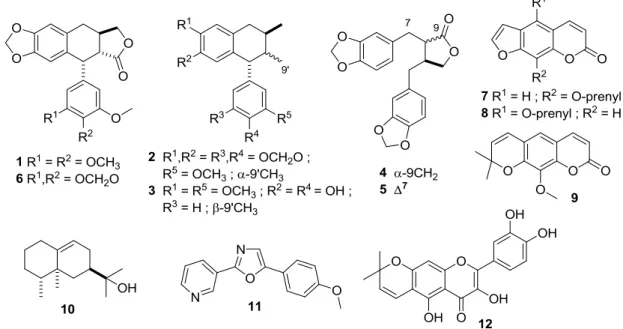
Figure 1. Structures of secondary metabolites isolated from A. pinnata
Dried, powdered bark (1200 g) was extracted with 96% ethanol by percolation at room temperature. 88 g of ethanolic extract were obtained. Crude extract (20 g) was subjected to CC on silica gel using a mixture of Tol/EtOAc as eluent in increasing polarity, thereby obtaining 11 fractions. Fraction 5 was subjected to CC on silica gel and eluted with PE/EtOAc 7:3, yielding compounds 1 (10 mg), 2 (15 mg), and 7 (22 mg). Fraction 7 was subjected to CC on silica gel eluted with a mixture of Tol/EtOAc 6:4 and then a subsequent preparative TLC eluted with CHCl3/MeOH 9:1 yielded
compound 4 (33mg). Fraction 9 was purified by CC eluted with Tol/EtOAc 1:1 afforded the compounds 11 (15 mg) and 12 (7 mg).
The compounds were identified as deoxypodophyllotoxin 1, austrobailignan-3 2, (-)-isoguaiacin 3, hinokinin 4, hibalactone 5, austrobailignan-1 6, imperatonin 7, isoimperatonin 8, luvangetin 9, jinkoh-eremol 10, methylhalfordinol 11, sarothranol 12, whose structures were elucidated by spectroscopic techniques (1H and 13C NMR, IR, EIMS) and by comparison with published data in the literature [4-18], (Figure 1).
All compounds are reported for the first time in A. pinnata species, excepting compounds 6
and 7 [18]. The occurrence of lignans and coumarins in the genus Amyris has been revealed in previous studies, but the report of oxazole alkaloids and prenylated flavonoids are less indicated in
halfordinol-derivative, hinokinin 4 and prenylated flavonoids from this genus, since the prenylated O-(3-3-dimetilalil)-halfordinol and compound 4 have been previously isolated from A. brenesii [4] as well as O-prenylated flavonoids (Amyrisins A−C) from Amyris madrensis [14]. However, so far there are no reports on C-prenylated flavonoids in Amyris genus.
The ethanolic extracts from the leaves and the bark of A. pinnata and all isolated compounds were tested in a disk diffusion soft agar colony formation assay (disk assay) [19]. The disk assay is designed to compare the relative cytotoxicity of a chemical agent against leukemia cells, solid tumor cells (including multidrug resistant solid tumors), and normal cells. The inhibition is expressed in zone units, with 200 units = 6.5 mm. On average, a 10-fold dilution of a cytotoxic agent produces a 330 zone unit change. Activity against a drug sensitive leukemia (L1210 or P388) provides the reference point. The leukemic cell can represent antiproliferative leukemic active agents of past discoveries. The agent needs greater activity against the drug insensitive solid tumors than against the leukemia cells. Normal fibroblasts were also used in such studies. The tumor cells are isolated from a tumor growing in a mouse. The cells are then seeded in the soft agar. The drug is placed on a filter paper disk
(standard hole punch of Whatman no 1) (500 µg per disk), which is then placed on top of the soft agar
(60 mm plate). The drug diffuses off the disk as the tumor cells are replicating, creating a zone of inhibition of colony formation. Sufficient cytotoxicity is considered when the inhibition exhibited >400 units.
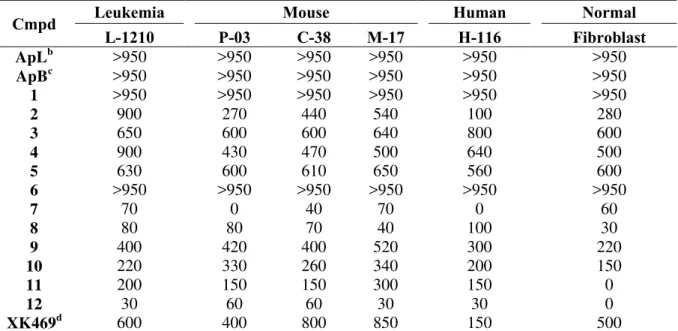
Table 1. Cytotoxicity of isolated compounds in the disk diffusion soft agar colony formation assaya.
Cmpd Leukemia Mouse Human Normal
L-1210 P-03 C-38 M-17 H-116 Fibroblast
ApLb >950 >950 >950 >950 >950 >950
ApBc >950 >950 >950 >950 >950 >950
1 >950 >950 >950 >950 >950 >950
2 900 270 440 540 100 280
3 650 600 600 640 800 600
4 900 430 470 500 640 500
5 630 600 610 650 560 600
6 >950 >950 >950 >950 >950 >950
7 70 0 40 70 0 60
8 80 80 70 40 100 30
9 400 420 400 520 300 220
10 220 330 260 340 200 150
11 200 150 150 300 150 0
12 30 60 60 30 30 0
XK469d 600 400 800 850 150 500
a
Zone units recorded: 200 units = 6.5 mm; bLeaves-derived extract; cBark-derived extract; dXK469 as positive reference.
So far, only a work had described the isolation and the cytotoxic activity of five coumarins and three butyrolactone lignans from A. pinnata, leading to the identification of the cytotoxic lignan austrobailignan-1 6 [18], which was found to be active in the 9KB cell culture system (ED50 0.027
ug/mL). In the present study, extracts from bark and leaves exhibited good activity in the disk diffusion soft agar colony formation assay (>950 units). This result directed our aim towards the isolation and evaluation of the cytotoxicity of the constituents from the leaves and bark of A. pinnata. Major number of test compounds exhibited antitumor activity at different levels (Table 1). Aryltetralin lignan lactones (1 and 6) exhibited the best cytotoxic activity (>950 units) against cell lines without selectivity and high toxicity, which is recognized in several works for these compounds [4,20]. The activity of these compounds was higher to that than positive reference used, XK469, a known antitumor agent [19], which exhibited different pharmacological profile to that of the most active compounds.
The prenylated coumarins 7 and 8, prenylated flavonoid 12, and oxazole 11 exhibited practically no activity against test cell lines. This result is in agreement with the previous study on A. pinnata where imperatonin 7 showed lower activity (KB ED50= 33.0 µg/mL). However, luvangetin 9,
a non-prenylated coumarin, demonstrated moderate activity (300-520 units) against all cell lines but no higher to that of 1. The cytotoxicity of compound 9 has already been reported against human lung A-549 tumor cells, resulting in a remarkable activity (IC50 = 4.28 µg/mL) [21]. Sesquiterpene 10
exhibited some selectivity on mouse solid tumor cells but lower cytotoxic activity than that of 9.
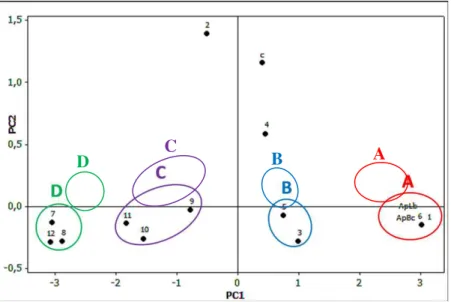
Figure 2. PC1 and PC2 Score Plot for the isolated compounds from A. pinnata.
In order to discriminate observed the activity by test compounds 1-12, a Principal Component Analysis (PCA) was performed using the cytotoxic activity dataset per compound. The resulting Score Plot PC1 vs PC2 (Figure 2) separated the data in four principal groups. The group A consisted in the most active substances (bark and leaves-derived extracts and compounds 1,6) while group D comprised the non-active compounds (7, 8, 12). Groups B and C clustered the compounds with intermediate activity, containing group B those compound more active than those grouped in C. Curiously, PCA algorithm separated compound 4 which exhibited selectivity against Leukemia cells, on the one hand, and compound 2 and the reference showing no significant activity against human H-116 cell line (100 units), on the other hand.
Present study depicted the cytotoxic activity of twelve isolated constituents of A. pinnata for the first time, excepting for compounds 6 and 7. These results indicate that deoxypodophyllotoxin 1
and austrobailignan-1 6 are the active principles responsible for the observed activity of extracts from the leaves and bark, respectively. The findings of this biological activity denote this neotropical endemic medicinal plant as good source of lignan-related cytotoxic agents.
Acknowledgements
Authors thank Universidad Nacional de Colombia for the support for the development of this project. Our gratitude is extended to Botanist W. Devia for the collection of plant material and Dr. E. Palomino at Walker Cancer Research Inst. Detroit, MI, USA, for the support on cytotoxic assays.
References
[1] R. E. Gereau (1991). El género Amyris (Rutaceae) en América del Sur, con dos especies nuevas de la amazonia occidental, Candollea46, 227-235.
[2] J. Gómez-Laurito (1986). Una nota corta sobre Amyris (Rutaceae), Brenesia25/26, 321-335.
[3] Gómez-Laurito and J. Jiménez, Q. (2003). Una nueva especie costarricense del género Amyris P. Browne
(Rutaceae), Lankesteriana6, 5-7.
[4] M. Chavarría, V. Castro, L. Poveda and R. Murillo (2008). Cuatro compuestos nuevos del extracto no polar de la planta Amyris brenesii (Rutaceae) de Costa Rica, Rev. Biol. Trop. 56, 1043-1051.
[5] C. Hasbun and O. Castro (1986). Coumarins from bark of Amyris barbata, J. Nat. Prod.49, 948-949. [6] A. B. Basil and H. Parkins (1975). Amyris of Jamaica. Nicotinamides of Amyris plumieri, Tetrahedron Lett.
30, 2723-2726.
[7] S. Badal, S. Williams, G. Huang, S. Francis, P. Vendantam, O. Dunbar, H. Jacobs, T. J. Tzengc, J. Gangemic and R. Delgoda (2011). Cytochrome P450 1 enzyme inhibition and anticancer potential of chromene amides from Amyris plumieri, Fitoterapia82, 230-236.
[8] G. de La Fuente, M. Reina and I. Timon (1991). Structure and synthesis of chromene-amides from Amyris texana, Phytochemistry 30, 2677-2684.
[9] H. E. Cordova and L. E. Garelli (1974). A new coumarin in Amyris simplicifolia, Phytochemistry13, 758-760.
[10] X. A. Domínguez, G. Cano, I. Luna and A. Dieck (1977). Two coumarins from the aereal parts of Amyris madrensis, Phytochemistry16, 1090.
[11] X. A. Dominguez, R. Franco, G. Cano, S. García, A. Dieck, A. Celia, A. Pedroza and I. Martínez (1985). Three Pyranocoumarins from Amyris marshaii Standl, Rev. Latinoamer. Quim. 16, 52-53.
[12] C. Hasbun-Pacheco and O. Castro-Castillo (1988). Ocurrence of coumarins and amides in the bark of three Amyris species from Costa Rica, Spect. Intern. J.6, 181-184.
[13] A. Laguna (1985). Coumarins from the Leaves of Amyris lineata, Planta Med.51, 528-529.
[14] J. Peng, R. M. Hartley, G. A. Fest and S. L. Mooberry (2012). Amyrisins A-C, O-prenylated flavonoids from Amyris madrensis, J. Nat. Prod.75, 494-496.
[15] C. Hasbun-Pacheco and M. Calderón (1990). 2,5-Diaryloxazols and coumarins from roots of Amyris brenesii, Fitoterapia 61, 88.
[16] A. Laguna (1984). Alkaloids and Coumarins from the Leaves of Amyris diatripa, Planta Med.50, 112. [17] H-M. Park and I-K. Park (2012). Larvicidal activity of Amyris balsamifera, Daucus carota and Pogostemon
cablin essential oils and their components against Culex pipiens pallens, J. Asia. Pac. Entomol.15, 631-634.
[18] M. M. Badawi, A. A. Seida, D. Kinghorn, G. A. Cordell and N. R. Farnsworth (1981). Potential anticancer agents. XVIII. Constituents of Amyris pinnata, J. Nat. Prod. 44, 331-334.
[19] S. T. Hazeldine, L. Polin, J. Kushner, K. White, T. H. Corbett, J. Biehl and J. P. Horwitz (2005). Part 3: Synthesis and biological evaluation of some analogs of the antitumor agents, 2-{4-[(7-chloro-2-quinoxalinyl)-oxy]phenoxy}propionic acid, and 2-{4-[(7-bromo-2-quinolinyl)-oxy]phenoxy}propionic acid, Bioorg. Med. Chem. 13, 1069-1081.
[20] Y. Jin, J. Liu, W-T. Huang, S-W. Chen and L. Hui (2011). Synthesis and biological evaluation of derivatives of 4-deoxypodophyllotoxin as antitumor agents, Eur. J. Med. Chem. 46, 4056-4061.
[21] X. L. Cao, J. Xu, G. Bai, H. Zhang, Y. Liu, J. F. Xiang and Y. L. Tang (2013). Isolation of anti-tumor compounds from the stem bark of Zanthoxylum ailanthoides Sieb. & Zucc. by silica gel column and counter-current chromatography, J. Chromatogr. B929, 6-10.