Mediterranean Journal of Chemistry2012, 2(2), 416-423
*corresponding author:
E-mail address: [email protected]
DOI:http://dx.doi.org/10.13171/mjc.2.2.2012.09.11.12
Chemical modifiers in electrothermal atomic absorption
determination of Platinum and Palladium containing preparations
in blood serum
Аntonina Alemasova* and Оleg Ponomarenko
Analytical Chemistry Department, Donetsk National University, Donetsk, Ukraine
Abstract : The biological liquids matrixes influence on the characteristic masses and repeatability of Pt and Pd electrothermal atomic absorption spectroscopy (ETAAS) determination was studied. The chemical modifiers dimethylglyoxime and ascorbic acid for matrix interferences elimination and ETAAS results repeatability improvement were proposed while bioliquids ETAAS analysis, and their action mechanism was discussed.
Keywords: electrothermal atomic absorption spectroscopy; platinum, palladium; chemical modifiers; bioliquids.
Introduction
Platinum- and palladium-based preparations like carboplatin, ephazole, etc. are widely used in medicine due to their efficient antiradiation and antitumor activity.
An urgent task is investigation of these preparations (by Pt and Pd content) distribution in the subcellular structures of tumor cells and blood corpuscles of patients.
However determination of Pt and Pd content in bioliquids (whole blood and blood serum, urine, lymph, ascitic fluid, etc) by atomic spectroscopy techniques involves sample acid rupture, organic matrix destruction, and preliminary separation and preconcentration of Pt and Pd [1-10].
While electrothermal atomic absorption spectroscopy (ETAAS) technique features the sensitivity required to determination of Pt and Pd trace amount in human bioliquids, there is some sacrifice of measurements accuracy due to significant matrix interferences [11, 12].
The goal of the present study is a search of efficient chemical modifiers for matrix effects elimination in Pt and Pd determination in bioliquids and development of the direct procedure (without preliminary sample preparation) for their determination in blood serum.
Experimental Section
Apparatus
background corrector. Sampling was performed with Unipipette P 200 device with an accuracy within ±0.4%. Elements absorbance was monitored at the resonance wavelengths 265.9 nm (Pt) and 247.9 nm (Pd). The solution tested were sampled out on the pyrolytic coated graphite platforms produced by OKBA (Severodonetsk, Ukraine). The source of resonance emission was hollow-cathode lamps from CORTEC Ltd. (Moscow, Russia). Heating of the furnace was performed by a 4-step program after preliminary temperature optimization at the pyrolysis and atomization staРes. Inert Рas аas “СТРСest-Рrade” arРon.
Platinum(IV) complexes thermal destruction studies were performed with Q-1500D derivatograph Paulik-Paulik-Ergey system (operating conditions: dynamic mode, air atmosphere, temperature range 20-800° ) in the covered alundum crucibles. Chemical composition of the platinum dimethylglyoximate pyrolysis products was determined using x-ray phase difractometer Dron 2.
Reagents and standard solutions
All reagents were of analytical or higher grade. Standard solutions of H2PtCl6 and H2PdCl4 were prepared from the certified reference materials that were donated by Phisico-Chemical Institute of National Academy of Science (Odessa, Ukraine). Commercial Carboplatin from Ebewe Pharma (Austria) was used without additional purification.
Procedure
Standard solution of Pt(IV) (252 μg/L), Pd(II) (25 μg/L) or Carboplatin was sampled into the volumetric test tube of 10 mL capacity and the ethanolic solutions (dimethylglyoxime and diphenylcarbazone) or aqueous solutions (chromazurole S, ascorbic acid, hydrazine hydrochloride or diantipyrylmethane) of the modifiers were then added. Pig blood serum (1.0 mL) prepared by blood centrifugation at 3000 rps/min during 15 min was added to the mixture, diluted with water to the total volume of 3.0 mL and stirred. A portion of the resulting solution (20 μL) was sampled out on L’vov platform into the graphite furnace followed by the atomizer heating under optimum conditions. The modifies efficiency was judged from characteristic masses m0, i.e., the analyte masses producing an integrated absorbance of 0.0044, and relative standard deviation Sr of absorbance data.
The characteristic masses (m0) were calculated by the formula:
A V C
m0 0.0044,
where C – analyte solution concentration; V – solution volume; A – integrated absorbance value.
Results and Discussion
Selection of optimal time-temperature heating program
and palladium(II) compounds in the graphite furnaces using program package HSC CHEMISTRY 4.0.
Data of the computer simulation were summarized as the temperature dependencies of metals different forms (in kmol) in the condensed and gas phases of the analytical zone – graphite tube of the electrothermal atomizer.
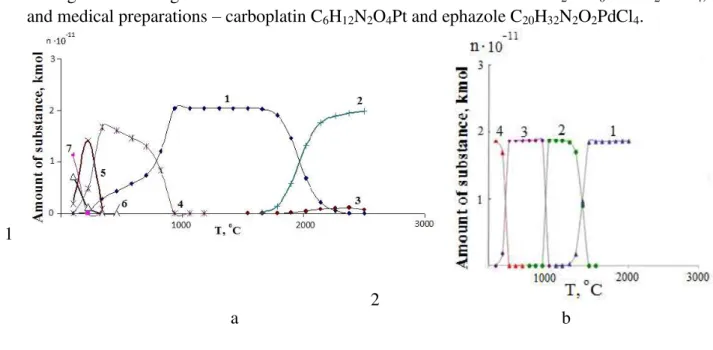
Figures 1 and 2 give the simulation results for standard solutions of H2PtCl6 and H2PdCl4, and medical preparations – carboplatin C6H12N2O4Pt and ephazole C20H32N2O2PdCl4.
1
2
a b
3 4
Figure 1. Simulation of atomization of platinum (a) 1 – Ptc; 2 – Ptg; 3 – PtCg; 4 – PtClc; 5
5 – PtCl2c; 6 – PtCl3c; 7 – PtCl4c; and palladium (b) 1 – Pdg; 2 – Pdc; 3 – PdOc; 4 – PdCl2c 6
compounds. Subscript c – condensed phase; g denotes the gas phase. 7
8
9
10
Figure 2. Simulation of carboplatin (a) 1 – Ptc; 2 – Ptg; 3 – PtCg and ephazole (b) 1 – 11
Pdg; 2 – Pdc; 3 – PdOc atomization. Subscript c – condensed phase; g– gas phase. 12
13
The data of fig. 1a and 2a show that the thermostable platinum carbide PtC with 14
decomposition temperature more than 2600° may form at the temperature range 1800-15
amounts decreasing and may be one of the reasons of depressing matrix influence while 1
analysis of samples containing great carbon amounts, for example, bioliquids. In the case of 2
the palladium the carbide compound is not formed under these conditions. 3
Figs. 1 and 2 revealed that the Pt and Pd free atoms formation in the standard solutions of 4
Pt- and Pd-containing compounds differ insignificantly. Platinum atomic vapor is formed in 5
evaporation of the condensed reduced platinum. In the case of palladium, PdO is first formed 6
in the condensed phase followed by its reduction to free Pd and subsequent evaporation of the 7
latter. The pyrolysis maximum allowable temperature in standard solutions of platinum and 8
palladium evaporation amounted to 1800° and 1400° , respectively, whereas those for 9
carboplatin and ephazole were somewhat lower (1500° ). 10
On this basis the drying step was carried out at 110° during 30 s, atomization step was 11
carried out at 2800° at a “gas-stop” mode of operation during 5 s, and the furnace high-12
temperature cleaning was carried out at 2900° within 3 s. Pyrolysis was carried out with 13
stepwise increasing the temperature to 1800° (Pt) and 1400° (Pd) during 80 s. 14
15
Bioliquids matrix effects on platinum and palladium ETAAS determination
16 17
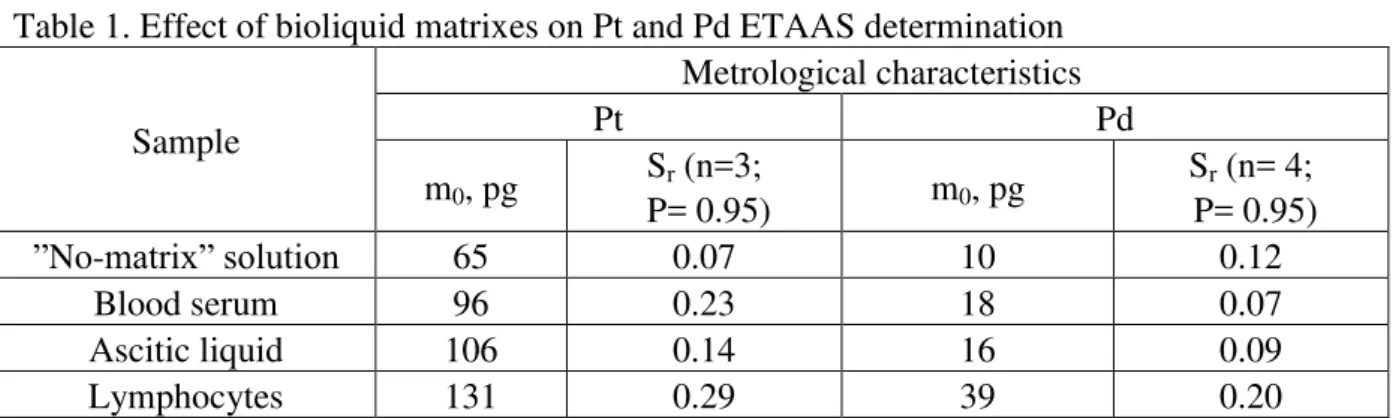
Table 1 gives the experimental characteristic masses m0 and relative standard deviations Sr 18
for Pt and Pd absorbance in “non-matrix” solutions and bioliquids under optimum conditions. 19
The standard solutions characteristic masses are close to those available from the literature: 20
10 pg for palladium [13] and 56 pg for platinum [14]. 21
The bioliquids matrixes decrease the sensitivity in platinum and palladium ETAAS 22
determination by the factor of 1.5-2 and 1.5-4 respectively. Moreover, a considerable 23
repeatability decrease is observed for both elements. 24
25
Table 1. Effect of bioliquid matrixes on Pt and Pd ETAAS determination 26
Sample
Metrological characteristics
Pt Pd
m0, pg Sr (n=3;
P= 0.95) m0, pg
Sr (n= 4; P= 0.95)
”No-matrТб” solutТon 65 0.07 10 0.12
Blood serum 96 0.23 18 0.07
Ascitic liquid 106 0.14 16 0.09
Lymphocytes 131 0.29 39 0.20
27
The use of stabilized temperature furnace with a platform eliminates or essentially reduces 28
matrix interferences providing that chemical modification is an essential part of the procedure. 29
30
Chemical modifiers in Pt and Pd ETAAS determination in blood serum
31 32
ETAAS determination of Pt and Pd in the biological samples conventionally involves such 33
chemical modifiers as (NH4)2H2ED А+NH3+NH4H2PO4 [15], ammonia [16], copper sulfate 34
[17]. 35
In solving a problem of Pt and Pd atomization processes modification an efficiency of 36
organic reagents which form stable complex compounds with Pt(IV) and Pd(II) ions in 37
aqueous solutions – dimethylglyoxime, chromazurol S, diphenylcarbazone and diantipyril 38
addition of 1.3 % (by volume) of ethanol. The modifiers efficiency was evaluated by their 1
ability to increase the sensitivity and repeatability of ETAAS technique. 2
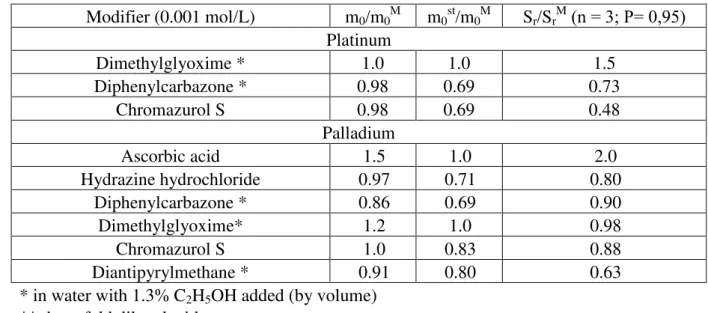
Table II gives the results as the ratios of characteristic masses and relative standard 3
deviations of Pt and Pd experimental analytical signal in pig blood serum samples with and 4
without modifiers (m0 and Sr) and (m0M and SrM). 5
6
Table II. Efficiency of chemical modifiers in Pt and Pd ETAAS determination in pig blood 7
serum** 8
Modifier (0.001 mol/L) m0/m0M m0st/m0M Sr/SrM(n = 3; = 0,95) Platinum
Dimethylglyoxime * 1.0 1.0 1.5
Diphenylcarbazone * 0.98 0.69 0.73
Chromazurol S 0.98 0.69 0.48
Palladium
Ascorbic acid 1.5 1.0 2.0
Hydrazine hydrochloride 0.97 0.71 0.80
Diphenylcarbazone * 0.86 0.69 0.90
Dimethylglyoxime* 1.2 1.0 0.98
Chromazurol S 1.0 0.83 0.88
Diantipyrylmethane * 0.91 0.80 0.63
* in water with 1.3% C2H5OH added (by volume) 9
** three-fold diluted with water 10
11
Biological samples matrixes decrease the Pt and Pd ETAAS determination sensitivity in 12
comparТson аТtС standard solutТons, аСТcС don’t contain biological matrixes. The degree of 13
this influence elimination was estimated by Pt and Pd characteristic masses ratio in standard 14
solutions (without biological matrix) m0st and in pig blood serum solutions containing matrix 15
modifier m0M. The complete elimination of matrix influence (the ratio m0st/m0M is close to 1) 16
and 1.5-fold and 2-fold relative standard deviation decrease for platinum and palladium, 17
correspondently, are observed only for dimethylglyoxime and ascorbic acid. 18
At temperatures below 470 K in the crystallization water melts the interaction between 19
palladium and ascorbic acid takes place that leads to Pd(II) exothermic reduction to metal 20
[18]. Besides, in the ascorbic acid presence a precipitate forms, so analyte compounds 21
pyrolysis is faster and more complete. Developed surface of the sediment probably leads to 22
elements evaporation rate increasing. The presence of ascorbic acid in the sample solution 23
reduces the diffusion of analytes to the peripheral zones of the furnace at the pyrolysis stage 24
[19]. 25
Effect of dimethylglyoxime is due to change in the mechanism of free atoms formation, 26
prevention of analyte low-temperature losses and change on character of platinum and/or its 27
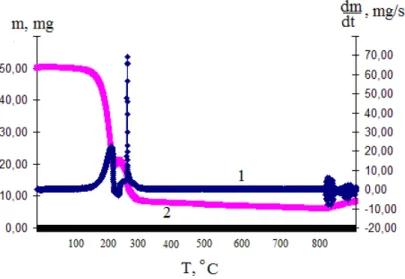
compounds distribution at the surface of the graphite platform. Derivatography studies Pt(IV) 28
dimethylglyoximate pyrolysis prepared by the standard procedure [20] support this suggestion 29
(Fig. 3). 30
Complex pyrolysis proceeds by a stepwise mechanism and is completed at a temperature 31
as low as 300° . X-ray diffraction pattern of the ash residue showed that the main reaction 32
product of the platinum dimethylglyoximate complete pyrolysis is reduced platinum. 33
Studies on the pyrolysis intermediate products (230° ) of platinum(IV) 34
platinum complex. At the first stage of the pyrolysis such possible phases as 1
[(NH3)2PtOH)]2(NO3)2, [Pt(NH3)2](NO3)2, 2H12N4O4Pt, C4H12N4O8Pt2, and PtO2 were 2
detected. It is known that the radical pyrolysis of the complexes which modifier forms with 3
analyte, leads to the analyte chemisorption at the graphite surface [21]. This prevents its 4
diffusion to the cold periphery ends of the platform, and result in the better repeatability in 5
atomization and improvement of the precision of ETAAS determinations. 6
7
Figure 3. Derivatography data on Pt(IV) dimethylglyoximate pyrolysis: 1 – differential 8
curve of the mass loss; 2 – integral curve of the mass loss 9
10
Pt and Pd ETAAS determination in pig blood serum
11 12
Dimethylglyoxime and ascorbic acid were used as modifiers in direct (without samples 13
acid rupture) Pt and Pd ETAAS determination in the pig blood serum. 14
Blood serum (2.0 mL) was sampled into the volumetric test tube of volume 10 mL, 15
solution of dimethylglyoxime (0.8 mL, 0.0075 mol/L for Pt) or ascorbic acid (0.5 mL, 16
0.3 mol/L for Pd) was added, diluted with distilled water to the total volume of 6.0 mL and 17
stirred. The portions (20 μL) of the resulting solutions were sampled out on the graphite 18
platform and integral absorbance was measured under optimum temperature conditions of the 19
atomizer. Pt and Pd content was calculated by the method of standard calibration plot. 20
Calibrating solutions were prepared by dilution of the Pt(IV) and Pd(II) standard solutions. 21
Lineal range of calibration was from 50 to 400 μР/L for Pt(IV) and from 10 to 50 μР/L for 22
Pd(II). The blank was made in all experiments. 23
The validity of the results was verified by “added-found” metСod. TСe results are 24
presented in Table III. 25
26
Table III. Platinum and palladium determination in pig blood serum (n=5; P=0.95)
27
Element Modifier Added (in
conversion to metal, μР/L)
Found
±δ, μР/L Sr
Platinum Dimethylglyoxime 252* 266±15 0.044
Palladium Ascorbic acid 25 23±2 0.035
* added as Carboplatin 28
The recovery is + 106% for Pt and 92% for Pd, respectively. Detection limit was found to 1
be 20 μР/L for platТnum and 5μР/L for palladium 2
3
Conclusion
4 5
To summarize, the direct (without preliminary sample acid rupture) procedure of platinum 6
and palladium determination in the blood serum with the use of dimethylglyoxime and 7
ascorbic acid as modifiers was developed. Relative standard deviation does not exceed 0.05. 8
9
References
10 11
1. Jones A.H. Determination of platinum and palladium in blood and urine by flameless 12
atomic absorption spectrophotometry // Anal. Chem., 1976. –№ 48. – p. 1472-1474. 13
2. Matusiewicz H., Barnes R.M. Determination of metal chemotherapeutic agents in human 14
body fluids using inductively coupled plasma atomic emission spectrometry with 15
electrothermal vaporization // Anal. Chem., 1988. –№ 125. – p. 777-784. 16
3. Begerow J, Turfeld M, Dunemann L. Determination of physiological noble metals in 17
human urine using liquid-liquid extraction and Zeeman electrothermal atomic absorption 18
spectrometry // Anal. Chem., 1997. –№340. –p. 277-283. 19
4. Schramel P, Wendler I, Angerer J The determination of metals (antimony, bismuth, lead, 20
cadmium, mercury, palladium, platinum, tellurium, thallium, tin and tungsten) in urine 21
samples by inductively coupled plasma-mass spectrometry // Int. Arch. Occup. Environ. 22
Health, 1997. –№69. – p. 219-223. 23
5. Begerow J, Turfeld M, Dunemann L. Determination of physiological palladium, platinum, 24
iridium and gold levels in human blood using double focusing magnetic sector field 25
inductively coupled plasma mass spectrometry // Journal of Atom. Absorption 26
Spectrometry, 1997. –№12. – p. 1095-1098. 27
6. Begerow J, Turfeld M, Dunemann L. Determination of physiological palladium and 28
platinum levels in urine using double focusing magnetic sector field ICP-MS // Fresenius 29
J. Anal. Chem., 1997. –№359. – p. 427-429. 30
7. Zheng Yang, Xiandeng Hou, Bradley T. Jones. Determination of platinum in clinical 31
samples // Applied spectroscopy rewiews, 2002. – V. 37(1). – p. 57-88. 32
8. Smeycers-Verbeke Johanna, Detaevernier Marc R. The determination of platinum in 33
biological fluid by means of graphite furnace atomic absorption spectrometry // Clinica 34
Chimica Acta, 1981. – T. 113(3). – p. 329. 35
9. Najafi Nahid Mashkouri, Shahparvizi Shahram, Rafati Hasan. Preconcentration and 36
determination of ultra-traces of platinum in human serum using the combined 37
electrodeposition-electrothermal atomic absorption spectroscopy (ED-ETAAS) and 38
chemometric method // J. Pharm. and Biomed. Anal., 2010. – T. 53(1). – p. 58-61. 39
10.Zhang Yanzi, Shu Yonghong, Chen Jianping. Direct determination of cis-platinum 40
complexes in whole blood by GTAAS with compact platform // J. Trace Elements 41
Science, 2003. – T. 10(11). – p. 51-54. 42
11.Vouillamoz-Lorenz S., Bauer J., Lejeune F., Decosterd L. A. Validation of an AAS 43
method for the determination of platinum in biological fluids from patients receiving the 44
oral platinum derivative JM216 // J. Pharm. and Biomed. Anal., 2001. – .25, N 3-4, – . 45
12.Limbeck A., Rendl J., Puxbaum H. ETAAS determination of palladium in environmental 1
samples with on-line preconcentration and matrix separation // Journal of Analytical 2
Atomic Spectrometry, 2003. –№ 18. – p. 161-165. 3
13.Havezov I.P., Tsalev D.L. Atomno-absorptsionniy analiz. – Leningrad.: Khimia, 1983. – 4
144 p. (in Russian). 5
14.Atomic Absorption Spectrometry. Methods Manual. Thermo Electron Spectroscopy Ltd., 6
2004. ReРТstratТon № 441506, Issue 4. 7
15.Volinskiy A.V. Ispol’zovanТe orРanТcСeskТС modТfТkatorov matrТtsТ v elektrotermТcСeskoy 8
atomno-absorbtsionnoy spektrometrii // J. analit. khimii. 1995. – T. 50, №1. – S. 4-32 (in 9
Russian). 10
16.Amorusi P., Lessard D., Bansal S.K., and ather Analisis of enloplatin by liquid 11
chromatography and of platinum by atomic absorption spectrometry in various biological 12
fluids // J. Pharm. Biomed. Anal., 1994. – V.12. – P. 1023. 13
17.Yudelevich I.G., Startseva E.A. Atomno-absorptsionnoe opredelenie blagorodnih 14
metallov. – Novosibirsk: Nauka, 1981. – 160 p. (in Russian). 15
18.PupТsСev A.A. EksperТmental’noe modelТrovanТe deystvТya askorbТnovoy kТslotТ v 16
elektrotermicheskih atomizatorah. Ural. Politehn. In-t. – Sverdlovsk, 1989. – 32 s. // Dep. 17
v ONIITEHIM Р. CСerkasТ. 27.11.1989, №950-HP-89. – Ukazatel VINITI: 18
Deponirovannie nauchnie raboti. 33(221), 1989. –S.108 (№419) (in Russian). 19
19.Aktivirovanie grafitovoy poverkhnosti productami karbonizatsii organicheskih veshestv v 20
atomno-absorbtsionnoy spectrometrii s electrotermicheskoy atomizatsiey/ Sherbakov 21
V.I., Belyaev Y.I., Myasoedov B.F., Maarov I.N., Kalinitshenko I.V. // Jurn. analit. 22
khimii, 1982. – .37, №9. – S. 1717-1721 (in Russian). 23
20.Chugaev L.A. Khimiya kompleksnih soedineniy. Issledovanie v oblasti kompleksnih 24
soedineniy. Stat’Т 1907-1926. Leningrad: Nauka, 1979. – 488 (in Russian). 25
21.Alemasova A.S. Visokotemperaturnie protsesi kompleksoobrazovateley i kompleksov 26
metallov v atomno-absorptsionnom analize. –Donetsk.: DonGU, 1997. – 297 p. (in 27