Volume 2011, Article ID 175362,8pages doi:10.1155/2011/175362
Research Article
Bacterial Cellulose-Hydroxyapatite Nanocomposites for
Bone Regeneration
S. Saska,
1, 2H. S. Barud,
1A. M. M. Gaspar,
3R. Marchetto,
1S. J. L. Ribeiro,
1and Y. Messaddeq
11Institute of Chemistry, University Estadual Paulista—UNESP, CP 355, 14-801-970 Araraquara, SP, Brazil
2Department of Inorganic Chemistry, Institute of Chemistry—UNESP, Rua Francisco Degni s/n, 14-800-900 Araraquara, SP, Brazil 3Department of Morphology, Dental School, University Estadual Paulista—UNESP, Rua Humait´a, 1680,
14-801-903 Araraquara, SP, Brazil
Correspondence should be addressed to S. Saska,sybele [email protected]
Received 28 March 2011; Revised 1 June 2011; Accepted 7 July 2011
Academic Editor: Traian V. Chirila
Copyright © 2011 S. Saska et al. This is an open access article distributed under the Creative Commons Attribution License, which permits unrestricted use, distribution, and reproduction in any medium, provided the original work is properly cited.
The aim of this study was to develop and to evaluate the biological properties of bacterial cellulose-hydroxyapatite (BC-HA) nanocomposite membranes for bone regeneration. Nanocomposites were prepared from bacterial cellulose membranes sequentially incubated in solutions of CaCl2followed by Na2HPO4. BC-HA membranes were evaluated in noncritical bone defects
in rat tibiae at 1, 4, and 16 weeks. Thermogravimetric analyses showed that the amount of the mineral phase was 40%–50% of the total weight. Spectroscopy, electronic microscopy/energy dispersive X-ray analyses, and X-ray diffraction showed formation of HA crystals on BC nanofibres. Low crystallinity HA crystals presented Ca/P a molar ratio of 1.5 (calcium-deficient HA), similar to physiological bone. Fourier transformed infrared spectroscopy analysis showed bands assigned to phosphate and carbonate ions.
In vivotests showed no inflammatory reaction after 1 week. After 4 weeks, defects were observed to be completely filled in by new bone tissue. The BC-HA membranes were effective for bone regeneration.
1. Introduction
Recently, a new generation of resorbable materials has been developed for soft and/or bone tissue regeneration purposes [1–4], including bacterial cellulose (BC), which has shown possible osteoconduction properties [5–10].
BC is obtained from cultures of a Gram-negative
bacte-ria,Gluconacetobacter xylinus,which produces highly
hydrat-ed membranes (up to 99% water), free of lignin and hem-icelluloses, and which presents a higher molecular weight and crystallinity than plant cellulose. BC membranes show great elasticity, high wet strength, and conformability [11]. The gelatinous membrane formed in static culture is char-acterized by a 3D structure consisting of an ultrafine net-work of cellulose nanofibres (“nanocelluloses”), resulting in a large nanoporous surface area. The unique properties provided by the nanometric structure have led to a number of commercial products and medical applications such as wound dressings and skin substitutes [12]. BC membranes present important characteristics such as biocompatibility,
bioinertness, biodegradability, and selective permeability. Furthermore, they also play the role of barrier against mi-croorganisms in wounds and burns, accelerating the healing process, providing pain relief and reducing scar formation [13–15]. BC membranes have been used for guided bone regeneration (GBR) in bone defects of critical and noncritical size, in periodontal lesions, and as a resorbable barrier mem-brane occluding fibroblastic cells and fibrous connective tissue into bone defects. Moreover, the results from the lit-erature have revealed that BC membranes promote effective bone formation at the site, besides being a low-cost treatment [16–19]. Fang et al. [20] showed that HA/BC nanocomposite scaffolds developed were biocompatible and could promote cell proliferation and differentiation in vitrousing stromal cells derived from human bone marrow (hBMSC). Otherin
vitro studies have revealed that BC-HA composites have a
better bone regeneration, mainly for GBR. Basically, two main routes have been proposed for the preparation of com-posite membranes. The first includes a biomimetic route in which the BC membrane is submitted to pretreatment with a Ca(OH)2 or CaCl2 solution. Afterwards, the membrane
is soaked in an SBF solution, where HA formation occurs mainly at the membrane surface [5, 6,8–10]. The second route includes cyclic treatments with CaCl2 and sodium
phosphate solutions [7].
This paper aims to describe the preparation and charac-terization of BC-HA composite membranes; in addition, bio-logical behavior of the composite membranes was evaluated in noncritical bone defects in rat tibiae.
2. Materials and Methods
2.1. Preparation of Bacterial Cellulose-Hydroxyapatite
Com-posites (BC-HA). Bacterial cellulose membranes were
sup-plied from Fibrocel (Produtos Biotecnol ´ogicos LTDA, Ibi-por˜a, PR, Brazil).
Incorporation of hydroxyapatite (HA) into the BC hy-drogel was performed following the methodology proposed by Hutchens et al. [7]. Highly hydrated BC membranes (2×2 cm2, 5 mm thickness) were immersed in 20% ethanol
at room temperature (25◦C) for 24 h. HA was formed in BC
by alternating incubation cycles in 20 mL of 0.05 mol·L−1
CaCl2solution (pH 5.8) and 20 mL of 0.1 mol·L−1Na2HPO4
solution (pH 9.1) at 25◦C. The samples were dried at 50◦C
for 7 days and sterilized by gamma radiation (20 kGy).
2.2. Characterization of BC-HA Composites.
Thermogravi-metric (TG) curves of the dried samples were recorded using a TA SDT 2960 from TA Instruments Co. Samples were heated in openα-alumina pans from 40◦C to 600◦C under
a nitrogen atmosphere (flow rate: 70 mL min−1) at a heating
rate of 10◦C min−1. X-rays diffraction (XRD) patterns were
obtained using a Kristalloflex Simens Diffractometer with a Ni filter and Cu Kα radiation from 4◦ to 70◦. Fourier
transform infrared (FT-IR) spectra were obtained from dried powdered samples on a Perkin Elmer Spectrum 2000 Fourier transform infrared spectrophotometer. Pellets were prepared from mixtures of the samples and KBr (1 : 100 in weight). Thirty-two scans were accumulated at a resolution of 4 cm−1.
Scanning electron microscopy (SEM) images and energy-dispersive X-ray spectroscopy (EDS) analysis were obtained from an FEG XL 30-Philips. After EDS analysis, samples were coated with a 1 nm thin layer of gold for 60 s (3 kV and 9.5µA).
2.3. In Vivo Experiment. Eighteen male adult rats (Rattus
Norvevicus Holtzman) were used in the study. The Animal
Experimentation Ethics Committee of the Pharmaceutical School of Araraquara-UNESP approved all animal experi-mental protocols. General anesthesia was induced using in-tramuscular injections of ketamine hydrochloride (0.1 mL/ 100 g; Agener Uni˜ao, Brazil) and xylazine hydrochloride (0.01 mL/100 g; Bayer, Brazil). Surgery was performed using standard aseptic techniques. An incision of approximately
10 mm was made on the anterior region of each tibia. Tibiae were exposed and one noncritical size bone defect (2 mm in diameter) approximately 1 cm from the distal extremity was created in each tibia based on a previous study [23]. The bone defects were performed with a surgical drill (2 mm in diameter; Neodent, Brazil), under copious saline irrigation, drilling into the full thickness of cortical and exposing the bone marrow. In the treated group, the left tibia defects were filled with a blood clot and recovered by the BC-HA barrier composite membrane (4 mm×4 mm). In the control group,
the right tibia defects were filled with a blood clot only. The flaps were sutured with 4–0 mononylon (Ethicon, Johnson & Johnson, Brazil). In the immediate postoperative period all animals received an oral administration (single dose) of 120–300 mg/kg of salicylic acid (Bayer-Brazil). Six animals were evaluated after 1, 4, and 16 weeks. The specimens were reduced, preserving the periosteum. The samples were fixed in Bouin for 72 hours before further analysis. Decalcification of the samples was performed with a solution containing equal parts of 50% formic acid and 20% sodium citrate. Rou-tine histological processing for light microscopy was carried out, and 6µm sections were stained with hematoxylin-eosin (H. E.). Sections were analyzed under an optical microscope (Jenaval-Zeiss) coupled to a digital camera (Leica DFC425). The parameters analyzed were examined by a researcher who was blinded to the two treatment groups for mineralized bone quality, cellular activity including osteoblasts, osteoids, and osteocytes as well as any evidence of fibrotic tissue for-mation within the defect site, angiogenesis processes, inflam-matory reactions, and degradation of the membranes. The results of degradation of the BC-HA membranes were an-alyzed using BioEstast 5.0 statistical software. A two-way ANOVA was carried out to evaluate the measured values (ImageJ software) from membranes for statistical signifi-cance among periods 7, 30, and 120 days. Statistical signif-icance was established atP <0.05.
3. Results and Discussion
3.1. Characterization of BC-HA Nanocomposites. Figure 1
shows the TG results of the BC and BC-HA composite mem-branes with or without gamma radiation sterilization. Ther-mogravimetric analysis was carried out to estimate thermal stability and degradation profiles of the BC and BC-HA composites.
The samples showed an initial smooth weight loss from ambient temperature up to 230◦C (5%–10%) due to water
and solvent loss [5,24].
At around 320◦C–350◦C decomposition of the samples
led to an important weight loss. These events could be as-sociated with a cellulose degradation process including de-polymerization, dehydration, and decomposition of glucosyl units followed by the formation of a charred residue [5,24,
25].
A carbonaceous residue was observed for the pure BC membrane, around 10% at 600◦C. BC-HA composites
100 200 300 400 500 600 0
10 20 30 40 50 60 70 80 90 100
W
eig
ht
(%)
Temperature (◦C)
BC BC-HA BC-HA Rγ
(a)
100 200 300 400 500 600
0 20 40 60 80 100
W
eig
ht
(%)
Temperature (◦C)
T=352◦C
(b)
100 200 300 400 500 600
0 20 40 60 80 100
W
eig
ht
(%)
Temperature (◦C)
T=332◦C
(c)
100 200 300 400 500 600
0 20 40 60 80 100
W
eig
ht
(%)
Temperature (◦C)
T=333◦C
(d)
Figure1: (a) TG curves: (thick line) bacterial cellulose (BC), (solid line) BC-HA and (dashed line) BC-HA sterilized by 20 kGy gamma
radiation (BC-HAγ); TG curve (solid line) and DTG curve (dashed line) of BC (b), BC-HA (c) and BC-HAγ(d).
The onset temperature (Tonset) observed in the TG curves revealed that the thermal stability of BC decreased with the presence of HA. The (Tonset) of BC was at 352◦C,
and (Tonset) of the composites, HA and sterilized BC-HA, were at 332◦C and 333◦C, respectively. This behavior
may be associated with broken hydrogen bonds and the reduced crystallinity of BC; thus, reduced crystallinity leads to a decrease in (Tonset) values [26]. According to Gao et al. [26], HA crystals did not show sufficient barrier properties for delaying heat and gas diffusion to BC, because HA nanoparticles did not cover the entire surface of BC nanofibres [26]. Furthermore, gamma radiation did not promote changes in the characteristic temperatures of BC-HA composites. This result permitted us to infer that gamma radiation is an adequate treatment for BC-HA composite sterilization.
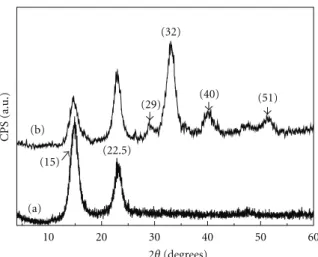
Figure 2shows the X-ray diffraction patterns obtained for the BC membrane and BC-HA composite. Typical BC
crystalline phases were observed in both samples. Charac-teristic peaks of BC-HA crystals were identified as JCPDF 46-0905. Diffraction peaks at 2θ = 15◦ and 22.5◦ were
assigned to the cellulose Iαand Iβphases (1001α, 1101β and
0101β planes at 15◦ and 1101α and 2001β at 22.5◦) [27].
The main characteristic diffraction peaks of HA crystal phase were observed at 2θ=29◦, 32◦, 40◦, and 51◦ (Figure 2(b)).
XRD pattern was in fact very similar to the XRD pattern of bone apatite, suggesting low crystallinity [28]. According to Hutchens et al. [7], the decrease in the intensity of the cellulose peaks in comparison with the pattern obtained from the pure BC membrane was due to HA deposition on BC nanofibrils. The residue observed in thermogravimetric analysis for temperatures above that of cellulose decompo-sition averaged 50% and must be related to the HA weight average.
10 20 30 40 50 60
CPS
(a.u.)
2θ(degrees)
(a) (b)
(15)
(22.5) (29)
(32)
(40) (51)
Figure 2: X-ray diffraction patterns of the BC (a) and BC-HA
nanocomposites (b). The characteristic HA peaks are indexed at the top for BC-HA.
4000 3600 3200 2800 2400 2000 1600 1200 800 400
Wavenumber (cm−1)
(a) (b)
1200 800 400
Wavenumber (cm−1 ) CO2−
3
PO3− 4
CO2− 3 PO3−
4 PO3−
4
(a) (b)
T
ransmittanc
e
(a.u.)(%)
T
ransmittanc
e
(a.u.)(%)
Figure3: FTIR spectra of the BC (a) and BC-HA nanocomposites
(b). Characteristic hydroxyapatite bands correspond to PO3−
4 and
CO3−
2 ions (inset figure).
vibrational frequencies assigned to cellulose were observed at 3500–3200 cm−1(OH stretching), 2908 cm−1(CH stretching
of CH2 and CH3 groups), 2700 cm−1 (CH2), 1645 cm−1
(water OH bending), 1435 cm−1(CH
2symmetric bending),
1370 cm−1(CH bending), 1160 cm−1(antisymmetric bridge
C–O–C stretching), 1111 cm−1, and 1056 cm−1 (skeletal
vibrations involving C–O stretching) [27]. The band in the region from 3500–3200 cm−1, assigned to cellulose hydroxyl
groups, was observed with decreasing relative intensity for the composite in comparison with the pure BC membrane. This decrease in intensity suggests that the presence of the HA crystals affected the cellulose hydroxyl groups. Moreover the red shift observed for the band assigned to intramolecular hydrogen bonding (∼3500 cm−1) confirms
strong interaction between the OH group and apatite. The chemical interaction between HA and BC stabilizes the composite so that it can maintain the mechanical integrity
necessary for bone substitution. FT-IR bands observed for BC-HA composite at 1093, 1020, 962, and 570–600 cm−1
were attributed to vibrational modes of PO3−4 ions [5–8].
The 962 cm−1peak showed up as a shoulder of the stronger
band at the 1020 cm−1peak, and the weak bands at 1418 and
838 cm−1(inset picture) correspond to the stretching mode
of CO2−
3 ions, suggesting absorption of CO2from the air. The
presence of the PO3−
4 doublet band at 602 cm−1and 567 cm−1
(inset figure) strongly suggest that the precursor phase of the HA was the OCP [29]. Therefore, FT-IR analysis suggested carbonate-containing apatite (bonelike apatite) deposited on BC nanofibres.
SEM images of the BC and BC-HA composites are shown inFigure 4.Figure 4(c)shows a typical SEM image of dried BC membrane. An ultrafine network structure formed by continuous nanofibres about 10–50 nm wide (“nanocellu-loses”) can be observed. This nanometric structure leads to a large surface area for particle stabilization [30]. Figures
4(a) and 4(b) show SEM images of the dried BC-HA
nanocomposite. HA nanocrystals were precipitated on the BC nanofibrils as agglomerates of crystallites Figure 4(a); regularly distributed pores were observed at the membrane surface. Typical HA crystals in globular and rod form were observed, similar to the HA crystals as has also been observed by other authors [31, 32]. These crystals grew laterally around the nanofibres. According to EDS analysis, the Ca/P molar ratio of the BC-HA composites was 1.50 suggesting calcium-deficient HA (CDHA), which is a phase similar to biological apatite. The low crystallinity was consistent with the broadness of the diffraction peaks of HA shown inFigure 2(b). Moreover, this Ca/P molar ratio favors faster dissolution of the Ca2+ and PO3−
4 ions. Lower Ca/P molar
ratio values lead to higher dissolution of Ca2+ ions, with
an increase in local pH at the biomaterial/tissue interface, promoting the ideal pH for alkaline phosphatase activity. Therefore, osteoblast proliferation and synthesis of bone matrix may be increased.
Calcium phosphates have different solubility and the comparative extent of dissolution is: OCP (Ca/P=1.33)≫
ß-tricalcium phosphate (ß-TCP) (Ca/P=1.48)>
calcium-deficient HA (CDHA) (Ca/P=1.5) ≫HA (Ca/P =1.67).
This difference reproduces the influence of composition and crystallographic properties of calcium phosphate, since stoichiometric HA is insoluble in body fluids [33,34].
3.2. Histological Analysis. Figures5(a)and5(b)show images
Acc.V Spot Magn 25.0 kV 2.0 30000x
WD Det SE 10.0
Exp
1 UFSCar-DEMa-LCE-FEG1μm
(a)
Acc.V Spot Magn 25.0 kV 2.0
WD Det SE
Exp
1 UFSCar-DEMa-LCE-FEG
60000x 9.8 500 nm
(b)
Acc.V Spot Magn
30000x DetSE WD Exp1 UFSCar-DEMa-LCE-FEG1μm 5.00 kV 3.0 10.6
(c)
300
250
200
150
100
50
0
1000 2000 3000 4000 5000
C
ounts
P
Ca
Ca
Energy (keV)
(d)
Figure 4: SEM images of the BC-HA nanocomposites (a) and (b) at 30.000×and 60.000×, respectively, and SEM images of the BC
membrane (c) at 30.000×. A 5 kV accelerating voltage was used for the BC sample, and a 25 kV voltage was used to obtain the image of the BC-HA nanocomposites. EDS spectrum was taken from a typical nanofibril with surrounding HA crystals (d).
bone with several osteocytes, blood vessels, and bone matrix in process of mineralization; the BC-HA membrane was observed in this period. Inflammatory reaction was not found in these two groups at 4 weeks. After 16 weeks, the BC-HA membrane was observed yet. Bone defects were completely repaired by mature bone for both groups (Figures
5(e)and5(f)).
BC-HA nanocomposite membranes were biocompatible and did not promote an inflammatory reaction after 4 weeks. Literature shows, in fact, that BC derivatives alone have been employed in soft tissues showing no inflammatory or foreign body reaction [15,35]. It must be mentioned that HA-plant cellulose derivatives have been employed in rat bone defects showing inflammatory and foreign body reactions. In an-other experiment, plant cellulose sponges were filled by connective tissue and did not promote complete bone defect ossification [36].
Promising results have been obtained using BC mem-branes in intrabony periodontal defects as low-cost resorb-able barriers [16, 17]. Clinical results were observed to be similar to those obtained from more expensive e-PTFE barriers in intrabony periodontal defects promoting effective new bone formation [16]. Studies have demonstrated that there was no additional advantage of using associated other
alloplastic materials compared with BC membrane alone [18,19].
In the present study, no membrane exposure was ob-served. Similar results were observed by dos Anjos et al. [16] and by Simonpietri et al. [19]. However, Batista et al. [18] observed membrane exposure using BC membranes in guided bone regeneration at a rate of 15.38% in the first 10 days; however, no abscesses or acute inflammatory reaction could be observed.
Bone defects treated with BC-HA nanocomposite mem-branes presented defects that were filled by newly formed bone tissue organized and incorporated to the tibia bone in a period of 4 weeks. In the control group, new formed bone tissue was observed to be partially incorporated to the tibia bone in the same period of time. After 16 weeks, no differen-ces could be observed between the groups. Bone defects were completely filled by mature bone for both groups.
There are few studies reported in the literature evaluating the biological properties of BC-HA compositesin vitro[20–
22]. Moreover, there are no reports in the literature studying BC-HA composites in in vivo studies. However, there are several studies in the literature evaluating the biological properties of BC membranes in in vivo [13–19, 35, 37,
500μm
(a)
500μm
B
ms
om v
B om ms
v
I
(b)
100μm
(c)
P
100μm
(d)
200μm
(e)
200μm
(f)
Figure5: Histological photomicrographs: (a) Control group: 1 week. Bone defect filled by fibrotic tissue (white star); inflammatory infiltrate
(white arrow). Hematoxylin-eosin staining (HE), scale bar (500µm); (b) Treated group: 1 week. Bone defect filled by newly formed bone, osteoids (om), medullary spaces with mesenchymal cells (ms), and several blood vessels (v); mature bone (B); BC-HA membrane (black star); inflammatory infiltrate (I) (HE), scale bar (500µm); (c) Control group: 4 weeks. New formed bone tissue is observed with several osteocytes (black arrows), blood vessels (arrow heads), and medullary spaces (stars); bone defect is not filled completely (white star) (HE), scale bar (100µm); (d) Treated group: 4 weeks. BC-HA membrane (star), periosteum (P), osteoblasts (white arrow), osteocytes (arrow heads), and bone matrix (blue arrow) (HE), scale bar (100µm); (e) Control group: 16 weeks. Mature bone (HE), scale bar (200µm). (f) Treated group: 16 weeks. BC-HA membrane (star); bone defect completely repaired by mature bone, osteocytes (black arrows), and blood vessels (arrow head) (HE), scale bar (200µm).
due to their great biological properties. Thus, the results of this study are pioneering in that they showed that BC-HA nanocomposites were compatible with the examined struc-tures, including hard and soft tissues.
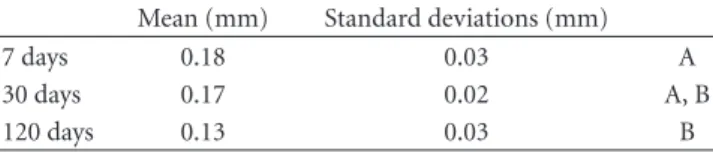
The ANOVA showed that there was a significant sta-tistical difference regarding the degradation of BC-HA membranes between 7 and 120 days (P <0.05). In addition, the effect of degradation of the membranes depend on the period analyzed (P = 0.03). The mean values of the
degradation of the membranes are showed inTable 1. Mello et al. [37] observed similar results for reabsorption of the BC membranes as substitute for the dura mater in dogs, and decrease in membranes thickness was statistically significant between 30 to 270 days.
Table 1: Mean of the values of the reabsorption of the
BC-HA membranes and standard deviations (different letters indicate statistical difference among periods according Turkey’s test (P <
0.05)).
Mean (mm) Standard deviations (mm)
7 days 0.18 0.03 A
30 days 0.17 0.02 A, B
120 days 0.13 0.03 B
micrometric particles, because osteoclasts or macrophages act more readily on a biomaterial surface. Biomaterial tallinity also changes the reabsorption rate, since highly crys-talline structures are more resistant to reabsorption than an amorphous or semicrystalline structure. Moreover, the chemical composition is also important. Impurities such as calcium carbonate promote faster reabsorption. Therefore, the chemical structure of BC-HA nanocomposite mem-branes, the HA particle, and BC nanofibres sizes suggests favoring reabsorption of this new biomaterial.
4. Conclusion
BC-HA composites have presented HA nanocrystals of low crystallinity in the membranes with a Ca/P molar rate similar to that of physiological bone. The BC-HA membranes were effective for bone regeneration in bone defects of rat tibiae, since the membranes accelerated new bone formation at the defect sites; in addition, reabsorption of the membranes was slow, suggesting that this composite takes longer to be completely reabsorbed.
Acknowledgments
Financial support from the Brazilian agencies FAPESP (Project no. 08-58776-6) and CNPq is acknowledged. The authors wish to thank Mr. Luis Ant ˆonio Potenza for technical support.
References
[1] M. Duskova, E. Leamerova, B. Sosna, and O. Gojis, “Guided tissue regeneration, barrier membranes and reconstruction of the cleft maxillary alveolus,”Journal of Craniofacial Surgery, vol. 17, no. 6, pp. 1153–1160, 2006.
[2] F. P. Strietzel, P. Khongkhunthian, R. Khattiya, P. Patchanee, and P. A. Reichart, “Healing pattern of bone defects covered by different membrane types-a histologic study in the porcine mandible,”Journal of Biomedical Materials Research—part B, vol. 78, no. 1, pp. 35–46, 2006.
[3] A. Sculean, F. Schwarz, G. C. Chiantella et al., “Five-year results of a prospective, randomized, controlled study eval-uating treatment of intra-bony defects with a natural bone mineral and GTR,”Journal of Clinical Periodontology, vol. 34, no. 1, pp. 72–77, 2007.
[4] J. H. Song, H. E. Kim, and H. W. Kim, “Collagen-apatite nanocomposite membranes for guided bone regeneration,”
Journal of Biomedical Materials Research—part B, vol. 83, no. 1, pp. 248–257, 2007.
[5] Y. Z. Wan, Y. Huang, C. D. Yuan et al., “Biomimetic synthe-sis of hydroxyapatite/bacterial cellulose nanocomposites for biomedical applications,”Materials Science and Engineering C, vol. 27, no. 4, pp. 855–864, 2007.
[6] P. Cromme, C. Zollfrank, L. M¨uller, F. A. M¨uller, and P. Greil, “Biomimetic mineralisation of apatites on Ca+
2activated
cellulose templates,”Materials Science and Engineering C, vol. 27, no. 1, pp. 1–7, 2007.
[7] S. A. Hutchens, R. S. Benson, B. R. Evans, H. M. O’Neill, and C. J. Rawn, “Biomimetic synthesis of calcium-deficient hydrox-yapatite in a natural hydrogel,”Biomaterials, vol. 27, no. 26, pp. 4661–4670, 2006.
[8] L. Hong, Y. L. Wang, S. R. Jia, Y. Huang, C. Gao, and Y. Z. Wan, “Hydroxyapatite/bacterial cellulose composites syn-thesized via a biomimetic route,”Materials Letters, vol. 60, no. 13-14, pp. 1710–1713, 2006.
[9] A. Bodin, L. Gustafsson, and P. Gatenholm, “Surface-engi-neered bacterial cellulose as template for crystallization of calcium phosphate,”Journal of Biomaterials Science, vol. 17, no. 4, pp. 435–447, 2006.
[10] T. T. Nge and J. Sugiyama, “Surface functional group depen-dent apatite formation on bacterial cellulose microfibrils net-work in a simulated body fluid,”Journal of Biomedical Materi-als Research—part A, vol. 81, no. 1, pp. 124–134, 2007. [11] W. Czaja, D. Romanovicz, and R. M. Brown Jr., “Structural
investigations of microbial cellulose produced in stationary and agitated culture,”Cellulose, vol. 11, no. 3-4, pp. 403–411, 2004.
[12] C. Bodhibukkana, T. Srichana, S. Kaewnopparat et al., “Composite membrane of bacterially-derived cellulose and molecularly imprinted polymer for use as a transdermal enan-tioselective controlled-release system of racemic propranolol,”
Journal of Controlled Release, vol. 113, no. 1, pp. 43–56, 2006. [13] R. C. Mayall, A. C. Mayall, L. C. Mayall et al., “Tratamento das
´ulceras tr ´oficas dos membros com um novo substituto da pele,”Revista Brasileira de Cirurgia, vol. 80, no. 4, pp. 257–283, 1990.
[14] J. D. Fontana, A. M. de Souza, C. K. Fontana et al., “Acetobac-ter cellulose pellicle as a temporary skin substitute,”Applied Biochemistry and Biotechnology, vol. 24-25, pp. 253–264, 1990. [15] D. Klemm, B. Heublein, H. P. Fink, and A. Bohn, “Cellulose: fascinating biopolymer and sustainable raw material,” Ange-wandte Chemie, vol. 44, no. 22, pp. 3358–3393, 2005. [16] B. dos Anjos, A. B. Novaes, R. Meffert, and E. Porto Barboza,
“Clinical comparison of cellulose and expanded polytet-rafluoroethylene membranes in the treatment of Class II fur-cations in mandibular molars with 6-month re-entry,”Journal of Periodontology, vol. 69, no. 4, pp. 454–459, 1998.
[17] A. B. Novaes Jr., N. H. Moraes, A. B. Novaes et al., “Uso do BioFill como membrana biol ´ogica no tratamento da les˜ao de furca com e sem a utilizac¸˜ao da hidroxiapatita porosa,”Revista Brasileira de Odontologia, vol. 47, no. 5, pp. 29–32, 1990. [18] E. L. Batista, A. B. Novaes, J. J. C. Simonpietri, and F. C. Batista,
“Use of bovine-derived anorganic bone associated with guided tissue regeneration in intrabony defects. Six-month evaluation at re-entry,”Journal of Periodontology, vol. 70, no. 9, pp. 1000– 1007, 1999.
[19] J. J. Simonpietri-C, A. B. Novaes Jr., E. L. Batista Jr., and E. J. Feres Filho, “Guided tissue regeneration associated with bovine-derived anorganic bone in mandibular class II furca-tion defects. 6-month results at re-entry,”Journal of Periodon-tology, vol. 71, no. 6, pp. 904–911, 2000.
stromal cells on hydroxyapatite/bacterial cellulose nanocom-posite scaffolds,”Tissue Engineering—part A, vol. 15, no. 5, pp. 1091–1098, 2009.
[21] C. J. Grande, F. G. Torres, C. M. Gomez et al., “Nanocom-posites of bacterial cellulose/hydroxyapatite for biomedical applications,”Acta Biomaterialia, vol. 5, no. 5, pp. 1605–1615, 2009.
[22] K. A. Zimmermann, J. M. LeBlanc, K. T. Sheets, R. W. Fox, and P. Gatenholm, “Biomimetic design of a bacterial cellu-lose/hydroxyapatite nanocomposite for bone healing applica-tions,”Materials Science and Engineering C, vol. 31, no. 1, pp. 43–49, 2011.
[23] J. K. Armstrong, B. Han, K. Kuwahara et al., “The effect of three hemostatic agents on early bone healing in an animal model,”BMC Surgery, vol. 10, article 37, pp. 1–12, 2010. [24] H. S. Barud, A. M. de Ara ´ujo J ´unior, D. B. Santos et al.,
“Thermal behavior of cellulose acetate produced from homo-geneous acetylation of bacterial cellulose,” Thermochimica Acta, vol. 471, no. 1-2, pp. 61–69, 2008.
[25] H. S. Barud, C. A. Ribeiro, M. S. Crespi et al., “Thermal char-acterization of bacterial cellulose-phosphate composites mem-branes,”Journal of Thermal Analysis and Calorimetry, vol. 87, no. 3, pp. 815–818, 2007.
[26] C. Gao, G. Y. Xiong, H. L. Luo, K. J. Ren, Y. Huang, and Y. Z. Wan, “Dynamic interaction between the growing Ca-P minerals and bacterial cellulose nanofibers during early bio-mineralization process,”Cellulose, vol. 17, no. 2, pp. 365–373, 2010.
[27] H. S. Barud, R. M. N. Assunc¸˜ao, M. A. U. Martines et al., “Bacterial cellulose-silica organic-inorganic hybrids,”Journal of Sol-Gel Science and Technology, vol. 46, no. 3, pp. 363–367, 2008.
[28] S. N. Danilchenko, C. Moseke, L. F. Sukhodub, and B. Sulkio-Cleff, “X-ray diffraction studies of bone apatite under acid demineralization,” Crystal Research and Technology, vol. 39, no. 1, pp. 71–77, 2004.
[29] G. R. Sauer and R. E. Wuthier, “Fourier transformed infrared characterization of mineral phases formed during induction of mineralization by colagenase-released matrix vesicles in vitro,”Journal of Biological Chemistry, vol. 263, no. 27, pp. 13718–13724, 1988.
[30] H. S. Barud, C. Barrios, T. Regiani et al., “Self-supported sil-ver nanoparticles containing bacterial cellulose membranes,”
Materials Science and Engineering C, vol. 28, no. 4, pp. 515– 518, 2008.
[31] L. Morej ´on-Alonso, R. G. Carrodeguas, and J. A. D. Garc´ıa-Menocal, “Transformations in CDHA/OCP/β-TCP scaffold during ageing in simulated body fluid at 36.5◦C,”Journal of
Biomedical Materials Research—part B, vol. 84B, no. 2, pp. 386–393, 2008.
[32] L. Morej ´on-Alonso, R. G. Carrodeguas, J. A. D. Garc´ıa-Menocal, J. A. A. P´erez, and S. M. Manent, “Effect of steril-ization on the properties of CDHA-OCP-β-TCP biomaterial,”
Materials Research, vol. 10, no. 1, pp. 15–20, 2007.
[33] L. Le Gu´ehennec, P. Layrolle, G. Daculsi, H. Redl, A. Pandit, and J. Czernuszka, “A review of bioceramics and fibrin sealant,”European Cells and Materials, vol. 8, pp. 1–10, 2004. [34] C. E. Misch,Implantes Dent´arios Contemporˆaneos, Santos, S˜ao
Paulo, Brazil, 2nd edition, 2006.
[35] G. Helenius, H. B¨ackdahl, A. Bodin, U. Nannmark, P. Gaten-holm, and B. Risberg, “In vivo biocompatibility of bacterial cellulose,”Journal of Biomedical Materials Research—part A, vol. 76, no. 2, pp. 431–438, 2006.
[36] E. Ekholm, M. Tommila, A. P. Forsback et al., “Hydroxapatite coating of cellulose sponge does not improve its osteogenic potency in rat bone,”Acta Biomaterialia, vol. 1, no. 5, pp. 535– 544, 2005.
[37] L. R. Mello, L. T. Feltrin, P. T. Fontes Neto, and F. A. P. Ferraz, “Duraplasty with biosynthetic cellulose: an experimental study,”Journal of Neurosurgery, vol. 86, no. 1, pp. 143–150, 1997.
Submit your manuscripts at
http://www.hindawi.com
Scientiica
Hindawi Publishing Corporation http://www.hindawi.com Volume 2014Corrosion
International Journal of
Hindawi Publishing Corporation
http://www.hindawi.com Volume 2014
Hindawi Publishing Corporation
http://www.hindawi.com Volume 2014
Polymer Science
International Journal ofHindawi Publishing Corporation
http://www.hindawi.com Volume 2014
Ceramics
Journal ofHindawi Publishing Corporation
http://www.hindawi.com Volume 2014
Composites
Journal ofNanoparticles
Journal ofHindawi Publishing Corporation
http://www.hindawi.com Volume 2014
International Journal of
Biomaterials
Hindawi Publishing Corporationhttp://www.hindawi.com Volume 2014
Hindawi Publishing Corporation
http://www.hindawi.com Volume 2014
NANOSCIENCE
Journal of
Textiles
Hindawi Publishing Corporation
http://www.hindawi.com Volume 2014
Journal of
Nanotechnology
Hindawi Publishing Corporation
http://www.hindawi.com Volume 2014
Journal of
Hindawi Publishing Corporation
http://www.hindawi.com Volume 2014
Crystallography
Journal ofThe Scientiic
World Journal
Hindawi Publishing Corporation
http://www.hindawi.com Volume 2014
Hindawi Publishing Corporation
http://www.hindawi.com Volume 2014
Coatings
Journal of Advances inMaterials Science and Engineering
Hindawi Publishing Corporation
http://www.hindawi.com Volume 2014
Research
Hindawi Publishing Corporation
http://www.hindawi.com Volume 2014
Hindawi Publishing Corporation
http://www.hindawi.com Volume 2014
Metallurgy
Journal ofInternational
Hindawi Publishing Corporation
http://www.hindawi.com Volume 2014
Hindawi Publishing Corporation
http://www.hindawi.com Volume 2014
Materials
Journal ofN
a
no
ma
te
ria
ls
Hindawi Publishing Corporation
http://www.hindawi.com Volume 2014
Journal of