BILATERAL COOPERATION AGREEMENTS:
THE U.S.-BRAZIL EXPERIENCE1
Gesner Oliveira2
Bruno Werneck3
1 Paper prepared for the International Symposium on Competition Policy and Consumer Interest in the Global
Economy, Geneva, Switzerland, October 12-13, 2001.
2 Gesner Oliveira is an assistant professor at Getulio Vargas Foundation (FGV) and an economic consultant
in São Paulo, Brazil. email: [email protected]; site: www.gesneroliveira.com.br .
1. Introduction
The objective of this paper is to discuss the bilateral cooperation agreement on competition policy between Brazil and the United States, emphasizing possible lessons for similar arrangements among other countries.
Many countries have enacted competition laws in the last decade. Enforcement of the new legislation poses difficulties in several jurisdictions due to lack of experience and of adequate material and human resources. At the same time, globalization brings to the fore new competition issues such as global mergers and anticompetitive practices which affect various countries.
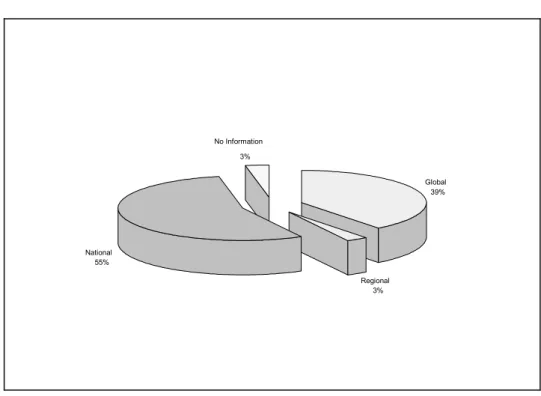
Table 1 illustrates the importance of global mergers for a developing country like Brazil. A sample of transactions appreciated by CADE, the Brazilian competition tribunal, indicates that 39% of the cases can be considered global, involving transactions that have an impact on relevant markets in more than two jurisdictions.
Figure 1: Sample of mergers analyzed by CADE in 2000
Global 39%
Regional 3% National
55%
No Information 3%
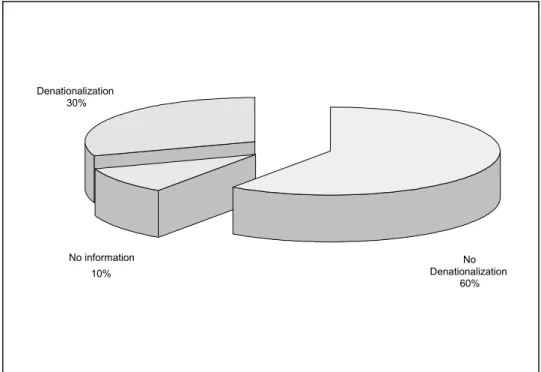
nationalist responses that could interfere with the implementation of competition policy. Needless to say, national governments may be tempted to introduce industrial policy considerations in several forms.
Table 2: Denationalization cases analyzed by CADE in the year 2000
No information 10% Denationalization
30%
No Denationalization
60%
International cooperation is crucial for coping with these new challenges. Bilateral cooperation is only one of the various forms of cooperation. Plurilateral and multilateral arrangements also play an essential role and are not in contradiction with bilateral initiatives. International organizations and NGOs are also very important.
International cooperation is particularly important in three areas:
(i) strengthening institutions and disseminating competition culture;
(ii) reducing transaction costs for transnational mergers;
(iii) combating international cartels and other anticompetitive practices.
2. Bilateral Cooperation Agreement Between the U.S. and Brazil
This section briefly describes the scope and objectives of the cooperation agreement between Brazil and the U.S. on competition policy.
Brazil and the U.S. entered into a bilateral agreement on competition designed to effect:
(i) mutual cooperation in the enforcement of antitrust laws;
(ii) technical cooperation;
(iii) reciprocal consideration of each Party’s objectives in enforcing national antitrust laws.
The following subsections outline the Agreement’s basic objectives.
2.1 Mutual Cooperation in the Enforcement of Antitrust Laws
The Agreement establishes that each Party shall notify the other as promptly as possible about investigations and cases that:
(a) are relevant to the activities of the other party in the enforcement of its laws;
(b) involve anticompetitive practices, other than mergers and acquisitions, carried out in whole or in substantial part in the territory of the other Party;
(c) involve mergers or acquisitions in which one or more of the parties to the transaction, or a company controlling one or more of such parties, is a company incorporated or organized under the laws of the other Party or of one of its states;
(d) involve anticompetitive practices believed to have been required, encouraged or approved by the other Party;
(e) involve remedies that expressly require or prohibit a practice in the territory of the other Party or are otherwise applied to the territory of the other Party;
(f) involve the seeking of information located in the territory of the other Party.
information that will facilitate the effective application of each others’ competition laws and enforcement policies.
2.2 Technical Cooperation
In accordance with the Agreement, the Parties undertake to work together in technical cooperation activities related to competition law enforcement and policy. These activities will include exchanges of information and competition agency personnel, participation of such personnel in courses, conferences and workshops organized by each other’s agencies, and such other forms of cooperation as are deemed appropriate by the Parties.
2.3 Positive Comity
The Agreement introduces positive comity principles into the relations between the Parties, meaning that they are committed to considering each other’s objectives in the application of their competition laws.
More specifically, positive comity is reflected in the provision of the Agreement under which, if a Party believes that anticompetitive practices carried out in the territory of the other Party adversely affect its interests, the first Party may, after prior consultation with the other Party, request that the other Party’s competition authorities initiate appropriate enforcement activities.
The Agreement recommends that the request must be as specific as possible about the nature of the anticompetitive practices and their effects on the requesting Party’s interests, and must include an offer of further additional information and cooperation.
The requested Party’s competition authorities must carefully consider the request to investigate and promptly inform the requesting Party of their decision. However, the Agreement does not limit the requested Party’s discretion to decide whether to investigate the anticompetitive practices identified in the request.
3. Considerations on the U.S.-Brazil Agreement
It is important to note the limitations of the U.S.-Brazil agreement. First, it is not yet a formal agreement because it has to be ratified by the Brazilian House of Representatives and Senate.
cooperation have already taken place in a specific investigation (the vitamin cartel) as well as a merger affecting Brazil and the U.S. (Metal Leve).
In addition, the U.S. has provided Brazil with informal assistance, especially in the form of knowledge developed in similar cases in the U.S., for the analysis of various forms of anticompetitive practice, such as exclusivity deals in the cigarette and credit card industries.
Second, no confidential information may be exchanged. Even when the Agreement is in force this would appear to be a potential problem, particularly in light of the fact that most of the information obtained by the U.S. competition authorities is protected by confidentiality rules and the Cooperation Agreement does not oblige the Parties to provide confidential information.
Third, although positive comity is a promising step toward international cooperation, the authorities are not obliged to take action. Common action on the part of different national authorities may require a long period of confidence building and agreement on other policies.
In this regard it is worth noting the interest of the U.S. trade authorities in obtaining information from the Brazilian competition authorities on a recent cartel case in the Brazilian steel industry. The two governments might well have starkly differing views on steel antidumping policies.
International cooperation depends on the stage of institutional development in each country, and Brazil is not yet a mature jurisdiction.
In the initial stage, the emphasis should be on technical assistance. After some experience has been gained, it will be possible to promote simple agreements, known as First-Generation Agreements, which call for cooperation on specific antitrust cases and exchanges of non-confidential information.
In a third stage, the two countries will be ready to engage in
Second-Generation Agreements, which involve systematic cooperation including the
ongoing exchange of confidential information.
The cooperation agreement celebrated by the United States and Brazil seems to be a good example of a first-generation agreement involving, as already mentioned, systematic cooperation by both countries’ competition authorities and exchanges of public information.