A Delphi Technology Foresight Study:
Mapping Social Construction of Scientific
Evidence on Metagenomics Tests for Water
Safety
Stanislav Birko3, Edward S. Dove4, Vural Özdemir1,2 *
1Faculty of Communications and the Department of Industrial Engineering, Office of the President, International Technology and Innovation Policy, Gaziantep University, Üniversite Bulvarı,Şehitkamil, Gaziantep, 27310, Turkey,2School of Biotechnology, Amrita Vishwa Vidyapeetham (Amrita University), Kerala, India,3Centre of Genomics and Policy, Department of Human Genetics, Faculty of Medicine, McGill University, Montreal, QC, Canada,4J. Kenyon Mason Institute for Medicine, Life Sciences and the Law, University of Edinburgh School of Law, Edinburgh, United Kingdom
Abstract
Access to clean water is a grand challenge in the 21stcentury. Water safety testing for
path-ogens currently depends on surrogate measures such as fecal indicator bacteria (e.g.,E.
coli). Metagenomics concerns high-throughput, culture-independent, unbiased shotgun se-quencing of DNA from environmental samples that might transform water safety by detect-ing waterborne pathogens directly instead of their surrogates. Yet emergdetect-ing innovations such as metagenomics are often fiercely contested. Innovations are subject to shaping/con-struction not only by technology but also social systems/values in which they are embed-ded, such as experts’attitudes towards new scientific evidence. We conducted a classic three-round Delphi survey, comprised of 107 questions. A multidisciplinary expert panel (n = 24) representing the continuum of discovery scientists and policymakers evaluated the emergence of metagenomics tests. To the best of our knowledge, we report here the first Delphi foresight study of experts’attitudes on (1) the top 10 priority evidentiary criteria for adoption of metagenomics tests for water safety, (2) the specific issues critical to gover-nance of metagenomics innovation trajectory where there is consensus or dissensus among experts, (3) the anticipated time lapse from discovery to practice of metagenomics tests, and (4) the role and timing of public engagement in development of metagenomics tests. The ability of a test to distinguish between harmful and benign waterborne organisms, analytical/clinical sensitivity, and reproducibility were the top three evidentiary criteria for adoption of metagenomics. Experts agree that metagenomic testing will provide novel infor-mation but there is dissensus on whether metagenomics will replace the current water safe-ty testing methods or impact the public health end points (e.g., reduction in boil water advisories). Interestingly, experts view the publics relevant in a“downstream capacity”for adoption of metagenomics rather than a co-productionist role at the“upstream”scientific de-sign stage of metagenomics tests. In summary, these findings offer strategic foresight to
OPEN ACCESS
Citation:Birko S, Dove ES, Özdemir V (2015) A Delphi Technology Foresight Study: Mapping Social Construction of Scientific Evidence on Metagenomics Tests for Water Safety. PLoS ONE 10(6): e0129706. doi:10.1371/journal.pone.0129706
Academic Editor:Timothy D Read, Emory University, UNITED STATES
Received:January 31, 2015
Accepted:May 12, 2015
Published:June 11, 2015
Copyright:© 2015 Birko et al. This is an open access article distributed under the terms of the Creative Commons Attribution License, which permits unrestricted use, distribution, and reproduction in any medium, provided the original author and source are credited.
Data Availability Statement:All relevant data are within the paper and its Supporting Information files.
Funding:This work was supported by a research grant on technology governance to Dr. Vural Ozdemir from Genome Canada. The funder had no role in study design, data collection and analysis, decision to publish, or preparation of the manuscript.
govern metagenomics innovationssymmetrically: by identifying areas where acceleration (e.g., consensus areas) and deceleration/reconsideration (e.g., dissensus areas) of the in-novation trajectory might be warranted. Additionally, we show how scientific evidence is subject to potential social construction by experts’value systems and the need for greater upstream public engagement on metagenomics innovations.
Introduction
Water scarcity in the face of an exponentially growing world population and management of safe water are grand challenges for 21stcentury science and society [1,2]. The Millennium Eco-system Assessment Report led by a consortium of more than 1360 experts and called for in 2000 by Kofi Annan, the then Secretary-General of the United Nations, indicated that the aquatic environment will not be able to sustain anticipated population growth. Worrisomely, the report cogently expressed that:
Over the past 50 years, humans have changed ecosystems more rapidly and extensively than in any comparable period of time in human history, largely to meet rapidly growing de-mands for food, fresh water, timber, fiber and fuel. This has resulted in a substantial and largely irreversible loss in the diversity of life on Earth [3].
Moving forward in the current era of the United Nations Sustainable Development Goals (SDGs), due to be in effect from 2016 to 2030, water safety testing is no doubt a crucial founda-tion for ecosystem health. The water quality monitoring presently depends on surrogate mea-sures such as fecal indicator bacteria (e.g.,E.coli) grown in culture to predict the risk of waterborne pathogens. However, a vast majority of microorganisms–99%–cannot be grown readily in culture, and not all fecal indicators correlate well with pathogens [4–6].
Historically, the often cited“great plate count anomaly”has provided the early hints that the cultured microorganisms did not represent much of the microbial world. This was evi-denced by the discrepancy between the sizes of populations estimated by dilution plating and by microscopy [7,8]. In some aquatic environmental samples, plate counts and viable cells esti-mated by acridine orange staining differ by four to six orders of magnitude [9].
Not surprisingly, studies in the past failed to establish a robust link between occurrence of pathogens and cultured indicator organisms such asE.coli[10]. Also, waterborne outbreaks have occurred in the absence of positive indicator test results [11]. A recent analysis conducted in the Upper Mississippi River in Minnesota showed the concentration ofE.coli, used as an in-dicator of surface water quality and human health risk by the United States Environmental Protection Agency (EPA), was not correlated with other measures of water quality such as ni-trogen concentration or abundances of certain human pathogens (e.g.,Enterobacteriales) [12].
difference between metagenomics (environmental shotgun sequencing) and 16S amplicon se-quencing. The latter is far more commonly used for species enumeration at the current time and often confused in the literature as metagenomics. Recent water safety research has focused to sample the metagenome (the combined genomes of the organisms present) to measure changes in microbial communities associated with chemical and other environmental pertur-bations [12]. Metagenomics studies, on the other hand, examine in the spirit of omics systems sciences the totality of genetic material recovered directly from a sample rather than a specific gene or the genome of a single organism. Metagenomics permits the study of microbial com-munities in their natural habitats; the findings can include taxonomic profiles (which families, genera, or species are present in a community?) or functional profiles (which sets of genes are community members expressing in relation to the community’s niche in the ecosystem?) [15– 17]. Metagenomics discovery platforms can also pave the way for PCR-based analyses of a tar-geted set of biomarkers associated with pathogens in environmental samples.
Prior to introduction of metagenomics approaches, the full diversity of microbial communi-ties that co-exist with human populations was virtually unknown. Metagenomics offers the po-tential for a host of radical advances in postgenomics microbiology, environmental sciences, water safety testing and characterization of pathogens that have hitherto escaped detection by conventional culture-based diagnostic methods, and a deeper understanding of the host-eco-system interactions [20–23].
Despite the promises of metagenomics biotechnology for public health and ecosystem (e.g., water) safety, lessons from the field of new technology governance underscore that the sought after beneficial outcomes of novel biotechnologies donotautomatically flow from a marriage of biology and technology, nor does the development of technological capability suffice in en-suring responsible innovation that is grounded in societal values and priorities [24–29].
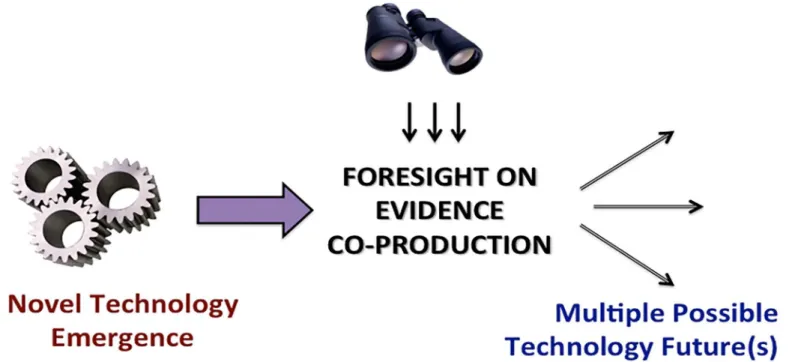
Foresight research examines the multiple possible ways in which biotechnology innovation future(s) might materialize [30]. While scenario planning has been a mainstay practice in tech-nology governance and foresight, the production of scientific evidence as aprecursorto adop-tion of technology discoveries, and the ways in which the concept of evidence may be perceived and prioritized by stakeholders, have been little examined to date. In other words, understand-ing how scientific evidence is co-produced in divergent or convergent ways by the constituents of an innovation ecosystem is instrumental in understanding the possible innovation futures for the metagenomics technology (Fig 1).
With the above overarching context and rationale, we report, to the best of our knowledge, the first Delphi study on the emergence of metagenomics tests for water safety, in regards to science and policy experts’attitudes towards:
1. the top 10 priority evidentiary decision criteria for adoption of metagenomics tests,
2. the specific issues pertinent to governance of the metagenomics innovation trajectory where there is consensus or dissensus among experts,
3. the anticipated time lapse from discovery to practice of metagenomics tests, and
4. the role and timing of public engagement in development of metagenomics tests.
public health practice that are developed by metagenomics discovery approaches but commer-cially available tests can be anticipated in the near future. Moving forward, the technology gov-ernance literature uniformly underscores the importance of foresight research at an early upstream (design) stage when a new technology is still flexible and emerging rather than as a hindsight after a technology is entrenched and when it is very difficult to shape or steer firm be-liefs on established innovation [28–32].
The Delphi findings reported here illustrate the experts’consensus (and the knowledge do-mains where consensus is lacking) towards evidence perceived to be essential to move metage-nomics discoveries to metagemetage-nomics tests. Collectively, this foresight research informs concrete new strategies to devise future roadmaps to responsibly steer metagenomics laborato-ry discoveries to new tests for water safety, and may also help for rational technology transfer and commercialization in the near future.
Materials and Methods
Study Design and Process Flowchart
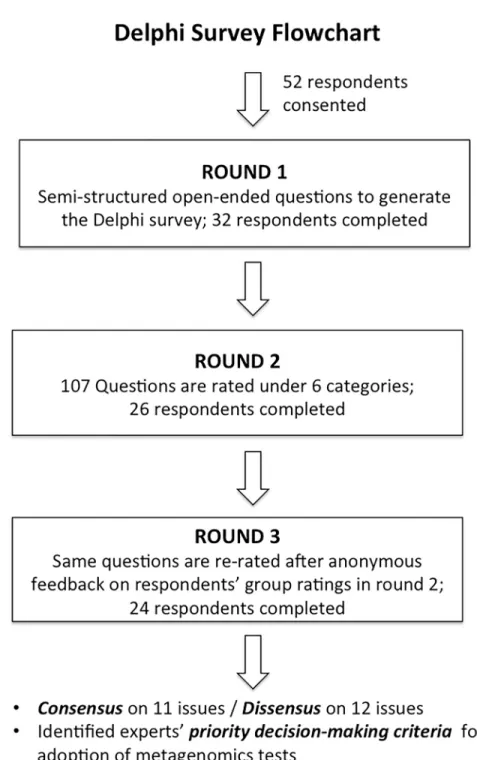
We conducted a Delphi survey to examine the issues posed in the introduction. The Delphi process followed is summarized inFig 2. The study was conducted from 2013 to 2014 at Mc-Gill University, Canada. Written informed consent was obtained from all participants by fax and e-mail. Ethics approval was obtained through the Faculty of Medicine at McGill University (Institutional Review Board Assurance # FWA 00004545). Routine communications with pan-elists were conducted by e-mail.
The Delphi survey is a group communication technique based on an interactive, sequential and multi-step characterization of expert stakeholders, their interests, and intersection of inter-ests. It has the advantage of obtaining opinion from experts, with a guarantee of anonymity, Fig 1. Evidence as the focus of foresight research.Situated conceptually between novel technologyemergenceandadoption future(s), examination of the attitudes towards co-production of technology-related evidence by the innovation ecosystem constituents (e.g., scientists and policymakers) can help build strategic foresight on the innovation trajectory.
avoiding the potential distortion caused by peer pressure in group situations such as focus group analysis.
The classic Delphi study has three rounds: (1) a general questionnaire asking panel mem-bers to identify the pressing issues in a given knowledge domain (e.g., an emerging technology such as metagenomics); 2) a second-round questionnaire asking panel members to rate the im-portance of the list of the issues identified from the first round; (3) a third-round questionnaire, Fig 2. Delphi study flowchart.
asking panel members to re-evaluate their ratings of each survey item after reviewing the expert panel’s collective stance in the second round in response to the survey questions [33–35].
Respondents in the Survey
The respondents were experts spanning the science-policy spectrum relating to water safety testing with metagenomics technology. The survey questions and communications with the re-spondents were conducted in English. The respondent experts had, as a common denominator, a primary institutional affiliation in Canada and a track record of publications and/or profes-sional scholarly engagements in water safety and/or omic technologies as evidenced by their curriculum vitae.
Purposive sampling followed by snowball recruitment was used for experts’participation in the study. Fifty-two experts consented to participate in the study. Each expert was assigned a randomly generated code (between 0 and 999) by a study coordinator to safeguard anonymity. We note that the literature on Delphi surveys traditionally recommends a panel of 10 to 15 ex-perts [35,36], a sample size that was exceeded in the present Delphi study with a final sample of 24 experts.
Delphi Survey
The first round Delphi survey consisted of 10 open-ended questions grouped into three themes: perceived evidentiary requirements on adoption and performance metagenomics tests, benefits and risks, and perceptions on the role of public engagement for the future develop-ment of the metagenomics innovation trajectory. This classic Delphi approach was used so as to solicit experts’opinions on which the survey questions were generated for the remaining two rounds of the Delphi study.
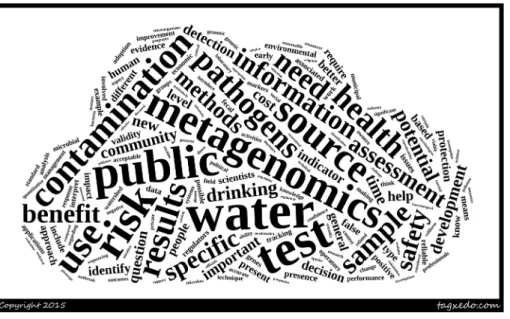
In brief, the above first round responses were analyzed using the NVivo [37] qualitative data analysis software. A word cloud was created using the open access word cloud generator wor-dle.net. The latter algorithm assigns greater prominence (using font size) to words that appear more frequently in the source text (Fig 3). We noted the broad themes emergent from the ex-perts’responses and subsequently categorized the issues thematically. Repetitive headings were
Fig 3. Word cloud generated from the Delphi round 1 responses.
removed and an initial list was created. The responses were then re-read alongside the list of categories and coded accordingly. The coded sections were organized under the headings. Headings that were coded most were selected. The wording for each selected heading was cho-sen to reprecho-sent as closely as possible the range of corresponding coded sections.
Table 1provides the six thematic heading categories used to generate and structure the 107 Delphi survey questions for the rounds 2 and 3. The Delphi survey questions are displayed in theS1 Text. The survey also included a question on the top 10 evidentiary priorities to be con-sidered in the decision whether or not metagenomic testing should be widely adopted for water safety.
The second round survey asked the respondents to rate each question on a 7-point agree-ment,desirabilityand/orfeasibilityLikert scale (S1 Text), with 1 and 7 signifying the least and the most desirable/feasible, respectively [38]. Some questions were rated on more than one scale (e.g., desirability and feasibility) each of which counted as an itemized response to that question (S1 Text). Following the rating scales for each item, space was provided where experts were encouraged to make explicit the assumptions their ratings were based on, as well as to add any other free text comments.
The third round survey consisted of the same questions as in the second round and provid-ed the respondents the opportunity to revise or recalibrate their ratings after having seen the group’s anonymous summary ratings from the second round.
Data Analysis
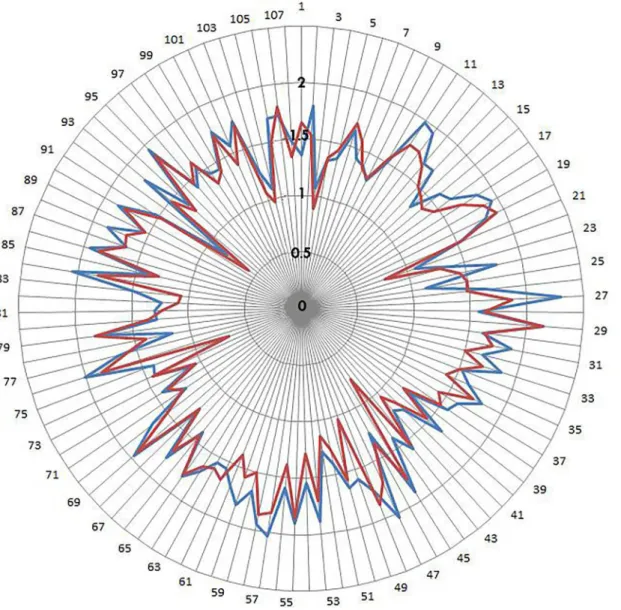
The threshold for“consensus”was establisheda priori. If at least 75% of the experts rated a question as one of the top two (a score of six or seven on the 7-point Likert scale)orbottom two (a score of one or two) scores, the survey question was considered to have achieved consen-sus. Conversely, the respondents were deemed to have“dissensus”on a survey question if the bottom 3 points as a group (a score of one, two or three)andthe top 3 points as a group (a score of five, six or seven)eachgathered at least 33% of ratings. The respondents’ratings of the questions between the second and the third round were compared visually by plotting the stan-dard deviations for each of the survey question (Fig 4).
Results and Discussion
To the best of our knowledge, the present report is the first Delphi study on the emergence of metagenomics technology that is anticipated to transform water safety testing in public health
Table 1. Six Thematic Categories Used to Generate and Structure the Delphi Survey.
1. Introduction and Overarching Contextual Questions
2. Evidentiary Requirements for Adoption of Metagenomics Tests:Analytical validity (i.e., performance to detect a metagenomics profile); Clinical/ecosystem validity (i.e., performance of the association analyses between metagenomics profiles and the putative pathogens in water); Utility of metagenomics tests for water safety
3. Other Attributes/Caveats of Metagenomics Tests for Water Safety:Technical and temporal aspects (e.g., projected adoption timelines), Interpretation of tests
4. Consequences of Metagenomics Tests for Water Safety:Identification of pathogens, source of contamination; Understanding of the consequences; Treatment of water, standards & regulations on water safety; Economic and political consequences
5. Timing and Context of Public Engagement for Metagenomics Tests on Water Safety:(e.g.,when public engagement ought to happen?–upstream at discovery stage, ordownstream after the tests are already developed)
6. Priority Issues/Criteria for Decisions on Adoption of Metagenomics Tests
practice and ecosystem research. The description of the 24 respondents who completed the Delphi survey is displayed inTable 2. This is consistent with and above the sample size typical-ly employed in Delphi surveys [35,36]. As a general concept, the aim of the Delphi surveys is not statistical hypothesis testing but to obtain an open evaluation of viewpoints from experts so as to inform future science and technology policy and new practices of doing science.
Priority Evidentiary Criteria to Adopt Metagenomics Tests
We identified the top 10 priority evidentiary criteria perceived to be important by the respon-dents to guide future decisions on adoption of metagenomics tests for water safety (Table 3). The ability of metagenomic tests to distinguish between harmful and benign organisms in water, a test’s analytical and clinical sensitivity, reproducibility from lab-to-lab and equipment-to-equipment, were among the top three noted criteria. Public and ecosystem health utility of a Fig 4. Radar chart for Delphi survey round 2 and round 3 responses.Distribution of the standard deviations for each of the 107 Delphi survey questions (from 1 to 107, in the clockwise direction) in round 2 (blue line) and round 3 (red line). Note that the distribution of the standard deviations across the 107 survey questions is dampened in round 3 (red line) as anticipated in Delphi surveys.
test was deemed to be also important: e.g., the extent to which a given metagenomics profile contributes to risk associated with the presence of a waterborne pathogen, and whether the test can be calibrated to health related endpoints (e.g., illness, mortality or reduction in boil water advisories) (Table 3). This suggests that the experts are cognizant of the need to demonstrate a test’s analytical and clinical sensitivity/specificity–i.e., whether the metagenomics profiles can be detected in a given water sample, and whether they are associated with presence of pathogen (s)–before a test’s broader utilities are considered in due course.
Respondents had consensus that metagenomics tests will offer“a better understanding of pathogens and of the risks associated with their presence in the water”(Table 4). Yet, as dis-cussed below, experts also note that a metagenomics profile will more likely serve as ancillary criterion in decision-making for water safety, rather than a standalone decision instrument. We should mention that such perceptions tend to be dynamic constructs, particularly for rap-idly emerging technologies and innovations. Conceivably, metagenomics technology may Table 2. Description of the Respondents who Completed the Delphi Survey (N = 24).
Sex
Female 8
Male 16
Median Age:Median year (quartile 1—quartile 3) 51 (43–58)
Professional experience:Median year (quartile 1—quartile 3) 13 (10–20)
Sector of employmenta
Government 16
University 7
Industry 3
Highest level of educationb
PhD 14
Master’s 4
Bachelor’s 5
a:Two respondents were counted twice as they self-identified as being employed both by government and
by universities.
b:One respondent declined to provide this demographic information. doi:10.1371/journal.pone.0129706.t002
Table 3. Top 10 Decision Criteria to Adopt Metagenomic Testing for Water Safety.
Rank Item
1 Ability to distinguish between harmful & benign organisms 2/3* Test’s sensitivity (analytical and clinical)
2/3* Test’s reproducibility/repeatability lab-to-lab and equipment-to-equipment
4 Metagenomic testing is at least as affordable as current water monitoring technology 5 Test’s specificity (analytical and clinical)
6 Definition of safe water
7 The extent to which a given metagenomics profile contributes to risk associated with the presence of a pathogen
8/9* Consider whether presence of pathogens in water is directly correlated to water-borne disease 8/9* Can the test be calibrated to public health endpoints (e.g., illness or mortality)?
10 A metagenomics test must be sufficiently robust to be applied across a variety of water samples *tied.
potentially be“upgraded”in the future to a core decision-making test status by water safety ex-perts as its evidence base accumulates. In the meantime, however, because perceptions on what is most essential evidence serve a critical gatekeeper function to transition (or not) emerging biotechnologies to practice, the top 10 decision criteria perceived to be important by experts can help prioritize the current research agenda in the field of metagenomics and successfully navigate the boundary between metagenomics laboratory discoveries and their adoption as new water safety tests (Table 3).
In all, scientists and policymakers are cognizant that metagenomics biotechnology might play an important role in public health practice if priority evidentiary requirements are met.
Consensus and Dissensus on Metagenomics Tests
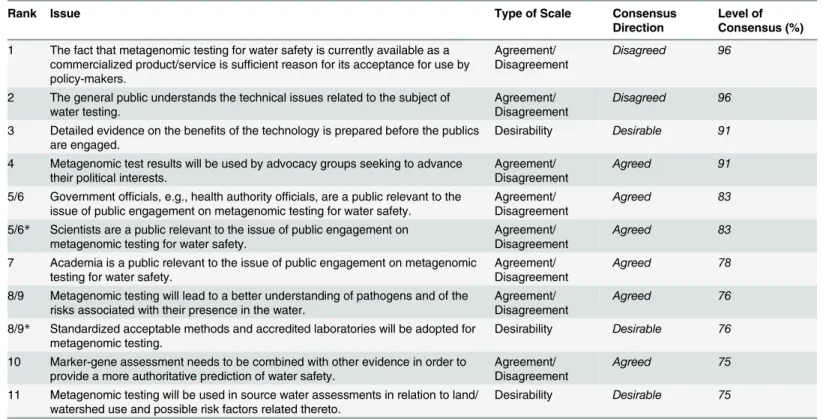
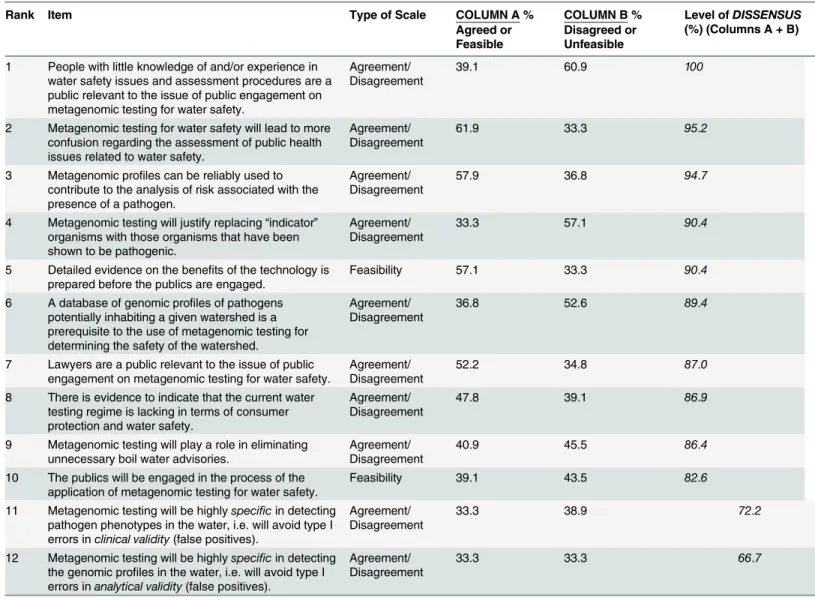
Out of the 107 questions surveyed, we observed consensus on 11, and dissensus on 12 items (Tables4and5, respectively). Consistent with experts’tendency to dampen their personal opinion deviations from the group means, the expressed perceptions of the experts displayed lesser variability in round 3 compared to round 2 of the Delphi survey (Fig 4). Among the is-sues with consensus, the commercial availability of metagenomics tests/services, alone, was considered an insufficient reason to adopt them for water safety testing. Experts had consensus that metagenomics biomarker data need to be combined with other evidence in order to pro-vide a more authoritative prediction of water safety (Table 4). We observed that 71% of the re-spondents gave a strong affirmative response (either 6 or 7 on the 7-point Likert scale) to the question“metagenomic testing will be a supplementary method utilized in testing for organic contamination in water, as opposed to becoming the exclusive technology used”.
Table 4. Ranking of the Issues with CONSENSUS Among Experts in Regards to Metagenomic Tests for Water Safety.
Rank Issue Type of Scale Consensus
Direction
Level of Consensus (%)
1 The fact that metagenomic testing for water safety is currently available as a commercialized product/service is sufficient reason for its acceptance for use by policy-makers.
Agreement/ Disagreement
Disagreed 96
2 The general public understands the technical issues related to the subject of
water testing. Agreement/Disagreement
Disagreed 96
3 Detailed evidence on the benefits of the technology is prepared before the publics
are engaged. Desirability
Desirable 91
4 Metagenomic test results will be used by advocacy groups seeking to advance
their political interests. Agreement/Disagreement
Agreed 91
5/6 Government officials, e.g., health authority officials, are a public relevant to the
issue of public engagement on metagenomic testing for water safety. Agreement/Disagreement
Agreed 83
5/6* Scientists are a public relevant to the issue of public engagement on
metagenomic testing for water safety. Agreement/Disagreement
Agreed 83
7 Academia is a public relevant to the issue of public engagement on metagenomic
testing for water safety. Agreement/Disagreement
Agreed 78
8/9 Metagenomic testing will lead to a better understanding of pathogens and of the
risks associated with their presence in the water. Agreement/Disagreement
Agreed 76
8/9* Standardized acceptable methods and accredited laboratories will be adopted for
metagenomic testing. Desirability
Desirable 76
10 Marker-gene assessment needs to be combined with other evidence in order to
provide a more authoritative prediction of water safety. Agreement/Disagreement
Agreed 75
11 Metagenomic testing will be used in source water assessments in relation to land/
watershed use and possible risk factors related thereto. Desirability
Desirable 75
*Tied ranking
Consistent with a perceived ancillary decision-making role for metagenomics tests, the re-spondents’views were polarized on the extent to which a metagenomics test result will be the primary criterion for water safety. For example, they had dissensus on the question whether “metagenomic profiles can be reliably used to contribute to the analysis of risk associated with the presence of a pathogen”(Table 5). Similarly, the respondents displayed dissensus on whether or not the“metagenomic testing will play a role in eliminating unnecessary boil water advisories”(Table 5).
While analytical and clinical validity of a metagenomics test were considered among the top 10 priority evidence for adoption in water safety, experts were polarized on whether specificity of a test can be achieved to avoid false positives (Table 5,dissensus items 11 and 12). Moreover, Table 5. Ranking of the Issues with DISSENSUS Among Experts in Regards to Metagenomic Tests for Water Safety.
Rank Item Type of Scale COLUMN A %
Agreed or Feasible
COLUMN B % Disagreed or Unfeasible
Level ofDISSENSUS (%) (Columns A + B)
1 People with little knowledge of and/or experience in water safety issues and assessment procedures are a public relevant to the issue of public engagement on metagenomic testing for water safety.
Agreement/ Disagreement
39.1 60.9 100
2 Metagenomic testing for water safety will lead to more confusion regarding the assessment of public health issues related to water safety.
Agreement/
Disagreement 61.9 33.3
95.2
3 Metagenomic profiles can be reliably used to contribute to the analysis of risk associated with the presence of a pathogen.
Agreement/
Disagreement 57.9 36.8
94.7
4 Metagenomic testing will justify replacing“indicator”
organisms with those organisms that have been shown to be pathogenic.
Agreement/ Disagreement
33.3 57.1 90.4
5 Detailed evidence on the benefits of the technology is
prepared before the publics are engaged. Feasibility 57.1 33.3
90.4
6 A database of genomic profiles of pathogens potentially inhabiting a given watershed is a prerequisite to the use of metagenomic testing for determining the safety of the watershed.
Agreement/
Disagreement 36.8 52.6
89.4
7 Lawyers are a public relevant to the issue of public
engagement on metagenomic testing for water safety. Agreement/Disagreement 52.2 34.8
87.0
8 There is evidence to indicate that the current water testing regime is lacking in terms of consumer protection and water safety.
Agreement/
Disagreement 47.8 39.1
86.9
9 Metagenomic testing will play a role in eliminating unnecessary boil water advisories.
Agreement/ Disagreement
40.9 45.5 86.4
10 The publics will be engaged in the process of the application of metagenomic testing for water safety.
Feasibility 39.1 43.5 82.6
11 Metagenomic testing will be highlyspecificin detecting pathogen phenotypes in the water, i.e. will avoid type I errors inclinical validity(false positives).
Agreement/ Disagreement
33.3 38.9 72.2
12 Metagenomic testing will be highlyspecificin detecting the genomic profiles in the water, i.e. will avoid type I errors inanalytical validity(false positives).
Agreement/
Disagreement 33.3 33.3
66.7
Dissensusis observed for a survey question if on the 7-point Likert scale, the bottom 3 points as a cluster (a score of one, two or three),andthe top 3 points as a cluster (a score offive, six or seven),eachgathered at least 33% of ratings.Dissensusis the sum of the ratings gathered from the top and bottom 3 point clusters on the 7-point Likert scale (Columns A + B above).
the experts do not appear to broadly converge on the idea that the current water testing regime is lacking in terms of consumer protection and water safety (Table 5,dissensus item 8).
Perceived Role and Timing of Public Engagement
Who should generate the evidence for adoption of metagenomics tests. In terms of the “co-production”of evidentiary base on emerging technologies and innovations, as evidenced by new scientific practices such as citizen science well-known in conservation science and ecol-ogy, there is a shift towards working with a broader range of innovation actors outside the labo-ratory including the citizens, nongovernmental organizations, patient advocacy groups, among others. While the science and policy experts in the present Delphi study agreed with consensus that governments, scientists and academics are legitimately“a public relevant to the issue of public engagement on metagenomic testing for water safety”, interestingly, they did not display similar consensus on the need for engagement with the general public.
In these findings, it is striking that the experts do not appear to see a major proactive need for engagement with the general public, a key user community for the anticipated metage-nomics tests, beyond a passive downstream role for adoption of a technology. For example, sci-ence and policy experts in the present study have consensus that“detailed evidence on the benefits of the technology is prepared before the publics are engaged”(Table 5), rather than a substantive and democratic co-productionist role for public engagement at an upstreamdesign anddiscoverystage of metagenomics tests.
These perceptions of the experts appear to stem from a linear and narrow innovation model focussing primarily on the classic“push factors”(scientists and laboratory actors) instead of a bi-directional model of innovation and knowledge co-production where both technology in-ventors/designers and user communities such as the general public (pull factors) are engaged in collective innovation. Notably, such perceptions run against the latest scholarship from social studies of science and technology [24,29] and the emerging field of“citizen science”where user communities, and publics more generally, are understood to be capable of making produc-tive contributions to design, funding and/or implementation of scientific projects [29,39].
Opportunities for Policymaking on Emerging Water Safety Tests
In Delphi studies, issues with consensus may point to socio-technical areas where contestation or conflict among the innovation actors may be less likely. But the reverse side of the consensus medallion is also noteworthy. When there is consensus on a given subject, it may mean the ex-perts are already“entrenched”firmly in their opinions and are unlikely to change their stances easily; they might be resistant to guidance by new insights or innovation policies on that subject matter. Hence, issues where there is no consensus at all are worthy of careful reconsideration for future policy design because such topics without a consensus might actually be the real-life actionabletarget issues where“change is still possible”by new policies. Such a focus on topics with no consensus would serve the metagenomics science, policy and user communities well by helping steer the attendant innovation trajectory from lab to society. We therefore focus below on“open”issues where we did not observe a consensus or dissensus.
Metagenomics testing, in theory, can be utilized not only for assessing water safety or base-line contamination but also the extent ofchangein water organic contamination after treat-ment with candidate interventions aimed at improving ecosystem health. The experts did not show dissensus/consensus on this subject matter either, suggesting that the metagenomics in-novation trajectory is“wide open”in these particular dimensions to be shaped by future technology policies.
As an ancillary observation, we report that more than half of the experts (59%) opined that if metagenomic testing were to be used for water safety, this would materialize in 4 to 9 years.
It is noteworthy that the Delphi method is a bottom-up procedure with survey questions being emergent from the field (proposed largely by the respondent experts). Thus, Delphi as a form of social science research is distinct from investigator-planned top-down questionnaires that may be detached from the field realities at the design stage since how one asks the ques-tions in part determines the answers [40–42]. In this sense, the Delphi method is aligned direct-ly with the values and perceptions of the innovation actors in the field starting with the survey design and the answers obtained. A Delphi survey is also different from interviews with field re-spondents and do not always permit further questions on the mechanisms of consensus or dis-sensus. In our study, the respondents noted that metagenomics tests would provide crucial new information but that they may not necessarily replace the current water safety tests. Mecha-nisms of these perceptions warrant further social science research by complementary method-ologies, for example, using interviews and ethnography research.
We shall note that perceptions and values of individuals and professional communities of practice do change over time with new socio-technical developments such as personal geno-mics, direct-to-consumer sale of new diagnostics that bypass public health systems, new legal reforms pertaining to ecosystem health and safety, not to forget amendments to future innova-tion policies [43–45]. It would serve the public health community well to conduct repeated Del-phi surveys; so dynamic and real-time monitoring of both emerging technologies and the values of the attendant innovation actors can be mapped continuously [46,47]. Such “socio-technical”evidence is essential for responsible governance of novel technologies such as metagenomics.
Finally, we caution the reader that the present qualitative observations specifically, and the Delphi surveys more broadly, arenotmeant to be a hypothesis test on metagenomics technolo-gy futures. Instead, the findings provide anticipatory knowledge that can guide future innova-tion policy in regards to novel water safety tests emerging from metagenomics applicainnova-tions. We suggest future research in the field may take on issues that relate, for example, decision-makers’attitudes to their levels of expertise and whether or not they had used metagenomics technology in the past. Notably, however, the experts who participated in the present survey had a median 13 years of professional experience in science and/or public health policy and majority had a PhD degree (Table 2). Because our aim was not quantitative hypothesis testing of the putative determinants of inter-individual variability in experts’perceptions on metage-nomics, these types of issues offer opportunities for future social science research.
Conclusions
experts towards the types and extent of scientific evidence on metagenomics have not been studied to date. The present study thus makes an important contribution to build anticipatory capacity on metagenomics and ecosystem health innovations by reporting the top 10 decision criteria deemed to be important by science and policy experts for adoption of metagenomics technology in practice (Table 3). Additionally, the issues on which there is consensus and dis-sensus are reported, together with the contexts in which the experts have not yet formed a firm opinion. These observations point at strategic contexts where policy interventions may be most effective, and situations where conflict and synergies among innovation actors might be antici-pated and managed in advance, as discussed above.
Experts agree that metagenomic testing will provide valuable new information on organic water contamination but there is dissensus on whether or not metagenomics will replace the current water safety testing methods or reduce the boil water advisories. Experts view the gen-eral publics relevant in a“downstream capacity”: to adopt metagenomics tests in a linear inno-vation model from lab-to-society, rather than a substantive co-productionist role at the “upstream”scientific design stage of metagenomics tests.
Taken together, these findings offer timely anticipatory knowledge on the metagenomics novation trajectory; experts appear to perceive the latter as an incremental linear innovation in-stead of a game changing disruptive biotechnology innovation. A closer engagement among experts and publics should, however, bring about a deeper appreciation of the broader range of metagenomics applications and the ways in which technology inventors and user communities might engage for co-production of metagenomics innovations.
Strategic Outlook for Anticipatory Technology Governance
Innovations, by definition, are often unprecedented nor can we predict their trajectory entirely. But we can give direction to innovations and emerging technologies so they steer towards out-comes that are grounded in societal values and priorities. One way to achieve this objective is to engage with emerging technologies such as metagenomics from their outset at an “up-stream”discovery/design stage before the opinions on the innovation trajectory are“locked in”, and while it is still possible to shape the innovation trajectory. Small changes by early poli-cy interventions on new technologies accrue over time as a technology differentiates and dif-fuses into new applications.
As a concrete analogy, innovations and emerging technologies are akin to pluripotent stem cells that can differentiate into various tissue types, given sufficient context and direction. Simi-larly, technology foresight data can provide direction and allow anticipatory governance of emerging technologies as they differentiate into various applications in society. In our case, we wish to note that the present study, by virtue of its focus on how evidence on metagenomics technology is currently being perceived by science and policy experts, offers strategic foresight and future policy guidance on metagenomics innovations. Our study focus on potential social shaping of scientific evidence by experts’values and perceptions is particularly novel from a so-cial science context as scientific evidence, historically, has been considered to be invariably ob-jective and not subject to influences by scientists’or policymakers’value systems. The findings thus collectively offer new insights at the intersection of metagenomics technology, society and innovation policy. The data also suggest ways forward to inform future anticipatory ethics and technology governance frameworks whereby both innovation actors and innovation narrators work in tandem to examine and steer emerging biotechnologies such as metagenomics to re-sponsible innovation [48–55].
evidence-based assessment for their utility to impact the public health related endpoints such as boil water advisories. Our observations made here suggest the ways in which metagenomics evidence can be subject to influences by varied perceptions of scientists and policymakers, and to the best of our knowledge, is the first study that examined the potential social construction of scientific evidence on metagenomics driven diagnostics. Because evidence is a precursor de-terminant of the user uptake of innovative products (Fig 1), we need to remain vigilant for po-tentials in regards to social construction of scientific evidence by innovation actors, and the ways in which evidence shapes, and is shaped by decision makers’perceptions on novel diag-nostics for ecosystem health.
Finally, steering or managing innovations in a sustainable and responsible manner is not so different than a complex aerodynamic system like an airplane that requires governance instru-ments for bothaccelerationanddeceleration. Delphi surveys and anticipatory knowledge gen-erated by social science and humanities research offer exciting opportunities to govern innovationssymmetrically: by identifying areas where acceleration (e.g., consensus areas) and deceleration/reconsideration (e.g., dissensus areas) of the innovation trajectory are warranted.
Looking ahead, we cannot help wonder the uptake of such anticipatory knowledge when, for example, a momentary deceleration of the scientific discovery engine may be prudent for long-term product uptake or innovation ecosystem and multilateral stakeholder sustainability
[51,52]. How might stakeholders, funding agencies, large consortia ethicists and scientists,
governments and other innovation actors with existing political, career and economic commit-ments view such foresight data and social science recommendations for deceleration and accel-eration of emerging technology applications?
Our answer is that anticipatory governance of emerging technologies could not be more im-portant, valuable and timely, for sustainability of ecosystems and prosperity of global society. After all, any sensible innovation actor, be they governments, scientists, consortia ethicists or funding agencies would like to know the future(s) of the innovation trajectory in advance. In-deed, the fast approaching special meeting at the United Nations in September 2015 is dedicat-ed to approving the SDGs for the 2016–2030 term. The SDGs are envisioned as successors to the Millennium Development Goals (MDGs) that were agreed upon in 2000 and expiring in 2015. As the world’s safe water supplies continue to be threatened by organic and inorganic contamination, we ought to think beyond our immediate self-interests as persons, communi-ties or governments [26,28,51,56–67]. Hence, we call for continued, rigorous andindependent trustworthy social science and humanities research on newnestedgovernance approaches (e.g., ethics as well as ethics-of-ethics) for emerging diagnostic technologies such as metagenomics that have vast importance for both ecosystems and human health [51,55–57,59,60].
Supporting Information
S1 Text. The Delphi survey questions.
(DOCX)
Acknowledgments
interdisciplinary scholar career award from the Scientific and Technological Research Council of Turkey.
The authors thank Elena Olvera Rivera and Stanislav Neroslavskiy for help with the figures. The views and analyses presented here are entirely the personal opinions of the authors and do not necessarily represent authors’affiliated institutions nor the funders.
Author Contributions
Conceived and designed the experiments: VO. Performed the experiments: SB ESD VO. Ana-lyzed the data: SB ESD VO. Contributed reagents/materials/analysis tools: SB ESD VO. Wrote the paper: VO SB ESD.
References
1. Qu X, Brame J, Li Q, Alvarez PJ (2013) Nanotechnology for a safe and sustainable water supply: en-abling integrated water treatment and reuse. Acc Chem Res 46: 834–843. doi:10.1021/ar300029v PMID:22738389
2. Grantham TE, Merenlender AM, Resh VH (2010). Climatic influences and anthropogenic stressors: an integrated framework for streamflow management in Mediterranean-climate California, U.S.A. Fresh-water Biology 55 (Suppl. 1): 188–204.
3. Millennium Ecosystem Assessment (2005) Ecosystem and Human Well Being: General Synthesis. World Resource Institute: Washington, DC.
4. McQuaig S, Griffith J, Harwood VJ (2012) Association of fecal indicator bacteria with human viruses and microbial source tracking markers at coastal beaches impacted by nonpoint source pollution. Appl Environ Microbiol 78: 6423–6432. doi:10.1128/AEM.00024-12PMID:22773625
5. Ferguson AS, Layton AC, Mailloux BJ, Culligan PJ, Williams DE, et al. (2012) Comparison of fecal indi-cators with pathogenic bacteria and rotavirus in groundwater. Sci Total Environ 431: 314–322. doi:10.
1016/j.scitotenv.2012.05.060PMID:22705866
6. Neelakanta G, Sultana H (2013) The use of metagenomic approaches to analyze changes in microbial communities. Microbiol Insights 6: 37–48. doi:10.4137/MBI.S10819PMID:24826073
7. Staley JT, Konopka A (1985) Measurement of in situ activities of nonphotosynthetic microorganisms in aquatic and terrestrial habitats. Annu Rev Microbiol 39: 321–346. PMID:3904603
8. Handelsman J. (2004) Metagenomics: application of genomics to uncultured microorganisms. Microbiol Mol Biol Rev 68: 669–685. PMID:15590779
9. Grimes DJ, Atwell RW, Brayton PR, Palmer LM, Rollins DM, et al. (1986) The fate of enteric pathogenic bacteria in estuarine and marine environments. Microbiol Sci 3: 324–329. PMID:2856614
10. Harwood VJ, Levine AD, Scott TM, Chivukula V, Lukasik J, et al. (2005) Validity of the indicator organ-ism paradigm for pathogen reduction in reclaimed water and public health protection. Applied and Envi-ronmental Microbiology 71: 3163–3170. PMID:15933017
11. Goldstein ST, Juranek DD, Ravenholt O, Hightower AW, Martin DG, et al. (1996) Cryptosporidiosis: an outbreak associated with drinking water despite state-of-the-art water treatment. Ann Internal Med 24: 459–468.
12. Staley C, Gould TJ, Wang P, Phillips J, Cotner JB, et al. (2014) Bacterial community structure is indica-tive of chemical inputs in the Upper Mississippi River. Front Microbiol 5: 524. doi:10.3389/fmicb.2014. 00524PMID:25339945
13. Özdemir V. (2013) OMICS 2.0: a practice turn for 21(st) century science and society. OMICS 17: 1–4. doi:10.1089/omi.2012.0111PMID:23301640
14. Venter JC, Remington K, Heidelberg JF, Halpern AL, Rusch D, et al. (2004) Environmental genome shotgun sequencing of the Sargasso Sea. Science 304(5667): 66–74. PMID:15001713
15. Miller RR, Montoya V, Gardy JL, Patrick DM, Tang P. (2013) Metagenomics for pathogen detection in public health. Genome Med 5(9): 81. doi:10.1186/gm485PMID:24050114
16. Akondi KB, Lakshmi VV. (2013) Emerging trends in genomic approaches for microbial bioprospecting. OMICS 17(2): 61–70. doi:10.1089/omi.2012.0082PMID:23308385
18. Handelsman J, Rondon RM, Brady SF, Clardy J, Goodman RM (1998) Molecular biological access to the chemistry of unknown soil microbes: a new frontier for natural products. Chem Biol 5: R245–R249.
PMID:9818143
19. Pace NR, Stahl DA, Lane DJ, Olsen GJ (1985) Analyzing natural microbial populations by rRNA se-quences. ASM News 51: 4–12.
20. Jin H, Li B, Peng X, Chen L (2014) Metagenomic analyses reveal phylogenetic diversity of carboxypep-tidase gene sequences in activated sludge of a wastewater treatment plant in Shanghai, China. Ann Microbiol 64: 689–697. PMID:24860282
21. Fancello L, Trape S, Robert C, Boyer M, Popgeorgiev N, et al. (2013) Viruses in the desert: a metage-nomic survey of viral communities in four perennial ponds of the Mauritanian Sahara. ISME J 7: 359–
369. doi:10.1038/ismej.2012.101PMID:23038177
22. Tomaru A, Kawachi M, Demura M, Fukuyo Y (2014) Changes in microbial communities, including both uncultured and culturable bacteria, with mid-ocean ballast-water exchange during a voyage from Japan to Australia. PLoS One 9: e96274. doi:10.1371/journal.pone.0096274PMID:24817212
23. Port JA, Cullen AC, Wallace JC, Smith MN, Faustman EM (2014) Metagenomic frameworks for moni-toring antibiotic resistance in aquatic environments. Environ Health Perspect 122: 222–228. doi:10. 1289/ehp.1307009PMID:24334622
24. Yearley S (2004) Making sense of science: Understanding the social study of science. London: Sage.
25. Haffeld J, Siem H (2013) The Post-2015 Agenda: Complexity theory-based governance of the global health system in the era of postgenomics and personalized medicine. Curr Pharmacogenomics Person Med 11: 309–311.
26. Dove ES, Özdemir V (2014) The epiknowledge of socially responsible innovation. EMBO Reports 15: 462–463. doi:10.1002/embr.201438683PMID:24795460
27. Zhao F1, Chen Y, Ge S, Yu X, Shao S, et al. (2014) A quantitative analysis of the mass media coverage of genomics medicine in china: a call for science journalism in the developing world. OMICS 18(4): 222–230. doi:10.1089/omi.2013.0108PMID:24512309
28. Özdemir V. (2014) Personalized medicine across disciplines and without borders. Per Med 18: 687–
691. Available:http://www.futuremedicine.com/doi/pdf/10.2217/pme.14.70
29. Özdemir V, Faris J, Srivastava S. (2015) Crowdfunding 2.0: The next generation philanthropy. EMBO Rep 16(3): 267–271. doi:10.15252/embr.201439548PMID:25656538
30. Özdemir V, Faraj SA, Knoppers BM. (2011) Steering vaccinomics innovations with anticipatory gover-nance and participatory foresight. OMICS 15: 637–646. doi:10.1089/omi.2011.0087PMID:21848419
31. Collingridge D. (1980) The Social Control of Technology. New York: St. Martin's Press.
32. Dandara C, Huzair F, Borda-Rodriguez A, Chirikure S, Okpechi I, et al. (2014) H3Africa and the African Life Sciences Ecosystem: Building Sustainable Innovation. OMICS 18: 733–739. doi:10.1089/omi. 2014.0145PMID:25454511
33. Rowe G, Wright G (1999) The Delphi technique as a forecasting tool: issues and analysis. International Journal of Forecasting 15: 353–375.
34. Beech B (1997) Studying the future: a Delphi survey of how multi-disciplinary clinical staff view the likely development of two community mental health centres over the course of the next two years. J Adv Nurs 25: 331–338. PMID:9044008
35. Delbecq AL, Van de Ven AH, Gustafson DH (1975) Group techniques for program planning: a guide to nominal group and Delphi processes. Glenview, Ill.: Scott, Foresman.
36. Green B, Jones M, Hughes D, Williams A (1999) Applying the Delphi technique in a study of GPs' infor-mation requirements. Health & Social Care in the Community 7: 198–205. PMID:11560634
37. Hoover RS, Koerber AL (2011) Using NVivo to Answer the Challenges of Qualitative Research in Pro-fessional Communication: Benefits and Best Practices Tutorial. IEEE Transactions on ProPro-fessional Communication 54: 68–82.
38. Mead D, Moseley L (2001) The use of the Delphi as a research approach. Nurse Researcher 8: 4–23.
39. Wicks P, Vaughan TE, Massagli MP, Heywood J (2011) Accelerated clinical discovery using self-re-ported patient data collected online and a patient-matching algorithm. Nat Biotechnol 29: 411–414. doi: 10.1038/nbt.1837PMID:21516084
40. Birch K, Tyfield D. (2013) Theorizing the Bioeconomy: Biovalue, Biocapital, Bioeconomics or. . .What?
Science Technol Human Values 38: 299–327.
41. Thoreau F, Delvenne P. (2012). Have STS fallen into a political void? Depoliticisation and engagement in the case of nanotechnologies. Politica Sociedade 11: 205–226.
43. Tutton R, Prainsack B. (2011) Enterprising or altruistic selves? Making up research subjects in genetics research. Sociol Health Illn 33: 1081–1095. doi:10.1111/j.1467-9566.2011.01348.xPMID:21507012 44. Dove ES (2013) Questioning the governance of pharmacogenomics and personalized medicine for
global health. Curr Pharmacogenomics Person Med 11: 253–256
45. Rose N. (2013) The human sciences in a biological age. Theory Culture Soc 30: 3–34.
46. Sarewitz D, Guston DH (2002) Real-time technology assessment. Technol Soc 24: 93–109.
47. Guston DH. (2012) The pumpkin or the tiger? Michael Polanyi, Frederick Soddy, and anticipating emerging technologies. Minerva 50: 363–379. PMID:23024398
48. De Vries R (2004) How can we help? From‘sociology in’bioethics to‘sociology of’bioethics. Journal of Law, Medicine and Ethics 32: 279–292. PMID:15301193
49. Fisher E. (2011) Editorial overview: public science and technology scholars: engaging whom? Sci Eng Ethics 17: 607–620. doi:10.1007/s11948-011-9331-xPMID:22113233
50. Petersen A. (2013) From bioethics to a sociology of bio-knowledge. Soc Sci Med 98: 264–270. doi:10. 1016/j.socscimed.2012.12.030PMID:23434118
51. Özdemir V, Kılıç H, Yıldırım A, Vayena E, Dove ES, Gungor K, et al. (2015) A code of ethics for
ethi-cists: What would Pierre Bourdieu say?“Do not misuse social capital in the age of consortia ethics.”Am J Bioethics 15: 64–67.
52. Özdemir V. (2014) Public health in the age of genomics, 'Big Data' and massively collaborative global science. In: Routledge Handbook of Global Public Health in Asia. Edited by Griffith SM, Tang JL, Yeoh EK. Hong Kong: Routledge. doi:10.4324/9781315818719.ch6
53. Ngueng Feze I, Prystajecky N, Cook C, Kirby E, Knoppers BM, Özdemir V, et al. (2014). The regulation of water quality assessment biotechnologies: Is Canada ready to surf the next wave? Journal of Envi-ronmental Law and Practice 26: 201–248.
54. Cook C, Prystajecky N, Ngueng Feze I, Joly Y, Dunn G, Kirby E, et al. (2013). Comparison of the regu-latory framework governing microbial testing of drinking water quality in three Canadian provinces. Ca-nadian Water Resource Journal 38(3): 185–195.
55. Dove ES, Özdemir V. (2013) All the postgenomic world is a stage: the actors and narrators required for translating pharmacogenomics into public health. Per Med 10: 213–216. PMID:24795761
56. Ostrom E. (1990) Governing the Commons: The Evolution of Institutions for Collective Action. Cam-bridge, United Kingdom: Cambridge University Press.
57. Ostrom E. (1999) Coping with tragedies of the commons. Annual Review of Political Science 2: 493–
535.
58. Özdemir V, Burke W, Knoppers BM, Khoury MJ, Zimmern R. (2015) Genomics and public health. In: Oxford Textbook of Global Public Health. Sixth edition. Edited by Roger Detels, Martin Gulliford, Quar-raisha Abdool Karim and Chorh Chuan Tan. Oxford: Oxford University Press. Available:http:// oxfordindex.oup.com/view/10.1093/med/9780199661756.003.0010
59. Özdemir V, Dove ES, Srivastava S. (2015) Will proteins have a social life at last?“Push”and“Pull” fac-tors and Ajna Chakra for social innovation. Nature India (forthcoming).
60. Jasanoff S. (2013) Watching the watchers: lessons from the science of science advice. The Guardian April 8th. Available:
http://www.theguardian.com/science/political-science/2013/apr/08/lessons-science-advice
61. Özdemir V, Endrenyi L, Aynacıoğlu S, Bragazzi NL, Dandara C, Dove ES, et al. (2014) Bernard Lerer: recipient of the 2014 inaugural Werner Kalow Responsible Innovation Prize in Global Omics and Per-sonalized Medicine (Pacific Rim Association for Clinical Pharmacogenetics). OMICS 18(4): 211–221. doi:10.1089/omi.2014.0029PMID:24649998
62. Hekim N, Coşkun Y, Sınav A, Abou-Zeid AH, AğırbaşlıM, Akintola SO, et al. (2014) Translating
bio-technology to knowledge-based innovation, peace, and development? Deploy a Science Peace Corps
—an open letter to world leaders. OMICS 18(7): 415–420. doi:10.1089/omi.2014.0079PMID: 24955641
63. Rajan KS. (2006). Biocapital: The Constitution of Postgenomic Life. Durham, NC: Duke University Press.
64. Christophe Bonneuil, Foyer J, Wynne B. (2014) Genetic fallout in biocultural landscapes: molecular im-perialism and the cultural politics of (not) seeing transgenes in Mexico. Soc Stud Sci 44(6): 901–929. PMID:25608443
66. Taylor-Alexander S, Schwartz-Marín E. Bioprophecy and the politics of the present: notes on the estab-lishment of Mexico's national genomics institute (INMEGEN). New Genet Soc 32: 333–349.