ISSN 0104-6632 Printed in Brazil
www.abeq.org.br/bjche
Vol. 33, No. 04, pp. 827 - 834, October - December, 2016 dx.doi.org/10.1590/0104-6632.20160334s20150230
Brazilian Journal
of Chemical
Engineering
EFFICIENCY OF THE EARTHWORM Eisenia fetida
UNDER THE EFFECT OF ORGANIC MATTER FOR
BIOREMEDIATION OF SOILS CONTAMINATED
WITH CADMIUM AND CHROMIUM
G. R. Mostafaii
1, E. Aseman
1*, H. Asgharnia
2, H. Akbari
3, L. Iranshahi
1and H. Sayyaf
11
Department of Environmental Health Engineering, Kashan University of Medical Sciences, Ravand Avenue, Kashan University of Medical Sciences, Postal Code: 87159-88141, Kashan, Iran.
Fax: + 98-31-55540111
*
E-mail: [email protected]
E-mail: [email protected]; [email protected]; [email protected]
2
Department of Environmental Health Engineering, Babol University of Medical Sciences, Iran. E-mail: [email protected]
3
Department of Biostatistics and Public Health, Kashan University of Medical Sciences, Kashan, Iran. E-mail: [email protected]
(Submitted: April 14, 2015 ; Revised: June 12, 2015 ; Accepted: June 23, 2015)
Abstract - The use of earthworms to bioremediate soil results in decreasing the pollutant concentration through a bioaccumulation mechanism of the contaminants in the earthworm's body. The present work is an empirical study that was carried out on soils contaminated with chromium and cadmium. Organic matter in the amount of 5% and 9% of soil weight was added. Chromium and cadmium concentrations in soil and in the body of worms were measured at two time periods of 21 and 42 days. According to the results, increasing from 5% to 9% the organic material of the soil contaminated with chromium at the initial concentration of 0.06 mg/g, the removal efficiency decreased by 5%. In 0.1 mg/g concentration the bioremediation efficiency decreased by 20%, showing that the earthworms probably have more tendency to consume the organic material and low tendency for consuming the soil contaminated by metal. Results showed that, considering the increased mortality of worms in the soil at a concentration of 0.08 mg/g of chromium, using this method is not recommended. For cadmium we require more study, though we can say that the organic material had no influence on the bioremediation of the soil.
Keywords: Heavy metals; Earth worm; Bioremediation; Soil pollution.
INTRODUCTION
The advances of humanity towards industrializa-tion caused the producindustrializa-tion and entrance of hazardous pollutants such as carcinogenic compounds, toxins and heavy metals into the environment. Heavy met-als are the main pollutants in the environment and are a big problem due to their toxicity and accumula-tion in the environment. Soils contaminated with heavy metals are one of the environmental issues
human use of these products and the high potential of these soils for contamination with heavy metals, especially in industrial areas, the need to purify con-taminated soils will be important. In the decontami-nation of soils contaminated with heavy metals, sta-bility and high resistance to degradation of the met-als is considered to be one of the most challenging issues. Traditional methods of refining for the recov-ery of contaminated sites, mainly due to the high cost and lack of compatibility with ecosystems, are not very efficient (Blaylock et al., 1997). Hence the need for new methods with high efficiency and low cost for refining contaminated soils is high. The use of earthworms for soil bioremediation is a biological method, so that the pollutant concentrations in the soil are reduced through bioaccumulation mecha-nisms in the body of the earthworms (Matscheko et al., 2002, Slizovskiy and Kelsey, 2010). These or-ganisms can accumulate high concentrations of heavy metals in their body (Li et al., 2010). Because they are the main components of biomass, earth-worms are the most important food source for other organisms higher in the food pyramid (Nahmani et al., 2007). Accumulation of toxic substances such as metals and pesticides in their bodies cause the ani-mals that eat them to be directly affected (Garcia et al., 2008). Previous studies have shown that the pres-ence of excess heavy metals in the soil, is leading to increased mortality of the worms (Spurgeon and Hopkin, 1995, Haghparast et al., 2013, Jamshidi and Golchin, 2013). The study of Darling and Thomas (2005) showed that the concentration of soluble lead compounds in earthworm bodies are more than of low soluble compounds. During their study, Avila et al. (2009) identified that increasing the organic mate-rial can reduce the toxicity of heavy metals in the body of earthworms. Irizar et al. (2015) concluded during their study that, if the organic material in the soil is low, earthworms are not able to digest the soil and, as a result, the toxicity of cadmium increases in them, and the mortality and disorder in reproduction rise. Haghparast et al. (2013) showed that organic material is a source of energy for Eisnia Fetida earth-worms and increases the percentage of their survival. Given that one of the environmental problems is soil contamination with heavy metals and the use of earthworms is a suitable biological method for re-moval of the contamination and given the abundance of animal wastes, which can be used as organic ma-terial, the present study with the aim of evaluating the performance of Eisnia Fetida earthworms under the effect of organic material for the bioremediation of soils contaminated with chromium and cadmium was examined.
METHODS AND MATERIALS
This study was investigated in batch experiments.
Earthworm
The earthworm used in this study is Eisenia fetida which belongs to the ring worm group- Lumbricide family- Eisenia gender - and fetida species. These worms were prepared by Salaneh Company, produc-ing worms and vermicompost fertilizers in Kashan city.
Soil
The soils required were obtained from Kashan farmlands at the soil depth of 0-30 cm from the city of Kashan. The amount of chromium, cadmium and some physicochemical properties of the soils were measured according to the conventional procedures of the Iran Soil & Water Research Institute (Haghparast et al., 2013) (Table 1).
Dry soils were passed through a 2 mm sieve (sieve mesh 50) and were kept in the shade until the start of the experiment.
Organic Matter
The necessary organic matter (manure) was pro-vided from livestock produced in Kashan city. Addi-tion of organic matter in soil included zero, 5, and 9% of organic matter weight. Manure after being provided and dried was sieved for uniform mixing with the soil.
Providing the Required Levels of Chromium and Cadmium Concentrations
Analyzed concentrations for chromium and cad-mium were 0.04 mg/g and 0.08 mg/g soil. To obtain these concentrations 40 g/L and 80 g/L chromium and cadmium solutions were made from salts of po-tassium chromate and cadmium sulfate. Given that the primary soil had 0.06 mg/g of chromium, the concentrations of 0, 0.04 and 0.08 mg/g of chromium changed to 0.06, 0.1 and 0.14 mg/g.
Preparation of Worms
Table 1: Some physicochemical properties of the soil under test.
Physical Tests P
(PPM) K (PPM)
N %
OC %
TKN %
PH EC Ds/m
SP %
Cd (mg/g)
Cr (mg/g) Texture C
% Si %
S %
Sandy Loam 9 16 75 3.05 86.46 0.01 0.13 20.96 7.95 15.90 22.15 0 0.06
50%. After 10 days the worms were taken out of the adaptability environment and washed with distilled water and then put them on a wet filter paper for 24 hours so that their gut excrements are excreted out.
Preparing the Soil
For preparing the soil contaminated with mium, 0.5 mL and 1ml of a solution of 40 g/L chro-mium was uniformly added to pots containing 500 g of soil and thus a concentration of 0.04 mg/g and 0.08 mg/g were obtained. Also for the preparation of soil contaminated with cadmium we did the same. To add heavy metals to the soil, the soils of each pot were spread on a plastic sheet and watered manually by a handy sprinkler so that the soil moisture was adjusted to 50%. Then 30 worms were added to each pot. Pot temperature and humidity were maintained respectively at 25 ± 2 °C and 70%.To determine the removal of heavy metals from the soil and bioaccu-mulation of heavy metals in the body of the worm, samples of soil and earthworm were taken after 21 and 42 days.
Preparing Soil to Measure Chromium and Cad-mium
For the extraction of chromium and cadmium from soil, about 4 grams of soil in each pot were sam-pled and, after drying and grinding them, 1 g of each sample was weighed with a digital scale with an accu-racy of 0.0001 g and the digestion and extraction were performed with a mixture of concentrated nitric acid and hydrochloric acid (50%) in an electric oven at 95 °C. The samples were filtered through Whatman filter paper, Grade 1, and were stored in polyethylene containers until the measurement time. Also to evalu-ate possible errors, control samples were prepared with each series of samples (Wuana et al., 2010).
Preparing Earthworms’ Body to Measure Chro-mium and CadChro-mium
To assess the ability of earthworms Eisenia fetida to remove chromium and cadmium from the con-taminated soil by bioaccumulation, earthworms
added at the end of each experiment step (day 21 and day 42) were isolated from the soil, washed with water, gently dried with a tissue and then placed on a moist filter paper in a glass plate for 24 hours with-out any food so as to evacuate their gut contents. Then the worms were collected and re-washed again, dried gently and put in vials with caps. Acid diges-tion method was used for the determinadiges-tion of ele-ments (Li et al., 2009). In this method, the earth-worm tissue, after being frozen, were dried in an oven. Then 0.5g of tissue was weighed and poured into a test tube and 5 mL of concentrated nitric acid and 1 mL of hydrogen peroxide were added and heated at 180-220 °C until a clear solution was ob-tained. The samples were filtered after cooling.
Method of Measurement
To measure the concentration of chromium and cadmium an ICP instrument, Model Optima 2100 DV Perkin Elmer belonging to the Laboratory of the Kashan Faculty of Medical Sciences, was used.
The definition of death: If all the worms in a pot are disappear then that pot is considered as a lost one and, to calculate the percentage of deaths, the number of lost pots was divided bt the total number of pots.
Analysis of Data
For data analysis, the frequency of worms’ death at each of the levels of chromium and cadmium con-centration was calculated. Then the three-way vari-ance was used. The single-sample of T- test was used to compare the observed values with the initial val-ues. The software used was SPSS version 17. The significance level was PV<0.05.
RESULTS
Effect of Different Concentrations of Chromium, Cadmium and Time on the Death Percentage of the Worms
mg/g chromium in soil was zero percent. These num-bers at the initial concentration of 0.1 mg/g chro-mium in soil were respectively, 11.1 and 55.6%, and at a concentration of 0.14 mg/g chromium in soil reached 44.4 and 77.8 percent. The mortality rate at zero mg/g concentration of cadmium at days 21 and 42 was zero percent. Also the mortality rate at the initial concentration of 0.04 mg/g for these sampling days were 0 and 11.1%, respectively, and, at a con-centration of 0.08 mg/g cadmium, 0% and 33.3%, respectively, which shows a clear increase in the mortality level of worms with the increase of chro-mium concentration in soil, while little change was observed in the mortality of worms upon increasing the concentration of cadmium in soil.
Effect of Initial Chromium Concentration, Organic Matter and Contact Time for Removal Rate of Metals from the Soil
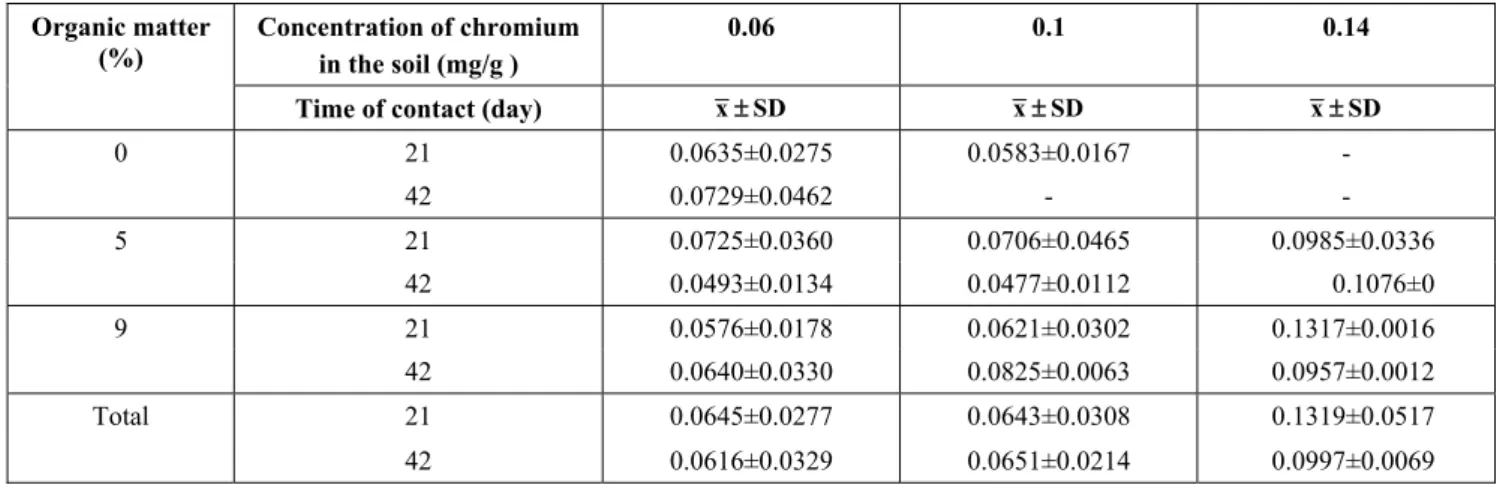
Table 2 shows that, for 5% organic material added to the soil, at the initial concentration of 0.06 mg/g chromium after 21 days no removal happened, but after 42 days about 0.01 mg/g removal from the soil occurred. At the initial concentration of 0.1 mg/g, after respectively 21 and 42 days, 0.03 mg/g and 0.06 mg/g of removal was observed. Also at the con-centration of 0.14 mg/g, for the same amount of or-ganic material, after 21 days the removal was 0.05 mg/g and after 42 days it was 0.04 mg/g. Results show that, by increasing the organic material to 9%, at the initial concentration of 0.06 mg/g, in both pe-riods of time almost no removal from soil happened.
However, at the initial concentration of 0.1 mg/g after respectively 21 and 42 days, 0.04 mg/g and 0.02 mg/g of removal was observed. At the initial concentration of 0.14 mg/g after 21 days, almost no removal happened, but after 42 days 0.04 mg/g bio-remediation was achieved.
Effect of Initial Chromium Concentration, Organic Matter and Contact Time in the Bioaccumulation in the Worms’Body
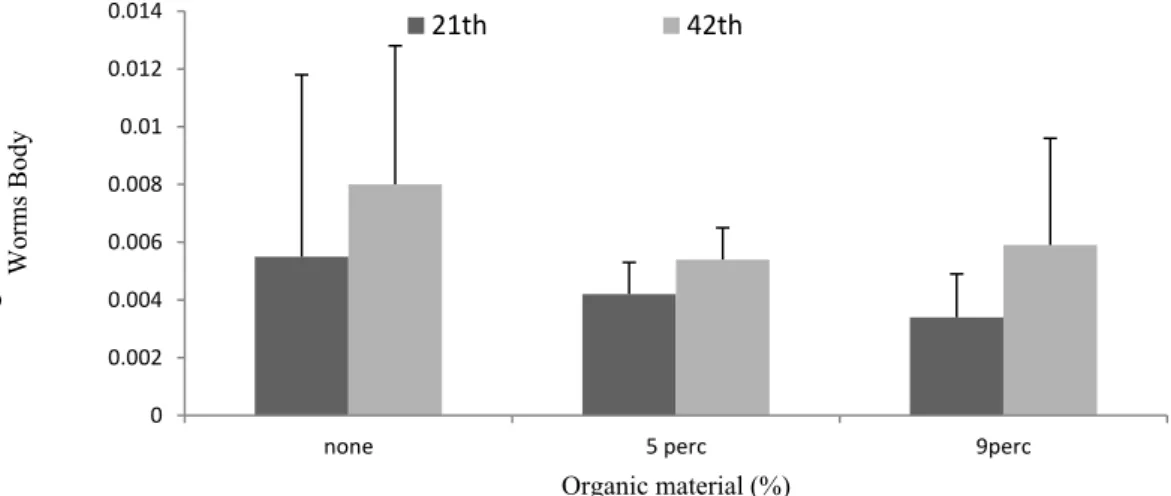
Results of Figures 1, 2 and 3 show that, for 5% organic material added to the soil, at the initial concentration of 0.06 mg/g after 21 days and 42 days no accumulation in the worms’ body was seen, while at the initial concentration of 0.1 mg/g, after respectively 21 and 42 days, 0.02 mg/g and 0.03 mg/g of accumulation in the worms’ body was seen. Also at the concentration of 0.14 mg/g after 21 days the accumulation in the worms’ body was 0.05 mg/g and, after 42 days, because of the mor-tality of the earthworms no data for accumulation in the worms’ body were obtained. By increasing the organic material to 9%, at the initial concentra-tion of 0.06 mg/g, in both periods of time almost no accumulation in the worms’ body was seen, but at the initial concentration of 0.1 mg/g after respec-tively 21 and 42 days, 0.02 mg/g of accumulation in the worms’ body is seen. At the initial concen-tration of 0.14 mg/g after 21 days, the accumu-lation in the worms’ body was 0.02 mg/g and after 42 days the accumulation in the worms’ body was 0.04 mg/g.
Table 2: Average and standard deviation of chromium in the soil based on the initial chromium concentration in soil, organic material and the contact time.
Organic matter (%)
Concentration of chromium in the soil (mg/g )
0.06 0.1 0.14
Time of contact (day) x±SD x±SD x±SD
0 21 0.0635±0.0275 0.0583±0.0167 -
42 0.0729±0.0462 - -
5
21 0.0725±0.0360 0.0706±0.0465 0.0985±0.0336
42 0.0493±0.0134 0.0477±0.0112 0.1076±0
9 21 0.0576±0.0178 0.0621±0.0302 0.1317±0.0016
42 0.0640±0.0330 0.0825±0.0063 0.0957±0.0012
Total 21 0.0645±0.0277 0.0643±0.0308 0.1319±0.0517
Figure 1: Average of chromium in the worms’ body in 0.06 mg/g chromium concentration, organic material and contact time of measurement.
Figure 2: Average of chromium in the worms’ body in 0.1 mg/g chromium concentration, organic material and contact time of measurement.
Figure 3: Average of chromium in the worms’ body in 0.14 mg/g chromium concentration, organic material and contact time of measurement.
0 0.002 0.004 0.006 0.008 0.01 0.012 0.014
none 5 perc 9perc
Average of accum
u
lation
in
the
Worms Body
Organic material (%)
21th 42th
0 0.01 0.02 0.03 0.04 0.05 0.06 0.07 0.08 0.09
none 5 perc 9perc
Average of accum
u
lation
in
the
W
o
rm
Body
(Mg/g)
Organic material (%)
21th 42th
0 0.01 0.02 0.03 0.04 0.05 0.06 0.07 0.08
none 5 perc 9perc
Average of accum
u
lation
in
the
W
o
rm
s
Body
Organic material (%)
Effect of Initial Cadmium Concentration, Organic Matter and Contact Time on Removal Rate of Metals from the Soil
Table 3 shows that, for 5% organic material added to the soil, at the initial concentration of 0.04 mg/g cadmium, after 21 and 42 days 0.02 mg/g of biore-mediation occurred, whereas at the concentration of 0.08 mg/g, after 21 days 0.02 mg/g and after 42 days 0.03 mg/g of bioremediation occurred. By increasing the organic material to 9%, at the initial cadmium concentration of 0.04 mg/g and 0.08mg/g, in both periods of time the results were almost same as for 5% organic material.
Effect of Initial Cadmium Concentration, Organic Matter and Contact Time on the Bioaccumulation in the Worms’Body
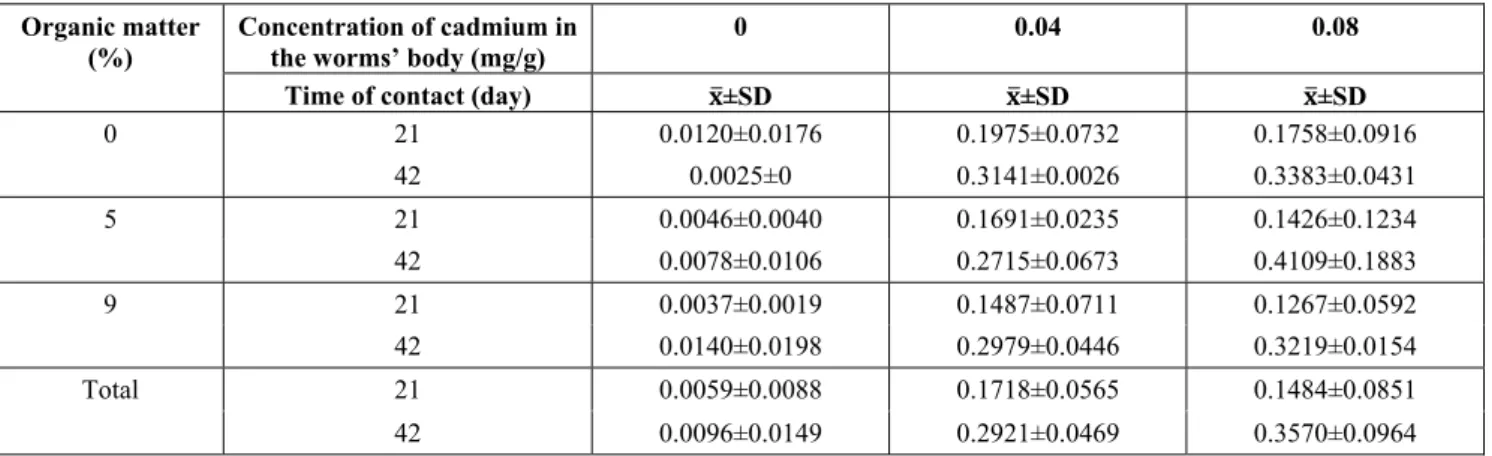
Table 4 shows that as far as the accumulation of cadmium in the worms’ body is concerned, for 5% organic material added to the soil, at the initial
concentration of 0.04 mg/g cadmium after 21 and 42 days 0.16 mg/g and 0.27 mg/g of accumulation in the worms’ body occurred, whereas at the concentration of 0.08 mg/g, after 21 days 0.14 mg/g and after 42 days 0.41 mg/g of accumulation in the worms’ body was seen. By increasing the organic material to 9%, at the initial concentration of 0.04 mg/g cadmium after 21 and 42 days 0.14 mg/g and 0.29 mg/g of accumulation in the worms’ body occurred, whereas at the concentration of 0.08 mg/g, after 21 days 0.12 mg/g and after 42 days 0.32 mg/g of accumulation in the worms’ body was seen.
DISCUSSION
The aim of this study was to study the efficiency of the earthworm Eisenia fetida under the effect of organic matter for bioremediation of soils contami-nated with cadmium and chromium in the form of an experimental study at the laboratory scale.
Table 3: Average and standard deviation of cadmium in the soil based on the initial cadmium concentra-tion in soil, organic material and the contact time.
Organic matter (%)
Concentration of cadmium in the Soil (mg/g)
0 0.04 0.08
Time of contact (day) x±SD x±SD x±SD
0 21 0 0.0223±0.0027 0.0573±0.0066
42 0.0001±0 0.0250±0.0011 0.0567±0.0022
5
21 0.0005±0.0007 0.0258±0.0014 0.0650±0.0065
42 0.0007±0.0008 0.0244±0.0029 0.0598±0.0003
9 21 0 0.0263±0.0028 0.0644±0.0078
42 0 0.0266±0.0033 0.0557±0.0018
Total 21 0 0.0248±0.0028 0.0622±0.0071
42 0 0.0254±0.0026 0.0574±0.0022
Table 4: Average and standard deviation of cadmium in the worms’ body based on the initial cadmium concentration, organic material and contact time of measurement.
Organic matter (%)
Concentration of cadmium in the worms’ body (mg/g)
0 0.04 0.08
Time of contact (day) ܠത±SD ܠത±SD ܠത±SD
0 21 0.0120±0.0176 0.1975±0.0732 0.1758±0.0916
42 0.0025±0 0.3141±0.0026 0.3383±0.0431
5 21 0.0046±0.0040 0.1691±0.0235 0.1426±0.1234
42 0.0078±0.0106 0.2715±0.0673 0.4109±0.1883
9 21 0.0037±0.0019 0.1487±0.0711 0.1267±0.0592
42 0.0140±0.0198 0.2979±0.0446 0.3219±0.0154
Total 21 0.0059±0.0088 0.1718±0.0565 0.1484±0.0851
Studies have shown that earthworms have a high potential for biological bioremediation of contami-nated soils (Suthar et al., 2008; Nahmani et al., 2009; Li et al., 2010; Hirano and Tamae, 2011). These organisms can accumulate a high concentra-tion of heavy metals in the body (Shahmansouri et al., 2005; Li et al., 2010; Brewer and Barrett, 1995; Bamgbose et al., 2000)
Based on statistical analysis performed in this study, it was found that, due to the high toxicity of chromium for worms, there was a significant correla-tion between the concentracorrela-tion of chromium in soil and earthworm mortality, (PV <0.05). In addition, probably due to the detoxification of cadmium by melatonin in the posterior alimentary channel pro-teins, with increasing concentrations of cadmium in the soil there was little change in the mortality of worms (Morgan and Morgan, 1992). The results of Zaltauskaite and Sodiene (2010) showed that, upon increasing the concentration of cadmium, no signifi-cant deaths occurred. This study showed that the toxicity of chromium during the time is more severe than the toxicity of cadmium on the viability of earth-worms, meaning that, with passing time, chromium causes more deaths than cadmium in the population of earthworms. The effect of organic matter on mor-tality of worms was also minimal; the toxicity of chromium and cadmium on the earthworms and the increase in their mortality inhibits the effect of or-ganic matter on their survival. Haghparast et al. (2013) has shown that the increase of organic matter decreased the mortality of the worms by about 4% compared to the samples without organic matter. Avila et al. (2009) showed that the production of cocoon and the viability in the soil at concentrations above 500 mg/g of copper and less than 3.5% or-ganic matter is decreased. The results suggest that adding 5% of organic matter to soil contaminated with chromium at a concentration of 0.06 mg/g after 21 days gave no bioremediation, but after 42 days the efficiency of bioremediation (18.33%) increased. At the concentration of 0.1 mg /g the bioremediation efficiency of 30% after 21 days reached 53% after 42 days. At the concentration of 0.14 mg/g the bioreme-diation efficiency after 42 days decreased by 5.6%, which is probably due to the high rate of mortality that occurred for earthworms. With the increase of organic matter from 5% to 9% by weight, at the ini-tial chromium concentration of 0.06 mg/g the re-moval efficiency decreased by 5%. At the initial chromium concentration of 0.1 mg/g the removal efficiency also decreased by 20%, probably due to the high propensity of earthworms to consume or-ganic matter and slight tendency for the use of metal
contaminated soil. lrizar et al. (2015) believe that the decline in soil organic matter results in increased mortality and bioremediation is decreased. In the case of soil contaminated with cadmium, the results show that, upon increasing the organic matter to about 5% in the soil, bioremediation increased over time, but with a 9% increase in organic matter, re-moval efficiency did not change. This indicates that organic matter has no effect on bioremediation. In the study of Haghparast et al. (2013), it was found that the increase of organic matter in soil contami-nated with cadmium can reduce the damaging effects of the metal.
CONCLUSIONS
The results of this study showed that worms are sensitive for the detection and assessment of soil contamination. Therefore earthworms can be used as bio-indicators to measure soil contamination. Ac-cording to this study, the addition of organic matter, due to the high propensity of earthworms to consume it, and the non-use of contaminated soil reduce the ability of earthworms for bioremediation.
ACKNOWLEDGMENTS
The authors of this article hereby thank the es-teemed Deputy of Researches of Kashan University of Medical Sciences for providing sufficient funds for the implementation of the present research project.
REFERENCES
Avila, G. G., Gaete, H. H., Sauve, S. S., Neaman, A. A., Organic matter reduces copper toxicity for the earthworm Eisenia fetida in soils from mining areas in central Chile. Chilean Journal of Agricul-tural Research, v. 69, p. 252-259 (2009).
Bamgbose, O., Odukoya, O., Arowolo, T., Earth-worms as bio-indicators of metal pollution in dump sites of Abeokuta City, Nigeria. Revista de Biologia Tropical, v. 48, p. 229-234 (2000). Blaylock, M. J., Salt, D. E., Dushenkov, S.,
Zakha-rova, O., Gussman, C., Kapulnik, Y., Ensley, B. D., Raskin, I., Enhanced accumulation of Pb in In-dian mustard by soil-applied chelating agents. En-vironmental Science & Technology, v. 31, p. 860-865 (1997).
en-richment. Bulletin of Environmental Contamina-tion and Toxicology, v. 54, p. 120-127 (1995). Cefalu, W. T., Hu, F. B., Role of chromium in human
health and in diabetes. Diabetes Care, v. 27, p. 2741-2751 (2004).
Chen, T.-B., Zheng, Y.-M., Lei, M., Huang, Z.-C., Wu, H.-T., Chen, H., Fan, K.-K., Yu, K., Wu, X., Tian, Q.-Z., Assessment of heavy metal pollution in surface soils of urban parks in Beijing, China. Chemosphere, v. 60, p. 542-551 (2005).
Darling, C. T., Thomas, V. G., Lead bioaccumulation in earthworms, Lumbricus terrestris, from expo-sure to lead compounds of differing solubility. Science of the Total Environment, v. 346, p. 70-80 (2005).
Garcia, M., Römbke, J., De Brito, M. T., Scheffczyk, A., Effects of three pesticides on the avoidance behavior of earthworms in laboratory tests per-formed under temperate and tropical conditions. Environmental Pollution, v. 153, p. 450-456 (2008). Haghparast, R. J., Golchin, A., Kahneh, E., Effect of
different cadmium concentrations on growth of Eisenia fetida in a calcareous soil. Journal of Water and Soil, v. 27, p. 24-35 (2013).
Hirano, T., Tamae, K., Earthworms and soil pollu-tants. Sensors, v. 11, p. 11157-11167 (2011). Irizar, A., Rodríguez, M., Izquierdo, A., Cancio, I.,
Marigómez, I., Soto, M., Effects of soil organic matter content on cadmium toxicity in Eisenia Fetida: Implications for the use of biomarkers and standard toxicity tests. Archives of Environ-mental Contamination and Toxicology, v. 68, p. 181-192 (2015).
Jamshidi, Z., Golchin, A., The effect of different lev-els of chromium and exposure time on growth pa-rameters of earthworms. KAUMS Journal (FEYZ), v. 16, p. 625-626 (2013).
Li, L.-Z., Zhou, D.-M., Wang, P., Allen, H. E., Sauvé, S., Predicting Cd partitioning in spiked soils and bioaccumulation in the earthworm Ei-senia fetida. Applied Soil Ecology, v. 42, p. 118-123 (2009).
Li, L., Xu, Z., Wu, J., Tian, G., Bioaccumulation of heavy metals in the earthworm Eisenia fetida in relation to bioavailable metal concentrations in pig manure. Bioresource Technology, v. 101, p. 3430-3436 (2010).
Matscheko, N., Lundstedt, S., Svensson, L., Harju, J., Tysklind, M., Accumulation and elimination of 16
polycyclic aromatic compounds in the earthworm (Eisenia fetida). Environmental Toxicology and Chemistry, v. 21, p. 1724-1729 (2002).
Morgan, J., Morgan, A., Heavy metal concentrations in the tissues, ingesta and faeces of ecophysio-logically different earthworm species. Soil Biology and Biochemistry, v. 24, p. 1691-1697 (1992). Nahmani, J., Hodson, M. E., Black, S., A review of
studies performed to assess metal uptake by earth-worms. Environmental Pollution, v. 145, p. 402-424 (2007).
Nahmani, J., Hodson, M. E., Devin, S., Vijver, M. G., Uptake kinetics of metals by the earthworm Eisenia fetida exposed to field-contaminated soils. Environmental Pollution, v. 157, p. 2622-2628 (2009).
Shahmansouri, M., Pourmoghadas, H., Parvaresh, A., Alidadi, H., Heavy metals bioaccumulation by Iranian and Australian earthworms (Eisenia fetida) in the sewage sludge vermicomposting. Iranian Journal of Environmental Health Science & Engi-neering, v. 2, p. 28-32 (2005).
Sizmur, T., Hodson, M. E., Do earthworms impact metal mobility and availability in soil? – A re-view. Environmental Pollution, v. 157, p. 1981-1989 (2009).
Slizovskiy, I. B., Kelsey, J. W., Soil sterilization affects aging-related sequestration and bioavail-ability of p, p′-DDE and anthracene to earth-worms. Environmental Pollution, v. 158, p. 3285-3289 (2010).
Spurgeon, D. J., Hopkin, S., Extrapolation of the la-boratory-based OECD earthworm toxicity test to metal-contaminated field sites. Ecotoxicology, v. 4, p. 190-205 (1995).
Suthar, S., Singh, S., Dhawan, S., Earthworms as bioindicator of metals (Zn, Fe, Mn, Cu, Pb and Cd) in soils: Is metal bioaccumulation affected by their ecological category? Ecological Engineer-ing, v. 32, p. 99-107 (2008).
Wuana, R., Okieimen, F., Imborvungu, J., Removal of heavy metals from a contaminated soil using organic chelating acids. International Journal of Environmental Science & Technology, v. 7, p. 485-496 (2010).