450 Sao Paulo Med J. 2015; 133(5):450-3
CASE REPORT
DOI: 10.1590/1516-3180.2013.79400715Staphylococcal scalded skin syndrome in a premature
newborn caused by methicillin-resistant
Staphylococcus
aureus
: case report
Síndrome da pele escaldada estailocócica em um recém-nascido prematuro
causada por
Staphylococcus aureus
meticilina-resistente: relato de caso
Andreas Hörner
I, Rosmari Hörner
II, Adenilde Salla
III, Melise Silveira Nunes
IV, Litiérri Razia Garzon
IV, Roberta Filipini Rampelotto
IV,
Rosiéli Martini
V, Silvana Oliveira dos Santos
IV, Lívia Gindri
IV, Mônica de Abreu Rodrigues
V, Cláudia Giacomolli
VIUniversidade Federal de Santa Maria, Santa Maria, Rio Grande do Sul, Brazil
ABSTRACT
CONTEXT: Staphylococcal scalded skin syndrome is an exfoliative skin disease. Reports of this syndrome in newborns caused by methicillin-resistant Staphylococcus aureus are rare but, when present, rapid diag-nosis and treatment is required in order to decrease morbidity and mortality.
CASE REPORT: A premature newly born girl weighing 1,520 g, born with a gestational age of 29 weeks and 4 days, developed staphylococcal scalded skin syndrome on the ifth day of life. Cultures on blood samples collected on the irst and fourth days were negative, but Pseudomonas aeruginosa and Entero-coccus sp. (vancomycin-sensitive) developed in blood cultures performed on the day of death (seventh day), and Pseudomonas aeruginosa and Serratia marcescens were identiied in cultures on nasopharyngeal, buttock and abdominal secretions. In addition to these two Gram-negative bacilli, methicillin-resistant
Staphylococcus aureus was isolated in a culture on the umbilical stump (seventh day). The diagnosis of staphylococcal scalded skin syndrome was based on clinical criteria.
RESUMO
CONTEXTO: A síndrome da pele escaldada estailocócica é uma doença esfoliativa de pele. São raros os relatos desta síndrome causada por Staphylococcus aureus resistente à meticilina em neonatos, mas, quando presentes, exigem diagnóstico e tratamento rápidos para diminuir a morbidade e mortalidade.
RELATO DE CASO: Uma menina recém-nascida prematura, pesando 1.520 g ao nascimento, com idade gestacional de 29 semanas e 4 dias, desenvolveu síndrome da pele escaldada estailocócica no quinto dia de vida. As culturas de sangue coletadas no primeiro e quarto dias foram negativas, mas houve desenvol-vimento de Pseudomonas aeruginosa e Enterococcus sp. (vancomicina sensível) na hemocultura realizada no dia do óbito (sétimo dia) e Pseudomonas aeruginosa e Serratia marcescens foram identiicadasnas cul-turas de secreção da nasofaringe, nádega e da secreção abdominal. Na cultura do coto umbilical (sétimo dia), além desses dois bacilos Gram-negativos, foi isolado o Staphylococcus aureus resistente à meticilina. O diagnóstico da síndrome da pele escaldada estailocócica foi baseado em critério clínico.
IUndergraduateStudent, Universidade Federal de Santa Maria (UFSM), Santa Maria, Rio Grande do Sul, Brazil.
IIPhD.Associate Professor, Department of Clinical and Toxicological Analyses, Universidade Federal de Santa Maria (UFSM), Santa Maria, Rio Grande do Sul, Brazil.
IIIBSc.Pharmacist, Bacteriology Laboratory, Hospital Universitário de Santa Maria (HUSM), Universidade Federal de Santa Maria (UFSM), Santa Maria, Rio Grande do Sul, Brazil. IVBSc.Master’s Student, Postgraduate
Pharmaceutical Sciences Program, Universidade Federal de Santa Maria (UFSM), Santa Maria, Rio Grande do Sul, Brazil.
VMSc. Doctoral Student, Postgraduate Pharmaceutical Sciences Program, Universidade Federal de Santa Maria (UFSM), Santa Maria, Rio Grande do Sul, Brazil.
VIMD. Pharmacist, Universidade Federal de Santa Maria (UFSM), Santa Maria, Rio Grande do Sul, Brazil.
KEY WORDS:
Staphylococcal scalded skin syndrome. Methicillin-resistant Staphylococcus aureus. Infant, newborn.
Infant, premature. Impetigo.
PALAVRAS-CHAVE:
Síndrome da pele escaldada estailocócica. Staphylococcus aureus resistente à meticilina. Recém-nascido.
Staphylococcal scalded skin syndrome in a premature newborn caused by methicillin-resistant Staphylococcusaureus: case report | CASE REPORT
Sao Paulo Med J. 2015; 133(5):450-3 451 INTRODUCTION
Staphylococcal scalded skin syndrome is a rapidly expanding exfoliative disease of the skin and is characterized by blister-ing of the skin.1 It is also known as Ritter’s disease and usually afects newborn between the irst three and the 16th days of life. It is extremely rare in low-weight newborns.1 his syndrome can present as a severe and fatal disease in extremely premature new-borns.2 It presents numerous skin complications and the severity of the lesions may range from localized bullous lesions (bullous impetigo) to severe exfoliation lesions, generally covering smaller portions of the arms and trunk3 but possibly extending to most of the patient’s body surface.4-6
In this study, we present a case of staphylococcal scalded skin syndrome in a premature newborn caused by methicillin-resis-tant Staphylococcus aureus, with a fatal outcome due to sepsis caused by Pseudomonas aeruginosa, Enterococcus sp. and Serratia marcescens, which was diagnosed at the University Hospital of Santa Maria (Hospital Universitário de Santa Maria, HUSM), Santa Maria, Rio Grande do Sul, Brazil.
CASE REPORT
he patient was a premature newly born girl weighing 1,520 g at birth, who was born in March 2010 by cesarean section, with a length of 38 cm and gestational age of 29 weeks and 4 days. he pregnancy was uncomplicated and the mother (19 years of age) had made three prenatal care visits and had received cor-ticosteroids before childbirth. he Apgar scores were 4 and 9 in the irst and ith minutes ater birth, respectively. Rupture of the newborn’s membranes occurred at childbirth, and the infant was immediately transferred to the neonatal intensive care unit. In this unit, a peripherally inserted central cathe-ter was implanted in the let basilic vein, with the purposes of hydration, parenteral nutrition and medication.
Starting on the second day, the newborn underwent ocular hygiene procedures using 0.9% saline and respiratory therapy. On the ith day, because of large amounts of discharge from the eyes, use of gentamicin eye drops was started, along with sim-ple phototherapy.
Cultures on blood samples collected on the irst and fourth days ater birth presented negative results. C-reactive protein assays, also performed on the irst and fourth days, showed results of 0.01 mg/dl and 0.28 mg/dl respectively (reference val-ues: less than 0.9 mg/dl). Whole blood counts performed on the same days showed leukocyte count of 12,400/mm3 (3% rod neutrophils, 26.4% segmented neutrophils and 59.9% lympho-cytes), hematocrit of 44.7%, hemoglobin of 14.6 g/dl and plate-let count of 146,000/mm3 on the irst day; and leukocyte count of 7,800/mm3 (5% rod neutrophils, 38% segmented neutrophils and 46% lymphocytes), hematocrit of 42.3%, hemoglobin of 13.5 g/dl and platelet count of 131,000/mm3 on the fourth day.
On the ith day of life, erythematous bullous lesions were observed in the nasal area, right index inger area and abdominal area. Antibiotic therapy was started, consisting of oxacillin, under the diagnostic hypothesis of staphylococcal scalded skin syn-drome. On the next day, these lesions progressed to bleeding with yellowish discharge. Use of oxacillin was suspended and adminis-tration of clindamycin, morphine and dipyrone was started.
Exfoliative lesions occupied approximately 30% of the baby’s body surface on the seventh day: thus, oxacillin and cefepime were administered concomitantly. Blood, nasopha-ryngeal secretion, buttock secretion, abdominal secretion and umbilical stump samples were collected. Nasopharyngeal, but-tock and abdominal secretion cultures showed the presence of Pseudomonas aeruginosa and Serratia marcescens. In addi-tion to these two bacteria, methicillin-resistant Staphylococcus aureus was also identiied in the umbilical stump. From this blood culture, Pseudomonas aeruginosa and Enterococcus sp. were isolated. At the end of this day (seventh day), the newborn evolved to death because of severe sepsis.
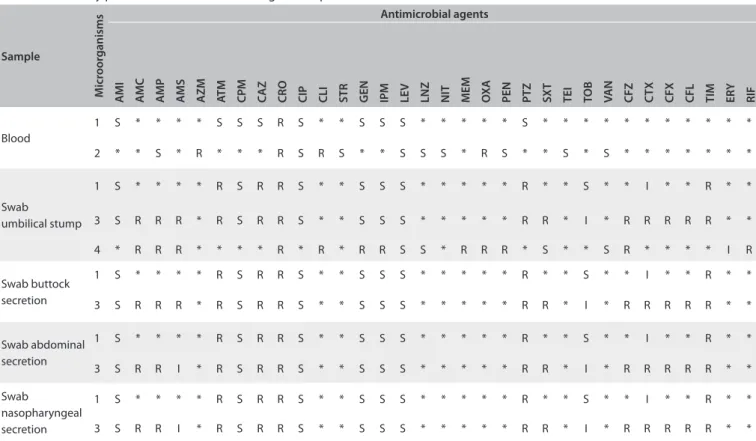
Table 1 shows the sensitivity proile of the antimicrobial
agents acting on the samples from the newborn. hese antimi-crobial susceptibility tests were conducted in accordance with the recommendations of the Clinical and Laboratory Standards Institute (CLSI) of the year of this study.7
DISCUSSION
he skin is usually inhabited by resident bacteria, which consti-tute the microbiota, and transient bacteria, which occasionally colonize it.8 Bacterial infections of the skin may represent a pri-mary cutaneous pathogenic process or a secondary cutaneous manifestation that started in another organ. hey may be sup-purative, because of the proliferation of bacteria or because of hypersensitivity to bacterial antigens.3
Staphylococcal scalded skin syndrome caused by meth-icillin-resistant Staphylococcus aureus or oxacillin-resistant
Staphylococcus aureus is characterized as a severe infection in neo-nates, although it is extremely rare in low-weight newborns.9 From reviewing the literature, using the Medline (http://www.ncbi.nlm. nih.gov/pubmed/), Embase ((http://www.elsevier.com/online-tools/embase), SciELO (http://www.scielo.org/php/index.php) and Lilacs (http://lilacs.bvsalud.org/en/) databases, we found one article9 describing staphylococcal scalded skin syndrome caused by methicillin-resistant Staphylococcus aureus (Table 2).
CASE REPORT | Hörner A, Hörner R, Salla A, Nunes MS, Garzon LR, Rampelotto RF, Martini R, Santos SO, Gindri L, Rodrigues MA, Giacomolli C
452 Sao Paulo Med J. 2015; 133(5):450-3
bubbles that are fragile and burst easily, which leaves this area of skin wet and unprotected, such that development of this syn-drome is favored.6
In neonates, staphylococcal scalded skin syndrome pro-duces strains that colonize sites such as the nose and umbili-cal cord.12 Neonates are also exposed to the risk of acquiring infections caused by Staphylococcus aureus, which colonizes both mothers and staff in the hospital environment,13,14 con-sidering that one third of the immunocompetent population carries this microorganism.6
he resistance presented by methicillin-resistant Staphylococcus aureus extends to all β-lactam antibiotics and therefore this is an etiological agent of utmost importance, with regard to both nosocomial infections (hospital-acquired methicillin-resistant
Staphylococcus aureus) and community-acquired infections. Patients with methicillin-resistant Staphylococcus aureus present a high mortality rate.15
he treatment for infections caused by methicillin-resis-tant Staphylococcus aureus has become increasingly complicated because of their increasing resistance to antimicrobial agents and Table 1. Sensitivity proile of antimicrobials acting on samples from the newborn
Sample
M
icr
oor
ganisms
Antimicrobial agents
AM
I
AM
C
AM
P
AM
S
A
ZM
AT
M
C
PM
C
AZ
CRO CIP CLI STR GEN IPM LE
V
LNZ NIT MEM OX
A
PEN PTZ SX
T
TEI TO
B
VA
N
CFZ CTX CFX CFL TIM ERY RIF
Blood
1 S * * * * S S S R S * * S S S * * * * * S * * * * * * * * * * *
2 * * S * R * * * R S R S * * S S S * R S * * S * S * * * * * * *
Swab
umbilical stump
1 S * * * * R S R R S * * S S S * * * * * R * * S * * I * * R * *
3 S R R R * R S R R S * * S S S * * * * * R R * I * R R R R R * *
4 * R R R * * * * R * R * R R S S * R R R * S * * S R * * * * I R
Swab buttock secretion
1 S * * * * R S R R S * * S S S * * * * * R * * S * * I * * R * *
3 S R R R * R S R R S * * S S S * * * * * R R * I * R R R R R * *
Swab abdominal secretion
1 S * * * * R S R R S * * S S S * * * * * R * * S * * I * * R * *
3 S R R I * R S R R S * * S S S * * * * * R R * I * R R R R R * *
Swab
nasopharyngeal secretion
1 S * * * * R S R R S * * S S S * * * * * R * * S * * I * * R * *
3 S R R I * R S R R S * * S S S * * * * * R R * I * R R R R R * *
Microorganisms: 1= Pseudomonas aeruginosa;2 = Enterococcus sp.; 3 = Serratia marcescens; 4 = Staphylococcus aureus.
Antimicrobial agent abbreviations: AMI = amikacin; AMC = amoxicillin/clavulanic acid; AMP = ampicillin; AMS = ampicillin/sulbactam; AZM = azithromycin; ATM = aztreonam; CPM = cefepime; CAZ = ceftazidime; CRO = ceftriaxone; CIP = ciproloxacin; CLI = clindamycin; STR = streptomycin; GEN = gentamicin; IPM = imipenem; LEV = levoloxacin; LNZ = linezolid; NIT = nitrofurantoin; MEM = meropenem; OXA = oxacillin; PEN = penicillin; PTZ = piperacillin/tazobactam; SXT = trimethoprim/sulfamethoxazole; TEI = teicoplanin; TOB = tobramycin; VAN = vancomycin; CFZ = cefazolin; CTX = cefotaxime; CFX = cefuroxime; CFL = cephalexin; TIM = ticarcillin/clavulanic acid; ERY = erythromycin; RIF = rifampin.
Sensitivity proile: S = sensitive; I = intermediate; R = resistant; * = not tested.
Table 2. Review of medical databases using the descriptors corresponding to the main features presented by the patient, conducted on December 9, 2013
Database Search strategy Results
PubMed (“Staphylococcal scalded skin syndrome” [MeSH]) AND “Methicillin-resistant Staphylococcus aureus”
[MeSH]) AND “Infant, Premature”[MeSH] OR (“Newborn”[MeSH]) 1 article
Embase (“Staphylococcal scalded skin syndrome” [MeSH]) AND “Methicillin-resistant Staphylococcus aureus”
[MeSH]) AND “Infant, Premature”[MeSH] OR (“Newborn”[MeSH]) 0 article
SciELO (“Staphylococcal scalded skin syndrome” [MeSH]) AND “Methicillin-resistant Staphylococcus aureus”
[MeSH]) AND “Infant, Premature”[MeSH] OR (“Newborn”[MeSH]) 0 article
Lilacs (“Staphylococcal scalded skin syndrome” [MeSH]) AND “Methicillin-resistant Staphylococcus aureus”
Staphylococcal scalded skin syndrome in a premature newborn caused by methicillin-resistant Staphylococcusaureus: case report | CASE REPORT
Sao Paulo Med J. 2015; 133(5):450-3 453 diversity of strains. herefore, these treatments are based on
per-sonalized therapies.16
Fatal outcomes are rare in children, but the mortality rate exceeds 50% among adult patients with severe underlying diseases.17 When death occurs among newborns and children, it usually results from secondary bacterial infection of skin areas devoid of skin.17
he most likely explanation for staphylococcal scalded skin syndrome afecting children under ive years of age and new-borns is that these individuals lack immunity to exfoliative tox-ins and also present renal immaturity, which results in decreased clearance of these toxins.15
CONCLUSION
We emphasize the importance of maintaining suspicion, mak-ing a prompt diagnosis of this syndrome and institutmak-ing early treatment, which may inhibit secondary bacterial infections and consequently decrease mortality among newborns. Isolation of the microorganism in biological materials makes it possible to ascertain the resistance proile, which considerably improves the prognosis. To our knowledge, this was the irst episode of staph-ylococcal scalded skin syndrome caused by methicillin-resistant
Staphylococcus aureus that occurred in our institution.
REFERENCES
1. Duijisters CE, Halbertsma FJ, Kornelisse RF, Arents NL, Andriessen P.
Recurring staphylococcal scalded skin syndrome in a very low birth
weight infant: a case report. J Med Case Rep. 2009;3:7313.
2. Kapoor V, Travadi J, Braye S. Staphylococcal scalded skin syndrome in
an extremely premature neonate: a case report with a brief review of
literature. J Paediatr Child Health. 2008;44(6):374-6.
3. Cole C, Gazewood J. Diagnosis and treatment of impetigo. Am Fam
Physician. 2007;75(6):858-64.
4. Castellano LR, Silva-Teixeira DN, Antonelli EJ, Rodrigues V Jr,
Cavalcanti-Cordeiro MB. Cytokine and nitric oxide production in an
adult patient with staphylococcal scalded skin syndrome. Invest Clin.
2008;49(4):547-52.
5. Firmino ICL. Infecções de pele e partes moles: proposta de protocolo
de atendimento em unidade pediátrica [dissertation]. Brasilia:
Hospital Regional da Asa Sul; 2010.
6. Neylon O, O’Connell NH, Slevin B, et al. Neonatal staphylococcal
scalded skin syndrome: clinical and outbreak containment review.
Eur J Pediatr. 2010;169(12):1503-9.
7. Clinical and Laboratory Standards Institute. Performance standards
for antimicrobial susceptibility testing; twenty-irst information
supplement. Document M100-S20 and M100-S20-U. 2011;30(1).
Available from: ile:///C:/Users/Dell/Downloads/clsi%202011.pdf.
Accessed in 2014 (May 30).
8. Petry V, Bessa GR, Poziomczyck CS, et al. Colonização bacteriana e
infecções da pele em pacientes com dermatite atópica [Bacterial
skin colonization and infections in patients with atopic dermatitis].
An Bras Dermatol. 2012;87(5):729-34.
9. Shi D, Ishii S, Sato T, et al. Staphylococcal scalded skin
syndrome in an extremely low-birth-weight neonate: molecular
characterization and rapid detection by multiplex and real-time
PCR of methicillin-resistant Staphylococcus aureus. Pediatr Int.
2011;53(2):211-7.
10. Farroha A, Frew Q, Jabir S, Dziewulski P. Staphylococcal scalded skin
syndrome due to burn wound infection. Ann Burns Fire Disasters.
2012;25(3):140-2.
11. Aalfs AS, Oktarina DA, Diercks GF, Jonkman MF, Pas HH. Staphylococcal
scalded skin syndrome: loss of desmoglein 1 in patient skin. Eur J
Dermatol. 2010;20(4):451-6.
12. Wolinsky E, Lipsitz PJ, Mortimer EA Jr, Rammelkamp CH Jr. Acquisition
of staphylococci by newborns. Direct versus indirect transmission.
Lancet. 1960;2(7151):620-2.
13. Casewell MW, Hill RL. The carrier state: methicillin-resistant Staphylococcus
aureus. J Antimicrob Chemother. 1986;18 Suppl A:1-12.
14. Lidwell OM, Brock B, Shooter RA, Cooke EM, Thomas GE. Airborne
infection in a fully air-conditioned hospital. IV. Airborne dispersal of
Staphylococcus aureus and its acquisition by patients. J Hyg (Lond).
1975;75(3):445-74.
15. Haveman LM, Fleer A, de Vries LS, Gerards LJ, Congenital
staphylococcal scalded skin syndrome in a premature infant. Acta
Paediatr. 2004;93(12):1661-2.
16. Chatterjee SS, Otto M. Improved understanding of factors driving
methicillin-resistant Staphylococcus aureus epidemic waves. Clin
Epidemiol. 2013;5:205-17.
17. Cribier B, Piemont Y, Grosshans E. Staphylococcal scalded skin
syndrome in adults. A clinical review illustrated with case. J Am Acad
Dermatol. 1994;30(2 Pt 2):319-24.
Sources of funding: None
Conlict of interest: None
Date of irst submission: November 9, 2013
Last received: June 13, 2014
Accepted: July 15, 2014
Address for correspondence:
Rosmari Hörner
Laboratório de Bacteriologia, Departamento de Análises Clínicas e
Toxicológicas (DACT), Centro de Ciências da Saúde (CCS), Universidade
Federal de Santa Maria (UFSM)
Campus UFSM, Prédio 26, Sala 1.201
Santa Maria (RS) — Brasil
CEP 97015-900
Tel./Fax. (+55 55) 3220-8751