Major Article
INTRODUCTION
Address to: Dra. Ana Rabello. Lab. Pesquisa Clínica/CPqRR/FIOCRUZ. Av. Augusto de Lima 1715, 30190-002 Belo Horizonte, MG, Brasil. Phone/Fax: 55 31 3349-7708
e-mail:ana@cpqrr.fi ocruz.br Received 31 October 2014 Accepted 8 December 2014
Poor response to azithromycin in cutaneous leishmaniasis
leading to a premature interruption of a multicentric
phase III clinical trial in Brazil
Antonio Toledo Junior
[1], André Bastos Daher
[2],[3], Thaís Alves Amaral
[2],
Sílvio Fernando Guimarães Carvalho
[4], Gustavo Adolfo Sierra Romero
[5]and Ana Rabello
[6][1]. Serviço Multiprofi ssional de Infectologia, Universidade José do Rosário Vellano, Belo Horizonte, MG. [2]. Plataforma de Pesquisa Clínica, Vice-Presidência de Pesquisa e Laboratórios de Referência, Fundação Oswaldo Cruz, Rio de Janeiro, RJ. [3]. Departamento de Pesquisa Clínica - Farmanguinhos, Fundação Oswaldo Cruz, Rio de Janeiro, RJ. [4]. Departamento de Doenças Infecciosas, Hospital Universitário Clemente de Faria, Universidade Estadual de Montes Claros, Montes Claros, MG. [5]. Núcleo de Medicina Tropical, Universidade de Brasília, Brasília, DF. [6]. Laboratório de Pesquisa Clínica, Centro de Pesquisas René Rachou, Fundação Oswaldo Cruz, Belo Horizonte, MG.
ABSTRACT
Introduction: Parenteral antimony-based compounds are still the standard of care for cutaneous leishmaniasis (CL) treatment in
many countries, despite their high toxicity. Previous studies showed that oral azithromycin could be an option for CL treatment. The aim of this study was to evaluate effi cacy and safety of oral azithromycin (AZ) for CL treatment compared with injectable meglumine antimoniate (MA). Methods:This was a randomized, open-label, 2-arm, non-inferiority clinical trial.
Treatment-naïve patients with localized CL were treated with MA (15mg/kg/day up to 1,215mg) or AZ (500mg/day) during 20 consecutive days. The primary effi cacy end point was a CL cure 90 days after treatment completion. The analysis was performed with intention-to-treat (ITT) and per protocol (PP) analyses. After an anticipated interim analysis, the study was interrupted due to the high failure rate in the azithromycin group. Results: Twenty-four volunteers were included in each group. The MA group had a
higher cure rate than the AZ group with the ITT and PP analyses, which were 54.2% versus 20.8% [relative risk (RR) 1.97; 95%
confi dence intervals (95%CI) 1.13-3.42] and 72.2% versus 23.8% (RR 3.03; 95%CI 1.34-6.87), respectively. No unexpected
adverse events were observed. Conclusions: Azithromycin is ineffective for CL treatment and does not seem to have a role in
the therapeutic arsenal for CL.
Keywords: Azithromycin. Cutaneous leishmaniasis.Leishmania braziliensis.Randomized controlled trial. Meglumine antimoniate.
Cutaneous leishmaniasis (CL) is a serious public health problem, with approximately 0.69 to 1.2 million new cases occurring per year worldwide1. Ten countries, including Afghanistan, Algeria, Colombia, Brazil, Iran, Syria, Ethiopia, North Sudan, Costa Rica and Peru, together account for 70 to 75% of the global estimated CL incidence1. In Brazil, from 2008 to 2012, a mean of 21,736 new cases per year of tegumentary leishmaniasis were reported2. CL may manifest as single or multiple skin lesions, which occur in the same region or disseminated in different body regions, and can have a severe impact on the patient’s quality of life3,4.
METHODS
Azithromycin, an azalide antibiotic is largely used to treat bacterial infections, and was identifi ed as a potential option for CL treatment due to its wide tissue distribution and high intracellular concentration, including macrophages16. Three studies showed that azithromycin was active against Leishmania
parasites. Krolewiecki et al17 showed both in vitro and in vivo activity of azithromycin against Leishmania (Leishmania) major promastigote and amastigote forms17. Tanyuksel et al18 demonstrated in vitro the potential leishmanicidal effect of
azithromycin on intracellular amastigote L. (L.) major forms in
peritoneal macrophages from mice18. Lastly, Oliveira-Silva et al16. showed that azithromycin was active in vitro against Leishmania
(Leishmania) amazonensis, Leishmania (Viannia) braziliensis, and Leishmania (Leishmania) chagasi and suggested that the drug
might offer an alternative to current leishmaniasis treatments16. Despite these promising in vitro results, clinical studies
of azithromycin and CL had controversial results. Prata
et al.13 showed a cure rate of 85% in an open non-controlled trial with 20 patients13. Four studies in Brazil showed low effi cacy of azithromycin when compared with meglumine
antimoniate10,14,15. Two others studies evaluated azithromycin against Old World leishmaniasis, both with poor responses11,12. These studies enrolled a small number of volunteers, 22 to 49, with varied clinical protocols, restraining a defi nitive conclusion regarding the possible role of azithromycin as a therapeutic option for CL. The aim of this study was to evaluate the effi cacy and safety of oral azithromycin for CL treatment compared with injectable meglumine antimoniate.
Study population
Treatment-naïve patients with localized cutaneous leishmaniasis were included in the study after signing the informed consent form if they met the following inclusion criteria: 1) age between 14 to 65 years; and 2) ≤ 6 apparent cutaneous lesions that were compatible with CL and a positive Montenegro reaction test (≥5mm), followed by parasitological or molecular confi rmation of the CL infection (which included a direct exam, culture, pathological exam, and/or kinetoplast deoxyribonucleic acid (kDNA) detection by polymerase chain reaction). L. (Viannia) braziliensis was the species identifi ed
in deoxyribonucleic acid (DNA) samples extracted from biopsy fragments of 29 patients. Leishmania (Viannia) braziliensis is the
most common species found in the patients at the study reference center (>90%) (unpublished data) and in the study-area (92.5%)19.
Patients who had or met one of the following criteria were not eligible to participate: disseminated leishmaniasis; the presence of mucosal lesions; pregnancy [confi rmed by beta human chorionic gonadotropin (β-hCG) in their blood sample]; breast feeding; diseases that interfere with scar healing; primary or acquired immunodefi ciency; immunosuppressive drug use; use of any topical or oral medication that could interfere with the healing process or with potential leishmanicidal action, including antibiotics; decompensated chronic diseases; any electrocardiogram
(ECG) abnormalities that contraindicated meglumine antimoniate
use; use of any medication that could prolong the QTc interval; any diseases or conditions that may lead to non-compliance to protocol, including alcohol abuse; and intolerance to azithromycin,
macrolides or meglumine antimoniate.
Study design
This multicenter, randomized, open-label, 2-arm parallel group, non-inferiority clinical trial was conducted in two leishmaniasis reference centers: The René Rachou Research Centre/Oswaldo Cruz Foundation (CPqRR/FIOCRUZ), and Montes Claros State University (Unimontes). Both centers are
located in Minas Gerais, Brazil. Randomization used blocks
of six and a 1:1 allocation rate were generated by using the Web site Randomization.com [http://www.randomization. com]. Envelopes that were sequentially numbered, opaque and sealed were provided to the local clinical coordinator. Allocation followed the recruitment sequence, and the patient’s name was written on the envelope before it was opened.
Eligible patients were allocated into one of the two treatment arms: Group A (meglumine antimoniate) or group B (azithromycin). The group A patients were treated, according to the Brazilian Ministry of Health recommendation, with 15mg/ kg/day of intravenous or intramuscular meglumine antimoniate (maximum daily dose of 1,215mg) over 20 consecutive days (Glucantime® - Aventis, batch number: 605022). The group B patients were orally treated with one 500mg azithromycin tablet per day over 20 consecutive days (Zitromax® - GSK, batch numbers 6186401403; 0864009). All of the treatments were performed in an ambulatory setting.
Treatment adherence for both treatment groups was supervised daily by the health professionals of the public ambulatory unit that was closest to each patient’s home. Additionally, all of the drug administration was registered in a specifi c form and signed by the health professional under close supervision of the study team.
Treatment was considered incomplete if it was interrupted before the 16th dose or if the treatment lasted for more than
30 days. A treatment was considered irregular if there was an interval greater than 72h between any drug doses.
Safety and effi cacy evaluations
Clinical evaluations, which included vital signs and laboratory tests, (including complete blood cell counts, biochemistry tests, urinalysis, and a 12-lead ECG) were assessed at enrollment, during treatment (days 5, 10, and 20), and 10 days after treatment. A clinical evaluation was also performed at months 1, 2, 3, and 6 after treatment. The lesion areas were measured using a 0.1 cm precision caliper, and the following formula was applied: D1 x D2 x π/4, where D1 and D2 are the greatest and smallest diameters, respectively. Photographs were taken to record the lesion evolution.
To assess safety, clinical and laboratorial adverse events were investigated on an outparient basis. The participants were
RESULTS
The primary efficacy end point was CL cure rate by
intention-to-treat (ITT) and per protocol (PP) analyses. A cure
was defi ned as complete lesion healing and re-epithelialization without infl ammatory infi ltration and erythema until 90 days after the treatment ended. Patients withdrawn from the study due
to AEs or loss to follow-up were considered treatment failures in the ITT analysis.
The secondary endpoints were as follows: a delayed CL cure (180 days after treatment), CL recurrence between cure and 180 days after treatment, and the percentage of healed lesions at the end of treatment and at 30, 60, and 90 days after the treatment ended. Recurrence was defi ned by the reappearance
of a previous lesion or a new cutaneous or mucosal lesion. Patient lost to follow-up were considered as recurrences in the ITT analysis. All of the secondary effi cacy endpoints were
analyzed by ITT and per protocol (PP).
The safety analysis included all patients who received at least one dose of study drugs. Clinical, laboratory and ECG abnormalities were categorized according to the acquired
immunodeficiency syndrome (AIDS) clinical trial group
(ACTG) criteria.
Patients who did not respond to azithromycin were treated with the standard therapy with meglumine antimoniate, the same regime of the group A arm, or second-line drugs, if necessary.
Statistical analysis
Initially, a sample size of 310 patients in each group was calculated using an accuracy method, with an alpha error = 0.05 and a power = 0.8, and considering a 60% cure rate in both arms. The inferior limit of the 95% confi dence interval (one-sided) between the azithromycin and meglumine antimoniate cure rates should not have been less than -10% in order to consider the azithromycin treatment as non-inferior. The fi nal sample size was 682 patients, which took into consideration a possible loss of follow-up period of 10%.
The data were summarized as frequencies and percentages for categorical variables and as the means ± standard deviation (SD) for continuous variables. Fisher’s exact test (two-sided) and a two-sample t-test were used to compare the differences between the groups for the categorical and continuous variables, respectively. P-values lower than 0.05 were considered statistically signifi cant. The statistical analysis was made using the Statistical Package for the Social Sciences (SPSS) Statistics software - version 19 (IBM, US).
Due to the high failure rate in the azithromycin group, the principal investigator, in accordance with the Institutional Sponsor, requested an evaluation of an external ad-hoc Review Board, which recommended a trial interruption. No new inclusions were conducted and the enrolled patients were followed according to the protocol.
Ethical considerations
The clinical study protocol and informed consent were reviewed and approved by the Rene Rachou Research Centre, Oswaldo Cruz Foundation [Centro de Pesquisa René Rachou, Fundação Oswaldo Cruz (CPqRR, FIOCRUZ)],
(CAAE 0010.0.246.000-06/CEPSH-CPqRR 20/2006) and Montes Claros State University - Unimontes (Comitê de Ética em Pesquisa da Universidade Estadual de Montes Claros 2050)
ethics committees. The Brazilian National Council on Ethics in Research (CONEP) accredits these committees. The project has also been approved by the Ethics Review Committee of the University of Brasilia from where a third trial site was expected to be coordinated but was cancelled due to the study interruption. The clinical study was conducted in accordance with the Good Clinical Practice (ICH 1996) and Brazilian National Health Council (CNS) resolutions 196/1996 and 251/1997. The study is registered at www.Clinicaltrials.gov (NCT00682656). Written informed consent was obtained for every subject prior to enrollment. For patients younger than 18 years of age, a written informed consent was also obtained from their legal representative. All of the subjects were informed about the nature of the trial and possible risks bound to it and that they were free to withdraw the consent of participation at any time. The investigators and study staff observed the confi dentiality of the records.
Seventy-seven patients were screened and 48 volunteers with confi rmed CL were enrolled between August/2008 and September/2011. These included 43 subjects at Belo Horizonte and fi ve at Montes Claros. The last 6-month follow-up visit was conducted on March 2012.
Table 1 shows the baseline demographic and clinical
characteristics. The majority of the subjects were male (38 - 79.2%), their ages ranged from 15 to 56 years (mean 34.5 ± 12.2), and their years of schooling ranged from 2 to 17 years (mean 8.3 ± 3.7). Almost 2/3 of the patients had only one lesion, and the time since the fi rst lesion occurred ranged from 15 to 425 days (mean 98.6 ± 67.5). Additionally, the lesions of 29 (61.7%) patients had ≤ 90 days of progression. The mean lesion area was
5.17 cm2 (SD =10.11). There were no baseline demographic and clinical characteristic differences between both groups .
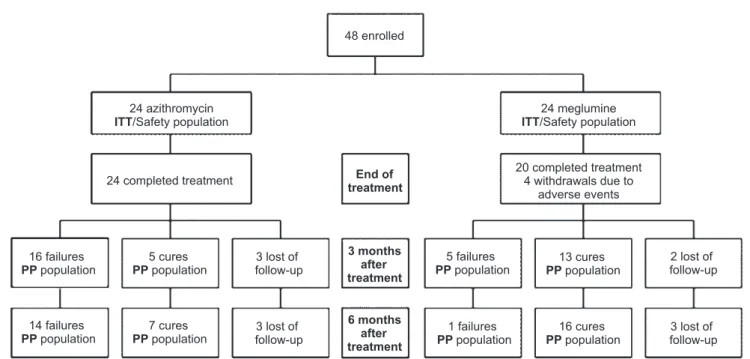
Figure 1 shows the participants treatments and their
follow-ups. Twenty-four participants were enrolled in each treatment group. Four subjects from the meglumine antimoniate group
withdrew during treatment due to adverse events. All of the patients enrolled in the azithromycin group completed their treatment. During the 3 months post-treatment, fi ve patients were lost to follow-up, which included three from the azithromycin group and two from the meglumine antimoniate group. Six patients were initially considered as failures; however, they were cured between 3 and 6 months after their treatments ended. These included two in the azithromycin group and four in the
meglumine antimoniate group (Figure 1).
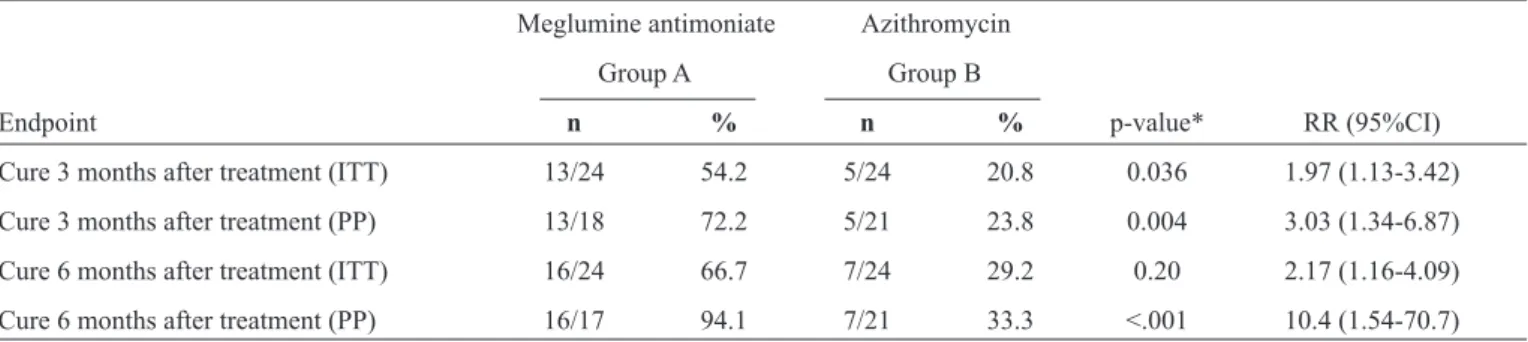
Table 2 shows the primary and secondary effi cacy endpoints.
TABLE 1 - The baseline demographic and clinical characteristics of each group.
Meglumine antimoniate Azithromycin
Group A (n=24) Group B (n=24) Total (n=48)
Variables n % n % n %
Male - N (%) 19 79.2 19 79.2 38 79.2
Mean age - years (SD) 34.5 11.7 34.4 13.1 34.5 12.2
Mean years of schooling (SD) 8.6 3.4 7.9 4.1 8.3 3.7
Mean lesion number (SD) 1.9 1.2 1.3 0.8 1.6 1.0
One lesion N (%) 12 50.0 19 79.2 31 64.6
Lesion area - cm2 (SD) 6.11 13.22 3.95 2.93 5.17 10.11
Mean time (days ) since fi rst lesion (SD) 109.2 85.3 87.6 41.0 98.6 67.5
Lesion number within < 3 months (%) 13 54.2 16 69.6 29 61.7
SD: standard deviation.
48 enrolled
24 azithromycin ITT/Safety population
24 completed treatment
16 failures
PPpopulation
5 failures
PPpopulation
1 failures
PPpopulation
14 failures
PPpopulation
7 cures
PPpopulation
5 cures
PPpopulation
13 cures
PPpopulation
16 cures
PPpopulation
3 lost of follow-up
3 lost of follow-up 2 lost of follow-up 20 completed treatment
4 withdrawals due to adverse events
3 lost of follow-up
3 months after treatment
6 months after treatment
End of treatment
24 meglumine ITT/Safety population
FIGURE 1 - Enrollment, treatment, and follow-up of the study subjects. ITT: intention-to-treat; PP: per protocol.
1.13-3.42] and 72.2% versus 23.8% [RR 3.03; 95%CI
1.34-6.87], respectively). Similar results were observed with the late cure rate (6 months after the end of the treatments). Four cured patients were lost to follow-up between 3 and 6 months after treatments. No clinical recurrence was documented among the patients who effectively returned for their last follow-up visit.
As shown in Table 3, considering the cured patients, despite
the the higher percentage of healed lesions when the treatment was completed and 30 days after treatment completion in the meglumine antimoniate group, there were no signifi cant differences between the groups regarding healing speed.
TABLE 3 - The percentage of healed lesions at treatment completion and at days 30, 60 and 90 after treatment completion.
Meglumine antimoniate (n=13) Azithromycin (n=5)
Group A Group B
Time n % n % p*
End of treatment 1 7.7 0 0.0 <0.001 30 days post-treatment 8 61.5 1 20.0 >0.05 60 days post-treatment 12 92.3 4 80.0 >0.05 90 days post-treatment 13 100.0 5 100.0 >0.05 *Fisher’s exact test (2-sided).
TABLE 2 - Primary and secondary study endpoints.
Meglumine antimoniate Azithromycin Group A Group B
Endpoint n % n % p-value* RR (95%CI)
Cure 3 months after treatment (ITT) 13/24 54.2 5/24 20.8 0.036 1.97 (1.13-3.42) Cure 3 months after treatment (PP) 13/18 72.2 5/21 23.8 0.004 3.03 (1.34-6.87) Cure 6 months after treatment (ITT) 16/24 66.7 7/24 29.2 0.20 2.17 (1.16-4.09) Cure 6 months after treatment (PP) 16/17 94.1 7/21 33.3 <.001 10.4 (1.54-70.7)
RR: relative risk; 95%CI: 95% confi dence interval; ITT: intention-to-treat; PP: per protocol. *Fisher’s exact test (2-sided).
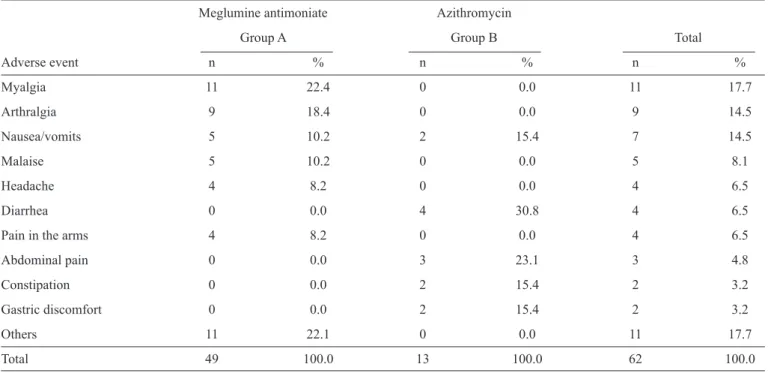
groups. No life threatening conditions were observed during the treatments. The AEs were diverse between the groups
(Table 4). The most frequent AEs in the meglumine antimoniate
group were myalgia (22.4%), arthralgia (18.4%), and malaise (8.1%). In the azithromycin group, they were diarrhea (30.8%) and abdominal pain (23.1%).
DISCUSSION
Until now, few studies have tested azithromycin as an alternative treatment for CL10-12,14,15. Only one study was a randomized clinical trial that compared oral azithromycin and meglumine antimoniate for the treatment of CL in Americas, which included 23 patients in each study group. The authors concluded that azithromycin had a moderate effi cacy against
L. (V.) braziliensis (45.5%) and suggested that a subset of
patients could benefi t from this therapeutic option10.
Nonetheless, a number of reasons supported the decision to compare oral azithromycin and meglumine antimoniate in Brazil and to design a larger randomized non-inferiority trial
to test a cure rate difference of not less than -10% that could
allow the registration of a new use for azithromycin by the
Brazilian regulatory agency [Agência Nacional de Vigilância Sanitária (ANVISA)]. It is a consensus that new treatments
are urgently needed to improve adherence, cost, cure rates, safety and quality of life. Additionally, there is a concern
regarding antimoniate resistance and the need of a safer and
better-tolerated treatment20,21. Azithromycin is an oral and well-tolerated drug with the important advantage of low cost, and oral treatments could improve access and adherence. Moreover, if a moderate effi cacy was to be proven, further analysis could identify subsets of patients to whom an oral, less expensive and safer drug could be fi rst offered.
Unfortunately, the high clinical failure rate of azithromycin led to the premature interruption of this study. Even with the small number of patients included until the study interruption, the analysis was able to show the inferiority of azithromycin compared with meglumine antimoniate in the ITT and PP
analyses.
TABLE 4 - Adverse events related or possibly related to the study drugs.
Meglumine antimoniate Azithromycin
Group A Group B Total
Adverse event n % n % n %
Myalgia 11 22.4 0 0.0 11 17.7
Arthralgia 9 18.4 0 0.0 9 14.5
Nausea/vomits 5 10.2 2 15.4 7 14.5
Malaise 5 10.2 0 0.0 5 8.1
Headache 4 8.2 0 0.0 4 6.5
Diarrhea 0 0.0 4 30.8 4 6.5
Pain in the arms 4 8.2 0 0.0 4 6.5
Abdominal pain 0 0.0 3 23.1 3 4.8
Constipation 0 0.0 2 15.4 2 3.2
Gastric discomfort 0 0.0 2 15.4 2 3.2
Others 11 22.1 0 0.0 11 17.7
Total 49 100.0 13 100.0 62 100.0
The number of patients presenting AEs and the frequency of those effects were higher in the group treated with meglumine antimoniate, although the severity grade was defi ned as mild for the large majority in both groups. In the azithromycin group, there were a predominance of gastrointestinal AEs and more diverse systemic effects were observed in the meglumine antimoniate group.
In conclusion, the present study showed that azithromycin is not effective in CL treatment in an area where L. braziliensis
is the predominant parasitic species and does not seem to have a role in the therapeutic arsenal for CL in this particular setting. A careful evaluation should be mandatory for future decision making on the need of new clinical trials using azithromycin alone or in combination with other drugs for CL.
ACKNOWLEDGMENTS
The authors declare that there is no confl ict of interest.
CONFLICT OF INTEREST
FINANCIAL SUPPORT
We thank Rosiane Estéfane da Silva, Andréia Coutinho de
Faria, Maria Camilo Ribeiro Senna, Tatiana Camilo Ribeiro de Sennaand Letícia de Melo Mota for collaborating on this
project and for the technical assistance.
This work was supported by Conselho Nacional de Desenvolvimento Científi co e Tecnológico (CNPq), Fundação de Amparo à Pesquisa do Estado de Minas Gerais (FAPEMIG)
and Fundação Oswaldo Cruz (FIOCRUZ). The funders had no role in study design, data collection and analysis, decision to
publish, or preparation of the manuscript.
1. Alvar J, Vélez ID, Bern C, Herrero M, Desjeux P, Cano J, et al. Leishmaniasis worldwide and global estimates of its incidence. PLoS One 2012; 7:e35671.
2. Ministério da Saúde. Sistema de Informação de Agravos de Notifi cação (Sinan Net). Reported cases of American Tegumentary Leishmaniasis [Internet]. Ministério da Saúde; 2013. [Cited 2014 May 13]. Available at: http://dtr2004.saude.gov.br/sinanweb/tabnet/ dh?sinannet/lta/bases/ltabrnet.def/.
3. Murray HW, Berman JD, Davies CR, Saravia NG. Advances in leishmaniasis. Lancet 2005; 366:1561-1577.
4. Toledo Jr AC, da Silva RE, Carmo RF, Amaral TA, Luz ZM, Rabello A. Assessment of the quality of life of patients with cutaneous leishmaniasis in Belo Horizonte, Brazil, 2009-2010. A pilot study. Trans R Soc Trop Med Hyg 2013; 107:335-336.
5. Machado PR, Penna G. Miltefosine and cutaneous leishmaniasis. Curr Opin Infect Dis 2012; 25:141-144.
6. Soto J, Soto P. Miltefosine: oral treatment of leishmaniasis. Expert Rev Anti Infect Ther 2006; 4:177-185.
7. Soto J, Toledo J, Gutierrez P, Nicholls RS, Padilla J, Engel J, et al. Treatment of American cutaneous leishmaniasis with miltefosine, an oral agent. Clin Infect Dis 2001; 33:E57-61.
8. Alrajhi AA, Ibrahim EA, De Vol EB, Khairat M, Faris RM, Maguire JH. Fluconazole for the treatment of cutaneous leishmaniasis caused by
Leishmania major. N Engl J Med 2002; 346:891-895.
9. Sousa AQ, Frutuoso MS, Moraes EA, Pearson RD, Pompeu MM. High-dose oral fl uconazole therapy effective for cutaneous leishmaniasis due to Leishmania (Vianna) braziliensis. Clin Infect
Dis 2011; 53:693-695.
10. Krolewiecki AJ, Romero HD, Cajal SP, Abraham D, Mimori T, Matsumoto T, et al. A randomized clinical trial comparing oral azithromycin and meglumine antimoniate for the treatment of American cutaneous leishmaniasis caused by Leishmania (Viannia)
braziliensis. Am J Trop Med Hyg 2007; 77:640-646.
11. Layegh P, Yazdanpanah MJ, Vosugh EM, Pezeshkpoor F, Shakeri MT, Moghiman T. Effi cacy of azithromycin versus systemic meglumine antimoniate (Glucantime) in the treatment of cutaneous leishmaniasis. Am J Trop Med Hyg 2007; 77:99-101.
12. Momeni AZ, Shafi ei A, Emamjoeh M, Aminjavaheri M, Momeni A. Azithromycin is not effective in the treatment of old world cutaneous leishmaniasis. Eur J Dermatol 2006; 16:701-702.
13. Prata A, Silva-Vergara ML, Costa L, Rocha A, Krolewiecki A, Silva JC, et al. Effi cacy of azithromycin in the treatment of cutaneous leishmaniasis. Rev Soc Bras Med Trop 2003; 36:65-69. 14. Teixeira AC, Paes MG, Guerra JO, Prata A, Silva-Vergara ML.
Low effi cacy of azithromycin to treat cutaneous leishmaniasis in Manaus, AM, Brazil. Rev Inst Med Trop Sao Paulo 2007; 49:235-238. 15. Teixeira AC, Paes MG, Guerra JO, Prata A, Silva-Vergara ML.
Failure of both azithromycin and antimony to treat cutaneous leishmaniasis in Manaus, AM, Brazil. Rev Inst Med Trop Sao Paulo 2008; 50:157-160.
16. Oliveira-Silva F, Morais-Teixeira E, Rabello A. Antileishmanial activity of azithromycin against Leishmania (Leishmania) amazonensis,
Leishmania (Viannia) braziliensis, and Leishmania (Leishmania)
chagasi. Am J Trop Med Hyg 2008; 78:745-749.
17. Krolewiecki A, Leon S, Scott P, Abraham D. Activity of azithromycin against Leishmania major in vitro and in vivo. Am J Trop Med Hyg 2002; 67:273-277.
18. Tanyuksel M, Bas AL, Araz E, Aybay C. Determination of intracellular effi cacies of azithromycin against Leishmania major infection in human neutrophils in vitro. Cell Biochem Funct 2003;
21:93-96.
19. Passos VM, Fernandes O, Lacerda PA, Volpini AC, Gontijo CM, Degrave W, et al. Leishmania (Viannia) braziliensis is the predominant species infecting patients with American cutaneous leishmaniasis in the State of Minas Gerais, Southeast Brazil. Acta Trop 1999; 72:251-258.
20. Wordl Health Organization (WHO). Department of control of neglected tropical diseases. Sustaining the drive to overcome the global impact of neglected tropical diseases. Second WHO report on neglected tropical diseases. Geneve: WHO; 2013.