Reprogenetics: Preimplantational genetics diagnosis
Roberto Coco
Fecunditas Instituto de Medicina Reproductiva, Facultad de Medicina, Universidad de Buenos Aires,
Buenos Aires, Argentina.
Abstract
Preimplantational Genetics Diagnosis (PGD) is requested by geneticists and reproductive specialists. Usually genet-icists ask for PGD because one or both members of the couple have an increased genetic risk for having an affected offspring. On the other hand, reproductive specialists ask for embryo aneuploidy screening (PGS) to assures an euploid embryo transfer, with the purpose to achieve an ongoing pregnancy, although the couple have normal karyo-types. As embryonic aneuploidies are responsible for pre and post implantation abortions, it is logical to considerer that the screening of the embryonic aneuploidies prior to embryo transfer could improve the efficiency of thein vitro fertilization procedures. Nevertheless, it is still premature to affirm this until well-designed clinical trials were done, especially in women of advanced age where the rate of embryos with aneuploidies is much greater. Although the in-dications of PGD are similar to conventional prenatal diagnosis (PND), PGD has less ethical objections than the PND. As with the PGD/PGS results only unaffected embryos are transferred, both methods can avoid the decision to interrupt the pregnancy due to a genetic problem; this makes an important difference when compared to conven-tional prenatal diagnosis.
Keywords:PGD, PGS, PGSS, embryo biopsy, trophectoderm biopsy.
Introduction
The term Reprogenetics was proposed to designate the combination of two types of approaches, reproductive technology and genetic methods. This combination emerged with the advent ofin vitrofertilization. The most important issue is the use of preimplantational diagnosis in routinein vitrofertilization (IVF) prior to embryo trans-fer. Another important topic is prenatal diagnosis. The purpose of preimplantation genetic diagnosis (PGD) is to avoid the transmission of genetic disease in the offspring of couples with increased risk, similar to conventional prenatal diagnosis (PND). However, with this procedure arises the possibility of its use for tailored babies with cer-tain genetic characteristics. Many ethicists argue that the purpose of PGD is eugenics, but such a purpose should be condemned if it were to be imposed by the state. The in-herent desire of every parent is to give birth to a healthy and happy child.
Preimplantation diagnosis has existed since IVF use began, first with morphological observations and then with specific genetic analyses of embryos produced in vitro. PGD has an advantage over PND because it facilitates a
pregnancy under conditionsin which a couple would other-wise have a great risk. PGD essentially consists of several steps: 1) ovarian superstimulation, 2) aspiration of ovarian follicles, 3) oocyte retrieval, 4) intracytoplasmic injection of oocytes with processed sperm, 5)in vitroculture of fer-tilized oocytes until D5-6, blastomere biopsy on D3 or trophectoderm biopsy on D5, 6) genetic testing and 6) the transfer of a genetically normal embryo. If the blastocyst is not transferred to a receptive uterus until the 5th or 6th day, it loses the ability to produce an embryo. To preserve this possibility, it must be vitrified for later transfer.
The first preimplantation diagnosis was performed in 1989 for sex selection due to an X-linked disease. Cur-rently, there are an estimated 10,000 children who were born after preimplantational biopsies. Preimplantation di-agnosis is requested by geneticists and reproductive spe-cialists. Usually, geneticists request PGD because one or both members of the couple have an increased genetic risk for passing a particular genetic disease to their offspring. Additionally, reproductive specialists request embryo aneuploidy screening (PGS) to assure a euploid embryo transfer, even when the parents have normal karyotypes. As in PGD or PGS, only unaffected embryos are trans-ferred, and both methods can thus avoid the decision to in-terrupt the pregnancy due to a genetic problem; this is an important difference with conventional prenatal diagno-sis.
www.sbg.org.br
Send correspondence to Roberto Coco. Fecunditas Instituto de Medicina Reproductiva, Facultad de Medicina, Universidad de Buenos Aires, Larrea 790,1030 Buenos Aires, Argentina. E-mail: [email protected].
Indications of PGD
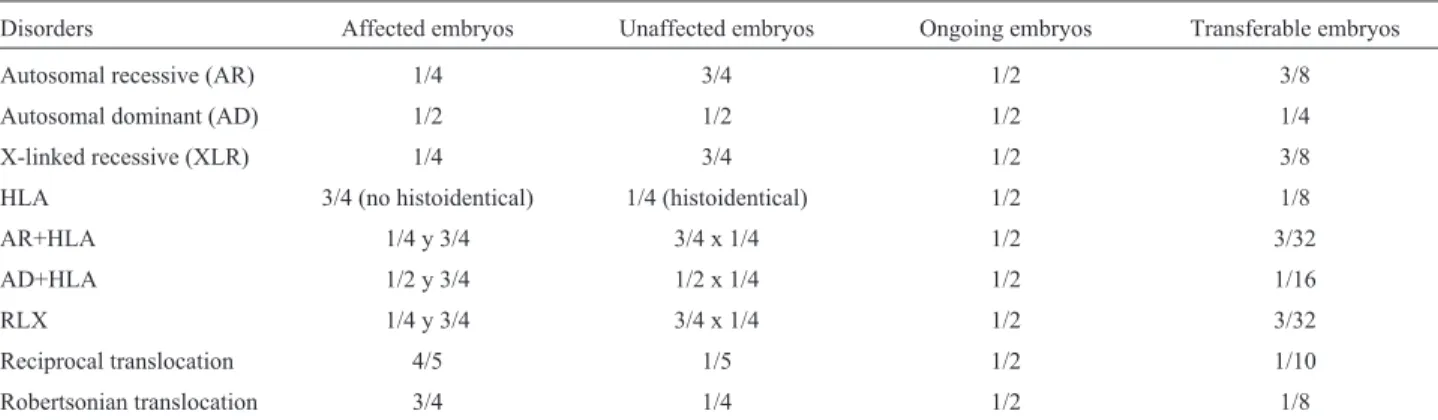
Indications are similar to conventional PND with re-gard to 1) genetic risks with monogenic or chromosomal causes, 2) major predisposition to tumors, 3) non-genetic risks or 4) selection of the best embryos in IVF laboratories. As PGD or PGS involves both an IVF or intracyto-plasmic sperm injection (ICSI) procedure and a genetic study, it is mandatory to predict the number of unaffected embryos obtainable for transfer prior to realizing the proce-dure. The number depends on the embryogenic potential of the fertilized oocytes and the implicated risk according to the genetic disorder. The embryogenic potential depends mainly on the woman’s age and the absence of factors that facilitate the production of incompetent gametes. Gen-erally, when a woman is younger than 35 years and the male produces good quality sperm, the embryogenic poten-tial is approximately 50%. The embryogenic potenpoten-tial de-creases when a woman’s age inde-creases or when sperm is of inferior quality. However, the genetic risk depends on the type of disorder (recessive, dominant, sex-linked) or if the disorder is chromosomal. Table 1 shows the estimated number of embryos needed to have the chance to transfer some unaffected embryos, based on the reasoning of PGD.
Recessive Monogenic Disorders
Examples of recessive disorders are congenital disor-ders such as cystic fibrosis, Tay-Sachs, and thalassemia, which involve two mutated chromosomes from each healthy carrier parent. When the disorder is molecularly characterized, the mutation may be analyzed in cells re-moved from a cleavage embryo or blastocyst. Mini-sequencing is the method of choice. However, when the mutation is not known, it might be determined by a linkage study.
In cases where the mutation has not been identified in one of the parents, the use of polymorphic markers linked to the gene of interest could help to provide a better diagnosis and allow to have more transferable embryos; otherwise, embryos carrying the known mutation would be considered
as affected when they could be healthy carriers. Today, with the availability of SNParrays, the characterization of individual mutations is no longer needed.
Dominant Monogenic Disorders
Examples of autosomal dominant disorders are myo-tonic dystrophy, fascio-scapular-humeral dystrophy, reti-noblastoma, Von Hippel Lindau, MEN I and II, Hunting-ton’s disease, osteogenesis imperfecta, and achondroplasia. When the patient has a “de novomutation” it is neces-sary to sequence the entire gene to identify the mutation. Once the mutation has been characterized, this sequence can be targeted in the cells removed from the embryo. In contrast, when there are several affected members in the family, PGD can also be addressed with polymorphic markers linked to the respective gene.
Usually, Huntington’s disease develops late in life or when the offspring are of child-bearing age. Many of them do not want to perform the genetic study because they do not want to know their genetic status in advance, but they want to make sure that their children do not have the muta-tion. Unlike PND, PGD for Huntington’s disease avoids disclosure of the status of the carrier of the mutation.
It is well known that people with certain genetic dis-orders live in communities, such as mute communities for congenital deafness or persons with achondroplastic dwarf-ism, and that these couples desire PGD to increase their likelihood of having similarly affected offspring. This is a situation in which it is difficult to satisfy the parents be-cause the medical team cannot help them.
Sex Linked Disorders
X-linked disorders are transmitted by the healthy car-rier mothers to their sons, while the affected males transmit the condition to their grandchildren through their healthy carrier daughters but not through their sons. When the mu-tation is characterized, it is recommended to perform PGD by minisequencing the mutation. Some reprogeneticists
Table 1- Prediction of the number of transferable unaffected embryos according to the reason for PGD.
Disorders Affected embryos Unaffected embryos Ongoing embryos Transferable embryos
Autosomal recessive (AR) 1/4 3/4 1/2 3/8
Autosomal dominant (AD) 1/2 1/2 1/2 1/4
X-linked recessive (XLR) 1/4 3/4 1/2 3/8
HLA 3/4 (no histoidentical) 1/4 (histoidentical) 1/2 1/8
AR+HLA 1/4 y 3/4 3/4 x 1/4 1/2 3/32
AD+HLA 1/2 y 3/4 1/2 x 1/4 1/2 1/16
RLX 1/4 y 3/4 3/4 x 1/4 1/2 3/32
Reciprocal translocation 4/5 1/5 1/2 1/10
carry out embryo sexing to avoid the birth of males, in such cases, but as was mentioned, this is not recommended.
Examples of recessive X-linked diseases are hemo-philia, Fragile X, and Duchenne muscular dystrophy.
In contrast, dominant X-linked diseases are transmit-ted by affectransmit-ted women to 50% of their daughters and sons, but affected males do not transmit it to their sons. Examples of diseases linked dominant X are Rett syndrome, incon-tinentia pigmenti, pseudohyperparathyroidism, and vita-min D-resistant rachitism.
As an example of Y-linked disorders, there are some AZF region microdeleted in the long arm of the Y-chro-mosome. In this case, the only option to avoid transmission to the offspring is female sex selection.
Chromosomal Disorders
This category mainly includes carriers of balanced chromosomal rearrangements, such as reciprocal translo-cations, Robertsonian translotranslo-cations, inversions and some cryptic deletion-duplication abnormalities. Most of the nu-merous anomalies in autosomal chromosomes are lethal and rarely reach adulthood, except Down syndrome. Women affected with Down syndrome are fertile and have a 50% risk of transmitting the condition, while affected males are sterile. In contrast, the numerous chromosomal abnormalities of the sex chromosomes allow individuals to reach adulthood, but some cause sterility and other types of infertility or sterility alone. Women that are 47, XXX are generally fertile, and they have a 50% of risk to have daughters with the same condition and males with 47, XXY. The 47, XYY males who are fertile have no risk of transmitting the YY condition because one of these chro-mosomes is excluded from the meiotic sexual body. How-ever, the XXY males who produce sperm in fact have mosaic gonads, and only the XY spermatogonial cells un-dergo meiosis (Sciuranoet al., 2009). Prior to the advent of the Comparative Genomic Hybridization array (aCGH), these PGDs were addressed by FISH using probes of the chromosomes involved. Today, the best tool for chromo-somal PGDs is molecular karyotyping or aCGH. The carri-ers of reciprocal translocations, both male and female, have a theoretical risk of 80% to produce abnormal gametes be-cause the meiotic quadrivalent is segregated. Only alternate segregation produces balanced gametes; instead, adjacent I, adjacent 2, 3:1 and 4:0 segregations are all abnormal. The real risk evaluated in sperm, oocytes and cleavage embryos on day 3 agrees with the theoretical risk. The carriers of Robertsonian translocations also have a theoretical risk of 75% because the meiotic trivalent is segregated (alternate, adjacent 1, adjacent 2 and 3:0), but the real risk observed in gametes and cleavage embryos is approximately 30%. It is much lower than the theoretical risk. The same occurs with the carriers of peri/paracentric chromosome inversions. In fact, both Robertsonian translocations and chromosome in-versions are considered to be benevolent rearrangements
compared to reciprocal translocations (Cocoet al., 2005). Cryptic duplications or deletions have a theoretical risk of 50%, but there are not enough published reports to estimate the empirical risk of carriers of such anomalies.
The frequency of balanced chromosome rearrange-ments is 0.2% in control population of newborn, while it is 0.6% in infertile couples, 3.2% in those with recurrent failed IVF procedures, 9.2% in couples with recurrent mis-carriages, 3.1% in men who require ICSI, and a similar fig-ure for their partners (Peschkaet al., 1999; Stern et al., 1999; Gekas et al., 2001; Clementini et al., 2005; Moz-darani et al., 2008). Therefore, it is advisable to always carry out karyotyping of the couple prior to an IVF/ICSI procedure.
While the carriers of balanced chromosome rear-rangements would be ideal candidates for pre-implantation genetic diagnosis, one has to consider that the only couples that can take advantage are those in which women respond very well to ovarian stimulation and are under the age of 40 years.
PGD for Rh Blood Group Typing
PGD can also be indicated in women who are Rh neg-ative and are highly sensitized with antibodies against Rh factor. If Rh genotyping in the male shows that he is hetero-zygous, it is feasible to perform a PGD to avoid possible erythroblastosis fetalis and intrauterine blood exchange transfusion. PGD has also been used in women sensitized by other blood factors, such as the Kell/Cellentano group.
PGD for Human Leukocyte Antigen HLA Typing
Indications of Preimplantation Genetic
Screening (PGS)
PGS could have the same indications as PND, if one assumes that the chromosomal constitution found in polar body I, in a blastomere removed on day 3, or in several cells of the trophoblast on day 5 represent the constitution of the future embryo. However, today, there is evidence that this is not always true. Taking into account that the majority of miscarriages in the first trimester are caused by aneuploi-dies, and the rate of aneuploid oocytes increases with ad-vancing age and is increased in males with oligoastheno-teratozoospermia (AOT), the ideal candidates for PGS would be as follows: 1) advanced maternal age, 2) couples with recurrent miscarriages, 3) couples with repeated IVF failures, and 4) severe male infertility. It could also be used to select a single euploid embryo for transfer, especially to avoid multiple pregnancies or to restrict the number of em-bryos to vitrify.
Advanced Maternal Age
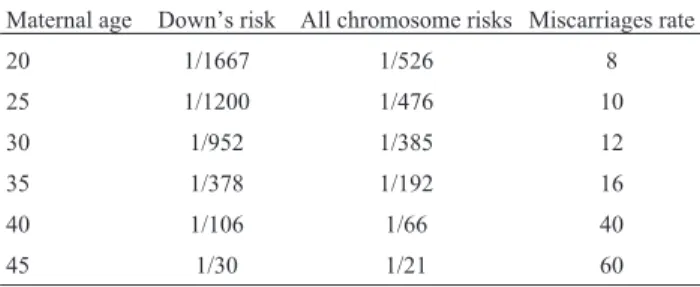
Women at an advanced age have a greater chance of having aneuploid pregnancies because they have increased rates of producing aneuploid oocytes. Oocytes are always the same age as the woman. However, in males, sperm are produced every 65-75 days. Therefore, it might be said that sperm are not the same age as the male. The prolonged ar-rest of oocytes at meiotic prophase I mainly contributes to aneuploidy due to the decline in competence of the cyto-plasm of the oocyte. The number and distribution of chias-mata during prophase I as the weak centromeric cohesion may be the main factor that predisposes aneuploidy that is inherent to age. In fact, the principal cause of oocyte aneu-ploidy is the precocious separation of sister chromatids rather than classic non-disjunction (Chianget al., 2012). In the male, the expected sperm aneuploidy rate is between 0.5 and 1% because the sperm is not the age of the male, but if the sperm is not ejaculated for prolonged periods, it could have a high rate of DNA fragmentation, which is also re-sponsible for abnormal fertilization. Competent oocytes from young women can repair the DNA fragmentation of the sperm, but the oocytes from older women cannot. Therefore, women of advanced age have higher probabili-ties of having abnormal pregnancies that might end in mis-carriage or in a malformed newborn. Most of these embryos are lost during pre or post implantation stages, while a mi-nority come to term. That is why the possibility of miscar-riage also increases with the age of the woman (see Ta-ble 2).
It is well recognized that most autosomic aneuploi-dies in live newborns arede novoor inherent to maternal age, while most sex chromosome aneuploidies are of pater-nal origin independent of paterpater-nal age, or are associated with poor sperm quality (Hassoldet al., 1984; Jacobs and Hassold, 1995). The majority of males with a normal
karyotype and a normal spermiogram have a 0.5 to 1% sperm aneuploidy rate, while the rate for oocytes is much higher, between 20 and 50%, mainly depending on the age of the woman (Hulténet al., 2005). However, the rate of sperm aneuploidy in males with OAT and a normal karyo-type is much greater than that observed in males with normozoospermia (Coco, et al., 2000; Colagero et al., 2001; Rubio,et al., 2001; Burelloet al., 2003). Although women more than 37 years old and males with OAT could be ideal candidates to benefit from PGS, most of them fail due to the low probability for producing euploid embryos. The first randomized controlled clinical trials (RCT) for PGS in patients with advanced maternal age were promis-ing due to the lower miscarriage rate and higher take-home baby rate achieved in the group that underwent PGS (Mun-né et al., 2006). However, other clinical trials emerged without differences in the findings between both groups, with and without PGS, and others showed even worse re-sults in the studied group with PGS. (Staessenet al., 2004, 2008; Stevenset al., 2004;Jansenet al., 2008; Mastenbroek
et al., 2007; Hardarson et al., 2008; Schoolcraft et al., 2009). Most of those studies were performed with biopsies on D3 and FISH, first enumerating five chromosomes and later 7, 9 and 12 chromosomes. Three arguments were used to explain these poor performances: a) limitation of the technique to enumerate all chromosomes, b) lower implan-tation rates after the removal of one or two blastomeres, which means a loss of embryonic mass of between 12.5% to 25%, and c) discarding supposed aneuploid embryos that might have been self-corrected and lead to a normal preg-nancy. Currently, we have much hope with comparative genomic hydridization arrays (aCGH), which could solve the first and second limitations because they allow the study of all 24 chromosomes, and because the cells ex-tracted correspond to trophectoderm cells and not to the stem cells of the inner cellular mass of the blastocyst (ICM). The third and last limitation mentioned remains un-answered until we know the rate of false positives and neg-atives for this method. While we are performing randomized controlled trials (RCTs) similar to those car-ried out with PGS by FISH, we will continue, of course, without knowing the clinical value of PGS.
Table 2- Pregnancy loss rate and maternal age.
Maternal age Down’s risk All chromosome risks Miscarriages rate
20 1/1667 1/526 8
25 1/1200 1/476 10
30 1/952 1/385 12
35 1/378 1/192 16
40 1/106 1/66 40
The first clinical trial with aCGH in blastocysts was performed by Yanget al.(2012). The authors, worked with patients with good prognoses, and these showed an in-creased pregnancy rate in patients who had received the best euploid blastocyst compared to those without aCGH (70.9%vs.45.8%). The same authors (Yanget al., 2013), also working with patients with good prognoses, docu-mented a better implantation rate in a group with aCGH (65%)vs.a group without aCGH (33%).The authors also showed that the rate of spontaneous miscarriage was signif-icantly lower in the group screened with an array (0%)vs.
controls (16.7%).
Schoolcraft and Katz-Jaffe (2013), working with pa-tients over 35 years old, also showed a better ongoing preg-nancy rate (60.8%) in the group that had received devi-trified euploid blastocysts compared to the control group (40.9%) that had received blastocysts without aCGH. A clinical trial of quite different design was published by Scottet al.(2013). These authors carried out the transfer of the two best embryos, whereby one was biopsied on D3 or D5 in accordance with the routine protocol for patients with good prognosis, but without knowing the outcome of an ar-ray before the embryo transfer. The authors found that 48.2% of the euploid blastocysts achieved pregnancy, while 93.5% of the aneuploid blastocysts did not achieve implantation. In contrast, the transfer on D3 showed that 29.2% of the euploid embryos achieved pregnancy, while 98.1% of the aneuploid embryos failed to do so. These re-sults clearly reinforce the need to continue with this type of clinical trial in patients indicated for an IVF procedure, es-pecially those of poor prognosis due to advanced age. The authors also showed that the implantation rate decreases nearly 50% when the biopsy is performed on D3 with respect to non-biopsied controls (30.4%vs.50.0%). How-ever, the implantation rate was not modified by the trophectoderm biopsy (51.0%vs.54.0%). Therefore, such biopsy done on D5 has no deleterious effect compared to the one on D3. Another RCT (Formanet al., 2013) showed that the cumulative rate of take-home babies was similar when transferring the best euploid single blastocyst (69%) or the two best blastocysts without aCGH (72%), with a 47% multiple pregnancy rate in the group transferred with the two best blastocysts. The authors documented an aneuploid blastocyst rate of 31%, with 21% of women younger than 35 years and 56% older than 40 years. Almost half of the newborns were twins in the transfer group with two blastocysts. The rate of preterm, low birth weight and greater number of days required in neonatal intensive care was also twice that of the group with a single blastocyst transfer.
Recurrent Pregnancy Loss (RPL)
Usually, RPL is defined as two or more consecutive pregnancies lost before 20 weeks of gestation. Different cytogenetic studies of miscarriages in the first trimester of
pregnancy show that aneuploidy rates varied between 50% and 80% (Stromet al., 1992).
Additionally, it has been documented that couples with RPL produce more aneuploid embryos than those who have not had RPL (Pelliceret al., 1999). According to some authors, PGS does not improve the rate of pregnancy in RPL, but increases the chance of birth at term (Platteauet al., 2005).
Recurrent IVF Failure (RIF)
RIF is usually defined as the failure of three or more IVF attempts with good quality embryo transfer. Some au-thors argue that these couples produce more embryos with aneuploidies (Hodes-Wertzet al., 2012). However, there is no evidence that PGS improves the rate of pregnancy or live IVF births.
Severe Male Factors
As mentioned above, the rate of aneuploidy in sper-matozoa from fertile males with a normal spermiogram is much lower than that observed in oocytes, and aneuploidy also does not increase with age in men.
was higher in the group that had not achieved pregnancy (Cocoet al., 2000). These findings put in evidence the im-portance of the genetic risk assessment before the ICSI pro-cedure to predict the chance of success. Now, with the possibility of PGD and lower costs, FISH is no longer used to assess sperm. It should be noted that the chances of se-lecting an euploid embryo mainly depend of the number of embryos produced during the procedure. When it is sus-pected that the couple has a major chromosomal risk due to advanced maternal age or severe male factors, it is manda-tory to inform them of the low chance of achieving a preg-nancy with the PGS procedure, unless the couple produces many embryos that provide one or two euploid embryos apt for transfer (Harper and Sengupta, 2012).
Sex Selection (PGSS)
The selection of the gender of the future child is a wish that a majority of people have when they plan to have offspring. However, for most people, it is not viewed posi-tively unless sex-linked diseases or other important con-cerns exist. Today, sex selection is a feasible reality that can be satisfied without ethical or legal disadvantages if the se-lection was carried out when the pregnancy is not estab-lished. Before the advent of PGD, there were no attempts to perform a prenatal diagnosis for sex selection, for diseases of late onset in life or for the predisposition to suffer certain tumors. While it is reasonable to state that the bioethics sta-tus of a preimplantation embryo is not equal to that of an embryo-fetus, there are, nonetheless, those who consider that already a fertilized oocyte has the status of a person, and for these, PGD would not be an option. Nonetheless, if we take into account the number of PGSS procedures per-formed worldwide as a proportion of the total number of re-quests for sex selection, it reasonable to assume that many of these reconsidered their concepts after being informed of the procedure.
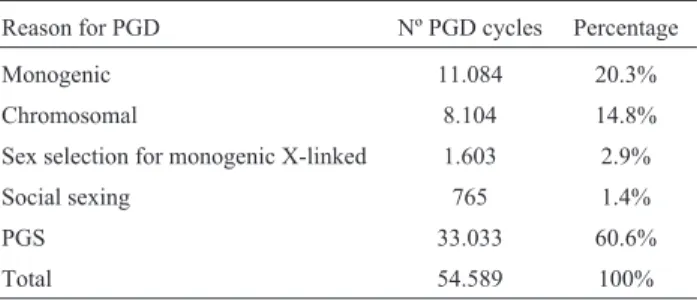
Table 3 provides a list of the different motivations for PGDs from 54,589 cycles registered during data collection I-XIV for PGD by the ESHRE Consortium (Traeger Syno-dinoset al., 2013).
Biopsy Techniques
There are several types of recognized biopsies: polar bodies, blastomeres on D3, trophectoderm on D5/D6 and, more recently, attempts to perform blastocentesis in blas-tocysts on D5/D6, as a new type of noninvasive embryo bi-opsy based on the presence of cells and DNA in the blastocoelic cavity. Actually, all of them are invasive and involve some risk of loss of the embryo. Working with a simple cell is not easy and may yield no results. In this re-gard, the biopsy of blastocysts is most suitable. Blasto-centesis is by now a new hope for less invasiveness. While none of these methods assures the proper constitution of the future embryo, they minimize the risk of the disorder that is
being investigated. The best result was obtained via the bi-opsy of blastomeres on D3 with fresh transfer on the same day of the biopsy, or transfer on D4/D5. To remove one or two cells from the preimplantation embryo it is first neces-sary to perforate the zona pellucida. The perforation of the zona pellucida can be done by several methods: A) me-chanically, by cutting through the pellucida with a micro-pipette; B) chemically, by dissolving part of the pellucida with an acid solution; or C) by laser, through modulating a laser beam via the optical system of a microscope. Prior to biopsy, the preimplantation embryos can be placed in a suitable medium to loosen the cell junctions at room tem-perature. Then, the embryos are placed in separate micro-drops composed of the medium for biopsy under oil and labeled. It is not convenient to have more than two pre-embryos in a dish to minimize their time out of the incuba-tor. Using a micromanipulator/microscope setup, the oocyte or the pre-embryo that will be biopsied is placed in the center of the field and focused at a 400X magnification. The embryo or oocyte is fastened with a micropipette holder. The zona pellucida is perforated, and the polar bod-ies (PBI/PBII), or blastomeres are removed gently with an appropriate micropipette. When the biopsy is performed on D5, the zona pellucida is perforated on day 3 to facilitate the hatching of the blastocyst and to easily remove some cells of the trophectoderm. The cells will have to be col-lected according to the protocol of the genetic study indi-cated. If the indication is a FISH study, the removed cells are fixed on a slide, but if the indication is a PCR assay, the removed cells are collected in a small tube.
Biopsy of Polar Bodies (PB I/PBII)
The biopsy of the first PB prior to the fertilization of the oocyte evaluates the result of the first meiotic division. Because errors can also occur during the second division of the oocyte, it is necessary to also study the second PB to avoid misdiagnosis. The second division of the oocyte is completed when the sperm penetrates the oocyte. There-fore, the biopsy of the second PB is performed once the ovum has been fertilized. As PB biopsies do not allow the evaluation of male meiotic errors and/or errors that occur after fertilization of the egg, the biopsy of blastomeres is more preferred because it allows the assessment of both
pa-Table 3- Different reasons for PGD from the I-XIV ESHRE PGD Consor-tium data collection.
Reason for PGD Nº PGD cycles Percentage
Monogenic 11.084 20.3%
Chromosomal 8.104 14.8%
Sex selection for monogenic X-linked 1.603 2.9%
Social sexing 765 1.4%
PGS 33.033 60.6%
rental contributions and/or errors during cleavage. Polar body biopsy is only useful when women have a major risk of transmission of monogenetic diseases or aneuploidies inherent at the maternal age. As was mentioned above, to avoid misdiagnoses, both polar bodies should always be biopsied. When the purpose is to evaluate aneuploidies, both biopsies can be performed simultaneously. Instead, when the question is a monogenic disease, it is necessary to perform the biopsy in a sequential way. The biopsy of the first polar body prior to fertilization only indicates errors during the first meiotic division and/or whether the oocyte carries the same maternal mutation, always assuming that an interchange did not occur in the locus where the muta-tion maps to. In countries where embryo biopsy is prohib-ited, the pre-implantation genetic diagnosis can only be performed by biopsy of polar body I because the second po-lar body appears after the fertilization of the oocyte. There-fore, the biopsy of the second polar body would have the same connotation as the embryo biopsy.
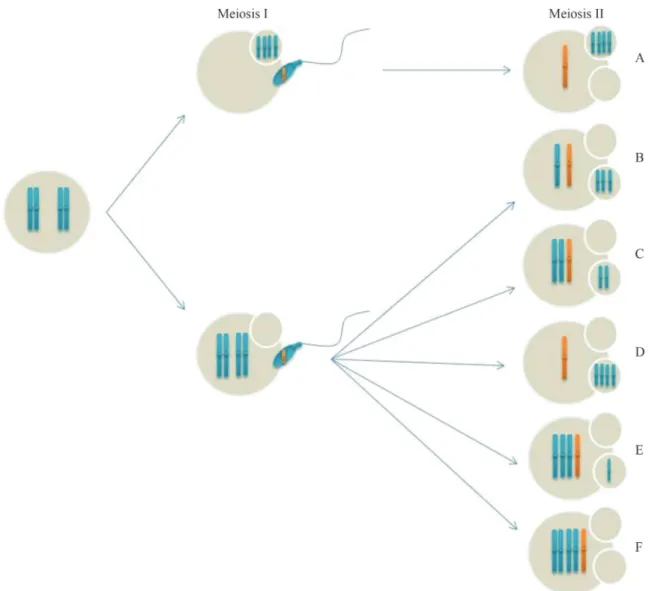
PBI biopsy to assess aneuploidies is not optimal be-cause there are other possibilities for segregation during the second division, without assuming that the first meiosis was normal or abnormal. Figure 1 shows the different pos-sibilities of the second division after a normal first meiotic division, where two of three possibilities are abnormal. Fig-ure 2 shows the different possibilities of the second division after a non-disjunction occurred during the first division; one of the six possibilities corresponds to an aneuploid
res-cue. Figure 3 shows the different possibilities during the second division after a premature separation of sister chro-matids in the first meiotic division; two of six possibilities correspond to an aneuploidy rescue.
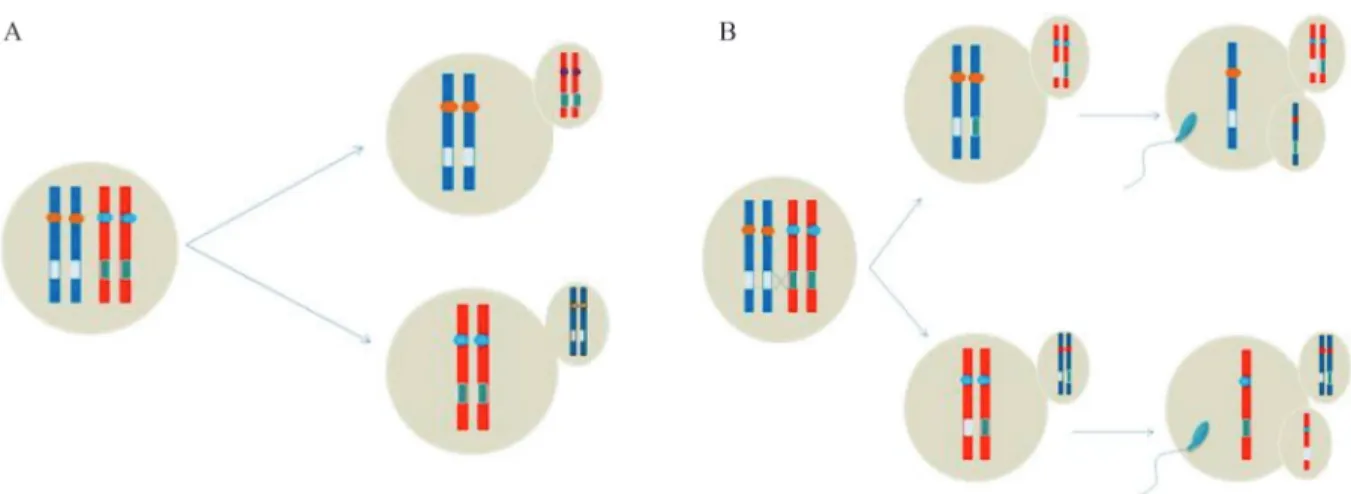
Polar body biopsy is also not ideal for monogenic dis-eases due to the possibility of crossing over. Figure 4 A shows a normal segregation without crossing over, while Figure 4 B shows a segregation after a crossing over event at the level of a mutated gene that is able to produce normal and abnormal oocytes.
In spite of the disadvantages indicated according to the ESHRE Consortium, 16% of the biopsies done corre-spond to those of polar bodies. Kuliev and Verlinsky (2004) studied more than 8,000 oocytes from women older than 35 years with FISH for chromosomes 13, 15, 16, 21 and 22 found that more than 50% had aneuploidy. Recently, a pilot study of the ESHRE PGD Consortium using aCGH in polar bodies from women over 40 years showed an aneuploidy rate of 75% (Geraedts, 2013)
Biopsy of Blastomeres in Cleaved Embryos on
D3
This is the type of biopsy used to remove one or two cells in embryos with more than six cells on D3. Embryolo-gists have acquired great skill in performing this technique, but there is evidence that it decreases the rate of implanta-tion. FISH or PCR analysis in a simple cell is a real chal-lenge for specialists and for patients. It is not easy to work
with a single molecule of DNA for chromosomal and ge-netic tests. However, this was the methodology used in the last 20 years. Indeed, 80% of the PGDs recorded by the ESHRE Consortium were D3 blastomere biopsies. During that time, fresh transfer was used to avoid cryopreservation. At first, the protocol mostly used for PGD/PGS was trans-fer on the same day of the biopsy. Improvement of sequen-tial culture media allowed the prolonging of in vitro
development until the fifth day, and transferring only those that reached the blastocyst stage. Biopsy on D3 achieved a clinical pregnancy rate of 18.7% and a take-home baby rate of 14.7%, with a misdiagnosis between 5 and 10%, accord-ing to records I-XIV of the ESHRE Consortium.
Blastocyst Biopsy
The blastocyst is the highest degree of development that an embryo can reachin vitro, and it is characterized by three elements: the inner cell mass, the outer cell layer or
trophectoderm and the blastocoel. The blastocyst begins to form on the fifth day and is completed on the sixth.
A blastocyst usually has more than 100 cells. The ma-jority will form the placenta, the chorionic villus and other extraembryonic structures. Only a small percentage of the ICM will differentiate into the embryo proper after implan-tation of the embryo in the endometrium. Therefore, the trophectoderm biopsy procedure is considered equivalent to the puncture of a chorionic villus, with the same limita-tions of not corresponding to the constitution of the embryo
per sedue to the possibility of mosaicism.
Once the decision to perform a trophectoderm biopsy is taken, it is preferable to perform the transfer in a deferred cycle, because not all blastocysts are obtained on D5, and the genetic studies demand time. This decision is very im-portant because it allows better organization of the genetic laboratory assays. At present, there is sufficient evidence that the deferred transfer to the stimulated cycle has its ad-vantages in terms of implantation, ongoing pregnancy and
Figure 3- Possibilities of segregation during second division from an abnormal oocyte by early separation of sister chromatids. Two of the six possibili-ties are normal (A and B).
lower risk of genetic and epigenetic alterations (Papaniko-laouet al., 2006; Maheshwariet al., 2012; Shapiroet al., 2012, Roqueet al., 2013). In 2011, our team took the deci-sion to switch from the blastomere biopsy to the trophecto-derm biopsy procedure with deferred transfer to the stimulated cycle. The results were much better, and impor-tantly, the entire team worked in a more comfortable, friendly, healthy and efficient environment (Cocoet al., 2012).
Genetic Testing
There are three fundamental techniques in a PGD pro-gram: FISH, PCR and aCGH. Handyside (2013) recently published the different diagnostic tests available to carry out PGD/PGS, along with their pros and contras.
Considerations of PGD/PGS
Not all people who want to perform PGD are able to do so. There are two fundamental requisites: the couple should be fertile and it should have the genetic character-ization of the disorder which is intended to be diagnosed. This last point is very important because couples assume that they will have a normal healthy child, whereas it is only possible to offer to minimize the risk for the disease for which they have a great risk of transmitting to their off-spring. As there is a small risk of misdiagnosis due to the existence of mosaicism or limitations of the techniques used, couples should always be offered the possibility of an amniocentesis to double check the results. It should be re-membered that all the other prenatal diagnoses, both the non-invasive prenatal test (NIPT) and the chorionic villi sample, as well as PGD are screening methods because these analyses are based on cells from the trophectoderm. The procedure should always be explained in detail during the entire treatment to ensure that couples are informed about the potential risks in the short, medium and long term.
Because the majority of patients for PGD are advised by a geneticist, the patients are usually more informed about the risk at birth or during pregnancy, from the end of the first trimester and beginning of the second, which are completely different from the risk during the preimplan-tation phase, particularly with regard to the risks of aneuploidies and abnormal segregations in carriers of chro-mosomal rearrangements. During preimplantation devel-opment, the risks are much higher. To benefit patients with a more predictable PGD, doctors should ensure that the couple produces a sufficient quantity of embryos to obtain non-affected embryos for transfer.
With respect to PGS, it can be said that the ideal can-didates have the following characteristics: women of ad-vanced maternal age, couples with recurrent miscarriages and recurrent IVF failures, and men with severe male fac-tors. However, the usefulness of PGS is still controversial.
For PGS by FISH the results first were very promising, but later on discouraging and, finally, undesirable because this method produces effects contrary to those expected. These became evident when studying biopsies taken on D3. We have now begun to investigate biopsies taken on D5 as these provide more cells to study and permit to apply differ-ent diagnostic methodologies that are more robust than FISH. The use of blastocyst biopsy is very promising, as happened at the beginning with FISH with biopsy on D3. Although it is undisputed that the CGH array is superior to FISH, there are doubts about the benefit of these arrays in the group of patients who are more likely to produce aneu-ploid embryos. Women of advanced age have a higher risk of producing aneuploid oocytes. Additionally, such women respond poorly to ovarian stimulation and thus produce only few blastocysts. If the existence of a male factor is added, the prognosis is even more discouraging. The mei-otic risk of the couple based on the woman’s age and the ex-istence of male factors should be used to estimate the number of blastocysts required to obtain at least one euploid blastocyst apt for transfer. For women of advanced age more oocytes are needed to have a chance of finding euploid blastocysts, but they produce much fewer oocytes than young women. An alternative would be the collection of blastocysts in various cycles of ovarian stimulation in-stead of only one, though there are insufficient, primarily anecdotal data to conclude that this may be a solution (Mondadoriet al., 2012). Hartonet al.(2013) recently re-ported that selective transfer of euploid embryos showed that implantation and pregnancy rates were not signifi-cantly different between reproductively younger and older patients of up to 42 years of age. Nevertheless, information on more well-designed clinical trials is needed to know if the embryos from older women are really harmed or not by biopsies, because the poor quality of the embryos might make them more vulnerable to the procedure.
Patients should understand that the constitution of the tro-phectoderm is not always coincident with that of the ICM because different possibilities of chromosomal constitution can exist: a) the trophectoderm and the ICM are homoge-neously normal or abnormal, b) the trophectoderm may be abnormal but the ICM may be normal, (c) the trophec-toderm may be normal but the ICM may be abnormal, d) the trophectoderm may be a mosaic and the ICM may be normal or abnormal, and e) both the trophectoderm and ICM may be mosaic.
If clinical trials are done on a group with PGS and an-other one without PGS and the euploid embryos are always transferred, one can never know the rate of false positives and negatives that may PGS produce. This is not a minor detail, and it is relevant, especially when couples produce one or two blastocysts, and the array indicates that they are abnormal. Should we advise discarding them? Obviously, it is necessary to have better designed clinical trials to ob-tain the correct answer. If we are to follow the same type of clinical trials as carried out on PGS by FISH, we are likely to make the same mistakes, and we are perhaps eliminating the last chance for older couples to be parents of their ge-netic children. Today, there is evidence that blastocyst bi-opsy does not harm the implantation process, so we should offer it to patients who require IVF/ICSI to participate in a clinical trial. The patients must accept that the best blas-tocyst be biopsied without knowing the result of aCGH. I personally consider that this type of clinical trial will allow us to know the behavior of the anomalies detected in the trophectoderm. The classical randomized clinical trials in-clude two groups of patients, studied and unstudied, with subsequent re-analysis of the blastocysts that were not transferred because they had been diagnosed as aneuploids with the purpose of verifying the existence of mosaics; these are, in my opinion, very expensive for an unrecover-able blastocyst. Johnsonet al.(2010) reported a correspon-dence of 96.1% between karyotypes of the trophectoderm and ICM when they re-examined 51 blastocysts diagnosed as aneuploids. However other authors (Liuet al., 2012) who re-examine 13 blastocysts diagnosed as aneuploids found a high rate of mosaics in the trophectoderm, and in four cases mosaics were not present in the ICM because the aCGH was normal. The establishment, characterization and differentiation of a karyotypically normal human embry-onic stem cell line from a blastocyst diagnosed as chromo-some 21 trisomy was recently reported (Mandal et al., 2013). Such a finding could be due to a self-correction of the aneuploidy or to the existence of a mosaicism of the trophectoderm, as well as due to a recent error that occurred in only one cell among the cells removed during trophec-toderm biopsy.
Main Conclusions
PGD is an alternative to prenatal diagnosis for pa-tients with increased genetic risk in their offspring. It is a
prerequisite that the couple should be fertile or that their in-fertility can be reverted by IVF. Preimplantation diagnosis has a great advantage over conventional prenatal diagnosis because it can avoid possible genetic miscarriage. How-ever, it has the disadvantage of being expensive, and fertile couples have to undergo a highly complex treatment, as do infertile couples. When the couple is genetically infertile it is mandatory to perform PGD to avoid the inherent risk to the offspring.
Although PGS is indicated for advanced maternal age, recurrent miscarriages, or for severe male factors, the benefits of its use are not yet clear, especially for patients with normal karyotypes. It is true that these patients have a higher risk of producing aneuploid zygotes, but it is also true that most homogeneous aneuploidies are lethal, on the order of 99%, and that the majority die before implantation or during embryo-fetal development (Hassold and Hunt, 2001). Unlike partial aneuploidies, almost from abnormal segregation of carriers of balanced rearrangements, the pregnancy may continue to term and birth a malformed child. Therefore, the above-mentioned patients should use PGD, especially if they are infertile.
The experts’ committees of the main scientific societ-ies for reproductive medicine support the idea that there is still no evidence that establishes PGS as beneficial for those groups of patients who would be the ideal candidates for PGS (Hardarsonet al., 2008). As these groups of patients produce fewer normal embryos for transfer, they should be informed that the pregnancy rate after PGS could be lower compared to IVF without PGS.
Among the different types of existing biopsies, it is possible to conclude that the polar body biopsy has very low diagnostic efficiency. Blastomere biopsy on D3 de-creases the rate of implantation, and between 10 and 20% of the embryos studied may not give results due to the limita-tions of the assays performed on only one or two DNA mol-ecules. The rate of misdiagnosis according to the data of the ESHRE PGD Consortium is between 3-10%.
vitrification permits to implement blastocyst biopsy. This has the advantage of performing the biopsy in an embryo that has reached the maximum developmental degree in the laboratory and can be transferred to the uterus in its optimal state of development. Also, there is a cost reduction be-cause only embryos that reach this stage are biopsied and studied. The reduced invasiveness of the biopsy, the larger number of cells removed and the programming of the stud-ies on several weekdays are responsible for its good accep-tance for teamwork. Our PGD program has used blastocyst biopsy with transfer in an unstimulated cycle since 2011 (Cocoet al., 2012). Such decisions allow older women to produce several blastocysts in several cycles of ovarian stimulation, and they minimize the risk of miscarriage while transferring euploid blastocysts (Mondadori et al., 2012). Today there is no doubt that the pregnancy rate with transfer in the unstimulated cycle is much higher than that in the stimulated cycle (Shapiroet al., 2012; Roqueet al., 2013). Additionally, a recent systematic review and meta-analysis of 11 studies showed better obstetric and perinatal outcomes with cryopreserved embryos vs. non-cryopre-served ones (Davieset al., 2012; Maheshwariet al., 2012). The improved results are most likely due to the better em-bryo-endometrial synchronization in a natural or more physiologically acceptable cycle (Haouziet al., 2010).
All the biopsies that can be realized in thein vitro
preimplantational stage are invasive, and they have the value of screening, rather than a diagnostic value. There-fore, there should always be more benefits than risks. Most likely, the aspiration of the blastocoel is indeed less inva-sive. Because all embryo transfers in the future will proba-bly be done with devitrified blastocysts in non-stimulated cycles, and because blastocysts with induced collapse are better vitrified, the aspirated fluid might be kept for PGS using new generation sequencing with a much lower cost compared to the current method. If all blastocyst fluids are chromosomally analyzed after transfer, we would have the ideal clinical observational essay to determine the rate of false positives and negatives of the PGS and to know more about the biological behavior of chromosomal anomalies during thein vitropreimplantational stage.
There are no doubts that reprogenetic developments have attained huge achievements during recent years and that the final beneficiaries are persons/patients who strug-gle with their difficulty to create families. All this progress benefits them greatly by providing information based on which they have to take very important decisions in their lives.
There are three conditions that have to be fulfilled to make these decisions sustainable for life: 1) clear and neu-tral information, 2) a healthy and productive doctor-patient relationship, and 3) psychological coaching to allow pa-tients to cope with a genetic condition and to avoid transfer-ring it to their offsptransfer-ring.
References
Burello N, Vicari E, Shin P, Agarwal A, De Palma A, Grazioso C, D’Agata R and Calogero EA (2003) Lower sperm aneu-ploidy frequency is associated with high pregnancy rates in ICSI programes. Hum Reprod 18:1371-1376.
Chiang T, Schultz RM and Lampson MA (2012) Meiotic origins of maternal age-related aneuploidy. Biol Reprod 86:1-7. Clementini E, Palka C, Iezzi I, Stuppia L, Guanciali-Franchi P and
Tiboniln GM (2005) Prevalence of chromosomal abnormal-ities in 2078 infertile couples referred for assisted reproduc-tive techniques. Hum Reprod 20:437-442.
Coco R, Sartori C, Coco F, Gallo A and Neuspiller N (2000) Estimación del riesgo reproductivo en varones con semen anormal usando FISH para las aneuploidías más frecuentes. Medicina 60:818.
Coco R, Coco Ludueña F, Urquiza M, Mincman J, Gallo A and Neuspiller N (2005) Riesgo genético reproductivo en porta-dores de rearreglos cromosómicos. Reproducción 20:25-36. Coco R, Mondadori A, Ducatelli ME, Mincman J, Gallo A, Coco
F, Neuspiller S, Gismondi FL and Neuspiller N (2012) Preimplantation diagnosis in blastocyst biopsy and deferred cycle transfer. JBRA Assist Reprod 16:268-270.
Colagero AE, De Palma A, Grazioso C, Barone N, Romeo R, Rappazzo G and D’Agata R (2001) Aneuploidy rate in sper-matozoa of selected men with abnormal semen parameters. Hum Reprod 16:1172-1179.
Davies MJ, Moore VM, Willson KJ, Van Essen P, Priest K, Scott H, Haan EA and Chan A (2012) Reproductive technologies and the risk of birth defects. N Engl J Med 366:1803-1813. Forman EJ, Hong KH, Franasiak JM and Scott RT (2013)
Obstet-rical and neonatal outcomes from the BEST trial: Single Embryo transfer with aneuploidy screening improves out-comes afterin vitrofertilization without compromising de-livery rates. Am J Obstetr Ginecol 210:e157.
Gekas J, Thepot F, Turleau C, Siffroi JP, Dadoune JP, Briault S, Rio M, Bourouillou G, Carrr-Pigeon F, Wasels R, et al.
(2001) Chromosomal factors on infertility in candidate cou-ples for ICSI: An equal risk of constitutional aberrations in women and men. Hum Reprod 16:82-90.
Geraedts J (2013) Still too early to take aconclusive view on tech-nique or patients in aneuploidy screening. Focus Reprod 2013(September):16-17.
Handyside AH (2013) 24-chromosome copy number analysis: A comparison of available technologies. Fertil Steril 100:595-602.
Hardarson T, Hanson C, Lundin K, Hillensjo T, Nilsson L, Stevic J, Reismer E, Borg K, Wikland M and Bergh C (2008) Preimplantation genetic screening in women of advanced maternal age aused a decrease in clinical pregnancy rate: A randomized controlled trial. Hum Reprod 23:2806-2812. Harper JC and Sengupta SB (2012) Preimplantation genetic
diag-nosis: State of the art 2011. Hum Genet 131:175-186. Harton GL, Munné S, Surrey M, Griffo J, Kaplan B, McCulloh D,
Griffin DK and Wells D (2013) Diminished effect of mater-nal age on implantation after preimplantation genetic diag-nosis with array comparative genomic hybridization. Fertil Steril 100:1695-703
Hassold T, Chiu D and Yamane JA (1984) Parental origin of autosomal trisomies. Ann Hum Genet 42:129-144. Hassold T and Hunt P (2001) To err (meiotically) is human: The
Haouzi D, Assou S, Dechanet C, Anahory T, Dechaud H, De Vos J and Hamamah S (2010) Controlled ovarian hyperstimu-lation forin vitrofertilization alters endometrial receptivity in humans: Protocol effects. Biol Reprod 82:679-686. Hodes-Wertz B, Grifo J, Ghadir S, Kaplan B, Laskin CA,
Glas-sner M and Munné S (2012) Idiopathic recurrent miscar-riage is caused mostly by aneuploid embryos. Fertil Steril 98:675-680.
Hultén M, Baker H and Tankimanova M (2005) Meiosis and mei-otic errors. In: Online Encyclopedia of Genetics, Genomics and Bioinformatics. Wiley online library.
Jacobs PA and Hassold T (1995) The origin of numerical abnor-malities. Adv Genet 33:101-133.
Jansen RP, Bowman MC, de Boer KA, Leigh DA, Lieberman DB and McArthur SJ (2008) What next for preimplantation ge-netic screening (PGS)? Experience with blastocyst biopsy and testing for aneuploidy. Hum Reprod 23:1476-1478. Johnson DS, Cinnioglu C, Ross R, Filby A, Gemelos G, Hill M,
Ryan A, Smotrich D, Rabinowitz M and Murray MJ (2010) Comprehensive analysis of karyotypic mosaicism between trophectoderm and inner cell mass. Mol Hum Reprod 16:944-949.
Kuliev A and Verlinsky Y (2004) Meiotic and mitotic nondis-junction: Lessons from preimplantation genetic diagnosis. Hum Reprod Update 10:401-407.
Liu J, Wang W, Sun X, Liu L, Jin H, Li M, Witz C, Williams D, Griffith J, Skorupski J,et al.(2012) DNA microarray reveals that high proportions of human blastocysts from women of advanced maternal age are aneuploid and mosaic. Biol Reprod 87:148-159.
Maheshwari A, Pandey S, Shetty A, Hamilton M and Bhat-tacharva S (2012) Obstetric and perinatal outcomes in sin-gleton pregnancies resulting from the transfer of frozen thawedvs.fresh embryos generated throughin vitro fertil-ization treatment: A systematic review and meta-analysis. Fertil Steril 98:368-377.
Mandal A, Matheuw S, Saha D and Viswanathan C (2013) Estab-lishment, characterization and differentiation of a karyo-typically normal human stem cell line from a trisomy af-fected embryo. In Vitro Cell Dev Biol Anim 49:15-26. Mastenbroek S, Twisk M, van Echten-Arends J,
Sikkema-Rad-datz B, Korevaar JC, Verhoeve HR, Vogel NE, Arts EG, de Vries JW, Bossuyt PM,et al.(2007)In vitrofertilization with preimplantation genetic screening. N Engl J Med 357:9-17.
Mondadori AG, Ducatelli ME, Mincman J, Gallo A, Coco F and Coco R (2012) PGD by aCGH and qf_PCR in a couple with recurrent aneuploidies. JBRA Assist Reprod 16:290-300. Mozdarani H, Meybodi AM and Zari-Moradi S (2008) A
cyto-genetic study of couples with recurrent spontaneous miscar-riages and infertile patients with recurrent IVF/ICSI Failure. Ind J Hum Genet 14:1-6.
Munné S, Fischer J, Warner A, Chen S, Zouves C and Cohen J (2006) Preimplantation genetic diagnosis significantly re-duces pregnancy loss in infertile couples: A multicenter study. Fertil Steril 85:326-332.
Papanikolaou EG, Camus M, Kolibianakis EM, Van Landuyt L, Van Steirteghem A and Devroey P (2006)In vitro fertiliza-tion with single blastocyst-stage vs.single cleavage-stage embryos. N Engl J Med 354:1139-1146.
Pellicer A, Rubio C, Vidal F, Mínguez Y, Giménez C, Egozcue J, Remohí J and Simón C (1999) In vitro fertilization plus preimplantation genetic diagnosis in patients with recurrent miscarriage: An analysis of chromosome abnormalities in human preimplantation embryos. Fertil Steril 71:1033-1039.
Peschka B, Leygraaf J, van der Ven K, Montag M, Schartmann B, Schubert R, van der Ven H and Schuanitz G (1999) Type and frequency of chromosome aberrations in 781 couples undergoing intracytolasmic sperm injection. Hum Reprod 14:2257-2263.
Platteau P, Staessen C, Michiels A, Van Steirteghem A, Liebaers I and Devroey P (2005) Preimplantion genetics diagnosis for aneuploidy screening in patients with unexplained recurrent miscarriages. Fertil Steril 83:393-397.
Rives N, Mazurier S, Bellet D, Joly G and Mace B (1998) Assess-ment of autosome and gonosome disomy in human sperm nuclei by chromosome painting. Hum Genet 102:616-623. Roque M, Lattes K, Serra S, Solà I, Geber S, Carreras R and Checa
MA (2013) Fresh embryo transfervs.frozen embryo transfer in in vitro fertilization cycles: A systematic review and meta-analysis. Fertil Steril 99:152-156.
Rubio C, Gil-Salomon M, Simón C, Vidal F, Rodrigo L, Mínguez Y, Remohí J and Pellicer A (2001) Incidence of sperm chro-mosomal abnormalities in a risk population: Relationship with sperm quality and ICSI outcome. Hum Reprod 16:2084-2092.
Rudak E, Jacobs P and Yanagimachi R (1978) Direct analysis of the chromosome constitution of human spermatozoa. Nature 274:911-913.
Schoolcraft WB and Katz-Jaffe MG (2013) Comprehensive chro-mosome screening of trophectoderm with vitrification facil-itates elective single-embryo transfer for infertile women with advanced maternal age. Fertil Steril 100:615-619. Schoolcraft WB, Katz-Jaffe M, Stevens J, Rawlins M and Munné
S (2009) Preimplantation aneuploidy testing for infertile pa-tients of advanced maternal age: A randomized prospective trial. Fertil Steril 92:157-162.
Sciurano RB, Luna Hisano CV, Rahn MI, Brugo Olmedo S, Rey Valzacchi G, Coco R and Solari AJ (2009) Focal esper-matogenesis originates in euploid germ cells in classical Klinefelter patients. Hum Reprod 24:2353-2360.
Scott RT, Upham KM, Forman EJ and Zhao T (2013) Cleav-age-stage biopsy significantly impairs human embryonic implantation potential while blastocyst biopsy does not: A randomized and paired clinical trial. Fertil Steril 100:624-630.
Shapiro B, Daneshmand S, De Leon L, Garner FC, Aguirre M and Hudson C (2012) Frozen-thawed embryo transfer is associ-ated with a significantly reduced incidence of ectopic preg-nancy. Fertil Steril 98:1490-1494.
Staessen C, Platteau P, Van Assche E, Michiels A, Tournaye H, Camus M, Devroey P, Liebaers I and Steirteghem A (2004) Comparison of blastocyst transfer with or without preim-plantation genetic diagnosis for aneuploidy screening in couples with advanced maternal age: A prospective random-ized controlled trial. Hum Reprod 19:2849-2858.
the age of 36 following single-embryo transfer. Hum Reprod 23:2818-2825.
Stern C, Pertile M, Norris H, Hale L and Baker HWG (1999) Chromosome translocations in couples with in-vitro fertil-ization implantation failure. Hum Reprod 14:2097-2101. Stevens J, Wale P, Surrey ES and Schoolcraft WB (2004) Is
aneuploidy screening for patients aged 35 or over benefi-cial? A prospective randomized trial. Fertil Steril 82 (Suppl 2):249.
Strom CM, Ginsberg N, Applebaum M, Bozorgi N, Caffarelli M and Verlinsky Y (1992 Analyses of 95 first-trimester spon-taneous miscarriages by chorionic villus sampling and karyotype. J Assisted Reprod Genet 9:458-461.
Traeger-Synodinos J, Coonen E and Goossens V (2013). Data from the ESHRE PGD Consortium. Hum Reprod 28(Suppl 1):18-19.
Yang Z, Liu J, Collins GS, Salem SA, Liu X, Lyle SS, Peck AC, Scott Sills E and Salem RD (2012) Selection of single blastocysts for fresh transfer via standard morphology as-sessment alone and with arrayCGH for good prognosis IVF patients: Results from a randomized pilot study. Mol Cyto-genet 5:24.
Yang Z, Salem SA, Liu X, Kuang Y, Salem RD and Liu J (2013) Selection of euploid blastocysts for cryopreservation with array comparative genomic hybridization (aCGH) results in increased implantation rates in subsequent frozen and thawed embryo transfer cycles. Mol Cytogenet 6:32.