SNAPY: A CRISPY BITE ON
GROCERY RETAIL
Francisca Catarino
Dissertation written under the supervision of Nuno Magalhães Guedes
Dissertation submitted in partial fulfilment of requirements for the MSc in Management with specialization in Strategy & Entrepreneurship, at the Universidade Católica Portuguesa, 28th
Abstract
Title: Snapy: A Crispy bite on Grocery Retail Author: Francisca Catarino
Under the guidance of its founder, Artur Catarino, Progelcone started its activity in 1983 as a pioneer producer of ice cream cones in Portugal.
Limited by the high seasonality that characterized the ice cream industry, Progelcone broaden its scope and became the leader supplier of ice cream related products and plastic items for the food-service industry.
In 2013, the company was already recovering from the European debt crisis, which had decreased its clients financial capacity and contributed to the excess capacity of the company. Despite having reached sales of €12,6 million in the HORECA channel in 2013, Progelcone was confronted with a major challenge in 2014. Adding to the strong impact of seasonality, Progelcone had just lost its biggest client, Olá, a local brand of Unilever’s ice cream business. The company believed that launching Snapy, a wafer cookie, in Jumbo supermarket, had the potential to increase revenues and contribute to the firm’s growth. However, a category dominated by private labels and competitors such as Mondelez, and the lack of knowledge of branding nuances may impose significant challanges.
The strategies followed by Progelcone are an interesting subject of discussion. The Case Study can be used within strategic management and marketing courses, and includes topics of diversification, brand positioning, the empowerment of private labels and retailers’ bargaining power. This thesis includes a literature review, plus a teaching note that focused on the improvement of the company’s strategy.
Resumo
Titúlo: Snapy: Uma mordida crocante no Retalho Alimentar Autor: Francisca Catarino
Sob a orientação do seu fundador, Artur Catarino, a Progelcone iniciou a sua atividade em 1983 como pioneira na produção de cones para gelado em Portugal.
Limitada pela sazonalidade que caracterizava a indústria do gelado, a Progelcone alargou o seu escopo e tornou-se a principal fornecedora de produtos relacionados a gelados e embalagens de plástico para a indústria de food-service.
Em 2013, a empresa já recuperava da crise económica, que diminuiu a capacidade financeira dos seus clientes e contribuiu para o excesso de capacidade produtiva da empresa. Apesar de atingir vendas de €12,6 milhões no canal Horeca em 2013, a Progelcone foi confrontada com um grande desafio em 2014. Além do forte impacto da sazonalidade, a Progelcone perdeu o seu maior cliente, a Olá, uma marca local do negócio dos gelados da Unilever. A empresa acreditava que o lançamento da Snapy, uma bolacha wafer, no supermercado Jumbo tinha o potencial de aumentar as receitas e contribuir para o crescimento da empresa. No entanto, uma categoria dominada por marcas de distribuição e concorrentes como a Mondelez, e a falta de conhecimento de gestão de marcas podem impor desafios significativos.
As estratégias seguidas pela Progelcone são um tema interessante de discussão. O Caso de Estudo pode ser utilizado em cursos de estratégia e marketing, incluindo tópicos como diversificação, positionamento, o crescente poder das marcas próprias e o poder de negociação dos retalhistas. Esta Tese inclui uma revisão de literatura e uma nota de ensino focada na melhoria da estratégia da empresa.
Acknowledgements
Firstly, I am immensely grateful to Progelcone, especially Luis Catarino and João Alves, for their availability and for sharing all the information and insights to write this Thesis. Without their help, it would have not been possible to develop this project.
I am also thankful for my boss, Teresa Braga, for always being so comprehensive and flexible on work schedules.
I would like to express my sincere gratitude to my Thesis advisor, Nuno Maglhães Guedes, for his enormous dedication and constructive feedback. For keeping me focused, for his patience, guidance and motivation.
The development of my Thesis dissertation was undoubtedly one of the most challenging periods of my academic life. As I finish this journey, I would like to reference and thank everyone that contributed to it and supported me unconditionally.
I want to truly thank my parents and my sister for all the guidance, support and patience during this journey. To my boyfriend, for believing in me, for always being patient and supporting me throughout this semester, and to my closest group of friends, for their encouragement and motivation in difficult times.
Table of Contents
Resumo ... 2
Acknowledgements ... 3
I. Case Study ... 7
Snapy: A Crispy bite on Grocery Retail ... 8
Company Background ... 8
The cookies market in Portugal ... 10
Snapy - your daily snack ... 12
The dilemma ... 12 The decision ... 13 Marketing Mix ... 15 Product ... 15 Price ... 15 Promotion ... 16 Creating a brand ... 16 Conclusion ... 17 Exhibits ... 19
Exhibit 1 - Progelcone’s Headquarters ... 19
Exhibit 2 - Ice cream wafer cones produced by Progelcone ... 19
Exhibit 3 - Olá poster used in restaurants, cafeterias and ice cream parlors ... 20
Exhibit 4 - Additional products in Progelcone’s portfolio ... 20
Exhibit 6 - Europe biscuits market geography segmentation: % share, by value, 2014 ... 22
Exhibit 7 - Portugal cookies market value (€ million) and market share in value terms (%) by category (2011 - 2014) ... 22
Exhibit 8 - Market Volume (Millions of Kg), by category (Portugal), 2011-2014 ... 23
Exhibit 9 - Backery&cereals market distribution channels: %share, 2014 ... 24
Exhibit 10 - Leading grocery retailers in the Portuguese food market, 2013-2014 ... 24
Exhibit 11 - Snapy flavors ... 24
II. Literature Review ... 25
1. Diversifying from business-to-business into business-to-consumer ... 25
2. Retailers bargaining power ... 27
3. Private Labels... 30
4. Branding in consumer goods ... 32
1. Learning Objectives ... 34 2. Assignment Questions ... 35 4. Analysis... 36 IV. Conclusion ... 50 V. References ... 52 Articles ... 52 Books ... 54 Other sources ... 55
Table of Figures
Figure 1 - Conceptualizing involvement... 26
Figure 2 - Cookies industry life cycle ... 41
Figure 3 - Perceptual map of cookies brands: price and quality ... 45
Snapy: A Crispy bite on Grocery Retail
In April 2014 Progelcone, a Portuguese maker of ice cream cones, launched Snapy, a wafer cookie, for retailers in the mass distribution channels.
Cones and ice cream – related products for ice cream stores and other food providers were the core business of the company, whose seasonality was a longtime challenge for Artur Catarino, the founder of Progelcone.
Serving supermarkets and other retail chains could be an alternative to overcome this problem. Due to the European debt crisis, retail companies had become price sensitive and focused on private labels. Nevertheless, Catarino felt that this new business would keep the company going forward.
Would the company have what it took to succeed in the supermarket world?
Company Background
Progelcone started from scratch. When Catarino lost his first company after the 1974 political revolution in Portugal, he was forced to leave Mozambique and return to Portugal, his home country. However, his passion for ice cream made him build the company of his dreams.
Progelcone, headquartered in Abóboda (see exhibit 1), was a reflection of the ambition and entrepreneurial mindset of Catarino. The company started its activity in 1983 as a pioneer producer of wafer cones (see exhibit 2), for industrial and artisanal ice cream producers.
The company’s activity grew exponentially when Catarino signed a contract with Olá in 1985. At that time, the wafer cones produced by Progelcone were sold to ice cream parlors and a few restaurants and hotels.
Olá was the leader on the impulse category (e.g. Cornetto, Magnum), sold in restaurants, cafeterias and ice cream parlors (see exhibit 3), and take-home ice cream categories. When Olá deactivated its wafer cones factory, Progelcone became its main supplier. Two years later, the small factory had sales of 2 million euros, and 100% of the wafer cones national market.
In 1995, Olá represented 60% of the business but the sector was not growing, which led Progelcone to broaden its portfolio. The expansion of the international fast food chains allowed the firm to expand its field of activity. In the same year, Progelcone imported
disposable food packaging and then sold it to fast food chains. Up to that time, 30 people worked in the factory and 10 in the commercial department.
Trying to respond to its customers needs Progelcone added professional hygiene and cleaning products to its portfolio. Furthermore, the firm started the production of plastic cutlery, ice cream spoons and bowls, and tube, whiskey and shot glasses for the food-service industry (see exhibit 4), supplying clients like McDonald’s, Ibersol and Jerónimo Martins. By offering a large portfolio at competitive prices and creating time saving and simple purchase processes, the wafer cones maker was also capable of controlling its clients inventory, allowing them to minimize costs.
During the nineties, Progelcone opened two distribution centers, in Albufeira (Algarve) and Maia (Porto), and acquired for 5 million euros the wafer cone maker Penguin, which allowed an increase in the production capacity and the modernization of the old cones factory.
By 2006, the company produced up to 120 million cones per year. Around 10% were for Olá and the remaining for the HORECA channel. That same year, 1,5€ million out of 18,5€ in sales came from international markets. Therefore, in 2007, with the acquisition of a wafer cone factory in Alicante, Spain, Catarino decided to start the company’s internationalization process. Spain became the second most important market for the company, with sales of 300.000€ by the end of 2007.
With the European crisis in 2008 almost 30.000 Portuguese companies were bankrupt and Progelcone was struggling with the decreasing financial capacity of its clients. The emergence of the economic crisis changed the consumer’s behavior: instead of going out for lunch or dinner, the Portuguese prefered to eat at home or even prepare their own meals to bring to the office; instead of going on vacations, the nearby beach was perfect to spend the summer. All these factors had a profound impact in the performance of ice cream parlors, hotels and restaurants, as they were not a priority to consumers.
Sales decreased and production was down, so in 2012 Catarino had to fire around 25% of employees and concentrate his efforts in finding a way to bring back the company to a sustainable level.
At the end of 2013, Progelcone was already recovering, with sales coming from the HORECA channel of approximately €12,6 million. At that time, ice cream cones represented 29% of the business. The national ice cream market had been growing steadily since 2009, both in value and volume, being worth €615,4 million in 2014. Although Portugal was characterized by its hot weather, the portuguese annual ice cream consumption was 4 liters
was strongly impacted by seasonality, which harmed wafer cones sales during the winter season. This difference was evident as summer sales accounted for about 63% of year-round sales (see exhibit 5). Therefore, the firm had a higher production capacity than the market demand.
Although at the end of 2013 Progelcone’s performance had improved and the economic crisis was no longer a major threat, the evolution and success of the ice cream cones business was again being challenged when the new year started. Olá, the brand that represented a big share of the wafer cones sales for Progelcone, started relying on its own production for wafer cones. As the machines assigned to the production of wafer cones for Olá were stopped, not only the revenues declined, but also the excess capacity increased. The small-scale production resulted in an increasing anxiety among the company’s workforce, as employees felt that their jobs were at risk. Such scenario pressured the executive team to find an alternative to fill this gap.
The cookies market in Portugal
The cookies (sweet biscuits) market was generally segmented into American cookies, assortment cookies, butter-based cookies, chocolate cookies, cream-filled cookies, plain cookies, wafer cookies, artisanal cookies, in-store bakery cookies and egg-based cookies.
At the end of 2013, the European cookies sales totaled €13.3 billion. Germany (14.8%) and Italy (14.7%) represented the majority of the European biscuit market. 40,9% was the share of the remaining smaller markets and Portugal. Portugal however, only accounted for a small part of it (see exhibit 6).
The consumption of cookies had always been present in the Portuguese food habits, usually associated with moments of snacking. In 2013, the consumption of cookies per capita in Portugal was 6.13 kg, above the European average (4.82 kg). In fact, cookies were the 4th most purchased category in the country, only surpassed by fruits, vegetables and cheese. Ending December 2013, annual sales totaled €13.59 million (see exhibit 7 and 8).
Mondelez Portugal was the leading player in the Portuguese cookies market in 2013 with a market share of approximately 29%. The high popularity of brands like Oreo, Triunfo, Belgas and Chipmix, and the high investment in advertising and product innovation contributed to the company’s success. It was followed by Adam Foods, with brands like Cuétara, Filipinos and Chiquilín.
The Portuguese backery&cereals distribution market, which included the category of cookies, was leaded by food & drink specialists, such as bakery stores, with a 46,97% market share in 2013, followed by hypermarkets and supermarkets, with 33.90% (see exhibit 9). Among the different segments of the cookies category, the cream-filled cookies contributed the most to the sweet cookies category in Portugal (20,11%), followed by the plain cookies (16,39%), especially due to the aggressive positioning of Maria type in mass distribution channels. Maria, one of the most consumed cookies by Portuguese families, was worth 24% in volume and 10% in value of national sales in 2007.
Although Portuguese families bought cookies as many times as they bought meat, milk and yogurt, the sales volume was decreasing by 2.4% since 2013. The national cookies market was disappointing due to several factors.
Firstly, the tight financial situation of many Portuguese households had changed the consumer behavior in mass distribution channels. Consumers became highly price sensitive, more demanding and informed. Planning their visits to stores was an increasing trend. Products associated with moments of pleasure, such as cookies, were considered to be a luxury, thus coming at the end of the shopping list.
Secondly, planned purchases were aided by promotional flyers and in store discounts. Although portuguese shoppers bought less on each visit and were also reducing the number of visits, consumers chose brands depending on promotions, due to the increasing promotional activity within the modern distribution retail stores. In 2013, 28% of Portuguese families purchases were items on promotion, which increased 4,3pp since 2012. The usually path was to buy familiar brands to store and look for the same promotion in the next visit. However, if this promotion was not available, more than half of consumers would not buy the brand again.
Thirdly, the perception of private labels was improving among Portuguese consumers, who considered them as a good alternative to brands from manufacturers. However, the market share of distribution brands had decreased from 42,5% in 2012 to 40,8% in 2013, due to the intense promotional activities of manufacturer brands. The competition that was already intense, was becoming even fiercer. In 2013, private labels accounted for 29,4% of shelf space in the cookies category. Among manufacturer brands, Cuétara had the highest share of shelf space (7,7%), followed by Vieira de Castro (5,2%) and Gullón (5,0%).
Lastly, health categories, such as fruits, yogurts and teas, were outpacing indulgent categories, as health and wellbeing started playing an important role among Portuguese
variants under existing brands, especially healthy cookies, to attract the interest of consumers who were concerned about health issues and willing to try new products. Industry players also invested on packaging innovation, as individual packages were gaining more followers, due to its ease of transport and preservation of quality.
Snapy - your daily snack
The dilemma
A couple of months before the launch of Snapy, on a rainy January 2014 day, Luis Catarino, Catarino’s youngest son and member of the executive team of Progelcone, had an idea to sell decoration wafers to ice cream parlors. A travel lover and father of two daughters, Luis did not finish his architecture degree, but working with his father at a young age made him fall in love with the business world.
Pressured to find ways to increase revenues, Luis finally found an appealing product, in line with Progelcone’s business. In his father’s office, Luis explained the product and how they would sell it. With a skeptical but curious look, Catarino immediately started thinking about the production, the ingredients, suppliers and massive sales.
Using the wafer cones machine to produce wafer cookies seemed like the idea they had always looked for. However, the challenge did not only lie in the positioning of the brand on the consumers mind, but also in the decision of which distribution channel to use, as Luis was not so sure as Catarino that selling in modern distribution would be a good idea. Progelcone had three options regarding the point of sale: hotels, restaurants and ice cream parlors, which were immediately excluded, since this alternative would not completely solve the seasonality problem; vending machines, which seemed a great alternative, since they worked the whole year; or hypermarkets, supermarkets and smaller stores, which would be a risky move due to the lack of experience in the field and the intense competition.
On one hand, vending machines allowed the possibility to sell small packages, with four or five cookies. Moreover, due to the increasing busy lifestyle, vending machines were becoming more appealing for several customers’ segments and were located in strategic places such as hospitals, schools and companies. However, vending machines only represented 1,72% of the bakery&cereals distribution value. Furthermore, the few companies operating in this sector (Sogenave and Super 2000) controlled the whole market, requiring extremely high margins. Therefore, Progelcone did not see it as the best option.
On the other hand, mass distribution channels represented a high risk to the firm, since it did not have experience in brand management and local consumers, but rather a very consolidated point-of-sale knowledge. Moreover, selling in supermarkets was a synonym of low profit margins, high volume, intense competitive environment, high investment in differentiation factors and promotions, and the product turnover was different from what it was used to.
When digging into the subject, choosing grocery retailers would give the company the possibility to take advantage from nationwide coverage, economies of scale and lower cost of distribution, due to large quantity deliveries. The main disadvantage for the firm was related to how the product was positioned in store, once it could not fit in with what the company was seeking. Using an intermediary to sell its products meant handing over a substantial control on promotion and price to modern distribution channels. The costs involved in having a product displayed in the desired place and in the balance of control over the product were high. Additionally, the acceptance of the products among the targeted group would determine the future of Progelcone in a grocery retail chain. If the product turnover did not match the retailers expectations, Snapy would be delisted without informing the company.
The decision
Catarino was sure that he aimed to target home consumption and to be present in different insignias, all around the country, which would lead to a high volume of boxes annually sold. At the same time, the firm was looking for a soft entry in the market, with low costs and a low intensity competitive environment. Therefore, the firm was open to negotiate exclusive distribution rights, such as unique flavors and brand exclusivity.
Before choosing the first retail company to approach, Progelcone took into consideration different characteristics of this competitive industry, especially variety and location. Supermarkets and discount stores were located closer to residential areas and there were much more stores compared to hypermarkets. However, these retail formats were characterized by a limited assortment of products and a high share of private labels. Therefore, the competition was fiercer and Progelcone would have a hard time to enter the market. On the contrary, hypermarkets had fewer number of stores, but occupied much larger areas. Moreover, hypermarkets offered a wide assortment of products and had entire aisles for cookies, while in smaller formats the space was usually half the aisle or less. However, large-format stores were losing their appeal to Portuguese consumers.
Progelcone considered several possibilities to start: Continente and Jumbo hypermarkets; Pingo Doce and Intermarché, supermarkets; and lastly, Lidl discount store.
At the end of 2013, Pingo Doce has been considered the cheapest supermarket in Portugal, which Progelcone considered as a great opportunity, as Portuguese consumers trusted this grocery retailer. By the beginning of 2014, the supermarket operator owned by Jerónimo Martins Group, was the leading retailer in Portugal, with approximately 370 stores1 (see Exhibit 10). Pingo Doce was located closer to residential areas, and was focused on quality and proximity, providing its clients a high customer service.
Continente, owned by Sonae Group, was the second largest player in the Portuguese mass distribution channels. Mainly located in big shopping centers, Continente combined large assortments with very competitive prices and customer care. Intermarché, the French supermarket chain owned by Les Mousquetaires Group, was also considered by the company. The stores were usually located in medium sized cities, and offered quality products with competitive prices. However, Intermarché had a unique business system in Portugal, franchising. Each store was managed by its owner, which meant that Progelcone had to hire a salesperson to sell its products store by store, all around the country. Lidl was focused on simplicity and on the best quality at the best price. The German discount supermarket chain with a “no-frills strategy” invested in exclusive brands and private-label goods. Lidl used marketing to convince consumers that it did not compromise on quality despite its low prices.
These options seemed a good opportunity to Progelcone, by one reason or another. However, Jumbo was the one selected to market Snapy, in April 2014. The hypermarket chain from the Auchan Group was known for its large product selection, fair prices and customer care. Although Jumbo had fewer stores than competing brands, Progelcone was already familiar with the grocery retailer and according to Catarino, “We were still
recovering from the crisis and there was a clear need to boost the installed production capacity. Jumbo had fewer stores than Continente, but the strategy was very similar. They invested in quality brands, and we offered a good price-quality relationship. Also, entering Jumbo meant that we had the possibility to enter in Pão de Açúcar2 afterwards. It was the perfect opportunity to increase sales and keep the machinery occupied, and quickly become a vehicle of growth. ”
1 Canadean, April 2015
Marketing Mix
Product
While flour, fat and aroma were ingredients for the cookies offered by several firms, sugar and salt were ingredients whose market was dominated by very few companies. Therefore, the firm’s main goal was to please the largest amount of consumers using the resources and suppliers already available.
The immediate focus was to create more than one flavor. The introduction of new products in the future and complementing the brand portfolio was a strategy to gain shelf space in hypermarkets, supermarkets and discount stores. Hence two distinct flavors were created: caramel and chocolate (see exhibit 11).
Snapy was created as a fine and crispy wafer cookie with soft sweetness and aroma, an extension of the caramel and chocolate cones already produced by the firm. The product was thought to be sold to retail companies in boxes of 12 packages, and each unit to be sold to customers in a crystal packaging of 250 grams, evidencing the care of artisanal manufacture.
The wafer cookies were low in calories when compared with many cookies in the same category, such as Maria and Torrada, although consumer health was not the main concern for the company. The composition of the product was displayed on the front of the package and Progelcone wanted to convey that the use of basic ingredients could generate amazing flavors.
Price
The definition of the retail price was based on two aspects: firstly, the value charged by competitors, including private labels, who offered cookies with similar characteristics; secondly, supermarket’s markup for each product. Hence, Catarino had set a retail price of 1,12€, which seemed to be an affordable price for 250 grams of cookies: “When compared
with other cookies in the same category we offered first, an excellent quality and care, and second, a really good price”.
Place
Due to its core business in the HORECA channel, Progelcone already had its own distribution system. After the production of the cookies in the company’s factory, Progelcone
was responsible to deliver the boxes of wafer cookies in the retailers’ distribution centers, who then managed the delivery to the stores, all around the country.
Promotion
New trends in the consumption of cookies and in the promotional activity were impacting Portuguese consumer behavior. At the beginning of 2014, Portuguese consumers were addicted to the use of promotional flyers3 and in store discounts. The preference for planned purchases increased by 7 pp since 2013. However, consumers adapted their behavior but did not purchase more.
Having a high belief in the quality of the product, a tight budget and lack of experience in the field, Progelcone did not considered promotional strategies in store as a priority to launch its new brand. “When this business opportunity appeared the company
needed to grow without much investment, because it was financially constrained. The combination of that with the lack of know how in the industry made us only assure the basic of the marketing mix (the product, price and place). The rest would come with time and experience.”, stated one of the company’s managers.
The alternative was to create strategies of communication and promotion through word of mouth, by the announcement of the brand on the website and at the company’s facebook page.
Although consumers did not visit the company’s website regularly, trade clients from the firm’s key distribution channel did. Hence, the website was always updated and represented an important vehicle to communicate and to create business opportunities. Facebook was the most used channel to communicate with consumers, although the firm’s presence in this platform was weak, with a low number of followers and almost no interaction.
Creating a brand
The wafer cookie was the company’s core and Catarino knew that no other company in the industry was replicating such quality. Creating a strong presence in consumers minds and drawing their attention to that fact was a difficult challenge, due to the low cost strategy the company agreed on.
Luis Catarino was confident that quality was not the only factor that mattered and that branding was pivotal to stand out from the crowd in such a competitive environment.
Therefore, his creativity and detail orientation gave him the opportunity to be in charge of the brand name and the visual elements. The brand name started as Snap, to evoke the crispness of the cookie in the consumers’ mind. However, the name was not legally approved and was immediately changed to Snapy. Although the cookies produced by the company was a wafer, and therefore could be displayed close to the wafer cookies segment, Luis wanted to position Snapy in the plain cookies segment. He wanted to compete with the most consumed cookies in Portugal, the Maria type.
Regarding the visual elements of the brand “I wanted to give the brand a clean image
that was visible, appealing, and different from the ones that already existed . The use of crystal packaging would also give that image to the brand: it was simple, handcrafted and consumers were able to see the product, which is still one of the most important factors of why we sell it.” stated Luis.
The success of the brand was not only associated with the quality of the product but also with its packaging. Luis claimed that “The package chosen was a way not to invest in
new equipments. We bought the plastic packaging to one of our suppliers, which made the process much easier. At the end of the process we only needed few people to weld it. It was the perfect combination: it was a very manual process, but in line with the positioning we wanted to give to the brand.”.
The way this process was conducted is probably related to organization culture. “ If
we have an idea we will just find a way of doing it. Of course, if we wanted to sell our products massively, we knew we would have an increase in volume and therefore we would need to buy new machinery. But at that time, this was the way we found to start the business, otherwise we would still be looking for options.” argued Luis.
Conclusion
In early 2014 the Portuguese consumer confidence was growing4, but grocery retail spending was stagnant. Changing industry trends, such as consumer behavior, shopping in a planned and thoughtful way and increasing competition of private labels, created a difficult challenge to Progelcone.
The company’s strategy was clear since the beginning: the firm aimed to cover the Portuguese territory and turning Snapy into the most consumed cookie among Portuguese consumers. If Snapy was displayed in all grocery retailers shops, it would bring
approximately an €2.5 million increase in the total sales of the business by the end of the first year and would complement the ice cream cones seasonal market.
Catarino and his son knew that standing out in a tough environment, surrounded by experienced and powerful companies, was not going to be an easy challenge. However, they felt it was time to jump on the opportunity to take the company to the next level. Was Progelcone making the right decision? Did Snapy have what it took to succeed? Did the company choose the best strategy to stand out? What more could be done?
Exhibits
Exhibit 1 - Progelcone’s Headquarters
Source: Progelcone Website
Exhibit 2 - Ice cream wafer cones produced by Progelcone
Vintage and Royal wafer cones
Old Fashion wafer cones
Artesanos wafer cones
Bowls and Cups
Source: internal information Progelcone
Exhibit 3 - Olá poster used in restaurants, cafeterias and ice cream parlors
Source: Olá Website
Exhibit 4 - Additional products in Progelcone’s portfolio
Plastic products
Cutlery Bowls
Ice cream spoons and bowls
Tube, whisky and shot glass Fast food trays
Source: internal information Progelcone
Exhibit 5 - Share of ice cream products in total sales (%)
Year/ Month
Jan. Feb. Mar. Apr. May Jun. Jul. Aug. Sept. Oct. Nov. Dec. 2013 6,53% 4,06% 6,11% 8,45% 11,34% 12,96% 17,22% 14,43% 6,00% 4,90% 3,74% 4,27%
2014 3,65% 8,43% 7,54% 8,81% 12,63% 11,25% 17,02% 11,74% 6,67% 4,31% 4,26% 3,69%
Exhibit 6 - Europe biscuits market geography segmentation: % share, by value, 2014
Source: “Biscuits in Europe”, November 2015, Marketline
Exhibit 7 - Portugal cookies market value (€ million) and market share in value terms (%) by
category (2011 - 2014)
Exhibit 8 - Market Volume (Millions of Kg), by category (Portugal), 2011-2014
Exhibit 9 - Backery&cereals market distribution channels: %share, 2014
Source: Marketline database
Exhibit 10 - Leading grocery retailers in the Portuguese food market, 2013-2014
Source: Statista, release date: May 2014
Exhibit 11 - Snapy flavors
II.
Literature Review
The following chapter aims to address topics related to issues raised by the Case Study, which will be useful for the analysis in the Teaching Note. In order to further analyse the strategy adopted by Progelcone, this section presents the differences between a business-to-business and a business-to-consumer market and the challenges of entering a new market, the confrontation with private labels and the importance of brand positioning.
1. Diversifying from business-to-business into business-to-consumer
Whenever a business enterprise is established, it employs a certain business model, which intends to define how the firm will create, deliver and capture value (Johnson, Christensen, Kagerrnann, 2008). By defining the manner by which the organization delivers value to final customer, either directly or indirectly (Teece, 2010), a company is not required to follow one single path. In fact, Rumelt (1974) was able to show that organizations are increasingly diversifying its businesses into related or unrelated areas, either in order to grow, to spread risk or to create value.
According to Bettis and Hall (1982), an organization is said to be diversified if it has different individual businesses competing in different industries. For the purpose of the Case Study presented, it is, then, important to understand what can differ in an organization that operates in business-to-business markets (B2B, also called industrial market) when diversifying into business-to-consumer (B2C) markets.
Several persuasive theoretical works have established reasonings about B2B and B2C that define major differences across these markets. According to Lilien and Grewal (2012), B2B refers to commercial transactions between two or more firms, whether B2C is defined as the commerce between a business and an individual consumer. Lilien (1987) further suggests that the most relevant dimensions that establish the uniqueness of B2B markets are: derived
demand, varying and fragmented market structure, long purchase cycles and multiple influences in the decision making process.
The first difference one may find is related to demand. When operating in industrial markets the demand is driven by final consumers’ demand, as buyers aim to meet the needs and wants of final consumers. In a product perspective, a buyer may purchase “equipment, component parts, maintenance, repair, operating supplies, raw materials and fabricating materials”, either to sell to other organizations or to the final consumer (Cooke, 1986).
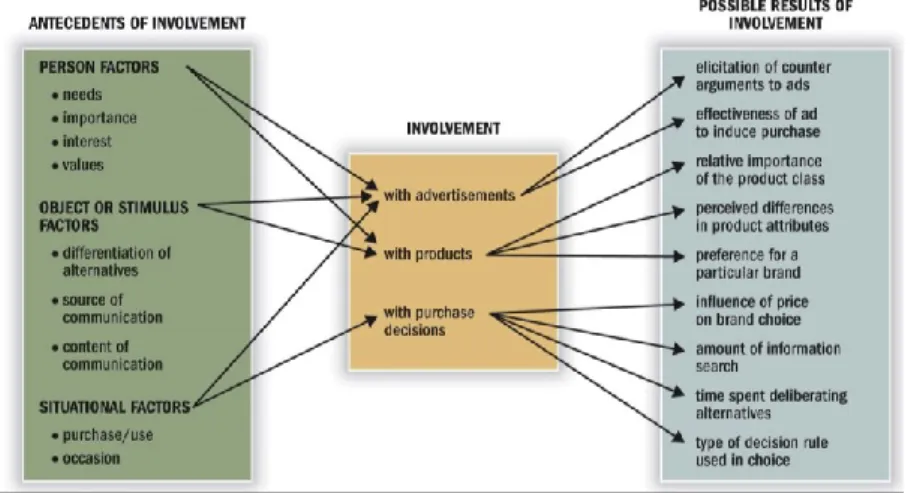
The buying behavior between these two markets also presents its differences, as purchase motives in consumer markets tend to be less rational than in the B2B domain (Cooke, 1986). Purchases in industrial markets are often influenced by firm’s goals, either the maximization of profits or production at the minimum cost possible (Cooke, 1986; Lilien, 1987). Therefore, the demand for industrial products is usually inelastic and impulse buying is often uncommon, as there are constraints regarding which companies to buy from, prices and prior and post purchase conditions. Moreover, the decision-making process in B2B involves often several individuals, as managers seek different perspectives before making a purchase (Lilien, 1987). Instead, in the B2C domain, the decision making process depends upon the degree of consumer involvement with a product, advertising and situational context (Solomon, 2011). Therefore, the author describes three types of decision making: cognitive, which implies that the decision made is deliberated and more rational; habitual, which is related to decisions made under little or non conscious effort; and affective, which refers to decisions made on the basis of emotional reactions. Although the purchase decision may be more complex, the final user is usually the one making the decision to buy a product (Cooke, 1986).
Ilustração 1Figure 1 - Conceptualizing involvement
Source: Solomon, M. (2013). Consumer behavior: Buying, having, and being (eleventh edition). Pearson.
Other major difference an organization faces when diversifying its business to consumer markets is, indeed, related to the structure of the market. The concentration of the market is higher in the B2B domain, as markets often have few buyers and sellers, which enable firms to establish long-term, complex and informal relationships and relative power (Corey, 1983). In order to ensure a smooth relationship, maintain price competition and
prevent over dependence, a buyer often has more than one supplier. However, once this buyer-seller relationship is established, it is difficult for a new supplier to enter the purchase chain, as firms tend to protect its long-term relationships, whether due to mutual respect, inertia to changes or fear of new arrangements. In some cases, it is also common to establish strategic alliances between the two parties (Cooke, 1986). As stated by Devlin and Bleackley (1988) "strategic alliances take place in the context of a company's long-term strategic plan and seek to improve or dramatically change a company's competitive position". Therefore, industrial organizations often create new firms, named joint ventures, in order to transfer and share knowledge (Devlin, Bleackley, 1988).
Trust and credibility, however, are more difficult to establish in the B2C domain. The choice overload pushes consumers to make more rational and efficient choices, seeking the minimization of time and effort when buying a product, usually opting for familiar brands. Repeated and frequent purchases are, indeed, influenced by the quality of a product. However, advertising and promotional activities are the key to differentiate products and win consumer’s preferences and loyalty, imposing major challenges to new entrants (Webster, 1978).
Furthermore, as industrial purchases usually depend on multiple individuals, certain knowledge of the technical nature of the products and higher cost volumes, the process tends to be longer in B2B markets than in the B2C domain (Lilien, 1987). Moreover, the information availability in industrial markets is significantly different from consumer markets: measuring transactions is harder in B2B markets, which makes the decision-making process rely on measures of power and long-term relationships between buyers and sellers (Lilien, 1987).
In conclusion, due to the complexity of the industrial domain and the competitive environment in business-to-consumer markets, the strategies designed to approach this two distinct markets must be different, especially the marketing strategies (Webster, 1978; Cooke, 1986).
2. Retailers bargaining power
Retailers bargaining power have been a subject of intense investigation in the last decades, as many believe that the increasing buyer power negatively affects the market, although academic literature has not provided the same conclusions (Bloom, Perry, 2001; Draganska, Klapper, Villas-Boas, 2010). Therefore, this chapter intends to analyse the
Retail markets have experienced recognizable developments, which have further influenced consumer behavior. Individuals became more informed and curious on prices, on their regular choices and on the quality of the products offered in grocery stores (Dobson, 2002). Furthermore, firm-size increases, the emergence of new formats, service-level differentiation, the introduction of store brands and the prevalence of large retail chains have contributed to major changes in the food retail industry (Draganska, Klapper, Villas-Boas, 2010).
Many authors suggest that retailers had became a dominant player due to the access to scanner technology, which enables traders to get “on time” information of products and thus increase its negotiation power (Farris, Alawadi, 1992). In contrast, Dobson (2002) suggests that with increasing market concentration and consolidation, grocery retailers became the ones managing national brands shares, thus exercising a higher bargaining power in comparison with suppliers. According to the same author, a retailer is defined to have buyer power if it has the ability of obtaining more favorable trade conditions from suppliers than those available to other buyers (Dobson, 2004).
Following this line, grocery retailers are able to control the supplier-buyer relations to their advantage, from its ability to bargain low prices, but also due to the increasing complexity of negotiations (Dobson, 2004). The contracts between buyers and suppliers tend to also include promotional allowances throughout the year, described as advertising expenses. Although promotional activities may bring short-term profits to manufacturers and may strength brand loyalty, its frequency influences the price sensitiveness of consumers, weakening the negotiating power of suppliers and enhancing the positioning of retailers.
Large scale retailers may also manifest its power through the use of
Most-Favored-Customer clauses. This specific contractual obligations may provide grocery retailers with
financial benefits, as suppliers are not able to sell products to other retailers at non-competitive prices (i.e, at lower prices). Furthermore, manufacturers may see a reduction in profits when contracts include exclusive supply conditions, such as flavors or brand name exclusivity. By agreeing on this terms, suppliers are losing the opportunity to sell its products to different retailers, and thus, giving differentiation advantages over competitors to a certain retail chain (Dobson, 2004; Draganska, Klapper, Villas-Boas, 2010).
As the retail food industry is characterized by its highly competitive environment, and thus a high number of products and limited shelf-space, grocery retailers were forced to include slotting allowances in buyer-supplier contracts, i.e. fixed and upfront payments from suppliers in order to guarantee shelf-space allocation. In quest for distinctiveness, suppliers
fall into a bidding negotiation, trying to offer better deals than competitors (Marx, Shaffer, 2009). Therefore, it is reasonable to say that the criteria to enter mass distribution channels does not lie in higher-quality, but rather in financial capacity. Manufacturers with higher market share are often willing to pay more to obtain visibility, creating barriers to small firms to enter the market (Marx, Shaffer, 2009).
Other retail practices may force suppliers to offer conditions of return, or even compensate grocery retailers if the expected sales of a certain product are not reached. Hence, retailers are able to shift financial risks to suppliers (Dobson, 2004).
In highly concentrated markets, the disagreements that might emerge between retailers and suppliers, whether at the price level or promotional strategies, are often more damaging for the latter. The impact on retailers’ profitability if one refuses to stock and display a product is small or even null, as it may replace it with alternative products from established, potential suppliers or even get space to exploit the role of a competitor, with the introduction of private labels. However, for suppliers this may turn into a major problem. As there are fewer retailers in the industry capable of stocking a large volume of products, suppliers become economically dependent on major retailers (Dobson, 2004).
The conventional wisdom believed that the factors described above have influenced a power shift towards large retailers. However, there is little evidence of retailers increasing profitability, which may suggest that the shift in market power may not have occurred. Authors in the academic literature used different behavioral and economic measures of market power, such as return on sales, return on assets, the impact of advertising expenses and the introduction of private labels, but all ended up with the same results. In certain markets, some retail chains have indeed gained bargaining power over manufacturers, but other retailers have lost power instead (Ailawadi, Borin, Farris, 1995). In what concerns to manufacturers, Bloom and Perry (2001) state that in fact, retailers may use its bargaining power to extract benefits from manufacturers, as it is possible that suppliers are willing to agree on contractual obligations in order to increase market share. Therefore, it is acceptable to say that bargaining power may vary across buyers and suppliers (Draganska, Klapper, Villas-Boas, 2010).
3. Private Labels
The competitive environment between national brands and private labels has been a topic of growing interest in many studies. This section aims to explain the factors that influence this competitive interaction within the retail food industry.
Also known as store brands, private labels are described as brands owned by “retailers, wholesalers or distributors” (Dawes, Nenycz-Thiel, 2013), which are usually lower priced in comparison with national brands (Park, Kim, 1996).
Quelch and Harding (1986) wrote, in a Harvard Business Review article, “several factors suggest that the private label threat in the 1990s is serious, and may stay that way regardless of economic conditions”. Nowadays, private labels are, indeed, an important source of profits for retailers with some degree of market power, and a source of competition for national brands. (Dawes, Nenycz-Thiel, 2013).
The success of store brands can be mainly justified by three factors: costs and benefits of private labels, conditions of competition within a category and consumer behavior (Meza, 2003).
The investment in private labels creates value for retailers, as there are several benefits accruing from its introduction in the market. By finding manufacturers with excess capacity, retailers are often able to produce private labels at a low cost (Kotler, 1994). As distribution and advertising costs may be low as well, modern distribution players are able to have lower end-user prices, and thus higher margins on these products (Parker, Kim, 1996). As many consumers are aware of how store brands are manufactured, retailers are able to create strong brands, increasing consumer satisfaction and thus store and brand loyalty. Furthermore, the launch of store brands increases control of shelf space by retailers and creates difficulties by building entry barriers for national brands (Meza, Sudhir, 2010).
Retailers extended their private label benefits by approaching new and different categories, and by investing in its enhanced quality and premium store brands, which imposes a major threat to national brands (Quelch, Harding, 1996). In a producer’s perspective, modern distribution players are now able to intensify the competition not only through low prices, but also through equivalent quality. Hence, retailers are able to provide the same “tangible search” and experience as national brands.
However, Hoch and Banerji (1993) suggest that there are external factors to the core of a product that may influence its purchase. In the author's point of view, communication and advertisement still play an important role among consumers, as they help in the
decision-making process and enable manufacturers to establish brand preferences and differentiate their products from private label brands. Therefore, manufacturers of national brands tend to increase advertising expenditures to protect their brands from private label brands competition (Parker, Kim, 1996).
By introducing store brands in the market, retailers are able to control not only their brands’ prices, shelf space and promotions, but also the ones from national brands. The pattern seems to be consistent: weaker brands or brands that have low advertisement tend to be delisted, giving premium shelf space to private labels (the products are displayed at the eye-level, hand-level or at the end of the aisle) and offering limited shelf space to highly advertised brands (Weintraub, 1989). As manufacturers fear the decrease in consumers’ purchases if characteristics of the product are changed, they tend to use defensive strategies as a primary response (Parker, Kim, 1996).
While most of previous studies about the competitive interaction between private labels and national brands generated counterintuitive results, as they were only focused in cross-category relationships, the study conducted by Cotterill, Putsis and Ravi Dhar (2000) is also focused in intra-category relationships, suggesting two important results.
Firstly, cross-category results suggest that demand and price strategies response may be influenced by the existing store brands’ share within a category. This means that price becomes an important factor in categories with a high level of private labels. Therefore, when a category is characterized by a high share of private labels, the demand of national brands is more sensitive to changes in private labels’ prices, reflecting the threat posed by retailers’ brands. In contrast, demand of private label brands is less sensitive to national brands’ prices. However, if the price of a national brand increases, its market share decreases, which also happens to private label brands.
Secondly, when referring to horizontal relationships, the authors argue that store brands are more likely to struggle in markets where national brands have aggressive responses on price. Moreover, retailers indeed use their bargaining power to strategically set prices and thus gain market share, especially in locally concentrated grocery markets (Cotterill, Putsis and Ravi Dhar, 2000; Meza, Sudhir, 2010). Therefore, this manipulation is often made in large mass market brands, as gains in market share may be more valuable to retailers (Hoch, Banerji, 1993).
In fact, private label brands pose significant challenges to manufacturer brands, as the intensity of competition and pressure on retail prices increases. However, the consumption of
more price sensitive, hence paying more attention to value for money. In contrast, in strong economic contexts, with increases in income, national brands tend to have higher market shares. Therefore, pricing strategies used by retailers become ineffective (Cotterill, Putsis and Ravi Dhar, 2000; Steenkamp, Van Heerde, Geyskens 2010).
4. Branding in consumer goods
A brand is a “name, term, sign, symbol, or design, or combination of them which is intended to identify the goods and services of one seller or group of sellers and to differentiate them from those of competitors” (Kotler, 1991).
Brands play an important role for manufacturers, as they provide companies with an essential marketing tool, and for consumers, as a source of information. Even though it takes years to build a brand, manufacturers may be able to generate a source of competitive advantage if effectively used (Skinner, 1990). Therefore, a brand helps them to protect unique attributes and to build unique associations in consumers’ minds (Grace, O’Cass, 2002). Furthermore, brands help consumers to simplify their choices in an overloaded market, as it signals a particular quality level, and builds a relationship of promise and trust with the maker of the product (Lassar et al., 1995).
As the power of a brand resides in consumers’ minds and they are continuously trying to find a balance between the heart and mind, it is, then, crucial to understand how consumers think about and interact with a brand. Therefore, Grace and O’Cass suggest that one may understand consumers brand knowledge. The theoretical model developed by Keller (1998), which aims to understand the relationship between consumers and product brands, suggests that brand knowledge is divided into brand awareness and brand image (Figure 4).
Brand awareness refers to the easiness of consumers to remember a brand whether by recalling or recognizing it (Huang, Sarigöllü, 2014). In fact, creating brand awareness is one of the most important goals of a brand manager, as it strongly influences consumer behavior and the decision-making process, and thus, the market performance. According to the authors, as brand awareness increases it is more likely to be part of the consideration set of consumers. However, when it concerns to low involvement products, which do not require an intensive search for information, brand choice may be influenced by environmental or situational conditions. Therefore, brand awareness in this categories is created by product usage experiences and consecutive purchases (Huang, Sarigöllü, 2014).
In contrast, brand image is said to be the “perceptions about a brand as reflected by the brand associations held in consumer memory” (Keller, 1993). The meaning of a brand to
consumers results from the strength, favorability and uniqueness of brand associations. The author states that those brand associations may take three forms: attributes, attitudes and benefits. Attributes can be product-related or not, as they may represent the features of the product, as well as the price, usage imagery, personality of the brand, feelings and experiences. The benefits refer to the advantages the consumer associate with the purchasing/using of the brand and its overall evaluations (Keller, 1993).
In fact, associative memory and brand associations are essential for brand positioning, especially in competitive markets, as they help to establish differentiation factors and a superior performance within an industry (Keller, Lehmann, 2006). Although branding has been growing as a business priority, many firms are still unsure about how to effectively manage brands while maximizing their equity (Keller, 1999). Creating a strong brand implies the positioning of a brand externally and internally, as firms need to make sure that also employees understand the brands.
According to Kotler (2000), brand positioning is “the act of designing an organization’s offering and image to occupy a distinctive place in the target market’s mind” (Kalafatis, Tsogas, Blankson, 2000). Therefore, the choice of positioning strategies is not a matter of sales tactics. Instead, when positioning a brand it is important to create customer value, as positioning is also the combination of consumers’ perceptions of products and brands, which are not completely in control of marketers (Kalafatis, Tsogas, Blankson, 2000).
III. Teaching Note
1. Learning Objectives
The present Case Study can be used within strategic management and marketing courses.
The relevance of Progelcone’s real-life challenge relies on the threats and opportunities an organization faces when entering an unknown and highly competitive industry, which is influenced by consumers’ preferences, industry players’ bargaining power and the emergence of private labels.
Students should be encouraged to build on the company’s strategic thinking, by analysing its resources and capabilities as a source of competitive advantage, the external environment of the organization, the importance of the positioning of a brand and the use of promotional activities to increase brand awareness and associations in consumers’ minds.
Main topics to be highlighted are:
1.Impact of the internal and external business context in the company’s decisions
Students should be able to understand the context in which an organization is inserted as a critical factor to a successful strategy, applying frameworks such as PESTEL analysis, Porter’s Five Forces and Industry Lyfecycle.
2.Positioning of the firm at a corporate level: cost leadership and differentiation strategy.
Students are expected to determine the strategic position of a company, by using frameworks such as Generic Strategies and Ansoff’s Matrix.
3.The nature and sources of competitive advantage
Students should be capable to understand how a firm may use its valuable resources and capabilities in different industries. Concepts like the Research-Based View Theory and Porter’s Value Chain can be applied.
4.The impact of private labels and promotional activities
Students should understand the impact of private labels as a threat to a brand’s performance, as well as the importance of promotional strategies as a source of brand awareness.
5.Future strategies
Students should be capable of analysing and measuring the attractiveness of the industry, more specifically the Cookies industry in Portugal, and suggest improvements to the company’s current strategy.
2. Assignment Questions
The following questions are suggested in order to help students to prepare for the in-class case discussion:
1. Describe the environmental and market factors that were conditioning Progelcone’s performance.
2. Discuss the strategies followed by Progelcone. 3. What factors may condition Snapy’s performance?
4. What recommendations would you give to Catarino and Luis for the future of Snapy?
3. Class Plan
In order to help instructors to structure and develop a rich discussion, this section suggests possible topics to be addressed in class.
1. What were the external factors conditioning Progelcone’s performance before the launching of Snapy?
2. Characterize the market where Progelcone was operating before the launching of Snapy.
3. What has been the strategy followed by the firm?
4. How does the decision to launch Snapy fit into that strategy? 5. Analyse the cookies market.
6. What challenges does Progelcone face when dealing with the modern distribution industry?
7. How did Progelcone position Snapy?
4. Analysis
1.What were the external factors conditioning Progelcone’s performance before the launching of Snapy?
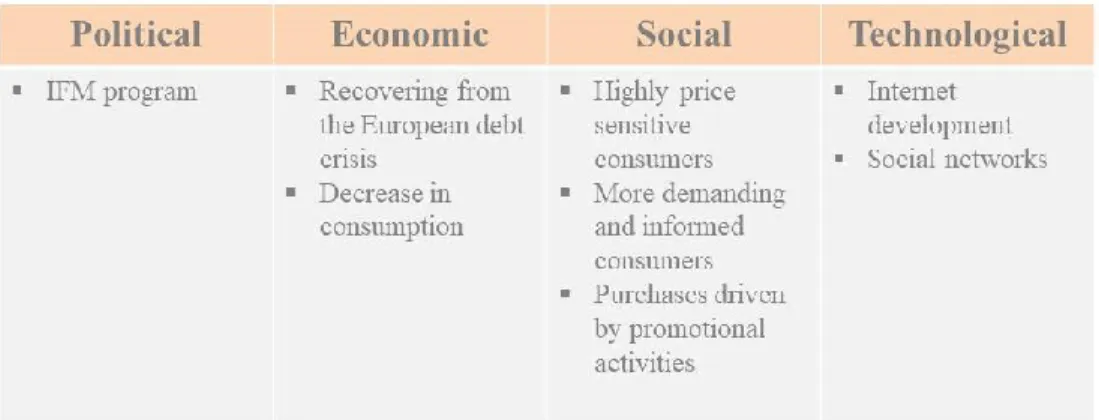
Every organization is part of a business environment, which is divided into four layers: macro environment, industry, competitors and the company. In order to analyse the macro environment of Progelcone, the PEST framework will be used.
From 2008 to 2014 the European debt crisis had a profound impact in Portugal. The crisis, which affected dozens of Portuguese organizations, had repercussions at the economic and political level. The Portuguese financial rescue program introduced by the International Monetary Fund (IMF) in 2011 prevailed until 2014. The reduction in salaries and raising taxes influenced Portuguese consumption and completely changed consumers’ behavior. The consumption was down and as a result, industrial companies were struggling with the decreasing financial capacity of its clients.
At a social level, Portuguese families started prioritizing what was essential to their daily life, not spending money on what was considered a pleasure or a luxury. As a result of the economic crisis, consumers became highly price sensitive, more demanding in regard to convenience and products’ diversification and more informed about the products they intended to purchase. Moreover, promotional activities influenced consumers’ purchases, as families planned their visits to the stores according to promotional flyers and store discounts.
Finally, the use of the Internet was evolving among Portuguese consumers. Therefore, technology friendly companies were investing in social networks to build close relationships with customers.
2.Characterize the market where Progelcone was operating before the launching of Snapy.
Progelcone was a commercial specialist operating in the business-to-business market, either by selling ice cream cones and related products, or disposable food packaging and professional hygiene and cleaning products to other organizations, ice cream parlors, restaurants and hotels.
Progelcone operated in a highly concentrated market, as there were few sellers and multiple buyers. The business was geographically concentrated in Portugal as the availability of resources, raw materials, labour, managerial and technical expertise may warrant geographical concentration. Moreover, Progelcone did not feel the need to invest in visual differentiation factors, as its product’s quality and the conditions offered spoke for the business itself.
Furthermore, because Progelcone’s business involved large orders and long term relationships, as it happened with Olá for 29 years, the process from the first pitch to closing a sale was often more complex than the purchasing process between an organization and a private customer. Buyers in this industrial market were highly knowledgeable about the products they needed, hence the decision making process tended to be very rational and involved several managers. Although Progelcone invested in time saving and simple purchase processes, these required very well trained professionals, capable of formalizing purchases in the shortest possible time. Additionally, by deeply understanding each of its clients businesses, the company was able to better schedule supplies, keep the costs down and benefit from joint demand. For instance, the demand of soup bowls normally implied the purchase of spoons as well. Therefore, buyers had high switching costs.
When the economic recession took over Europe, the purchasing power of its clients declined drastically and so did Progelcone’s business. Although the demand of many industrial products was not highly price sensitive, such as the salt and sugar markets, Progelcone did not share the same principle. Its market was highly influenced by consumers’ needs and wants and therefore, very sensitive on price. Moreover, the use of penetration pricing strategies was also common, as competitors used low price practices to attract buyers and gain market share.
Finally, because of high profit margins, companies operating in the B2B domain did not need to compensate lower per unit profits with higher unit sales volume.
3.What has been the strategy followed by the firm?
The evolution of Progelcone was a result of several growth strategies. In order to better explain the strategy followed by the company, Porter’s Generic Strategies and Ansoff’s Matrix will be used.
Progelcone was the leader in the supply of ice cream and food products and was indeed the pioneer of wafer cones production in Portugal. Although it started as manufacturer of wafer cones, its business success spurred it to diversify into selling and producing plastic items for the food-service industry. Furthermore, Progelcone has also expanded to Algarve, Porto and Spain and now has clients around the world and a very consolidated delivery and logistic system.
According to Ansoff’s Matrix, Progelcone’s corporate strategy can be described as diversification. This strategy is based on leveraging logistic and manufacturing capabilities for business success and following a cost leadership strategy aimed at offering the maximum value for its clients. Moreover, the generic business strategy followed by the company may be explained through the use of Porter’s Generic Strategies. Progelcone followed an overall
cost leadership as it increased profits by reducing costs, while charging industry-average
prices.
The pursuit of this strategy could be accessed through the efficiency of its operations and increased service levels. Progelcone was able to ensure low prices and a smooth customer experience through time saving and simple purchasing processes, and the optimization of orders and inventory. Based on its inventory system management, Progelcone was able to create a convenience advantage wherein clients did not need to go through the purchasing process all over again as demand patterns enabled an automatic replenishment process.
Furthermore, Progelcone’s strategy was driven by the benefits taken from parenting advantage in its businesses and leveraging the network and long term relationships with its clients. By having a deep understanding of its clients’ businesses, Progelcone could also benefit from suggestions of complementary products, thus seeking also a product development strategy. Although it allows a broader scope of the business, the danger lied in the company’s exposure to one type of customer. Additionally, by offering complementary products, Progelcone was attracting new competitors to the market, as the company offered products traditionally sold by these new competitors.
Concluding, Progelcone’s diversification strategy meant that its portfolio was indeed unique, allowing to offset the seasonality of the ice cream business and thus, reduce the