Article
J. Braz. Chem. Soc., Vol. 25, No. 4, 726-733, 2014. Printed in Brazil - ©2014 Sociedade Brasileira de Química 0103 - 5053 $6.00+0.00
A
*e-mail: [email protected]
Photoelectroactivity of Bismuth Vanadate Prepared by Combustion Synthesis:
Effect of Different Fuels and Surfactants
Renata Afonso,a Jéssica A. Serafim,a Adriana C. Lucilha,a Marcelo R. Silva,b Luiz F. Lepre,c Rômulo A. Andoc and Luiz H. Dall’Antonia*,a
aLaboratório de Eletroquímica e Materiais, Departamento de Química, Centro de Ciências Exatas,
Universidade Estadual de Londrina, CP 10.011, 86057-970 Londrina-PR, Brazil
bColégio Técnico Industrial, CTI, Universidade Estadual Júlio de Mesquita (UNESP),
Av. Nações Unidas,58-50, 17033-260 Bauru-SP, Brazil
cLaboratório de Espectroscopia Molecular, Instituto de Química,
Universidade de São Paulo, 05508-000 São Paulo-SP, Brazil
O vanadato de bismuto (BiVO4) é um semicondutor que tem atraído muita atenção devido à eficiência fotocatalítica na região da luz visível. O objetivo deste trabalho foi sintetizar o BiVO4 monoclínico por síntese de combustão em solução, com diferentes combustíveis e surfatantes e aplicá-los como fotoeletrodos. A caracterização por espectroscopia de infravermelho e Raman mostrou que todas as amostras apresentaram bandas características da estrutura monoclínica do BiVO4. As amostras sintetizadas com glicina e glicina/Tween® 80 apresentaram V2O5. O filme obtido a partir da alanina/Tween® 80 apresentou maior fotocorrente, o que pode ser relacionado ao menor tamanho das partículas (200 a 300 nm) verificado pelas imagens de microscopia eletrônica de varredura. Os filmes obtidos usando alanina apresentaram maiores valores de constante de velocidade observada e percentagem de descoloração do azul de metileno.
The bismuth vanadate (BiVO4) is a semiconductor that has attracted much attention due to the photocatalytic efficiency in the visible light region. The objective of this work was to synthesize monoclinic BiVO4 by solution combustion synthesis, with different surfactants and fuels and apply it as photoelectrodes. The characterization by infrared spectroscopy and Raman spectroscopy showed that all samples showed characteristic bands of the monoclinic structure BiVO4. The samples synthesized with glycine and glycine/Tween® 80 had V
2O5. The film obtained from the alanine/ Tween® 80 showed highest photocurrent values, which may be related to smaller size particles (200 to 300 nm) observed by scanning electron microscopy images. The films obtained using alanine showed highest values of rate constant reaction and percentage discoloration of methylene blue.
Keywords: BiVO4, photoelectrocatalysis, electrophoretic deposition, alanine
Introduction
Photoactive semiconductor nanocrystalline materials had been used in many systems, such as water disinfection, organic synthesis, solar cells, gas sensors, positive electrode material for rechargeable lithium batteries, among others.1-4
The bismuth vanadate (BiVO4) is a n-type semiconductor and it has been widely studied due to its properties as ferroelasticity, ionic conductivity, electrochemical, inorganic dye, and also due to the photocatalytic activity
in the degradation of organic compounds when irradiated with λ≤ 520 nm (ca. 2.4 eV).5 However, the photocatalytic
activity of BiVO4 depends on their crystal structure, which can vary between monoclinic and tetragonal.6
The monoclinic structure of BiVO4 is the only one that displays efficient photocatalytic activity in the visible light region due to the narrow difference between the valence and conduction bands. When the crystal structure
of monoclinic BiVO4 receives energy from 2.4 eV
structure shows photocatalytic activity in the ultraviolet region with band-gap energy around 3.1 eV.7-9
Numerous techniques are employed for the synthesis of photoactive materials such as solid state synthesis,2
sol-gel hydrolysis,10 precipitation in aqueous solution9 and
combustion synthesis solution.11,12
The solution combustion synthesis (SCS) has been widely used for the synthesis of ceramics, alloys, intermetallic nanomaterials, catalysis, composites and advanced processes. It is a simple, fast, versatile and also it liberates enough energy to produce pure and homogeneous nanostructure crystals.11-13
The immobilization of the powder produced on the surface of the conductive substrate result in thin films with different properties depending on the deposition technique used. These films can be produced by various techniques such as dip-coating,4 casting,5 electrodeposition,1
electrophoretic deposition,12,14 among others.
The electrophoretic deposition (EPD) is a technique based on charged particle movement toward a surface of opposite charge due to the application of an external electric field.15 The EPD process can be cathodic when the particles
are positively charged and anodic when the particles are negatively charged.16 This process occurs in three
stages: (i) formation of stabilized suspension of particles,
(ii) migration of particles toward the electrode deposition
under the influence of the electric field, (iii) destabilization
of the suspension by the formation of deposits on the surface of electrode.17
Surfactants had been applied as a stabilizer, overlaying agent and template which may control size, anisotropic growth and cluster formation in different synthesis process.18
Moreover, adding surfactants in precursor solution it is possible to diminish the surface tension, promote nucleation, and reduce the energy of the formation of a new phase. Surfactant molecules are comprised by hydrophilic head and hydrocarbonic tail that acts as hydrophobic part in molecule. The supermolecular arrangement of surfactants forming micelles in solution acts as growth controller performing as cluster inhibition, while hydrocarbonic tail plays the role of fuel in the combustion process. The advantages of using surfactant during the synthesis process regards the nanostructured material produced, which presents extraordinarily large surface area and narrow pore size.18
In this way, the addition of surfactant in precursor solution during BiVO4 synthesis can promote the formation of better electrocatalyst. To the best of our knowledge, however, the synthesis of BiVO4 by combustion synthesis method with the assistance of surfactants has not been reported.
The aim of the present manuscript remains on the synthesis of semiconducting monoclinic BiVO4 by solution
combustion synthesis using different fuels (alanine, glycine and urea) and different surfactants (anionic: dodecyl sulphate; cationic: cetyl trimethyl ammonium bromide; and, neutral: polysorbate, Tween® 80) for construction of
photoanodes. The synthesized BiVO4 was deposited in
conducting substrates by electrophoretic deposition. The resulting films had been applyied in photoelectrocatalysis methylene blue.
Experimental
All reagents had analytical grade and were used without prior purification. The masses were measured using an analytical balance and all solutions were prepared in ultrapure water (Millipore Plus).
Solution combustion synthesis of BiVO4 semiconductor
In this study, urea, glycine, and alanine were used as fuel for the preparation of BiVO4 by SCS process. Besides these fuels, polysorbate surfactants (Tween® 80), cetyl trimethyl
ammonium bromide (CTAB) and sodium dodecyl sulphate (SDS) were added to the synthesis to improve the surface properties of the semiconductor.
Initially, 1.21 g of Bi(NO3)3.5H2O and 0.48 g citric acid
were dissolved in 50 mL of 1.5 mol L–1 nitric acid solution.
Then, the pH of the solution was adjusted to 7.0 ± 0.2 by adding NH4OH concentrated. Afterward, 1.00 g of fuel was added to the solution yielding a clear solution, referred in this manuscript as solution A. A second solution designated as solution B was prepared by dissolving 0.29 and 0.48 g of NH4VO3 and citric acid, respectively, in 50 mL of ultrapure water heated at 70 °C, yielding a dark green solution. Subsequently, the solutions A and B were mixed, resulting in a dark blue solution. This mixed solution was evaporated at 80 °C in a furnace for 20 h resulting in a dark blue gel, which was calcined at 500 °C for 1 h to obtain BiVO4 crystals. When the fuel alanine was used in solution A was also added different amounts of surfactants: CTAB, SDS and Tween® 80, thus obtaining four distinct
compounds. For fuels only glycine and urea were added to the solution A the surfactant Tween® 80, yielding two
distinct compounds for each fuel.
Electrophoretic deposition
BiVO4 films were obtained by electrophoretic
deposition from aqueous suspension of each sample BiVO4 0.4 g L–1 in fluorine doped tin oxide (FTO) conductive
the films was 500 °C for 1 h in a muffle furnace (EDG Equipment EDGCON 1P).
Physical and electrochemical characterization of BiVO4
Thermal analysis of the BiVO4 gels obtained with different surfactants and fuels were measured by thermogravimetric analysis (TGA) under N2 from 30 ºC up to 950 ºC with a heating rate of 10 °C min–1, equipment
4000 from Perkin Elmer TGA. The alumina was used as reference substance. For analysis by infrared spectroscopy (FT-IR) transmittance spectra were recorded 4000-400 cm–1
with a resolution of 2.0 cm–1 in spectrometer Perkin Elmer
FT-IR/NIR Frontier. The vibrational modes of the material were obtained by Bruker spectrophotometer FT-Raman RFS 100 with excitation at 1064 nm, output beam 40 to 100 mW, 128 up to 512 scans and spectral resolution of 4 cm–1. The films morphology BiVO
4 was investigated by
scanning electron microscopy (SEM) electron microscopy model-FEI Quanta 200 with magnification up to 30,000 times. The electrochemical and photoelectrochemical characterization was performed in glass electrochemical cell with electrodes: working (BiVO4 films), reference
(Ag/AgCl 3 mol L–1 KCl) and auxiliary (platinum wire).
Analyses were performed at potentiostat/galvanostat 128N from AUTOLAB with potential window from 0 to 1.4 V in a solution of Na2SO4 0.1 mol L–1 with a scan rate of 5 mV s–1.
Photoelectrocatalysis for methylene blue dye discoloration
The discoloration of methylene blue was conduct by chronoamperometry in a solution of 20 µmol L–1 methylene
blue dye using 0.1 mol L–1 Na
2SO4 as supporting electrolyte
by applying the potential of +1.4 V. The illumination system was conduct under a dichroic lamp from Philips 50 W irradiation (λ≥ 400 nm). At certain times (0, 10, 20, 40, 60, 90 and 120 min), aliquots of the solution were taken. Spectra UV-Vis absorption of the solution was made at 200-800 nm in room temperature, in Ocean Optics USB 4000 spectrophotometer, using quartz cuvette with 1 cm optical path. The decrease in absorbance was monitored at 664 nm and the discoloration rate constant, kobs, was determined
graphically considering a rate law of pseudo-first order.
Results and Discussion
TGA of BiVO4 gels synthesized with different fuels
and surfactants showed that thermal decomposition of the compounds was dependent on the type of fuel and surfactant used in the synthesis, Figure 1. The total mass loss varied from 87 to 90% occurring at different stages.
The gel thermograms for BiVO4 samples synthesized in
presence of alanine and alanine/CTAB showed four major mass loss, while the samples synthesized with alanine/SDS and alanine/Tween® 80 present five mass losses. The first
was related to water loss on the moisture content ranging between 65 and 83 °C. The second loss corresponding to reduction-oxidation reactions of the fuel and decomposition occurred at 150 °C for samples synthesized with alanine, alanine/CTAB and alanine/SDS; and, 170 °C for the sample synthesized with alanine/Tween® 80. The third loss was
related to the decomposition of the precursors (nitrates) that occurred between 161-192 °C. The last loss corresponds to total pyrolysis 498, 530, 511 and 505 ºC producing BiVO4
residual mass of 11.7, 12.3, 10.9 and 13.1% for samples synthesized with alanine, alanine/CTAB, alanine/SDS and alanine/Tween® 80, respectively. The samples synthesized
with alanine/SDS and alanine/Tween® 80 still had one
loss at 230 °C corresponding to the decomposition of surfactants, Figure 1a.
BiVO4 samples synthesized with glycine and urea as fuels showed three major weight losses. The first was related to water loss on the moisture content ranging between 73 and 94 °C. The second loss is related to the oxidation-reduction reactions, decomposition of precursors and fuel at 152, 170, 172 and 177 °C for samples synthesized with glycine, glycine/Tween® 80, urea and urea/Tween® 80,
Figure 1. TGA curve for BiVO4 precursor gels synthesized with: (a)
(—) alanine, (- - -) alanine/CTAB, (····) alanine/SDS and (-·-·-) alanine/ Tween® 80; and (b) (—) glycine, (- - -) glycine/Tween® 80, (····) urea e
respectively. The third loss corresponds to total pyrolysis at 512, 543, 248 and 266 °C with BiVO4 residual products 9.6, 12.1, 10.5, and 11.3% for samples synthesized with glycine, glycine/Tween® 80, urea and urea/Tween® 80,
respectively, Figure 1b.
The formation of BiVO4 occurred at lower temperatures using the fuel urea (248 and 266 °C) when compared with the alanine and glycine. This indicates that the combustion is complete, without any significant loss of mass after this temperature. On the other hand, when using glycine as a fuel, the formation of BiVO4 occurred at higher
temperatures 540 and 548 °C, which may have caused incomplete combustion of the material when these samples were calcined at 500 °C occurring formation of another compound, such as V2O5.
Although the BiVO4 formation occurs at higher temperatures using alanine compared to urea fuel, these temperatures were lower than the samples synthesized with glycine. The formation temperatures of BiVO4 using
alanine were close to 500 °C causing complete combustion of this fuel and forming the semiconductor.
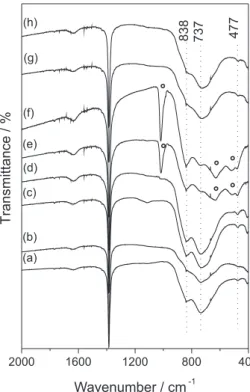
Figure 2 shows the FT-IR spectra of the samples of BiVO4 synthesized with different fuels and surfactants.
All samples showed broadband 737 cm–1 with shoulder
at 838 cm–1 and a weak band at 477 cm–1 which are
characteristic of BiVO4 monoclinic structure. The band at
838 cm–1 corresponds to the symmetric stretching ν
1 and VO
band; at 737 cm–1 refers to the antisymmetric stretching ν 3
(VOV). The band at 477 cm–1 is assigned to the symmetric
angular deformation VO43–.
The values for characteristic bands of BiVO4 monoclinic
found by other authors19-21 are coincident with those found
in this study, confirming the monoclinic crystalline phase in the samples synthesized. Venkatesan et al.19 have found
bands at 827, 731 and 470 cm–1, which are characteristic of
monoclinic BiVO4. Dong et al.20 identified bands at 830 and
742 cm–1 characteristic of BiVO
4 monoclinic synthesized
by hydrothermal method. Zhang et al.21 identified strong
broadband near 730 cm–1 with shoulder at 836, 666 and
640 cm–1 and a band around 470 cm–1 for BiVO 4.
In addition, besides the characteristic bands of BiVO4
monoclinic samples synthesized with glycine and glycine/ Tween® 80 were also possible to identified characteristic
bands for V2O5 at 1017, 632 and 518 cm–1, corresponding to
V=O stretching (vanadyl), deformation and stretching V–O, respectively. Almeida et al.22 found bands characteristics of
V=O stretching of vanadyl between 950 and 1020 cm–1 and
the stretching at wave number below 600 cm–1, for V 2O5.
While Surca et al.23 have found bands at 612 and 503 cm–1
relating to deformation and stretching of V–O, respectively. The crystals BiVO4 present intense yellow coloration,
but the samples synthesized using glycine as fuel had dark yellow coloration due to the presence of V2O5, confirmed
by FT-IR and Raman.
Figure 3 shows the Raman spectra of the BiVO4
samples synthesized using different fuels and surfactants. All samples showed characteristic bands of monoclinic structure BiVO4 in 828, 709, 367 and 327 cm–1. A single
band at 828 cm–1 is assigned to symmetric stretching V–O
(Ag symmetry) while the band at 709 cm–1 is attributed
to the anti-symmetric stretching V–O. The bands at 367 and 327 cm–1 are assigned to the deformation angle
(V–O) symmetric (Ag) and anti-symmetric (Bg) of VO43–,
respectively. The bands at 213 and 130 cm–1 are attributed
to external modes of rotation and translation.
Similarly to FT-IR results, the bands found in Raman spectra by other authors19-21 are coincide with those found
in this work for BiVO4, confirming the monoclinic structure of the semiconductor. Zhou et al.24 have found monoclinic
BiVO4 characteristic bands at 333, 365 and 826 cm–1.
Moreover, Wetchakun et al.25 observed bands at 322, 378,
721 and 831 cm–1 for BiVO
4 synthesized by hydrothermal
method. Su et al.26 have noticed bands at 324, 367, 712
and 827 cm–1 BiVO
4 obtained by precipitation in aqueous
solution in presence of carbon spheres.
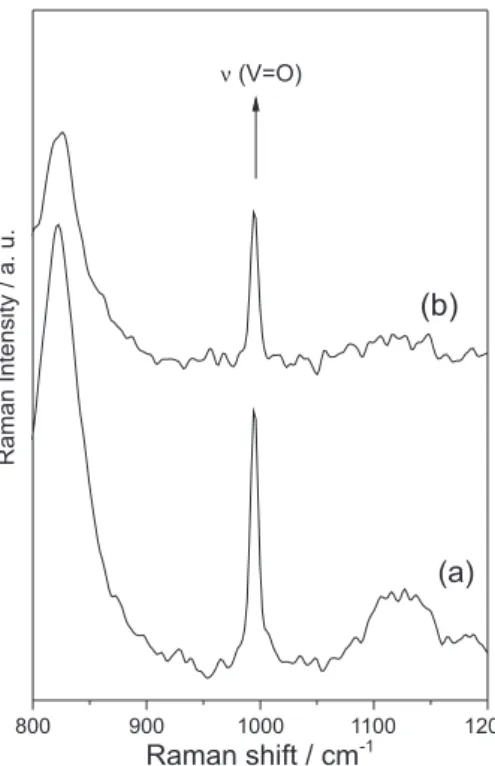
Figure 4 shows the Raman spectra of the BiVO4 samples using glycine and glycine/Tween® 80 which present
Figure 2. FT-IR spectra of the BiVO4 samples (with KBr pellet)
synthesized with different fuels and surfactants: (a) alanine, (b) alanine/ CTAB, (c) alanine/SDS and (d) alanine/Tween® 80, (e) glycine, (f)
glycine/Tween® 80, (g) urea and (h) urea/Tween® 80. Bands related to
bands of monoclinic BiVO4 are observed by Almeida et al.22
and Su et al.26 have found a band at 995 cm–1 characteristic
of V=O bond from V2O5. Furthermore, Raman spectra
showed no shift in BiVO4 characteristic bands indicating phase segregation between V2O5 and BiVO4.
The images obtained by SEM showed changes in particle morphology of BiVO4 deposited on the FTO conductive
substrate by electrophoretic deposition, dependent of fuel and surfactants used during the synthesis, Figure 5.
From images obtained by SEM, it was estimated the average size of the particles, from the results, it was possible to observe that the smallest size was observed for synthesized compound using alanine as fuel in presence of the surfactant Tween® 80.
BiVO4 particles are predominantly spherical with size
of approximately 410, 350, 920 and 675 nm, for films synthesized with alanine, alanine/CTAB, glycine and Figure 3. Raman spectra excited at 1064 nm for BiVO4 samples (with
KBr pellet) synthesized with different fuels and surfactants: (a) alanine, (b) alanine/CTAB, (c) alanine/SDS and (d) alanine/Tween® 80, (e) glycine,
(f) glycine/Tween® 80, (g) urea and (h) urea/Tween® 80.
Figure 4. Raman spectra excited at 1064 nm for BiVO4 samples (with
KBr pellet) synthesized with different fuels and surfactants: (a) glycine and (b) glycine/Tween® 80.
characteristic bands for V2O5. These samples exhibit a
characteristic band at 992 cm–1 assigned to vanadyl’s
stretching (V=O) from V2O5; additionally, the characteristic
Figure 5. SEM images for thin films deposited by electrophoretic process of BiVO4 synthesized with different fuels and surfactants: (a) alanine, (b) alanine/CTAB, (c) alanine/SDS and (d) alanine/Tween® 80, (e) glycine,
urea, respectively. However, for the samples synthesized with alanine/SDS and glycine/Tween® 80, the particles
have the appearance of larger structures with undefined geometry and sizes around 400 and 425 nm, respectively. In the samples synthesized with urea/Tween® 80 had been
observed a sintered process among the particles on the FTO surface substrate with size of approximately 565 nm, while the alanine/Tween® 80 synthesized samples formed
particle agglomerates with sizes of 270 nm. The addition of surfactant decreased the particle size with all fuels used in the synthesis.
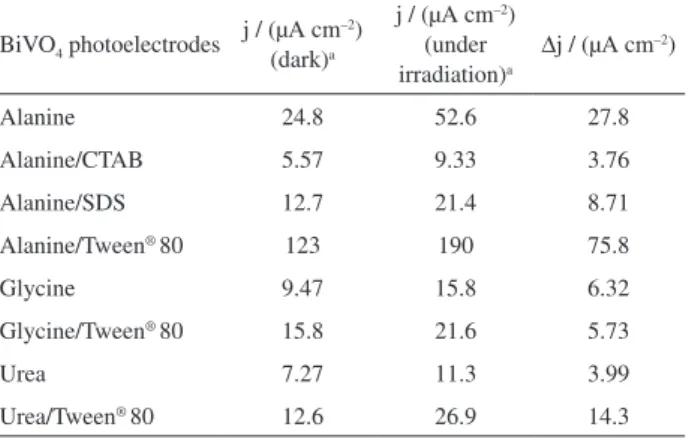
The photoelectrochemical profiles for BiVO4
electrodes synthesized with different fuels and surfactants showed an augmentation in photocurrent with potential increasing, during the anodic scan, characteristic of n-type
semiconductor, Figure 6. Moreover, photocurrent density was higher for all tested electrodes with light irradiation when compared with electrochemical process at dark, Table 1.
The electrode showed better results in terms of photocurrent density when film was synthesized with alanine/Tween® 80, reaching approximately 190 µA cm–2
when the system was illuminated with visible light, Figure 6a. On the other hand, Silva et al.4 analyzed BiVO
4 films
deposited by dip-coating FTO showed current density around 50 µA cm–2 in very similar experimental conditions.
The voltammogram of BiVO4 film synthesized with
alanine/Tween® 80 showed the interaction of visible light
with the film resulting in a hedge when the current system was illuminated with pulses of 5 s, during the anodic scan. In the absence of the light source, there was decay in the photocurrent, as shown in the inset of Figure 6b. Moreover, the response time for this hedge photocurrent was 200 ms.
The increase in photocurrent is due to the fact that the photogenerated holes being directed towards the semiconductor surface, while electrons migrate to the cathode, decreasing the pair electron/hole recombination.
The discoloration of methylene blue (20 µmol L–1) was
performed by chronoamperometry observing the decrease in absorbance at 664 nm regarding two conditions: the dark and continuously irradiated with visible light. The efficiency in the photocatalytic discoloration was observed for all the films when the system was illuminated with visible light. The film of BiVO4 synthesized with the fuel
alanine and alanine/tween were the most electroactive discoloration, reaching 100% bleach solution in 120 min, Table 2. The percentage of dark discoloration were not significant for both the BiVO4 film synthesized as alanine
and alanine/Tween® 80.
The decolorization reactions followed first order kinetics and the rate constants (kobs) were calculated by the equation 2 and the results are summarized in Table 2.
ln(Abst) – ln(Abs0) = – kt (2)
where Abst is the absorbance of the solution at the time t,
Abs0 is the absorbance of the solution at time zero, k is the rate constant and t is the reaction time.
The photolysis experiment shows that without the addition of photocatalyst, the methylene blue solution Table 1. Current density (j) obtained for BiVO4 electrodes synthesized
with different fuels and surfactants at +1.4 V with and without irradiation of visible light
BiVO4 photoelectrodes j / (µA cm–2) (dark)a
j / (µA cm–2)
(under irradiation)a
∆j / (µA cm–2)
Alanine 24.8 52.6 27.8
Alanine/CTAB 5.57 9.33 3.76
Alanine/SDS 12.7 21.4 8.71
Alanine/Tween® 80 123 190 75.8
Glycine 9.47 15.8 6.32
Glycine/Tween® 80 15.8 21.6 5.73
Urea 7.27 11.3 3.99
Urea/Tween® 80 12.6 26.9 14.3
aNormalized by the electroactive area of the electrodes.
Figure 6. Cyclic voltammetry of film BiVO4 synthesized with Alanine
and Tween® 80 in 0.1 mol L–1 Na
2SO4 and v = 5 mV s–1 (a) (—) dark and
(20 µmol L–1) does not have significant discoloration with
visible light irradiation (11%) and the rate constant is low (0.09 × 10⁻² min–1, R2 = 0.97).
Discoloration of methylene blue occurs by absorption of the photon by BiVO4, promoting the electron from the
valence band to the conduction band and forming the hole in the valence band. The electron is promoted directed to the counter electrode, in this case, the platinum wire through the application potential of +1.4 V suitable for BiVO4
and so is the reduction of water generating H2. The hole photogenerated oxidizes water to form hydroxyl radicals (OH•) that oxidize the organic compound, in this case the
methylene blue. The advantage of photoelectrocatalysis is the decrease in the recombination of charge carriers, increasing the photocatalytic activity. For this activity to be effective photon absorbed by the photocatalyst should have an appropriate wavelength to the material used, in this case requires a light BiVO4 with λ≤ 520 nm.5
The decrease in photocatalytic efficiency of the synthesized materials with glycine is due to the fact that the synthesis of an incomplete combustion, with other compounds such as V2O5, and confirmed by Raman spectroscopy in the infrared region.
The BiVO4 film synthesized with alanine/Tween® 80
showed the best electrochemical response of current density and higher percentage of discoloration of methylene blue solution. This fact is related to the smaller size of the particles, confirmed by SEM images.
Timmaji et al.12 used solution combustion synthesis to
prepare BiVO4 photocatalyst for pollutants remediation, exploiting the influence of precursors of vanadium (VCl3
and VOSO4) and fuel (urea, glycine and citric acid) during the synthesis. They showed that the synthesized semiconductor precursor with VCl3, regardless of the fuel, presented V2O5 in the resulting compound formed and
lowest band-gap values. Moreover, the authors observed that samples synthesized with VOSO4 presented tetragonal
BiVO4 increasing the band gap energy value. In comparison
with commercial sample, semiconductors synthesized showed greater response and higher electrochemical oxidation of methyl orange dye in 4 h of irradiation with visible light. Time to complete discoloration two times bigger as we have reached in the present manuscript.
In the present work was used the alanine as fuel and also the same fuels used in the studies of Timmaji et al..12
Alanine was more efficient in the synthesis of BiVO4,
improving the electrochemical response of films and efficiently managing discolor the solution of methylene blue for 2 h under visible light irradiation.
Conclusions
The results demonstrated the successful electrophoretic deposition of synthesizes monoclinic BiVO4 by solution
combustion synthesis. From the characterization of the produced vanadate, by FT-IR and Raman, it was possible to identify V2O5 present in the vanadate samples synthesized with glycine and glycine/Tween® 80. The film obtained
from alanine/Tween® 80 showed the highest photocurrent
(190 µA cm–2) when compare with other films. This may
be related to the smaller particle size obtained by SEM images (200-300 nm).
All BiVO4 films show to be effective in the discoloration of methylene blue under visible light irradiation by presenting energy band-gap around 2.4 eV. However, films obtained by deposition of BiVO4 synthesized with
alanine as fuel showed highest values for kobs around 1.6 × 10⁻² min–1per cm2 of electrode area. This fact can
be related by combustion power alanine be larger than the other fuels.
Acknowledgments
The authors wish to thank CNPq (478272/2007), FAPESP (13/50317-0) and FUNDAÇÃO ARAUCÁRIA (15585/2010), NEMAN (Pronex, 17378/2009) for financial support. Renata Afonso and Adriana C. Lucilha thank CAPES and Jéssica A. Serafim thanks CNPq for the scholarships. The authors would like to thank LMEM-UEL for SEM analysis and LEM-USP/SP for Raman analysis. The anonymous reviewers are also thanked for constructive criticism of an earlier manuscript version.
References
1. Dall’Antonia, L. H.; De Tacconi, N. R.; Chanmanee, W.; Timmaji, H.; Myung, N.; Rajeshwar, K.; Electrochem. Solid-State Lett. 2010, 13, D29.
Table 2. Rate constant (kobs), percentage of discoloration after 2 h of irradiation electrode BiVO4 synthesized with different fuels and surfactants
BiVO4 photoelectrodes kobs
a / (10–2 min–1 cm–2) Discoloration / %
Alanine 1.64 100
Alanine/CTAB 0.91 74.4
Alanine/SDS 1.17 96.5
Alanine/Tween® 80 1.26 100
Glycine 0.63 59.2
Glycine/Tween® 80 0.63 59.8
Urea 0.66 60.9
Urea/Tween® 80 0.99 83.3
2. Kudo, A.; Omori, K.; Kato, H.; J. Am. Chem. Soc. 1999, 121, 11459.
3. Shang, M.; Wang, W.; Sun, S.; Ren, J.; Zhou, L.; Zhang, L.; J. Phys. Chem. C 2009, 113, 20228.
4. da Silva, M. R.; Dall’Antonia, L. H.; Scalvi, L. V. A.; dos Santos, D. I.; Ruggiero, L. O.; Urbano, A.; J. Solid State Electrochem.
2012, 16, 3267.
5. Long, M.; Cai, W.; Kisch, H.; J. Phys. Chem. C 2008, 112, 548.
6. Jiang, H.; Nagai, M.; Kobayashi, K.; J. Alloys Compd. 2009, 479, 821.
7. Liu, W.; Cao, L.; Su, G.; Liu, H.; Wang, X.; Zhang, L.; Ultrason. Sonochem. 2010, 17, 669.
8. Bhattacharya, A. K.; Mallick, K. K.; Hartridge, A.; Mater. Lett.
1997, 30, 7.
9. Zhang, X.; Ai, Z.; Jia, F.; Zhang, L.; Fan, X.; Zou, Z.; Mater. Chem. Phys. 2007, 103, 162.
10. Liu, H.; Nakamura, R.; Nakato, Y.; J. Electrochem. Soc. 2005, 152, G856.
11. Jiang, H.; Endo, H.; Natori, H.; Nagai, M.; Kobayashi, K.; J. Eur. Ceram. Soc. 2008, 28, 2955.
12. Timmaji, H. K.; Chanmanee, W.; De Tacconi, N. R.; Rajeshwar, K. J.; J. Adv. Oxid. Technol. 2011, 14, 93.
13. Jiang, H.; Endo, H.; Natori, H.; Nagai, M.; Kobayashi, K.; Mater. Res. Bull. 2009, 44, 700.
14. Wang, D.; Li, R.; Zhu, J.; Shi, J.; Han, J.; Zong, X.; Li, C.; J. Phys. Chem. C 2012, 116, 5082.
15. Vidotti, M.; Torresi, S. I. C.; Electrochim. Acta 2009, 54, 2800.
16. Bersa, L.; Liu, M.; Prog. Mater. Sci. 2007, 52, 1.
17. Mishra, M.; Bhattacharjee, S.; Bersa, L.; Sharma, H. S.; Uchiksishi, T.; Sakka, Y.; J. Eur. Ceram. Soc. 2010, 30, 2467. 18. Rao, C. N. R.; Govindaraj, A.; Leonard-Deepak, F.; Gunari,
N. A.; Nath, M.; Appl. Phys. Lett. 2001, 78, 1853.
19. Venkatesan, R.; Velumani, S.; Kassiba, A.; Mater. Chem. Phys.
2012, 135, 842.
20. Dong, F.; Wu, Q.; Ma, J.; Chen, Y.; Phys. Status Solidi A 2009,
206, 59.
21. Zhang, A.; Zhang, J.; Spectrochim. Acta, Part A 2009, 73, 336.
22. Almeida, E. C.; Abbate, M.; Rosolen, J. M.; Solid State Ionics
2003, 160, 61.
23. Surca, A.; Orel, B.; Electrochim. Acta 1999, 44, 3051. 24. Zhou, B.; Zhao, X.; Liu, H.; Qu, J.; Huang, C. P.; Appl. Catal. B
2010, 99, 214.
25. Wetchakun, N.; Chaiwichain, S.; Inceesungvorn, B.; Pingmuang, K.; Phanichphant, S.; Minett, A. I.; Chen, J.; Appl. Mater. Interf. 2012, 4, 3718.
26. Su, J.; Zou, X-X.; Li, G-D.; Wei, X.; Yan, C.; Wang, Y-N.; Zhao, J.; Zhou, L-J.; Chen, J-S.; J. Phys. Chem. C 2011, 115,
8064.
Submitted on: October 16, 2013
Published online: February 4, 2014