ISSN 0104-6632 Printed in Brazil
www.abeq.org.br/bjche
Vol. 33, No. 03, pp. 627 - 636, July - September, 2016 dx.doi.org/10.1590/0104-6632.20160333s20150056
Brazilian Journal
of Chemical
Engineering
OXIDATIVE-REFORMING OF METHANE AND
PARTIAL OXIDATION OF METHANE REACTIONS
OVER NiO/PrO
2
/ZrO
2
CATALYSTS:
EFFECT OF
NICKEL CONTENT
Y. J. O. Asencios
1, F. C. F. Marcos
2, J. M. Assaf
3and E. M. Assaf
2*1Instituto do Mar, Universidade Federal de São Paulo, CEP: 11070-100, Santos - SP, Brazil.
E-mail: [email protected]
2Instituto de Química de São Carlos, Universidade de São Paulo, CEP: 13560-970, São Carlos - SP, Brazil. *E-mail: [email protected]
3Departamento de Engenharia Química, Universidade Federal de São Carlos,
CEP: 13565-905, São Carlos - SP, Brazil.
(Submitted: January 27, 2015 ; Revised: August 7, 2015 ; Accepted: September 27, 2015)
Abstract - In this work the behavior of NiO-PrO2-ZrO2 catalysts containing various nickel loadings was
evaluated in the partial oxidation of methane and oxidative-reforming reactions of methane. The catalysts were characterized by X-Ray Diffraction Analysis (in situ-XRD), Temperature Programmed Reduction (H2
-TPR), Scanning Electron Microscopy (SEM/EDX) and Adsorption-Desorption of nitrogen (BET area). The reactions were carried out at 750 °C and 1 atm for 5 hours. The catalysts were studied with different nickel content: 0, 5, 10 and 15% (related to total weight of catalyst, wt%). In both reactions, the catalyst containing the mixture of the three oxides (NiO/PrO2/ZrO2) with 15% nickel (15NiPrZr catalyst) showed the best activity
for the conversion of the reactants into Syngas and showed high selectivity for H2 and CO. The results suggest
that the promoter PrO2 and the Niº centers are in a good proportion in the catalyst with 15% Ni. Our results
showed that low nickel concentrations in the catalyst led to high metallic dispersion; however, very low nickel concentrations did not favor the methane transformation into Syngas. The catalyst containing only NiO/ZrO2
in the mixture was not sufficient for the catalysis. The presence of the promoter PrO2 was very important for
the catalysis of the POM.
Keywords: Reforming methane; Partial-oxidation; Syngas; Nickel-content; Praseodymium.
INTRODUCTION
Methane is a light hydrocarbon found mainly in natural gas, biogas and shale gas. Methane can also be obtained from the pyrolysis of biomass (in the absence of oxygen); the principal gaseous products coming from this process are CO, CO2, CH4, H2 and
N2 (Couto et al.,2013; Turn et al., 1998). Methane is
the major composition of so-called Shale gas (carbon dioxide, ethane and propane are present to a lesser extent), which is the natural gas found trapped within
porous sedimentary Shale rock (Wright et al., 2015). Shale gas can be used directly as a fuel to generate electricity; however, this use has generated much discussion and controversy, since it emits more green-house gases than electricity generated from natural gas or coal (Burnham et al., 2012).
it will be used can be dangerous and expensive (Asencios et al., 2012a). Thus, the transformation of this methane through the reforming reactions to gen-erate a high valued product such as Synthesis Gas (Syngas, a mixture of H2 and CO) is an attractive
al-ternative way to use methane efficiently. Syngas may be used to generate electricity, as a fuel in some types of engines, or may also be transformed into a complex array of products such as: alkanes, paraffin and oxygenates (as aldehydes and ketones) by the Fischer-Tropsch synthesis (Ramos et al., 2011). The current technology, named the Gas-to-Liquid process (GTL process), consists of the Fischer-Tropsch Syn-thesis as the principal process. These products have advantages from various points of view: environ-mental, economic and logistic (Cheng et al., 2015).
Since it is known that the major components of biogas are methane and carbon dioxide, the biogas (free of impurities such as NH3, H2S, among other
trace products) can be transformed directly by the dry reforming of methane (DRM, Reaction 1) into syngas (Sun et al., 2010; Rueangjitt et al., 2012):
4 2 2
298
DRM : CH CO 2CO 2H
Hº 247 kJ / mol
(1)
The partial oxidation of methane (POM, Reaction 2), owing to its exothermic nature, is a rapid reac-tion, and generates energy to maintain the reaction for long-term operations and the presence of O2
reduces the coke deposit by increasing the lifetime of the catalyst:
4 2 2
1
POM : 2CH O 2 CO 4 H
Hº 22.6 kJ.mol
(2)
However, one main disadvantage of POM is that it requires pure oxygen; furthermore, the exother-micity of POM leads to hot spots on the catalyst, which cause problems for the reactor, making the process hazardous and hard to control. An interesting process would be to combine POM with DRM (an endothermic reaction) in the Oxidative Reforming of Methane (ORM) (Asencios et al., 2012b):
4 2 2 2
1
ORM : 1.5CH CO 0.25 O 2.5CO 3H
Hº 249.2kJ.mol
(3)
The ORM could be carried out in an adiabatic re-actor without heat supply, thus reducing the for-mation of hot spots and making the process energy
efficient. Furthermore, by manipulating the molar relation of reactants in the ORM, the H2/CO ratio
could be controlled for various synthetic purposes (Lucrédio et al., 2012; Olah et al., 2013).
The most active catalysts for methane reforming reactions are the noble metals-based catalysts (such as Pt, Pd, Rh, Ru). The non-noble metal-based cata-lysts, such as Ni and Co, present activity as well; however, they present problems due to carbon for-mation, which is undesirable because it leads to catalyst deactivation and increases the reactor pres-sure, which may lead to explosion. At this point, it is relevant to mention that Brazil occupies an important position in world nickel production (Mood, 2010).
In our previous papers we found that nickel
sup-ported on solid-solutions composed of MgO/ZrO2
(Asencios et al., 2011; Asencioset al., 2012a; Asenci-os et al., 2012b) or Y2O3/ZrO2 (Asencios et al. 2013)
resulted in good catalysts (stable performance and coke-resistant) for ORM and POM reactions. On the other hand, the properties of PrO2 such as oxygen
storage capacity, oxygen vacancies and redox (owing to the oxidation states Pr3+/Pr4+) are well known and
documented (Liu et al., 2011). Pr has been used as a promoter of Ni based catalysts for various reforming reactions, as described by Gallego et al. 2009) for perovskite (Ni/La/O) derived catalysts; by Gamba et al. (2011) for Ni catalysts supported on smectite, and by Barroso et al. (2011) for Ni catalysts supported on MgAl2O4. It is assumed that the promoter properties
of Pr are based on the generation of superficial oxygen vacancies, which favor the neighborhood of the metallic phase in the supported catalyst and assist the removal of coke deposits. In view of the referred studies, in the present paper we explore the catalytic performance of nickel supported on PrO2/ZrO2, with
various nickel loadings, aiming to find the optimal nickel content in this system to the reach the maxi-mum catalytic performance in the ORM and POM reactions to produce Syngas from methane from dif-ferent sources.
EXPERIMENTAL
Preparation of Catalysts
The catalytic supports were prepared by the Pechi-ni polymerization method (Marcos and Gouvêa, 2004), using Zr(CO3)2.1.5H2O, citric acid (C6H8O7)
and ethylene glycol (C2H6O2). The zirconium
Oxidative-Reforming of Methane and Partial Oxidation of Methane Reactions Over NiO/PrO2/ZrO2 Catalysts:Effect of Nickel Content 629
polymer was formed by heating this mixture to 120 °C and keeping it at this condition for 24h. The obtained polymer was dried at 90 °C for 12 h and then calcined at 750 °C (5 °C.min-1) in synthetic air (21%O
2/79%N2)
for 2 h. The resulting material was the catalytic support.
The nickel and praseodimium were added in the form of nitrates: Ni(NO3)3.6H2O and Pr(NO3)3.6H2O,
by the impregnation method in the catalytic support. For this procedure, the nickel and praseodimium salts were dissolved in distilled water and then added to the catalytic support (prepared by the above proce-dure, ZrO2), forming a suspension. This mixture was
maintained at 80 °C under reduced pressure to com-pletely remove the solvent (using a rotary evapora-tor); after this step, the mixture was dried at 100 °C (12 h) and then calcined at 750 °C (5 °C.min-1) for 3 h,
under synthetic air flow (30 mL.min-1) to obtain the
oxide phases. The mass relation of PrO2/ZrO2 was
kept constant at 1%; and the nickel content was var-ied as follows: 0, 5, 10 and 15 wt% relative to total catalyst; the catalysts were designated PrZr, 5NiPrZr, 10NiPrZr, and 15NiPrZr, respectively. For the purpose of comparison, a sample containing 15 wt% of Ni sup-ported on ZrO2 (the support synthesized by the Pechini
method) was prepared by the impregnation method (sample 15NiZr) and then heat-treated under the same conditions as the other catalysts; this sample represents the catalyst without the praseodimiun promoter.
Characterization
The crystal phases were studied by the in situ X-ray diffraction technique, which was conducted with a 6-circle diffractometer (Huber) at the beamline D10B-XPD of the Brazilian Synchrotron Light Laboratory (LNLS) in Campinas, Brazil. The X-ray wavelength used was 1.5406 Å and the Bragg angle was scanned continuously in the range 2Ө = 20-70º at an angular speed of 0.02º s-1. Approximately 50 mg of the powder sample was placed in a ceramic sple holder. The XRD pattern was acquired under am-bient conditions (25 ºC and synthetic air) and under reduction conditions. For this last condition, the cata-lyst was heated in a 50 mL min-1 H
2 stream (5%
H2/He) from room temperature to 650 ºC, at a rate of
5 ºC.min-1. The XRD pattern was collected in situ at 700 ºC for each catalyst.
The specific surface area (BET) was estimated from the N2 adsorption/desorption isotherms at liquid
nitrogen temperature, using a Quantachrome Nova 1200 instrument. Temperature-programmed reduction (TPR) was performed in a quartz tube reactor and hydrogen consumption was measured with a thermal
conductivity detector (TCD). For this analysis, 100 mg of catalyst was placed in the TPR reactor and
reduced with a 5% H2–95% He (v/v) gas mixture
flowing at 30 mL.min-1; the temperature was
in-creased to 1000 °C at a heating rate of 5 °C.min-1.
Scanning electron microcopy (SEM) images of spent catalysts were taken in a LEO 440 microscope with an Oxford detector, operating with a 20 kV electron beam. The samples were made up in the form of pellets and coated with a layer of gold to avoid a charge build-up. The composition of the catalysts was determined by energy-dispersive X-ray spectroscopy (EDX); the measurements were made in five regions of the image using a LEO 440 scan-ning electron microscope with a tungsten filament coupled to an energy-dispersive X-ray detector.
The spent catalysts were analyzed by Thermo-gravimetric Analyses (TG) with a SDT2960 Instru-ment to explore the carbon deposits formed during the POM reaction. Samples were heated at 10 °C min-1, from room temperature to 1000 °C, with an air flow of 100 mL.min-1.
Catalytic Test
Catalytic reactions were carried out with 100 mg of catalyst in a fixed-bed down-flow quartz reactor (i.d.=10 mm) connected downstream to a gas chro-matograph fitted with a thermal conductivity detec-tor. Prior to reactions, the catalysts were activated by reduction with H2 (30 mL.min-1) at 650 °C for 1 h.
Next, the sample was brought to the reaction tem-perature (750 °C) under a pure N2 flow. The reaction
temperature was measured and controlled by a ther-mocouple inserted into the top of the catalyst bed.
The catalysts were tested under two conditions: a) Oxidative reforming of methane (or oxidative reforming of model biogas): the feed was a mixture of the model biogas (60% of CH4 and 40% of CO2)
and synthetic air (O2: 21%, N2: 79%) reaching a
molar ratio of 1.5CH4:1CO2:0.25O2; giving a total
flow of 107 mL.min−1 inside the reactor. Here, the conversions of CH4 and CO2 were calculated as:
R conversion % R inR out / R in (4)
where R is the molar flow rate (mol. min-1) of CH 4 or
CO2.
The selectivity was calculated as:
produced
4 converted 2 converted i
Selectivity to i
Molar flow rate of
CH CO
where "i" is the molar flow rate (mol. min-1) of product (H2 or CO).
b) Partial oxidation of methane: the feed gases were in the molar proportion 2CH4:1O2, stoichiometric
for the POM, flowing at 107 mL.h-1. The oxygen was
added in the form of synthetic air (79% N2, 21% O2).
Here, the CH4 conversion was calculated as:
R conversion % R inR out / R in (6)
where R is the molar flow rate (mol. min-1) of CH 4.
The selectivity was calculated as:
produced 4converted
i Selectivity to i
molar flow rate of CH
(7)
where "i" is the molar flow rate (mol. min-1) of product (H2 or CO or CO2).
All reactions were carried out at 750 °C. Uncon-verted reactants and the reaction products were ana-lyzed in-line by a gas chromatograph (GC, Varian 3800) equipped with two thermal conductivity detec-tors (TCD) and an automated injection valve. The products at the reactor outlet were divided into two streams, which were analyzed differently to obtain an accurate and complete analysis of the reaction products. In one stream, hydrogen and methane were separated in a 13X molecular sieve packed column, with nitrogen as carrier gas. In the other, N2, CO2,
CH4 and CO were separated in a Porapak-N packed
column, with helium as carrier. Separated gases were monitored at each outlet with a TCD.
Carbon deposition rates were measured by Ther-mogravimetric analysis (from room temperature to 1000 °C) of the spent catalysts, in the presence of synthetic air.
RESULTS AND DISCUSSION
Characterization
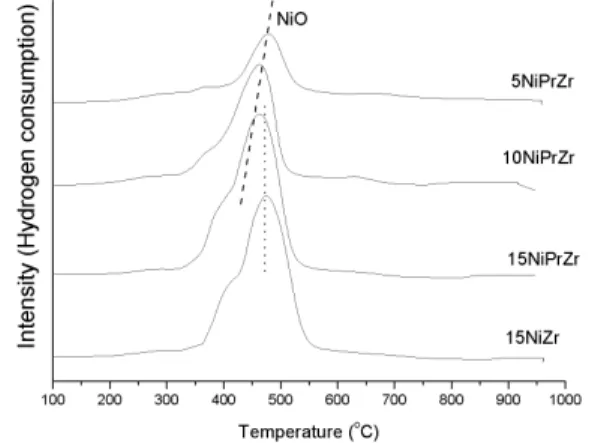
Figure 1 shows the H2-TPR profile of the
cata-lysts. The major reduction peak is a result of NiO reduction; the PrZr supports did not show any relevant reduction peaks. According to the profiles shown in Figure 1, the NiO reduction peak increased as nickel content increased in the mixture. For the cata-lysts containing the three oxides (NiO/ZrO2/PrO2) it
is clear that the maxima of each peak shifted down-ward as the nickel concentration increased in the mixture, meaning that NiO interacted stronger with the support at low nickel concentration in the
mix-ture. Probably at low nickel concentration, NiO spe-cies are more dispersed in the mixture and conse-quently more difficult to be reduced; this will be confirmed further by XRD analysis.
For comparison purposes, the TPR analysis of the 15NiZr catalyst (without Pr) was carried out. Com-paring the profile of samples 15NiZr and 15NiPrZr, it can be seen that the addition of Pr to the mixture displaced the principal NiO reduction peak to lower temperatures. This last observation means that Pr promotes the reduction of NiO species, by weaken-ing the Ni-O or H-H bonds.
Figure 1: Temperature Programmed Reduction (H2
-TPR) profiles of the catalysts.
Table 1 shows the results of XRD, EDX and BET characterizations. The EDX results shown in Table 1 exhibit the elemental composition of nickel and praseodymium for each catalyst, these values are very close to the theoretical values. The catalyst surface area values and those of the support are low; there was no definite trend observed.
Table 1: Results for characterization by in situ
XRD under reduction conditions (crystallite size of Niº), Adsorption-Desorption of N2 (Surface
area), EDX (elemental % for Ni and Pr in all catalysts) and metal dispersion (DM).
Sample Niº, nm
(XRD)
t-ZrO2, nm (XRD)
Surface area (m2.g-1)
% Ni (wt; EDX)
% Pr (wt, EDX)
DM (Niº)
PrZr - 18.0 12 1.2 -
5NiPrZr - 18.3 9 5.3 1.0 -
10NiPrZr 17 18.7 14 11.4 1.4 5.9 15NiPrZr 20 18.3 13 20.1 1.1 5.1
15NiZr 23 18.3 17 20.1 - 4.4
Oxidative-Reforming of Methane and Partial Oxidation of Methane Reactions Over NiO/PrO2/ZrO2 Catalysts:Effect of Nickel Content 631
seen that 1% of PrO2 does not completely stabilize
the tetragonal ZrO2, as the mixture of the catalysts
shows a mixture of monoclinic and tetragonal ZrO2.
The peaks related to the cubic NiO phase are ob-served in samples containing a nickel load above 10% wt; the sample with 5% wt of Ni (5NiPrZr) does not show any peak related to this phase, indicat-ing that in this sample NiO particles do not form any large crystalline structure or they are undetectable by XRD analysis. In the XRD patterns of the samples (for both room condition and reduction condition) 10NiPrZr, 15NiPrZr and 15NiZr, it can be seen that the higher the nickel concentration in the mixture, the more intense the NiO (or Niº) peaks.
(a)
(b)
Figure 2: (a) X-Ray diffraction patterns (XRD) of catalysts under room conditions: Monoclinic ZrO2
(M: JCPDS 13-307); Tetragonal ZrO2 (T: JCPDS
14-534) and Cubic NiO (NiO: JCPDS 78-0643). (b) in situ X-Ray diffraction patterns (XRD) of catalysts
under reduction conditions at 650 °C in H2:
Monoclinic ZrO2 (M: JCPDS 13-307); Tetragonal
ZrO2 (T: JCPDS 14-534) and Cubic Niº (Niº: JCPDS
04-0850).
The crystallite size was calculated by the Scherrer equation (Chien and Chiang, 1990). These values indicate that the average crystallite size for ZrO2 was
not influenced by the increase in nickel content in the catalysts (as it did not vary among the catalysts). The average crystallite size of Niº for 5NiPrZr was not possible to calculate, because no crystalline phase was detected by XRD analyses. As expected, the nickel content increased the average crystallite of Niº, in 10NiPrZr (17 nm) and 15NiPrZr (20 nm). Compar-ing the average crystallite of Niº for the promoted (15NiPrZr) and un-promoted sample (15NiZr, 23 nm) it is clearly seen that the addition of PrO2 to the
NiO/ZrO2 mixture promoted the diminution of the
Niº crystallite size; this favors the metallic dispersion of nickel in the catalysts.
Some authors (Chien and Chiang, 1990; Barthol-omew and Pannell, 1980; Jones and BarthoholBarthol-omew, 1988; Zhang et al. 2008) have used the equation DM
= 101/(d) satisfactorily to estimate the metal disper-sion (DM) of the active phase of the catalysts. That
equation is valid for a population of spheroidal parti-cles of the metal phase; (d) is the average crystallite size of Nio (nm), and the constant was calculated on
the basis of an assumed spherical particle and the density of nickel atoms on a polycrystalline Ni sur-face (1.54x10¹⁹ atom Ni.m-2). According to Fagherazzi
et al. (1995), Xu et al. (2005), and Venezia et al. (2003), the estimates calculated from that equation agree well with the metal dispersion values obtained by chemisorption techniques (chemisorption of H2 or
CO).
The DM values estimated in the present work are
given in Table 1. According to these values, 10NiPrZr and 15NiPrZr catalysts showed high metal disper-sion, despite 15NiZr and 15NiPrZr having the same nickel concentration, 15NiPrZr had higher metallic dispersion, owing to the presence of the PrO2. This
effect influenced the catalytic performance of the catalysts, as will be discussed in the catalytic test section.
Catalytic Test
Partial Oxidation of Methane Reaction
reform-ing of methane (SRM; Reaction 9), to produce Syngas (H2/CO):
4 2 2 2
1
TCM : CH 2O CO 2H O
Hº 890 k . +
J mol
(8)
4 2 2
1
DRM : CH CO 2CO 2H
Hº 260.5 kJ.mol
(1)
4 2 2
1
SRM : CH H O CO 3H
Hº 225.4 kJ.mol
(9)
The global sum of reactions (TCM)+(DRM)+ 2x(SRM) is the POM reaction (Reaction 2), with a H2/CO ratio of 2. The direct mechanism is the
py-rolysis mechanism, in which the reactant products are transformed directly to H2 and CO:
4 2 2
1
POM : CH 1 / 2O CO 2H
Hº 22.6 kJ.mol
(2)
The results of the catalytic test for the POM reac-tion are shown in Figure 3. According to these re-sults, H2, CO, CO2 and traces of H2O were found in
the reaction product during each catalytic test, indicating that the combustion-reforming mechanism occurred on these catalysts.
As shown in Figure 3, the methane reactant con-versions increased with Ni content, rising up to 15% (5NiPrZr<10NiPrZr<15NiZr<15NiPrZr). This trend was expected, as the high nickel concentration may produce more active Niº sites; additionally, 15NiPrZr recorded the highest metallic dispersion (see Table 1). This means that the active Ni centers and oxygen
vacancies of the support (ZrO2 and PrO2) are in good
proportion in the 15NiPrZ catalyst; these centers fa-vored the conversion of CH4 and O2 into H2 and CO,
as principal products. Despite 15NiZr and 15NiPrZr having almost the same nickel concentration, 15NiPrZr performed better in the catalysis. This can be attributed to the higher metallic dispersion in com-parison to 15NiZr, and also to the presence of PrO2,
which can also contribute to the catalysis due to its oxygen-vacancy properties (as will be discussed in further paragraphs).
The 5NiPrZr catalysts gave the worst perfor-mance in the POM, which may be related to their low nickel content. As seen in the characterization results, the low nickel content in 5NiPrZr formed very few NiO species available for reduction (see TPR profiles, Figure 1) and non-detectable crystal-line arrangement of Niº was found in the XRD patterns (see Figure 2); therefore, there were not many nickel active sites available for the catalysis.
Theselectivity results for CO2 and H2/CO molar
ratio are shown in Figure 3. The selectivities for H2
and CO were close to the stoichiometric value for the best catalyst (close to 2 and 1 for H2 and CO,
respec-tively, for 15NiPrZr). In general for all catalysts, the selectivity followed a trend similar to that of CH4
conversion, in which 5NiPrZr and 10NiPrZr showed the lowest H2 and CO selectivity.
As expected, the PrZr support catalyzes the Total Combustion of Methane (TCM, Reaction 4) under the reaction conditions studied in this work, which is reasonable since it is known that this reaction is catalyzed by metal oxides (Choque et al., 2010). This can explain the noticeable activity of the PrZr support in the methane conversion (almost 20% of CH4 of the inlet-feed; Figure 3) under the reaction
conditions studied.
Figure 3: Results for the POM reactions over the catalysts at 700 ºC, 1 atm for 5 hours of reaction time: CH4
Oxidative-Reforming of Methane and Partial Oxidation of Methane Reactions Over NiO/PrO2/ZrO2 Catalysts:Effect of Nickel Content 633
On the other hand, the presence of nickel metal in the catalysts catalyzes the Dry Reforming and Steam Reforming of methane (by breaking the methane molecule C-H bond), leading to a POM reaction with the production of H2 and CO and, consequently, to a
dramatic diminution of the CO2 selectivity profile, as
seen in Figure 3.
All the catalysts have a noticeable CO2 selectivity,
maybe due to the presence of ZrO2 and PrO2, which
are oxides and can catalyze TCM, thus producing CO2. The good dispersion reached by 15NiPrZr with
very low CO2 selectivity (when compared to the
others) may be due to the good distribution of Niº active sites caused by the presence of the promoter PrO2, in good equilibrium, as shown in the metallic
dispersion results (Table 1). The 15NiPrZr catalyst performed better in the POM catalysis than the 15NiZr catalyst, which can be due to the presence of the promoter PrO2, allowing the diminution of Niº
crystallite size (see Table 1) which favors a better dispersion of the metallic nickel in the catalyst, and also favors the catalysis of POM owing to the oxygen-vacancies present in the structure.
The H2/CO molar ratio in Figure 3 shows that the
15NiPrZr sample had a H2/CO molar ratio close to
the stoichiometric value. In the other catalysts, such as 5NiPrZr, the H2/CO ratio was higher than the
stoi-chiometric value owing to the low selectivity to CO and high selectivity to CO2, which increased this
ra-tio. Furthermore, the presence of CO2 and H2 as the
re-action product may favor the reverse water-gas shift reaction (RWGSR, Reaction 10) as well, as it is known that this reaction is favored at high temperature:
2 2 2
1
RWGSR : CO H CO H O
Hº 34.3 kJ.mol
(10)
The occurrence of the RWGSR and the occur-rence of TCM as the initial step in the POM may explain why the H2/CO ratio does not reach the
stoi-chiometric value. Despite liquid water being found in trace amounts, the quantity of the collected liquid fol-lowed the trend: PrZr (22 mmol.H2O. min-1) >5NiPrZr
(12 mmol.H2O. min-1) >10NiPrZr (7 mmol.H2O. min-1)
>15NiPrZr≈15NiZr (4 mmol.H2O. min-1); this
ten-dency fits well with the selectivity to CO2. Among all
the catalysts studied, the samples 15NiPrZr and 10NiPrZr have the best H2/CO molar ratio (close to 2).
Oxidative Reforming of Methane Reactions
In the oxidative reforming of methane, the molar ratio of methane and carbon dioxide is 1.5:1, which is
favorable for the dry reforming of methane (DRM, Reaction 1) in the excess of methane, which is a typ-ical composition of the major components in biogas:
4 2 2 4
1
DRM : 1 .5CH CO 2CO 2H 0.5CH
Hº 260.5 kJ.mol
(1)
4 2 2
1
POM : 0.5CH 0.25O 0.5CO H
Hº 22.6 kJ.mol
(2)
4 2
1
2 2
ORM : 1 .5CH CO 0.25O 2.5CO 3H
Hº 249.2 kJ.mol
(3)
Subsequently, the addition of oxygen to the inlet stream may help to increase the methane conversion, as it can react with the excess methane in the inlet stream by the partial oxidation of methane (POM, Reaction 2); both of these reactions lead to the Oxidative-reforming of methane (ORM, Reaction 3). During the DRM reaction, the reverse water-gas shift reaction (RWGSR, Reaction 6) can be favored.
As shown in Figure 4, similarly to that found in the POM reaction, the reactant conversions increased with increasing Ni content up to 15%. This increase is consistent with the high concentrations of nickel in the catalysts, which form more Niº active sites; additionally, this is in strong relation to the high metallic dispersion found in 10NiPrZr and 15NiPrZr combined with the presence of the promoter PrO2.
This means that a good distribution of active Ni centers and oxygen vacancies in the support and promoter (ZrO2 and PrO2) in the catalyst 15NiPrZr
(the best catalyst) favored the conversion of CH4,
CO2 and O2 into H2 and CO under the reaction
Figure 4: Results for the ORM reaction over the catalysts at 700 ºC, 1 atm for 5 hours of reaction time: CH4 conversion and CO2 conversion.
In all samples, the reactant conversion profile presented a slight fall during the 5 hours of reaction. This fall was most noticeable in the 5NiPrZr sample, owing to the very low nickel content, which led to low conversion values, resulting in poor stability. As revealed by in situ XRD, the sample 5NiPrZr had no detectable Niº crystallites under reduction conditions (see Table 1), which probably did not favor the for-mation of enough active sites for the breakdown of
the C-H bonds of CH4 molecules. Moreover, TPR
analysis showed that this catalyst had only a few NiO species when compared to the other catalysts.
The catalytic activity of 15NiPrZr remained al-most constant for 5 h, showing good stability (see Figure 4). The conversion of reactants on the support (PrO2-ZrO2) was very low (close to 8% for methane
conversion) and, in the reaction without catalyst, was negligible under the reaction conditions studied. The promoted catalyst (15NiPrZr) performed better in the catalysis than the unpromoted catalyst (15NiZr). This can be explained by the fact that the addition of the promoter (PrO2) reduced the Niº crystallite size in
15NiPrZr, as shown in Table 1, indicating that the promoter favored the metallic dispersion of Niº which favors the formation of more active centers. Additionally, as mentioned before, the mixture of PrO2-ZrO2 can catalyze the POM reaction (which in
this case takes part in the ORM)
After the catalytic tests, traces of water were produced in all reactions, showing the occurrence of the reverse water-gas shift reaction (WGSR): CO2+
H2↔ CO + H2O. This reaction may explain why the
conversion of CO2 is generally higher than that of
CH4. The H2/CO ratio values are always lower than
1.2, which is the stoichiometric ratio. The low H2/CO
ratio values for 15NiPrZr and 15NiZr were the best overall and closest to the stoichiometric value.
The conversion values of methane in the ORM were lower than conversion in the POM reaction, as expected, since the POM reaction is a faster reaction and highly favored by the presence of oxygen con-ductor-materials such as PrO2 and ZrO2, as in this case.
Coke Characterization
The images obtained by SEM analysis (in a carbon-rich region) of the catalysts after the partial oxidation of methane (the reaction where the catalysts per-formed better) are shown in Figure 5(a)-(b). The im-ages correspond to the promoted sample (15NiPrZr, the best catalyst) and unpromoted sample (15NiZr), respectively. These images show the presence of fila-mentous carbon on the surface of the catalysts. Alt-hough these catalysts have almost equal nickel con-tent, the presence of the promoter significantly modi-fied the morphology of the carbon: very long and en-tangled filaments (and sparsely populated) were formed in sample 15NiPrZr, whereas the 15NiZr sam-ple formed densely populated long filaments.
Figure 5: SEM images (x 50.000) of the catalysts after the POM reaction: (a) 15NiPrZr, (b) 15NiZr.
The TG profiles of the catalysts after the POM re-action are shown in Figure 6. The profiles of the cata-lysts containing the NiO/PrO2/ZrO2 mixture showed
Oxidative-Reforming of Methane and Partial Oxidation of Methane Reactions Over NiO/PrO2/ZrO2 Catalysts:Effect of Nickel Content 635
coke deposition rate, in the case of 15NiPrZr this may have enabled their high catalytic performance. The 5NiPrZr and 10NiPrZr samples, which had the poor-est catalytic performance in the POM, showed the lowest weight loss, which is reasonable since rela-tively low methane conversion values were reached (and consequently less carbon deposited). Although sample 15NiZr achieving good catalytic perfor-mance, this sample reached the highest weight loss, which indicates that the absence of PrO2 in the
mix-ture strongly affected the carbon deposition rates. At this point, it is possible to affirm that the promoter PrO2 has two effects: to promote the metallic
disper-sion of Niº and to assist in coke removal due to the oxygen vacancies and oxygen mobility. Additionally, the 15NiZr sample had the largest Niº crystallite size, which can also explain the high carbon deposition rate (expressed as a high weight loss).
Figure 6: Thermogravimetric (TG) analyses of the catalysts, after the POM reaction (6 hours).
CONCLUSIONS
In the catalysis of the Oxidative-reforming of me-thane and Partial oxidation of meme-thane, the conver-sion of reactants over the catalysts increased as the catalyst Ni content increased. The catalyst containing the mixture of the three oxides: NiO/PrO2/ZrO2 with
15 wt% of nickel (15NiPrZr catalyst) showed the best activity for the conversion of the reactants into Syngas with high selectivity for H2 and CO.
The results of the present study suggest that the promoter PrO2 has two roles: to promote the metallic
dispersion of Niº and to assist in coke removal due to the oxygen vacancies and oxygen mobility. Despite a low concentration of nickel on the surface leading to metallic dispersion, very low nickel concentrations do not favor the methane transformation into Syngas.
The promoted catalyst (15NiPrZr) performed bet-ter in the catalysis than the unpromoted catalyst (15NiZr). This was explained by the fact that the ad-dition of the promoter (PrO2) reduced the crystallite
size of Niº in 15NiPrZr favoring the metallic disper-sion of Niº, which favors the formation of more active centers. Additionally, the mixture of PrO2
-ZrO2 has catalytic activity in the POM reaction. The
addition of PrO2 to the NiO/PrO2/ZrO2 mixture
mod-ified the morphology of the carbon deposits.
ACKNOWLEDGEMENTS
The authors thank FAPESP for the grant (2012/ 17957-3) and the Brazilian Synchrotron Light Labor-atory (LNLS) for the in-situ XRD conducted in the D10B-XPD line.
REFERENCES
Asencios, Y. J. O., Nascente, P. A. P., Assaf, E. M., Partial oxidation of methane on NiO-MgO-ZrO2
catalysts. Fuel, 97, 630 (2012a).
Asencios, Y. J. O., Assaf, E. M., Combination of dry reforming and partial oxidation of methane on NiO–MgO–ZrO2 catalyst: Effect of nickel
con-tent. Fuel Proc. Technol., 106, 247 (2012b). Asencios, Y. J. O., Bellido, J. D. A., Assaf, E. M.,
Syn-thesis of NiO–MgO–ZrO2 catalysts and their
per-formance in reforming of model biogas. Appl. Catal., A, 397, 138 (2011).
Asencios, Y. J. O., Rodella, C. B., Assaf, E. M., Oxi-dative reforming of model biogas over NiO–Y2O3–
ZrO2 catalysts. Appl. Catal. B, 132, 1 (2013).
Barroso, M. N., Galetti, A. E., Abello, M. C., Ni catalysts supported over MgAl2O4 modified with
Pr for hydrogen production from ethanol steam reforming. Appl. Catal., A, 394, 124 (2011). Bartholomew, C. H., Pannell, R. B., The
stoichiome-try of hydrogen and carbon monoxide chemisorp-tion on alumina- and silica-supported nickel. J. Catal., 65, 390 (1980).
Burnham, A., Han, J., Clark, C. E., Wang, M., Dunn, J. B., Palou-Rivera, I., Life-cycle greenhouse gas emissions of shale gas, natural gas, coal, and pe-troleum. Environ. Sci. Technol., 46, 619 (2012). Chien, S., Chiang, W. L., Catalytic properties of NiX
zeolites in the presence of ceriumadditives. Appl. Catal., 61, 45 (1990).
high-temperature Fischer–Tropsch synthesis over supported iron catalysts. J. Catal., 328, 139 (2015). Choque, V., Ramirez de la Piscina, P., Molyneux, D.,
Homs, N., Ruthenium supported on new TiO2–
ZrO2 systems as catalysts for the partial oxidation
of methane. Catal. Today, 149, 248 (2010). Couto, N., Rouboa, A., Silva, V., Monteiro, E.,
Bouzi-ane, K., Influence of the biomass gasification pro-cesses on the final composition of syngas. Energy Procedia, 36, 596 (2013).
Fagherazzi, G., Benedetti, A., Polizzi, S., Di Mario, A., Pinna, F., Structural investigation on the stoichiometry of β-PdHx in Pd/SiO2 catalysts as a
function of metal dispersion. Catal. Lett., 32, 293 (1995).
Gallego, G. S., Marına, J. G., Batiot-Dupeyrat, C., Barrault, J., Mondragon, F., Influence of Pr and Ce in dry methane reforming catalysts produced from La1_xAxNiO3_d perovskites. Appl. Catal., A, 369, 97 (2009).
Gamba, O., Moreno, S., Molina, R., Catalytic perfor-mance of Ni-Pr supported on delaminated clay in the dry reforming of methane. Int. Journal of Hy-drogen Energ., 36, 1540 (2011).
Jones, R. D., Bartholomew, C. H., Improved flow technique for measurement of hydrogen chemi-sorption on metal catalysts. Appl. Catal., A, 39, 77 (1988).
Liu, C. J., Ye, J., Jiang, J., Pan, Y., Progresses in the preparation of coke resistant Ni-based catalyst
for steam and CO2 reforming of methane.
ChemCatChem., 3, 529 (2011).
Lucrédio, A. F., Assaf, E. M., Reforming of a model biogas on Ni and Rh Ni catalysts: Effect of add-ing La. Fuel Proc. Technol., 102, 124 (2012). Marcos, P. J. B., Gouvêa, D., Effect of MgO
segrega-tion and solubilizasegrega-tion on the morphology of ZrO2 powders during synthesis by the Pechini
method. Cerâmica, 50, 38 (2004).
Mudd, G. M., Global trends and environmental issues in nickel mining: Sulfides versus laterites.
Ore Geology Reviews, 38, 9 (2010).
Olah, G. A., Goeppert, A., Czaun, M., Surya, G. K., Bi-reforming of methane from any source with steam and carbon dioxide exclusively to metgas (CO–2H2) for methanol and hydrocarbon
synthe-sis. J. Am. Chem. Soc., 1351, 648 (2013). Ramos, A. L. D., Marques, J. J., Santos, V., Freitas,
L. S., Melo Santos, R. G. V., Souza, M. V. M., Atual estágio de desenvolvimento da tecnologia GTL e perspectivas para o Brasil. Quím. Nova, 34, 1704 (2011). (In Portuguese).
Rueangjitt, N., Akarawitoo, C., Chavadej, S., Pro-duction of hydrogen-rich syngas from biogas reforming with partial oxidation using a multi-stage AC gliding arc system, plasma. Chem. Plas-ma Process, 32, 583 (2012).
Sun, D., Li, X., Ji, S., Cao, L., Effect of O2 and H2O
on the tri-reforming of the simulated biogas to syngas over Ni-based SBA-15 catalysts. J. Nat. Gas Chem., 19, 369 (2010).
Turn, C., Kinoshita, Z., Zhang, D., Ishimura, J., An experimental investigation of hydrogen produc-tion from biomass gasificaproduc-tion. Internaproduc-tional Journal of Hydrogen Energy, 23, 641 (1998). Venezia, A. M., Liotta, L. F., Pantaleo, G., La Parola,
V., Deganello, G., Beck, A., Koppány, Z., Frey, K., Activity of SiO2 supported gold-palladium
catalysts in CO oxidation. App. Catal., A, 251, 359 (2003).
Wright, M. C., Court, R. W., Kafantaris, F. C. A., Spathopoulos, F., Sephton, M. A., A new rapid method for shale oil and shale gas assessment. Fuel, 153 231-239 (2015).
Xu, D., Li, W., Duan, H., Ge, Q., Xu, H., Reaction performance and characterization of Co/Al2O3
Fischer–Tropsch catalysts promoted with Pt, Pd and Ru. Catal. Lett., 102, 229 (2005).
Zhang, J., Wang, H., Dalai, A., Effects of metal con-tent on activity and stability of Ni-Co bimetallic catalysts for CO2 reforming of CH4. App. Catal.,