Frequency of nutritional disorders and their risk factors
among children attending 13 nurseries in São Paulo, Brazil.
A cross-sectional study
Frequência de distúrbios nutricionais e de seus fatores de risco entre crianças de
13 creches de São Paulo, Brasil. Um estudo transversal
Tulio Konstantyner
I, José Augusto Aguiar Carrazedo Taddei
II, Thais Cláudia Roma Oliveira Konstantyner
III,
Laura Cunha Rodrigues
IVDepartment of Pediatrics, Universidade Federal de São Paulo (Unifesp), São Paulo, Brazil
ABSTRACT
CONTEXT AND OBJECTIVE: Nutritional disorders are associated with health problems earlier in life. The objective here was to estimate the frequency of nutritional disorders and their risk factors among children. DESIGN AND SETTING: Cross-sectional study in nurseries at 13 day-care centers in São Paulo, Brazil. METHODS: The mothers of 482 children were interviewed, with anthropometry on these children. Chil-dren whose anthropometric indices for weight and height were greater than two standard deviations were considered to have nutritional disorders.
RESULTS: Children in families with lower per capita income (odds ratio [OR]: 2.25; 95% conidence interval, CI: 1.08-4.67) and who presented neonatal risk (OR 8.08; 95% CI: 2.29-28.74), had incomplete vaccinations (OR 3.44; 95% CI: 1.15-10.31) or were male (OR 3.73; 95% CI: 1.63-8.56) were more likely to be malnourished. Children in families with lower per capita income were also less likely to be overnourished (OR 0.40; 95% CI: 0.19-0.88). Children who were exclusively breastfed for less than two months (OR 2.95; 95% CI: 1.35-6.44) or who were male (OR 2.18; 95% CI: 1.02-4.65) were also at greater risk of being overnourished. Children who presented neonatal risk (OR 3.41; 95% CI: 1.04-11.23), had incomplete vaccinations (OR 3.18; 95% CI: 1.30-7.76), or were male (OR 2.76; 95% CI: 1.56-4.90) were more likely to have a nutritional disorder.
CONCLUSIONS: Nutritional disorders remain present in children attending nurseries in São Paulo. Actions should focus on boys, children who were exclusively breastfed for less than two months and those without up-to-date vaccinations.
RESUMO
CONTEXTO E OBJETIVO: Distúrbios nutricionais estão associados a problemas de saúde mais cedo na vida. O objetivo foi estimar a frequência dos distúrbios nutricionais e seus fatores de risco entre crianças. DESENHO E LOCAL: Estudo transversal em berçários de 13 creches em São Paulo, Brasil.
MÉTODOS: Foram realizadas entrevistas com as mães e antropometria de 482 crianças. Foram considera-das com distúrbios nutricionais as crianças com valores dos índices antropométricos para peso e estatura maiores do que dois desvios-padrão.
RESULTADOS: Crianças de famílias com menor renda per capita (OR 2,25; intervalo de coniança de 95%, IC 95%: 1,08-4,67), de risco neonatal (OR 8,08; IC 95%: 2,29-28,74), com vacinação incompleta (OR 3,44; IC 95%: 1,15-10,31) ou do sexo masculino (OR 3,73; IC 95%: 1,63-8,56) apresentaram maior risco de estarem desnutridas. Crianças de famílias com menor renda per capitaapresentaram menor risco de estarem hiper-nutridas (OR 0,40; IC 95%: 0,19-0,88) e crianças que receberam amamentação exclusiva por menos de dois meses (OR 2,95; IC 95%: 1,35-6,44) ou do sexo masculino (OR 2,18; IC 95%: 1,02-4,65) apresentaram maior risco de estarem hipernutridas. Crianças de risco neonatal (OR 3,41; IC 95%: 1,04-11,23), com vacinação incompleta (OR 3,18; IC 95%: 1,30-7,76), ou do sexo masculino (OR 2,76; IC 95%: 1,56-4,90) apresentaram maior risco de terem um distúrbio nutricional.
CONCLUSÕES: Distúrbios nutricionais permanecem presentes em crianças frequentadoras de creches em São Paulo. Ações devem focar meninos, crianças que foram amamentadas exclusivamente por menos de dois meses e aquelas com vacinação incompleta.
IMD, MSc, PhD. Professor, Department of Health Sciences, Universidade de Santo Amaro (Unisa), São Paulo, Brazil.
IIMD, MSc, PhD. Ailiated Professor, Department of Pediatrics, Escola Paulista de Medicina-Universidade Federal de São Paulo (EPM-Unifesp), São Paulo, Brazil.
IIIMSc, PhD. Professor, Department of Epidemiology, Faculdade de Saúde Pública, Universidade de São Paulo (FSP-USP), São Paulo, Brazil.
IVMD, MSc, PhD. Head of Faculty of Epidemiology
and Population Health, London School of Hygiene and Tropical Medicine, London, United Kingdom.
KEY WORDS: Risk factors. Child day care centers. Nutritional status. Infant.
Health promotion.
INTRODUCTION
Nutritional disorders caused by a nutritional imbalance, consisting of either malnutrition or overnutrition, are associated with seri-ous health problems and the risk of premature illness and earlier death.1,2 Both factors have been used as indicators of child health
status, since children’s health has multifactorial determinants, including socioeconomic status, food consumption, healthcare conditions, infectious diseases and biological factors.3,4
During the irst years of life, anthropometric measurements, i.e. length/height, weight and/or age, that are two standard devia-tions (SDs) below (malnutrition) or two SDs above (overnutri-tion) the mean value for the reference (healthy) population have been correlated with negative efects on health, development and behavior, with subsequent medical and physiological con-sequences in adult life.2,3,5 he distribution of the frequency of
nutritional disorders, which has an ininite range, is widely used by healthcare professionals and researchers to classify the nutri-tional status of children around the world.6
he rates of nutritional disorders among children, both in developing and in developed countries, constantly change.1,2,7
For example, recent representative sampling studies in Brazil have shown a decrease in stunting, wasting and underweight and an increase in overweight among children under ive years of age.8,9 hese indings characterize a nutritional transition that
has occurred over recent decades in many places throughout the world. his transition has been a result from globalization relat-ing to the characteristics of family lifestyle and food consump-tion at all socioeconomic levels.10 However, this change has not
consistently improved children’s health, and this relects the chal-lenges faced by social and healthcare systems in aiming to meet the global commitment deined in the United Nations’ health-related Millennium Development Goals (MDGs).7,11
Understanding the risk factors involved in malnutrition and overnutrition has helped healthcare professionals identify chil-dren who are vulnerable to nutritional disorders, thus determin-ing the priorities for prevention and control action plans. Although the multiple determinants of nutritional disorders are interlinked and form a system of inluences,4 the results relating to
malnutri-tion and overnutrimalnutri-tion have usually been reported separately in the literature. In addition, studies have not identiied risk factors that could lead to either type of nutritional disorder (malnutrition or overnutrition) and have not provided guidance for preventing all the concomitant nutritional disorders.4,12
Educational institutions also have a responsibility in relation to concern about nutritional disorders during the irst years of life. he numbers of children attending nurseries in day-care cen-ters in Brazil, as an initial and alternative educational environ-ment for the children of working women, has been increasing. Currently, more than 6.7 million Brazilian children are enrolled in day-care centers and kindergartens.13
To gain insight into this setting and inform healthcare strate-gies and policies that might more efectively protect children in a changing world, we conducted a study on children attending day-care centers in the city of São Paulo, in order to estimate the pro-portion of children with nutritional disorders and identify individ-ual and combined risk factors for malnutrition and overnutrition.
OBJECTIVE
he objective of this study was to estimate the frequency of nutri-tional disorders and to determine the risk factors for these dis-eases among children at 13 nurseries in São Paulo.
METHODS
he present study was part of “Projeto CrechEiciente” (Eicient Nursery Project), and the methods have been reported elsewhere.14
In brief, we used data from two surveys (2004 and 2007) on infant populations attending nurseries (ages 0 – 2 years) that were located in public day-care centers (directly administrated by the city) and philanthropic day-care centers (indirectly adminis-trated, through philanthropic institutions) that abided by admis-sion rules guaranteeing care for low-income families.
Survey 1 was undertaken in 54 day-care centers located in the central region of the city of São Paulo, Brazil, and survey 2 was conducted in 36 day-care centers in the subdistrict of Santo Amaro in the same city. he managers of the day-care centers were contacted by telephone to identify which ones were eligi-ble. Of these, 47 day-care centers were excluded because they did not have a nursery, 4 were excluded because they refused to par-ticipate and 8 were excluded because they had been involved in a previous healthcare study. his resulted in 13 and 18 day-care centers included in surveys 1 and 2, respectively.
he 31 day-care centers were visited by the project’s ield staf, and a questionnaire asking for information about the school’s operations, the characteristics of their human resources and the numbers and ages of the children attending was completed. Aterwards, these day-care centers were ranked according to the characteristics of interest for the project.
he following criteria were prioritized in order of decreasing value: number of children in the nursery, number of nursery teach-ers, safety of the area for the researchers (because some day-care cen-ters were located in areas with high rates of violence) and ease of transportation and access to the premises. Accordingly, ive day-care centers from survey 1 and eight from survey 2 were selected for the inal stage of data collection, thus totaling 13 day-care centers.
Down’s syndrome, one with another genetic syndrome and two with cerebral palsy) and two children whose guardians refused to participate or did not sign the informed consent statement.
Seventeen other children were excluded only from the mul-tivariate analysis because some of the data for the variables were missing. herefore, 482 children were selected and included in the univariate analysis, and 465 children were included in the multi-variate analysis, with sample losses of 3.2% and 6.6%, respectively. A structured and pre-encoded questionnaire was used to col-lect individual data on the children, including demographic, clini-cal, epidemiologiclini-cal, socioeconomic and environmental variables. To ensure uniformity in the ieldwork procedures carried out by the interviewers, a manual of norms and deinitions was created.15
Data collection was conducted in the day-care centers by interviewing the mothers or guardians, performing anthropom-etry and collecting blood samples from the children by means of digital puncture. All procedures were standardized and tested at the pretest stage of the project by an interdisciplinary ield team consisting of postgraduate students.
he completed questionnaires were evaluated for their inter-nal consistency before data entry. he information was tran-scribed into databases using double entry and subsequent valida-tion to correct errors.
he children were weighed on a digital pediatric scale (BP Baby model, Filizola) and their lengths/heights were measured using an anthropometric ruler with a movable cursor. Both of these were made by Brazilian manufacturers with international quality certiication. he anthropometric procedures used were in accordance with international recommendations.6 Z-scores
were used to express nutritional status, in conformity with the Multicentre Growth Reference Study (MGRS) standards for age and sex, as recommended by the World Health Organization (WHO) in 2006.6
Stunting was deined as a situation with length/height-for-age z-scores < -2 SD; wasting as weight-for-height < -2 SD; under-weight as under-for-age < -2 SD; and overunder-weight as under- weight-for-height or body mass index-for-age > 2 SD.3,5 To measure
hemoglobin (Hb) levels, a portable Hb photometer (HemoCue hemoglobin photometer) was used.16
he outcomes investigated were malnutrition (stunting, wasting or underweight), overnutrition (overweight) and nutri-tional disorders (stunting, wasting, underweight or overweight), based on the WHO 2006 standards.3,6
To investigate the associations between categorical variables, the chi-square (x2) test was used.17 he cutof points for the
dichot-omous variables were based on the oicial recommended values or on the average value of the variables in the study sample.6,15
To adjust for confounding factors, multivariate analysis was performed using the “stepwise forward” technique. he selection criterion for the explanatory variables for inclusion in the three
logistic models was presence of an association with the outcomes at the level of P < 0.20.18
In addition to inclusion of the variables with statistically sig-niicant associations in relation to the logistic model outcomes (maximum level of P = 0.05), we also included the following con-trol variables: age, hemoglobin level and per capita family income. Children who had not received the vaccine doses expected for their age, in accordance with the Brazilian basic vaccina-tion calendar, were considered to have incomplete vaccinavaccina-tion. We also created the variable “neonatal risk”, to include children who were premature (gestational age less than 37 weeks), had low birth weight (less than 2.5 kg) and were kept in hospital at the neonatal stage for reasons relating to these conditions.
Finally, to verify the it of the logistic regression models, we used the Hosmer-Lemeshow goodness-of-it test.18 he
statisti-cal package used was the Stata sotware, version 11.0 (StataCorp, College Station, TX, USA).
Children identiied as having a nutritional disorder, includ-ing anemia, were referred for outpatient care at the nutritional specialty unit in the Department of Pediatrics of the same uni-versity. Children with incomplete vaccinations were referred to healthcare centers for appropriate immunizations. his study was approved by the university’s research ethics committee.
his study was conducted in accordance with the guide-lines laid down in the Declaration of Helsinki, and all procedures involving human subjects were approved by the research ethics committee. Written informed consent was obtained from the parents of all of the children.
RESULTS
Out of the 482 children, 248 (51.4%) were boys and 234 (48.6%) were girls. Sixty-two percent of them were enrolled at philan-thropic care nurseries, and 38% were enrolled at public day-care nurseries. he average age was 17.2 months (95% conidence interval, CI, 16.7 - 17.8), and the average duration of exclusive breastfeeding was 2.1 months (95% CI: 1.9 - 2.3).
he prevalences of prematurity, low birth weight and neo-natal hospitalization were 10.8% (95% CI: 8.0 - 13.6), 9.8% (95% CI: 7.1 - 12.5) and 4.8% (95% CI: 2.9 - 6.7), respectively. he proportion of children who presented neonatal risk was 3.0% (95% CI: 1.4 - 4.5); and 6.2% (95% CI: 4.1 - 8.4) of the children had incomplete vaccination.
Table 1 presents the unadjusted and adjusted odds ratios (ORs) and 95% CI for the risk factors for malnutrition. Among the socio-economic variables,per capita family income of less than half the minimum monthly wage (MW) was the irst one identiied to form part of the logistic model. hree other variables indicating individ-ual child processes, “incomplete vaccination status”, “neonatal risk” and “male sex”, were also selected to form part of the inal model. herefore, children who had these characteristics were 2.2, 3.4, 8.1 and 3.7 times more likely to be malnourished, respectively.
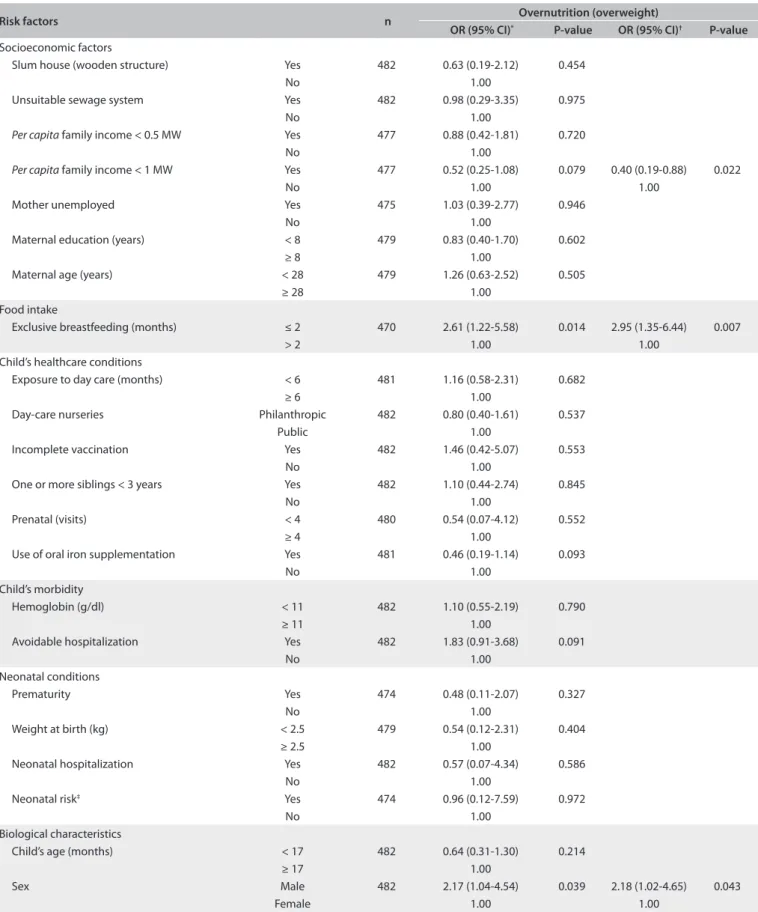
Table 2 presents the unadjusted and adjusted ORs and 95% CIs for the factors associated with overnutrition. he multiple logistic model showed that children who had shorter periods of exclusive breastfeeding (less than two months) and those who were male were 3.0 and 2.2 times more likely to be overnourished,
respectively. On the other hand, children of families with lower
per capita income were at lower risk of developing overnutrition (OR: 0.4). hese three variables were independently associated with this outcome.
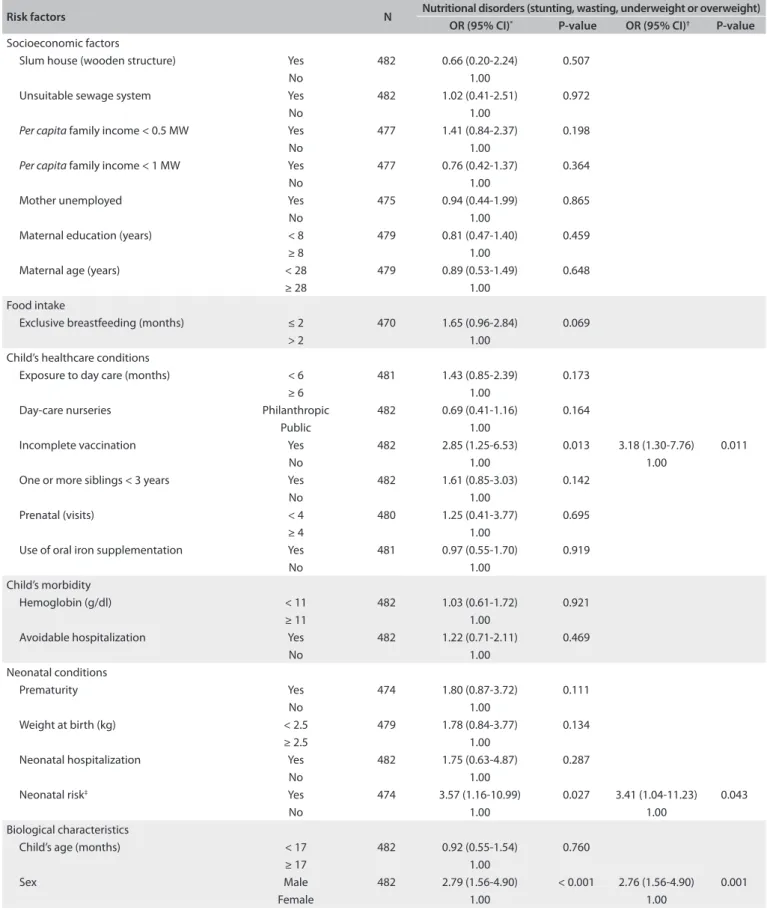
Table 3 presents the unadjusted and adjusted ORs and 95% CIs for the factors associated with the set of nutritional disorders. Children who presented neonatal risk (OR: 3.4), had incomplete vaccinations (OR: 3.1) or were male (OR: 2.7) presented inde-pendent associations with higher risk of nutritional disorders (stunting, wasting, underweight or overweight).
In the three logistic regressions, other variables met the selection criteria for inclusion in the logistic model (P < 0.20). However, these were not kept in the analysis because they lost their statistical signiicance when included in the inal model.
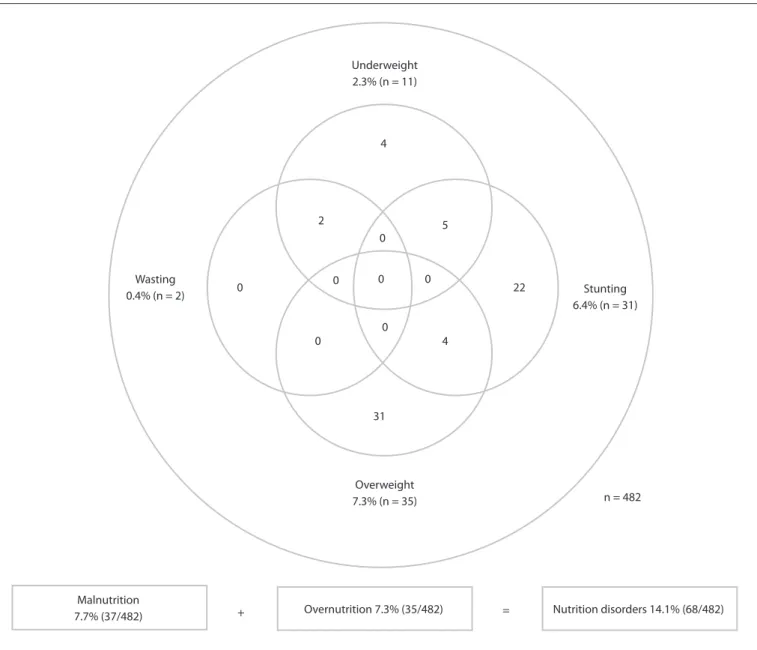
Figure 1. Prevalence and numerical intersection of groups of children with nutritional disorders (stunting, wasting, underweight or overweight) in public and philanthropic day-care nurseries in the municipality of São Paulo, from two surveys (2004 and 2007).
Malnutrition
7.7% (37/482) Overnutrition 7.3% (35/482) Nutrition disorders 14.1% (68/482) Underweight
2.3% (n = 11)
Stunting 6.4% (n = 31) Wasting
0.4% (n = 2)
n = 482 Overweight
7.3% (n = 35) 4
2
0
5
22
0
4
31
+ =
0
0
0
Risk factors n Malnutrition (stunting, wasting or underweight)
OR (95% CI)* P-value OR (95% CI)† P-value
Socioeconomic factors
Slum housing (wooden structure) Yes 482 1.37 (0.39-4.73) 0.623
No 1.00
Unsuitable sewage system Yes 482 0.92 (0.27-3.13) 0.892
No 1.00
Per capita family income < 0.5 MW Yes 477 2.39 (1.21-4.71) 0.012 2.25 (1.08-4.67) 0.030
No 1.00 1.00
Per capita family income < 1 MW Yes 477 1.52 (0.62-3.75) 0.363
No 1.00
Mother unemployed Yes 475 1.50 (0.63-3.57) 0.364
No 1.00
Maternal education (years) < 8 479 0.90 (0.44-1.82) 0.768
≥ 8 1.00
Maternal age (years) < 28 479 0.73 (0.37-1.45) 0.371
≥ 28 1.00
Food intake
Exclusive breastfeeding (months) ≤ 2 470 1.16 (0.57-2.39) 0.678
> 2 1.00
Child’s healthcare conditions
Exposure to day care (months) < 6 481 1.66 (0.85-3.26) 0.139
≥ 6 1.00
Day-care nurseries Philanthropic 482 0.62 (0.38-1.21) 0.167
Public 1.00
Incomplete vaccination Yes 482 3.40 (1.29-8.92) 0.013 3.44 (1.15-10.31) 0.027
No 1.00 1.00
One or more siblings < 3 years Yes 482 2.43 (1.15-5.15) 0.021
No 1.00
Prenatal (visits) < 4 480 2.65 (0.85-8.22) 0.092
≥ 4 1.00
Use of oral iron supplementation Yes 481 1.88 (0.95-3.72) 0.069
No 1.00
Child’s morbidity
Hemoglobin (g/dl) < 11 482 0.99 (0.50-1.94) 0.967
≥ 11 1.00
Avoidable hospitalization Yes 482 0.73 (0.34-1.59) 0.428
No 1.00
Neonatal conditions
Prematurity Yes 474 3.75 (1.68-8.26) 0.001
No 1.00
Weight at birth (kg) < 2.5 479 3.55 (1.56-8.10) 0.003
≥ 2.5 1.00
Neonatal hospitalization Yes 482 3.71 (1.29-10.63) 0.015
No 1.00
Neonatal risk‡ Yes 474 7.69 (2.43-24.34) 0.001 8.08 (2.29-28.74) 0.001
No 1.00 1.00
Biological characteristics
Child’s age (months) < 17 482 1.06 (0.54-2.07) 0.865
≥ 17 1.00
Sex Male 482 3.74 (1.67-8.36) 0.001 3.73 (1.63-8.56) 0.002
Female 1.00 1.00
Table 1. Unadjusted and adjusted odds ratios (ORs) with their respective conidence intervals (95% CIs) for the risk factors for malnutrition (stunting, wasting or underweight) among children in public and private day-care nurseries in the municipality of São Paulo, from two surveys (2004 and 2007)
Risk factors n Overnutrition (overweight)
OR (95% CI)* P-value OR (95% CI)† P-value
Socioeconomic factors
Slum house (wooden structure) Yes 482 0.63 (0.19-2.12) 0.454
No 1.00
Unsuitable sewage system Yes 482 0.98 (0.29-3.35) 0.975
No 1.00
Per capita family income < 0.5 MW Yes 477 0.88 (0.42-1.81) 0.720
No 1.00
Per capita family income < 1 MW Yes 477 0.52 (0.25-1.08) 0.079 0.40 (0.19-0.88) 0.022
No 1.00 1.00
Mother unemployed Yes 475 1.03 (0.39-2.77) 0.946
No 1.00
Maternal education (years) < 8 479 0.83 (0.40-1.70) 0.602
≥ 8 1.00
Maternal age (years) < 28 479 1.26 (0.63-2.52) 0.505
≥ 28 1.00
Food intake
Exclusive breastfeeding (months) ≤ 2 470 2.61 (1.22-5.58) 0.014 2.95 (1.35-6.44) 0.007
> 2 1.00 1.00
Child’s healthcare conditions
Exposure to day care (months) < 6 481 1.16 (0.58-2.31) 0.682
≥ 6 1.00
Day-care nurseries Philanthropic 482 0.80 (0.40-1.61) 0.537
Public 1.00
Incomplete vaccination Yes 482 1.46 (0.42-5.07) 0.553
No 1.00
One or more siblings < 3 years Yes 482 1.10 (0.44-2.74) 0.845
No 1.00
Prenatal (visits) < 4 480 0.54 (0.07-4.12) 0.552
≥ 4 1.00
Use of oral iron supplementation Yes 481 0.46 (0.19-1.14) 0.093
No 1.00
Child’s morbidity
Hemoglobin (g/dl) < 11 482 1.10 (0.55-2.19) 0.790
≥ 11 1.00
Avoidable hospitalization Yes 482 1.83 (0.91-3.68) 0.091
No 1.00
Neonatal conditions
Prematurity Yes 474 0.48 (0.11-2.07) 0.327
No 1.00
Weight at birth (kg) < 2.5 479 0.54 (0.12-2.31) 0.404
≥ 2.5 1.00
Neonatal hospitalization Yes 482 0.57 (0.07-4.34) 0.586
No 1.00
Neonatal risk‡ Yes 474 0.96 (0.12-7.59) 0.972
No 1.00
Biological characteristics
Child’s age (months) < 17 482 0.64 (0.31-1.30) 0.214
≥ 17 1.00
Sex Male 482 2.17 (1.04-4.54) 0.039 2.18 (1.02-4.65) 0.043
Female 1.00 1.00
Table 2. Unadjusted and adjusted odds ratios (ORs) with their respective conidence intervals (95% CIs) for the risk factors for
overnutrition (overweight) among children in public and private day-care nurseries in the municipality of São Paulo, from two surveys (2004 and 2007)
Table 3. Unadjusted and adjusted odds ratios (ORs) with their respective conidence intervals (95% CIs) for the risk factors for nutritional disorders (stunting, wasting, underweight or overweight) among children in public and private day-care nurseries in the municipality of São Paulo, from two surveys (2004 and 2007)
Risk factors N Nutritional disorders (stunting, wasting, underweight or overweight)
OR (95% CI)* P-value OR (95% CI)† P-value
Socioeconomic factors
Slum house (wooden structure) Yes 482 0.66 (0.20-2.24) 0.507
No 1.00
Unsuitable sewage system Yes 482 1.02 (0.41-2.51) 0.972
No 1.00
Per capita family income < 0.5 MW Yes 477 1.41 (0.84-2.37) 0.198
No 1.00
Per capita family income < 1 MW Yes 477 0.76 (0.42-1.37) 0.364
No 1.00
Mother unemployed Yes 475 0.94 (0.44-1.99) 0.865
No 1.00
Maternal education (years) < 8 479 0.81 (0.47-1.40) 0.459
≥ 8 1.00
Maternal age (years) < 28 479 0.89 (0.53-1.49) 0.648
≥ 28 1.00
Food intake
Exclusive breastfeeding (months) ≤ 2 470 1.65 (0.96-2.84) 0.069
> 2 1.00
Child’s healthcare conditions
Exposure to day care (months) < 6 481 1.43 (0.85-2.39) 0.173
≥ 6 1.00
Day-care nurseries Philanthropic 482 0.69 (0.41-1.16) 0.164
Public 1.00
Incomplete vaccination Yes 482 2.85 (1.25-6.53) 0.013 3.18 (1.30-7.76) 0.011
No 1.00 1.00
One or more siblings < 3 years Yes 482 1.61 (0.85-3.03) 0.142
No 1.00
Prenatal (visits) < 4 480 1.25 (0.41-3.77) 0.695
≥ 4 1.00
Use of oral iron supplementation Yes 481 0.97 (0.55-1.70) 0.919
No 1.00
Child’s morbidity
Hemoglobin (g/dl) < 11 482 1.03 (0.61-1.72) 0.921
≥ 11 1.00
Avoidable hospitalization Yes 482 1.22 (0.71-2.11) 0.469
No 1.00
Neonatal conditions
Prematurity Yes 474 1.80 (0.87-3.72) 0.111
No 1.00
Weight at birth (kg) < 2.5 479 1.78 (0.84-3.77) 0.134
≥ 2.5 1.00
Neonatal hospitalization Yes 482 1.75 (0.63-4.87) 0.287
No 1.00
Neonatal risk‡ Yes 474 3.57 (1.16-10.99) 0.027 3.41 (1.04-11.23) 0.043
No 1.00 1.00
Biological characteristics
Child’s age (months) < 17 482 0.92 (0.55-1.54) 0.760
≥ 17 1.00
Sex Male 482 2.79 (1.56-4.90) < 0.001 2.76 (1.56-4.90) 0.001
Female 1.00 1.00
DISCUSSION
Overweight and stunting were the most common nutritional disorders in children in day-care centers in Brazil. Four factors were independently and signiicantly associated with malnutri-tion: low per capita family income, neonatal risk, incomplete vac-cination status and male sex. Meanwhile, three factors were asso-ciated with overnutrition: high per capita family income, short exclusive breastfeeding and male sex. Furthermore, three factors were associated with the set of nutritional disorders: neonatal risk, incomplete vaccination status and male sex.
Childhood overnutrition is a complex condition that is inluenced by our evolutionary genetic legacy interacting with a technologically advanced and consumerist society, thereby gen-erating multiple associated risk factors.12 hese determinants
appear to be closely related to perinatal conditions, early wean-ing and high purchaswean-ing power, and they lead to excess energy intake and consumption of manufactured food.12,19
Similarly, child malnutrition is a process involving many risk factors relating to lower economic resources (poverty), lower food availability and lower maternal education, which leads to lack of energy and protein intake.4
he risk factors identiied in the present study were indepen-dent of the funding source of the day-care centers (public or phil-anthropic), thus indicating that they are important for children in low per capita income families attending both day-care center systems. However, it is worth noting that even though the study was conducted using rigorous data collection and analysis, the selection of day-care centers was based on ease/convenience, giv-ing priority to centers with a large number of children and to those that were located in poor but safe areas. Additionally, it is possible that the numbers of subjects and day-care centers used in this study were not large enough to provide a broad perspec-tive of the risk of nutritional disorders among children attend-ing this level of schoolattend-ing. Consequently, it may not be possible to generalize these results to all Brazilian day-care centers, and the external validity and possibility of generalizing these results to children who are not in day care or to children attending day-care nurseries that function in other contexts must be considered only with caution.
Since the analysis was conducted on an existing dataset, we were limited to the use of variables that were collected for the “Projeto CrechEiciente”. For instance, our study did not investi-gate maternal state of health or the food consumption character-istics (quality and quantity of nutrient intake), which are known to be associated with both overnutrition and malnutrition in both developed and developing countries.3,4,12
Consistent with our study, other researchers have found higher rates of overweight and stunting than of wasting and under-weight in Brazil.9,11,19,20 However, the prevalence of malnutrition
was similar to that of overnutrition among children attending
day-care nurseries. his result suggests that the Brazilian health and education systems are unable to meet their goals of keeping the anthropometric indices of children attending day-care cen-ters close to the average for the general population of the same age, and thus these children are not protected from nutritional disorders.
he only factor present in all three inal models was male sex, thus indicating that boys are more likely to develop overnu-trition, malnutrition and the set of nutritional disorders. Some studies reported that there was no relationship between sex and child nutrition indices.21 However, another study reported
that nutritional states were worse among males,19 while others
reported that females are nutritionally disadvantaged.22 Similarly,
some researchers have not found associations between being overweight and sex,12 while others reported that male sex was a
determinant of childhood obesity.23 his controversy appears to
be the result of sex only being one component of a more complex system of linked inluences. Speciically, there is evidence that the relationship between sex and nutrition is modulated by a variety of factors, including cultural values,birth order, number of male and female children in the family, household and the day-care centers’ decisions regarding allocation of food resources.4,24
Being up-to-date with vaccinations has been reported to be negatively associated with malnutrition.25 his probably relects
a common determinant of parental education/knowledge and accessibility to primary healthcare services, thus suggesting that a lack of preventive healthcare during the irst years of life can result in infant malnutrition. However, the literature has not shown any association between being overweight and incomplete vaccination status.12 Consistently, in the present study,
vaccina-tion status was associated with malnutrivaccina-tion, but not with being overweight. Nonetheless, incomplete vaccination status had the largest impact on the set of nutritional disorders.
Children with a history of being weaned from breastfeed-ing before two months of age showed a higher risk of overnu-trition, which was consistent with another study.26 In contrast,
two reviews concluded that breastfeeding is unlikely to be pro-tective of early childhood obesity because associations might be explained largely by residual confounding and/or publication bias.12,27 However, short exclusive breastfeeding was not
associ-ated with malnutrition, as reported in many other studies.4,25
Low per capita family income has also been reported to be associated with malnutrition4,19,20 and overnutrition.8,12,19 his is
likely to be indicative of a parent’s ability to appropriately care for their children by providing more and adequate feeding.
Despite the fact that we analyzed children from low-income families and not from the general community, our results showed that children of families with lower per capita income had a higher risk of malnutrition, whereas those with higher per capita
from other studies conducted in various Brazilian regions.8,20
As expected, the association between the nutritional disor-ders was not as strong. his inding emphasizes the importance of appropriate use of available socioeconomic resources and of improving socioeconomic conditions in the poorest groups, so as to prevent and control these nutrition imbalances.
Nevertheless, the traditional explanation that child nutri-tional deiciencies are simply due to food scarcity or a lack of family economic resources has been increasingly questioned by researchers.4 Furthermore, the roles of three caregiver/parent
characteristics (education, intelligence and good mental health) have been considered to be important determinants linked to characteristics such as culture, maternal input into family eco-nomic decisions and social support networks.4
In contrast to some other studies,4,8,19,22 the present
investi-gation did not identify any statistically signiicant association between malnutrition or overnutrition (or a combination of them) and maternal employment, age or education. his may have resulted from the lack of diversity of these variables in the study population.
Infants born prematurely, who were of low birth weight or who were hospitalized during the neonatal period were found to be more likely to acquire nutritional disorders in the irst months of life.28 However, we did not ind any association between
neo-natal risks and being overweight, although neoneo-natal risk was associated with malnutrition and with the set of nutritional dis-orders, even ater controlling for age, hemoglobin level and per capita family income.
hese indings gain greater validity through inclusion of other factors that can inluence nutritional status in multivari-ate analysis, thereby providing a broad perspective for events that are triggered by multiple risk factors.18 As such, the efects
were shown to be statistically signiicant when controlling for the other variables in the multifactorial model, including hemoglobin level, as an essential indicator of iron status, and adequacy of food intake.
Governments in developing countries have considered strat-egies, such as visits to vulnerable households and integrated care across emergency and primary care services, to be methods for improving the nutritional status of children.11 However, it is also
important to recognize the potential for day-care nurseries to improve the health of children under their care during weekdays and to ensure adequate nutrition for them. Nurseries are con-sidered to be spaces for implementing programs to control and prevent infant sociobiological vulnerability to parents. Managers and healthcare professionals believe that healthcare actions at day-care centers and health education programs directed towards children’s caregivers can improve a child’s health.30
Furthermore, this study highlights that there are risk factors associated with the set of nutritional disorders, which is a new
perspective for nutritional strategies. Identiication of the prevalence of overnutrition and malnutrition, individually and in combination, along with the associated factors, suggests that opportunities to keep children nutritionally healthy, as demonstrated through anthropo-metric measurements, are being missed.
Finally, we emphasize the need for comprehensive health and nutritional interventions in day-care centers that address nutri-tional disorders and also the importance of keeping children’s anthropometric patterns close to the average for the population.
We recommend that future studies should use qualitative and quantitative methods to study the determinants of nutritional disorders based on a comprehensive sample of children attend-ing day-care centers, in order to generate further epidemiological evidence to inform health and educational interventions for pre-venting nutritional disorders.
CONCLUSION
Based on the results from this study, we conclude that nutritional disorders remain present among children attending nurseries in São Paulo. Knowledge of the risk factors for overnutrition, mal-nutrition and the set of mal-nutritional disorders can potentially help healthcare professionals develop strategies to prevent and control these nutrition imbalances. Actions to enhance the nutritional status of children should focus on boys, children who were exclu-sively breastfed for less for than two months and those without up-to-date vaccinations. Identiication of risk factors for a set of nutritional disorders seems useful as a new approach for sup-porting health promotion actions.
REFERENCES
1. de Onis M, Blössner M, Borghi E. Global prevalence and trends of overweight and obesity among preschool children. Am J Clin Nutr. 2010;92(5):1257-64.
2. Best C, Neuingerl N, van Geel L, van den Briel T, Osendarp S. The
nutritional status of school-aged children: why should we care? Food Nutr Bull. 2010;31(3):400-17.
3. World Health Organization. Nutrition Landscape Information System (NLIS) country proile indicators: interpretation guide. Geneva: World
Health Organization; 2010.
4. Wachs TD. Multiple inluences on children’s nutritional deiciencies: a systems perspective. Physiol Behav. 2008;94(1):48-60.
5. Lee YS. Consequences of childhood obesity. Ann Acad Med
Singapore. 2009;38(1):75-7.
6. World Health Organization. WHO Child Growth Standards: methods and development. Length/height-for-age, for-age, weight-for-length, weight-for-height and body mass index-for-age. Geneva:
World Health Organization; 2006.
8. Monteiro CA, Conde WL. Tendência secular da desnutrição e da obesidade na infância na cidade de São Paulo (1974-1996)
[Secular trends in malnutrition and obesity among children in the city of São Paulo, Brazil (1974-1996).] Rev Saude Publica. 2000; 34(6 Suppl):52-61.
9. Gigante DP, Victora CG, Araújo CL, Barros FC. Tendências no peril
nutricional das crianças nascidas em 1993 em Pelotas, Rio Grande do Sul, Brasil: análises longitudinais [Trends in the nutritional proile of children born in 1993 in Pelotas, Rio Grande do Sul, Brazil: longitudinal analyses]. Cad Saude Publica. 2003;19 Suppl:S141-7.
10. Hawkes C. Uneven dietary development: linking the policies and processes of globalization with the nutrition transition, obesity and diet-related chronic diseases. Global Health. 2006;2:4.
11. Pan American Health Organization. World Health Organization. Health
in the Americas. Washington: Pan American Health Organization; 2007. 12. Han JC, Lawlor DA, Kimm SYS. Childhood Obesity. Lancet.
2010;375(9727):1737-48.
13. Instituto Nacional de Estudos e Pesquisas Educacionais Anísio
Teixeira. Censo Escolar da Educação Básica, 2011 – resumo técnico. Brasília: Instituto Nacional de Estudos e Pesquisas Educacionais Anísio Teixeira; 2012. Available from: http://download.inep.gov.br/educacao_ basica/censo_escolar/resumos_tecnicos/resumo_tecnico_censo_
educacao_basica_2011.pdf. Accessed in 2014 (Nov 18).
14. Taddei JA, Oliveira MN, Konstantyner T. Impacto do Treinamento de Educadores de Creches Públicas/Filantrópicas nas Práticas Higiênico-Dietéticas e na Saúde/Nutrição dos Lactentes. Project
FAPESP no. 2006/02597-0. São Paulo: Unifesp. Available from: http:// www.bv.fapesp.br/pt/auxilios/21977/impacto-do-treinamento- de-educadoras-de-creches-publicasfilantropicas-nas-praticas-higienico-dieteti/. Accessed in 2014 (Dec 4).
15. Gregg M. Field epidemiology. 3rd ed. Oxford: Oxford University Press; 2008.
16. Rosenblit J, Abreu CR, Szterling LN, et al. Evaluation of three methods for hemoglobin measurement in a blood donor setting. Sao Paulo
Med J. 1999;117(3):108-12.
17. Kirkwood BR, Sterne JAC. Chi-squared tests for 232 and larger contingency tables. In: Kirkwood BR, Sterne JAC, eds. Essential medical statistics. 2nd ed. Malden: Blackwell Science; 2003. p. 165-76.
18. Kleinbaum DG, Kupper LL, Nizam A, Muller KE. Applied regression analysis and other multivariable methods. 4th ed. Duxbury: Brooks/Cole; 2008. 19. Vitolo MR, Gama CM, Bortolini GA, Campagnolo PD, Drachler Mde L.
Some risk factors associated with overweight, stunting and wasting
among children under 5 years old. J Pediatr (Rio J). 2008;84(3):251-7. 20. Wang Y, Monteiro C, Popkin BM. Trends of obesity and underweight
in older children and adolescents in the United States, Brazil, China, and Russia. Am J Clin Nutr. 2002;75(6):971-7.
21. Griiths P, Matthews Z, Hinde A. Gender, family, and the nutritional status of children in three culturally contrasting states of India. Soc Sci Med. 2002;55(5):775-90.
22. Sakisaka K, Wakai S, Kuroiwa C, et al. Nutritional status and associated factors in children aged 0-23 months in Granada, Nicaragua. Public
Health. 2006;120(5):400-11.
23. Rosas LG, Guendelman S, Harley K, et al. Factors associated with overweight and obesity among children of Mexican descent: results of a binational study. J Immigr Minor Health. 2011;13(1):169-80.
24. Pande R. Selective gender diferences in childhood nutrition and immunization in rural India: the role of siblings. Demography. 2003;40(3):395-418.
25. Bloss E, Wainaina F, Bailey RC. Prevalence and predictors of
underweight, stunting, and wasting among children aged 5 and under in western Kenya. J Trop Pediatr. 2004;50(5):260-70.
26. Zhou L, He G, Zhang J, et al. Risk factors of obesity in preschool children in an urban area in China. Eur J Pediatr. 2011;170(11):1401-6.
27. Owen CG, Martin RM, Whincup PH, Smith GD, Cook DG. Efect of infant feeding on the risk of obesity across the life course: a quantitative review of published evidence. Pediatrics. 2005;115(5):1367-77. 28. Wiedmeier JE, Joss-Moore LA, Lane RH, Neu J. Early postnatal nutrition
and programming of the preterm neonate. Nutr Rev. 2011;69(2):76-82. 29. Gupta RS, Shuman S, Taveras EM, Kulldorf M, Finkelstein JA.
Opportunities for health promotion education in child care. Pediatrics. 2005;116(4):e499-505.
Acknowledgements: The present study forms an integral part of “Projeto CrechEiciente”. The authors thank the principals of the day-care centers for their assistance in obtaining informed consent and in data
collection. Moreover, the authors thank the research ethics committee of Universidade Federal de São Paulo
Sources of funding: This study was inanced by Fundação de Amparo
à Pesquisa do Estado de São Paulo (Fapesp), under procedural number 2006/02597-0. Fapesp had no role in the design, analysis or writing of this article
Conlict of interest: None
Date of irst submission: April 23, 2014 Last received: December 22, 2014 Accepted: December 23, 2014
Address for correspondence: Tulio Konstantyner
Disciplina de Nutrologia do Departamento de Pediatria
Escola Paulista de Medicina-Universidade Federal de São Paulo (EPM-Unifesp)
Rua Loefgreen, 1.647
Vila Clementino — São Paulo (SP) — Brasil