Official Journal of the Brazilian Psychiatric Association
Volume 34 • Supplement 1 • June/2012
Psychiatry
Revista Brasileira de Psiquiatria
Abstract
Background: Anxiety disorders are often associated with several non-psychiatric medical conditions. Among the clinical conditions found in association with anxiety stands out the joint hypermobility (JH). Objective: To carry out a systematic review of the clinical association between anxiety disorders and JH. Method: A survey was conducted in MEDLINE, PsychINFO, LILACS e SciELO databases up to December 2011. We searched for articles using the keywords ‘anxiety’, ‘joint’ and ‘hypermobility’ and Boolean operators. The review included articles describing empirical studies on the association between JH and anxiety. The reference lists of selected articles were systematically hand-searched for other publications relevant to the review. Results: Seventeen
articles were included in the analysis and classiied to better extract data. We found heterogeneity
between the studies relate to the methodology used. Most of the studies found an association between anxiety features and JH. Panic disorder/agoraphobia was the anxiety disorder associated with JH in several studies. Etiological explanation of the relationship between anxiety and JH is still controversial. Conclusion: Future research in large samples from the community and clinical setting and longitudinal studies of the association between anxiety and HA and the underlying biological mechanisms involved in this association are welcome.
Anxiety and joint hypermobility association: a systematic review
Simone H. Bianchi Sanches
1, Flávia de Lima Osório
2, Marc Udina
3,
Rocío Martín‑Santos
4, José Alexandre S. Crippa
21 Neurosciences and Behavior Department, Faculdade de Medicina de Ribeirão Preto (FMRP),
Universidade de São Paulo (USP-RP), Brazil
2 Neurosciences and Behavior Department, FMRP, USP-RP; National Science and
Technology Institute (INCT, CNPq) for Translational Medicine, Brazil
3 Department of Psychiatry, Institute of Neurosciences, Hospital Clínic, IDIBAPS, CIBERSAM, Barcelona;
Department of Psychiatry and Clinical Psychobiology, University of Barcelona, Spain
4 Department of Psychiatry, Institute of Neurosciences, Hospital Clínic, IDIBAPS, CIBERSAM, Barcelona;
Department of Psychiatry and Clinical Psychobiology, University of Barcelona, Spain; National Science and Technology Institute (INCT) for Translational Medicine, Brazil
DESCRIPTORS
Anxiety, Hypermobility; Panic Disorder/
Agoraphobia; Anxiety Disorders; Methodology; Joint Hypermobility Syndrome.
ARTICLE
Corresponding author: Simone Bianchi Sanches. Av. dos Bandeirantes, 3900. Hospital das Clínicas, 3º andar. Monte Alegre 14048-900, Ribeirão Preto, SP, Brazil. Phone: (+55 16) 36022703/36022201. E-mail: [email protected]
Introduction
The emotional state of anxiety is universal and has an important adaptive function. It is generally described as a combination of somatic symptoms and subjective signs. States of anxiety are known to be present in non-clinical populations, suggesting a continuum between general and clinical populations. The clinical presentation usually consists
of intense anxiety, not justiied or proportional to external
situations, imposing life restrictions and subjective distress. Thus, clinical cases present with interconnected physical, autonomic, and psychological alterations.1-3
Anxiety disorders are often associated with several non-psychiatric medical conditions.1,4,5 This association may be the result of many factors, including the physiological con-sequences of underlying medical conditions, psychological reaction to the experience of being ill, secondary effect of treatment or an overlapping of two simultaneous adverse manifestations-anxiety and a medical condition.6 Among clini-cal anxiety disorders, panic and social anxiety have been de-scribed as the most prevalent. Both require attention due to the interference of symptoms in different areas of life, such as work performance, academic achievement, and daily tasks performance.7,8 The presence of signiicant comorbidities is another important feature of these disorders.2,3,9 Moreover,
despite the signiicant prevalence of anxiety disorders, most
people remain without appropriate diagnosis or treatment. Among the clinical conditions found in association with anxiety, joint hypermobility (JH) is highlighted.10,11 This medical condition is usually hereditary, has an autonomic dominant pattern, and is present in approximately 10%-20% of the general population.12 A study of twins showed that genetics accounts for at least 70% of the phenotype vari-ance rather than environmental factors (e.g., training)..12 Hypermobility is characterized by an extended range of motion in the joints, an increased distensibility of joints in passive movements, and hypermobility in active movement in the absence of a systemic rheumatologic disease.13 JH is more common in childhood and tends to decline with aging. The prevalent is higher among women (raising questions
about the still poorly understood hormonal inluences) and
the Asian and African populations, with ethnic differences suggestive of genetic variations.6,14,15 JH may be accompanied by multiple organic anomalies, such as mitral valve prolapse (MVP). It is also associated with musculoskeletal dysfunctions,
possibly resulting from glycoprotein deiciency and genetic
alterations affecting the formation of collagen, which would explain tissue looseness and vulnerability to trauma in these patients.16,17 Musculoskeletal pain is the main complaint of
patients with JH, as the lexibility of joints tends to demand
greater muscle effort.18-21
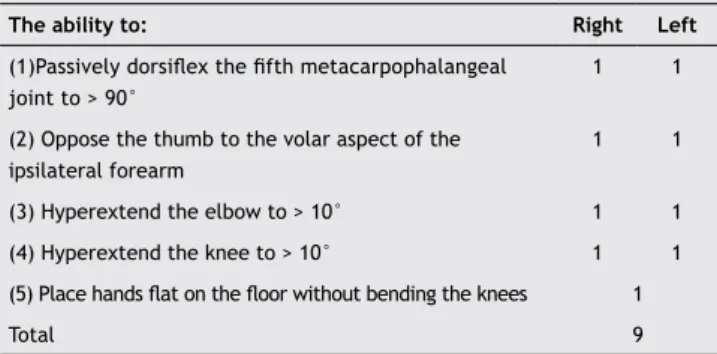
The diagnosis of JH is usually established using the nine-point Beighton scale.14 According to this scale, subjects with
a score ≥ 4 are considered as having JH.15,22,23 The
condi-tion is characterized through the examinacondi-tion of ive body
areas, each one receiving a score of hyperextension: little
ingers, thumbs, elbows, knees, and trunk (Table 1). Aiming
to allow the evaluation of hypermobility in body areas not covered in Beighton’s scale, a similar methodology has been introduced and used by Bulbena et al.,24 which increased the body areas evaluated up to 10. In addition to this clinical evaluation, it is important to mention the existence of an
easily-self-administered screening instrument for the
assess-ment of hypermobility, called ‘the ive-part questionnaire for
identifying hypermobility’,25 which has been reported to have a high correlation with Beighton’s score. This instrument also evaluates broad body areas and considers previous history of hypermobility.26 (Table 2).
In fact, the clinical presentations of JH may range from simple manifestations that do not require treatment to severe cases in which joints are more easily displaced or
other clinical conditions are associated, conigurating a
syndrome named Hypermobility Syndrome or (Benign) Joint Hypermobility Syndrome.27 However, for some authors, the term ‘benign’ would hinder the acknowledgement of the le-gitimacy of some of the complaints of the patient, especially
in what concerns distress, painful symptoms, and dificulties
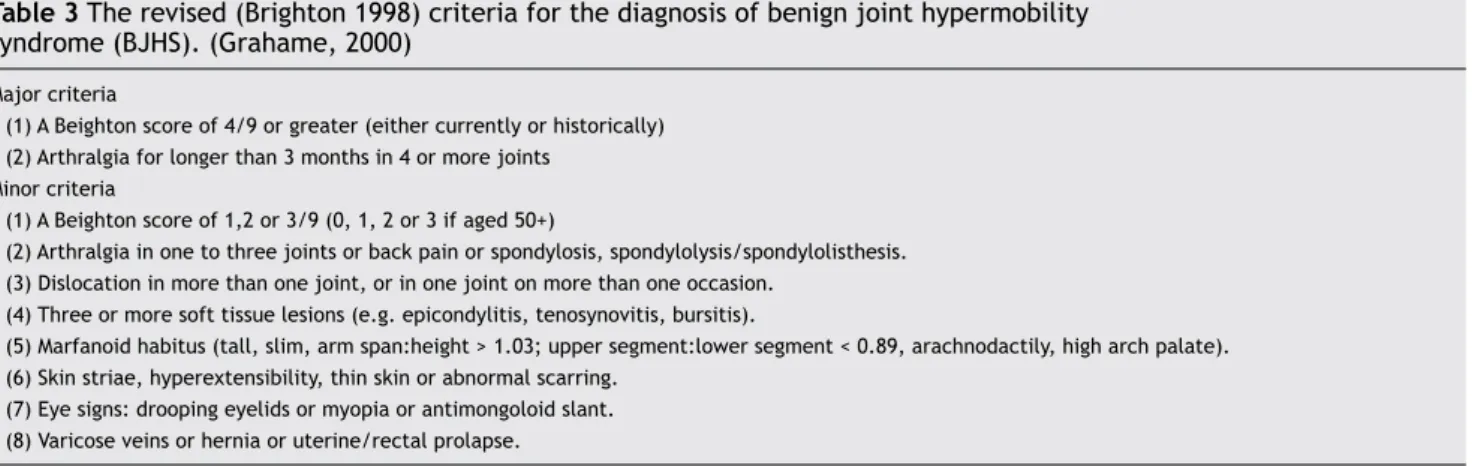
in performing daily activities.28 Nowadays, for the diagnosis of joint hypermobility syndrome (JHS), Brighton’s criteria are the most commonly used.29 According to these criteria, the syndrome diagnosis is made taking into account not only Beighton’s score but also some clinical manifestations associ-ated with hypermobility (Table 3). The minor criteria serve
to highlight the common physical indings of the condition.
The JHS cases have a combination of marfanoid habitus, increased skin stretch, and others manifestations, such as joint subluxation or dislocation, predisposing to premature osteoarthritis.18
The association of joint hypermobility and anxiety was described in 198810 in a case-control study of a sample of rheumatic outpatients with JH. Hypermobile patients showed a high prevalence of anxiety disorders (~70%), compared to 22% of rheumatic controls, with panic/agoraphobia and
Table 1 The nine-point Beighton hypermobility score (Beighton14)
The ability to: Right Left
(1)Passively dorsilex the ifth metacarpophalangeal
joint to > 90°
1 1
(2) Oppose the thumb to the volar aspect of the ipsilateral forearm
1 1
(3) Hyperextend the elbow to > 10° 1 1 (4) Hyperextend the knee to > 10° 1 1
(5) Place hands lat on the loor without bending the knees 1
Total 9
Score: one point may be gained for each side for manoeuvres 1-4, so that the hypermobility score will have a maximum of nine points if all are positive.
Table 2 A ive-part questionnaire for identifying hypermobility (Hakim et al.51)
(1) Can you now (or could you ever) place your hands lat on the loor
without bending your knees?
(2) Can you now (or could you ever) bend your thumb to touch your forearm?
(3) As a child did you amuse your friends by contorting your body into strange shapes or could you do the splits?
(4) As a child or teenager did your shoulder or kneecap dislocate on more than one occasion?
(5) Do you consider yourself double-jointed?
simple phobia disorders signiicantly associated.10 A second study of a sample of psychiatric outpatients with panic/ago-raphobia disorder showed that JH was presented in about 70% of them compared to 10% of patients with others psychiatric disorders, or 12% of medical patients without psychiatric disorders.11 Cases with panic/agoraphobia disorders were 17 times more likely to suffer from hypermobility. Subsequently, these results were replicated in a two-phase cross-sectional epidemiologycal study in a sample of 1,300 inhabitants.17,30 It was observed that hypermobile subjects were eight times more likely to suffer from panic disorder and social phobia and six times more likely to suffer from agoraphobia than non hypermobile subjects. No other anxiety or mood disorders were found associated with JH.
These two conditions (anxiety and joint hypermobility) share several common features, such as early age of onset, decreased frequency with age, high prevalence in women, and familial aggregation. The two disorders have genetics factors that are still no well understood. Preliminary stud-ies suggested a cytogenetic mutation in chromosome 15 in pedigrees with both disorders.31 However, these initial results were not yet been replicated.32,33 Furthermore, both share an autonomic alteration, with higher anxiety sensitivity, abnormal pain perception, and higher somatic sensitivity
than controls; similar to ibromyalgia, another condition with
a high proportion of JH. Hakim et al.34 proposed that the interaction between autonomic, physical, and psychological disturbances are linked in a complex manor in JHS, in the sense that each factor may stimulate each other.
In recent years there is a renewed interest in studying this clinical association from a clinical, epidemiological, and biological point of view.35 The aim of this study was to carry out a systematic review of the clinical association between anxiety disorders and JH, discussing the methodological
aspects and main indings.
Method
A systematic search for articles was performed in the elec-tronic databases PubMed, LILACS, PsycInfo, e SciELO using the keywords ‘anxiety’, ‘joint’, and ‘hypermobility’ and
Boolean operators. Articles in English, Spanish or Portuguese describing empirical studies designed to investigate the association between JH and anxiety were sought for the review. No time limits were set, and articles published up to December 2011 were included. Exclusion criteria were letters to editors, editorials, review articles, and articles
reporting indings on the association between JH and con -ditions other than anxiety. The reference lists of selected articles were systematically hand-searched for other pub-lications relevant to the review.
Selected articles were irst classiied according to char -acteristics of the population studied, study design, and psychopathologic evaluation (anxiety disorder or anxiety symptoms). Furthermore, sociodemographic characteris-tics, diagnostic criteria for anxiety disorders, presence of a structured interview for psychiatric diagnosis, anxiety rating scales, JH and JHS criteria, data on the prevalence and outcomes of studies on the association were extracted for a properly review.
Results
Flow selection of articles
Thirty-four references were found via PubMed. The search in the other databases yielded no matches. Twelve ar-ticles were selected after application of the inclusion and exclusion criteria and another six were included by hand-search.17,36-39 Therefore, a total of 17 articles were included in the review.
Characteristics of selected articles and data
extraction
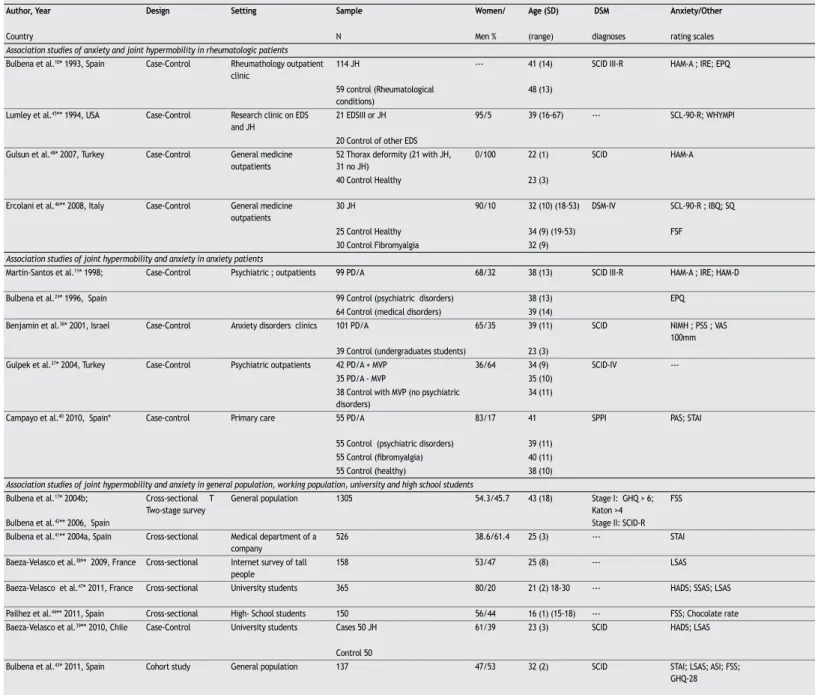
Table 4 presents the main characteristics of the 17 articles describing empirical studies on the association between JH and anxiety.
The articles selected for the review were predomi-nantly from Europe, especially Spain, with one article from Zaragoza40 and eight from Barcelona.10,11,17,24,41-44 The
Table 3 The revised (Brighton 1998) criteria for the diagnosis of benign joint hypermobility syndrome (BJHS). (Grahame, 2000)
Major criteria
(1) A Beighton score of 4/9 or greater (either currently or historically) (2) Arthralgia for longer than 3 months in 4 or more joints
Minor criteria
(1) A Beighton score of 1,2 or 3/9 (0, 1, 2 or 3 if aged 50+)
(2) Arthralgia in one to three joints or back pain or spondylosis, spondylolysis/spondylolisthesis. (3) Dislocation in more than one joint, or in one joint on more than one occasion.
(4) Three or more soft tissue lesions (e.g. epicondylitis, tenosynovitis, bursitis).
(5) Marfanoid habitus (tall, slim, arm span:height > 1.03; upper segment:lower segment < 0.89, arachnodactily, high arch palate). (6) Skin striae, hyperextensibility, thin skin or abnormal scarring.
(7) Eye signs: drooping eyelids or myopia or antimongoloid slant. (8) Varicose veins or hernia or uterine/rectal prolapse.
BJHS is diagnosed in the presence of two major criteria or one major and two minor criteria or four minor criteria. Two minor criteria will sufice where there is an unequivocally affected irst-degree relative. BJHS is excluded by the presence of Marfan or Ehlers-Danlos syndromes (other than the EDS Hypermobility type formerly EDS III), as deined by the Ghent 1996 (13) and Villefranche 1998 (14) criteria, respectively. Major and minor criteria 1 and 2
remaining articles came from different parts of the world, including a single North American publication,45 one from Chile39 and others from European and Asian countries: Italy,46 France,38,47 Turkey,37,48 and Israel.36
Selected studies were published between 1993 and
2011. We found eleven case-control studies, ive
cross-sectional and one cohort study design. All selected ar-ticles included a total of 3205 patients and 664 controls. Respecting the sample characteristics, we found articles focused on medical or rheumatic patients (n = 4), anxiety patients (n = 5) or general population, including workers and high school and college students (n = 8). Generally, the studies presented samples of both genders, aged between 18 and 65 years.
Table 4 Characteristics of the 17 selected studies for the systematic review (association between joint hypermobility and anxiety disorders or anxiety symptomatology)
Author, Year Design Setting Sample Women/ Age (SD) DSM Anxiety/Other
Country N Men % (range) diagnoses rating scales
Association studies of anxiety and joint hypermobility in rheumatologic patients Bulbena et al.10* 1993, Spain Case-Control Rheumathology outpatient
clinic
114 JH --- 41 (14) SCID III-R HAM-A ; IRE; EPQ
59 control (Rheumatological conditions)
48 (13)
Lumley et al.45** 1994, USA Case-Control Research clinic on EDS
and JH
21 EDSIII or JH 95/5 39 (16-67) --- SCL-90-R; WHYMPI
20 Control of other EDS Gulsun et al.48* 2007, Turkey Case-Control General medicine
outpatients
52 Thorax deformity (21 with JH, 31 no JH)
0/100 22 (1) SCID HAM-A
40 Control Healthy 23 (3)
Ercolani et al.46** 2008, Italy Case-Control General medicine
outpatients
30 JH 90/10 32 (10) (18-53) DSM-IV SCL-90-R ; IBQ; SQ Beighton ≥ 5 - JH group- signiicant psychological distress and increased frequency/intensity of somatic
25 Control Healthy 34 (9) (19-53) FSF
30 Control Fibromyalgia 32 (9)
Association studies of joint hypermobility and anxiety in anxiety patients
Martin-Santos et al.11* 1998; Case-Control Psychiatric ; outpatients 99 PD/A 68/32 38 (13) SCID III-R HAM-A ; IRE; HAM-D Beighton ≥ 5; ECHO;
Bulbena et al.24* 1996, Spain 99 Control (psychiatric disorders) 38 (13) EPQ
64 Control (medical disorders) 39 (14)
Benjamin et al.36* 2001, Israel Case-Control Anxiety disorders clinics 101 PD/A 65/35 39 (11) SCID NIMH ; PSS ; VAS
100mm
Beighton ≥ 5
39 Control (undergraduates students) 23 (3)
Gulpek et al.37* 2004, Turkey Case-Control Psychiatric outpatients 42 PD/A + MVP 36/64 34 (9) SCID-IV --- Beighton ≥ 5; ECHO
35 PD/A - MVP 35 (10)
38 Control with MVP (no psychiatric disorders)
34 (11)
Campayo et al.40 2010, Spain* Case-control Primary care 55 PD/A 83/17 41 SPPI PAS; STAI Beighton ≥ 5 PD/A (OR 95%CI): vs. psychiatric : 13.2 (5-47) vs. ibromyalgia : 4.7 (2-10) vs. healthy
55 Control (psychiatric disorders) 39 (11)
55 Control (ibromyalgia) 40 (11)
55 Control (healthy) 38 (10)
Association studies of joint hypermobility and anxiety in general population, working population, university and high school students Bulbena et al.17* 2004b; Cross-sectional T
Two-stage survey
General population 1305 54.3/45.7 43 (18) Stage I: GHQ > 6;
Katon >4
FSS
Bulbena et al.42** 2006, Spain Stage II: SCID-R
Bulbena et al.41** 2004a, Spain Cross-sectional Medical department of a
company
526 38.6/61.4 25 (3) --- STAI
Baeza-Velasco et al.38** 2009, France Cross-sectional Internet survey of tall
people
158 53/47 25 (8) --- LSAS
Baeza-Velasco et al.47* 2011, France Cross-sectional University students 365 80/20 21 (2) 18-30 --- HADS; SSAS; LSAS Beighton ≥ 5; Brighton
Pailhez et al.44** 2011, Spain Cross-sectional High- School students 150 56/44 16 (1) (15-18) --- FSS; Chocolate rate
Baeza-Velasco et al.39** 2010, Chile Case-Control University students Cases 50 JH 61/39 23 (3) SCID HADS; LSAS Beighton ≥ 5
Control 50
Bulbena et al.43* 2011, Spain Cohort study General population 137 47/53 32 (2) SCID STAI; LSAS; ASI; FSS;
GHQ-28
Beighton ≥ 5; Brighton;
* Articles that evaluate anxiety disorders and joint hypermobility; ** Articles that evaluate anxiety symptomatology/traits and joint hypermobility. ASI: Anxiety Sensitivity Index; EDS: Ehlers-Danlos Syndrome; EPQ: Eysenck Personality Questionnaire; FSF: Function Symptoms Frequency;
FSS: Fear Survey Schedule- Modiied Wolpe Fear Scale; JH: Joint Hypermobility; GAD: Generalized
Anxiety Disorder; GHQ: General Health Questionnaire; HADS : Hospital Anxiety and Depression Scale ; HAM‑A: Hamilton Anxiety Rating Scale; HAM‑D: Hamilton Rating Scale for Depression;
IBQ: Illness Behavior Questionnaire; JH: Joint Hypermobility; JHS: Joint Hypermobility Syndrome; LSAS: Liebowitz Social Anxiety Scale; MINI: International Neuropsychiatric Interview;
MVP: Mitral Valve Prolapse; NIMH: self rating scale of physical and mental symptoms;
OCD: Obsessive Compulsive Disorder; OD: Odds Ratio PAS : Panic and Agoraphobia Scale; PD/A: panic disorder with or without agoraphobia; PSS: Panic symptom scale – checklist of DSM-IV symptoms of panic attack; RR: Relative Risk; SPPI : Standardized Polyvalent Psychiatric Interview;
Assessment of anxiety, hypermobility, and joint
hypermobility syndrome
We selected a group of articles reporting the diagnosis of anxiety disorder according to DSM and a second group of articles reporting symptoms or traits of anxiety without a categorical psychiatric diagnosis (Table 4). Most of the studies that evaluate anxiety disorder used a structured interview for the clinical diagnosis of DSM anxiety disorder (especially the SCID) and hetero-administered scales, such as the Hamilton Anxiety Scale (HAM-A). Studies that just evaluated anxiety symptoms or traits used different self- and hetero-applied assessment instruments for the screening of symptoms,
including the Symptom Checklist -90-Revised (SCL-90-R), the State-trait Anxiety Inventory(STAI), and the Fear Survey Schedule (FSS).
Three methods were described for the assessment of hypermobility: Beighton’s score,14 the Hospital del Mar criteria,24 and the self-administrated join hypermobility questionnaire.25 Beighton’s score was certainly the most used measure.
Although hypermobility is frequently characterized by complaints of chronic pain, only two articles45,46 used specific or indirect instruments to assess this variable, such as the West Haven-Yale Multidimensional Pain Inventory (WHYMPI) and the Function Symptom Frequency (FSF).
JH criteria & cut‑off
score /ECHO
Prevalence of anxiety disorder/JH (%) Scale ratings Main results
Mean (SD)
Beighton > 5 ; ECHO Any anxiety disorder: 69.3; PD/A: 34.2; Simple phobia: 30; GAD: 10.5
HAM-A: 16.2 (8.2) - Any anxiety disorder: OR (95%CI): 10.7 (4.8-23.8); - PD/A OR: 7 (2.3-20.1); - Simple phobia OR: 5.8 (2.0-16.2); - GAD OR: 2.5 (0.6-9.4)
Some type: 22.0; PD/A: 6.8; Simple phobia: 8.5; GAD: 5.1
HAM-A: 13.8 (8.1)
EDS types I,II, III, IV, V JH --- SCL-90R: 0.84 (0.5) - EDS-III/JH had > score anxiety, depression and interpersonal sensitivity SCL-90-R subscales and > symptomatology and pain
SCL-90R: 0.4 (0.3) Beighton >5 Thorax
diameters measures
Any anxiety disorder: 53.8; PD/A: 36.5; Simple phobia: NR; GAD: 3.8
HAM-A: 21.3 (5.8) (JH+); HAM-A: 16.4 (8.6) (JH-)
- Cases JH+ had > score than cases JH-.; - All cases (JH+ and JH-) showed > anxiety disorders than controls.
Some type: 22.5; PD/A: 10; Simple phobia: NR; GAD: 0
HAM-A: 15.6 (9.2)
Beighton ≥ 5 --- SCL-90R (anxiety): 0.8 - JH group- signiicant psychological distress and increased frequency/intensity of somatic
symptoms SCL-90R (anxiety): 0.25
---Beighton ≥ 5; ECHO;
Quetelet index
JH: 67.7 HAM-A: 23.4 8.5); Beighton: 5.4 (2.8) - JH & PD/A: vs. psychiatric controls OR: 18.6 (8.6-40.5); and vs. medical controls OR: 14.7 (NR)
JH: 10.1 HAM-A: 9.4 (8.8); Beighton: 2.0 (2.1) -Asthenic somatotype & PD/A: OR: 2.23 (NR); - MVP & PD/A or JH: NS
JH: 12.5 HAM-A: 2.9 (5.8); Beighton: 2.0 (2.5)
Beighton ≥ 5 JH: 13 --- -JH & PD/A: NS between groups
JH: 15
Beighton ≥ 5; ECHO JH: 59.5 Beighton: 4.9 (3) -JS & PD/A between groups: NS; -It suggest that MVP affects the prevalence of JH in PD patients
JH: 42.9 Beighton: 4.1 (2.3)
JH: 52.6 Beighton: 4.1 (2.3)
Beighton ≥ 5 JH: 61.8 --- -JH & PD/A (OR 95%CI): vs. psychiatric : 13.2 (5-47) vs. ibromyalgia : 4.7 (2-10) vs. healthy
controls : 20.6 (5-36); - Cases showed > PAS score than all controls
JH: 9 PAS: 6.7 (2.3) Beighton:2.4(2.3)
55 Control (ibromyalgia) JH: 25.4 PAS: 7.8 (2.6) Beighton: 2.7 (2.6)
JH: 10.9 PAS: 5.6 (1.7) Beighton: 2.4 (2.3)
Beighton > 4 Total sample: JH: 13.9; PD/A: 2.6 FSS men JH+: 83 ; FSS men JH-: 66 ; FSS women JH+: 110
- JH & anxiety disorder OR (95%CI): PD/A: 8.19 (3.4-19.7) Agoraphobia: 5.89 (3-11.7) Social Phobia: 7.79 (2.4-24.9)
Simple phobia: 4.6 GAD: 4.3 FSS women JH-: 93 - No increased Odds for Simple Phobia, OCD, GAD, Dysthymic Disorder and Major Depression Hospital del Mar 2/3
male; 4/5 female
JH men: 17.6; JH woman: 26.6 STAI JH female: 17; STAI no JH female: 11; STAI JH male: 13; STAI JH: 11
-JH > score of anxiety trait
Beighton > 4 --- LSAS: 41 (24) -High rate of JH and social phobia score in tall people.; - Positive correlation between JH and
LSAS score
Beighton ≥ 5; Brighton Male JHS: 18.9 ; Female JHS: 44.7 LSAS: JH+ Male: 38 (16); JH+ Female: 40 (23); JH- Male: 29 (17); JH- female: 39 (20)
- SSAS score > JH ; - Female with JHS > scores HADS depression subscale ; -LSAS score: NS related JH. However, males with medium/high score LSAS >JH
Hackim & Grahame > 2 JH: 27.3; Girls: 39.3 ; Boys: 12.1 FSS JH: 91.6 (30.2); FSS No JH: 75.9 (38.1) - Mean (SD) FSS score > JH subjects; - Prevalence of chocolate use > JH subjects
Beighton ≥ 5 --- STAI-S: 21; HADS-A: 9 ; LSAS: 26.5 JH > use of antidepressants and anxiolytics, anxiety background, anxiety symptoms and “psychosomatic” diseases.
STAI: 13; HADS-A: 6; LSAS: 23
Beighton ≥ 5; Brighton;
Hospital del Mar
JH: 27; JH+: PD/A: 41; Simple phobia: 28; GAD: 24; JH -: PD/A: 2; Simple phobia: 8; GAD: 8
STAI JH+: 20.4 (10.7); STAI JH-: 17.5 (11.3); LSAS JH+: 31.2 (19.7); LSAS JH-: 22.4 (16.7); FSS JH+: 86.6 (47.7); FSS JH-: 78.9 (42.8)
Another aspect worth noting is the fact that most ar-ticles (n = 14; 82%) used the word ‘syndrome’ to refer to the clinical picture of JH. Nevertheless, just two more recent studies43,47 clearly mentioned the use of Brighton’s criteria for the characterization of the musculoskeletal symptoms that constitute the syndrome. Baeza-Velasco et al.47 suggest some adaptations in the medical terminology to facilitate the self-reporting of the symptoms. This seems to have some similarity to Beighton’s proposal to use a screening question-naire consisting of four simple questions to detect complaints of arthralgia, in his seminal article on JH.14
Association between anxiety and hypermobility
Several studies found an association between anxiety symp-toms or traits and JH.38-40,43-45 Regarding DSM anxiety disorders diagnoses, several studies reported an association between JH and panic/agoraphobia disorder10,11,17,41,43 and two studies did not found an association.36,37 Generalized anxiety disorder was not associated with JH.10,11,17,43 Social phobia and simple phobia were related with JH but generally with a weaker association than panic disorder10,17,43 (Table 4).
Discussion
This review includes studies evaluating the association be-tween anxiety and hypermobility. Differences in methodology
used in most of the studies made it dificult to compare and compile results. In respect to our irst outcome, the rela -tionship between anxiety symptoms or traits and JH, most studies found a correlation between anxiety symptomatology and presence of join hypermobility. In respect to our second outcome, the association between anxiety disorders and JH,
the stronger evidence is irst for panic/agoraphobia disorder
and then for social anxiety disorder and simple phobia. No other anxiety disorder or mood disorder were found in as-sociation with JH.
This systematic review has some limitations and strengths. The clinical samples of case-control studies showed that the studies of hypermobile patients were car-ried out in very different settings and three of them with a small sample size. On the other hand, studies of anxiety patients showed more homogeneity and properly sample
size to ind the association. All of them use DSM criteria and
three of four used a semistructured clinical interview. Raters were trained and blinded to the evaluation of hypermobility. However, one study focused on the role of MVP in the associa-tion, which limits the interpretation of the association. The cross-sectional surveys were done in different population with different range of age and gender, which may bias the joint hypermobility prevalence. Moreover, some of them used different cut-off point of Beighton’s scale or another JH tools. Lastly, there is an unusual “internet” survey based on “tall people” and the presence of JH and social phobia in a small sample to be representative. Only one cohort study was found. Interestingly, although in a small sample size, the joint hypermobility group was associated with higher risk of developing anxiety disorders. Few studies used the Brighton`s criteria to assess the complete joint hypermobility syndrome. It should be noted that several studies evaluating anxiety symptoms or traits had reported an association between anxiety and hypermobility, supporting that might be an
association between some speciic feature of anxiety and
JH, even in non-clinical populations. Some studies reported that patients with hypermobility had more indicators of fear trait,42,44 which might have implications for symptoms of panic and agoraphobia and social anxiety; conditions associated with JH. Strong indicators of distress45,46 and somatization
were also found, with signiicant emotional symptoms re -sembling those of hospitalized patients regarding physical symptoms and bodily concern.46
The prevalence of hypermobility in anxiety patients varies widely between 13%36 and 67.7%.11 These differences
between prevalence rates seem to relect methodological
issues. The results of the studies that investigated the preva-lence of anxiety among people with hypermobility, however, were quite similar for both clinical samples and the general population. For instance, 69.3% of rheumatic patients with hypermobility had some type of anxiety disorder,10 which is very close to the 62.6% found in the general population.17
Another relevant remark is that the several studies that
conirmed the association between anxiety and hypermobility
were conducted in Spain, while some studies with divergent results were performed in different contexts and cultures, one in Turkey37 and one in Israel.36 Therefore, some different ind -ings should be considered taking into account the ethnic and social differences and contextual variations in the prevalence
of these clinical manifestations. These indings underscore the
importance of psychometric studies with these instruments, including analyses of ROC curves and the establishment of the best cut-off points, considering mainly age, gender, and ethnic differences.23 To our knowledge, no such results are available in the literature to date. Nevertheless, the most recent stud-ies had included other measures of hypermobility, such as the self-administrated questionnaire44 or the consideration of the syndrome according to Brighton’s criteria,21,43 suggesting a trend of increased attention to the complexity of the criteria used for identifying hypermobility.
As previously mentioned, one article studied the effect of MVP in the association of panic disorder and JH.37 The authors suggested that MVP affects the prevalence of JH in patients with panic disorder. Two more selected studies described investiga-tions on the hypothesis that implicates MVP in the association between anxiety and hypermobility.10,11 From a methodological
perspective, mention should be made to the scientiic rigor re -garding the assessment by blind investigators of psychiatric and rheumatologic diagnoses, as well as to the use of two diagnostic techniques (M-mode and two-dimensional echocardiography), which increase the reliability of assessments. However, these
articles did not conirm the association. Thus, there seems to be a tendency toward conirming the connection between
hypermobility and MVP, although the latter does not seem to
have a signiicant impact on the association with anxiety.49,50 It should be noted that symptoms previously associated with MVP have currently been considered as suggestive of autonomic alterations in patients with hypermobility.34,50
controls. Patients who presented both torax deformity and JH have high score of HAD-A scale than cases without JH. However, it is interesting to note that in their classical epidemiologic study with an African population, Beighton et al.14 reported that the assessment of body constitution in 101 patients indi-cated no correlation between JH and somatotype.
Additional factors commonly found in the literature on hypermobility have as yet received little attention in what concerns their association with anxiety, such as chronic
pain22,23,29,52 and non-musculoskeletal symptoms, like
auto-nomic alterations28,53 and inadequate proprioception.22,53
Conclusions
In general, the articles examined in this review tend to sup-port the association between anxiety and JH. Future research should considerer the study of representative, large, and prospective samples in different settings; the study of the full joint hypermobility syndrome, different anxiety disorders apart from panic and phobia disorders (generalized anxiety, obsessive compulsive disorder, postraumatic disorder) and anxiety traits (more anxiety or fears, higher hypermobility); as well as other psychiatric disorders highly associated with panic, such as bipolar disorders or schizophrenia or the as-sociation with other connective tissue disorders. The study of the association is a challenging topic to perform experimental research of the link between JHS and dysautonomia, pain per-ception, genetic factors, or neuroimaging endophenotypes. From a clinical standpoint, it seems interesting to con-sider the association of anxiety in rheumatic patients. JHS may be a risk factor for future anxiety disorders and chronic medical complications (ostheoartrosis, pain, loss of
function-ality). Clinicians working on the ield agree with the need of
a multidisciplinary approach for treatment and prevention.
Disclosures
Simone H Bianchi Sanches
Employment: Faculdade de Medicina de Ribeirão Preto (FMRP), Universidade de São Paulo (USP-RP), Brazil.
Flávia de Lima Osório
Employment: Faculdade de Medicina de Ribeirão Preto (FMRP), Universidade de São Paulo (USP-RP); National Science and Technology Institute (INCT, CNPq) for Translational Medicine, Brazil
Marc Udina
Employment: Department of Psychiatry, Institute of Neurosciences, Hospital Clínic, IDIBAPS, CIBERSAM, Barcelona; Department of Psychiatry and Clinical Psychobiology, University of Barcelona, Spain.
Rocío Martín‑Santos
Employment: Department of Psychiatry, Institute of Neurosciences, Hospital Clínic, IDIBAPS, CIBERSAM, Barcelona; Department of Psychiatry and Clinical Psychobiology, University of Barcelona, Spain; National Science and Technology Institute (INCT) for Translational Medicine, Brazil. José Alexandre S. Crippa
Employment: Faculdade de Medicina de Ribeirão Preto (FMRP), Universidade de São Paulo (USP-RP); National Institute for Translational
Medicine (INCT-TM, CNPq), Brazil. Research Grant: Fundação de Amparo
à Pesquisa do Estado de São Paulo (Foundation for Research Support of
São paulo, FAPESP***, Conselho Nacional de Desenvolvimento Cientíico e Tecnológico (Brazilian Council for Scientiic and Technological Development,
CNPq)***; Coordenação de Aperfeiçoamento de Pessoal de Nível Superior (Coordination for the Improvement of Higher Education Personnel, Capes)**; FAEPA*, and SGR 2009/1435.
This revision has beeen done with the support of Generalitat de Catalunya: SGR2009/1435.
* Modest
** Signiicant
*** Signiicant: Amounts given to the author's institution or to a colleague for
research in which the author has participation, not directly to the author.
References
1. Chagas MH, Nardi AE, Manfro GG, Hetem LA, Andrada NC, Levitan MN, Salum GA, Isolan L, Ferrari MC, Crippa JA; Associação Médica Brasileira. Guidelines of the Brazilian Medical Association for the diagnosis and differential diagnosis of social anxiety disorder. Rev Bras Psiquiatr. 2010;32(4):444-52. 2. Merikangas KR, Risch NJ, Weissman MM. Comorbidity and
co-transmission of alcoholism, anxiety and depression. Psychol Med. 1994;24(1):69-80.
3. Magee WJ, Eaton WW, Wittchen HU, Mcgonagle KA, Kessler R.C. Agoraphobia, simple phobia, and social phobia in the National Comorbidity Survey. Arch Gen Psychiatry. 1996;53:159-68. 4. Sareen JS, Cox BJ, Clara I, Asmundson GJG. The relationship
between anxiety disorders and physical disorders in the US National Comorbidity Survey. Depress Anxiety. 2005;21:193-202. 5. Martín-Santos R, Crippa JAS. Trastornos de ansiedad en
atención primaria. In: Pérez Solá V. Abordaje de los problemas de salud mental en el ámbito extrahospitalario. Barcelona:
Colegio Oicial de Médicos de Barcelona, Barcelona, 2003;
pp. 17-31.
6. Martín-Santos R, Hakim A, Santos Filho A, Grahame R, Louzada P, Crippa JAS. Síndrome de hipermovilidad articular benigno. Relación com la ansiedad. In: José Luis Vázquez-Barquero; Andrés Herrán Gómez. (Org.). Las Fases Iniciales de las Enfermedades Mentales: Transtornos de Ansiedad. Barcelona: Elsevier, 2006, pp. 63-72.
7. Bystritsky A, Kerwin L, Niv N, Natoli JL, Abrahami N, Klap R, Wells K, Young AS. Clinical and subthreshold panic disorder. Depress Anxiety. 2010;27(4):381-9.
8. Baptista CA, Loureiro SR, de Lima Osório F, Zuardi AW, Magalhães PV, Kapczinski F, Filho AS, Freitas-Ferrari MC, Crippa JA. Social phobia in Brazilian university students: Prevalence, under-recognition and academic impairment in women. J Affect Disord. 2011 Oct 19. [Epub ahead of print].
9. Sardinha A, Nardi AE, Zin WA. Are panic attacks really harmless? The cardiovascular impact of panic disorder. Rev Bras Psiquiatr. 2009;31(1):57-62.
10. Bulbena A, Duró JC, Porta M, Martín-Santos R, Mateo A, Molina L, Vallescar R, Vallejo J. Anxiety disorders in the joint hypermobility syndrome. Psychiatry Res. 1993;46(1):59-68. 11. Martín-Santos R, Bulbena A, Porta M, Gago J, Molina L, Duró JC.
Association between joint hypermobility syndrome and panic disorder. Am J Psychiatry. 1998;155(11):1578-83.
12. Hakim AJ, Cherkas LF, Grahame R, Spector TD, MacGregor AJ. The genetic epidemiology of joint hypermobility: a population study of female twins. Arthritis Rheum. 2004;50(8):2640-4. 13. Beighton P, Grahame R, Bird H. Hypermobility of Joints, 3rd ed.
London: Springer-Verlag, 1999.
14. Beighton P, Solomon L, Soskolne L. Articular Mobility in as African Population. Ann Rheu Dis. 1973;32:413-418.
15. Lewkonia RM. Hypermobility of Joints. Arch Dis Childh. 1987;62:1-2. 16. Cavenaghi S, Marino LHC, Oliveira PP, Lamari NM. Hipermobilidade
Articular em Pacientes com Prolapso da Valva Mitral. Arq Bras Cardiol. 2009;93(3):307-11.
17. Bulbena A, Gago J, Martín-Santos R, Porta M, Dasquens J, Berrios
GE. Anxiety disorder and joint laxity: a deinitive link. Neurol
Psychiatry Brain Res. 2004b;11:137-40.
18. Grahame, R. Pain, distress and joint hyperlaxity. Joint Bone Spine.2000b;67:157-63.
19. Roberto AM, Terreri MTRA, Szejnfeld HMOE. Densidade mineral óssea em crianças. Associação com dor músculo-esquelética e/ou hipermobilidade articular J Pediatr. 2002;78(6):523-8.
21. Baeza-Velasco C, Gély-Nargeot MC, Bulbena A, Bravo JF. Joint hypermobility syndrome: problems that require psychological intervention. Rheumatol Int. 2011;31(9):1131-6.
22. Sympson, MR Benign Joint Hypermobility Syndrome: Evaluation, Diagnosis and Management JAOA. 2006;106(9):531-6
23. Remvig, L, Jensen, DV, Ward, R. Epidemiology of General Joint Hypermobility and Basis for the Proposal Criteria for Benign Joint Hypermobility Syndrome: Review of the literature. J Rheumathol.2007;34(4):804-9
24. Bulbena A, Martín-Santos R, Porta M, Duró JC, Gago J, Sangorrín J, Gratacós M. Somatotype in panic patients. Anxiety.1996;2(2):80-5. 25. Hakim AJ, Grahame R. A Simple Questionnaire to Detect
Hypermobility: an adjunct to the assessment of patients with diffuse musculoskeletal pain. Inter Journal Clin Pract. 2003;57(3):163-6.
26. Moraes DA, Baptista CA, Crippa JA, Louzada-Junior P.Translation into
Brazilian Portuguese and validation of the ive-part questionnaire
for identifying hypermobility. Rev Bras Reumatol. 2011;51(1):61-9. 27. Kirk JA, Ansell BM, Bywaters GL. The hypermobility Syndrome – Musculoskeletal Complaints Associated with Generalized Joint Hypermobility. Ann Rheum Dis. 1967;26:419-25.
28. Bravo, JF, Sanhueza, G, Hakim, AJ. Cardiovascular autonomic
dysfunction and chronic fatigue in ibromyalgia and joint
hypermobility syndrome. In: Hakim AJ, Keer R, Grahame R eds.
Hypermobility, ibromyalgia and chronic pain. London: Churchill
Livingstone. Elsevier; 2010, pp. 69-82.
29. Grahame R., Bird HA, Child A. The revised (Brighton 1998) criteria for the diagnosis of benign joint hypermobility syndrome (BJHS). J Rheumatol. 2000;27(7):1777-9.
30. Gago J. Estudio de prevalencias y asociación de hiperlaxitud articualr y trastornos ansiosos fóbicos en población rural. Barcelona: Universitat Autònoma de Barcelona, 1992.
31. Gratacòs M, Nadal M, Martín-Santos R, Pujana MA, Gago J, Peral B, Armengol L, Ponsa I, Miró R, Bulbena A, Estivill X. A polymorphic genomic duplication on human chromosome 15 is a susceptibility factor for panic and phobic disorders. Cell. 2001;106(3):367-79. 32. Tabiner M, Youings S, Dennis N, Baldwin D, Buis C, Mayers A,
Jacobs PA, Crolla JA. Failure to ind DUP25 in patients with anxiety
disorders, in control individuals, or in previously reported positive control cell lines. Am J Hum Genet. 2003;72:535-8.
33. Weiland Y, Kraus J, Speicher MR. A multiclot FISH assay does not detect DUP25 in control individuals or in reported positive control cells. Am J Hum Genet. 2003;72:1349-52.
34. Hakim AJ, Grahame R. Non-musculoskeletal symptoms in joint hypermobility syndrome. Indirect evidence for autonomic dysfunction Rheumatology. 2004;43:1194-5.
35. Martín-Santos R, Bulbena A, Crippa JAS. Anxiety disorders, their relationship to hypermobility and their management. In: Hakim,
Keer, Grahame eds. Hypermobility, ibromyalgia, and chronic
pain. London: Churchill Livingstone. Elsevier; 2010, pp. 53-60. 36. Benjamin J, Zen-Bion IZ, Dannon P, Scheirber S, Meiri G, Ofek A,
Palatnik A. Lack of association between joint hyperlaxity and, I: panic disorder, and II: reactivity to carbon dioxide in health volunteers. Hum Psychopharmacol Clin Esp. 2011;16(2):189-92. 37. Gulpek D, Bayraktar E, Akbay SP, et al. Joint hypermobility
syndrome and mitral valve prolapse in panic disorder. Prog Neuropsychopharmacol Biol Psychiatry. 2004;28:969-73.
38. Baeza-Velasco C, Bulbena A. Ansiedad social y alteración de colágeno en personas de gran estatura. C Med Psicosom. 2009;89/90:40-46.
39. Baeza-Velasco C, Bulbena A, Bravo J. Sintomatología ansiosa y sindrome de hyperlaxitud articular en un grupo de universitarios chilenos. Ansiedad y Estrés. 2010;16(1):1-12.
40. Garcia-Campayo J, Asso E, Alda M, Andres EM, Sobradiel N. Association between joint hypermobility syndrome and panic disorder: a case-control study. Psychosomatics. 2010;51(1):55-61.
41. Bulbena A, Agulló A, Pailhez G, Martín-Santos R, Porta M, Guitart J, Gago J. Is joint hypermobility related to anxiety in a nonclinical population also? Psychosomatics. 2004a;45(5):432-7.
42. Bulbena A, Gago J, Sperry L, Bergé D. The relationship between frequency and intensity of fears and a collagen condition. Depress Anxiety. 2006,23(7):412-7.
43. Bulbena A, Gago J, Pailhez G, Sperry L, Fullana MA, Villaroya O. Joint Hypermobility Symdrome is a risk fator trait for anxiety disorders: a 15-year follow-up cohort study. Gen Hosp Psychiatry. 2011;33(4):363-70.
44. Pailhez, G, Rosado, S, Cabré, AB, Bulbena, A. Joint Hypermobility, Fears and Chocolate Consumption. J Nerv Ment Dis. 2011;199(11):903-6.
45. Lumley MA, Jordan M, Rubenstein R, Tsipouras P, Evans M. Psychosocial Functioning in the Ehlers-Danlos Syndrome. Am J Med Genet. 1994;53:149-152.
46. Ercolani M, Galvani M, Franchini C, Baracchini F, Chattat R. Benign joint hypermobility syndrome: psychological features and psychopathological symptoms in a sample pain-free at evaluation. Percept Mot Skills. 2008;107(1):246-56.
47. Baeza-Velasco C, Gély-Nargeot MC, Bulbena A, Fenetrier C, Bravo JF. Association between psychopathological factors and joint hypermobility syndrome in a group of undergraduates from a French University. Int J Psychiatry Med. 2011;41(2):187-201.
48. Gülsun M, Yilmaz, MB, Pinar M, Tonbul, M, Clik, C, Ozdemir, B, Dumlu, K, Erbas, M. Thorax deformity, joint hypermobility and anxiety disorders. Saudi Med J. 2007;28(12):1840-4.
49. Filho AS, Maciel BC, Martín-Santos R, Romano MM, Crippa JA. Does the association between mitral valve prolapse and panic disorder really exist? Prim Care Companion J Clin Psychiatry. 2008;10(1):38-47.
50. Filho AS, Maciel BC, Romano MM, Lascala TF, Trzesniak C, Freitas-Ferrari MC, Nardi AE, Martín-Santos R, Zuardi AW, Crippa JA. Mitral Valve Prolapse and Anxiety Disorder. Br J Psychiatry. 2011;199(3):247-8.
51. Bravo J. Signiicado y importancia de estudiar a las personas
con hiperlaxitud articular. Rev Chilena de Reumatología. 2008;24(1):4-5.
52. Grahame R. Time to take the hypermobility seriously (in adults and children). Rheumatology. 2001;40:485-91.
53. Ferrel, WR, Ferrel, PW. Prorioceptive dysfunction in JHS and its management. In: Hakim. AJ, Keer, R, Grahame, R Hypermobility,
ibromyalgia and chronic pain London: Churchill Livingstone.