Feeding pattern and anemia in infants in the city of Campinas,
São Paulo, Brazil
Introdução alimentar e anemia em lactentes do município de Campinas (SP)
Regina Esteves Jordão1, Júlia Laura D. Bernardi2, Antônio de Azevedo Barros Filho3
Institution: Departamento de Pediatria da Faculdade de Ciências Médicas da Universidade Estadual de Campinas (FCM-Unicamp), Campinas, SP, Brasil
1Mestre em Saúde da Criança e do Adolescente pelo Departamento de Pediatria da FCM-Unicamp, Campinas, SP, Brasil
2Doutora em Saúde da Criança e do Adolescente pelo Departamento de Pediatria da FCM-Unicamp; docente da Faculdade de Nutrição do Centro de Ciências da Vida da Pontifícia Universidade Católica de Campinas, Campinas, SP, Brasil
3Professor-associado do Departamento de Pediatria da FCM-Unicamp, Campinas, SP, Brasil
ABSTRACT
Objective: To verify the prevalence of anemia associated with the introduction of complementary food in children less than two years old in the city of Campinas, São Paulo, Brazil.
Methods: A cross-sectional survey was performed in 354 children between 6 and 12 months of age which were registered in the Live Births Information System from Campinas area. Health professionals interviewed the mothers, who answered a questionnaire about food introduction and socioeconomic status. Capillary blood was collected and the hemoglobin level was determined by Hemocue. Anemia was diagnosed if hemoglobin level was below 11g/dL. Survival analysis was performed to determine the inluence of complementary food introduction on anemia.
Results: 66.5% of the children had hemoglobin levels lower than 11g/dl. Anemia was associated to early introduc-tion of the family diet (p=0.036), bread (p=0.012), yogurt (p=0.006), soft drinks (p=0.005), candies (p=0.005) and snacks (p=0.013).
Conclusions: Inadequate complementary food introduc-tion is associated with anemia. This informaintroduc-tion should be addressed by health programs in order to prevent anemia in children.
Key-words: supplementary feeding, anemia, infant, iron deiciency.
Correspondence:
Antônio de Azevedo Barros Filho
Rua Tessália Vieira de Camargo, 126 – Caixa Postal 6111 CEP 13083-887 – Campinas/SP
E-mail: [email protected]
Fonte financiadora: Fundação de Amparo à Pesquisa do Estado de São Paulo (Fapesp), processo 03/01755-3.
Recebido em: 20/1/09 Aprovado em: 8/5/09 RESUMO
Objetivo: Veriicar a prevalência de anemia em crianças do município de Campinas, levando-se em consideração a introdução de alimentos complementares.
Métodos: Estudo transversal realizado com 354 crianças de seis a 12 meses de idade, sorteadas do Sistema de Informa-ções de Nascidos Vivos da cidade de Campinas. Proissionais da área da saúde devidamente treinados realizaram entrevista domiciliar com as mães dos lactentes, as quais responderam a um questionário contendo dados sobre a introdução de alimentos e condições socioeconômicas. Ao inal, coletou-se sangue capilar do lactente, para dosagem de hemoglobina com o Hemocue®. Foram consideradas anêmicas as crianças
com concentrações de hemoglobina inferiores a 11g/dL. Os dados foram avaliados por análise de sobrevida para veriicar a associação da introdução alimentar com a anemia.
Resultados: Dos lactentes estudados, 66,5% apresentaram níveis de hemoglobina <11g/dL. A introdução da dieta da família (p=0,036), pão (p=0,012), iogurte (p=0,006), refrige-rante (p=0,005), balas (p=0,005) e dos salgadinhos de saquinho (p=0,013) foi mais precoce nas crianças com anemia.
Conclusões: A inadequada introdução de alimentos pode ser considerada fator associado à anemia. Essas infor-mações devem ajudar a direcionar, com maior precisão, os programas de prevenção e de combate dessa enfermidade no município.
Introduction
Iron deiciency anemia is the most common type of nutri-tional deiciency and it is caused by a long-term imbalance between the amount of bioavailable iron and the organic need of this oligoelement(1), being more prevalent in women and
children, mainly in developing countries. Infants between 6 and 24 months have a 2-fold higher risk of developing the disease than children from 25 months to 5 years old. Anemia is a serious public health problem because it can impair men-tal and psychomotor development, causing increased rates of morbidity and mortality among mothers and infants, in addition to reducing the individual’s work performance and decreasing resistance against infections(2).
In Brazil, there are not national surveys on the preva-lence of anemia. However, studies conducted in different regions of the country have shown high prevalence rates, estimating that there are approximately 4.8 million of anemic preschool-aged children(3,4). The increasing trend of
the disease in this group was evidenced by two studies that found an increase in the percentage of anemic children in the municipality of São Paulo(5) from 35.6% during the 1980s
to 46.9% in the 1990s and, in the state of Paraíba(6), from
19.3% to 36.4%. Such increase may be caused by changes in the eating habits promoted by the nutritional transition taking place in Brazil.
The World Health Organization (WHO) designed a dietary guideline for children younger than 2 years old including the “Ten Steps for Healthy Feedingof Children Younger Than Two Years”(7) and recommending exclusive
breastfeeding on demand up to 6 months old. After that age, the WHO recommends that children should be breastfed up to 2 years old, combined with adequate introduction of complementary food to complement children’s diet, with the purpose of minimize the risk of diseases such as ane-mia, diarrhea, food allergies, and body weight and growth disorders(8).
The objective of the present study was to verify the as-sociation between anemia and the introduction of comple-mentary food to children from 6 to 12 months old living in the municipality of Campinas, state of São Paulo, Brazil.
Patients
The patients who participated in this cross-sectional study were randomly selected using computerized draw of lots based on the live-born children database (SINASC)(9) of
Campinas. Data collection was carried out upon mother or
guardian’s authorization. This database provides informa-tion on birth (sex, place of birth, type of delivery and birth weight, place of residence, mother’s name, among other data), and it includes 98% of the births.
Procedures were conducted so that children’s physical, moral, and social well-being was preserved. The participants agreed to participate in this study as volunteers and their inclusion was only possible after the guardians signed the written consent form. The present study was approved by the Research Ethics Committee of Universidade Estadual de Campinas.
By means of the project entitled “Prevalence of Breast-feeding, Introduction of Complementary Foods and Growth of Children Younger than Two Years Old in Campinas – SP,” which involved 2,857 children from 0 to 24 months, we selected a subsample to assess anemia. Considering a population of 1,224 children from 6 to 12 months, living in Campinas and included in the above mentioned project, and predicting the possibility of losses (children with health problems, refusals to participate, dificulty to contact the children or address change), we randomly selected 500 children. The guardians of 354 children authorized their participation in the study, which satisied the criterion of minimum sample size of 343 children.
The inclusion criteria were: child’s age, gestational age (full term), birth weight (from 3.000 to 4.000 g), and place of residence (Campinas). Those infants younger than 6 months old and older than 12 months, prematures, with low birth weight or macrosomia, and those who had diseases that could have an inluence on the growth process (severe neurologic and pulmonary diseases and genetic syndromes) were excluded.
Methods
Adequately trained health professionals visited 2,857 homes in Campinas (between 2004 and 2005), which had approximately 1 million inhabitants then. These health professionals interviewed the mothers of children between 6 and 12 months old. The mothers completed a structured questionnaire that was previously validated in a pilot study conducted at a day care center located in Campinas. Despite contributing to the training of home interviewers, the data included in this instrument were not entered in the database of the present study.
method, reducing the possibility of memory biases. We investigated the following food: milk-based infant formula (modiied milk), liquid milk, powder milk (including milk-based infant formula and regular milk), manufactured fruit juice, salty mash (pasty food), family diet (food consumed by the whole family such as rice, beans, food rich in pro-tein, vegetables, among others), French rolls, sweets (soft drink, candies, snacks), honey, yogurt, beef, chicken, egg, vegetables, and sugar. It is important to mention that we did not carry out dietary questionnaires such as diet records, recalls, and questionnaires. We only investigated the month of introduction of complementary food.
With regard to the duration of breastfeeding, the catego-ries suggested by the WHO(10) were used: exclusive
breast-feeding - when the child is exclusively breastfed or receives expressed breast milk, and does not receive any other liquid or solid food, except for drops or syrups of vitamins, minerals, and/or medication; predominant breastfeeding - when the infant receives, in addition to breast milk, water or water-based beverages, such as fruit juices and teas; breastfeeding - when the child is breastfed or receives expressed maternal milk, regardless of the fact of receiving other foods or liquids, including non-human milk.
Socioeconomic conditions were investigated regarding maternal educational level (years of schooling) divided into elementary school (up to 8 years), high school (from 9 to 11 years), and university (more than 12 years); marital status (single, separated, widow, married, and living with a partner); and socioeconomic status according to the total number of domestic appliances (from zero to four: refrigera-tor, freezer, stove, color or black and white TV set, radio, telephone and cell phone, computer, and Internet access). Such classiication enabled us to divide the social classes into levels A, B, C, D, and E considering a decrease in the purchasing power, according to the standards of the Brazilian Institute of Geography and Statistics (IBGE)(11).
Interviewers were adequately trained in blood collection at the Hematology Center of Unicamp. Hemoglobin levels were determined by means of capillary sample collected using digital puncture followed by smooth blood expres-sion; the measurement of hemoglobin concentration was carried out just after blood collection using a digital port-able hemoglobinometer (Hemocue®), and those children
with hemoglobin concentrations lower than 11g/dL were considered to have anemia, whereas those having hemoglobin concentrations ≤9.5g/dL were classiied as severely anemic(12).
When a child was diagnosed with anemia, the mother was
informed and the child was referred for treatment. The process was overseen by a ield supervisor who managed all phases of the study.
The database was entered in the computer program Epi-Info(13), and the data related to anemia were analyzed
using absolute frequency (N), percentage (%), and survival analysis (log-rank test and Kaplan-Meier test). Univariate and multivariate logistic regression analyses were used to investigate the association between time of introduction of complementary food and presence of anemia. Signiicance level was set at 5% (p<0.05). The measurements of central tendency and dispersion were estimated using the compu-ter program SPSS(14), and the SAS(15) was used for the other
procedures.
The weighted analysis of frequencies and cross-referencing was employed to estimate the prevalence of anemia in our population, correcting the collection bias according to socio-economic status and adjusting maternal level of education according to the demographic census of 2000(16), which
enabled the frequency found in the sample to be similar to that found in the general population.
Results
Table 1 shows that a large number of mothers had com-pleted high school and 16.8% of them had inished university.
Table 1 – Socioeconomic variables of children and their families using weighted data according to maternal level of education, 2004/2005, Campinas, SP
Variables Sample (n) Percentage (%)
(total=354) (total=100%) Maternal level of
education
Illiterate 3 0.94
≤4 years 12 3.44
5 to 11 years 279 78.82
≥12 years 60 16.80
Mother’s marital status
Single 50 14.06
Separated 7 2.09
Widow 2 0.42
Married 197 55.64
Living with a partner 98 27.79
Number of domestic appliances
0 to 4 items 83 23.47
5 to 9 items 194 54.85
10 to 14 items 61 17.29
15 to 19 items 15 4.18
anemia (66.5%, n=235), with hemoglobin concentrations lower than 9.5g/dL and 11g/dL, respectively.
With regard to the time of introduction of comple-mentary foods and presence of anemia, Table 2 shows that French roll, yogurt, family diet, soft drink, candies, snacks, and liquid milk were statistically associated with the dis-ease (p<0.005). On the other hand, salty mash (p=0.061), milk-based infant formula (p=0.07), and powder milk (p=0.091) were not associated with anemia, as well as beef (p=0.772) and chicken and ish (p=0.857), manufactured
100.0 120.0
87.4 97.5
66.5 80.0
100.0
Absolute frequency (n) 60.0
Accumulated percentage (%) 13.8
27.3 36.6
20.0 40.0
0.8 1.4 4.3 0.0
5.0-5.9 6.0-6.9 7.0-7.9 8.0-8.9 9.0-9.5 9.6-9.9 10.0-10.9 11.0-11.9 12.0-12.9 ≥13.0
Hb Values (g/dL) Accumulated percentage (%)
Graph 1 – Analysis of absolute frequency (N) of hemoglobin values (Hb) for children between 6 and 12 months old (n = 354) with weighted data according to maternal educational level. 2004/2005 – SP, Brazil.
Table 2 – Time of introduction of complementary foods regarding the presence of anemia (Yes = 241 and No = 113 children). 2004/2005, Campinas, SP
Food Child with
anemia Median (days) SE 95%CI days p value* Log-rank (χ
2)
French roll Yes 180 3.9 172-188 0.012 6.31
No 210 7.3 196-224
Yogurt Yes 210 4.0 202-218 0.006 7.51
No 210 9.7 191-229
Liquid milk Yes 210 12.2 186-234 0.027 4.88
No 300 27.1 247-351
Family diet Yes 270 8.9 252-287 0.036 4.41
No 270 8.8 253-287
Soft drink Yes 300 10.0 280-320 0.005 7.89
No 330 11.9 307-353
Snacks Yes 300 7.9 284-315 0.013 6.17
No 330 15.0 301-359
Candies Yes 300 10.7 279-321 0.005 8.06
No 360 0 360-360
Survival analysis using the Kaplan-Meier method. *p<0.05.
Most mothers were not married when they were interviewed. The amount of domestic appliances associated with maternal level of education allowed us to classify most of our sample as belonging to social class C according to the IBGE(11), although
all social classes were represented in our population.
Among all children assessed, 50.3% were female. Accord-ing to the weighted analysis, the prevalence of anemia was 66.5% in infants between 6 and 12 months old.
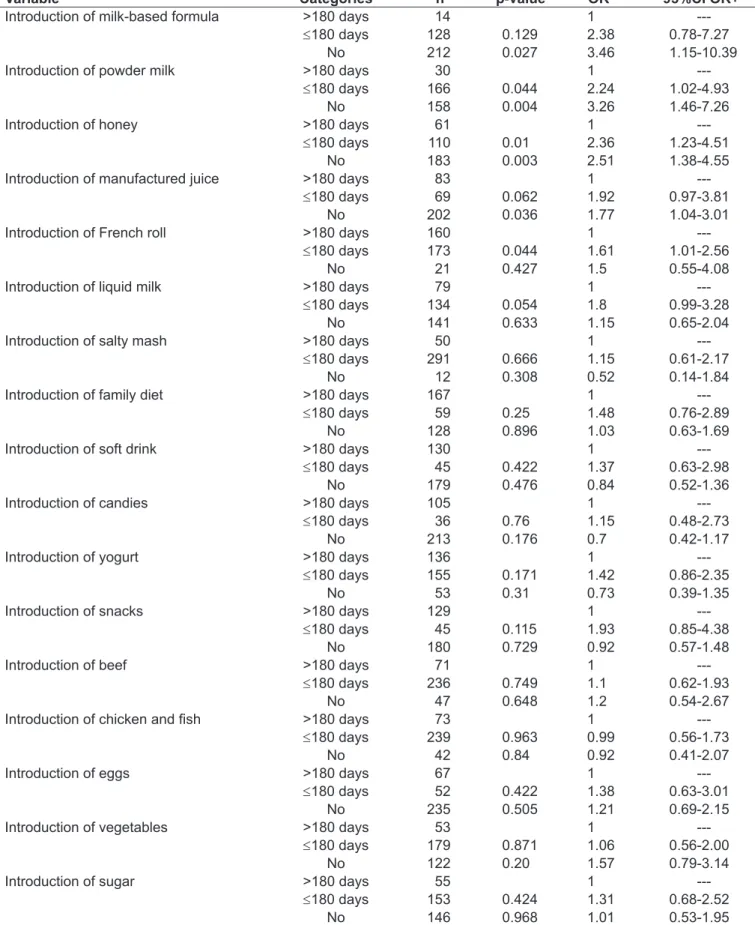
Table 3 – Univariate logistic regression analysis for anemia
Variable Categories n p-value OR* 95%CI OR+
Introduction of milk-based formula >180 days 14 1
---≤180 days 128 0.129 2.38 0.78-7.27
No 212 0.027 3.46 1.15-10.39
Introduction of powder milk >180 days 30 1
---≤180 days 166 0.044 2.24 1.02-4.93
No 158 0.004 3.26 1.46-7.26
Introduction of honey >180 days 61 1
---≤180 days 110 0.01 2.36 1.23-4.51
No 183 0.003 2.51 1.38-4.55
Introduction of manufactured juice >180 days 83 1
---≤180 days 69 0.062 1.92 0.97-3.81
No 202 0.036 1.77 1.04-3.01
Introduction of French roll >180 days 160 1
---≤180 days 173 0.044 1.61 1.01-2.56
No 21 0.427 1.5 0.55-4.08
Introduction of liquid milk >180 days 79 1
---≤180 days 134 0.054 1.8 0.99-3.28
No 141 0.633 1.15 0.65-2.04
Introduction of salty mash >180 days 50 1
---≤180 days 291 0.666 1.15 0.61-2.17
No 12 0.308 0.52 0.14-1.84
Introduction of family diet >180 days 167 1
---≤180 days 59 0.25 1.48 0.76-2.89
No 128 0.896 1.03 0.63-1.69
Introduction of soft drink >180 days 130 1
---≤180 days 45 0.422 1.37 0.63-2.98
No 179 0.476 0.84 0.52-1.36
Introduction of candies >180 days 105 1
---≤180 days 36 0.76 1.15 0.48-2.73
No 213 0.176 0.7 0.42-1.17
Introduction of yogurt >180 days 136 1
---≤180 days 155 0.171 1.42 0.86-2.35
No 53 0.31 0.73 0.39-1.35
Introduction of snacks >180 days 129 1
---≤180 days 45 0.115 1.93 0.85-4.38
No 180 0.729 0.92 0.57-1.48
Introduction of beef >180 days 71 1
---≤180 days 236 0.749 1.1 0.62-1.93
No 47 0.648 1.2 0.54-2.67
Introduction of chicken and ish >180 days 73 1
---≤180 days 239 0.963 0.99 0.56-1.73
No 42 0.84 0.92 0.41-2.07
Introduction of eggs >180 days 67 1
---≤180 days 52 0.422 1.38 0.63-3.01
No 235 0.505 1.21 0.69-2.15
Introduction of vegetables >180 days 53 1
---≤180 days 179 0.871 1.06 0.56-2.00
No 122 0.20 1.57 0.79-3.14
Introduction of sugar >180 days 55 1
---≤180 days 153 0.424 1.31 0.68-2.52
fruit juice (p=0.996), vegetables (p=0.22), egg (p=0.706), and sugar (p=0.10).
According to the univariate logistic regression analysis, which considered the recommended time of 180 days for weaning (Table 3), we found that when there was not intro-duction of complementary food or when this introintro-duction occurred before the recommended period, the risk of anemia was signiicantly associated with some foods. When there was introduction of infant powder milk, the child had a three-fold higher risk of developing anemia (OR=3.08; 95%CI: 1.36-6.95; p=0.007) in comparison with infants who received powder milk after 180 days of life, according to the results of the multivariate logistic regression analysis.
Table 4 shows that the shorter the period a child is breast-fed (in days) the higher the risk for anemia (OR=1.56).
Discussion
Campinas has more than 1 million inhabitants and it is considered a technological center in the state of São Paulo. It has low child mortality rates and there are university hos-pitals located in the municipality, as well as a large number of primary health care units. In spite of these characteristics, our indings show that more than half of the infants assessed had anemia, and 27.3% of them had severe anemia.
In Brazil, there are no national studies so far assessing the magnitude of the problem of iron deiciency. Several studies were conducted in different regions of the country involv-ing different populations, usinvolv-ing diverse methods and often collecting data in day care centers and primary health care units, demonstrating high prevalence of anemia due to iron deiciency in children younger than 2 years old(7).
A study conducted more than 10 years ago(5), found an
increasing trend in the prevalence of anemia in the state of São Paulo; however, it showed values even lower than those found in the population of Campinas. On the other hand, when the values found in the present study are compared with those of a regional study published by the Ministry
of Health in 2004(3), the indings were found to be similar
(approximately 67%). This suggests that the prevalence of anemia in general increased and intervention is necessary.
A limitation of the present study is the sample selection method. Since blood collection was performed using an invasive method, the maternal level of education had an in-luence on the authorization for carrying out the procedure. Therefore, data related to the prevalence of anemia were assessed using a weighted analysis, considering the percent-age of maternal level of education and thus minimizing the collection bias, since all social classes were represented in our sample(16).
Children with anemia began receiving liquid milk at 7 months, the same time for the introduction of powder milk to those children who did not have the disease. Also regard-ing the introduction of powder milk (regular and milk-based infant formula), the data analyzed using multivariate logistic regression demonstrated a reduced prevalence of anemia in the children who consume it. However, since this is a cross-sectional study, we found an isolated association between intake of powder milk and development of anemia. Further studies are needed to compare the different types of milk and the probability of developing the disease.
With regard to the duration of breastfeeding, this factor was not associated with anemia (Table 4), since most infants had already been weaned. Therefore, in our sample, the dura-tion of breastfeeding was short and there was early introduc-tion of some foods. However, we found that the prevalence of anemia was reduced when breastfeeding was longer.
Sweets (soft drinks, snacks, candies) and yogurt were offered to children with anemia when they were around 10 months old, medians of 300 and 210 days, respectively. These foods should be avoided during the irst year of life, ac-cording to the Dietary Guideline of the Ministry of Health(7)
(Step 8). If the introduction of such foods was delayed in 1 month, anemia would not have been detected (Table 2), which reinforces the idea that the consumption of these foods should be discouraged during childhood.
Table 4 – Univariate logistic regression analysis for anemia and duration of breastfeeding
Duration of breastfeeding n Anemia p-value OR 95%CI OR+
Yes No
≥180 days 131 85 46 1
---120-179 days 107 73 34 0.588 1.16 0.68-2.00
60-119 days 61 42 19 0.589 1.20 0.63-2.29
1. Organización Mundial de la Salud. Lucha contra la anemia nutricional, especialmente contra la carência de hierro: Informe ADI/OIEA/OMS. Genebra: OMS, 1975.
2. Osório MM, Lira PIC, Batista-Filho M. Prevalence of anaemia in children 6-59 months old in the state of Pernambuco, Brazil. Rev Panam Salud Publica 2001;10:101-7.
References
When children were offered French rolls before 6 months of age, there was presence of anemia both in the survival analysis (median of 180 days – Table 2) and in the univari-ate logistic regression (Table 3), with a 1.61-higher (95%CI OR=1.01-2.56) risk of developing the disease in those chil-dren who ate French rolls before 6 months than among those who did not consumed this type of food before 6 months.
Children can eat the family diet provided that the foods are smashed, shredded or chopped in small pieces after they are 8 months old, according to Step 5 of the Dietary Guideline(7). However, in the present study, children with
anemia were offered the family diet early (median of 209 days) in comparison with those children who did not have anemia, who began to eat the family diet approximately at 8 months old.
We found that the intake of varied vegetables and leafy greens is not a habit among children during their irst year of life; the median of introduction of vegetables for those with anemia was late, around 7 months of age (210 days) (Table 2).
The amount of iron in the foods depends on its bioavailabil-ity.It is recommended that meals containing dairy products and meals containing heme iron should be consumed with an interval between them because of the absorption competition between calcium and iron, while the consumption of foods rich in iron and vitamin C in the same meal increases iron absorption(7). The iron density contained in complementary
foods in developing countries may not fulill the iron require-ments of children younger than 2 years old(17-19). In the USA,
children between 6 to 11 months have diets containing nine-time higher iron density than children from Peru and Mexico. Such difference is reduced to ive times in children from 9 no 11 months and it is basically caused by the American habit of consuming iron-fortiied food(20).
The Brazilian Society of Pediatrics(4) recommends iron
supplementation since weaning before the sixth month of life and for all children older than 6 months, regardless of the type of milk being consumed. The mandatory food fortiication in force in Brazil consists in the use of iron and folic acid components in corn and wheat lour, since they
are inexpensive products that are part of the usual diet of the population.
There are dietary perceptions, beliefs and taboos regarding the introduction of foods according to different regions of the country. The National Qualitative Survey about Feed-ing Practices of children younger than 2 years old(11) showed
that some maternal perceptions can have an inluence on the consumption of foods rich in iron. Mothers believe that the children’s body is going through a process of formation and growth and, therefore, they should start receiving “children” or “soft” food, and their diet should be gradually changed until their organism is able to accept the same food consumed by adults. A multicentric study on dietary intake(21) showed
that, in general, the diet of Brazilian children younger than 2 years old is characterized by low energy density, which may be related to the type and consistency of the food (soft and diluted).
Therefore, the present study conducted with children from Campinas evidenced high prevalence of anemia and early weaning even among the individuals with higher socioeconomic status, which might be related to dietary mistakes. The time of introduction of complementary food was different for those who had anemia and those who did not have the disease. The factors associated with anemia were inappropriate introduction of powder milk and early intro-duction of some food having high content of carbohydrates such as French roll, manufactured orange juice, and honey. On the other hand, we found a trend of late introduction of vegetables in those children with anemia. Such information should be addressed by health programs in order to prevent anemia in children.Future studies should quantify the diet consumed by infants using dietary questionnaires to enable the analysis of the diet associated to anemia.
Acknowledgements
3. Brasil - Ministério da Saúde. Coordenação Geral da Política de Alimentação
e Nutrição. Oicina de trabalho “Carências Nutricionais: Desaio para Saúde
Pública”. Brasília: Ministério da Saúde, 2004.
4. WHO, Unicef, UNU.Iron deiciency anaemia: assessment, prevention and control.A guide for programme managers. Geneva: WHO, 2001.
5. Monteiro CA, Szarfarc SC, Mondini L. Secular trends in child anemia in S. Paulo city, Brazil (1984-1996). Rev Saude Publica 2000;34:62-72. 6. Oliveira RS, Diniz AS, Benigna MJ, Miranda-Silva SM, Lola MM, Gonçalves MC
et al. Magnitude, geographic distribution and trends of anemia in preschoolers, Brazil. Rev Saude Publica 2002;36:26-32.
7. Brasil - Ministério da Saúde, Organização Pan-Americana da Saúde. Guia alimentar para crianças menores de 2 anos. Série A. Normas e manuais técnicos. Brasília: Ministério da Saúde, 2002.
8. Giugliani ER, Victora CG. Alimentação complementar. J Pediatr (Rio J) 2000;76:S253-62.
9. Silva AA, Ribeiro VS, Borba Jr AF, Coimbra LC, Silva RA. Evaluation of data quality from the information system on live births in 1997-1998. Rev Saude Publica 2001;35:508-14.
10. OPAS, OMS. Indicadores para evaluar las practicas de lactancia materna. Genebra: OPAS (OMS/CED/SER 91.14), 1991.
11. Brasil - Ministério da Saúde, Instituto Brasileiro de Geograia e Estatítica.
Pesquisa nacional por amostra de domicílios (PNAD): acesso e utilização
de serviços de saúde – documento 44. Brasília: Ministério da Saúde, 1998.
12. WHO, Unicef, UNU. Iron deiciency anaemia: assessment, prevention and control. A guide for programme managers. Geneva: WHO, 2001.
13. Fundação Seade [homepage on the Internet]. Sistema estadual de análise de dados de São Paulo 1998-2002 [cited 2008 Agu 9]. Available from: http:// www.seade.gov.br.
14. World Health Organization. Preventing and controlling iron deiciency anaemia
through primary health care: a guide for health administrators and programme managers. Geneva: WHO, 1989.
15. Coutinho GG, Goloni-Bertollo EM, Bertelli EC. Iron deiciency anemia in children: a challenge for public health and for society. Sao Paulo Med J 2005;123:88-92.
16. Lutter CK. Iron deiciency in young children in low-income countries and new
approaches for its prevention. J Nut 2008;138:2523-8.
17. Heinig MJ, Nommsen LA, Peerson JM, Lonnerdal B, Dewey KG. Energy and
protein intakes of breast-fed and formula-fed infants during the irst year of
life and their association with growth velocity: the DARLING study. Am J Clin Nutr 1993;58:152-61.