
The human biofield and a pilot study on qigong
11
0
0
Texto
(2) 153 The results of a pilot study on the human biofield are presented. Changes in the biofield after practicing qigong, a subtle holistic intervention that involves the mind-body-spirit interrelationship, are measured, using a novel digital electrophotographic technique. It must be said that the two scientific views of life—the conventional view of materialistic reductionism—and the proposed dynamical, multidimensional, holistic view—are complementary. Metaphorically speaking, conventional biology depicts life as a crystal, focusing on ultrastructure. By contrast, the proposed holistic view depicts life as a flame, focusing on the dynamics of subtle energy and informational flows. Although both views are correct within a certain context, each alone is limited. Together they are complementary and provide a more complete view of life that offers greater potential for understanding health, disease, and healing. That is to say, the living state is richer and more complex than it is possible to express in a single scientific model or metaphor.. 1. The Indigenous Roots of Energy Field Concepts of Life It is acknowledged that the concept of the biofield, or of any organizing field in biology, evokes shades of vitalism, an old philosophical concept that goes back to the 1600s (Bischof, 1994). Vitalism is the belief that life and organic substances differ fundamentally from the inorganic world because they contain a vital force. Many noteworthy biologists have promulgated biological field theories (Bischof, 1998) to explain both biological development and the integrity of organisms, including Yale biologist Harold Saxon Burr, who together with F. S. C. Northrup proposed an electro-dynamic field underlying life (Burr & Northrup, 1938). Although such biological field concepts were part of mainstream biology for the first half of the 20th century, as molecular biology grew more dominant from 1950 onward and developed into big business, a field perspective of life became taboo in academic science. Despite its being ousted from science, vitalism has had a long history in medicine (Coulter, 1973). Vitalistic principles called by various names underlie many key concepts in indigenous medical systems: qi in Chinese medicine; prana in Ayurvedic medicine; ki in Japanese medicine; and Wilhelm Reich’s orgone in orgonomy, to name a few (Rubik, et al., 1994a). Hahnemann. 154 (1755-1843), the father of classical homeopathy, wrote of the vital force (Hamlyn, 1979). Many schools of chiropractic maintain vitalistic assumptions (Palmer, 1910), as do classical osteopathy and many other systems of medicine outside conventional Western medicine. Medical historian Harris L. Coulter (Coulter, 1994) describes the 2,500-year-old ongoing struggle between the vitalists and the mechanists in their healing philosophies. This philosophical difference remains one of the major schisms between conventional Western medicine and integrative medicine. The concept of subtle energy bodies is also integral to the ancient Eastern philosophical views of the human being that arose in India and China. Indian philosophy and Ayurvedic medicine maintain that in addition to the physical body, there is a subtle body possessing various energetic anatomical structures, including the seven chakras, nadis (etheric channels), pranas, vayus, and koshas (yogic sheaths or bodies) (Leadbeater, 1927). In Chinese philosophy and medicine, there are three important energy centers, called the dantians, which store and disperse qi from the taiji pole (center core) of the body (Johnson, 2000). The lower dantian located inside the belly near the navel is connected with the qi field of the physical body. The middle dantian, located in the center of the chest, is connected with the qi field of the emotional body, surrounding the physical body. The 3rd dantian is located inside the middle of the head and is associated with the spiritual field of qi that surrounds both the physical and emotional subtle bodies. Qi travels along the acupuncture meridians to all organs and tissues of the body. Despite the fact that vitalism has been banished from science, vitalistic concepts remain central today in virtually every indigenous system of medicine, including Oriental Medicine, Ayurvedic medicine, modern chiropractic, classical osteopathy, homeopathy, and other healing systems. Science has yet to build a bridge between the indigenous wisdom of these medical systems and biology.. 2. Scientific Approaches to the Biological Field In recent decades a small number of scientists have taken on this task of bridge-building, including the author (Rubik, 1993; 1997b; 2002a), by reintroducing the concept of a biological field central to life. There have.
(3) 155 been various approaches. For example, William Tiller proposes the existence of a new force to explain certain features of life, in addition to the four known forces of physics (Tiller, 1993). Fritz Popp and his colleagues propose coherent states in organisms and the emission of coherent electromagnetic waves (Popp, 1996). Savely Savva considers the biofield to go beyond electromagnetism, involving a nonphysical mental component that carries the information of intention and the psychic realm (Savva, 1997; 1998). Zhang calls the biological field the “electromagnetic body” and considers it a complex, ultraweak field of chaotic standing waves, a dissipative structure of electromagnetic fields that forms the energetic anatomical structures including the chakras and acupuncture meridians (Zhang, 1995; 1996). Welch proposes metabolic field structures of space-time (Welch and Smith, 1990; Welch, 1992). Each of these scientists regards the biological field as a holistic or global organizing field of the organism. Like a holographic plate distributes information throughout the hologram, the biological field conveys information throughout the organism and is central to its integration. The human biological field is an organizing field within and emanating from the body, which hypothetically regulates the biochemistry and physiology of the body. There is no consensus, however, among scientists regarding the nature of the biological field, i.e., whether it is electromagnetic or not, or whether it consists of electromagnetic components together with other, as-of-yet uncharacterized fields. Here we propose that the biofield consists of conventional electromagnetic fields along with more subtle fields that comprise consciousness and transpersonal realms of being. It is possible that there are subtle bodies of the human being beyond the physical body that involve fields of mind, soul, and spirit as espoused by Eastern and Western esoteric philosophies. A full scientific model of the human being may indeed require elements that go beyond space-time, matter-energy, and involve complex multi-dimensional geometry or other novel field concepts. See Table1 for a possible list of the fields that may comprise the human. The electromagnetic component of the biofield, which is scientifically measurable, is the endogenous, complex dynamic electromagnetic (EM) field resulting from the superposition of component EM fields of the organism that is proposed to be involved in self-organization and bio-regulation of the organism. The components of the biofield are the EM fields contributed by each individual oscillator or electrically charged, moving. 156 particle or ensemble of particles of the organism (ion, molecule, cell, tissue, etc.), according to principles of conventional physics. The resulting biofield may be conceived of as a very complex dynamic standing wave (Rubik, 1997b; Zhang, 1995; 1996). It has a broad spectral bandwidth, being composed of many different EM frequencies, analogous to a musical symphony with many harmonics that change over time. Divine (cosmic) consciousness; enlightenment. Primordial field. Transpersonal consciousness. Other Subtler fields. Transpersonal consciousness. Intuitional field. Personal consciousness. Mental field. Personal consciousness. Emocional field. Personal consciousness. Etheric energy field. Personal consciousness. Dense physical field: the body (matter + electromagnetic fields). Table 1: Possible fields comprising the human being. It is possible, according to systems theory, that higher-order field components of the human biofield such as consciousness may interact with and alter the electromagnetic component of the biofield. This may be the basis of mind-body medicine in which a shift in consciousness is transduced down through the biofield to the denser levels of being, affecting the electromagnetic biofield, which in turn affects the physiology of the body to promote healing. It is proposed that such “top-down” signal transduction effects modulate the physical biofield and are the basis of much of human healing that includes holistic realms of the mind-body-spirit, including the placebo effect, which is the biology of belief. Very small stimuli, even in the ultraphysical field such as thoughts or beliefs that are highly contextual and meaningful to a particular person, may therefore evoke shifts in the biofield. They serve as tiny dynamical nudges that act from the top downward to shift the dynamics. Positive stimuli from this domain will promote greater balance and harmony. Examples of such medical modalities include acupuncture, energetic herbs, homeopathy, affirmations and positive thinking, yoga, qigong, and, in fact, a large number of complementary and alternative medicine modalities. Hearing the words,.
(4) 157 “I love you”, spoken by a loved one, can have a profound effect on oneself, and is perhaps more powerful than any medicine. Experiencing the subtle energy field emanating from a person or animal who gives love and energy may also have a powerful dynamical effect, especially on a sick person. Positive effects of healers on humans, animals, cells and a variety of other living systems have indeed been scientifically demonstrated (Benor, 2002).. 3. Statement of the Human Biofield Hypothesis The key points of the biofield hypothesis may be stated with respect to the human being as follows: There is a complex, endogenous, multi-dimensional field of the human being that consists of electromagnetic and subtler fields within and around the body. This complex field conveys vital information in both directions and is central to the integration of the human being. The biofield is the super-regulator of the human being. All stimuli directly impact the complex multi-dimensional human biofield, and that field affects the homeodynamics of the person, thereby affecting biological regulation at the various levels of organization or fields of being, including the physiological and the biochemical levels. Principles of downward as well as upward causality apply. Please note that the older concept of homeostasis, which is a mechanical concept, has been replaced by homeodynamics (Yates, 1994), which takes into account the many modes of dynamic behavior exhibited by living processes in an ever-changing lifeline of the organism (Rose, 1997). In homeodynamics, the processes that give dynamic stability proceed simultaneously at multiple levels of organization, from the molecular level to that of the whole being, and with various time scales. These processes are constantly adjusting to the myriad information flows and the entire lifeline or history of the organism. In this way, the organism integrates a huge number of information signals and responds appropriately as an integrated being. Once moved, the organism never returns to its original system. 158 dynamics, but evolves new dynamics appropriately to deal with changes in conditions and new information. The biofield is a holistic property of the organism and is proposed as the super-regulator of homeodynamics, coordinating life functions at multiple levels of organization. The multi-dimensional biofield is like a conductor regulating the musicians at the various levels or fields of being to orchestrate the ongoing symphony of life. A full understanding of the human biofield is beyond our comprehension at this time. To compute even the electromagnetic biofield is not yet possible. The huge numbers of dynamic, interacting elements and their network of interactions transcend known computational limits. Moreover, there have been no concerted efforts to date to measure the total endogenous electromagnetic field of any organism. This is also a formidable, if not impossible, task, because there is a huge spectrum of frequencies involved that are extremely weak and time-dependent. Moreover, there is no clear boundary between the life’s metabolically maintained electromagnetic fields and those of its geophysical environment; for example, there is the Schumann resonance (7 to 10 Hz), which is reiterated in the alpha rhythms of human brain waves (Dubrov, 1978). Additionally, certain measurements of the electromagnetic biofield would interfere with it and even alter it. Nonetheless, certain elements of the human biofield have already been assessed under various conditions, including the ECG (electrocardiogram), EEG (electroencephalogram), and MEG (magnetoencephalogram). However, it must be said that conventional thinking regards these emissions as waste energy rather than informational fields playing an active role in bio-regulation. The fact remains that such subtle signals emitted from various organs carry information throughout the human body central to life.. 4. Methods of Assessing the Human Biofield There are various methods used to measure part of the human biofield or otherwise assess the flow of subtle energy in the body. For the most part, the objective scientific methods measure the bioelectricity or other aspects of the electromagnetic fields of life. However, for scientists who have used these methods under various subject conditions, it can readily be seen that the measurements are affected by subjects’ states of.
(5) 159 consciousness, including meditative states, moods, emotions, intentions, and other aspects of mind and spirit. That is, the signals transduced from the subtler fields of mind and emotions apparently affect the electromagnetic biofield and register changes in what can be measured objectively. Therefore, these methods may be windows into the human biofield as a whole. The objective scientific methods include the following. Electrodermal testing measures the flow of electricity at acupuncture points, considered to correspond to the flow of energy or qi along acupuncture meridians. Thermography maps the thermal patterns of the body. EEG, ECG, and other similar clinical diagnostics measure the electrical emission from key organs such as brain and heart, respectively. Scientists also measure biophotons, the ultraweak light emitted from the body, with various detectors. In the pilot study described below, a form of digital electrophotography, also known as bioelectrography or digital Kirlian photography, which is related to the original form of Kirlian photography, is used to visualize part of the human biofield and to calculate some of its parameters.. 5. Pilot Study: Assessing the Human Biofield Before and After Qigong 5.1. Objectives This project aims toward building a bridge from science to concepts of qi or subtle energy fields of life. Such concepts are held by indigenous cultures worldwide but have had no place in contemporary science, despite the fact that science falls short in explaining many biological phenomena, including the modus operandi of alternative and complementary medical modalities such as qigong. The biofield hypothesis has been proposed as a scientific basis for an energy field within and around the human being that is the key regulator of the living state. This study utilizes a form of digital electrophotography of the fingertips to visualize part of the human biofield in order to test whether qigong has any effect on it. This is a preliminary investigation to observe any effects of qigong on the biofield parameters of chronically ill adults.. 160 5.2. Introduction to Qigong Qigong is a mind-body-spirit discipline that originated in China in the 26th century BC. It is the cultivation of qi to regulate the energy field through consistent practice that incorporates meditation, movement, and the breath. Qigong is one of the 3 pillars of Traditional Chinese Medicine. Today there are many thousands of forms of it, and new forms are invented daily. Dayan qigong, or wild goose qigong, can be traced back at least 1700 years as an intact form that was passed down through a lineage of monks and masters. Performed with normal breathing, it involves an elaborate set of movements that imitate the movements of the wild goose. In performing Dayan qigong, one gathers qi (universal life energy) from the earth and sky and distributes it through key acupuncture points, meridians, and the 3 dantians or main energy centers of the body. It is one of the most highly regarded forms of qigong for health and fitness, and it is practiced worldwide. In this study, the first 64 moves in the basic form of Dayan qigong plus the Shaolin warmup exercises for the martial arts were performed (Zhang, 2000). 5.3. Research Questions Does the biofield change for chronically ill adults immediately after practicing Dayan qigong? If so, is there any improvement in energy regulation? What differences, if any, are observed between the beginners and qigong-experienced persons after performing qigong? Because this was only a preliminary research study with no prior database, no formal hypothesis testing was performed. 5.4. Experimental Design The study was done as a field experiment at two qigong workshops in San Francisco in 2001 and 2002. Sixteen subjects were measured immediately pre- and post-qigong. The energy patterns of all ten fingertips of human subjects were assessed only once each for pre- and post-conditions, due to time limitations. No control subjects were included, as this was a preliminary study to observe any trends..
(6) 161 5.5. Methods A digital form of Kirlian photography was used to assess the human biofield. The original form of Kirlian photography or electrophotography was discovered by Semyon Kirlian in 1939 (Kirlian et al., 1961). Because the photographic film method of Kirlian photography proved difficult to reproduce and replicate, it was initially dismissed by most Western scientists. However, over the next several decades, key holistic health practitioners such as Dr. Peter Mandel in Germany and others in Eastern Europe developed an enormous empirical database of medical case studies using this method (Mandel, 1986). In the mid-1990s, Russian physicist Konstantin Korotkov, Ph.D., and his colleagues at St. Petersburg invented a digital form of Kirlian photography, called GDV, or “gas discharge visualization” technique, and incorporated the knowledge base of Mandel and Korean hand acupuncture systems in software programs to analyze the human biofield (Korotkov, 1998a; 1998b; 2002). The GDV camera is presently the state-of-the-art in electrophotography. It utilizes a high frequency (1024 Hz), high-voltage (10 - 20 kV) input to the finger (or other object to be photographed), which is placed on the electrified glass lens of the camera. Because the electrical stimulus in this device is less than that of older Kirlian cameras, most human subjects do not experience any sensation when exposing their fingertip to the camera. In practice, the applied electric field is pulsed on and off every 10 microseconds, and the fingertip is exposed for 1 second. This causes a corona discharge of light-emitting plasma (visible and near-ultraviolet light) to stream outward from the fingertip. The light emitted from the fingertip is detected directly by a CCD (charge-coupled detector), which is the state-of-the-art in scientific instruments such as telescopes to measure extremely low-level light. The signal from the CCD is sent directly to a computer for software analysis. In this study, all 10 fingertips of each subject were measured, one finger at a time, in the following order: from left thumb to left little finger, and from right thumb to right little finger. The time exposure of each fingertip to the electrified glass plate was 1 second. The static digital photos of the GDV-grams (light emission patterns from each fingertip) were captured as bitmap files on a computer. Measurements were made of each subject immediately before and after performing the Shaolin warmup exercises followed by the first set of 64 movements in Dayan qigong.. 162 Software analysis was done to calculate a variety of parameters that characterize the pattern of light emitted from each finger, including brightness, total area, fractality, and density, and the variation in the energy distribution between the right and left hands. Other computer analyses, including calculations of the various sectors of the fingertip emission patterns that purportedly relate to the bioenergetics of specific organs and organ systems (Mandel, 1986) as well as the chakras were done but are not shown here. The standardization of techniques to show the stability and reproducibility of the GDV parameters has been described by the inventor (Korotkov, 1998a). Other researchers have used similar high-voltage electrophotography to investigate the reproducibility assessing the parameters of human beings with significant results (Russo et al., 2001). The GDV camera has been used for clinical studies mainly in Russia (Bevk et al., 2000), where it is a registered medical device. It has also been used to monitor the results of stress management training (Dobson and O’Keffe, 2000). Indeed, studies by researchers worldwide are underway, exploring the camera’s utility for living systems ranging from biofield assessment of human subjects (Rubik, 2002b) to studying homeopathic remedies (Bell et al., 2003). 5.6. Human Subjects Sixteen subjects were measured. Among these, the data from five chronically ill adults were analyzed in detail. The age range was 48 to 77 years old. All five were previously diagnosed as having a chronic degenerative disease as shown in Table 2, which also lists their age, gender, and qigong experience. The range of qigong experience varied from complete novice to 2 years of practice. Three of the five subjects were women. Gender. Age. Illness. Qigong Practice, yrs. F. 48. Primary biliary cirrhosis. 0. F. 56. Multiple sclerosis. 1.5. M. 63. Kidney failure. 2.0. F. 71. Osteoarthritis. 0.25. M. 77. Parkinson’s disease. 0.33. Table 2: Characteristics of the five chronically ill subjects. F= female; M=male..
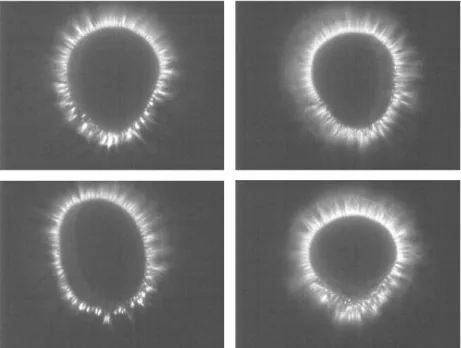
(7) 163 5.7. Results A statistical analysis of all 16 subjects was previously made (Rubik and Brooks, 2003). The case study results of n = 5 chronically ill subjects are analyzed herein. The raw data for two fingers of the Parkinson’s disease patient, preand post-qigong, are shown in Figure 1. According to Korean Hand Therapy, the middle finger represents the head. Thus, data from the right and left middle fingers were selected in particular for analysis, in light of the fact that Parkinson’s disease is due to a brain disorder.. 164 pre-qigong condition. Table 3 shows the results of analysis of the fingertip emission patterns for 3L and 3R, the middle fingers, pre- and post-qigong, in normalized units. The area or size of the emission pattern is stated in normalized pixels; density refers to the uniformity of the density of the emission pattern relative to a perfect circle (which would have a density value of 1); and the fractality parameter refers to the degree of self-similarity of the emission pattern. At 3.22 units, the area is larger post-qigong. The density parameter also increases, which means that the post-qigong emission patterns are more uniformly dense circles of light. However, fractality decreases post-qigong, which means that the edges of the emission patterns become smoother and less ragged. Area. Density. Fractality. Pre. Post. Pre. Post. Pre. Post. 3L. 2.14. 3.22. 0.404. 0.456. 4.63. 4.09. 3R. 1.87. 3.02. 0.366. 0.473. 6.61. 4.55. Table 3: Parametric analysis of pattern of light emission from 3L and 3R fingertips of subject with Parkinson’s disease, pre- and post-qigong.. Figure 1: GDV-grams (gas discharge visualization camera photos of the light emission patterns) from the two middle fingers of patient with Parkinson’s disease, before and after qigong. L= left; R=right. 3L pre-qigong (left middle finger, shown in upper left); 3L post-qigong (shown in upper right); 3R pre-qigong (shown in lower left) and 3R post-qigong (shown in lower right).. Notice that in Figure 1, the corona discharges in the post-qigong photos are substantially larger and especially more uniform than those of the. The results of the parametric analysis for all five subjects, ranked by qigong experience from 0 to 2 years, are portrayed in Figures 2 – 6. Only two of the parameters characterizing the light emission patterns showed a clear trend pre-post qigong. As shown in Figure 4, fractality was observed to decrease for all 5 subjects, whereas area of emission, density, and brightness showed no distinct changes, as shown in Figures 2, 3 and 5. However, the most dramatic change pre-post qigong was the variation between right-left hand energy emission, which was also observed to correlate with level of qigong experience, shown in Figure 6. This was calculated by summing the total areas of emission patterns for each finger on the right and left hands respectively and calculating the right-left difference. The inexperienced subjects showed the most variation between right and left hand total emission pre-qigong. Moreover, the greater the qigong experience, the more this variation decreased. Following qigong, the rightleft variation was most greatly reduced for the inexperienced subjects. However, even the most qigong-experienced subject showed a greater balance in right-left hand energy emission post-qigong..
(8) 165. Figure 2: Mean area of all 10 GDV-grams for all 5 subjects shows no trend, pre-post qigong.. Figure 3: Mean density of all 10 GDV-grams for all 5 subjects shows no trend, pre-post qigong.. 166. Figure 4: Mean fractality of all 10 GDV-grams for all 5 subjects shows a trend toward lower fractality post-qigong.. Figure 5: Mean brightness of all 10 GDV-grams for all 5 subjects shows no trend pre-post qigong..
(9) 167. Figure 6: Variation between right and left hand energy emission shows a trend with qigong experience. The less experienced show a greater variation between right and left hand pre-qigong, and more pronounced change following qigong. The most experienced in qigong shows only a small variation between right and left hand energy emission both pre- and post-qigong.. 5.8. Conclusions and Discussion The sample number, n = 5 subjects with various chronic degenerative diseases, was too small to permit a meaningful statistical analysis. However, some trends in the parametric data for the fingertips were observed, as follows. Right-left balance. All 5 subjects showed less variation between right and left hand emission following qigong, which indicates an improved right-left energy distribution. The most inexperienced subjects showed the greatest difference between right and left hand emission before doing qigong. Those with longer qigong experience showed a more balanced right-left energy distribution before doing qigong. Specific changes correlating with disease specificity. In some cases, the emissions of specific regions of fingers corresponding to the diseased organ were visibly enhanced following qigong. The single example shown here was that of a Parkinson’s disease patient who showed a distinct change in the 3rd finger emission pattern, which corresponds to the head region in the Korean Hand Therapy system of Oriental medicine. Other cases include. 168 liver disease and kidney disease in which the corresponding fingers showed marked changes in emission following qigong (data not shown). Decreases in fractality. Neither area, brightness, nor density, but the fractality parameter changed consistently following qigong for all 5 subjects. The fractality parameter decreased post-qigong. This means that the emission pattern was smoother along the edges following qigong. This might refer to a smoother flow of qi within and around the body. By analogy, consider the flame of a gas stovetop. When the gas is not flowing smoothly to the burner, as when the burner is first ignited, the flame is irregular and jumpy. However, when the gas is flowing smoothly and regularly to the burner, so that the flame is steady, the edge of the flame is smoothest all around giving rise to a singular flame. Because this study was only a preliminary one to find out if there were any consistent changes in the electrophotographic corona discharges from the fingertips of the chronically ill immediately following qigong, this study is very limited in scope. The sample size is also small, with n = 5 subjects. Moreover, there were no control subjects or control activities to compare any nonspecific effects on the biofield emission patterns from simple physical exercise. Therefore, no strong conclusions can be made from the results obtained. Nonetheless, these data demonstrate some of the promising features of this new method of scientific analysis of the digital Kirlian aura. It appears to be a stable method of ascertaining various features about the human energy field, both qualitatively and quantitatively. It looks promising as a useful method of investigating aspects of the human biofield, in particular, the visible electromagnetic component field of the body and its response to subtle interventions. Additionally, several other types of quantitative analyses of the finger emission patterns are possible with the GDV camera and associated software, but they are not shown here. It is possible that positive changes in the human biofield following a particular intervention such as qigong indicate that the modality might be useful to the subject to promote healing. In relation to this, one premise of Oriental medicine is that, “blood follows qi”, meaning that changes at the level of the flesh and blood will follow the subtle energy field changes, if the field patterns are maintained over time. Moreover, a second premise of Oriental medicine is that a smooth unimpeded flow of qi is essential for health and healing. Therefore, if energy regulation is improved, the patient.
(10) 169 will be expected to show physical improvement over time. Further studies are needed to confirm this, using large numbers of subjects performing qigong and studied under the long term. The biofield appears to be a useful construct for investigating holistic properties of humans and other organisms. Further theoretical work is needed to further develop the biofield hypothesis. Additionally, further experimental studies are needed to understand more about the role of the human biofield in holistic medical interventions and healing.. 170 Coulter HL. Divided Legacy, A History of the Schism in Medical Thought, Vol. 1: The Patterns Emerge: Hippocrates to Paracelcus. Washington, DC: Center for Emperical Medicine, 1973. Coulter HL. Divided Legacy, A History of the Schism in Medical Thought, Vol. 4: Twentieth Century Medicine: The Bacteriological Era. Washington, D.C.: Center for Empirical Medicine, 1994. Dobson P, O’Keffe E. Investigations into stress and its management using the Gas Discharge Visualization Technique. Intern J Altern Complement Med 2000;3:12-17. Dubrov AP. The Geomagnetic Field and Life: Geomagnetobiology. New York: Plenum Press, 1978. Gleick J. Chaos: Making a New Science. New York: Viking Penguin Inc., 1987.. Acknowledgements We gratefully acknowledge support from the US National Institutes of Health, grant P20 AT00774-01, for the biofield hypothesis. We gratefully acknowledge the support of the Lifebridge Foundation for the pilot project on qigong. We are also grateful to Bett Martinez and Dr. Effie Chow for giving us the opportunity to study participants at the Dayan Qigong Workshop at the 4th World Congress on Qigong, 2001, and the 5th World Congress on Qigong, 2002, San Francisco, CA.. Hamlyn E. The Healing Art of Homeopathy (The Organon of Samuel Hahnemann). London: Beaconsfield Publ., 1979. Jantsche E. The Self-Organizing Universe. New York: Pergamon Press, 1980. Johnson JA. Chinese Medical Qigong Therapy: A Comprehensive Clinical Text. Pacific Grove, CA: International Institute of Medical Qigong, 2000, 103. Kirlian S, Kirlian V. Photographing and visual observation by means of high frequency currents. J Scientific & Applied Photography 1961;6(6):397-403 (in Russian). Korotkov K. Aura and Consciousness: New Stage of Scientific Understanding. St. Petersburg, Russia: State Editing and Publishing Unit “Kultura”, 1998a.. References: Bell I, Lewis DA, Brooks AJ, Lewis SE, Schwartz GE. “Gas discharge visualization evaluation of ultramolecular doses of homeopathic medicines under blinded, controlled conditions”. Intern J Altern Complement Med 2003; 9(1):25-38. Benor DJ. Spiritual Healing: Scientific Validation of a Healing Revolution. Southfield, Michigan: Vision Publications, 2002.. Korotkov K. Light After Life: A Scientific Journey Into the Spiritual World. Fair Lawn, NJ: Backbone Publishing Co., 1998b. Korotkov K. Human Energy Field: Study with GDV Bioelectrography. St. Petersburg, Russia: St. Petersburg State Institute of Fine Mechanics and Optics (Technical University), 2002. Leadbeater CW. The Chakras. Wheaton, IL: Theosophical Publishing House, 1927.. Bevk M, Kononenko K, Zrimek T. “Relation between energetic diagnoses and GDV images”. In: Korotkov, K (editor). Proceedings of the New Science of Consciousness Conference. Ljublana, Russia, October 2000, 54-58.. Mandel P. (1986). Energy Emission Analysis: New Application of Kirlian Photography for Holistic Health. Essen, Germany: Synthesis Publishing Company.. Bischof M. The history of bioelectromagnetism. In: Ho MW, Popp FA, Warnke U, eds. Bioelectrodynamics and Biocommunication. Singapore: World Scientific Publishing, 1994.. Palmer DD. The Science, Art, and Philosophy of Chiropractic. Portland, OR: Portland Printing House Co., 1910.. Bischof M. The history of biological holism and field theories in the 20th century. MISAHA Newsletter 1998;22-23:7-11.. Popp FA. Evolution as the Expansion of Coherent States. In: Zhang CL, Popp FA, Bischof M eds., Current Development of Biophysics. Hangzhou, China: Hangzhou University Press, 1996, 252-264.. Burr HS and Northrup FSC. “Evidence for the existence of an electro-dynamic field in living organisms”. Proc Nat Acad Sci 1938;25:284-288. Morowitz HJ. Energy Flow in Biology. New York: Academic Press, 1968.. Prigogine I. From Being to Becoming. San Francisco: W.H. Freeman and Co, 1980..
(11) 171 Rose S. Lifelines: Biology, Freedom, Determinism. London: Allen Lane, Penguin Press, 1997. Rubik B. Can Western science provide a foundation for acupuncture? Am Acad Med Acupunc Rev 1993; 5(1):15-17. Rubik B. Energy Medicine and the Unifying Concept of Information. Altern Ther Health Med 1995a; 1(1):34-39. Rubik B. Can Western science provide a foundation for acupuncture? Altern Ther Health Med 1995b;1(4): 41-47. Rubik B. Bioelectromagnetic Medicine. Admin Radiol J August 1997a;XVI(8) 38-46.. 172 Welch GR, Smith HA. On the field structure of metabolic spacetime. In: Mishra RK, ed. Molecular and Biological Physics of Living Systems. Dordrecht, Holland: Kluwer,1990, 53-85. Welch GR. 1992. An analogical “field” construct in cellular biophysics history and present status. Prog Biophys and Molec Biol 1992; 57:72-1128. Yates FE. Order and complexity in dynamical systems: homeodynamics as a generalized mechanics for biology. Math & Comput Modeling 1994;19:49-74. Zhang CL. Acupuncture system and electromagnetic standing wave inside body. J. Nature 1995;17(5):275-281 (in Chinese).. Rubik B. The unifying concept of information in acupuncture and other energy medicine modalities. J Altern Complement Med 1997b;3(S1):S-67 – S-76.. Zhang CL. Standing wave, meridians and collaterals, coherent electromagnetic field and holistic thinking in Chinese Traditional Medicine. J. of Yunnan College of Traditional Medicine 1996;19(1):27-30 (in Chinese).. Rubik B, Pavek R, Ward R, Greene E, Upledger J, Lawrence D, Ramsden E. Manual healing methods. NIH Publication No. 94-066, Alternative Medicine: Expanding Medical Horizons. Washington, D.C.: US Government Printing Office, 1994a, 134-157.. Zhang H-C. Wild Goose Qigong: Natural Movement for Healthy Living. Boston: YMAA Publication Center, 2000; 19-102.. Rubik B, Becker RO, Flower RG, Hazlewood CF, Liboff AR, Walleczek J. Bioelectromagnetics applications in medicine. NIH Publication No. 94-066. Alternative Medicine: Expanding Medical Horizons. Washington DC: US Government Printing Office, 1994b, 45-65. Rubik B. The biofield hypothesis: its biophysical basis and role in medicine. J Altern & Complement Med 2002a;8(6):703-717. Rubik B. Scientific analysis of the human aura. In: Heinze, R I (ed.), Proceedings of the 19th Annual International Conference on the Study of Shamanism and Alternative Modes of Healing. Berkeley, CA: Independent Scholars of Asia, Inc., 2002b; 104-125. Rubik B and Brooks AJ. Digital high-voltage electrophotographic measures of the fingertips of subjects pre- and post-qigong. Submitted to J Altern & Complement Med, July, 2003. Russo M, Choudhri AF, Whitworth G, Weinberg AD, Bickel W, and Oz MC. Quantitative analysis of reproducible changes in high-voltage electrophotography. Intern J Altern Complement Med 2001;7(6):617-629. Savva S. A systems approach in biology and biophysics. MISAHA Newsletter, 1997; 18-19:.2-9. Savva S. Toward a cybernetic model of the organism. Advances in Mind-Body Med, 1998; 14(4):292-301. Strohman R. Ancient genomes, wise bodies, unhealthy people: limits of a genetic paradigm in biology and medicine. Perspect Biol & Med 1993;37: 112-145. Tiller W. What are subtle energies?, J Sci Explor, 1993;7(3):293-304..
(12)
Imagem



Documentos relacionados
The fact that subjects with osteoporosis presented greater EMG activity during rest and on right and left lateral excursions and protrusion, compared to the activity
With this information, taking the hospital as the unit of analysis, we estimated the impacts of the introduction of SA management in cost and efficiency indicators (cost per
The right ventricular overload groups were submitted to occlusion of the following pulmonary arteries: SVD1 (left pulmonary artery); SVD2 (left pulmonary artery and
plo ponto de vista (urbano e rural, m ode rno e arcaico, culto e popular) e nterrado no seu falso diálogo para g lobali zar os sentidos l ocais c para l ocalizar o
Destacam que a Escola atribuiria nova visibilidade à formação e identidade profissional, pois ela foi de grande abrangência na formação de enfermeiras para o Brasil, inclusive
Do mesmo modo que nos bairros as imagens construídas a partir do exterior pelo discurso turístico acabam por ser integradas nas auto-representações (Costa
Analysis of the number of sources of activity in the left and right hemispheres revealed significant differences between the two groups, showing that ex-illiterate subjects
The speciic behaviors and behavioral states studied were hand in the mouth, right (HMR) and left (HML) and hand suction, right (HSR) and left (HSL), deep sleep (1), light sleep (2),
