Universidade do Minho
Escola de Psicologia
Mariana Isabel Dias Pereira
Couple relationship during the transition to
parenthood: gender and parity effects over time
junho de 2020 Co up le re la tio ns hi p d ur in g t he tr an sit io n t o pa re nt ho od : g en de r a nd p ar ity e ffe ct s o ve r t im e UM inho | 20 20 M ar ia na P er ei ra
Universidade do Minho
Escola de Psicologia
Mariana Isabel Dias Pereira
Couple relationship during the transition to
parenthood: gender and parity effects over time
Dissertação de Mestrado
Mestrado em Psicologia Aplicada
Trabalho realizado sob a orientação do
Professora Doutora Bárbara Figueiredo
ii
DIREITOS DE AUTOR E CONDIÇÕES DE UTILIZAÇÃO DO TRABALHO POR TERCEIROS
Este é um trabalho académico que pode ser utilizado por terceiros desde que respeitadas as regras e boas práticas internacionalmente aceites, no que concerne aos direitos de autor e direitos conexos.
Assim, o presente trabalho pode ser utilizado nos termos previstos na licença abaixo indicada. Caso o utilizador necessite de permissão para poder fazer um uso do trabalho em condições não previstas no licenciamento indicado, deverá contactar o autor, através do RepositóriUM da Universidade do Minho.
Licença concedida aos utilizadores deste trabalho
Atribuição-NãoComercial-SemDerivações CC BY-NC-ND
iii
I hereby declare having conducted this academic work with integrity. I confirm that I have not used plagiarism or any form of undue use of information or falsification of results along the process leading to its elaboration. I further declare that I have fully acknowledged the Code of Ethical Conduct of the University of Minho.
University of Minho, 4th of June 2020
iv
Relação conjugal durante a transição para a parentalidade: efeitos do género e paridade ao longo do tempo
Resumo
Embora a literatura assinale a deterioração da qualidade da relação conjugal durante a transição para a parentalidade, dados sobre os efeitos do género e da paridade são limitados. Este estudo teve como objetivo analisar (1) as alterações nas interações positivas e negativas da relação conjugal, do primeiro trimestre da gravidez até aos três meses pós-parto; e (2) as diferenças e efeitos do género e da paridade nas interações positivas e negativas da relação conjugal desde o primeiro trimestre da gravidez até aos três meses pós-parto. A amostra é constituída por 206 mães e 189 pais (N = 395, primíparos ou multíparos) que, em cada trimestre da gravidez, no parto e nos três meses pós-parto, preencheram um instrumento que avalia as interações positivas e negativas na relação conjugal. Os resultados sugerem uma diminuição das interações negativas na relação conjugal entre o primeiro trimestre de gravidez e os três meses pós-parto. Esta diminuição das interações negativas na relação conjugal foi principalmente reportada pelos pais primíparos entre o primeiro trimestre de gravidez e o parto. As interações positivas na relação conjugal mantiveram-se constantes entre o primeiro trimestre de gravidez e os três meses pós-parto. Contudo, as mães reportaram uma diminuição das interações positivas do terceiro trimestre de gravidez até aos três meses pós-parto e as mães multíparas também reportaram uma diminuição do primeiro trimestre até aos três meses pós-parto. Embora no geral não tenha sido observada deterioração na qualidade da relação conjugal, uma diminuição das interações positivas foi reportada pelas mães após o parto e desde o primeiro trimestre de gravidez até aos três meses pós-parto pelas mães multíparas.
Palavras-chave: relação conjugal; positiva e negativa; género; paridade; transição para a
v
Abstract
Although a deterioration has been found on couple’s relationship quality during the transition to parenthood, data regarding gender and parity effects are limited in the literature. This study aimed to analyze (1) changes in couple’s positive and negative interactions from the first trimester of pregnancy to three months postpartum; and (2) gender and parity differences and effects on couple’s positive and negative interactions from the first trimester of pregnancy to three months postpartum. A sample of 206 mothers and 189 fathers (N = 395, primiparous or multiparous) completed a measure of couple’s positive and negative interactions at each pregnancy trimester, childbirth, and at three months postpartum. Results suggested a decrease on couple’s negative interactions from the first trimester of pregnancy to three months postpartum. This decrease on couple’s negative interactions was mainly reported by primiparous fathers from the first trimester of pregnancy to childbirth. Couple’s positive interactions remain stable from the first trimester to three months postpartum. However, mothers reported a decrease on couple’s positive interactions from the third trimester of pregnancy to three months postpartum, and multiparous mothers also reported a decrease from the first trimester of pregnancy to three months postpartum. Although no overall deterioration was found on couple’s relationship quality, a decrease on couple’s positive interactions was reported by mothers during the postpartum period and from the first trimester of pregnancy to three months postpartum reported by multiparous mothers.
Keywords: couple’s relationship; positive and negative; gender; parity; transition to
vi Index Background ... 7 Method ... 10 Participants ... 10 Procedure ... 12 Measures ... 12 Statistical analysis ... 13 Results ... 13 Discussion ... 21
Limitations and strengths ... 23
Implications for clinical practice and research ... 24
Conclusion ... 24
References ... 25
Appendix ... 30
Table Index Table 1 - Participants’ sociodemographic characteristics ... 11
Table 2 - Couple’s positive and negative interactions from the first trimester of pregnancy to three months postpartum ... 14
Table 3 - Gender differences and effects on couple’s positive and negative interactions from the first trimester of pregnancy to three months postpartum ... 16
Table 4 - Parity differences and effects on couple’s positive and negative interactions from first trimester of pregnancy to three months postpartum ... 19
Figure Index Figure 1. Couple’s positive (A) and negative (B) interactions from the first trimester of pregnancy to three months postpartum in mothers and fathers ... 17
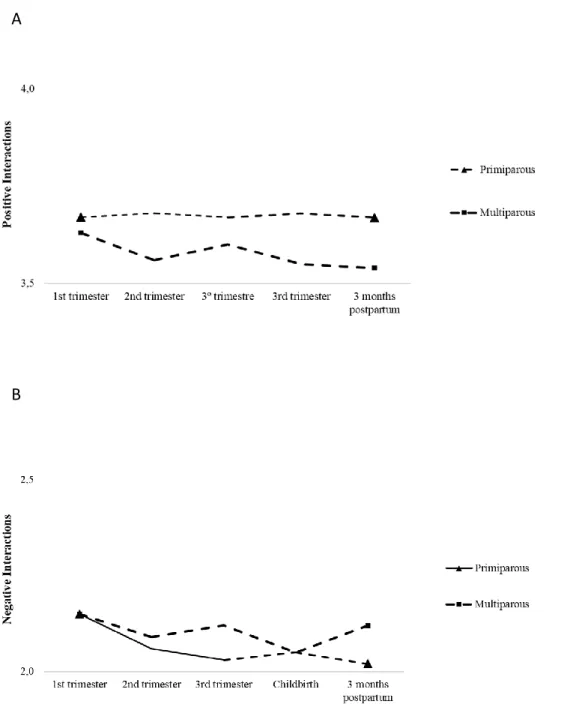
Figure 2. Couple’s positive (A) and negative (B) interactions from the first trimester of pregnancy to three months postpartum in primiparous and multiparous ... 20
7
Couple relationship during the transition to parenthood: gender and parity effects over time
The transition to parenthood is a major developmental transition that involves several psychological, biological and social adjustments, occurring at individual, dyadic and family levels (e.g., Cowan & Cowan, 2000; Figueiredo, 2014). This transition begins during pregnancy, or even earlier with planning, and lasts until several months postpartum (e.g., Adamsons, 2013; Figueiredo et al., 2018; Moreno-Rosset, Arnal-Rémon, Antequera-Jurado, & Ramírez-Uclés, 2016). Becoming a parent can be a stressful task for both members of the couple (e.g., Figueiredo & Conde, 2015; Lawrence, Rothman, Cobb, Rothman, & Bradbury, 2008; Molgora, Acquati, Fenaroli, & Saita, 2018), as the transition to parenthood requires changes in their lifestyle as well as the renegotiation and reorganization of their roles, as couple and as new parents (e.g., Alves, Milek, Fonseca, Canavarro, & Pereira, 2019; Ferriby, Kotila, Dush, & Schoppe-Sullivan, 2015; Moreno-Rosset et al., 2016).
In order to adjust to the transition to parenthood, both members of the couple must achieve several developmental tasks (Cowan & Cowan, 2000). Achieving the necessary developmental tasks is related to positive changes on couple and family relationship quality (e.g., Bost, Cox, Burchinal, & Payne, 2002; Lorensen, Wilson, & White, 2004; Mitnick, Heyman, Smith, & Slep, 2009), while the negative achievement of these developmental tasks may lead to an incomplete transition (Cowan & Cowan, 2000).
Couple’s relationship satisfaction and quality has influence on mother’s and father’s adjustment to the transition to parenthood (Figueiredo et al., 2018). Couple’s relationship quality and satisfaction are multidimensional constructs of the individual perceptions of both members of the couple about their relationship (Kluwer, 2010). Couple’s relationship quality refers to what is established between the members of the couple and includes positive and negative interactions (Canário & Figueiredo, 2016). Positive interactions refer to shared activities, support and partnership, while negative interactions include irritability, lack of support from partner and criticism (e.g., Figueiredo et al., 2008).
Couple’s relationship quality can be a protective or a risk factor for mother’s and father’s adjustment to the transition to parenthood (e.g., Figueiredo et al., 2018; Kluwer, 2010). Positive couple’s relationship maintenance during the transition is a protective factor (e.g., Welch, Rouleau-Mitchell, Farero, Lachmar, & Wittenborn, 2019), while a deterioration of couple’s relationship quality is a risk factor for the adjustment to the transition to
COUPLE RELATONSHIP, TRANSITION TO PARENTHOOD
8
parenthood (Figueiredo et al., 2018; Osofsky et al, 1985). Crucial aspects of couple’s relationship quality are communication, emotional closeness (e.g., Suto, Takehara, Yamane, & Ota, 2017), partner support, sexuality, intimacy (e.g., Cowan & Cowan, 2003; Parfitt & Ayers, 2014), and the duration and status of couple’s relationship before pregnancy (Howard & Brooks-Gunn, 2009; Trillingsgaard, Baucon, & Heyman, 2014). These may suffer some changes during the transition to parenthood that may contribute to the deterioration of couple’s relationship quality (e.g., Lawrence et al., 2008; Theisen, Ogolsky, Simpson, & Rhodes, 2019). The literature has been consistently reporting a decline on couple’s relationship quality during the transition to parenthood (e.g., Belsky, Spanier, & Rovine, 1983; Don & Mickelson, 2012; Molgora et al., 2018; Moreno-Rosset et al., 2016; Osofsky et al., 1985; Trillingsgaard, Sommer, Lasgaards, & Elklit, 2014). Longitudinal studies showed that couple’s relationship quality tends to decline from pregnancy to the postpartum period (e.g., Cowan & Cowan, 1992; Doss, Rhoades, Stanley, & Markman, 2009), and this decline persists across the transition to parenthood (e.g., Doss et al., 2009; Lawrence et al., 2008). The decline observed during pregnancy was associated with pregnancy acceptance (e.g., Slade et al., 2009). The decline observed during the postpartum period was associated with infant care (e.g., Halford & Petch, 2010; Kluwer, 2010), new responsibilities, and lack of parenting experience (e.g., Belsky, Lang, & Huston, 1986). Moreover, workplace demands, and household labor can also increase stress in both members of the couple (e.g., Moller, Hwang, & Wickberg, 2006, 2007).
Although the literature is consensual about the deterioration of couple’s relationship quality during the transition to parenthood, data regarding gender and parity effects are limited. The transition to parenthood affects both members of the couple (e.g., Theisen et al., 2019), however, it can be experienced differently by mothers and fathers (e.g., Adamsons, 2013) and in different stages of the transition (e.g., Moreno-Rosset et al., 2016; Rodriguez & Adamnsons, 2012). The few available studies suggested gender effects on couple’s relationship quality during the transition to parenthood (e.g., Doss et al., 2009; Lawrence et al., 2008). Both mothers and fathers revealed a decrease on couple’s relationship quality during the transition to parenthood (e.g., Mitnick, Heyman, & Smith-Slep, 2009). However, a steeper decline in couple’s relationship quality was found in mothers than in fathers (e.g., Doss et al., 2009; Katz-Wise, Priess, & Hyde, 2010; Kluwer, 2010; Lawrence, Nylen, & Cobb, 2007; Tweng, Campbell, & Foster, 2003). Moreover, mothers reported less couple’s relationship quality during pregnancy and at the childbirth. On the other hand, couple’s
9
relationship quality remained stable in fathers during pregnancy and the postpartum period (Lawrence et al., 2008).
The available literature also suggested parity effects on couple’s relationship quality during the transition to parenthood. Primiparous couples showed better couple’s relationship quality during the transition to parenthood than multiparous couples (e.g., Belsky et al., 1983; Mortensen, Torsheim, Melkevik, & Thuen, 2012). Studies found a steeper decline on couple’s relationship satisfaction and quality in multiparous than in primiparous, particularly during the postpartum period (e.g., DiFlorio et al., 2014), and this decline persists across the transition to parenthood (Kluwer, 2010; Tweng et al., 2003).
The adjustment to the transition to parenthood occur not only with the first child but also with the addition of another child to the family (Volling, 2012). For both primiparous mothers and fathers, adding an infant to the dyad and wide family can bring different challenges and stressors to the couple’s relationship (e.g., Schwerdtfeger, Todd, Oliver, & Hubler, 2013; Trillingsgaard et al., 2014). Multiparous couples face new challenges during the transition to parenthood, that may consist of adapting their family structure to the arrival of the new child and creating new routines to take care of two or more children, simultaneously (e.g., Twenge et al, 2003). Moreover, evidence showed that the birth of a second child is associated with more responsibilities, which can be a risk factor for the deterioration of couple’s relationship quality during the postpartum period (e.g., Moller et al., 2007). However, to our knowledge, few studies assessed couple’s relationship quality during the transition to parenthood in multiparous mothers and fathers.
The literature highlights the key role of couple’s relationship quality during the transition to parenthood (e.g., Parfitt & Ayers, 2014; Redshaw & Martin, 2014). Although a deterioration has been found on couple’s relationship quality during the transition to parenthood, gender and parity effects and differences in couple’s positive and negative interactions are mostly limited. Fathers and multiparous couples, as well as couple’s relationship dimensions – positive and negative interactions -, are not often considered in the literature. Therefore, the present study aimed to analyze (1) changes in couple’s positive and negative interactions from first trimester of pregnancy to three months postpartum; (2) gender differences and effects on couple’s positive and negative interactions from the first trimester of pregnancy to three months postpartum; (3) parity differences and effects on couple’s positive and negative interactions from the first pregnancy trimester to three months
COUPLE RELATONSHIP, TRANSITION TO PARENTHOOD
10
postpartum; and (4) interaction differences and effects between gender and parity on couple’s positive and negative interactions from the first pregnancy trimester to three months postpartum.
Method Participants
The sample is representative of Portuguese parents (NIS, 2018). The sample of this study comprised 206 mothers and 189 fathers (N = 395, primiparous and multiparous). Nearly all the participants were Portuguese (91.4%), aged between 20 and 39 years old (85.9%), married or cohabiting (88.4%), and were employed (80.4%). More than half of the couples were primiparous (56.0%), were from medium socioeconomic level (58.2%), and had nine or more years of education (67.2%; see Table 1). Half of the infants were male (54.8%), while the remaining were female (45.2%). Most of the infants were born after the 37th week of gestation
(97.0%), with birthweight higher than 2500g (91.7%), and initiated breastfeeding (95.7%). From the 260 mothers and fathers (N = 520) who completed the first assessment wave (first trimester of pregnancy), 206 mothers (79.2%) and 189 fathers (72.6%) completed measures during the second and the third trimester of pregnancy, childbirth, and at three months postpartum (n = 395; 74.0%). Significant associations were found between the participants that completed all assessment waves and the participants who did not, regarding age, marital status, and socioeconomic level. Participants who completed all assessment waves were more likely to be older, χ2 = 16.75, p < 0.001, married, χ2 = 24.96, p < 0.01, and belong to higher socioeconomic level, χ2 = 7.93, p = 0.019. No associations were found between the participants who completed all assessment waves and those who did not complete, in any other remaining sociodemographic characteristics (e.g., occupational status and schooling), as well as in the studied variables.
11 Table 1
Participants’ sociodemographic characteristics.
Mothers n = 206 % Fathers n = 189 % Total N = 395 % Age (years) ≤19 11.5 4.2 7.9 20-29 47.0 38.9 42.9 30-39 39.2 46.9 43.1 ≥40 2.3 10.0 6.1 Marital status Cohabiting 32.6 32.5 32.5 Married 55.8 55.7 55.8 Single 11.2 10.2 10.7 Divorced 0.4 1.6 1.0 Socioeconomic level High 9.3 16.4 12.5 Medium 62.9 53.4 58.2 Low 27.8 30.2 28.8 Occupational status Employed 71.8 89.0 80.4 Unemployed 21.6 9.0 15.4 Other 2.0 6.6 4.2 Schooling <9 26.9 38.6 32.8 9-12 54.3 47.9 51.0 >12 18.8 13.5 16.2
COUPLE RELATONSHIP, TRANSITION TO PARENTHOOD
12
Procedure
The present study takes part of a larger longitudinal study, conducted according with the guidelines provided by the Declaration of Helsinki and received previous approval of the Ethical Committees of all institutions involved. Mothers and fathers (N = 520) were recruited in an Obstetrics outpatient Unit of a public health service at the first pregnancy appointment. After being informed about the aims and procedures of the study, the mothers and the fathers who were willing to participate signed an informed consent. The exclusion criteria were not reading or writing Portuguese and multiple gestations. The study had a longitudinal design with five assessment waves: first (8 – 14 weeks of gestation, M = 13.90, SD = 1.38) second (20 – 24 weeks of gestation, M = 21.21, SD = 1.14) and third trimester of pregnancy (30 – 34 weeks of gestation, M = 31.14, SD = 1.65), childbirth (1 – 3 postpartum days, M = 2.30, SD = 0.51), and at three months postpartum (10 – 14 postpartum weeks, M = 13.60, SD = 0.80). Participants repeatedly completed measures to assess their sociodemographic characteristics and couple’s positive and negative interactions.
Measures
Sociodemographic characteristics. The Sociodemographic Questionnaire (Figueiredo,
Teixeira, Conde, Pinto & Sarmento, 2009) was used to collect sociodemographic information of the participants - such as gender and parity, as well as age, nationality, socioeconomic level, marital status, and schooling.
Couple’s positive and negative interactions. The Relationship – Questionnaire (RQ) was used
to assess couple’s positive and negative interactions. The RQ comprises 12 items scored on a four-point Likert-type scale, ranging from one (never) to four (always), divided into two subscales that assesses couple positive and negative interactions. The positive subscale (eight items) assesses the feeling of support and concern, as well as satisfaction, closeness and common interests (e.g., Do you and your partner show affection to each other?). The negative dimension (four items), assesses anxiety, irritability and criticism, associated with undesirable outcomes (e.g., Do you and your partner get irritable with each other?). Higher total scores on the RQ indicate better couple relationship. The RQ was developed with the aim of being completed in a short period of time, focusing on behaviors and suitable for both mothers and fathers. It is a questionnaire used to assess the couple relationship during the transition to parenthood (Figueiredo et al., 2008). The RQ showed a good internal consistency and test-retest reliability (r = .74; Figueiredo et al., 2018; Figueiredo et al., 2008). In the present study,
13
the RQ showed a good internal consistency in mothers and fathers, both in the positive and negative subscales (range of α = .70 - .92).
Statistical analysis
In order to (1) analyze the changes on couple’s positive and negative interactions from the first trimester to three months postpartum, a Multivariate Analysis of Variance (MANOVA) for repeated measures was performed. The MANOVA for repeated measures model included couple’s positive and negative interactions (positive and negative subscales scores) as factors between subjects (dependent variables) with five levels (first, second and third trimester of pregnancy, childbirth and three months postpartum).
To analyze differences and effects of (2) gender, (3) parity and (4) the interaction between gender and parity on couple’s positive and negative interactions from the first trimester of pregnancy to three months postpartum, gender (coded as 0 = mother; 1 = father), parity (coded as 0 = primiparous; 1 = multiparous) and the interaction between gender and parity (coded as 1 = primiparous mothers; 2 = multiparous mothers; 3 = primiparous fathers; 4 = multiparous fathers) were included in the MANOVA for repeated measures model as independent variables. Pairwise comparisons were applied to analyze intraindividual and interindividual differences between groups at all assessment waves, performing a MANOVA. The significance of the results was considered at the level of p < .05. Data were analyzed using SPSS version 26.
Results
Couple’s positive and negative interactions from the first trimester of pregnancy to three months postpartum
Results revealed no significant effects of time on couple’s positive interactions from the first trimester of pregnancy to three months postpartum, F(4,1576) = 1.46, p = .213. Pairwise comparisons revealed a decrease on couple’s negative interactions from the first trimester of pregnancy to three months postpartum, F(4,1576) = 4.48, p = .001. Significant differences on couple’s negative interactions were observed between the first trimester of pregnancy, and (1) the second (p = .033) and (2) the third trimester of pregnancy (p = .037), (3) childbirth (p = .006) and (4) three months postpartum (p = .026; see Table 2).
COUPLE RELATONSHIP, TRANSITION TO PARENTHOOD
14 Table 2
Couple’s positive and negative interactions from the first trimester of pregnancy to three months postpartum
Trimesters of pregnancy Postpartum
(1) First (2) Second (3) Third (4) Childbirth (5) 3 months
Variables M SD M SD M SD M SD M SD F Pairwise comparisons
Positive Interactions 3.65 0.36 3.63 0.41 3.64 0.38 3.63 0.40 3.61 0.42 1.47 1 = 2 = 3 = 4 = 5 Negative Interactions 2.15 0.55 2.07 0.50 2.07 0.53 2.05 0.51 2.06 0.49 4.28** 1 > 2, 3, 4, 5
Notes. M = Mean; SD = Standard Deviation.
15
Gender differences and effects on couple’s positive and negative interaction from the first trimester of pregnancy to three months postpartum
Results revealed a significant effect of the interaction between time and gender on couple’s positive interaction from the first trimester of pregnancy to three months postpartum, F(4,1564) = 5.28, p <.001 (see table 3). Intraindividual pairwise comparisons revealed that couple’s positive interaction decreases in mothers (1) from the first trimester of pregnancy to childbirth (p = .029) and (2) from the third trimester of pregnancy to three months postpartum (p = .045). While in fathers, no changes were observed on couple’s positive interaction from the first trimester of pregnancy to three months postpartum (p = 1.00; see Figure 1A). Furthermore, interindividual pairwise comparisons revealed significant differences between mothers and fathers on couple’s positive interaction at three months postpartum, F(1,392) = 4.46, p = .035. Mothers reported fewer positive interactions at three months postpartum, than fathers. No significant differences were found between mothers and fathers in the remaining assessment waves of the couple’s positive interactions, range of
F = 0.15 - 2.51, range of p = .114 - .696.
No significant effects of the interaction between time and gender were found on couple’s negative interaction from the first trimester of pregnancy to three months postpartum, F(4,1564) = 0.02, p = .956 (see Table 3; see Figure 1B). Likewise, no significant interindividual differences were found between mothers and fathers in all the assessment waves of the couple’s negative interactions, range of F = 0.03 - 0.98, range of p = .324 - .855.
COUPLE RELATONSHIP, TRANSITION TO PARENTHOOD
16 Table 3
Gender differences and effects on couple’s positive and negative interactions from the first trimester of pregnancy to three months postpartum
Positive Interactions Negative Interactions
(1) Mothers (n = 206) (2) Fathers (n = 189) (1) Mothers (n = 206) (2) Fathers (n = 189) M SD M SD F M SD M SD F 1st trimester (a) 3.68 0.32 3.62 0.39 5.28*** 1 = 2 1st trimester (a) 2.12 0.52 2.18 0.59 0.27 1 = 2 2nd trimester (b) 3.61 0.42 3.64 0.41 1 = 2 2nd trimester (b) 2.06 0.48 2.09 0.52 1 = 2 3rd trimester (c) 3.63 0.39 3.65 0.39 1 = 2 3rd trimester (c) 2.06 0.55 2.08 0.52 1 = 2 Childbirth (d) 3.61 0.42 3.66 0.38 1 = 2 Childbirth (d) 2.06 0.53 2.05 0.47 1 = 2 3 months (e) 3.57 0.46 3.66 0.37 1 < 2 3 months (e) 2.04 0.49 2.09 0.50 1 = 2
a = b, c a > d, e b = c, d, e c = d; c> e
a = b = c = d = e a = b = c = d = e a = b = c = d = e
Notes. M = Mean; SD = Standard Deviation.
17 A
B
Figure 1. Couple’s positive (A) and negative (B) interactions from thefirst trimester
COUPLE RELATONSHIP, TRANSITION TO PARENTHOOD
18
Parity differences and effects on couple’s positive and negative interaction from first trimester of pregnancy to three months postpartum
Results revealed no significant effects of the interaction between time and parity on couple’s positive interaction from the first trimester of pregnancy to three months postpartum, F(4,1564) = 1.99, p = .094 (see Table 4, see Figure 2A). However, interindividual pairwise comparisons revealed significant differences between primiparous and multiparous on couple’s positive interaction at the second trimester of pregnancy, F(1,392) = 9.33, p = .002, third trimester of pregnancy, F(1,392) = 3.28, p = .051, at childbirth, F(1,392) = 8.02, p = .005, and at three months postpartum, F(1,392) = 8.88, p = .003. Multiparous mothers and fathers reported fewer positive interaction at the second and the third trimester of pregnancy, childbirth, and at three months postpartum, compared to primiparous mothers and fathers. No significant differences were found between primiparous and multiparous at the first trimester of pregnancy, F(1,392) = 1.74, p = .188.
Likewise, no significant effects of the interaction between time and parity were found on couple’s negative interaction from the first trimester of pregnancy to three months postpartum, F(4,1564) = 1.20, p = .309 (see Table 4). However, intraindividual pairwise comparisons revealed a decrease in couple’s negative interactions of primiparous mothers and fathers from the first trimester (1) to the third trimester, p = .023, (2) to childbirth, p = .006, and (3) to the three months postpartum, p =. 013 (see Figure 2B). Interindividual pairwise comparisons revealed significant differences between primiparous and multiparous in couple’s negative interaction at childbirth, F(1,392) = 2.99, p = .045, and at three months postpartum, F(1,392) = 3.70, p = .045. Multiparous mothers and fathers reported more negative interaction at childbirth and at the three months postpartum, compared to primiparous mothers and fathers. No significant differences were found between primiparous and multiparous at the first, second, and at the third trimester of pregnancy, F(1,392) = 0.01 - 2.55, p = .111 - .944.
19
Parity differences and effects on couple’s positive and negative interactions from first trimester of pregnancy to three months postpartum
Positive Interactions Negative Interactions
(1) Primiparous (n = 220) (2) Multiparous (n = 175) (1) Primiparous (n = 220) (2) Multiparous (n = 175) M SD M SD F M SD M SD F 1st trimester (a) 3.67 0.34 3.63 0.38 1.94 1 = 2 1st trimester (a) 2.15 0.56 2.15 0.55 1.37 1 = 2 2nd trimester (b) 3.68 0.38 3.56 0.44 1 > 2 2nd trimester (b) 2.06 0.52 2.09 0.47 1 = 2 3rd trimester (c) 3.67 0.34 3.60 0.43 1 > 2 3rd trimester (c) 2.03 0.53 2.12 0.54 1 = 2 Childbirth (d) 3.68 0.37 3.57 0.42 1 > 2 Childbirth (d) 2.01 0.48 2.11 0.53 1 < 2 3 months (e) 3.67 0.37 3.54 0.47 1 > 2 3 months (e) 2.02 0.49 2.12 0.50 1 < 2
a = b = c = d = e a = b = c = d = e
a > c, d, e a = b b = c = d = e
a = b = c = d = e
COUPLE RELATONSHIP, TRANSITION TO PARENTHOOD
20 A
B
Figure 2. Couple’s positive (A) and negative (B) interactions from first trimester of pregnancy to three months postpartum in primiparous and multiparous
21
Interaction differences and effects between gender and parity on couple’s positive and negative interactions from the first trimester to three months postpartum
No significant interaction effects between time, gender and parity were found on couple’s positive interaction from the first trimester of pregnancy to three months postpartum, F(4,1564) = 1.51, p = .196. However, intraindividual pairwise comparisons revealed a significant decrease in the couple’s positive interaction of multiparous mothers from the first trimester of pregnancy (1) to the second trimester of pregnancy, p = .008, (2) to childbirth, p = .012, and (3) to the three months postpartum, p = .001. Additionally, interindividual pairwise comparisons revealed significant differences between multiparous mothers and primiparous fathers on couple’s positive interaction at the second trimester of pregnancy, F(3,391) = 3.31, p = .020, at childbirth, F(3,391) = 3.76, p = .011, and at three months postpartum, F(3,391) = 4.65, p = .003. Multiparous mothers reported fewer couple’s positive interaction at the second trimester of pregnancy, childbirth, and at three months postpartum, compared to primiparous fathers. No significant differences were found between the four groups (primiparous and multiparous mothers, and primiparous and multiparous fathers) at the first, F(3,391) = 1.92, p = .127, and third trimester of pregnancy, F(3,391) = 1.24,
p = .295.
No significant interaction effects between time, gender and parity were found on couple’s negative interaction from the first trimester of pregnancy to three months postpartum, F(4,1564) = 0.79, p = .532. However, intraindividual pairwise comparisons revealed a significant decrease in the couple’s negative interaction of primiparous fathers from the first trimester of pregnancy to childbirth, p = .028. No significant interindividual differences were found between the four groups at all the assessment waves of couple’s negative interaction, range of F = 0.34 - 1.47, range of p = .223 - .794.
Discussion
The purpose of this study was to analyze changes in couple’s positive and negative interactions from the first trimester of pregnancy to three months postpartum, considering gender and parity differences and effects. Main results showed a decrease on couple’s negative interactions over the transition to parenthood. Gender and parity differences and effects were also found on couple’s positive and negative interaction from the first trimester to three months postpartum.
COUPLE RELATONSHIP, TRANSITION TO PARENTHOOD
22
A decline was observed on couple’s negative interactions from the first trimester of pregnancy to three months postpartum. Contrary, no changes were found on couple’s positive interactions during the transition to parenthood. These findings are inconsistent with previous results, suggesting that couple’s negative interactions tend to increase during the postpartum period (e.g., Don & Mickelson, 2012; Doss et al., 2009). Inconsistent findings may be related to the fact that most studies included only mothers and/or primiparous couples.
Gender differences and effects were found on couple´s positive and negative interactions during the transition to parenthood. Mothers reported a decline in couple’s positive interactions from the third trimester of pregnancy to three months postpartum, while no changes were observed on fathers. Additionally, mothers reported less couple’s positive interactions at three months postpartum, compared to fathers. These results corroborate previous findings that identified a decline on couple’s relationship quality, through a decrease on couple’s positive interactions (e.g., Belsky et al., 1983; Osofsky et al., 1985), particularly for mothers (e.g., Katz-Wise et al., 2010, Lawrence et al., 2007) during the postpartum period (e.g., Halford & Petch, 2010; Kluwer, 2010). A deterioration on couple’s relationship quality is often referred in the literature, regarding the decrease on positive interactions like shared activities and communication between the members of the couple (e.g., Osofsky et al., 1985). This deterioration reported by mothers may be related to the physical changes associated with pregnancy, the demands of parenting and the adjustment of their role as mother (e.g., Don & Micklson, 2012; Doss et al., 2009; Lawrence et al., 2007). The lack of time to invest on couple’s intimacy and to respond to the emotional needs of the other member of the couple, was also reported in the literature (e.g., Cowan & Cowan, 2003). Another possible explanation for the deterioration of couple’s relationship quality are the needs associated with infant care that increases the workload, particularly for mothers who are with maternity leave (e.g., Moller et al., 2006; Twenge et al., 2003). This requires the reorganization of the couple’s dynamics, consequently interfering on couple’s relationship quality. Besides that, decisions directly related to the infant can trigger some disagreement, increasing irritability and criticism between the members of the couple (e.g., Belsky et al., 1986).
Likewise, parity differences were found on couple’s positive and negative interactions during the transition to parenthood. Multiparous mothers and fathers reported no changes on couple’s negative interactions, while primiparous mothers and fathers reported a decrease in couple’s negative interactions from the first trimester to three months postpartum.
23
Additionally, multiparous mothers and fathers reported less positive and more negative interactions, both during pregnancy and the postpartum period. The present results are in accordance with the literature, suggesting lower couple’s relationship quality in multiparous couples, particularly during the postpartum period, comparing to the primiparous ones (e.g., DiFlorio et al., 2014). This suggests that multiparous mothers and fathers may have more couple’s relationship problems and deterioration than the primiparous ones, across the transition to parenthood. Multiparous mothers and fathers are more likely to experience conflicts and disagreement, given the increase of parenting tasks associated with adding another infant to the family (e.g., Belsky et al., 1986; Moller et al., 2007; Schwerdtfeger et al., 2013; Twenge et al., 2003).This growing amount of work can result on the lack of time to invest on the couple’s intimacy and shared activities (e.g., Cowan & Cowan, 2003). These implications may increase distress in multiparous mothers, as they have to manage the care of two or more children (e.g., Twenge et al., 2003).
Interaction differences between gender and parity were also found on couple’s positive and negative interactions during the transition to parenthood. Multiparous mothers reported a decrease on couple’s positive interactions, while no changes were observed in the other groups – primiparous mothers, and primiparous or multiparous fathers. Moreover, multiparous mothers presented less couple’s positive interactions both during pregnancy and the postpartum period. Otherwise, primiparous fathers reported a decrease on couple’s negative interactions from the first trimester of pregnancy to childbirth, while no changes were found on the other groups. Thus, multiparous mothers appear to be more at risk of couple’s relationship quality deterioration, while primiparous fathers are the group reporting better couple’s relationship quality during the transition to parenthood.
Limitations and strengths
The voluntary nature of participation may be a limitation of the present study. The couples who agreed to participate in the study, could be the couples who felt more involved in the experience of the transition to parenthood and with better couple’s relationship quality. Despite the measure used to assess couple’s relationship quality is a self-reported measure, the RQ presents the advantage of assessing both positive and negative dimensions of couple’s relationship quality. Additionally, this measure presented good internal consistence in this study, both for positive and negative dimensions. Also, this study suggested that the RQ has good psychometric characteristics to assess both mothers and fathers. The strengths of this
COUPLE RELATONSHIP, TRANSITION TO PARENTHOOD
24
study included the five assessment waves, the large sample size, as well as the assessment of both positive and negative couple’s relationship interactions. In addition, both mothers and fathers, primiparous and multiparous were included in the study.
Implications for clinical practice and research
This study's results have important implications for clinical practice as it sets forth information on who seem to be more at risk to experience the implications that the transition to parenthood bares. Brought into practice, this can improve the screening process by identifying couples at risk for couple’s relationship quality deterioration during the transition to parenthood and needing early intervention. These can be the first steps to improve promotion and prevention interventions during the transition to parenthood. Couple-focused interventions over the transition to parenthood have demonstrated good outcomes on variables such as parental mental health, parenting and child adjustment (e.g., Feinberg et al., 2016). Future studies would benefit from focusing on exploring the variables that may explain why multiparous mothers are at greater risk of couple’s relationship quality deterioration during the transition to parenthood.
Conclusion
The present study provides and adds more evidence about the changes in couple’s relationship quality during the transition to parenthood. The findings suggested that the changes observed on couple’s positive and negative interactions during the transition to parenthood are different according with gender and parity. Although no overall deterioration was found on couple’s relationship quality, a decrease on couple’s positive interactions was reported by mothers during the postpartum period and from the first trimester of pregnancy to three months postpartum reported by multiparous mothers. This is an important advance to the literature on couple’s relationship. These data highlighted the importance of the couple’s relationship during the transition to parenthood for both mothers and fathers, and primiparous and multiparous.
25
References
Adamsons, K. (2013). Predictors of relationship quality during the transition to parenthood. Journal of Reproductive and Infant Psychology, 31(2), 160-171. doi:10.1080/02646838.2013.791919
Alves, S., Milek, A., Bodenmann, G., Fonseca, A., Canavarro, M. C., & Pereira, M. (2019). Romantic attachment, dyadic coping, and parental adjustment across the transition to parenthood. Personal Relationships, 26(2), 286-309. doi:10.1111/pere.12278
Belsky, J., Lang, M., & Huston, T. L. (1986). Sex typing and division of labor as determinants of marital change across the transition to parenthood. Journal of Personality and Social
Psychology, 50, 517–522. doi:10.1037/00223514.50.3.517
Belsky, J., Spanier, G. B., & Rovine, M. (1983). Stability and change in marriage across the transition to parenthood. Journal of Marriage and the Family, 45, 567–556. doi:10.2307/351661
Bost, K. K., Cox, M. J., Burchinal, M. R., & Payne, C. (2002). Structural and supportive changes in couples’ family and friendship networks across the transition to parenthood. Journal
of Marriage and Family, 64(2), 517-531.
Canário, C., & Figueiredo, B. (2016). Partner relationship from early pregnancy to 30 months postpartum: Gender and parity effects. Couple and Family Psychology: Research and
Practice, 5(4), 226. doi:10.1037/cfp0000066
Cowan, C. P., & Cowan, P. A. (2000). When partners become parents: The big life change for
couples. Mahwah, NJ: Lawrence Earlbaum.
Cowan, C. P., & Cowan, P. A. (Eds.). (1992). When partners become parents. Mahwah, NJ: Lawrence Erlbaum.
Cowan, P. A., & Cowan, C. P. (2003). Normative family transitions, normal family processes and healthy child development. In F. Walsh (Ed.), Normal family processes (3rd ed., pp. 421-459). New York, NY: Guilford Press. doi:10.4324/9780203428436_chapter_16 DiFlorio, A., Jones, L., Forty, L., Gordon-Smith, K., Blackmore, E. R., Heron, J., ... & Jones, I.
(2014). Mood disorders and parity–a clue to the aetiology of the postpartum trigger. Journal of affective disorders, 152, 334-339. doi:10.1016/j.jad.2013.09.034 Don, B. P., & Mickelson, K. D. (2012). Paternal postpartum depression: The role of maternal
postpartum depression, spousal support, and relationship satisfaction. Couple and
COUPLE RELATONSHIP, TRANSITION TO PARENTHOOD
26
Doss, B. D., Rhoades, G. K., Stanley, S. M., & Markman, H. J. (2009). The effect of the transition to parenthood on relationship quality: an 8-year prospective study. Journal of
personality and social psychology, 96(3), 601. doi:10.1037/a0013969
Feinberg, M. E., Jones, D. E., Hostetler, M. L., Roettger, M. E., Paul, I. M., & Ehrenthal, D. B. (2016). Couple-focused prevention at the transition to parenthood, a randomized trial: Effects on coparenting, parenting, family violence, and parent and child adjustment.
Prevention science, 17(6), 751-764. doi:10.1007/s11121-016-0674-z
Ferriby, M., Kotila, L., Dush, C. K., & Schoppe-Sullivan, S. (2015). Dimensions of attachment and commitment across the transition to parenthood. Journal of Family
Psychology, 29(6), 938. doi:10.1037/fam0000117
Figueiredo, B. (2014). Mother and father-to-infant emotional involvement. In C. M. Pariante, S. Conroy, P. Dazzan, L. Howard, S. Pawlby, & T. Seneviratne (Eds.), Perinatal Psychiatry: The legacy of Channi Kumar (pp. 129–143). London, England: Oxford University Press.
Figueiredo, B., & Conde, A. (2015). First-and second-time parents’ couple relationship: from pregnancy to second year postpartum. Family Science, 6(1), 346-355. doi:10.1080/19424620.2015.1075894
Figueiredo, B., Canário, C., Tendais, I., Pinto, T. M., Kenny, D. A., & Field, T. (2018). Couples’ relationship affects mothers’ and fathers’ anxiety and depression trajectories over the transition to parenthood. Journal of Affective Disorders, 238, 204-212. doi:10.1016/j.jad.2018.05.064
Figueiredo, B., Field, T., Diego, M., Hernandez‐Reif, M., Deeds, O., & Ascencio, A. (2008). Partner relationships during the transition to parenthood. Journal of Reproductive and
Infant Psychology, 26(2), 99-107. doi:10.1080/02646830701873057
Figueiredo, B., Teixeira, C., Conde, A., Pinto, A. R., & Sarmento, P. (2009). Socio-demographic, medical and psychological characterization of the Júlio Dinis Maternity Hospital Outpatient Unit users. Revista Portuguesa de Psicologia, 41, 45-64.
Halford, W. K., & Petch, J. (2010). Couple psychoeducation for new parents: Observed and potential effects on parenting. Clinical Child and Family Psychology Review, 13(2), 164-180. doi:10.1007/s10567-010-0066-z
27
Howard, K. S., & Brooks-Gunn, J. (2009). Relationship supportiveness during the transition to parenting among married and unmarried parents. Parenting: Science and Practice, 9(1-2), 123-142. doi:10.1080/15295190802656828
Katz-Wise, S. L., Priess, H. A., & Hyde, J. S. (2010). Gender role attitudes and behavior across the transition to parenthood. Developmental Psychology, 46, 18–28. doi:10.1037/a0017820
Kluwer, E. S. (2010). From partnership to parenthood: A review of marital change across the transition to parenthood. Journal of Family Theory & Review, 2(2), 105-125. doi:10.1111/j.1756-2589.2010.00045.x
Lawrence, E., Nylen, K., & Cobb, R. (2007). Prenatal expectations and marital satisfaction over the transition to parenthood. Journal of Family Psychology, 21, 155–164. doi:10.1037/0893-3200.21.2.155
Lawrence, E., Rothman, A. D., Cobb, R. J., Rothman, M. T., & Bradbury, T. N. (2008). Marital satisfaction across the transition to parenthood. Journal of Family Psychology, 22, 41-50. doi:10.1037/0893-3200.22.1.41
Lorensen, M., Wilson, M., & White, M. (2004). Norwegian families: Transition to parenthood.
Health care for women international, 25(4), 334-348.
doi:10.1080/07399330490278394
Mitnick, D. M., Heyman, R. E., & Smith Slep, A. M. (2009). Changes in relationship satisfaction across the transition to parenthood: A meta-analysis. Journal of Family
Psychology, 23(6), 848. doi: 10.1037/a0017004
Molgora, S., Acquati, C., Fenaroli, V., & Saita, E. (2018). Dyadic coping and marital adjustment during pregnancy: A cross‐sectional study of Italian couples expecting their first child.
International Journal of Psychology, 54(2), 277-285. doi:10.1002/ijop.12476
Moller, K., Hwang, P. C., & Wickberg, B. (2007). Couple relationship and transition to parenthood: Does workload at home matter?. Journal of reproductive and infant
psychology, 26(1), 57-68. doi:10.1080/02646830701355782
Moller, K., Hwang, P. C., & Wickberg, B. (2006). Romantic attachment, parenthood and marital satisfaction. Journal of reproductive and infant Psychology, 24(3), 233-240. doi:10.1080/02646830600821272
COUPLE RELATONSHIP, TRANSITION TO PARENTHOOD
28
Moreno-Rosset, C., Arnal-Remón, B., Antequera-Jurado, R., & Ramírez-Uclés, I. (2016). Anxiety and psychological wellbeing in couples in transition to parenthood. Clínica y Salud, 27(1), 29-35. doi:10.1016/j.clysa.2016.01.004
Mortensen, Ø., Torsheim, T., Melkevik, O., & Thuen, F. (2012). Adding a baby to the equation. married and cohabiting women’s relationship satisfaction in the transition to parenthood. Family Process, 51, 122–139. doi:10.1111/j.1545-5300.2012.01384.x National Institute of Statistics, 2018. Report of Demographic Statistics 2016. Publications of
the National Institute of Statistics, Portugal.
Osofsky, H. J., Osofsky, J. D., Culp, R., Krantz, K., Litt, K., & Tobiasen, J. (1985). Transition to parenthood: Risk factors for parents and infants. Journal of Psychosomatic Obstetrics
& Gynecology, 4(4), 303-315. doi:10.3109/ 01674828509016732
Parfitt, Y., & Ayers, S. (2014). Transition to parenthood and mental health in first‐time parents. Infant Mental Health Journal, 35(3), 263-273. doi:10.1002/imhj.21443 Redshaw, M., & Martin, C. (2014). The couple relationship before and during transition to
parenthood. Journal of Reproductive and Infant Psychology. 32(2). 109-111. doi: 10.1080/0246838.2014.89614
Rodriguez, A., & Adamsons, K. (2012). Parenting expectations: Younger and older first-time parents. Marriage & Family Review, 48(3), 248-271. doi:10.1080/01494929.2012.665014
Schwerdtfeger, K. L., Todd, J., Oliver, M., & Hubler, D. (2013). Trying versus not trying: A qualitative exploration of pregnancy intentions, the transition to parenthood, and the couple relationship. Journal of Couple & Relationship Therapy, 12(2), 113-134. doi:1.1080/15332691.2013.77095
Slade, A., Cohen, L. J., Sadler, L. S., & Miller, M. (2009). The psychology and psychopathology of pregnancy. Handbook of infant mental health, 3, 22-39.
Suto, M., Takehara, K., Yamane, Y., & Ota, E. (2017). Effects of prenatal childbirth education for partners of pregnant women on paternal postnatal mental health and couple relationship: A systematic review. Journal of affective disorders, 210, 115-121. doi:10.1016/j.jad.2016.12.025
Theisen, J. C., Ogolsky, B. G., Simpson, J. A., & Rholes, W. S. (2019). Dyad to triad: a longitudinal analysis of humor and pregnancy intention during the transition to
29
parenthood. Journal of Social and Personal Relationships.
doi:10.1177/0265407519831076
Trillingsgaard, T., Baucom, K. J., & Heyman, R. E. (2014). Predictors of change in relationship satisfaction during the transition to parenthood. Family Relations, 63(5), 667-679. doi:10.1111/fare.12089
Trillingsgaard, T., Sommer, D., Lasgaard, M., & Elklit, A. (2014). Adult attachment and the perceived cost of housework and child care. Journal of Reproductive and Infant
Psychology, 32(5), 508-519. doi:10.1080/0264838.2014.945516
Twenge, J. M., Campbell, W. K., & Foster, C. A. (2003). Parenthood and marital satisfaction: a meta‐analytic review. Journal of Marriage and Family, 65(3), 574-583.
Volling, B. L. (2012). Family transitions following the birth of a sibling: An empirical review of changes in the firstborn’s adjustment. Psychological Bulletin, 138, 497-528. doi:10.1037/a0026921
Welch, T., Rouleau-Mitchell, E., Farero, A., Lachmar, E. M., & Wittenborn, A. K. (2019). Maintaining relationship quality during the transition to parenthood: The need for next generation interventions. Contemporary Family Therapy, 41(2), 211-218. doi:10.1007/s10591-018-9481-y
COUPLE RELATONSHIP, TRANSITION TO PARENTHOOD
30