The pain and behavior of women
during labor and the different
positions for childbirth
*DOR E COMPORTAMENTO DE MULHERES DURANTE O TRABALHO DE PARTO E PARTO EM DIFERENTES POSIÇÕES
DOLOR Y COMPORTAMIENTO DE MUJERES DURANTE TRABAJO DE PARTO Y PARTO EN DIFERENTES POSICIONES
*Extracted from the dissertation “Dor e comportamento de mulheres durante o trabalho de parto e parto”, Nursing Graduate Program, Campinas State University Faculty of Medical Sciences. Campinas, 2009. 1 Obstetrical Nurse. Master degree by the Nursing Graduate Program at Campinas State University Faculty of
Medical Sciences. Campinas, SP, Brazil. [email protected] 2 MD. Co-adviser, Associate Professor of the Department of Obstetrics and Gynecology,
Cam-pinas State University Faculty of Medical Sciences. CamCam-pinas, SP, Brazil. [email protected] 3 Nurse. Adviser, Associate Professor of the Nursing
O
RIGINAL
A
R
TICLE
RESUMO
Avaliou-se a intensidade da sensação dolo-rosa e o comportamento, durante o traba-lho de parto e parto, entre mulheres que ti-veram parto normal, sem analgesia, nas po-sições semi-sentada, decúbito lateral esquer-do e litotomia. O estuesquer-do foi descritivo, trans-versal e correlacional. Foram usados um questionário validado que avalia dor e com-portamento durante o trabalho de parto e parto, segundo a perspectiva da mulher, e duas escalas de dor: uma analógica e outra alfanumérica. Observou-se que a dor entre as mulheres que pariram em litotomia foi significativamente menor em comparação com decúbito lateral esquerdo (p=0,003), embora a posição tenha sido escolhida pela mulher. Houve associação entre dor e com-portamento. A dor no trabalho de parto e parto estavam associadas entre si, assim como o comportamento nesses dois mo-mentos. Os resultados indicam uma associ-ação entre posição no parto e sensassoci-ação do-lorosa, mas não foi possível identificar fato-res explicativos, sendo necessário desenvol-ver estudos longitudinais.
DESCRITORES Parto
Dor do parto Medição da dor Trabalho de parto Parto normal Comportamento
Evenise Nilsen1, Hugo Sabatino 2, Maria Helena Baena de Moraes Lopes3
ABSTRACT
This study evaluated the pain intensity and behavior during labor and delivery, among women who had natural childbirth, with-out analgesia, in one of the following posi-tions: semi-sitting, lying on the left side, and lithotomy. This is a descriptive, cross-sec-tional and correlacross-sec-tional study. The instru-ments used were a validated questionnaire that evaluates pain and behavior during la-bor and childbirth, from the women's per-spective, and two pain scales: one analog and one alphanumerical. It was observed that the pain among women who had child-birth in a lithotomy position was signifi-cantly smaller compared to those lying on the left side (p=0.003), though women chose the positions. There was an associa-tion between pain and behavior. Pain in la-bor and childbirth were associated among each other, as was the behavior in these two moments. The results point at an associa-tion between the posiassocia-tion at childbirth and pain, but it was not possible to identify fac-tors to explain this association; therefore, there is a need for longitudinal studies. DESCRIPTORS
Parturiation Labor pain Pain measurement Labor, obstetric Natural childbirth Behavior
RESUMEN
Se evaluó intensidad de sensación dolorosa y comportamiento durante trabajo de parto y parto entre mujeres con parto normal, sin analgesia, en posiciones: semi-sentada, de-cúbito lateral izquierdo y litotomía. Estudio descriptivo, transversal, correlacional. Fue-ron usados un cuestionario validado que evalúa dolor y comportamiento durante tra-bajo de parto y parto según la perspectiva de la mujer, y dos escalas de dolor: una analógica y otra alfanumérica. Se observó que el dolor entre las mujeres que parieron por litotomía fue significativamente menor en comparación con decúbito lateral izquier-do (p=0,003), a pesar de ser la mujer quien eligió tal posición. Hubo asociación entre dolor y comportamiento. Los dolores en tra-bajo de parto y parto tuvieron mutua aso-ciación, así como el comportamiento en ta-les momentos. Los resultados indican aso-ciación entre posición de parto y sensación dolorosa, pero no fue posible identificar fac-tores explicativos, determinándose necesi-dad de desarrollar estudios longitudinales.
DESCRIPTORES Parto
INTRODUCTION
Over the last years, there has been a great progress in understanding the underlying mechanisms of pain and its treatment. In labor, during the dilation phase, visceral pain prevails, and the painful stimulus (nociceptive) originates from the dilation mechanism of the lower uterine segment and cervix dilation. In the expulsive stage, pain has a so-matic feature because of the distention and traction of the pelvic structures surrounding the vaginal cupula and the distention of the pelvic floor and perineum(1).
Women in labor experience pain of variable intensity, which is affected by psychic (behavioral), mood (motiva-tion), cultural (educa(motiva-tion), and organic (genetic constitu-tion) factors as well as by the possible changes in normality (stress) and other factors that may affect pain such as dys-tocia, which can increase it, and an endorphin release, which can reduce it(2).
Because it is a phenomenon subject to many influences, pain is considered to be a subjective and
per-sonal experience that should be measured to permit making an effective choice of a relief method(3). Pain can be evaluated using
labo-ratory examinations, by observing pain-re-lated behavior, and by oral and/or written descriptions of pain. There are several meth-ods to measure the perception and sensation of pain, and one- and multi-dimensional in-struments can be used for that purpose(4).
The behavior of women in labor is not al-ways a good parameter to evaluate pain, sidering that the women usually try to con-trol their emotions so the health team does not consider them as being out of control and hysterical. In fact, a study performed at a
public maternity hospital in Florianopolis found that women are very concerned about keeping their emotions under control, and they try to express their pain within param-eters considered appropriate, i.e., not to scream, and ap-pear desperate(5).
It appears that the position during labor is another fac-tor that may affect the sensation of pain. A study with 20 clinical trials about the positions in the second stage of la-bor confirmed that when women assume a vertical or side position, there is a reduction in the intensity of pain during the expulsive stage, compared to the supine or lithotomy positions(6). Deliveries that are performed in the many
ver-tical positions had a shorter expulsive stage compared to deliveries in lithotomy. A shorter expulsive stage, and the reduced rates of assisted labor and episiotomy confirm the concept that pushing in the expulsive stage is more effi-cient in vertical positions(6).
Women realized that, because of gravity, the vertical position makes it easier for them to push, and for the fetus
to descend and be expelled(7). A qualitative clinical study
with 10 puerperal women showed that the positive aspects of the vertical position reflect the need for women to par-ticipate more actively in the delivery, in addition to the perception that this position is the most comfortable and helps to expulse the fetus. The horizontal position, on the other hand, makes those aspects more difficult, generat-ing a negative perception about it, as it makes movgenerat-ing more difficult, increases the suffering, tiredness and prologs the expulsive stage and increases the number of obstetrical interventions(8).
To deliver in a semi-sitting position (SS), women sit on a seat specific for delivery, with the back rest tilted at 30° and legs spread apart and flexed. This position is consid-ered to be vertical because of the tilted back rest. It s known that in the vertical position uterine contractions are more frequent and more intense, which allows labor to be more effective and less wearing on the women(9).
It was observed, however, in a randomized study(10) with
133 women who delivered in a sitting posi-tion and 138 in a kneeling kneeling posiposi-tion, that women in the sitting sitting group re-ported feeling more intense pain; a frequent perception of long expulsive stage, though there was no significant difference; less fort; greater vulnerability and exposure com-pared to the group of women in the kneeling position. Delivery in the sitting position was associated with a higher degree of perianal pain postpartum and a perception of a more difficult delivery. The kneeling position was usually associated with the mothers report-ing havreport-ing a good experience in terms of pain and comfort during delivery.
A randomized controlled study compared deliveries in the SS position (77 women) and lying on the left side (LLS) (81 women), and found that women in the LLS position used less oxytocin and there were fewer cases of episiotomy; blood loss was smaller in these women; there were fewer cases of perineal trauma and higher hemoglobin values of women discharged with an intact perineum(9).In line with these findings, a
system-atic analysis with 6,135 women found that blood loss was greater than 500ml among women who delivered in a ver-tical position either sitting on a chair or squatting(6). Hence,
that could be a disadvantage of the vertical position. In view of this information, the following questions emerged: Does pain during labor differ from that perceived during the delivery (expulsive period)? Is there any corre-lation between the women’s behavior (which is more eas-ily observed by the nursing team and physicians assisting the women) and the sensation of pain? Is there any asso-ciation between the clinical periods of the delivery and the sensation of pain and behavior? Does the position during labor change the sensation of pain?
The behavior of women in labor is not
always a good parameter to evaluate
pain, considering that the women usually try
to control their emotions so the health
team does not consider them as being out of control
To answer these questions, the purpose of this study was to study the pain and behavior of women assisted at a pub-lic maternity hospital in the greater-São Paulo region, who had natural childbirth, without using oxytocin or analgesia, in one of the following positions: SS, LLS, and lithotomy.
OBJECTIVES
•
To describe the intensity of pain and behavior of women during labor (first stage) and delivery (second stage) in the following positions semi-seated, lying on the left side, and lithotomy, as per the women’s perception;•
To verify is there is any association between the in-tensity of pain and behavior during labor and delivery;•
To compare theverify if there is any association be-tween the sensation of pain and behavior referred by the women considering the two moments: labor and delivery;•
To verify if the women’s position during delivery (sec-ond stage) has any effect on the intensity of the sensation of pain and on behavior.METHODS
This is a descriptive, cross-sectional and correlations study, conducted from August 2008 to January 2009, in the Rooming-in facility of a public maternity hospital in Itapecerica da Serra, São Paulo. The referred hospital fol-lows a protocol of permitting the women to choose the position for childbirth.
Participants were women (18 years of age or older) who had natural childbirth, without using synthetic oxytocin or any drugs for pain relief, and who chose the SS, LLS or litho-tomy positions for childbirth. The exclusion criteria were women who were not able to fill out the data collection instruments because they were illiterate or unable to un-derstand the forms.
The minimum sample size estimated was n=186 women per group, with a total sample of 558 women. This esti-mate is capable of detecting a difference of proportion equal to 1.8% among the 67.5% of women who reported feeling less pain during labor and 85.7% with more pain during the delivery, considering a 6:1 ratio, test strength of 80% and significance level at5%(11).
Because one of the groups did not achieve the sample size, a new test strength value was obtained, with the fol-lowing values for the respective groups: LLS=73%, lithotomy (LITHO)=53% and SS =86%.
A questionnaire was designed to be answered by the puerperal women, based on the Postpartum Questionnaire created by the Grupo de Parto Alternativo do Centro de Atenção Integral à Saúde da Mulher (CAISM) – Hospital da Mulher - the Group for Alternative Childbirth at the Center
of Comprehensive Care Women’s Health - Women’s Hospi-tal – University of Campinas, which was used with the author’s(11) authorization.
Because of the adaptions made to the questionnaire, a content validation process was necessary(12). Hence, a group
of judges was composed to analyze the instrument. Seven health workers agreed to participate as judges, and pro-vided written consent. The judges received an invitation letter explaining the study objectives and the aspects they should evaluate, together with a copy of the original and the adapted instrument. Each judge evaluated the instru-ment alone and as a group, aiming to reach consensus. The judges agreed with the adaption and requested some changes to improve the clarity of the questions.
The validated questionnaire was tested with 10 puer-peral women, who were not included in the study. The women did not report any doubts as to filling in the ques-tionnaire; thus no further changes were needed.
The questionnaire included the following control vari-ables: age; marital status; conjugal status; skin color; edu-cation level; follow-up with a health professional; previous experience with pain; number of pregnancies; number and type of delivery; number of abortions or miscarriages; num-ber of prenatal consultations; planning the pregnancy; if the partner accepted the pregnancy; weight gain; presence of the partner during the dilation and expulsive stage; non-pharmaceutical methods for pain relief used during labor and delivery; and using the Kristeller maneuver.
The following control variables were obtained from the patient record: weight of the newborn; surgical interven-tions during childbirth; health professional who followed the delivery; health professional who performed the deliv-ery; different fetal positions; length of the dilation period (minutes); time of membrane rupture (minutes); length of the expulsive stage (minutes); time between admission and finishing childbirth (minutes). The instrument also included the following study variables: intensity of pain during la-bor and delivery (painless delivery, very bearable pain; bear-able pain; barely unbearbear-able pain); behavior (excellent bor with no tremors and nor nervousness], very good [la-bor with considerable effort to keep fear and nervousness under control], good [good behavior but loosing control in some moments], regular [when the women was not able to control her behavior most of the time], and position (SS, LLS or LITHO).
It should be highlighted that behavior was evaluated by the woman herself, as literature shows that women at child-birth try not to show their emotions(5) and the health
pain. Finally, and Alphanumeric Scale (ANS) was used, which consists of a 10cm horizontal line, numbered 0 to 10, which permits to evaluate the intensity of pain by marking one of the values between 0 and 10, with 0 referring to no pain
and 10 to maximal pain.
It should be noted that the researchers who applied the questionnaire does not work at the hospital. Data collec-tion took place at the Rooming-in in the morning. Women were approached if they were in the immediate puerpe-rium period, i.e., about 12 hours postpartum. The re-searcher explained the study purpose to the women, and read the consent term that was handed to the participants. After obtaining written consent, the researcher handed the postpartum questionnaire and then the visual analogic (VAS) and the alphanumeric (ANS) scales to be completed. Participants took about ten minutes to complete the instruments. Their answers regarding pain and behavior were given according to their own perception and without interference from others. This study was approved by the university research ethics committee (review document number 049/2008).
Statistical analysis
A databank was created using Excel 6.0 (Microsoft), in which the data was input and confirmed. Variables under-went descriptive analysis and both absolute (n) and rela-tive (%) frequencies were obtained.
After covariance analysis using ANCOVA, the following items were considered adjustment variables: marital sta-tus; skin color; number of pregnancies; number of caesarians; and number of procedures (breathing and mas-sage techniques, and exercises using a ball). The other dif-ferent variable between the groups (number of deliveries, weight gain, pain-relief procedures– hip swing, interven-tions – episiotomy or rupture/episiotomy suture, different fetal positions) were not considered as co-variables because of there were few cases, which made multivariate analysis impossible.
The data was presented as means, standard deviation, median and minimum and maximum values. The compari-son of pain (VAS and ANS) between the two periods, labor and childbirth, was performed using the paired Wilcoxon test (Wilcoxon Signed Rank-Test). Homogeneity between different positions regarding the control variables was evalu-ated using Chi-square, Fisher’s or Kruskal-Wallis tests. The association between pain and behavior (both using the questionnaire) was evaluated by the Fisher’s exact test, and the association between pain and the two periods (labor and childbirth), as well as with behavior was evaluated us-ing the Fisher’s Exact Test or the McNemar Test (with cat-egories grouped two-by-two). To evaluate pain (VAS and ANS) in the different positions at each time, a mathemati-cal transformation (BOXCOX) was used to obtain the
nor-mal distribution of the data, with the purpose to use ANCOVA to perform the adjustment analysis with different variables between different positions, followed by the Fisher’s Exact test. Pain (on the questionnaire) was evalu-ated according to the type of position using the Chi-square and Fisher’s Exact tests. Pain (VAS and ANS), according to behavior, was evaluated using the Kruskal-Wallis test, and significant cases were further evaluated by means of mul-tiple comparisons by the Mann-Whitney test. To correlate the pain evaluated by the VAS and ANS, Spearman’s Corre-lation Coefficient was used, and to verify if there was an association between the questionnaire and the two scales, the Kruskal-Wallis test was used. The significance level was 5%(11) and the software used was SAS 9.1.3.
RESULTS
Interviews were performed with 186 women who had delivered in the SS position, 186 women in the LLS, and 46 women in LITHO, over a six-month period. Two of the women who met the inclusion criteria did not agree to par-ticipate in the study.
In Brazil, childbirth in the lithotomy position is very com-mon. Therefore it was important to include this position in the comparison. However, the smaller number of women delivering in the lithotomy position was because the insti-tution offers, and, to some extent, encourages childbirth in the SS and LLS positions, though the women eventually make that choice. The data collection period was not pro-longed as it was possible to contemplate the study objec-tives in spite of the smaller size of the sample of women in the LITHO position, because there was a significant differ-ence between the groups. Tables 1 and 2 show the inten-sity of pain during labor and delivery according to the women’s position at childbirth.
The analysis of pain intensity during labor according to the three studied positions did not find any significant dif-ference (VAS: p=0.5564 and ANS: p=0.3357). However, dur-ing delivery (second stage), it was found that pain was dif-ferent between the LLS and lithotomy positions (VAS: p=0.003; ANS: p=0.0003), i.e., women who delivered in a lithotomy position reported having less pain. It should be emphasized that the duration of the expulsive stage was similar in the three positions (p=0.171, according to the Kruskal-Wallis test).
Table 1 - Intensity of pain during labor and delivery according to the women’s position at childbirth, using the Visual-Analog (VAS) and Alphanumeric (ANS) Scales - Itapecerica da Serra - 2008-2009
Variables N Mean Standard deviation
VAS Minimum Median Maximum
Labor
LLS 186 8,02 2,32 0,00 8,80 10,00
LITHO 46 8,11 1,99 2,70 9,10 9,90
SS 186 7,86 2,13 0,30 8,50 10,00
Delivery
LLS 186 8,04 2,31 0,00 8,60 10,00
LITHO 46 6,91 2,31 2,60 6,30 10,00
SS 186 7,59 2,46 0,80 8,50 10,00
ANS
Labor
LLS 186 8,04 1,97 1,50 8,35 10,00
LITHO 46 7,88 2,01 2,70 8,65 9,90
SS 186 7,87 1,90 0,80 8,10 10,00
Delivery
LLS 186 8,12 2,08 0,50 9,00 10,00
LITHO 46 6,92 2,09 3,70 7,35 9,70
SS 186 7,68 2,29 1,00 8,45 10,00
Legend: LLS = lying on the left side; LITHO = lithotomy; SS = semi-seated
Table 2 - Intensity of pain during labor and delivery according to the women’s position at childbirth, using the questionnaire as the
assessment tool - Itapecerica da Serra - 2008-2009
LLS (n=186) LITHO (n=46) SS (n=186)
N % N % N %
Pain during labor
No pain
Very bearable pain Bearable pain Barely unbearable pain
Pain during delivery
No pain
Very bearable pain Bearable pain Barely unbearable pain
0 0.0 0 0.0 5 2.7
23 12.4 6 13.0 30 16.1
74 39.8 20 43.5 78 41.9
89 47.8 20 43.5 73 39.2
0 0.0 0 0.0 2 1.1
26 14.0 14 30.4 32 17.2
88 47.3 19 41.3 84 45.2
72 38.7 13 28.3 65 34.9
Legend: LLS = lying on the left side; LITHO = lithotomy; SS = semi-seated
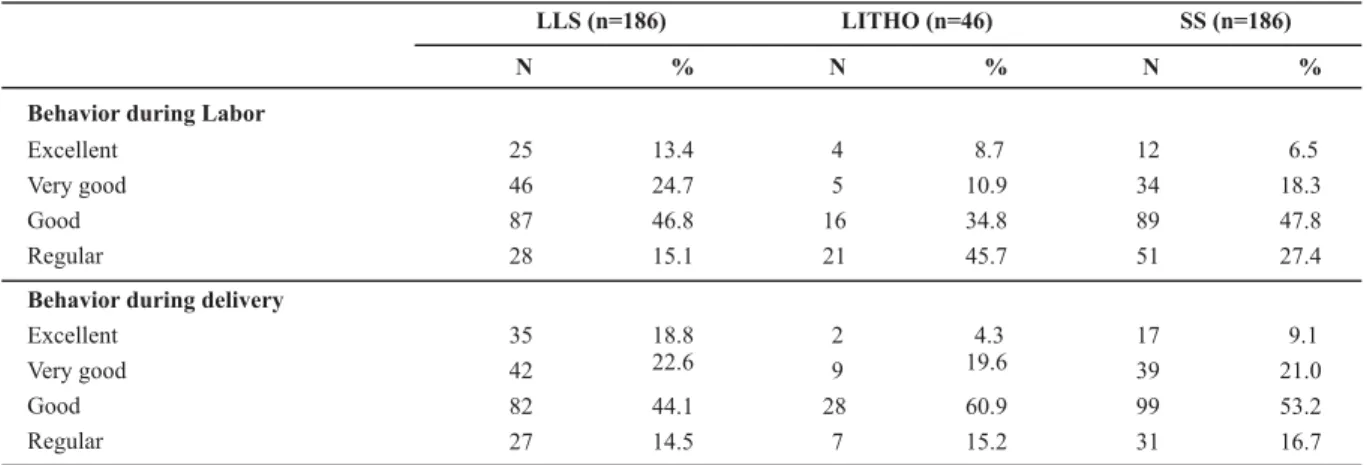
Table 3 shows the women’s behavior during labor and delivery according to the different positions at childbirth. Using the chi-square test, a difference was observed be-tween the groups for both labor and delivery (p=0.0002 and p=0.044, respectively). More women reported having an excellent or very good behavior during labor and deliv-ery (38.1% and 41.4%, respectively) in the LLS group.
As for the association between the intensity of pain and behavior during labor and delivery, independent of the po-sition, it was observed that there was a positive associa-tion with both (the greater the pain, the worse the behav-ior) during labor as well as during delivery (p<0.0001 ac-cording to Fisher’s exact test, in both moments, and by the
with p = 0.0041 in the comparison for labor, and p<0.0001 for delivery).
Table 3 - Behavior during labor and delivery, according to the women’s position at childbirth - Itapecerica da Serra - 2008-2009
LLS (n=186) LITHO (n=46) SS (n=186)
N % N % N %
Behavior during Labor
Excellent Very good Good Regular
Behavior during delivery
Excellent Very good Good Regular
25 13.4 4 8.7 12 6.5
46 24.7 5 10.9 34 18.3
87 46.8 16 34.8 89 47.8
28 15.1 21 45.7 51 27.4
35 18.8 2 4.3 17 9.1
42 22.6 9 19.6 39 21.0
82 44.1 28 60.9 99 53.2
27 14.5 7 15.2 31 16.7
Legend: LLS = lying on the left side; LITHO = lithotomy; SS = semi-seated
The correspondence between the instruments used in the study was verified, i.e., between the pain scales and the questionnaire. The Kruskal-Wallis test revealed a posi-tive association between the questionnaire and the VAS and ANS scales in labor (p<0.0001, for both) and delivery (p=0.0003 and p=0.0027, respectively). Spearman’s corre-lation coefficient revealed there is a significant positive cor-relation between the VAS and ANS scales, showing that they are strong and directly proportional (r=0.8361 p<0.0001, in labor; r=0.8102 p<0.0001, in delivery).
An association was observed between behavior during labor and behavior during delivery (p<0.0001 on the Exact Fisher’s Test as well as by the McNemar’s chi-square test, when categories are grouped).
DISCUSSION
The women, independent of the positions they chose, reported the intensity of the pain they experienced during labor with average values ranging between 7 and 8, and most referred experiencing bearable or barely unbearable
pain.
The intensity of pain perceived by the women during labor and delivery, and evaluated using three instruments did not show any differences associated to the positions at childbirth, hence it cannot be affirmed that women who delivered in a lithotomy position were less sensitive to pain. In the present study, it was not possible to obtain infor-mation about the position that the women chose to use during labor, because the women were free to assume dif-ferent positions. Although no differences were found be-tween the groups in terms of pain intensity, an analytical study has shown that position can interfere in the uterine contractions, the duration of the dilation stage and the perception of pain(13). The referred study was performed
with 75 women who had natural child birth, and analyzed the effect of walking during labor and found that when la-bor progresses in the pelvis stage of lala-bor there may be an
increased perception of pain as a result of the how fast the fetus descends in the mother’s pelvis(13).
It is known that in the vertical position, the contrac-tions are more regular in terms of form and rhythm. Cer-tainly for this reason, the vertical position during labor has a positive effect on contractions, permitting a better quality in obtaining uterine dynamics, reducing the length of labor and reducing the need for oxytocin(13).
Further-more, the study also refers that, in the vertical position, the action of gravity on the fetus is synergic with that of the contractions.
After a long period investigating about the mother’s hor-mone concentrations, two studies concluded that there is an association between beta-endorphin (-EP) levels and physiological stress during labor. The levels of -EP and adrenocorticotrophic hormones (ACTH) are higher in the mother’s plasma, and are closely interrelated during labor and until 24 hours postpartum(14-15). A study performed with
the purpose of describing the physiological role of ACTH in the stress mechanism, as a response to pain during labor, found there was a considerable increase in the concentra-tion of -EP and ACTH(15). Confirming this finding, other
studies found that higher concentrations of -EP and ACTH are associated with the increase in the state of anxiety and subjective pain during labor and its decline in the postpar-tum period, with the abolition of pain(16).
A study obtained similar findings when evaluating the ACTH concentration in 36 parturient women, and observed that there was an increase in ACTH levels in the beginning of labor and the concentration decreased as the labor pro-gressed towards delivery(17).The present study, however,
did not find any differences in the pain perceived by women in labor(15-19).
con-sidered to be a control variable, since a shorter or longer period could reduce or increase the intensity of pain.
Although the literature shows that the position at child-birth can reduce the length of the expulsive stage, this was not observed in the present study. The aforementioned study, which involved nuliparae who gave birth in the squat-ting or lithotomy position, did not find any significant dif-ferences regarding the duration of the expulsive stage(11).
Different results were found in a study performed with 179 women who gave birth in the SS position and 187 in the lithotomy position (control group), which concluded that the length of the expulsive stage was shorter in the SS po-sition group(17).
In another study, the same author investigated the de-livery of 151 women randomly divided into two groups, in which 73 women had had a vertical delivery and 78 had a horizontal delivery, and found that the length of the expul-sive stage was similar for the two groups. Nevertheless, the time of perineal distention during expulsion was, in aver-age, shorter when delivery was considered as being per-formed in a vertical position(17).
Having childbirth in the LLS position reduced the use of episiotomy and perineal traumas compared to the SS(9)
position, which is referred to as being vertical. Because there is a smaller risk for perineal trauma, it is likely that the dis-tention stage is longer, permitting the perineum to distend slower, without rupturing, thus causing more pain in the women. These conjectures require further investigation.
A case-control study performed with two groups of women who had vertical and horizontal childbirth found that there is no single best position for the expulsive stage, rather there is a broad range of preferences among women, which may change during the labor process. The vertical positions and mobility during labor are, undoubtedly, ac-ceptable and comfortable for the parturient women, as shown by the high degree of cooperation, despite the lack of specific prenatal preparations(18).
Pain as evaluated by the VAS and ANS scales was asso-ciated with the behavior in labor and in delivery, i.e., the greater the pain in labor and delivery, the worse the be-havior reported by the women in both groups. The same results were obtained when comparing the answers to the questionnaire on pain and behavior in labor and delivery.
An ethnographic study performed through interviews and direct observation of women in labor and during delivery concluded that women adopt non-verbal behaviors to re-lieve pain, often associated or alternated with oral expres-sion. Sometimes more than one non-verbal behavior is used in the search to relieve pain(19). False beliefs, inadequate
etio-logical attributions, excessive concentration of attention, their having inappropriate expectations, unfounded fears, nega-tive thoughts, distorted information and concepts, all are cognitive features that can have a dramatic effect on the women’s perception of pain and on their response to it (19).
There were no differences regarding pain or behavior in the two moments, dilation and expulsive stages. Differ-ent results were found in a descriptive study that used a qualitative approach to observe 10 women during labor and delivery, which concluded that there is a need for im-proving the obstetrical practice regarding pain in labor and delivery, especially in the active stage, when women re-port greater pain(20). Another randomized study with 89
women evaluated the length and progression of labor, pain, obstetric complications and behavior, and found that as labor progresses, contractions intensify and dilation in-creases, women report feeling more and more pain, anger, sadness and tiredness and gradually less energy and posi-tive feelings(21).
The importance of measuring pain clinically has drawn more attention over the last decades because of the new concept about the mechanisms involved in pain interpre-tation and response(22).
One-dimensional instruments remain the most common to measure pain, but the challenge to consider the multidi-mensional aspect of pain has driven several researchers to elaborate and use instruments that are broader and offer better precision(22).It is known that one-dimensional and
multidimensional scales both have some limitations, and though the instruments used in the present study are of easy application and have proven useful to evaluate pain in labor and delivery, there is still the challenge to search for an instrument that is easy to apply in clinical practice, while also considering the multidimensional feature and speci-ficity of pain in labor and delivery.
CONCLUSION
In view of the findings, some questions remain unan-swered and could be the theme for further investigations: could it be that women in the LLS position feel more pain during the expulsive stage because the length of perineal distention is longer in this position? Did any uncontrolled variable interfere on the results? It should be noticed that the institution where the study took place allows women to chose the position for childbirth, therefore the use of a position not chosen by the women, would, initially, not explain the greater pain in LLS, but it is an aspect that should be looked into.
Because only a few variables were adjusted, others could be interfering in the obtained results, therefore further pro-spective, controlled and randomized studies should be de-veloped.
alternatives to relief their suffering such as the position at childbirth that better suits them and offer the necessary means to respect their right to give birth with dignity.
The present study permitted to conclude that pain in labor and delivery was considered more frequently as bear-able and barely unbearable, pain and behavior were not
different in the two stages, and the evaluation instruments used were equivalent in terms of pain, with the VAS and ANS were more adequate to identify the differences. There is an association between the intensity of pain and behav-ior in both labor and delivery, and pain in women who had childbirth in the lithotomy position was smaller than those who chose to deliver in the LLS position
REFERENCES
1. Lowe NK. The nature of labor pain. Am J Obstet Ginecol. 2002;186(5):16-24.
2. Niven CA, Murphy-Black RM. Memory for labor pain: a review of the literature. Birth. 2000;27(4):244-53.
3. Souza FAEF, Pereira LV, Giuntini PB. Mensuração da dor. In: Teixeira MJ, editor. Dor: contexto interdisciplinar. Curitiba: Ed. Maio; 2003. p.179-86.
4. Sakata RK, Hisatugo MKI, Aoki SS, Vlainich R, Issy AM. Avalia-ção da dor. In: Cavalcanti IL, Maddalena ML. Dor. Rio de Janei-ro: Sociedade de Anestesiologia do Estado do Rio de Janeiro; 2003. p. 85-93.
5. Tornquist CS. Paradoxos da humanização em uma maternida-de no Brasil. Cad Saúmaternida-de Pública. 2003;19(2):419-27.
6. Teixeira NZF, Pereira WR. Parto hospitalar: experiências de mu-lheres da periferia de Cuiabá-MT. Rev Bras Enferm. 2006;59 (6):740-4.
7. Edianez GM, Brüggemann OM. Puerperal women’s perceptions on vertical and horizontal deliveries. Rev Lat Am Enferm. 2009; 17(2):153-9.
8. Ragnar I, Altman D, Tydén T, Olsson SE. Comparison of the maternal experience and duration of labour in two upright delivery positions: a randomized controlled trial. BJOG. 2006;113(2):165-70.
9. Basile ALO. Riscos e benefícios maternos e neonatais das posi-ções lateral-esquerda e vertical semi-sentada no parto [tese dou-torado]. São Paulo: Universidade Federal de São Paulo; 2005.
10. Pocock SJ. Clinical trials: a pratical approach. 5th ed. Chichester:
Wiley & Sons; 1987.
11. Sabatino H, Vilarino JF. Avaliação obstétrica de partos em posição de cócoras. In: Sabatino H. Parto humanizado. Cam-pinas: Ed. UNICAMP; 2000. p. 171-85.
12. Polit DF, Beck CT. The content validity index: are you sure you know what’s being reported? Critique and recommendations. Res Nurs Health. 2006;29(5):489-97.
13. Mamede FV, Almeida AM, Souza L, Mamede MV. A dor du-rante o trabalho de parto: o efeito da deambulação. Rev Lat
14. Hofmeyr GF, Gülmezoglu AM, Nikodem VC, Van DS, Hendricks MS. Labor experience and b-endorphin levels. Int J Gynecol Obstetr. 1995;50(3):299-300.
15. Florido C, Oltras CM, Fajardo MC, González-Scañuela E, Villaverde C, González-Gómez F. Plasma concentrations of b-endorphin and adrenocorticotropic hormone in women with and without childbirth preparation. Eur J Obstet Gynecol Reprod Biol. 1997;73(2):121-5.
16. Almeida NAM, Silveira NA, Bachion MM, Sousa JT. Concen-tração plasmática do hormônio adrenocorticotrófico de par-turientes submetidas a método não farmacológico de alívio da ansiedade e dor do parto. Rev Lat Am Enferm. 2005;13 (2):223-8.
17. Davim RMB, Torres GV, Dantas JC. Efetividade de estratégias não farmacológicas no alívio da dor de parturientes no traba-lho de parto. Rev Esc Enferm USP. 2009;43(2):438-45.
18. Leventhal EA, Leventhal H, Shacham S, Easterling DV. Active coping reduces reports of pain from childbirth. J Consult Clin Psychol. 1989;57(3):365-71.
19. Perissinotti DMN, Figueiró JAB. Psicoterapias: indicação, mo-dalidade e tratamento para doentes com dor. In: Figueiró JAB, Angelotti G, Pimenta CAM. Dor e saúde mental. São Paulo: Atheneu; 2005. p. 93-104.
20. Saito E, Gualda DMR. Worrying about labor and delivery pain and its manifestation during childbearing process. In: Proceedings of the 8º Brazilian Nursing Communication Symposium [Internet]; 2002 May 2-3; São Paulo, Brazil [cited 2009 May 15]. Available from: http://www.proceedings. scielo.br/scielo.php?script=sci_ arttext&pid=MSC0000000052002000200031&lng=en&nrm=van
21. Davim RMB, Torres GV, Dantas JC. Representação de parturi-entes acerca da dor de parto. Rev Eletr Enferm [Internet]. 2008 [citado 2009 maio 15];10(1). Disponível em: http://www. revistas.ufg.br/index.php/fen/article/view/7685/5459