DOI: http://dx.doi.org/10.1590/1678-992X-2017-0040
Sci. Agric. v.75, n.5, p.432-443, September/October 2018 ISSN 1678-992X
ABSTRACT: Cachaça poses many quality (appearance, taste, consumer acceptability) and safety hazards (chemical, metal, and microbiological contaminations during the process). In this work, an effort is made for the quality and safety analysis of cachaça, by describing and outlining the potential hazards in every step of the process. This study revealed that the critical control points (CCPs) involved in Good Manufacturing Practices (GMP) to prevent cachaça safety hazards are the stages of sugarcane growing, sugarcane harvesting, fermentation, distillation, and aging process. The most significant factors for both CCPs and critical points (CPs) that should be controlled are determined. The implementation of the Hazard Analysis and Critical Control Point (HACCP) system in small distilleries of cachaça has been very helpful to provide the required safety for domestic consumers and boost cachaça exportations. Therefore, the main objective of the cachaça industry is to achieve production consistency.
Keywords: quality, microbiological hazards, chemical hazards, sugar cane spirit
Good Manufacturing Practices, Hazard Analysis and Critical Control Point
Aline Marques Bortoletto, Giovanni Casagrande Silvello, André Ricardo Alcarde*
University of São Paulo/ESALQ – Dept. of Agri-Food Industry, Food and Nutrition, Av. Pádua Dias, 11 – 13418-900 – Piracicaba, SP – Brazil.
*Corresponding author <[email protected]>
Edited by: Luís Guilherme de Lima Ferreira Guido
Received February 09, 2017 Accepted May 22, 2017
Introduction
Cachaça is the Brazilian spirit produced by fermen-tation of sugarcane juice and subsequent distillation. At-tributes of chemical and sensory quality of cachaça are totally interconnected to every step of the process, as well as the careful handling of small producers at the main production stages. Good Manufacturing Practices (GMP) establish general principles for all production stages of food and beverages. The presence of chemical hazards poses some safety concerns related to the consumption of cachaça. Most hazards originate during the fermenta-tion and distillafermenta-tion steps and are difficult or sometimes impossible to be removed after these steps. In contrast, it is clearly possible to avoid the formation of these sub-stances by applying GMP, Good Hygiene Practices (GHP) and a well-designed Hazard Analysis and Critical Control Point (HACCP) program (Bortoletto and Alcarde, 2015).
In Brazil, controls are submitted to national legis-lation, under the responsibility of the Ministry of Agri-culture, Livestock, and Supply (Table 1). Hazard Analysis and Critical Control Point is a science based on systematic identification of specific hazards and measures for their control to ensure safety of products and processes. There-fore, this procedure is a tool to identify and assess haz-ards and establish control systems focusing on prevention rather than relying mainly on end-product testing.
Quality is required for the product to meet cus-tomer’s specifications and is ensured by the application of quality systems. The Codex Alimentarius Commission established the Guidelines for the Application System of HACCP (OPAS, 2006). Every HACCP system can be adapted to changes such as updates in the equipment design, processing procedures, or technological develop-ment.
Some principles must be defined and implement-ed in order to establish the HACCP system in small
dis-tilleries. Aiming to comply with the critical limits estab-lished by the Brazilian law, some measures have to be associated with each CCP and the critical limits must be controlled in the end product. Methods to check and monitor the process must be established and corrective actions must be taken when critical limits are not met.
Considering these concepts, this study focused on all possiblbe quality and safety hazards, based on HACCP
Food Science and T
echnology
|
Review
plan proposal for distilleries of cachaça
Table 1 – Maximum concentration allowed by the Brazilian law for congeners and contaminants in sugarcane spirits and cachaça
(MAPA, 2005).
Compound Legal limit
Alcohol contenta 38-48
Volatile acidity (acetic acid)b ≤ 150
Aldehydes (acetic aldehyde)b ≤ 30
Esters (ethyl acetate)b ≤ 200
Furfural + HMFb,c ≤ 5
n-propanolb
-i-butanolb
-i-amylicb
-Higher alcoholsb,d ≤ 360
Coefficient of congenersb,e 200-650
Contaminants
Methanolb ≤ 20
sec-butanolb ≤ 10
n-butanolb ≤ 3
Copperf ≤ 5
Leadg 200
Arsenicg 100
Ethyl carbamateg ≤ 210
Acrolein ≤ 5b
a% ethanol (v v–1) at 20 °C; bmg 100 mL–1 anhydrous ethanol; c5-HMF:
5-hydroxymethylfurfural; dsum of isobutyl (2-methyl-1-propanol), isoamyl
(2-methyl-1-butanol and 3-methyl-1-butanol), and n-propyl (1-propanol) alcohols;
esum of volatile acidity, esters, aldehydes, furfural + 5-HMF, and higher
433
Bortoletto et al. Methods for checking and monitoring
Sci. Agric. v.75, n.5, p.432-443, September/October 2018
approach, which may be found during the manufacturing process of cachaça in small distilleries, from sugar cane growing to final spirit bottling. These hazards are pre-sented and measures to prevent them are proposed. Also, some possible critical factors and their essential control are approached.
Methods
A detailed analysis of safety hazards during the whole production process of cachaça, including the major steps from sugarcane harvesting to final spirit bottling, was carried out based on HACCP approach. This analysis was basically concentrated on the identification of all pos-sible hazards (physical, chemical, and microbiological), the preventive measures to avoid them, and the detection of CCPs with the respective required control and the rela-tive critical limits.
Similarly, a thorough analysis of quality hazards throughout cachaça production process was performed and the critical points (CPs) for the quality of this bev-erage were identified. The quality and safety results are presented in a table.
Results and Discussion
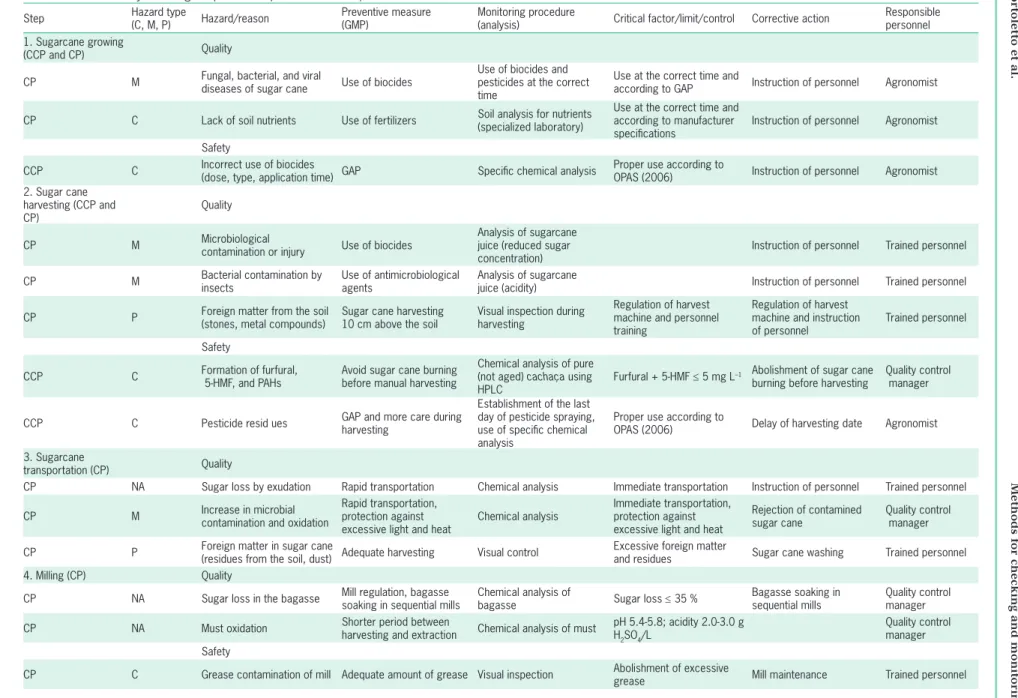
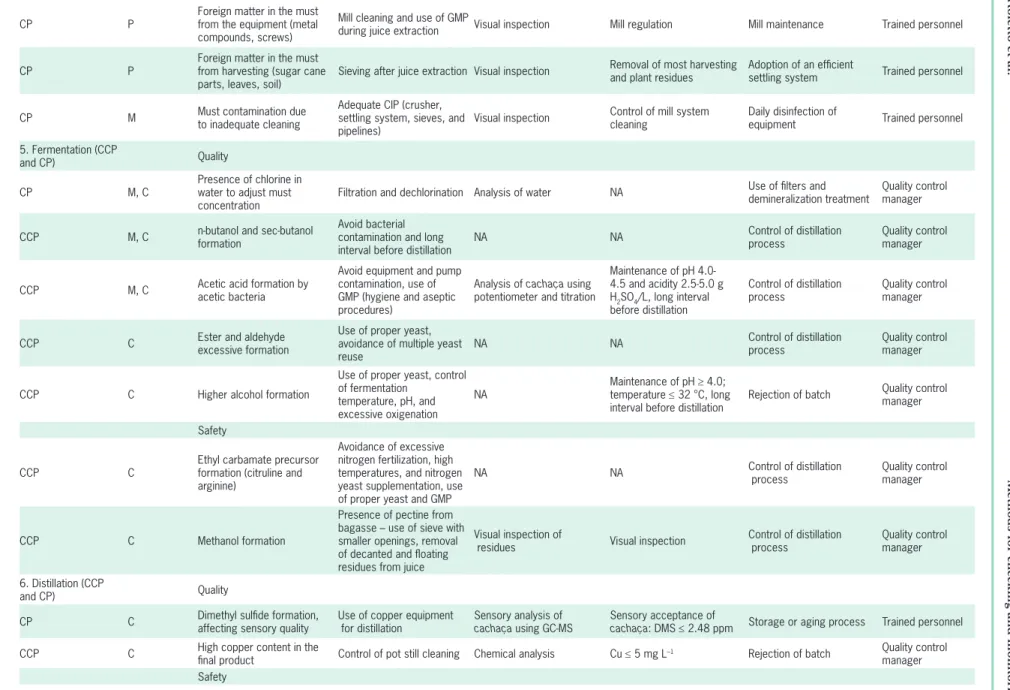
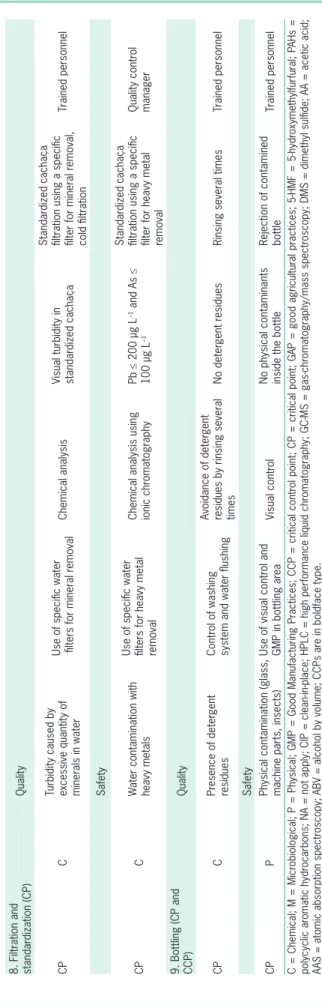
The results of HACCP analysis regarding qual-ity and safety hazards during the production process of cachaça are presented in Table 2. Preventive and control measures are also proposed in Table 2 for all the potential hazards. The analysis of these hazards and the required controls are based on specialized literature and the practi-cal results of Brazilian distilleries.
Cachaça production in small distilleries
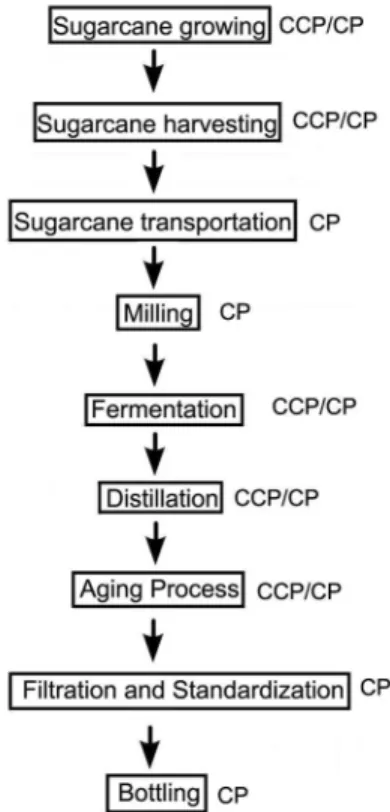
The production process of sugarcane spirits in-volves the juice extraction from sugar cane using mill-ing tandems. After fermentation, in small distilleries the fermented juice is distilled in pot stills, with the option of maturation in wooden barrels. A flow sheet of the pro-duction process of cachaça is given in Figure 1.
GMP and HACCP practices during cachaça
production
Basic safety procedures to ensure quality of cacha-ça are necessary to comply with the critical limits estab-lished for this beverage. These procedures are the founda-tion to implement HACCP (Table 2).
Sugar cane growing (CCP and CP)
Stalks of sugar cane (Saccharum spp.), a tropical plant originated in New Guinea, Oceania, are the raw material used for the production of sugarcane spirits. The varieties used for the production of spirits are interspe-cific hybrids primarily developed from the species Sac-charum officinarum, Saccharum spontaneum, and
Saccha-rum robustum. Sugarcane stalks are composed of fibers
(cellulose, hemicellulose, and lignin – 13 %) and juice (87
%) (Venturini and Nogueira, 2013). The juice contains about 80 % water, 18 % sucrose, and 1 % fructose and glucose. Organic compound non-sugars (proteins, amino acids, lipids and waxes, acids and pigments) and inorgan-ics (mineral salts) altogether represent 1 %. These three types of sugar are converted into ethanol by yeast. In Bra-zil, sugarcane plantations for the production of cachaça cover about 125,000 hectares, resulting in an annual pro-duction of approximately 10 million tons of sugar cane (Souza et al., 2013).
There are several varieties of sugar cane available in Brazil. Choosing the appropriate variety is essenctial to obtain raw material with adequate maturation during the ripening season. Sugarcane breeding is carried out by the following institutions: RIDESA – Inter-University Network for Development of the Sugarcane Sector, which produces the RB varieties; CTC – Sugarcaen technology Center, with the CTC varieties and the SP old ones; IAC – Agronomic Institute of Campinas, with the IAC varieties; and CANAVALIS, with the CV varieties (Barbosa, 2012).
Sugarcane, in central-southern Brazil, may be plant-ed throughout the year, but because of the restrictions related to water availability and variety characteristics in maturation and phonological cycle, the main periods of planting are from Sept to early Dec (known as “one-year sugarcane” because this crop will be harvested as early as next season) and from Jan to Mar or Apr (called “one-and-a-half-year sugarcane” because the crop grows for a longer period, around 16 to 18 months) (Barbosa, 2012). Figure 1 – Flowchart of the production process of cachaça; CCP =
434
Bort
olett
o et al.
M
ethods f
or checking and monit
oring
Sci. Agric. v
.75, n.5, p.432-443, September/October 2018
Table 2 – HACCP analysis during the production process of cachaça in small distilleries.
Step Hazard type
(C, M, P) Hazard/reason
Preventive measure (GMP)
Monitoring procedure
(analysis) Critical factor/limit/control Corrective action
Responsible personnel 1. Sugarcane growing
(CCP and CP) Quality
CP M Fungal, bacterial, and viral
diseases of sugar cane Use of biocides
Use of biocides and pesticides at the correct time
Use at the correct time and
according to GAP Instruction of personnel Agronomist
CP C Lack of soil nutrients Use of fertilizers Soil analysis for nutrients (specialized laboratory)
Use at the correct time and according to manufacturer specifications
Instruction of personnel Agronomist
Safety
CCP C Incorrect use of biocides (dose, type, application time) GAP Specific chemical analysis Proper use according to OPAS (2006) Instruction of personnel Agronomist
2. Sugar cane harvesting (CCP and CP)
Quality
CP M Microbiological
contamination or injury Use of biocides
Analysis of sugarcane juice (reduced sugar concentration)
Instruction of personnel Trained personnel
CP M Bacterial contamination by insects Use of antimicrobiological agents Analysis of sugarcanejuice (acidity) Instruction of personnel Trained personnel
CP P Foreign matter from the soil (stones, metal compounds) Sugar cane harvesting 10 cm above the soil Visual inspection during harvesting
Regulation of harvest machine and personnel training
Regulation of harvest machine and instruction of personnel
Trained personnel
Safety
CCP C Formation of furfural, 5-HMF, and PAHs Avoid sugar cane burning before manual harvesting
Chemical analysis of pure (not aged) cachaça using HPLC
Furfural + 5-HMF ≤ 5 mg L–1 Abolishment of sugar cane
burning before harvesting
Quality control manager
CCP C Pesticide resid ues GAP and more care during
harvesting
Establishment of the last day of pesticide spraying, use of specific chemical analysis
Proper use according to
OPAS (2006) Delay of harvesting date Agronomist
3. Sugarcane
transportation (CP) Quality
CP NA Sugar loss by exudation Rapid transportation Chemical analysis Immediate transportation Instruction of personnel Trained personnel
CP M Increase in microbial
contamination and oxidation
Rapid transportation, protection against excessive light and heat
Chemical analysis
Immediate transportation, protection against excessive light and heat
Rejection of contamined sugar cane
Quality control manager
CP P Foreign matter in sugar cane (residues from the soil, dust) Adequate harvesting Visual control Excessive foreign matter and residues Sugar cane washing Trained personnel
4. Milling (CP) Quality
CP NA Sugar loss in the bagasse Mill regulation, bagasse soaking in sequential mills Chemical analysis of bagasse Sugar loss ≤ 35 % Bagasse soaking in sequential mills Quality control manager
CP NA Must oxidation Shorter period between harvesting and extraction Chemical analysis of must pH 5.4-5.8; acidity 2.0-3.0 g H
2SO4/L
Quality control manager Safety
CP C Grease contamination of mill Adequate amount of grease Visual inspection Abolishment of excessive grease Mill maintenance Trained personnel
435
Bort
olett
o et al.
M
ethods f
or checking and monit
oring
Sci. Agric. v
.75, n.5, p.432-443, September/October 2018
CP P
Foreign matter in the must from the equipment (metal compounds, screws)
Mill cleaning and use of GMP
during juice extraction Visual inspection Mill regulation Mill maintenance Trained personnel
CP P
Foreign matter in the must from harvesting (sugar cane parts, leaves, soil)
Sieving after juice extraction Visual inspection Removal of most harvesting and plant residues Adoption of an efficient settling system Trained personnel
CP M Must contamination due to inadequate cleaning
Adequate CIP (crusher, settling system, sieves, and pipelines)
Visual inspection Control of mill system cleaning Daily disinfection of equipment Trained personnel
5. Fermentation (CCP
and CP) Quality
CP M, C
Presence of chlorine in water to adjust must concentration
Filtration and dechlorination Analysis of water NA Use of filters and demineralization treatment Quality control manager
CCP M, C n-butanol and sec-butanol formation
Avoid bacterial contamination and long interval before distillation
NA NA Control of distillation process Quality control manager
CCP M, C Acetic acid formation by acetic bacteria
Avoid equipment and pump contamination, use of GMP (hygiene and aseptic procedures)
Analysis of cachaça using potentiometer and titration
Maintenance of pH 4.0-4.5 and acidity 2.5-5.0 g H2SO4/L, long interval before distillation
Control of distillation process
Quality control manager
CCP C Ester and aldehyde excessive formation
Use of proper yeast, avoidance of multiple yeast reuse
NA NA Control of distillation process Quality control manager
CCP C Higher alcohol formation
Use of proper yeast, control of fermentation
temperature, pH, and excessive oxigenation
NA
Maintenance of pH ≥ 4.0; temperature ≤ 32 °C, long interval before distillation
Rejection of batch Quality control manager
Safety
CCP C
Ethyl carbamate precursor formation (citruline and arginine)
Avoidance of excessive nitrogen fertilization, high temperatures, and nitrogen yeast supplementation, use of proper yeast and GMP
NA NA Control of distillation
process
Quality control manager
CCP C Methanol formation
Presence of pectine from bagasse – use of sieve with smaller openings, removal of decanted and floating residues from juice
Visual inspection of
residues Visual inspection
Control of distillation process
Quality control manager
6. Distillation (CCP
and CP) Quality
CP C Dimethyl sulfide formation, affecting sensory quality Use of copper equipment for distillation Sensory analysis of cachaça using GC-MS Sensory acceptance of cachaça: DMS ≤ 2.48 ppm Storage or aging process Trained personnel
CCP C High copper content in the final product Control of pot still cleaning Chemical analysis Cu ≤ 5 mg L–1 Rejection of batch Quality control
manager Safety
Table 2 – Continuation.
436
Bort
olett
o et al.
M
ethods f
or checking and monit
oring
Sci. Agric. v
.75, n.5, p.432-443, September/October 2018
TTable 2 – Continuation.
Continue...
CCP C
“Heads” components in excess (acetaldehyde, esters, and methanol)
Control of “heads” cut volume (about 2 % of pot still volume)
Analysis of cachaça using GC-FID
Aldehydes ≤ 30 mg 100 mL–1
AA; ester ≤ 200 mg 100 mL–1
AA; methanol ≤ 20 mg 100 mL–1 AA
Redistillation of cachaça cutting more the “heads” fraction
Quality control manager
CCP C “Tails” components in excess (acetic acid and furfural) Control of “tails” cut volume Analysis of GC-FID cachaça using
Acetic acid ≤ 150 mg 100 mL–1 AA; furfural + 5HMF
≤ 5 mg 100 mL–1 AA
Redistillation of cachaça cutting more the “tails”
Quality control manager
CCP C Furfural formation
Control of sugar content in the final wine (at the end of fermentation), control of presence of yeast residues
Analysis of cachaça using HPLC
Furfural + 5HMF ≤ 5 mg 100 mL–1 AA
Redistillation of cachaça
cutting more the “tails” Trained personnel
CCP C Acrolein formation (from
pot still or fermentation)
Avoidance of high temperature during distillation, control of “heads” cut volume (about 2 % of pot still volume)
Analysis of cachaça using
HPLC Acrolein ≤ 5 mg 100 mL–1 AA
Redistillation of cachaça
Quality control manager
CCP C Presence of heavy metals Use of stainless steel tanks Analysis of metals using
AAS NA Rejection of batch
Quality control manager
CCP C Ethyl carbamate formation
Control of distillation process, temperature, in case of slow distillation, use reflux system in the pot still
Analysis of cachaça using
GC-MS EC ≤ 210 µg L–1 Rejection of batch
Quality control manager
7. Aging process (CCP
and CP) Quality
CP M
Microbiological contamination caused by used wooden barrels
Cleaning wooden barrels
before use Microbiological analysis
Absence of yeast, mold,
and bacteria Wooden barrel rewashing Trained personnel
CP C Acetic acid excessive formation
Use of well preserved wooden barrels, avoidance of long aging period
Analysis of cachaça using GC-FID
Acetic acid ≤ 150 mg 100
mL–1 AA Rejection of batch
Quality control manager
CP C Reduction of ethanol content Control of temperature and humidity of warehouse Ethanol measurement Minimum of 38 % ABV Rejection of batch Trained personnel
Safety
CCP C
Adverse chemical compounds from wooden barrels
Use of proper wood
species Chemical analysis
Certified and proper
wooden barrels Rejection of barrel
Quality control manager
CCP C
HPA and furfural formation due to intensive toasting process
Control of toasting intensity and temperature during cooperage, wash wooden barrel before reusing it
437
Bortoletto et al. Methods for checking and monitoring
Sci. Agric. v.75, n.5, p.432-443, September/October 2018
Sugar cane is susceptible to diseases transmitted by viruses (mosaic and chlorotic streak), bacteria (leaf scald, red stripe, and ratoon stunting), and fungi (smut, brown rust, orange rust, red rot, and pineapple rot), which can be inoculated by insect pests (Lima, 2010; Matsuoka and Maccheroni, 2015). The most effective control of these diseasesis the development and use of resistant varieties, along with the use of healthy planting material and bio-cides (Matsuoka and Maccheroni, 2015).
The major sugarcane insect pests are sugarcane borer (Diatraea saccharalis), spittlebug (Mahanarva fimbri-olata), beetles (Migdolus fryanus), and termites. Also, a sig-nificant number of phytonematodes can attack this plant. The control of these insect pests can be biological or by using specific insecticides. Sugarcane borer is the most important of all, since it is spread all over the country and causes the greatest losses. This insect pest is biologically controlled using some natural enemies such as Cotesia fla-vipes (Lima, 2010; Macedo et al., 2015).
It is estimated that approximately 1,000 species of weeds are present in sugarcane agroecosystems. The growth of this plant is initially slow, and therefore at early stages, sugarcane is susceptible to weed competi-tion, which can decrease stalk and sugar yield, decrease crop longevity, increase difficulties and costs during har-vesting, and decrease industrial quality of raw material. Additionally, weeds can provide home to sugarcane in-sect pests and diseases. Integrated weed management encompasses preventive control (to avoid entrance and/ or spread in the area), cultural control (use of varieties and cultural practices that make the crop more competi-tive in relation to weeds), mechanical control (hoeing and mechanical cultivators), and chemical control (most used method, because herbicides are efficient and relatively cheap) (Procópio et al., 2015).
Fertilizer use and management in sugar cane in-cludes soil fertility diagnosis, corrective practices (lime, gypsum, and phosphate application), conservationist measures (green and organic fertilization), and mineral fertilization (N, P2O5, K2O, micronutrients such as zinc, copper, boron, and manganese) (Vitti et al., 2015).
The daily water consumption of the sugarcane crop varies from 2.0 to 7.0 mm. Sugarcane crops re-quire water consumption between 1,500 and 2,500 mm per vegetative cycle (Oliveira et al., 2012). In Brazil, the irrigated sugarcane area is still little expressive, less than 5 % of the cultivated total. This happens mainly because of the high resistance of the crop to water stresss and to geographical location of the sug-arcane cultivations, where the rainy season coincides with the vegetative growth, while the maturation phase coincides with the dry period. Nevertheless, the plant responds positively to irrigation in situations where rainfall is not enough of fulfill its water requirement. Sugarcane irrigation brings several benefits, such as in-crease of stalk productivity and sucrose content, pre-cocity in the harvesntig, and longevity of the sugarcane crop (Oliveira et al., 2012).
Table 2
– Continuation.
8. Filtration and standar
dization (CP)
Quality
CP
C
Turbidity caused by excessive quantity of minerals in water Use of specific water filters for mineral r
emoval
Chemical analysis
V
isual turbidity in standar
dized
cachaça
Standar
dized
cachaça
filtration using a specific filter for mineral r
emoval,
cold filtration
Trained personnel
Safety
CP
C
W
ater contamination with
heavy metals
Use of specific water filters for heavy metal removal Chemical analysis using ionic chr
omatography
Pb
≤
200 µg L
–1 and As
≤
100 µg L
–1
Standar
dized
cachaça
filtration using a specific filter for heavy metal removal
Quality contr
ol
manager
9. Bottling (CP and CCP)
Quality
CP
C
Pr
esence of deter
gent
residues
Contr
ol of washing
system and water flushing
Avoidance of deter
gent
residues by rinsing several times
No deter
gent r
esidues
Rinsing several times
Trained personnel
Safety
CP
P
Physical contamination (glass, machine par
ts, insects)
Use of visual contr
ol and
GMP in bottling ar
ea
V
isual contr
ol
No physical contaminants inside the bottle Rejection of contamined bottle
Trained personnel
C = Chemical; M = Micr
obiological; P = Physical; GMP = Good Manufacturing Practices; CCP = critical contr
ol point; CP = critical point; GAP = good agricultural practices; 5-HMF = 5-hydr
oxymethylfur
fur
al; P
AHs =
polycyclic ar
omatic hydr
ocarbons; NA = not apply; CIP = clean-in-place; HPLC = high per
formance liquid chr
omatography; GC-MS = gas-chr
omatography/mass spectr
oscopy; DMS = dimethyl sulfide; AA = acetic
acid;
AAS = atomic absorption spectr
oscopy; ABV = alcohol by volume; CCPs ar
438
Bortoletto et al. Methods for checking and monitoring
Sci. Agric. v.75, n.5, p.432-443, September/October 2018 Sugarcane harvesting (CCP and CP)
Sugarcane diseases can also be inoculated by the tools used to cut and harvest the crop (Lima, 2010). Mi-crobiological contamination of sugarcane juice starts when the plant is cut, because the internal part of the stalk becomes susceptible to the entrance of microorgan-isms from the soil, air, and sheaths of the plant. Yeast and lactic bacteria are the major microorganisms asso-ciated with sugarcane deterioration. These microorgan-isms may reduce yeast cells viability during fermentation and increase acidity of the spirit, impairing the quality of
cachaça. The manual harvesting of sugar cane increases
the amount of mineral impurities (sand and soil) in the raw material, whereas mechanical harvesting increases the amount of plant parts (leaves and straw) (Lima, 2010).
Precautionary measures are necessary to avoid pesticide residues in the raw material. Furthermore, the waiting period of each chemical used in the crop should be respected to prevent pesticide residues in the indus-trial process (Macedo et al., 2015).
Chemical compounds used or produced due to sug-arcane agricultural management may be present in cacha-ça as contaminants. Furfural and 5- hydroxymethylfurfu-ral (5-HMF) are aldehydes commonly present in cachaça, but in excess, they affect quality, conferring a burning taste to the beverage. The limits of furfural and 5-HMF established by Brazilian law refer to non-aged (white) cachaça (MAPA, 2005). Polycyclic aromatic hydrocarbons (PAHs), considered genotoxic and carcinogenic, can also be present in cachaça, and represent a hazard to public health (IARC, 2010). Although no studies have mentioned the maximum levels of PAHs in spirits in Brazil or other countries, the European Food Safety Authority (EFSA) es-timated a maximum daily intake ranging from 6 to 8 ng kg–1 of body weight, considering individuals weighing 70 kg (EFSA, 2008). Furfural, 5-HMF, and PAHs result from chemical decomposition of carbohydrates and can origi-nate in different steps of cachaça production process.
The Brazilian law limits the concentration of furfu-ral and 5-HMF, because these compounds may be related to sugarcane burning prior to harvesting. Burning makes manual harvesting easier, but causes damage to the envi-ronment and is already banned in many Brazilian regions. The heat generated by sugarcane burning causes intense increase in the temperature of the raw material and, con-sequently, transforms sugars into degradation products, such as furfural, 5-HMF, and some PAHs (Galinaro et al., 2007). Therefore, avoidance of sugarcane crop burning and use of mechanical harvesting should be part of Good Agricultural Practices (GAP).
Furfural and 5-HMF can also be formed by pyro-genation of organic matter in the distillation process in pot stills. To prevent the presence of these undesirable compounds, it is advisable to control the sugar content of the final wine and wait until the end of fermentation (0° Brix) to start distilling it. Some yeast residues in the wine can pass to the pot still and the high temperature of the distillation process can promote the formation of
sugar degradation compounds. Nonetheless, most part of furfural and 5-HMF is in the “tails” and can be removed by the early cut of this fraction.
Furfural and 5-HMF also result from Maillard re-action and caramelization during the toasting process of cooperage (Aquino et al., 2006; Bortoletto and Alcarde, 2013; Chatonnet, 1999). Wood compounds (cellulose and hemicelullose) are converted into 5-HMF, 5-methyl-fur-fural, and furfural. Pleasant aromatic notes, described as “toasted”, “caramel”, “sweet”, and “grilled almonds”, are associated with low concentrations of these compounds, and wood toasting plays an important role in their forma-tion (Jaganathan and Dugar, 1999). Therefore, intensive toasting processes promote excessive formation of these compounds and can affect safety of the spirit. GMP pro-cedures should be implemented to obtain barrels that un-dergo a standardized toasting process, not very intense, which should be washed before new use. Moreover, it is mandatory to monitor 5-HMF and furfural concentra-tions in cachaça during the aging process.
Sugarcane transportation (CP)
Sugar cane is a perishable raw material and should be processed up to 24 h after harvesting. Some GMP to prevent early deterioration include rapid transportation to the processing plant, protection against excessive light and heat, prevention of sugar loss by exudation, growth of microorganisms (contamination and oxidation), and presence of foreign matter (e.g. residues of soil, dust) (Souza et al., 2013). Transpiration of harvested cane stalks causes loss of fresh mass because of water loss. Due to the increase of the relative content of fibers, the efficiency of juice extraction decreases during milling.
Milling (CP)
In order to preserve the quality aspects during mill-ing, GMP should be applied. Inadequate cleaning of the mill station can be a source of microbiological contami-nation of the must. To prevent it, a clean-in-place (CIP) program is recommended for this step.
The milling process includes mill regulation and the use of bagasse soaking in sequential mills to avoid sugar loss in this residue (Souza et al., 2013) and physical contaminants in the must (metal compounds of the mill and foreign matter from the harvesting – sugarcane parts, leaves, soil) (Maia and Campelo, 2005). Sequencial mills provide a minimal extraction efficiency of 94 %. A single mill would extract only 60-70 % of sugarcane sugars.
Some safety aspects are linked to contamination of the must with grease from the mill and physical com-pounds or inadequate cleaning. Grease in the must may promote ethyl carbamate formation (Novaes, 2000). Pre-vention of must oxidation by ensuring a short period between harvesting and juice extraction may improve fermentation quality.
Fermentation (CCP and CP)
439
Bortoletto et al. Methods for checking and monitoring
Sci. Agric. v.75, n.5, p.432-443, September/October 2018
sugarcane must quality and composition on final characteristics of the spirit, as well as the microbiological community acting during this step (Gomes et al., 2009). Hygienic and aseptic pro -cedures are extremely important to avoid contamination and preserve sensory and safety characteristics of the spirit. For this reason, the sugarcane juice must be sent to fermentation right after its preparation.
The juice extracted during milling may have sugar con -centration ranging from 18 % to 22 %. For ideal fermentation, however, the must should contain from 14 % to 16 % of sugars. Thus, the juice dilution with potable water is usually necessary. Water filtration and dechlorination are of paramount importance to preserve yeast performance.
The most common way to conduct fermentation to pro -duce sugarcane spirits is in batches fed with recycled yeast cells obtained through decantation. This process recycles the yeast cells decanted in the wine, which occupy from 17 % to 20 % of the us -able volume of the fermentation tank and remain there as inoculum for the next fermentation cycle. It is a way to prevent inoculation with a new amount of yeast every cycle (Souza et al., 2013).
According to ideal practices, the must pH has to be be -tween 4.5 and 5.5 and it does not require nutritional supplemen -tation, since it is a complete medium in terms of all nutrients required by yeast. The alcoholic fermentation must be conducted under controlled temperature (28 °C to 32 °C). Each fermenta -tion cycle normally takes approximately 14 to 24 h. Heating and cooling systems are important to control temperature during fermentation and production of secondary compounds by yeast (Caruso et al., 2008).
Some traditional distilleries prefer to use “natural” yeast (autochthonous non-Saccharomyces), because it can have a posi -tive sensorial impact on the typical characteristics of the final product (Gomes et al., 2009). Commonly, non-Saccharomyces yeasts present low fermentative performance for ethanol produc -tion and most of these microorganisms can produce high levels of acetic acid, acetaldehydes, esters, n-butanol, sec-butanol, and high alcohols. Elevated concentrations of these volatile conge -ners may affect safety and sensory characteristics of the spirit, without complying with Brazilian identity and quality standards (MAPA, 2005).
Some safety hazards are reduced when the produc-er uses propproduc-er yeast (commproduc-ercial Saccharomyces cerevisae) (Alcarde et al., 2012; Piggott and Conner, 2003) and ap-plies GMP in the fermentation room. The thermal treat-ment of juice before yeast inoculation plays an important role in physical and microbiological cleaning (Bortoletto et al., 2015). The ideal heat treatment consists of rapidly heating the juice to temperatures ranging from 70 °C to 100 °C, followed by fast cooling in appropriate tanks. This treatment favors the prevalence of the selected yeast inoculated during fermentation cycles.
Volatile congeners are produced during fermenta-tion. Therefore, excessive formation can be controlled by using preventive measures. The content of each volatile congener is measurable only in the final spirit and moni-toring procedures are generally not applicable during the fermentation process. Corrective actions are taken during the distillation process in most cases.
The presence of methanol in distilled spirits is un-desirable because of its toxicity. This compound is gen-erated during fermentation by the action of yeast pectic enzymes on the galacturonic acid of sugarcane bagasse particles in the juice (Moreira et al., 2012). The elimina-tion of these solid particles can be done by filtering the juice or applying chemical and heat treatments for floc-culation, coagulation, and sedimentation of colloids. This way, a clearer juice with smaller contaminant microbial counts is obtained, which is more suitable for fermenta-tion (Schwan et al., 2001). Methanol is concentrated at the “heads” of the distillate and most of it can be removed by controlling distillation or applying double distillation (Bortoletto et al., 2015).
Volatile acidity, measured in terms of acetic acid, is a consequence of bacterial contamination during fermen-tation. Acetic acid bacteria ferment the wine and increase its acidity (Bortoletto et al., 2015) and lactic bacteria com-prise approximately 76 % of the microbiological contami-nants frequently found in the production process of sugar-cane spirits. Acidity is one of the main causes of sensorial rejection of cachaça by consumers (Odello et al., 2009).
The prevention of acetic acid formation is mainly linked to avoidance of acetic bacteria contamination dur-ing and after the fermentation step. A CIP system should be applied to equipment and pumps before and after use. Moreover, controlling the “tails” cut during distillation is essential to reduce acidity formed in the wine, and double distillation can be a great alternative to remove excessive acetic acid from the spirit.
N-butanol and sec-butanol are contaminants pro-duced by bacterial action after fermentation, mainly when it requires a long time to start distillation and GMP are not applied. It is impossible to remove these com-pounds by cutting fractions of distillation. To prevent ex-cessive formation of these compounds, it is mandatory to reduce the period between the fermentation end and the distillation beginning to the minimum possible.
con-440
Bortoletto et al. Methods for checking and monitoring
Sci. Agric. v.75, n.5, p.432-443, September/October 2018
duct corrective actions during distillation by controlling the “heads” cut (Alcarde et al., 2014).
Higher alcohols produced by yeast are n-propyl, isobutyl, and isoamyl. Their presence is important for the aromatic characterization of cachaça, but when in excess, they cause negative effects. The main strategies for con-trolling the production of these alcohols are: keeping the ideal temperature during fermentation (28 °C to 32 °C), using proper yeast, controlling the must pH (≥ 4.0), avoid-ing intense oxygenation in the fermentation tank, and re-ducing the period between the fermentation end and the distillation beginning. When excessive higher alcohols are formed in spirits, it is impossible to remove them, and the rejection of the batch is strongly recommended.
The most important safety aspect related to fer-mentation is to avoid the formation of ethyl carbamate precursors. Ethyl carbamate, or urethane, is considered the main contaminant of spirits, since it is a potential carcinogenic compound (EFSA, 2007). The Brazilian law establishes the upper limit of 210 µg L–1 ethyl carbamate in cachaça (MAPA, 2005). Nevertheless, relatively high concentrations of this compound are generally found in Brazilian sugarcane spirits. In a study, among 268 com-mercial brands of cachaça analyzed, 39 % did not comply with the law limit for ethyl carbamate (Bortoletto and Al-carde, 2015).
During fermentation, the CCP is intended to avert the formation of ethyl carbamate precursors. The presence of ethyl carbamate precursors, such as urea, citrulline, and N-carbamyl phosphates (Riffkin et al., 1989), is related to yeast strains and byproducts of their metabolism (Zim-merli and Schlatter, 1991), fermentation parameters (Reche et al., 2007), such as temperature, alcohol concentration, acidity, pH, and distillationsystem, light and storage pe-riod after distillation (Galinaro and Franco, 2011; Lima et al., 2012; Riachi et al., 2014). Preventive methods include avoiding excessive N fertilization in the soil and any kind of N supplementation in the must, controlling fermenta-tion temperature, and using proper yeast (Bortoletto et al., 2015). For major success, it is crucial to apply GMP.
The presence of contaminants, especially ethyl car-bamate, higher alcohols, and volatile acidity, is consid-ered a serious sensory flaw in cachaças, inasmuch as they were, according to the findings of Bortoletto and Alcarde (2015), the components that contributed more to the percentage of samples that did not comply with the law. These results suggest that the processing plants are not effectively using GMP to ensure quality of the production process aiming to control quality of the final product.
Distillation (CCP and CP)
In relation to wash distillation, small and medium producers conduct it in copper pot stills, while larger pro-ducers normally perform it in columns. In small distill-eries, the spirit is usually obtained by simple distillation and separation of fractions must be controlled. However, some producers remove a small “heads” fraction during simple distillation and this wrong practice can affect
qual-ity of the final product. To date, only a few producers perform double distillation. The first distillation is carried out to recover ethanol from wash, whereas the second distillation is performed with the following cuts in the distillate: “heads” (initial 10 % of the distilled volume), “heart” fraction or spirit (60 % of the distilled volume), and “tails” (final 30 % of the distilled volume).
GMP are applied to distillation mainly to remove or reduce some undesirable compounds produced dur-ing fermentation. Aldehydes, esters, and methanol are regarded as “heads” components, because they are more concentrated in the first fractions of the distillate. Their excess can be easily eliminated by controlling the “heads” cut volume (between 1 % and 2 % of the pot still volume). Acetic acid and furfural are concentrated in the last frac-tion of the distillate and can be removed by cutting about 38 % ABV in the collection of potable spirit (as deter-mined by the demisting test). Demisting test is the exact point for “tails” cut, and it occurs when a fine turbidity is noted in the distillate, due to the presence of a substantial content of higher fatty acid esters (Nicol, 2003).
Concentration of dimethyl sulfide (DMS) above 2.84 mg L–1 can affect the sensorial quality of cachaça (Odello et al., 2009). The use of copper pot still promotes DMS complexation and, consequently, confers better sensory quality to the final spirit (Toledo and Faria, 2004). How-ever, copper contamination in spirits can occur during the distillation process by dissolving the verdigris formed on the inner wall of the still and internal parts, such as de-flegmator and coil of the distilling column. Alcohol and acid vapor can dissolve this compound and contaminate the distillate. High copper contents in the spirit are unde-sirable, because they are potentially harmful to human health. The Brazilian law established that the maximum permitted content of copper in cachaça is 5 mg L–1 (MAPA, 2005). Moreover, high copper levels in cachaça indicate lack of hygiene. It is recommended to keep the still and streamers filled with water during the breaks that occur in the dry season period. Water reduces copper oxidation, formation of verdigris, and spirit contamination. The first distillation of the season must be carried out with a solu-tion of acetic acid (2 %). Acidity promotes the removal of formed verdigris. The use of solution with vinegar or lemon acids could help producers who do not have access to commercial acid products (Souza et al., 2013).
During the aging process, the use of new wood bar-rels may be considered to control copper contamination. This metal frequently impregnates the wood and is ab-sorbed by it, which decreases the content of this contami-nat during maturation time (Scalbert et al., 1998).
441
Bortoletto et al. Methods for checking and monitoring
Sci. Agric. v.75, n.5, p.432-443, September/October 2018
Redistillation is a possible technique to decrease the content of undesirable compounds, especially ethyl carbamate formed in the spirit and pot stills with high reflux rates (equipped with dephlegmator or rectifying system), which decreases it by more than 90 % of the total (Alcarde et al., 2012).
Heavy metals can contaminate cachaça during the production process, inasmuch as they are present in equipment and tools, in the water used for filtration and standardization, as well as in contaminated equipment during the bottling process. In food companies, all equip-ment must be made of stainless steel to ensure safety and avoid metal contaminants (ANVISA, 2003). Water sup-plied to all the plant must be monitored and analyzed ev-ery 6 months. It is mandatory to use specific heavy metal filters. Bottling is the last step in the industry and should be well controlled to avoid recontamination of the final product (ANVISA, 2003).
Aging process (CCP and CP)
Maturation in wood barrels improves the sensory quality of distilled spirits, and is a necessary step for all noble distillates. Unfortunately, aging is not a manda-tory step for cachaça. The Brazilian law establishes that aged cachaça should contain at least 50 % of the spirit matured in appropriate wooden barrels (maximum ca-pacity of 700 L) for a period of not less than 1 year. Pre-mium and extra prePre-mium cachaça are spirits completely aged for 1 year and 3 years, respectively (MAPA, 2005).
Oak is the main wood used for spirits aging world-wide because it actively participates in the beverage fla-vor due to the extraction of aromatic molecules from the wood (Ramirez-Ramirez, 2002). However, native Brazil-ian woods can be a viable option for cachaça produc-ers, since they are easily found and peculiar compounds from each different type of wood may be transferred to the spirit allowing their characterization. The most common wood species for aging cachaça are amendoim (Pterogyne nitens Tul.), araruva (Centrolobium tomentosum Guillem. ex. Benth.), cabreúva (Myrocarpus frondosus Al-lemão), cerejeira [Amburana cearensis (Fr. Allem.) A.C. Smith], grápia [Apuleia leiocarpa (Vogel) J.F. Macbr.], ipê roxo [Tabebuia heptaphylla (Vell.) Toledo], jequitibá [ Ca-riniana estrellensis (Raddi) Kuntze], jequitibá rosa [ Carini-ana legalis (Mart.) Kuntze], oak (Quercus sessilis Ehrh. ex Schur.), and pereira (Platycyamus regnellii Benth.) (Borto-letto and Alcarde, 2013).
In Brazil, about 25 types of national wood have been used for cachaça maturation in traditional regions. The Ministry of Agriculture, Livestock, and Supply does not establish specific woods for aging cachaça (MAPA, 2005). Several scientific studies in Brazil have assessed the chemical and sensory quality of cachaça aged in bar-rels made of various national types of wood. These stud-ies contributed to the specification and determination of peculiar compounds of each wood type and their effect on the quality of cachaça, improving it and avoiding ad-verse chemical compounds (Alcarde et al., 2010).
Most cachaça producers import oak barrels al-ready used in the aging process of other fermented bev-erages and spirits. In spite of the high alcohol content present in cachaça, some flaws can be associated with contaminated barrels (Mosedale and Puech, 1998). The risk of microbiological contamination can be avoided by thoroughly cleaning the barrels before reuse. Addition-ally, trained personnel may carry out some microbio-logical analyses to ensure quality of used barrels. Low counts of yeast, mold, and bacteria are desirable (critical limits in Table 2).
The aging process in wooden barrels also induces a gradual increase in volatile acidity and minor volatile compounds due to ethanol oxidation by acetaldehyde and organic acids extracted from the wood (Reazin, 1981). The porosity of some types of wood, resulting from the natural structure of fibers, may allow higher oxidation and, consequently, an increase in volatile acidity (Borto-letto and Alcarde, 2013). In addition to the influence of wood type, the acidification rate is also connected to the age of the barrel. Old barrels tend to promote greater oxidation than new ones do due to weakening of the structure caused by longer and/or more intense ethano-lysis reactions (Singleton, 1995).
Generally, the spirit volume and strength are lost due to the evaporation of water and alcohol through the porous wood of barrels (Mosedale, 1995). The wood un-dergoes a drying process before the barrel construction; therefore, this treatment allows the spirit absorption by the barrel in the first days of maturation. Over time, the dy-namic process returns some spirit molecules to the aging beverage, along with wood extractable compounds. Since alcohol molecules are more volatile, they are absorbed more easily than water molecules are, which makes the al-cohol content decrease in the early stages of the aging pro-cess and slowly return in time. Also, the alcohol content decreases by evaporation to the environment (Singleton, 1995). Losses of alcohol and spirit volume mean economic losses to producers. In order to reduce evaporation losses in warehouses, producers should provide good ventilation, avoid excessive stack of barrels, keep temperature around 20 °C to 25 °C, and keep humidity between 70 % to 90 % (Mosedale and Puech, 1998).
Filtration and standardization (CP)
442
Bortoletto et al. Methods for checking and monitoring
Sci. Agric. v.75, n.5, p.432-443, September/October 2018
times before filling them with cachaça, controlling the washing system, and flushing used water are measures that help to avoid residues.
Bottling (CP)
According to the Brazilian law, the bottling system must be automatic and the process must be carried out in a specific and separate room at the processing plant (AN-VISA, 1993; MAPA, 2005). To check physical contamina-tion (glass, machine parts, insects), it is advisable to carry out a good visual control and apply GMP to the bottling system and bottling area. In all cases of detection of any physical contaminants inside the bottle, it is mandatory to reject the batch.
Final Remarks
The implementation of HACCP system to small dis-tilleries of cachaça has been very helpful to ensure the required safety for consumers in Brazil and boost cachaça exportations. Furthermore, it can give support to the main objective of cachaça producers, which is to achieve pro-duction consistency.
Inasmuch as spirits are comparatively safer than other fermented beverages or foods due to their high alco-hol content, the identification of potential chemical haz-ards and the implementation of preventive and corrective actions are of paramount importance to obtain high qual-ity products. The Brazilian law establishes critical control limits for some chemical compounds and the effective control helps to minimize the outbreaks of incidents that are hazardous for human health. The present analysis is useful to apply HACCP to small distilleries of cachaça that have already been using GMP.
References
Agência Nacional de Vigilância Sanitária [ANVISA]. 1993.
Ordinance n°. 1428, November 26th, 1993. Technical
Regulation for Food Sanitary Inspection = Portaria n° 1428, de 26 de novembro de 1993. Regulamento Técnico para Inspeção Sanitária de Alimentos. Available at: http://portal. anvisa.gov.br/documents/33916/388704/Portaria_MS_n_1428_ de_26_de_novembro_de_1993.pdf/6ae6ce0f-82fe-4e28-b0e1-bf32c9a239e0 [Accessed Jan 26, 2017] (in Portuguese).
Agência Nacional de Vigilância Sanitária [ANVISA]. 2003.
Resolution RDC n°. 275, October 21st, 2002 = Resolução RDC
nº 275, de 21 de outubro de 2002. Available at: http://portal. anvisa.gov.br/documents/10181/2718376/RDC_275_2002_ COMP.pdf/fce9dac0-ae57-4de2-8cf9-e286a383f254 [Accessed Jan 26, 2017] (in Portuguese).
Alcarde, A.R.; Souza, P.A.; Belluco, A.E.S. 2010. Volatilization kinetics of secondary compounds from sugarcane spirits during double distillation in rectifying still. Scientia Agricola 67: 280-286. Alcarde, A.R.; Souza, L.M.; Bortoletto, A.M. 2012. Ethyl
carbamate kinetics in double distillation of sugar cane spirit. Part 2. Influence of type of pot still. Journal of the Institute of Brewing 118: 352-355.
Alcarde, A.R.; Souza, L.M.; Bortoletto, A.M. 2014. Formation of volatile and maturation-related congeners during the aging of sugarcane spirit in oak barrels. Journal of the Institute of Brewing 120: 529-536.
Aquino, F.W.B.; Rodrigues, S.; Nascimento, R.F.; Casimiro, A.R.S. 2006. Simultaneous determination of aging markers in sugar cane spirits. Food Chemistry 98: 569-574.
Barbosa, V.F.A.M. 2012. Planting = Plantio. p. 47-66. In: Santos, F.; Borém, A.; Caldas, C., eds. Sugarcane: bioenergy, sugar and ethanol = Cana-de-açúcar: bioenergia, açúcar e etanol. Universidade Federal de Viçosa, Viçosa, MG, Brazil (in Portuguese).
Bortoletto, A.M.; Alcarde, A.R. 2013. Congeners in sugar cane spirits aged in casks of different woods. Food Chemistry 139: 695-701.
Bortoletto, A.M.; Alcarde, A.R. 2015. Assessment of chemical quality of Brazilian sugar cane spirits and cachaças. Food Control 54: 1-6.
Bortoletto, A.M.; Silvello, G.C.; Alcarde, A.R. 2015. Chemical and microbiological quality of sugar cane juice influences the concentration of ethyl carbamate and volatile congeners in cachaça. Journal of the Institute of Brewing 121: 251-256. Caruso, M.S.F.; Nagato, L.A.F.; Alaburda, J. 2008. Evaluation
of alcoholic strength and congeners in cachaças. Revista do Instituto Adolpho Lutz 67: 28-33 (in Portuguese, with abstract in English).
Chatonnet, P. 1999. Discrimination and control of toasting intensity and quality of oak wood barrels. American Journal of Enology and Viticulture 50: 479-494.
European Food Safety Authority [EFSA]. 2007. Ethyl carbamate and hydrocyanic acid in food and beverages. The EFSA Journal 551: 1-44. Available at: http://www.efsa.europa.eu/sites/ default/files/scientific_output/files/main_documents/551.pdf [Accessed Aug 04, 2017]
European Food Safety Authority [EFSA]. 2008. Polycyclic aromatic hydrocarbons in food. The EFSA Journal 724: 1-114. Available at: http://www.efsa.europa.eu/sites/default/files/scientific_ output/files/main_documents/724.pdf [Accessed Aug 04, 2017]
Galinaro, C.A.; Cardoso, D.R.; Franco, D.W. 2007. Profiles of polycyclic aromatic hydrocarbons in Brazilian sugar cane spirits: discrimination between cachaças produced from nonburned and burned sugar cane crops. Journal of Agricultural and Food Chemistry55: 3141-3147.
Galinaro, C.A.; Franco, D.W. 2011. Ethyl carbamate formation in recently distilled sugar cane spirits; proposal for its control. Química Nova 34: 996-1000 (in Portuguese, with abstract in English).
Gomes, F.C.O.; Araújo, R.A.C.; Cisalpino, P.S.; Moreira, E.S.A.; Zani, C.L.; Rosa, C.A. 2009. Comparison between two selected
Saccharomyces cerevisiae strains as fermentation starters in the
production of traditional cachaça. Brazilian Archives of Biology and Technology 52: 449-455.
International Agency for Research on Cancer [IARC]. 2010. Alcohol consumption and ethyl carbamate. WHO/IARC, Lyon, France. (IARC Monographs on the Evaluation of Carcinogenic Risks to Humans, 96). Available at: http://monographs.iarc.fr/ENG/Monographs/vol96/ mono96.pdf [Accessed Aug 04, 2017]
443
Bortoletto et al. Methods for checking and monitoring
Sci. Agric. v.75, n.5, p.432-443, September/October 2018
Lima, U.A. 2010. Food Raw-Material = Matérias-Primas dos Alimentos. Edgard Blucher, São Paulo, SP, Brazil (in Portuguese). Lima, U.A.; Teixeira, C.G.; Bertozzi, J.C.; Serafim, F.A.T.; Alcarde,
A.R. 2012. Influence of fast and slow distillation on ethyl carbamate content and on coefficient of non-alcohol components in Brazilian sugarcane spirits. Journal of the Institute of Brewing 118: 305-308.
Litchev, V. 1989. Influence of oxidation processes on the development of the taste and flavor of wine distillates. American Journal of Enology and Viticulture 40: 31-35.
Macedo, N.; Macedo, D.; Campos, M.B.S.; Novaretti, W.R.T.; Ferraz, L.C.C.B. 2015. Management of pests and nematodes. p. 89-114. In: Santos, F.; Borém, A.; Caldas, C., eds. Sugarcane: agricultural production, bioenergy, and ethanol. Academic Press, London, England.
Maia, A.B.R.A.; Campelo, E.A.P. 2005. Pot Still Cachaça Technology = Tecnologia da Cachaça de Alambique. Sebrae-MG, Belo Horizonte, MG, Brazil (in Portuguese).
Matsuoka, S.; Maccheroni, W. 2015. Disease management. p. 115-132. In: Santos, F.; Borém, A.; Caldas, C., eds. Sugarcane: agricultural production, bioenergy, and ethanol. Academic Press, London, England.
Ministério da Agricultura, Pecuária e Abastecimento [MAPA]. 2005. Approved the Technical Regulation for Identity and Quality Standards for sugar cane spirit and for Cachaça = Regulamento técnico para fixação dos padrões de identidade e qualidade para aguardente de cana e para cachaça, p. 3. Available at: http://extranet.agricultura.gov.br/sislegis-consulta/ servlet/VisualizarAnexo?id=14175 [Accessed Aug 04, 2017] (in Portuguese).
Moreira, R.F.A.; Netto, C.C.; De Maria, C.A.B. 2012. The volatile fraction of sugar cane spirits produced in Brazil. Química Nova 35: 1819-1826 (in Portuguese, with abstract in English).
Mosedale, J.R. 1995. Effects of oak wood on the maturation of alcoholic beverages with particular reference to whisky. Forestry 68: 203-230.
Mosedale J.R.; Puech, J.L. 1998. Wood maturation of distilled beverages. Trends Food Science and Technology 9: 95-101. Nicol, D.A. 2003. Batch distillation. p. 155-176. In: Russell, I.;
Stewart, G.; Bamforth, C., eds. Whisky: technology, production and marketing. Elsevier, London, England. (Handbook of Alcoholic Beverages Series).
Novaes, F.V. 2000. Potstill cachaça × industrial spirit = Cachaça de alambique × aguardente industrial. O Engarrafador Moderno 72: 46-49 (in Portuguese).
Odello, L.; Braceschi, G.P.; Seixas, F.R.F.; Silva, A.A.; Galinaro, C.A.; Franco, D.W. 2009. Sensory evaluation of cachaça. Química Nova 32: 1839-1844 (in Portuguese, with abstract in English).
Oliveira, R.A.; Ramos, M.M.; Aquino, L.A. 2012. Irrigation management = Manejo de irrigação. p. 207-235. In: Santos, F.; Borém, A.; Caldas, C., eds. Sugarcane: bioenergy, sugar and ethanol = Cana-de-açúcar: bioenergia, açúcar e etanol. Universidade Federal de Viçosa, Viçosa, MG, Brazil (in Portuguese).
Organização Pan-Americana da Saúde [OPAS]. 2006. Food hygiene: basic texts = Higiene dos alimentos: textos básicos. Available at: http://www.paho.org/bra/index.php?option=com_ docman&task=doc_view&gid=286&Itemid=965 [Accessed Jan 26, 2017] (in Portuguese).
Piggott, J.R.; Conner, J.M. 2003. Whiskies. p. 239-262. In: Lea, A.G.H.; Piggott, J.R., eds. Fermented beverage production. Kluwer Academic, New York, NY, USA.
Procópio, S.O.; Silva, A.A.; Ferreira, E.A.; Silva, A.F.; Galon, L. 2015. Weed management. p. 133-160. In: Santos, F.; Borém, A.; Caldas, C., eds. Sugarcane: agricultural production, bioenergy, and ethanol. Academic Press, London, England.
Ramirez-Ramirez, G. 2002. Study of wine flavour compounds sorption on oak wood in model system of barrel aging = Étude de la sorption des composés d’arôme du vin par le bois de chêne en système modèle d’élevage en fûts. (Doctoral thesis) - Université de Bourgogne, Dijon, France (in French).
Reazin, G.H. 1981. Chemical mechanisms of whiskey maturation. American Journal of Enology and Viticulture 32: 283-289. Reche, R.V.; Leite Neto, A.F.; Silva, A.A.; Galinaro, C.A.; Osti,
R.Z.; Franco, D.W. 2007. Influence of type of distillation apparatus on chemical profiles of Brazilian cachaças. Journal of Agricultural and Food Chemistry 55: 6603-6608.
Riachi, L.G.; Santos, A.; Moreira, R.F.A.; De Maria, C.A.B. 2014. A review of ethyl carbamate and polycyclic aromatic hydrocarbon contamination risk in cachaça and other Brazilian sugarcane spirits. Food Chemistry 149: 159-169.
Riffkin, H.L.; Wilson, R.; Howie, D.; Muller, S.B. 1989. Ethyl carbamate formation in the production of pot still whisky. Journal of the Institute of Brewing 95: 115-119.
Scalbert, A.; Cahill, D.; Dirol, D.; Navarrete, M.A.; Troya, M.T.; Van Leemput, M.M. 1998. A tannin/copper preservation treatment for wood. Holzforschung 52: 133-138.
Schwan, R.F.; Mendonça, A.T.; Silva, J.J.; Rodrigues, V.; Wheals, A.E. 2001. Microbiology and physiology of Cachaça (aguardente) fermentations. Antonie van Leeuwenhoek 79: 89-96.
Singleton, V.L. 1995. Maturation of wines and spirits: comparisons, facts, and hypotheses. American Journal of Enology and Viticulture 46: 98-115.
Souza, L.M.; Alcarde, A.R.; Lima, F.V.; Bortoletto, A.M. 2013. Production of Top-Quality Cachaça = Produção de Cachaça de Qualidade. Casa do Produtor Rural/ ESALQ-USP, Piracicaba, SP, Brazil (in Portuguese).
Toledo, J.F.A.; Faria, J.B. 2004. Dimethyl sulfide level estimated by Níquel-Raney method and acceptance of cachaça samples = Teores de dimetil sulfeto estimados pelo método Níquel-Raney e aceitabilidade de amostras de cachaça. Alimentos e Nutrição 15: 51-54 (in Portuguese).
Venturini, F.W.; Nogueira, A.M.P. 2013. Spirits and Cachaça = Aguardentes e Cachaça. UNESP, Botucatu, SP, Brazil (in Portuguese).
Vitti, G.C.; Luz, P.H.C.; Altran, W.S. 2015. Nutrition and fertilization. p. 53-88. In: Santos, F.; Borém, A.; Caldas, C., eds. Sugarcane: agricultural production, bioenergy, and etanol. Academic Press, London, England.