
Cláudio José
Remédios Frazão
Desafios na produção de etanol a partir de
biomassa lenhocelulósica
Challenges
of
ethanol
production
from
Cláudio José
Remédios Frazão
Desafios na produção de etanol a partir de biomassa
lenhocelulósica
Challenges
of
ethanol
production
from
lignocellulosic biomass
Dissertação apresentada à Universidade de Aveiro para cumprimento dos requisitos necessários à obtenção do grau de Mestre em Biotecnologia – Ramo Industrial e Ambiental, realizada sob a orientação científica da Doutora Ana Maria Rebelo Barreto Xavier, Professora Auxiliar do Departamento de Química da Universidade de Aveiro, Portugal, e da Doutora Marie Gorwa-Grauslund, Professora da Divisão de Microbiologia Aplicada da Universidade de Lund, Suécia.
Aos meus pais e avô
The jury
President Professor Luísa Alexandra Seuanes Serafim
Invited assistant professor at the Department of Chemistry, University of Aveiro
Professor Ana Maria Rebelo Barreto Xavier
Assistant professor at the Department of Chemistry, University of Aveiro
Doctor Ana Catarina Gomes
Acknowledgements
I would like to thank Professor Ana Xavier for the guidance, support, patience, help during all the stages of this research project, and for having played a major role on the collaboration with Lund University.I would like to thank Professor Marie Gorwa-Grauslund for having accepted me in her research group in the Division of Applied Microbiology at Lund University for having given me a very interesting research topic, and for all the scientific guidance and support.
Very special thanks to Susana Pereira and Diogo Portugal Nunes for the guidance, help, total support and friendship during the dissertation. Besides, a sincere acknowledgement to Violeta Sànchez i Nogué for the availability and help during my research work at Lund University.
To everyone at Lab. 29.1.16 and TMB group, thanks for your support, friendship, discussions and transmitted knowledge.
To all my closest friends, thanks for all the support and being always there during the best and worst moments.
To my family, thanks for everything. Um grande obrigado aos meus pais pelo apoio constante e por tudo aquilo que significam para mim.
Palavras-chave
Bioetanol, licor de cozimento ao sulfito ácido, Saccharomyces cerevisiae,Scheffersomyces stipitis, inibidores lenhocelulósicos, engenharia evolutiva,
contaminação microbiana, bactérias ácido-lácticas, Lactobacillus pentosus.
Resumo
A presente dissertação tem como objetivo abordar dois dos maiores desafios naprodução de bioetanol a partir de biomassa lenhocelulósica: (i) elevada tolerância de microrganismos a inibidores, e (ii) prevenção de contaminação microbiana. Os inibidores lenhocelulósicos são uma fração relevante do licor de cozimento ao sulfito ácido (SSL), um subproduto das indústrias do papel e pastas. O SSL de folhosas (HSSL) é rico em pentoses, principalmente xilose, que podem ser fermentadas em etanol pela levedura Scheffersomyces stipitis. Neste estudo, utilizou-se uma população de S. stipitis previamente adaptada a 60 % (v/v) HSSL, e avaliou-se a sua estabilidade na ausência de inibidores durante dez transferências sequenciais. Comparando com a estirpe original, todos os clones isolados exibiram taxas de consumo de xilose e ácido acético superiores e produtividades em etanol inferiores. O clone que demonstrou a maior taxa de consumo de xilose (0,558 g L-1 h-1) foi designado isolado C4, e o efeito de adaptação de curta duração no seu desempenho fermentativo foi investigado através do seu pré-cultivo na presença ou ausência de 60 % (v/v) HSSL. Nas duas condições, as taxas de consumo de glucose e xilose foram idênticas, contudo, atingiu-se maior taxa de consumo de ácido acético (0,101 g L-1 h-1) e maior concentração máxima de etanol (4,51 g L-1) foram atingidas na ausência do processo de adaptação de curta duração. Tais resultados demonstram a robustez do isolado C4.
A maioria dos processos de produção industrial de bioetanol é realizada na ausência de esterilidade, favorencendo a contaminação por microrganismos. Neste estudo, investigou-se o mecanismo responsável pela contaminação com
Lactobacillus pentosus na indústria de SSL. Para tal, utilizou-se um hidrolisado sintético mimetizando a composição média de açúcares e inibidores de SSL de resinosas (SSSL) e averiguou-se o impacto de vários fatores na viabilidade de L. pentosus e S. cerevisiae. A presença de extrato de levedura foi responsável pelo aumento da produção de ácido lático (9 vezes) e da viabilidade bacteriana quando
L. pentosus foi cultivado na ausência de levedura. Diferentes proporções de inóculo de levedura/bactéria não afetaram a produção de etanol após 48 h de fermentação, e L. pentosus foi incapaz de ser a estirpe dominante durante os ensaios de co-cultura. A presença de inibidores retardou o crescimento da levedura, mas a bactéria foi de novo incapaz de se a espécie dominante. Ajustando o valor de pH para o ótimo de L. pentosus nos ensaios de co-cultura, a viabilidade celular da bactéria diminuiu mais lentamente. Os resultados demonstram que L. pentosus não foi a espécie dominante nos ensaios de co-cultura. A presença de extrato de levedura e de valores de pH favoráveis a L. pentosus podem desempenhar um papel importante no mecanismo responsável pela contaminação bacteriana nas indústrias de produção de bioetanol.
Keywords
Bioethanol, spent sulphite liquor, Saccharomyces cerevisiae, Scheffersomycesstipitis, lignocellulosic inhibitors, evolutionary engineering, microbial contamination, lactic acid bacteria, Lactobacillus pentosus
Abstract
The present work aimed to tackle two of the major challenges in bioethanolproduction from lignocellulosic feedstocks: (i) high tolerance of microorganisms to lignocellulosic inhibitors, and (ii) microbial contamination avoidance.
Lignocellulosic inhibitors are an important fraction of spent sulphite liquor (SSL), a by-product of the pulp and paper industries. Hardwood SSL (HSSL) is rich in pentose sugars, mainly xylose, which can be converted to ethanol by the yeast
Scheffersomyces stipitis. In this work, a population of S. stipitis previously adapted
to 60 % (v/v) of HSSL was used, and its stability on the absence of inhibitors during ten sequential transfers was investigated at single-clone level. During the screening trials, all the isolated clones showed higher xylose and acetate uptake rates and lower ethanol productivities than the parental strain. The clone exhibiting higher xylose uptake rate (0.558 g L-1 h-1) was named isolate C4. The effect of
short-term adaptation on isolate C4 fermentation performance was evaluated by pre-cultivating the clone in the presence or absence of 60 % (v/v) of HSSL. The uptake rates of glucose and xylose were similar under both conditions, but a higher acetate consumption rate (0.101 g L-1 h-1) and maximum ethanol concentration
(4.51 g L-1) were achieved without pre-adaptation step, suggesting the robustness
of isolate C4.
The industrial bioethanol production is mostly carried out under non-sterile conditions, which favours microbial contamination. In this work, the mechanism that triggers Lactobacillus pentosus contamination in SSL plants was investigated. A simulated synthetic hydrolysate mimicking the average composition of sugars and inhibitors of softwood SSL (SSSL) was used and the impact of different factors in bacterial and Saccharomyces cerevisiae viability was analysed. The presence of yeast extract led to an increase in lactate production (9-fold higher) and L. pentosus viability when only bacteria was inoculated. Using different inoculation ratios of yeast/bacteria, the ethanol production rates were not affected after 48 h, and L.
pentosus failed to overtake S. cerevisiae. The presence of inhibitors delayed yeast
growth, but the bacteria did not outcompete S. cerevisiae. When the pH was optimal to L. pentosus in co-culture experiments, the bacterial cell viability decreased slower. The results indicate that L. pentosus was unable to overtake S.
cerevisiae. The presence of yeast extract and favourable pH to bacteria are
important factors that can play a role in the mechanism that triggers the bacterial contamination in ethanol plants.
i | P a g e
Contents
Contents i
List of figures ... v
List of tables ... vii
Abbreviations ... ix 1 Introduction 1 1.1 General context ... 1 1.2 Objectives ... 2 2 Background 3 2.1 Lignocellulosic biomass ... 3 2.1.1 Wood ... 4
2.1.2 Pulp and paper industry ... 4
2.1.2.1 Acidic sulphite pulping ... 5
2.1.2.2 Spent sulphite liquor ... 5
2.2 Biofuels ... 6
2.2.1 Bioethanol ... 7
2.2.1.1 Microorganisms in bioethanol production ... 7
2.2.1.1.1 Saccharomyces cerevisiae ... 8 2.2.1.1.2 Scheffersomyces stipitis ... 8 2.2.2 Biorefinery concept ... 9 2.2.2.1 Energy-driven biorefinery ... 9 2.2.2.2 Product-driven biorefinery ... 10 2.3 Lignocellulosic inhibitors ... 11
2.3.1 Improving yeast tolerance ... 12
2.3.1.1 Detoxification of lignocellulosic hydrolysates ... 13
2.3.1.2 Development of inhibitor-tolerant organisms ... 14
2.3.1.2.1 Rational metabolic engineering ... 14
2.3.1.2.2 Evolutionary engineering ... 14
2.4 Microbial contamination during ethanol fermentation ... 16
2.4.1 Lactic acid bacteria ... 17
ii | P a g e
3 Materials and methods 19
3.1 Evolutionary engineering study ... 19
3.1.1 Strains and maintenance ... 19
3.1.2 Cultivation media ... 19
3.1.2.1 Hardwood spent sulphite liquor ... 19
3.1.2.2 Chemically defined medium ... 20
3.1.2.3 Solid growth media ... 20
3.1.3 Selection of tolerant clones ... 21
3.1.4 Screening trials ... 21
3.1.4.1 Pre-culture ... 21
3.1.4.2 Intermediate step ... 21
3.1.4.3 Shake flask fermentation ... 21
3.1.5 Clone characterisation ... 22
3.1.5.1 Pre-culture ... 22
3.1.5.2 Intermediate step ... 22
3.1.5.3 Batch reactor fermentation ... 22
3.1.6 Analytical methods ... 22
3.1.6.1 Metabolites determination ... 22
3.1.6.2 Cell viability ... 23
3.1.6.3 Cell dry weight ... 23
3.2 Microbial contamination study ... 24
3.2.1 Strains and maintenance ... 24
3.2.2 Cultivation media ... 24
3.2.2.1 Solid and liquid media ... 24
3.2.2.2 Simulated synthetic hydrolysate ... 25
3.2.3 Cell cultivation ... 25
3.2.3.1 Pre-culture ... 25
3.2.3.2 Intermediate step ... 25
3.2.3.3 Anaerobic batch fermentation ... 26
3.2.4 Analytical methods ... 27
3.2.4.1 Metabolites determination ... 27
3.2.4.2 Cell viability ... 27
4 Results and discussion 29 4.1 Evolutionary engineering study ... 29
4.1.1 Screening trials ... 29
4.1.2 Characterisation of isolate C4 ... 31
4.1.2.1 Overall comparison ... 33
4.2 Microbial contamination study ... 35
4.2.1 Initial trials using SSSL ... 35
4.2.2 Viability of yeast and bacterial contaminant in SSH ... 35
4.2.3 Co-cultivation of yeast and bacterial contaminant ... 38
v | P a g e
List of figures
Figure 1. Schematic representation of a group of lignocellulosic biomass (wood) and its composition. Adapted from [19] ... 3 Figure 2. Process diagram of acidic sulphite pulping with spent sulphite liquor release. Adapted from [2, 26] ... 5 Figure 3. Total biofuel and bioethanol production worldwide according to U.S. Energy Information and Administration (EIA) [42] ... 7 Figure 4. Schematic diagram for bioethanol production according to the energy-driven biorefinery approach. Adapted from [7] ... 10 Figure 5. Schematic diagram for bioethanol production according to the product-driven biorefinery approach. Adapted from [7] ... 10 Figure 6. Summary of the main antifungal inhibitors produced by lactic acid bacteria [88] .... 17 Figure 7. Fermentation performance of the parental strain S. stipitis Y-NRRL 7124 (O), adapted population (A) and isolated clones (1-10), named C1-10, cultivated in HSSL/CDM (60/40 % v/v) ... 30 Figure 8. Ethanol yields of the parental strain S. stipitis Y-NRRL 7124 (O), adapted population (A) and isolated clones (1-10), named C1-10, obtained after 41 h of culture in HSSL/CDM (60/40 % v/v) ... 31 Figure 9. Fermentation performance of the pre-adapted isolate C4 cultivated in HSSL/CDM (60/40 % v/v). The intermediate step was performed in the same conditions ... 32 Figure 10. Fermentation performance of the non-pre-adapted isolate C4 cultivated in HSSL/CDM (60/40 % v/v). The intermediate step was performed in 100 % (v/v) of CDM ... 33 Figure 11. Cell viability (upper panels), sugars consumption and product formation (lower panels) during cultivation of S. cerevisiae TMB3500 in SSH, pH 5.0 without (A) and with (B) yeast extract.
vi | P a g e
Values showed are a representative profile of each fermentation, and biological duplicates were performed ... 36 Figure 12. Cell viability (upper panels), sugars consumption and product formation (lower panels) during cultivation of L. pentosus in SSH, pH 5.0 without (A) and with (B) yeast extract. Values showed are a representative profile of each fermentation, and biological duplicates were performed ... 37 Figure 13. Cell viability (upper panels), sugars consumption and product formation (lower panels) during co-cultivation of S. cerevisiae TMB3500 and L. pentosus at a ratio of 1:1 in SSH, pH 5.0 without (A) and with (B) yeast extract. Values showed are a representative profile of each fermentation, and biological duplicates were performed ... 38 Figure 14. Cell viability (upper panels), sugars consumption and product formation (lower panels) during co-cultivation of S. cerevisiae TMB3500 and L. pentosus at a ratio of 1:100 in SSH, pH 5.0 without (A) and with (B) yeast extract. Values showed are a representative profile of each fermentation, and biological duplicates were performed ... 40 Figure 15. Cell viability (upper panels), sugars consumption and product formation (lower panels) during co-cultivation of S. cerevisiae TMB3500 and L. pentosus at a ratio of 1:1 in SSH without inhibitors, pH 5.0 in the absence (A) and presence (B) of yeast extract. Values showed are a representative profile of each fermentation, and biological duplicates were performed ... 42 Figure 16. Cell viability during co-cultivation of S. cerevisiae TMB3500 and L. pentosus at a ratio of 1:100 in SSH without inhibitors, pH 6.5 in the absence (A) and presence (B) of yeast extract. Values showed are a representative profile of each fermentation ... 43
vii | P a g e
List of tables
Table 1. General chemical composition of HSSL and SSSL. Adapted from [26] ... 6
Table 2. Summary of the main advantages and disadvantages of Saccharomyces cerevisiae and Scheffersomyces stipitis for ethanol fermentation. Adapted from [44] ... 9
Table 3. Summary of the most common lignocellulosic inhibitors [2] ... 11
Table 4. Fermentation performance of Saccharomyces cerevisiae and Scheffersomyces stipitis in various lignocellulosic hydrolysates under different detoxification methodologies ... 14
Table 5. Adaptation effect on the fermentation performance of Saccharomyces cerevisiae and Scheffersomyces stipitis in various lignocellulosic hydrolysates ... 16
Table 6. Microbial contaminants usually found in ethanol plants ... 17
Table 7. Composition of hardwood spent sulphite liquor provided by Caima-Indústria de Celulose S.A. (Constância, Portugal) [99] ... 20
Table 8. Composition of chemically defined medium (CDM) ... 20
Table 9. Composition of solid growth media [98] ... 21
Table 10. Composition of solid and liquid growth media [13, 102] ... 24
Table 11. Composition of simulated synthetic hydrolysate (SSH) medium ... 25
Table 12. General scheme and parameters of anaerobic batch fermentations performed .... 26
Table 13. Fermentation parameters of isolate C4 cultivation with and without a pre-adaptation step ... 34
ix | P a g e
Abbreviations
∆log (Bacteria) – Difference between the final and initial bacteria viability, in log units ∆log (Yeast) – Difference between the final and initial yeast viability, in log units µmax – Maximum growth rate, in h-1
CDM – Chemically defined medium CFU – Colony-forming units
Ethanolmax – Ethanol maximum concentration, in g L-1
Furfural – 2-furaldehyde
HMF – 5-hydroxymethyl-2-furaldehyde
HPLC – High performance liquid chromatography HSSL – Hardwood spent sulphite liquor
I – Inhibitors
LAB – Lactic acid bacteria LCB – Lignocellulosic biomass MRS – De Man, Rogosa and Sharpe OD620 – Optical density at 620 nm
Pethanol – Ethanol productivity, in g L-1 h-1
Plactate – Lactate productivity, in g L-1 h-1
racetate – Acetate uptake rate, in g L-1 h-1
rglucose – Glucose uptake rate, in g L-1 h-1
rxylose – Xylose uptake rate, in g L-1 h-1
SSH – Simulated synthetic hydrolysate SSL – Spent sulphite liquor
SSSL – Softwood spent sulphite liquor YE – Yeast extract
YMG – Yeast Mold supplemented with glucose YMX – Yeast Mold supplemented with xylose
YMXH – Yeast Mold supplemented with xylose and 60 % (v/v) of HSSL YNB – Yeast nitrogen base
Yethanol/S – Ethanol yield, in g ethanol g substrate-1
Ylactate/S – Ethanol yield, in g ethanol g substrate-1
1 | P a g e
Chapter 1
Introduction
1.1 General context
Lignocellulosic biomass, that is the most abundant renewable resource on Earth, can be divided into several groups. Among them, by-products from pulp and paper industry, like spent sulphite liquor (SSL), are typically non-valued. SSL is the side product of acidic sulphite pulping process, and can be generated from hardwoods or softwoods (HSSL or SSSL, respectively). Both HSSL and SSSL are composed by high amounts of sugars (mainly glucose, mannose and xylose), and thus can be used for the production of biofuels [1].
Biofuels, which consist of fuels produced from biomass, are suitable alternatives to conventional and non-renewable fuels (e.g. gasoline, diesel), which pose serious adverse effects to the environment and society. Bioethanol and biodiesel are currently the most promising liquid biofuels, and can be produced from various raw materials, like lignocellulosic biomass and its derivatives [2]. The baker’s yeast Saccharomyces cerevisiae is the preferred organism for industrial bioethanol production due to its robustness, high bioethanol productivity and tolerance towards high concentrations of sugar [3-5]. However, it lacks the ability to convert pentose sugars into ethanol. Scheffersomyces stipitis (formerly Pichia stipitis), a well-studied organism, can ferment a wide variety of sugars present in lignocellulose, including hexoses, pentoses and cellobiose [6].
Regarding the bioethanol production from lignocellulosic biomass, there are two important challenges: (i) high tolerance of microorganisms to fermentation inhibitors, and (ii) microbial contamination avoidance [7].
Microbial inhibitors (e.g. acetate, phenolics) can severely affect microbial growth, thereby limiting the economic feasibility of bioconversion processes from SSL [8]. The adaptation process is a possible strategy to enable significantly inhibitors-tolerance, and is based on the effect of selective pressure for a short- or long-term [7, 9]. As a result, an adapted population is obtained, and stability tests over time in the absence of selective pressure should be performed at single-clone level. This approach is of great importance and aims to verify if the tolerance towards inhibitors and better fermentation performance was definitely acquired or not.
1. Introduction
2 | P a g e
At industrial scale, bioethanol production is carried out under non-sterile conditions, due to high sterilization costs. This favours the introduction of microbial contaminants, which can affect negatively the yeast performance and pose serious economic consequences. Lactic acid bacteria are one of the most frequent contaminants of ethanol plants [3, 10]. However, its effect on the viability of S. cerevisiae is not clear.
1.2 Objectives
The present work aimed to tackle two of the major challenges in bioethanol production from lignocellulosic feedstocks: (i) high tolerance of microorganisms to lignocellulose inhibitors, and (ii) microbial contamination avoidance.
The first project was included in an evolutionary engineering study, and the main goal was to investigate, at single clone level, the stability of an adapted population of S. stipitis to HSSL, and if improved tolerance to lignocellulosic inhibitors was acquired.
In another study, related with microbial contamination during ethanol fermentations, the main purpose was to understand the mechanism responsible by Lactobacillus sp. contamination on ethanol plants. In addition, the process conditions which can simultaneously optimise the fermentation of S. cerevisiae and suppress growth and product formation of Lactobacillus were investigated.
3 | P a g e
Background
2.1 Lignocellulosic biomass
Lignocellulosic biomass (LCB), a typically non-edible plant material, has been recognized as the most abundant and cheapest sustainable carbon source throughout the world [11, 12]. In general, LCB can be classified into four different groups: (i) wood; (ii) non-food agricultural crops and residues; (iii) municipal solid wastes, and (iv) by-products and/or wastes from pulp and paper industries [13].
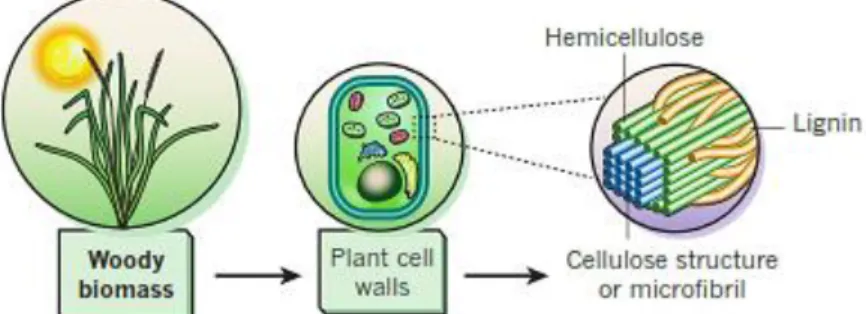
Cellulose, hemicelluloses and lignin are the three major components of LCB (Figure 1) [14]. Since cellulose and hemicellulose are polysaccharides, both can be hydrolysed to fermentable sugars that can be converted into bulk chemicals (e.g. ethanol, succinic acid) [15, 16]. Whilst cellulose is a linear polymer of D-glucose subunits, hemicellulose consists of a heterogeneous polymer composed by pentoses (D-xylose, D-arabinose), hexoses (D-mannose, D-glucose, D-galactose) and sugar acids. The composition of hemicelluloses varies widely across biomass sources [17]. Lignin is a large complex polymer consisting of phenylpropane units that are held together by different types of linkages. It is extremely resistant to degradation, and may be used for the production of bulk chemicals (e.g. phenols, vanillin) [15, 18].
Figure 1. Schematic representation of a group of lignocellulosic biomass
2. Background
4 | P a g e
Typically, LCB is composed of 33-51 % cellulose, 19-34 % hemicellulose and 20-30 % lignin. However, the composition and content of each polymer can vary widely among plant species [7]. LCB is traditionally used as a source for pulp and paper production, fertilisers, biomass fuels, and other goods and services [20]. More recently, the interest in lignocellulose as a feedstock for the production of high-value compounds, like biofuels (e.g. bioethanol) and chemicals, has been growing [21, 22].
2.1.1 Wood
Wood is a complex biological structure, which comprises numerous cell types acting together to serve the needs of the plant [23]. It is mainly composed by cellulose, hemicelluloses and lignin. At a lesser extent, inorganic compounds (ash) and other low molecular-weight substances, mainly extractives (e.g. terpenes, fatty acids, phenols), can also be found in wood species [24, 25]. Taxonomically, woods can be divided in two general classes – softwoods and hardwoods. Whereas softwoods are those woods coming from gymnosperms (e.g. pine, spruce), hardwoods are woods that come from angiosperms (e.g. birch, eucalyptus). The chemical composition and abundance of celluloses are relatively uniform in softwoods and hardwoods, however the same does not occur with lignin and hemicelluloses. Hardwood hemicelluloses are richer in pentoses (xylose), while softwood hemicelluloses contain more hexoses (glucose, mannose) [23, 24, 26].
2.1.2 Pulp and paper industry
Currently, the global paper industry is, definitely, one of the world’s largest industrial sectors [27]. According to Lucintel, it is expected to reach a total market value of about €190 billion in 2017 [28]. Worldwide, paper is mostly produced from cellulose fibers, of which less than two-thirds come from wood, one-third from recycled paper and approximately 5 % from non-wood sources (e.g. bagasse, cereal straw) [29].
The paper and paperboard manufacturing can be divided into four main phases: (1) raw material production, storage and preparation; (2) pulping; (3) bleaching, and (4) papermaking [30, 31]. One of the key steps in the paper production process is the pulping. During that stage, lignin is removed from the raw material and cellulose fibers (pulps) are released. Pulps produced are then further used for paper manufacture [26, 30]. Besides, they may be used to produce cellulose derivatives or chemical compounds [13]. The process of pulping can be accomplished mechanically, chemically or by a combination of both methods [24]. Chemical pulping (e.g. Kraft and acidic sulphite process) is the most common process, and is performed using aqueous chemical solutions at extreme pH with high temperature and pressure [31, 32].
5 | P a g e 1-2) at high temperatures [2, 26, 33].
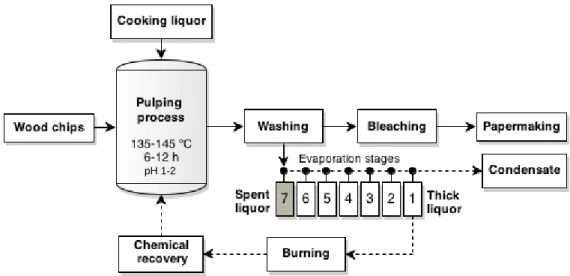
During the pulping stage, the main reaction occurring is the lignin sulphonation, leading to its hydrolysis [33]. As a result of wood cooking, cellulose fibers are held together, forming unbleached pulps, while most of the lignin and hemicelluloses are dissolved in spent sulphite liquor (SSL). Subsequently, unbleached pulp is submitted to bleaching stage for lignin residues removal. SSL, the side-product from the acidic sulphite pulping, is usually concentrated by evaporation and a thick liquor is generated. Then, the thick liquor is burned for chemical and energy recovery (Figure 2).
Figure 2. Process diagram of acidic sulphite pulping with spent sulphite liquor release. Adapted
from [2, 26].
2.1.2.2 Spent sulphite liquor
Spent sulphite liquor (SSL) has high amount of sugars and is produced annually in large quantities, and thus may be instead used for bulk chemical production associated to the biorefinery concept (e.g. bioethanol) [2, 33]. Its chemical composition varies widely and depends on the wood species used as raw-materials, pulping reagent and pulping conditions [34]. According to the wood type used for pulping, SSL can be classified as hardwood or softwood sulphite spent liquor (HSSL and SSSL, respectively) [2]. The general composition of HSSL and SSSL is presented in Table 1.
2. Background
6 | P a g e
Table 1. General chemical composition of HSSL and SSSL. Adapted from [26].
Components Concentration (g L-1) HSSL SSSL Hexose sugars Mannose Glucose Galactose Pentose sugars Xylose Arabinose Lignosulphonates Acetic acid 2-furaldehyde (furfural) 7.6–9.4 2.2–2.4 4.4–4.6 24.1–25.1 7.5–8.1 77.6–78.8 9.5–9.7 Traces 21.0–27.0 7.0–9.7 4.7–6.0 9.0–11.0 0.7–2.0 110.0–120.0 3.0 0.2
Due to the acidic sulphite pulping process, numerous compounds are generated and retained in the liquor. Most of SSL organic content arises from the lignin and hemicelluloses degradation. As a result, lignosulphonates and monosaccharides (e.g. xylose, glucose, arabinose, mannose) are formed [35]. The sugars composition of SSSL and HSSL is quite different. While SSSL contains a high proportion of hexoses (glucose, mannose and galactose), HSSL possesses a high amount of pentoses (mainly xylose). Since hexoses bioprocessing is less complex than that of pentoses, the development of strategies to ferment simultaneously and efficiently both sugar types is highly recommended. In addition to lignosulphonates, HSSL and SSSL contain other microbial inhibitory compounds, such as acetic acid, 2-furaldehyde (furfural) and 5-hydroxymethyl-2-furaldehyde (HMF) [36]. These features make SSL a complex media, which constitutes a challenge for a quick and efficient ethanol fermentation.
2.2 Biofuels
In 2008, fossil fuels (e.g. oil, natural gas) accounted for 88 % of the world primary energy consumption [37]. However, they are non-renewable resources and have several negative environmental and social impacts [38]. Therefore, research on more sustainable and renewable energy resources is highly required.
Biofuels, a form of renewable energy, are used to generate heat and/or power. They are expected to play a key role in the future, particularly in the transport sector [7, 39]. Biofuels may be derived from different biomass types, namely (i) forest products; (ii) agricultural products; (iii) fishery products, and (iv) by-products and wastes from forestry, pulp and paper, agriculture and food industries [21, 39]. Liquid biofuels include bioalcohols, like bioethanol and biodiesel. Biogas and biohydrogen are examples of gaseous biofuels [40].
7 | P a g e
Figure 3. Total biofuel and bioethanol production worldwide according to
U.S. Energy Information and Administration (EIA) [42].
United States of America and Brazil are the biggest bioethanol producers worldwide and most of it is obtained by using sugarcane or corn as feedstock – first generation bioethanol [7, 42]. This class of feedstocks is generally part of the typical human and animal food chains. Therefore, the usage of food-related feedstock can be problematic and raise some ethical, social and economic issues [41].
In order to avoid food competition, new feedstocks are being studied for bioethanol production. Second generation bioethanol is produced from agricultural lignocellulosic biomass and industrial wastes, and thus direct competition between fuel and food is absent. Depending on the biorefinery type, bioethanol can be generated as a main product or co-product from this raw material, what implies different configuration processes (Section 2.2.2) [7].
2.2.1.1 Microorganisms in bioethanol production
Bioethanol is mainly produced through fermentation of sugars, what implies the usage of microorganisms. To be considered for industrial scale bioprocesses, the microorganisms should meet some requirements: (i) high bioethanol yield, productivity and tolerance; (ii) fast growth in inexpensive media, and (iii) high-tolerance to microbial inhibitors. To prevent contamination, the microorganisms should also present growth ability under extreme conditions, such as acidic pH or high temperatures [43]. 0 125 250 375 500 625 750 Produ tc tio n (M il li on ba rr e ls pe r y e a r) Year Bioethanol Biofuel
2. Background
8 | P a g e
There is a wide variety of microorganisms able to produce bioethanol, like Saccharomyces
cerevisiae, Zymomonas mobilis, Scheffersomyces stipitis and Kluyveromyces marxianus.
However, most of them remain limited in term of sugars co-fermentation, ethanol yield and tolerance to fermentation inhibitors [44]. Therefore, the microorganism’s choice for ethanol fermentation should be taken considering the origin and composition of raw material [13].
2.2.1.1.1 Saccharomyces cerevisiae
The baker’s yeast Saccharomyces cerevisiae is one of the organisms of choice in industrial microbiology, and is widely studied for bioethanol production [45]. This microorganism produces ethanol at a high yield (higher than 0.45 g ethanol g sugars-1) and specific rate (up to 1.3 g ethanol
g cell mass-1 h-1) under anaerobic or aerobic conditions [13, 46]. Besides, S. cerevisiae has
proven to be tolerant towards inhibitors and high concentrations of ethanol (over 100 g ethanol L -1 in some strains) and sugars [7, 46].
Most of S. cerevisiae strains are able to metabolise the hexose sugars present in lignocellulose, but at different rates [7]. Glucose, the preferred hexose sugar, and mannose are efficiently fermented by S. cerevisiae. On the other hand, galactose fermentation is strain dependent, and the genes responsible for galactose utilisation are repressed by the presence of glucose, leading to a sequential metabolism of sugars [7, 46, 47]. In addition to hexoses, pentoses are also an important sugar fraction of lignocellulosic biomass and are the main source of fermentable sugars in HSSL [7, 26]. However, S. cerevisiae cannot naturally convert pentoses, like xylose and arabinose, into bioethanol. The simultaneous fermentation of hexoses and pentoses constitutes a challenge in ethanol fermentation. Several strategies have been applied to overcome this challenge, including rational metabolic engineering and use of microorganisms with the ability of consuming both sugar types [48].
2.2.1.1.2 Scheffersomyces stipitis
Naturally xylose-fermenting microorganisms can be advantageous to use when biomass contains high amounts of pentose sugars [46]. Scheffersomyces stipitis (formerly Pichia stipitis) is a haploid and homothallic yeast with the highest-native capacity for xylose fermentation of any known microorganism. Fed-batch cultures of S. stipitis produced ethanol with high yields (0.35-0.44 g ethanol g xylose-1), but its fermentation rate is considerably lower than that of S. cerevisiae [49,
50]. A summary of the main advantages and disadvantages of S. stipitis and S. cerevisiae for ethanol fermentation is shown in Table 2.
9 | P a g e Apart from xylose, this yeast has also the capacity to ferment other important sugars, like other pentoses (arabinose), hexoses (glucose, mannose, galactose, rhamnose) and oligomers (cellobiose, xylans, mannans) [50]. The consumption rate of pentose sugars by S. stipitis is also repressed by the presence of hexoses, similarly to S. cerevisiae [13]. Moreover, a very low and well-controlled supply of oxygen is required for an efficient fermentation, and its tolerance towards fermentation inhibitors and ethanol has proven to be low. In fact, yeast growth may be completely inhibited under acetate concentrations higher than 3.0 g L-1 and negatively affected by ethanol
concentrations above 30 g L-1 [51]. Considering these drawbacks, evolutionary and rational
metabolic engineering have been applied to improve S. stipitis performance and these methodologies are revised in Section 2.3.1.2.
2.2.2 Biorefinery concept
The term biorefining has been in focus in the past recent years, and is defined as the “sustainable processing of biomass into a spectrum of marketable products and energy”. Thus, in analogy to
petroleum refinery, the biorefinery concept aims to separate the biomass resources (e.g. wood, grass) into building blocks (carbohydrates, proteins), which can be converted in high-value products (e.g. biofuels, chemicals) [52]. Two main types of biorefineries can be distinguished: energy-driven and product-driven.
2.2.2.1 Energy-driven biorefinery
In this approach, the biomass is primarily used for the production of energy carriers (biofuels, power and heat), and the process residues are sold or upgraded to added-value bio-based products [53]. Thus, bioethanol can be generated as a main-product in this case. The bioethanol
cerevisiae fermentation
High ethanol yield (90 %)
High tolerance to ethanol and
chemical inhibitors
Amenability to genetic modifications
Scheffersomyces stipitis
Best performance for xylose
fermentation
Ethanol yield (82 %)
Able to ferment most of
lignocellulose sugars
Not-tolerant to ethanol at high
concentrations
Does not ferment xylose at low pH
Sensitive to chemical inhibitors
Requires microaerophilic conditions to
2. Background
10 | P a g e
production process in such biorefinery type includes three main stages: (1) pretreatment, (2) hydrolysis and (3) fermentation (Figure 4).
Figure 4. Schematic diagram for bioethanol production according to the energy-driven biorefinery approach.
Adapted from [7].
Considering LCB as a feedstock, the pretreatment is designed to degrade the complex lignocellulose matrix, occurring the separation of its main components [41]. Besides, the pretreatment leads to total or partial hydrolysis of hemicelluloses, being monosaccharides (e.g. xylose, arabinose) and oligosaccharides released. Different strategies have been employed to pretreat LCB, including physical, chemical, physico-chemical and biological processes [2, 54]. The hydrolysis aims to degrade the cellulose released during the pretreatment stage. The cellulose can be degraded into fermentable sugars (i.e. glucose) by either acidic or enzymatic hydrolysis. As a result, a lignocellulosic hydrolysate is generated and it can be fermented to ethanol, which is usually recovered by distillation [55].
2.2.2.2 Product-driven biorefinery
The purpose of a product-driven biorefinery is the production of various added-value bio-based compounds from biomass. The process residues, like SSL, are then used for power and heat production [53]. In this approach, bioethanol can be produced as a co-product, thus resulting from the obtained residues (Figure 5). In these biorefineries, both the pretreatment and hydrolysis are optimised for the main product generation, and thus the fermentation media used for bioethanol production may contain undesired compounds.
Figure 5. Schematic diagram for bioethanol production according to the product-driven biorefinery approach.
Adapted from [7]. Feedstock
Pretreatment Hydrolysis Fermentation Distillation
Bioethanol Yeast
Residues
Feedstock
Pretreatment Main product
Fermentation Distillation
Bioethanol Yeast
Residue
11 | P a g e tolerance of microorganisms to toxic compounds, and (iii) microbial contamination avoidance [7]. Microbial inhibitors are particularly undesirable compounds for fermentation systems, thus limiting the economic feasibility of bioconversion processes [8]. Their toxicity depends on: (i) the concentration of inhibitors; (ii) type of fermentative organism; (iii) cultivation mode, and (iv) cultivation conditions (e.g. pH, temperature) [56]. Microbial inhibitors may drastically affect the viability, growth and fermentative ability of microorganisms [8].
Lignocellulosic hydrolysates in general and SSL in particular contain fermentation toxic compounds, which are called lignocellulosic inhibitors [2]. The amount and nature of the inhibitors depend primarily on the raw material and hydrolysis procedure [57]. According to their origin, lignocellulosic inhibitors can be divided into four groups: (i) sugar degradation products; (ii) weak acids; (iii) lignin degradation products; (iv) extractive-derived compounds, and (v) heavy metal ions (Table 3) [2, 56].
Table 3. Summary of the most common lignocellulosic inhibitors [2].
Inhibitor’s group Compound Inhibitor’s group Compound
Sugar-derived Weak acids Lignin-derived a) Furfural b) HMF a) Acetic acid b) Formic acid c) Levulinic acid a) Aromatics b) Polyaromatics c) Phenolics d) Aldehydes e) Lignosulphonates Extractives
Heavy metal ions
a) Acidic resins b) Terpenic acids c) Tannin acids a) Iron b) Chromium c) Nickel d) Copper
During the hydrolysis of LCB, the furan aldehydes furfural and HMF are formed from dehydration of pentose and hexose sugars, respectively [8, 36]. These sugar-derived products have been found to negatively affect cell growth and ethanol productivity by interfering with glycolytic enzymes [8]. However, HMF is not so toxic to microorganisms as furfural [2]. Interestingly, Lohmeier-Vogel et al. [58] suggested the occurrence of a synergistic effect between furfural and HMF, even at low concentrations of each inhibitor (below 1.0 g L-1). Considering
ethanol-producing yeasts, Hanly et al. [59] reported that the furan aldehydes have stronger inhibitory effects on S. stipitis than on S. cerevisiae.
The most common weak acids found in lignocellulosic hydrolysates are acetic, formic and levulinic acid. Acetic acid is formed by hydrolysis of hemicelluloses, while formic and levulinic acids arise
2. Background
12 | P a g e
from the degradation of HMF. Formic acid may also be generated from furfural degradation [60]. Weak acids inhibit cell growth. At low pH medium, weak acids are undissociated and can diffuse across the plasma membrane, thus decreasing the neutral intracellular pH and affecting negatively cell proliferation and viability. The concentration of undissociated acids in lignocellulosic hydrolysates is highly dependent on pH, and therefore this is an important variable during fermentation [36]. In general, a pH of at least 5.5 improves fermentation performance by reducing the toxicity of weak acids [8]. Despite their severe effects, a low concentration of weak acids have been shown to stimulate ethanol production by yeasts [36]. Among the referred weak acids, acetic acid is the most toxic to cell growth and no synergistic effects occur between them [13, 60].
Lignin degradation products are formed during the hydrolysis of lignocellulose, and include aromatic, polyaromatic, phenolic and aldehydic compounds. Phenolic compounds are the most toxic substances found in lignocellulosic hydrolysates for microorganisms and severely affect biological membranes, reducing cell growth and sugar uptake [2]. Some few examples of lignin-derived compounds are vanillin, syringaldehyde, 4-hydroxybenzoic acid and catechol. Vanillin was found to be the strongest inhibitor for both xylose- and hexose-fermenting yeasts [56]. In SSL, lignin-degradation substances are commonly found in the sulphonated form due to the cooking process, thus generating lignosulphonates [2]. Hernandez-Pérez et al. [61] suggested that also lignosulphonates have a partial microbial inhibiting effect, resulting in slower growth kinetics.
Another group of lignocellulosic inhibitors includes extractives (e.g. acidic resins, tanninic acid and terpenic acids), which are less toxic to cell growth than lignin-degradation products. Some hardwoods contain high amounts of hydrolysable tannins, leading to phenolics formation during the pulping process [26].
Heavy metal ions (e.g. iron, chromium, nickel, copper) are usually found in hydrolysates as a result of equipment corrosion during LCB hydrolysis. These compounds are commonly present in SSL, having an inhibitory effect on microbial metabolism [26].
According to Almeida et al. [62], an inhibitory synergistic effect occurs when furan derivatives, weak acids and phenolic compounds are present simultaneously [63]. Therefore, the development of strategies to counteract the negative effects of lignocellulosic inhibitors is highly required to improve the fermentation performance [26]. Those strategies are crucial to achieve an economically viable bioprocess of ethanol fermentation [13].
2.3.1 Improving yeast tolerance
According to the literature, two main alternative measures can be taken to enhance the efficiency of fermentation process and avoid the negative effects caused by microbial inhibitors: (i)
13 | P a g e A wide variety of physical, chemical and biological methods can be used to detoxify lignocellulosic hydrolysates, and they are based on the removal or conversion of inhibitors, and should not degrade the sugars [8, 13]. A common objection against detoxification is based on the assumption that it would require a separate process step, increasing the cost of bioethanol production [60]. The physical methods are based on the adsorption process, thus promoting the removal of inhibitors from hydrolysates without changing their chemical structure. These methods include the use of: (i) activated charcoal; (ii) ion exchange resins, and (iii) phase transfer processes [64]. The main chemical detoxification treatments are based on the addition of reductive substances (e.g. dithionite treatment) and pH modification (e.g. alkali treatment). While reductive substances lead to the conversion of inhibitors into less toxic compounds, pH alteration to high values (pH 9-10) may promote the precipitation and/or decomposition of toxics [2, 64].
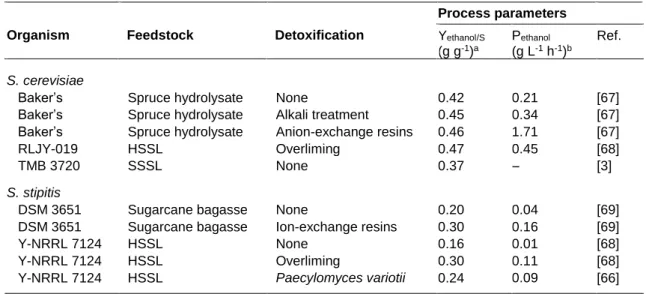
Biological detoxification methods are more feasible and environmentally friendlier than the physical and chemical treatments, and involve the use of enzymes and/or microorganisms, which act on inhibitors found in hydrolysates by changing their chemical structures [56, 64]. Lignolytic enzymes from the white-rot fungus Trametes versicolor (e.g. laccase, peroxidase) have the capability to oxidise weak acids and phenolic compounds, allowing improved fermentability [2]. There are numerous microorganisms with the inhibitor-removing ability from hydrolysates. Lopéz et al. [65] used the fungus Coniochaeta ligniaria (obtained from furfural contaminated soil) to detoxify a pretreated corn stover hydrolysate. As a result, 97 % of furfural and 78 % of HMF were converted into non-inhibitory substances. Besides, Pereira et al. [66] demonstrated that HSSL can be successfully biodetoxified using the fungus Paecilomyces variotii, allowing improved ethanol production. This methodology resulted in the decrease of acetic acid and phenolics content in HSSL. Table 4 summarizes some of the detoxification strategies adopted by research groups to improve ethanol fermentation.
2. Background
14 | P a g e
Table 4. Fermentation performance of Saccharomyces cerevisiae and Scheffersomyces stipitis in various
lignocellulosic hydrolysates under different detoxification methodologies.
a Ethanol yield (g ethanol g consumed sugars-1). b Ethanol productivity (g ethanol L-1 h-1).
2.3.1.2 Development of inhibitor-tolerant organisms
Unlike hydrolysate detoxification, this approach has microorganism as the main target and is based on the selection of microbial species and strains tolerant to inhibitory compounds. According to this approach, inhibitor-resistant microorganisms may be obtained by two main strategies: (i) rational metabolic engineering, and (ii) evolutionary engineering [60, 70].
2.3.1.2.1 Rational metabolic engineering
Rational metabolic engineering refers to the engineering of metabolic pathways (namely enzymes, transporters, regulatory proteins) based on the available information. Based on this information, a methodology is typically designed to improve the metabolic flux and/or a phenotypic trait. This methodology is strongly based on systems biology and genetic engineering, and has been successfully used for strain improvement in a wide range of applications [71-73]. For instance, Petersson et al. [74] proved that S. cerevisiae strains overexpressing the ADH6 gene (encoding for alcohol dehydrogenase 6) showed increased HMF reduction capacity. Besides, Fujitomi and colleagues [75] showed that deleting the PHO13 gene (encoding for p-nitrophenylphosphatase), S. cerevisiae improved the ethanol fermentation in the presence of three important inhibitors – furfural, and acetic and formic acids.
2.3.1.2.2 Evolutionary engineering
By definition, the term evolutionary engineering includes all the methods for empirical strain improvement, such as: (i) adaptation; (ii) induced mutagenesis, and (iii) genome shuffling. This approach can be very effective, and is based on sequential and multiple cycles of random genetic
Process parameters Organism Feedstock Detoxification Yethanol/S
(g g-1)a Pethanol (g L-1 h-1)b Ref. S. cerevisiae Baker’s Baker’s Baker’s RLJY-019 TMB 3720 S. stipitis DSM 3651 DSM 3651 Y-NRRL 7124 Y-NRRL 7124 Y-NRRL 7124 Spruce hydrolysate Spruce hydrolysate Spruce hydrolysate HSSL SSSL Sugarcane bagasse Sugarcane bagasse HSSL HSSL HSSL None Alkali treatment Anion-exchange resins Overliming None None Ion-exchange resins None Overliming Paecylomyces variotii 0.42 0.45 0.46 0.47 0.37 0.20 0.30 0.16 0.30 0.24 0.21 0.34 1.71 0.45 – 0.04 0.16 0.01 0.11 0.09 [67] [67] [67] [68] [3] [69] [69] [68] [68] [66]
15 | P a g e Adaptation
The adaptation of fermenting microorganisms to lignocellulosic hydrolysates is a natural mutagenesis technique and has been appointed as an alternative to the detoxification strategy. It may reduce bulk chemical production cost, and avoid loss of fermentable sugars. Moreover, adaptation has been found to increase yeast tolerance to inhibitors, decrease fermentation time, and increase ethanol production [2, 8, 76]. This approach is based on the fact that microorganisms can be adapted by constant exposure to sublethal inhibitor concentrations in hydrolysates in fed-batch or continuous cultivation [76]. At these conditions, cells are under selective pressure, and the variants of cell population with selective advantage will take over the initially dominating cells [77].
The adaptation process can be divided in short- and long-term [76]. Short-term adaptation is performed immediately prior to fermentation by cell cultivation on the hydrolysate or on a defined media supplemented with synthetic inhibitors. Sànchez i Nogué et al. [78] showed that the short-term adaptation of an industrial strain of S. cerevisiae at pH 5.0 in the presence of acetic acid (at least 4 g L-1) enhanced aerobic growth and fermentation performance under low pH (3.7) and
inhibitory levels of acetic acid (6 g L-1).
Long-term adaptation is usually realised by cell cultivation (i) in increasing concentrations or (ii) in a dilution of the lignocellulosic hydrolysate or inhibitors-containing defined media [8, 77]. After this process, an adapted population is obtained, and stability tests over time in the absence of selective pressure should be performed at single clone level. This approach is of great importance and aims to verify if the phenotype improvement was definitely acquired or not. For instance, Nigam [68] has found that long-term adaptation of S. stipitis on non-detoxified dilute acid hydrolysate of wheat straw resulted in an improved ethanol yield. On the other hand, Sànchez i Nogué [7] reported that after a long-term adaptation of S. cerevisiae in mineral medium containing inhibitors, a stable population was obtained, but the acquired tolerance to inhibitors was transient, since the population was not able to grow in their presence after being stored as glycerol stock. Table 5 summarizes some of the work done by research groups to improve the ethanol fermentation using the adaptation strategy.
2. Background
16 | P a g e
Table 5. Adaptation effect on the fermentation performance of Saccharomyces cerevisiae and
Scheffersomyces stipitis in various lignocellulosic hydrolysates.
a Ethanol yield (g ethanol g consumed sugars-1).
b Ethanol volumetric productivity (g ethanol L-1 h-1).
Induced mutagenesis
Induced mutagenesis is another approach of evolutionary engineering, and can be divided in two steps. The first stage includes the treatment of microorganism with mutagens (e.g. N-nitroguanidine, UV-light), leading to the generation of random mutations. The second step is of enormous relevance, and comprises the screening/selection for the mutants with the desired characteristics. This is an efficient, quick and widely used method to obtain a desired microbial strain [8, 81]. Bajwa et al. [82] found that UV irradiation combined with a screening on HSSL was a good strategy to improve inhibitors-resistance and fermentation efficiency of S. stipitis.
Genome shuffling
This approach can be used to combine phenotypes conferring tolerance to various inhibitors, since it can accelerate directed evolution by facilitating recombination between members of a distinct population. The genome shuffling is a process that combines the advantage of multiparental crossing through DNA shuffling, along with the recombination of entire genomes [7, 83]. Bajwa et al. [84] used this method to obtain two different S. stipitis strains, GS301 and GS302, with improved tolerance to HSSL when compared to the parental strain. These strains were able to consume all the glucose and xylose and produce higher amounts of ethanol.
2.4 Microbial contamination during ethanol fermentation
The industrial ethanol fermentations of sugar-based feedstocks are not designed to run under sterile conditions, due to the high sterilization costs. This favours microbial contamination, which can occur in any stage of the process and pose serious economic consequences. A wide variety of yeast and bacteria have been isolated and identified from ethanol plants (Table 6) [3, 10, 40]. Microbial contaminants can compete for nutrients with the fermenting organism and also produce toxic compounds, thus affecting considerably the yeast fermentation performance [44].
Process parameters Organism Feedstock Strain improvement Yethanol/S
(g g-1)a Pethanol (g L-1 h-1)b Ref. S. cerevisiae Y-265 Y-265A-3 S. stipitis Y-NRRL 7124 Y-NRRL 7124 Y-NRRL 7124 Y-NRRL 7124 Synthetic medium Synthetic medium Wheat straw Wheat straw HSSL HSSL None Adaptation None Adaptation None Adaptation 0.15 0.24 0.36 0.41 0.16 0.28 0.09 0.13 0.30 0.54 0.01 0.07 [79] [79] [80] [80] [68] [68]
17 | P a g e Lactobacillus fermentum Lactobacillus pentosus Acetobacter tropicalis Acetobacter syzygii Yeast Candida sp. Dekkera bruxelensis Pichia sp. Corn Corn
Spent sulphite liquor Spent sulphite liquor Yeast Sugar cane Sugar cane Sugar cane [86] [85] [10] [10] Yeast [87] [87] [87]
2.4.1 Lactic acid bacteria
Lactic acid bacteria (LAB), the most common bacterial contaminants found in ethanol facilities, are gram-positive, neutrophile and non-sporulating microaerophilic [88-90]. They can assimilate sugars by a homofermentative and/or heterofermentative pathway, and the resulting main fermentation end-product is lactate [89]. The most known inhibitory compounds formed by LAB are lactate and acetate, which lower the pH of the media, contributing to a non-optimal pH range for S. cerevisiae and other ethanol-producing microorganisms [40]. Moreover, at low pH, such acids are in undissociated form and can diffuse across the plasma membrane, decreasing the intracellular pH and the cell proliferation and viability [88]. Other compounds with antifungal activity, like reuterin and hydrogen peroxyde, are also formed by LAB (Figure 6).
Figure 6. Summary of the main antifungal inhibitors produced by
lactic acid bacteria [88].
Different studies have shown that pure cultures of S. cerevisiae are clearly affected by the addition of lactate and acetate to the fermentation media, resulting in decreased growth rates and ethanol productivities [91, 92]. The effects of contaminating organisms are less clear [85]. Thomas et al. [93] demonstrated that growth of Lactobacillus fermentum for 24 h in corn mash prior to inoculation of S. cerevisiae resulted in a 22 % loss of ethanol production. However, when the
Lactic acid bacteria Carbon dioxide Lactate Acetate Phenyllactic acid Reuterin Proteinaceous compounds Diacetyl Hydroxygen peroxide Caproic acid Cyclic dipeptides
2. Background
18 | P a g e
yeast and bacteria were both inoculated at the same time, the ethanol production decreased only 3 % if compared to the control. Albers et al. [10] reported that the presence of L. pentosus, L.
plantarum or L. buchneri had no negative effect in S. cerevisiae viability during ethanol
fermentation of SSL. In other study, L. paracasei was introduced as a contaminant in a defined medium (with no pH control) at ratios of 1:100, 1:1 and 70:1 with S. cerevisiae, but failed to overtake the yeast. However, when medium pH was increased up to 6.0, L. paracasei was able to compete with S. cerevisiae, resulting in 44 % loss of ethanol production [94]. More research studies are needed to understand what triggers the contamination by Lactobacillus sp. in ethanol plants.
2.4.2 Avoiding bacterial contamination
Several strategies are being evaluated to reduce the levels of bacterial contamination in ethanol facilities. They can be controlled by the use of antibiotics, acid washing, among others [88]. The use of antibiotics (e.g. penicillin, virgiamycin) should be avoided, due to economic and environmental reasons. Additionally, they only reduce the contamination levels temporarily and not permanently [7]. The acid washing treatment can be a feasible alternative to the antibiotics’ usage. In this process, cells are collected from the fermentation broth and sulphuric acid is used to adjust the pH. The acid treatment can be successfully used in batch processes, but not in continuous cultures with cell recirculation [95]. Other strategies, such as modification of the fermentation parameters can be further investigated to solve the bacterial contamination in ethanol plants. Changing process conditions like pH and temperature during ethanol fermentation process can avoid the growth of bacterial contaminants [10, 96]. This is a simple, economic and effective measure, which can contribute to the development of more economically viable ethanol plants. However, the effect on ethanol-producing strains also needs to be evaluated.
19 | P a g e
Materials and methods
As previously outlined, this work is composed of two studies concerning different challenges of ethanol fermentation: (i) evolutionary engineering for yeast improvement, and (ii) microbial contamination. For a better understanding of each topic, the chapters 3 and 4 are thus divided in two sections.
3.1 Evolutionary engineering study
3.1.1 Strains and maintenance
Scheffersomyces stipitis NRRL Y-7124, denoted parental strain, was gently supplied by ARS
Culture Collection (NCAUR, Peoria, IL, USA) [97]. The parental strain was cultivated in increasing concentrations of HSSL (0-60 % v/v) supplemented with CDM by operating a continuous stirred-tank reactor during 68 days with a working volume of 1 L. The cells collected from the final medium, designated as adapted population, were stored for further studies [98].
The parental strain and adapted population were grown at 28ºC and maintained in YMG Agar plates. The detailed composition of the mentioned media is shown below (Section 3.1.2).
3.1.2 Cultivation media
3.1.2.1 Hardwood spent sulphite liquor
HSSL from the magnesium-based acidic sulphite pulping of Eucalyptus globulus was kindly provided by Caima-Indústria de Celulose S.A. (Constância, Portugal). Pre-evaporated HSSL was collected, and its composition is shown in Table 7. The pretreatment of HSSL consisted in pH adjustment to 7.0 with KOH, followed by aeration with compressed air (2 h L-1) and centrifugation
at 5,000 rpm for 20 min, 4ºC. The precipitated colloids were filtered off using a 1.0 µm glass microfiber filter (Filtres Fiorini, France).
3. Materials and methods
20 | P a g e
Table 7. Composition of hardwood spent sulphite liquor provided by
Caima-Indústria de Celulose S.A. (Constância, Portugal) [99].
3.1.2.2 Chemically defined medium
The composition of chemically defined medium (CDM) [100] is shown in Table 8. CDM was formulated in order to mimic the sugars composition (xylose and glucose) of HSSL, and supplemented with salts, vitamins and trace elements. A buffer solution at pH 5.5 was also part of CDM.
Table 8. Composition of chemically defined medium (CDM).
3.1.2.3 Solid growth media
The composition of solid media used (YMG Agar, YMX Agar, YMXH Agar) during the study of evolutionary engineering of S. stipitis is shown in Table 9.
Components Conc. (g L-1) Components Conc. (g L-1)
Hexose sugars D-Mannose D-Glucose D-Galactose Pentose sugars D-Xylose L-Arabinose L-Rhamnose L-Fucose 8.5 ± 0.9 2.3 ± 0.1 4.5 ± 0.1 24.6 ± 0.5 7.8 ± 0.3 1.6 ± 0.3 0.4 ± 0.3 Lignosulphonates Acetic acid Furfural Ash 78.2 ± 0.6 8.2 ± 0.3 < 0.1 Traces Components Conc. (g L-1) Components Conc. (mg L-1) Components Conc. (mg L-1) Sugars D-Glucose D-Xylose Salts (NH4)2SO4 MgSO4·7H2O KH2PO4 Buffer KHC8H4O4 KOH 2.3 24.6 5.0 0.5 3.0 5.1 1.1 Vitamins Biotin Panthothenic acid calcium salt Nycotin acid Myo-inositol Thiamine·HCl Piridoxine·HCl ρ-Aminobenzoic acid 0.05 1.00 1.00 25.0 1.00 1.00 0.20 Trace elements ZnSO4·7H2O MnCl2·4H2O CoCl2·6H2O CuSO4·5H2O Na2MoO·2H2O CaCl2·2H2O FeSO4·7H2O H3BO3 KI 4.50 1.00 0.30 0.30 0.40 4.50 3.00 1.00 0.10
21 | P a g e
Malt extract Yeast extract Peptone from casein HSSL D-Glucose D-Xylose Agar 3.00 3.00 5.00 – 10.0 – 20.0 3.00 3.00 5.00 – – 10.0 20.0 1.20 1.20 1.60 60 % (v/v)b – 4.00 20.0
a Solid medium composed of HSSL/YMX Agar (60/40 % v/v). Agar was added as 100 % (v/v). b HSSL concentration expressed in volume percent (% v/v).
3.1.3 Selection of tolerant clones
The pre-culture of the adapted population of S. stipitis was performed by taking colonies from YMG Agar plates into 5 mL of CDM. Cells were grown in 50 mL conical tubes until late exponential phase at 28ºC, 180 rpm. The pre-grown cells were then streaked in YMXH Agar plates and incubated at 28ºC for 5 days. Ten of the originated colonies (i.e. clones) were randomly selected and their phenotypic stability was evaluated. For that, ten sequential transfers of each clone were performed under non-selective conditions in YMX Agar plates incubated at 28ºC for 48 h per transfer. In the final of the process, the clones-containing plates (of the 10th transfer) were stored
at 4ºC for further studies.
3.1.4 Screening trials
3.1.4.1 Pre-cultureThe yeast pre-cultures were performed by taking colonies of S. stipitis parental strain, adapted population or clones from the respective agar plates into 5 mL of CDM. Cells were grown in 50 mL conical tubes until late exponential phase at 28ºC, 180 rpm.
3.1.4.2 Intermediate step
The intermediate step was performed in 5 mL of HSSL/CDM (60/40 % v/v). The vitamins and trace elements solution of CDM were added as 100 % (v/v). The biomass needed to start the fermentation with an initial optical density at 620 nm (OD620) of 0.5 was obtained from the
pre-culture. Cells were grown in 50 mL conical tubes until late exponential phase at 28ºC, 180 rpm. 3.1.4.3 Shake flask fermentation
The shake flask fermentations were performed in 12 mL of HSSL/CDM (60/40 % v/v). The vitamins and trace elements solution of CDM were added as 100 % (v/v). The biomass needed
3. Materials and methods
22 | P a g e
to start the fermentation with a starting OD620 of 0.5 was obtained from the intermediate step
culture. Cells were grown in 100 mL shake flasks at 28ºC, 180 rpm, and the best-performing clone was further studied.
3.1.5 Clone characterisation
3.1.5.1 Pre-cultureThe pre-culture was performed by taking colonies of the best-performing clone from YMXH Agar plate into 10 mL of CDM. Cells were grown in 100 mL shake flaks until late exponential phase at 28ºC, 180 rpm.
3.1.5.2 Intermediate step
To obtain enough biomass for fermentations and to investigate the effect of short-term adaptation on clone performance, an extra cultivation step was required. The intermediate step was performed in two different media: (i) 100 mL of CDM, or (ii) 100 mL of HSSL/CDM (60/40 % v/v) with vitamins and trace elements solution of CDM as 100 % (v/v). The medium was inoculated with the clone pre-culture at an initial OD620 of 0.5, and the cells were grown in 1 L shake flasks
until late exponential phase at 28ºC, 180 rpm.
3.1.5.3 Batch reactor fermentation
In order to obtain the biomass needed to start the batch fermentations, the medium was inoculated with the intermediate step-culture at an initial OD620 of 0.5. The fermentations were
performed in a 1 L stirred tank reactor (BioLab, B. Braun, Germany) with a working volume of 800 mL. A medium consisting of 800 mL of HSSL/CDM (60/40 % v/v) with vitamins and trace elements solution of CDM as 100 % (v/v) but without buffer solution was used. The temperature was set at 28ºC, agitation at 240 rpm, aeration at 0.24 L min-1 and pH was maintained at 5.5 by automatic
addition of 3 M KOH or 3 M H2SO4.
3.1.6 Analytical methods
3.1.6.1 Metabolites determinationThe fermentation samples were centrifuged (2 min at 13,000 rpm) in order to remove the cells. The supernatant was then filtered through 0.20 µm membrane filters (CoStar, Cambridge, MA, USA) by centrifugation (10 min at 8,000 rpm), and stored at -20ºC.
The concentrations of glucose, xylose, xylitol, glycerol, acetate and ethanol were determined by high performance liquid chromatography (HPLC). The sample injection volume was 20 µL, and
23 | P a g e 3.1.6.2 Cell viability
The cell viability was evaluated as colony-forming units per milliliter (CFU mL-1). CFU
determination was performed by serial dilutions with 0.9 % (v/v) NaCl solution, in quadruplicate. When the desired dilution factor was achieved, 100 µL were spread on YMG Agar plates. The agar plates were then incubated at 28ºC for 48 h.
3.1.6.3 Cell dry weight
Cell dry weight was determined, in quintuplicate, by filtering 5 mL of sample with a 0.45 µm membrane filter (ME 25/21 ST, Whatman, England), and washing with 15 mL of distilled H2O. The
![Table 1. General chemical composition of HSSL and SSSL. Adapted from [26].](https://thumb-eu.123doks.com/thumbv2/123dok_br/15910815.1092638/30.892.214.680.139.366/table-general-chemical-composition-hssl-sssl-adapted.webp)

![Table 3. Summary of the most common lignocellulosic inhibitors [2].](https://thumb-eu.123doks.com/thumbv2/123dok_br/15910815.1092638/35.892.129.773.593.804/table-summary-common-lignocellulosic-inhibitors.webp)

![Figure 6. Summary of the main antifungal inhibitors produced by lactic acid bacteria [88]](https://thumb-eu.123doks.com/thumbv2/123dok_br/15910815.1092638/41.892.220.672.139.359/figure-summary-main-antifungal-inhibitors-produced-lactic-bacteria.webp)

![Table 10. Composition of solid and liquid growth media. Abbreviations: YPD, Yeast Extract Peptone Dextrose; YNB, Yeast Nitrogen Base; MRS, De Man, Rogosa and Sharpe [13, 102].](https://thumb-eu.123doks.com/thumbv2/123dok_br/15910815.1092638/48.892.134.769.701.1012/composition-abbreviations-extract-peptone-dextrose-nitrogen-rogosa-sharpe.webp)
