Nurses’ interventions in the management
of urinary incontinence in the elderly: an
integrative review
C
RITICAL
R
EVIEW
1 RN. Ph.D. student, Graduate Nursing Program, School of Medical Sciences, University of Campinas. 2 Campinas, SP, Brazil. [email protected] ATUAÇÃO DO ENFERMEIRO NO MANEJO DA INCONTINÊNCIA URINÁRIA NO IDOSO:
UMA REVISÃO INTEGRATIVA
ACTUACIÓN DEL ENFERMERO EN EL MANEJO DE LA INCONTINENCIA URINARIA EN EL ANCIANO: UNA REVISIÓN INTEGRATIVA
Vanessa Abreu da Silva1, Maria José D’Elboux2
RESUMO
Este estudo teve como obje vo verifi car quais são as estratégias u lizados pelos en-fermeiros para o manejo da incon nência urinária (IU) em idosos. Realizou-se um es-tudo de revisão integra va da literatura nas seguintes bases de dados: WEB OF SCIENCE, MEDLINE, SCOPUS e CINAHL, no período de 2006 a 2010. Foram encontradas 186 publi-cações, e, após a exclusão daquelas com du-plicidade e a leitura cuidadosa dos trabalhos na íntegra, a amostra cons tuiu-se de sete ar gos. A maior parte das pesquisas aborda a incon nência urinária de uma maneira ge-ral, sem caracterização quanto ao seu po ou queixas presentes nos sujeitos da pesquisa. Apenas um trabalho referia-se ao manejo de incon nência urinária em idosos com demência e outro especifi cou o po (bexiga hipera va). Diante disso, destaca-se a neces-sidade de realizar pesquisas clínicas sobre o manejo da incon nência urinária realizado por enfermeiros, visando o fornecimento de evidências cien fi cas para o embasamento dessa prá ca.
DESCRITORES
Idoso
Incon nência urinária Terapêu ca
Cuidados de enfermagem Revisão
ABSTRACT
The objective of this study was to verify the strategies that nurses use to manage urinary incontinence (UI) in the elderly. An integrative literature review was per-formed on the following databases: WEB OF SCIENCE, MEDLINE, SCOPUS and CI-NAHL, in the period from 2006 to 2010. A total of 186 articles were located, and af-ter excluding duplicates and performing a careful reading of the full articles, the sample was comprised of seven articles. Most studies utilize an overall approach to urinary incontinence, without charac-terizing the type or the subjects’ claims. Only one study addressed the manage-ment of urinary incontinence in the el-derly with dementia; another specified the type (hyperactive bladder). There-fore, there is a need for further clinical nursing studies regarding the manage-ment of urinary incontinence, aiming to provide scientific evidence to support this practice.
DESCRIPTORS
Aged
Urinary incon nence Therapeu cs Nursing care Review
RESUMEN
Se obje vó verifi car cuáles son las estra-tegias u lizadas por enfermeros para el manejo de la incon nencia urinaria (IU) en ancianos. Se realizó estudio de revisión integra va de literatura, en las bases de datos WEB OF SCIENCE, MEDLINE, SCO-PUS y CINAHL, en período de 2006 a 2010. Fueron encontradas 186 publicaciones; una vez excluidas las duplicadas y efec-tuada la lectura integral de los trabajos, la muestra se cons tuyó de 7 ar culos. La mayoría de las inves gaciones aborda la IU de un modo general, sin caracterización de pología o quejas expresadas por los sujetos inves gados. Apenas un trabajo se refería al manejo de IU en ancianos con demencia y otro especifi có el po (veji-ga hiperac va). Frente a eso, se destaca la necesidad de realizar inves gaciones clínicas sobre el manejo de la IU realiza-das por enfermeros, apuntando a ofrecer evidencias cien fi cas que sirvan de base a esta prác ca.
DESCRIPTORES
Anciano
Incon nencia urinaria Terapéu ca
INTRODUCTION
Experts have appointed urinary incon nence (UI) as a public health problem(1), due to its incidence and conse-quences. Few health professionals research on the theme though, and studies on urinary incon nence are scarce(2), especially involving nursing authors.
Urinary incon nence is considered one of the most important and recurring geriatric syndromes(3-4). It is
de-fi ned as complaints of any involuntary urine loss(5). It is a common problem that can aff ect people of all age ranges, but its prevalence is higher in the female popula on and increases as age advances(6-8).
It is es mated that urinary incon nence aff ects about 30% of elderly people living in the community, between 40% and 70% of hospitalized elderly and 50% of elderly living in long-term care facili es(5).
That is so because the changes deriving from the ag-ing process and health crisis events can enhance the de-velopment of urinary incon nence in old age(6,9). It should be highlighted that the aging process as an
isolated phenomenon is not a cause, but in-duces anatomical and func onal altera ons predisposing to the problem(7).
It is known that urinary incon nence nega vely aff ects elderly pa ents’ quality of life and enhances social isola on, in view of the fear of losing urine in public places, embarrassment and ac vity constraints, be-sides arousing feelings of low self-esteem, interfering in personal rela ons and
house-work(8-10). Moreover, it is one of the main causes of ins onaliza on among the elderly(11).
Studies show that an individualized nursing care plan decreases the occurrence and consequences of urinary incon nence among elderly people(12). The fact is that nursing ac vi es in the management of this situa on is rela vely new in the history of the profession(13).
Urinary incon nence assessment and management is a nursing specialty called stomal therapy, which com-prises care delivery to people with stomas, wounds, anal and urinary incon nence, acknowledge by Brazilian and interna onal nursing en es and scien fi c socie es. Nev-ertheless, the number of nurses with specifi c knowledge on this ac vity area is scarce, as well as scien fi c
on on nursing management of urinary incon nence in elderly pa ents.
In view of the above, the aim of this study is to verify, through an integra ve literature review, the strategies nurses use for urinary incon nence management in el-derly pa ents.
METHOD
In this bibliographic review, the integra ve literature review method was applied. The aim of this modality is to join and summarize research results on a given theme, in a systema c and ordered way, thus contribu ng to deep-en the knowledge on the research theme(14).
To develop this research, the following steps proposed in literature were adopted15):
- Search in an indexed database of studies published on the theme;
- Selec ve reading of studies and selec on of on to be extracted;
- Selec on of studies that complied with the defi ned inclusion and exclusion criteria;
- Presenta on and discussion of review fi ndings.
The following ques on was used to guide the ve review: what strategies do nurses adopt to manage urinary incon nence in elderly pa ents?
To refi ne the research, a sample was
de-fi ned, which complied with the following
in-clusion criteria:
- journals indexed in the databases WEB OF SCIENCE, MEDLINE (Literatura Interna-cional em Ciências da Saúde), SCOPUS and CINAHL (Cumula ve Index to Nursing and Allied Health Literature).
- papers in Portuguese, English and Spanish, with abstracts available in the abovemen oned databases, published be-tween 2006 and 2010;
- papers indexed by the following DeCS/MeSH de-scriptors:
• Idoso – aged – anciano
• Incon nência urinária – urinary incon nence – in-con nencia urinária
• Terapia – therapy – terapia
• Enfermagem – nursing – enfermaría
- studies on nursing management of UI in elderly pa ents.
In the fi rst phase, i.e. the database search, 186 indexed
publica ons were found, as shown in Table 1.
A er excluding duplicated publica ons, 138 studies were obtained and their tles and abstracts were read. Twenty of these ini ally complied with the inclusion cri-teria but, a er careful reading of the full papers, it was observed that 13 studies did not address nursing manage-ment of urinary incon nence. Thus, the sample consisted of seven publica ons.
...the changes deriving from the aging process
and health crisis events can enhance
the development of urinary incontinence in
RESULTS
Regarding the design of the assessed publica ons, it was verifi ed that: three papers were reviews, one update,
one descrip ve study, one study on nursing educa on about urinary incon nence management and only one randomized clinical trial.
Most papers addressed urinary incon nence in general, without characterized the research subjects’ incon nence type or complaints. Only one study discussed urinary
nence management in demented elderly pa ents and an-other specifi ed the type (overac ve bladder).
The seven papers included in this review were pub-lished in interna onal studies: two in General Nursing journals, two in journals on Geriatrics and/or Gerontol-ogy and three in a specifi c gerontology nursing journal, as
shown in Table 2.
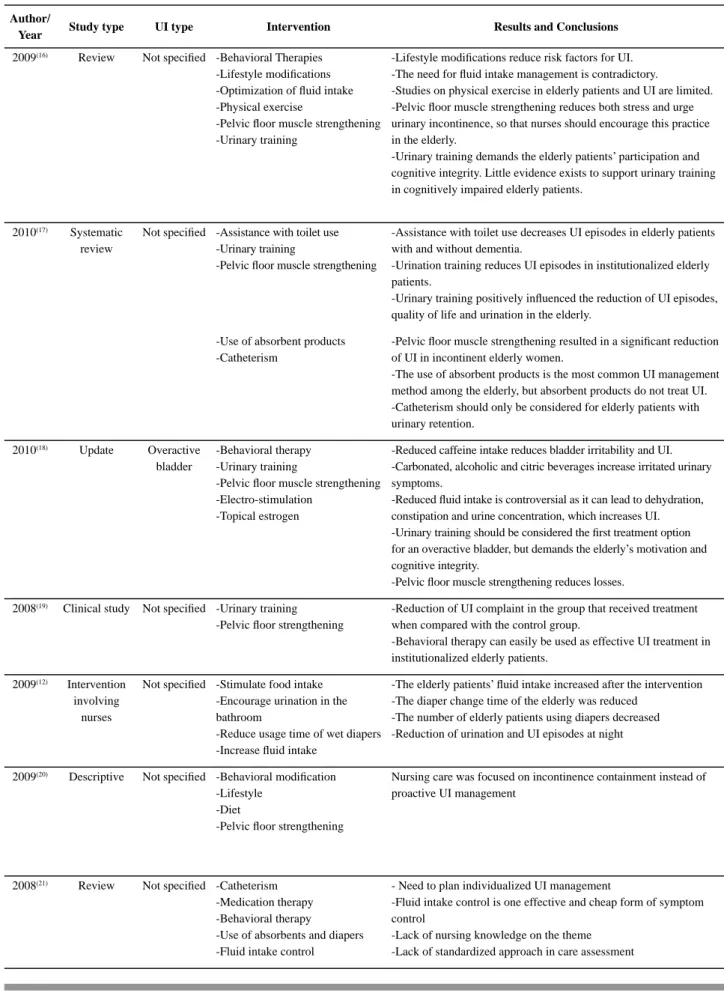
Table 3 presents a synthesis of the papers included in this integra ve review.
Based on the reviewed literature, the main nursing vi es in urinary incon nence in elderly pa ents will be presented next.
Nursing care for urinary inconƟ nence management in elderly paƟ ents
Concerning nursing strategies for urinary incon nence treatment, the seven studies address conserva ve
treat-ment, including physical exercise, behavioral therapy, life-style modifi ca ons, adjusted according to individual be-havior, aimed at reducing the risk factors associated with urinary incon nence development in elderly pa ents(16).
The op miza on of fl uid intake is controversial, as some experts suggest that it increases the produc on of urine and losses. On the other hand, some authors agree that it should be done, as many elderly pa ents restrict their fl uid intake to reduce urine produc on and, conse-quently, urinary incon nence(12,16). Its reduc on, however, makes the pa ent’s urine more concentrated, which can contribute to urinary tract infec on (UTI) and intes nal cons pa on, important risk factors for urinary incon -nence in the elderly(18,22).
Measures to reduce intes nal cons pa on should be employed, as it is known that cons pa on can lead to fe-cal impac on, causing suffi cient pressure in the rectum to alter the angle of the urethra, resul ng in incomplete bladder emptying, incon nence or urinary tract
on(23). Therefore, it should be verifi ed whether the elder-ly pa ent’s food intake contains adequate fi ber levels to contribute to good intes nal func oning.
Another relevant factor to be considered is to advise the elderly pa ents to reduce the intake of foods that cause bladder irrita on, like caff eine, carbonated bever-ages, pepper and acid foods and drinks(16,24). The bladder irrita on these foods cause increases detrusor instability and enhances urge urinary incon nence(10).
Weight loss is another conserva ve strategy to reduce episodes, as overweight leads to a chronic increase in in-tra-abdominal pressure and, consequently, in intra-blad-der pressure, which can compromise the func on of the lower urinary tract(24).
Also, a consensus exists among authors that physical exercise helps to maintain good mobility. It enhances the elderly pa ents’ access to the bathroom and, thus, con-tributes to reduce involuntary urine loss in case of urge(16).
Also regarding exercise, another extremely important measure is highlighted, which is the strengthening of pelvic fl oor muscles, also known as Kegel exercises. The adop on of this measure is based on two func ons of the pelvic fl oor muscles, i.e. to support the pelvic organs and help the urethral closing mechanism(10,17,25). Through these func ons, the pelvic fl oor muscles enhance the reduc on
of stress and mixed urinary incon nence. Therefore, it is essen al for the elderly to recognize, iden fy and isolate the specifi c muscles, so as to guarantee the correct per-formance of the exercise and avoid treatment failure(10).
According to some authors, a pelvic fl oor muscle
strengthening program includes the elderly’s iden fi on of the pelvic fl oor muscles, strength training through
the contrac on of these muscles, with a view to promot-ing the reduc on of urinary loss episodes(17).
Table 2 – Distribution of papers according to journal of publi-cation - Campinas, 2010
Journal Number of papers
Journal of Clinical Nursing 1
International Journal of Older People 3
Britsh Journal of Community Nursing 1
Archives of Gerontology and Geriatrics 1
Gerontology 1
Table 1 – Distribution of number of papers found between 2006 and 2010, according to the reviewed databases - Campinas, 2010
Database
Number of papers published per year
2006 2007 2008 2009 2010
n n N n n
MEDLINE 16 23 26 17 7
CINAHL 15 9 17 12 3
WEB OF SCI-ENCE
0 0 2 0 0
SCOPUS 3 15 13 4 4
Table 3 – Synthesis of studies selected in the databases – Campinas, SP, 2010
Author/
Year Study type UI type Intervention Results and Conclusions
2009(16) Review Not specifi ed -Behavioral Therapies
-Lifestyle modifi cations -Optimization of fl uid intake -Physical exercise
-Pelvic fl oor muscle strengthening -Urinary training
-Lifestyle modifi cations reduce risk factors for UI. -The need for fl uid intake management is contradictory.
-Studies on physical exercise in elderly patients and UI are limited. -Pelvic fl oor muscle strengthening reduces both stress and urge urinary incontinence, so that nurses should encourage this practice in the elderly.
-Urinary training demands the elderly patients’ participation and cognitive integrity. Little evidence exists to support urinary training in cognitively impaired elderly patients.
2010(17) Systematic
review
Not specifi ed -Assistance with toilet use -Urinary training
-Pelvic fl oor muscle strengthening
-Assistance with toilet use decreases UI episodes in elderly patients with and without dementia.
-Urination training reduces UI episodes in institutionalized elderly patients.
-Urinary training positively infl uenced the reduction of UI episodes, quality of life and urination in the elderly.
-Use of absorbent products -Catheterism
-Pelvic fl oor muscle strengthening resulted in a signifi cant reduction of UI in incontinent elderly women.
-The use of absorbent products is the most common UI management method among the elderly, but absorbent products do not treat UI. -Catheterism should only be considered for elderly patients with urinary retention.
2010(18) Update Overactive
bladder
-Behavioral therapy -Urinary training
-Pelvic fl oor muscle strengthening -Electro-stimulation
-Topical estrogen
-Reduced caffeine intake reduces bladder irritability and UI. -Carbonated, alcoholic and citric beverages increase irritated urinary symptoms.
-Reduced fl uid intake is controversial as it can lead to dehydration, constipation and urine concentration, which increases UI. -Urinary training should be considered the fi rst treatment option for an overactive bladder, but demands the elderly’s motivation and cognitive integrity.
-Pelvic fl oor muscle strengthening reduces losses.
2008(19) Clinical study Not specifi ed -Urinary training
-Pelvic fl oor strengthening
-Reduction of UI complaint in the group that received treatment when compared with the control group.
-Behavioral therapy can easily be used as effective UI treatment in institutionalized elderly patients.
2009(12) Intervention
involving nurses
Not specifi ed -Stimulate food intake -Encourage urination in the bathroom
-Reduce usage time of wet diapers -Increase fl uid intake
-The elderly patients’ fl uid intake increased after the intervention -The diaper change time of the elderly was reduced
-The number of elderly patients using diapers decreased -Reduction of urination and UI episodes at night
2009(20) Descriptive Not specifi ed -Behavioral modifi cation
-Lifestyle -Diet
-Pelvic fl oor strengthening
Nursing care was focused on incontinence containment instead of proactive UI management
2008(21) Review Not specifi ed -Catheterism
-Medication therapy -Behavioral therapy
-Use of absorbents and diapers -Fluid intake control
- Need to plan individualized UI management
-Fluid intake control is one effective and cheap form of symptom control
For elderly pa ents who experience diffi cul es to iden fy the pelvic fl oor muscles to contract, electro-s mula on can be used, as well as biofeedback or the use of vaginal cones(26).
Electro-s mula on is an adjuvant measure to strength-en the pelvic fl oor muscles and, in addi on, can be used to treat overac ve bladder, with a view to inhibi ng de-trusor hyperac vity(18).
Bladder training is appointed in the literature as the
fi rst treatment op on for overac ve bladder cases. Before
establishing this treatment, however, adequate assess-ment is needed, and elderly pa ents should be asked to complete a diary in order to check their urina on behav-ior(16,18). Many elderly pa ents only experience urinary loss when their bladder is full. Then, somewhat more fre-quent urina on can impede the urge the distension of the detrusor muscle of the bladder causes and reduce urinary incon nence episodes in some cases(24).
Among other possible measures, elderly pa ents need to be taught to concentrate on pelvic sensa ons and perform various pelvic fl oor muscle contrac ons in case of urinary
urge, wait un l the urge feeling disappears and then walk to the bathroom normally, so as to avoid urinary losses deriving from the urge(24). In addi on, the pa ents are advised to pro-gram urina on at regular intervals, in the a empt to increase their bladder capacity and reduce urinary loss episodes(17).
It is fundamental to highlight that, for all of these methods, pa ents need preserved cogni ve func ons in order to par cipate ac vely in these treatment forms(24,27).
Many elderly pa ents use absorbents and diapers in the a empt to minimize the embarrassment urinary in-con nence causes. It is known that these products play a signifi cant role for the elderly, but their aim is to main-tain hygiene, and not achieve cure. Therefore, the elderly pa ents should be advised to seek more adequate treat-ment types(24).
Intermi ent urinary catheteriza on, for example, can be used in elderly pa ents with hypocontrac lity of the detrusor muscle of the bladder and bladder emptying
dif-fi cul es with urinary reten on(17).
This integra ve review study revealed a lack of nursing research on urinary incon nence treatment, although this is an important ac vity area for nurses.
CONCLUSION
Although the growth of the elderly popula on is an immediate phenomenon and studies appoint the high incidence of urinary incon nence in this popula on, few studies men on treatment by nurses, despite the proven infl uence in the lives of elderly pa ents and their rela ves.
In view of this situa on, clinical research on urinary incon nence treatment by nurses is needed, so as to pro-vide scien fi c evidence to support prac ce, as this is a
promising ac vity area for nurses.
REFERENCES
1. Santos CRSS, Santos VLCGS. Epidemiologia das incon nências urinária e anal combinadas. Acta Paul Enferm. 2009;22(3):328-30.
2. Silva APM, Santos VLCG. Prevalência da incon nência urinária em adultos e idosos hospitalizados. Rev Esc Enferm USP. 2005;39(1):36-45.
3. Bravo CV. Incon nência urinária. Rev Esp Geriatr Gerontol. 2010;45(5):298-300.
4. Ehrlich PL. Caring for the frail elderly in the home: a mul disciplinary approach. Home Health Care Manag Pract. 2006;19(1):38-44.
5. Haylen BT, Ridder D, Freeman RM, Swit SE, Berghmans B, Lee J, et al. An Interna onal Urogynecological Associa on (IUGA)/Interna onal Con nence Society (ICS) joint report on the terminology for female pelvic fl oor dysfunc on. Neurourol Urodyn. 2010;29(1):4-20.
6. Griebling TL. Urinary incon nence and voiding dysfunc on in elderly men. Curr Bladder Dysfunct Rep. 2008;3(4):241-6.
7. Du Moulin MF, Hamers JPH, Ambergen AW, Halfens RJG. Urinary incon nence in older adults receiving home care diagnosis and strategies. Scand J Caring Sci. 2009; 23(2):222-30.
8. Liapis A, Bakas P, Liapi S, Siou s D, Creatsas G. Epidemiology of female urinary incon nence in the Greek popula on: EURIG study. Int Urogynecol J. 2010; 21(2):217-22.
9. Off ermans MPW, Du Moulin MFMT, Hamers JPH, Dassen T, Halfens RJG. Prevalence of urinary incon nence and associated risk factors in nursing home residents: a systema c review. Neurourol Urodyn. 2009;28(4):288-94.
10. Goode PS, Burgio KL, Richter HE, Markland AD. Incon nence in older women. J Am Med Assoc. 2010;303(21):2172-81.
11. Morrison A, Levy R. Frac on of nursing home admissions a ributable to urinary incon nence. Value Health. 2006;9(4):272-4.
13. Festen L, Duggan P, Coates D. Improved quality of life in women treated for urinary incon nence by an authorised con nence nurse prac oner. Int Urogynecol J Pelvic Floor Dysfunct. 2008;19(4):567-71.
14. Mendes KDS, Silveira RCCP, Galvão CM. Revisão integra va: método de pesquisa para a incorporação de evidências na saúde e na enfermagem. Texto Contexto Enferm. 2008;17(4):758-64.
15. Whi emore R, Knafl K. The integra ve review: updated
methodology. J Adv Nurs. 2005;52(5):546-53.
16. Booth J, Kulien S, Zang Y. Promo ng urinary con nence with older people: key issues for nurses. Int J Older People Nurs. 2009;4(1):63-9.
17. Hagglund D. A systema c review of incon nence care for persons with demen a: the research evidence. J Clin Nurs. 2010;19(3-4):303-12.
18. Stewart E. Overac ve bladder syndrome in the older woman: conserva ve treatment. Br J Community Nurs. 2010;14(11):466-73.
19. Aslan E, Beji NK, Erkan HA, Yalcin O, Gungor F. Urinary incon nence and quality life of the elderly residing in residen al homes in Turkey. Arch Gerontol Geriatr. 2009;49(2):304-10.
20. McCarthy G, McCormack B, Coff ey A, Wright J, Slater P. Incon nence: prevalence, management, staff knowledge and professional prac ce environment in rehabilita on units. Int J Older People Nurs. 2009;4(1):3-11.
21. Agnew R, Booth J. Promo ng urinary con nence with older
people: a selec ve literature review. Int J Older People Nurs.
2009;4(1):58-62.
22. Zimmern P, Litman HJ, Mueller E, Goode PNP. Eff ect of
fl uid management on fl uid intake and urge incon nence
in a trial for overac ve bladder in women. BJU Int.
2010;105(12):1680-5.
23. Haris A. Providing urinary con nence care to adults at the
end of their life. Nurs Times. 2009;105(9):1-7.
24. Griebling TL. Urinary incon nence in the elderly. Clin Geriatr
Med. 2009;25(3):445-57.
25. Madill SJ, McLean L. Intravaginal pressure generated during
voluntary pelvic fl oor muscle contrac ons and during
coughing: the eff ect of age and con nence status. Neurourol
Urodyn. 2010;29(3):437-442.
26. Nishizawa O, Ishizuka O, Okamura K, Gotoh M, Hasegawa T,
Hirao Y. Guidelines for management of urinary incon nence.
Int J Urol. 2008;15(10):857-74.
27. Dubeau CE, Kuchel GA, Jhonson II T, Palmer MH, Wagg
A. Incon nence in frail elderly: report from the 4th
Interna onal Consulta on on Incon nence. Neurourol