BioMedCentral
Page 1 of 11
(page number not for citation purposes)
BMC Research Notes
Open Access
Short Report
Genotypic and phenotypic diversity of
Bacillus
spp. isolated from
steel plant waste
Dulcecleide B Freitas
1, Mariana P Reis
1, Cláudia I Lima-Bittencourt
1,
Patrícia S Costa
1, Paulo S Assis
2, Edmar Chartone-Souza
1and
Andréa MA Nascimento*
1Address: 1Departamento de Biologia Geral, Instituto de Ciências Biológicas, Universidade Federal de Minas Gerais, Belo Horizonte, Brazil and 2Departamento de Engenharia Metalúrgica e de Materiais, Escola de Minas, Universidade Federal de Ouro Preto, Ouro Preto, Brazil
Email: Dulcecleide B Freitas - [email protected]; Mariana P Reis - [email protected]; Cláudia I Lima-Bittencourt - [email protected]; Patrícia S Costa - [email protected]; Paulo S Assis - [email protected]; Edmar Chartone-Souza - [email protected]; Andréa MA Nascimento* - [email protected]
* Corresponding author
Abstract
Background: Molecular studies of Bacillus diversity in various environments have been reported.
However, there have been few investigations concerning Bacillus in steel plant environments. In this
study, genotypic and phenotypic diversity and phylogenetic relationships among 40 bacterial isolates recovered from steel plant waste were investigated using classical and molecular methods.
Results: 16S rDNA partial sequencing assigned all the isolates to the Bacillus genus, with close
genetic relatedness to the Bacillus subtilis and Bacillus cereus groups, and to the species Bacillus
sphaericus. tDNA-intergenic spacer length polymorphisms and the 16S–23S intergenic transcribed spacer region failed to identify the isolates at the species level. Genomic diversity was investigated by molecular typing with rep (repetitive sequence) based PCR using the primer sets ERIC2
(enterobacterial repetitive intergenic consensus), (GTG)5, and BOXAIR. Genotypic fingerprinting
of the isolates reflected high intraspecies and interspecies diversity. Clustering of the isolates using ERIC-PCR fingerprinting was similar to that obtained from the 16S rRNA gene phylogenetic tree, indicating the potential of the former technique as a simple and useful tool for examining
relationships among unknown Bacillus spp. Physiological, biochemical and heavy metal susceptibility
profiles also indicated considerable phenotypic diversity. Among the heavy metal compounds tested Zn, Pb and Cu were least toxic to the bacterial isolates, whereas Ag inhibited all isolates at 0.001 mM.
Conclusion: Isolates with identical 16S rRNA gene sequences had different genomic fingerprints and differed considerably in their physiological capabilities, so the high levels of phenotypic diversity found in this study are likely to have ecological relevance.
Published: 17 October 2008
BMC Research Notes 2008, 1:92 doi:10.1186/1756-0500-1-92
Received: 29 July 2008 Accepted: 17 October 2008
This article is available from: http://www.biomedcentral.com/1756-0500/1/92
© 2008 Freitas et al; licensee BioMed Central Ltd.
Background
The genus Bacillus encompasses Gram-positive
rod-shaped, endospore-forming aerobic or facultatively anaer-obic bacteria, and is a phenotypically and phylogeneti-cally diverse taxon [1]. Bacillus species are distributed widely in nature. Bacillus cereus and Bacillus anthracis, both of which belong to the B. cereus group [2], are amongst those associated with human disease. Using 16S rDNA sequence analysis, Ash et al. [3] described the presence of five phylogenetically distinct groups in the genus Bacillus, and Nielsen et al. [4] subsequently described a sixth group belonging to the alkaliphilic bacilli. Two of these groups are the B. cereus group (B. anthracis, B. cereus, Bacillus thur-ingiensis, Bacillus mycoides, Bacillus pseudomycoides and Bacillus weihenstephanensis) and the Bacillus subtilis group (B. subtilis, Bacillus pumilus, Bacillus atrophaeus, Bacillus licheniformis and Bacillus amyloliquefaciens) [3].
Since the genus Bacillus includes species of industrial, bio-technological and environmental interest, as well as clini-cally important species, various studies have been made of its genetic diversity. However, it is still difficult to identify and characterize new isolates, mainly because some spe-cies share morphological and biochemical characteristics [3,5,6], which makes it hard to separate them. In addition, species isolated from the environment have considerable diversity with respect to physiology, DNA G + C content and nutritional requirements [1,3,6,7]. Molecular approaches are increasingly being used for rapid species identification [8]. Various techniques, including tDNA-PCR (tDNA-intergenic spacer length polymorphisms) and ITS-PCR (16S–23S intergenic transcribed spacer region) analyses have been used for identification and differenti-ation of bacterial species [9,10]. Repetitive element sequence-based PCR (rep-PCR) genomic fingerprinting has also been used for discriminating among a wide range of bacterial genera and species, and to compare bacterial genome diversity. This method can be used to generate more accurate information because it is capable of screen-ing several parts of the bacterial genome [11,12].
Many studies have investigated Bacillus isolates originat-ing from hospital, food and environmental samples [13], but little attention has been given to isolates recovered from steel-making wastes [14]. Blast furnace sludge (BFS) contains tramp elements such as Zn, Ca, Mg and Al, pre-venting its recycling for steel production or other pur-poses. As steel industries generate about 700 kg of waste per ton of steel produced, the removal or reduction of the tramp elements by microorganisms could make steel-waste recycling viable, and provide ecological and eco-nomic benefits.
As the microbial communities in steel-making wastes have rarely been examined, the purpose of this study was
to investigate the genotypic and phenotypic diversity of 40 Bacillus isolates obtained from this environment. This was based on biochemical (API 50 CHB/E), physiological (including susceptibility to heavy metals) and molecular approaches. 16S rRNA gene sequencing, tDNA-PCR and ITS-PCR analyses were used for taxonomic identification of the isolates and to reveal phylogenetic relationships among them. Other methods used in genetic characteriza-tion and differentiacharacteriza-tion of the isolates included ERIC, BOX and (GTG)5.
Methods
Sampling and bacterial isolates
Blast furnace sludge (BFS) was sampled in triplicate from a steel plant (Acesita-Cia Aços Especiais, Minas Gerais state, Brazil) using sterilized bottles. BFS is produced after the first step in ore processing, when the raw material is subjected to high temperatures for ore separation. The chemical composition of BFS was determined by Möss-bauer and X-ray analyses as: 38.72% FeT, 6.74% Si, 4.60% Zn, 2.29% Ca, 2.14% Mg, 1.81% Al, and traces of Cr, S, P and Mn (< 1%).
Isolates were recovered from the BFS by blending 1 g wet weight of the sample with 9 ml phosphate buffer and shaking at 37°C for 24 h before serial dilution and plating onto 1/10 strength tryptic soy agar (Difco). The resulting colonies were purified by restreaking on the same medium and incubating at 37°C, prior to use in molecu-lar and phenotypic analyses. The type strains of B. subtilis
(ATCC 6633T), B. licheniformis (ATCC 14580T), B. pumilus
(ATCC 7061T), B. amyloliquefaciens (ATCC 23842), B. cereus (ATCC 11778) and B. sphaericus (ATCC 14577T) were included as reference strains.
Morphological, physiological and biochemical characteristics
Morphological and physiological characterization of the 40 isolates was based on the Gram reaction, shape, motil-ity, endospore formation, and growth at different temper-atures and NaCl concentrations. To confirm molecular taxonomic identification of isolates as B. subtilis and B. pumilus, the ability to hydrolyze starch was investigated. The isolates were also identified according to their bio-chemical profiles using the API 50CH/B test kit (BioMérieux, Marcy l'Etoile, France), following the manu-facturer's instructions, and according to their utilization of citrate and indol, and hydrogen sulphide production, performed as described previously [15]. API test kit results were interpreted using the Analytical Profile Index (API) database of the Apiweb software (version 4.0; BioMérieux, Marcy l'Etoile, France).
BMC Research Notes 2008, 1:92 http://www.biomedcentral.com/1756-0500/1/92
Page 3 of 11
(page number not for citation purposes) cobalt chloride, copper sulphate, zinc sulphate and nickel
chloride) were determined by a serial two-fold agar dilu-tion method using nutrient agar (Difco). All heavy metals were purchased from Sigma-Aldrich (St. Louis, MO, USA).
DNA extraction, PCR amplification, sequencing of 16S rDNA, and phylogenetic analysis
Genomic DNA of the isolates was prepared as described previously [16]. 16S rRNA genes were amplified using the primers 8F and 907R, and the amplification cycling con-ditions [see Additional file 1]. All sequencing reactions were performed using the Dynamic ET Dye (Amersham BioSciences) sequencing kit, and reactions were analyzed on a MegaBACE 1000 capillary sequencer (Amersham BioSciences). Sequences were compared with available databases using the GenBank BLASTN and RDP Classifier search tools to determine approximate phylogenetic affil-iations. To accomplish this, the partial 16S rRNA gene sequences were basecalled, checked for quality, aligned and analyzed using Phred v.0.20425 [22], Phrap v.0.990319 [23] and Consed 12.0 [24] software. The phy-logenetic relationships were inferred by MEGA 3.1 [25] using the Neighbor-Joining (N-J) method and the Kimura 2-P model of sequence evolution. The robustness of the phylogenetic tree topology was evaluated with 1000 repli-cates of bootstrap analysis [26,27]. The nucleotide sequences generated were deposited in the GenBank data-base with accession numbers EU689117 to EU689157.
tDNA-PCR, ITS-PCR and rep-PCR DNA fingerprinting
Three variations of rep-PCR genomic fingerprinting were performed using the ERIC, BOX and (GTG)5 primers. The primers and the amplification cycling conditions for the rep-PCR, tDNA and ITS-PCR [see Additional file 1]. Prod-ucts were separated by electrophoresis in 2% agarose in 1 X TBE buffer for 3.5 h at 65V, and visualized by staining with ethidium bromide (0.5 mg/mL). Fingerprints gener-ated were compared visually. The reproducibility of the fingerprint profiles obtained was assessed in at least three separate experiments.
Cluster analysis
For cluster analysis, the data were converted to a binary matrix, where the digits 1/0 represent the presence/ absence of a phenotypic character or DNA band. The sim-ilarity matrix was generated by Euclidean distances, which were used to build a tree with the unweighted pair group mean averages (UPGMA) algorithm. Analysis of data was performed using the software PAST [28].
Results
The 16S rDNA sequences used for phylogenetic analyses were 666 nucleotides long and spanned the V2 to V5 var-iable regions, corresponding to Escherichia coli K12 16S rDNA. The 16S rDNA sequences of the reference strains
used in the study were obtained from GenBank, except for those of B. amyloliquefaciens ATCC 23842. The phyloge-netic tree based on these sequences revealed close rela-tionships among the isolates and with other members of the genus Bacillus (Fig. 1).
Based on 16S rDNA sequence analysis, 13 isolates clus-tered with the B. pumilus strains ATCC 7061 and ATCC 27142 at 99.8% similarity. Nine isolates had a sequence similarity of 99.9% with B. amyloliquefaciens (ATCC 23842). Slightly lower similarities (99.7% and 99.5%) were found for these nine isolates with B. subtilis (ATCC 6633) and B. licheniformis (ATCC 14580), respectively. Seventeen isolates clustered at 99.9% sequence similarity with the B. cereus group (B. cereus, B. mycoides and B. anthracis). Fifteen of these 17 isolates had identical 16S rRNA gene sequences. The sequence of isolate 36BFS had 97.1% similarity with B. sphaericus (ATCC 14577).
ITS and tDNA-PCR are used as molecular markers to dif-ferentiate isolates at the species level. The resolution pow-ers of ITS-PCR and tDNA-PCR were evaluated using the reference strains of Bacillus species identified from the 16S rRNA gene sequencing analyses (Fig. 1). The ITS and tDNA-PCR fingerprinting gave 10 and 11 distinct pat-terns, respectively (Fig. 2A and 2B). The Bacillus isolates, grouped on the basis of 16S rRNA gene sequence phylog-eny, had identical ITS and tDNA-PCR patterns, except for the tDNA-PCR of four isolates of the B. cereus group. These patterns differed from those of all the reference strains.
Phylogenetic tree of members of the genus Bacillus, based on 16S rRNA gene sequences
Figure 1
Phylogenetic tree of members of the genus Bacillus, based on 16S rRNA gene sequences. The tree was constructed using the
neighbor-joining method, and genetic distances were computed by using Kimura's model. Numbers at nodes indicate
percent-ages of occurrence in 1000 bootstrapped trees. Alicyclobacillus acidocaldarius (AB089859) was used as an outgroup.
16BFS 14BFS 37BFS 38BFS 15BFS 1BFS 3BFS 6BFS 8BFS 5BFS 4BFS 2BFS 7BFS
B. pumilus ATCC 7061 (AY876289) B. pumilus ATCC 27142 (AY876287)
A
B. licheniformis ATCC 14580 B. subtilis ATCC 6633 (AB018486) B. amyloliquefaciens ATCC 23842
10BFS 35BFS 17BFS 40BFS 9BFS 13BFS 12BFS 18BFS 11BFS
B
1
B. mycoides ATCC 6462 (EF210295) 39BFS
B. cereus ATCC 53522 (AF290551) 29BFS
26BFS 24BFS 25BFS 27BFS 21BFS 23BFS 22BFS 30BFS 28BFS 20BFS
B. anthracis ATCC 14578 (AB190217) 19BFS
B. cereus ATCC 11778 (AF290546) 32BFS
31BFS 34BFS 33BFS
2
36BFS
B. sphaericus ATCC 14577 (DQ286299) 3 Alicyclobacillus acidocaldarius (AB089859) 99
95 83 59 91
64 97
99
94
71
99 63
81
62
BMC Rese arch Notes 2 008, 1 :92 h ttp://ww w.b iomed ce ntral.com/1 756 -0 500 /1/92 Pag e
5 of 11
(pag e n u mber no t fo r cit a tion pu rposes) (A) IT a n d (B ) tD NA-P CR fi ng er pr inti ng of is ol ate s a n d r efe re nce str ain s Figure 2 (A) IT a n d (B ) tD NA-P CR fi ng er pr inti ng of is ol ate s a n d r e fe re nc e stra
ins. Lane M, m
o
lecu
lar
size ma
rker
(1 Kb
Plus-Invitro-ge n ). The numbe rs abo ve t h e f igure i d e n ti fy the 16S rD N A -s e quence-based p h ylogeny clusters
obtained for the isolates.
M 1BFS 2BFS 3BFS 4BFS 5BFS 6BFS 7BFS 8BFS 14BFS 15BFS 16BFS 37BFS 38BFS 9BFS 10BFS 11BFS 12BFS 13BFS 40BFS 17BFS 18BFS 35BFS 20BFS 21BFS 22BFS 23BFS 24BFS 29BFS 30BFS 31BFS 32BFS 26BFS 27BFS 28BFS 34BFS 19BFS 25BFS 39BFS 33BFS 36BFS
B. pumilus 7061 B. cereus 11778 B. subtilis 6633 B. sphaericus 14577
100 500 1000 2000
B. licheniformis 14580 B. amyloliquefaciens 23842
(A)
M 1BFS 2BFS 3BFS 4BFS 5BFS 6BFS 7BFS 8BFS 14BFS 15BFS 16BFS 37BFS 38BFS 9BFS 10BFS 11BFS 12BFS 13BFS 40BFS 17BFS 18BFS 35BFS 20BFS 21BFS 22BFS 23BFS 24BFS 29BFS 30BFS 31BFS 32BFS 26BFS 27BFS 28BFS 34BFS 19BFS 25BFS 39BFS 33BFS 36BFSB. pumilus 7061
B. cereus 11778
B. subtilis 6633
B. sphaericus 14577
100 650 1000 2000 4000
B. licheniformis 14580
B. amyloliquefaciens 23842
(A) ERIC-PCR fingerprinting patterns of the isolates and reference strains
Figure 3
BMC Research Notes 2008, 1:92 http://www.biomedcentral.com/1756-0500/1/92
Page 7 of 11
(page number not for citation purposes) (Fig. 4C) revealed considerable genetic heterogeneity
among the isolates and reference strains.
The API 50 CH system was used to assist typing of the iso-lates to the species level, and to study their phenotypic diversity. Data from API 50CH/B and additional physio-logical tests [see Additional file 2]. All 40 isolates were motile, Gram-positive, spore-forming rods. Fifteen grew at 55°C and 12 grew at 8°C, while 32 and 13 isolates were able to grow in 7.5% and 15% NaCl, respectively. Only two of the isolates used citrate as a sole carbon source and three isolates produced hydrogen sulphide. The most commonly used substrates were esculin and D-ribose, and the least commonly used were inulin and potassium glu-conate. In an attempt to discriminate B. pumilus species among the 22 isolates that clustered within the B. subtilis
group, the ability to hydrolyze starch was tested. Five of the isolates were starch-hydrolysis-negative, placing them close to B. pumilus.
The 40 isolates were assigned to genus or species based on their API 50CH/B biochemical profiles. Most (n = 28) were assigned to the genus Bacillus at a confidence level greater than 90%, while the remaining 12 isolates were identified to the species level as B. pumilus (n = 6), B. cereus (n = 1), Bacillus coagulans (n = 1), Brevibacillus later-osporus (n = 1) and Aneurinibacillus aneurinilyticus (n = 3). Based on the API identification data, the 40 isolates were highly similar to 3 genera of the Bacillaceae and Paeni-bacillaceae families. This system failed to identify all of the reference strains to the species level. Moreover, based on the dendrogram generated from the biochemical pro-file data (Fig. 5A), we observed that most of the isolates used unique combinations of the growth substrates tested.
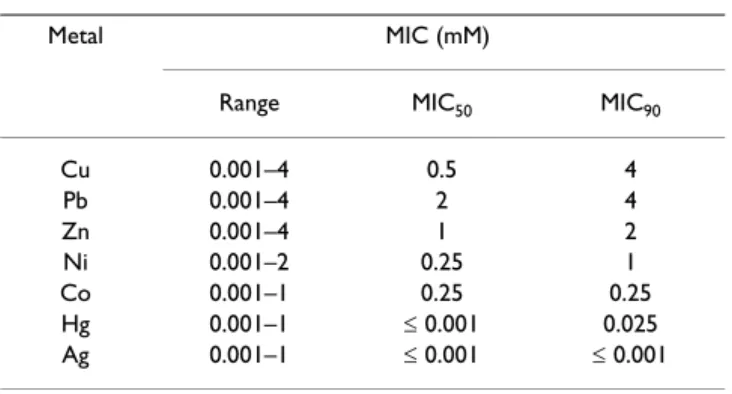
In the heavy metal assays the highest minimum inhibitory concentrations (MICs) were found for Cu and Pb (4 mM, Table 1). The MIC levels were lower for Zn, Ni, Co and Hg,
(A) (GTG)5-PCR, (B) BOX-PCR fingerprinting patterns of the isolates and reference strains
Figure 4
(A) (GTG)5-PCR, (B) BOX-PCR fingerprinting patterns of the isolates and reference strains. Lane M, molecular size marker (1
Kb Plus-Invitrogen). The numbers above the figure identify the 16S rDNA-sequence-based phylogeny clusters obtained for the isolates. (C) UPGMA cluster analysis of isolates and reference strains based on multi rep-PCR global matrix of ERIC-PCR, BOX-PCR and (GTG)5-PCR. Numbers in parentheses identify the 16S rDNA-sequence-based phylogeny clusters obtained for the isolates.
M 1BFS 2BFS 3BFS 4BFS 5BFS 6BFS 7BFS 8BFS 9BFS 10BFS 11
BFS
12BFS 13BFS 14BFS 15BFS 16BFS 40BFS 17BFS 18BFS B. pumilus
7061
B. subtilis
6633
19BFS 20BFS 21BFS 22BFS 23BFS 24BFS 25BFS 26BFS 27BFS 28BFS 29BFS 30BFS 31BFS B. cereus
27877
B. sphaericus
14577
32BFS 33BFS 34BFS 35BFS 36BFS 37BFS 38BFS 39BFS B. licheniformis
14580 B. amyloliquefaciens 23842 200 4000 1000 2000 (A)
M 1BFS 2BFS 3BFS 4BFS 5BFS 6BFS 7BFS 8BFS 9BFS 10BFS 11
BFS
12BFS 13BFS 14BFS 15BFS 16BFS 40BFS 17BFS 18BFS B. pumilus
7061
B. subtilis
6633
19BFS 20BFS 21BFS 22BFS 23BFS 24BFS 25BFS 26BFS 27BFS 28BFS 29BFS 30BFS 31BFS B. cereus
27877
B. sphaericus
14577
32BFS 33BFS 34BFS 35BFS 36BFS 37BFS 38BFS 39BFS B. lichenoformis
14580 B. amyloliquefaciens 23842 200 4000 1000 2000 (B)
1A 1B 1A 1B 1A 1B 2 3 2 1B 3 1A 2 1B
1A 1B 1A 1B 1A 1B 2 3 2 1B 3 1A 2 1B
9BFS 17BFS 18BFS 10BFS 12BFS 40BFS 35BFS 11BFS 13BFS 19BFS 22BFS 30BFS 23BFS 24BFS 29BFS 31BFS 33BFS 20BFS 21BFS 25BFS 32BFS 26BFS 28BFS 34BFS 36BFS 39BFS 27BFS 8BFS 15BFS 37BFS 1BFS 3BFS 14BFS 38BFS 2BFS 5BFS 6BFS 4BFS 7BFS 16BFS 100
S im ila rity
90 80 70 60 50 40
B. pumilus 7061
B. subtilis 6633
B. cereus 11778
B. sphaericus 14577
B. licheniformis 14580 B. amyloliquefaciens 23842
with 90% of the isolates being inhibited by concentra-tions ranging from 0.025 to 2 mM. All isolates were inhib-ited by Ag at the lowest concentration tested. An MIC-based dendrogram revealed profiles of distinct combina-tions of heavy metals for almost all isolates. The reference strains formed a separate cluster (Fig. 5B). No significant relationship was found between isolate clustering based on this characteristic versus their phylogenetic position.
Discussion
It is well known that 16S rDNA sequences are good indi-cators of phylogenetic relationships among bacteria at the intra- and interspecies levels. In our study the 16S rRNA gene sequence analyses yielded very good identification of the isolates at the genus (Bacillus) level. As expected, anal-ysis of 16S rRNA gene sequences alone was not sufficient to identify Bacillus species, as has also been reported in other studies [29,30]. Identification of the bacteria using the API CHB50 system generally identified isolates to the genus level, and in some cases to the species level, but the identifications obtained using the API system and by 16S rDNA sequencing differed. Nevertheless, biochemical and physiological test data were useful in identifying charac-teristics that are considered typical of the genus Bacillus, allowing phenotypic characterization of the isolates.
Identifications based on 16S rRNA gene sequences are often limited, so fingerprint methods have been devel-oped to characterize and distinguish Bacillus isolates [7,9-11]. We used ITS-PCR, tDNA-PCR and rep-PCR genomic fingerprinting to examine phylogenetic relatedness among the isolates. Overall, the isolates phylogenetically closest to B. sphaericus and B. pumilus, and to the B. subtilis
and B. cereus groups were clearly different from the refer-ence strains.
ITS and tDNA-PCR are frequently used to identify bacte-rial species and to analyze their phylogenetic relation-ships [9]. Although there was sufficient resolution to differentiate among reference strains, it was not possible to associate the Bacillus isolates with the reference strains using this technique.
Genotype is less affected by environmental factors than phenotype, so the rep-PCR method was used to determine intraspecies diversity among the different Bacillus isolates. We found that isolates with the same partial 16S rDNA sequence often had quite dissimilar rep-PCR patterns. The primer specific for (GTG)5 was less efficient than the BOX and ERIC primer sets for grouping the isolates. ERIC-PCR fingerprinting and 16S rDNA phylogenetic analyses gave similar clusters. ERIC-PCR fingerprinting clustered refer-ence and environmental B. cereus strains in the same way as the 16S rDNA tree, suggesting the former is a good approach to examining genetic relationships among
unknown Bacillus isolates. The dendrogram generated from multi-rep-PCR fingerprinting separated the environ-mental Bacillus isolates as a distinct group from the refer-ence strains. There was less similarity among the referrefer-ence strains than among the Bacillus isolates, perhaps reflecting their different origins.
Although the isolates had identical 16S rRNA gene sequences, they demonstrated considerable genotypic and phenotypic heterogeneity. Almost all isolates used a dis-tinctive combination of API 50CH/B substrates, suggest-ing that each occupied a different ecological niche and revealing the co-existence of phylogenetically closely related bacteria in the same environment. Similar results were obtained in relation to heavy metal susceptibility. However, the reference strains clustered apart from the isolates, suggesting that the latter have more similar phe-notypes despite their genotypic differences, probably owing to their shared environmental origin; this is con-trast to the dendrogram derived from the API 50CH/B profiles.
Although the API 50CH/B system failed to identify the isolates and reference strains to the species level, it was useful for biochemical characterization and revealed sig-nificant variability among the isolates. Based on an inabil-ity to hydrolyze starch, 5 of the 22 isolates of the B. subtilis
group were affiliated with B. pumilus. The isolates that affiliated with B. pumilus by molecular analysis (16S rDNA) had greater physiological diversity.
Conclusion
Based on molecular characterization, most of the isolates were closely related to the species B. pumilus and B. sphaericus, and the B. subtilis and B. cereus groups. Despite the polyphasic approach, it was difficult to identify the environmental Bacillus isolates at the species level. We found high genotipic and phenotypic heterogeneity in the
Bacillus isolates, despite their common origin from a sin-gle steel-making waste source.
Competing interests
The authors declare that they have no competing interests.
Authors' contributions
BMC Research Notes 2008, 1:92 http://www.biomedcentral.com/1756-0500/1/92
Page 9 of 11
(page number not for citation purposes)
Dendrograms constructed by UPGMA with the Bacillus isolates and reference strains according to (A) API 50CH/B profiles and
(B) to heavy metal susceptibility profiles
Figure 5
Dendrograms constructed by UPGMA with the Bacillus isolates and reference strains according to (A) API 50CH/B profiles and
(B) to heavy metal susceptibility profiles.
27BFS 28BFS
26BFS 23BFS 24BFS 32BFS 39BFS 31BFS 5BFS 25BFS 37BFS 38BFS 16BFS 4BFS 6BFS 7BFS 3BFS 33BFS 21BFS 2BFS 14BFS 17BFS 18BFS 12BFS 35BFS 11BFS 9BFS 10BFS 8BFS 20BFS 1BFS 13BFS
40BFS
36BFS
19BFS 30BFS
15BFS 22BFS 29BFS 34BFS
100
S im ila rity
90
80
70
60
50
40
30
20
10
B. sphaericus 14577
B. cereus 11778 B. subtilis 6633 B. licheniformis 14580 B. amyloliquefaciens 23842
B. pumilus 7061
1
2
3
4
5
17BFS 18BFS 1BFS 19BFS 39BFS 9BFS 23BFS 3BFS 20BFS 26BFS 37BFS 2BFS 24BFS 21BFS 6BFS 40BFS 28BFS 34BFS 8BFS 4BFS 5BFS 31BFS 16BFS 13BFS 29BFS 36BFS 25BFS 10BFS 14BFS 27BFS 15BFS 35BFS 7BFS 11BFS 12BFS 22BFS 30BFS 32BFS 33BFS 38BFS
100
S im ila rity
90
80
70
60
50
40
30
20
10
B. licheniformis 14580 B. pumilus 7061
B. sphaericus 14577
B. cereus 11778
B. amyloliquefaciens 23842 B. subtilis 6633
1
2
3
4
(A)
Additional material
Acknowledgements
This work was supported by FAPEMIG grants. We appreciate the financial support given by CAPES in the form of a scholarship to D.B. Freitas. A.M.A Nascimento is CNPq research fellow. The authors are especially grateful to Mr João Bosco da Silva (Reciclos) for assistance in sample collection, and Mr Odilon Machado Neto (Environmental Department of Acesita) for authorization of sample collection.
References
1. Claus D, Berkeley RCW: Genus Bacillus Cohn 1872, 174AL. In
Bergey's Manual of Systematic BacteriologyVolume 2. Edited by: Sneath PHA, Mair NS, Sharpe ME, Holt JG. Baltimore: Williams & Wilkins; 1986:1105-1139.
2. Lapidus A, Goltsman E, Auger S, Galleron N, Ségurens B, Dossat C, Land ML, Broussolle V, Brillard J, Guinebretiere MH, Sanchis V, Nguen-the C, Leredeus D, Richardson P, Wincker P, Weissenbach J, Ehrlich SD, Sorokin A: Extending the Bacillus cereus group genomics to putative food-borne pathogens of different tox-icity. Chem Biolog Interact 2008, 171:236-249.
3. Ash C, Farrow JAE, Wallbanks S, Collins MD: Phylogenetic heter-ogeneity of the genus Bacillus revealed by comparative anal-ysis of small-subunit-ribosomal RNA sequences. Lett Appl Microbiol 1991, 13:202-206.
4. Nielsen P, Rainey FA, Outtrup H, Priest FG, Fritze D: Comparative 16S rDNA sequence analysis of some alkaliphilic bacilli and
the establishment of a sixth rRNA group within the genus
Bacillus. FEMS Microbiol Lett 1994, 117:61-65.
5. Harrel LJ, Anderson GL, Wilson KH: Genetic variability of Bacil-lus anthracis and related species. J Clin Microbiol 1995,
33:1947-1950.
6. Priest FG, Goodfellow M, Todd C: A numerical classification of the genus Bacillus. J Gen Microbiol 1988, 134:1947-1982. 7. Dong X, Cote JC: Phylogenetic relationships between Bacillus
species and related genera inferred from comparison of 3' end 16S rDNA and 5' end 16S–23S ITS nucleotide sequences.
Int J Syst Evol Microbiol 2003, 53:695-704.
8. Goto K, Omura T, Hara Y, Sadaie Y: Application of the partial 16S rDNA sequence as an index for rapid identification of species in the genus Bacillus. J Gen Appl Microbiol 2000, 46:1-8. 9. Daffonchio D, Cherif A, Brusetti L, Rizzi A, Mora D, Boudabous A,
Sara B: Nature of polymorphisms in 16S–23S rRNA gene intergenic transcribed spacer fingerprinting of Bacillus and related genera. Appl Environ Microbiol 2003, 69:5128-5137. 10. Cherif A, Borin S, Rizzi A, Ouzari H, Boudabous A, Daffonchio D:
Bacillus anthracis Diverges from related clades of the Bacillus cereus group in 16S–23S ribosomal DNA intergenic tran-scribed spacers containing tRNA genes. Appl Environ Microbiol
2003, 69:33-40.
11. Versalovic J, Koeuth T, Lupski JR: Distribution of repetitive DNA sequences in eubacteria and application to fingerprinting of bacterial genomes. Nucleic Acids Res 1991, 19:6823-6831. 12. Versalovic J, Schneider M, De Bruijn FJ, Lupski JR: Genomic
finger-printing of bacteria using repetitive sequence-based polymerase chain reaction. Meth Mol Cell Biol 1994, 5:25-40. 13. Turnbull PCB, Sirianni NM, LeBron CI, Samaan MN, Sutton FN, Reyes
AE, Peruski LF: MICs of selected antibiotics for Bacillus anthra-cis, Bacillus cereus, Bacillus thuringiensis, and Bacillus mycoides
from a range of clinical and environmental sources as deter-mined by the Etest. J Clin Microbiol 2003, 42:3626-3634. 14. Freitas DB, Lima-Bittencourt CI, Reis MP, Costa PS, Assis PS,
Char-tone-Souza E, Nascimento AMA: Molecular characterization of early colonizer bacteria from wastes in a steel plant. Lett Appl Microbiol 2008, 47:241-249.
15. Smibert RM, Krieg NR: Phenotypic characterization. In Methods for General and Molecular Bacteriology Edited by: Gerhardt P, Murray RGE, Woods WA, Krieg NR. American Society for Microbiology, Washington, DC; 1994:607-654.
16. Dramsi S, Biswas I, Maguim E: Entry of Listeria monocytogenes
into hepatocytes requery express of InLB, a surface protein of the internal multigenic family. Mol Microbiol 1995,
16:251-261.
17. Lane DJ: 16S/23S rRNA sequencing. In Nucleic acid techniques in bacterial systematics Edited by: Stackebrandt E, Goodfellow M. John Wiley and Sons, New York, N.Y., USA; 1991:115-175.
18. Kuske CR, Barns SM, Busch JD: Diverse uncultivated bacterial groups from soils of the arid southwestern United States that are present in many geographic regions. Appl Environ Microbiol 1997, 63:3614-3621.
19. Lu JJ, Perng CL, Lee SY, Wan CC: Use of PCR with universal primers and restriction endonuclease digestions for detec-tion and identificadetec-tion of common bacterial pathogens in cerebrospinal fluid. J Clin Microbiol 2000, 38:2076-2080.
20. Welsh J, McClelland M: Genomic fingerprints produced by PCR with consensus tRNA gene primers. Nucleic Acids Res 1991,
19:861-866.
21. Clementino MM, Filippis I, Nascimento CR, Branquinho R, Rocha CL, Martins OB: PCR analysis of t-RNA intergenic spacer, 16S–23S internal transcribed spacer, and randomly amplified poly-morphic DNA reveal inter- and intraspecific relationships of
Enterobacter cloacae strains. J Clin Microbiol 2001, 39:3865-3870. 22. Ewing B, Green P: Base-calling of automated sequencer traces using phred. II. Error probabilities. Gen Res 1998, 8:186-194. 23. Green P: PHRAP documentation. 1994 [http://www.phrap.org]. 24. Gordon D, Abajian C, Green P: Consed: a graphical tool for
sequence finishing. Genome Res 1998, 8:195-202.
25. Kimura M: A simple method for estimating evolutionary rates of base substitutions through comparative studies of nucle-otide sequences. J Mol Evol 1980, 16:111-120.
26. Saitou N, Nei M: The neighbor-joining method: a new method for reconstructing phylogenetic trees. Mol Biol Evol 1987,
4:406-425.
Additional file 1
Primer sequences and amplification cycling conditions for the PCR-based genomic DNA fingerprints and 16S rDNA. The primers and the amplifi-cation cycling conditions for the rep-PCR, tDNA and ITS-PCR used in this study.
Click here for file
[http://www.biomedcentral.com/content/supplementary/1756-0500-1-92-S1.doc]
Additional file 2
Phenotypic characteristics of the isolates and reference strains used in this study. Data from API 50CH/B and additional physiological tests.
Click here for file
[http://www.biomedcentral.com/content/supplementary/1756-0500-1-92-S2.doc]
Table 1: Minimum inhibitory concentrations (MICs) of heavy metals for the Bacillus isolates from steel plant wastes.
Metal MIC (mM)
Range MIC50 MIC90
Cu 0.001–4 0.5 4
Pb 0.001–4 2 4
Zn 0.001–4 1 2
Ni 0.001–2 0.25 1
Co 0.001–1 0.25 0.25
Hg 0.001–1 ≤ 0.001 0.025
Ag 0.001–1 ≤ 0.001 ≤ 0.001
Publish with BioMed Central and every scientist can read your work free of charge
"BioMed Central will be the most significant development for disseminating the results of biomedical researc h in our lifetime."
Sir Paul Nurse, Cancer Research UK
Your research papers will be:
available free of charge to the entire biomedical community
peer reviewed and published immediately upon acceptance
cited in PubMed and archived on PubMed Central
yours — you keep the copyright
Submit your manuscript here:
http://www.biomedcentral.com/info/publishing_adv.asp
BioMedcentral
BMC Research Notes 2008, 1:92 http://www.biomedcentral.com/1756-0500/1/92
Page 11 of 11
(page number not for citation purposes)
27. Kumar S, Tamura K, Nei M: MEGA3: Integrated software for molecular evolutionary genetics analysis and sequence align-ment. Brief Bioinform 2004, 5:150-163.
28. Hammer Ø, Harper DAT, Ryan PD: PAST: paleontological statis-tics software package for education and data analysis. Palae-ontol Electronic 2001, 4:1-9.
29. Lima-Bittencourt CI, Astolfi-Filho S, Chartone-Souza E, Santos FR, Nascimento AMA: Analysis of Chromobacterium sp. natural iso-lates from different Brazilian ecosystems. BMC Microbiol 2007,
7:1-9.
30. Pontes DS, Lima-Bittencourt CI, Chartone-Souza E, Nascimento AMA: Molecular approaches: advantages and artifacts in assessing bacterial diversity. J Ind Microbiol Biotechnol 2007,