RBCCV 44205-1659 DOI: 10.5935/1678-9741.20150052
Oxidative stress in coronary artery bypass surgery
Estresse oxidativo na cirurgia de revascularização miocárdica
Amaury Edgardo Mont’Serrat Ávila Souza Dias
1, MD, MSc; Petr Melnikov
2, PhD; Lourdes Zélia
Zanoni Cônsolo
1, MD, PhD
1Federal University of Mato Grosso do Sul Hélio Mandeta Medical School, Campo Grande, MS, Brazil.
2Moscow State Universit, Moscow, Russia.
This study was carried out at Universidade Federal do Mato Grosso do Sul, Hélio Mandeta Medical School, Campo Grande, MS, Brazil.
No inancial support.
Correspondence address:
Amaury Edgardo Mont’Serrat Ávila Souza Dias
Rua Fortuna 142, Caranda Bosque - Campo Grande, MS, Brazil Zip code: 79002-942
E-mail: [email protected]
Article received on August 11th, 2014 Article accepted on March 9th, 2015 Abstract
Objective: The aim of this prospective study was to assess the dynamics of oxidative stress during coronary artery bypass surgery with cardiopulmonary bypass.
Methods: Sixteen patients undergoing coronary artery by-pass grafting were enrolled. Blood samples were collected from the systemic circulation during anesthesia induction (radial ar-tery - A1), the systemic venous return (B1 and B2) four min-utes after removal of the aortic cross-clamping, of the coronary sinus (CS1 and CS2) four minutes after removal of the aortic cross-clamping and the systemic circulation four minutes after completion of cardiopulmonary bypass (radial artery - A2). The marker of oxidative stress, malondialdehyde, was measured us-ing spectrophotometry.
Results: The mean values of malondialdehyde were (ng/dl): A1 (265.1), B1 (490.0), CS1 (527.0), B2 (599.6), CS2 (685.0) and A2 (527.2). Comparisons between A1/B1, A1/CS1, A1/B2, A1/
CS2, A1/A2 were signiicant, with ascending values (P<0.05). Comparisons between the measurements of the coronary sinus and venous reservoir after the two moments of reperfusion (B1/ B2 and CS1/CS2) were higher when CS2 (P<0.05). Despite high-er values afthigh-er the end of cardiopulmonary bypass (A2), when compared to samples of anesthesia (A1), those show a
down-ward trend when compared to the samples of the second mo-ment of reperfusion (CS2) (P<0.05).
Conclusion: The measurement of malondialdehyde shows that coronary artery bypass grafting with cardiopulmonary by-pass is accompanied by increase of free radicals and this trend gradually decreases after its completion. Aortic clamping exac-erbates oxidative stress but has sharper decline after reperfu-sion when compared to systemic metabolism. The behavior of thiobarbituric acid species indicates that oxidative stress is an inevitable pathophysiological component.
Descriptors: Cardiopulmonary Bypass. Oxidative Stress. Myocardial Revascularization.
Resumo
Objetivo: O objetivo deste estudo prospectivo foi avaliar a dinâmica do estresse oxidativo durante a cirurgia de revascula-rização miocárdica com circulação extracorpórea.
INTRODUCTION
For several decades, the myocardial ischemic syndromes are the subject of various investigations into the etiology, pathogenesis, progression and treatment in order to achieve the best outcome.
Despite the numerous clinical trials in order to shorten the ischemia and therefore limit the extent of injury, the reintro-duction of oxygen to an ischemic means initiates a complex chain of events leading to additional tissue injury[1,2], which
do not ensure the maintenance of ventricular function. During normal myocyte metabolism, complete reduction of an oxygen molecule in the electron transport chain, requires addition of four electrons. Due to its electronic conformation, oxygen tends to receive an electron at a time (monovalent re-duction), culminating in the formation of reactive intermedi-ates of oxygen - reactive oxygen species metabolism (ROMs), such as superoxide radicals (O2-·) hydroperoxyl (HO2·) and
hy-droxyl (OH·) and hydrogen peroxide (H 2O2)
[3].
The reactive oxygen species are important contributors to the reperfusion injury[4,5]. After the onset of reperfusion there is
a respiratory “explosion” by the input of O2 lasting for several minutes and persistently elevated superoxide production[6,7].
Studies have demonstrated that the generation of free radicals (FR) is maximum in 3 to 5 minutes of reperfusion and lasting up to 3h[8,9], which signiicantly contributes to the
myocardial depression[10,11].
Abbreviations, acronyms & symbols
CPB Cardiopulmonary bypass
FR Free radicals
MDA Malondialdehyde TBARS Reactive species thiobarbituric acid
The formation of free radicals can compromise several cell elements, causing protein denaturation, DNA chain breaks, enzymatic inactivation and lipid peroxidation[12].
The damage to lipids induces lipid peroxidation. One of the most popular products of lipid peroxidation is malondi-aldehyde (MDA)[13], which is the inal product of non-enzy
-matic degradation of polyunsaturated fatty acids. High MDA levels increase the formation of lipoperoxide and indicate increased lipid peroxidation[14].
The membranes are mainly composed of phospholipids and proteins. Changes in membrane lipids are among the main events during ischemia and reperfusion, thus losing the selectivity in ion exchange, release of hydrolytic enzymes, formation of cytotoxic products, ending with cell death[15,16].
There are some methods of measurement of free radicals, among which stands out the detection of reactive species thiobarbituric acid (TBARS), which aims to detect lipid per-oxidation of the cell membrane[17].
We know that in cardiac surgery, the use of cardiopul-monary bypass causes global systemic ischemia, leading to exacerbate the release of free radicals. In addition, some intraoperative techniques adopt ischemia and reperfusion as myocardial protection method, either associated with various types of cardioplegic solutions or just under mild hypothermia.
Thus, the careful study of ischemia-reperfusion process is of paramount importance, since the techniques adopted during CABG are peculiar in the induction of this process, minutos após a remoção do pinçamento aórtico, do seio
coro-nariano (SC1 e SC2), quatro minutos após a remoção do pinça-mento aórtico, e da circulação sistêmica, quatro minutos após
inalização da circulação extracorpórea (artéria radial - A2). O
marcador do estresse oxidativo, malondialdeído, foi dosado uti-lizando espectrofotometria.
Resultados: Os valores médios de malondialdeído foram (ng/ dl): A1 (265,1), B1 (490,0), SC1 (527,0), B2 (599,6), SC2 (685,0) e A2 (527,2). As comparações entre A1/B1, A1/SC1, A1/B2,
A1/SC2, A1/A2 foram signiicativas, com valores ascendentes
(P<0,05). As comparações entre as dosagens do seio coronário e
reservatório venoso após os dois momentos de reperfusão (B1/ SC1 e B2/SC2) foram mais elevadas no momento SC2 (P<0,05). Apesar dos valores mais elevados após o término da circulação extracorpórea (A2), quando comparadas às amostras da indu-ção anestésica (A1), aqueles apresentam tendência de queda quando comparadas as amostras do segundo momento de re-perfusão (SC2) (P<0,05).
Conclusão: As dosagens de malondialdeído mostram que a revascularização miocárdica com circulação extracorpórea é acompanhada de aumento de radicais livres com tendência des-te diminuir progressivamendes-te após seu término. O pinçamento aórtico exacerba o estresse oxidativo, porém apresenta queda mais acentuada após a reperfusão quando comparadas ao do metabolismo sistêmico. O comportamento das espécies reati-vas ao ácido tiobarbitúrico indica que o estresse oxidativo é um
componente patoisiológico inevitável.
and that intermittent aortic clamping can also contribute to this mechanism.
General Objectives
Assessing the dynamics of concentrations of thiobarbi-turic acid reactive substances during coronary artery bypass grafting with cardiopulmonary bypass and intermittent aortic clamping.
Speciic objectives
Determining the concentrations of thiobarbituric acid reactive substances from the systemic venous return during cardiopulmonary bypass, and venous return from the coro-nary sinus after myocardial reperfusion.
Assessing the dynamics of dosages of thiobarbituric acid reactive substances during the procedure.
Comparing the dynamic element studied between assays from the systemic circulation and the coronary sinus.
METHODS
The study was approved by the Medical Ethics Com-mittee of the Universidade Federal do Mato Grosso do Sul (Protocol 1926) and the written informed consent form was signed by each patient participating in the study.
It was a prospective study performed at the Cardiovascu-lar Surgery Service of the University Hospital of the Univer-sidade Federal do Mato Grosso do Sul.
Population
The study included sixteen patients, 5 females and 11 males, who underwent coronary artery bypass grafting with cardiopulmonary bypass for making 2 or more grafts.
Patients with acute or chronic renal failure, diabetes
mellitus, heart rate in atrial ibrillation, patients with dilated
cardiomyopathy or associated valvular lesions, patients un-dergoing emergency surgery or patients using any medica-tion suppressing free radicals as vitamin C, n-acetylcysteine, allopurinol, immunomodulatory or corticosteroids not were included.
Cardiopulmonary bypass
After pattern longitudinal median sternotomy, for cardio-pulmonary bypass (CPB) a cannula in the ascending aorta was installed and double venous and coronary sinus drain-age were performed in order to collect selective samples. The CPB was performed in mild hypothermia (32°C) and hemodilution. The technique for revascularization was inter-mittent aortic cross-clamping, adopted as routine by the Car-diovascular Surgery Service of the University Hospital of the Universidade Federal do Mato Grosso do Sul. Roller pump
in the arterial line and hollow iber membranes oxygenators with arterial line ilter (Braile Biomédica - São José do Rio
Preto - SP) were used and priming calculated as the perfusion hematocrit – 20 mg/dl.
The electrolyte and metabolic balance was maintained in accordance with the metabolic needs of the patient during standard procedure. The perfusion technique adopted was alpha pH stat.
Anesthesia was performed according to established pro-tocols, but the use of possible free radical suppressor as ascorbic acid and n-acetylcysteine were not used.
Blood and laboratory analysis Moments of collection were:
A1 - blood collected at time of anesthetic induction - sample of the radial artery.
A2 - blood collected four minutes after completion of CPB - sample of the radial artery.
B1 - blood collected from the venous line of the cava after
4 minutes of the irst unclamping.
B2 - blood collected from the venous line of the cava after 4 minutes of the second unclamping.
CS1 - blood from the venous return of the coronary sinus
after 4 minutes of the irst unclamping.
CS2 - blood collected from the coronary sinus venous re-turn after 4 minutes of the second unclamping.
Blood samples were collected in polypropylene syringes and immediately transferred to vacuum tubes (BD Vacutainer Systems, Becton, Dickinson & Co). Serum was separated by centrifugation (3.000×g, 15 min), and transferred to deminer-alized Eppendorf tubes, and stored at -18°C for later determi-nation of malondialdehyde. All materials, plastics or glasses were immersed for 24 hours in 5% Extran solution (Merck), rinsed and immersed for at least 24 hours in a 10% ultrapure solution of nitric acid (Merck) for waste decontamination. Then, they were washed with ultrapure water (Milli-Q, Mil-lipore, Bedford, USA) and dried at 40°C.
The plasmatic concentrations of the substances that re-act with thiobarbituric acid (TBARS) were measured by spectrophotometric method. The test used to evaluate cel-lular damage by lipid peroxidation is based on the study by Percário et al.[17]. The volume of 1 ml TBA (thiobarbituric
The reading was performed at 532 nm. The inal amount
of MDA in ng/dl is obtained by using the following formula:
MDA = A average x F, where A average = (A1+A2)/2. F=4406.1/A Standard MDA, where A is absorbance.
Statistical analysis
Comparisons of measurements of TBARS in the times of aortic clamping in the radial artery, venous return and coro-nary sinus were performed with the Student t test for paired
data at the 95% level of signiicance.
The tests involving correlation between variables were
performed via linear correlation coeficient of Pearson and
its respective t-Student test.
The normality of the data, via criteria of
Kolmogor-ov-Smirnov also at the 95% level of signiicance was tested.
RESULTS
This study evaluated 16 patients being 5 females (31.2%) and 11 males (68.8%) with mean age of 60±8.6 years (mean±SD).
The ventricular ejection fraction prior to surgery was 51.6±9.7. The total time of cardiopulmonary bypass was 68.1±23.2 min. The average times of the 1st and 2nd aortic
clamp-ing were 9.9±2.0 min and 9.9±2.5 min, respectively (Table 1).
Table 3 shows the comparisons between assays of TBARS during anesthetic induction and the venous line and coronary sinus with 4 min of reperfusion after the 2nd aortic unclamping,
or that is, A1/B2 and A1/CS2. The analysis was performed in each patient, using the Student t test for paired data.
Table 1. Ejection fraction (%), aortic clamping time and CPB time.
Parameters Ejection fraction 1st Clamping time (min)
2nd Clamping time (min)
CPB time (min)
CPB=cardiopulmonary bypass
Mean ± SD 38.0 - 70.0 (51.6±9.7)
7.0 - 13.0 (9.9±2) 7.0 - 15.0 (9.9±2.5) 40.0 - 120.0 (68.1±23.2)
Table 2. Comparison of the dosages of TBARS (ng/ml) between the times A1 - B1 and A1 - CS1*.
TBARS
*A1=anesthetic induction; B1=systemic venous return, four minutes after the irst unclamping; CS1=coronary sinus, four minutes after the irst unclamping; TBARS=reactive species thiobarbituric acid
Time A1 B1 A1 CS1
Mean ± SD 265.1±233.5
490±360.9 265.1±233.5
527±358.7
P
<0.001
<0.001
The data in Table 2 show the analysis comparing each
individual from the anesthetic induction and after the irst
aortic unclamping (4 min reperfusion), or induction of an-esthesia/venous line (A1/B1) and induction of anesthesia/ Coronary sinus (A1/CS1). In the table are shown the average values for each site, the average difference found and
evalua-tion of signiicance by Student’s t test for paired data.
Table 3. Comparison of the dosages of TBARS (ng/ml) between the times A1 - B2 and A1 - CS2*.
TBARS
*A1=anesthetic induction; B2=systemic venous return, four minutes after the second unclamping; CS2=coronary sinus, four minutes after the second unclamping; TBARS=reactive species thiobarbituric acid
Time A1 B2 A1 CS2
Mean ± SD 265.1±233.5 599.6±346.7 265.1±233.5 684.9±386.7
P
<0.001
<0.001
Comparisons of TBARS levels between the two periods of reperfusion, or that is, between samples collected in the venous line and coronary sinus after 4 min the removal of each of the two aortic clamping performed (B1/B2 and CS1/ CS2) are presented in Table 4. The analysis was performed in each patient, using the Student t test for paired data.
Table 4. Comparison of the dosages of TBARS (ng/ml) between the moments B1 - B2 and CS1 - CS2*.
TBARS
*B1=systemic venous return, four minutes after the irst unclamping; CS1=coronary sinus, four minutes after the first unclamping; B2=systemic venous return, four minutes after the second unclamping; CS2=coronary sinus, four minutes after the second unclamping; TBARS=reactive species thiobarbituric acid
Time B1 B2 CS1 CS2
Mean ± SD 490±360.9 599.6±346.7
527±358.7 684.9±386.7
P
0.008
<0.001
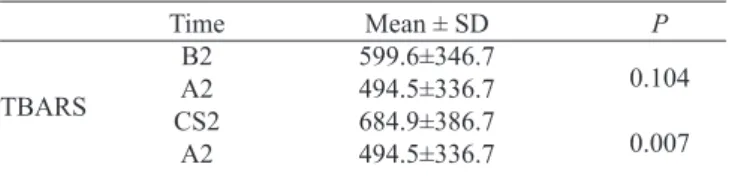
Table 5. Comparison of the dosages of TBARS (ng/ml) between the moments B2 - A2 and CS2 - A2*.
TBARS
*B2=systemic venous return, four minutes after the second unclamping; CS2=coronary sinus, four minutes after the second unclamping; A2=4 minutes after completion of CPB; TBARS=reactive species thiobarbituric acid
Time B2 A2 CS2
A2
Mean ± SD 599.6±346.7 494.5±336.7 684.9±386.7 494.5±336.7
P
0.104
0.007
Table 6 presents the comparisons of TBARS levels be-tween the venous line and the coronary sinus, after the two moments of reperfusion collected after 4 minutes of each un-clamping, or that is, B1/CS1, B2/CS2. The analysis was per-formed in each patient, using the Student t test for paired data.
tional levels. The age group also does not contradict the data already known from the literature.
The CPB used during cardiac surgery triggers an inlam -matory reaction and consequent oxidative stress that is di-rectly related to its duration[18]. In the present study, the mean
CPB time was 68 minutes consistent with other studies[18-20].
Three patients required CPB time greater than 90 min due to the need for more grafts. However there was no correlation with perioperative complications.
It is known that the inlammatory response related to the
CPB is time dependent and that is closely related to oxidative stress, which could result in high oxidative stress measure-ments. Despite this assumption, this study and others pub-lished in the literature[18-20], since they have lower CPB time
of 120 min, there was no evidence positive relationship be-tween CPB time and oxidative stress.
The metabolic parameters measured during the entire sur-gical procedure remained within limits compatible with the intraoperative stability.
The reintroduction of blood in the coronary circulation after ischemia period produced by CPB and aortic clamping can lead to oxidative stress formation induced by oxygen free radicals and other ROMs, which can result in cellular injury.
Ragab et al.[21] evaluated a total of 65 patients with
unsta-ble angina and acute myocardial infarction, determined the MDA levels in the acute phase of the syndrome and found high values with respect to the control group.
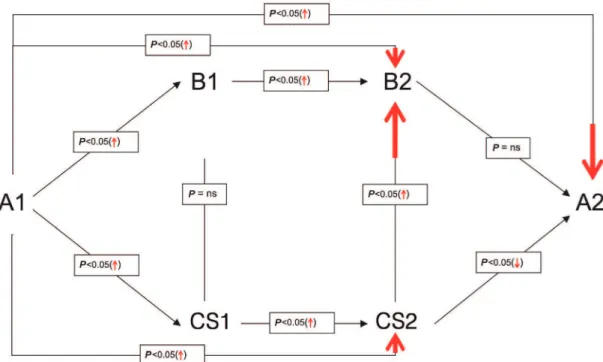
Patients in the present study had normal levels of MDA (265.1 ng/ml) at time A1 (Figure 1), indicating that the previ-ous acute ischemic event has been alleviated. Thus, the stabi-lization period adopted in the clinical treatment of the patient is essential for mitigation of the oxidative stress produced.
It has been shown that patients undergoing CABG have no increase in TBARS between anesthetic induction and ini-tiation of CPB. This proves by itself, that the surgical trauma is not responsible for the increased oxidative stress[19,22,23].
This observation enabled this study, neglecting the analytical dosage between the two mentioned moments.
In this study, the overall results were similar to the liter-ature data known beforehand. A comparison of assays per-formed in the moments A1/B1 and A1/CS1 (Figure 1) allows
discovering a signiicant increase in TBARS levels. This can
be considered as an indication that cardiopulmonary bypass is, in fact, an activation inductor of oxidative stress.
Recent literature includes data regarding the relationship between oxidative stress, lipid peroxidation and ultrastructural myocardial damage in patients with chronic coronary artery disease undergoing coronary artery bypass surgery. Thus, after the restoration of coronary perfusion, Milei et al.[24] performed
the determinations of oxidative stress and ultrastructural inju-ry. The authors evaluated the TBARS production in the 5th and
20th min. after aortic unclamping, both from the coronary sinus
efluent as the systemic circulation. It was observed that, in the
Table 7. Comparison of dosages of TBARS (ng/ml) between the moments A1- A2*.
Element
TBARS
*A1=anesthetic induction; A2=4 minutes after completion of cardiopulmonary bypass; TBARS=reactive species thiobarbituric acid
Time A1 A2
P
<0.001 Mean ± SD
265.1±233.5 494.5±336.7
Table 6. Comparison of dosages of TBARS (ng/ml) between the moments B1 - CS1 and B2 - CS2*.
TBARS
*B1=systemic venous return, four minutes after the irst unclamping; CS1=coronary sinus, four minutes after the first unclamping; B2=systemic venous return, four minutes after the second unclamping; CS2=coronary sinus, four minutes after the second unclamping; A2=4 minutes after completion of cardiopulmonary bypass; TBARS=reactive species thiobarbituric acid
Unclamping
1st
2nd
Time B1 CS1
B2 CS2
P
0.10
0.03 Mean ± SD
490±360.9 527±358.7 599.6±346.7 684.9±386.7
Table 7 compares the dosages of TBARS between anes-thetic induction and after the end of cardiopulmonary bypass, or that is, A1/A2. The analysis was performed in each pa-tient, using the Student t test for paired data.
DISCUSSION
During cardiac surgery with cardiopulmonary bypass,
a series of inlammatory and immunological changes occur
triggering oxidative stress. In non-physiological conditions during CPB, due to changes related to ischemia and reper-fusion, there is an increase in free radicals and ROMs. In myocardial ischemic syndromes, it is well established that oxygen reintroduced in the myocardium during reperfusion
causes signiicant injury. This stress is one of the initiators of
this resulting myocardial damage[1,2].
Patients who met the criteria for this study were suffer-ing from acute coronary syndrome with classic indications of myocardial revascularization. The time interval between onset of symptoms of acute coronary syndrome, or that is, from the diagnosis until the surgical treatment was 7 to 10 days. This period corresponds to the time required to opti-mize the treatment and stabilization of the clinical condition of patients.
na-coronary sinus and the systemic circulation, the TBARS con-centrations were similar in both moments, concluding that the isolated myocardial production of oxidizing substances was not greater than the systemic circulation.
It is noteworthy that the irst of those moments roughly cor -responds to the B1 moment of our study, even if they have differ-ent aortic clamping times. Although the technique adopted was not exactly the same, the results of determination of TBARS are in agreement with the data from other methodologies.
As follows from the results of this study, in the comparison
between B1 and CS1, there are no signiicant differences in
plasma TBARS levels of both the venous blood line as the
cor-onary sinus collected after the irst unclamping. This clearly
demonstrates that cross-clamping does not increase the sys-temic oxidative stress in addition to the already installed.
Akila et al.[18] performed a study comparing coronary
ar-tery bypass grafting with and without cardiopulmonary by-pass in patients not infarcted and with preserved ventricular function. The average time of myocardial ischemia in the “on pump” group was 44.4 min and the CPB time was 65.6 min. It was concluded that in patients undergoing cardiopulmo-nary bypass, oxidative stress is higher in this group after 15 and 60 min, returning to levels similar to “off pump” patients 24 hours after aortic unclamping. Despite not having been the objective of Akila et al.[18], by thoroughly analyzing their
results, we can extrapolate the data in the published tables. This allows noting that in the “on pump” subgroup, the 5th
min of reperfusion does not present signiicant increase in
TBARS levels, however the increase was progressive. This becomes more evident in the 15th and 60th min, always
pre-senting ascending pattern.
This deviates from our study, since it is observed a
sig-niicant increase in TBARS levels after 4 min of aortic un -clamping, both in the systemic circulation (venous line), and the coronary sinus (coronary circulation). In addition, oxidative stress is accentuated in the second moment of reperfusion and presents downward trend after 4 min of the completion of cardiopulmonary bypass (A2) (Figure 1). These differences may be due to the fact that, in the study by Akila et al.[18], the average time of myocardial ischemia
was approximately 45 min, while in this study it was ap-proximately 20 min. Thus, a longer ischemic time would entail a tendency to perpetuate the oxidative stress and therefore progressively higher levels of TBARS. However, this would tend to return to baseline levels after 24 hours of aortic unclamping[18].
In this study the extent of TBARS after 24 hours was not measured, since the aim was to compare coronary reperfusion with systemic reperfusion, where maintaining another cath-eter in the coronary sinus allocated would bring risk due to the greater invasiveness of the patient. However, there was a downward trend in TBARS concentrations at the time A2, which probably remained as the triggering factors of oxidative stress had been removed. It is possible that brief episodes of
ischemia-reperfusion imposed by intermittent aortic clamp-ing have promoted a myocardial preconditionclamp-ing, thereby al-lowing a higher tolerance to oxidative stress, and shortening the time of TBARS levels reduction[25].
Matata et al.[19] compared in their study two groups of
pa-tients undergoing CABG, the irst off-pump and the second
with normothermic CPB. The mean CPB time was 69min and the myocardial ischemia time of 34.2 and 35.6 min in groups 1 and 2 respectively. The authors demonstrated that, in patients undergoing CPB, the MDA dosages showed as-cending pattern, peaking in the fourth hour after completion of the bypass.
In the present study we obtained a bypass time, under hypothermia, similar to previous study (68.1 min.), but with a smaller myocardial ischemia time (19.8 min.). Oxidative stress measured by MDA in the systemic venous return
pres-ents ascending pattern between the irst and second aortic cross-clamping and without signiicant reduction until the
time A2 (Figure 1). In this study the TBARS levels were not measured after four hours of completion of the bypass, but the downward trend in absolute terms allows us to detect standardization, and not the perpetuation of the ascending pattern as in the study of Matata et al.[19]. When we compare
the CS2 and A2 times (Figure 1), we conirmed the down -ward trend (P<0.05). These differences may be due to the fact that mild hypothermia, as the systemic metabolism atten-uation method, may decrease the degree of damage caused by ischemia-reperfusion. Therefore, the use of this tech-nique necessarily affects the early reduction of the levels of malondialdehyde.
Regarding the comparisons between the aortic clamping and measured levels of MDA, we observed a greater increase after the second unclamping, especially in the sample of the coronary sinus (CS2) (Figure 1). On the other hand, these concentrations gradually reduce after completion of CPB. This becomes more evident when we compare the TBARS values between CS2 and A2 times, making suppose that the intrinsic myocardial antioxidant mechanisms are more effec-tive in attenuating oxidaeffec-tive stress.
Another aspect to be highlighted is the fact that at that time (A2), the completion of CABG allowed restoration of
myocardial blood low before committed by coronary artery
disease. The returned circulating therein, allowed mobiliz-ing the ischemic myocardial tissue of all organic antioxidant defenses produced, enabling an early reduction in levels of malondialdehyde.
Thus, we note that the myocardial protection methods still deserve extensive discussion, since in most studies that address the ischemia and reperfusion process, it is used as methodology the dosage of injury and myocardial necrosis markers, or that is, restricted only to hypoxia times. Thus, occurring or not the injury mediated by ischemia, reperfusion will trigger additional injury to the already installed, causing
serious cardiac performance changes, often irreversible. In
addition, we can also state that the investigations in the ield
of molecular and atomic biology aim to unravel the meta-bolic processes in their microstructure, in order to discover methods or subcellular mechanisms allowing them to block or mitigate the myocyte injuries. The lesion detection
meth-odology mediated by reperfusion (TBARS) is still a ield to
be explored by cardiology. The direct measurement of free radicals is not a feasible procedure because the average ex-tremely short lifetime of these substances. The methodolo-gies used once, such as the measurement of methylene blue does not allow to obtain reliable data due to partial absorp-tion of this compound, which leads to serious errors in de-termining these radicals. The instrumental methods such as electron paramagnetic resonance are not readily available for this purpose.
The method using the measurement of thiobarbituric acid reactive species (TBARS), which was used in this study, is an approximation of the ideal method. However, it is known that the malondialdehyde (MDA) - destruction product of the compounds containing unpaired electrons – is not only the indicator of oxidative stress. It is known that it is only a window on the Universe from free radicals. Nevertheless, for purposes of comparison with the data available in the litera-ture, this approach is acceptable.
The intermittent aortic clamping technique is little ad-opted in the studies presented in the literature. Nevertheless, comparisons with other methods show that intermittent aortic clamping can shorten the lesions mediated by reperfusion. Notwithstanding this, we also evidenced that although the various methods of myocardial protection, oxidative stress always occur. Thus, it is up to the cardiovascular surgeon to investigate new ways, devices or medications that enable the optimization of organic patient’s own defenses against oxi-dative stress.
Thus, it opens up a vast ield of research based on mo -lecular and atomic biology, aiming to reduce the injuries of binomial ischemia-reperfusion.
CONCLUSION
The results of malondialdehyde dosages clearly show that myocardial revascularization with cardiopulmonary bypass is accompanied by elevation of free radicals with this trend to gradually decrease after its completion. The aortic clamping exacerbates the oxidative stress of the coronary sinus venous return when compared to dosages of systemic venous return,
but the measurements of coronary efluent presents sharpest
Authors’ roles & responsibilities
AEMSASD Analysis and/or interpretation of the data; conception and design; implementation of projects and/or experiments; manuscript writing or critical review of its content
PM Analysis and/or interpretation of the data; inal approval of
the manuscript
LZZC Analysis and/or interpretation of the data; inal approval of
the manuscript
REFERENCES
1. Ku DD. Coronary vascular reactivity after acute myocardial ischemia. Science. 1982;218(4572):576-8.
2. Braunwald E, Kloner RA. Myocardial reperfusion: a double-edge sword? J Clin Invest. 1985;76(5):1713-9.
3. Cohen MV. Free radicals in ischemic and reperfusion myocardial injury: is this the time for clinical trials? Ann Intern Med. 1989;111(11):918-31.
4. Bolli R. Oxygen-derived free radicals and myocardial reperfusion injury: an overview. Cardiovasc Drugs Ther. 1991;5 Suppl 2:249-68.
5. Lucchesi BR. Complement, neutrophils and free radicals: mediators of reperfusion injury. Arzneimittelforschung. 1994;44(3A):420-32.
6. Duilio C, Ambrosio G, Kuppusamy P, DiPaula A, Becker LC, Zweier JL. Neutrophils are primary source of O2 radicals during reperfusion after prolonged myocardial ischemia. Am J Physiol Heart Circ Physiol. 2001;280(6):H2649-57.
7. Vinten-Johansen J. Involvement of neutrophils in the pathogenesis of lethal myocardial reperfusion injury. Cardiovasc Res. 2004;61(3):481-97.
8. Kin H, Zhao ZQ, Sun HY, Wang NP, Corvera JS, Halkos ME, et al. Postconditioning attenuates myocardial ischemia-reperfusion injury by inhibiting events in the early minutes of reperfusion. Cardiovasc Res. 2004;62(1):74-85.
9. Zhao ZQ, Corvera JS, Halkos ME, Kerendi F, Wang NP, Guyton RA, et al. Inhibition of myocardial injury by ischemic postconditioning during reperfusion: comparison with ischemic preconditioning. Am J Physiol Heart Circ Physiol. 2003;285(2):H579-88.
10. Bolli R. Oxygen-derived free radicals and postischemic myocardial dysfunction (“stunned myocardium”). J Am Coll Cardiol. 1988;12(1):239-49.
11. Kloner RA, Przyklenk K, Whittaker P. Deleterious effects of oxygen radicals in ischemia/reperfusion. Resolved and unresolved issues. Circulation. 1989;80(5):1115-27.
12. Valko M, Morris H, Cronin MT. Metals, toxicity and oxidative stress. Curr Med Chem. 2005;12(10):1161-208.
13. Cherubini A, Riggiero C, Polidori MC, Mecocci P. Potential markers of oxidative stress in stroke. Free Radic Biol Med. 2005; 39(7):841-52.
14. Kashyap MK, Yadav V, Sherawat BS, Jain S, Kumari S, Khullar M, et al. Different antioxidant status, total antioxidant power and free radical in essential hypertension. Mol Cell Biochem. 2005;277(1-2):89-99.
15. Lazzarino G, Raatikainen P, Nuutinen M, Nissinen J, Tavazzi B, Di Pierro D, et al. Myocardial release of malondialdehyde and purine compounds during coronary bypass surgery. Circulation. 1994;90(1):291-7.
16. Marczin N, El-Habashi N, Hoare GS, Bundy RE, Yacoub M. Antioxidants in myocardial ischemia-reperfusion injury: therapeutic potential and basic mechanisms. Arch Biochem Biophys. 2003;420(2):222-36.
17. Percário S, Vital ACC, Jablonka F. Dosagem do malondialdeido. Newslab. 1994;2(6):46-50.
18. Akila, D'souza B, Vishwanath P, D'souza V. Oxidative injury and antioxidants in coronary artery bypass graft surgery: off-pump
CABG signiicantly reduces oxidative stress. Clin Chim Acta.
2007;375(1-2):147-52.
19. Matata BM, Sosnowski AW, Galiñanes M. Off-pump bypass graft
operation signiicantly reduces oxidative stress and inlammation.
Ann Thorac Surg. 2000;69(3):785-91.
20. Melek FE, Baroncini LA, Repka JC, Nascimento CS, Précoma
DB. Oxidative stress and inlammatory response increase during
coronary artery bypass grafting with extracorporeal circulation. Rev Bras Cir Cardiovasc. 2012; 27(1):61-5.
21. Ragab M, Hassan H, Zaytoun T, Refai W, Rocks B, Elsammak M. Evaluation of serum neopterin, high-sensitivity C-reactive protein and thiobarbituric acid reactive substances in Egyptian patients with acute coronary syndromes. Exp Clin Cardiol. 2005;10(4):250-5.
22. Clermont G, Vergely C, Jazayeri S, Lahet JJ, Goudeau JJ, Lecour S, et al. Systemic free radical activation is a major event involved in myocardial oxidative stress related to cardiopulmonary bypass. Anesthesiology. 2002;96(1):80-7.
23. Consolo LZZ. Alterações plasmáticas do cobre e do zinco
em crianças submetidas à cirurgia cardíaca com circulação
extracorpórea [Tese de Doutorado]. Campo Grande: Universidade Federal de Mato Grosso do Sul; 2008.
24. Milei J, Forcada P, Fraga CG, Grana DR, Iannelli G, Chiariello M, et al. Relationship between oxidative stress, lipid peroxidation, and ultrastructural damage in patients with coronary artery disease undergoing cardioplegic arrest/reperfusion. Cardiovasc Res. 2007;73(4):710-9.