Key words
Anti-inflammatory agents, non-steroidal/adverse effects; risk; physiological effects of drugs/heart/kidney/cerebrum.
Nonsteroidal Anti-inflammatory Drugs: Cardiovascular, Cerebrovascular
and Renal Effects
Michel Batlouni
Instituto Dante Pazzanese de Cardiologia, São Paulo, SP - Brazil
Mailing address: Michel Batlouni •
Alameda Anapurus 238 - Indianópolis - 04087-000 - São Paulo, SP - Brazil E-mail: [email protected]
Manuscript received February 12, 2009; revised manuscript received Febru-ary 12, 2009; accepted FebruFebru-ary 16, 2009.
edema, as well as of osteoarthritis, rheumatoid arthritis and musculoskeletal disorders. This heterogeneous class of drugs includes aspirin and several other selective or non-selective cyclooxygenase (COX) inhibitors (Table 1). Aspirin is the oldest and more extensively studied NSAID; however, it is considered separately from the others, due to its predominant use in the treatment of cardiovascular and cerebrovascular diseases at low doses1.
The non-selective NSAIDs are the oldest ones and are called traditional or conventional NSAIDs. The selective NSAIDs are called COX-2 inhibitors2. In recent years, the safety of NSAID use in clinical practice has been questioned, especially that of the selective COX-2 inhibitors in the presence of certain conditions and diseases, which has led to the removal of some of these drugs from the market.
The traditional NSAIDs can present a pattern of COX-2 selectiveness similar to that of COX-2 inhibitors, such as diclofenac when compared to celecoxib, or they can be more active COX-1 inhibitors, such as naproxen and ibuprofen.
Physiopathology
The phospholipase A2 enzyme activation, in response to several stimuli, hydrolyzes the phospholipids of the membrane, releasing arachidonic acid in the cytoplasm. The latter functions as substrate for two enzyme pathways: the
Abstract
The nonsteroidal anti-inflammatory drugs (NSAIDs) are among the most often prescribed drugs in the world. This heterogeneous class of drugs includes aspirin and several other selective or non-selective cyclooxygenase (COX) inhibitors. The non-selective NSAIDs are the oldest ones and are called traditional or conventional NSAIDs. The selective NSAIDs are called COX-2 inhibitors. In recent years, the safety of NSAID use in clinical practice has been questioned, especially that of the selective COX-2 inhibitors. The evidence on the increase in cardiovascular risk with the use of NSAIDs is still scarce, due to the lack of randomized and controlled studies with the capacity of evaluating relevant cardiovascular outcomes. However, the results of prospective clinical trials and meta-analyses indicate that the selective COX-2 inhibitors present important adverse cardiovascular effects, which include increased risk of myocardial infarction, cerebrovascular accident, heart failure, kidney failure and arterial hypertension. The risk of these adverse effects is higher among patients with a previous history of cardiovascular disease or those at high risk to develop it. In these patients, the use of COX-2 inhibitors must be limited to those for which there is no appropriate alternative and, even in these cases, only at low doses and for as little time as possible.
Although the most frequent adverse effects have been related to the selective COX-2 inhibition, the absence of selectiveness for this isoenzyme does not completely eliminate the risk of cardiovascular events; therefore, all drugs belonging to the large spectrum of NSAIDs should only be prescribed after consideration of the risk/benefit balance.
Introduction
The nonsteroidal anti-inflammatory drugs (NSAIDs) are among the most often prescribed drugs in the world. They are used mainly in the treatment of inflammation, pain and
Table 1 - Nonsteroidal anti-inlammatory drugs according to their
cyclooxygenase selectiveness
Nonsteroidal anti-inlammatory drugs Classiication
Non-selective (COX-1 and 2)
(traditional, conventional) Selectives (COX-2) COXIBs
Aspirin Rofecoxib
Acetaminophen Valdecoxib Indomethacin (Indocin) Parecoxib
Ibuprofen (Advil, Motrin) Celecoxib Naproxen (Aleve, Naprosyn) Etoricoxib
Sulindac (Clinoril) Lumiracoxib Diclofenac (Voltaren, Catalam)
Piroxicam (Feldene) β- Piroxicam (Cycladol)
Meloxicam (Movatec)
cyclooxygenase and the lipoxygenase. Prostaglandin (PG) H2 is generated through the COX pathway, which stimulates the formation of several prostanoids, including several prostaglandins - PGI2, PGD2, PGE2 PGF2α -, and thromboxane A2. Leukotrienes, lipoxins and other products are formed through the lipoxygenase pathway.
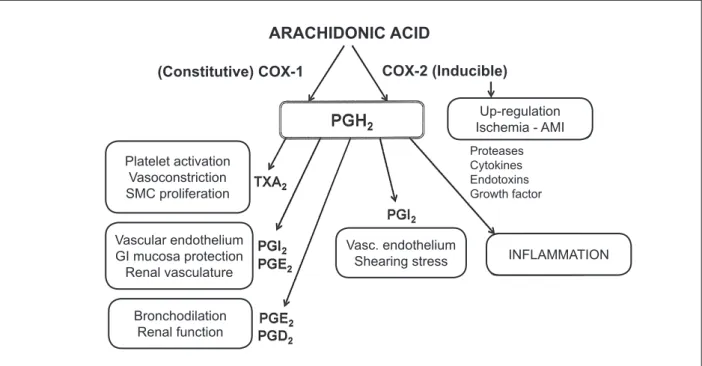
In 1991, the existence of two isoforms of the cyclooxygenase enzyme were demonstrated; they were called COX-1 and COX-2 and were found to be codified by different genes, with similar chemical structures, 60% of homology in the amino acid sequence and singular patterns of expression1-3. The COX-1 isoform is expressed in a constitutive (constant) way in most tissues, whereas COX-2 is induced in inflammations. COX-1 is essential for the maintenance of the normal physiological state of many tissues, including the protection of the gastrointestinal mucosa, control of renal blood flow, homeostasis, autoimmune responses, pulmonary, central nervous system, cardiovascular and reproductive functions3-5. COX-2, induced in inflammation by several stimuli - such as cytokines, endotoxins and growth factors -, originates inducing prostaglandins, which contribute to the development of edema, rubor, fever and hyperalgesia. COX-2 is also expressed in normal endothelial vascular cells, which secrete prostacyclin in response to shearing stress. The COX-2 blocking results in prostacyclin synthesis inhibition6-8.
The COX enzymes have an important role in cardiovascular homeostasis. The thromboxane A2 (TXA2), synthesized mainly in the platelets by the COX-1 activity, causes platelet aggregation, vasoconstriction and proliferation of smooth muscle cells. On the other hand, the synthesis of prostacyclin, broadly mediated by the activity of COX-2 in macrovascular endothelial cells, contrasts with these effects. The prostacyclin is the main prostanoid
secreted by the endothelial cells. It causes relaxation of the vascular smooth muscle cells and is a potent vasodilator. Additionally, as it acts on the IP receptors of platelets, it has an important anti-platelet activity9. Several prostanoids, especially prostacyclin and PGE2, are crucial to protect the gastric mucosa from the erosive effects of stomach acid, as well as to maintain the naturally healthy condition of the gastric mucosa. These prostaglandins are produced by the action of the COX-19 (Figure 1). The consequences of the COX-1 blocking in the gastrointestinal tract are the inhibition of the mucosa protection and increased acid secretion, which can lead to erosion, ulceration, perforation and hemorrhage. The likelihood of ulcers or bleeding increases with high-dose or prolonged use of NSAIDs, concomitant administration of corticosteroids and/or anticoagulants, smoking, alcohol consumption and advanced age.
On the other hand, the selective inhibition of COX-2 can induce the relative decrease of endothelial production of prostacyclin, whereas the platelet production of TXA2 is not altered. This imbalance of hemostatic prostanoids can increase the risk of thrombosis and vascular events. It was also demonstrated, in non-anesthetized mice, that COX-2 mediates cardioprotective effects during the late phase of myocardial pre-conditioning10. However, the administration of COX-2 inhibitors to the animals, 24 hours after the ischemic pre-conditioning, eliminates this cardioprotective effect against the “stunned” myocardium and myocardial infarction. These subsequent studies indicated that the up-regulation of COX-2 has a key-role in cardioprotection mediated by PGE2 and PGI210-12.
Figure 1 -Schematic representation of the effects related to the COX-1 and COX-2 activation. COX - cyclooxygenase; PG - prostaglandin; TX - thromboxane; AMI - acute myocardial infarction.
ARACHIDONIC ACID
(Constitutive) COX-1
COX-2 (Inducible)
Platelet activation Vasoconstriction SMC proliferation
Vascular endothelium GI mucosa protection Renal vasculature
Bronchodilation Renal function
Vasc. endothelium Shearing stress
Up-regulation Ischemia - AMI
Proteases Cytokines Endotoxins Growth factor
Pharmacology
The differences in the biological effects of COX inhibitors result from the degree of selectiveness for the two isoenzymes, the specific tissue variations in its distribution and the enzymes that convert PGH2 into specific prostanoids.
The COX non-selective NSAIDs inhibit the production of prostaglandins in the gastrointestinal mucosa and can cause gastroduodenitis, gastric ulcer and digestive bleeding. These NSAIDs, similarly to aspirin, reduce the platelet production of TXA2 due to the COX-1 blocking and prevent arterial thrombosis (Figure 2). Recently, it has been postulated that the COX-2 selective inhibitors increase the cardiovascular risk. These agents do not block the formation of TXA2 or have anti-platelet action, due to the minimal inhibition of COX-1, but they decrease prostacyclin production12. The increase in cardiovascular risk could result from the lack of opposition to the action of TXA2 and the propensity to thrombosis. Additionally, several experimental models have shown the cardioprotective effect of COX-2, which could be blocked by the inhibitors of this isoform. COX-2 is expressed at low levels by the endothelial cells in static conditions; however, it is induced by shearing stress8. These findings suggest that the decrease in prostacyclin production, secondary to the decrease in COX-2, can increase the risk of focal atherogenesis in vascular bifurcation sites.
From the 1960s on, many non-selective NSAIDs were introduced in clinical practice. These traditional or conventional NSAIDs present varied inhibitory effects in relation to COX-1 and COX-2, as well as the side effects in the digestive tube. The aspirin is approximately 166 times more potent as COX-1 inhibitor in relation to COX-213. The aspirin acetylates and irreversible inhibits the COX-1 isoenzyme, which leads to complete platelet inhibition, during the platelet
life-time14. Other non-selective NSAIDs, such as naproxen, ibuprofen and piroxicam, cause variable inhibition of COX-1 and COX-2 and result in reversible platelet inhibition.
Cardiovascular effects
Due to the relatively scarce expression of COX-2 in the gastrointestinal tract and its high expression in inflammatory and/or painful tissues, selective COX-2 inhibitors were developed and introduced in therapeutics from 1999 on, with the objective of minimizing gastrointestinal toxicity of non-selective NSAIDs15. The selective COX-2 inhibitors are as or more effective than the non-selective NSAIDs for the treatment of inflammation and associated symptoms. However, as the platelets primarily express COX-1, these drugs do not have anti-thrombotic properties. Based on animal studies, observation of records and clinical trials, it has been proposed that the most important consequences of the selective inhibition of COX-2 in relation to the heart are the propensity to thrombosis, through the shift in the pro-thrombotic/anti-thrombotic balance on the endothelial surface and the loss of the protective effect of the up-regulation of COX-2 in myocardial ischemia and myocardial infarction15-17 (Figure 3).
Renal effects
Homeostatic prostaglandins - prostacyclin, -PGE2 and PGD2 -, generated through the action of COX-1 in distinct regions of the kidneys, dilate the vasculature, decrease the renal vascular resistance and increase the organ perfusion. This leads to the redistribution of the blood flow from the renal cortex to the nephrons in the intramedullary region18,19. The inhibition of these mechanisms tend to decrease the total renal perfusion
Figure 2 -Representation of the effects related to the COX-1 inhibition. COX - cyclooxygenase; PG - prostaglandin; TX - thromboxane; GI - gastrointestinal.
↓
TXA2 synthesis
↓
Platelet activation
↓
Renal PG
Vasoconstriction
↓
Glomerular BF
↓
Glomerular filtration
COX-1 inhibition
(predominant)
↓
PGI2 e PGE2 in
the GI tract
↓
Gastric acid secretion
Mucosal dysfunction/lesion
GI-erosions, ulcerations and
and redistribute the blood flow to the cortex, a process that culminates in acute renal vasoconstriction, medullary ischemia and, under certain conditions, acute renal failure.
Additionally, PGE2 and PGF2α mediate the diuretic and natriuretic effects, whereas PGE2 and PGI2 antagonize the action of vasopressin. Both, generated at the glomeruli, contribute to maintain the glomerular filtration rate. These prostaglandins constitute a self-regulating mechanism in the presence of renal perfusion decrease, as in heart failure and hypovolemia conditions.
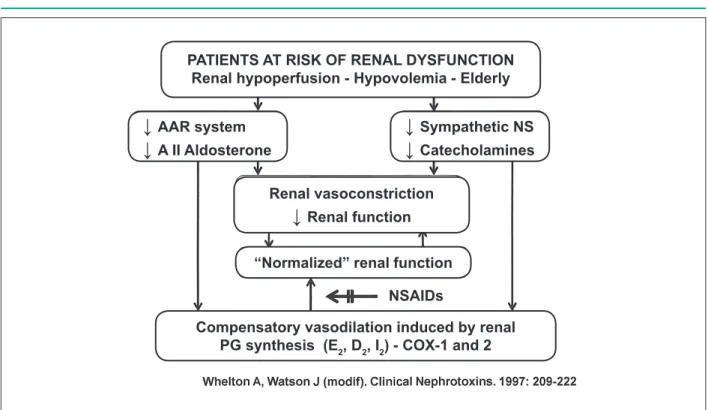
The responses to the decreased renal blood flow and renal hemodynamic alterations include the stimulation of the renin-angiotensin-aldosterone system, which results in vasoconstriction and sodium and water retention, as well as the stimulation of the sympathetic nervous system, promoting a further increase in vascular tonus.
In these situations, the prostaglandins promote compensatory dilation of the renal vasculature to guarantee a normal blood flow and prevent the acute functional deterioration of the kidney. Additionally, these prostaglandins reduce the release of noradrenaline, which also favors vasodilation. It is mostly through the attenuation of these contra-regulatory mechanisms mediated by prostaglandins that NSAIDs impair the renal function, especially in high-risk patients, who already present a decrease in renal perfusion (Figure 4).
Sodium and water retention and edema are adverse effects of NSAIDs, but they are usually mild and sub-clinical18,20. The prevalence of symptomatic edema is 3% to 5%21. Another potentially adverse reaction induced by NSAIDs is hyperkalemia. The NSAIDs attenuate the release of renin mediated by prostaglandins, reduce the formation of aldosterone and, as a consequence, decrease
the excretion of potassium. Additionally, in the presence of a decreased glomerular flow, the opposition to the natriuretic and diuretic effects of the prostaglandins by the NSAIDs can increase the sodium and water resorption in the renal tubule, with a decrease in the Na+-K+ exchange in the distal néephron22. The patients that are more susceptible to develop hyperkalemia are those that use simultaneously potassium supplement, potassium-sparing diuretics and/or angiotensin-converting enzyme inhibitor (ACEI), in addition to those with basal renal dysfunction, heart failure or diabetes mellitus21.
The renal complications induced by NSAIDs are reversible with the suppression of these drugs. However, in the presence of associated adverse conditions, they can, albeit rarely, cause acute renal dysfunction, nephrotic syndrome, interstitial nephritis or renal papillary necrosis.
The prolonged use of NSAIDs can cause an increase of 5 to 6 mmHg in the mean blood pressure, especially in hypertensive individuals and can interfere with the anti-hypertensive effects of diuretics, beta-blockers and ACE inhibitors. However, there is a large variation concerning the results among the drugs and among the clinical trials.
Clinical trials
Some clinical and experimental trials have suggested a probable association between COX-2 inhibitors and the increase in cardiovascular risk. To date, no complete prospective trial has evaluated this problem. However, clinical trials designed to assess gastrointestinal outcomes have reported cardiovascular events. The outcomes of these clinical trials, which used different COX-2 inhibitors, were inconsistent and it is likely that the patient’s basal risk has an important role.
Figure 3 -Schematic representation of the effects related to the COX-2 inhibition. COX - cyclooxygenase; PG - prostaglandin; TX - thromboxane; GI - gastrointestinal;
RA - renal arteriole; GBF - glomerular blood low; AMI - acute myocardial infarction; HF - heart failure; KF - kidney failure.
↑
TXA
2↓
PGI
2Platelet activation
Vasoconstriction
↑
Risk of thrombosis
↓
Renal PG
↓
RA vasodilation
↓
GBF
↓
Vasopressin antagonism
COX-2 selective
inhibition
Loss of protective effect
of the up-regulation of
COX-2
→
Ischemia, AMI
Sodium and water retention
Edema
Figure 4 -Schematic representation of the effects of NSAIDs in the blocking of compensatory actions induced by prostaglandins in the presence of kidney dysfunction. AII - angiotensin II; PG - prostaglandin; RAA - renin-angiotensin-aldosterone; Arrow = inhibition.
PATIENTS AT RISK OF RENAL DYSFUNCTION
Renal hypoperfusion - Hypovolemia - Elderly
↓
AAR system
↓
A II Aldosterone
↓
Sympathetic NS
↓
Catecholamines
Renal vasoconstriction
↓
Renal function
“Normalized” renal function
NSAIDs
Compensatory vasodilation induced by renal
PG synthesis (E
2, D
2, I
2) - COX-1 and 2
Cardiovascular events
The first studies evaluated the rofecoxib, which has been removed from the market. The Vioxx Gastrointestinal Outcome Research Study(VIGOR)23 compared o rofecoxib, 50 mg/day owith naproxen, 500 mg 2x day, in 8,076 patients with rheumatoid arthritis. Patients with recent cardiovascular events or those using aspirin were excluded. The primary outcome was upper gastrointestinal event. Although it was not the objective of the study, a higher incidence of myocardial infarction was observed with rofecoxib (0.4%/year), when compared to naproxen (0.1%/year). Gastrointestinal bleeding was significantly lower with rofecoxib, when compared with naproxen (RR (relative risk) = 0.4). Naproxen is a strong inhibitor of COX-1 and also inhibits COX-2 by 71%, while diclofenac inhibits this isoenzyme by 94%24.
The Multinational Etoricoxib and Diclofenac Arthritis Long-Term MEDAL Study Program25 compared the agent that was highly selective for COX-2 inhibition (Etoricoxib) with a traditional NSAID, diclofenac, relatively less selective for COX-2 inhibition. This study did not show inferiority of the Etoricoxib when compared to diclofenac, regarding the thrombotic cardiovascular events.
Although the VIGOR23 study reported an increase in the myocardial infarction rate among the patients allocated to rofecoxib, when compared to those allocated to naproxeno, (4 vs 1; p < 0.001), this difference might have occurred in part due to the inhibitory effect of the platelet aggregation of naproxen in the posology scheme used in the study. However, the outcomes of the APPROVE - The Adenomatous Polyp Prevention on VIOXX24 - study,
the first large study that compared a selective inhibitor of COX-2 with a placebo, showed a two-fold increase in cardiovascular events with rofecoxib. Soon after, the APC5 study, which compared celecoxib with a placebo, reported a similar incidence of vascular events with this selective NSAID26. However, the Celecoxib Long-Term Arthritis Safety Study (CLASS)27, which included 8,059 patients with oosteoarthritis or rheumatoid arthritis treated with celecoxib, 400 mg 2x day, or another non-selective COX inhibitor com (ibuprofen 800 mg, 3x day, or diclofenac, 75 mg 2x day), did not show any statistically significant difference regarding the incidence of cardiovascular events between the groups. The rates of bleeding were higher with ibuprofen and diclofenac (6.0%) in comparison with celecoxib (3.1%). It must be stated that diclofenac and ibuprofen have a relatively weak anti-platelet activity.
This outcome was mainly attributable to the increased risk of myocardial infarction (0.6%/yr vs 0.33%/yr; rate ratio 1.86; p = 0.0003), with a small difference in the other vascular outcomes. Around two-thirds of the vascular events occurred among the nine long-term studies (one year or more of planned treatment, mean of 139 weeks). In these studies, the use of selective COX-2 inhibitor was associated to a 45% increase in the incidence of vascular events (rate ratio 1.45; p = 0.005), without significant heterogeneity between the rate ratio of events. Overall, the incidence of severe vascular events was similar between a selective COX-2 inhibitor and any traditional NSAID (1.0%/yr vs 0.9%/yr). However, a marked heterogeneity was observed among the studies that compared a selective COX-2 inhibitor with naproxen: vascular events (rate ratio 1.57; p = 0.0006); myocardial infarction (p = 0.04); cerebrovascular accident (CVA) (p = 0.06); vascular death (p = 0.02).
The summarization of the rate ratio of vascular events in comparison to placebo was 0.92 for naproxen, 1.51 for ibuprofen and 1.63 for diclofenac. In conclusion, the selective COX-2 inhibitors were associated with a moderate increase in the risk of vascular events; the same occurred with the non-selective NSAIDs ibuprofen and diclofenac at high doses, but not with naproxen. Regarding the association of a NSAID with aspirin, the evidence indicates that ibuprofen, but not acetaminophen, diclofenac or rofecoxib interfere with the capacity of aspirin to irreversibly acetylate the platelet COX-1 enzyme. This could reduce the protective effect of aspirin against atherothrombotic events.
Recently, Garcia Rodriguez et al29 evaluated the association between the frequency, dose and duration of use of different NSAIDs and the risk of myocardial infarction in the general population, in a retrospective cohort study. They also verified whether the degree of COX-2 inhibition in whole blood could be a “surrogate” biochemical predictor for the risk of myocardial infarction associated with NSAIDs. A total of 8,852 cases of non-fatal infarction were identified in patients aged 50 to 80 years, between 2000 and 2005 and the case-control analysis was performed. The risk of infarction was correlated with the degree of platelet COX-1 inhibition and monocyte COX-2 in vitro through the mean therapeutic concentration of each NSAID.
The risk of myocardial infarction increased with the regular use of NSAIDs (RR 1.35; confidence interval - CI 1.23 to 1.48) and this risk was correlated with the posology and duration of treatment. The group of NSAIDs with a degree of COX-2 inhibition < 90% - ibuprofen, meloxicam, celecoxib and etoricoxib - presented a RR of 1.18 (CI 1.02 to 1.28), whereas the group of NSAIDs with higher COX-2 inhibition - rofecoxib, indomethacin, diclofenac and piroxicam -, presented RR = 1.60 (CI 1.41 to 1.81; p < 0.01 for interaction). The degree of COX-1 and COX-2 activity inhibition in whole blood, in vitro, induced by the NSAIDs individually, showed that, except for naproxen and ibuprofen, all the others inhibited COX-2 more intensely than COX-1 at therapeutic concentrations. The authors concluded that the magnitude of the inhibition of COX-2-dependent prostacyclin can represent the main factor for the increased risk of myocardial infarction among NSAIDs, with non-functional suppression of COX-1. This
property is shared by most traditional NSAIDs and COX-2 inhibitors and the measurement of the concentration of COX-2 in whole blood can represent a surrogate outcome to predict the cardiovascular risk of these drugs. The division of NSAIDs in selective and non-selective COX-2 inhibitors represents only partially the prediction of cardiovascular risk of NSAIDs. These results are consistent with those from case-control studies and randomized clinical trials28,30, however, only partially, with the current view that the selectiveness for COX-2 is a necessary attribute for cardiovascular risk. In fact, it was demonstrated that the prolonged action and high doses of the active compound are associated with an increased risk for any NSAID. These findings suggest that the degree of COX inhibition by therapeutic levels of NSAIDs must be considered the major determinant factor of cardiovascular risk5,31,32. Considering that the vasculature and COX-2 are the most important sources and the catalyzers of PGI25, the authors inferred that only the intense reduction in COX-2 activity (≥ 95%) results in a significant decrease in the synthesis of PGI2 in vivo, and, eventually, oin the increased risk of myocardial infarction29. Therefore, an increase in the cardiovascular risk seems to be clearly associated to the effective inhibition of COX-2, unless it is attenuated by the concomitant effective inhibition of platelet COX-1.
Arterial hypertension
Two large meta-analyses33,34, encompassing more than 90 clinical trials, demonstrated that the NSAIDs can elevate the blood pressure (BP). Both showed a higher elevation in hypertensive patients. The analysis by Pope et al33 showed that indomethacin and naproxen increased the mean blood pressure by 3.59 mmHg and 3.74 mmHg, respectively. Piroxicam resulted in a negligible mean BP increase (0.49 mmHg). The increase in BP caused by NSAIDs was associated with the significant decline in the concentrations of prostaglandins and renin.
In the meta-analysis by Jonhson et al34, the data showed that the NSAIDs increased the mean supine BP by around 5.0 mmHg. O Ppiroxicam induced o the highest increase (6.2 mmHg). Aspirin, sulindac and flurbiprofen presented the lowest increase in BP; indomethacin and ibuprofen had intermediate effects.
The set of data also showed that the NSAIDs interfere with the anti-hypertensive effects of several classes of these agents, especially those of which mechanism of action also involves the synthesis of vasodilating prostaglandins, such as diuretics, angiotensin-converting enzyme inhibitor and beta-blockers. Calcium-channel blockers and angiotensin-II receptor antagonists showed less interference by NSAIDs on their effects18,35.
Cerebrovascular events
not show any difference in the incidence of cerebrovascular events with NSAIDs.
Recently, Haag et al37 evaluated 7,636 individuals with a mean age of 70.2 years, of which 61.3% were women, with no manifestations of previous brain ischemia (1991-1993), regarding the incidence of cerebrovascular accident (CVA) up to September 2004. Of 70,063 individuals/year of follow-up (mean = 9.2 years), 807 individuals developed CVA (460 ischemic, 74 hemorrhagic and 273 not specified). The regular users of non-selective NSAIDs (HR 1.72; 95% CI: 1.22 to 2.44) and selective COX-2 inhibitors (HR 2.75; 95% CI: 1.28 to 5.95) presented a higher risk of stroke; however, the same was not true for those that took selective COX-1 inhibitors (HR 1.1; 95% CI: 0.41 to 2.97). The hazard ratio for ischemic stroke was de 1.68 (1.05 to 2.69) for non-selective agents and 4.54 (2.06 to 9.98) for selective agents. Considered separately, the current use of naproxen (non-selective) was associated with a HR of 2.63 (95% CI: 1.47 to 4.72) and the use of rofecoxib (selective for COX-2) to a higher risk of stroke (HR 3.38; 95% CI: 1.48 to 7.74). The hazard ratios for diclofenac (1.60; 1.0 to 2.57), ibuprofen (1.47; 0.73 to 3.00) and celecoxib (3.79; 0.52 to 2.76) were > 1.00, but did not reach statistical significance.
The authors concluded that in the general population, the risk of stroke was higher with the current use of selective NSAIDs, although it was not limited to them, as the event also occurs with the non-selective NSAIDs.
Heart failure
The addition of a NSAID to the therapeutic scheme of a patient undergoing treatment with diuretics to control cardiovascular disease, associated with sodium and water retention, increases the probability of developing heart failure. In a study of 10,000 individuals, aged 55 years or older, the concomitant use of diuretics and NSAIDs was associated with a two-fold increase in the rate of hospitalizations due to heart failure38. Patients with a previous history of congestive heart failure presented a higher risk38.
Gastrointestinal effects
The most important adverse effects of NSAIDs occur in the gastrointestinal system. Approximately 20% of the patients do not tolerate the treatment with NSAIDs due to such effects, including abdominal pain, pyrosis and diarrhea16. The long-term treatment can cause gastric and duodenal erosions and ulcers. Although many of these patients are asymptomatic, they present a high risk of developing severe complications, such as stomach bleeding and perforation. The annual risk of these severe complications is 1% to 4% during the chronic treatment with NSAIDs. The elderly, women, individuals with rheumatoid arthritis, previous history of gastroduodenal bleeding, those using anti-thrombotic or corticosteroid agents, those using high doses of NSAIDs and those with a severe systemic disease are more prone to present them.
These adverse effects result from the blocking of COX-1 in the gastrointestinal mucosa and the consequent inhibition in the production of prostacyclin, PGE2 and PGD2 in the stomach. 39. These prostaglandins act as cytoprotective agents of the gastrointestinal mucosa; they inhibit the acid secretion by the stomach, increase the local blood flow and the secretion of the protective mucus. Patients with gastroduodenitis, ulcer and mainly digestive bleeding must take proton-pump inhibitors (omeprazole, pantoprazole, lansoprazole etc) daily and the NSAIDs must be taken after the meals40.
Conclusions
The evidence on the increased cardiovascular risk with the use of NSAIDs, especially the selective COX-2 inhibitors, is still incomplete, mainly due to the lack of randomized and controlled trials with the power to evaluate relevant cardiovascular outcomes. As the differences among the several NSAIDs are probably small, large comparative clinical trials are necessary to identify which anti-inflammatory scheme minimizes the total load of cardiovascular and gastrointestinal adverse events. However, the results of the clinical trials and meta-analyses indicate that the selective COX-2 inhibitors have important adverse cardiovascular effects that include increased risk of myocardial infarction, cerebrovascular accident, heart failure, kidney failure and arterial hypertension. The risk of these adverse events is higher in patients with a previous history of cardiovascular disease or those presenting high risk of developing it. In these patients, the use of COX-2 inhibitors must be limited to those for whom there is no appropriate alternative and even so, only at low doses and for as little time as necessary. Additionally, more data are necessary on the cardiovascular safety of traditional NSAIDs9. Although the most frequent adverse effects have been associated with the selective inhibition of COX-2, the absence of selectiveness for this isoenzyme does not completely rule out the risk of cardiovascular events, so that all drugs belonging to the large spectrum of NSAIDs must only be prescribed after the risk/ benefit balance is considered.
Potential Conflict of Interest
No potential conflict of interest relevant to this article was reported.
Sources of Funding
There were no external funding sources for this study.
Study Association
References
1. Howard, Patricia A. Nonsteroidal anti-inflamatory drugs and cardiovascular
Risk. J Am Coll Cardiol. 2004; 43: 519-25.
2. Cryer B, Feldman M. Cyclooxygenase-1 and cyclooxigenas2 selectivity of widely used nosteroidal anti-inflammatory drugs. Am J Med. 1998; 104: 413-21.
3. Vane JR, Botting RM. Mechanism of action of nonsteroidal antinflammatory drugs. Am J Med. 1998; 104 (Suppl 3A): 2S-8S.
4. Antman EM, DeMets D, Loscalzo J. Cyclooxygenase inhibition and
cardiovascular risk. Circulation. 2005; 112: 759-70.
5. Grosser T. Fries S, FitzGerald GA. Biological basis for the cardiovascular
consequences of COX-2 inihibition: therapeutic challenges and opportunities.
J Clin Invest. 2006; 116: 4-15.
6. Topper JN, Cai J, Falb D, Gimbrone MA Jr. Identification of vascular endothelial genes differentially responsive to fluid mechanical stimuli: cyclooxygenase-2, manganese superoxide dismutase and endothelial cell nitric oxide synthase are selectively up-regulated by steady laminar shear stress. Proc Natl Acad Sci USA. 1996; 93: 10417-22.
7. FitzGerald GA, Smith B, Pedersen AK, Brash AR. Increased prostacyclin biosynthesis in patients with severe atherosclerosis and platelet activation. N
Engl J Med. 1984; 310:1065-1068.
8. FitzGerald GA. Coxibs and cardiovascular disease. N Engl J Med. 2004; 351:
1709-11.
9. Antman EM, Bennett JS, Daugherty A, Furberg C, Roberts H, Taubert KA. Use of nonsteroidal anti-inflamatory drugs: an update for clinicians: a scientific
statement from the American Heart Association. Circulation 2007; 115 (12):
1634-42.
10. Shinmura K, Tang XL, Wang Y, Xuan YT, Liu SQ, Takano H, et al. Cyclooxygenase-2 mediates the cardioprotective effects of the late phase of ischemic precondition-ing conscious rabbits. Proc Natl Acad Sci USA. 2000; 97: 10197-202.
11. Bolli R, Shinmura K, Tang XL, Kodani E, Xuan YT, Guo Y, et al. Discovery of a new function of cyclooxigenase (COX-2): COX-2 is a cardioprotective protein that alleviates ischemia/reperfusion injury and mediates the late phase of
preconditioning. Cardiovasc Res. 2002; 55: 506-19.
12. Fitzgerald GA, Austin YCS. COX-2 inihibitors and cardiovascular system Clin
Exp Rheumatol. 2001;19 (Suppl 25): S31-6.
13. Gum PA, Kottke-Marchant K, Poggio ED, Gurm H, Welsh PA, Brooks L, et al. Profile and prevalence of aspirin resistance in patients with cardiovascular
disease. Am J Cardiol 2001;88:230-5.
14. FitzGerald GA, Patrono C. The coxibs, selective inhibitors of cyclooxygenase-2.
N Engl J Med. 2001; 345: 433-42.
15. Abraham NS, El-Sereg HB, Hartman C, Richardson P, Deswal A.
Cyclooxygenase-2 selectivity of non-steroidal anti-inflammatory drugs and the risk of myocardial infarction and cerebrovascular accident. Aliment
Phamarcol Ther. 2007; 25: 913-24.
16. Bhatt DL, Scheiman J, Abraham NS, Antman EM, Chan FK, Furberg CD, et al. ACCF/ACG/AHA 2008 Expert consensus document on reducing the gastrointestinal risks of antiplatelet therapy and NSAID Use: a report of the American College of Cardiology Foundation task Force on Clinical Expert Consensus Documents. Circulation. 2008: 118; 1894-909.
17. Mkherjee D. Does a coxib-associated risk limit the clinical use of the compounds as analgesic anti-inflamatory drugs? Arguments in favor. Thromb Haemost. 2006; 96: 407-12.
18. Whelton A. Nephrotoxicity of nonsteroidal anti-inflammatory drugs: physiologic foundations and clinical implications. Am J Med. 1999; 106
(5B): 13S-24S.
19. Oates JA, FitzGerald GA, Branch RA, Jackson EK, Knapp HR, Roberts LJ 2nd. Clinical implications of prostaglandin and thromboxane A2 formation. N Engl J Med. 1998; 319 (12): 761-7.
20. Clive DM, Stroff JS. Renal syndromes associated with nonsteroid
anti-inflammatory drugs. N Engl J Med. 1984; 310: 563-72.
21. Whelton A. Nonsteroidal anti-inflammatory drugs: effects on kidney function. In: Greenberg A. (ed.). Primer on kidney diseases. San Diego, CA: Academic
Press; 1994. p. 163-7.
22. Blum M, Aviram A. Ibuprofen-induced hyponatremia. Rheumatol Rehab.
1980; 19 (4): 258-9.
23. Bombardier C, Laine L, Reicin A, Shapiro D, Burgos-Vargas R, Davis B, et al, for the VIGOR Study Group. Comparison of upper gastrointestinal toxicity of rofecoxib and naproxen in patients with rheumatoid arthritis. N Engl J Med.
2000; 343: 1520-8.
24. Bresalier RS, Sandler RS, Quan H, Bolognese JA, Oxenius B, Horgan K, et al. Cardiovascular events associated with rofecoxib in a colorectal adenoma
chemoprevention trial. N Engl J Med. 2005; 352: 1092-102.
25. Cannon CP, Curtis SP, Bolognese JA, Laine L. MEDAL Steering Committee.
Clinical trial design and pacients demographics of the Multinational Etoricoxib and Diclofenac Arthritis Long-Term (MEDAL) study program: cardiovascular outcomes with etoricoxib versus diclofenac in patients with osteoarthritis and
rheumatoid arthritis. Am Heart J. 2006; 152: 237-45.
26. Solomon SD, McMurray JJ, Pfeiffer MA, Wittes J, Fowler R, Finn P, et al. Cardiovascular risk associated with celecoxib in a clinical trial for colorectal
adenoma prevention. N Engl J Med. 2005; 352: 1071-80.
27. Silverstein FE, Faich G, Goldstein JL, Simon LS, Pincus T, Whelton A, et al. For the Celecoxib Long-Term Arthritis Safety Study. Gastrointestinal toxicity with celecoxib vs nonsteroidal anti-inflammatory drugs for osteoarthritis and rheumatoid arthritis: the CLASS study: a randomized controlled trial. JAMA.
2000; 284: 1247-55.
28. Kearney PM, Baigent C, Godwin J, Hall H, Emberson JR, Patrono C. Do selective cyclo-oxygenase-2 inhibitors and traditional non-steroidal anti-inflammatory drugs increase the risk of atherothrombosis? Meta-analysis of randomised trials. BMJ. 2006; 332: 1302-8.
29. Garcia Rodriguez LA, Tacconeli S, Pratignani P. Role of dose pontency in the prediction of risk of myocardial infarction associated with nosnteroidal anti-inflammatory drugs in the general population. J Am Coll Cardiol. 2008;
52: 1628-36.
30. McGettingan P, Henry D. Cardiovascular risk and inhibition of cyclooxygenase: a systematic rewiew of the observational studies of selective and nonselective inhibitors of cyclooxygenase 2. JAMA. 2006; 296 (13): 1633-44.
31. Minuz P. Nonsteroidal anti-inflammatory drugs and cardiovascular risk: is
prostacyclin inhibition the key event? J Am Coll Cardiol. 2008; 52: 1637-9.
32. Warner TD, Mitchell JA. COX-2 selectivity alone does not define the cardiovascular risks associated with non-steroidal anti-inflammatory drugs. Lancet. 2008; 371: 270-3.
33. Pope JE, Anderson JJ, Felson DT. A meta-analysis of the effects of nonsteroidal
anti-inflammatory drugs on blood pressure. Arch Intern Med. 1993; 153: 477-84.
34. Jonhson AG, Nguyen TV, Day RO. Do nonsteroidal anti-inflammatory drugs on affect blood pressure? A meta-analysis. Ann Intern Med. 1994; 121 (4): 289-300.
35. Ruoff GE. The impact of nonsteroidal anti-inflammatory drugs on
hypertension: alternative analgesics for patients at risk. Clin Ther. 1998; 20: 376-87.
36. Andersonh F, Schade R, Suissa S, Garbe E. Cyclooxygenase-2 selective nosteroidal anti-inflammatory drugs and the risk of ischemia. Stroke. 2006;
37 (7): 1725-30.
37. Haag Mendel DM, Michiel JB, Hofman A, Koudstaal PJ, Breteler Monique MB, Stricker Bruno HC. Cycloxygenase selectivity of nonsteroidal anti-inflammatory drugs and risk of stroke. Arch Inter Med. 2008; 168 (11): 1219-24.
38. Heerdink ER, Leufkens HG, Herings RMC, Ottervanger JP, Stricker BH, Bakker A. NSAIDs associated with incresead risk of congestive heart failure in elderly
patients taking diuretics. Arch Intern Med. 1998; 158: 1108-12.
39. Lanas A, Scheiman J. Low-dose aspirin and upper gastrointestinal damage: epidemiology, prevention and treatment. Curr Med Res Opin. 2007; 23: 163-73.