Vol. 34, No. 04, pp. 985 – 996, October – December, 2017 dx.doi.org/10.1590/0104-6632.20170344s20160417
* To whom correspondence should be addressed
THE EFFECT OF TEMPERATURE ON THE
EFFICIENCY OF AEROBIC BIODEGRADATION OF
SUGAR BEET DISTILLERY STILLAGE: REMOVAL
OF POLLUTION LOAD AND BIOGENS
K. Lutosławski
1,*, E. Cibis
1and M. Krzywonos
11Department of Bioprocess Engineering, Wrocław University of Economics, Komandorska 118/120, 53-345 Wrocław, Poland.
*Corresponding author: E-mail [email protected]; Phone: +48713680257; Fax +48713680753
(Submitted: July 15, 2016; Accepted: September 6, 2016)
Abstract – Beet stillage is a high-strength effluent from the production of ethanol from sugar beet. A large annual volume of sugar beet stillage requires finding new effective ways for its utilization. The aim of the study was to investigate the effect of temperature on the efficiency of aerobic biodegradation of beet stillage. Biodegradation was carried out for 168 hours in a stirred-tank reactor with a working volume of 5 L at 27°C, 36°C, 45°C, 54°C and 63°C. All experiments were performed at uncontrolled pH, aeration of 1.0 vvm and of 900 rpm. The effectiveness of biodegradation was determined by the extent of removal of SCODsum (COD determined after suspended solids separation and theoretical COD of betaine), BOD5 and TOC. Studies have shown that, under mesophilic conditions, the extents of reduction of SCODsum, BOD5 and TOC were statistically significantly (p≤0.05) higher than under thermophilic conditions. Within
the range of 27-36°C, the highest reduction in SCODsum (79.2-79.9%), BOD5 (98.4-99%) and TOC (76.1-77.3%) was obtained. Additionally, at the temperature of 36°C, the highest reduction in total nitrogen (56.4%) and total phosphorus (58%) was achieved. Aerobic biodegradation allows for efficient treatment of sugar beet distillery stillage (preferably at 36°C).
Keywords: sugar beet, distillery stillage, aerobic biodegradation, thermo- and mesophilic process, Bacillus species.
INTRODUCTION
Depleting fossil fuel resources have increased interest
in renewable sources of energy, including biofuels. The most popular among them is bioethanol, whose global
production in 2015 reached the level of 98 billion litres
(REN21, 2016). The main problem associated with the
production of this biofuel is environmentally harmful
waste (stillage), due to its high pollution load. For one litre of ethanol produced, there are up to ten litres of stillage (Lata et al., 2002). Depending on the raw material used to produce bioethanol, COD of stillage ranges from 10 g O2/L
(España-Gamboa et al., 2011; Kharayat, 2012) to more
than 100 g O2/L (Robles-González et al., 2012).
For the production of ethanol various types of plant
materials containing sugar (most commonly sugar cane, sugar beets, including molasses) or starch (mainly corn, wheat, barley and rye) are used (Sánchez and Cardona, 2008). In Europe, due to the existing natural and climatic conditions, the most common material for the production of fuel ethanol is sugar beet. In 2014, European production
of ethanol from sugar beet rose to the level of approx. 1.1
billion litres (USDA, 2015). It can therefore be estimated that, at this rate of production, it annually requires
of Chemical
utilization of over 10 billion litres of beet stillage. For this reason and due to the current restrictive environmental regulations, beet stillage requires finding various effective
methods of its disposal.
In most research on sugar-based stillage (vinasse)
only a few methods are presented. Some research shows
that vinasse, directly or after concentration, can be used for fertilization of fields and meadows (Lewicki, 2001; Decloux and Bories, 2002; España-Gamboa et al., 2011; Fuess and Garcia, 2014). However, there is a difficulty for
the utilization of stillage as a fertilizer due to the seasonal plant growth and limited agricultural land. Another
method is the use of vinasse for the production of animal feed (Lewicki, 2001; Decloux et al., 2002). However, the lower (compared to starch-based stillage) nutritional value of vinasse (Lewicki, 2001) in combination with its high
content of potassium (Decloux et al., 2002), as well as the limited number of animals to be fed, reduces the possibility
for the direct utilization of vinasse. The limitations of the above mentioned methods prevent the utilization of the
yearly amounts of stillage. The solution to this problem is to treat the stillage as wastewater and subject it to biodegradation in an aerobic or anaerobic manner.
Anaerobic digestion of stillage has been used on an
industrial scale. An important advantage of an anaerobic
process is the ability to produce biogas (biomethane) as renewable energy from organic waste. In France, a major producer of ethanol from sugar beet, some distilleries with
biogas production units have been based on beet stillage
methanization (Tereos, 2014). The anaerobic treatment
of vinasse has also been used in India, where ethanol is
usually produced from sugar cane and cane molasses (Rais
and Sheoran, 2015). It should be noted, however, that a high content of pollutants present in this kind of wastewater works
as an inhibitor for the anaerobic process, thereby reducing
its efficiency. To prevent this, a frequently used solution is to dilute the stillage (Wilkie et al., 2000). According to
the literature single-stage, full-scale anaerobic systems
enable the removal of the COD of stillage loads from 24%
(Nandy et al., 2002) to 85% (Decloux and Bories, 2002)
for COD ranging from, respectively, 42 to 25 g·O2/L. Even more effective treatments of this type of wastewater are
multi-stage systems, where one of the stages is often an aerobic process (Fuess and Garcia, 2014). For example, in the anaerobic-aerobic stillage treatment on an industrial
scale, a COD reduction of 90% was achieved (Akarsubasi
et al., 2006).
However, as far as the authors are aware, there are
no reports in the literature regarding the biodegradation of beet stillage through aerobic methods. It became a prerequisite for the authors to run the tests in order to
establish the optimum temperature for the efficient aerobic biodegradation of beet stillage in terms of removal of
the pollutant load (expressed as COD, BOD5 and TOC) and biogenic elements (nitrogen and phosphorus). The
effectiveness of aerobic processes has been confirmed by studies on the utilization of beet molasses vinasse
(Ryznar-Luty et al., 2015), wheat stillage (Krzywonos et al., 2010) and corn, rye or potato stillage (Cibis, 2004). The maximum
removal of pollutants expressed as the reduction in COD
ranged from 75.9% (rye stillage) to 92.8% (wheat stillage).
MATERIALS AND METHODS
Microorganisms
In the experiments, a mixed culture of thermophilic and mesophilic bacteria of the genus Bacillus was used: two of them belong to the species B. circulans, and five strains corresponding, respectively, to the species B. laterosporus,
B. filicolonicus, B. stearothermophilus, B. acidocaldarius
and B. licheniformis (Cibis et al., 2004).
The activity of the bacterial culture was maintained in the bioreactor (scrubber) without stirring with a working volume of 0.5 L aerated at a rate of 1.0 vvm (volume of air/ (volume of the medium × min)), and placed in an incubator maintained at the temperature of 45 ± 2°C. Periodically,
after 3 days of adaptation the culture was inoculated onto a fresh stillage medium (0.5 L) (prepared according to the procedure described in the next section). The initial pH
value (pH0) of the medium was 7.5. The pH0 was adjusted
using 33% NaOH, and it was not controlled during the
bacterial incubation. The volume of the inoculum used was
20 mL. All experiments were performed with the inoculum from an aerated scrubber, which contained a three-day old (after inoculation) bacterial culture.
Preparation of the sugar beet stillage
The sugar beet stillage which was used in the study came from Manufacturing Trade Enterprise Rol-Mi-Go
Ltd. located in Jaśkowice Legnickie, Poland. Before its use, the stillage was filtered through a filter paper to separate
the solid fraction from it. The chemical composition of the
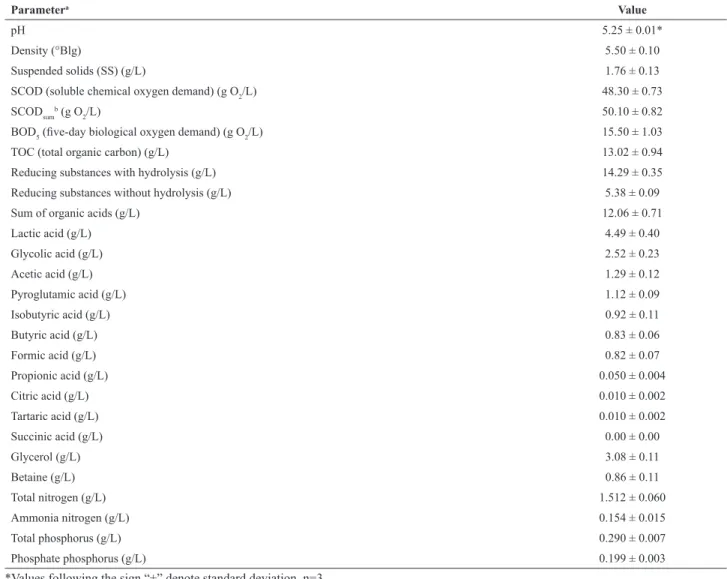
beet stillage after filtration is summarized in Table 1. This stillage was characterized by its dark-brown
colour, low pH and high pollution load expressed as SCODsum (soluble COD determined by the dichromatic
method +the theoretical COD of betaine (2.097 g O2/L)),
BOD5 and TOC (Table 1). The main sources of carbon in the beet stillage were reducing substances, organic acids and glycerol. Of the organic acids, lactic acid, glycolic
acid, acetic acid, and pyroglutamic acid were observed in
the largest quantities. The stillage also contained betaine, as well as biogenic elements, i.e., nitrogen and phosphorus
(Table 1), which are important from the point of view of
its biological degradation. The stillage medium, prepared
both for supporting the activity of the bacteria and for
biodegradation, was boiled for 15 minutes in order to eliminate possible contamination. After cooling, the liquid
Table 1. Characterization of sugar beet distillery stillage.
Parametera Value
pH 5.25 ± 0.01*
Density (°Blg) 5.50 ± 0.10
Suspended solids (SS) (g/L) 1.76 ± 0.13
SCOD (soluble chemical oxygen demand) (g O2/L) 48.30 ± 0.73
SCODsum b (g O
2/L) 50.10 ± 0.82
BOD5 (five-day biological oxygen demand) (g O2/L) 15.50 ± 1.03
TOC (total organic carbon) (g/L) 13.02 ± 0.94
Reducing substances with hydrolysis (g/L) 14.29 ± 0.35
Reducing substances without hydrolysis (g/L) 5.38 ± 0.09
Sum of organic acids (g/L) 12.06 ± 0.71
Lactic acid (g/L) 4.49 ± 0.40
Glycolic acid (g/L) 2.52 ± 0.23
Acetic acid (g/L) 1.29 ± 0.12
Pyroglutamic acid (g/L) 1.12 ± 0.09
Isobutyric acid (g/L) 0.92 ± 0.11
Butyric acid (g/L) 0.83 ± 0.06
Formic acid (g/L) 0.82 ± 0.07
Propionic acid (g/L) 0.050 ± 0.004
Citric acid (g/L) 0.010 ± 0.002
Tartaric acid (g/L) 0.010 ± 0.002
Succinic acid (g/L) 0.00 ± 0.00
Glycerol (g/L) 3.08 ± 0.11
Betaine (g/L) 0.86 ± 0.11
Total nitrogen (g/L) 1.512 ± 0.060
Ammonia nitrogen (g/L) 0.154 ± 0.015
Total phosphorus (g/L) 0.290 ± 0.007
Phosphate phosphorus (g/L) 0.199 ± 0.003
*Values following the sign “±” denote standard deviation, n=3.
aBesides pH, density and suspended solids, the parameters were determined after suspended solids separation.
b SCOD determined by the dichromate method + the theoretical COD of betaine.
with distilled water. The stillage was not diluted or enriched with additional biogenic compounds. The initial pH of the stillage used for biodegradation was pH0=8.0, and it was
adjusted using 33% NaOH. The pH values were adopted
from earlier studies in the Department of Bioprocess
Engineering at the Wrocław University of Economics
(Ryznar-Luty et al., 2015).
Biodegradation processes
Batch biodegradation processes were conducted for
168 hours in a 5-L working volume stirred-tank reactor
(STR) of Biostat® B type (B. Braun Biotech International, Germany) with the rotational speed of the stirrer 900 r/
min and aeration of 1.0 vvm. The volume of the stillage
in the fermenter was 4.7 L (including 0.2 L of bacterial inoculum, prepared according to the procedure described in the section “Microorganisms”). The processes were
carried out without pH control at 27°C, 36°C, 45°C, 54°C and 63°C.
Analytical methods
The number of bacterial cells was determined using a haemocytometer (Thoma chamber, dimensions 0.05 x 0.05 x 0.1 mm). The contents of the suspended solids (SS) obtained after the centrifugation of the sample for 40 minutes at the speed of 18,500 × g (4K15, Sigma® Laborzentrifugen
GmbH, Germany) was determined gravimetrically
(APHA, 1992). The supernatant was collected and frozen
for analysis. Chemical oxygen demand (COD), five-day
biological oxygen demand (BOD5), total organic carbon (TOC), total phosphorus and phosphate phosphorus were determined spectrophotometrically (spectrophotometer
DR5000, Lange) using cuvette tests on the
supernatant (SCOD) and in the non-centrifuged medium (TCOD). For the measurement of organic acids content, the HPLC method was used (column type, Phenomenex
ROA Organic Acid, column size, 7.8 mm i.d. × 300 mm;
eluent, 5 mM H2SO4; flow rate, 0.5 mL/min; temperature,
40°C). The content of reducing substances was determined
by the Lane-Eynon method, which consisted of the
titration of the sample for discoloration in an alkaline
medium with copper sulphate and iron-potassium cyanide
at high temperature (approx. 100°C) (McDonald, 1954).
The total nitrogen content was determined by the Kjeldahl method (APHA, 1992) using the C.Gerhardt GmbH & Co. KG apparatus (Germany), and ammonia nitrogen –
via distillation (APHA, 1992) using the Parnas apparatus.
Glycerol content was determined spectrophotometrically
(Ogorodnik and Stupakova, 1981). For the betaine content measurement a colorimetric method specified by Focht et
al. (1956) was used. Since the determination of COD by the dichromate method does not detect betaine, the CODsum
value was determined as the sum of the obtained COD value and the theoretical COD value of betaine (2.097
g O2/g of betaine).
RESULTS
Efficiency and rate of biodegradation
Compared to the thermophilic conditions, the
mesophilic processes produced a statistically significantly (for p≤0.05) higher efficiency of biodegradation assessed
by the extents of reduction of the pollution load (Table 2). The processes which had the largest increase of biomass
(27 and 36°C), yielded the greatest reduction in, e.g.,
SCODsum, (SCOD determined by the dichromatic method
+ theoretical COD of betaine), BOD5 and TOC determined
after the separation of suspended solids. In addition, at 27
and 36°C, as well as at 45°C, there was a faster utilization
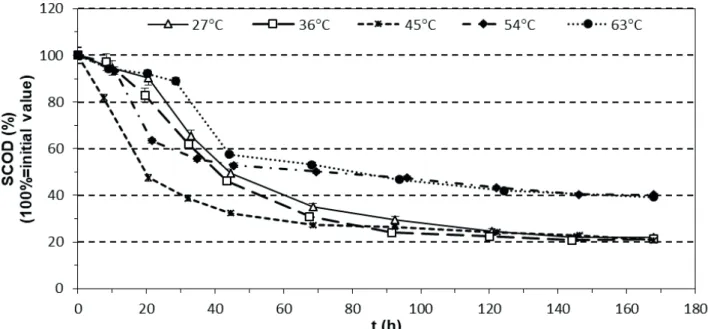
of pollutants expressed as SCOD than there was at a higher temperature (Fig. 1).
At 45°C, the SCOD removal accounted for 90% of the value at 62 h, while at the temperatures of 54°C and 63°C it did not occur until 103 h. As a result, the rate of SCOD removal was more than double, in a process carried out at the temperature of 45°C (0.49 g O2/(L×h)), than in
processes carried out at 54°C and 63°C (respectively 0.20
and 0.23 g O2/(L×h)) (Table 2). The process conducted
at 45°C was also characterized by a short period of lag
phase and the largest rate of growth of the bacterial cells
(data not presented). However, compared to the results obtained at the temperature of 27 and 36°C, the reductions
in SCODsum, BOD5 and TOC were lower by several percent
at 45°C (Table 2).
Removal of organic substances
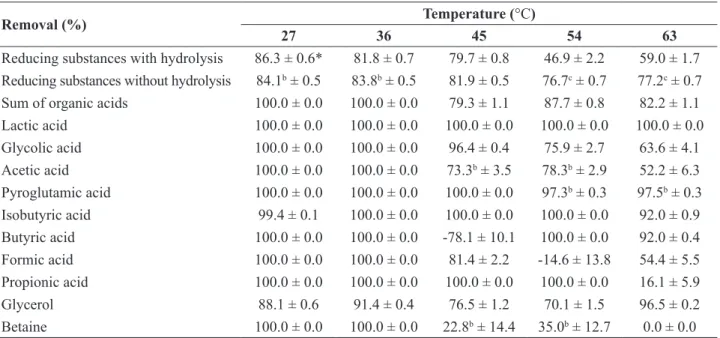
The highest effectiveness of biodegradation at 27 and 36°C was achieved by the complete assimilation of organic acids and the high extent of reducing substances removal
(measured before (84.1%) and after hydrolysis (86.3%)),
as well as the high extent of glycerol removal (91.4%)
(Table 3). It should be added that the total assimilation of betaine by the bacteria also contributed to the increase of
efficiency of biodegradation in mesophilic processes. The reason for the low efficiency in experiments carried out at a temperature≥ 45°C was first of all a reduction in the extent of organic acids removal by up to 20.7%. In addition, the efficiency of biodegradation at the temperatures of 54°C and 63°C was adversely affected by the lowest extent of assimilation of the
reducing substances determined after hydrolysis, amounting
respectively to 46.9 and 59% (Table 3).
The Bacillus bacteria culture used glycerol (Fig. 2a)
as the main carbon source, followed by the reducing substances (Fig. 2b). The biosynthesis of organic acids
visible in Figure 2c was most likely the reason for their
slowest assimilation. The decrease in the total content of
organic acids in the medium was generally observed not
earlier than after 45 h of the process duration (Fig. 2c).
The fastest assimilation of organic acids was observed in the experiment at 36°C, and in this process after 91 h they
were completely utilized (Fig. 2c).
Among the organic acids, the determined acids: lactic, pyroglutamic and isobutyric acids were assimilated in
Table 3. Effect of temperature on the removal of the main organic compounds from the beet stillage.
Removal (%) Temperature (°C)
27 36 45 54 63
Reducing substances with hydrolysis 86.3 ± 0.6* 81.8 ± 0.7 79.7 ± 0.8 46.9 ± 2.2 59.0 ± 1.7 Reducing substances without hydrolysis 84.1b ± 0.5 83.8b ± 0.5 81.9 ± 0.5 76.7c ± 0.7 77.2c ± 0.7
Sum of organic acids 100.0 ± 0.0 100.0 ± 0.0 79.3 ± 1.1 87.7 ± 0.8 82.2 ± 1.1
Lactic acid 100.0 ± 0.0 100.0 ± 0.0 100.0 ± 0.0 100.0 ± 0.0 100.0 ± 0.0
Glycolic acid 100.0 ± 0.0 100.0 ± 0.0 96.4 ± 0.4 75.9 ± 2.7 63.6 ± 4.1
Acetic acid 100.0 ± 0.0 100.0 ± 0.0 73.3b ± 3.5 78.3b ± 2.9 52.2 ± 6.3
Pyroglutamic acid 100.0 ± 0.0 100.0 ± 0.0 100.0 ± 0.0 97.3b ± 0.3 97.5b ± 0.3
Isobutyric acid 99.4 ± 0.1 100.0 ± 0.0 100.0 ± 0.0 100.0 ± 0.0 92.0 ± 0.9
Butyric acid 100.0 ± 0.0 100.0 ± 0.0 -78.1 ± 10.1 100.0 ± 0.0 92.0 ± 0.4
Formic acid 100.0 ± 0.0 100.0 ± 0.0 81.4 ± 2.2 -14.6 ± 13.8 54.4 ± 5.5
Propionic acid 100.0 ± 0.0 100.0 ± 0.0 100.0 ± 0.0 100.0 ± 0.0 16.1 ± 5.9
Glycerol 88.1 ± 0.6 91.4 ± 0.4 76.5 ± 1.2 70.1 ± 1.5 96.5 ± 0.2
Betaine 100.0 ± 0.0 100.0 ± 0.0 22.8b ± 14.4 35.0b ± 12.7 0.0 ± 0.0
*Values following the sign ± denote standard deviation, n = 3. The sign minus indicates an increase in the content of the pollutant. b, c Differences in the values denoted by the same letter in the same row are statistically insignificant for p ≤ 0.05.
Table 2. Effect of temperature on sugar beet distillery stillage biodegradation.
Parameter Temperature (°C)
27 36 45 54 63
SCOD removal (%) 78.0b ± 0.9* 78.7b ± 0.6 79.3b ± 0.6 59.8c ± 0.5 60.8c ± 0.5
SCODsum removal (%) 79.2
b ± 0.9 79.9b ± 0.5 76.7 ± 0.8 58.4c ± 0.8 57.9c ± 0.8
TCOD removal (%) 63.2b ± 1.2 64.6b ± 1.2 67.6 ± 1.1 52.6c ± 1.4 53.6c ± 1.2
TCODsum removal (%) 65.1b ± 1.1 66.6b ± 1.1 65.5b ± 1.2 51.7c ± 1.5 51.1c ± 1.3
BOD5 removal (%) 99.0 ± 0.1 98.4 ± 0.2 90.4 ± 0.5 76.9 ± 1.7 71.2 ± 1.5
TOC removal (%) 77.3b ± 2.1 76.1b ± 2.5 71.0 ± 1.8 57.7c ± 3.0 55.1c ± 1.5
Time after which 90% of the overall reduction in
SCOD was attained (h) 91.5 73 62 103 103
SCOD removal rate (gO2/(L×h))
a 0.32 0.39 0.49 0.20 0.23
Total nitrogen removal (%) 43.3 ± 3.3 56.4b ± 2.5 56.1b ± 2.6 15.1c ± 4.9 17.7c ± 4.8 Ammonia nitrogen removal (%) -8.3 ± 12.3 27.7 ± 8.2 56.0 ± 5.0 71.1b ± 3.3 71.9b ± 3.2 Total phosphorus removal (%) 55.4b ± 3.5 58.0b ± 3.3 32.8c ± 5.2 40.7c ± 4.6 32.1c ± 5.3
Phosphate phosphorus removal (%) 50.3 ± 2.5 60.2 ± 2.0 34.2 ± 3.3 44.5 ± 2.6 22.4 ± 3.8
Final number of cells formed (×109/mL) 6.3 ± 0.5 2.8b ± 0.2 2.2 ± 0.2 3.2b ± 0.3 3.2b ± 0.3 Final amount of SS formed (g/L) 4.1 ± 0.6 2.9 ± 0.3 1.4b ± 0.4 1.6b ± 0.4 1.9b ± 0.3
the largest quantities by the bacteria. Lactic acid was
completely removed in all experiments and pyroglutamic
and isobutyric acids, depending on the temperature of the
process, to the extent between, respectively, 97.3-100%
and 92-100% (Table 3).
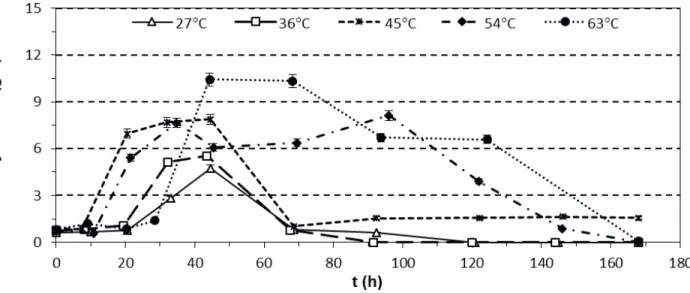
The aforementioned phenomenon of biosynthesis of organic acids with the use of bacterial cultures was less noticeable in the mesophilic conditions than in thermophilic ones (Fig. 2c). The increase in the total content of organic
acids was primarily aff ected by the synthesis of butyric Figure 2. Biodegradation of glycerol (a), reducing substances with hydrolysis (b) and sum of organic acids (c) at various process
acid. Depending on the temperature of biodegradation, the maximum synthesis of this acid (recorded between 35 and
44 h of the process) was between approx. 4 (at 27°C) to approx. 10 g/L (at 63°C) (Fig. 3). Despite the large amounts
of butyric acid synthesized during biodegradation it was
removed from the stillage medium to an extent of no less than 92% (excluding the temperature of 45°C) (Table 3).
Removal of nitrogen and phosphorus
The efficiency of biogenic elements removal from the stillage medium varied according to the biodegradation temperature. In processes when the highest removal of organic pollutants was observed at 27 and 36°C, there was also the highest removal of nitrogen and phosphorus. The maximum extent of N total and P total removal, amounting to 56.4% and 58.0%, respectively, was achieved during the stillage biodegradation at 36°C (Table 2). In turn, at higher temperatures (54-63°C) there were recorded, apart from low extents of removal of the main organic pollutants from the stillage, also the lowest extents of removal of both
nitrogen and phosphorus (Table 2).
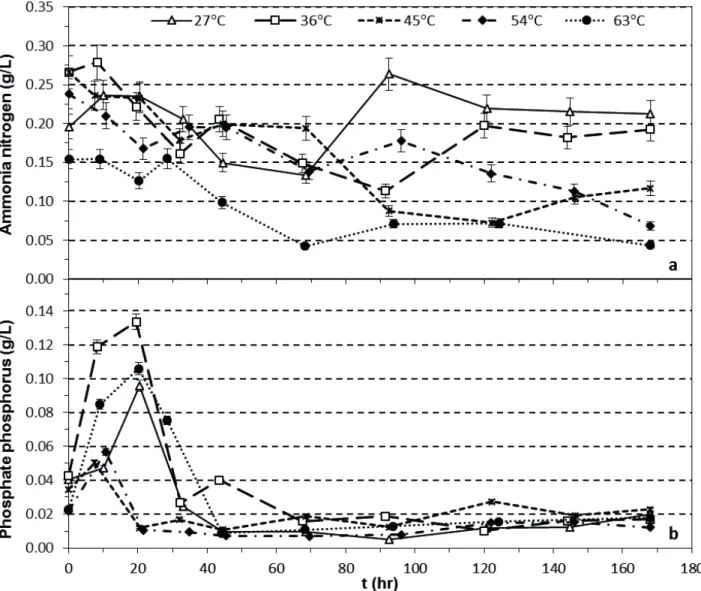
During the biodegradation, in none of the experiments
was the limitation of the process caused by a deficiency
of any biogens (nitrogen or phosphorus) in the stillage medium (Fig. 4). It should be noted that the concentration
of ammonia nitrogen in the first phase of bacterial activity
during the rapid growth of cells gradually decreased, until a characteristic increase of its content in the medium was
observed (Fig. 4a). Depending on the temperature of the
biodegradation, the N-NH4 concentration growth occurred between 68 and 124 h of the process (Fig. 4a). After that
time, in the processes carried out at 27, 36 and 45°C there
was a stabilization of the ammonia nitrogen content in
the medium, while at 54 and 63°C there was observed a
decrease of its content in the stillage medium, which lasted until the end of the biodegradation process (Fig. 4a).
It follows that changes in the content of ammonia nitrogen in the medium are related not only to the synthesis
of biomass, but also have a close relationship with the
temperature of the process. The NH4-N content in the
stillage medium also affects its pH. In the medium with an alkaline pH, ammonia nitrogen is released into the
atmosphere as ammonia. This phenomenon occurs more
quickly the higher the temperature of biodegradation and
the higher the pH of the stillage medium.
Due to the high temperature of the process and the high
pH, the higher rate of volatilization of ammonia nitrogen
in the form of NH3 into the atmosphere rather than the rate it is formed by the deamination of proteins was probably the reason for the rapid decrease in the ammonia nitrogen content in the medium at the end of biodegradation induced
at high temperature (54 and 63°C). In turn, the final effect of biodegradation at a lower temperature (27-45°C) was a similar rate of ammonia nitrogen volatilization into the
atmosphere as NH3 and the rate of N-NH4 formation, and as a result stabilization of the ammonia nitrogen content
at a level of approx. 0.21 g/L, 0.19 g/L and 0.12 g/L, respectively, for the temp. of 27, 36 and 45°C (Fig. 4a).
Finally, in the temperature range of 45-63°C there were more than twice as high extents of removal of the ammonia
nitrogen from the medium than there was in the process
carried out in the temp. of 36°C, where the reduction in
NH4-N concentration was 27.7%. It should be added that,
at the temperature of 27°C, the NH4-N content in the
stillage medium at the end of the process was even higher
than in the beginning (Table 2).
Analysing all the time courses of the P-PO4 content (Fig. 4b) it can be assumed that the reason for the rise
Figure 4. Ammonia nitrogen (a) and phosphate phosphorus (b) concentrations during biodegradation at various process temperatures.
of the phosphate phosphorus content in the fi rst hours of
the process, during the lag phase, was the hydrolysis of the suspended solids from the medium, caused mainly by the stirring system in the bioreactor. A particularly
signifi cant increase in the P-PO4 content occurred in the
mesophilic processes and at 63°C (Fig. 4b). Then, in all
the experiments, during the sharp increase in biomass, the phosphate phosphorus content rapidly decreased to the minimum range of 5-15 mg/L (Fig. 4b). It can therefore be assumed that the P-PO4 was then assimilated by the
bacteria. In contrast, the autolysis of cells in the fi nal phase
of each process was probably the cause of a slight increase in the P-PO4 content with respect to the minimum content in the medium obtained during the biodegradation.
As in the case of the total phosphorus, phosphate
phosphorus was removed from the stillage to a greater
extent at the temperature corresponding to mesophilic
conditions (27 and 36°C) rather than at the higher temperatures (≥45°C). The highest extent of the removal
of P-PO4 (60.2%), as in the case of total phosphorus, was
at 36°C (Table 2).
Variations in dissolved oxygen tension and pH
Regardless of the biodegradation temperature, all
experiments had two phases of bacterial activity. In the fi rst phase, at the beginning of the processes there could be observed a sharp decrease in dissolved oxygen tension (DOT) (Fig. 5a), accompanied by acidifi cation of the
medium (Fig. 5b). In the second phase, along with the
gradual decrease in the activity of the bacteria and the gradual increase in DOT content, there was an alkalization
of the stillage medium until it reached a steady state.
Depending on the biodegradation temperature, pH values in the steady state (achieved no earlier than after 110 h)
were set between 9.2-9.9 (Fig. 5).
The lowest content of both DOT (16.5%) and the lowest
Figure 5. Variations in DOT (dissolved oxygen tension) (a) and pH (b) during biodegradation at various process temperatures.
experiment conducted at 36°C (Fig. 5); therefore, in the process with the highest efficiency of removal of pollution
load, the chosen bacteria culture also showed the greatest
activity during biodegradation.
Biomass
The high activity of the bacterial culture at 36°C was
unrelated to the greatest amount of produced biomass which requires further processing after biodegradation.
This is evidenced by the results presented in Table 2,
indicating the amount of the produced biomass expressed
as the final number of the bacterial cells formed, the final amount of suspended solids formed, and expressed as a ratio of the second parameter to the final amount of
SCODsum removed (YSS). Even smaller amounts of biomass
than those at 36°C were produced at higher temperatures,
and the lowest values of said parameters, i.e., respectively
2.2×10⁹/mL, 1.4 g/L and 4.0%, were recorded at the
temperature of 45°C. However, the most important for the effective biodegradation extents of the removal of
pollutants, expressed as SCODsum, BOD5 and TOC, were not among the highest at that point, as already mentioned
in the section “Efficiency and rate of biodegradation”.
DISCUSSION
The highest reduction in the organic matter content expressed as SCODsum and BOD5 amounted to 79.9% and
99.0%, respectively (Table 2). High efficiency of aerobic
biodegradation with the use of the same mixed culture
of Bacillus bacteria as the one used in our present study
of treatment of distillery wastewater from other sugar materials as well as starch materials.
Comparable or higher extents of SCOD removal were obtained during batch biodegradation of beet molasses vinasse
(88.7%, SCODsumremoval) (Cibis et al., 2011), wheat stillage (92.8%) (Krzywonos et al., 2010), potato (76.7-89.8%) (Cibis
et al., 2002, 2004; Krzywonos et al., 2009), corn (82.6%) and rye stillage (84.6%) (Cibis, 2004). A similar COD removal (81%) with a different bacterial culture of the genus Bacillus was also obtained in the work by Jain et al. (2002) by aerobic treatment of the diluted effluent after the anaerobic biodegradation of cane molasses vinasse. Only several of the above mentioned authors demonstrate in their studies the extent of removal of the stillage pollutants expressed as
BOD5. However, the over 99% reduction in BOD5 obtained
by Cibis et al. (2011) is comparable to the value obtained in
the present study (Table 2).
The positive results of biodegradation in the batch
processes with the use of a mixed culture of Bacillus bacteria were also achieved in the case of other high-strength wastewater from the food industry. COD removal
(of up to 93%) higher than the one described in this study
was obtained for biodegradation of whey (Kosseva et al., 2007), while a lower removal of this parameter was
recorded during the biological treatment of wastewater
from the potato industry (78%) (Lasik et al., 2010) and meat industry (72%) (Beaudet et al., 1990). Less favourable
results of COD reduction were also obtained using other thermophilic and mesophilic aerobic bacteria for biological wastewater treatment from the pharmaceutical industry (62%) (LaPara et al., 2001).
The efficiency of sugar beet stillage biodegradation was significantly affected by the temperature of the process. The
mixed culture of Bacillus bacteria in mesophilic processes
(27-36°C) was characterized by a higher efficiency than
in other experiments. Both in the studies described in this paper and those made by Cibis et al. (2011), during the
biodegradation of beet molasses vinasse, the results of
reduction in CODsum, BOD5 and TOC obtained at 27-36°C were at least a few percent higher than at the temperature
above 36°C. A similar effect of the temperature for
biodegradation of the stillage with the use of the Bacillus bacteria on COD removal was observed by Krzywonos et
al. (2009). In this case, during the batch biodegradation of potato stillage performed under mesophilic conditions a higher reduction of about 4% in COD was recorded than under thermophilic conditions.
The resulting highest efficiency of biodegradation of the beet stillage in terms of removal of the pollution
load expressed as COD, BOD5 and TOC at 27–36°C
was not surprising. According to the data on the effect of temperature on the efficiency of distillery wastewater
biodegradation by the mixed culture of Bacillus bacteria used in this study shows that both from the treatment of the
beet molasses vinasse (86.4-88.7%) (Cibis et al., 2011) and
potato stillage (85.5 -89.1%) (Krzywonos et al., 2009), the
highest COD removal is achieved in the range of 30-45°C.
The studies presented in this paper show that the
highest efficiency of biodegradation, as assessed by
CODsum removal, achieved at 36°C, was caused by total assimilation of organic acids, as well as a high extent of the
removal of reducing substances determined after hydrolysis
(81.8%) and glycerol (91.1%) (Table 3). Similar results for
the removal of organic acids and reducing substances from
the stillage were obtained in experiments carried out by
Ryznar-Luty (2008) on beet molasses vinasse. It should be noted, however, that unlike the beet molasses vinasse, the
main organic compound of the beet stillage used in this study was not betaine, since its content in beet stillage
does not exceed 1 g/L (Table 1). Comparable efficiency of
the degradation of reducing substances determined after hydrolysis, organic acids and glycerol by the same cultures was also demonstrated by Krzywonos et al. (2009, 2010) during aerobic biodegradation of starch-based stillage. A
similar efficiency for removal of reducing substances, as
well as organic acids by using Bacillus culture was also characteristic of the biodegradation of wastewater from the
potato industry (Lasik et al., 2010).
The phenomenon of acidification and subsequent stillage medium alkalization, present in all experiments, was also observed in aerobic batch biodegradation processes for beet molasses vinasse (Ryznar-Luty et al., 2015), as well as with
wastewater from the dairy industry (Carta-Escobar et al., 2004) and the paper industry (Tiirola et al., 2003).
As was the case in the batch biodegradation experiments with the use of a mixed culture of Bacillus carried out by Ryznar-Luty et al. (2015), in this study the reason for the
acidification of the stillage medium was also biosynthesis of organic acids, and the alkalization of the medium in
the bioreactor was due to deamination of proteins, and due to the assimilation of organic acids including those synthesized by the bacteria. It should be added that in some processes presented in the last of the cited paper,
alkalization was also due to the emission of NH4
+ during
the decomposition of betaine.
Since, as mentioned above, organic acid biosynthesis
occurs primarily during the period of high demand for
oxygen in the phase of intensive growth of microorganisms,
the largest quantities are formed generally when DOT strongly decreases. According to some reports in the literature, under the micro-aerobic conditions (DOT
levels close to zero) acetic acid is often synthesized in large quantities (Krzywonos et al., 2009, 2010; Lasik et
al., 2010). In the present studies, the synthesis of acetic
acid did not take place in any of the experiments. In the
period of increased oxygen demand, all processes were
characterized by a definite biosynthesis of butyric acid
(Fig. 3). The phenomenon of the synthesis of butyric acid by the Bacillus bacteria with DOT below 50%, but
by Cibis (2004) during the biodegradation of corn and rye stillage. Similarly to the studies by Krzywonos et al.
(2009) and Lasik et al. (2010), in this study most organic
acids, synthesized and otherwise, were also assimilated by microorganisms at the end of biodegradation.
For effective wastewater treatment, the important parameter is also the extent of removal of biogens
(nitrogen and phosphorus). Too much of their content in
the stream of sewage discharged into the environment may
lead to eutrophication. In the experiments on beet stillage
biodegradation, the highest extent of the removal of both
total nitrogen and total phosphorus by a culture of Bacillus bacteria (respectively 56.4 and 58%) was observed at 36°C (Table 2). Using the same bacterial culture, there was a higher maximum removal of total nitrogen content
obtained during biodegradation in the STR bioreactor
for beet molasses vinasse (64.8%) (Ryznar-Luty et al., 2015). It should be noted, however, that the extent of total phosphorus removal(47.8%) was lower than the extent of total nitrogen removal. In turn, the opposite relationship
occurred in the study by Cibis et al. (2002), where total
phosphorus removal (57.9%) was higher than that of total nitrogen removal (28.1%).
Taking account of both the extent of removal of total
nitrogen and total phosphorus, it can be concluded that the results obtained in the case of beet stillage biodegradation
were favourable compared to those declared by Cibis et al.
(2002) and Ryznar-Luty et al. (2015).
Much lower results than in the present study pertaining
to the assimilation of these biogens were achieved by Lasik
et al. (2010) in the experiments with the biodegradation of wastewater produced in potato processing plants by
the above mentioned bacteria culture, where the extent of removal of both nitrogen and phosphorus does not exceed 21.1% and 28.9% respectively.
During the biodegradation at 36°C there was also the
highest extent of reduction of the phosphate phosphorus content (60.2%) in the beet stillage, while in the case of
ammonia nitrogen it was 27.7% (Table 2). A low removal
of N-NH4 content was associated with the low temperature
of the process (36°C). The higher the temperature, the
lower the concentration of ammonia nitrogen at the end of the biodegradation process (Table 2). It was due to the fact
that, at the elevated temperatures with alkaline pH, the rate of ammonia nitrogen volatilization in the form of NH3 to
the atmosphere was higher than the rate of its formation. Thus, N-NH4 was eliminated from the stillage medium
to the highest extent (71.9%) at the temperature of 63°C (Table 2). A similar influence of temperature on the final
concentration of ammonia nitrogen in the stillage medium
was observed by Ryznar-Luty et al. (2015). During batch biodegradation processes of beet molasses vinasse (using
the same bacteria culture), carried out at the temperatures
from 36 to 63°C, the authors obtained the extent of removal of this biogen from 21.9% to 100% respectively.
In summary, a significant impact on the changes in the
content of ammonia nitrogen and phosphate phosphorus in the stillage was not only attributed to the phenomenon of proliferation, or autolysis of bacterial cells. At high (uncontrolled) pH, high temperature was the main cause of the decrease in ammonia nitrogen content in the stillage at the end of biodegradation. The concentration of N-NH4
was also affected by the deamination of proteins (amino
acids) present in the stillage, which were not assimilated by the bacteria.
Referring, in turn, to the changes in the phosphate phosphorus content, it can be assumed that they were also caused by hydrolysis or precipitation from the suspension.
CONCLUSIONS
The effectiveness of the beet stillage biodegradation by
the mixed culture of Bacillus bacteria was influenced by the
temperature of the process. Under mesophilic conditions, the extents of SCODsum, BOD5 and TOC reduction were
significantly (for p≤0.05) higher (up to several tens of
percent) than under thermophilic conditions.
The highest reduction in SCODsum (79.9%), BOD5 (98.4%) and TOC (76.1%) as well as the highest reduction in total nitrogen (56.4%) and total phosphorus (58%) was
obtained at the temperature of 36°C. It should be emphasized that the highest efficiency was not associated with the
highest biomass production during the biodegradation. The mixed culture of Bacillus bacteria degraded the
sugar beet stillage with similar effectiveness as in previous
studies on biodegradation of starch-based stillage (potato,
wheat, corn and rye) and beet molasses vinasse.
Aerobic biodegradation of sugar beet distillery stillage
can be a first stage in a two- or multi-stage treatment system
for this high-strength wastewater on an industrial scale.
REFERENCES
Akarsubasi, A.T., Ince, O., Oz, N.A., Kirdar, B. and Ince, B.K., Evaluation of performance, acetoclastic methanogenic activity
and archaeal composition of full-scale UASB reactors treating alcohol distillery wastewaters. Process Biochemistry, 41, No. 1, 28–35 (2006).
APHA, Standard Methods for the Examination of Water and Wastewater (18th ed.), American Public Health Association. Washington DC (1992).
Beaudet, R., Gagnon, C., Bisaillon, J.G. and Ishaque, M., Microbiological aspects of aerobic thermophilic treatment of
swine waste. Applied and Environmental Microbiology, 56,
No. 4, 971–976 (1990).
Carta-Escobar, F., Pereda-Marín, J., Álvarez-Mateos, P.,
Romero-Guzmán, F., Durán-Barrantes, M.M. and Barriga-Mateos, F.,.
Aerobic purification of dairy wastewater in continuous regime
Part I: Analysis of the biodegradation process in two reactor
configurations. Biochemical Engineering Journal, 21, No. 2,
183–191 (2004).
bacteria of the genus Bacillus. PhD thesis, Wroclaw University
of Economics (2004).
Cibis, E., Kent, C.A., Krzywonos, M., Garncarek, Z., Garncarek, B. and Miśkiewicz, T., Biodegradation of potato slops from a
rural distillery by thermophilic aerobic bacteria. Bioresource Technology, 85, No. 1, 57–61 (2002).
Cibis, E., Krzywonos, M., Trojanowska, K., Miśkiewicz, T. and
Ryznar, A., Biodegradation of potato slops with a mixed population of bacteria of the genus Bacillus- determination of the process conditions. Electronic Journal of Polish
Agricultural Universities, 7, No.2, 1–13 (2004).
Cibis, E., Ryznar-Luty, A., Krzywonos, M., Lutosławski, K. and Miśkiewicz, T., Betaine removal during thermo- and
mesophilic aerobic batch biodegradation of beet molasses
vinasse: Influence of temperature and pH on the progress and efficiency of the process. Journal of Environmental
Management, 92, No.7, 1733–1739 (2011).
Decloux, M. and Bories, A., Stillage treatment in the French alcohol fermentation industry. International Sugar Journal, 104, No. 1247, 509–517 (2002).
Decloux, M., Bories, A., Lewandowski, R., Fargues, C., Mersad,
A., Lameloise, M.L., Bonnet, F., Dherbecourt, B. and Osuna,
L.N., Interest of electrodialysis to reduce potassium level in vinasses. Preliminary experiments. Desalination, 146, No.1-3,
393–398 (2002).
DrLange, Handbook of Photometrical Operation Analysis. (2000).
España-Gamboa, E., Mijangos-Cortes, J., Barahona-Perez, L.,
Dominguez-Maldonado, J., Hernandez-Zarate, G. and Alzate-Gaviria, L., Vinasses: characterization and treatments. Waste
Management & Research, 29, No. 12, 1–16 (2011).
Focht, R.L., Schmidt, F.H. and Dowling, B.B., Colorimetric determination of betaine in glutamate process end liquor. Journal of Agricultural and Food Chemistry, 4, No.6, 546–548 (1956).
Fuess, L.T. and Garcia, M.L., Implications of stillage land disposal:
A critical review on the impacts of fertigation. Journal of Environmental Management, 145, 210–229 (2014).
Jain, N., Minocha, A.K. and Verma, C.L., Degradation of
predigested distillery effluent by isolated bacterial strains.
Indian Journal of Experimental Biology, 40, No.1, 101–105 (2002).
Kharayat, Y., Distillery wastewater: bioremediation approaches.
Journal of Integrative Environmental Sciences, 9, No.2, 69–91
(2012).
Kosseva, M.R., Fatmawati, A., Palatova, M. and Kent, C.A.,
Modelling thermophilic cheese whey bioremediation in a one-stage process. Biochemical Engineering Journal, 35, No. 3, 281–288 (2007).
Krzywonos, M., Cibis, E., Lasik, M., Nowak, J. and Miśkiewicz, T.,
Thermo- and mesophilic aerobic batch biodegradation of high-strength distillery wastewater (potato stillage) - Utilisation of main carbon sources. Bioresource Technology, 100, No.9, 2507–2514 (2009).
Krzywonos, M., Cibis, E., Ryznar-Luty, A., Miśkiewicz, T. and Borowiak, D., Aerobic biodegradation of wheat stillage (distillery wastewater) at an elevated temperature-Effect of
solids separation. Biochemical Engineering Journal, 49, No.1, 1–6 (2010).
LaPara, T.M., Nakatsu, C.H., Pantea, L.M. and Alleman, J.E.,
Aerobic biological treatment of a pharmaceutical wastewater:
Effect of temperature on COD removal and bacterial community development. Water Research, 35, No.18, 4417–4425 (2001). Lasik, M., Nowak, J., Krzywonos, M. and Cibis, E., Impact
of batch, repeated-batch (with cell recycle and medium replacement) and continuous processes on the course and
efficiency of aerobic thermophilic biodegradation of potato
processing wastewater. Bioresource Technology, 101, No.10, 3444–3451 (2010).
Lata, K., Kansal, A., Balakrishnan, M., Rajeshwari, K.V and
Kishore, V.V.N., Assessment of biomethanation potential
of selected industrial organic effluents in India. Resources Conservation and Recycling, 35, No.3, 147–161 (2002). Lewicki, W., An introduction to vinasse (cms) from beet and
cane molasses fermentation. International Sugar Journal, 103, No.1227, 126–128 (2001).
McDonald, E.J., Sugar analysis. Kirk R. E., Othmar D. F. (eds.).
Encyclopedia of Chemical Technology. The Interscience
Encyclopedia. New York (1954).
Nandy, T., Shastry, S. and Kaul, S.N., Wastewater management
in a cane molasses distillery involving bioresource recovery. Journal of Environmental Management, 65, No.1, 25–38
(2002).
Ogorodnik, S.T. and Stupakova, R.K., Determination of glycerol in wine. Vinodelje, Vinogradarstvo ZSRR, 4, 26–27 (1981).
Rais, M. and Sheoran, A., Treatment of sugarcane industry
effluents: science & technology issues. International Journal
of Engineering Research and Applications, 5, No. 1, 11–19 (2015).
REN21, Renewable global status report. Paris (2016). http://www. ren21.net/status-of-renewables/global-status-report/ (accessed 09.06.2016).
Robles-González, V., Galíndez-Mayer, J., Rinderknecht-Seijas, N. and Poggi-Varaldo, H.M., Treatment of mezcal vinasses: A review. Journal of Biotechnology, 157, No.4, 524–546 (2012). Ryznar-Luty, A., Aerobic biodegradation of beet molasses vinasse
by a mixed culture of thermo- and mesophilic bacteria of the genus Bacillus. Dissertation for the Doctoral Degree, Wroclaw
University of Economics (2008).
Ryznar-Luty, A., Cibis, E., Krzywonos, M. and Miśkiewicz, T., Efficiency of aerobic biodegradation of beet molasses vinasse under non-controlled pH: conditions for betaine removal. Archives of Environmental Protection, 41, No.1, 3–14 (2015).
Sánchez, O.J. and Cardona, C.A., Trends in biotechnological
production of fuel ethanol from different feedstocks.
Bioresource Technology, 99, No.13, 5270–5295 (2008). Tereos, Annual Report. Lille (2014).
http://tereos.com/en/our-news/2014-15-annual-report (accessed 09.06.2016).
Tiirola, M.A., Suvilampi, J.E., Kulomaa, M.S. and Rintala, J.A., Microbial diversity in a thermophilic aerobic biofilm process:
analysis by length heterogeneity PCR (LH-PCR). Water Research, 37, No.10, 2259–2268 (2003).
USDA, EU Biofuels Annual Report. Global Agriculture
Information Network. Hague (2015). http://gain.fas.usda.
gov/Recent%20GAIN%20Publications/Forms/AllItems.aspx
(accessed 09.06.2016).
Wilkie, A.C., Riedesel, K.J. and Owens, J.M., Stillage
characterization and anaerobic treatment of ethanol stillage
from conventional and cellulosic feedstocks. Biomass &