Drug incompatibilities in the adult intensive care
unit of a university hospital
INTRODUCTION
Intravenous therapy is commonly used in the hospital setting, and it is essential for patients who require rapid pharmacological efects or when barriers to oral drug administration exist. he choice of intravenous drug administration has inherent risks, including incompatibilities between administered drugs.(1)
Drug incompatibilities are physical and chemical reactions that occur in vitro between two or more drugs when the solutions are combined in the Naiane Roveda Marsilio1, Daiandy da Silva2,
Denise Bueno3
1. Integrated Multidisciplinary Care Residency Program, Hospital de Clínicas de Porto Alegre - Porto Alegre (RS), Brazil.
2. Pharmaceutical Care Unit, Department of Pharmacy, Hospital de Clínicas de Porto Alegre - Porto Alegre (RS), Brazil.
3. Postgraduate Program in Pharmaceutical Care, Faculdade de Farmácia, Universidade Federal do Rio Grande do Sul - Porto Alegre (RS), Brazil.
Objectives: his study sought to identify the physical and chemical incompatibilities among the drugs administered intravenously to patients admitted to an adult intensive care unit. We also aimed to establish pharmaceutical guidelines for administering incompatible drugs.
Methods: his cross-sectional, prospective, and quantitative study was conducted from July to September 2015. Drug incompatibilities were identiied based on an analysis of the patient prescriptions available in the hospital online management system. A pharmaceutical intervention was performed using the guidelines on the preparation and administration of incompatible drugs. Adherence to those guidelines was subsequently assessed among the nursing staf.
Results: A total of 100 prescriptions were analyzed; 68 were incompatible with the intravenous drugs prescribed. A total of 271 drug incompatibilities were found, averaging 4.0 ± 3.3 incompatibilities per prescription.
Conflicts of interest: None.
Submitted on February 1, 2016 Accepted on April 29, 2016
Corresponding author:
Denise Bueno
Departamento de Produção e Controle de Medicamentos
Faculdade de Farmácia da
Universidade Federal do Rio Grande do Sul Avenida Ipiranga, 2.752
Zip code: 90.610-000 - Porto Alegre (RS), Brazil E-mail: [email protected]
Responsible editor: Gilberto Friedman
Incompatibilidades medicamentosas em centro de tratamento
intensivo adulto de um hospital universitário
ABSTRACT
Keywords: Drug incompatibility; Administration, intravenous; Critical care; Pharmaceutical services; Intensive care units
he most commonly found drug incompatibilities were between midazolam and hydrocortisone (8.9%), between cefepime and midazolam (5.2%), and between hydrocortisone and vancomycin (5.2%). he drugs most commonly involved in incompatibilities were midazolam, hydrocortisone, and vancomycin. he most common incompatibilities occurred when a drug was administered via continuous infusion and another was administered intermittently (50%). Of the 68 prescriptions that led to pharmaceutical guidelines, 45 (66.2%) were fully adhered to by the nursing staf.
Conclusion: Patients under intensive care were subjected to a high rate of incompatibilities. Drug incompatibilities can be identiied and eliminated by the pharmacist on the multidisciplinary team, thereby reducing undesirable efects among patients.
same syringe, tubing, or bottle.(2) Physical reactions can cause visible changes, including precipitation; changes in color, consistency, or opalescence; or gas production. Chemical reactions are caused by molecular changes, and they are considered signiicant when more than 10% degradation of one or more of the solution’s components occur. he major reason for diferentiating these two types of incompatibilities is based on the contact time between one drug and the other. In the case of Y-site drug administration, the contact time is approximately 1 to 2 minutes depending on the infusion low, whereas the contact time between drugs mixed in the same syringe or IV bag can last for hours or days, and chemical reactions can occur during that period.(3) Drug incompatibilities can lead to reduced drug activity or inactivity, the formation of a new toxic or nontoxic active ingredient, increased toxicity of one or more of the involved drugs, and organoleptic changes.(4)
Numerous factors should be considered before concurrently administering two or more drugs to reduce the risk of incompatibility. he use of multilumen catheters might allow diferent intravenous drugs to be administered separately but simultaneously. Adjusting the drug administration schedules is also a key factor to be analyzed, as is whether the administration of a speciic drug can be temporarily discontinued without compromising patient
care while another medication is administered.(5) Two
incompatible drugs can also be administered consecutively, which makes it important to lush the infusion line
with a compatible luid between each administration.(6)
Another way to minimize the risk of incompatibilities includes the use of electronic prescriptions with alerts regarding the possible incompatibilities between the drugs prescribed. Some studies have already demonstrated that computerized alerts can inluence drug prescriptions and avoid possible adverse events.(7,8)
Patients hospitalized in intensive care units (ICUs) are considered a high-risk group for the occurrence of incompatibilities because they commonly require the use of multiple drugs, most of which are administered intravenously. A common problem among these patients is the limited number of venous access routes, which complicates the safe administration of infusions that should ideally have a diferent access route for each drug. In these situations, most infusions occur using a Y-site connector, through which drugs are prepared separately
but mixed in the lumen of the catheter before reaching the bloodstream. To enable simultaneous administration, the drugs should be physically compatible because chemical reactions require longer contact time for signiicant decreases in the drug concentrations to occur.(9)
he concomitant administration of incompatible drugs is a medication error and classiied as a preventable adverse
event that has the potential to cause patient harm.(10)
When evaluating prescription drug incompatibilities prior to their administration, the pharmacy staf can minimize these errors by guiding the nursing staf, thereby contributing to drug therapy eicacy and patient safety.
he objectives of this study were to identify the physical and chemical incompatibilities between the drugs administered intravenously to patients hospitalized
at the Adult ICU of the Hospital de Clínicas de Porto
Alegre (HCPA), establish pharmaceutical guidelines for administering incompatible drugs, and assess the adherence to those guidelines among the nursing staf.
METHODS
his cross-sectional, prospective, and quantitative study was conducted in the ICU of the HCPA from July to September 2015.
Intravenous drug incompatibilities were identiied based on an analysis of the patient prescriptions available in the hospital’s online management system. he inclusion criteria were the prescriptions of patients with an ICU stay period equal to or longer than 24 hours but briefer than 72 hours and those containing four or more intravenous drugs. Only one prescription per patient was analyzed. Cases in which the drugs were prescribed for use only when necessary, patients under 18 years of age, and drugs that were unavailable in the database to assess their incompatibilities were excluded.
A previous drug incompatibility study conducted at the same hospital was used as the basis for sample
calculation;(11) and incompatibilities were identiied
in 78.5% of the prescriptions analyzed. he sample was estimated at 100 prescriptions, considering an 8% absolute margin of error and 95% conidence intervals.
Drug incompatibilities were assessed using the
DrugDex®
of written guidelines regarding drug preparation and administration, and these guidelines were attached to the bedside patient chart in a standardize form used by the Pharmaceutical Care Unit of the HCPA. he guidelines were established when combinations of incompatible, untested, or variable compatibility (depending on the concentration, solvent, or both) drugs were identiied. hese combinations often became incompatible when analyzed at the concentrations and solvents to be used by the patient.
Adherence to the guidelines among the nursing staf was assessed 24 hours after the pharmaceutical intervention. he statuses of full, incomplete (when at least one guideline was not followed), non-adherence, or non-applicability (when the patient died or was transferred to the ward before the guidelines could be evaluated) were recorded. he occurrence of any pharmacotherapy change precluding the guidelines from being properly followed was not considered as non-adherence.
he data collected were used to generate a database analyzed using Statistical Package for Social Science (SPSS) 22.0, and a descriptive analysis of the results was performed.
he Ethics Committee of the HCPA approved this study (Nº 10-0039). he data-use consent form was signed to ensure ethical aspects in compliance with Resolution 466/12 of the Brazilian National Health Council.
RESULTS
Based on the inclusion and exclusion criteria adopted, 100 prescriptions for patients were analyzed from July to September 2015. A total of 63 (63%) patients were male. Patient age ranged from 20 to 91 years old, averaging 60.0 ± 15.5 years old. he length of hospitalization ranged from 1 to 42 days, averaging 9.8 ± 7.5 days. Table 1 shows the distribution of the reasons for patient hospitalization in the ICU, grouped by the system afected.
A total of 1,019 prescription drugs were identiied, averaging 10.2 ± 3.4 drugs per prescription. Of these drugs, 650 were intravenous, averaging 6.5 ± 2.4 drugs per prescription and ranging from 4 to 15 intravenous drugs per prescription.
At least one incompatibility was found in 68% of the 100 prescriptions analyzed. A total of 1,854 drug combinations were evaluated, and 271 (14.6%) incompatible, 372 (20.0%) untested and 1,211 (65.4%) compatible combinations were identiied. Of the 271
Table 1 - Patient distribution by reason for hospitalization
Reason for hospitalization N
Septicemia 35
Respiratory system disorders 26
Cardiovascular system disorders 13
Nervous system disorders 10
Renal system disorders 7
Hepatobiliary system disorders 5
Digestive system disorders 2
Hematologic system disorders 2
Total 100
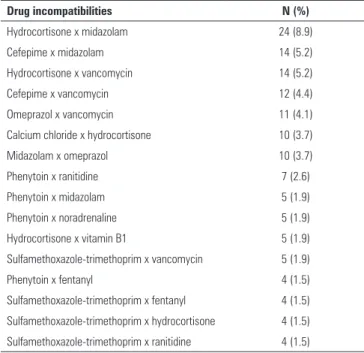
Table 2 - Drug incompatibilities most commonly found among the prescriptions analyzed
Drug incompatibilities N (%)
Hydrocortisone x midazolam 24 (8.9)
Cefepime x midazolam 14 (5.2)
Hydrocortisone x vancomycin 14 (5.2)
Cefepime x vancomycin 12 (4.4)
Omeprazol x vancomycin 11 (4.1)
Calcium chloride x hydrocortisone 10 (3.7)
Midazolam x omeprazol 10 (3.7)
Phenytoin x ranitidine 7 (2.6)
Phenytoin x midazolam 5 (1.9)
Phenytoin x noradrenaline 5 (1.9)
Hydrocortisone x vitamin B1 5 (1.9)
Sulfamethoxazole-trimethoprim x vancomycin 5 (1.9)
Phenytoin x fentanyl 4 (1.5)
Sulfamethoxazole-trimethoprim x fentanyl 4 (1.5)
Sulfamethoxazole-trimethoprim x hydrocortisone 4 (1.5)
Sulfamethoxazole-trimethoprim x ranitidine 4 (1.5)
incompatibilities identiied, 108 showed diferent drug combinations. A mean of 4.0 ± 3.3 incompatibilities per prescription were observed (mean calculated based on the 68 prescriptions with drug incompatibilities).
he most common incompatibilities occurred between midazolam and hydrocortisone (8.9%), between cefepime and midazolam (5.2%), and between hydrocortisone and vancomycin (5.2%). Table 2 shows the incompatibilities most commonly found in the prescriptions analyzed.
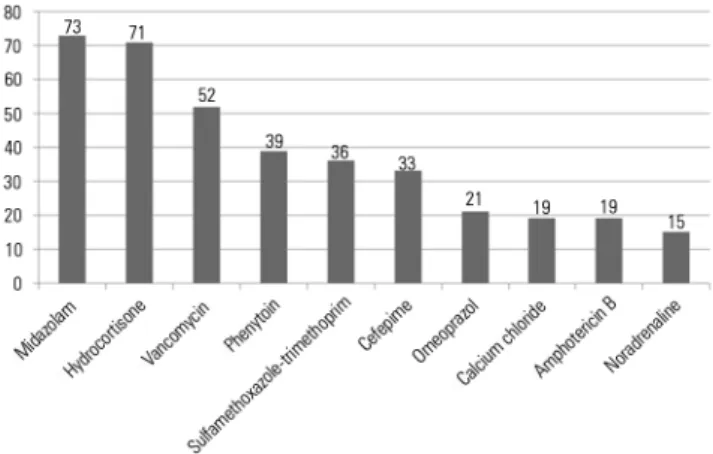
Figure 1 - Frequency of drugs most commonly involved in the incompatibilities identified within the prescriptions analyzed.
Figure 2 - Type of intravenous drug administration involved in incompatibilities.
Table 3 - Adherence to guidelines by the nursing staff
Answers N (%)
Full adherence to guidelines 45 (66.2)
Incomplete adherence to guidelines 15 (22.0)
Non-adherence to guidelines 0
Not applicable 8 (11.8)
Total 68 (100)
he analysis of the type of intravenous administration (continuous or intermittent infusion) showed that incompatibilities most commonly occurred between one drug administered via continuous infusion and another via intermittent infusion (50%). he other routes of administrations and the frequency rates of the drug incompatibilities are shown in igure 2.
Of the total prescriptions analyzed, 68 pharmaceutical interventions were conducted by establishing guidelines for the preparation and administration of incompatible and untested drugs using a standardized form. Adherence to those guidelines is outlined in table 3.
DISCUSSION
In this study, incompatibilities were found in 68% of the prescriptions analyzed. his result is lower than the value observed in Moraes et al.(11) who studied the adult ICU population of the HCPA and found incompatibilities in 78.5% of the prescriptions analyzed. Although a decreased prevalence of incompatibilities was found in the present study, this rate nevertheless remains high. he frequency of prescriptions with incompatibilities identiied in this unit might be related to the numerous drugs prescribed to critically ill patients that are necessary given the complexity of their clinical conditions. he incidence of drug interactions increases exponentially with the number of drugs prescribed. A frequency ranging from 3% to 5% is estimated for patients who receive up to six drugs simultaneously, increasing to 20% among patients who receive ten drugs and reaches 45% among patients who receive 10 to 20 drugs.(12,13) hus, our study sample might be considered at high risk for the occurrence of drug interactions, especially drug incompatibilities, because a mean of 10.2 drugs were observed per prescription, most of which were intravenous drugs.
Our results regarding the number of incompatible combinations observed in this study (14.6%) are similar
to those of Vogel Kahmann et al.(14) who analyzed 78
diferent drugs and found that 15% of the combinations tested exhibited drug incompatibility reactions. Bertsche et al.(15) and Gikic et al.(16) found incompatibility rates of 7.2% and 3.4%, respectively, and the present study found a high prevalence of incompatibilities. he factors that might explain these diferences in prevalence include the diversity of morbidity proiles among the samples that might change the drug therapy proile to be used and, consequently, the frequency of drug incompatibilities.
has limitations. Databases, because of their periodic updating and inclusion of new stability and compatibility tests, are extensively used, although doubts have been raised about pairwise drug combinations that are untested or depend on infusion concentrations.(17)
Regarding the combinations of drugs most commonly involved in incompatibilities, the drug-use proile has
changed over time. Moraes et al.(11) found that the
most common drug incompatibility occurred between piperacillin-tazobactam and midazolam. In this study, one of the most common drug incompatibilities occurred between midazolam and cefepime, and piperacillin-tazobactam was not recorded in any incompatibility identiied. his between-study diference might be related to the fact that piperacillin-tazobactam was used less often at the study hospital, primarily because of cost-related drug-use restrictions, and was replaced by other antimicrobial drugs, including cefepime. his drug has a spectrum similar to piperacillin-tazobactam, but it is less expensive.
In this study, midazolam was the drug most commonly involved in incompatibilities, followed by hydrocortisone and then vancomycin. he high frequencies of these drugs in incompatibilities might be relative because they are widely used in the ICU and are therefore present in numerous prescriptions. he incompatibilities involving these drugs might be critical because they afect vital drugs such as sedatives, steroids, and antimicrobials.
Midazolam is widely used in the ICU as the irst-choice drug for the continuous sedation of patients subjected to invasive procedures.(18) his drug requires increased caution in its preparation and administration because it is commonly associated with serious adverse events.(19)
Corticosteroids have been used for more than 60 years as adjunctive treatments of infections to mitigate local
and systemic inlammatory responses.(20) hese drugs
are commonly used among critically ill patients, and a signiicant number of studies have demonstrated the beneits of using corticosteroids for patients in septic shock because they are associated with initial shock reversal, the mitigation of systemic inlammatory response indicators, and signiicant decreases in mortality.(21,22)
ICU patients receive injections and commonly require antimicrobial therapy. Approximately 20% to 40% of patients are estimated to receive antimicrobials to treat and prevent infections during hospitalization. he precipitation, inactivation, and change in stability caused by other drugs can reduce drug eicacy, leading to a low
therapeutic index that is detrimental to antimicrobial therapy.(23)
Importantly, incompatibilities are strongly related to medication errors, which are key safety factors in patient care. Tissot et al.(24) reported that drug incompatibilities account for 14.3% of all ICU medication errors, and Taxis and Barber(25) demonstrated that drug incompatibilities are common in the ICU, possibly contributing to an up-to-25% increase in the rate of medication errors. Because medication errors are considered preventable adverse events, the multidisciplinary team accompanying the patient should participate in the drug therapy chain, from prescription to administration, to optimize
pharmacotherapy and prevent such errors.(26) As a team
member, the clinical pharmacist should analyze the prescriptions and identify the problems that might afect the drug treatment, such as drug incompatibilities.
In this study, pharmaceutical interventions were conducted in all instances where prescriptions with drug incompatibilities were found via guidelines provided to the nursing staf regarding the preparation and administration of incompatible drugs. Several studies have already demonstrated a signiicant decrease in the number of adverse events caused by medication errors at institutions where pharmacists conduct medical staf interventions, especially in ICUs. Interventions decrease hospitalization costs and increase quality of patient care because they decrease the number of adverse events.(27,28)
A study conducted at an ICU in New York compared the number of drug interactions with and without the participation of the pharmacist in a review of the medical charts and prescriptions of hospitalized patients. hat study demonstrated that having an on-call pharmacist led to a 65% decrease in the number of drug interactions, showing that improved identiication and a lower number of signiicant drug interactions among ICU patients were possible because the pharmacist was involved, and the patients were evaluated daily.(29)
By performing a pharmaceutical intervention in the form of guidelines, the pharmacy department contributed to patient safety and promoted the increased integration of the pharmacist into the multidisciplinary team.
One limitation of this study is that it was conducted at an ICU, which has a speciic morbidity proile more commonly associated with drug use that might prevent the generalization of our results to other populations. he analysis of incompatibilities involving the combination of only two drugs is another limitation of this study. However, the available data on the incompatibilities that might result by combining a greater number of drugs remain sparse, which would have prevented us from performing this study.
CONCLUSIONS
Adults admitted to intensive care units are subjected to a high rate of drug incompatibilities that might be related to the numerous intravenous drugs prescribed. Importantly, a signiicant number of untested drug combinations still exists, highlighting the need for additional studies on this subject to provide increased safety regarding intravenous drug administration.
A pharmaceutical intervention enabled the prevention and reduction of drug incompatibilities, thereby increasing treatment eicacy and avoiding potential medication errors.
Objetivos: Identiicar as incompatibilidades físico-químicas entre medicamentos administrados por via intravenosa em pacientes internados em um centro de tratamento intensivo adulto, bem como realizar orientações farmacêuticas para a administração de medicamentos incompatíveis.
Métodos: Estudo transversal, prospectivo, de caráter quanti-tativo, realizado no período de julho a setembro de 2015. As in-compatibilidades foram identiicadas a partir da análise das pres-crições dos pacientes disponíveis no sistema on-line do hospital. Foi realizada uma intervenção farmacêutica por meio de orienta-ções quanto à preparação e à administração dos medicamentos incompatíveis. Após, veriicou-se a adesão dessas orientações por parte da equipe da enfermagem.
Resultados: Foram analisadas 100 prescrições; destas, 68 apresentaram incompatibilidade entre os medicamentos intra-venosos prescritos. Foram encontradas 271 incompatibilidades, com média de 4,0 ± 3,3 incompatibilidades por prescrição. As
incompatibilidades mais frequentes foram entre midazolam e hidrocortisona (8,9%), cefepime e midazolam (5,2%) e hi-drocortisona e vancomicina (5,2%). Os medicamentos mais envolvidos em incompatibilidades foram o midazolam, a hidro-cortisona e a vancomicina. As incompatibilidades foram mais frequentes entre um medicamento administrado por infusão contínua com outro de forma intermitente (50%). Das 68 pres-crições que geraram orientação farmacêutica, 45 (66,2%) foram totalmente realizadas pela equipe de enfermagem.
Conclusão: Os pacientes em cuidados intensivos estiveram sujeitos a uma elevada ocorrência de incompatibilidades. As incompatibilidades medicamentosas podem ser identiicadas e evitadas com a presença do farmacêutico na equipe multidisciplinar, diminuindo a ocorrência de efeitos indesejáveis ao paciente.
RESUMO
Descritores: Incompatibilidade de medicamentos; Admi-nistração intravenosa; Cuidados críticos; Assistência farmacêuti-ca; Unidades de terapia intensiva
REFERENCES
1. Secoli SR, Pérez-Esquirol E, de Las Heras-Matellán MJ, Vendrell-Bosh L, Ballarín-Alins E. [Incompatibilities in intravenous therapy: What can be done to prevent them?]. Enferm Clin. 2009;19(6):349-53. Spanish. 2. Trissel LA. Handbook on injectable drugs. 17th ed. Maryland: American
Society of Health- System Pharmacists; 2013.
3. Kanji S, Lam J, Johanson C, Singh A, Goddard R, Fairbairn J, et al. Systematic review of physical and chemical compatibility of commonly used medications administered by continuous infusion in intensive care units. Crit Care Med. 2010;38(9):1890-8.
4. Tatro DS. Drug interaction facts: the authority on drug interactions. St. Louis: Facts and Comparisons; 2006.
5. Bentley J, Heard J, Collins G, Chung C. Mixing medicines: how to ensure patient safety. Pharmac J. 2015;294(7859).
6. Newton D. Drug incompatibility chemistry. Am J Health Syst Pharm. 2009;66(4):348-57. Erratum in Am J Health Syst Pharm. 2009;66(16):1431. 7. Brett AS. Computerized alerts can influence drug prescribing. J W Gen
Med [Internet]. Sep 3 2009 [cited 20016 May 4]. Available from: http:// www.jwatch.org/jw200909030000001/2009/09/03/computerized-alerts-can-influence-drug
8. Fortuna RJ, Zhang F, Ross-Degnan D, Campion FX, Finkelstein JA, Kotch JB, et al. Reducing the prescribing of heavily marketed medications: a randomized controlled trial. J Gen Intern Med. 2009;24(8):897-903. 9. Perez M, Décaudin B, Foinard A, Barthélémy C, Debaene B, Lebuffe G, et
al. Compatibility of medications during multi-infusion therapy: a controlled in vitro study on a multilumen infusion device. Anaesth Crit Care Pain Med. 2015;34(2):83-8.
11. Moraes C, Silva D, Bueno D. Análise de incompatibilidades de medicamentos intravenosos no Centro de Tratamento Intensivo Adulto do Hospital de Clínicas de Porto Alegre. Rev HCPA. 2011;31(1):31-8. 12. Goldstein JN, Jaradeh IE, Jhwar P, Stair T. ED drug-drug interactions:
frequency & type, potencial & actual, triage & discharge. Internet J Emerg Intensive Care Med. 2004;8(2).
13. Lima RE, Cassiani SH. Potential drug interactions in intensive care patients at a teaching hospital. Rev Lat Am Enfermagem. 2009;17(2):222-7. 14. Vogel Kahmann I, Bürki R, Denzler U, Höfler A, Schmid B, Splisgardt
H. [Incompatibility reactions in the intensive care unit. Five years after the implementation of a simple “colour code system”]. Anaesthesist.2003;52(5):409-12. German.
15. Bertsche T, Mayer Y, Stahl R, Hoppe-Tichy T, Encke J, Haefeli WE. Prevention of intravenous drug incompatibilities in an intensive care unit. Am J Health Syst Pharm. 2008;65(19):1834-40.
16. Gikic M, Di Paolo ER, Pannatier A, Cotting J. Evaluation of physicochemical incompatibilities during parenteral drug administration in a paediatric intensive care unit. Pharm World Sci. 2000;22(3):88-91.
17. Santos L, Martinbiancho J, Tadiotto AL, Kreutz LM. Perfil das interações medicamentosas solicitadas ao centro de informações sobre medicamentos de hospital universitário. Rev HCPA. 2011;31(3):326-35. 18. Mirski Ma, Lewin JJ. Sedation and pain management in the ICU. In: Vicent
JL, editors. Yearbook of intensive care and emergency medicine. Germany: Springer; 2009. p. 881-905.
19. Institute for Safe Medication Practices (ISMP). ISMP List of High-Alert Medications in Acute Care Settings. 2014. [Internet]. [cited 2015 Oct 25]. Available in https://www.ismp.org/tools/highalertmedications.pdf 20. Aberdein J, Singer M. Clinical review: a systematic review of corticosteroid
use in infections. Crit Care. 2006;10(1):203.
21. Sligl WI, Milner DA Jr, Sundar S, Mphatswe W, Majumdar SR. Safety and efficacy of corticosteroids for the treatment of septic shock: a systematic review and meta-analysis. Clin Infect Dis.2009;49(1):93-101.
22. Sprung CL, Annane D, Keh D, Moreno R, Singer M, Freivogel K, Weiss YG, Benbenishty J, Kalenka A, Forst H, Laterre PF, Reinhart K, Cuthbertson BH, Payen D, Briegel J; CORTICUS Study Group. Hydrocortisone therapy for patients with septic shock. N Engl J Med. 2008;358(2):111-24.
23. Jacoby TS. Associação entre consumo de antimicrobianos e multirresistência em centro de terapia intensiva de hospital universitário brasileiro, 2004-2006 [dissertação]. Porto Alegre: Faculdade de Medicina da Universidade Federal do Rio Grande do Sul; 2008.
24. Tissot E, Cornette C, Demoly P, Jacquet M, Barale F, Capellier G. Medication errors at the administration stage in an intensive care unit. Intensive Care Med. 1999;25(4):353-9.
25. Taxis K, Barber N. Causes of intravenous medication errors: an ethnographic study. Qual Saf Health Care. 2003;12(5):343-7.
26. Nunes PH, Pereira BM, Nonimato JC, Albuquerque EM, Silva LF, Castro IR, et al. Intervenção farmacêutica e prevenção de eventos adversos. Rev Bras Ciênc Farm. 2008;44(4):691-9.
27. Rothschild JM, Churchill W, Erickson A, Munz K, Schuur JD, Salzberg CA, et al. Medication errors recovered by emergency department pharmacists. Ann Emerg Med. 2010;55(6):513-21.
28. Klopotowska JE, Kuiper R, van Kan HJ, de Pont AC, Dijkgraaf MG, Lie-A-Huen L, et al. On-ward participation of a hospital pharmacist in a Dutch intensive care unit reduces prescribing errors and related patient harm: an intervention study. Crit Care. 2010;14(5):R174.