CLINICAL SCIENCE
Apolipoprotein E4 influences growth and cognitive
responses to micronutrient supplementation in
shantytown children from northeast Brazil
Sumeet S. Mitter,I Reinaldo B. Oria´,II,IIIMichelle P. Kvalsund,IVPaula Pamplona,IIEmanuella Silva
Joventino,VIIRosa M. S. Mota,II,VDavi C. Gonc¸alves,IIPeter D. Patrick,VIRichard L. Guerrant,II,VIAldo A. M. LimaII,VI
IMount Sinai School of Medicine, Department of Medicine, New York, NY, USA.IIUniversidade Federal do Ceara´, Faculdade de Medicina, Institute of
Biomedicine of the Semiarid, Department of Physiology and Pharmacology, Fortaleza, CE, Brazil.IIIUniversidade Federal do Ceara´, Faculdade de Medicina, Department of Morphology, Fortaleza, CE, Brazil. IVVanderbilt University School of Medicine, Department of Neurology, Nashville, TN, USA. VUniversidade Federal do Ceara´, Department of Statistics, Fortaleza, CE, Brazil.VIUniversity of Virginia, Center for Global Health, Charlottesville, VA, USA. VIIUniversidade Federal do Ceara´, Faculdade de Enfermagem, Fortaleza, CE, Brazil.
OBJECTIVE: Apolipoprotein E4 may benefit children during early periods of life when the body is challenged by infection and nutritional decline. We examined whether apolipoprotein E4 affects intestinal barrier function, thereby improving short-term growth and long-term cognitive outcomes in Brazilian shantytown children.
METHODS:A total of 213 Brazilian shantytown children with below-median height-for-age z-scores (HAZ) received 200,000 IU of retinol (every four months), zinc (40 mg twice weekly), or both for one year, with half of each group receiving glutamine supplementation for 10 days. Height-for-age z-scores, age z-scores, weight-for-height z-scores, and lactulose:mannitol ratios were assessed during the initial four months of treatment. An average of four years (range 1.4-6.6) later, the children underwent cognitive testing to evaluate non-verbal intelligence, coding, verbal fluency, verbal learning, and delayed verbal learning. Apolipoprotein E4 carriage was determined by PCR analysis for 144 children.
RESULTS:Thirty-seven children were apolipoprotein E4(+), with an allele frequency of 13.9%. Significant associations
were found for vitamin A and glutamine with intestinal barrier function. Apolipoprotein E4(+) children receiving
glutamine presented significant positive Pearson correlations between the change in height-for-age z-scores over four months and delayed verbal learning, along with correlated changes over the same period in weight-for-age z-scores and weight-for-height z-scores associated with non-verbal intelligence quotients. There was a significant correlation between vitamin A supplementation of apolipoprotein E4(+) children and improved delta lactulose/mannitol.
Apolipoprotein E4(-) children, regardless of intervention, exhibited negative Pearson correlations between the change in lactulose-to-mannitol ratio over four months and verbal learning and non-verbal intelligence.
CONCLUSIONS:During development, apolipoprotein E4 may function concomitantly with gut-tropic nutrients to benefit immediate nutritional status, which can translate into better long-term cognitive outcomes.
KEYWORDS: APOE4; Malnutrition; Cognitive Outcomes; Intestinal Permeability; Glutamine.
Mitter SS, Oria´ RB, Kvalsund MP, Pamplona P, Joventino ES, Mota RMS, et al. Apolipoprotein E4 influences growth and cognitive responses to micronutrient supplementation in shantytown children from northeast Brazil. Clinics. 2012;67(1):11-18.
Received for publication onAugust 25, 2011;First review completed onSeptember 12, 2011;Accepted for publication onSeptember 12, 2011
E-mail: [email protected] Tel.: 55 85 3366-8239
INTRODUCTION
Shantytown children living in crowded households, raised in low-income families and exposed to poor hygiene
are at particular risk of malnutrition and enteric disease early in life. The vicious cycle of diarrhea and malnutrition may even occur without overt diarrhea due to various degrees of small intestinal barrier dysfunction and poor nutrient absorption (1,2).
Childhood malnutrition associated with subclinical/clin-ical enteric illnesses, including diarrheal disease, can be potentially devastating by causing deleterious long-term effects on development (2,3), stunting, wasting, impaired cognition, and poorer school performance (4,8). It is estimated that malnutrition in children below the age of five accounts for 11% of global total disability-adjusted life
Copyrightß2012CLINICS– This is an Open Access article distributed under
the terms of the Creative Commons Attribution Non-Commercial License (http:// creativecommons.org/licenses/by-nc/3.0/) which permits unrestricted non-commercial use, distribution, and reproduction in any medium, provided the original work is properly cited.
years (DALYs) (9), and the combined direct and indirect effects of malnutrition and micronutrient deficiencies account for roughly one-third of the disease burden in developing countries (10). Management of malnutrition includes implementing dietary changes, improving hygiene, and eliminating enteric infections. However, host genetics should also be investigated to understand differential outcomes arising from the treatment of malnutrition and diarrheal disease early in life.
Apolipoprotein E (ApoE) is a critical carrier protein involved in lipid homeostasis. ApoE carries cholesterol from somatic cells to the liver for metabolization (11). The human APOE gene has three alleles at its locus on chromosome 19: APOE2; APOE3, the most frequent allele; and APOE4, which is often associated with atherosclerosis and late-onset Alzheimer’s disease (11,12). Despite these potential later-life APOE-associated problems, this gene may obey the princi-ple of antagonistic princi-pleiotropy, such that despite potentially detrimental effects later in life, certain polymorphisms may actually be beneficial during critical periods of development when the body faces infection and nutritional decline (13,14). For this reason, more attention is now being paid to APOE polymorphisms and their varied effects on growth and cognitive outcomes during childhood (15,16).
When considering management of the cycle of malnutri-tion and enteric illness and the associated long-term effects, the question remains as to whether host genetics plays a role in Brazilian shantytown children receiving micronutrient supplementation in an endemic area for under-nutrition and enteric infections. We therefore sought to determine whether APOE genotype affects short-term growth and nutritional gains associated with glutamine, zinc, and/or vitamin A supplementation. In addition, we investigated how various forms of nutritional supplementation may affect APOE4 carriers living in a setting where there is endemic diarrhea and malnutrition with particular consideration of long-term cognitive outcomes and how such information correlates with lactulose-mannitol urinary excretion, a well-known marker of intestinal barrier function.
MATERIALS AND METHODS
Ethics. The study protocol and informed consent forms were approved by the institutional review boards of the Federal University of Ceara´ and the University of Virginia. In addition, the protocol and consent were registered as part of clinical trial NCT00133406 with the National Institutes of Health.
Population. The study population was located in the Parque Universita´rio community (3
˚
44958.270 south and 38˚
34930.800 west) of Fortaleza, Ceara´ in northeast Brazil, 5 km from the Clinical Research Unit and Institute of Biomedicine/Center for Global Health (www.upcibimed. ufc.br) laboratories in Fortaleza. Fortaleza has an estimated population of 2.6 million inhabitants and an infant mortality rate of 35 deaths per 1,000 live births. A 1998 census of Parque Universita´rio indicated that it contained a total population of 3,541 inhabitants, of which 957 (27%) were children under the age of nine. The parents or guardians of children were invited to participate in the study after informed consent was obtained.Study Design, Eligibility, and Exclusion Criteria for Enrollment of Subjects. This study is part of a prospec-tive, randomized trial (phase III) involving micronutrient
supplementation of undernourished children. The following eligibility criteria were used for enrollment of subjects: children from two months to nine years of age with a height-for-age z-score (HAZ) less than the median (–0.06) residing in the Parque Universita´rio community for whom parental or guardian consent was obtained. Children were excluded if they had been participants in any study in the past two years or were ill with a fever .38
˚
C at the time of enrollment.Nutritional Interventions and Surveillance. Two-hundred thirteen children were randomized with respect to receiving vitamin A (100,000 IU retinyl palmitate if,12 months old or 200,000 IU retinyl palmitate if$12 months old every four months), zinc (40 mg twice weekly), or both for 1 year, with half of each group receiving glutamine (16 g daily). Trained health care agents administered all of the micronutrients.
A field team comprised of a local nurse and three health care agents performed anthropometric measurements every month in the first four months of nutritional supplementa-tion. Height and length were measured with the child in the supine position for children less than two years old and in the standing position for children two years of age and older to the nearest 0.1 cm using a measuring board. HAZ, weight-for-age scores (WAZ), and weight-for-height z-scores (WHZ) were calculated using the anthropometric software Epi-Info (Center for Disease Control, Atlanta, GA, USA) as markers of physical development and nutritional status.
The field team also performed intestinal permeability testing using a previously described method (17,18). For testing during the initial four months of supplementation, fasted children ingested (2 mL/kg of weight, maximum 20 mL) standard solutions containing lactulose (250 mg/ mL; Lactulona, Luitpold Produtos Farmaceˆuticos Ltda, Sa˜o Paulo, SP, Brazil) and mannitol (50 mg/mL; Manitol, Henri Farma Produtos Quı´micos e Farmaceˆuticos Ltda, Sa˜o Paulo, SP, Brazil). Ingestion was followed by collection of urine 5 hours thereafter using flasks containing 50mL of chlorhexidine (40 mg/mL; Sigma Chemical St Louis, MO, USA) per 50 mL of urine. Lactulose and mannitol concentrations were determined by HPLC (high-perfor-mance liquid chromatography) using pulsed ampero-metric detection (18), and the integration and quantification of isolated peaks in the chromatograms were completed using Peak Net software (Dionex, Sunnyvale, CA, USA). The final percentage of excreted urinary sugars was calculated using Excel (Microsoft, Redmond, WA, USA). The result of the lactulose:mannitol permeability test was considered abnormal (positive) during comparison if the lactulose-to-mannitol ratio (L/ M) was $0.0864 (based on a previous calculation of a normal mean plus two standard deviations) (18).
Blood Collection and DNA Extraction. Blood was obtained from 144 (67.6%) children from the original study population. DNA was then extracted from the blood samples using the QIAamp DNA Blood Mini Kit (Qiagen, Germantown, MD, USA) following the manufacturer’s suggested protocol.
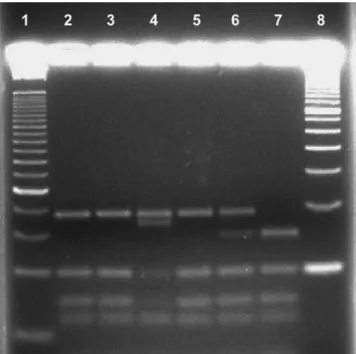
APOE Genotyping. The experimental protocol for APOE genotyping involved amplification of APOE sequences from genomic DNA followed by digestion with the HhaI restriction enzyme (19). A 270-bp DNA sequence from the blood samples was amplified by PCR in a thermal cycler using the oligo-nucleotide primers 59 -GCACGGCTGTC-CAAGGAGCTGCAGGC-39 and 59 -GGCGCTCGCGGATG-GCG CTGAG-39as first described by Addya et al. (20). PCR Master Mix and GoTaq Green polymerase were obtained from Promega Corporation (Fitchburg, WI, USA). Each amplification reaction contained 2.5ml of blood DNA, 2.5ml of each primer, and 10% DMSO in a final volume of 50ml. The PCR conditions included an initial 95
˚
C 5-minute cycle followed by 40 cycles of 95˚
C for 15 seconds, 62˚
C for 15 seconds, and 72˚
C for 45 seconds before a final extension at 72˚
C for 4 minutes and holding at 4˚
C. Following PCR amplification, 15ml of each amplified PCR product was electrophoresed in a 2% Ultrapure agarose gel (Invitrogen, Carlsbad, CA, USA) in 1x Tris-acetate-EDTA (TAE) buffer. The gels were then washed in an ethidium bromide solution for 15 minutes and visualized under UV illumination to confirm the presence of a 270-bp amplification product. A restriction digest using 1ml of HhaI (New England Biolabs, Ipswich, MA, USA) and 20ml of confirmed amplified PCR products was conducted in a thermal cycler at 37˚
C for 3 hours. Each reaction mixture was loaded into a 4% agarose gel (3% NuSieve GTG, Cambrex Corporation, East Rutherford, NJ, USA+1% Ultrapure) in 0.5x TBE solution and electrophoresed for 1 hour under constant voltage (100 V). The electrophoresed gels containing the digested DNA products were then washed in an ethidium bromide solution for 30-45 minutes and visualized under UV illumination. The sizes of the HhaI-digested fragments were estimated by comparison with known DNA ladders for determination of APOE genotypes. Ambiguous APOE genotypes were reanalyzed by repetition of the previously described protocol.Statistical Analysis. All data were analyzed using the SPSS statistical software package (SPSS, Inc., Chicago, IL, USA). Allelic frequencies were determined by counting the different alleles present based on RFLP (restriction fragment length polymorphism) analysis and calculating their pro-portions. The demographic characteristics of the participants were described in terms of rates and percentages. Subgroups for statistical analysis were assigned based on nutritional intervention. All children receiving vitamin A, all children receiving zinc, and all children receiving glutamine were pooled to increase the number of individuals in each subgroup and to increase the power of the analysis. Analyses of contingency tables were conducted to investigate categorical variables based on the nutritional intervention applied using the Fisher’s exact test. We determined Pearson linear correlation coefficients for the nutrient subgroups stratified by APOE4 carriage to assess the association between the change in anthropometric and/or intestinal permeability indicators during the initial 4 months of supplementation and the battery of cognitive tests performed years later. A
p#0.05 was considered to be statistically significant.
RESULTS
To assess how the presence of the APOE4 allele influences anthropometric outcomes, intestinal permeability and cog-nitive outcomes following early nutritional intervention, we performed APOE genotyping (Figure 1) of Brazilian shanty-town children living in a diarrheal disease and malnutrition endemic area who manifested various degrees of intestinal barrier dysfunction and under-nutrition, which were con-firmed by high L/M ratios and low anthropometric markers at baseline, respectively. Overall, the frequency of the APOE3 allele in our study group was found to be similar to frequencies commonly found in the literature (82.29% vs. 79%), while the frequency of the APOE2 allele was lower than what is normally reported (3.82% vs. 7.3%) (21). The frequency of the APOE4 allele was consistent with frequencies reported in other populations (13.9%) (21), while the allele was present in 37 of the children tested (25.7% of the analyzed population) (Table 1). Demographic data describing the study population, including sex, birth weight, age at enrollment, age at cognitive testing, maternal education and household income, and crowding, were assessed and segregated based on the presence of the APOE4 allele (Table 2). We expected that breastfeeding would not be an issue as a prospective confounder for the cognitive tests as the mean ages at enrollment and cognitive testing of APOE4-positive children were 51.13 months and 103.2 months, respectively, while for APOE4-negative children, they were 55.47 months and 106.1 months, respectively, which are ages when the children would be fully weaned, given the short duration of breastfeeding in northeastern Brazil (average 65 days) (22). The proportion of males was 59.5% and 44.9% for the APOE4-positive and APOE4-negative groups, respectively. No statistically
significant differences were found for any of the aforemen-tioned demographic parameters between the APOE4-posi-tive and APOE4-negaAPOE4-posi-tive groups. The z-scores (Table 2) for height (to evaluate stunting), weight and WHZ (wasting) were not significantly different between the APOE4-positive and APOE4-negative groups at baseline. Abnormal L/M ratios$0.0864, as defined by Barboza et al. (18), were found in 37.9% and 40.1% of the positive and APOE4-negative populations at baseline, respectively (Table 2), which were also not statistically significantly different. After four months of nutritional intervention, the change in L/M from baseline in all of the supplement subgroups showed mean improvements (decrease) of -0.004, -0.159, and -0.124 for APOE4-positive children receiving glutamine, zinc, and vitamin A, respectively, and of -0.032, -0.046, and -0.043 for APOE4-negative children receiving glutamine, zinc, and vitamin A, respectively. No direct benefit or detriment of the APOE4 allele with respect to cognitive function among the supplement subgroups after the initial four months of intervention could be detected in the analyzed data (p.0.05).
To evaluate the benefits of the applied nutritional interventions for intestinal barrier function and, conse-quently, improved growth, we conducted Pearson correla-tion analyses of the changes in the L/M ratio and the anthropometric parameters from baseline to four months of nutritional supplementation. By analyzing each nutrient arm group, we found significant improvements in amelior-ating delta WAZ and WHZ scores in association with vitamin A and glutamine (Table 3).
After stratifying the pooled supplementation groups based on the presence of the APOE4 allele, we found a significant effect associated with carrying APOE4 and better delta L/M ratios only related to vitamin A supplementation and not for the hydrophilic glutamine and zinc interven-tions, suggesting an interaction of ApoE and liposoluble vitamin A in ameliorating intestinal barrier function (Table 4).
Pearson correlation analysis was also performed to analyze the effects of genetics and the type of micronutrient supplementation on changes in anthropometric indicators after the initial four months of the intervention and long-term cognitive outcomes. Only the children in the glutamine supplementation arm who were APOE4 positive exhibited
significant correlations between short-term anthropometric gains and long-term cognitive outcomes. Improvements in HAZ were correlated with higher WRAML-delayed verbal learning scores (r= 0.477,p= 0.029,n= 21), while
improve-ments in WAZ and WHZ were correlated with better TONI-3-IQ scores (r= 0.470,p= 0.032,n= 21 andr= 0.502,p= 0.020, n= 21, respectively) (Figure 2).
There was a noteworthy trend of improved intestinal permeability after four months of micronutrient supple-mentation as well as improved WRAML-verbal learning and TONI-3-IQ scores for APOE4-negative children in each micronutrient arm of the study, but these associations never quite reached statistical significance (Table 5). In the glutamine arm of the trial, the change in L/M over the four months of the study was negatively correlated with WRAML-verbal learning and TONI-3-IQ scores (r= -0.295, p= 0.076,n= 37 andr= -0.305,p= 0.066,n= 37, respectively)
among APOE4 non-carriers. Similarly in the zinc arm, the Pearson correlation coefficients between L/M and WRAML-verbal learning and TONI-3-IQ were r= -0.431 (p= 0.008, n= 37) and r= -0.428 (p= 0.008, n= 37), respectively, while
for vitamin A, the Pearson correlation coefficients werer=
-0.425 (p= 0.012, n= 34) and r= -0.332 (p= 0.055, n =34),
respectively. In addition in the vitamin A arm, a significant
Table 2 -Demographic and anthropometric data for the Parque Universita´rio study population at baseline segregated by APOE4 allele status.
Study Population
Characteristics APOE4(+) APOE4(-)
Sex
Female 15 (40.5%) 59 (55.1%)
Male 22 (59.5%) 48 (44.9%)
Birth weight (g) 3100¡484 (n = 36) 3143¡526 (n = 102) Mean age at enrollment (m) 51.13¡30.30
(n = 37)
55.47¡26.32 (n = 107) Mean age at cognitive
testing (m)
103.2¡29.00 (n = 37)
106.1¡24.42 (n = 107) Maternal education
Below primary school 26 (70.3%) 89 (83.2%) Primary school or above 9 (24.3%) 18 (16.8%)
Unknown 2 (5.4%) —
Monthly income* minimum salary
,2 25 (67.6%) 64 (59.8%)
$2 2 (5.4%) 15 (14.0%)
Unknown 10 (27.0%) 28 (26.2%)
Household crowding ($3 persons/room)
No 18 (48.6%) 45 (42.1%)
Yes 19 (51.4%) 61 (57.0%)
Unknown — 1 (0.9%)
HAZ**,-1
No 20 (54.1%) 60 (56.1%)
Yes 17 (45.9%) 47 (43.9%)
WAZ**,-1
No 22 (59.5%) 61 (57.0%)
Yes 15 (40.5%) 46 (43.0%)
WHZ**,-1
No 31 (83.8%) 85 (79.4%)
Yes 6 (16.2%) 22 (20.6%)
L/M**.0.0864
No 18 (62.1%) 55 (59.1%)
Yes 11 (37.9%) 38 (40.9%)
*1 minimum wage: US $102/month. **HAZ, WAZ, WHZ, L/M at study enrollment.
Table 1 -Genotypic and allelic distribution of APOE in the analyzed population of the Parque Universita´rio
community in Fortaleza, Ceara´, Brazil.
Genotype* Number Frequency (%)
e2e2 0 0.00
e2e3 10 6.94
e2e4 1 0.69
e3e3 97 67.36
e3e4 33 22.92
e4e4 3 2.06
Total 144 100
Allele* Number Frequency (%)
e2 11 3.82
e3 237 82.29
e4 40 13.89
Total 288 100
*
Pearson correlation ofr= -0.385 (p =0.025,n =34) was found
between L/M and WRAML-delayed verbal learning in APOE4 non-carriers. To confirm that this effect was not evident at baseline, prior to micronutrient supplementation, Pearson correlation coefficients were generated between L/ M at baseline and the battery of cognitive tests for the entire study population as well for populations segregated by APOE4 allele status. No trend or statistical significance was detected during these assessments.
DISCUSSION
The shantytown children addressed in this study pre-sented with varying nutritional backgrounds, with a high prevalence of undernourishment (HAZ, WAZ and/or WHZ
,-1) and intestinal barrier dysfunction at enrollment being detected by L/M assays, presumably suggesting underlying enteric illnesses early in life. The etiology of such diseases varies; however, roughly 40% of the children presented with an abnormal L/M at baseline, implying intestinal break-down as a result of clinical/subclinical enteric disease, which could contribute to poorer nutrition. Intermittent or continuous intestinal challenges caused by enteric disease with varying degrees of virulence can impair the body’s ability to absorb and utilize nutrients for physical as well as full brain development.
Previous studies by our group found beneficial roles for glutamine, zinc, and vitamin A in ameliorating the combined effects of malnutrition and heavy diarrhea burdens on physical growth and cognitive function (23,24). Host genetics may also play a critical role in determining the outcomes of malnutrition and enteric infections by affecting the degree of intestinal nutrient absorption and homeostasis, although these relationships are mostly unknown.
ApoE is primarily responsible for regulating cholesterol transport and metabolism in liver tissue and plasma (11,25). The brain is also a site of high ApoE expression (26,27). Investigations into the involvement of ApoE in the central nervous system (CNS) have notably found roles in traumatic brain injury and Alzheimer’s disease via immuno-inflammatory mediation (12,28). Functionally, ApoE may be involved in neuronal plasticity during CNS development. Evidence points to the ApoE-cholesterol complex operating as a critical glial factor in synaptogen-esis, which may also subsequently affect long-term synap-tic plassynap-ticity (29,30). Despite the associations found with neurodegenerative changes late in life, there is a lack of consensus regarding the effects of the APOE4 allele on cognitive function in children. While some studies in children report memory deficits among APOE4 carriers (31), other APOE4 genotyping studies in children are finding associations with better cognitive function (13,32), necessitating further work to determine APOE4’s role in pediatric populations.
Additionally, it has been suggested that APOE plays a role in intestinal development. Rat models indicate that there is an increase in ApoE mRNA in the liver at birth and during suckling in post-natal development. In response to a 10-hour fast, suckling rats also present an increase in liver ApoE mRNA, implying that hepatic APOE expression is subject to fluctuations in serum insulin and glucagon (33). Furthermore, ApoE may help establish the integrity of tight junctions in the intestinal lining, similar to its role at the blood-brain barrier (3,34).
In comparison to the most common APOE3 allele, the APOE4 allele is associated with less severe diarrheal outcomes, including those related to both stunting and wasting, as well as improved cognition in individuals with severe diarrheal disease (13,14), whereas possession of APOE2 is associated with poorer visuospatial skills during childhood (15). Additionally, the presence of APOE4 is associated with increased intestinal cholesterol absorption during development (35). Compared to populations of more agricultural societies, the prevalence of APOE4 is higher among communities at greater risk for starvation and with
Table 3- Pearson correlations between the change in the lactulose:mannitol (L/M) ratio (an intestinal permeability indicator) during the initial 4 months of nutritional supplementation andDHAZ* (t4-t0),DWAZ* (t4-t0) andDWHZ* (t4-t0) according to the experimental nutrition groups.
DL/M(t4-t0)
Gln Zn Vit. A Vit. A+Zn Zn+Gln Vit. A+Gln Vit. A+Zn+Gln
N r p-value N r p-value N r p-value N r p-value N r p-value N r p-value N r p-value
DHAZ 16 -0.005 0.986 11 -0.509 0.110 8 0.326 0.431 12 -0.333 0.291 13 0.305 0.310 15 0.061 0.829 9 0.013 0.974
DWAZ 16 0.277 0.299 11 0.071 0.836 8 0.494 0.213 12 -0.512 0.088 13 -0.411 0.164 15 -0.593 0.020 9 0.489 0.182
DWHZ 16 0.251 0.348 11 0.429 0.188 8 0.247 0.555 12 -0.383 0.219 13 -0.404 0.171 15 -0.554 0.032 9 0.268 0.485
*HAZ = height-for-age z-scores, WAZ = weight-for-age z-scores, WHZ = weight-for-height z-scores.
Gln = glutamine; Zn = zinc; Vit. A = vitamin A.
Table 4 -Pearson correlations between the change in the lactulose:mannitol (L/M) ratio (an intestinal permeability indicator) during the initial 4 months of nutritional supplementation andDHAZ* (t4-t0),DWAZ* (t4-t0) and DWHZ* (t4-t0) according to APOE4 genotyping.
DL/M(t4-t0)
APOE4(+) APOE4(-)
N r p-value N r p-value
Glutamine nHAZ 16 0.137 0.613 37 0.122 0.470
nWAZ 16 -0.132 0.625 37 -0.036 0.834
nWHZ 16 -0.134 0.622 37 -0.096 0.572
Zinc nHAZ 8 0.165 0.697 37 0.001 0.995
nWAZ 8 -0.583 0.130 37 -0.105 0.534
nWHZ 8 -0.460 0.251 37 -0.115 0.500 Vitamin A nHAZ 10 -0.014 0.970 34 -0.101 0.569
nWAZ 10 -0.654 0.040 34 0.260 0.137
nWHZ 10 -0.470 0.171 34 0.263 0.132
*HAZ = height-for-age z-scores, WAZ = weight-for-age z-scores,
WHZ = weight-for-height z-scores.
tenuous food supplies, suggesting that APOE4 may aid in lipid absorption (36). There may be a nutritional axis involved in these processes, such that an intact intestinal membrane allows for better nutrient absorption, which translates into better growth outcomes and better cognitive development. However, even among our study population, the frequency of APOE4 was in accordance with data from
our previous studies on the local communities in Fortaleza, Brazil as well as global estimates (16,21).
To date, there have been no studies that have addressed how allelic variations in APOE may work in concert with micronutrient supplementation and differentially affect growth and cognitive outcomes in under-nutritioned chil-dren. The results of the present study indicate that APOE4-positive children receiving glutamine supplementation in particular presented improved short-term gains in HAZ, WAZ and WHZ that were correlated with better performance in long-term cognitive testing.
Additionally, to our knowledge, no studies have been conducted associating APOE genotypes with lipid-soluble vitamin levels in the blood and micronutrient absorption in pediatric populations, which is important for shedding light on the effects of vitamin A in children. Interestingly, APOE4 carriers seem to be less prone to vitamin D-deficiency, as extrapolated from population-wide APOE4 geographical distributions (37). However, animal studies using APOE4 transgenic mice have found significantly lower alpha-toco-pherol levels in the lung compared to APOE3 controls (38).
In support of our findings, vitamin A serum levels were reported to be inversely correlated with the lactulose:man-nitol ratio in marginally undernourished children living in northeast Brazil (39). In addition, total intestinal parasite numbers were significantly lower in children supplemented with vitamin A (24). This vitamin has been found to enhance intestinal cell migration and proliferation in vitro (40), both of which could lead to improved intestinal barrier function. Interestingly, our findings suggest an important interac-tion between ApoE and vitamin A in improving intestinal barrier function. The mechanisms underlying this interac-tion remain unclear. However, mice lacking megalin (megalinlox/lox, apoECre), a type 1 membrane protein belonging to the low-density lipoprotein (LDL) receptor gene family, which is therefore an ApoE ligand, may play an essential role in systemic vitamin A homeostasis by enhancing retinol recycling in the kidney (41).
Similar to zinc and vitamin A, glutamine is a gut-tropic nutrient that could work in concert with the ApoE4 peptide to maintain intestinal integrity (23). Thus, improvement of anthropometric indicators in the short-run implies that APOE4-positive patients are, in fact, responsive to gluta-mine, especially in association with vitamin A, potentially leading to better long-term effects, as in the case of cognition. The data presented herein support this hypoth-esis in that there was no significant correlation found between growth gains and cognitive performance among APOE4-negative individuals receiving any kind of supple-mentation. We also found in murine models that glutamine supplementation early in life was beneficial for hippocam-pal plasticity following clustered litter size-induced under-nutrition, while it did not affect growth itself (23). The combined effect of APOE4 and glutamine regarding ameliorating delayed verbal learning and verbal recall effects may be a result of increased activity in the prefrontal cortex and parietal lobes, as confirmed by other studies associating neuroimaging with verbal learning and the effects of APOE4 on working memory (42-44). From these analyses, it appears that APOE4 may work synergistically with glutamine in improving physical and brain develop-ment in a setting where there is highly prevalent intestinal dysfunction at baseline. These findings reinforce the hypothesis that ApoE4 is especially beneficial when a
Figure 2 -Scatter plots indicating significant positive Pearson correlations between the changes in anthropometric indicators over 4 months and cognitive testing in the APOE4(+) population
receiving glutamine supplementation: (A) DHAZ* (t4-t0) vs.
WRAML-delayed verbal learning (n= 21); (B) DWAZ* (t4-t0) vs.
TONI-3-IQ (n= 21); and(C)DWHZ* (t4-t0) vs. TONI-3-IQ (n= 21).
pathological stressor is present, such as an enteric infection, as seen in earlier cohort studies in shantytown children with heavier diarrheal burdens (3,14). Extra vigilance may be required in supplying APOE4-negative children with critical nutrients to combat the effects of malnutrition and enteric disease. This is shown by the data indicating benefits across supplementation arms among APOE4 non-carriers between improved intestinal barrier function (lower L/M ratios) and better verbal learning and IQ scores. It is possible that improved intestinal integrity indicates less intestinal inflammation from enteric diseases and better absorption of nutrients that support adequate brain development.
We acknowledge that this is an exploratory study limited by insufficient breastfeeding data, which is a potentially confounding factor with respect to the cognitive outcomes observed in the shantytown children in this study. However, breastfeeding has historically not been found to be a significant confounder in research on this study population, as breastfeeding rates have mostly been homo-genous in these limited study settings (14,16,22,45). We realize that our findings are limited by the sample size used, as it necessitated pooled statistical analyses of APOE-genotyped children receiving glutamine, zinc, or vitamin A. As a result of using pooled data for each supplementa-tion arm analysis, the mixed and nutrient-to-nutrient biological relationships may have masked the effects of individual nutrients associated with the various APOE backgrounds. The small study population also prevented us from performing statistical analysis of the placebo group. Further studies are needed with larger numbers of participants and longer follow-up times to confirm the association of APOE4 and cognitive development in children with improved intestinal barrier function.
A strength of this study is that it is the first study associating APOE genotypes, long-term cognitive outcomes, and intestinal barrier function in children, most of whom
were living in a setting endemic for diarrheal diseases and malnutrition. Due to these factors, we find our results to be sufficiently significant to guide future clinical and pre-clinical research on the direct effects of APOE4 on childhood development and how such activity reflects an individual’s enteric absorptive function, affecting cognitive outcomes.
We have documented a potentially beneficial synergistic relationship between an APOE4 background and glutamine in improving growth and cognitive outcomes in Brazilian shantytown children presenting various degrees of malnu-trition and intestinal barrier dysfunction. We also high-lighted a particularly important aspect of the brain-gut axis, where nutritional supplementation is vital for reducing baseline intestinal inflammation caused by enteric disease, which may help propagate nutrient absorption and improve brain development. More studies are warranted to further confirm the findings of this work and elucidate the potential synergistic mechanisms of glutamine and ApoE4 action. Transgenic mice expressing the human ApoE4 peptide could be subjected to models of malnutrition and enteric infections to explore the questions raised herein.
ACKNOWLEDGMENTS
The project described here was supported in part by the Brazilian funding agencies FUNCAP and CNPq and US National Institutes of Health (NIH) award numbers 5 R24 TW007988 from the Fogarty International Center (FIC), 5 R01HD053131 from the Eunice Kennedy Shriver National Institute of Child Health and Human Development (NICHD) and FIC, and 5 U01 AI026512 from the National Institute of Allergy and Infectious Disease (NIAID). The content is solely the responsibility of the authors and does not necessarily represent the official views of the FUNCAP, CNPq, NICHD, FIC, NIAID, or NIH.
AUTHOR CONTRIBUTIONS
Mitter SS, Oria´ RB, Kvalsund MP, Guerrant RL, Lima AM conceived and designed the study, were also responsible for the generation, collection, Table 5 -Pearson correlations between the change in the lactulose:mannitol (L/M) ratio (an intestinal permeability indicator) during the initial 4 months of nutritional supplementation and the battery of cognitive tests used to study shantytown children segregated by micronutrient supplementation and APOE4 allele carriage.
DL/M(t4-t0)
APOE4(+) APOE4(-)
N r p-value N r p-value
Glutamine WRAML-verbal learning 16 0.400 0.125 37 -0.295 0.076
WRAML-delayed verbal learning 16 0.122 0.652 37 0.011 0.950
TONI-3-IQ 16 0.218 0.417 37 -0.305 0.066
WISC-III-coding 16 0.281 0.292 37 0.071 0.675
NEPSY-verbal fluency 16 -0.093 0.731 34 0.038 0.833
Zinc WRAML-verbal learning 8 0.349 0.396 37 -0.431 0.008
WRAML-delayed verbal learning 8 0.372 0.364 37 -0.221 0.188
TONI-3-IQ 8 0.189 0.655 37 -0.428 0.008
WISC-III-coding 8 0.222 0.598 37 -0.083 0.626
NEPSY-verbal fluency 8 0.163 0.701 35 -0.207 0.234
Vitamin A WRAML-verbal learning 10 0.170 0.768 34 -0.425 0.012
WRAML-delayed verbal learning 10 -0.212 0.556 34 -0.385 0.025
TONI-3-IQ 10 -0.510 0.132 34 -0.332 0.055
WISC-III-coding 10 0.090 0.805 34 -0.148 0.405
NEPSY-verbal fluency 10 -0.511 0.131 33 -0.258 0.148
Note: The subgroups for the statistical analysis were clustered based on pooled data for all children receiving glutamine, all children receiving zinc and all children receiving vitamin A to increase the number of individuals in each subgroup and enhance the power of the analysis.
assembly, analysis and interpretation of data, drafting, revision and approval of the final version of the manuscript. Mota RMS and Pamplona P were responsible for the generation, collection, assembly, analysis and interpretation of data, and approval of the final version of the manuscript. Joventino ES conducted SPSS statistical analyses. Gonc¸alves DC was responsible for the generation, collection, assembly, analysis and interpretation of data, drafting and revision of the manuscript. Patrick PD was responsible for supervising the cognitive assessments.
REFERENCES
1. Checkley W, Gilman RH, Epstein LD, Suarez M, Diaz JF, Cabrera L, et al. Asymptomatic and symptomatic cryptosporidiosis: their acute effect on weight gain in Peruvian children. Am J Epidemiol. 1997;145(2):156-63. 2. Guerrant RL, Oria RB, Moore SR, Oria MO, Lima AA. Malnutrition as an
enteric infectious disease with long-term effects on child development. Nutr Rev. 2008;66(9):487-505, doi: 10.1111/j.1753-4887.2008.00082.x. 3. Oria RB, Patrick PD, Blackman JA, Lima AA, Guerrant RL. Role of
apolipoprotein E4 in protecting children against early childhood diarrhea outcomes and implications for later development. Med Hypotheses. 2007;68(5):1099-107, doi: 10.1016/j.mehy.2006.09.036. 4. Guerrant DI, Moore SR, Lima AA, Patrick PD, Schorling JB, Guerrant RL.
Association of early childhood diarrhea and cryptosporidiosis with impaired physical fitness and cognitive function four-seven years later in a poor urban community in northeast Brazil. Am J Trop Med Hyg. 1999;61(5):707-13.
5. Mendez MA, Adair LS. Severity and timing of stunting in the first two years of life affect performance on cognitive tests in late childhood. J Nutr. 1999;129(8):1555-62.
6. Ivanovic DM, Leiva BP, Perez HT, Inzunza NB, Almagia AF, Toro TD, et al. Long-term effects of severe undernutrition during the first year of life on brain development and learning in Chilean high-school graduates. Nutrition. 2000;16(11-12):1056-63, doi: 10.1016/S0899-9007(00)00431-7.
7. Checkley W, Epstein LD, Gilman RH, Cabrera L, Black RE. Effects of acute diarrhea on linear growth in Peruvian children. Am J Epidemiol 2003;157(2):166-75.
8. Lorntz B, Soares AM, Moore SR, Pinkerton R, Gansneder B, Bovbjerg VE, et al. Early childhood diarrhea predicts impaired school performance. Pediatr Infect Dis J. 2006;25(6):513-20, doi: 10.1097/01.inf.0000219524. 64448.90.
9. Black RE, Allen LH, Bhutta ZA, Caulfield LE, de OM, Ezzati M, et al. Maternal and child undernutrition: global and regional exposures and health consequences. Lancet. 2008;371(9608):243-60, doi: 10.1016/S0140-6736(07)61690-0.
10. Disease Control Priorities. Eliminating malnutrition could reduce poor countries disease burden by one-third. The World Bank Goup (online), 2007. 11. Mahley RW, Rall SC, Jr. Apolipoprotein E: far more than a lipid transport protein. Annu Rev Genomics Hum Genet. 2000;1:507-37, doi: 10.1146/ annurev.genom.1.1.507.
12. Strittmatter WJ, Bova HC. Molecular biology of apolipoprotein E. Curr Opin Lipidol. 2002;13(2):119-23.
13. Wright RO, Hu H, Silverman EK, Tsaih SW, Schwartz J, Bellinger D, et al. Apolipoprotein E genotype predicts 24-month bayley scales infant development score. Pediatr Res. 2003;54(6):819-25, doi: 10.1203/01.PDR. 0000090927.53818.DE.
14. Oria RB, Patrick PD, Zhang H, Lorntz B, de Castro Costa CM, Brito GA, et al. APOE4 protects the cognitive development in children with heavy diarrhea burdens in Northeast Brazil. Pediatr Res. 2005;57(2):310-6, doi: 10.1203/01.PDR.0000148719.82468.CA.
15. Bloss CS, Delis DC, Salmon DP, Bondi MW. APOE genotype is associated with left-handedness and visuospatial skills in children. Neurobiol Aging. 2010;31(5):787-95, doi: 10.1016/j.neurobiolaging.2008.05.021.
16. Oria RB, Patrick PD, Oria MO, Lorntz B, Thompson MR, Azevedo OG, et al. ApoE polymorphisms and diarrheal outcomes in Brazilian shanty town children. Braz J Med Biol Res. 2010;43(3):249-56, doi: 10.1590/ S0100-879X2010007500003.
17. Bao Y, Silva TM, Guerrant RL, Lima AM, Fox JW. Direct analysis of mannitol, lactulose and glucose in urine samples by high-performance anion-exchange chromatography with pulse amperometric detection. Clinical evaluation of intestinal permeability in human immunodeficiency virus infection. J Chromatogr B Biomed Appl. 1996;685(1):105-12. 18. Barboza Junior MS, Silva TM, Guerrant RL, Lima AA. Measurement of
intestinal permeability using mannitol and lactulose in children with diarrheal diseases. Braz J Med Biol Res. 1999;32(12):1499-504. 19. Hixson JE, Vernier DT. Restriction isotyping of human apolipoprotein E by
gene amplification and cleavage with HhaI. J Lipid Res. 1990;31(3):545-8. 20. Addya K, Wang YL, Leonard DG. Optimization of Apolipoprotein E
Genotyping. Mol Diagn. 1997;2(4):271-6, doi: 10.1016/S1084-8592 (97)80038-0.
21. Singh PP, Singh M, Mastana SS. APOE distribution in world populations with new data from India and the UK. Ann Hum Biol. 2006;33(3):279-308, doi: 10.1080/03014460600594513.
22. Marques NM, Lira PI, Lima MC, da Silva NL, Filho MB, Huttly SR, et al. Breastfeeding and early weaning practices in northeast Brazil: a longitudinal study. Pediatrics. 2001;108(4):E66, doi: 10.1542/peds.108.4. e66.
23. Ladd FV, Ladd AA, Ribeiro AA, Costa SB, Coutinho BP, Feitosa GA, et al. Zinc and glutamine improve brain development in suckling mice subjected to early postnatal malnutrition. Nutrition. 2010;26(6):662-70, doi: 10.1016/j.nut.2009.11.020.
24. Lima AA, Soares AM, Lima NL, Mota RM, Maciel BL, Kvalsund MP, et al. Effects of vitamin A supplementation on intestinal barrier function, growth, total parasitic, and specific Giardia spp. infections in Brazilian children: a prospective randomized, double-blind, placebo-controlled trial. J Pediatr Gastroenterol Nutr. 2010;50(3):309-15, doi: 10.1097/MPG. 0b013e3181a96489.
25. Weisgraber KH, Mahley RW. Human apolipoprotein E: the Alzheimer’s disease connection. FASEB J. 1996;10(13):1485-94.
26. Russo C, Angelini G, Dapino D, Piccini A, Piombo G, Schettini G, et al. Opposite roles of apolipoprotein E in normal brains and in Alzheimer’s disease. Proc Natl Acad Sci U S A. 1998;95(26):15598-602, doi: 10.1073/ pnas.95.26.15598.
27. Yamauchi K, Tozuka M, Nakabayashi T, Sugano M, Hidaka H, Kondo Y, et al. Apolipoprotein E in cerebrospinal fluid: relation to phenotype and plasma apolipoprotein E concentrations. Clin Chem. 1999;45(4):497-504. 28. Finch CE, Morgan TE. Systemic inflammation, infection, ApoE alleles, and Alzheimer disease: a position paper. Curr Alzheimer Res. 2007;4(2):185-9, doi: 10.2174/156720507780362254.
29. Mauch DH, Nagler K, Schumacher S, Goritz C, Muller EC, Otto A, et al. CNS synaptogenesis promoted by glia-derived cholesterol. Science. 2001;294(5545):1354-7, doi: 10.1126/science.294.5545.1354.
30. Goritz C, Mauch DH, Nagler K, Pfrieger FW. Role of glia-derived cholesterol in synaptogenesis: new revelations in the synapse-glia affair. J Physiol Paris. 2002;96(3-4):257-63, doi: 10.1016/S0928-4257(02)00014-1. 31. Acevedo SF, Piper BJ, Craytor MJ, Benice TS, Raber J. Apolipoprotein E4
and sex affect neurobehavioral performance in primary school children. Pediatr Res. 2010;67(3):293-9, doi: 10.1203/PDR.0b013e3181cb8e68. 32. Alexander DM, Williams LM, Gatt JM, Dobson-Stone C, Kuan SA, Todd
EG, et al. The contribution of apolipoprotein E alleles on cognitive performance and dynamic neural activity over six decades. Biol Psychol. 2007;75(3):229-38, doi: 10.1016/j.biopsycho.2007.03.001.
33. Mangeney M, Cardot P, Lyonnet S, Coupe C, Benarous R, Munnich A, et al. Apolipoprotein-E-gene expression in rat liver during develop-ment in relation to insulin and glucagon. Eur J Biochem. 1989;181(1):225-30. 34. Fullerton SM, Shirman GA, Strittmatter WJ, Matthew WD. Impairment of the blood-nerve and blood-brain barriers in apolipoprotein e knockout mice. Exp Neurol. 2001;169(1):13-22, doi: 10.1006/exnr.2001.7631. 35. Blackman JA, Worley G, Strittmatter WJ. Apolipoprotein E and brain
injury: implications for children. Dev Med Child Neurol. 2005;47(1):64-70, doi: 10.1111/j.1469-8749.2005.tb01042.x.
36. Prentice AM, Rayco-Solon P, Moore SE. Insights from the developing world: thrifty genotypes and thrifty phenotypes. Proc Nutr Soc. 2005;64(2):153-61, doi: 10.1079/PNS2005421.
37. Gerdes LU. The common polymorphism of apolipoprotein E: geogra-phical aspects and new pathophysiological relations. Clin Chem Lab Med. 2003;41(5):628-31, doi: 10.1515/CCLM.2003.094.
38. Huebbe P, Jofre-Monseny L, Rimbach G. Alpha-tocopherol transport in the lung is affected by the apoE genotype–studies in transgenic apoE3 and apoE4 mice. IUBMB Life. 2009;61(4):453-6, doi: 10.1002/iub.177. 39. Vieira MM, Paik J, Blaner WS, Soares AM, Mota RM, Guerrant RL, et al.
Carotenoids, retinol, and intestinal barrier function in children from northeastern Brazil. J Pediatr Gastroenterol Nutr. 2008;47(5):652-9, doi: 10.1097/MPG.0b013e31816bf4bf.
40. Maciel AA, Oria RB, Braga-Neto MB, Braga AB, Carvalho EB, Lucena HB, et al. Role of retinol in protecting epithelial cell damage induced by Clostridium difficile toxin A. Toxicon. 2007;50(8):1027-40.
41. Raila J, Willnow TE, Schweigert FJ. Megalin-mediated reuptake of retinol in the kidneys of mice is essential for vitamin A homeostasis. J Nutr. 2005;135(11):2512-6.
42. Drummond SP, Brown GG, Gillin JC, Stricker JL, Wong EC, Buxton RB. Altered brain response to verbal learning following sleep deprivation. Nature. 2000;403(6770):655-7, doi: 10.1038/35001068.
43. Savage CR, Deckersbach T, Heckers S, Wagner AD, Schacter DL, Alpert NM, et al. Prefrontal regions supporting spontaneous and directed application of verbal learning strategies: evidence from PET. Brain. 2001;124(Pt 1):219-31, doi: 10.1093/brain/124.1.219.
44. Wishart HA, Saykin AJ, Rabin LA, Santulli RB, Flashman LA, Guerin SJ, et al. Increased brain activation during working memory in cognitively intact adults with the APOE epsilon4 allele. Am J Psychiatry 2006 Sep;163(9):1603-10.