Assessment of antibiotic prophylaxis in surgical patients at the
Gaffrée e Guinle University Hospital.
Avaliação da antibioticoprofilaxia em pacientes cirúrgicos no Hospital
Universitário Gaffrée e Guinle.
Marise Gouvêa1, Cristianede oliveira novaes2, antonio Carlos iGlesias, tCBC-rJ3.
INTRODUCTION
I
t is estimated that 234 million surgeries are performed worldwide annually1. Among the complications of thepostoperative period, Surgical Site Infection (SSI) is re-sponsible for a significant rate of mortality observed in the population of surgical patients. In this particular group, SSI is the most common cause of nosocomial in-fection and may be responsible for up to 77% of ob-served deaths2,3.
This complication is one of the main forms of infections related to health care in Brazil, as demon-strated in a study conducted by the Ministry of Health, which observed SSI in 11% of all surgical procedures analyzed4. SSI occupies the third place in frequency
among all the others, accounting for about 15% of all infectious processes observed in hospitalized patients2,5.
Moreover, this type of complication involves financial burden to the patient, to the hospital and to the health-care system. These facts make SSI an important public health problem and therefore a target for improving the
quality of care to the patient who is candidate to surgi-cal treatment6.
Antibiotic prophylaxis is part of a set of measures that aim to reduce SSI incidence. The main aim of antibiotic prophylaxis is to reduce the bacterial load in the wound, to assist the natural host defenses in preventing SSI7. Proper
use of antibiotic prophylaxis in the perioperative period may reduce the rate of this complication in up to 50%8.
Security practices involving patients and surgi-cal procedures require adequate systematization of the processes implicit in this type of circumstance. The vari-ability in the use of surgical antibiotic prophylaxis denotes a weakness in the quality of care for this population8.
Efforts have been undertaken to establish protocols to guide the appropriate use of antibiotic prophylaxis for SSI prevention, whose goal is to provide health professionals with a standardized approach to the safe, effective and rational use of antimicrobials9.
The aim of this study was to evaluate the use of antibiotic prophylaxis in surgical patients at the Gaffrée e Guinle University Hospital, in the city of Rio de Janeiro.
1 - Gaffrée e Guinle University Hospital, Federal University of the State of Rio de Janeiro (UNIRIO). 2 - Public Health Institute, Federal University of the State of Rio de Janeiro (UNIRIO). 3 - Department of General and Specialized Surgery, School of Medicine and Surgery, Federal University of the State of Rio de Janeiro (UNIRIO).
A B S T R A C T
Objective: to evaluate the antibiotic prophylaxis in surgical patients at the Gaffrée e Guinle University Hospital – HUGG. Methods: we conducted a rospective study of a cohort of 256 patients undergoing elective operations between January and September 2014. We col-lected data on demographics, use or not of prophylactic antibiotic and the antibiotic prophylaxis following characteristics: type of antibiotic used, moment of administration and duration of postoperative use. The analyzed outcomes were “justified use or non-use of antibiotic prophylaxis”, “correct antibiotic choice,” “administration of the antibiotic at the right time” and “discontinuation of the antibiotic at the right time.” Results: antibiotic prophylaxis was used in 91.8% of cases. The use or non-use of antibiotic prophylaxis was justified in 78.9% of patients, the choice of the administered antibiotic was considered correct in 97.9%, antibiotic administration was made at the right time in only 27.2% of patients and discontinuation of the antibiotic was performed at the correct time in 95.7% of cases. Conclusion: the surgical antibiotic prophylaxis was not fully adequately performed in the sample.
METHODS
This is a prospective study of a cohort com-posed of patients undergoing elective surgical proce-dures between January and September 2014. Of the 283 patients who were initially candidates to participate in the study, we excluded 27 because they do not meet the established criteria, the final sample thus comprising 256 cases.
We conducted the study at the Gaffrée e Guin-le University Hospital (HUGG), located in the city of Rio de Janeiro, with 220 beds and about 200 monthly surgical procedures, treating only patients of the Unified Health System. The Ethics in Research Committee approved the study under the CAAE number 23959813.3.0000.5258. All patients who agreed to participate received and signed an Informed Consent Form.
For the sample composition, we considered pa-tients from the following specialties: Gynecology, Urol-ogy, Vascular Surgery, Neurosurgery, OtolaryngolUrol-ogy, Thoracic Surgery and General Surgery. The term general
surgery includes, in this study, the specific procedures of this specialty and those specific to the Coloproctol-ogy specialties and Abdominal Surgery. At the time of the study, there was no institutional antibiotic prophy-laxis protocol or some other specific recommendation, the prophylaxis being at the discretion of each surgical team. The patient inclusion criteria were individuals of both genders, aged over 18 years, classified according to physical status classification system of patients proposed by the American Society of Anesthesiologists as ASA I, II or III10. We excluded patients with clinical or laboratory
criteria of infection at the time of surgery and patients who were already in use of antibiotic therapy.
The sample calculation considered the likeli-hood of appropriate use of antibiotic prophylaxis to 50%, with 95% confidence interval, and type I error <5%. Thus, the estimated sample of 232 patients.
Data collection included three different times: preoperative time, perioperative one and up to the sev-enth postoperative day; we performed the record in a standardized form. In cases of administered antibiotic, we
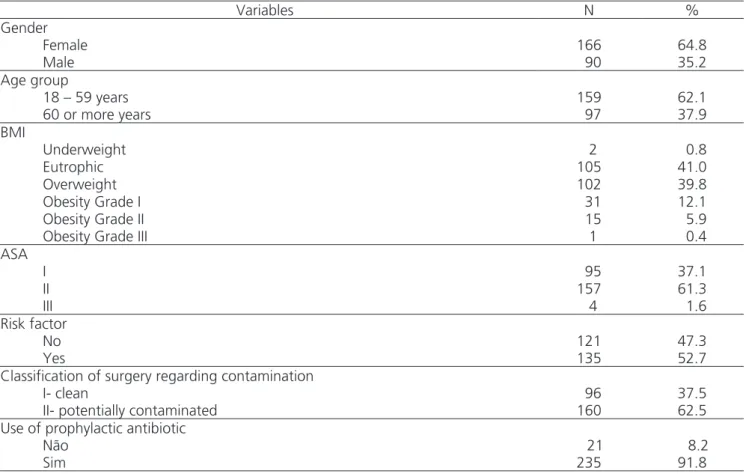
Table 1. Summary of the characteristics of the sample (n = 256).
Variables N %
Gender
Female 166 64.8
Male 90 35.2
Age group
18 – 59 years 159 62.1
60 or more years 97 37.9
BMI
Underweight 2 0.8
Eutrophic 105 41.0
Overweight 102 39.8
Obesity Grade I 31 12.1
Obesity Grade II 15 5.9
Obesity Grade III 1 0.4
ASA
I 95 37.1
II 157 61.3
III 4 1.6
Risk factor
No 121 47.3
Yes 135 52.7
Classification of surgery regarding contamination
I- clean 96 37.5
II- potentially contaminated 160 62.5
Use of prophylactic antibiotic
Não 21 8.2
recorded the type of drug used, moment of administra-tion and the duraadministra-tion of postoperative use.
The antibiotic prophylaxis protocol adopted in this study followed the one jointly proposed by the American Society of Health-System Pharmacists, the In-fectious Diseases Society of America, the Surgical Infec-tion Society, and the Society for Healthcare Epidemiolo-gy of America9. In addition, we also used the American
College of Obstetricians and Gynecologists protocol11 for
patients whose gynecologic procedures were not includ-ed in the first instrument. Basinclud-ed on such protocols, we recorded and analyzed the following outcomes in each case: (1) Justified use or non-use of antibiotic prophylax-is (Outcome 1): we observed the use or non-use indica-tions of preoperative antibiotic prophylaxis for each type of procedure studied, and checked whether the chosen option was justified by the protocols. This analysis took into account the presence or absence of risk factors for surgical site infection (SSI) for the patients and surgical procedures, the classification of the surgical wound as to the potential of contamination and the type of surgical procedure. We considered the use or non-use of antibiot-ic prophylaxis justified: 1) if the medantibiot-ication was adminis-tered when properly indicated or; 2) when the non-use of antibiotics was properly indicated. (2) Correct antibiotic choice (Outcome 2): we evaluated if the antibiotic choice followed the aforementioned protocols. We considered the desired action spectrum, the least possible impact on the patient’s microbiota, minimal adverse effects and drug allergy history. (3) Antibiotic administration at the correct moment (Outcome 3): The antibiotic administra-tion should occurr between 30 and 60 minutes before the incision (in the case of antibiotics with short time of administration) and between 60 and 120 minutes for those requiring prolonged infusion time. We performed this analysis respecting the pharmacology of each
admin-istered agent. (4) Discontinuation of antibiotic at the right time (Outcome 4): the use of antibiotic should cease in up to 24 hours after the procedure.
We analyzed the following independent vari-ables for each patient: 1) gender; 2) age distributed in two categories (18-59 years, 60 years or older); 3) Body Mass Index (BMI) to assess the nutritional status of patients according to the World Health Organization (WHO)12; 4) physical condition of the patient (ASA)10; 5)
surgical specialty; 6) surgery classification according to the contamination potential9; 7) antibiotic prophylaxis:
if administered or not 8) SSI risk factors of the patient and/or specific to the procedure performed, according to the protocol adopted in this study9, considered
pres-ent with at least one of the following: a) age or over 70 years; b) diabetes mellitus; c) smoking; d) cancer; e) al-tered immune response (use of steroids and immunosup-pressants, neutropenia, chemotherapy); f) high chance of contamination or infection of the surgical site (gastrodu-odenal perforation, bile and feces spill, poor nutrition, hy-poalbuminemia, anemia, radiation therapy); g) increase in gastric pH (as gastric acidity is an effective barrier to bac-terial colonization): gastric cancer, achlorhydria, use of H2 antagonists or proton pump inhibitors); h) prolonged surgical time (>120 minutes); i) obesity; j) vascular surgery on site below the pelvis; and k) presence of urinary calculi and/or urinary obstruction.
STATISTICAL ANALYSIS
We performed univariate analyzes by means of simple frequencies in order to describe the study sam-ple, and bivariate analysis to detect differences in the distribution of independent variables for each outcome of interest, using the chi-square test. We also employed multivariate logistic regression, including the
indepen-Table 2. Surgical specialties (n = 256).
Variables N %
Surgical specialties
General Surgery 136 53.1
Gynecology 48 18.8
Urology 54 21.1
dent variables with p≤0.25 in the preliminary analysis. We expressed the results of the multivariate model as odds ratios (OR), with significance level a≤0.05 and confidence interval (CI) of 95%. We used the Statistical Package for Social Sciences (SPSS) for Windows, version 17.0.
RESULTS
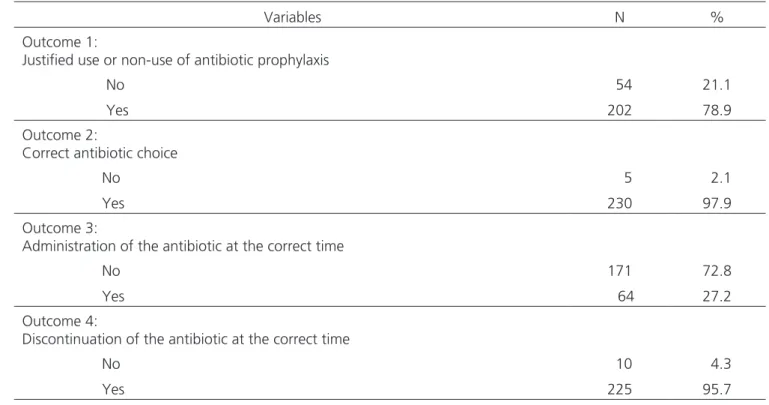
The characteristics of the sample represented by the 256 patients studied and the analyzed outcomes are shown in Tables 1, 2 and 3.
Most patients were female (64.8%). The age ranged from 19 to 90 years, with a mean age of 52.9±16.2 and with a predominance of non-elderly (62.1%).
Regarding physical status classification, the majority of the sample (61.3%) consisted of ASA II patients. In 52.7% of the cases, we verified the pres-ence of at least one SSI risk factor for the patients and/or for the specific procedures performed. Con-sidering body weight, most were classified as over-weight and obese (58.2%). Regarding the degree of wound contamination, we observed that 62.5% of
the sample was represented by potentially contami-nated procedures.
General surgery comprised 53.1% of proce-dures. The most common surgical procedures were cho-lecystectomies (17.6%), herniorrhaphies (14.8%), hyster-ectomies (8.2%) and thyroidectomy (7.8%).
Antibiotic prophylaxis was used in 235 patients, or 91.8% of cases. The mean duration of antibiotic ad-ministration before surgical incision ranged from 70 min-utes before the recommended time until 90 minmin-utes after the same time, the average being 20.7±15.7 minutes.
The use or non-use of antibiotic prophylaxis was justified in 78.9% of patients. The choice of the ad-ministered antibiotic was considered correct in 97.9%. The administration of the antibiotic was carried out at the appropriate time in only 27.2% of patients. Discon-tinuation of the antibiotic was performed in due time in 95.7% of cases.
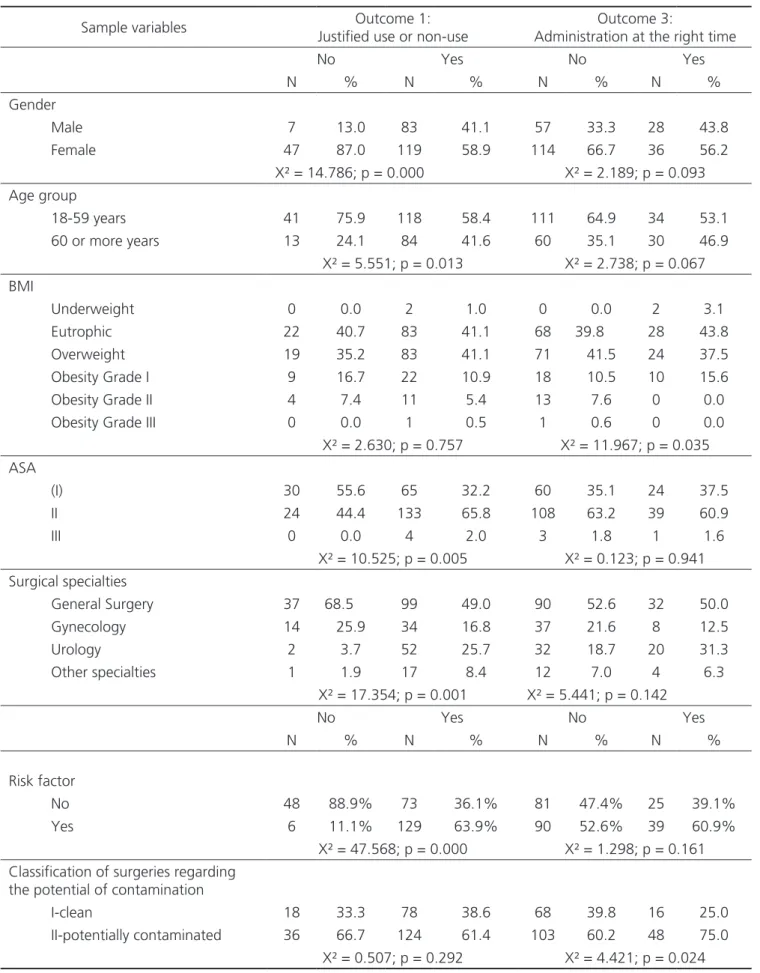
Table 4 shows the most relevant results of the bivariate analysis, assessing the difference in the distri-bution of independent variables for each outcome of interest.
Table 3. Results of the outcomes studied.
Variables N %
Outcome 1:
Justified use or non-use of antibiotic prophylaxis
No 54 21.1
Yes 202 78.9
Outcome 2:
Correct antibiotic choice
No 5 2.1
Yes 230 97.9
Outcome 3:
Administration of the antibiotic at the correct time
No 171 72.8
Yes 64 27.2
Outcome 4:
Discontinuation of the antibiotic at the correct time
No 10 4.3
Yes 225 95.7
Result of outcome 1 in 256 patients studied
For the outcome of “justified use or non-use of antibiotic prophylaxis”, the variables that showed statistically significant differences were female gender (p=0.000), age 18-59 years (p=0.013), ASA II (p=0.005), general surgery (p=0.001) and the presence of some risk factor for SSI (p= 0.000). For the outcome “correct an-tibiotic choice”, the presence of some risk factor for SSI (p=0.048) showed a statistically significant difference.
The outcome “administration of the antibiotic at the right time” showed different results, with a sta-tistically significant difference in the group classified as eutrophic according to BMI (p=0.035) and operations classified as potentially contaminated (p=0.024). Finally, the outcome “discontinuation of antibiotic at the right time” showed a distinct distribution for general surgery (p=0.024).
For the multivariate logistic regression analysis, we only included the independent variables with p≤0.25 in the preliminary bivariate analysis. For the model that analyzed the outcome “justified use or non-use of anti-biotic prophylaxis”, the variables that showed statistically significant differences were female gender (OR=0.330, 95% CI=0.131-0.833), the presence of some risk factor for SSI (OR=11,654; 95% CI=4.255-31.913) and gener-al surgery (OR=1.798, 95% CI=1.160-2.789). The model analizing the outcome “administration of the antibiotic at the right time” showed a statistically significant relation-ship with the procedures classified as potentially contam-inated (OR=2.073, 95% CI=1.048-4.102).
DISCUSSION
In order to guide and advance the safety of the surgical procedures, the World Health Organization (WHO) has established, through an international agree-ment, a Protocol for Safe Surgery8. The study by Haynes
et al.13, held by a group of institutions in different
coun-tries and using a program based on the WHO surgical Safety Checklist, which includes surgical antibiotic pro-phylaxis, showed a significant decrease in the operations complication and death rates. These data suggest that efforts to safe operations lead to service efficiency and can improve the safety of surgical patients.
This study evaluated the use of surgical antibi-otic prophylaxis in a cohort of 256 patients at the HUGG. Any discrepancies between the present results, when compared with other previously published articles, can be partly attributed to the different research methods used, the various criteria for evaluation of adherence to antibi-otic prophylaxis protocols or the type of population stud-ied. We note that it is not part of the scope of this study to analyze the reasons for non-adherence to the antibiot-ic prophylaxis protocol in surgantibiot-ical patients. This research is characterized by exploring a theme whose studies are scarce in the medical literature.
In the present research, antibiotic prophylaxis was used in 91.8% of cases, which was similarly observed by other authors, who found rates ranging from 81.4% to 97.5%14-16. However, other articles showed results
in-ferior to the aforementioned frequencies, with a variation for the use of the antibiotic prophylaxis in the range of 58% to 73%17-19.
The most frequent outcome in our observa-tion was “correct antibiotic choice”, with 97.9% of the cases studied, which we considered acceptable, since it covered almost all cases. Our findings are in agreement with the search of Castella et al.18, in which the choice
of the antimicrobial agent was correct in 95% of sur-gical procedures. Malavaud et al. presented results of 91.9%20 and 82.8%17 in relation to this outcome, while
the value found by Pittalis et al.15 was 84.5%. In Gul et
al. research19, the results were 87% and 84.3% for
her-niorrhaphy and colorectal procedures, respectively. Nev-ertheless, other studies have found much lower values for the outcome “correct antibiotic choice” as reported by Mahdaviazad et al.21 (25.4%) and Napolitano et al.14
(25.5%). Prophylactic antibiotics should be selected ac-cording to the SSI probable causing agents, which are usually those who are part of the endogenous micro-biota of the site to be operated22. Ideally, the chosen
antibiotic should be of low cost, low toxicity and a have a sufficiently long half-life to maintain proper concen-tration until the wound closure, also taking into account the patients’ safety and allergy profiles9.
How-Table 4. Bivariate analysis among the established outcomes and studied variables.
Sample variables Outcome 1: Justified use or non-use
Outcome 3:
Administration at the right time
No Yes No Yes
N % N % N % N %
Gender
Male 7 13.0 83 41.1 57 33.3 28 43.8
Female 47 87.0 119 58.9 114 66.7 36 56.2
X² = 14.786; p = 0.000 X² = 2.189; p = 0.093 Age group
18-59 years 41 75.9 118 58.4 111 64.9 34 53.1
60 or more years 13 24.1 84 41.6 60 35.1 30 46.9 X² = 5.551; p = 0.013 X² = 2.738; p = 0.067 BMI
Underweight 0 0.0 2 1.0 0 0.0 2 3.1
Eutrophic 22 40.7 83 41.1 68 39.8 28 43.8
Overweight 19 35.2 83 41.1 71 41.5 24 37.5
Obesity Grade I 9 16.7 22 10.9 18 10.5 10 15.6
Obesity Grade II 4 7.4 11 5.4 13 7.6 0 0.0
Obesity Grade III 0 0.0 1 0.5 1 0.6 0 0.0
X² = 2.630; p = 0.757 X² = 11.967; p = 0.035 ASA
(I) 30 55.6 65 32.2 60 35.1 24 37.5
II 24 44.4 133 65.8 108 63.2 39 60.9
III 0 0.0 4 2.0 3 1.8 1 1.6
X² = 10.525; p = 0.005 X² = 0.123; p = 0.941 Surgical specialties
General Surgery 37 68.5 99 49.0 90 52.6 32 50.0
Gynecology 14 25.9 34 16.8 37 21.6 8 12.5
Urology 2 3.7 52 25.7 32 18.7 20 31.3
Other specialties 1 1.9 17 8.4 12 7.0 4 6.3
X² = 17.354; p = 0.001 X² = 5.441; p = 0.142
No Yes No Yes
N % N % N % N %
Risk factor
No 48 88.9% 73 36.1% 81 47.4% 25 39.1%
Yes 6 11.1% 129 63.9% 90 52.6% 39 60.9%
X² = 47.568; p = 0.000 X² = 1.298; p = 0.161 Classification of surgeries regarding
the potential of contamination
I-clean 18 33.3 78 38.6 68 39.8 16 25.0
II-potentially contaminated 36 66.7 124 61.4 103 60.2 48 75.0 X² = 0.507; p = 0.292 X² = 4.421; p = 0.024
ever, there is great variation in the reports relative to this outcome. The rate we found is higher than the reported by Malavaud et al.17 (91.4%), Meeks et al.23 (82%) and
Castella et al.18 (80%). Differently, Askarian et al.24, Gul et
al.19, Mahdaviazad et al.21, Tourmousoglou et al.16, Pitallis
et al.15 and Hohmann et al.25 showed contrasting results
with the present study, the values being 5.8%, 20%, 29.4% 36.3% 48% and 67.1%, respectively. Prolonged administration of prophylactic antibiotics showed no ben-efit in preventing SSI and their unnecessary use could fa-vor the development of antimicrobial resistance, lead to occurrence of side effects and be associated to increased direct costs of health care assistance26. For most of the
operations, the administration of a single dose of the antimicrobial in prophylactic treatment is sufficient and the prophylaxis should not continue postoperatively for longer than 24 hours22. Santana et al. study26, in which
the average time of use of antimicrobials after operations was 6.6±5.6 days, exemplify the impact of excessive use of antimicrobials for SSI prophylaxis with questionable in-dications, which ends up creating situations that compro-mise the safety of patients and increased hospital costs. We must note the current trend of antibiotic prophylaxis restricted to surgical time9.
There was justification in 78.9% of cases in this study for the “use or non-use of antibiotic prophylaxis”, which reveals that the appropriate indication of antibiotic prophylaxis was not observed satisfactorily. However, this result is close to those found by other authors, whose rates varied between 81% and 88.1%16,17,20,27. The results
from Pittalis et al.15 were material, with justification in
95% of cases, while Durando et al.28 found70.3%.
None-theless, Mahdaviazad et al.21 and Askarian et al.24 showed
results inferior to those already mentioned, represented respectively by 35.4% and 2% of the cases. In a study conducted in Brazil, Souza et al.29 found no rational basis
or defined criteria for almost half of prophylactically used antimicrobials. Antibiotic prophylaxis is not necessary in many surgical situations; hence, the justified use must comply with well-defined principles22.
The “administration of the antibiotic at the right time” presented with the worst result amongst all out-comes analyzed in our study, with a rate of only 27.2%.
Several authors also found low frequency results, rang-ing from 39.7% to 53.4%14,15,17,30. Intermediate values
have been reported for this outcome, between 61.1% and 84%18,20,21,23,28. However, Gul et al.19 and
Tourmou-soglouv et al.16 observed rates of 98% and 100%,
re-spectively, representing appropriate values. The timing of administration of prophylactic antibiotics should obey the time it takes to reach the blood and tissue concentrations that exceed the minimum inhibitory concentration for the microorganisms likely to colonize the surgical site31,32.
Additionally, for the antimicrobial prophylaxis to be suc-cessful, it is necessary that the drug supply in the region to be operated occurs before its possible contamination9,
which should be less than 60 minutes before the incision, as proposed by WHO13.
The multivariate logistic regression analysis re-vealed, in a statistically significant manner, the associa-tion of some factors with the outcomes of interest.
Regarding the outcome of “justified use or non-use use of antibiotic prophylaxis”, female gender was an inversely related factor, while there was an asso-ciation with groups of patients undergoing procedures here classified as General Surgery and with the presence of at least one risk factor for SSI. For the first two vari-ables, this association may have occurred because of the sample characteristics, since most of the patients were female and patients admitted in General Surgery wards. As regards to the presence of at least one SSI risk factor, it is reasonable to assume that the doctor has observed more closely the indication of antibiotic prophylaxis in pa-tients with comorbidities and that presented with condi-tions more favorable to SSI. Similarly, Napolitano et al.14
reported that the presence of risk factors such as, for example, advanced age and hypoalbuminemia, besides hospitalization in General Surgery wards, were associated with appropriate indication of antibiotic prophylaxis.
so that the microorganisms that colonize specific sites ex-hibit sensitivity profiles to certain antibiotics, which facili-tates their selection22,32.
The “administration of the antibiotic at the right time” was statistically significant for the variable po-tentially contaminated surgery. We can assumed that this type of procedure arouses more attention of health pro-fessionals towards the risk of SSI. Differently, the studies from Simon et al.33 and Thouverez et al.34 found that the
surgical wound classified as potentially contaminated is a factor associated with a higher rate of non-compliance to the protocol adopted.
No variable was associated in a statistically sig-nificant manner with the “discontinuation of antibiotic at the right time.” The result of multivariate analysis sug-gests that the outcome could not be associated with any independent variable, since there was no significant vari-ability in this outcome frequency, that is, discontinuation of the antibiotic was performed in due time in most pa-tients (95.7% cases). However, Wright et al.27 noted that
groups of patients who more often received antibiotics for a long time were those with more comorbidities or elderly females.
Surgical antibiotic prophylaxis may be consid-ered appropriate when it reaches values of the criteria established in the adopted protocols close to 100%. From 11 analyzed articles that addressed appropriate surgical antibiotic prophylaxis, this parameter was con-sidered inadequate in 100% of them14-17,20,21,23-25,28,30. In
their systematic review of adherence to surgical antibiot-ic prophylaxis protocols, Gouvêa et al.35 concluded that
all the studies reviewed indicated the need for greater adherence to such protocols. In our study, despite the outcomes “correct antibiotics choice” and “discontinua-tion of antibiotic at the right time” having reached rates close to 100%, the other two outcomes did not show sufficient results. Therefore, we conclude that surgical antibiotic prophylaxis was not fully adequately performed in the sample.
This study provided an overview of the use of antibiotic prophylaxis in surgical patients in our hospital, which makes possible the improvement of this practice in the institution. However, antibiotic prophylaxis is only one of many strategies to control SSI, such as technique and surgical team experience, hospital environment, sterile surgical instruments, preoperative preparation (antisep-sis, asep(antisep-sis, trichotomy) and perioperative management (glycemic and temperature control)9.
Acknowledgements
We thank the participating patients, the nurs-ing staff, the doctors of the anesthesiology services, Sur-gical Clinics and Specialties of thee HUGG, especially to doctors Ana Helena Aragon, Emanuela Vicente, Patricia Costa, Rafael Nascimento, Thaís Galvão, Vítor Saraiva, Marcus Lima Raquel Guimarães, Michelle Pinto, Marcellus Moreira, Diego Torres and Raquel Marques.
R E S U M O
Objetivo: avaliar a antibioticoprofilaxia em pacientes cirúrgicos do Hospital Universitário Gaffrée e Guinle. Métodos: estudo prospecti-vo de uma coorte de 256pacientes submetidos à operações eletivas, entre janeiro e setembro de 2014. Foram coletados dados demo-gráficos dos pacientes, se ocorreu utilização ou não do antibiótico profilático e as seguintes características da antibioticoprofilaxia:tipo de antibiótico utilizado, momento da administração e tempo de duração do uso no pós-operatório. Os desfechos de interesse analisados foram “uso ou não uso justificado da antibioticoprofilaxia”, “escolha correta do antibiótico”, “administração do antibiótico no tempo correto” e “descontinuação do antibiótico no tempo correto”. Resultados: a antibioticoprofilaxia foi utilizada em 91,8% dos casos. O uso ou não uso da antibioticoprofilaxia foi justificado em 78,9% dos pacientes, a escolha do antibiótico administrado foi considerada correta em 97,9%, a administração do antibiótico foi feita no momento correto em apenas 27,2% dos pacientes e a descontinuação do antibiótico foi realizada no tempo correto em 95,7% dos casos. Conclusão: a antibioticoprofilaxia cirúrgica não foi realizada de forma plenamente adequada na amostra estudada.
Descritores: Pacientes. Cirurgia. Profilaxia. Antibioticoprofilaxia. Fidelidade a Diretrizes.
REFERENCES
1. Weiser TG, Regenbogen SE, Thompson KD, Haynes AB, Lipsitz SR, Berry WR, et al. An estimation of the
global volume of surgery: a modelling strategy based on available data. Lancet. 2008;372(9633):139-44. 2. Mendes FF, Carneiro AF. Infecção no paciente
Salman FC, Diego LAS, Silva JH, Moraes JMS, Carneiro AF. Qualidade e segurança em anestesiologia. Rio de Janeiro: SBA; 2012. p.143-62.
3. Mangram AJ, Horan TC, Pearson ML, Silver LC, Jarvis WR. Guideline for prevention of surgical site infection, 1999. Infect Control Hosp Epidemiol. 1999;20(4):247-80.
4. Brasil. Ministério Saúde. Agência Nacional de Vigilân-cia Sanitária. Critérios Nacionais de Infecções Rela-cionadas à Assistência à Saúde. Brasil: Anvisa, 2013. Acesso em: 10 nov 2013. Disponível em: http://portal. saude.gov.br/portal/arquivos/pdf/cartilha2.pdf. 5. Emori TG, Gaynes RP. An overview of nosocomial
in-fections, including the role of the microbiology labo-ratory. Clin Microbiol Rev.1993;6(4):428-42.
6. Murray BW, Huerta S, Dineen S, Anthony T. Sur-gical site infection in colorectal surgery: a review of the nonpharmacologic tools of prevention. J Am Coll Surg.2010; 211(6):812-22.
7. Hall C, Allen J, Barlow G. Antibiotic prophylaxis. Sur-gery(Oxford). 2012;30(12):651-8.
8. WHO Guidelines for safe surgery: safe surgery saves lives [Internet]. Switzerland: World Healthy Organization; 2009 [cited 2014 Oct 14]. Available from: http://wh-qlibdoc.who.int/publications/2009/9789241598552_ eng.pdf.
9. Bratzler DW, Dellinger EP, Olsen KM, Perl TM, Auwa-erter PG, Bolon MK, et al. Clinical practice guidelines for antimicrobial prophylaxis in surgery. Am J Health Syst Pharm. 2013;70(3):195-283.
10. American Society of Anesthesiologists [Internet]. Washington: ASA; c1995-2015 [update 2014 Oct 15; cited 2015 Feb 25]. ASA Physical Status Classi-fication System. Disponível em: https://www.asahq. org/resources/clinical-information/asa-physical-sta-tus-classification-system.
11. ACGO practice bulletin no 104: antibiotic
prophy-laxis for gynecologic procedure. ACOG Committee on Practice Bulletins--Gynecology. Obstet Gynecol. 2009;113(5):1180-9.
12. Brasil. Ministério da Saúde. Estratégias para o Cuidado da pessoa com doença crônica: obesidade. Brasília, 2014. (cadernos de Atenção Básica, no 38).
Acesso em: 15 mar 2015. Disponível em: http:// bvsms.saude.gov.br/bvs/publicacoes/estrategias_ cuidado_doenca_cronica_obesidade_cab38.pdf. 13. Haynes AB, Weiser TG, Berry WR, Lipsitz SR, Breizat
AH, Dellinger EP, et al. A surgical safety checklist to reduce morbidity and mortality in a global popula-tion. N Engl J Med. 2009; 360(5):491-9.
14. Napolitano F, Izzo MT, Di Giuseppe G, Angelillo IF; Collaborative Working Group. Evaluation of the appropriate perioperative antibiotic prophylaxis in Italy. PLoS ONE. 2013;8(11): e79532.
15. Pittalis S, Ferraro F, Piselli P, Ruscitti LE, Grilli E, Lanini S, et al. Appropriateness of surgical antimi-crobial prophylaxis in the Latium region of Italy, 2008: a multicenter study. Surg Infect (Larchmt). 2013;14(4):381-4.
16. Tourmousoglou CE, Yiannakopoulou E, Kalapo-thaki V, Bramis J, St Papadopoulos J. Adherence to guidelines for antibiotic prophylaxis in general sur-gery: a critical appraisal. J Antimicrob Chemother. 2008;61(1):214-8.
17. Malavaud S, Bonnet E, Vigouroux D, Mounet J, Suc B. [Prophylactic antibiotic use in gastro-intestinal surgery: an audit of current practice]. J Chir (Paris). 2008: 145(6):579-84. French.
18. Castella A, Charrier L, Di Legami V, Pastorinho F, Fa-rina EC Argentero PA, et al. Surgical site infection surveillance: analysis of adherence to recommenda-tions for routine infection control practices. Infect Control Hospl Epidemiol. 2006;27(8):835-40. 19. Gul Y A, Hong LC, Prasannan S. Appropriate
antibio-tic administration in elective surgical procedures: still missing the message. Asian J Surg. 2005;28(2):104-8. 20. Malavaud S, Bonnet E, Atallah F, El Farsaoui R, Roze
J, Mazerolles M, et al. [Evaluation of clinical practi-ce: audit of prophylactic antibiotics in urology]. Prog Urol. 2008;18(6):395-401. French.
22. Tavares W. Antibióticos e quimioterápicos para o clí-nico. 3a ed. São Paulo: Atheneu; 2014.
23. Meeks DW, Lally KP, Carrick MM, Lew DF, Thomas EJ, Doyle PD, et al. Compliance with guidelines to prevent surgical site infections: as simple as 1-2-3?: Am J Surg. 2011;201(1):76-83.
24. Askarian M, Moravveji AR, Mirkhani H, Namazi S, Weed H. Adherence to American Society of Health-System Pharmacists surgical antibiotic pro-phylaxis guidelines in Iran. Infect Control Hosp Ep-idemiol. 2006;27(8):876-8.
25. Hohmann C, Eickhoff C, Radziwill R, Schulz M. Adherence to guidelines for antibiotic prophylaxis in surgery patients in German hospitals: a multicentre evaluation involving pharmacy interns. Infection. 2012;40(2):131-7.
26. Santana R, Viana AC, Santiago JS, Menezes MS, Lobo IM, Marcellini PS. The cost of excessive posto-perative use of antimicrobials: the context of a pu-blic hospital. Rev Col Bras Cir. 2014;41(3):149-54. 27. Wright JD, Hassan K, Ananth CV, Herzog TJ, Lewin
SN, Burke WM, et al. Use of guideline-based anti-biotic prophylaxis in women undergoing gynecolo-gic surgery. Obstet Gynecol. 2013;122(6):1145-53. 28. Durando P, Bassetti M, Orengo G, Crimi P,
Battis-tini A, Bellina D, et al. Adherence to international and national recommendations for the prevention of surgical site infections in Italy: results from an ob-servational prospective study in elective surgery. Am J Infect Control. 2012;40(10):969-72.
29. Souza HP, Vilhordo DW, Breigeiron R, Alessandret-ti MB, Silva TGB. Auditoria no uso de antimicro-bianos em enfermaria cirúrgica. Rev Col Bras Cir. 2008;35(4):216-20.
30. Machado-Alba JE, Morales-Plaza CD, Solarte MJ. Adherencia a antibioterapia prequirúrgica en inter-venciones torácicas y abdominales en el Hospital Universitario San Jorge, de Pereira. Rev Cienc Salud. 2013;11(2):205-16.
31. Bratzler DW, Houck PM; Surgical Infection Preven-tion Guideline Writers Workgroup. Antimicrobial prophylaxis for surgery: an advisory statement from the National Surgical Infection Prevention Project. Am J Surg. 2005;189(4):395-404.
32. James M, Martinez EA. Antibiotics and periopera-tive infections. Best Pract Res Clin Anaesthesiol. 2008;22(3):571-84.
33. Simon AM, Dzierzek AC, Djossou F, Couppie P, Blai-se N, Marie M, et al. [Factors associated with non--compliance to surgical antimicrobial prophylaxis guidelines during a prospective audit]. Ann Fr Anes-th Reanim. 2012;31(2):126-31. French.
34. Thouverez M, Lallemand S, Bailly P, Betrand X, Talon D. [Determination of indicators for non-compliance with guidelines for surgical antimicrobial prophyla-xis]. Pathol Biol (Paris). 2002;50(9):547-51. French. 35. Gouvêa M, Novaes CO, Pereira DM, Iglesias AC.
Ad-herence to guidelines for surgical antibiotic prophy-laxis: a review. Braz J Infect Dis. 2015;19(5):517-24.
Received in: 26/02/2016
Accepted for publication: 04/06/2016 Conflict of interest: none.
Source of funding: none.
Mailing address:
Marise Gouvêa