RESUMO
Vale NB, Vale LFB, Cruz JR - O Tempo e a Anestesia Obstétrica: da Cosmologia Caótica à Cronobiologia
JUSTIFICATIVA E OBJETIVOS: Ciclos temporais (claro/escuro; nascer/morrer, etc.) ao lado de condições ambientais (sincroni-zadores) influenciam a fisiologia do parto em função da existên-cia de relógios endógenos (osciladores) que interagem com pistas sociais diuturnas. Nesta revisão foram ordenados os parâmetros anestésico-obstétricos cíclicos mais importantes no atendimento à parturiente.
CONTEÚDO: Análise cronobiológica dos principais eventos da fisiopatologia obstétrica da Mulier sapiens: I) Período da em-briogênese - risco de teratogênese; II) Da prematuridade ao pós-datismo: do parto eutócico à cerclagem uterina; III) A noite e o parto: maior incidência noturna do parto (facilitação fisiológica) e diurna da cesariana (opção do obstetra); IV) A lua e o parto - resultado não conclusivo; V) plantão noturno na Anestesia Obstétrica: con-tingência profissional de mais riscos; VI) Tempos da cesariana: retirada fetal: tempo UD (uterotomy – delivery) o mais curto possí-vel; correção eficaz de hipotensão arterial e valorizar o tempo de jejum pré-anestésico; VII) Variação circadiana da distócia: dor; contração uterina; perda sanguínea; hipertensão arterial sistêmica (HAS); risco de alergia e asma brônquica. Na fase noturna há maior intensidade de contração e maiores riscos de hemorragia, de aler-gia e de asma. Em contraponto, há ausência de variação circadiana da HAS na eclâmpsia; VIII) Cronofarmacologia obstétrica: anesté-sicos locais, analgéanesté-sicos, hipnóticos, anestéanesté-sicos gerais e bloqueadores neuromusculares. A cronergia explica o pico anal-gésico matinal dos opioides, vespertino dos anestésicos locais e noturno dos anestésicos gerais inalatórios.
CONCLUSÕES: A abordagem cronobiológica do atendimento anestésico ao parto na maternidade enfatiza a importância obsté-trica da ritmicidade circadiana na humanização e segurança do parto.
Unitermos: ANESTESIA Obstétrica, CIRURGIA, Obstétrica: cesari-ana; CRONOBIOLOGIA: reprodução, parto.
SUMMARY
Vale NB, Vale LFB, Cruz JR – Time and Obstetric Anesthesia: From Chaotic Cosmology to Chronobiology.
BACKGROUND AND OBJECTIVES: Temporal cycles (dark/light; birth/death; etc.), along with environmental conditions (synchro-nizers), influence labor physiology because of the presence of endogenous clocks (oscillators) that interact with social diuturnal clues. In this review, the most important cyclic anesthetic-obstetric parameters in parturient care are listed.
CONTENTS: Chronobiological analysis of the main events in the obstetric pathophysiology of Mulier sapiens: I) Embryogenesis – risk of teratogenesis; II) From prematurity to post-didacticism: from eutocic labor to cervical cerclage; III) Night and labor: higher incidence of nocturnal labor (physiological facilitation) and daylight cesarean section (choice of the obstetrician); IV) The moon and labor – non-conclusive results; V) The night shift in obstetric anesthesia: riskier professional contingency; VI) Phases of ce-sarean section: removal of the fetus: UD stage (uterotomy – delivery) as brief as possible; effective correction of hypotension and valo-rize pre-anesthetic fasting; VII) circadian variation of dystocia: pain; uterine contraction; blood loss; hypertension (HTN); risk of allergy and asthma. In the nocturnal phase, the intensity of contraction and risk of hemorrhage, allergy, and asthma are greater. On the other hand, HTN in eclampsia does not show circadian variation; VIII) Obstetric chronopharmacology: local anesthetics, analgesics, hypnotics, general anesthetics, and neuromuscular blockers. Chronoenergy explains the matinal peak of opioid analgesia, vespertine of local anesthetic, and nocturnal of inhalational anesthetics.
CONCLUSIONS: The chronobiological approach of labor anes-thesia emphasizes the obstetric importance of circadian rhythmicity in labor humanization and safety.
Keywords: ANESTHESIA, Obstetrics; CHRONOBIOLOGY: repro-duction, labor; SURGERY, Obstetric: cesarean section.
O Tempo e a Anestesia Obstétrica: da Cosmologia Caótica
à Cronobiologia *
Time and Obstetric Anesthesia: from Chaotic Cosmology
to Chronobiology*
Nilton Bezerra do Vale, TSA 1, Lúcio Flávio Bezerra do Vale 2, José Rômulo Cruz 3
* Recebido da Maternidade Escola Januário Cicco (MEJC) da Universidade Federal do Rio Grande do Norte (UFRN), Natal, RN
1. Professor Adjunto; Doutor em Farmacologia 2. Anestesiologista da MEJC da UFRN
3. Médico Obstetra da Secretaria de Saúde do RN Apresentado (Submitted) em 15 de dezembro de 2008 Aceito (Accepted) para publicação em 13 de junho de 2009 Endereço para correspondência (Correspondence to): Dr. Nilton Bezerra do Vale
Av. Getúlio Vargas, 558/702 59012-360 Natal, RN
Time and Obstetric Anesthesia: from
Chaotic Cosmology to Chronobiology
Nilton Bezerra do Vale, TSA, M.D. 1; Lúcio Flávio Bezerra do Vale, M.D. 2; José Rômulo Cruz, TSA, M.D. 3
INTRODUCTION
Unlike oviparous animals whose offsprings are born in less than three hours, able to adapt to environmental conditions, the birth of mammals (viviparous) is more prolonged (more than six hours) and the newborns (NB) are unprotected and dependent on the permanent care of their parents. Seven million years of “humanoid” evolution provided australo-pithecines with a unique anatomic pattern: a large and triple (reptilian, limbic, and human) brain capable of developing instincts, emotions, imagination, and bipedalism. Encepha-lization stimulated the development of his/her own culture as a consequence of speech, vocalization, migration, life in groups, and the use of rocks as useful instruments1-5. Primor-dially, the biped female had a solitary painful labor dependent on the laws of survival, since she was not as influenced by instinctive forces as other mammals. A Jesuit reported (XVI Century) that native Brazilian females delivered alone, in the jungle, near a stream to wash themselves: “their screams
during labor echoed so strongly in the jungle that they
sounded as if someone was being eaten by a beast”6.
sapiens and cesarean section is the surgical procedure to
save the fetus, when the life of the mother and/or fetus is in danger2,7,8.
Historical Aspects of Labor and Cesarean Section
The word obstetrician comes from Obstetrix, the Latin word for midwife (obstare = to stand by), due to the common position of obstetricians in front of the parturient to hold the NB in vaginal delivery. The word anesthesia (αν = no;
αiσθησiς = sensitivity) was used for the first time by Diosco-rides, a surgeon and botanist, in I B.C. when he described in his book (De Materia Medica) the hypnotic-sedative actions of poppy, mandragora, and aconitum extract (atropinic action) 2,7,8.
Vaginal Delivery
The evolution of the African australopithecines to walking erect was the most important behavioral attitude that enabled man to leave the natural habitat of a quadruped primate (tree tops of African forests) looking for the independent life of a biped, hunting on the savanna and resting in caves, in two to three million years of survival. Although walking erect made man more visible to predators, the panoramic view of Homo
erectus guaranteed more safety and the possibility of
hunting, flight, or fighting. Walking on two feet guaranteed
Homo erectus a panoramic view and free hands to start the
epic trek from central Africa (80 thousand years after the ice age), looking for more caloric animal protein and fat. The exclusive use of the thumb allowed man to throw offensive objects during fights or hunting, making him the only creature capable of causing injury to another from afar. The exclusive imagination capacity along with an increase in the volume of gray matter by increasing the circumvolutions inside the skull was responsible for the definitive exit from historical obscu-rity1,3. Twelve thousand years ago (the last defrost) Homo
sapiens crossed the Nile and the Red Sea in a victorious
saga to conquer every continent through vales, mountains, deserts, lakes, seas, and oceans at 40 km a year2-5. To en-sure this man with creativity and that he would ascend to the post of lord of the planet, the human brain (2% of the body mass) uses 100 billion neurons and one trillion synapses, consuming the energy (ATP) of just one fuel, i.e., 50% of the glucose available in the body, in aerobic mitochondrial reaction with the unstoppable expenditure of 20% of the plas-ma oxygen coming from the heart (20% of the cardiac output) after pulmonary hematosis. According to paleoanthro-pological studies, Homo was the first primate to hunt, create complex tools, speak, use fire, camp, care for the weak, and also the first one to believe that birth and death had a supernatural connection. Unfortunately, adaptation to being a biped demanded reformulation of the pelvis to make it an instrument capable of supporting loads. The female pelvis became adaptively narrower in the region of the vaginal ca-nal, making labor anatomically more difficult3-5. The difficulty to dilate the uterine cervix (predominance of elastic fibers – 80%), the narrow birth canal, and the greater size of the head
of the human fetus when compared to other mammals, made human labor the most painful among primates. Fortunately, a new anatomical adaptation compensated the narrowing of the pelvis in Mulier sapiens in relation to the greater relative size of the brain of NB: the greater immaturity of the central nervous system (CNS) among the offsprings of all primates, allowing the post-delivery compensation of structural head deformities of the NB secondary to the passage through the narrow birth canal or to the use of forceps. The human NB is the most defenseless offspring, since he communicates with the mother through high intensity crying (70 to 90 db), but this does not guarantee survival for more than 24 hours in case of maternal absence. This implies the need of a short-and medium-term solid union between male short-and female, since the immaturity of the CNS demands special parental care for a long time3-5.
The secular belief that the macro cosmos (i.e., the sun, planets, and stars) interferes with the organic micro cosmos (cells and atoms) is still part of medical thinking, with even-tual repercussions on human behavior and physiological functions. Chronobiology from the (Greek: κρονος = time;
βiος = life; λογος = study) studies the day-night (light-dark) circadian cycle that leads to adaptive changes in pathophy-siological parameters to guarantee anticipative homeostasis of birth, growth, aging, and death of Homo sapiens. Since the early days, survival on Earth of the beings best temporally adapted was based on the evolutionist knowledge of chaotic environmental and organic modifications regarding days (ultradian and circadian), seasons, and year (infradian). Thus, hunting, feeding, flight, and the struggle of daytime animals (genre Homo) are potentiated by the increased intensity of the autonomous function of the sympathetic nervous system and adrenal gland under the sunlight. In the darkness of night, parasympathetic hyperactivity and hypophyseal melanin facilitate digestion, fertility, sleep, birth, and death7,10. Although labor is more painful in the dark phase, nocturnal labor is more frequent due to geophysical factors, such as phases of the moon and nocturnal neurohumoral changes in the last days of gestation (increase in histamine, oxytocin, prosta-glandins, serotonin, and melatonin), ensuring shorter labor under the moon light, a nocturnal protection against night dwelling predators7-11.
Although Jehovah was the first to use general inhalational anesthesia for the birth of Eve from a rib from Adam (Genesis,
2:21), there are biblical Judaic-Christian reports on the glory
and damnation of labor in the life of a woman. According to the creationism point of view, labor, after expulsion from the Garden of Eden, would be characterized by punishment and pain (Genesis, 3:16), “with pain you shall give birth”, i.e., si-milar to Rachel (Genesis, 35:16), whose son was called “son
of my trouble”, it would be forever associated with pain13. The New Testament ratifies labor pain, according to Saint Paul (1
(Revela-tions 12:2): “she was pregnant and cried out in pain as she was about to give birth” 12. For centuries Christianity accepted pain as just punishment from God, which should be accep-ted with submission to purify ones soul. In 1591 E. MacAya-ne, a young Scottish mother, was buried alive for requesting relief of labor pain! In Occidental history, the biblical damnation of painful labor continued until 1847, when James Simpson used inhalation of ether, and later chloro-form, to abolish or minimize labor pain. Tracy was respon-sible for the first general anesthesia (01/25/1847) for cesarean section, executed by Skey at the Saint Bartholo-mew’s Hospital (London) (Lancet, 1847;1:139-140). In 1853, John Snow, physician of the English royal court, made Queen Victoria inhale chloroform to help the delivery of her eighth son (Leopold), who was hemophiliac (birth a la reine). Anal-gesia by the oral administration of opium (Gilette, 1877) or with the vaginal administration of cocaine (Schleich, 1894) was not successful in achieving obstetric anesthesia. In 1900, Kreis used spinal block for the first time in six Swiss parturients (five primiparas) as an option for the preferential inhalational anesthesia: three of them complained of hea-dache, four developed vomiting, and the obstetrician had to use forceps in four out of six deliveries. In 1933, Cleland published the scientific basis for the effective anesthetic control o labor pain by describing the thoracolumbar (T10-T12 -L2), during the phase of cervical dilation, and sacral (S2-S4), during expulsion, pain pathways. Narco-acceleration of labor (Irving, 1945) with thiopental and oxygen was the dominant method in the 1950s and 1960s. From 1942 on, Hingson, Edwards, and Tuohy introduced continuous epidural
anal-gesia and saddle block anesthesia. In 1981, Brownridge dis-seminated the promising method of combined spinal-epi-dural block. The association of local anesthetics (LA) with other spinal analgesics in the end of last century began the boom in the search of labor humanization, making it less painful and safer. Adequate pain control guaranteed labor with the use of the abdominal press during expulsion of the fetus and positive first intimate maternal-fetal contact (imprinting), which is a requirement for the future harmony of familiar relationship (Chart I). According to the Brazilian Health Ministry (2002), the maternal mortality rate during la-bor is still high: 74.5 deaths in 100,000 live la-born13-17. There is a worldwide movement to recover and motivate va-ginal labor. The availability of non-pharmacological methods that facilitate adequate pain management (acupuncture, hypnosis, chromotherapy, massage, etc.), through comple-mentary alternative toco analgesia, is capable of minimizing labor pain in modern maternity hospitals7,8,16-19. Free of pain, future mothers can stay awake and participate in labor, inte-racting with alternative analgesia methods associated or not with analgesic drugs with the eutocic follow-up of the mother-fetus binomium. Delivery methods that prioritize both mother and fetus (Dick, Lamaze, and LeBoyer) represent valid attempts to minimize and humanize the impact of birth within the family. It is always gratifying for the anesthesiologist to obtain effective relief of labor pain without great motor invol-vement. Spontaneous maternal bliss under spinal block is evident on her expression, handshake, or on the emotional verbalization of her gratitude… it is, without a doubt, an un-forgettable professional experience2,7,19-22!
Chart I – Pharmacological and Alternative Methods of Labor Analgesia
Regional Block Labor Cesarean Section
Infiltration of the Perineum ++ 0
Pudendal nerve block ++ 0
Paracervical block ++ 0
Simple epidural +++ +++
Continuous epidural ++++ +++
Simple spinal block +++ ++++
Combined spinal/epidural +++ +++
Systemic analgesia (+ O2 + curare)
General inhalational ++ ++++
General parenteral ++ +++
Complementary Alternative Toco analgesia (CAT)
Invasive: Acupuncture, TENS, sacral injection of distilled water (sc) + 0
Non invasive: half-light, air conditioner, massage, exercises, soft music, meditation, + 0 hypnosis, presence of doulas, adequate breathing
Cesarian or Cesarean Section
From the XX Century on, hospital toco-analgesic safety transformed parturients in the only primate to need assis-tance during vaginal delivery or cesarean section. Giving birth in the “modernity” of the delivery room or operating room was no longer a high risk, solitary, and painful act as it was among primitive people. The denomination of cesarian or cesarean section (opening of the uterus to remove the fetus) has been associated with the name of the emperor Julius Cesar, who was born by this method (caesus = cut). This version is questionable, since the abdomen was opened for removal of a live fetus only after the death of the mother, and the mother of the emperor lived for many years after the birth of her son… The version that Nero had his mother Agrippina killed and opened her abdomen to see where he was generated is also inconsistent. During the reigning of Numa Pompilius (715-673 BC), the Roman law (Lex Regis de
Infe-rendo Mortis) forbade the burial of a parturient before
remo-ving of the fetus: Si mater pregnans mortua sit, fructus quam
primum caute extrahatur… The word cesarean is linked to
the Latin verb caedere (to cut): qui caeso matris utero
nas-citur = that who is removed from the mother’s womb. In
reality, the word cesarean comes from the French césarienne, which comes from the Latin caedere (to cut). Due to medie-val theocracy, the church, based on the Lex Romana, rees-tablished post-morten cesarean section allowing removal of the fetus from a dying mother to fulfill the religious principle of baptism since only by water the soul of the NB could enter heaven free of the original sin9,13,21-32. Although Jehovah used “anesthesia” for the painless delivery of Eve from Adam’s rib (Genesis, 2:21), the first report of cesarean section on a live parturient refers to the successful procedure performed by Jacob Nüfer (1500), a swine gelder, in Switzerland, on his wife with the support of the people of the village he lived in. In Brazil, José Maria Picanço (Baron of Goiânia) was supposedly the first person to perform a cesarean section on a live slave in Recife in 1817. In almost all cesarean sections performed by physicians under general anesthesia, the fetus and/or the mother died from hemorrhage or infection a
posteriori. Only after the cesarean section performed by the
Italian surgeon Porro (1877), with removal of the fetus after subtotal hysterectomy, it became feasible that not all parturients undergoing cesarean section died of hemor-rhagic or infectious shock! The great surgical change started in Germany (1881), when Ferdinand Kehrer stitched successfully the uterus without the need of a hysterectomy. In the XX Century, new basic and clinical knowledge were added: anatomy, autonomous and cardiovascular physiology, physiopathology of pain, and new local anesthetics and adjuvant drugs. Clinical-surgical improvement, blood trans-fusion, and pharmacological improvement with uterotonics, antiseptics, chemotherapeutics, and antibiotics also con-tributed to make cesarean sections safer. Cesarean sections are routinely done all over the world saving thousands of lives
every year. Modern analgesic therapy, the improvement in anesthetic-surgical technique, and advanced monitoring ensure the tripod of defensive obstetric strategy. Besides pain relief, anesthesia for cesarean section should preserve ma-ternal consciousness without negative effects on her contact with the fetus after birth and during breast feeding2,15-17,31-34. If balanced general inhalational anesthesia for cesarean section was dominant in the 1960s, spinal block has been the choice of method for surgical toco-anesthesia since the 1990s21-23. Simple spinal or epidural block, or combined spi-nal/epidural block represents the preferred method of Bra-zilian obstetricians, especially simple spinal block with 0.5% hyperbaric bupivacaine associated with new adjuvant drugs (opioids and clonidine) with little negative fetal repercus-sion35-44. However, balanced general anesthesia can be used, especially when spinal block is contraindicated, such as in patients with hypovolemia, sepsis, decompensated cardio-pathy, coma, dyscrasia, and deformities of the spine, among others. An additional factor has increase the need of special NB care: increased prematurity associated with immediate respiratory problems and reserved intellectual perspectives
a posteriori4-8. The challenges of toco-anesthesia in high risk pregnancies and the safety of the maternal-fetal binomium in premature labor are faced by conventional regional and systemic pharmacological methods. In spinal blocks, some items are mandatory: six- to eight-hour fasting to prevent chemical pneumonitis due to aspiration of gastric contents; control of maternal hypotension and fetal hypoxia (acidosis) by moving the uterus to the left, volume expansion, adminis-tration of vasopressors (ephedrine, phenylephrine, metara-minol), and rapid fetal extraction after uterotomy (UD interval, uterotomy-delivery, lower than three minutes) 24,45-54.
(North-Northeast) and present a smaller skeleton than those living in temperate areas, the Health Ministry (MS, from the Portuguese) recommends that the incidence of cesarean sections should represent no more than 15% to 30% of all live births (decree number 2.816 of 29/05/1998-MS), since they can reflect negatively on women’s health. For several reasons, this decree represents an evolutional contradiction, such as: North-South ethnic differences; nutritional deficien-cies in tropical areas (periodical droughts or low tides with a reduction in the amount of fish available); excess heat with a reduction in total sleeping time and paradoxal sleep (REM); and greater Earth gravity on the inhabitants of areas close to the Equator. According to MS sources, with institutional sti-mulus for vaginal deliveries, the rates of cesarean sections of the SUS (Brazilian public health service) fell from 32%, in 1997, to 28%, in 1998, 25%, in 1999, and 24%, in 200033-34.
Time and Obstetrics
On Hellenic mythology, Zeus was the higher god of the Olympus because he was the only son of Hera (Earth) who was not devoured by his father, Chronos (Time). In Judaic-Christian tradition, time (from the Latin, tempus) appeared after the creation of day light: And God said: “Let there be
light. And there was light… and God called the light Day…” (Genesis, 1:3-5). Creation was done by separating
oppo-sites: light-darkness3,4-13. The day/night cycle (light/dark) became the most primitive influence of time in human sur-vival. Adaptive human knowledge is conditioned to the ability of measuring movements (time) and perceive dualistic conformity according to reason: “A time to be born and a
time to die; a time for war and a time for peace; a time to be silent and a time to speak; a time to love and a time to hate”… (Ecclesiastes 3, 1-8). In Saint Agostine Theology,
“time would be the path to non-existence, since the present
only appears to become the past…”. For Newton
(1642-1727), “The duration of absolute time flows uniformly without
relating to anything external”. Time would be eternal and
nothing could change its constant “tic-tac”. In reality, living changes temporal perception after a certain age but never time itself since, in childhood, we had the perception that time progressed slowly and, as we grow older, it seems to accelerate. According to Einstein’s theory of general relativity (1879-1955), events are indissolubly intertwined in space and time since the Big Bang. In speeds close to the speed of light (300,000 km.s-1), the mass of a body increases imperceptibly, space contracts, and time moves more slowly. Since time is part of space, it can present in a tridimensional form called space-time. This space-time is the binomium given to each creature for its development on Earth because its distortion results in gravity, which is essential to life on the planet in its intragalactic rotation. Opposite to what is com-monly said: “time passed”, we are the ones moving in the space-time of each plane of existence. The hands of a clock only register numerically our passage through time. Although it is the mean, and not the end to be achieved, time is the
only variable that is equal for everyone. Its control and know-ledge are indispensable for an eutocic labor3-5,57.
Chronobiology is the science that investigates biological rhythms, with time as their main determinant of evolutive events responsible for the anticipative homeostasis of living beings. Several human biological mechanisms, such as reproduction, are chaotic. The variable ô makes the clinical variability of labor predictable in time, which has allowed the reevaluation of current anesthetic and obstetric practices and to study circadian, infradian, and ultradian rhythms, with their mechanisms that generate oscillations sustained in all biological levels. Circadian periodicity is determined gene-tically in complex life forms for their phylogenetic adaptation to the environment, since it measures the interdependency of human physiology and environmental cycles. Human rhythms are periodic, persisting even under continuous light or dark conditions. Hypothalamic suprachiasmatic nuclei (SCN) along with the pineal gland are considered the neural pacemakers that maintain the inner temporal synchronization between physiological and behavioral rhythms. Exogenous synchronizers participate in the temporal organization of the organism, such as light/dark, rest/activity, and fasting/feeding cycles, besides social factors (on-call and vacation sche-dules; intercontinental flight – jet lag). According to evolution, only beings fittest to perceive beforehand environmental geophysical changes and able to modify their physiology in order to adapt were capable of surviving and to evolve in ontogenic and phylogenic scales. The frequency that an event follows another can be measured. The separation of two events (interval) can be measured (duration periods) by clocks (day, hour, minute, and second) and calendars (week, month, year, decade, century, and millennium) that record our passage in time. Several organic events connected to repro-duction of the species have a well-determined chronobio-logical pattern – ultradian (< day), circadian (= day), infradian (weekly, monthly, seasonal, annual) – whose knowledge will contribute for good medical, obstetric, and anesthesiologic care. Chronopharmacology studies the influence of the moment a drug is administered (chronopharmacokinetics) to maximize its therapeutic effects and reduce its systemic toxicity (chronopharmacodynamics). Effective obstetric control of eutocic birth depends, partially, on the knowledge of the variable time – fertility, menstruation, gestation, labor, cesa-rean section – as well as the chronopharmacoeconomics of drugs used in the control of obstetric analgesia-hypnosis-amnesia and uterine contraction (oxytocin, uterine retractors, and tocolytics) 9-12,31-35.
Time (T) in the Chronology of Obstetric Anesthesia
Birth is a unique moment in familial, social, affective, and even the religious life of the NB. According to Gaia,
“Condi-tions necessary for life are maintained and created by life itself, in a self-supporting process of dynamic retro-feeding”
reality, labor is in itself a dynamic chaotic system and, due to the complexity of factors involved, it does not obey the laws of linear mathematics2,4,16,31-34. It is up to the couple and the medical team (obstetrician, anesthesiologist, nurses) to follow-up pre-natal trimesters in the probability of delivering a more eutocic labor. Obeying the principles of a normal cur-ve (Gauss) related with the random nature of birth, maternal neurohumoral cascade, and placenta that determine birth at term occur around the ninth month of gestation (36th to 37th week). However, birth can be premature (between the 22nd and 35th weeks) or late term (between the 40th and 42nd weeks), with evident loss of fetal vitality indices in both cases. Cesarean section is an important component of obstetric practice, since it constitutes the surgical procedure that protects maternal and fetal lives, with an incidence of 10% to 50% of deliveries in public hospitals. However, the surgical intervention can also be unnecessary and contribute to the increase in maternal-fetal morbimortality and delay in hos-pital discharge if it is used only at the convenience of the obstetrician or the mother-to-be in the absence of signs of labor. Thus, the knowledge by the obstetric team of the phases of labor, and the option to use them as a guide for eutocic labor can be indispensable for the final success of the birth of another offspring of Homo sapiens sapiens1,4,35.
I. Embryogenesis
Self-medication during pregnancy is condemned, especially up to the 12th week of gestation due to the lack of efficiency of the placental barrier to protect fetal embryogenesis. All liposoluble drugs are more potent when distributed in a compartment with a small volume, since the fetus and pre-mature NB have a small amount of fat and a high proportion of water (90%). Most organs are formed (embryogenesis) in the first trimester (from the 1st to the 12th weeks), and some drugs can be teratogenic by interfering with proper organ formation, such as thalidomide (1961), responsible for the birth of children without limbs (focomelia), and alcohol (1989), responsible for fetal alcohol syndrome. All drugs are potentially teratogenic, including drugs routinely used in anesthesia. Depending on its chemical composition and maternal gestational, nutritional, and genetic status, the drug can only be used by the mother during embryogenesis (up to the third month) when indicated by the physician as a function of the fetal risk/benefit binomium. Some drugs can cause fetal injury in later stages of pregnancy: acetami-nophen (liver), cytostatics (abortion), calcium inhibitors (re-nal agenesia), and antithryroid drugs (fetal goiter), among others (lithium, furosemide, tretinoin, diazepam, etc.). Thus, regional blocks, especially spinal block, with a preference for saddle block, is the anesthesia of choice in the first trimester of pregnancy due to the lower systemic load of the analgesics used. Pneumoperitoneum greater than 10 mmHg should be avoided in emergency surgeries in the first trimester16,36.
II. From Prematurity to Late Term
1) Eutocic Labor: Vaginal or Cesarean Section
Although the onset and evolution of labor are secondary to changes in myometrial sensitivity to different autocrine or paracrine uterotonics, a consensus on which molecular and biochemical events related to the fetus, placenta, and sys-temic determine labor is lacking16. Birth is safer for the ma-ternal-fetal binomium in the ninth month of pregnancy (37th to 38th weeks). Prematurity (from the 22nd to 24th weeks) and late term (40th to 42nd weeks) can affect the health of the NB. Induction of labor, especially in high risk pregnancies, repre-sents an important strategy to reduce the rate of cesarean sections. However, even using adequate corticotherapy (be-tamethasone) premature fetuses are at a higher risk of developing acute respiratory distress syndrome (ARDS), due to immaturity of the lungs. In the absence of surfactant, the lungs are forced to work in an aerial environment when they should be developing in a liquid medium. It is the decision of the obstetrician whether the pregnancy should be interrupted based on gestational age, weight of the fetus (> 500 g), fetal maturity (> 22nd week), cervical dilation, and the presence of contractions. The risk/benefit binomium is always evaluated in a maternity hospital with neonatal ICU that has an incuba-tor and adequate drugs and respiraincuba-tors. Continuous epidural block with ropivacaine, bupivacaine, or low concentration (%) enantiomeric mixture associated with fentanyl, or sufentanil, or clonidine, is the anesthetic technique of choice for vaginal delivery. For cesarean sections, simple spinal block with hy-perbaric bupivacaine (10 to 12 mg) associated with morphi-ne (0.1 mg) and/or fentanyl, due to the good analgesic quality and minimal anesthetic mass associated with the absence of seizures, is currently the technique of choice despite the risk of post-spinal block headache17,18,23-28.
2) Time for Cervical Cerclage
Cervical cerclage is the procedure of choice for closure of the internal cervical orifice in cervical incontinence with an 85% expectative of fetal survival. Since any drugs should only be used during gestation if prescribed by a physician, due to the risk of teratogenesis, cervical cerclage should be performed electively between the 13th and 18th weeks and occasionally between the 22nd and 24th weeks. Spinal block, especially saddle block with bupivacaine (5 to 10 mg) associated with morphine (0.1 mg) is the technique of choice for this proce-dure. The use of uterolytics and bed rest are recommended in the first 24 hours, as well as strict follow-up until the 37th or 38th week, when the suture is removed, if cesarean section is not indicated16,37.
III. Night Time and Labor
excre-tions, fatigue, etc.) always accompanied birth: temporal variability ensured greater protection of the defenseless infant, especially in non-experienced nulliparas, whose labor was more prolonged57,58. In the view point of evolution, the low luminosity of the night increased labor safety both for mother and the fragile offspring in face of natural predators during the variable period of labor, from six to 15 hours. With the dis-covery of T. Edison (1869), electric light became more univer-sal, changing the pattern of human behavior, especially in large urban centers, where socialization under nocturnal ar-tificial light is a constant in industries, commerce, tourism, and home. Considering the multiplicity of facilitators of uterine contraction and rupture of the amniotic sac, nocturnal labor continues to be frequent, being faster (by one to two hours) and more painful (30% more) than during the day, especially in nulliparas38. Most spontaneous vaginal deli-veries, without pharmacological induction, commonly begin at the end of the morning or beginning of the night, especially in nulliparas. Obstetric studies with large populations indicate that labor begins, most often, at the end of the afternoon and the duration of nocturnal labor is shorter38,39. In private hospitals, cesarean sections are more common between 9 a.m. and 3 p.m., demonstrating the direct intervention of the obstetrician. Nocturnal deliveries increase the risk of neonatal mortality (12%), especially after midnight: 2.3/1,000, at dawn, versus 1.8/1,000, during the day; rate of cesarean sections: 4.7/1,0009,13. It has been observed that oxyhemoglobin desaturation (< 90%), according to pulse oximetry, is more common at night39. Pharmacological induction of labor at the end of the afternoon or beginning of the night most likely requires lower dose of oxytocin or prostaglandin E (vaginal), which might contribute for a more eutocic labor.
IV. The Moon and Labor
For Brazilian tupi-guaranis, the moon (Jaci), the younger brother of the sun (Tupã), managed maritime life by changing the tides. Elevation of the tides is always influenced by the phases of the moon: during full moon and new moon, the star (sun) is aligned with the planet (Earth) and its natural satellite, interfering with the expansion of the crust of the Earth, especially the liquid surface (seas and oceans). In those phases of the moon, tides and waves at the beach are more potent and more elevated in relation to first quarter and last quarter moon. Although the gravitational forces of the moon are discrete, they are capable of influencing the 12,800 km of the earth, moving oceans, seas, and lakes, especially when moon-earth-sun are aligned. Greater peak tides are seen in the full moon, especially in August and January, due to the geophysical interactions of the inclination of the axis of the Earth in relation to the sun and the orbit of the moon in its 29.53-day trajectory. In tropical regions, the height of the tides is four to six times smaller than that of temperate and cold regions. The greater turbulence of the waves in cold regions justifies the abundance of fish as a function of the
increase in phytoplankton and maritime currents. However, the influence of the luminosity reflected by the moon is more perceptible in regions closer to the Equator, since the mag-nitude of the tides is smaller in the tropics. During the full moon, some parturients can develop “false” contractions (Braxton Hicks) without cervical dilation. Trap et al. observed more frequent and earlier rupture of the amniotic sac in an 8-hour period (22 p.m.to 6 a.m.) during the full moon 39. Some authors have detected a significant influence of the phases of the moon in the frequency of deliveries in different months in the modern world: the full moon is more important than the new moon in the induction of nocturnal labor. However, most investigators do not ratify this positive relationship between the full moon and labor induction39-41. Although the fetus is immersed in a warm liquid medium, the small volume of amniotic fluid receives little “lunar push” for the rupture of the amniotic sac and onset of labor. Besides the biopsychoso-cial changes of women in the XX Century, research methods used are not uniform. Until the discovery of fire 500 thousand years ago, the precarious luminosity (0.1 to 0.5 lux) of the full moon (which is lower in the new moon: 1-4 lux) made delivery safer for both the mother and defenseless infant. However, it is curious that psychoprophylactic methods of humanized labor (Lamaze and LeBoyer) preconize low luminosity in the delivery room, since high intensity electrical light bulbs make light an stressful factor for women in labor. Low luminosity is also beneficial for the fetus who for nine months lived in a dark environment without the night-time reduction of the antalgic activity of melatonin. Although individual variability is important in studies on behavioral circadian variation, patients with sleep disorders are more susceptible to clinical improvement when exposed to low intensity light20. With the increment of nocturnal urban and rural illumination in the last century, the importance of the light of the full moon in labor, as well as the evaluation of comparative clinical studies, became increasingly more subtle.
V. The Nightshift of Obstetric Anesthesia
service providers in maternity hospitals have resulted in diuturnal shifts, affecting negatively their health and increa-sing the incidence of work-related accidents secondary to the reduction in vigilance and alertness. Although intense artifi-cial illumination (2,500 lux) during nightshifts reduces the production of melatonin and its protective action (induction of sleep, antalgic action, immunologic protection), other chronobiological factors related to neurotransmission must be involved in the failure of anticipative homeostasis. Intense artificial illumination especially blue (fluorescent) light sup-presses melatonin leading to changes in sleep, a new hy-pothesis on the increased incidence of breast cancer. The nightshift reduces the technical performance and vigilance of the anesthesiologist, which is reflected in the higher frequency of accidental dura mater puncture in epidural blocks, accidental auto-puncture with injection needles, as well as unnecessary change in medication43. The greater incidence of nocturnal neonatal mortality can be correlated with worse intellectual and psychomotor performance of the physician on-call, along with endogenous factors related with the internal temporal disorder provoked by successive nights on-call.
VI. Phases of Cesarean Sections 1) Fetal Extraction: UD
Cesarean sections have two important surgical phases: ID (incision-delivery = time between skin incision and fetal extraction) and UD (uterotomy-delivery = time between ute-rotomy and fetal extraction) 44. UD time (uterotomy-fetal extraction) is more important because if it is longer than 180 seconds it leads to fetal asphyxiation for several reasons: 1. uterine manipulation reduces umbilical blood flow and placental perfusion, with an increase in anaerobic metabo-lism and fetal acidosis; 2. Uterine manipulation with an increase in aortocaval compression, and reduction of mater-nal cardiac output and placental perfusion; 3. Aspiration of amniotic fluid or meconium, with potential respiratory dama-ge in the NB; and 4. Compression of the head of the fetus, threatening neurological integrity and postnatal neurobe-havioral changes. ID time is less important, but for when the time of fetal extraction is above 30 minutes. Crawford de-tected, in general anesthesia, an inverse relationship bet-ween the duration of the UD interval and neonatal acidosis44. Datta et al. observed, in general anesthesia for cesarean section, that UD time above 3 minutes or ID time above 8 minutes was reflected on low Apgar scores and fetal acidosis16. In general anesthesia with 100% oxygen, when the UD interval was lower than 90 minutes the NB was less acidotic than a NB under epidural block. An ID interval below 30 minutes does not cause fetal acidosis, since more than 65% O2 is administered. In breech presentation, longer UD interval leads to depression and fetal asphyxiation in cesarean section under general anesthesia94,95. In prolonged UD time (> 180 seconds), administration of 100% O2 does
not correct acidosis properly. Maternal hyperventilation with 100% O2 also does not correct fetal hypoxia properly because maternal respiratory alkalosis causes the compensatory loss of bicarbonate by the fetus and possible rebound acidosis16. Twin gestation can by itself be an indication for cesarean section, especially in primiparas in cases of abnormal pre-sentation, fetal weight below two kilos, and anomalies in the second fetus.
2) Correction of Hypotension in Cesarean Section
In regional block, if hypotension is not corrected within three minutes, it reduces fetal pH and increases the level of nore-pinephrine in the uterine artery45. In prophylaxis of hypoten-sion during general anesthesia for cesarean section, it is important to move the uterus to the left side of the patient and maintain normal ventilation with 100% O2 for five to eight minutes during induction (denitrogenation). The administra-tion of high doses of ephedrine for a prolonged time is one of the factors that can contribute for the development of fetal acidosis because, despite its mixed action, it reduces utero-placental perfusion. Currently, ephedrine cannot be consi-dered the best vasoconstrictor to correct hypotension during cesarean sections, as suggested by a study in pregnant ewe45. Phenylephrine or metaraminol would be more ade-quate vasoconstrictors. Some measures to prevent fetal acidosis during anesthesia for cesarean section include: the UD time should be as short as possible (between 90 and 180 seconds); fast (in less than three minutes) and aggres-sive treatment of hypotension with volume replacement, moving the uterus to the left, avoiding repeated administration of ephedrine as the only corrective measure before fetal extraction; phenylephrine (pure á agonist) or metaraminol should be administered, before fetal extraction, to minimize the severity and duration of hypotension.
3. Fasting in Obstetrics
In 1946, Mendelson described a severe chemical pneumo-nitis in parturients who aspirated gastric contents due to vomiting or regurgitation during inhalational general anes-thesia with ether for cesarean section (Mendelson
VII. Chronobiology of Dystocia – Circadian Variation 1) Pain
Effective control of labor pain was initiated in Scotland (Edin-burgh) with inhalational anesthesia with ether (Simpson, 1847)12-14. Pain severity is secondary to uterine contraction and mechanical pressure of the fetus on structures of the birth canal, especially during expulsion of the fetus. However, pain perception is subjective, individual, and non-transferable. Unlike the matutinal and afternoon periods, labor pain is more severe at night due to neurohumoral changes, noc-turnal acrophase of pro-nociceptive mediators (histamine, prostaglandins, oxytocin) associated with exhaustion or sleep deprivation of the parturient7,8,12,13,47. In the evolutionary point of view, a lower pain threshold at night has contributed for labor acceleration: faster delivery is aimed at protecting the newborn of the Homo sapiens against natural predators since his nomadic dislocation from central Africa thousands of years ago. Morning levels of â-endorphin, â-lipotrophin, and ACTH are elevated, while those of prostaglandins (PG) are reduced. Scores of the Visual analogue Scale (VAS) of parturients are lower in the morning as a consequence of an increase of anti-nociceptive mediators (ACTH, cortisol, en-dorphins, and enkephalins) and in greater â2 sympathetic activity (tocolysis). Besides the greater nocturnal parasym-pathetic activity (uterotonic), the activity of neurotransmitters and pro-nociceptive mediators – histamine, prostaglandins, and oxytocin – is exacerbated, along with the deficit of endor-phins, dynorendor-phins, and enkephalins. One hour after vaginal delivery or cesarean section, the levels of all anti-nociceptive peptides are reduced. The chronobiological approach of toco analgesia does not exclude other co-variables that influence the reduction in pain severity, such as support of the hus-band, help from doulas (labor companion), massage, and breathing exercises alongside other complementary alter-native toco analgesic methods. Besides, the widespread use of electrical light especially in urban areas and maternity hospitals changed the pattern of female activity by reducing melatonin levels, leading to a deficit in sleep induction, anti-nociceptive, and immunoprotective functions during labor48. Thus, nocturnal silence and social isolation of the parturient in nocturnal labor cannot be the only justification for the increased pain at night. Neurohumoral changes justify the lower intensity of matutinal and evening pain, since there is an abundance of central anti-nociceptive neurotransmitters: endorphins, enkephalins, and noradrenaline, during the day (light phase). Besides the nocturnal increase in melatonin, serotonin, and acetylcholine (anti-nociceptive), a drastic reduction in the levels of endorphins, corticosteroids, as well as the elevation of pro-nociceptive mediators (histamine, PG, oxytocin, cytokines) are also seen47-49.
2) Uterine Contraction
The reduction in progesterone activity and increased estro-gen activity in the last days of pregnancy favors the contractile activity of oxytocin and PG, which induce labor. The reduction
in tocolytic sympathetic activity (â2) and increase in uterotonic (muscarinic) effects of the parasympathetic system along with the greater nocturnal availability of oxytocin and PGs, es-pecially PGE2 and PGF2á, increase the effectivity (and pain) of the uterine contraction. Pain scores are more elevated in nulliparas because multiparous women have prior experien-ce and experien-cervical dilation is faster (more than one experien-centimeter per minute), favoring briefer labor16,48. Uterotonics are divided in long-acting alkaloids of rye (Claviceps purpurea), oxytocin (short-acting), and potent PGs (E2 and F2á). A metanalysis approach to toco-analgesia demonstrated that epidural blocks prolong labor, increases the administration of oxytocin, the incidence of instrument-assisted vaginal delivery, and it also causes a slightly increase in the incidence of cesarean sections (10%). Although oxytocin causes hypotension and oliguria, it has advantages over the uterine retractor – me-thylergometrine – which is less stable and can trigger vo-miting, cardiac arrhythmias, and hypertension, especially when associated with ephedrine48.
3. Blood Loss or Hemorrhage
4. Hypertension (HTN)
Hemodynamic chronesthesia depends on a distinct circa-dian periodicity with a predominance of the sympathetic autonomous system during the day, and increased parasym-pathetic activity at night: during the day, it is necessary to search for water and food; flight and fight, rest, and the search for reproduction are associated with the dark phase, with or without moonlight. The morning rise in blood pressure depends on the levels of noradrenaline and angiotensin, and greater platelet aggregation and blood viscosity, associated with changes in baroreceptor reflex: high diuturnal blood pressure levels favor hemorrhagic processes, but the re-duction in blood pressure explains brain ischemia during the night9-12,53. Circadian blood pressure patterns in parturients are similar to that of non-pregnant females: matutinal eleva-tion and reduceleva-tion during the night. In pre-eclampsia, the he-modynamic pattern changes, with smaller BP reduction at night. In severe pre-eclampsia, a reversion of this circadian pattern is observed, since nocturnal blood pressure does not decrease or increase9-12,53.
5. The Risk of Allergies and Asthma Attacks
The greater nocturnal activity of allergens is secondary to the higher potency of histamine, SRS (autacoids), and other cytokines during the night. Besides the greater cutaneous reactivity to topical histamine at night, the chronesthetic activity of other allergic diseases, such as asthma and rhi-nitis, is greater during dawn. In the case of asthma, a reduced responsivity to the action of bronchiolar anti-inflammatories with respiratory repercussions, justifying the difficulty of nocturnal pharmacologic treatment with xanthenes, â2 agonists, and corticosteroids, has been observed. It is also relevant to know that forced exercise and hyperventilation increase dyspnea, especially at night. Since 10% of asth-matic parturients have problems with prematurity, low weight, and even pre-eclampsia, proper treatment to reduce the incidence of asthma attacks is mandatory. Pregnancy itself can worsen asthma, and status asthmaticus or non-controlled asthma attacks can delay anesthesia54,55.
VIII. The Chronopharmacology of Obstetric Anesthesia
Regional blocks guarantee that the mother-to-be will remain conscious, analgesia, preservation of muscular contractility (differential blockade), ensuring the first touches and cares-ses with her baby. Spinal blocks and general balanced anes-thesia guarantee toco analgesia, besides sedation and muscular relaxation, which are indispensable for the comfort and safety of delivery, may it be vaginal or cesarean section. The definitive influence of chronopharmacology in anesthe-siology is not determined. Without a doubt, recent studies confirm the great anesthesiologic interest by verifying the impact of chronopharmacological and biological biorhythms in general anesthesia and in computerized pharmacokinetic models for total intravenous anesthesia with propofol and/or remifentanil16,56.
1) Local Anesthetics
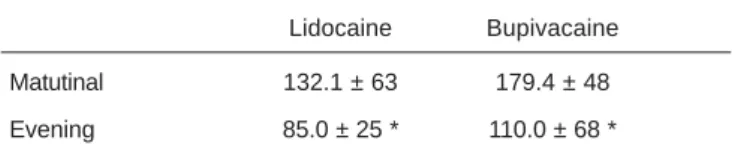
As can be seen in Chart I, the spinal administration of local anesthetics (LA) associated with other pharmacological agents or not has been the main technique in toco analgesia for vaginal delivery or cesarean section for over a centu-ry12,17,56-61. Blockade of voltage-dependent sodium channels is responsible for the analgesic property of LAs at the site of administration in the nerve fiber, by inhibiting the action potential (afferent sensory blockade). The spinal injection of LA reduces the plasma levels of adrenaline, contributing for an increase in uteroplacental perfusion by reducing auto-nomous response to stress. The local anesthetic action (latency, duration of analgesia, and toxicity) shows circadian variability: greater diuturnal potency, especially in the evening. Reinberg and Reinberg observed that the duration of the lo-cal anesthetic effect of infiltrative anesthesia in the forearm with equal doses of lidocaine, i.e., 21 minutes (9 a.m.) versus 51 mint (4 p.m.), was increased two-fold59. It also has been observed a reduction in the latency of spinal block with 0.5% bupivacaine and 5% lidocaine in the evening than in the mor-ning (Table I) 60. Debon et al. detected a maximal analgesic effect of the epidural administration of ropivacaine between 1 and 7 p.m. (117 min), and shorter nocturnal analgesia (91 min) between 7 p.m. and 1 a.m.61. Several mechanisms would be involved in the greater toxicity and analgesic efficacy in the evening of the LAs used more often in toco analgesia: bupivacaine, ropivacaine, and lidocaine. First, faster con-duction in nerve fibers in the evening makes the voltage-time-dependent blockade of LAs more evident; circadian changes in the ionic permeability of axonal membrane as a function of the higher sympathetic activity in the evening, since axonal efflux of potassium is lower at 3 p.m.; increase in CSF tem-perature in late afternoon can reduce the pKa of LAs (lower dissociation), increasing the diffusion capacity, ensuring shorter latency; finally, the variability of the negative partici-pation of progesterone in cardiac inotropism can increase the evening cardiotoxicity of bupivacaine. Do not forget that pain is less severe in the afternoon than at night, and that the analgesic action of adjuvant drugs (opioids, adrenaline, clonidine) follows a different circadian pattern than LAs. One can conclude that the time of the spinal injection of LAs influences maximal toco analgesia in the afternoon due to the shorter duration in the morning and at night (approxi-mately 28%)56-61.
Table I – Analgesia Latency (Seconds) of the Matutinal and Evening Subarachnoid Administration of 5% Lidocaine and 0.5% Hyperbaric Bupivacaine148.
Lidocaine Bupivacaine
Matutinal 132.1 ± 63 179.4 ± 48
Evening 85.0 ± 25 * 110.0 ± 68 *
2. Opioids
Labor pain is more severe at night because of the nocturnal acrophase of pro-nociceptive mediators (histamine, PGE, oxytocin, cytokines) and reduction of melatonin by excessive artificial illumination, associated with the exhaustion and sleep deprivation of the parturient7,8,16. Three points are relevant: placebos can have 30 to 40% of analgesic efficacy; the difference in duration of the analgesic effect is about 30% between acrophase and batiphase; finally, the greater intensity of nocturnal pain requires larger doses of opioids62. Consumption of opioids as surgical analgesics is lower in the morning: a 15% to 40% day-night difference. In spinal blocks for labor analgesia, Pan et al. detected a 27% varia-tion in analgesia, with longer duravaria-tion (93 min) of the effects of subarachnoid fentanyl during the day (from noon to 6 p.m.) and shorter duration (69 min) at night between 8 p.m. and 2 a.m., probably due to variation in pain mediators or changes in the circadian affinity of opioid receptors64. For subarach-noid sufentanil, two peaks of maximal analgesic effect, with a 30% variation, were observed: shorter duration at midnight (78 min) and longer duration at noon (127 min) 62-64.
3. Hypnotics
Hypnotics are used to induce sleep and general anesthesia, as well as to maintain sleep and as sedatives. Circadian changes in the depressive activity of the CNS depend on the neuronal influx of chloride through GABAA receptors, whose susceptibility shows circadian and seasonal rhythmicity:
3.1 Barbiturates – Thiopental: in volunteers, it was more
effective and long-lasting at night due to facilitation of biological sleep, corresponding to the period of greater post-synaptic cerebral GABAergic activity.
3.2 Ethomidate and Propofol: Hypnotic activity depends on
the circadian rhythmicity of GABAergic receptor type A. Vale et al. observed greater hypnotic activity of ethomidate during nocturnal uterine curettage, with reduced incidence of myoclonia, and greater hypnotic activity (sleeping time) of propofol during rest in mice (Table II).
3.3 Benzodiazepines: The time of the day influences the
hy-pnotic, amnestic, and sedative activities of midazolam and diazepam, since the greater encephalic GABAergic activity in rodents is seen during rest. In short-term sedation, shorter elimination half-life of midazolam was observed at 2 p.m. (1.26h) and longer at 2 a.m. (1.57h). The duration of diaze-pam-induced hypnosis at night surpasses that of midazolam, especially due to the presence of several active metabolites, such as desmethyldiazepam. In NB, midazolam has a half-life of 6.3 h, and thiopental, 14.7h65-67.
4. General Anesthetics
Temporal variations the analgesic and toxic effects of inha-lational halogenated or intravenous anesthetics as a function of changes in the susceptibility of GABAergic type A and glutamate (NMDA and AMPA) receptors, the main targets of anesthetics, have been observed. In rodents, susceptibility and minimal alveolar concentration (MAC) of halothane sho-wed circadian variability, with higher toxicity and mortality during the resting period and an increase in MAC in the hours of greatest motor activity. Fukami et al. detected lower halo-thane consumption at night (between midnight and 6 a.m.) 68.
5. Neuromuscular Blockers (NMB)
The natural choice is between the shorter acting neuromus-cular blocker (cisatracurium) or faster induction (rocuronium and succinylcholine). Tiredness and muscular fatigue are present in parturients with diurnal activities, which would in-dicate a lower dose of NMB for tracheal intubation in gene-ral anesthesia for cesarean section. Rocuronium caused shorter muscular relaxation during the activity period in mice69.
Reginal blocks caused a revolution in obstetric care, espe-cially in cesarean sections, because the mother remains conscious for the first contacts and caresses. The impact of timing in obstetric anesthesiology routine is apparently minimal. However, studies on the presence of oscillators (pacemakers) in the CNS capable of influencing temporal organic variability (chronesthesia) and the evolution to internal temporal disorder have contributed for better understanding of the variability of the pharmacokinetics and pharmacodynamics of anesthetics and their adjuvant regarding pain, memory, muscle strength, and labor. Ignoring existing chronopharmacological information on analgesics or chronobiological modifications regarding physiological parameters or morbid states can induce errors type I and/or II on studies, since biological rhythms are always present in cells, tissues, and systems of all parturients. Chronobio-logical studies on chronesthesia, chrono-energy, and chro-notoxicity emphasize and disseminate the medical and obstetric importance of circadian rhythmicity, as well as the study on the impact of the routine inclusion of time in the protocols of future basic and clinical studies on the cost/ benefit ratio of general and regional anesthesia in obstetrics. Table II – Time of Anesthetic Induction (Seconds), Sleep
Duration (Minutes), and Time of Awakening (Minutes) with the Association of Ethomidate and Fentanyl (Pre-anesthetic).
Induction Sleep Unconsciousness
(sec) (min) (min)
Morning 60.0 ± 14 9.5 ± 2 11.1 ± 1
Afternoon 65.8 ± 5 8.3 ± 2 10.0 ± 3
Night 49.5 ± 12 8.0 ± 2 10.3 ± 3
Dawn 43.3 ± 6* 12.2 ± 2* 13.2 ± 2*
REFERÊNCIAS – REFERENCES
01. Maddox J - O Que Falta Descobrir. Explorando os segredos do universo, as origens da vida e o futuro da espécie humana, 3ª Ed, Rio de Janeiro, Campus,1999;163-271.
02. Rosenberg KR, Trevathan WR - The Evolution of Human Birth. New York, Sci Am, 2005;45-102
03. Bryson B - Breve História de Quase Tudo. Do Big Bang ao Homo sapiens, 1ª Ed, São Paulo, Companhia das Letras, 2003;247-475. 04. Gleiser M - A Dança do Universo: Dos Mitos da Criação ao Big
Bang, 2ª Ed, São Paulo, Companhia das Letras, 1997;17-93. 05. Wranghan R, Peterson D - O macho. As origens da
Agressivi-dade Humana, 1ª Ed, Rio de Janeiro, Objetiva, 1996;45-98. 06. Leite S - Cartas dos primeiros jesuítas do Brasil, Comissão do IV
Centenário da Cidade de São Paulo, São Paulo, 1954
07. Lowe NK - The nature of labor pain. Am J Obstet Gynecol, 2002;186(5 suppl):s16-24.
08. Thornton JG, Lilford RJ - Active management of labour: current knowledge and research issues. BMJ, 1994;309:366-369. 09. Smolensky MH, D’Alonzo GE - Medical chronobiology: concepts
and applications. Am Rev Respir Dis, 1993;147:s2-19
10. Aya AGM, Vialles N, Mangin R et al. - Chronobiology of labour pain perception: an observational study. Br J Anaesth, 2004;93: 451-453
11. Chassard D, Bruguerolle B - Chronobiology and anesthesia. Anesthesiology, 2004;100:413-427.
12. Vale NB, Delfino J - As nove premissas anestesiológicas da bíblia. Rev Bras Anestesiol, 2003;53:127-136.
13. Gordon R - A Assustadora História da Medicina. Rio de Janeiro, Ediouro, 1996:49-103.
14. Greene NM - A consideration of factors in the discovery of anesthesia and their effects on its development. Anesthesiology, 1971;35:515-522.
15. Fink BR - Leaves and needles: the introduction of surgical local anesthesia. Anesthesiology, 1985;63:77-83.
16. Datta S - Common problems in obstetric anesthesia. 2th Ed, St Louis, Mosby, 1995;113.
17. Caton D, Corry MP, Frigoletto FD et al. - The nature and ma-nagement of labor pain: executive summary Am J Obstet Gynecol, 2002;186(5 suppl):s1-15.
18. Howell CJ - Epidural versus non-epidural analgesia for pain relief in labour. Cochrane Database Syst Rev 2000;2:CD000331 19. Goldberg AB, Cohen A, Lieberman E – Nulliparas’ preferences for
epidural analgesia: their effects on actual use in labor. Birth, 1999;26:139-143.
20. Leboyer F - Nascer Sorrindo (Pour une naissance sans violence). S Paulo, Ground, 1981:47
21. Hodnett ED - Pain and women’s satisfaction with the experience of childbirth: a systematic review. Am J Obstet Gynecol 2002;186(5 suppl):s160-172.
22. Huntley AL, Coon JT, Ernst E - Complementary and alternative medicine for labor pain: a systematic review. Am J Obstet Gy-necol, 2004;191:36-44.
23. Bricker L, Lavender T - Parenteral opioids for labor pain relief: a sys-tematic review. Am J Obstet Gynecol, 2002;186(5 suppl):s94-109. 24. Rosen MA - Nitrous oxide for relief of labor pain: a systematic
review. Am J Obstet Gynecol, 2002;186(5 suppl):s110-126. 25. Brill S, Gurman GM, Fisher A - A history of neuraxial administration
of local analgesics and opioids. Eur J Anaesthesiol, 2003;20: 682-689.
26. Eddleston JM, Holland JJ, Griffin RP et al. - A double-blind comparison of 0.25% ropivacaine and 0.25% bupivacaine for extradural analgesia in labour. Br J Anaesth, 1996;76:66-71. 27. Leighton BL, DeSimone CA, Norris MC et al. - Intrathecal narcotics
for labor revisited: the combination of fentanyl and morphine
intrathecally provides rapid onset of profound analgesia. Anesth Analg, 1989;69:122-125.
28. Campbell DC, Camann WR, Datta S - The addition of bupivacaine to intrathecal sufentanil for labor analgesia. Anesth Analg, 1995:81:305-309.
29. Roelants F, Lavand’homme P, Mercier-Fuzier V - Epidural administration of neostigmine and clonidine to induce labor analgesia: evaluation of efficacy and local anesthetic-sparing effect. Anesthesiology, 2005;102:1205-1210.
30. Vale NB - Sesquicentenário da Anestesia Obstétrica. Rev Bras Anestesiol, 1998;48:424-440.
31. Wong CA, Scavone BM, Peaceman AM et al. - The risk of cesarean delivery with neuraxial analgesia given early versus late in labor. N Eng J Med, 2005;352:655-665.
32. McCarroll CP, Paxton LD, Elliott P et al. - Use of remifentanil in a patient with peripartum cardiomyopathy requiring caesarean section Br J Anaesth, 2001;86:135-38.
33. Johanson R, Newburn M, Macfarlane A - Has the medicalisation of childbirth gone too far? BMJ, 2002;324:892-895.
34. Hopkins K - Are Brazilian women really choosing to deliver by cesarean? Soc Sci Med, 2000;51:725-740.
35. Sornette D - Predictability of catastrophic events: material rupture, earthquakes, turbulence, financial crashes, and human birth. Proc Natl Acad Sci USA, 2002;99(suppl 1):2522-2529.
36. Mattingly JE, D’Alessio J, Ramanathan J - Effects of obstetric analgesics and anesthetics on the neonate: a review. Paediatr Drugs, 2003;5:615-627
37. Harger JH- Cerclage and cervical insufficiency: an evidence-based analysis. Obstet Gynecol, 2002;100:1313-1327. 38. Webb DA, Culhane J - Time of day variation in rates of obstetric
intervention to assist in vaginal delivery. J Epidemiol Community Health, 2002;56:577-578.
39. Trap R, Helm P, Lidegaard O et al. - Premature rupture of the fetal membranes, the phases of the moon and barometer readings. Gynecol Obstet Invest, 1989;28:14-18.
40. Kardong-Edgren S - Full moon, barometric pressure, and human birth. J Perinat Educ, 1995;4:21-25.
41. Morton-Pradhan S, Bay RC, Coonrod DV - Birth rate and its correlation with the lunar cycle and specific atmospheric conditions. Am J Obstet Gynecol, 2005;192:1970-1973. 42. Gaspar S, Moreno C, Menna-Barreto L - Os plantões médicos,
o sono e a ritmicidade biológica. Rev Assoc Med Bras, 1998;44: 239-245.
43. Aya AGM, Mangin R, Robert C et al. - Increased risk of uninten-tional dural puncture in night-time obstetric anesthesia. Can J Anaesth, 1999;46:665-669.
44. Crawford JS, Lewis M, Davies P - Maternal and neonatal res-ponses related to the volatile agent used to maintain anaesthesia at caesarean section.Br J Anaesth, 1985;57:482-487.
45. Ralston DH, Shnider SM, DeLorimier AA - Effects of equipotent ephedrine, metaraminol, mephentermine, and methoxamine on uterine blood flow in the pregnantg ewe. Anesthesiology, 1974;40:354-370.
46. Mendelson C - The aspiration of stomach contents into the lungs during obstetric anesthesia. Am J Obstet Gynecol, 1946;52:191-205.
47. Lindow SW, Newham A, Hendricks MS et al. - The 24-hour rhythm of oxytocin and beta-endorphin secretion in human pregnancy. Clin Endocrinol, 1996;45:443-446.
48. Dawood MY - Pharmacologic stimulation of uterine contraction. Semin Perinatol, 1995;19:73-83.
50. Decousus HA, Croze M, Levi FA et al. - Circadian changes in anticoagulant effect of heparin infused at a constant rate. Br Med J (Clin Res Ed), 1985;290:341-344.
51. Nyquist PA; Brown Jr RD; Wiebers DO et al. - Circadian and seasonal occurrence of subarachnoid and intracerebral hemorrhage. Neurology, 2001;56:190-193.
52. Nomura ML, Surita FGC, Parpinelli MA et al. - Hemoglobinúria paroxística noturna e gravidez Rev Bras Ginecol Obstet, 2004; 26:579-582.
53. Larry CD, Yeo S - The circadian rhythm of blood pressure during pregnancy. J Obstet Gynecol Neonatal Nurs, 2000;29:500-508. 54. Sutherland ER, Ellison MC, Kraft M et al. - Elevated serum
melatonin is associated with the nocturnal worsening of asthma. J Allergy Clin Immunol, 2003;112:513-517.
55. Reinberg A, Sidi E, Ghata J - Circadian variations of adreno-cortical activity and nocturnal paroxysm in asthma. Ann Endo-crinol (Paris), 1963;24:452-459.
56. Aya AGM, Vialles N, Mangin R et al. - Chronobiology of labour pain perception: an observational study. Br J Anaesth, 2004;93: 451-453.
57. Viscomi CM, Rathmell JP, Pace NL - Duration of intrathecal labor analgesia: early versus advanced labor. Anesth Analg, 1997;84:1108-1112.
58. Zhang J, Klebanoff MA, DerSimonian R - Epidural analgesia in association with duration of labor and mode of delivery: a quantitative review. Am J Obstet Gynecol, 1999;180:970-977. 59. Reinberg A, Reinberg MA - Circadian changes of the duration of
action of local anaesthetic agents. Naunyn Schmiedebergs Arch Pharmacol, 1977;297:149-152.
60. Vale NB, Silva Neto JD, Magalhães Fo EB et al. - Anestesia subaracnoidea com bupivacaína 0,5% e lidocaína 2% isentas de glicose e em dose fixa - da eficácia/toxicidade matutina e ves-pertina. Rev Bras Anestesiol, 1995;45:301-308.
61. Debon R, Chassard D, Duflo F et al. - Chronobiology of epidural ropivacaine: variations in the duration of action related to the hour of administration. Anesthesiology, 2002;96:542-545. 62. Labrecque G, Vanier MC - Biological rhythms in pain and in the
effects of opioid analgesics. Pharmacol Ther, 1995;68:129-147. 63. DeBalli P, Breen TW - Intrathecal opioids for combined spinal-epidural analgesia during labour. CNS Drugs, 2003;17:889-904. 64. Pan PH, Lee S, Harris L - Chronobiology of subarachnoid
fentanyl for labor analgesia. Anesthesiology, 2000;103:595-599. 65. Vale NB, Vale LFB, Delfino J - Variação circadiana do efeito do etomidato associado ao fentanil na anestesia para curetagem uterina Rev Bras Anestesiol, 1999;49:227-233.
66. Magalhães Fº E, Menezes AAL, Capriglione M et al. - Variação circadiana do efeito hipnótico do propofol em camundongos. Rev Bras Anestesiol, 1992;42:325-329.
67. Bach V, Carl P, Ravlo O et al. - A randomized comparison bet-ween midazolam and thiopental for elective cesarean section anesthesia: III. Placental transfer and elimination in neonates. Anesth Analg, 1989;68:238-242.
68. Fukami N, Kotani T, Shimoji K et al. - Circadian rhythm and anesthesia. Masui, 1970;19:1235-1238.
69. Cheeseman JF, Merry AF, Pawley MDM et al. -The effect of time of day on the duration of neuromuscular blockade elicited by rocuronium. Anaesthesia, 2007;62:1114-1120.
RESUMEN
Vale NB, Vale LFB, Cruz JR - El Tiempo y la Anestesia Obstétrica: de la Cosmología Caótica a la Cronobiología.
JUSTIFICATIVA Y OBJETIVOS: Ciclos temporales (claro/oscuro; nacer/morir, etc.), y las condiciones ambientales (sincronizadores), influyen en la fisiología del parto en función de la existencia de relojes endógenos (osciladores), que interactúan con pistas socia-les diuturnas. En esta revisión, fueron abordados los parámetros anestésico-obstétricos cíclicos más importantes en la atención a la parturiente.
CONTENIDO: Análisis cronobiológico de los principales eventos de la fisiopatología obstétrica de la Mulier sapiens: I) Período de la embriogénesis y riesgo de teratogénesis; II) de la prematuridad al postdatismo: del parto eutócico al cerclaje uterino; III) La noche y el parto: mayor incidencia nocturna del parto (facilitación fisioló-gica), y diurna de la cesárea (opción del obstetra); IV) La luna y el parto (resultado no conclusivo); V) guardia nocturna en la Anestesia Obstétrica: contingencia profesional de más riesgos; VI) Tiempos de la cesárea: retirada fetal: tiempo UD (uterotomy – delivery), el más corto posible; corrección eficaz de la hipotensión arterial y valorización del tiempo de ayuno preanestésico; VII) Variación circadiana de la distocia: dolor; contracción uterina; pérdida san-guínea; hipertensión arterial sistémica (HAS); riesgo de alergia y asma brónquica. En la fase nocturna, existe una mayor intensidad de contracción y más riesgos de hemorragia, de alergia y de asma. En contraposición, hay una falta de variación circadiana de la HAS en la eclampsia; VIII) Cronofarmacología obstétrica: anestésicos locales, analgésicos, hipnóticos, anestésicos generales y bloqueadores neuromusculares. La cronergia explica el pico anal-gésico matinal de los opioides, el vespertino de los anestésicos locales y el nocturno de los anestésicos generales inhalatorios.