*Correspondence: Ahmad Ghorbani. Pharmacological Research Center of Medicinal Plants, School of Medicine, Mashhad University of Medical Sci-ences, Mashhad, Iran. E-mail: [email protected]
R
e
Pharmaceutical Sciences vol. 49, n. 3, jul./sep., 2013
Best herbs for managing diabetes: A review of clinical studies
Ahmad Ghorbani
Pharmacological Research Center of Medicinal Plants, School of Medicine, Mashhad University of Medical Sciences, Iran
Diabetes mellitus is a public health problem which leads to serious complications over time. Experimentally, many herbs have been recommended for treating diabetes. In most cases, however, the recommendations are based on animal studies and limited pieces of evidence exist about their clinical usefulness. This review focused on the herbs, the hypoglycemic actions of which have been supported by three or more clinical studies. The search was done in Google Scholar, Medline and Science Direct databases using the key terms diabetes, plants, herbs, glucose and patients. According to the clinical studies, Aegle marmelos, Allium cepa,Gymnema sylvestre, Momordica charantia, Ocimum sanctum, Nigella sativa,Ocimum sanctum, Panax quinquefolius, Salacia reticulate, Silybum marianum and Trigonella foenum-graecum have shown hypoglycemic and, in some cases, hypolipidemic activities in diabetic patients. Among them, Gymnema sylvestre, Momordica charantia, Silybum marianum and Trigonella foenum-graecum have acquired enough reputation for managing diabetes. Thus, it seems that physicians can rely on these herbs and advise for the patients to improve management of diabetes.
Uniterms: Medicinal plants/diabetes treatment. Diabetes/treatment. Diabetes/clinical trials.
Diabetes mellitus é um problema de saúde pública que leva a complicações graves ao longo do tempo. Experimentalmente, muitas ervas têm sido recomendadas para o tratamento da diabetes. Contudo, na maior parte dos casos as recomendações são baseadas em estudos em animais e existem evidências limitadas sobre a sua utilidade clínica. Esta revisão tem como foco as ervas nas quais as ações hipooglicêmicas são apoiadas por três ou mais estudos clínicos. Realizou-se pesquisa no Google Scholar, Medline e Science Direct utilizando palavras-chave diabete, plantas, ervas, glicose e pacientes. Segundo os estudos clínicos, Aegle marmelos, Allium cepa, Gymnema sylvestre, Momordica charantia, Ocimum sanctum, Nigella sativa, Ocimum sanctum, Panax quinquefolius, Salacia reticulate, Silybum marianum e Trigonella foenum-graecum mostraram atividade hipoglicêmica e, em alguns casos, hipolipidêmica em pacientes diabéticos. Entre elas, Gymnema sylvestre, Momordica charantia, Silybum marianum e Trigonella foenum-graecum apresentam grande reputação no manejamento da diabetes. Portanto, parece que os médicos podem coniar nessas ervas e aconselhar aos pacientes para que melhorem o tratamento da diabetes.
Unitermos: Planta medicinais/tratamento da diabetes. Diabetes/tratamento. Diabetes/ensaios clínicos.
INTRODUCTION
Diabetes mellitus is a growing public health problem in both developed and developing countries. According to the report of World Health Organization (August, 2011), 346 million people have diabetes worldwide. It is also estimated that 3.4 million patients died from diabetes-related complications in 2004. Without urgent action, this number is likely to double by 2030. Generally,
diabetes is classiied to two main types: type-1 diabetes
(T1D), previously known as insulin-dependent diabetes mellitus, and type-2 diabetes (T2D), formerly called non-insulin-dependent diabetes mellitus. Patients with
T1D show a state of insulin deiciency because of severe defect in islet β-cell function while T2D is characterized
by a combination of resistance to action of insulin and
for diabetes are oral hypoglycemic drugs including insulin sensitizers (biguanides, thiazolidinediones), insulin
secretagogues (sulfonylureas, meglitinides), α-glucosidase
inhibitors, incretin agonists and dipeptidyl peptidase-4 inhibitors (Lorenzati et al., 2010). Although early onset complications of diabetes can be controlled by oral hypoglycemic drugs/insulin treatment, serious late onset complications emerge in many patients (Tzoulaki et al., 2009). Furthermore, clinical uses of the current drugs are accompanied by unpleasant side effects such as severe hypoglycemia, lactic acidosis, peripheral edema and abdominal discomfort (Lorenzati et al., 2010). Therefore, the search for new antidiabetic agents with more effectiveness and less side effects has been continued.
Medicinal plants have always been an important source for finding new remedies for human health problems. Traditionally, numerous herbs have been recommended for treatment of diabetes. Also, antidiabetic effects of so many plants have been reported by many researchers. In most cases, however, these reports are
conirmed by animal models and even in vitro studies and limited evidence exists about their clinical usefulness. The current review focused on the medicinal plants, the hypoglycemic actions of which have been supported by different clinical studies on diabetic patients.
RESEARCH METHODOLOGY
The search was done in databases of Google Scholar, Medline and Science Direct, using the key terms diabetes, plants, herbs, glucose and Patients. Only those medicinal plants with hypoglycemic actions shown by at least three clinical studies were incorporated in the manuscript. Antidiabetic effects of some plants (e.g. Opuntia streptacantha, Ipomoea batatas, Urtica dioica) have been reported by replicated studies of only one group of researchers. Results of these clinical studies have not been included in this paper.
ANTIDIABETIC HERBS
Aegle marmelos
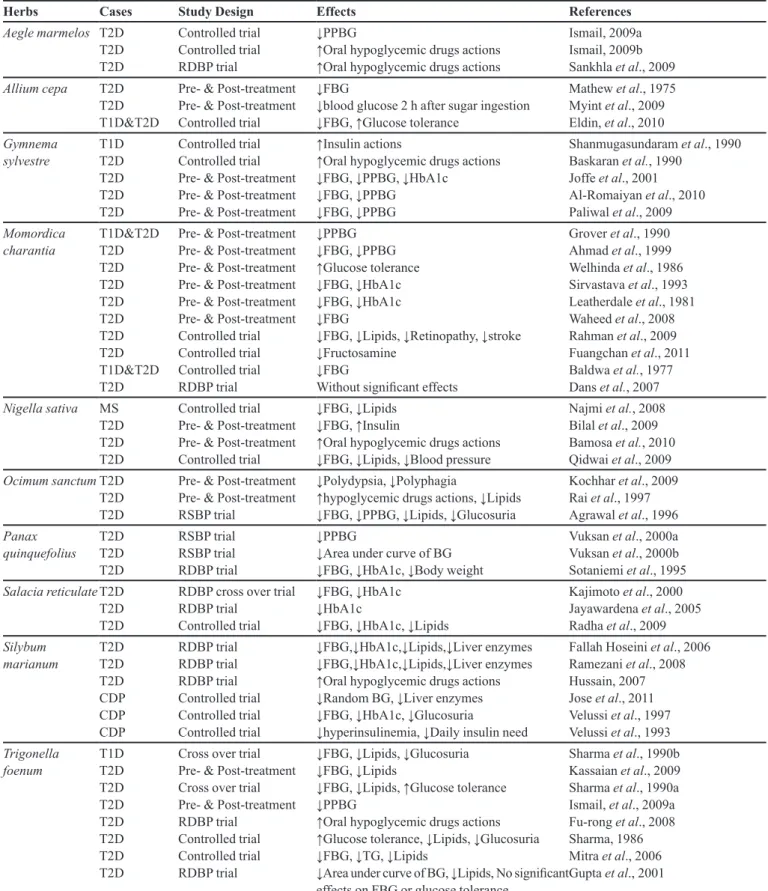
Aegle marmelos, also known as bael, has been reported to have a number of medicinal attributes including antidiabetic effects. In a study by Ismail (2009a), twenty T2D patients with postprandial blood glucose (PPBG) of 201 ± 6 mg/dL were given decoction of 5 g A. marmelos leaf powder once a day. After 16 weeks, their PPBG
signiicantly decreased to 159 ± 5 mg/dL. In another study,
it was also shown that this decoction (5 g/day for 1 month)
potentiated hypoglycemic effect of standard oral drugs in
T2D patients (Ismail, 2009b). The same inding was also
reported by Sankhla et al. (2009). In their double blind placebo trial, T2D patients were given sulfonylurea drug plus A. marmelos leaves (2 g/twice a day) or sulfonylurea plus placebo. After 8 weeks, the combined therapy had more effects on the level of fasting blood glucose (FBG), PPBG and urinary glucose (Table I).
Allium cepa
Preliminary, Mathew and Augusti (1975) reported that oral consumption of Allium cepa (onion) can improve glycemic control in diabetes. Acute hypoglycemic effect of A. cepa was also observed in a self-controlled study on twenty patients with T2D. It was also able to attenuate (37%) rise in plasma glucose 2 h after glucose ingestion (Myint et al., 2009). More recently, it was shown that intake of 100 g A. cepa can decrease FBG level and improve glucose tolerance test (GTT) in both T1D and T2D patients (Eldin et al., 2010).
Gymnema sylvestre
Accumulating pieces of evidence demonstrates that leaves of Gymnema sylvestre (Gurmar, Meshashringi, Merasingi, Kavali, Dhuleti) can improve glycemic control in diabetes. Shanmugasundaram et al. (1990) evaluated effectiveness of G. sylvestre leaf extract in controlling hyperglycaemia in 27 T1D patients under insulin therapy. The extract (400 mg/day for 18 months) significantly decreased FBG, HbA1c and serum lipids of the patients when compared with a similar group who received only insulin. Also, administration of this extract (400 mg/day for 18-20 months) as a supplement to conventional oral hypoglycemic drugs reduced FBG and HbA1c of T2D patients and drug dosage could be decreased (Baskaran et al., 1990). In a study by Joffe and Freed (2001), diabetic patients were given a product containing G. sylvestre leaf extract (400 mg) twice a day. After 3 months, FBG and PPBG levels decreased by 11 and 13%, respectively. A 0.6-0.8% decrease was also observed in HbA1c. In another trial, treatment of T2D patients with a G. sylvestre-based
product (1 g/day for 2 months) led to signiicant decreases
TABLE I - Best herbs for managing diabetes
Herbs Cases Study Design Effects References
Aegle marmelos T2D T2D T2D Controlled trial Controlled trial RDBP trial ↓PPBG
↑Oral hypoglycemic drugs actions ↑Oral hypoglycemic drugs actions
Ismail, 2009a Ismail, 2009b Sankhla et al., 2009
Allium cepa T2D
T2D T1D&T2D
Pre- & Post-treatment Pre- & Post-treatment Controlled trial
↓FBG
↓blood glucose 2 h after sugar ingestion ↓FBG, ↑Glucose tolerance
Mathew et al., 1975 Myint et al., 2009 Eldin, et al., 2010
Gymnema sylvestre T1D T2D T2D T2D T2D Controlled trial Controlled trial Pre- & Post-treatment Pre- & Post-treatment Pre- & Post-treatment
↑Insulin actions
↑Oral hypoglycemic drugs actions ↓FBG, ↓PPBG, ↓HbA1c
↓FBG, ↓PPBG ↓FBG, ↓PPBG
Shanmugasundaram et al., 1990 Baskaran et al., 1990
Joffe et al., 2001 Al-Romaiyan et al., 2010 Paliwal et al., 2009
Momordica charantia T1D&T2D T2D T2D T2D T2D T2D T2D T2D T1D&T2D T2D
Pre- & Post-treatment Pre- & Post-treatment Pre- & Post-treatment Pre- & Post-treatment Pre- & Post-treatment Pre- & Post-treatment Controlled trial Controlled trial Controlled trial RDBP trial ↓PPBG ↓FBG, ↓PPBG ↑Glucose tolerance ↓FBG, ↓HbA1c ↓FBG, ↓HbA1c ↓FBG
↓FBG, ↓Lipids, ↓Retinopathy, ↓stroke ↓Fructosamine
↓FBG
Without signiicant effects
Grover et al., 1990 Ahmad et al., 1999 Welhinda et al., 1986 Sirvastava et al., 1993 Leatherdale et al., 1981 Waheed et al., 2008 Rahman et al., 2009 Fuangchan et al., 2011 Baldwa et al., 1977 Dans et al., 2007
Nigella sativa MS T2D T2D T2D
Controlled trial Pre- & Post-treatment Pre- & Post-treatment Controlled trial
↓FBG, ↓Lipids ↓FBG, ↑Insulin
↑Oral hypoglycemic drugs actions ↓FBG, ↓Lipids, ↓Blood pressure
Najmi et al., 2008 Bilal et al., 2009 Bamosa et al., 2010 Qidwai et al., 2009
Ocimum sanctumT2D T2D T2D
Pre- & Post-treatment Pre- & Post-treatment RSBP trial
↓Polydypsia, ↓Polyphagia
↑hypoglycemic drugs actions, ↓Lipids ↓FBG, ↓PPBG, ↓Lipids, ↓Glucosuria
Kochhar et al., 2009 Rai et al., 1997 Agrawal et al., 1996
Panax quinquefolius T2D T2D T2D RSBP trial RSBP trial RDBP trial ↓PPBG
↓Area under curve of BG ↓FBG, ↓HbA1c, ↓Body weight
Vuksan et al., 2000a Vuksan et al., 2000b Sotaniemi et al., 1995
Salacia reticulateT2D T2D T2D
RDBP cross over trial RDBP trial
Controlled trial
↓FBG, ↓HbA1c ↓HbA1c
↓FBG, ↓HbA1c, ↓Lipids
Kajimoto et al., 2000 Jayawardena et al., 2005 Radha et al., 2009
Silybum marianum T2D T2D T2D CDP CDP CDP RDBP trial RDBP trial RDBP trial Controlled trial Controlled trial Controlled trial ↓FBG,↓HbA1c,↓Lipids,↓Liver enzymes ↓FBG,↓HbA1c,↓Lipids,↓Liver enzymes ↑Oral hypoglycemic drugs actions ↓Random BG, ↓Liver enzymes ↓FBG, ↓HbA1c, ↓Glucosuria
↓hyperinsulinemia, ↓Daily insulin need
Fallah Hoseini et al., 2006 Ramezani et al., 2008 Hussain, 2007 Jose et al., 2011 Velussi et al., 1997 Velussi et al., 1993
Trigonella foenum T1D T2D T2D T2D T2D T2D T2D T2D
Cross over trial Pre- & Post-treatment Cross over trial Pre- & Post-treatment RDBP trial
Controlled trial Controlled trial RDBP trial
↓FBG, ↓Lipids, ↓Glucosuria ↓FBG, ↓Lipids
↓FBG, ↓Lipids, ↑Glucose tolerance ↓PPBG
↑Oral hypoglycemic drugs actions ↑Glucose tolerance, ↓Lipids, ↓Glucosuria ↓FBG, ↓TG, ↓Lipids
↓Area under curve of BG, ↓Lipids, No signiicant effects on FBG or glucose tolerance
Sharma et al., 1990b Kassaian et al., 2009 Sharma et al., 1990a Ismail, et al., 2009a Fu-rong et al., 2008 Sharma, 1986 Mitra et al., 2006 Gupta et al., 2001
CDP: Cirrhotic diabetic patients; FBG: fasting blood glucose; MS: Metabolic syndrome; PPBG: postprandial blood glucose; RDBP: Randomized double-blind placebo; RSBP: Randomized Single-blind placebo; T1D: type-1 diabetes; T2D: type-2 diabetes;
Momordica charantia
Momordica charantia (Karela, Ampalaya, bitter melon, bitter gound) has acquired a reputation for management of diabetes. It has passed several animal studies and its clinical trials have been started since many years ago. Administration of M. charantia seeds to six
T1D and fourteen T2D patients signiicantly decreased
PPBG level in both patient groups (Grover Gupta, 1990). Also, drinking an aqueous suspension of the vegetable pulp resulted in remarkable reduction of FBG and PPBG levels in 86 out of 100 cases with moderate T2D (Ahmad et al., 1999). Similarly, fruit juice of M. charantia was
found to signiicantly improve glucose tolerance in 73%
of eighteen maturity onset diabetic patients (Welhinda et al., 1986). In a case series study, diabetic patients were given aqueous extract (7 cases) or dried powder (5 cases) of M. charantia fruit, as a single dose or thrice a day, respectively. After 3 weeks, the extract and powder caused 54% and 25% reduction in mean blood glucose, respectively (Sirvastava et al., 1993). Also, HbA1c was reduced from 8.37 to 6.1% by the extract. In line
with these indings, Leatherdale et al. (1981) found a
decreased HbA1c in 9 patients with T2D who consumed fried M. charantia fruits (0.23 kg/day for 8-11 weeks) and also an improvement of glucose tolerance in the patients who had taken 50 ml of M. charantia juice. Consumption of dried powder of M. charantia fruit showed reduction in FBG of 10 T2D patients with no history of previous medication and 10 T2D patients with history of taking oral hypoglycemic agents. The same effect was also obtained with aqueous and alcoholic extracts of M. charantia fruit (Waheed et al., 2008). Recently, Rahman et al. (2009) compared effects of M. charantia and rosiglitazone, a thiazolidinedione derivative, between 25 T2D patients treated with M. charantia juice (55 mL/day for 5 months). The study showed that M. charantia was more effective in the management of diabetes (FBG, total cholesterol and serum sialic acid) and its related complications (retinopathy and myocardial infarction) than rosiglitazone. On the other hand, Fuangchan et al. (2011) reported that hypoglycemic effect of M. charantia was less than metformin. Besides, in their multicenter randomized double-blind study, fructosamine level
signiicantly decreased in T2D patients who received
M. charantia for 4 weeks. Unlike the above mentioned studies, Dans et al. (2007) reported no significant decrease in FBG and total cholesterol level of T2D patients treated with a M. charantia product (2 capsules/ three times daily) given for 3 months. They only observed a 0.24% decline in HbA1c following the intervention.
In an attempt to test active compound underlying antidiabetic effect of M. charantia, a controlled clinical trial was performed on 9 diabetic patients using an
insulin-like agent puriied from this plant. Subcutaneous
injection of the agent led to a remarkable fall in the blood glucose level after 30-60 min (Baldwa et al., 1977). Also, a hypoglycemic peptide (polypeptide-p) was isolated from fruits, seeds and tissues of M. charantia, which showed hypoglycemic effect when being subcutaneously administered to diabetic patients (Khanna et al., 1981).
Nigella sativa
Seeds of Nigella sativa (black seed) have been used for centuries as a natural remedy for various ailments. Hypoglycemic, antioxidant, hypotensive, hypolipidemic and antimicrobial effects of N. sativa have been experimentally reported (Mehta et al., 2012; Shaiee-Nick et al., 2012). With clinical studies, its therapeutic effect in metabolic syndrome and diabetes has been shown in recent years. Administration of N. sativa oil (2.5 mL twice a day for 6 weeks) to patients with metabolic
syndrome has signiicantly decreased FBG and LDL and
increased high density lipoprotein (HDL) levels (Najmi et al., 2008). A signiicant decrease in FBG and increase in insulin and SGOT of 41 T2D patients has been observed after a 40 day treatment with N. sativa oil. Levels of blood urea, SGPT, total leukocyte and platelet have remained unchanged after treatment with oil (Bilal et al., 2009). In a study, N. sativa seeds (1, 2 or 3 g/day) were added to antidiabetic drugs of 94 T2D patients. After three months,
a signiicant reduction occurred in FBG, PPBG and HbA1c
levels (Bamosa et al., 2010). Favorable impact of N. sativa on blood glucose, serum lipids and blood pressure was also reported by Qidwai et al. (2009).
Ocimum sanctum
A significant decrease in diabetic symptoms (polydypsia, polyphagia and tiredness) has been seen in 30 T2D patients consuming (2 g/day/for 3 months) leaf powder of Ocimum sanctum (Kochhar et al., 2009). One month dietary supplement with O. sanctum powder has also shown decreased FBG (21%) and glycated protein (11%), total cholesterol (11%), low density lipoprotein (LDL) (14%), very low density lipoprotein (VLDL) (16%) and triglyceride (TG) (16%) in 27 patients with T2D (Rai et al., 1997). Hypoglycemic and hypolipidemic effects
Panax quinquefolius
The most commonly used ginsengs are Panax ginseng (Korean or Chinese ginseng), Panax quinquefolius (American ginseng) and Panax japonicus (Japanese ginseng). American ginseng has been reported to attenuate PPBG level in 9 T2D patients. The area under curve of blood glucose is reduced by about 20% in patients receiving 3 g of ginseng (Vuksan et al., 2000a; Vuksan et al., 2000b). In a double blind placebo-controlled study, administration of ginseng (unknown species, 100 or 200 mg/day for 8 weeks) to 36 T2D patients significantly decreased FBG, HbA1c and body weight (Sotaniemi et al., 1995). In contrast with P. quinquefolius, more recently, Reeds et al. (2011) showed that P. ginseng can not improve glucose tolerance in newly diagnosed T2D patients.
Salacia reticulate
It has been shown that a diet containing aqueous extract from the stem of Salacia reticulate (240 mg/day for 6 weeks) can decrease FBG and HbA1c levels in T2D patients (Kajimoto et al., 2000). Also, a signiicant reduction in HbA1c has been reported in the patients receiving a preparation of S. reticulate tea for 3 months (Jayawardena et al., 2005). Clinical usefulness of S. reticulate consumption (2 g/day for 3 months) in the management of diabetes has been also observed in 30 patients (Radha, Amrithaveni, 2009).
Silybum marianum
The fame of Silybum marianum (milk thistle) seed in herbal medicine is owing to its therapeutic effects for
liver-related disorders. However, beneicial effects of S. marianum and its lavonolignans (silymarin) on reducing glucose and lipids have been also shown in diabetic patients (Dixit et al., 2007). In a 2-month randomized double blind clinical study, silymarin (200 mg thrice a day) could decrease FBG, HbA1c, total cholesterol, LDL, TG, serum glutamic oxalacetic transaminase (SGOT) and serum glutamic pyruvic transaminase (SGPT) in T2D patients (30 cases) receiving conventional therapy (Fallah Hoseini et al., 2006). Reduction in glucose, lipids and hepatic enzymes is consistent with the results of another trial on 25 T2D patients receiving the same dose of silymarin for 4 months (Ramezani et al., 2008). Beneficial effects of silymarin (200 mg/day) on FBG, HbA1c and PPBG have been also seen in T2D patients maintained on glibenclamide (Hussain, 2007). It has been also reported that silymarin administration to diabetic
patients with liver disease could reduce insulin resistance, endogenous insulin production and need for exogenous insulin administration (Jose et al., 2011; Velussi et al., 1993; Velussi et al., 1997). Oral consumption of silymarin
(600 mg/day for 4 months) signiicantly decreased FBG,
HbA1c and glucosuria in insulin-treated diabetics with alcoholic cirrhosis (Velussi et al., 1997). Also, in another study, percentage reduction in FBG, SGOT and SGPT was about 8, 29 and 35%, respectively, after a 5 month treatment of the patients with silymarin (Jose et al., 2011).
Trigonella foenum-graecum
Hypoglycemic effect of Trigonella foenum-graecum (fenugreek) seeds has been demonstrated in cell culture, animal models and human with more than 30 studies (Ghorbani, Rakhshandeh, 2012). In human studies, usefulness of fenugreek seeds has been reported in management of both T1D and T2D. Sharma et al. (1990b) showed that defatted T. foenum-graecum seeds
(100 g/day for 10 days) signiicantly reduced FBG, TG,
total cholesterol, LDL, VLDL and glucoseuria in patients with T1D. In another study, patients with T2D were placed on 10 g/day T. foenum-graecum seeds soaked in hot water (11 subjects) or mixed with yoghurt (7 subjects). After
8 weeks, FBG, TG and VLDL signiicantly decreased in
cases which received the seeds in soaked form (Kassaian et al., 2009). Similarly, addition of T. foenum-graecum seeds (100 g) to diets of patients with T2D for 10 (15 subjects) or 20 (15 subjects) days improved GTT and
led to signiicant decrease in FBG, TG and LVDL levels
administration of defatted T. foenum-graecum seeds
(25 g) for 3 weeks produced a signiicant improvement in GTT and insulin response and a signiicant decrease
in serum cholesterol and 24 h urinary glucose output. In this study, a single dose of whole seeds, defatted seeds, gum isolate and cooked seeds (but not degummed seeds) of T. foenum-graecum was also able to prevent the rise of plasma glucose after meal or glucose ingestion in non-diabetic subjects. Unlike the seeds, effect of T. foenum-graecum leaves on reducing blood glucose level was not consistent. While Sharma (1986) observed negative results with cooked leaves, Abdel-Barry et al. (2000) reported that 40 mg/kg of aqueous extract of T. foenum-graecum leaves can diminish blood glucose level of healthy subjects 4 h after ingestion, which may be due to methodological issues such as difference in methods of extract preparation.
CONCLUSION
Plants have always been an important source for finding new remedies for human diseases. Among hundreds of plants that have been studied for diabetes, only a small fraction has been tested in animal studies and is under clinical trials. The plants described in this paper, particularly Gymnema sylvestre, Momordica charantia and Trigonella foenum-graecum, had some clinical evidence for their antidiabetic effects. Therefore, it seems that physicians can rely on these herbs, at least as complementary therapeutics, along with current hypoglycemic drugs to improve management of diabetic patients.
Although a list of other plants could be also included in this paper, it is better to wait until more clinical pieces of evidence are available to support their hypoglycemic effect. For example, Allium sativum, Aloe vera, Azadirachta indica, Citrullus colocynthis, Eugenia jambolana, green tea, Morus indica, Pterocarpus marsupium, Phyllanthus amarus and Salacia oblonga, each of which has two supporting studies, could be on the list. On the other hand, regarding some herbs (e.g. Cinnamomum cassia), although a significant hypoglycemic effect has been found in some studies (Crawford, 2009; Khan et al., 2010; Mang et al., 2006), other reports have disapproved the
indings (Blevins et al., 2007; Suppapitiporn, Kanpaksi, 2006). Furthermore, in a number of studies, there are still
some methodological laws (e.g. small sample size, short
duration of trial and lack of control or placebo groups). Therefore, based on the currently available evidence, it
is too early for making conclusions on beneits of such
plants in diabetes.
Taken together, it seems that Gymnema sylvestre, Momordica charantia, Silybum marianum and Trigonella foenum-graecum have acquired enough reputation for their hypoglycemic action and physicians can advise them for patients to improve management of diabetes.
ACKNOWLEDGMENT
I thank Research Council of Mashhad University of Medical Sciences.
REFERENCES
ABDEL-BARRY, J.A.; ABDEL-HASSAN, I.A.; JAWAD, A.M.; Al-HAKIEM, M.H. Hypoglycaemic effect of aqueous extract of the leaves of Trigonella foenum-graecum
in healthy volunteers. East Mediterr. Health J., v.6,
p.83-88, 2000.
AGRAWAL, P.; RAI, V.; SINGH, R.B. Randomized placebo-controlled, single blind trial of holy basil leaves in patients
with noninsulin-dependent diabetes mellitus. Int. Clin.
Pharmacol. Ther.,v.34, p.406-409, 1996.
AHMAD, N.; HASSAN, M.R.; HALDER, H.; BENNOOR,
K.S. Effect of Momordica charantia (Karolla) extracts on
fasting and postprandial serum glucose levels in NIDDM
patients. Bangladesh Med. Res. Counc. Bull., v.25,
p.11-13, 1999.
AL-ROMAIYAN, A.; AL-ROMAIYAN, A.; LIU, B.; ASARE-ANANE, H.; MAITY, C.R.; CHATTERJEE, S.K.; KOLEY, N.; BISWAS, T.; CHATTERJI, A.K.; HUANG, G.C.; AMIEL, S.A.; PERSAUD, S.J.; JONES, P.M. A novel Gymnema sylvestre extract stimulates insulin secretion
from human islets in vivo and in vitro. Phytother. Res., v.24,
p.1370-1376, 2010.
BALDWA, V.S.; BHANDARI, C.M.; PANGARIA, A.; GOYAL, R.K. Clinical trial in patients with diabetes mellitus of an
insulin-like compound obtained from plant source. Upsala
J. Med. Sci., v.82, p.39-41, 1977.
BASKARAN, K.; AHAMATH, .K.; SHANMUGASUNDARAM, K.R.; SHANMUGASUNDARAM, E.R.B. Antidiabetic
effect of a leaf extract from Gymnema sylvestre in
non-insulin-dependent diabetes mellitus patients. J.
Ethnopharmacol., v.30, p.295-305, 1990.
BILAL, A.; MASUD, T.; UPPAL, A.M.; NAVEED, A.K. Effects of Nigella sativa oil on some blood parameters in type 2
diabetes mellitus patients. Asian J. Chem., v.21,
p.5373-5381, 2009.
BLEVINS, S.M.; LEYVA, M.J.; BROWN, J.; WRIGHT, J.; SCOFIELD, R.H.; ASTON, C.E. Effect of cinnamon on glucose and lipid levels in non insulin-dependent type 2
diabetes. Diabetes Care, v.30, p.2236-2237, 2007.
CRAWFORD, P. Effectiveness of cinnamon for lowering hemoglobin A1C in patients with type 2 diabetes: a
randomized, controlled trial. J. Am. Board Fam. Med., v.22,
p.507-512, 2009.
DANS, A.M.L.; VILLARRUZ, M.V.C.; JIMENO, C.A.; JAVELOSA, M.A.U.; CHUA, J.; BAUTISTA, R.; VELEZ,
G.G.B. The effect of Momordica charantia capsule
preparation on glycemic control in Type 2 Diabetes Mellitus
needs further studies. J. Clin. Epidemiol., v.60, p.554-549,
2007.
DESHPANDE, A.D.; HARRIS-HAYES, M.; SCHOOTMAN, M. Epidemiology of diabetes and diabetes-related
complications. Phys. Ther., v.88, p.1254-1264, 2008.
DIXIT, N.; BABOOTA, S.; KOHLI, K.; AHMAD, S.; ALI, J. Silymarin: a review of pharmacological aspects and
bioavailability enhancement approaches. Indian J.
Pharmacol., v.39, p.172-179, 2007.
ELDIN, I.M.T.; AHMED, E.M.; ABD ELWAHAB, H.M. Preliminary study of the clinical hypoglycemic effects of Allium cepa (red onion) in type 1 and type 2 diabetic
patients. Env. Health Insights, v.4, p.71-77, 2010.
FALLAH HOSEINI, H.; LARIJANI, B.; HESHMAT, R.; FAKHRZADEH, H.; RADJABIPOUR, B.; TOLIAT,
T.; RAZA, M. The efficacy of Silybum marianum (L.)
gaertn. (Silymarin) in the treatment of type II diabetes: a randomized, double-blind, placebo-controlled, clinical trial. Phytother. Res., v.20, p.1036-1039, 2006.
FU-RONG, L.; LIN, S.; YOU, Q.; LAN, G.; HENG, L.; YI, D. Clinical observation on Trigonella foenum-graecum L. total saponins in combination with sulfonylureas in the
treatment of type 2 diabetes mellitus. Chin. J. Integr. Med.,
v.14, p.56-60, 208.
FUANGCHAN, A.; SONTHISOMBAT, P.; SEUBNUKARN, T . ; C H A N O U A N , T . ; C H O T C H A I S U WAT , P. ; S I R I G U L S AT I E N , V. ; I N G K A N I N A N , K . ; PLIANBANGCHANG, P.; HAINES, S.T. Hypoglycemic effect of bitter melon compared with metformin in newly
diagnosed type 2 diabetes patients. J. Ethnopharmacol.,
v.134, p.422-428, 2011.
GHORBANI, A.; RAKHSHANDEH, H. The most effective
herbs for diabetes. Mashhad: Mashhad University of Medical Sciences Publisher, p.21-127, 2012.
GHORBANI, A.; VAREDI, M.; HADJZADEH, M.R.;
OMRANI, G.H. Type-1 diabetes induces depot-speciic
alterations in adipocyte diameter and mass of adipose
tissues in the rat. Exp. Clin. Endocrinol. Diabetes., v.118,
p.442-448, 2010.
GROVER, J.K.; GUPTA, S.R. Hypoglycemic activity of seeds of Momordica charantia.Eur. J. Pharmacol., v.183, p.1026-1027, 1990.
GUPTA, A.; GUPTA, R.; LAL, B. Effect of Trigonella
foenum-graecum (fenugreek) seeds on glycaemic control and insulin resistance in type 2 diabetes mellitus: a double blind placebo
controlled study. J. Assoc. Physicians India, v.49,
p.1057-1061, 2001.
HUSSAIN, S.A.R. Silymarin as an adjunct to glibenclamide therapy improves long-term and postprandial glycemic
control and body mass index in type 2 diabetes. J. Med.
Food., v.10, p.543-547, 2007.
ISMAIL, M.Y.M. Clinical evaluation of antidiabetic activity of Trigonella seeds and Aegle marmelos leaves. World Appl. Sci. J., v.7, p.1231-1234, 2009a.
ISMAIL, M.Y.M. Clinical evaluation of antidiabetic activity of
Bael leaves. World Appl. Sci. J., v.6, p.1518-1520, 2009b.
JAYAWARDENA, M.H.S.; ALWIS, N.M.W.; HETTIGODA, V.; FERNANDO, D.J.S. A double blind randomised placebo controlled cross over study of a herbal preparation
containing Salaciareticulata in the treatment of type 2
JOFFE, D.J.; FREED, S.H. Effect of extended release Gymnema sylvestre leaf extract alone or in combination with oral hypoglycemics or insulin regimens for type 1 and type 2
diabetes. Diabetes Control Newsletter, v.76, p.30. 2001.
JOSE, M.A.; ABRAHAM, A.; NARMADHA, M.P. Effect of
silymarin in diabetes mellitus patients with liver disease. J.
Pharmacol. Pharmacother., v.2, p.287-289, 2011.
K A J I M O TO , O . ; K AWA M O R I , S . ; S H I M O D A , H . ; KAWAHARA, Y.; HIRATA, H.; TAKAHASHI, T. Effects
of a diet containing Salacia reticulata on mild type 2
diabetes in humans. A placebo-controlled, cross-over trial. J. Jpn. Soc. Nutr. Food Sci., v.53, p.199-205, 2000.
KASSAIAN, N.; AZADBAKHT, L.; FORGHANI, B.; AMINI, M. Effect of fenugreek seeds on blood glucose and lipid
proiles in type 2 diabetic patients. Int. J. Vitam. Nutr. Res., v.79, p.34-39, 2009.
KHAN, R.; KHAN, Z.; SHAH, S.H. Cinnamon may reduce glucose, lipid and cholesterol level in type 2 diabetic
individuals. Pakistan J. Nut., v.9, p.430-433, 2010.
KHANNA, P.; JAIN, S.C.; PANAGARIYA, A.; DIXIT, V.P. Hypoglycemic activity of polypeptide-p from a plant
source. J. Nat. Prod., v.44, p.648-655, 1981.
KOCHHAR, A.; SHARMA, N.; SCHDEVA, R. Effect of
supplementation of tulsi (Ocimum sanctum) and neem
(Azadirachta indica) leaf powder on diabetic symptoms, anthropometric parameters and blood pressure of non
insulin dependent male diabetics. Ethno-Med., v.3, p.5-9,
2009.
LEATHERDALE, B.A.; PANESAR, R.K.; SINGH, G.; ATKINS, T.W.; BAILEY, C.J.; BIGNELL, A.H.C. Improvement in glucose tolerance due to momordica
charantia (karela). Brit. Med. J., v.282, p.1823-1824, 1981.
LORENZATI, B.; ZUCCO, C.; MIGLIETTA, S.; LAMBERTI, F.; BRUNO, G. Oral hypoglycemic drugs: pathophysiological
basis of their mechanism of action. Pharmaceuticals, v.3,
p.3005-3020, 2010.
MATHEW, P.T.; AUGUSTI, K.T. Hypoglycaemic effects of onion, allium cepa linn. on diabetes mellitus - a preliminary
report. Indian J. Physiol. Pharmacol., v.19, p.213-217,
1975.
MANG, B.; WOLTERS, M.; SCHMITT, B.; KELB, K.; LICHTINGHAGEN, R.; STICHTENOTH, D.O.; HAHN, A. Effects of a cinnamon extract on plasma glucose, HbA1c,
and serum lipids in diabetes mellitus type 2. Eur. J. Clin.
Invest., v.36, p.340-344, 2006.
MEHTA, B.K.; PANDIT, V.; GUPTA, M. New principles from
seeds of Nigella sativa. Nat. Prod. Res., v.23, p.138-148,
2009.
MITRA, A.; BHATTACHARYA, D. Dose-dependent effects of
fenugreek composite in diabetes with dyslipidaemia. Int. J.
Food Safety, v.8, p.49-55, 2006.
MIZUNO, C.S.; RIMANDO, A.M. Blueberries and metabolic
syndrome. Silpakorn U. Sci. Tech. J., v.3, p.7-17, 2009.
MYINT, Z.; HTUN, H.L.; THWIN, T.; MAR, T.T.; NEW, M.M.; OO, A.M.; MAW, L.Z.; OO, T.K.K.; KYAW, M.T.
Acute effect of onion (Allium cepa) on blood glucose level
of diabetic patients. Myanmar Health Sci. Res., v.21,
p.22-25, 2009.
NAJMI, A.; HAQUE, S.F.; KHAN, R.A.; NASIRUDDIN, M. Therapeutic Effect of Nigella Sativa oil on different clinical
and biochemical parameters in metabolic syndrome. Int. J.
Diabetes Metabol., v.16, p.85-87, 2009.
Paliwal, R.; Kathori, S.; Upadhyay, B. Effect of Gurmar (Gymnema sylvestre) powder intervention on the blood
glucose levels among diabetics. Ethno-Med., v.3,
p.133-135, 2009.
QIDWAI, W.; HAMZA, HB.; QURESHI, R.; GILANI, A.
Effectiveness, safety, and tolerability of powdered Nigella
sativa (Kalonji) seed in capsules on serum lipid levels, blood sugar, blood pressure, and body weight in adults:
results of a randomized, double-blind controlled trial. J.
Alt. Compl. Med. v.15, p.639-644, 2009.
RADHA, R.; AMRITHAVENI, M. Role of medicinal plant Salacia Reticulata in the management of type II diabetic
subjects. Ancient. Sci. Life, v.29, p.14-16, 2009.
RAHMAN, I.; MALIK, S.A.; BASHIR, M.; KHAN, R.; IQBAL, M. Serum sialic acid changes in non-insulin-dependant diabetes mellitus (NIDDM) patients following
bitter melon (Momordica charantia) and rosiglitazone
RAI, V.; MANI, U.V.; IYER, U.M. Effect of Ocimum sanctum leaf powder in blood lipoproteins, glycated proteins and total amino acids in patients with non-insulin-dependent
diabetes mellitus. J. Nut. Env. Med., v.7, p.113-118, 1997.
RAMEZANI, M.; AZAR ABADI, M.; FALAH HOSSEINI, H.; ABDI, H.; BAHER, G.R.; HOSSEINI, M.A.S. The effect of Silybum marinum (L.) gaertn. Seed extract on glycemic control in type II diabetic patient’s candidate for insulin therapy visiting endocrinology clinic in Baqiyatallah
hospital in the years of 2006. J. Med. Plants, v.7, p.79-84,
2008.
R E E D S , D N . ; PAT T E R S O N , B . W. ; O K U N A D E , A . ; HOLLOSZY, J.O.; POLONSKY, K.S.; KLEIN, S. Ginseng
and ginsenoside Re do not improve β-cell function or insulin
sensitivity in overweight and obese subjects with impaired
glucose tolerance or diabetes. Diabetes Care, v.34,
p.1071-1076, 2011.
SANKHLA, A.; SHARMA, S.; SHARMA, N. Hypoglycemic
effect of bael patra (Aegle Marmelos) in NIDDM paients.
J. Dairying Food H.S., v.28, p.233-236, 2009.
SHAFIEE-NICK, R.; GHORBANI, A.; VAFAEE, F.; RAKHSHANDEH, H. Chronic administration of a combination of six herbs inhibits the progression of hyperglycemia and decreases serum lipids and aspartate
amino transferase activity in diabetic rats. Adv. Pharmacol.
Sci., v.2012, 2012.
S H A N M U G A S U N D A R A M , E . R . B . ; R A J E S WA R I , G . ; B A S K A R A N , K . ; K U M A R , B . R . R . ; SHANMUGASUNDARAM, K.R.; AHMATH, B.K. Use of Gymnema sylvestre leaf extract in the control of
blood glucose in insulin-dependent diabetes mellitus. J.
Ethnopharmacol., v.30, p.281-294, 1990.
SHARMA, R.D. Effect of fenugreek seeds and leaves on blood glucose and serum insulin responses in human subjects. Nutr. Res., v.6, p.1353-1364, 1986.
SHARMA, R.D.; RAGHURAN, T.C. Hypoglycaemic effect of fenugreek seeds in non-insulin dependent diabetic subjects. Nutr. Res., v.10, p.731-739, 1990a.
SHARMA, R.D.; RAGHURAN, T.C. RAO, N.S. Effect of fenugreek seeds on blood glucose and serum lipids in type
I diabetes. Eur. J. Clin. Nutr., v.44, p.301-306, 1990b.
SIRVASTAVA, Y.; VENKATAKRISHNA-BHATT, H.; VERMA, Y.; VENKAIAH, K. Antidiabetic and adaptogenic properties of Momordica charantia extract: An experimental
and clinical evaluation. Phytother. Res., v.7, p.285-289,
1993.
SOTANIEMI, E.A.; HAAPAKOSKI, E.; RAUTIO, A. Ginseng
therapy in non-insulin-dependent diabetic patients. Diabetes
Care, v.18, p.1373-1375, 1995.
SUPPAPITIPORN, S.; KANPAKSI, N. The effect of cinnamon
cassia powder in type 2 diabetes mellitus. J. Med. Assoc.
Thai., v.89, p.S200-205, 2006.
TZOULAKI, I.; MOLOKHIA, M.; CURCIN, V.; LITTLE, M.P.; MILLETT, C.J.; NG, A.; HUGHES, R.I.; KHUNTI, K.; WILKINS, M.R.; MAJEED, A.; ELLIOTT, P. Risk of cardiovascular disease and all cause mortality among patients with type 2 diabetes prescribed oral antidiabetes drugs: retrospective cohort study using UK general practice
research database. BMJ, v.339, p.b4731, 2009.
VELUSSI, M.; CERNIGOI, A.M.; DE, MONTE, A.; DAPAS, F.; CAFFAU, C.; ZILLI, M. Long-term (12 months) treatment with an anti-oxidant drug (silymarin) is effective on hyperinsulinemia, exogenous insulin need and
malondialdehyde levels in cirrhotic diabetic patients. J.
Hepatol., v.26, p.871-879, 1997.
VELUSSI, M.; CERNIGOI, A.M.; VIEZZOLI, L.; DAPAS, F.; CAFFAU, C.; ZILLI, M. SILYMARIN reduces hyperinsulinemia, malondialdehyde levels, and daily insulin
needs in cirrhotic diabetic patients. Curr. Ther. Res., v.53,
p.533-545, 1993.
VUKSAN, V.; SIEVENPIPER, J.L.; KOO, V.Y.Y.; FRANCIS, T.; BELJAN-ZDRAVKOVIC, U.; XU, Z.; VIDGEN, E. American ginseng (Panax quinquefolius L) reduces postprandial glycemia in nondiabetic subjects and subjects
with type 2 diabetes mellitus. Arch. Intern. Med., v.160,
p.1009-1013, 2000a.
VUKSAN, V.; STAVRO, M.P.; SIEVENPIPER, J.L.; BELJAN-ZDRAVKOVIC, U.; LEITER, L.A.; JOSSE, R.G.; XU, Z. Similar postprandial glycemic reductions with escalation of dose and administration time of American ginseng in type 2
WAHEED, A.; MIANA, G.A.; SHARAFATULLAH, T.; AHMAD, S.I. Clinical investigation of hypoglycemic
effect of unripe fruit on Momordica charantia in type-2
(NIDDM) diabetes mellitus. Pakistan J. Pharmacol., v.25,
p.7-12, 2008.
WELHINDA, J.; KARUNANAYAKE, E.H.; SHERIFF,
M.H.H.; JAYASINGHE, K.S.A. Effect of Momordica
charantia on the glucose tolerance in maturity onset
diabetes. J. Ethnopharmacol., v.17, p.277-282, 1986.
Received for publication on 16th January 2013