Н
2010.
XC -
р
.2
YEAR 2010
TOME XC - N
о2
ри и а а а ира UDC 911.2:502.75(497.11)
Ј –
Ђ Њ Ш *
Н Н Ћ, Н Ћ- Ћ, Н Ћ
„Ј “ С , Ђ Ј 9/III, , С
: а , ао а а а и и ро ир и о р а о о и а а и о о и ра о
ро и. и ро и о и а а о и ао ар ара о а , о о ио р ђ и и и ира и а ори.
а о а и ро а и а о и а ађ а, о и и и р а а и о о ра . На
о о ра о о и и о а а а а ро ор р и о а о а о а а а а и III а и а и а
о . ри и и о а ио а и а ађи а и а, ри о а о а о а а ра
а о ра и и и ри а и и о о ира а . и р и а и а и и а и о о
р о о а р а и о а и о ии ро а а ро о и и, о аи
р и а.
: а , а и о , и ори а ађ а, и ри а, ро и а а и и о р и
а ир ио ро ао а о о о , о о о и р о
и . р а о о о ир ро а и р р и ђ о о
о а о а . ао а о ра ро и ори ора ( ори ор VII), а
р а а а и о и ро ри ори ро и и р а о
о о и а ра о ао ра а а, р о и и р и ри р и ра а. ђ аро а
ри и а р ар а ори оро VII и и аа ир а и о а о р ио а
р и , о о о р ђ и ри и и о а и а. На о а а и о а и о
о и а а а о р а о а ро и и а о и а ри р а а и
( ра и . и р, 2009.).
о иро а о и а а о о р ио а ро и, о а и о
а а и ира ии о ра и а а а ор о о а ра о . а о и и
ро а а и о и а ађ а а а. о ара р р и а и а и и
а и а ро ор о а а о и о а а а а а р и ра о о о
р ио а.
На о о о а а а о а и о а, о р о о ри а и и
и ро оро о и а о р и , и р а а и и а а а и а о и и
ара ара, о о о а а а а и а и о о р и а и о а а и
и ро и а а - и а- а .
*
ра р ира и р а ии ра и а а а ро а 146011, о и и а ира и и ар о а
Нао о ра и и и и ора, а р аНа р а ро ор о а а р и о
2021. , ио а о ро ор о а а и и ра и о о р а ра а о ра а и
ро ор о а а р а ри и о а и о а и а ађи а и а а
а , и ор ира а и а , ао о о а а а ар а ађи а а а
о о о р .
а и и а а и а о а ро и , ао и а о и и и а и
о р ђ и ор а и а и а о а а о , о и и а р а а
а и ђ аро и ро а аи о а и а и и о р и о а
о и а и р и а а .
р а о а р о о о а а р и о а а о о и и
ри ри и а а и о а а а и а и р и а о о и о а
а . а ао а о а о а а ииа а и и Ђ р а ,
о а о и и а о и а.
а о о и и а и 1, а и о а а а а р и ( о
а а) о ро а и а и о и о а а а, о р а и р и
ара ара о III/IV а и. о а и о а, а и а и р и , а и
о а а а III а и. На а а и и ара ри а о о о и
о р ђ а а а и а о а и а и 1. ри а а и о и и ро и ио
а а а а р и о и а а. ра о, о о а о а и а а и
о а а III а и а ро ор р и .
1. 2001-2008 .
аи
а
аори иои роа аиа
2
-5
ароои Нароа
и
и
ро
о
и
-иа
оа а
ри
аор
ари рH ии
о
а
ари оа ир
и
ара
аа
ааа
аа
а I K III I II IV III I II I I I III/IV II
а и I III III I II III III I II I I I III/IV II
Но и а II III III I II III III I II I I I III II II III II I II III III I II I II I III II
а о II III III I II III K I II I I I III II
р о II III II I II III III I I I I I III II
о ра II III II I II III III I I I I I III II
и а II II II I II III II I I I I I III II
а а II III III I II III III I I I I I III II
ђ и , а а и ира и о а и о о и а а а о р ђ и ро и и а
о а а р и р и о а а III/IV а а и а о о а, а а,
р аи а а. и а и а и и а о о и а а о ри о а а а, а
и и а и о р и а о о о и а и и о а . а о и а,
а а и и IV а и, а и а а , а а а ао и и а ора а а
III а и. ( о о и . и р, 2009.). о и и ара ри а а и и
о а а ри . а ро и о а и и и а а о а а а а о и ира
и и а а и ор а и и и и а ори а и а а- а а ро о . р о и
и а а ро о и а а ри о р о ор а о а ађ а, а р о и
о а о а ри а а а о о о ара III а и. о р о р и ро а
о и р о и и ра о а о а (III/IV а а). о а и а ри а о а а
о а о ра и : и ар и и о а (III/ IV), о ђа (III/ IV), а ра
(III/ IV, а о а а), а а а, ро аи и ( ). ( , 2001-2008.).
а а о а и о ора а о ри о ри о и а ађ а а
и о о . ро а р и аи а о и о о 72 000 Nt/god и 7 000
t/god, о р а а 13%, о о о 14% и о и и а о а и
о ора. р о и а а р и а 3. о о и и ии о а о аи
а 2. о о и и ии о о ора ђ а а а о и а. ( и
., 2004.).
ор ира ора о и Ђ р а а а и и ро а о и р и а
о а оо р ђ и о о и о и а. а о а о и и и о о и
ро а ро а и а а Ђ р а а а и и ро а ор о о и
ара ри и а. и ро о а и ра и а а о о и а оа а и Ђ р а
о а а о о а о а о ро и а ра арирао ра и а а о о о 8 и ио а t
а о о и о и а а, о 31 и о а t о и о и а а. а о ра и о
о а о а о , о о о и о 10 %. ( и а о и . и р, 2007.).
На о о р а а а и ро и и а а а и , о а ро и
ара и и и а а о о ри р „ аро а р и“, р и ро а о а
ро и о и и а о а о а о а Ђ р а а а и о о 17
и ио а t, о а 41% о и а , 26% и а, 21% а аи 12% и а ора а.
рио 1972-2000 . ро ора а и Ђ ра I о о о 490 и ио а t, о
р о ра р о о о 82 и о а t а о а ( и а о и . и р, 2007.) .
и и а а а а и и ро а 2001. и 2002 . о а а а и
р а а аои ра и аи ра и а а а а а ро а и а о , ора
о . а о , о р о о а а о ро и а о а и а о
ара ри а о и а а ор а о о р и ор и а и о и а.
о р о и о а р о и о ђаи о а и а ри а, аои
о а и и ра и а. о а р а а ро ри а а а а и а и а
о и а а и и ро и а и . и и а а ира а а
о и и и а а: и а, а и а, и а и а о ри о о о и и а.
и и а а а а а и о а о и оо а о а и , а аи
а ро о ио о ара II а и о а ( , 2001-2002.).
и и и ро оро о и а о р и р и и и а о
и и и а а и а о а а рђ и ро и и а о о о а а о р и
и ро и а - - ( а а 2.). а а а ара ри и о а ор ира и ао
оро и о о о и а а о а ра и о , о а о а и о ро а а р а а
ра ор о и о и а и а, о о а р а ра и о и и а. На о и
а и о и ро и - - о р о а о о о а а а и а а.
а о о и и а и а ро и и а р а I и Но и а , р и ро а о
о а оор а оо р , о а о ра и и ра и о и аа о а ( а
о Но и а ), а о а а и о и а ри а, и , а а а, а ра и о ђа.
( а . и р, 2004.). На о о и а и а и а о р а а II а о и а
о а и р и и о а р а а, р и , а и о о о
ра ира ( K). ро р а а и и а о и и а а о а а ира
а а о ри и о и а а ( о ђ , о о о, а и , и , а ар, ро и
а а ), pa je и и а и а а р и р о а а ро и ђ аро и
и и и а а а и а о и а а а , а о а а а а о и а о о 15
и ио а о ара и а ира ро а р и а а а о о а а а
(http://www.vesti.rs/Vesti/Ciscenje-Velikog-backog-kanala-u-naredne-tri-godine.html).
2. Х - - 2001-2008. .
аи
а
аори иои роа аиа
2
-5
а
ро
ои
Нароа
и
и
ро
о
и
-иа
оа ари аор ари PH ии
о
а
ари
о
а
ир
и
ара
аа
ааа
аа
а и
а ар IV IV III II II II II II I I I I III/IV IIA р а I II K III III II II/III II/III II II I I I III/IV IIB
р а II K K K K III IV IV II III I I K K II
р и
и и III IV III I/II II III II/III II I/II I I I III/IV IIA а о
ра и K K K III II II K II K I I K K II
Но и а
I III K III I II III II II I I I I IV IIA
а IV K IV I/II II II II/III II I I I I IV/ K IIA
а а I III III III/IV III II II/III III/IV II III I I I IV II
а о а IIII III III I/II II III K I/II I I I I III/IV II
ђ ђ
р ри р и ро а и а ађи а а а а о и ира и ри а,
а и о о ри р а, а а, р и аио а и а ађи а и. о о р
а а и и а о ( а ), ори и и р а и о а, ра ио и а р о
ао ра а и р а аи .
– ри а и а а и о р и и и о и о а
и ри и р ио и а, аои а а и и а. о 95% и о а и
и ри и о а и и р о о р а а р и ра, а
р и и ( и ., 2002.). р о ра и о а ађ ра и и о а и
о а о о и а и ри и ри р а а а а а и а ор
о и а и о и а а а и а о а а аи и ро и а - - .
а р и и о о и а и ри о ра о а р о р а а ро и
и ри и ри а. На а о , и ри о о и ира о и ро оро
а о и и о о ира и о:
- ор а а и а – Но и а ;
- а а ор а а и а – а о, Но и а , о ра ;
- р а а р и а – р о;
- о оа а и аи р ра а а а – а о;
- рађ и и а ри а и – о о и а.
и и ри и ри о ира и а р а и о а о ро ор а
о ра и о а ађи а а а ои а о о и . о а ро р а а
и о и о ира а и о ро а а р о о и а ађ а
На и и ри и а ађи а и о о и и и и о ра и и о а и
а ри а : ра и риe (Но и а и а о), и а и ри а и а р а
о ро а („ “ - Но и о ра , „ ро “ - Но и а , „ ар и “ - р о,),
р ра аи ри а ( Но о а - и ри а а „Н о а а“; р а -
и ри а а „ и а “, и ри а а „ ар “, а ри а ра „ а а“;
р и- а ри а ра; а о о о и – рои ри и о и а и р.).
а р о о а и а ађи а а и а а ри а о „ р а“ и а ри а ар а р
„ ра“ и, о иро а и о о а о о а ро о , и о ,
и о , а ро и р и и а и а ( и а о и . и р., 2004.).
ђ С
На и и ри и ри а а , о и и и р а и
а а и Но и а , о ра , а о и р о.
С - ри и а а и и (а о и а и а ађи а и)
о ри а и и и о а о а а а а а и а а а а - и а- а .
о о и 27 и ри и ра а, а а а а и :
– р и а ( рои о а и р ра а а ) – а и ри а Но и а ;
– рои о а р ра и рои о а . рои о а а и и рои о а,
рои о а, р ра аи о р и а а, р ра а и ари аи рои о а
рои о а о ра а, рои о а и ра о и а о о и и а,
рои о а а о о и и а (Н о а а, Но о а а ара и р);
- а о р рађи а а а о . рои о а о о ри р и а и а и
а а а, рои о а и а а, ро а, рои о а а и и р а а,
и и и и ар и и р а а, рои о а а о а и о а и
рои о а о а а а о о и и ри (Но а , о а, оа а );
- рои о а и и рои о а . рои о а и а и а - о о и ,
и ри и , ор а и и ор а и , аои рои о а о и ( ).
На о р Но о а а а а и 10 и ри и о а и о
(http://en.wikipedia.org/wiki/Industrial_zones_in_Novi_Sad):
1. ари а а а (ра а о а о ) ро ара и
2. а а и ( а а о а а а ) Но о а
3. а а о а р I ( ри а о а р) а р о о а и а а а
а - и а- а
4. а а о а р II ( ри а о а ) а о о а и а а а а
-и а- а
5. а а о а р III р о о ара а о о а и а а а а
-и а- а
6. а а о а р IV- а аи ри а о а рои о о ра а
(о а а ира и р а)- а а, а и о ра , и и а а , и ири
7. и и а и- и аи ор и а
8. а а а ри р а о а ( а а о а а а )- и о о Но о а а
( оа а , а -ор о а о а а а, о )
9. о а ( а а о а о ) ро ара и
10. о и а- р о ра а
- ро о и о о р о ра а а о р и о р
р а а и ри и а ра и и о р и и. и а о ра и а
а о и аии ри и а а и о и а ађ а а. а и 3.
о о ио а о ро ор о а а и и ра и о о р а ра а о ра аи 2004 .
3. ђ
†
На и и а о а и а а о а ори а
и ар и
а а „ и а“ ро а и а
а ори,
ра иоа и а о а
о и а „ и а“ ро а и а
о и а
о а о
о а а
„ а“- а ри а о аи
а о а а и а и и о рои о аи а о а о а
„ICN а и а“ а а и и
р иар а ри аа
о а а „Но и о ра “ Но о ра Но и о ра р оари
а а
о а а „ ор о “ ари ра ари ра ар оариа
„ р “ - о ра о р ра а
а и и а а
„ а и ри а а“-
о ра а и а а а и о ор ирои о аа
„ р - а а “ а и а а а и и и ари а
„ о и а“ а и а и и о
а и и и рои о а
„ ро а“ а и а а и ри и а
а а
П - а о ри а а иро и ри о о и о ра а, о ра и о
а ађ а о о и а а а о, ао а о о о и „ р и а а а“
о а . а и 4. и о и о и и о ро а о р ђ о а а ар а
а и о р и а ри ори и о о и а о о ио а о ро ор о
а а и и ра и о о р а ра а о ра а и 2004 . На и и ри и
о и о ри а и о о и ра а, оро а а о о а и а а, о
а о о о ои о а ро а ађ а, а ии а ађ а а а.
4. ђ
На и и а о а и а а о а ори а
„ а и ри а“- а о а о
а
и ри а
о а
и а
и ри а
„ ро и а“- а о а о
а
и ри а
о а
и а
и ри а
„ о ара“- а о а о
а
и ри а
о а
и а
и ри а
†
К - ир о о и а и о а и и и а а и о р и р ио а о и оа:
и о и и о а и и р о о и и а ри а, ри и о и о а о а и и, и о
и а 70 dB, К - ир о о и а и и и и а а и о р и ра о и оа:
о и и о а и а ри а, а о и и р о о и и а ри а, ри и о и о а - и и,
и о 65-70 dB, К - ир о о и а и р и и а ао р о и о и оа:
С - ри а р а о ира а 2 и о , о р а а
ро ор а а и о ро о и о р и . ао а а ађ и и
ро ори о и и р о о и и и о а и:
1. ри а о а ра а р а, о а ра и а о о и о о ,
рои о о о ра а, и ђ р а а а а , а а а р и
а а а о о о а и а - а а и о . а а а о р и о 260
ha и о а а и а и ои ри р а ( а о р рађи а а
и ри а и а и о ра а). а о о а а и 23
р а р а р ио ор а а р о о и о
о , р о а и “ р о”. о о и а о о и и
и и о а и о а о а а а ри р а- “ и а а о и ”,
“ а ра ” и “ и а ” ( а ри о и , . и р, 2009.). о о о р и
рађ о о ара и а о аи о о а а о о и ор а и а.
2. и ри а о а US Steel ра о о и , а а и а , 7
km ои о оо ра а а о р и ио 350 ha ( рои о а и а)
3. аро ори о а , о р и о о а о а о о а а
4. р а а а, о а о а о р о о р и а а а
р а ара U.S. Steel и а а о о 1,7 m3
/s ори о .
о ођ о о а а ро а ро и а а 1,5 m3/s, о ра и о а и а
а а и а о ор II о а и о а U.S. Steel ( а ри о и , . и р, 2009.).
о а ра и а а и а о а р ио а о о , о а и и а
о о и о а о о о о о ор а а, р о р а а и и о ра а
а о ра и а, ро и и о а , о р и и о о и, о и и
р о ра о о а о а .
р а ро ор о а о и р о и 2005 , риори ра а
а и о а а о о о р и ра а о ро а а р и а а о а и
о а и ри о и ра а р а. о а и а о о о ро а и и а
и ри о о и, а а р а и а ра и и о а и о а ра а р а и
а а и а и ри о р иђ а о а ра ао а о .
П – и а и о о ри р рои о а и и ро
и о а ађи а и а и о и о а о ро и а о р
ра и и и а, а и и ро и а о ар а, о о о о и ар и.
р о а а о о и а а а и о и а и а а о о ри р
а и и и а и о о и ро и и о о и а ра и и и
о о ри р и о и а о ро ор о а р и (1996.). и а р о
о ри о и а и а а а и о и и ро и а - - : , а и а,
р о, р о ра , а а о ри о и а и а : ари а, ро а, Но и а ,
р а ( и а о и . и р., 2004.).
а а р о о и ар а а и о и и и и, р „
а ађи а а и а а о о о а ар и 150 а и о а ађи а а о а и
о а и о а а“ ( и ., 2002.). и ар и ао о о р и а а
: р а (35.000) - а а - - , ара а о а (18.000) - а , р о ра (17.000)-
ри а а, а и а а (25.000)- а ( и а о и . и р., 2004.).
– ао о и ара а р о р и о а а а а и а а
а ађ ао а и о а а, а и о а а а а и о о о о а ао о и
( аро и о о о о ). о а ро а ађ и а ( о и а и
а ), о а а а а о о а и и а . о ир о о а аа и а 3
о р и а о а - р о, Ћири о а и о и , о и а а и и о
р ра о о а и . оо а а и и и а ор и и и а а а и
а а и и о р и о о а о а а и ра а и а. о и
– а и о и о о ар о а о а о р о и
а а ( и р а а, ( )и рађ а о о о а и а а и а ио а р а, ао ра а,
р ђ и о р и а, о а а о а а), о а и и ра и и и и
а ађ а а аи а а а и - - .
На а о р о ра а а о о о ра и а а и а ио р и
о ро а а р и а а о а и о а ( ). о а а р и и
о а и о а о о о и а о и а о о а а ро и а а ори
а и а. и о а, о ро и а ои а о а и о а а ађ и и
ро а а а и о и о а, о аро и о о а о о а и а а и
и ори а о о а а а. а о о о а а а ра и а о и а
а а р иђа а а и а ио и и а. На о р о ра а а ира о и
, р а ио а и ро ор и а и и ра и о о р а ра а о ра аи
2004 ., о о и и а а о о и и:
- ра и и а а ира и а а а о а и и и о о
- а а и и а а ира и а о о а и а а и ри о
о и и и и р а
- а а и и и а а ира и а а и о оо а а и
- о и и и а ари а , р а- а о а и а а и о о о
и и р а- а ођ о и и а ра о и а
а о а о и ра о а (2002), о ро о и о
о р а о ра а ра оо р а и риро и р а о о и а
а и и и и , о ар и и а и р а а и а а, ао и о и о
о р а ра а и р (Ђ рђи , . и р, 2007.). р иђа а и а
и а а а а и и а , ри о a о о а а и о а а а о и и
а и а.
а ађ а ђ р а о о а а о р а и о р а, а о
ро а ри о аи ро и а ар а, а и и и а а а ри а а ађ и ор
а и а о и и и ри и ара. а р ра , а а ра а о а
а а ари ра о аа ира а ађи а и а о и ара а а ро а
о о и . а р ра о о и ро а о ра и ра о а
ро о и а и и а а (и р а ), а и а а и а ађ а о
а о а. На ра о о ра а о ира и ри и ар р ри .
ро и ао о ро ор а и а и о а а ри а о р а
р о а а и ир о ро а а о о о о ри р о и и а .
р а и о р а о о р 2006 . о о и и и и о и а а ро ор
а ио а о ар а, о о а ара о о а и а и и и о р и
о о ро ора.
ђ
а ао а а а и ар а ро р о о ро и и ра и а а
а ра и и и а а а. и и а а о и а The International Commission
for the Protection of the Danube River (ICPDR), ор ира а 1998 . , о а и а
и а и и о и а о а и а и а а. и о а,
ICPDR и а о о ор ира и а о ор а о а и а а, ра и а
и р а ио а р а о и ори а и а о а а и
ор ира и ор а ио о и ао а (Danubis) (www.icpdr.org).
о о ро и о о ђ аро ор а и а и о а а о р а и
и ра и а и и - Joint Danube Survey 1 и 2. р а о р а а 2001 ., а
р а 2007 . и и и о а а 3 и ра и а а ро а и и и ро
ри и ор а и о а и о и а ађ , а а а и о а и о о 400
и и , ио о и и о ра и а ора (http://www.icpdr.org/jds).
о а а а а ро а а а аи а а а ра и а , о а
и р а о а о а р о о о и и 2011. . и ра ио а ро
ра и 14 а а, ђ о и а и р и а. а и и и о
ра и : а р ђ о а о и и и а о и а и ( о о о а и а
ра ор а, р и и ор а и а); о а и о р и и р и а о
риро и ри а и о а а а о и а а а р о- о о и ра о
(http://www.emins.org/sr/aktivnosti/projekti/dunav). ра и и и о о а и
и а ира и а и и ро и. а о ро а а р и ио и и и и
р и а и а и а а а а и а - и а- а .
о о ро и а о о и и р а и о а о и ђ аро и
ро а а о и а и р и а а . ао а и ро ор и ра и а
о а и о о ро ора VISION PLAN о . а рађ о ир
INERREG II ро а 2000 . и и и а ори и ри а, Н а а и
а и а, а и ар а, р а а, о а а, ађар а, о а,
и а, о а а, о и аи р и а. а о а а и и о р и о о и
и а о о о а о ра р а (и и о а а и ) ра и и о а и ,
аои ор ира а и и о а о ра и и ра и а, а ио а и ар о аи
(http://www.eukn.org/eukn/ themes/Urban_Policy/vision-planet_1708.html). о
р ор и ро а а VISION PLAN , а о а 2000. . и ро а „IRON
GATE“, ао а и а а и а ра а 3 о а р а – и , ар и
р и и ио р а о а , а р ђ и а и о о а а а.
ро и ро а аи и ара а о а и р , . и ао ар о и а
р а а ( р и . и р, 2003.).
а ођ , а р и и и и ро и оо ра и а а ао о
ARGE DONAU ( о ир о ио и ра а р а а ро ор о р ђ и
ро ор о а ира и р о о и ара р ио а, ра о а и а
а а – ро а DONAUHANSA) и BRIDGE-LIFELINE DANUBE ( о и о р
ро INTERREG IIC и и и а и о ир ро ра а CADSES и ара и ђ
а а и и о и а) ( р и . и р, 2003.). а о и а ро ра а и
ро о и а и ра а о о и о а и и и и ор а и а, ро о и а
и ра и а о ра а и и о а ар а ри а о а , ао и а ир а и а
о а а и р и а о и ра о а и и а ара а ра и а и.
а и и о о и ро а “ а а а ађ а ор о а а”,
а о 2004. . ор а и а и и о о о о р а " а и а " и а и а и
р а о о и , а о р а о ра ио а о ра а и о
р и а ра и о ро (REC). Н и о и а ро а а
ро о и ра а о о ро ри ро и а ар а и а о а, а р и
а а о о о ри р и а ађ и а, а и и а и а и а и ра о
а а ађ а о о о а и ( и а о и . и р, 2009.)
о ир ђ аро ара и ра и и а ор ира
ра ра и и р ио а. р и ра ра и и р ио ои о о ро и
рор и а “ а - р - р - и а” ( ) о о а а 1997. о и (2002. о и а
а ра о и а), и и а а о ири а и ађар о и
и и и о о и а р и и ( р и . и р, 2003.).
о и и и о о р ио а о а и и о р и
а а ађ ао о и и а ра и , а а а а ађи а а о о и ра о
ри р ии ра а о о и ра р р (Нађ . и р, 2005.) и и ро
а о р рор ио а и а а о р ира о а а, о а а
ара о о рор ио и ри а а а и а и о риро ,
о а ио и р и а и а и а о р о ђ аро о о р .
а и а и о р и риори а а а а р о ра и ара
р ио а и р а а а а. Н о а и и а и о и о и о и и
р : о и ори а ађи а а, ор ира а о а а а, а а и ира а ора
ри и а и р и о а и а а, р и о р и и и ио о и
р ара а о о ри р и и и ри и, ао и о ро а и а а о а и о а
р . ао ра а а а и и а и а а и а иии ра а -а ( о а о
а ио о о о о а а). о р о р а ра и и а ра о и и ира и
и а о о и и и а ора, а ар и а и и о а р а и и р р а и
р а а, а и и а о и а и о а о а о и а о ро и о а а
р а..
о иро а а ра и и и о р и о о о и о а ио о
о о а а а а, ао а а ао р о ира ии а и а ађи а и, ђ
о и а о и а о о и а и ри а. и а а и и а и а а, о и
а р а и а и и и ђ аро и о о и ро а а, р иђ и
и и а о р ђ а и о и и На р ро ор о а а р и о 2021 .
На а а и о о о и и и: р и а и а и а и р и а и а
о р и и о о а и и а, а и а и и а; а и и а и а и ри и
ара, и ра а о и а и а о о о ра а, а а, р а и о ар а;
и ра а а и а а р и а а о а и о а а а а о ра и о а
р ( а о, р о и о ар а ) и о ро и а а ри а и а и а
о о ри р и.
Bjeljac, Ž., Radovanović, . i Milanović A. (2004): The River Water Resources of the Plains of Serbia: Theirs Utilization for Agriculture and the Generation of Hidro-Electricity and Some Ecological Implications, The rational Use and Conservation of Water resources in a Changing Environment, International Conference, IGU Commision for Water Suistanabillity, Yerevan State University, NGO International Scientific research Center on Water, Climatic and Recreational Resources, Yerevan, Yermenia, pp.134-138
а ри о и , . и и а и о и . (2009). а ађ о о о а а ри ори ио и р ои и о а
а и а, П - , , 57, 19-34
р и , . и а а, . (2003). рор ио ии ро ори ори ао а ори ра и а а ои о
ро а ро о и о , П - , , 51, 1-22
ра и , ., а о- и о и , ., Ђ рђ , . (2009). о и а р и - ри и ђ аро и р ар а
ори оро 7, С , 89 (2),135-148
Ђ рђи , . и и а и , . (2007). о о ро ор о- ио а о и и а и и
риро и о ара р а и р и а- ри р о ра а, С , 87
(1),185-192
и . (2004): П С , nvironment
Capacity Building Program, 2003, An EU Funded Project Manage by the European Agency for Reconstruction
р, Н., о оро и . и о и . (2005). о ра о и ра ра и о рор ио а “ а - р
-р - и а”, С , 85 (2),97-110
Lješević, M. (2002) Nauka o životnoj sredini. Beograd: Geografski fakultet, 3 - Ruralna ekologija
и а о и , . и и и а и , . (2007). С ПЂ , ор и
ра о а р о о р а р и о ра а . 1, р о о ра о р о, 243-250
Milanović, . i Štrbac, D. (2009): Water resources of Danube river basin in Serbia- possibilities for development and integration with other European regions, “6th European Congress on Regional Geoscientific Cartography
and Information Systems”, Proceedings, Volume II, Bayerisches Landesamt fur Umwelt, Munchen, Germany, pp.146-150
и а о и , ., о а и - а и , . и и а о и , . (2004). а и а и о р и о и ори ора
о о и , ., и и а и , . и и а о и , . (2009). а и и а и ар и о а р и о
и о а ађ о и, П - , , 57, 7-19
*** 2010 На р ро ор о а а и р и о 2021 , и и ар о и о р и и
ро ор о а ира а- и а а ро ор о а ира
*** 2002 ио а и ро ор и а и и ра и о о р а ра а о ра а - ра и а а и ,
ро ор о р ђ аира о а о ра а. о ра : р а и и и а о о ра а, и и
ра а о ра а р. 10/2004
*** 2005 ро ор и а о и р о, р о: ир и а а и ра , р а и а и
рађ и о и р о
*** (2001-2008) 3-. а и о о ра : и и и ро оро о и а о
р и
http://www.vesti.rs/Vesti/Ciscenje-Velikog-backog-kanala-u-naredne-tri-godine.html http://en.wikipedia.org/wiki/Industrial_zones_in_Novi_Sad
www.icpdr.org
http://www.icpdr.org/jds
UDC 911.2:502.75(497.11)
WATER QUALITY ANALISYS OF DANUBE RIVER IN SERBIA –
POLLUTION AND PROTECTION PROBLEMS*
NA MILANOVIĆ,JELENA KOVAČEVIĆ-MAJKIĆ,MILOVAN MILIVOJEVIĆ
Geographical Institute „Jovan Cvijić“ Serbian Academy of Sciences and Arts, Đure Jakšića 9/III, Belgrade, Serbia
Abstract:Danube, as the most important European river provides opportunities for further economic development in Europe. Becides a number of potentials which this river has, there are certain limiting factors. One of the biggest problem is water quality and pollution, which will be the subject of analysis in this paper. Based on available data for the area of Serbia, it has been stated that the Danube is in III water quality class.According to data that have been collected about the biggest polluters, it was concluded that the biggest urban agglomerations and industry are inflexible located along the Danube River. For the purpose of revitalization and protection of river flow, in this article are presented some of the activities and projects in the European Union, in which is also Serbia included.
Key words: Danube, water quality, pollution sources, industry, environmental protection projects
Intoduction
Danube region is heterogeneous area in the economic, ecological and cultural aspects. States in its river basin share many common resources and are highly connected to each other. As one of the trans-European corridors (Corridor VII), the Danube River is the main waterway through the European Union territory and provides new opportunities for transport, trade and other economic sectors development. International tourist cruises through Corridor VII affect to the recognition of the Danube region in Serbia, particulary of certain tourist sites. In this way, it comes to the revival of those areas, which has experienced economic stagnation in recent decades (Dragin A. et al, 2009.).
Considering the role and importance of this region into Europe, it is important to analyze the limiting factors in its further development. One of the biggest problems is water quality and pollution of the Danube River. Appropriate revitalization and protection measures in the Danube basin area are of great importance for the further region's prospects and development.
Methodology
Based on water quality data, which are regularly collected by the Republic Hydrometeorological Institute of Serbia, it has been done statistical analysis of certain parameters, which makes it possible to quantitatively determine the water quality of Danube River and Hydrosystem Danube-Tisza-Danube.
Based on various sources, primarily the Draft Spatial Plan for Serbia to 2021., the Regional Spatial Plan of the Administrative area of the Belgrade City and Spatial Plan of Smederevo were collected data on the Danube biggest polluters, in order to form a uniform base, as the basis for the pollutants cadastre in this area.
Various official documents of the European Union, as well as sites and publications of certain organizations, which explore Danube River, have served for presentation of the
*
current international projects in the field of Danube region environmental protection, in which Serbia also took part.
Water quality of the Danube River in Serbia
According to objective criteria, regularly measurements of RHSS of Serbia show that the Danube water quality at the exit from Serbia is slightly better than at the enter. The explanation for this situation is partly because of accumulation in Đerdap Gorge, which acts like a big collector.
As it can be seen in Table 1, the water quality at the entrance of the Danube River in Serbia (near Bezdan) is, according oxygen saturation percentage out of the class, while other parameters shows generaly III/IV water quality class. At the Timok mouth, in the output from Serbia, the Danube water quality is usually in the III class. The most important parameters by which is determined water quality classes are given in Table 1. It is presented some sections from the Danube entrance in Serbia to the exit. Generally, it can be concluded that the Danube water quality in Serbia is in III class.
Table 1. Danube water quality on several sections in Serbia for period 2001-2008.
Hydr
ological
Stations Dissolevd oxy
gen
Per
ecntage of O
2
saturation BPK-5 HPK Sapr
obaty degr
ee
Possible num
ber
of coli
g
er
ms
Suspended substance Dissolved substance рH Waste substance Color Smell Actual class Reguir
ed class
Bezdan I OC III I II IV III I II I I I III/IV II Apatin I III III I II III III I II I I I III/IV II Novi Sad II III III I II III III I II I I I III II Zemun II III II I II III III I II I II I III II Pančevo II III III I II III OC I II I I I III II Smederevo II III II I II III III I I I I I III II
Dobra II III II I II III III I I I I I III II
Tekija II II II I II III II I I I I I III II
Radujevac II III III I II III III I I I I I III II
Discharges of nitrogen and phosphorus significantly contributes to pollution of the Danube in the downstream part. It is estimated that Serbia is released annually about 72 000 Nt/year and 7000 Rt/year, which represent 13% and 14% of the total amount of discharged nitrogen and phosphorus. These values put Serbia on the 3rd place in the quantity of discharded nitrogen and on the 2nd place in the quantity of discharged phosphorus among the states in Danube river basin. (Ilić M., 2004).
Formation of artificial lake in Đerdap Gorge and changes in water regime has led to some environmental consequences. One of the most serious environmental problems is a silt accumulation process in artificial lake and changes in morphological characteristics. Hydrological research, made during the entire period of Hydropowerstation Đerdap exploatation, show that the sediment flow to the profile varied in the range of about 8 million tons in low water years, to 31 million tons of high water years. Basically it is registered a suspended coat, and dragged share is below 10%. (Milanovic A. et al, 2007).
Based on the measurement of accumulation input profiles, which was carried out by the Institute for the development of water resources"Jaroslav Černi", it is registered that the average annual input of suspended sediment in Đerdap artificial lake is about 17 million tons, of which 41% enters the Danube River, Tisza River 26%, 21% Sava River and 12% of Velika Morava River. Since 1972 to 2000 in the area of Đerap I artificial lake has been added about 490 million tons, while the dam passed through about 82 million tons of sediment (Milanovic A. et al, 2007).
Tests conducted in the artificial lake in 2001 and 2002, showed the same result as the earlier research related to changes in water quality due to slow water. Basically, from time to time is registered deviation from the prescribed quality parameters, which indicate to organic load and disturbed oxygen balance. Occasionally, it is recorded also increased value of iron and suspended matter, as well as phenol and mineral oil. According to macronutrient content, this artificial lake has the potential for intensive eutrophication. The sediments accumulate significant amounts of heavy metals: zinc, cadmium, nickel, and to a lesser extent, lead and mercury. Testing of the phytoplankton and zooplankton community composition, indicating that saprobity index corresponds to II water class (RHSS, 2001-2002).
Republic Hydrometeorological Service of Serbia is testing systematic water quality in several profile in the primary network of Hydrosystem Danube-Tisza-Danube (Table 2). For channels are characteristic that are formed as slow flowing watercourses with poor aeration, which causes change of dissolved oxygen content in them, since the supersaturation appearance to the deficit. The best water quality in Hydrosystem D-T-D is immediately after the water intake from the river Danube. Significantly worse water quality is of the profiles Vrbas I and Novi Sad, where it is registered increased organic load, increased concentrations of mineral forms of nitrogen (in Novi Sad sector), and sometimes phenolic substances, mercury, manganese, copper and iron. (Bjeljac Ž. et al, 2004). Least favorable situation is at Vrbas II after flows of not treated waste water into the Vrbas, Crvenka and Kula, where water quality is degraded completely (OC). The problem is also large amount of mud that accumulates in the channel in which metal ions are present (iron, lead, cadmium, zinc, copper, chromium and manganese), and the Veliki Bački Canal is concerned of many international organizations. Thus, the Norwegian Institute for Water Research did a study testing the water quality and mud presence in the channel, and the Dutch government has invested about $ 15 million in funding the project of channel purification(http://www.vesti.rs/Vesti/Ciscenje-Velikog-backog-kanala-u-naredne-tri
godine.html).
Hydr
ological
Stations Dissolevd oxy
gen
Per
ecntage of O
2
satu
rat
io
n
BPK-5 HPK Sapr
obaty degr
ee
Possible num
ber
of
coli germ
s
Suspended substance Dissolved substance рH Waste substance Color Smell Actual class Reguir
ed class
Mali
Stapar IV IV III II II II II II I I I I III/IV IIA Vrbas I II OC III III II II/III II/III II II I I I III/IV IIB Vrbas II OC OC OC OC III IV IV II III I I OC OC IIB Srpski
Miletić III IV III I/II II III II/III II I/II I I I III/IV IIA Bačko
Gradište OC OC OC III II II OC II OC I I OC OC IIB Novi Sad
I III OC III I II III II II I I I I IV IIA
Bač IV OC IV I/II II II II/III II I I I I IV/ OC IIA Žabalj I III III III/IV III II II/III III/IV II III I I I IV IIB Vlajkovac IIII III III I/II II III OC I/II I I I I III/IV IIB
Danube pollution sources and review of the biggest polluters in Serbia
In the structure of the registered pollutants in the Danube river basin dominated industry, and agriculture, settlements, energy and other pollutants. In this last group are the medical facilities (spa), users of thermal waters, a workshop for repair of transport equipment etc.
Industry - Industry influences on the quality of surface and ground water in industrial regions, as well as the soil quality.. About 95% of the total industrial waste water released without treatment into rivers and lakes, the main recipients (Lješević M., 2002). Transboundary water pollution, transit and waste water discharged by industrial centers are the most significant factors that negative affect of the Danube- and Hydrosystem D T-D water quality status.
Danube in Serbia is the main industrial development axis with a number of industrial centers. Unfortunately, the industries that dominate this area are mostly inflexible located as follows:
- Inorganic chemistry - Novi Sad;
- Basic organic chemistry - Pančevo, Novi Sad, Belgrade; - Black Metals - Smederevo;
- Exploatation and processing of non-metal-Pančevo;
- Building materials production - Vojvodina.
These industrial centers are located in a relatively small area with a concentration far above the allowable values.A special problem are illegal landfill located on a large number of places along the Danube River, which apart from pollution of surface and ground water, contaminate soil and devastate surrounding landscape.
and armature factory "Istra" in Kula, which give waste water rich in chromium, nickel, zinc, copper and other heavy metals (Miljanović D. et al., 2004).
The biggest industrial centers and pollutants in the Danube River in Serbia
The largest industrial centers along Danube River, which will be detailed subject analysis are Novi Sad, Belgrade, Pančevo and Smederevo.
Novi Sad- Industrial capacity (and also the biggest polluters) are concentrated mostly on Danube- and canal Danube-Tisa-Danube banks.There are 27 industries and the most important are:
- Energy (oil processing) - refinery Novi Sad;
- Manufacture of food products, ie. meat production, processing and preservation of milk, cereal processing and manufacturing products made of flour, the production of mineral water and soft drinks, production of alcoholic beverages (Neoplanta, Novi Sad Dairy, etc.);
- Metal processing, ie. production of agricultural machinery and tools, production of screws, electrodes, manufacturing scientific instruments, medical and dental instruments, cables and blind manufacturing and production parts for the automotive industry (Novkabel, Pobeda, Jugoalat);
- Chemical production, ie. production of chemicals - basic, industrial, organic and inorganic, as well as the production of cosmetics (Albus).
There are 10 industrial zones in the area of Novi Sad (http://en.wikipedia.org/wiki/Industrial_zones_in_Novi_Sad):
1. Marija Snežana (East Industrial Area) in Petrovaradin 2. Rasadnik (West Industrial Zone) in Petrovaradin
3. Business Zone North I (North Zone) on the north bank of the Danube-Tisa-Danube Canal
4. Business Zone North II (South Zone) on the south bank of the Danube-Tisa-Danube Canal
5. Business Zone North III in the northern part of Podbar on the southern coast of the Danube-Tisa-Danube Canal
6. Business Zone North IV-largest industrial zone in the northeastern part of town (here is refinery)- Šangaj, Mali Beograd, Mišina Salaš, Veliki rit
7. Rimski Šančevi-Klisa and Gornja Livada
8. Western economic zone (West Industrial Zone) - in the eastern part of Novo naselje (Jugoalat, Danube-orthopedic devices, Jugodent)
9. Pobeda (East Industrial Zone) in Petrovaradin 10. Landfill in the northern part of town
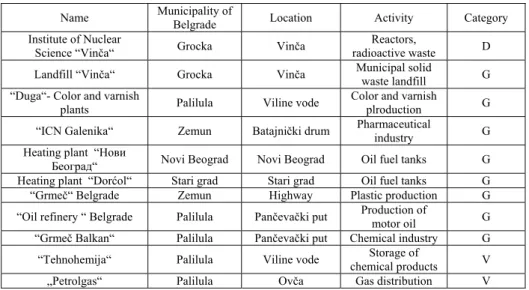
Table 3. List of buildings and plants of certain hazard degree to the environment along Danube River in Belgrade †
Name Municipality of
Belgrade Location Activity Category Institute of Nuclear
Science “Vinča“ Grocka Vinča
Reactors,
radioactive waste D Landfill “Vinča“ Grocka Vinča Municipal solid
waste landfill G “Duga“- Color and varnish
plants Palilula Viline vode
Color and varnish
plroduction G “ICN Galenika“ Zemun Batajnički drum Pharmaceutical
industry G Heating plant “Но и
о ра “ Novi Beograd Novi Beograd Oil fuel tanks G Heating plant “Dorćol“ Stari grad Stari grad Oil fuel tanks G “Grmeč“ Belgrade Zemun Highway Plastic production G “Oil refinery “ Belgrade Palilula Pančevački put Production of
motor oil G “Grmeč Balkan“ Palilula Pančevački put Chemical industry G
“Tehnohemija“ Palilula Viline vode Storage of
chemical products V „Petrolgas“ Palilula Ovča Gas distribution V
Pančevo - Although is a part of the broader Belgrades industrial area, due to drastic level of pollution, Pančevo can be observed separately. out, This town is often called ecological "black spots" in the Danube region. In Table 4. is extracted objects and plants with a certain hazard degree to the environmental in the territory of the municipality under the Regional Spatial Plan of the Administrative area of Belgrade City from 2004. The largest industrial complexes are concentrated in the southern zone of the city, almost on the Danube River, which is very unfavorable because of air and water pollution.
Table 4. List of buildings and plants of certain hazard degree to the environment along Danube River in Pančevo
Name Municipality Location Activity Category „Refinery“-Pančevo Pančevo Southern
Industrial Zone
Chemical
industry D „Petrohemija“- Pančevo Pančevo Southern
Industrial Zone
Chemical industry
D
„ zotara“- Pančevo Pančevo Southern Industrial Zone
Chemical industry
D
Smederevo- Smederevo industry is located in 2 large areas, which are the areas with the highest degree of environmental vulnerability. As the most polluted areas in the municipality of Smederevo can identify:
1. The industrial zone of the Smederevo city, which developed in Godominsko polje, northeast of the city, between the river Jezava in the west, the Danube in the north and technological water channel Radinac-Danube in the east. It covers 260 ha of area, where Smederevo industrial zone is located (metal industry and machinery). From 23 companies, waste water flows into Danube River through the drainage network and the open canal
†
network in the Godominsko polje, through pumping station “Smederevo”. Half of the total discharged waste water amount is released frpm three companies-the "Milan Blagojevic", "Fagram" and "Simaks (Gavrilovic Lj. et al, 2009).. Existing areas are built without proper planning and environmental norms respect.
2. U.S. Steel industrial zone in the central part of the municipality, in the settlement Radinac, 7 km southeast of the city on an area of 350 hectares (steel production)
3. Jezava old riverbed, where waste disposal is accumulated 4. Ralja River, in which is releasing not treatment waste water
Smederevo Iron factory U.S. Steel released in the Ralja River around 1.7 m3/s of used not treatment water. If it is known that Ralja average discharge is 1.5 m3 / s, it means that the Ralja flows into the waste water collector II of U.S. Steel (Gavrilovic Lj. et al, 2009). Observing water quality condition in the regional context, it can be concluded that there is a danger of its deterioration, because there are nearby Belgrade agglomeration, petrochemical complex in Pančevo, surface mines, landfills and power plants in Kostolac Basin.
According to the Spatial Plan of Smederevo in 2005, the priority of water protection measures in this area is to build a plant for waste water of industrial areas and city Smederevo. Location of the plant would be in the industrial zone and for moving the transit waste water of the city of Smederevo and industrial zone is projected the new routh of Jezava to WWTP.
Agriculture - Impacts of agricultural production is manifested through soil and groundwater chemical contamination due to uncontrolled use of various pesticides, but also through the impact of livestock or livestock farms. Assuming that the municipalities with the highest agriculture potential are also the largest environmental problems, it have been extracted municipalities with various agricultural potential in the Spatial Plan of Serbia (1996). Municipalities with very good potential on the Danube River and in the zone of Hydrosystem D-T-D are: Zemun, Palilula, Smederevo, Srbobran, and with good potential are: Čukarica, Grocka, Novi Sad, Vrbas (Miljanović D. et al., 2004).
Effects of the cattle farms can be also high, because "the level of pollution caused by cattle dung is 150 times higher than the municipal waste water pollution” (Lješević M., 2002). The larger farms in this area are: Vrbas (35,000) - Channel D-T-D, Stara Pazova (18 000)- Danube, Srbobran (17 000)- Krivaja, Padinska Skela (25,000)- Danube (Miljanović D. et al., 2004).
Energy - Thermal power facilities are causing substantial pollution of waste waters, and also it is important to mention heat effect on the environment (especially rivers). A special problem is the l and pollution (landfill of ash and slag), which is related to the Kostolac coal basin. Within this basin there are 3 active surface mines - Drmno, Ćirikovac and Klenovnik, supplying lignite for power station Kostolac A and B. One of the most important and most contentious issues related to environmental protection is to build ash deposit area in Kostolac basin zone. In the Danube area, as heat effect on the environment, could also be mentioned heating plant in Novi Sad and Belgrade. (www.eps.co.rs).
Settlements - Depending on the actual degree of communal settlements equipment (heating, (un) built water and sewerage networks, transport, green areas arrangement, waste disposal), will appear different pollution degrees of the Danube and the channels in the Hydrosystem D-T-D.
five of them, according to the Regional Spatial Plan of the Administrative area of Belgrade City in 2004. To the Danube would be related:
- The Central system with the planned WWTP on the Danube in Veloko Selo - Banatski system with the planned WWTP on the Danube left bank in the
industrial zone near Krnjača
- Batajnički system with the planned WWTP on the Danube River downstream from Batajnica
- Bolečki sisitem with two variants WWTP, the first-on the Danube banks River downstream of Vinča and other-with the this system introduction in the Central WWTP system
As stated in the Master Plan (2002), in the context of the Belgrade area metropoliten, it is strategic orientation to protect its nature and landscape, especially lowlands, wetlands and wetland landscape of the Sava and Danube, as well as wooded areas of central Šumadijska greda (Đurđić S. et al. 2007). It is provided the protection of all Sava and Danube island, wetlands around Pančevo and the Danube left bank in the Palilula municipality.
In Đerdap part of the Danube basin, pollution is slightly different because of terrain, a small number of tributaries, but it is the fact that the Danube River receives pollution from the upper basin of the great industrial centers. On the other hand, the dam itself becomes an artificial barrier that pollutants accumulate and cause and creates significant problems for the environment. On the Romanian side in this part from strategic reasons in the past, there are not major settlements (except Orşova), and no significant pollution to Kladovo. Opposite this town is located Turnu Severin, as a big industrial center. Winds in this region transferred across the Danube emitted harmful substances easily and directly threaten the fertile agricultural land and air. Field observations in October 2006, it has been found several illegal landfill in the area of national park, which shows human careless in the environment preservation and protection.
International projects for the Danube revitalization and protection
As the most important river in Europe, Danube is a subject of numerous studies from various aspects. Great importance and role in all this has International Commission for the Protection of the Danube River (ICPDR), formed in 1998. in Vienna, which has spatial task in the implementation of the Danube Preservation and Protection. In addition, the ICPDR has a special role in the establishment of accidents warning, develop an international network for monitoring Danube water quality and take part in the of Danube information system formation (Danubis) (www.icpdr.org).
This international organisation has supported so far two research expeditions-Joint Danube Survey 1 and 2. The first was held in 2001 and the second in 2007. In the expedition took part three research ships and a large number of researchers from all Danube countries. The main expedition objective was to collect information on water quality and pollution, and the analysis included about 400 chemical, biological and geographical factors (http://www.icpdr.org/jds).
Over the past decade, it have started or carried out several international projects in which Serbia took part. One of the important spatial strategy is the VISION PLANET document, developed within the INERREG II project in 2000. The initiators countries were Austria, Germany and Italy, and participating countries Bulgaria, Croatia, Slovakia, Hungary, Poland, Romania, Slovakia, Slovenia and Serbia. Related to environmental protection is the idea of buying property by the state (or local communities) for their protection, as well as the establishment of protected zones in border areas, national parks, etc. (http://www.eukn.org/eukn/ themes / Urban_Policy/vision-planet_1708.html). In May 2000, by VISION PLANET project recommendation, started the project "Iron Gate", as a joint experts action of three Danube countries - Romania, Bulgaria and Serbia and it was focused on the preservation, promotion and protection of Lower Danube. In the spirit of European projects highlights the culture cooperation ie. the idea of cultural parks along the Danube (Grčic M. et al, 2003).
Also, for Serbia are important the Danube cooperation projects such as the ARGE Donna (there is the Working Group on Urban and Spatial Planning and the proposal of the cooperation concept between regions, cities and ports along the Danube River - a project DONAUHANSA) and Bridge Lifeline Danube (initiated through INTERREG IIC initiative within the CADSES to cooperation between EU countries and their neighbors) (Grčic M. et al, 2003). One of the programme objectives is to promote environmentally compatible and sharing information, promoting research, and their actual implementation in the Danube region, as well as the promotion of university towns activities and closer co-operation of city government.
Interesting environmental project "The way to the Upper Danube pollution reduction", begun in 2004 organized by the Environmental Society "Blue Danube" from Apatin and Green Network of Vojvodina, and is supported by the Regional Environmental Center for Central and Eastern Europe (REC). Some of the project goals are water management promotion through the European standards implementation and legislation, knowledge improvement about agricultural pollution, wetlands protection and the pollution reduction in this area (Milanovic A. et al, 2009).
In the international cooperation framework, it is working on transborder region formation. First Transborder region in southeastern Europe is the Euro region "Danube-Kris-Mures-Tisza (DKMT) founded in 1997 (2002 received the status of legal entity), in which are entered i four counties in Hungary and Romania and Vojvodina in Serbia (Grčic M. et al, 2003).
The main objectives of the region in environmental protection aspects is pollution reduction beyond borders, reduction of environmental pollution causing by economic development and environmental infrastructure construction (Nagy I. et al, 2005). A major problem in Euroregion DKMT area is inadequate waste treatment, which requires modern technology introduction for waste destruction. Also, very important cooperation part in the Euro region is a common concern for the protected nature areas and biodiversity and habitat conservation through international environmental networks.
Conclusion
system, standardization of measurement methods and results, interpretation and also to awareness raising of local population about the rivers priceless importance.
As the Serbia most developed part in economic and population aspects is along Danube banks, on the banks of these river are also located the largest polluters, among which is dominated industry. In order to repair and protect the Danube, Serbia is participating in several international environmental projects,. Besides this, it is also provided and defined certain activities in the Draft Spatial Plan of Serbia to 2021. The most important in the ecological aspects would be: surface coal mines rehabilitation and reclamation, industrial centers gasification, circuit construction around Belgrade, Pančevo, Smederevo and Požarevac, stations building for municipal waste purification in Belgrade and community centers (Pančevo, Smederevo and Požarevac) and the controlled chemicals use in agriculture.
References