PSP and bvFTD? A Comparative Neuropsychological and
VBM Study
Julien Lagarde1,4, Romain Valabre`gue3,4,5, Jean-Christophe Corvol1,4,5,6, Fanny Pineau1,6, Isabelle Le Ber1,4,5,7, Marie Vidailhet1,4,5, Bruno Dubois1,4,5,7, Richard Levy2,4,5*
1Department of Neurology, AP-HP, Groupe Hospitalier Pitie´-Salpeˆtrie`re, Paris, France,2Department of Neurology, AP-HP, Hoˆpital Saint-Antoine, Paris, France,3Centre de NeuroImagerie de Recherche (CENIR), Groupe Hospitalier Pitie´-Salpeˆtrie`re, Paris, France,4INSERM, UMR-975, CNRS, UMR-7225, Paris, France,5Universite´ Pierre et Marie Curie- Paris 6, Centre de Recherche de l’Institut du Cerveau et de la Moelle e´pinie`re (ICM), UMR-S975, Paris, France,6INSERM, Centre d’Investigation Clinique, CIC-9503, Groupe Hospitalier Pitie´-Salpeˆtrie`re, Paris, France,7National reference center on rare dementias, AP-HP, Groupe Hospitalier Pitie´-Salpeˆtrie`re, Paris, France
Abstract
Progressive supranuclear palsy (PSP) and frontotemporal lobar degeneration (FTD) are two clinicohistological entities that share a severe prefrontal syndrome. To what extent do the cognitive syndrome and the location of the underlying brain atrophy unify or segregate these entities? Here, we examined the clinical and radiological patterns of frontal involvement and the neural bases of the cognitive dysfunctions observed in the Richardson form of PSP and the behavioral variant of FTD (bvFTD). The cognitive profile and grey and white matter volume of PSP (n = 19) and bvFTD (n = 16) patients and control participants (n = 18) were compared using a standard battery of neuropsychological tests and voxel-based morphometry (VBM), respectively. Analyses of correlations between neuropsychological and morphometric data were additionally performed. The severity and qualitative pattern of cognitive dysfunction was globally similar between the two patient groups. Grey matter volume was decreased in widespread frontal areas and in the temporal uncus in bvFTD, while it was decreased in the frontal and temporal lobes as well as in the thalamus in PSP. We also found an unexpected involvement of the frontal rectal gyrus in PSP patients compared to controls. Correlation analyses yielded different results in the two groups, with no area showing significant correlations in PSP patients, while several frontal and some temporal areas did so in bvFTD patients. In spite of minor neuropsychological and morphological differences, this study shows that the patterns of cognitive dysfunction and atrophy are very similar in PSP and bvFTD. However, executive dysfunction in these diseases may stem from partially divergent cortical and subcortical neural circuits.
Citation:Lagarde J, Valabre`gue R, Corvol J-C, Pineau F, Le Ber I, et al. (2013) Are Frontal Cognitive and Atrophy Patterns Different in PSP and bvFTD? A Comparative Neuropsychological and VBM Study. PLoS ONE 8(11): e80353. doi:10.1371/journal.pone.0080353
Editor:Bogdan Draganski, Centre Hospitalier Universitaire Vaudois Lausanne - CHUV, UNIL, Switzerland
ReceivedApril 17, 2013;AcceptedOctober 2, 2013;PublishedNovember 20, 2013
Copyright:ß2013 Lagarde et al. This is an open-access article distributed under the terms of the Creative Commons Attribution License, which permits
unrestricted use, distribution, and reproduction in any medium, provided the original author and source are credited.
Funding:This work was supported by the JNLF (for Julien Lagarde), and the INSERM. The funders had no role in study design, data collection and analysis, decision to publish, or preparation of the manuscript.
Competing Interests:The authors have declared that no competing interests exist.
* E-mail: [email protected]
Introduction
Progressive supranuclear palsy (PSP) and frontotemporal lobar degeneration (FTD) are usually considered two distinct clinicohis-tological entities. Indeed, on the basis of the clinical syndromes, the topography of brain lesions and their histological/biological characteristics, many features differentiate them: the most frequent clinical form of FTD (called the ‘‘behavioral variant’’) is a behavioral dementia of the frontal type, while the most typical clinical form of PSP (called the Richardson form) is characterized by axial parkinsonism and supranuclear oculomotor palsy. The topography of neurodegeneration is mostly cortical in FTD, affecting the ventromedial prefrontal cortex (PFC) and to some extent the temporal lobes and dorsal PFC [1], while it is mostly subcortical in PSP, affecting the brainstem, cerebellum and basal ganglia [2]. In terms of the underlying proteinopathies, tau pathology is only found in 20–30% of FTD cases and affects the A, C and E tau isoforms, while PSP is consistently associated with a tauopathy affecting the B, D and F tau isoforms [3].
lesions involving the frontal cortex do exist [13], and could be implicated in the frontal signs observed in PSP. Conversely, the widespread disruption of subcortical structures has been shown in FTD and could account for some of the observed cognitive or behavioral features of the disease [14,15]. In addition, frontal dysfunction may appear early in the course of PSP and may present with only one other clinical feature in 20% of patients [16,17]. Consequently, it is sometimes difficult, at least in the early stages, to clinically distinguish these atypical forms of PSP from the behavioral variant of FTD (bvFTD) [18].
Taken as a whole, these findings suggest that, it would be of interest to compare and clarify the clinical and anatomical features characterizing the frontal cognitive syndrome in PSP and bvFTD. The comparison of these two diseases may provide insights into cognitive changes due to convergent or divergent effects on frontal-lobe-mediated functions. Accordingly, this study addresses a question that has never been considered before: Are the patterns of the frontal cognitive syndrome reported in PSP and bvFTD patients alike or different from the neuropsychological and anatomical perspectives?
Methods
General design of the study
The following parameters were compared between PSP and bvFTD patients: 1) the pattern of cognitive dysfunction, using a battery of classic neuropsychological tests to assess rule-finding, set-shifting, verbal concept formation, verbal and motor initiation, and cognitive inhibition, and 2) the level of grey and white matter atrophy, with particular emphasis on frontal regions, using voxel-based morphometry (VBM). Furthermore, we performed a clinicoradiological correlation analysis between grey and white matter volumes and scores obtained on the main components of the executive function tests mentioned above.
Participants
Fifty-three subjects were prospectively enrolled in this study: 19 patients with PSP, 16 with bvFTD and 18 healthy controls. PSP and bvFTD patients were recruited in the movement disorders unit and the reference center for rare dementias of the Salpeˆtrie`re Hospital (Paris, France), respectively. All PSP patients met the NINDS-Society for Progressive Supranuclear Palsy criteria for probable PSP [19], which include a gradually progressing disorder with an onset at or after the age of 40 and vertical supranuclear gaze palsy and prominent postural instability within the first year of disease onset. All bvFTD patients met the consensus criteria for probable frontotemporal dementia [20,21], presenting with a history of progressive and disabling development of at least three of the six discriminating clinical features associated with charac-teristic findings on neuroimaging. All patients had a Mini-Mental State Examination (MMSE) score of $20/30. Exclusion criteria were previous neurological and psychiatric diseases and the absence of informed consent. The groups were matched for age at the time of the study and educational level, as well as for disease duration in the patient groups. Healthy controls had no history of neurological or psychiatric disorders, no memory or cognitive disorders and no history of psychotropic drug use.
The ethics committee of the Salpeˆtrie`re Hospital approved the study. Participants provided written informed consent.
Neuropsychological evaluation
All subjects underwent a neuropsychological examination. Global intellectual performance was assessed using the Mini Mental State Examination (MMSE) and the Mattis Dementia
Rating Scale (MDRS), with the latter providing more emphasis on executive function testing. Frontal functions were evaluated with the Frontal Assessment Battery (FAB), which provides a global bedside evaluation of frontal lobe functions including conceptu-alization (similarities), mental flexibility (lexical fluency), motor programming (Luria’s motor series), sensitivity to interference (conflicting instructions), inhibitory control (go-no go task), and environmental autonomy (grasping behavior) [22], the similarities subtest of the Wechsler Adult Intelligence Scale (WAIS), which tests the ability to find abstract analogies, the modified Wisconsin Card Sorting Test (WCST), which tests abstract rule-finding and set-shifting, letter and category fluency and the Stroop interference task, which evaluates the ability to inhibit cognitive interference. As the three tests assessing concept formation, the WAIS, the FAB, and the MDRS, were redundant, being based on similarities in all cases, we proposed a verbal concept score composed of the sum of the scores obtained on the concept subscale of these tests.
All statistical analyses were performed with Statistica 6 software (StatSoft, Tulsa, OK, USA), using non-parametric tests. We compared demographic and neuropsychological variables between our three groups using a Kruskall-Wallis ANOVA. A Bonferroni correction for five tests (p,0.01) was applied to demographic variables and for eleven tests (p,0.004) to neuropsychological tests.
Morphological examination
Results
Behavioral data
There was no significant difference between the three groups regarding age at examination, sex or education, nor was there any difference in disease duration or MMSE score between bvFTD and PSP patients (table 1). The proportion of patients with executive impairment (defined by an FAB score of#12) was also comparable between the patient groups: 15 out of 19 PSP patients and 10 out of 16 bvFTD patients.
There was no significant difference in any neuropsychological scores between the PSP and the bvFTD group. The interference T-score in the Stroop test tended to be higher in PSP than in bvFTD patients, without reaching statistical significance after correction for multiple comparisons (table 2). When compared to the control group, performance on all the neuropsychological tests was significantly altered in the two groups of patients, except the interference T-score in the Stroop test, which was not significantly different between either group of patients and the control group, even if the mean value in PSP patients was much closer to that of controls than in FTD patients. Furthermore, the verbal concept score was not significantly different between PSP and control groups, although performances tended to be poorer in PSP
patients. Memory scores were also altered, especially in bvFTD patients, without reaching statistical significance (table 2).
Morphological data
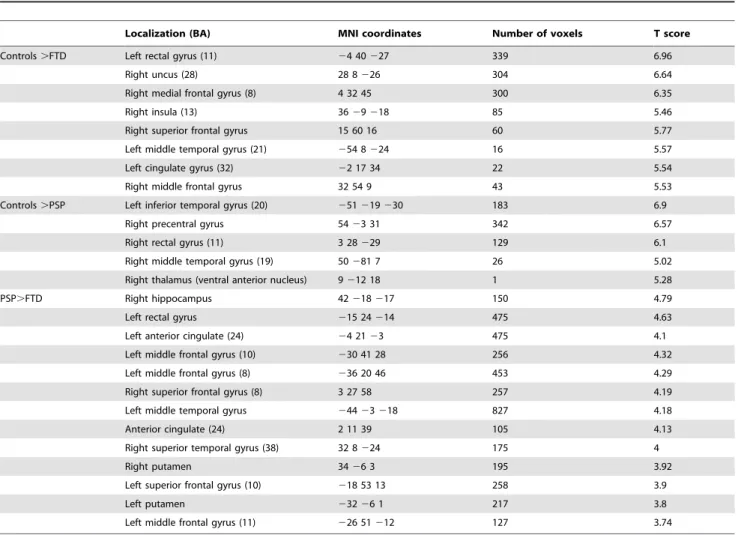
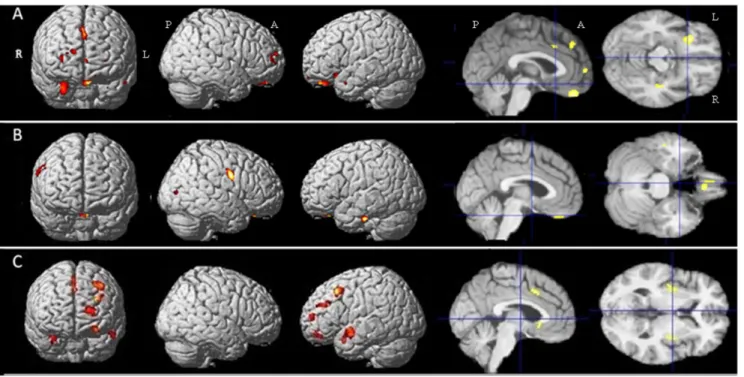
Comparison between bvFTD and PSP patients. In bvFTD patients compared to control participants, grey matter volume was significantly decreased in the left frontal rectal gyrus, in the right temporal uncus, in the right medial frontal gyrus, in the right insula, in the right superior and middle frontal gyri, in the mid-cingulate cortex and in the left middle temporal gyrus.
PSP patients, when compared to control participants, showed significantly lower grey matter volume in the left inferior temporal gyrus, the right precentral gyrus, the right rectal gyrus, the right middle temporal gyrus and the anterior nucleus of the right thalamus.
A direct comparison between the two patient groups did not reveal any significant differences. A more permissive threshold (p,0.001, uncorrected) revealed lower grey matter volume in bvFTD patients than in PSP patients in sparse areas located in the left inferior, middle and superior frontal gyri, the right superior frontal gyrus, the temporal lobes bilaterally (especially the right hippocampus), the left anterior cingulate gyrus, mostly in its subgenual part, as well as near the mid-cingulate cortex and in the Table 1.Comparison of the main demographic parameters between the three groups of subjects.
FTD PSP Controls p
Age at examination (years) 69.25610 65.966.5 67.865.2 0.51
Sex (M/F) 9/7 7/12 7/11 0.5
Education (years) 11.7563.5 11.763.9 11.5562.7 0.51
Disease duration (years) (range) 5.363.6 (2–14) 4.561.8 (2–9) 1
MMSE (range) 25.163.2 (20–30) 25.562.7 (20–29) 29.160.7 (28–30) ,0.01*
Means6standard deviations.
*Significant difference using Bonferroni correction for five tests (p,0.01). Abbreviations: FTD: frontotemporal dementia; PSP: progressive supranuclear palsy; M: male; F: female; MMSE: Mini-Mental State Examination.
doi:10.1371/journal.pone.0080353.t001
Table 2.Comparison of the main neuropsychological variables between the three groups of subjects.
FTD PSP Controls Pglobal (KW) FTD vs. PSP FTD vs. C PSP vs. C
Verbal concept score 48.569.7 52.267.9 59.465.3 ,0.004* (17.6) 0.81 0.002* 0.04
Stroop interference T-score 44.666.8 52.667.7 50.667 0.03 (7.1) 0.02 0.11 1
WCST category number (/6) 3.562.1 4.461.2 5.860.5 ,0.004* (19.6) 1 ,0.004* 0.004*
WCST perseverance errors 9.366.7 6.565 1.761.4 ,0.004* (24.4) 0.99 ,0.004* ,0.004*
WCST total Errors 18.669.3 14.868.1 4.463.6 ,0.004* (18.6) 1 ,0.004* ,0.004*
MDRS attention (/37) 35.961 35.162.1 36.960.3 ,0.004* (20.3) 1 0.009 ,0.004*
MDRS initiation (/37) 27.564.3 29.865.7 36.860.7 0.00001* (31.8) 1 0.000005* 0.0001*
MDRS memory (/25) 20.363.8 22.662.5 24.660.8 ,0.004* (15.45) 0.24 ,0.004* 0.026
MDRS total (/144) 124.769.3 128.3610.1 141.862 ,0.004* (35.4) 1 ,0.004* ,0.004*
FAB (/18) 11.763.1 11.362 17.460.6 ,0.004* (28.35) 1 ,0.004* ,0.004*
Category fluency 18.268.1 16.867.8 32.668.7 ,0.004* (17.4) 1 ,0.004* ,0.004*
Letter fluency 9.766.2 1166.6 20.168.6 0.001* (13.7) 1 0.0008* 0.004
Means6standard deviations.
*Significant difference using Bonferroni correction for thirteen tests (p,0.003). Abbreviations: FTD: frontotemporal dementia; PSP: progressive supranuclear palsy; C: controls; KW: Kruskall-Wallis test; MDRS: Mattis Dementia Rating Scale; FAB: Frontal Assessment Battery; WCST: Wisconsin Card Sorting Test.
right and left putamen. The reverse contrast did not reveal any significant differences (table 3, figure 1).
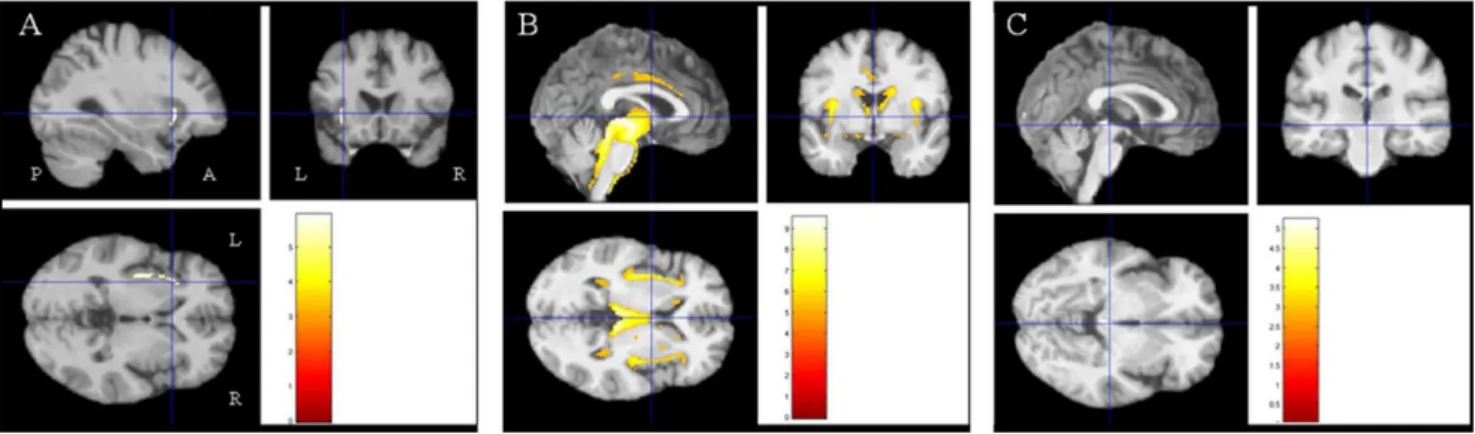
Comparisons between patient groups and controls showed a marked decrease in white matter volume in widespread subcortical regions in PSP patients and in the left insula in bvFTD patients. The direct comparison between our two groups of patients showed lower white matter volume in the cerebral peduncles for PSP patients. There was no significant decrease in white matter volume in bvFTD patients when compared with PSP patients (table 4, figure 2).
Correlations between neuropsychological and mor-phological data in patients. The differences found between the cognitive profiles and grey and white matter volumes of the two subgroups of patients led us to perform separate correlation analyses in order to study the neural bases of the cognitive functions that were altered in these pathological conditions. Significant positive correlations were noted between grey matter volume and neuropsychological scores (i.e., lower grey matter volume with lower scores) in bvFTD patients as follows: 1) the interference T-score of the Stroop test with the left mid-cingulate cortex, the right inferior and middle frontal gyri and the left superior temporal gyrus (figure 3A); 2) the number of categories found in the WCST and the left and right middle frontal gyri, the
right middle temporal gyrus and the left superior temporal gyrus (figure 3B); 3) letter fluency and the left inferior occipital gyrus, the right posterior cingulate, the left inferior and middle frontal gyri, the left insula and the right superior temporal gyrus (figure 3C); 4) the initiation score of the MDRS and the right inferior frontal gyrus (figure 3D); 5) the attention score of the MDRS and the right cingulate gyrus (figure 3E); 6) the concept score and the left superior temporal gyrus (figure 3F, table 5). No significant correlation was found for the other neuropsychological variables. A significant positive correlation was noted between letter fluency and grey matter volume in the left and right middle frontal gyri of PSP patients. No significant correlation was found for the other neuropsychological variables.
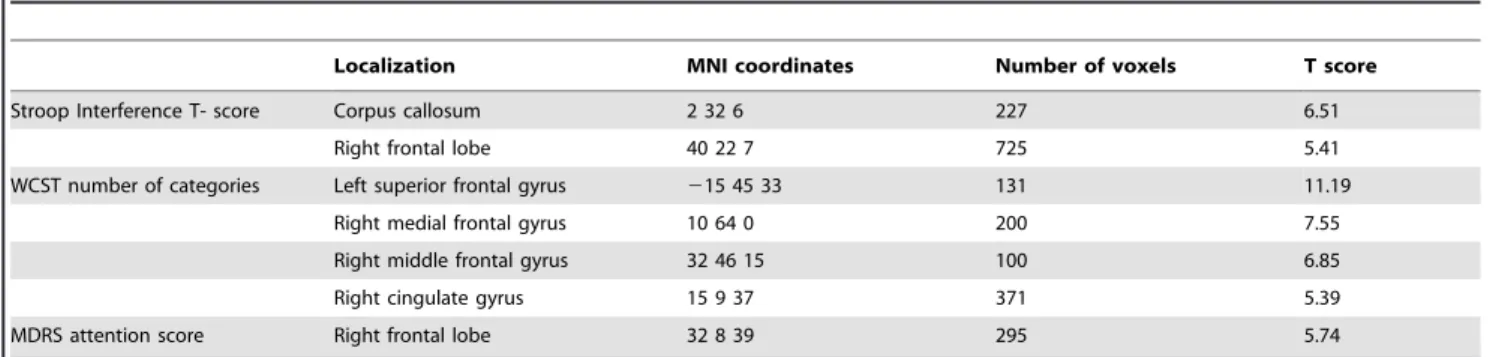
Significant positive correlations were noted between white matter volume and neuropsychological scores in bvFTD patients as follows: 1) the interference T-score in the Stroop test and the corpus callosum and right frontal lobe white matter (figure 4A); 2) the number of categories found in the WCST and the right middle and medial frontal lobe, left superior frontal lobe and cingulate region (figure 4B); 3) the attention score of the MDRS and the right frontal lobe (figure 4C, table 6). No significant correlation was found for the other neuropsychological variables.
Table 3.Detailed results of the comparative analysis of grey matter volume.
Localization (BA) MNI coordinates Number of voxels T score
Controls.FTD Left rectal gyrus (11) 24 40227 339 6.96
Right uncus (28) 28 8226 304 6.64
Right medial frontal gyrus (8) 4 32 45 300 6.35
Right insula (13) 3629218 85 5.46
Right superior frontal gyrus 15 60 16 60 5.77
Left middle temporal gyrus (21) 254 8224 16 5.57
Left cingulate gyrus (32) 22 17 34 22 5.54
Right middle frontal gyrus 32 54 9 43 5.53
Controls.PSP Left inferior temporal gyrus (20) 251219230 183 6.9
Right precentral gyrus 5423 31 342 6.57
Right rectal gyrus (11) 3 28229 129 6.1
Right middle temporal gyrus (19) 50281 7 26 5.02
Right thalamus (ventral anterior nucleus) 9212 18 1 5.28
PSP.FTD Right hippocampus 42218217 150 4.79
Left rectal gyrus 215 24214 475 4.63
Left anterior cingulate (24) 24 2123 475 4.1
Left middle frontal gyrus (10) 230 41 28 256 4.32
Left middle frontal gyrus (8) 236 20 46 453 4.29
Right superior frontal gyrus (8) 3 27 58 257 4.19
Left middle temporal gyrus 24423218 827 4.18
Anterior cingulate (24) 2 11 39 105 4.13
Right superior temporal gyrus (38) 32 8224 175 4
Right putamen 3426 3 195 3.92
Left superior frontal gyrus (10) 218 53 13 258 3.9
Left putamen 23226 1 217 3.8
Left middle frontal gyrus (11) 226 51212 127 3.74
Areas where grey matter volume is significantly decreased in each patient group compared to controls (p,0.05 after FWE correction for multiple comparisons) and in bvFTD compared to PSP (k = 100 voxels, p,0.001 uncorrected). Abbreviations: BA: Brodmann area; MNI: Montreal Neurological Institute; FTD: frontotemporal dementia; PSP: progressive supranuclear palsy.
Correlations between white matter volume and the neuropsy-chological scores in PSP patients were not significant.
Discussion
In this study, we compare executive dysfunction and atrophy patterns between PSP and bvFTD using a morphometric method, and perform clinicoradiological correlation analysis at the whole-brain level (i.e. without any prespecified region of interest). To our knowledge, this is the first time that these parameters have been directly compared in these pathological conditions.
Frontal dysexecutive syndrome is an important feature of both bvFTD and PSP patients. Interestingly, our neuropsychological
data failed to reveal cognitive profiles distinct to each of the two pathologies. However, the underlying mechanisms could be different, and we cannot rule out the possibility that cognitive slowing leads to impaired performances on executive tasks in PSP. Nevertheless, the interference T-score in the Stroop test tended to be higher in PSP than in bvFTD patients, even if the difference did not persist after correction for multiple comparisons. Further studies are required to determine whether or not this cognitive difference could be helpful in dissociating these two clinical entities, in addition to the presence of a gait disturbance that has been shown to be the most sensitive marker of PSP in a clinicopathological study [24] and to the motor control impair-ment seen in PSP, which is also of use in discriminating PSP from
Figure 1. Results of the voxel-based morphometric (VBM) analysis: comparison of grey matter volume between the groups of subjects. A- Zones of decreased grey matter volume in bvFTD patients compared to controls (p,0.05 after FWE correction for multiple comparisons). B- Zones of decreased grey matter volume in PSP patients compared to controls (p,0.05 after FWE correction for multiple comparisons). C- Zones of decreased grey matter volume in bvFTD patients compared to PSP patients (k = 100 voxels, p,0.001). Abbreviations: R: right, L: left, A: anterior, P: posterior, bvFTD: behavioral variant of frontotemporal dementia, PSP: progressive supranuclear palsy.
doi:10.1371/journal.pone.0080353.g001
Table 4.Detailed results of the comparative analysis of white matter volume.
Localization MNI coordinates Number of voxels T score
Controls.FTD Left insula 232 1825 215 5.93
Controls.PSP Midbrain 2222125 12829 9.53
Right claustrum 36213 0 1936 7.21
Right middle frontal gyrus 24 18 43 117 6.59
Right parietal lobe 34234 43 158 6.51
Right precentral gyrus 44210 31 150 6.11
Right cingulate gyrus 9 8 42 195 5.93
Left cingulate gyrus 26 15 31 478 5.91
FTD.PSP Midbrain 222826 57 5.23
Areas where white matter volume is significantly decreased in each patient group compared to controls and in PSP compared to bvFTD (p,0.05 after FWE correction for multiple comparisons). Abbreviations: MNI: Montreal Neurological Institute; FTD: frontotemporal dementia; PSP: progressive supranuclear palsy.
Figure 3. Results of the voxel-based morphometric (VBM) analysis: correlations between grey matter volume and neuropsychological variables in bvFTD patients.A- Positive correlation between grey matter volume and the interference T-score in the Stroop test (k = 100 voxels, p,0.001). B- Positive correlation between grey matter volume and the number of categories found in the WCST (k = 100 voxels, p,0.001). C- Positive correlation between grey matter volume and letter fluency (k = 100 voxels, p,0.001). D- Positive correlation between grey matter volume and the MDRS initiation score (k = 100 voxels, p,0.001). E- Positive correlation between grey matter volume and the MDRS attention score (k = 100 voxels, p,0.001). F- Positive correlation between grey matter volume and the concept score (k = 100 voxels, p,0.001). Abbreviations: R: right, L: left, A: anterior, P: posterior, WCST: Wisconsin Card Sorting Test, MDRS: Mattis Dementia Rating Scale.
doi:10.1371/journal.pone.0080353.g003
Figure 2. Results of the voxel-based morphometric (VBM) analysis: comparison of white matter volume between the groups of subjects. A- Zones of decreased white matter volume in bvFTD patients compared to controls (p,0.05 after FWE correction for multiple comparisons). B- Zones of decreased white matter volume in PSP patients compared to controls (p,0.05 after FWE correction for multiple comparisons). C- Zones of decreased white matter volume in PSP patients compared to bvFTD patients (p,0.05 after FWE correction for multiple comparisons). Abbreviations: R: right, L: left, A: anterior, P: posterior, bvFTD: behavioral variant of frontotemporal dementia, PSP: progressive supranuclear palsy.
bvFTD [25]. Another potential discriminating factor is the presence of memory deficits in bvFTD, as suggested in previous studies [14]. The behavioral characteristics of these two entities have not been addressed in the present study but have previously been compared elsewhere [9]: apathy is a frequent feature of both PSP and bvFTD, unlike disinhibition, which is observed more rarely in PSP [26,27].
The pattern of atrophy seen in the present study is globally in line with previous reports in which PSP and bvFTD have been studied separately. Indeed, frontal atrophy has been associated in other studies with bvFTD, in comparison to healthy controls or patients with Alzheimer’s disease [28]. Some authors have reported a left-sided hypometabolism in bvFTD [29]. The most affected regions are the orbitofrontal, ventromedial frontopolar, insular and anterior cingulate cortices [1]. On the other hand, PSP has been associated with atrophy in the thalamus, superior and inferior colliculi, striatum, pons and frontal cortex, especially the supplementary motor areas, left middle frontal gyrus and premotor cortex [30]. However, the direct comparison between PSP and bvFTD performed in the present study provides additional information. First, the pattern of atrophy was globally very similar between PSP and bvFTD. Second, one could nevertheless observe some differences between these two entities
in the present study: when compared to controls, atrophy in bvFTD patients was more marked in the rectal gyrus, in medial frontal regions and bilaterally within the temporal lobes, particularly in the hippocampus, as reported in previous studies [14,31]. Conversely, changes in PSP (as compared to bvFTD) were more marked, as expected, in the cerebral peduncles, affecting white matter volume. Unexpectedly, we found decreased grey matter volume in the rectal gyrus in PSP patients (in comparison with controls). Even though this pattern is better known in bvFTD, it is in line with studies in which behavioral features in PSP patients were associated with volume loss in the frontal lobe [26], especially in the most ventral part of the prefrontal cortex, including the orbitofrontal region [32], which is known to be involved in behavioral control and social cognition [33]. In particular, a recently published study has shown a positive correlation between poorer performance in social cognition tasks and volume loss in the anterior rostral medial prefrontal cortex in PSP patients [34].
Correlations between cortical atrophy or hypoperfusion and global cognitive or behavioral scores have already been studied in these two entities separately, and most often, without distinguish-ing between different regions of the frontal lobes. Indeed, right frontal lobe hypoperfusion in bvFTD has been associated in Table 5.Detailed results of the correlation analysis of grey matter volume in bvFTD patients.
Localization (BA) MNI coordinates Number of voxels T score
Stroop Interference T-score Left anterior cingulate (24) 210 20 27 405 7.50
Right inferior frontal gyrus 52 30 6 633 7.02
Right middle frontal gyrus 34 14 39 149 6.01
Left superior temporal gyrus 245239 0 136 5.24
Right fusiform gyrus 2727526 281 6.15
Left middle frontal gyrus 242 56 10 1434 5.35
Right middle frontal gyrus (10) 38 39 24 2414 5.33
Right middle frontal gyrus 48 20 30 864 5.16
WCST number of categories Left precentral gyrus 263222 39 679 13.25
Right middle frontal gyrus 38 4022 249 12.04
Right middle frontal gyrus 44 32 46 220 12
Right middle temporal gyrus 66261 7 316 10.53
Left superior temporal gyrus (22) 256248 15 191 8.66
Left middle temporal gyrus (9) 232 41 30 222 8.06
Right middle temporal gyrus (39) 52272 7 387 7.95
Left middle frontal gyrus (10) 238 56 4 603 7.08
Left middle frontal gyrus (9) 250 26 40 212 5.78
Letter fluency Left inferior occipital gyrus 228291211 445 7.42
Right posterior cingulate 4251 6 192 7.37
Left middle frontal gyrus 228 12 40 470 6.58
Left inferior frontal gyrus 239 11 22 264 6.05
Left insula 242219 0 159 5.82
Right superior temporal gyrus 51230 15 216 5.45
MDRS initiation score Right inferior frontal gyrus 3324212 224 6.03
MDRS attention score Right cingulate gyrus 12222 40 214 6.33
Concept score Left superior temporal gyrus (13) 245246 19 126 8.39
Areas where grey matter volume is positively correlated with the interference T-score in the Stroop test, the number of categories found in the WCST, the MDRS initiation score, the MDRS attention score, and the concept score in bvFTD patients (k = 100 voxels, p,0.001 uncorrected). Abbreviations: BA: Brodmann area; MNI: Montreal Neurological Institute; WCST: Wisconsin Card Sorting Test; MDRS: Mattis Dementia Rating Scale.
previous studies with a loss of insight, environmental dependency and stereotyped behaviors [35]. Along the same line of thought, medial frontal and cingulate hypoperfusion has been linked to inertia, whereas ventromedial dysfunction is related to disinhibi-tion [36]. Frontal lobe atrophy has also been correlated with clinical dementia and with the worsening of executive functions in PSP [37,38]. In the present work, we separately studied the neural bases of several cognitive functions in these two neurodegenerative diseases, with the aid of our detailed neuropsychological battery. The most interesting result was the significant correlation between interference T-score in the Stroop test, which reflects cognitive inhibition, and grey matter volume in the mid-cingulate cortex
and the inferior and middle frontal gyri in bvFTD. This result is in accordance with the putative role of the anterior cingulate in conflict monitoring and processing [39], and of the right inferior frontal gyrus in cognitive inhibition [40]. Furthermore, in bvFTD patients, the number of categories found in the WCST, which reflects rule-finding ability, was associated with bilateral changes in the dorsolateral prefrontal areas. Letter fluency was mainly correlated with the volume of the left frontal regions in bvFTD patients, in accordance with previous reports [41]. The initiation score of the MDRS, which also assesses perseverance, was correlated with changes in the right inferior frontal area, known to be involved in cognitive inhibition as mentioned above [40].
Figure 4. Results of the voxel-based morphometric (VBM) analysis: correlations between white matter volume and neuropsychological variables in bvFTD patients.A- Positive correlation between white matter volume and the interference T-score in the Stroop test (k = 100 voxels, p,0.001). B- Positive correlation between white matter volume and the number of categories found in the WCST (k = 100 voxels, p,0.001). C- Positive correlation between white matter volume and the MDRS attention score (k = 100 voxels, p,0.001). Abbreviations: R: right, L: left, A: anterior, P: posterior, WCST: Wisconsin Card Sorting Test, MDRS: Mattis Dementia Rating Scale.
doi:10.1371/journal.pone.0080353.g004
Table 6.Detailed results of the correlation analysis of white matter volume in bvFTD patients.
Localization MNI coordinates Number of voxels T score
Stroop Interference T- score Corpus callosum 2 32 6 227 6.51
Right frontal lobe 40 22 7 725 5.41
WCST number of categories Left superior frontal gyrus 215 45 33 131 11.19
Right medial frontal gyrus 10 64 0 200 7.55
Right middle frontal gyrus 32 46 15 100 6.85
Right cingulate gyrus 15 9 37 371 5.39
MDRS attention score Right frontal lobe 32 8 39 295 5.74
Areas where white matter volume is positively correlated with the interference T-score in the Stroop test, the number of categories found in the WCST, and the attention score in the MDRS in bvFTD patients (k = 100 voxels, p,0.001 uncorrected). Abbreviations: MNI: Montreal Neurological Institute; WCST: Wisconsin Card Sorting Test; MDRS: Mattis Dementia Rating Scale.
The attention score of the MDRS was correlated with changes in the right cingulate gyrus, pinpointing the important contribution of the atrophy of the mid-cingulate cortex to the cognitive control impairment observed in this group of bvFTD patients, in accordance with the presumed role of this multifunctional region in cognition [42]. Lastly, the concept score was correlated with left superior temporal atrophy.
The lack of significant correlations in PSP suggests that the underlying brain correlates of cognitive dysfunctions might be different than in bvFTD, involving more widespread atrophy of subcortical and cortical grey and white matter. This dissemination of lesions in PSP, combined with the relatively small size of the sample may have prevented us from detecting significantly modified areas in our correlation analyses due to the lack of statistical power.
The present study has other limitations that must be acknowl-edged. First, the great variability in the scores on cognitive tests together with the limited number of subjects might have affected our ability to detect differences between the patient groups. Second, the number of participants was relatively small, especially in the bvFTD group, even if it was similar or larger than in other VBM studies [30]. The low sample size could have led to a lack of power, preventing us from finding significant correlations between
some neuropsychological variables and anatomical changes. Lastly, VBM is not the best method to assess white matter volume. This could account for our inability to find significant correlations, especially in PSP patients, who show a massive decrease in white matter volume that could contribute to the observed cognitive impairment.
Conclusion
Beyond the apparent homogeneity of the clinical frontal syndrome in bvFTD and PSP, subtle but significant differences indicate that cognitive impairment in the two clinical entities could stem from partially divergent neural circuits, including both cortical and subcortical regions. The similar patterns of cognitive dysfunction and atrophy in PSP and bvFTD should nevertheless draw the attention of clinicians to the difficulty in distinguishing between these two entities on the basis of cognition in atypical cases presenting with an isolated progressive frontal syndrome.
Author Contributions
Conceived and designed the experiments: JL RL. Performed the experiments: JL JCC FP ILB MV. Analyzed the data: JL RV. Wrote the paper: JL RV JCC FP ILB MV BD RL.
References
1. Rosen HJ, Gorno-Tempini ML, Goldman WP, Perry RJ, Schuff N, et al. (2002) Patterns of brain atrophy in frontotemporal dementia and semantic dementia. Neurology 58: 198–208.
2. Williams DR, Lees AJ (2009) Progressive supranuclear palsy: clinicopathological concepts and diagnostic challenges. Lancet Neurol 8(3): 270–279.
3. Josephs KA (2008) Frontotemporal dementia and related disorders: deciphering the enigma. Ann Neurol 64: 4–14.
4. Brusa A, Mancardi GL, Bugiani O (1980) Progressive supranuclear palsy 1979: an overview. Ital J Neurol Sci 1(4): 205–222.
5. Dubois B, Pillon B, Legault F, Agid Y, Lhermitte F (1988) Slowing of cognitive processing in progressive supranuclear palsy. A comparison with Parkinson’s disease. Arch Neurol 45(11): 1194–1199.
6. Van Balken I, Litvan I (2007) Progressive supranuclear palsy, corticobasal degeneration, and the frontal cortex. In: Miller BL, Cummings JL, editors. The human frontal lobes: functions and disorders, 2nd
edition. New York: The Guilford Press. pp. 422–428.
7. Cambier J, Masson M, Viader F, Limodin J, Strube A (1985) Le syndrome frontal de la paralysie supranucle´aire progressive. Rev Neurol (Paris) 141: 528– 536.
8. Litvan I, Mega MS, Cummings JL, Fairbanks L (1996) Neuropsychiatric aspects of progressive supranuclear palsy. Neurology 47(5): 1184–1189.
9. Bak TH, Crawford LM, Berrios G, Hodges JR (2010) Behavioural symptoms in progressive supranuclear palsy and frontotemporal dementia. J Neurol Neuro-surg Psychiatry 81: 1057–1059.
10. Albert ML, Feldman RG, Willis AL (1974) The ‘‘subcortical dementia’’ of supranuclear palsy. J Neurol Neurosurg Psychiatry 37: 121–130.
11. D’Antona R, Baron JC, Samson Y, Serdaru M, Viader F, et al. (1985) Subcortical dementia. Frontal cortex hypometabolism detected by positron tomography in patients with progressive supranuclear palsy. Brain 108 (Pt 3): 785–799.
12. Blin J, Baron JC, Dubois B, Pillon B, Cambon H, et al. (1990) Positron emission tomography study in progressive supranuclear palsy. Brain hypometabolic pattern and clinicometabolic correlations. Arch Neurol 47(7): 747–752. 13. Verny M, Duyckaerts C, Agid Y, Hauw JJ (1996) The significance of cortical
pathology in progressive supranuclear palsy. Clinico-pathological data in 10 cases. Brain 119: 1123–1136.
14. Hornberger M, Wong S, Tan R, Irish M, Piguet O, et al. (2012) In vivo and post-mortem memory circuit integrity in frontotemporal dementia and Alzheimer’s disease. Brain 135: 3015–3025.
15. Whitwell JL, Avula R, Senjem ML, Kantarci K, Weigand SD, et al. (2010) Gray and white matter water diffusion in the syndromic variants of frontotemporal dementia. Neurology 74: 1279–1287.
16. Davis PH, Bergeron C, McLachlan DR (1985) Atypical presentation of progressive supranuclear palsy. Ann Neurol 17: 337–343.
17. Donker Kaat LD, Boon AJW, Kamphorst W, Ravid R, Duivenvoorden HJ, et al. (2007) Frontal presentation in progressive supranuclear palsy. Neurology 69: 723–729.
18. Sha S, Hou C, Viskontas IV, Miller BL (2006) Are frontotemporal lbar degeneration, progressive supranuclear palsy and corticobasal degeneration distinct diseases? Nature Clin Pract Neurol 2: 658–665.
19. Litvan I, Agid Y, Calne D, Campbell G, Dubois B, et al. (1996) Clinical research criteria for the diagnosis of progressive supranuclear palsy (Steele-Richardson-Olszewski syndrome): Report of the NINDS-SPSP International Workshop. Neurology 47: 1–9.
20. Neary D, Snowden JS, Gustafson L, Passant U, Stuss D, et al. (1998) Frontotemporal lobar degeneration: a consensus on clinical diagnostic criteria. Neurology 51: 1546–1554.
21. Rascovsky K, Hodges JR, Knopman D, Mendez MF, Kramer JH, et al. (2011) Sensitivity of revised diagnostic criteria for the behavioural variant of frontotemporal dementia. Brain 134: 2456–2477.
22. Dubois B, Slachevski A, Litvan I, Pillon B (2000) The FAB: A frontal assessment battery at bedside. Neurology 55: 1621–1626.
23. Ashburner JT, Friston KJ (2007) Voxel-based Morphometry. In: Friston KJ, Ashburner JT, Kiebel SJ, Nichols TE, Penny WD, editors. Statistical Parametric Mapping: The Analysis of Functional Brain Images. Amsterdam, Elsevier: Academic Press. pp. 92–98.
24. Litvan I, Campbell G, Mangone CA, Verny M, McKee A, et al. (1997) Which clinical features differentiate progressive supranuclear palsy (Steele-Richardson-Olszewski syndrome) from related disorders? A clinicopathological study. Brain 120: 65–74.
25. Dubois B, Slachevsky A, Pillon B, Beato R, Villalponda JM, et al. (2005) ‘‘Applause sign’’ helps to discriminate PSP from FTD and PD. Neurology 64: 2132–2133.
26. Josephs KA, Whitwell JL, Eggers SD, Senjem ML, Jack CR Jr (2011) Gray matter correlates of behavioral severity in progressive supranuclear palsy. Mov Disord 26: 493–498.
27. Pasquier F, Lebert F, Lavenu I, Guillaume B (1999) The clinical picture of frontotemporal dementia: diagnosis and follow-up. Dement Geriatr Cogn Disord 10 (Suppl 1): 10–14.
28. Chan D, Fox NC, Jenkins R, Scahill RI, Crum WR, et al. (2001) Rates of global and regional cerebral atrophy in AD and frontotemporal dementia. Neurology 57: 1756–1763.
29. Jeong Y, Cho SS, Park JM, Kang SJ, Lee JS, et al. (2005) 18F-FDG PET findings in frontotemporal dementia: an SPM analysis of 29 patients. J Nucl Med 46: 233–239.
30. Brenneis C, Seppi K, Schocke M, Benke T, Wenning GK, et al. (2004) Voxel-based morphometry reveals a distinct pattern of frontal atrophy in progressive supranuclear palsy. J Neurol Neurosurg Psychiatry 75: 246–249.
31. De Souza LC, Chupin M, Bertoux M, Lehe´ricy S, Dubois B, et al. (2013) Is hippocampal volume a good marker to differentiate Alzheimer’s disease from frontotemporal dementia? J Alzheimers Dis 36: 57–66.
32. Cordato NJ, Duggins AJ, Halliday GM, Morris JG, Pantelis C (2005) Clinical deficits correlate with regional cerebral atrophy in progressive supranuclear palsy. Brain 128(Pt 6): 1259–1266.
33. Bechara A, Damasio AR, Damasio H, Anderson SW (1994) Insensitivity to future consequences following damage to human prefrontal cortex. Cognition 50: 7–15.
35. McMurtray AM, Chen AK, Shapira JS, Chow TW, Mishkin F, et al. (2006) Variations in regional SPECT hypoperfusion and clinical features in frontotemporal dementia. Neurology 66: 517–522.
36. Le Ber I, Guedj E, Gabelle A, Verpillat P, Volteau M, et al. (2006) Demographic, neurologic and behavioural characteristics and brain perfusion SPECT in frontal variant of frontotemporal dementia. Brain 129: 3051–3065. 37. Cordato NJ, Halliday GM, Harding AJ, Hely MA, Morris JGL (2000) Regional
brain atrophy in progressive supranuclear palsy and Lewy body disease. Ann Neurol 47: 718–728.
38. Paviour D, Price SL, Jahanshahi M, Lees AJ, Fox NC (2006) Longitudinal MRI in progressive supranuclear palsy and multiple system atrophy: rates and regions of atrophy. Brain 129: 1040–1049.
39. Kim C, Kroger JK, Kim J (2011) A functional dissociation of conflict processing within anterior cingulate cortex. Hum Brain Mapp 32: 304–312.
40. Garavan H, Ross TJ, Stein EA (1999) Right hemispheric dominance of inhibitory control: an event-related functional MRI study. Proc Natl Acad Sci USA 96: 8301–8306.
41. Kramer JH, Quitania L (2007) Bedside frontal lobe testing. In: Miller BL, Cummings JL, editors. The human frontal lobes: functions and disorders, 2nd
edition. The Guilford Press. pp. 279–291.