Renato Marcos Guerra de Oliveira
Evaluation, redesign
and implementation
of a system to
support early
dementia contexts
Departamento de Inovação, Ciência e Tecnologia
Porto, Fevereiro de 2012
Renato Marcos Guerra de Oliveira
Evaluation, redesign and
implementation of a system to
support early dementia
contexts
Dissertação de Mestrado em Informática – Especialização em Engenharia de Software
Trabalho realizado sob a orientação da Sra. Prof. Doutora Paula Alexandra Gomes da
Silva
Departamento de Inovação, Ciência e Tecnologia
Porto, Fevereiro de 2012
Declaração
Nome: Renato Marcos Guerra de Oliveira
Nº. do B. I.: ____________ Tel/Telem.: ____________ e-mail: ____________ Curso de Pós-Graduação:
Doutoramento □
Área do doutoramento: ______________________________Ano de conclusão: __-__-____ Mestrado □
Designação do mestrado: Mestrado em Informática – Especialização em Engenharia de Software Ano de conclusão: 29-02-2012
Título da tese / dissertação:
Evaluation, redesign and implementation of a system to support early dementia contexts Orientador (es):
Sra. Prof. Doutora Paula Alexandra Gomes da Silva
Declaro, para os devidos efeitos, que concedo, gratuitamente, à Universidade Portucalense Infante D. Henrique, para além da livre utilização do título e do resumo por mim disponibilizados, autorização para esta arquivar nos respectivos ficheiros e tornar acessível aos interessados, nomeadamente através do seu repositório institucional, o trabalho supra-identificado, nas condições abaixo indicadas:
[Assinalar as opções aplicáveis em 1 e 2]
1. Tipo de Divulgação: □ Total.
□ Parcial.
2. Âmbito de Divulgação: □ Mundial (Internet aberta)
□ Intranet da Universidade Portucalense.
□ Internet, apenas a partir de □ 1 ano □ 2 anos □ 3 anos – até lá, apenas Intranet da UPT
Advertência: O direito de autor da obra pertence ao criador intelectual, pelo que a subscrição desta declaração não
implica a renúncia de propriedade dos respectivos direitos de autor ou o direito de a usar em trabalhos futuros, os quais são pertença do subscritor destadeclaração.
Assinatura: ________________________________________________ Porto, ____/____/______
Acknowledgements
This thesis would not have been possible if not for the help of many individuals, so I would like to give them my thanks in this space.
First, I would like to thank my supervisor Paula Alexandra Silva, as the thesis would not have even started without her. She also guided me throughout the whole work and always managed to find a little time in her schedule for me.
I would also like to thank Professor Fernando Moreira for his support and availability during this journey.
Many thanks go to Centro Social das Antas, including the caregivers and older adults there, as they made it possible to perform usability tests and set me up with informal caregivers who I want to express my thanks to too.
I want to thank the following people for their precious input and help during the development of this project: Philipp Jordan, the author of the first iteration of mobileWAY, who I kept in contact with and gave me valuable information; Diogo Júnior, who helped me out with the implementation of the Google TV part of the system; Juarez Souza, who helped me with the design of the application and the first usability tests; João Antunes, who helped me out with the server-side implementation; and Francisco Nunes, who gave me a hand with the final usability tests.
A great deal of thanks goes to Fraunhofer Portugal and the people working there as they not only helped me out with usability tests (as testers of the system) and shared much knowledge, but they also continuously provide an excellent working environment full of willingness to help one another.
Finally, and last but not least, I want to thank my family and close friends as they never seem to give up on me even during bad times and were a pillar throughout this whole adventure.
Thank you,
Abstract
Everywhere in the world, population ageing is perceived as a double-edged sword. While it does show an incredible perseverance of the human race and its ever-growing feats, it constitutes a problem when observed from the point of view of health care systems and governments. The current situation of a declining economy puts an even greater strain on the difficulties that nations need to overcome.
As people age, they experience changes related to perceptual, motor and cognitive systems. In these scenarios, chronic conditions are more likely to develop. Dementia is one such condition, notable for being very frequent and highly impacting to the lives of the elderly. Alzheimer’s disease (AD) is the most common type of dementia and causes people to progressively lose their ability to live independently. Caregivers are thus essential to help them overcome a wide variety of obstacles, but in order to do that, they too struggle psychologically, socially and financially.
This dissertation focuses on the design, evaluation and development of technology to aid in dementia contexts, namely to people with early-stage AD and their caregivers. It builds upon a previous project in which a system called mobileWAY was partially designed and tested and not at all implemented. mobileWAY explores the concept of caregivers using a mobile application that can connect with the TV at the home of, and watched by the dementia-affected persons. The system enables caregivers to communicate information to the dementia-affected persons regarding who they are, their whereabouts and how long they will take until returning to the home of the dementia-affected person. In this dissertation, the initial version of mobileWAY is tested again, redesigned and improved, and a working prototype is developed and tested. This project encompasses the areas of Human-Computer Interaction (HCI) and Software Engineering.
During the project’s development, a user-centred design (UCD) approach was followed and combined with agile methodologies to achieve the final working prototype. The project contributes with a tested system prototype that follows adequate design guidelines and best development practices. The system was systematically evaluated and makes use of state-of-the-art technologies that include an Android-powered tablet device and Google TV to provide support in the scope of dementia, which is a difficult yet increasingly important area of research.
Keywords: Human-Computer Interaction, User-Centred Design, Dementia, Alzheimer’s
Resumo
Em todo o mundo, o envelhecimento da população é encarado como uma faca de dois gumes. Apesar de demonstrar a incrível perseverança da raça humana e das suas crescentes proezas, ela constitui um problema quando observada através do ponto de vista dos sistemas de saúde e governos. A situação atual de uma economia em declínio coloca uma tensão ainda maior nas dificuldades que as nações necessitam de ultrapassar.
À medida que as pessoas envelhecem, elas sentem alterações relacionadas com os sistemas percetivo, motor e cognitivo. Nestes cenários, as condições crónicas têm maior propensão a desenvolverem-se. A demência é uma dessas condições, notável por ser muito frequente e altamente impactante para as vidas dos idosos. A doença de Alzheimer é o tipo mais comum de demência e leva as pessoas a perderem progressivamente a capacidade de viverem de forma independente. Os cuidadores são assim essenciais para os ajudar a ultrapassar uma vasta gama de obstáculos, mas ao fazê-lo, também eles se debatem psicológica, social e financeiramente.
Esta dissertação foca-se no desenho, avaliação e desenvolvimento de tecnologia para ajudar em contextos de demência, nomeadamente a pessoas na fase inicial de Alzheimer e aos seus cuidadores. Ela tem por base um projeto anterior em que um sistema denominado mobileWAY foi parcialmente desenhado e testado e não foi, de todo, implementado. O mobileWAY explora o conceito dos cuidadores utilizarem uma aplicação móvel que se pode ligar à TV em casa das pessoas afetadas por demência, e vista por elas. O sistema permite aos cuidadores fornecerem informação a essas pessoas relacionada com quem são, onde estão e quanto tempo vão demorar até regressar a casa delas. Nesta dissertação, a versão inicial do mobileWAY é testada novamente, redesenhada e melhorada, e um protótipo funcional é desenvolvido e testado. Este projeto engloba as áreas de Interação Humano-Computador (IHC) e Engenharia de Software.
Durante o desenvolvimento do projeto, seguiu-se uma abordagem de desenho centrado no utilizador combinada com metodologias ágeis para atingir o protótipo funcional final. O projeto contribui com um protótipo do sistema testado que segue linhas orientadoras de desenho adequadas e as melhores práticas de desenvolvimento. O sistema foi testado sistematicamente e faz uso de tecnologias do estado da arte que incluem um dispositivo tablet equipado com Android e a Google TV para fornecer suporte no âmbito da demência, que é uma área de investigação difícil mas com uma importância crescente.
Palavras-chave: Interação Humano-Computador, Desenho Centrado no Utilizador,
Demência, Doença de Alzheimer, Prestação de Cuidados, Engenharia de Software, Tecnologia Assistiva, Android, Google TV.
Table of Contents
Abbreviations and Symbols ... 11
Table of Figures ... 12
Table of Tables ... 15
Table of Charts ... 17
1 Introduction ... 18
1.1 Problem Description and Context ... 19
1.2 Objectives and Motivation ... 20
1.3 Contributions ... 21 1.4 Thesis Structure ... 21 2 Methodology ... 23 2.1 User Research ... 25 2.2 Prototyping ... 25 2.3 Analysis ... 26 2.4 Implementation ... 26
3 Understanding the Context of Dementia-Affected Persons and Their Caregivers ... 28
3.1 Dementia ... 28
3.2 The Dementia-Affected Person ... 29
3.3 Caregivers of Dementia-Affected Persons ... 30
4 Technology within the Dementia Context ... 33
4.1 Assistive Technology ... 34
4.1.1 The potential of mobile devices as AT devices ... 34
4.2 State-of-the-Art Projects ... 35
4.2.1 Easy Line Plus ... 36
4.2.2 I2HOME ... 37
4.2.4 SOPRANO ... 39
4.2.5 CompanionAble ... 40
4.2.6 COGKNOW Day Navigator ... 40
4.2.7 MATCH ... 41 4.2.8 EMERGE ... 41 4.2.9 CPVS ... 42 4.2.10 ENABLE ... 42 4.2.11 INDEPENDENT ... 43 4.2.12 eCAALYX... 44 4.2.13 Networked Carers ... 45 4.2.14 CIRCA ... 46 4.2.15 mobileWAY ... 46
4.2.16 Analysis of State-of-the-Art Projects for Dementia Contexts ... 48
4.2.17 The Research Potential of mobileWAY ... 50
4.3 mobileWAY v1 ... 51
4.3.1 Objectives and Achievements of mobileWAY v1 ... 51
5 (Re)Design and Evaluation of mobileWAY v1 ... 59
5.1 Iterating the Design of mobileWAY v1 ... 59
5.1.1 mobileWAY v1 redesign – incorporating results from usability tests ... 60
5.1.2 Designing missing functionalities ... 66
5.1.3 Evaluating mobileWAY v2 ... 71
5.1.4 Final design of mobileWAY v2 ... 89
6 Technical Specification and Implementation of mobileWAY v2... 91
6.1 Technical Specification of mobileWAY v2 ... 91
6.1.1 Requirements Specification ... 91
6.1.2 Main Use Cases Definition ... 97
6.2 Implementation of mobileWAY v2 ... 103
6.2.1 Methods and Tools ... 103
6.2.2 System Functionality ... 116
6.2.3 Using mobileWAY v2 ... 131
7 Validation and Tests of mobileWAY v2 ... 146
7.1 The participants ... 146
7.2 Evaluation of Caregiver Status Setup ... 147
7.2.1 Evaluation Protocol ... 147
7.2.2 Results of Usability Tests ... 147
7.2.3 Questionnaires ... 158
7.3 Evaluation of Collaborative Tasks ... 159
7.3.1 Evaluation Protocol ... 159
7.3.2 Results of Usability Tests ... 159
7.3.3 Questionnaires ... 163
7.4 Evaluation Results ... 163
8 Discussion ... 165
9 Conclusions and Future Work ... 168
9.1 Conclusions ... 168 9.2 Future Work ... 169 9.3 Summary ... 170 10 References ... 173 11 Appendixes ... 182 11.1 Terminology Tests... 182 11.1.1 Questions ... 182 11.1.2 Results ... 183
11.2 First round of usability tests – Protocol ... 184
11.2.2 Session’s goals... 184
11.2.3 Session’s duration... 184
11.2.4 Session’s organization... 184
11.2.5 Privacy and security of collected data in this session... 185
11.2.6 Final notes ... 185
11.2.7 Tasks ... 185
11.2.8 Questionnaire ... 187
11.3 First round of usability tests – Caregivers’ Task Results ... 190
11.4 First round of usability tests – Caregivers’ Questionnaire Results... 232
11.4.1 Caregiver 1 ... 232 11.4.2 Caregiver 2 ... 232 11.4.3 Caregiver 3 ... 233 11.4.4 Caregiver 4 ... 233 11.4.5 Caregiver 5 ... 234 11.4.6 Caregiver 6 ... 234 11.4.7 Caregiver 7 ... 235 11.4.8 Caregiver 8 ... 235 11.4.9 Caregiver 9 ... 236 11.4.10 Caregiver 10 ... 236
11.5 First round of usability tests – Dementia-Affected Persons’ Results ... 237
11.5.1 Results of Person 1 ... 237
11.5.2 Results of Person 2 ... 238
11.5.3 Results of Person 3 ... 239
11.5.4 Results of Person 5 ... 240
11.5.5 Results of Person 6 ... 241
11.6 Server – Tablet API example ... 243
11.8 Second round of usability tests – Protocol ... 251
11.8.1 Tasks ... 251
11.9 Second round of usability tests – Participants’ Task Results ... 252
11.10 Second round of usability tests – Participants’ Questionnaire Results ... 282
11.10.1 Participant 1 ... 282 11.10.2 Participant 2 ... 282 11.10.3 Participant 3 ... 283 11.10.4 Participant 4 ... 283 11.10.5 Participant 5 ... 284 11.10.6 Participant 6 ... 284
11
Abbreviations and Symbols
AAL Ambient Assisted Living
AD Alzheimer’s Disease
ADT Android Development Tools
API Application Programming Interface
AT Assistive Technology
HCI Human-Computer Interaction
HTML5 Fifth revision of the HyperText Markup Language
ICT Information and Communications Technology
IDE Integrated Development Environment
IP Internet Protocol
MVC Model-View-Controller
OS Operating System
REST Representational State Transfer
SDK Software Development Kit
TV Television
UCD User-Centred Design
URL Uniform Resource Locator
W3C World Wide Web Consortium
XML Extensible Markup Language
12
Table of Figures
Figure 1 – U.S. smart phone audience by age segment. Source: (comScore, Inc., 2011). ... 35
Figure 2 – The new Easy Line+ kitchen concept. Source: (Information Society Technologies, 2010). ... 37
Figure 3 – The I2HOME platform architecture. Source: (European Comission, 2011). ... 38
Figure 4 – Equipment used for the home trials. Source: (EXODUS S.A., 2011). ... 39
Figure 5 – EMERGE’s system. Source: (Fraunhofer-Gesellschaft zur Förderung der Angewandten Forschung e.V, 2011). ... 42
Figure 6 – ENABLE’s system architecture. Source: (European Commission, 2010). ... 43
Figure 7 – The wearable wrist unit prototype developed in the ENABLE project. Source: (European Commission, 2010). ... 43
Figure 8 – eCAALYX’s system. Source: (ecaalyx.org, 2011). ... 45
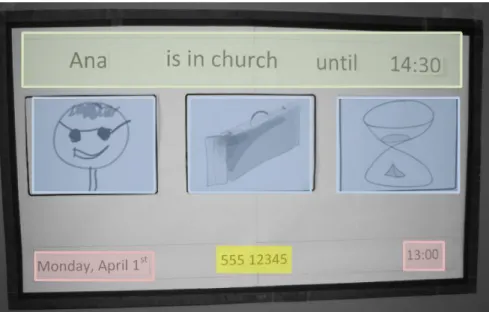
Figure 9 – The TV part of the system, displaying information to the dementia-affected person. Source: (Jordan, 2011). ... 47
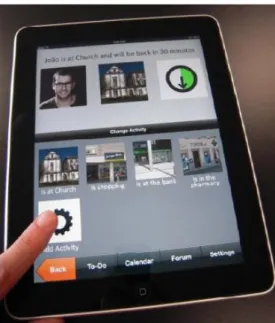
Figure 10 – The tablet application with which the caregivers interact to be able to display information on the TV. Source: (Jordan, 2011). ... 48
Figure 11 – A low-fidelity prototype of the TV, produced in the mobileWAY v1 project. Source: (Jordan, 2011). ... 53
Figure 12 – The complementary tablet interface, also low-fidelity. Source: (Jordan, 2011). ... 53
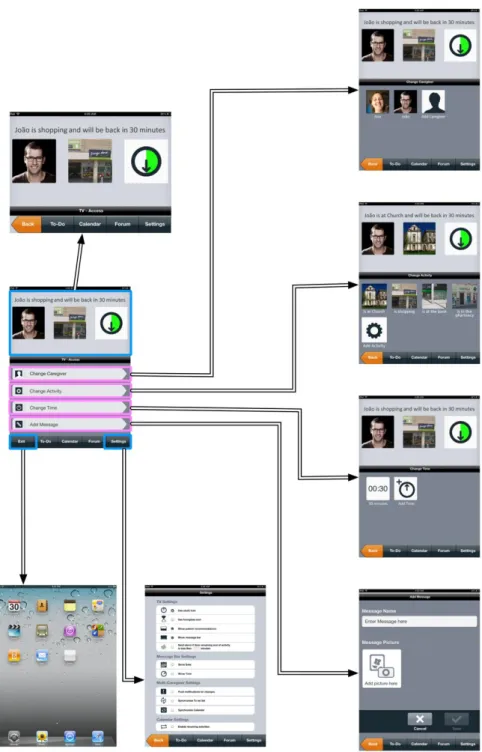
Figure 13 – The workflow of mobileWAY v1. Source: (Jordan, 2011). ... 55
Figure 14 – Additional examples of mobileWAY v1’s interface. Source: (Jordan, 2011). ... 57
Figure 15 – More examples of mobileWAY v1’s interface. Source: (Jordan, 2011). ... 57
Figure 16 – The “Add Caregiver” screen’s low-fidelity prototype. Source: (Jordan, 2011). ... 60
Figure 17 – The “Change Time” screen’s low-fidelity prototype with the context menu opened. Source: (Jordan, 2011). ... 61
Figure 18 – The “Change Activity” screen’s low-fidelity prototype with the context menu opened. Source: (Jordan, 2011). ... 61
13
Figure 20 – The “Change Activity” screen’s high-fidelity prototype. Source: (Jordan, 2011). ... 64
Figure 21 – The “Change Activity” screen’s low-fidelity prototype with two items. There is space for one additional item as well as arrows... 65
Figure 22 – The “Select Entertainment” screen’s low-fidelity prototype. ... 67
Figure 23 – The “Select Video” screen’s low-fidelity prototype. ... 68
Figure 24 – A low-fidelity prototype of the main screen with a video playing on the TV. The TV screen fragment part tells the user that a video is playing... 69
Figure 25 – The “Settings” screen’s low-fidelity prototype. ... 69
Figure 26 – The pop-up asking users whether they want to update the TV screen information. 70 Figure 27 – Clock icon test performed in mobileWAY v1. Source: (Jordan, 2011). ... 73
Figure 28 – Setting up the low-fidelity prototype of the TV on the wall for the dementia-affected person to test. ... 74
Figure 29 – The “Main Menu” screen’s low-fidelity prototype with the three placeholder pictures on the TV fragment. ... 78
Figure 30 – The “Settings” screen’s low-fidelity prototype with the “Show Message Bar” option disabled. ... 84
Figure 31 – Caregiver’s use cases diagram. ... 98
Figure 32 – mobileWAY v2’s physical system architecture diagram. ... 99
Figure 33 – The server’s model diagram. ... 101
Figure 34 – An example of a different user interface layout structure for different devices, made possible by Android’s resource separation. An APK is an Android package file that contains all of the application’s code and resources and is used to install it. Source: (Google, 2011). ... 109
Figure 35 – The server’s database tables. ... 115
Figure 36 – The server’s Web interface. ... 116
Figure 37 – An example of the Google TV Activity’s interface (on the television). ... 120
Figure 38 – Caregiver’s workflow, part 1. ... 131
Figure 39 – Caregiver’s workflow, part 2. ... 132
14
Figure 41 – Activity’s workflow, part 1. ... 134
Figure 42 – Activity’s workflow, part 2. ... 135
Figure 43 – Activity’s workflow, part 3. ... 136
Figure 44 – Activity duration’s workflow, part 1. ... 137
Figure 45 – Activity duration’s workflow, part 2. ... 138
Figure 46 – Message’s workflow. ... 139
Figure 47 – Entertainment’s workflow, part 1. ... 140
Figure 48 – Entertainment’s workflow, part 2. ... 141
Figure 49 – Entertainment’s workflow, part 3. ... 142
Figure 50 – TV screen zoom, application exit and part 1 of the multi-caregiver functionalities’ workflow. ... 143
Figure 51 – TV screen zoom, settings and part 2 of the multi-caregiver functionalities’ workflow. ... 144
15
Table of Tables
Table 1 – Caregivers’ general data. ... 72
Table 2 – Combinations of caregiver and activity used for the tests with dementia-affected persons. ... 74
Table 3 – Redesign phase: Minimum number of steps needed, maximum number of steps used and average number of errors per task. ... 85
Table 4 – Paticipants’ general data for the validation of the system. ... 146
Table 5 – Validation phase: minimum number of steps needed, maximum number of steps used and average number of errors per task (caregiver status setup tasks). ... 157
Table 6 – Validation phase: minimum number of steps needed, maximum number of steps used and average number of errors per task (collaborative tasks). ... 162
Table 7 – Question A results. ... 183
Table 8 – Question B results. ... 183
Table 9 – Question C results. ... 183
Table 10 – Tasks’ legend. ... 190
Table 11 – Results of Caregiver 1. ... 195
Table 12 – Results of Caregiver 2. ... 199
Table 13 – Results of Caregiver 3. ... 202
Table 14 – Results of Caregiver 4. ... 207
Table 15 – Results of Caregiver 5. ... 210
Table 16 – Results of Caregiver 6. ... 214
Table 17 – Results of Caregiver 7. ... 218
Table 18 – Results of Caregiver 8. ... 221
Table 19 – Results of Caregiver 9. ... 224
Table 20 – Results of Caregiver 10. ... 227
Table 21 – Questionnaire results of Caregiver 1. ... 232
16
Table 23 – Questionnaire results of Caregiver 3. ... 233
Table 24 – Questionnaire results of Caregiver 4. ... 233
Table 25 – Questionnaire results of Caregiver 5. ... 234
Table 26 – Questionnaire results of Caregiver 6. ... 234
Table 27 – Questionnaire results of Caregiver 7. ... 235
Table 28 – Questionnaire results of Caregiver 8. ... 235
Table 29 – Questionnaire results of Caregiver 9. ... 236
Table 30 – Questionnaire results of Caregiver 10. ... 236
Table 31 – Results of Person 1. ... 237
Table 32 – Results of Person 2. ... 238
Table 33 – Results of Person 3. ... 239
Table 34 – Results of Person 5. ... 240
Table 35 – Results of Person 6. ... 241
Table 36 – Tasks’ legend. ... 252
Table 37 – Results of Participant 1. ... 254
Table 38 – Results of Participant 2. ... 259
Table 39 – Results of Participant 3. ... 263
Table 40 – Results of Participant 4. ... 268
Table 41 – Results of Participant 5. ... 272
Table 42 – Results of Participant 6. ... 277
Table 43 – Questionnaire results of Participant 1. ... 282
Table 44 – Questionnaire results of Participant 2. ... 282
Table 45 – Questionnaire results of Participant 3. ... 283
Table 46 – Questionnaire results of Participant 4. ... 283
Table 47 – Questionnaire results of Participant 5. ... 284
17
Table of Charts
Chart 1 – Redesign phase: task 1 results. ... 75
Chart 2 – Redesign phase: task 2 results. ... 76
Chart 3 – Redesign phase: task 3 results. ... 77
Chart 4 – Redesign phase: task 4 results. ... 79
Chart 5 – Redesign phase: task 5 results. ... 80
Chart 6 – Redesign phase: task 6 results. ... 81
Chart 7 – Redesign phase: task 7 results. ... 82
Chart 8 – Redesign phase: task 8 results. ... 83
Chart 9 – Redesign phase: task 9 results. ... 84
Chart 10 – Redesign phase: questionnaire results. ... 86
Chart 11 – Validation phase: task 1 results. ... 148
Chart 12 – Validation phase: task 2 results. ... 149
Chart 13 – Validation phase: task 3 results. ... 150
Chart 14 – Validation phase: task 4 results. ... 151
Chart 15 – Validation phase: task 5 results. ... 152
Chart 16 – Validation phase: task 6 results. ... 153
Chart 17 – Validation phase: task 7 results. ... 154
Chart 18 – Validation phase: task 8 results. ... 155
Chart 19 – Validation phase: task 9 results. ... 156
Chart 20 – Validation phase: questionnaire results. ... 158
Chart 21 – Validation phase: task 10 results. ... 160
Chart 22 – Validation phase: task 11 results. ... 161
18
1 Introduction
An unprecedented reality is challenging humanity: the world’s population is ageing at a very fast pace. Although being a testament to the huge improvements that have happened throughout the history of mankind, the fact that people are living longer poses significant problems to the world’s economy and the sustainability of health care systems. Data from the United Nations (2010) shows that the number of older adults (60+ years) went from 205 million in 1950 to 737 million in 2009, which represents an increase by 3.6 times. Furthermore, predictions indicate that by 2050, the number of older adults will rise to 2 billion – that is nearly three times the 2009’s number, representing 22 per cent of the world’s population. In Europe alone, almost 35 per cent of the population will be 60 or more years old, making it the continent with the highest ratio of older adults.
As people age, there are many changes they go through. Older adults are likely to experience perceptual, cognitive, motor systems as well as psychological and social declines (Fisk, Rogers, Charness, Czaja, & Sharit, 2009); (Charness & Schaie, 2003); (Peters & Morrison, 1999). Chronic diseases such as heart disease and cancer are also more frequent among older adults. As shown by the National Center for Chronic Disease Prevention and Health Promotion (2010), chronic diseases “are among the most common, costly, and preventable of all health problems in the U.S.”, being the leading cause of death and disability in that country. The World Health Organization (WHO) furthers this information by stating that chronic diseases represent 60 per cent of the world’s deaths, and “are by far the leading causes of mortality in the world” (World Health Organization, 2011). Recently, the WHO published a recent report stating that non-communicable diseases are the leading causes of death worldwide, having represented 63 per cent of all deaths in 2008 (World Health Organization, 2011).
The facts surrounding chronic diseases serve as a big warning for society. It needs to be aware of these problems and of the elderly, who need solutions to feel better, more integrated and happier. Chronic diseases are not going away; in fact, they greatly affect every country by challenging the effectiveness of health care systems and posing great threats to the global economy and society (World Health Organization, 2002). For this project, one particular chronic disease stands out for its impact on elderly: dementia. Dementia is a term that describes various brain disorders (Cayton, Graham, & Warner, 2002). This syndrome is caused by various progressive disorders “that affect memory, thinking, behaviour and the ability to perform everyday activities” (Wimo & Prince, 2010). Alzheimer’s Disease International (2009) estimated that there would be 35.6 million people with dementia in 2010, and 115.4 million in 2050, an
19
increase by 3.24 times. Dementia-affected persons will require care at some point in their lives. Dementia care is a long process that significantly impacts the lives of caregivers, both at a physical and psychological level (Prince & Jackson, 2009). There are various types of dementia, but Alzheimer’s disease (AD) is the most common. For example, in the United States, AD accounts for an estimated 60 to 80 per cent of cases – 1 in 8 Americans with or over 65 years of age has AD (Alzheimer's Association, 2011).
The reality of an ageing population world is making many people and organizations look for solutions which can prevent its vast impacts and enhance people’s lives. This is where another element comes into play: technology has a big potential to serve as an enabler in introducing more reliable and helpful health care systems that will assist older adults (Center for Technology and Aging, 2009). In fact, technology that is designed to assist and improve functional capabilities of individuals with disabilities already exists – this is known as assistive technology, and was defined in the Assistive Technology Act of 19981. Studies show that these technologies are adequate in contributing to a more independent living of dementia-affected persons (Lauriks, et al., 2007); (Beech & Roberts, 2008), although the level of success in real life situations is still relatively small. In order to change this, there is currently a number of projects such as COGKNOW (Cogknow Limited, 2011) that aim to support people with dementia and reduce caregivers’ stress. This project and others are described in section 4.2.
When looking at technology, the recent smart phone boom (Gartner, Inc., 2011) as well as the impacts tablet devices will have in the future of computing (Gartner, Inc., 2011) are definitely interesting. Moreover, studies have shown that mobile phones supporting health care display a number of advantages, such as portability and continuous communication (Free, Phillips, Felix, Galli, Patel, & Edwards, 2010). Hence, these devices present great opportunities of research in the scope of dementia-affected persons and their caregivers.
1.1 Problem Description and Context
An ageing society is something that defines our present world. Since ageing is associated with physical and psychological declines, health care systems need to give response to this ever-growing part of the population.
The impact of chronic diseases, and dementia in particular, on older adults raises the need to help them gain more independence and confidence, consequently improving their lives. Alzheimer’s disease (AD), the most common form of dementia, is characterized by several stages
20
where the individual eventually stops interacting with the environment and loses the ability to carry a conversation or control movement (Alzheimer's Association, 2011). This evolution is accompanied by long-term care services, placing a heavy burden on caregivers. In this context, technology has proven to be capable to bridge the gap between the health care systems’ cost and the well-being of dementia affected persons. By understanding the importance of Human-Computer Interaction (HCI) and using research methodologies related to user-centred design (UCD), it is possible to assess the needs of people in this context and thus make use of technology in forward-thinking ways that will enable not only improved support in this scope but also pave the way for better and smarter solutions in software engineering focusing this area.
1.2 Objectives and Motivation
This project focuses on supporting older adults with early-stage Alzheimer’s disease (AD) and the informal caregivers that support them. The work of this dissertation builds upon a previous project, which was partially tested and not at all implemented: mobileWAY v1. mobileWAY v1 consists of a system in which caregivers, while out of the house, utilise a mobile device to send important information over to the TV of the dementia-affected person, which is at home. This information is related to the identification of the caregiver, the activity performed by the caregiver and the time that the caregiver will take to perform it; this is presented as the time remaining until the dementia-affected person has a caregiver in the house again. The system also considers optional messages to display to the dementia-affected person as well as multi-caregiver functionalities that allow every caregiver to exchange information.
This thesis will develop mobileWAY v1 further: new analysis, designs and evaluations of mobileWAY v1 will be performed to fine-tune details and subsequently develop mobileWAY v2. The project’s main focus will be on the implementation of the tablet application as well as of the TV part of the system that will build upon the previously mentioned steps. Finally, mobileWAY v2 will be evaluated and validated with users. These different, yet related, sets of tasks – user interface redesign, implementation of the redesigned user interface and evaluation of the implemented system with end users – involve the use of a variety of methods related to the areas of HCI and Software Engineering.
Throughout this thesis previous work is going to be referred as mobileWAY v1 and the current implementation to which this thesis refers to as mobileWAY v2.
21
1.3 Contributions
This project contributes a tested and working prototype of mobileWAY v2 that is ready to be used in the context of dementia-affected individuals, particularly with AD, and their caregivers. By continuing and evolving an initial idea of mobileWAY v1, it was possible to effectively use widely accepted technology by diseased people and support the massive burdens of caregivers by providing a relatively cheap and meaningful way of diminishing their worries and easing their minds. The system combines a tablet interface, used by caregivers, with the TV at home, watched by the dementia-affected persons, to allow caregivers to display information to their dementia-affected relatives about who they are, their whereabouts and the time they will take before returning home. Additionally, caregivers can entertain their diseased relatives by using entertainment features that can be triggered remotely to play slides, audio and video on the TV. Multi-caregiver functionalities perfect the application by enabling multiple caregivers to keep updated on everyone’s tasks as well as communicating effectively with each other.
During development, the needs of people in these contexts were carefully studied and observed in order to further optimize the system to them. Development guidelines and best practices were followed and the usability tests performed demonstrated a good acceptance rate of the system.
As work evolved in the development of this dissertation, continued literature review and research in the field of human-computer interaction (HCI) and dementia contexts allowed the contribution of a thorough analysis of related projects in this area.
The systematic evaluation performed with end users of the system allowed it to be more focused and complete in the eyes of those who need it and can benefit from using it.
Finally, the development of this work also contributed some advances in the use of the recent Google TV as part of an ecosystem that allows developers to construct broader, more interconnected systems and apply them to specific situations, such as the context of this project.
1.4 Thesis Structure
This thesis is organised in nine chapters. This first chapter contains the introduction to this work and outlines the problem description and context as well as this thesis’s objectives, motivation and contributions.
The second chapter is dedicated to the methodology used during the evolution and development of this work. Chapters three and four consist of state-of-the-art chapters.
22
The third chapter discusses the context revolving around dementia-affected persons as well as their caregivers. In this chapter, dementia is explained as well as the characteristics and behaviours of dementia-affected persons. The obstacles that caregivers face and the way the disease affects them on various levels are also outlined.
The fourth chapter focuses on technology and how it is used in dementia contexts. Assistive technology is introduced and an analysis of other projects around the scope is displayed, presenting the current state of the art. In this chapter the chosen project that ultimately guides the rest of the work is also discussed.
The fifth chapter presents the redesign and new evaluations of the mobileWAY v1 project. It presents and discusses several aspects regarding the changes obtained from previous usability tests, new functionalities’ design, new evaluations and respective conclusions that enable the final design of the second version, or v2, of mobileWAY (this project’s version of mobileWAY that builds upon its initial version).
The sixth chapter details the technical specification and implementation of mobileWAY v2. The former includes the requirements specification, the main use cases definition and the system’s architecture while the latter describes the methods and tools used, the system’s functionality and a quick glance at how to use mobileWAY v2.
The seventh chapter outlines the validation and tests of the system. An overview of the participants and how they use the functionalities related to the caregiver status setup and collaborative tasks are displayed and relevant results are thoroughly discussed.
The eighth chapter discusses the results of the work developed in this thesis, where a summary of the main achievements and conclusions can be found.
Finally, chapter nine presents the conclusions of the developed work as well as improvement ideas and new functionalities that could guide future revisions and iterations of mobileWAY v2 in order to continue its optimisation and growth.
23
2 Methodology
This chapter details the research methodology followed to undertake this dissertation.
The development of this project is separated in different, but related, sets of tasks: the redesign of a user interface, the implementation of that redesigned user interface and the evaluation of the implemented system with end users. As a result of this, throughout the project’s progress, a variety of methods are used.
First of all it is noteworthy to mention that this project is a follow-up of another which involved the design of a user interface for both older adults with early-stage Alzheimer’s disease (AD) and their caregivers (Jordan, 2011). To properly continue that work, a review of the literature was conducted to understand the context of the older adult with dementia, allowing the comprehension of how these people behave, what their characteristics and limitations are, and how their informal caregivers are affected. Additionally, other state-of-the-art systems that try to help these users were researched and are included in this work.
This project aims to provide a functioning application to end users. Broadly speaking, this involves two parts: the interactive system and its users. In this context, to better understand the methods and tools used, the concept of Human-Computer Interaction (HCI) needs to be explained.
HCI “is the study of the interaction between people, computers and tasks” (Johnson, 1992), and “involves the design, implementation and evaluation of interactive systems in the context of the user’s task and work” (Dix, Finlay, Abowd, & Beale, 2004). In the design of computer systems, it is important to make sure that users can quickly and efficiently get work done. Badly designed systems will increase user error and, in general, make users feel less secure and motivated in the completion of tasks. This is why usability is a vital aspect in the scope of HCI. According to Nielsen (2011), usability “is a quality attribute that assesses how easy user interfaces are to use” according to five criteria:
Learnability – ease of learning and accomplishing basic tasks when first using the design.
Efficiency – how quickly users perform tasks after knowing how to use the design. Memorability – ease of remembering how to use the system after a period of not using it.
Errors – how many errors users make, how severe they are, and how easily can users recover from them.
24
Satisfaction – how satisfying the interface is to use.
Nielsen (2011) also points out utility as another quality attribute. Utility is the system’s capacity to do what users need. Making sure that these concepts are understood and correctly applied to user interfaces contributes to the achievement of HCI’s goals as a whole: in order to be successful, products need to be useful, usable and used (Dix, Finlay, Abowd, & Beale, 2004). In software, even if its underlying code is flawless, it will be useless if the user interface fails to be intuitive and pleasant.
To make sure that systems incorporate the previously highlighted key concepts, users must be at the centre of the design process; this approach to user interface design is known as user-centred design (UCD). UCD “represents the techniques, processes, methods, and procedures for designing usable products and systems” (Rubin & Chisnell, 2008), putting the intended end users of a system at the centre of its design and development.
The International Standard ISO 9241-210, “Ergonomics of human-system interaction – Part 210: Human-centred design for interactive systems”2, is an important standard that outlines six key principles in user-centred design:
1. The design is based upon an explicit understanding of users, tasks and environments – or in other words, it is fundamental to understand the context in which users will use the system and for what purpose.
2. Users are involved throughout design and development.
3. The design is driven and defined by user-centred evaluation – usability testing happens throughout all stages of design.
4. The process is iterative.
5. The design addresses the whole user experience – which includes perceptual and emotional aspects of the user experience.
6. The design team includes multidisciplinary skills and perspectives – a team that only includes experts of one type is not a good choice; a good mixture of designers, programmers, usability experts, end users, analysts and so on is ideal. The greater variety will bring about more views and better ideas.
During the development of this project, UCD methodologies were used, and some important techniques deserve to be further elaborated. These are: i) user requirements gathering, ii) usability testing, iii) low-fidelity and high-fidelity prototyping, iv) think aloud protocol and v)
25
questionnaires. The use of these techniques can be mapped to the various phases of development, as presented in the following sections.
2.1 User Research
The user requirements phase is a very important part of UCD; it “provides insight into the many possible solutions and allows a person to select and investigate the best solution from the users’ perspective” (Courage & Baxter, 2005). Although many of the system’s requirements were determined by Jordan (2011), who derived them from interviews with caregivers and their codifications, the studies undertaken during the present research brought to light new ones, and they set the stage for new tests. Chapters 3, 4 and 5 present the research around the scope as well as the new functionalities that called for new requirements.
Usability testing involves usability tests that have five characteristics, according to Dumas and Redish (1999):
1. The primary goal is to improve the product’s usability. 2. The participants represent real users.
3. The participants do real tasks.
4. What participants do and say is both observed and recorded.
5. The retrieved data is analysed and real problems are diagnosed so that solutions can be found.
Usability tests were performed with users when redesigning the user interface and after the system was implemented to understand whether it fulfilled their expectations. These can be seen in chapters 5 and 7, respectively.
2.2 Prototyping
Low-fidelity prototyping, which is also commonly known as paper prototyping, “is a variation of usability testing where representative users perform realistic tasks by interacting with a paper version of the interface that is manipulated by a person “playing computer,” who doesn’t explain how the interface is intended to work” (Snyder, 2003). Among other advantages, it is a fast and inexpensive way of obtaining a substantial amount of user feedback facilitating communication between the design and development teams and the users. For this project, the Wizard of Oz technique was used. It consists of a human simulating the system’s responses (UsabilityNet, 2006) and allows for rapid iterative design.
26
A high-fidelity prototype, on the other hand, is a prototype that is close to the final product (Foraker Labs, 2011) and runs on the actual device.
In the initial tests performed during the user interface redesign, paper prototyping was used (chapter 5) while in the evaluation tests of the caregivers’ interface, a high-fidelity prototype was used (chapter 7).
2.3 Analysis
During the evaluation tests, the think-aloud protocol method was used. Think aloud “is a form of observation where the user is asked to talk through what he is doing as he is being observed; for example, describing what he believes is happening, why he takes an action, what he is trying to do” (Dix, Finlay, Abowd, & Beale, 2004). This allows the tester to better understand what is wrong with the design.
Questionnaires were applied to users after the tests to let them voice their opinion about what the system was doing right or wrong. These were only filled by informal caregivers; persons affected with AD did not have the ability to correctly understand the questions nor hold their attention enough time to answer them. As Jordan (2011) pointed out, user interface evaluation for people with dementia is a very difficult area of research.
Analysis of the first usability tests was done in chapter 5 and its conclusions and results led to the final design of the second version of mobileWAY, which was fully specified and implemented (chapter 6). The final usability tests, performed with the working prototype, were analysed in chapter 7 and paved the way to the final discussions (chapter 8) and conclusions (chapter 9).
2.4 Implementation
The implementation phase of the system (chapter 6) combined UCD methodologies and agile development methodologies. By integrating UCD and agile methodologies, deeper understanding of the users is attained, design decisions can better be validated and ultimately more usable and higher quality software can be created (Dickinson & Kumana, 2011). Agile software development follows some principles that include welcoming changing requirements at any point during development, delivering working software frequently and continuous attention to technical excellence and good design (Beck, et al., 2007). Various agile methods exist, but Extreme Programming (XP) was the chosen one to guide this work’s implementation. XP is a
27
“lightweight methodology for small-to-medium-sized teams developing software in the face of vague or rapidly changing requirements” (Beck, 2000). The fact that XP assumes that requirements may change means that the product is developed in a series of iterations which guarantees that a usable version of the system will be readily available to use if there is a need to show it to customers (Kolawa, 2011). These characteristics make XP a suitable choice for this work. However, it is important to note that this project was made by a single person, so not all of the practices and principles of XP could be applied. Those that were used throughout the implementation are as follows (Beck, 2000):
Features were determined and planned. They were not written as user stories (as XP describes) but the requirements obtained through testing allowed an adequate planning.
XP defines short releases as a practice, in which releases should happen often in short cycles. Because in this project features were planned and built upon in a modular way, they could be added quickly.
As features were added, they followed a simple design adapted to each that could easily be altered to meet new requirements.
The code was refactored as necessary. Some functions used previously would need to be reused in new features, so steps like eliminating duplicate code and testing everything again to make sure that the system kept working correctly were taken often.
The implementation followed a set of coding standards so that it would be easier to understand if another person wanted to work on it. This includes naming conventions for variables and comments where appropriate to make the code more readable and understandable.
The system was implemented for the Android mobile operating system, which uses the Java programming language. Along with the results of the analysis from the first usability tests (chapter 5), the implementation took notes from existing mobile design guidelines and best practices. The system was implemented on a tablet and on a Google TV. The communication between these two devices was made possible by a server powered by Ruby on Rails. The reasons for these choices and more information regarding these are detailed in chapter 6.
28
3 Understanding the Context of Dementia-Affected Persons and Their
Caregivers
This chapter will develop an understanding of dementia, the characteristics of the persons most likely affected by it and the role of caregivers in the life of such persons.
3.1 Dementia
Everyone ages. That is a natural process. As people get older, they start experiencing multiple age-related declines related to cognitive and sensorimotor systems. These include deteriorations in visual acuity, hearing sensitivity and working memory (Charness & Schaie, 2003). Normally, as people age they just need to take better care of their eyes, ears and so on. However, if these declines are severe enough to interfere with the daily life and follow certain criteria, then a case of dementia may be developing (Alzheimer's Association, 2011).
Dementia is a brain disorder that initially meant “out of one’s mind”, from the Latin word “demens”; “de” meaning “out of” and “mens” meaning “the mind”, respectively (Maj & Sartorius, 2002). Dementia is not a specific disease; it is a syndrome – a group of symptoms which consistently occur together (Oxford University Press, 2011) – that mainly affects older adults with an age of more than 65 years. After this age, the probability of developing dementia doubles every five years (Wimo & Prince, 2010).
Dementia symptoms vary greatly. However, there are general criteria available that must each be met in order for dementia to be accurately diagnosed. The World Health Organization published the Tenth Revision of the International Classification of Diseases (ICD-10) for the “Classification of Mental and Behavioural Disorders – Diagnostic criteria for research” where the following (summarised) criteria can be found (World Health Organization, 1993):
A decline in memory applying to both verbal and non-verbal material that must be confirmed with reliable history from an informant and supplemented, if possible, by neuropsychological tests or quantified cognitive assessments. This decline may have different levels of severity but will nonetheless have to interfere with everyday activities at the very least or threaten independent living completely at its worst. For a safer, more confident diagnosis, this decline should be observed for a period of no less than six months.
29
A decline in other cognitive abilities that negatively affect judgement and thinking as well as the processing of information. Confirmation, severity level and diagnosis confidence follow similar guidelines to the previous criterion.
Preserved awareness of the environment (e.g., orientation in time) long enough that the previously presented declines can be observed.
A decline in emotional control or motivation, or a change in social behaviour, that can be found in the following: emotional lability, irritability, apathy or coarsening of social behaviour (e.g., eating without manners).
There are over one hundred dementia types (Cayton, Graham, & Warner, 2002) but some are much more common than others (Alzheimer's Society, 2011). The most common type is Alzheimer’s disease (AD); other types include vascular dementia (the second most common type) and dementia with Lewy bodies. AD is the type of dementia that is of most interest to this project. It is important to note that AD has some mesmerizing facts around it such as being the sixth-leading cause of death across all ages and fifth-leading cause of death for people aged 65 or more in the United States (Alzheimer's Association, 2011) and there being no known cure yet (Alzheimer's Society, 2011).
The impact of dementia on the global economy is something that can neither be ignored nor underestimated. According to Wimo & Prince (2010), in 2010 there was a total estimated cost of US$604 billion related to dementia worldwide, with Western Europe and North America representing roughly 70 per cent of it. Furthermore, it is estimated that by 2030, costs will have increased by 85 per cent.
3.2 The Dementia-Affected Person
As previously mentioned, dementia affects mainly older adults that are aged 65 years or older. After this age, the risk of developing dementia grows substantially. That is not to say that dementia is exclusive to this part of the population. In fact, the number of dementia cases in younger people has been rising and there is more awareness to that fact (Wimo & Prince, 2010). The cause of AD remains unknown, but scientific studies have been able to determine various risk factors, including advancing age (the main known risk factor), family history, genetics and gender (Alzheimer's Association, 2011); (James, 2009).
The Alzheimer’s Association “facts and figures” (2011) reports that in the US, out of all the people with AD in 2011 (5.4 million), approximately 4 per cent are under the age of 65, 6 per cent are 65 to 74, 45 per cent are 75 to 84 and 45 per cent are 85 or older. This reality is pretty
30
daunting, even more because these numbers only consider the facts surrounding the most common type of dementia, AD. As such, it is important to understand just what kinds of changes these people suffer and what being affected by dementia means.
A dementia-affected person experiences a progressive loss of capabilities and may show behavioural problems such as agitation, aggression, wandering, apathy and psychological symptoms such as anxiety, depression, delusions and hallucinations (Prince & Jackson, 2009).
A person affected with AD typically progresses through seven stages, although not everyone will have the disease evolve at the same pace or experience the exact same symptoms. In stage 1, the person is still functioning normally and no signs of dementia can be detected, not even by a medical professional doing an interview designed to screen the disease. As the person progresses through every stage, increasing cognitive declines start to be shown until in the last stage, 7, when the person stops interacting with the environment and loses the ability to have a conversation or control movement (Alzheimer's Association, 2011). Martin and Jim (2009) rank the disease’s advance in three stages:
1. Early stage – the first or second year. This is often overlooked but may include becoming highly passive, non communicative and having significant memory loss. 2. Middle stage – from the second to the fifth year. Day-to-day living becomes
increasingly painful and difficult because of conditions such as needing help for basic tasks (e.g., going to the toilet), signs of wandering and loss of location skills.
3. Late stage – from the fifth year onwards. Independent living is no longer a viable option and full-time caregiving becomes a necessity.
The amount of time a person with dementia will be able to live is uncertain as it depends on many factors, however the disease “can progress for up to around ten years” (Alzheimer's Society, 2011). Furthermore, a dementia-affected person may not pass away because of dementia, but instead because of another illness (Alzheimer's Society, 2011).
The progress into a point of life where living independently is no longer an option leaves the person affected with dementia in a serious predicament – a situation that needs to be tackled by caregivers.
3.3 Caregivers of Dementia-Affected Persons
Caregiving focuses on helping people with physical or psychological problems and can be a lot of different activities such as (Schmall & Stiehl, 2005):
31
Round-the-clock supervision; Shopping;
Telephoning;
Lifting, bathing, dressing and feeding; Providing social activity;
Supervising medication; Arranging for health care;
Listening, talking and providing emotional support.
Caregivers may be formal or informal. Formal care consists of “paid care work undertaken by a range of health and social care professions drawn from the statutory, voluntary and private sectors”, while informal care is the care support provided at home mostly by family, friends and neighbours (Milligan, 2009). In this project, and as described by Jordan (2011), the focus is on the informal caregivers of people affected with AD in its early stages – caregiving is still pretty much a family issue (Schulz, 2000); (Prince & Jackson, 2009), with informal caregivers providing the majority of care (as an example, in the U.S., 80 per cent of the care at home is provided by family caregivers (Alzheimer's Association, 2011)).
The life of caregivers is quite complicated, especially in the context of an advancing AD. The act of caregiving affects them both at a physical and psychological level and finances, social circles and emotions are some examples of highly affected elements in these people’s lives (Wimo & Prince, 2010). Caregivers are highly subject to stress and even depression (Alzheimer's Association, 2011), which is alarming because they may end up having a plethora of health and mental problems themselves.
These issues are interesting when the world and civilization evolution are put into perspective. Longer life expectancy increased the likelihood of suffering from dementia. At the same time, informal caregivers have less and less resources to adequately respond to the needs of people that need to be taken care of. LoboPrabhu, Molinari, and Lomax (2006) give several examples of factors contributing to these problems, such as the large movement of women into the workforce, lower rates of fertility and the low rate of economic growth.
Currently there are about 14.9 million unpaid caregivers in the U.S. and most of them (56 per cent) are aged 55 years or older (Alzheimer's Association, 2011). By coupling these figures with the previously outlined facts, it is understandable that solutions are needed and many areas can be improved as a result. Studies have shown that caregiving also has many positive aspects such
32
as companionship, enjoyment, fulfillment (Cohen, Colantonio, & Vernich, 2002), uplifts and satisfaction (LoboPrabhu, Molinari, & Lomax, 2006). Although there are many negative parts in this practice, in a way, the positives outweigh them because people want to, and do, provide care for their loved ones.
Since caregiving is a huge time-draining task that must be done, in many cases and while the disease is not in a very advanced stage, after working hours, caregivers need help in freeing some of their time for personal needs and keeping their minds fresh and in good health. At the same time, dementia-affected persons also need to know that their caregivers are certainly going to keep watching over them so that they feel safer and are able to live a more relaxed life. In light of this, technology, while not a silver bullet in and of itself, can help in responding to these necessities and diminish worry, sadness and stress for both parties while serving as a way to foster a stronger bond between them. By exploring its advantages, the well-being of dementia-affected persons and their caregivers can be kept or improved, thus solving important problems in this context, even if slowly.
Having developed an understanding of the context and the life of dementia-affected persons and their caregivers, the next chapter will focus on the technological solutions that have already been thought of to support people affected by dementia.
33
4 Technology within the Dementia Context
This chapter will focus on the technology available to support dementia-affected persons and, in some cases, their caregivers. The concept of assistive technologies (AT) will be described as well as the uses and benefits of mobile devices and some state-of-the-art projects that are related to this work.
Looking solely at an individual’s age says nothing except for how long that person has lived. Even if some things may be assumed, such as the changes that happen as one ages, there is no way to know whether they apply to each individual because the person’s characteristics, behaviours and limitations cannot be concluded from a number (Pak & McLaughlin, 2010). When talking about technology and the elderly, there is certainly the stereotype that older adults are not familiar with computers and so cannot properly use them. Of course, stereotypes might contain a kernel of truth but should not be taken as a solid truth so as not to lose track of reality and damage individuals or organizations when taking decisions (Salkowitz, 2008).
However, there is indeed a digital divide that can be described as “the gap between individuals, households, businesses and geographic areas at different socio-economic levels with regard both to their opportunities to access information and communication technologies (ICTs) and to their use of the Internet for a wide variety of activities” (OECD, 2001). People who have lived longer were around when computers started to be part of the mainstream population in the late eighties but did not grow as closely to them as the younger generations. This does have its implications, since when and how people start interacting with technology is tightly related to the way they use it (Salkowitz, 2008).
Older adults may not use technology due to a variety of reasons such as: i) not seeing the need to use it; ii) having the idea that it is expensive; and iii) not being able to clearly see what computers can offer that the traditional phone, letters or other conventional forms of communication do not already (Hanson, 2009). However, technology has an enormous potential as an enabler to the creation of systems that might support health and long-term care, making it possible for older adults to live in a more independent and healthy way (Center for Technology and Aging, 2009).
Dementia-affected persons have, naturally, higher challenges to overcome before they can effectively use technology. In fact, depending on the situation and disease, it may not even make sense for them to interact directly with it because of how easily they forget things and how hard, if not impossible, it would be for someone to teach them. However, technology designed to help
34
and improve the lives of people with disabilities does exist and is known as assistive technology (AT).
4.1 Assistive Technology
AT is “technology used by individuals with disabilities in order to perform functions that might otherwise be difficult or impossible” (University of Washington, 2011). It may be able to do things as varied as improving physical or mental functioning or replacing a limb, but it always serves as a capability enhancer (Robitaille, 2010).
AT ranges from tools that are very simple and not technological at all, such as ramps for wheelchairs, to high-tech solutions such as navigation systems that can help caregivers find missing or lost relatives (Alzheimer's Society, 2011). AT devices are often passive, meaning that they will activate automatically under certain circumstances or provide assistance without requiring the user to do anything directly to them; for instance, a light sensor that will detect motion and turn the lights on when someone is entering a room or a bath plug that releases water when it detects that the bath is too full are examples of such devices (Trent Dementia Services Development Centre, 2007).
As previously mentioned, AT was defined in the Assistive Technology Act of 1998. This Act was amended in 2004, and this reauthorization is known as the Assistive Technology Act of 20043. Section 3 of this document defines an assistive technology device as “any item, piece of equipment, or product system, whether acquired commercially, modified, or customized, that is used to increase, maintain, or improve functional capabilities of individuals with disabilities”. By understanding that AT can significantly support and enhance the lives of those with limitations, it is easy to see that they can be used to greatly support dementia contexts – and AD in particular – by allowing people to live more independently and stay home during a longer period of their lives. As added benefits, AT can improve the user’s memory as well as helping reduce caregivers’ stress (Alzheimer's Society, 2011).
4.1.1 The potential of mobile devices as AT devices
Mobile devices such as smart phones and tablets are especially interesting in that they can provide a very good support to health care. Smart phones are basically inexpensive handheld computers that let users accomplish a broad range of tasks without being restricted by time or location (Sarasohn-Kahn, 2010). Currently available smart phones and tablets such as the iPhone,
35
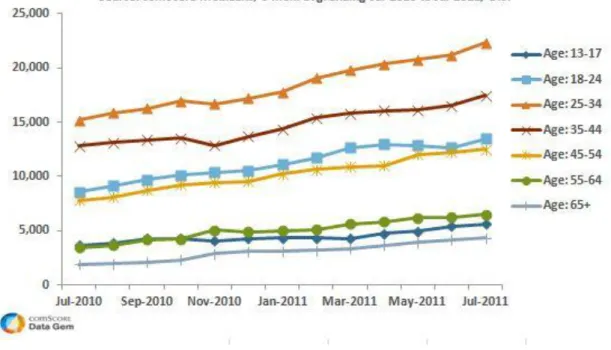
Android devices and the iPad are able to run a plethora of applications related to health and health care. Data from Gartner, Inc. (2011) shows that mobile devices registered a 5.6 per cent increase worldwide in the third quarter of 2011, with smart phone sales having increased 42 per cent. Recent statistics from comScore, Inc. (2011) show that in the U.S., the age groups of 55-64 and 65+ years, while accounting for a small percentage of total users, still experienced the strongest growth of percentage increase. They represent 7.91 per cent and 5.35 per cent of the total installed base, respectively (Figure 1). These growing numbers are encouraging because as more people of higher age groups use these devices, more can be done technology-wise to support them and mitigate problems.
Older adults are definitely interested in learning and making use of new technologies. However, because in many instances these types of devices tend to target younger people, they fail at being adapted to users with specific needs (Massimi, Baecker, & Wu, 2007). The desire of these people to experiment with the unknown is heartwarming and encourages and validates research work in this area. Even if in the context of dementia these technologies may be harder to introduce, the numerous ways in which they can help is certainly an important point to look at in future projects.
Figure 1 – U.S. smart phone audience by age segment. Source: (comScore, Inc., 2011). 4.2 State-of-the-Art Projects
In this chapter, state-of-the-art projects related to the current research will be presented and explained. These projects are introduced by gathering information publicly available on their site
36
or others and, where appropriate and applicable, may have related findings by their authors or others who published research papers and investigations based on them.
For a while now, the area of chronic conditions and information technology (IT) has been receiving attention from researchers and practitioners. The projects described in this section share many commonalities with this research, namely the promotion of independence and general well-being of dementia-affected persons and their caregivers. These projects strive to help people in doing an active self-management of their own health care and making it possible for people affected with diseases to be more connected to their caregivers and families, as well as enabling the latter to more effectively watch over their relatives without being stopped by geographic distances or time (Kamel Boulos, et al., 2009).
4.2.1 Easy Line Plus
Easy Line+ (Information Society Technologies, 2010) was a European project that focused on developing near-to-market prototypes of advanced white goods, which would help elderly persons with or without disabilities to live with fewer hazards and in a more independent way. This project started in January of 2007 and ended on April of 2010.
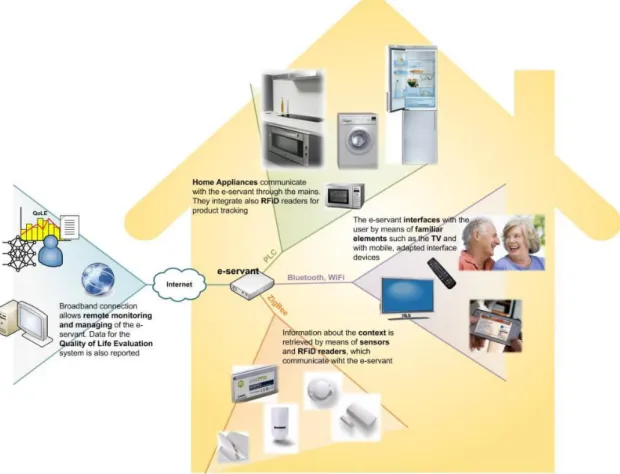
Since they found that a high number of disabilities prevented the elderly to take care of home tasks and about a fourth of accidents involving these people happened in the kitchen, they set out to solve this issue by developing prototypes of appliances such as a refrigerator that, among other things, would comment on what goods are put inside or taken out as well as control expired goods, and a stand-alone reader that would identify tagged products coming into the kitchen after shopping.
The project used a variety of technologies to achieve the desired results: RFID, wireless sensor networks, artificial intelligence, ubiquitous computing for ambient assisted living and distributed software. Of special interest are their human factors foci, which were accessibility, usability, usefulness and efficacy.
The system was evaluated with numerous people and was found to have the right functionalities as well as proving its usefulness in letting users live more independently.
37
Figure 2 – The new Easy Line+ kitchen concept. Source: (Information Society Technologies, 2010). 4.2.2 I2HOME
I2HOME (European Comission, 2011) was a European project started in 2006 and finished in 2010 that focused on letting elderly people and those with disabilities interact with modern technologies available at home.
To achieve these objectives, they implemented a standards-based open platform that goes by the name of Universal Control Hub (UCH) in which personal user interfaces could be implemented for the target users. The project used the industrial and mainstream standard Universal Remote Control (URC). Moreover, the project managed to successfully integrate traditional smart phone appliances and support software systems such as reminders.