Predictors of Study Attrition in a Randomized
Controlled Trial Evaluating a Perinatal
Home-Visiting Program with Mothers with
Psychosocial Vulnerabilities
Stéphanie Foulon1
*, Tim Greacen2, Blandine Pasquet3, Romain Dugravier4,5,
Thomas Saïas2,6,7, Nicole Guedeney8, Antoine Guedeney4,5, Florence Tubach3,9,10, CAPEDP Study Group
1Département d’Epidémiologie et Recherche Clinique, AP-HP Hôpital Bichat, Paris, France,2Laboratoire de recherche, Etablissement Public de Santé Maison Blanche, Paris, France,3Département
d’Epidémiologie et Recherche Clinique, CIC-EC 1425, AP-HP Hôpital Bichat, Paris, France,4Service de Pédopsychiatrie, AP-HP Hôpital Bichat, Paris, France,5U669 PSIGIAM, Institut National de la Santé et de la Recherche Médicale, Paris, France,6Institut National de Prévention et d’Education pour la Santé, Saint-Denis, France,7Département de Psychologie, Université du QuébecàMontréal, Montréal, Canada, 8Institut Mutualiste Montsouris, Paris, France,9INSERM, ECEVE, UMR 1123, CIC-EC 11425, Paris, France,10Université Paris Diderot, ECEVE, UMR 1123, Sorbonne Paris Cité, Paris, France
¶ Membership of the CAPEDP study group is provided in the Acknowledgments *[email protected]
Abstract
Objective
Randomised controlled trials evaluating perinatal home-visiting programs are frequently confronted with the problem of high attrition rates. The aim of the present study is to identify predictors of study attrition in a trial evaluating a perinatal home-visiting program in France.
Materials and Methods
CAPEDP is a French randomized trial comparing a perinatal home-visiting program using psychologists versus usual care (N = 440). The first assessment was at inclusion into the trial at the 27thweek of pregnancy and the final assessment when the child reached the age of two. Attrition rates were calculated at 3 and 24 months postpartum. Stepwise logistic regression was used to identify predictors ofearly(between inclusion and 3 months postpar-tum) andlater(between 3 and 24 months postpartum) attrition among social, psychological and parenting factors.
Results
Attrition rates were 17% and 63% at 3 and 24 months respectively. At 24 months, there was significantly more attrition in the control arm (70.6%) compared to the intervention arm (55.2%). Five independent predictors of early attrition were identified: having already had an abortion; having greater attachment insecurity as measured with the Vulnerable
OPEN ACCESS
Citation:Foulon S, Greacen T, Pasquet B, Dugravier R, Saïas T, Guedeney N, et al. (2015) Predictors of Study Attrition in a Randomized Controlled Trial Evaluating a Perinatal Home-Visiting Program with Mothers with Psychosocial Vulnerabilities. PLoS ONE 10(11): e0142495. doi:10.1371/journal.pone.0142495
Editor:Jodi Pawluski, University of Rennes-1, FRANCE
Received:May 7, 2015
Accepted:October 22, 2015
Published:November 10, 2015
Copyright:© 2015 Foulon et al. This is an open access article distributed under the terms of the
Creative Commons Attribution License, which permits unrestricted use, distribution, and reproduction in any medium, provided the original author and source are credited.
Attachment Style Questionnaire (VASQ); having lower global severity of psychiatric symp-toms as assessed with the Symptom Check-List (SCL-90) at inclusion, being neither cur-rently employed nor studying; and declaring no tobacco consumption during pregnancy. Being randomized into the control arm, having undergone early parental loss before age 11 and having lower global severity of psychiatric symptoms (SCL-90) at 3 months postpartum were the only variables associated with later attrition.
Conclusion
This study provides key information for identifying mothers who may require specific support to avoid study attrition in trials evaluating a home-visiting program.
Introduction
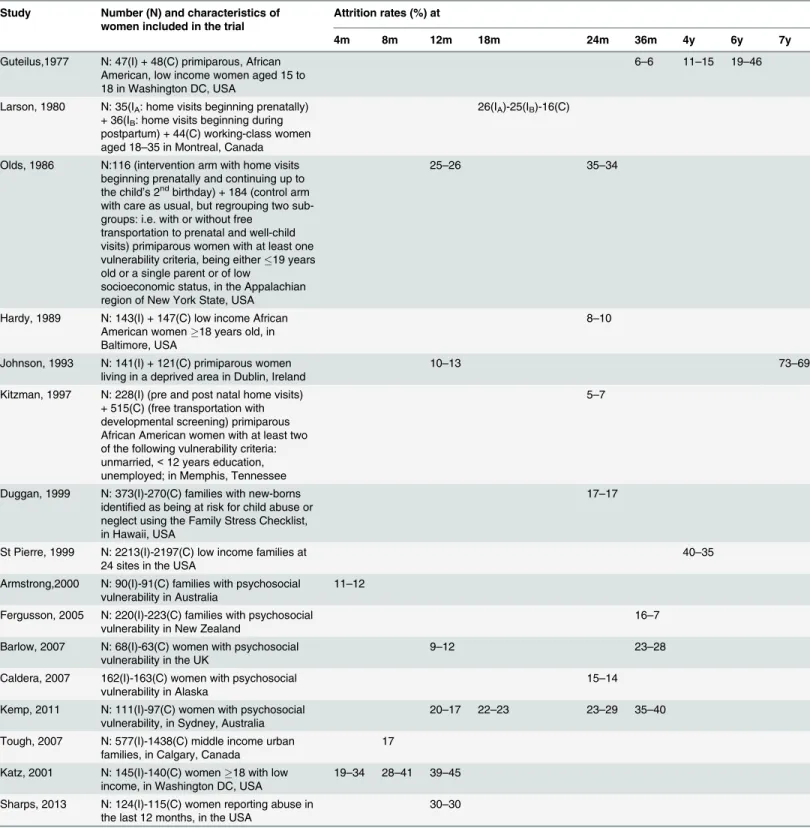
A randomized controlled trial (RCT) is widely regarded as the gold standard for assessing the efficacy of medical and behavioral interventions. However, retaining participants in RCTs can be a challenge, with significant risks in terms of being able to generalize from the findings, loss of power with diminishing numbers of participants, or bias associated with selective attrition of intervention or control group subjects [1]. Extended follow-up, minority and low income pop-ulations have been identified as risk factors for attrition in numerous RCTs [2–4]. Studies eval-uating perinatal home-visiting programs targeting maternal and child health combine these two risks as they generally (1) target women in psychosocially vulnerable situations and who are therefore seen to be particularly in need of such interventions, and (2) seek to evaluate lon-ger term changes in the mothers’or the children’s behavior. It is therefore not surprising that reported attrition rates are often high in RCTs evaluating this type of program, ranging from 12–18% for studies with assessments six months after inclusion, 9–41% at month 12, 20–22% at month 18, 5–35% at month 24 and 6–37% at month 36 [4–19], as shown inTable 1. Although the question of retention in home-visiting interventions has been extensively explored [20–26], few studies have specifically addressed the issue of attrition in RCTs evaluat-ing these interventions. In an RCT evaluatevaluat-ing a postpartum home-visitevaluat-ing program with socially disadvantaged women in Washington DC, women who dropped out from the study before four months were observed to be older and more educated, assigned less weight to the severity of illnesses that their child might contract, showed less empathy towards their child’s needs and provided a less adequate child-rearing environment [4]. Women who dropped out before completion had a lower mean number of prenatal care visits and a higher mean number of children. In Canada, Tough et al.[18] described study attrition rates in an RCT comparing prenatal home-visiting by paraprofessionals versus either care as usual, or care as usual plus a consultation with a nurse. Independent risk factors for dropping out from the study included: being non-Caucasian, not having completed high school, and having lower social support. The parents of mothers who dropped out were more likely to be separated or divorced. However generalising from these studies to RCT evaluating perinatal home-visiting programs in other contexts is problematic. Both of these trials were comparatively short in terms of follow-up (12 and 8 months respectively), with correspondingly reduced incidence of life events with poten-tial implications for attrition compared to longer term programs, such as changes in the mother's employment, her accommodation needs and place of residence, her psychological condition or her relationship with her child, all of which can have significant implications for continuing to participate in the trial. Furthermore, both studies were evaluating North Funding:The CAPEDP study was supported by
research grants from the French Ministry of Health Programme Hospitalier de Recherche Clinique (PHRC: AOM05056), the Institut National de Prévention et d’Education à la santé (INPES: DAS 08/2006 DAS 018/09 DAS 084/10), and the Institut de Recherche en Santé Publique (IReSP: REV0702). The funders had no role in study design, data collection and analysis, decision to publish, or preparation of the manuscript.
Table 1. Study attrition rates in the intervention (I) arm versus the control (C) arm in RCTs evaluating perinatal home-visiting programs.
Study Number (N) and characteristics of women included in the trial
Attrition rates (%) at
4m 8m 12m 18m 24m 36m 4y 6y 7y
Guteilus,1977 N: 47(I) + 48(C) primiparous, African American, low income women aged 15 to 18 in Washington DC, USA
6–6 11–15 19–46
Larson, 1980 N: 35(IA: home visits beginning prenatally)
+ 36(IB: home visits beginning during
postpartum) + 44(C) working-class women aged 18–35 in Montreal, Canada
26(IA)-25(IB)-16(C)
Olds, 1986 N:116 (intervention arm with home visits beginning prenatally and continuing up to the child’s 2ndbirthday) + 184 (control arm
with care as usual, but regrouping two sub-groups: i.e. with or without free
transportation to prenatal and well-child visits) primiparous women with at least one vulnerability criteria, being either19 years old or a single parent or of low
socioeconomic status, in the Appalachian region of New York State, USA
25–26 35–34
Hardy, 1989 N: 143(I) + 147(C) low income African American women18 years old, in Baltimore, USA
8–10
Johnson, 1993 N: 141(I) + 121(C) primiparous women living in a deprived area in Dublin, Ireland
10–13 73–69
Kitzman, 1997 N: 228(I) (pre and post natal home visits) + 515(C) (free transportation with developmental screening) primiparous African American women with at least two of the following vulnerability criteria: unmarried,<12 years education, unemployed; in Memphis, Tennessee
5–7
Duggan, 1999 N: 373(I)-270(C) families with new-borns identified as being at risk for child abuse or neglect using the Family Stress Checklist, in Hawaii, USA
17–17
St Pierre, 1999 N: 2213(I)-2197(C) low income families at 24 sites in the USA
40–35
Armstrong,2000 N: 90(I)-91(C) families with psychosocial vulnerability in Australia
11–12
Fergusson, 2005 N: 220(I)-223(C) families with psychosocial vulnerability in New Zealand
16–7
Barlow, 2007 N: 68(I)-63(C) women with psychosocial vulnerability in the UK
9–12 23–28
Caldera, 2007 162(I)-163(C) women with psychosocial vulnerability in Alaska
15–14
Kemp, 2011 N: 111(I)-97(C) women with psychosocial vulnerability, in Sydney, Australia
20–17 22–23 23–29 35–40
Tough, 2007 N: 577(I)-1438(C) middle income urban families, in Calgary, Canada
17
Katz, 2001 N: 145(I)-140(C) women18 with low income, in Washington DC, USA
19–34 28–41 39–45
Sharps, 2013 N: 124(I)-115(C) women reporting abuse in the last 12 months, in the USA
30–30
Attrition rates are presented at different points in time from the beginning of each study. When this information has been made available in the published articles, attrition rates are presented separately for the intervention (I) arm and the control (C) arm: (I-C).
American urban programs in specific local social contexts: extrapolating to other national or local contexts is problematic. Knowledge of predictors of study attrition in other national or regional contexts and, more importantly, of factors associated with early attrition compared to those associated with later attrition in RCTs evaluating home-visiting programs over longer periods of time is of key importance for helping program designers focus on families at risk of leaving the study and exploring adapted retention strategies.
The current study sets out to address these two key questions, using data from the CAPEDP (Compétences parentales et Attachement dans la Petite Enfance:Diminution des risques liés aux troubles de santé mentale et Promotion de la résilience—Parental Skills and Attachment in Early Childhood: reduction of risks linked to mental health problems and promotion of resil-ience) trial, an RCT evaluating a home-visiting program in France and specifically targeting child mental health and its major determinants. Women were recruited during the third tri-mester of pregnancy and followed up to their child’s second birthday.
The objectives of the current study are to describe study attrition in the CAPEDP trial, to identify predictors of early attrition, before the third month post-partum, and also those associ-ated with becoming lost to follow-up at any later point during the project, and to see whether predictors of study attrition in the French context in an RCT using psychologists as home visi-tors will be similar to those described in the North American studies mentioned above. It must be highlighted that this paper specifically addresses attrition from the RCT in question and not from the home-visiting program itself.
Materials and Methods
Study design and participant population
Participants were recruited in the CAPEDP trial, a prospective, multicenter RCT with two par-allel arms, using Prospective Randomized Open Blinded Endpoint (PROBE) methodology, with a 27-month follow-up evaluating the impact of a perinatal home-visiting program con-ducted by trained psychologists and targeting the major modifiable determinants of infant mental health. The program evaluated three primary outcomes: child mental health at the age of two, as well as two potential mediating variables: maternal postnatal depression at three months postpartum and the quality of the home environment when the child was 12 months old.
IV’(IRB authorization 2006/37) and by the French Data Protection Authority. Written consent was obtained from all participants.
The CAPEDP home-visiting intervention was tailored to improve mothers’knowledge and skills with regard to parenting, develop infant-mother attachment security, and enhance social and professional integration. A major specificity of the CAPEDP trial was that the entire home-visiting program was conducted and evaluated by qualified psychologists. It was hypoth-esized that professionals who were more highly trained in psychology would be more compe-tent in recognizing the elements in play with regard to the determinants of infant mental health, more skilled in acting upon these determinants, and more skilled in evaluating out-comes. The program was designed for psychologists to visit families six times during the ante-natal period, eight times in the first three months of the child’s life, 15 times when the child was between 4 and 12 months of age and another 14 times during the child’s second year of life. To optimise adherence to the intervention, families were reminded of upcoming visits by phone or with text messages. Missed home visits were rescheduled within the following week. Home visitors were also encouraged to maintain telephone contact with families between visits. Families that regularly missed home visits or did not respond to phone calls continued to receive regular calls at least once a fortnight from their home visitor; these calls continued through to the end of their planned participation in the study. Finally, letters were regularly sent to each family who had not been in direct contact with their home visitor for a period of over three months without giving any news.
Usual care involved access to Mother and Child Protection Services (Protection Maternelle et Infantile:PMI) and the community mental health network with no out-of-pocket payment, free antenatal maternity screenings, and a variety of social benefits.
Assessment procedures
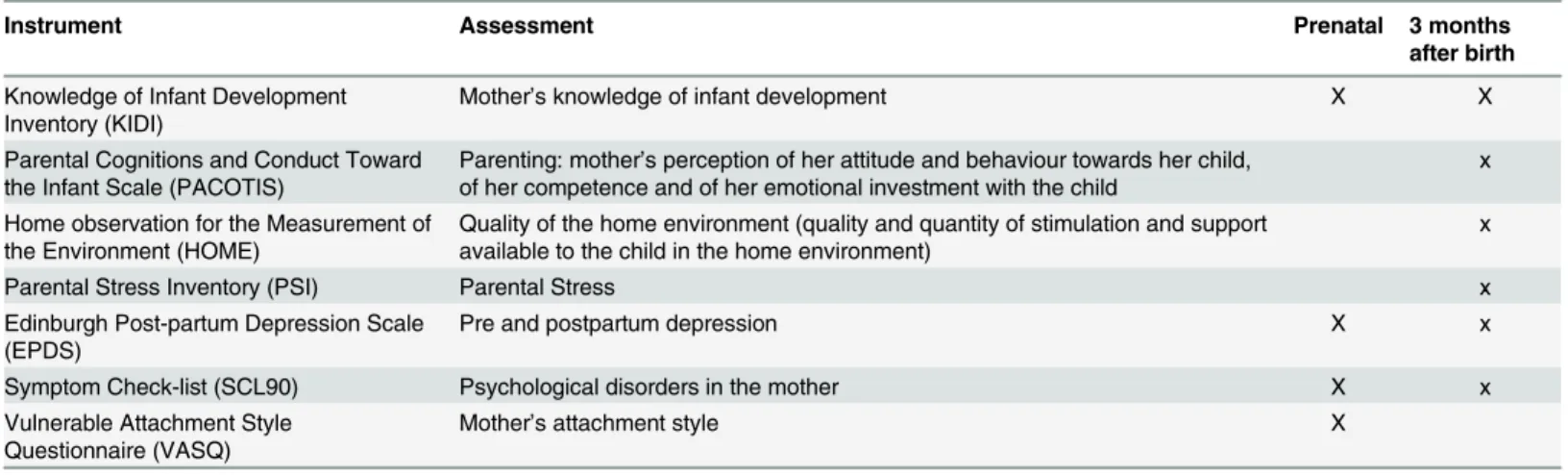
which was assessed at both the first and the second assessment interviews. Data related to par-enting were collected using validated scales investigating the mother’s knowledge of infant development (Knowledge of Infant Development Inventory, KIDI), her perception of her atti-tude, competence and emotional investment towards her child using the Parental Cognitions and Conduct Toward the Infant Scale (PACOTIS) [30], the quality of the home environment using the Home Observation for the Measurement of the Environment (HOME) inventory [31,32] and the Parental Stress Inventory (PSI) [33]. Maternal psychological characteristics were assessed with the Edinburgh Postnatal Depression Scale (EPDS) [34,35], a scale measur-ing pre- and post-natal depressive symptoms, the Symptom CheckList 90 (SCL-90) [36] with ten subscales investigating psychological distress, and the Vulnerable Attachment Style Ques-tionnaire (VASQ) [37] measuring two domains of the mother’s attachment styles.Table 2 pres-ents the assessment schedule for the instrumpres-ents used.
Definition of attrition
The present study examines attrition from the trial, and therefore includes participants from both the intervention group and the control group. Women who underwent medical termina-tion of pregnancy, women whose babies died, women wrongly included in the CAPEDP study and women whose consent forms got lost were not considered as having dropped out. The ini-tial attrition of women who dropped out immediately after randomization but before the first assessment interview (T1) at their 27thweek of pregnancy can only be described but not explained because no data, apart from eligibility criteria, were collected concerning these women. For the purposes of the present study, which examines factors associated with attrition in the CAPEDP assessment protocol,early attritionis defined as having taken part in the first assessment interview (T1), in the prenatal period, but in no further assessment interviews. Later attritionconcerns mothers who were in the study at the time of the second assessment interview (T2), which took place when their child was three months old, but who then inter-rupted their participation in assessment interviews at some later point before the final assess-ment due to be conducted when their child reached the age of two. We chose to study
predictors ofearly attritionseparately from those oflater attritionin order to be able to identify the specific characteristics of women whom the research team proved unable to engage with at any point beyond the initial assessment interview when the women had not yet become moth-ers. Indeed, numerous factors enter into play from a theoretical point of view. A key issue in France is the fact that, for mothers who have a job, state-funded maternity leave ends three Table 2. Assessment Schedule.
Instrument Assessment Prenatal 3 months
after birth
Knowledge of Infant Development Inventory (KIDI)
Mother’s knowledge of infant development X X
Parental Cognitions and Conduct Toward the Infant Scale (PACOTIS)
Parenting: mother’s perception of her attitude and behaviour towards her child, of her competence and of her emotional investment with the child
x
Home observation for the Measurement of the Environment (HOME)
Quality of the home environment (quality and quantity of stimulation and support available to the child in the home environment)
x
Parental Stress Inventory (PSI) Parental Stress x
Edinburgh Post-partum Depression Scale (EPDS)
Pre and postpartum depression X x
Symptom Check-list (SCL90) Psychological disorders in the mother X x
Vulnerable Attachment Style Questionnaire (VASQ)
Mother’s attachment style X
months after the child is born. Going back to work could influence their availability and thus attrition rates in the study. Missing one or more of the interim assessment interviews was not considered to be attrition as long as the mother took part in the final assessment. Two women from the intervention group who missed the initial assessment interview during pregnancy, but who then rejoined the assessment procedure at some later point have been included in the present analysis.
Statistical analysis
Predictors of early and later attrition were analyzed separately. We first examined univariate relationships between potential predictors and early or later attrition. The variables tested were those reported as being significant in previous studies: age, immigration status, educational level, low income, social support, tobacco and alcohol consumption, marital status, mother's own parents being separated, numbers of prenatal visits and quality of the home environment [4,18] and those related to retention and attrition from a theoretical clinical point of view with regard to social and microsocial stability (recent immigration, unemployment, attachment insecurity). It was also hypothesized that women who felt the need for psychological support or guidance on parenting would be more likely to be retained in the present study, because both the intervention and the assessment home visits were conducted by trained psychologists. Descriptive statistics (frequencies, percentages, means, standard deviations) were used to describe population characteristics. Theχ2test (or Fisher test) and student test (or Wilcoxon
test) were performed for inter-group comparisons, as appropriate. All tests were two-sided, and significance was accepted at the 5% level (α= 0.05). Multivariate logistic models were used
to explain early or later attrition, with a stepwise selection procedure based on backward elimi-nation based on p-values (αdrop= 0.10). The initial set of explanatory variables included in the
multivariate models was determined using two sources: 1/ variables associated with early or later attrition with a p-value<0.20 in univariate analysis; 2/ variables identified in the
scien-tific literature as being associated with attrition in RCTs evaluating perinatal home-visiting programs, but not significant in univariate analysis in the present study. Missing data were handled using multiple imputation, when needed (later attrition analysis). Analyses were per-formed using SAS version 9.2 and R version 2.15.2.
Results
As described inFig 1, among the 440 women included in the CAPEDP trial, nine were excluded from the current analysis, due to medical termination of pregnancy or the death of their baby and seven because they were wrongly included or their consent form was lost. Between randomization and the first assessment interview (T1) at their 27thweek of pregnancy, 61 women (14.4%) dropped out. No association was observed between this type of attrition and the trial arm into which these women had been randomized (p = 0.76).
Description of attrition
months old but refused the second and all subsequent assessment interviews; two of these mothers continued on in this way well into the second year of the intervention.
At inclusion, the 363 women were generally young (mean (SD) age = 22.3 (2.4)), with low educational levels (74% had no higher education) and low income (46.2%, due to lack of per-sonal income, were eligible for government-funded health care with no out-of-pocket pay-ment). Just over half (51.8%) were born abroad. Of these 363 women who participated in the first assessment interview at their homes at T1, 63 (17.4%) participated in no further assess-ment interviews in the CAPEDP study (19.4% in the control group versus 15.3% in the inter-vention group; p = 0.30). A further 165 women ceased participation in assessment interviews at some later point during the study. In all, 228 women (63%) who were assessed at T1 proved not to be available for the final CAPEDP assessment interview when their child reached the age of two. The attrition rate for the final assessment interview was significantly greater in the con-trol group (70.6%) than in the intervention group (55.2%) (p = 0.002).
Predictors of early attrition
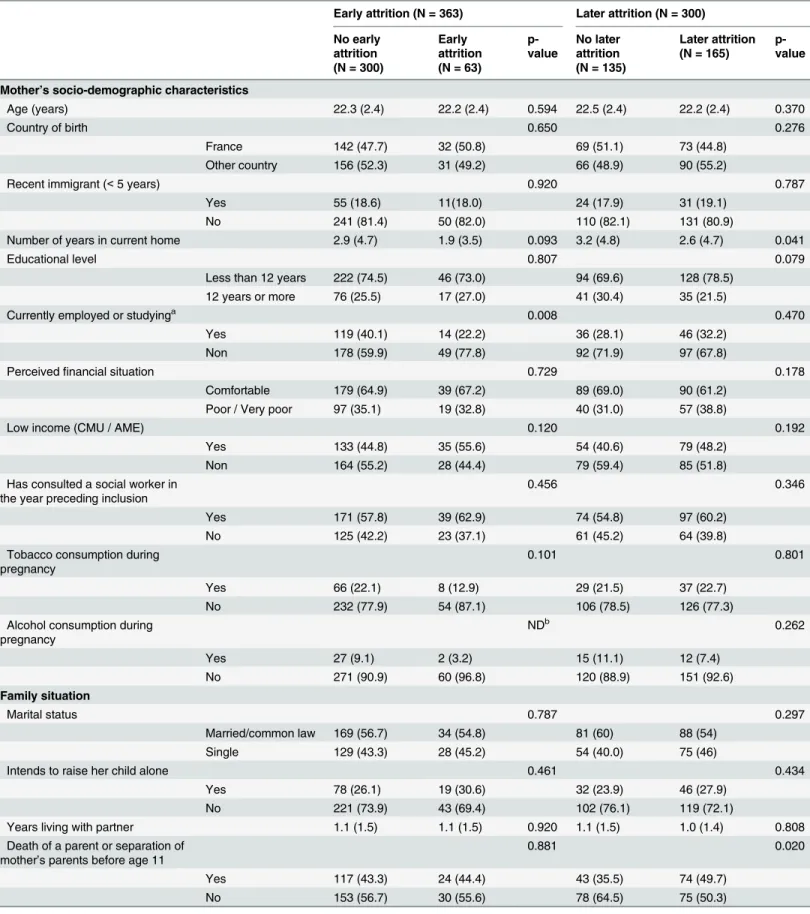
In univariate analysis (Table 3), women in the early attrition group were less likely to be employed or studying at inclusion (22.2% versus 40.1%, p = 0.008) and were more likely to have had at least one abortion (37.7% versus 24,7%, p = 0.038). In multivariate analysis (Table 4), two variables identified in the scientific literature as being associated with study attri-tion in RCTs evaluating perinatal home-visiting programs, but that did not prove to be signifi-cant in univariate analysis (p<0.20) in the present study, were forced into the model:
maternal educational level (having less than 12 years of schooling) and country of birth (being born elsewhere than in France). Multivariate analysis revealed that currently being employed Fig 1. Attrition from assessment procedures after the first prenatal assessment (T1, at the 27thweek
of pregnancy), when the child was 3 months old (T2) and at the child’s second birthday (T6, final assessment).*No data were collected for women who dropped out between randomization and T1 apart from eligibility criteria.
Table 3. Variables associated with early and later attrition (univariate analysis).
Early attrition (N = 363) Later attrition (N = 300)
No early attrition (N = 300)
Early attrition (N = 63)
p-value
No later attrition (N = 135)
Later attrition (N = 165)
p-value
Mother’s socio-demographic characteristics
Age (years) 22.3 (2.4) 22.2 (2.4) 0.594 22.5 (2.4) 22.2 (2.4) 0.370
Country of birth 0.650 0.276
France 142 (47.7) 32 (50.8) 69 (51.1) 73 (44.8)
Other country 156 (52.3) 31 (49.2) 66 (48.9) 90 (55.2)
Recent immigrant (<5 years) 0.920 0.787
Yes 55 (18.6) 11(18.0) 24 (17.9) 31 (19.1)
No 241 (81.4) 50 (82.0) 110 (82.1) 131 (80.9)
Number of years in current home 2.9 (4.7) 1.9 (3.5) 0.093 3.2 (4.8) 2.6 (4.7) 0.041
Educational level 0.807 0.079
Less than 12 years 222 (74.5) 46 (73.0) 94 (69.6) 128 (78.5)
12 years or more 76 (25.5) 17 (27.0) 41 (30.4) 35 (21.5)
Currently employed or studyinga 0.008 0.470
Yes 119 (40.1) 14 (22.2) 36 (28.1) 46 (32.2)
Non 178 (59.9) 49 (77.8) 92 (71.9) 97 (67.8)
Perceivedfinancial situation 0.729 0.178
Comfortable 179 (64.9) 39 (67.2) 89 (69.0) 90 (61.2)
Poor / Very poor 97 (35.1) 19 (32.8) 40 (31.0) 57 (38.8)
Low income (CMU / AME) 0.120 0.192
Yes 133 (44.8) 35 (55.6) 54 (40.6) 79 (48.2)
Non 164 (55.2) 28 (44.4) 79 (59.4) 85 (51.8)
Has consulted a social worker in the year preceding inclusion
0.456 0.346
Yes 171 (57.8) 39 (62.9) 74 (54.8) 97 (60.2)
No 125 (42.2) 23 (37.1) 61 (45.2) 64 (39.8)
Tobacco consumption during pregnancy
0.101 0.801
Yes 66 (22.1) 8 (12.9) 29 (21.5) 37 (22.7)
No 232 (77.9) 54 (87.1) 106 (78.5) 126 (77.3)
Alcohol consumption during pregnancy
NDb 0.262
Yes 27 (9.1) 2 (3.2) 15 (11.1) 12 (7.4)
No 271 (90.9) 60 (96.8) 120 (88.9) 151 (92.6)
Family situation
Marital status 0.787 0.297
Married/common law 169 (56.7) 34 (54.8) 81 (60) 88 (54)
Single 129 (43.3) 28 (45.2) 54 (40.0) 75 (46)
Intends to raise her child alone 0.461 0.434
Yes 78 (26.1) 19 (30.6) 32 (23.9) 46 (27.9)
No 221 (73.9) 43 (69.4) 102 (76.1) 119 (72.1)
Years living with partner 1.1 (1.5) 1.1 (1.5) 0.920 1.1 (1.5) 1.0 (1.4) 0.808
Death of a parent or separation of mother’s parents before age 11
0.881 0.020
Yes 117 (43.3) 24 (44.4) 43 (35.5) 74 (49.7)
No 153 (56.7) 30 (55.6) 78 (64.5) 75 (50.3)
Table 3. (Continued)
Early attrition (N = 363) Later attrition (N = 300)
No early attrition (N = 300)
Early attrition (N = 63)
p-value
No later attrition (N = 135)
Later attrition (N = 165)
p-value
Medico-obstetrical characteristics
Has had at least one abortion 0.038 0.483
Yes 73 (24.7) 23 (37.7) 36 (26.7) 37 (23.1)
No 222 (75.3) 38 (62.3) 99 (73.3) 123 (76.9)
Number of health visits related to pregnancy
8.3 (5.1) 9.1 (6.2) 0.257 8.9 (4.9) 7.8 (5.2) 0.074
Parenting
KIDI scorea 17.8 (8.8) 19.0 (9.4) 0.337 22.9 (7.5) 21.4 (9.3) 0.153
PACOTIS at T2
-Parental coercion - - 1.7 (1.5) 1.4 (1.5) 0.057
Parental competence - - 1.3 (1.2) 1.2 (1.0) 0.215
Impact perception - - 2.4 (1.8) 2.5 (2.1) 0.606
HOME score at T2
-Parental responsivity - - 8.3 (1.7) 8.0 (1.7) 0.062
Acceptance of the child
- - 5.0 (0.9) 5.0 (1.0) 0.259
Organization of the environment
- - 4.9 (1.0) 4.8 (1.0) 0.392
Learning materials 3.5 (1.4) 3.2 (1.4) 0.059
Parental involvement - - 3.0 (1.0) 2.9 (1.0) 0.617
Variety in experience - - 2.0 (0.9) 2.0 (0.9) 0.422
PSI global score at T2 - - 53.9 (11.1) 55.4 (10.7) 0.242
Parental stress - - 31.4 (6.9) 31.8 (7.0) 0.669
Dysfunctional interaction
- - 22.4 (5.6) 23.6 (5.9) 0.090
Maternal psychological characteristics
Depression (EPDS global score)a 10.8 (5.8) 10.6 (4.9) 0.830 9.1 (5.3) 8.4 (5.7) 0.288
Psychiatric symptoms (SCL-90 global score)a
0.8 (0.5) 0.7 (0.4) 0.147 0.6 (0.4) 0.5 (0.4) 0.125
Attachment security (VASQ global score at T1)
66.2 (8.2) 67.4 (7.4) 0.299 66.6 (8.2) 65.9 (8.1) 0.429
Insecurity subscale 33.6 (6.2) 34.9 (5.6) 0.129 33.4 (6.5) 33.8 (6.0) 0.630 Proximity-seeking
subscale
32.6 (5.2) 32.5 (5.0) 0.851 33.2 (5.0) 32.1 (5.3) 0.069
Trial-related factors
Trial arm 0.297 0.004
Home-visits 155 (51.7) 28 (44.4) 82 (60.7) 73 (44.2)
Care as usual 145 (48.3) 35 (55.6) 53 (39.3) 92 (55.8)
Recruitment center (9 centers, not listed here)
0.772 0.222
Data presented as N (%) or mean (SD).
avariable collected at T1 for early attrition and at T2 for later attrition. bND = test not computed due to low numbers
or studying, or never having undergone an abortion halved the likelihood of attrition. Having a higher overall level of psychological distress (Global Severity Index of the SCL-90) at T1 and smoking during pregnancy were also associated with lower attrition. In contrast, women who had higher levels of insecurity in the VASQ attachment scale at T1 were more likely not to have participated in the following assessment interviews.
Predictors of later attrition
Predictors of later attrition were somewhat different from predictors of early attrition. In uni-variate analysis (Table 3), women who completed the final assessment interview were more likely to have been randomized into the intervention group (60.7% versus 44.2%, p = 0.004) and to have been living for a longer period of time in their current homes (3.2 versus 2.6 years, p = 0.041). They were also less likely to have experienced early parental loss or separation (35.5% versus 49.7%, p = 0.020). In multivariate analysis, also adjusted for country of birth and educational level, three variables predicted later attrition: being in the control group, the mother having undergone early parental loss or separation (death or separation of the woman’s own parents before she was 11 years old), and the mother presenting a higher overall level of psychological distress (Global Severity Index of the SCL-90) at T2. Being in the“care as usual”
group almost doubled the risk of dropping out.
Discussion
In the CAPEDP trial, a randomized trial evaluating the impact on child mental health and its major determinants of a home-visiting program conducted by psychologists during the Table 4. Predictors of early and later attrition using multivariate analysis adjusted for country of birth (France vs elsewhere) and educational level (<12 vrs vs12yrs).
Early attrition Later attrition
Adjusted OR
95% CI
p-value
Adjusted OR
95% CI
p-value
Number of years spent in current home 0.93 (0.86–
1.00)
0.092 - -
-Maternal currently employed / studying (Yes vs No)a 0.42 (0.21–
0.80)
0.011 - -
-Tobacco consumption during pregnancy (Yes vs No) 0.41 (0.16– 0.94)
0.047 - -
-Death of a parent or separation of mother's parents before age 11 (Yes vs No)
- - - 2.00 (1.20–
3.33)
0.008
Has had at least one abortion (Yes vs No) 2.20 (1.17–
4.11)
0.014 - -
-Number of health visits related to the pregnancy - - - 0.96 (0.91–
1.01)
0.100
Parent-child dysfunctional interaction (PSI) at T2 - - - 1.04 (1.00–
1.09)
0.070
Psychiatric symptoms (SCL-90 global score)a 0.37 (0.16
– 0.79)
0.013 0.42 (0.19–
0.93)
0.033
Attachment (VASQ insecurity subscale at T1) 1.06 (1.01–
1.12)
0.026 - -
-Trial arm (Usual care vs Home-visits) - - - 1.92 (1.19–
3.11)
0.008
aVariable collected at T1 for early attrition and at T2 for later attrition.
perinatal period, rates of attrition were 17% and 63% when the children were three months old and 24 months old respectively. Attrition rates differed between the two arms of the trial, with more attrition in the control group (care as usual) by the time the children reached 24 months of age than in the intervention group (home-visiting program). Predictors of early attrition (before the child was 3 months old) included having had an abortion and having higher attach-ment insecurity as measured by the VASQ attachattach-ment scale. Being employed or currently studying or doing training, tobacco consumption during pregnancy and presence of psychiatric symptoms were positively associated with early retention. For women who initially adhered to the trial and who were still in the study when their child was three months old, three variables predicted later attrition: being randomized into the control arm, the mother having undergone early parental loss, and the mother presenting lower global severity of psychiatric symptoms (SCL-90) at 3 months postpartum.
The study attrition rate in the CAPEDP trial at the time the children were three months old (i.e. six months after the beginning of the trial) is similar to that observed in other randomized trials evaluating home-visiting programs [4–16,38]. However, it is markedly higher at the end of the program at the child’s second birthday, compared to other trials. This discrepancy may be explained by the fact that the majority of these other studies took place in the USA, whereas in the highly generous French context, care as usual includes easy access for all to perinatal healthcare and child and adult community mental health services with no out-of-the pocket payment. Furthermore, the fact that the CAPEDP program provided no financial or material incentive to participants may well have influenced attrition significantly. Indeed, incentives can play a major role with regard to participant retention both in RCTs in general [39] and in par-enting programs in particular [40].
The difference in attrition rates in the control group compared to the intervention group increased throughout the present study. Clearly, participants who appreciated the home-visit-ing program may have been more likely to remain in the trial and participate in assessment interviews. However, from a more practical point of view, women in the intervention group may simply have been more easily locatable for the assessment team, given their more frequent contacts with the program. Katz et al. [4] observed a similar trend, with higher attrition in the control group at 4 and 8 months. However, this difference disappeared by the final interview at 12 months, in contrast to the CAPEDP study where the attrition rates remained significantly higher in the care as usual group, a phenomenon possibly related to easier overall access to sup-port in the generous French health and social care system. In the present study, it was also found that women with higher psychiatric symptom scores (SCL-90) were more likely to remain in the trial’s assessment protocol. Although the Hawthorne effect cannot be excluded, this phenomenon may well be related to one of the major specificities of the CAPEDP study: all members of both the home-visiting and the assessment teams were qualified clinical psy-chologists. Providing professional skills corresponding to the needs of participants in this peri-natal mental health promotion intervention, with all assessment home visits being conducted by professional psychologists, may well have increased the likelihood that the mothers in ques-tion would continue to accept the assessment home visits.
negative perception of the assessment team, or seeing themselves and their participation as being unimportant, as having no possible effect on the research process. The insecure subject also finds it hard to believe that the support the program claims it is going to provide will be of any real help. A meta-analysis by Diener et al. [44] on attachment security and working alliance gives indirect support to this theoretical model, by showing that individuals with secure attach-ment patterns are likely to develop stronger working alliances with their therapist across differ-ent treatmdiffer-ent settings. Similarly, the impact of attachmdiffer-ent style on home visiting outcomes has been amply demonstrated [45,46].
The fact that having a higher initial attachment insecurity score is not associated with later attrition can be understood in the light of research on working alliances: in relationships with professionals that have been maintained over a certain time, the quality of the relationship itself becomes a determining retention factor, counteracting the negative impact of the individual’s insecure attachment profile. However, it must be underlined that, although the present theoret-ical analysis is clearly tempting, using attachment security as a primary explanation for attri-tion in the present study is forcedly speculative. Further research is needed specifically targeting the potentially complex interactions involved.
The following limitations should be considered when interpreting the present results. Firstly, no data could be collected concerning the 61 women who dropped out just after ran-domization, apart from eligibility criteria. This initial attrition may have been linked to the fact that the trial recruitment process was conducted at a crucial point in the health care pathway: in the second trimester of pregnancy in the same maternity ward in which they were due to have their babies. Although all eligible subjects were informed, both orally and in writing, that they were free to participate or not in the study and that, if they accepted, they were free to withdraw at any moment with no impact on their access to care or the quality of care provided, some women may have not taken sufficient time to reflect upon the implications of participat-ing or may have wanted to please their maternity doctor by agreeparticipat-ing to participate, although without giving enough thought to what their participation would entail. Secondly, despite the large number of participants initially recruited, the present study may well have lacked suffi-cient statistical power to identify other potential predictors of attrition, particularly with regard to later attrition. Thirdly, the present study is more exploratory than confirmatory, due to the currently limited number of published findings on study attrition in RCTs evaluating home-visiting programs. The present results need to be confirmed in further studies.
attention to the fact that these characteristics may well vary from one period to the next during the study.
In conclusion, the present study delivers a number of key messages for researchers designing RCTs evaluating perinatal home visiting programs or indeed any intervention addressing psy-chosocially vulnerable populations. Quite clearly the mechanisms underlying study attrition are more complex than the commonplace idea that the more psychosocially vulnerable subjects are more likely to drop out. Designers of RCTs evaluating programs for populations with psy-chosocial vulnerabilities need to carefully consider the risk of potentially high attrition rates at the different assessment points throughout their programs. Retention strategies should pay particular attention to subjects in the care as usual group, as they have less frequent overall con-tact with program teams. With regard to perinatal home visiting programs—and this is a key result from the present study—particular care needs to be taken to address factors associated with attrition at different phases in the perinatal period. With regard to preventing drop-out in the early phase of such programs, specific attention should be paid to addressing factors associ-ated with early attrition, including having had an abortion, being unemployed or not currently studying, or having greater attachment insecurity. A key issue is to organize home visits by pro-fessionals whose skills correspond to the specific needs of the families being visited, and this remains true not only for the intervention itself, but also for the assessment procedures. In the current study targeting mental health promotion, a study in which all home visits, including assessment home visits, were conducted by trained psychologists, the presence of psychiatric symptoms in the future mother at inclusion was positively associated with early retention in the assessment protocol. With regard to later attrition, the three predictors observed in the cur-rent study were early pacur-rental loss for the mother herself (death or separation of the woman’s own parents before she was 11 years old), being randomized into the“care as usual”study arm and having lower severity of psychiatric symptoms. Addressing these questions is of key impor-tance for future research.
Finally, an obvious trap for all such studies–and not only in the area of perinatal home visit-ing programs—is what could be defined as initial attrition, where eligible subjects accept the invitation to participate in the study, sign their consent forms, but then proceed to disappear immediately after randomization and before the initial assessment interview. Although recruit-ment procedures in the present study systematically informed potential participants that refus-ing to participate would have no impact on their access to care, it is particularly important to give potential participants time to reflect on the pros and cons of becoming involved in such long term studies and to make it quite clear what the actual assessment procedures involve, over and above the intervention itself. This is all the more so in countries like France with such generous and easy-to-access healthcare systems. A further general recommendation, with rele-vance to clinical trials in all domains involving long-term participation of research subjects: randomization should take placeafterthe initial assessment interview, which was not done in the present study for logistical reasons. Similarly, providing incentives for participation in assessment procedures should be given serious consideration.
Acknowledgments
Maison Blanche for technical support, Estelle Marcault for logistical support and research implementation, Véronique Laniesse, Alexandra Avonde, Dominique Granger and Sébastien Favriel for administrative support, Cécile Jourdain, Pierre Arwidson, Béatrice Lamboy and Gérard Guillemot for help with research administration, Nathalie Fontaine, George Tarabulsy and Michel Boivin, for assistance with developing the research and intervention instruments, David Hajage for statistical input and the members of the supervision team: Laure Angladette, Drina Candilis, Judith Fine, Alain Haddad, Joana Matos, Anne-Sophie Mintz, Marie-Odile Pérouse de Montclos, Diane Purper-Ouakil, Françoise Soupre, Susana Tereno, Bertrand Wel-niarz and Jaqueline Wendland.
The CAPEDP study group
Members:Tim Greacen2, Romain Dugravier4,5, Thomas Saïas2,6,7,, Nicole Guedeney8, Antoine
Guede-ney4,5(leader of the study group), Florence Tubach3,9,10, Elie Azria11, Emmanuel Barranger
12,13,
Jean-Louis Bénifla14, Bruno Carbonne15, Marc Dommergues16, Alain Haddad17, Dominique Luton18,19,20, Dominique Mahieu-Caputo19, Laurent Mandelbrot18,21,22, Jean-François Oury23,
Dominique Pathier24, Diane Purper-Ouakil25,26, Richard Tremblay27,28,29,30,31,32and Bertrand Welniarz33
Affiliations
2Laboratoire de recherche, Etablissement Public de Santé Maison Blanche, Paris, France
3Département d
’Epidémiologie et Recherche Clinique, CIC-EC 1425, AP-HP Hôpital Bichat, Paris, France
4Service de Pédopsychiatrie, AP-HP Hôpital Bichat, Paris, France,
5U669 PSIGIAM, Institut National de la Santé et de la Recherche Médicale, Paris, France
6Institut National de Prévention et d
’Education pour la Santé, Saint-Denis, France
7Département de Psychologie, Université du Québec à Montréal, Montréal, Canada,
8Institut Mutualiste Montsouris, Paris, France
9INSERM, ECEVE, UMR 1123, CIC-EC 11425, Paris, France
10Université Paris Diderot, ECEVE, UMR 1123, Sorbonne Paris Cité, Paris, France
11Gynécologie-Obstétrique, Université Denis Diderot, Hôpital Bichat Claude Bernard,
Paris, France
12Université Paris Diderot, Sorbonne Paris Cité, Laboratoire de Pathologie, UMR-S 1165,
Paris, France
13Service de Chirurgie-Gynécologie, Centre Antoine Lacassagne, Nice, France
14Service de Gynecologie-Obstetrique, AP-HP Hopital Lariboisiere, Paris, France
15Maternité, centre hospitalier Princesse Grace, Monaco, Monaco
16Service de gynécologie obstétrique, hôpital de la Pitié-Salpêtrière, AP-HP, Université
Pierre-et-Marie-Curie, Paris, France
17Etablissement Public de Santé Maison Blanche, Paris, France
18Université Paris Diderot, Sorbonne Paris Cité, Paris, France
19Department of Obstetrics and Gynecology, Bichat-Claude Bernard Hospital, AP-HP,
Paris, France
20Departement Hospitalo-Universitaire Risk and Pregnancy, Paris, France
21Department of Obstetrics and Gynecology, Hôpital Louis Mourier, Colombes, France
22Department of Epidemiology, Centre de Recherche en Épidémiologie et Santé des
Popula-tions, Institut National de la Santé et de la Recherche Médicale (INSERM) U1018, Paris, France
24Department of Obstetrics and Gynecology, Hôpital Jean Rostand, Ivry sur Seine, France
25CHRU Montpellier, Médecine Psychologique de l
’Enfant, et de l’Adolescent (MPEA), Hôpital Saint Eloi, Montpellier, France
26INSERM U894, Center for Psychiatry and Neurosciences, Team 1, Paris, France
27Research Unit on Children's Psychosocial Maladjustment, University of Montreal,
Mon-treal, and University Laval, Quebec City, Canada
28Sainte Justine Hospital Research Center, Montreal, Canada
29School of Public Health, Physiotherapy and Population Sciences, University College
Dub-lin, DubDub-lin, Ireland
30Institute of Genetic, Neurobiological, and Social Foundations of Child Development,
Tomsk State University, Tomsk, Russian Federation
31International Laboratory for Child and Adolescent Mental Health Development,
Univer-sity of Montreal, Montreal, Canada
32French National Institute of Health and Medical Research (INSERM), Paris, France
33EPS Ville Evrard, Neuilly sur Marne, France
Author Contributions
Conceived and designed the experiments: SF TG FT. Analyzed the data: SF BP. Wrote the paper: SF TG BP RD TS NG AG FT. Contributed to the data collection: TG RD TS NG AG FT.
References
1. Jadad AR, Enkin MW. Bias in Randomized Controlled Trials. Randomized Controlled Trials: Questions, Answers, and Musings, Second Edition. Oxford, Uk: Blackwell Publishing Ltd; 2008. pp. 29–47. 2. Blumenthal DS, Sung J, Coates R, Williams J, Liff J. Recruitment and retention of subjects for a
longitu-dinal cancer prevention study in an inner-city black community. Health Serv Res. 1995; 30: 197–205. PMID:7721592
3. Barnett J, Aguilar S, Brittner M, Bonuck K. Recruiting and retaining low-income, multi-ethnic women into randomized controlled trials: successful strategies and staffing. Contemp Clin Trials. 2012; 33: 925–932. doi:10.1016/j.cct.2012.06.005PMID:22732312
4. Katz KS, El-Mohandes PA, Johnson DM, Jarrett PM, Rose A, Cober M. Retention of low income moth-ers in a parenting intervention study. J Community Health. 2001; 26: 203–218. PMID:11478566
5. Armstrong KL, Fraser JA, Dadds MR, Morris J. Promoting secure attachment, maternal mood and child health in a vulnerable population: a randomized controlled trial. J Paediatr Child Health. 2000; 36: 555– 562. PMID:11115031
6. Barlow J, Davis H, McIntosh E, Jarrett P, Mockford C, Stewart-Brown S. Role of home visiting in improv-ing parentimprov-ing and health in families at risk of abuse and neglect: results of a multicentre randomised controlled trial and economic evaluation. Arch Dis Child. 2007; 92: 229–233. doi:10.1136/adc.2006. 095117PMID:17068074
7. Duggan AK, McFarlane EC, Windham AM, Rohde CA, Salkever DS, Fuddy L, et al. Evaluation of Hawaii’s Healthy Start Program. Future Child Cent Future Child David Lucile Packard Found. 1999; 9: 66–90; discussion 177–178.
8. Fergusson DM, Grant H, Horwood LJ, Ridder EM. Randomized trial of the Early Start program of home visitation. Pediatrics. 2005; 116: e803–809. doi:10.1542/peds.2005-0948PMID:16322138
9. Guteilus MF, Kirsch AD, MacDonald S, Brooks MR, McErlean T. Controlled study of child health super-vision: behavioral results. Pediatrics. 1977; 60: 294–304. PMID:896359
10. Hardy JB, Streett R. Family support and parenting education in the home: an effective extension of clinic-based preventive health care services for poor children. J Pediatr. 1989; 115: 927–931. PMID:
2585229
11. Johnson Z, Howell F, Molloy B. Community mothers’programme: randomised controlled trial of non-professional intervention in parenting. BMJ. 1993; 306: 1449–1452. PMID:8518642
13. Kitzman H, Olds DL, Henderson CR Jr, Hanks C, Cole R, Tatelbaum R, et al. Effect of prenatal and infancy home visitation by nurses on pregnancy outcomes, childhood injuries, and repeated childbear-ing. A randomized controlled trial. JAMA J Am Med Assoc. 1997; 278: 644–652.
14. Larson CP. Efficacy of prenatal and postpartum home visits on child health and development. Pediat-rics. 1980; 66: 191–197. PMID:7402804
15. Olds DL, Henderson CR Jr, Chamberlin R, Tatelbaum R. Preventing child abuse and neglect: a ran-domized trial of nurse home visitation. Pediatrics. 1986; 78: 65–78. PMID:2425334
16. St Pierre RG, Layzer JI. Using home visits for multiple purposes: the Comprehensive Child Develop-ment Program. Future Child Cent Future Child David Lucile Packard Found. 1999; 9: 134–151. 17. Caldera D, Burrell L, Rodriguez K, Crowne SS, Rohde C, Duggan A. Impact of a statewide home
visit-ing program on parentvisit-ing and on child health and development. Child Abuse Negl. 2007; 31: 829–852. doi:10.1016/j.chiabu.2007.02.008PMID:17822765
18. Tough SC, Siever JE, Johnston DW. Retaining women in a prenatal care randomized controlled trial in Canada: implications for program planning. BMC Public Health. 2007; 7: 148. doi: 10.1186/1471-2458-7-148PMID:17617914
19. Sharps P, Alhusen JL, Bullock L, Bhandari S, Ghazarian S, Udo IE, et al. Engaging and retaining abused women in perinatal home visitation programs. Pediatrics. 2013; 132 Suppl 2: S134–139. doi:
10.1542/peds.2013-1021LPMID:24187115
20. Raikes H, Green B, Atwater J, Kisker E, Constantine J, Chazan-Cohen R. Involvement in Early Head Start home visiting services: Demographic predictors and relations to child and parent outcomes. Early Child Res Q. 21: 2–24.
21. Ammerman R., Stevens J., Putnam F., Altaye M., Hulsmann J, Lehmkuhl H., et al. Predictors of early engagement in home visitation. J Fam Violence. 2006; 21: 105–115.
22. Coatsworth JD, Duncan LG, Pantin H, Szapocznik J. Patterns of retention in a preventive intervention with ethnic minority families. J Prim Prev. 2006; 27: 171–193. doi:10.1007/s10935-005-0028-2PMID:
16532263
23. Duggan A, Windham A, McFarlane E, Fuddy L, Rohde C, Buchbinder S, et al. Hawaii’s healthy start program of home visiting for at-risk families: evaluation of family identification, family engagement, and service delivery. Pediatrics. 2000; 105: 250–259. PMID:10617732
24. Holland ML, Xia Y, Kitzman HJ, Dozier AM, Olds DL. Patterns of visit attendance in the nurse-family partnership program. Am J Public Health. 2014; 104: e58–65. doi:10.2105/AJPH.2014.302115PMID:
25122021
25. Whittaker K, Cowley S. An effective programme is not enough: a review of factors associated with poor attendance and engagement with parenting support programmes. Child Soc. 2010; 26: 138–149. 26. Holland ML, Christensen JJ, Shone LP, Kearney MH, Kitzman HJ. Women’s reasons for attrition from a
nurse home visiting program. J Obstet Gynecol Neonatal Nurs JOGNN NAACOG. 2014; 43: 61–70. doi:10.1111/1552-6909.12263
27. Tubach F, Greacen T, Saïas T, Dugravier R, Guedeney N, Ravaud P, et al. A home-visiting intervention targeting determinants of infant mental health: the study protocol for the CAPEDP randomized con-trolled trial in France. BMC Public Health. 2012; 12: 648. doi:10.1186/1471-2458-12-648PMID:
22888979
28. Dugravier R, Tubach F, Saias T, Guedeney N, Pasquet B, Purper-Ouakil D, et al. Impact of a manua-lized multifocal perinatal home-visiting program using psychologists on postnatal depression: the CAPEDP randomized controlled trial. PloS One. 2013; 8: e72216. doi:10.1371/journal.pone.0072216
PMID:23977257
29. Guedeney A, Wendland J, Dugravier R, Saïas T, Tubach F, Welniarz B, et al. Impact of a Randomized
Home-Visiting Trial on Infant Social Withdrawal in the Capedp Prevention Study. Infant Ment Health J. 2013; 34: 594–601. doi:10.1002/imhj.21413
30. Boivin M, Pérusse D, Dionne G, Saysset V, Zoccolillo M, Tarabulsy GM, et al. The genetic-environmen-tal etiology of parents’perceptions and self-assessed behaviours toward their 5-month-old infants in a large twin and singleton sample. J Child Psychol Psychiatry. 2005; 46: 612–630. doi: 10.1111/j.1469-7610.2004.00375.xPMID:15877767
31. Bradley RH, Caldwell BM. Home observation for measurement of the environment: a revision of the preschool scale. Am J Ment Defic. 1979; 84: 235–244. PMID:93417
32. Gunning M, Conroy S, Valoriani V, Figueiredo B, Kammerer MH, Muzik M, et al. Measurement of mother-infant interactions and the home environment in a European setting: preliminary results from a cross-cultural study. Br J Psychiatry Suppl. 2004; 46: s38–44. PMID:14754817
34. Cox JL, Holden JM, Sagovsky R. Detection of postnatal depression. Development of the 10-item Edin-burgh Postnatal Depression Scale. Br J Psychiatry J Ment Sci. 1987; 150: 782–786.
35. Guedeney N, Fermanian J, Guelfi J, Delour M. Premiers résultats de la traduction de l’EPDS sur une population parisienne. A propos de la validation et de la traduction de l’EPDS. Devenir. 1995; 7: 69–92. 36. Derogatis. Administration, scoring, and procedures manual ( 3rd ed.). Minneapolis: Derogatis; 1994. 37. Bifulco A, Mahon J, Kwon JH, Moran PM, Jacobs C. The Vulnerable Attachment Style Questionnaire
(VASQ): an interview-based measure of attachment styles that predict depressive disorder. Psychol Med. 2003; 33: 1099–1110. PMID:12946094
38. Koniak-Griffin D, Verzemnieks IL, Anderson NLR, Brecht M- L, Lesser J, Kim S, et al. Nurse visitation for adolescent mothers: two-year infant health and maternal outcomes. Nurs Res. 2003; 52: 127–136. PMID:12657988
39. Robinson KA, Dennison CR, Wayman DM, Pronovost PJ, Needham DM. Systematic review identifies number of strategies important for retaining study participants. J Clin Epidemiol. 2007; 60: 757–765. doi:10.1016/j.jclinepi.2006.11.023PMID:17606170
40. Mytton J, Ingram J, Manns S, Thomas J. Facilitators and Barriers to Engagement in Parenting Pro-grams: A Qualitative Systematic Review. Health Educ Behav Off Publ Soc Public Health Educ. 2013; doi:10.1177/1090198113485755
41. Howe D. Attachment Across the Lifecourse: Palgrave Macmillan. New York; 2011.
42. Mikulincer M, Shaver P. Attachment in adulthood: structure, dynamics and changes. The Guilford press. New York; 2007.
43. Mallinckrodt B, Daly K, Wang C. An attachment approach to adult therapy in attachement theory and research in clinical work with adults. Guilford Press. New York: Obeji JH & Berant E; 2009. pp. 264– 268.
44. Diener MJ, Monroe JM. The relationship between adult attachment style and therapeutic alliance in individual psychotherapy: a meta-analytic review. Psychotherapy. 2011; 48: 237–248. doi:10.1037/ a0022425PMID:21604902
45. Korfmacher J, Adam E, Ogawa J, Egeland B. Adult attachment: Implications for the therapeutic process in a home visitation intervention. Appl Dev Sci. 1997; 1: 43–58.