Communication between health professionals and patients: review
of studies using the RIAS (Roter Interaction Analysis System)
method
C
ARLAM. P
IRES1, A
FONSOM. C
AVACO2*1Master of Pharmacy from the University of Lisbon, Portugal. 2Professor and Doctor from the University of Lisbon, Portugal.
A
BSTRACT
Article received: 02/19/2012
Accepted for publication: 8/30/2013
*Correspondence:
Faculty of Pharmacy of the University of
Lisbon Phone: +351 21 794-6456
http://dx.doi.org/10.1590/1806-9282.60.02.014
Conflict of interest: none
Objective:
Systematic review of studies that investigate the communication between
patients and health professionals with the application of the RIAS methodology.
Methods:
Keyword Roter Interaction Analysis System was searched in the
follo-wing bibliographic resources:
Academic Search Complete, Current Contents, ISI
Procee-dings, PubMed, Elsevier, SpringerLink, Web of Science, RCAAP, Solo
and the official RIAS
site. Selection period: 2006 to 2011. Studies were selected using multicriteria
di-chotomous analysis and organized according to PRISMA.
Results:
Identification of 1,262 articles (455 unrepeated). 34 articles were
selec-ted for analysis, distribuselec-ted by the following health professions: family
medici-ne and gemedici-neral practitiomedici-ners (14), pediatricians (5), nurses (4), gemedici-neticists (3),
ca-rers of patients with AIDS (2), oncologists (2), surgeons (2), anesthetists (1) and
family planning specialists (1). The RIAS is scarcely used and publicized within
the scope of healthcare in Portuguese speaking countries.
Discussion:
Main themes studied include the influence of tiredness, anxiety and
professional burnout on communication and the impact of specific training
ac-tions on professional activities. The review enabled the identification of the main
strengths and weaknesses of synchronous and dyadic verbal communication
wi-thin the provision of healthcare.
Conclusion:
Scientific investigation of the communication between health
pro-fessionals and patients using RIAS has produced concrete results. An
improve-ment is expected in health outcomes through the application of the RIAS.
Key words:
RIAS, roter interaction analysis system, communication, health
pro-fessionals.
I
NTRODUCTION
The Roter Interaction Analysis System
(RIAS) is a
com-puter-based methodology that permits to characterize
the communication resulting from the interaction between
health professionals and patients.
1The RIAS was initially
based on the work of Robert Bales (1950) which, in the
1970s, was transposed to the investigation of the
com-munication in medical consultations. In RIAS,
commu-nication units are identified (phrases, parts of phrases or
single words) to which codes are associated, divided into
1.
Affective and social, that is, codes related to the
ex-pression of concerns, approval/disapproval,
agree-ment, criticism, empathy, etc.;
2.
Instrumental, which includes codes related to the
provision or verification of clinical and therapeutic
information, among others, in the form of questions,
paraphrases and affirmations.
1,2deo support. The RIAS categories are adapted to all stages of
the medical consultation, from initial greetings, collection
of objective and subjective information, as well as the phase
of the patient, guidance and education, including other
con-sultation components, for example, response to emotions
and activation of the partnership with the patient.
2,3The RIAS method has been used in the United States
and Europe in various healthcare and medical contexts, in
observational and experimental studies, as well as in the
pe-dagogic and educational contexts. Based on this
methodo-logy, it has been possible to characterize the
communica-tion in medical areas, such as primary care, gynecology,
oncology, surgery, pediatrics and dentistry, as well as
evalua-ting the results of educational interventions on physicians
and patients.
2However, the research published on
commu-nication in primary healthcare is still limited, particularly
in Portuguese, although communication research may
con-tribute to relational improvements in general and family
medicine during consultation.
4The publication and prompt
use of tools validated for the diagnosis and evaluation of
professional-patient communication in the consultation
environment has not yet significantly contributed to the
propagation and popularization of innovative methods that
contribute to improve the relationship and care provided
by health professionals.
5O
BJECTIVE
To systematically review publications and original works
about communication studies involving health
professio-nals and patients, with observational or experimental
appli-cations of the RIAS methodology, thereby illustrating the
relevance of this tool and the underlying research area for
the improvement of healthcare.
M
ETHODS
The review was conducted between October 2010 and
Fe-bruary 2011 with the key-expression Roter Interaction
Analy-sis System and/or RIAS, in the bibliographic resources
des-cribed in Table 1. The first search was conducted without
time limits and the summary of this search enabled the
ob-tainment, among other data, of the main professional areas
in which the RIAS studies were conducted. All of the
origi-nal communication work using the RIAS and involving any
health professionals in conventional medicine healthcare
(e.g. physicians from different specialties, nurses,
physiothe-rapists, etc.) were selected. The search was then limited to
publications within the last 5 years (2006-2011), except for
rare situations resulting from some professional areas,
whe-was counted from the date of the most recent study
classi-fied as relevant. This procedure permitted the identification
of the most relevant articles at the time of the study within
each specialty or professional area.
The search began on the official RIAS webpage (www.
riasworks.com)
1, as this contains a systematized record of
publications and information sources relating to works using
this methodology. Next, databases and bibliographic
sour-ces were selected based on their relevance, in accordance with
the area under study (health comunication) and the
num-ber of titles published annually (periodicals and e-books)
(Table 1). The Database of Abstracts of Reviews of
Effecti-veness (DARE) was also consulted to confirm the existence
of any RIAS related reviews, to avoid repetition as well as
possible impairment of this work relevance. The literature
search was updated in July 2013.
The literature selection criteria for this study were:
1.
Having the RIAS methodology as the methodological
basis;
2.
Being an original work (observational or experimental);
3.
Not being repeated record;
4.
Having been published within the last 5 years (the time
period was applied individually for each group of health
professionals); and
5.
Participation of at least 20 health professionals.
The search also included conference abstracts to expand
the number of sources, giving a broader scope of the RIAS
areas of research, while overcaming issues related with the
last selection criteria. These criteria were defined in order
to satisfy the objective of the present review. For example,
the selection criteria included the number of health
pro-fessionals to be at least 20 in order to select works with
mi-nimum methodological robustness. The articles selected
for review were organized according to the PRISMA
(Pre-ferred Reporting Items for Systematic Reviews and
Meta--Analyses)
6method, which describes the items to be
consi-dered in systematic reviews and meta-analyses.
Within this
scope, the exclusion criteria were:
1.
Studies written in a language other than Portuguese or
English due to issues of an operational nature involving
the translation of articles;
context, whose general objective is to illustrate the areas
and issues where the RIAS has demonstrated greater
application and interest to study professional-patient
communication.
The selected articles were carefully analyzed in relation to their
content in the period from March 2011 to February 2012.
R
ESULTS
From a total of 1.262 articles, 34 articles were selected and
distributed within the following health professionals: family
medicine and general practitioners (14), pediatricians (5),
nurses (4), geneticists (3), carers of patients with AIDS (2),
oncologists (2), surgeons (2), anesthetists (1) and family
planning specialists (1).
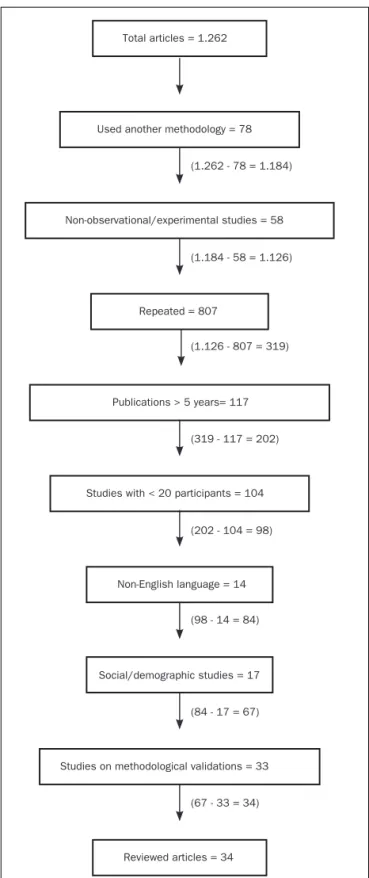
The number of studies excluded is described in Figure
1 and the number of articles selected by bibliographic
sources is presented in Table 1. No review was found in
re-lation to the RIAS in the DARE. None of the studies
selec-ted were conducselec-ted in countries where Portuguese is the
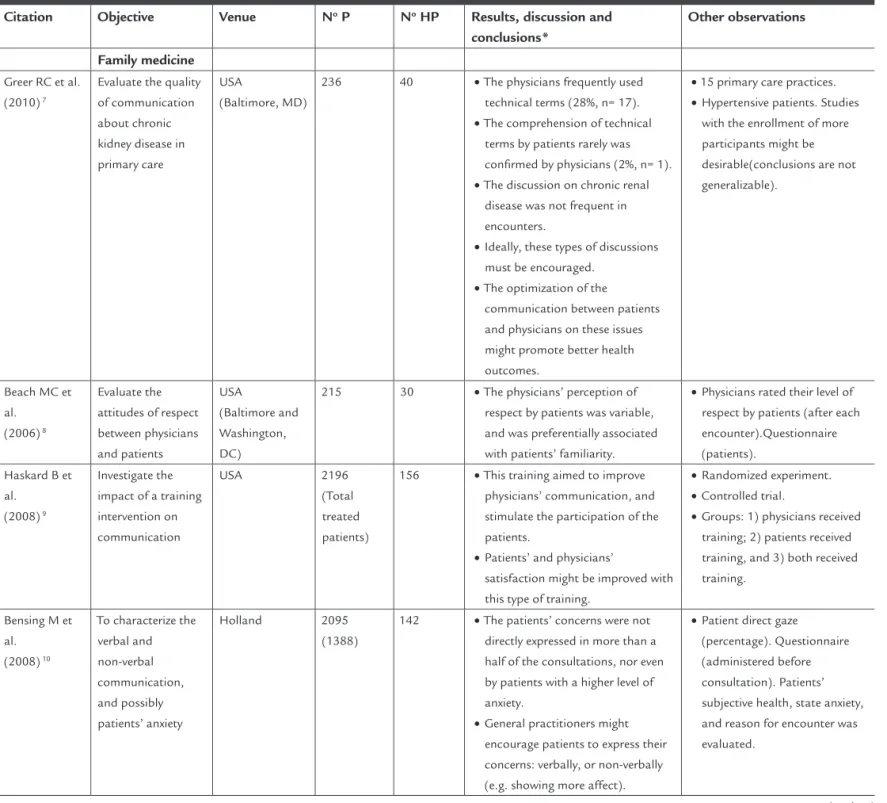
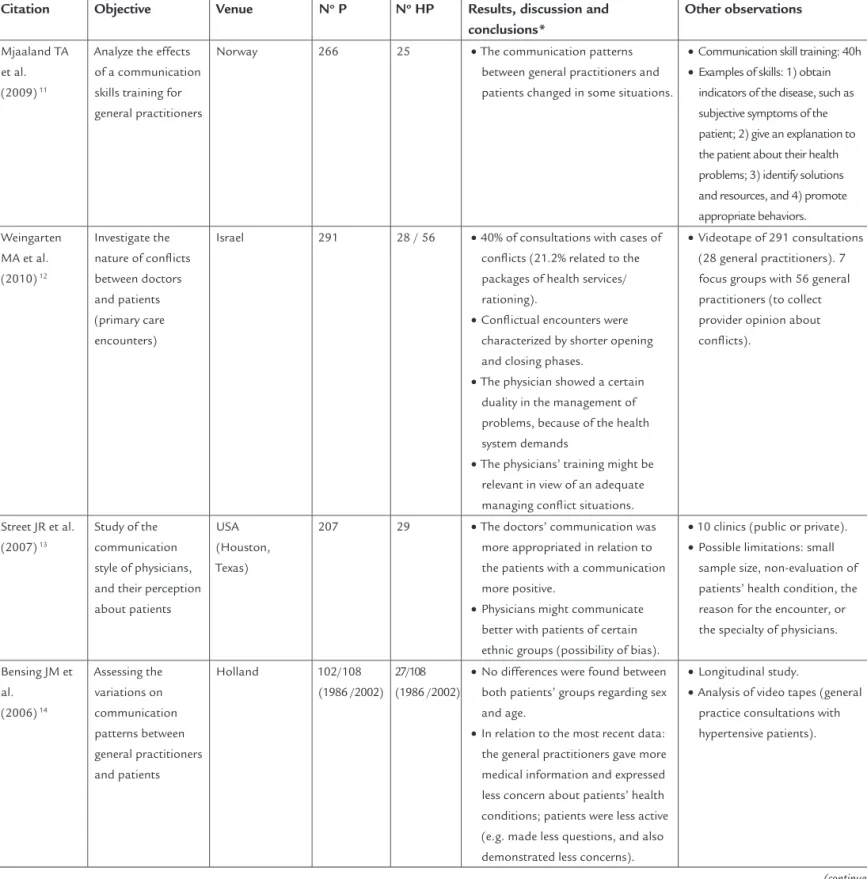
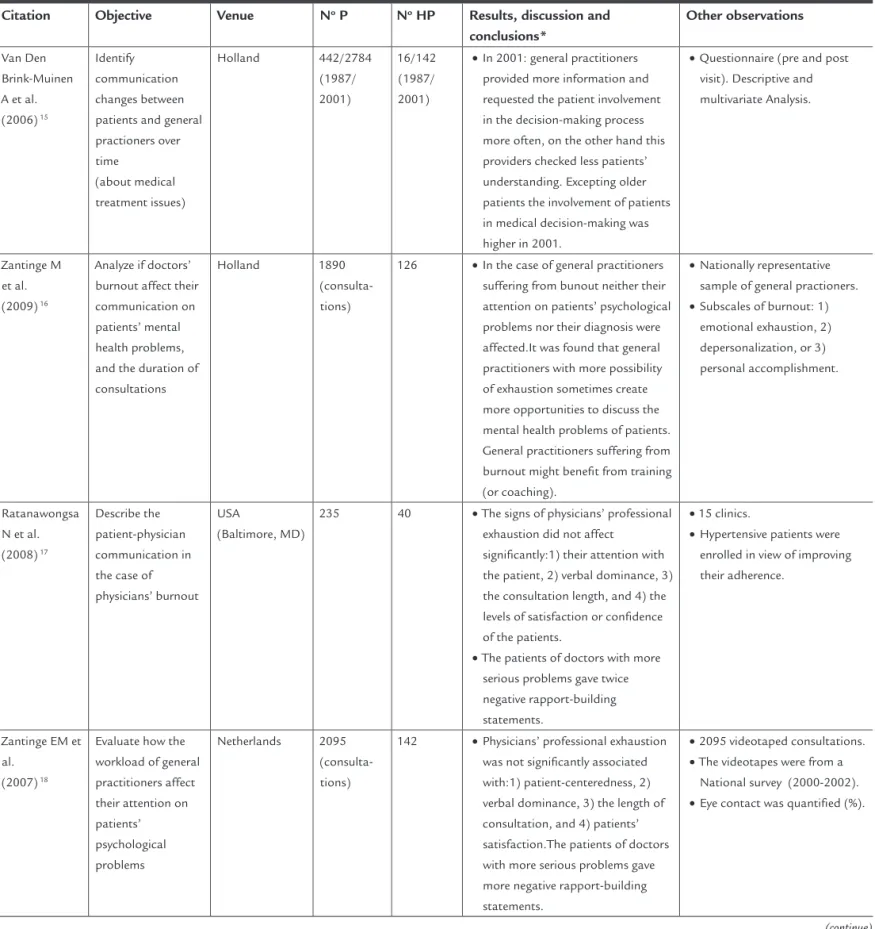
official language. A summary table of the articles selected
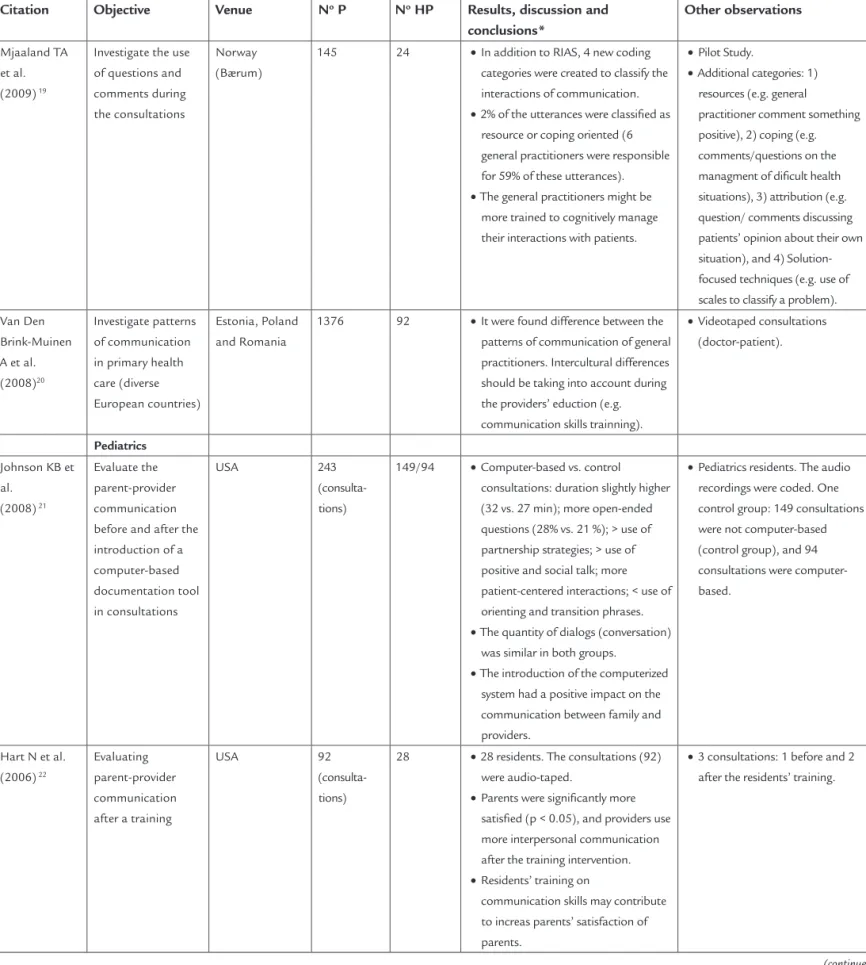
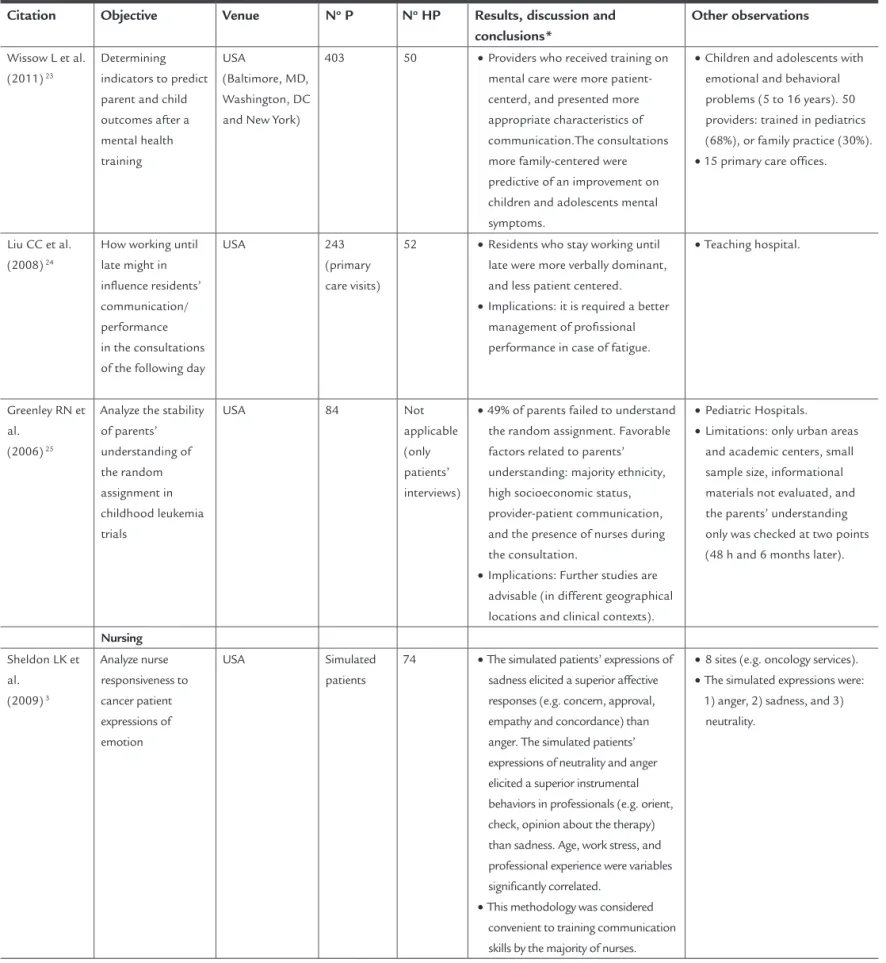
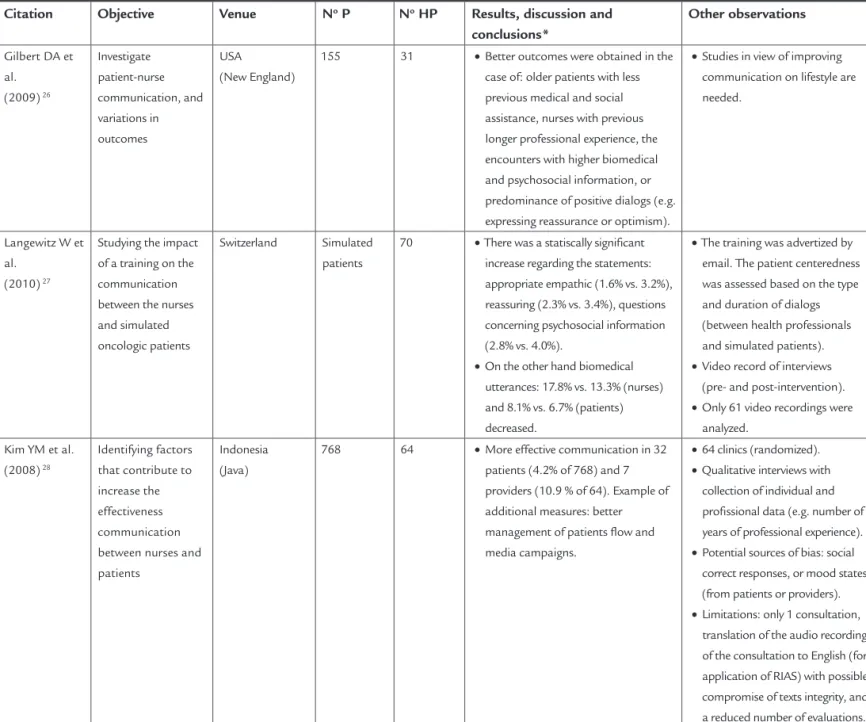
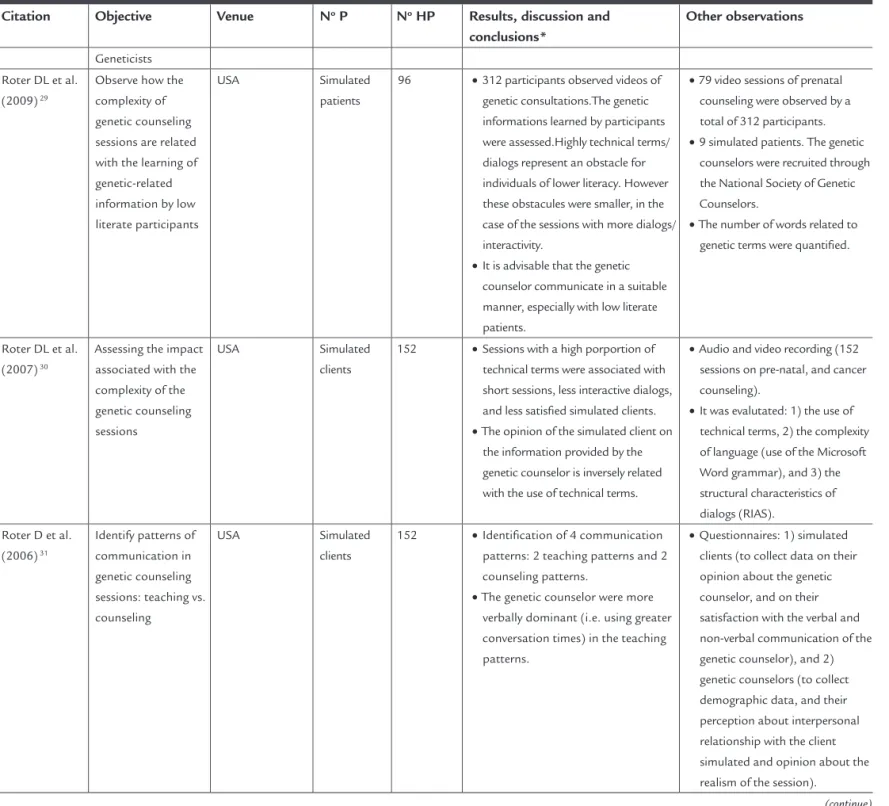
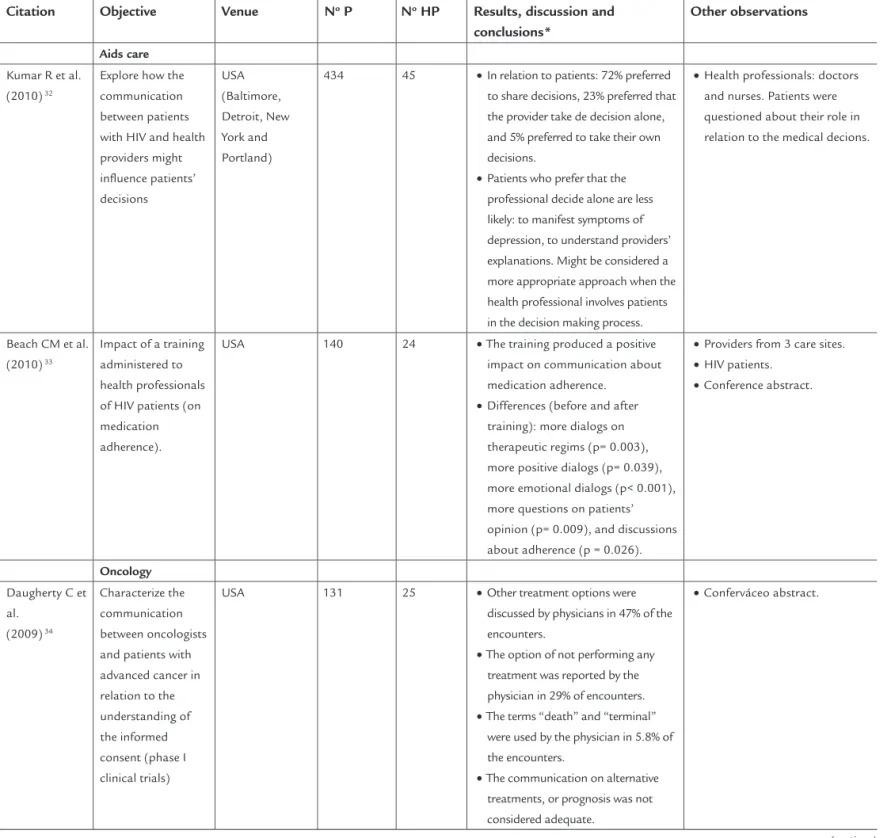
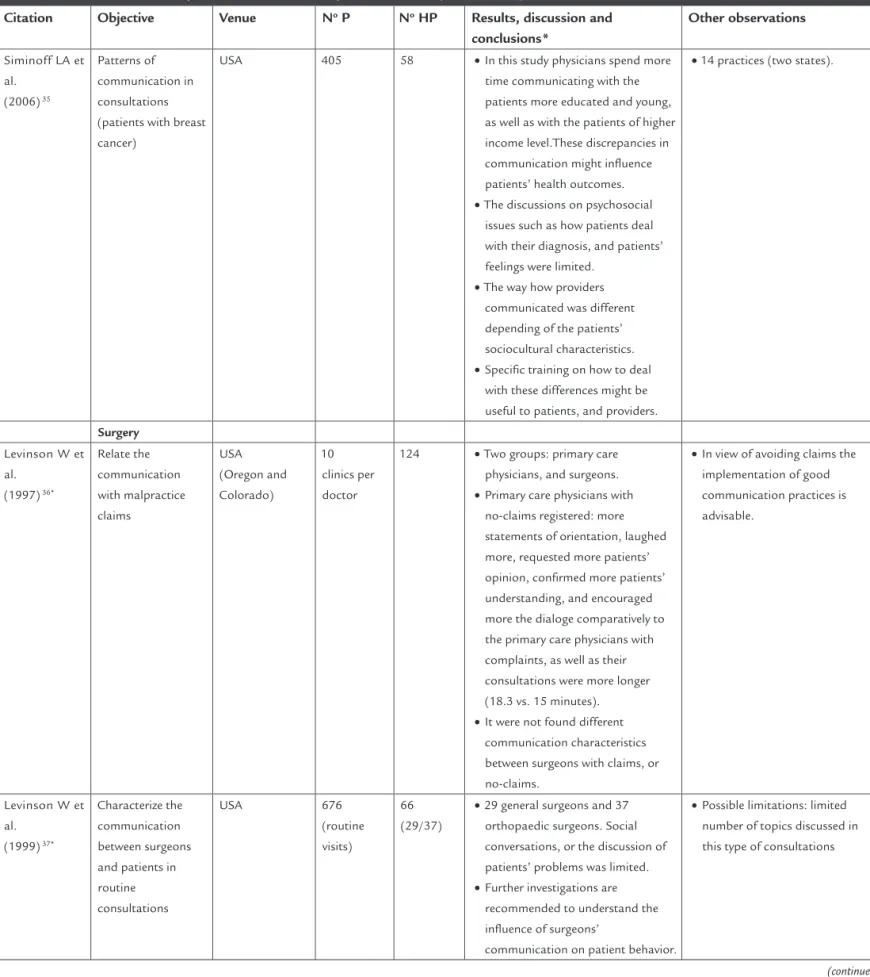
for the systematic review can be found in Table 2.
TABLE 1 Studies selected from each bibliographic
resourceResource Results Selected
Elsevier 29 1
PubMed 120 3
Solo 145 6
RIASWORKS Website 161 16
Highwire Press 75 5
SCIRUS 355 3
ISI Proceedings 0 0
SpringerLink 30 0
RCAAP 4 0
DOAJ 2 0
Web of Science 119 0
SciELO 0 0
Academic Search Complete 30 0
Willey Online 30 0
Current Contents 108 0
Annual Reviews 12 0
OAIster 42 0
TOTAL 1.262 34
Total articles = 1.262
Used another methodology = 78
Non-observational/experimental studies = 58 (1.262 - 78 = 1.184)
(1.184 - 58 = 1.126)
(1.126 - 807 = 319)
Publications > 5 years= 117
(319 - 117 = 202)
(202 - 104 = 98)
(98 - 14 = 84)
(84 - 17 = 67)
(67 - 33 = 34)
Reviewed articles = 34 Studies on methodological validations = 33
Non-English language = 14
Social/demographic studies Studies with < 20 participants = 104
Repeated = 807
TABLE 2 Tabulated summary of selected articles for systematic review
Citation Objective Venue No P No HP Results, discussion and conclusions*
Other observations
Family medicine
Greer RC et al. (2010) 7
Evaluate the quality of communication about chronic kidney disease in primary care
USA
(Baltimore, MD)
236 40 •The physicians frequently used technical terms (28%, n= 17).
•The comprehension of technical terms by patients rarely was confirmed by physicians (2%, n= 1).
•The discussion on chronic renal disease was not frequent in encounters.
•Ideally, these types of discussions must be encouraged.
•The optimization of the communication between patients and physicians on these issues might promote better health outcomes.
•15 primary care practices.
•Hypertensive patients. Studies with the enrollment of more participants might be desirable(conclusions are not generalizable).
Beach MC et al.
(2006) 8
Evaluate the attitudes of respect between physicians and patients
USA
(Baltimore and Washington, DC)
215 30 •The physicians’ perception of respect by patients was variable, and was preferentially associated with patients’ familiarity.
•Physicians rated their level of respect by patients (after each encounter).Questionnaire (patients).
Haskard B et al.
(2008) 9
Investigate the impact of a training intervention on communication
USA 2196
(Total treated patients)
156 •This training aimed to improve physicians’ communication, and stimulate the participation of the patients.
•Patients’ and physicians’
satisfaction might be improved with this type of training.
•Randomized experiment.
•Controlled trial.
•Groups: 1) physicians received training; 2) patients received training, and 3) both received training.
Bensing M et al.
(2008) 10
To characterize the verbal and non-verbal communication, and possibly patients’ anxiety
Holland 2095
(1388)
142 •The patients’ concerns were not directly expressed in more than a half of the consultations, nor even by patients with a higher level of anxiety.
•General practitioners might encourage patients to express their concerns: verbally, or non-verbally (e.g. showing more affect).
•Patient direct gaze (percentage). Questionnaire (administered before consultation). Patients’ subjective health, state anxiety, and reason for encounter was evaluated.
TABLE 2 Tabulated summary of selected articles for systematic review (continuation)
Citation Objective Venue No P No HP Results, discussion and conclusions*
Other observations
Mjaaland TA et al. (2009) 11
Analyze the effects of a communication skills training for general practitioners
Norway 266 25 •The communication patterns between general practitioners and patients changed in some situations.
•Communication skill training: 40h
•Examples of skills: 1) obtain indicators of the disease, such as subjective symptoms of the patient; 2) give an explanation to the patient about their health problems; 3) identify solutions and resources, and 4) promote appropriate behaviors. Weingarten
MA et al. (2010) 12
Investigate the nature of conflicts between doctors and patients (primary care encounters)
Israel 291 28 / 56 •40% of consultations with cases of conflicts (21.2% related to the packages of health services/ rationing).
•Conflictual encounters were characterized by shorter opening and closing phases.
•The physician showed a certain duality in the management of problems, because of the health system demands
•The physicians’ training might be relevant in view of an adequate managing conflict situations.
•Videotape of 291 consultations (28 general practitioners). 7 focus groups with 56 general practitioners (to collect provider opinion about conflicts).
Street JR et al. (2007) 13
Study of the communication style of physicians, and their perception about patients
USA (Houston, Texas)
207 29 •The doctors’ communication was more appropriated in relation to the patients with a communication more positive.
•Physicians might communicate better with patients of certain ethnic groups (possibility of bias).
•10 clinics (public or private).
•Possible limitations: small sample size, non-evaluation of patients’ health condition, the reason for the encounter, or the specialty of physicians.
Bensing JM et al.
(2006) 14
Assessing the variations on communication patterns between general practitioners and patients
Holland 102/108 (1986 /2002)
27/108 (1986 /2002)
•No differences were found between both patients’ groups regarding sex and age.
•In relation to the most recent data: the general practitioners gave more medical information and expressed less concern about patients’ health conditions; patients were less active (e.g. made less questions, and also demonstrated less concerns).
•Longitudinal study.
•Analysis of video tapes (general practice consultations with hypertensive patients).
• • aining: 40h
•
s of the disease, such as
xplanation to
•
•
•
•
• ations
al
•
•
• e).
•
valuation of patients’ health condition, the
•
•
•
• apes (general
(continue)
TABLE 2 Tabulated summary of selected articles for systematic review (continuation)
Citation Objective Venue No P No HP Results, discussion and conclusions*
Other observations
Van Den Brink-Muinen A et al. (2006) 15
Identify communication changes between patients and general practioners over time
(about medical treatment issues)
Holland 442/2784 (1987/ 2001)
16/142 (1987/ 2001)
•In 2001: general practitioners provided more information and requested the patient involvement in the decision-making process more often, on the other hand this providers checked less patients’ understanding. Excepting older patients the involvement of patients in medical decision-making was higher in 2001.
•Questionnaire (pre and post visit). Descriptive and multivariate Analysis.
Zantinge M et al. (2009) 16
Analyze if doctors’ burnout affect their communication on patients’ mental health problems, and the duration of consultations
Holland 1890
(consulta-tions)
126 •In the case of general practitioners suffering from bunout neither their attention on patients’ psychological problems nor their diagnosis were affected.It was found that general practitioners with more possibility of exhaustion sometimes create more opportunities to discuss the mental health problems of patients. General practitioners suffering from burnout might benefit from training (or coaching).
•Nationally representative sample of general practioners.
•Subscales of burnout: 1) emotional exhaustion, 2) depersonalization, or 3) personal accomplishment.
Ratanawongsa N et al. (2008) 17
Describe the patient-physician communication in the case of physicians’ burnout
USA
(Baltimore, MD)
235 40 •The signs of physicians’ professional exhaustion did not affect
significantly:1) their attention with the patient, 2) verbal dominance, 3) the consultation length, and 4) the levels of satisfaction or confidence of the patients.
•The patients of doctors with more serious problems gave twice negative rapport-building statements.
•15 clinics.
•Hypertensive patients were enrolled in view of improving their adherence.
Zantinge EM et al.
(2007) 18
Evaluate how the workload of general practitioners affect their attention on patients’ psychological problems
Netherlands 2095 (consulta-tions)
142 •Physicians’ professional exhaustion was not significantly associated with:1) patient-centeredness, 2) verbal dominance, 3) the length of consultation, and 4) patients’ satisfaction.The patients of doctors with more serious problems gave more negative rapport-building statements.
•2095 videotaped consultations.
•The videotapes were from a National survey (2000-2002).
•Eye contact was quantified (%).
TABLE 2 Tabulated summary of selected articles for systematic review (continuation)
Citation Objective Venue No P No HP Results, discussion and conclusions*
Other observations
Mjaaland TA et al. (2009) 19
Investigate the use of questions and comments during the consultations
Norway (Bærum)
145 24 •In addition to RIAS, 4 new coding categories were created to classify the interactions of communication.
•2% of the utterances were classified as resource or coping oriented (6 general practitioners were responsible for 59% of these utterances).
•The general practitioners might be more trained to cognitively manage their interactions with patients.
•Pilot Study.
•Additional categories: 1) resources (e.g. general practitioner comment something positive), 2) coping (e.g. comments/questions on the managment of dificult health situations), 3) attribution (e.g. question/ comments discussing patients’ opinion about their own situation), and 4) Solution-focused techniques (e.g. use of scales to classify a problem).
Van Den Brink-Muinen A et al. (2008)20
Investigate patterns of communication in primary health care (diverse European countries)
Estonia, Poland and Romania
1376 92 •It were found difference between the patterns of communication of general practitioners. Intercultural differences should be taking into account during the providers’ eduction (e.g. communication skills trainning).
•Videotaped consultations (doctor-patient).
Pediatrics
Johnson KB et al.
(2008) 21
Evaluate the parent-provider communication before and after the introduction of a computer-based documentation tool in consultations
USA 243
(consulta-tions)
149/94 •Computer-based vs. control consultations: duration slightly higher (32 vs. 27 min); more open-ended questions (28% vs. 21 %); > use of partnership strategies; > use of positive and social talk; more patient-centered interactions; < use of orienting and transition phrases.
•The quantity of dialogs (conversation) was similar in both groups.
•The introduction of the computerized system had a positive impact on the communication between family and providers.
•Pediatrics residents. The audio recordings were coded. One control group: 149 consultations were not computer-based (control group), and 94 consultations were computer-based.
Hart N et al. (2006) 22
Evaluating parent-provider communication after a training
USA 92
(consulta-tions)
28 •28 residents. The consultations (92) were audio-taped.
•Parents were significantly more satisfied (p < 0.05), and providers use more interpersonal communication after the training intervention.
•Residents’ training on
communication skills may contribute to increas parents’ satisfaction of parents.
•3 consultations: 1 before and 2 after the residents’ training.
•
•
•
• •
actitioner comment something
question/ comments discussing patients’ opinion about their own
echniques (e.g. use of
• •
•
•
•
•
ations
•
•
•
• e and 2
TABLE 2 Tabulated summary of selected articles for systematic review (continuation)
Citation Objective Venue No P No HP Results, discussion and conclusions*
Other observations
Wissow L et al. (2011) 23
Determining indicators to predict parent and child outcomes after a mental health training
USA
(Baltimore, MD, Washington, DC and New York)
403 50 •Providers who received training on mental care were more patient-centerd, and presented more appropriate characteristics of communication.The consultations more family-centered were predictive of an improvement on children and adolescents mental symptoms.
•Children and adolescents with emotional and behavioral problems (5 to 16 years). 50 providers: trained in pediatrics (68%), or family practice (30%).
•15 primary care offices.
Liu CC et al. (2008) 24
How working until late might in influence residents’ communication/ performance in the consultations of the following day
USA 243
(primary care visits)
52 •Residents who stay working until late were more verbally dominant, and less patient centered.
•Implications: it is required a better management of profissional performance in case of fatigue.
•Teaching hospital.
Greenley RN et al.
(2006) 25
Analyze the stability of parents’ understanding of the random assignment in childhood leukemia trials
USA 84 Not
applicable (only patients’ interviews)
•49% of parents failed to understand the random assignment. Favorable factors related to parents’ understanding: majority ethnicity, high socioeconomic status, provider-patient communication, and the presence of nurses during the consultation.
•Implications: Further studies are advisable (in different geographical locations and clinical contexts).
•Pediatric Hospitals.
•Limitations: only urban areas and academic centers, small sample size, informational materials not evaluated, and the parents’ understanding only was checked at two points (48 h and 6 months later).
Nursing
Sheldon LK et al.
(2009) 3
Analyze nurse responsiveness to cancer patient expressions of emotion
USA Simulated
patients
74 •The simulated patients’ expressions of sadness elicited a superior affective responses (e.g. concern, approval, empathy and concordance) than anger. The simulated patients’ expressions of neutrality and anger elicited a superior instrumental behaviors in professionals (e.g. orient, check, opinion about the therapy) than sadness. Age, work stress, and professional experience were variables significantly correlated.
•This methodology was considered convenient to training communication skills by the majority of nurses.
•8 sites (e.g. oncology services).
•The simulated expressions were: 1) anger, 2) sadness, and 3)
TABLE 2 Tabulated summary of selected articles for systematic review (continuation)
Citation Objective Venue No P No HP Results, discussion and conclusions*
Other observations
Gilbert DA et al.
(2009) 26
Investigate patient-nurse communication, and variations in outcomes
USA (New England)
155 31 •Better outcomes were obtained in the case of: older patients with less previous medical and social assistance, nurses with previous longer professional experience, the encounters with higher biomedical and psychosocial information, or predominance of positive dialogs (e.g. expressing reassurance or optimism).
•Studies in view of improving communication on lifestyle are needed.
Langewitz W et al.
(2010) 27
Studying the impact of a training on the communication between the nurses and simulated oncologic patients
Switzerland Simulated patients
70 •There was a statiscally significant increase regarding the statements: appropriate empathic (1.6% vs. 3.2%), reassuring (2.3% vs. 3.4%), questions concerning psychosocial information (2.8% vs. 4.0%).
•On the other hand biomedical utterances: 17.8% vs. 13.3% (nurses) and 8.1% vs. 6.7% (patients) decreased.
•The training was advertized by email. The patient centeredness was assessed based on the type and duration of dialogs (between health professionals and simulated patients).
•Video record of interviews (pre- and post-intervention).
•Only 61 video recordings were analyzed.
Kim YM et al. (2008) 28
Identifying factors that contribute to increase the effectiveness communication between nurses and patients
Indonesia (Java)
768 64 •More effective communication in 32 patients (4.2% of 768) and 7 providers (10.9 % of 64). Example of additional measures: better management of patients flow and media campaigns.
•64 clinics (randomized).
•Qualitative interviews with collection of individual and profissional data (e.g. number of years of professional experience).
•Potential sources of bias: social correct responses, or mood states (from patients or providers).
•Limitations: only 1 consultation, translation of the audio recording of the consultation to English (for application of RIAS) with possible compromise of texts integrity, and a reduced number of evaluations.
• •
e
•
•
•
edness was assessed based on the type
•
•
• •
•
a (e.g. number of xperience).
• ential sources of bias: social ates
• ation,
ecording ation to English (for plication of RIAS) with possible , and valuations.
(continue)
TABLE 2 Tabulated summary of selected articles for systematic review (continuation)
Citation Objective Venue No P No HP Results, discussion and conclusions*
Other observations
Geneticists Roter DL et al.
(2009) 29
Observe how the complexity of genetic counseling sessions are related with the learning of genetic-related information by low literate participants
USA Simulated
patients
96 •312 participants observed videos of genetic consultations.The genetic informations learned by participants were assessed.Highly technical terms/ dialogs represent an obstacle for individuals of lower literacy. However these obstacules were smaller, in the case of the sessions with more dialogs/ interactivity.
•It is advisable that the genetic counselor communicate in a suitable manner, especially with low literate patients.
•79 video sessions of prenatal counseling were observed by a total of 312 participants.
•9 simulated patients. The genetic counselors were recruited through the National Society of Genetic Counselors.
•The number of words related to genetic terms were quantified.
Roter DL et al. (2007) 30
Assessing the impact associated with the complexity of the genetic counseling sessions
USA Simulated
clients
152 •Sessions with a high porportion of technical terms were associated with short sessions, less interactive dialogs, and less satisfied simulated clients.
•The opinion of the simulated client on the information provided by the genetic counselor is inversely related with the use of technical terms.
•Audio and video recording (152 sessions on pre-natal, and cancer counseling).
•It was evalutated: 1) the use of technical terms, 2) the complexity of language (use of the Microsoft Word grammar), and 3) the structural characteristics of dialogs (RIAS).
Roter D et al. (2006) 31
Identify patterns of communication in genetic counseling sessions: teaching vs. counseling
USA Simulated
clients
152 •Identification of 4 communication patterns: 2 teaching patterns and 2 counseling patterns.
•The genetic counselor were more verbally dominant (i.e. using greater conversation times) in the teaching patterns.
•Questionnaires: 1) simulated clients (to collect data on their opinion about the genetic counselor, and on their satisfaction with the verbal and non-verbal communication of the genetic counselor), and 2) genetic counselors (to collect demographic data, and their perception about interpersonal relationship with the client simulated and opinion about the realism of the session).
TABLE 2 Tabulated summary of selected articles for systematic review (continuation)
Citation Objective Venue No P No HP Results, discussion and conclusions*
Other observations
Aids care
Kumar R et al. (2010) 32
Explore how the communication between patients with HIV and health providers might influence patients’ decisions
USA (Baltimore, Detroit, New York and Portland)
434 45 •In relation to patients: 72% preferred to share decisions, 23% preferred that the provider take de decision alone, and 5% preferred to take their own decisions.
•Patients who prefer that the professional decide alone are less likely: to manifest symptoms of depression, to understand providers’ explanations. Might be considered a more appropriate approach when the health professional involves patients in the decision making process.
•Health professionals: doctors and nurses. Patients were questioned about their role in relation to the medical decions.
Beach CM et al. (2010) 33
Impact of a training administered to health professionals of HIV patients (on medication adherence).
USA 140 24 •The training produced a positive impact on communication about medication adherence.
•Differences (before and after training): more dialogs on therapeutic regims (p= 0.003), more positive dialogs (p= 0.039), more emotional dialogs (p< 0.001), more questions on patients’ opinion (p= 0.009), and discussions about adherence (p = 0.026).
•Providers from 3 care sites.
•HIV patients.
•Conference abstract.
Oncology
Daugherty C et al.
(2009) 34
Characterize the communication between oncologists and patients with advanced cancer in relation to the understanding of the informed consent (phase I clinical trials)
USA 131 25 •Other treatment options were
discussed by physicians in 47% of the encounters.
•The option of not performing any treatment was reported by the physician in 29% of encounters.
•The terms “death” and “terminal” were used by the physician in 5.8% of the encounters.
•The communication on alternative treatments, or prognosis was not considered adequate.
•Conferváceo abstract.
•
•
• s
ole in elation to the medical decions.
•
•
• • •
•
•
•
•
•
(continue)
TABLE 2 Tabulated summary of selected articles for systematic review (continuation)
Citation Objective Venue No P No HP Results, discussion and conclusions*
Other observations
Siminoff LA et al.
(2006) 35
Patterns of communication in consultations (patients with breast cancer)
USA 405 58 •In this study physicians spend more time communicating with the patients more educated and young, as well as with the patients of higher income level.These discrepancies in communication might influence patients’ health outcomes.
•The discussions on psychosocial issues such as how patients deal with their diagnosis, and patients’ feelings were limited.
•The way how providers communicated was different depending of the patients’ sociocultural characteristics.
•Specific training on how to deal with these differences might be useful to patients, and providers.
•14 practices (two states).
Surgery
Levinson W et al.
(1997) 36*
Relate the communication with malpractice claims
USA (Oregon and Colorado)
10 clinics per doctor
124 •Two groups: primary care physicians, and surgeons.
•Primary care physicians with no-claims registered: more statements of orientation, laughed more, requested more patients’ opinion, confirmed more patients’ understanding, and encouraged more the dialoge comparatively to the primary care physicians with complaints, as well as their consultations were more longer (18.3 vs. 15 minutes).
•It were not found different communication characteristics between surgeons with claims, or no-claims.
•In view of avoiding claims the implementation of good communication practices is advisable.
Levinson W et al.
(1999) 37*
Characterize the communication between surgeons and patients in routine consultations
USA 676
(routine visits)
66 (29/37)
•29 general surgeons and 37 orthopaedic surgeons. Social conversations, or the discussion of patients’ problems was limited.
•Further investigations are recommended to understand the influence of surgeons’
communication on patient behavior.
TABLE 2 Tabulated summary of selected articles for systematic review (continuation)
Citation Objective Venue No P No HP Results, discussion and conclusions*
Other observations
Anesthesia
Kindler CH et al. (2005) 38*
Quantitative Analysis of the
communication between the anesthetist and the patient in preoperative consultation
Switzerland (Basel)
57 57 •Duration of visit: 16.1 min (average).
•The number of utterances per patient/anaesthesist, and the duration of the consultations were not influenced by gender. % of utterances/consultation: anaesthesists (53.5%) and patients (46.5%).
•Anaesthetists: < 0.1% utterances related with psychosocial issues (dialogs mainly related with biomedical issues).
•The use of open questions and emotional statements by these providers were positively related with the patients’ involvment.
•The discussions on biomedical, and psychosocial issues were quantified (number of utterances).
Family planning
Abdel-Tawab N et al.
(2002) 39*
Investigate the importance of client-centered communication in consultations of family planning
Egypt 112
(clients)
34 •The communication was physician-centered in 2/3 of consultations.
•Client-centered consultations were one minute longer than physician-centered consultations.
•Client-centered consultations were associated with great satisfaction, and adherence.
•The interruption of the contraceptive method was associated with more physicians’ disagreement statements.
•Similarly to what happen in developed countries, client-centered models are more advantageous than physician-centered models.
•Home visits to confirm clients’ contraceptive adherence (at 3 and 7 months).
P: Patients; HP: Health Professionals; Result, Disc and Conclusions: Some main results, discussion, and conclusions; Other observations: Place, possible study weakness or bias, and other relevant aspects; USA: United States of America. * Studies selected not according to the study period.
The distribution of the studies selected by year of publication
was as follows: 1997 (1), 1999 (1), 2002 (1), 2005 (1), 2006 (7),
2007 (3), 2008 (7), 2009 (7), 2010 (4), and 2011 (1). Four
stu-dies were dated before 2006, taking into account that the
par-ticipation of at least 20 health professionals was not found
in the areas of surgery (1997 and 1999),
36,37anesthesia (2005),
38and family planning (2002).
39• •
•
•
•The discussions on biomedical,
•
•
•
•
•
•
States
fective categories were shown to be most preponderant
in the evaluation of patient satisfaction.
8,9To fully
inter-pret these last categories of RIAS codes it is also
impor-tant to evaluate the nonverbal components, such as
in-tonation, words and type of voice used by speakers.
10,41The literature describes various mathematical
rela-tionships between different RIAS coding units, using
formulas that result in composite variables or even
cons-tructs that describe linguistic and behavioral structures
of the communication, such as patient-centeredness.
39,40In this context, the consensus is wich the components
that encourage the patient to speak, that is, frequent
RIAS codes associated with open questioning, verbal
fa-cilitators and empathic declarations, or those related to
the psychosocial dimensions of the patient, result in
more patient-focused healthcare. On the other hand,
communication with a predominance of closed
ques-tions, or a dialogue flow that tends to limit, control or
guide patients, is understood as a type of
communica-tion that is less focused on the patient’s needs,
expecta-tions and concerns.
11,21-23,27,39Whether the results of a
healthcare professional intervention are defined as
short--term (e.g. patient satisfaction and their intention to
adhere to treatment), medium-term (e.g. adherence to
treatment and reduction in patient anxiety) or
long--term (e.g. patient quality of life, with recovery and good
general health status), the relationship between the
health professional’s communication characteristics
and the patient’s state of health is, in fact, one of the
most important outcomes to be evaluated.
26,31,42RIAS
has found a positive association between
patient-cente-red communication, improvement in health results and
the reduction of conflicts with professionals.
12,36,43In-deed, one of the most common uses of the RIAS has
been to study the association between communication
and patient satisfaction, where a cause-effect
relation-ship has been confirmed.
8,13,32,42With regard to the aspects relating to verbal
commu-nication, there are RIAS studies that have identified the
verbal dominance of the physician in relation to the
pa-tient, with a predominance of technical and biomedical
dialogs.
7,10,28,37One study identified that communication
for anesthetists was almost biomedical in nature,
38while
another demonstrated that this communication pattern
is more evident in medical interns than specialists.
24In
re-lation to other health professionals, such as nurses or
tho-se responsible for family planning, the dominance of
tech-nical conversation was also verified,
27,28,39while for genetic
D
ISCUSSION
Given the results of this review, the identification of RIAS
studies was found amongst various groups of health
pro-fessionals (Table 2) as well as confirmed the absence of
works in Portuguese, both in the collection of field data
or written publications.
The studies exemplify the investigation of verbal,
syn-chronous and one-on-one (or dyadic) communication
between professionals and patients, through the
applica-tion of the RIAS methodology which, in some cases, was
also associated with nonverbal behavior recording
tech-niques. Taking into account the different professional
areas studied, the total number of health professionals
were superior to 2500 and the average IF of 3.11 of the
selected articles, it is possible to consider the results
ob-tained from this bibliographic review of sufficient
inte-rest for elucidating, albeit briefly, the contribution of the
RIAS methodology for the processes analysis in
interin-dividual communication in healthcare.
The selection criteria used in this review did not
ena-ble other professional areas or specialties studied by the
RIAS to be selected, such as intensive care, mental and
pal-liative care, dentistry, medical emergencies, prenatal
diag-nosis, hospitalization, medicine in adolescence,
ophthal-mology and radiotherapy. Even so, the boundaries imposed
by the search criteria enable interesting data to be
obtai-ned, such as studies with a sample size of health
professio-nals enough for aprooaching statistical representation. In
the specific case of the RIAS, although a computer
softwa-re, currently used on a global scale,
1its application does
not seem to be extensive, i.e. sufficient to represent the
en-tire professional group under analysis. In fact, the
possibi-lity of coding and analyzing a large volume of data in a
short time is one of the main advantages of the RIAS when
compared with other methodologies for studying
commu-nication. This suggests, in the majority of cases, that
re-sults to be reproducible or extendable beyond small
sam-ples, which was impossible to prove in this review. In
addition, there is a limited use of this method by health
organizations and institutions in other areas of
healthca-re, beyond medical practice.
instrumen-reveal that in addition to characterizing communication
RIAS investigators also studied other factors, such as:
•
The perception of respect by the participants in the
consultations;
8,13•
The changes of the communication characteristics
over time (longitudinal studies);
14,15•
The impact of training actions on patients and
phy-sicians;
9,11,22,23,28,33•
The reaction of simulated patients;
3,27,29-31•
Burnout,
16,17overwork,
18tiredness
24or clinical
mal-practice;
10•
The identification of conflicts
12,36•
The primary results (e.g satisfaction and the
inten-tion to adhere to treatment by the patient),
secon-dary results (e.g changes in the way the patient
ap-proaches their health problems)
26and treatment
decisions;
32,35•
The use of technical terms
7and informed consent (in
clinical trials);
25,34,44•
The approach to matters of a psychosocial nature;
19,45•
Intercultural differences.
20The involvement of various countries and continents
2,20,15,38in the studies selected confirm the relevance of this
me-thodology, but potential generalization of the
conclu-sions is limited, given the differences in professional
prac-tice and context, from the training of the professionals
up to the sociocultural characteristics of the populations.
The studies selected for this review
3,7-39aimed only at
illustrating the relevance of the RIAS as a method for
studying the communication between different health
professionals and patients, by exemplifying some of the
various approaches to the complex phenomenon of
hu-man communication. The studies presented here have
enabled the identification of shortcomings in verbal and
nonverbal communication by the health professionals
involved, such as the absence nonverbal communication,
predominance of instrumental communication and
dia-logs focused on the health professional, lack of patient
involvement in discussions and confirmation of their
comprehension, and short stimulation of adherence to
the prescribed instructions. The RIAS has contributed to
accept that understanding the affective, instrumental
and nonverbal components of communication permits
health professionals to carry out more humanized and,
above all, more effective care. The scientific investigation
of these communication components, with the use of
ob-jective tools such as the RIAS methodology, is not always
well accepted by professionals, as well as by other
accoun-and continuously improve the quality of care provided
to patients. Nevertheless, the RIAS is one of the
instru-ments delivering objective measureinstru-ments of the use of
communication competencies, which clearly contributes
to promote the capacity for diagnosis, clinical efficiency
and patient and physician satisfaction, as well as
redu-cing error and emotional difficulties often association
with illness and disease. In addition to being an
indivi-dual responsibility, good communication in the clinical
context should also be a responsibility of health
organi-zations, promoting the identification, discussion and
con-tinuous training in these competencies. Studies in this
area are, in the majority of cases, limited to investigations
on a theoretical basis or in a controlled environment
(ex-perimental or semi-ex(ex-perimental studies) and not
neces-sarily observational and ecological studies applied to the
day-to-day reality of institutions.
In general, various limitations were identified this
re-view, such as the low sample sizes,
13,25participation of a
limited number of medical sites,
21,22,24,32,34few
longitudi-nal studies (in the majority of cases, the data was
collec-ted at a single point in time, with eventual implications
on results reproducibility),
14,15,25studies without the
pa-rallel use of other measures for concurrent validity (e.g.
questionnaires on the evaluation of the cognitive or
sa-tisfaction level of the participants),
13etc. All of the
abo-ve contribute to non generalizable conclusions,
frequen-tly constituting evaluations of an exploratory nature. The
following were identified as potential bias: the possibility
of physician empathic variations based on the
socioeco-nomics class of the patient,
13the specific clinical context
(public or private clinics, city hospitals, academic
medi-cal centers, etc.),
3,7,21,25,39the potential to respond in a
so-cially desirable manner to studies complemented by the
administration of questionnaires,
28and the exact type of
events intended to be compared (e.g. pre and
postopera-tive consultations for orthopedic surgery with
incapaci-tating potential vs. other types of surgery).
37The conclusions of this review merely intend to
cons-titute an indicator for conducting future studies on
com-munication between patients and health professionals,
resulting from the systematization of some of the
limi-tations and potential bias found here. This review did not
aim to explore advantages and disadvantages of RIAS in
comparison with other methodologies.
C
ONCLUSION
area would be desirable for the sustainable and
harmo-nious development of health systems. The RIAS
metho-dology has proven to be an important tool for the study
of communication between health professionals and
pa-tients, contributing to the elaboration of
communica-tion effectiveness diagnostics and educacommunica-tion guidelines.
Therefore, the RIAS has contributed to developing more
adequate, effective and humanized communication,
the-reby defending the final mission of healthcare systems,
i.e. human well-being.
R
ESUMO
Comunicação entre profissionais de saúde e pacientes:
re-visão dos estudos que utilizaram o método RIAS (
Roter
Interaction Analysis System
)
Objetivo:
rever, de forma sistemática os estudos que
in-vestigaram a comunicação entre pacientes e profissionais
de saúde através da aplicação da metodologia RIAS.
Métodos:
foram utilizados como expressão-chave
Roter
Interaction Analysis System
e os recursos bibliográficos de:
Academic Search Complete, Current Contents, ISI
Pro-ceedings, PubMed, Elsevier, SpringerLink, Web of
Scien-ce, RCAAP, Solo e o site oficial do RIAS. Período de
sele-ção: 2006 a 2011. Os estudos foram selecionados por
análise dicotômica multicritério e organizados segundo
os critérios PRISMA.
Resultados:
identificação de 1.262 artigos (455 não
re-petidos). Foram selecionados para análise 34 artigos,
dis-tribuídos pelas seguintes profissões de saúde: médicos de
medicina geral e familiar (14), pediatras (5), enfermeiros
(4), geneticistas (3), prestadores de cuidados a pacientes
com Aids (2), oncologistas (2), cirurgiões (2),
anestesis-tas (1) e especialisanestesis-tas de planejamento familiar (1). O RIAS
é escassamente utilizado e divulgado no âmbito dos
cui-dados de saúde nos países de língua portuguesa.
Discussão:
os principais temas estudados incluíram a
in-fluência do cansaço, ansiedade e esgotamento profissional
na comunicação e o impacto das ações específicas de
forma-ção no exercício profissional. A revisão permitiu identificar
as principais forças e fraquezas na comunicação verbal, em
díade e síncrona na prestação de cuidados de saúde.
Conclusão:
a investigação científica da comunicação entre
profissionais de saúde e pacientes por meio do RIAS tem
produzido resultados concretos. É esperada uma melhoria
dos resultados em saúde decorrente da aplicação do RIAS.
RIAS;
;
comu-R
EFERENCES
1. RIASWORKS: Evidence-based communication for education, research & practice [cited 2011 mar 15]. Available at: http://www.riasworks.com. 2. Roter DL, Larson S. The relationship between residents’ and attending
physicians’ communication during primary care visits: an illustrative use of the Roter Interaction Analysis System. Health Commun 2001; 13:33-48. 3. Sheldon LK, Ellington L, Barrett R, Dudley WN, Clayton MF, Rinaldi K..
Nurse responsiveness to cancer patient expressions of emotion. Patient Educ Couns 2009; 76:63-70.
4. Brandão J. Relação e comunicação médico-doente. Rev Port Clin Geral 2008; 24:503-4.
5. Santos I, Ribeiro L. Indicadores de desempenho na consulta. Rev Port Clin Geral 2009; 25:228-36.
6. Prisma: Transparent reporting of systematic reviews and meta-analysis [cited 2011 feb 27]. Available at: http://www.prisma-statement.org/.
7. Greer RC, Cooper LA, Crews DC, Powe NR, Boulware Le. Quality of patient-physician discussions about CKD in primary Care: a cross-sectional study. Am J Kidney Dis 2011; 57:583-91.
8. Beach MC, Roter DL, Wang NY, Duggan PS, Cooper LA. Are physician’s attitudes of respect accurately perceived by patients and associated with more positive communication behaviors? Patient Educ Couns 2006; 62:347-54.
9. Haskard B, Williams L, DiMatteo R, Rosenthal R, White K, Goldstein G. Physician and patient communication training in primary care: effects on participation and satisfaction. Health Psychol 2008; 27:513-22. 10. Bensing M, Verheul W, Van Dulmen S. Patient anxiety in the medical
encounter: a study of verbal and nonverbal communication in general practice. Health Educ 2008; 108:373-83.
11. Mjaaland TA, Finset A. Communication skills training for general practitioners to promote patient coping: the GRIP approach. Patient Educ Couns 2009; 76:84-90.
12. Weingarten MA, Guttman N, Abramovitch H, Margalit RS, Roter D, Ziv A et al. An anatomy of conflicts in primary care encounters: a multi-method study. Fam Pract 2010; 27:93-100.
13. Street RL Jr, Gordon H, Haidet P. Physicians’ communication and perceptions of patients: Is it how they look, how they talk, or is it just the doctor? Soc Sci Med 2007; 65:586-98.
14. Bensing JM, Tromp F, Van Dulmen S, Van den Brink-Muinen A, Verheul W, Schellevis FG. Shifts in doctor-patient communication between 1986 and 2002: a study of videotaped general practice consultations with hypertension patients. BMC Fam Pract 2006; 7:62.
15. Van den Brink-Muinen A, Van Dulmen S, de Haes H, Visser A, Schellevis F, Bensing J. Has patients’ involvement in the decision-making process changed over time? Health Expect 2006; 9:333-42.
16. Zantinge E, Verhaak P, Bakker D, Van der Meer K, Bensing J. Does burnout among doctors affect their involvement in patients’ mental health problems? A study of videotaped consultations. BMC Fam Pract 2009; 10:60. 17. Ratanawongsa N, Roter D, Beach MC, Laird SL, Larson SM, Carson KA et
al. Physician burnout and patient-physician communication during primary care encounters. J Gen Intern Med 2008; 23:1581-8.
18. Zantinge EM, Verhaak PF, de Bakker DH, Kerssens JJ, Van der Meer K, Bensing JM. The workload of general practitioners does not affect their awareness of patients’ psychological problems. Patient Educ Couns 2007; 67:93-9.
19. Mjaaland TA, Finset A. Frequency of GP communication addressing the patient’s resources and coping strategies in medical interviews: a video-based observational study. BMC Fam Pract 2009; 10:49.
20. Van den Brink-Muinen A, Maaroos HI, Tähepõld H. Communication style in primary health care in Europe. Health Educ 2008; 108:384-96. 21. Johnson KB, Serwint JR, Fagan LA, Thompson RE, Wilson ME, Roter D.
Computer-based documentation: effects on parent-provider communication during pediatric health maintenance encounters. Pediatrics 2008; 122:590-8. 22. Hart N, Drotar D, Gori A, Lewin L. Enhancing parent-provider communication in ambulatory pediatric practice. Patient Educ Couns 2006; 63:38-46.
25. Greenley RN, Drotar D, Zyzanski SJ, Kodish E. Stability of parental understanding of random assignment in childhood leukemia trials: an empirical examination of informed consent. J Clin Oncol 2006; 24:891-97. 26. Gilbert DA, Hayes E. Communication and outcomes of visits between older
patients and nurse practitioners. Nurs Res 2009; 58:283-93.
27. Langewitz W, Heydrich L, Nübling M, Szirt L, Weber H, Grossman P. Swiss Cancer League communication skills training programme for oncology nurses: an evaluation. J Adv Nurs 2010; 66:2266-77.
28. Kim YM, Heerey M, Kols A. Factors that enable nurse–patient communication in a family planning context: a positive deviance study. Int J Nurs Stud 2008; 45:1411-21.
29. Roter DL, Erby L, Larson S, Ellingtion L. Oral literacy demand of prenatal genetic counseling dialogue: predictors of learning. Patient Educ Couns 2009;75:392–97.
30. Roter DL, Erby LH, Larson S, Ellington L. Assessing oral literacy demand in genetic counseling dialogue: preliminary test of a conceptual framework. Soc Sci Med 2007; 65:1442-57.
31. Roter D, Ellington L, Erby LH, Larson S, Dudley W. The Genetic Counseling Video Project (GCVP): models of practice. Am J Med Genet C Semin Med Genet 2006; 142C:209-20.
32. Kumar R, Korthuis PT, Saha S, et al. Decision-making role preferences among patients with HIV: associations with patient and provider characteristics and communication behaviors. J Gen Intern Med 2010; 25:517-23.
33. Beach CM, Wilson I, Saha S et al. Impact of a patient and provider intervention to improve the quality of communication about medication adherence among HIV Patients. Conference abstracts: 5th International Conference on HIV treatment adherence 2010 (Abst. 61339).
34. Daugherty C, Kass NE, Roter DET et al. A study of physician investigator (PI) disclosure of alternatives of care and prognostic information to adVanced cancer patients (ACP) enrolling in phase I trials.ASCO Meeting Abstracts 2009 (Abst. 6508).
35. Siminoff LA, Graham GC, Gordon NH. Cancer communication patterns and the influence of patient characteristics: Disparities in information-giving and affective behaviors. Patient Educ Couns 2006; 62:355-60. 36. Levinson W, Roter DL, Mullooly JP, Dull VT, Frankel RM. Physician-patient
communication. The relationship with malpractice claims among primary care physicians and surgeons. JAMA 1997; 19:553-9.
37. Levinson W, Chaumeton N. Communication between surgeons and patients in routine office visits. Surgery 1999; 125:127-34.
38. Kindler CH, Szirt L, Sommer D, Hausler R, Langewitz W. A quantitative analysis of anaesthetist-patient communication during the pre-operative visit. Anaesthesia 2005; 60:53-9.
39. Abdel-Tawab N, Roter D. The releVance of client-centered communication to family planning settings in developing countries: lessons from the Egyptian experience. Soc Sci Med 2002; 54:1357-68.
40. Roter D, Larson S. The Roter Interaction Analysis System (RIAS): utility and flexibility for analysis of medical interactions. Patient Educ Couns 2002; 46:243-51.
41. Sondell K, Söderfeldt B, Palmqvist S. Underlying dimensions of verbal communication between dentists and patients in prosthetic dentistry. Patient Educ Couns 2003; 50:157-65.
42. Ong LM, Visser MR, Lammes FB, de Haes JC. Doctor-patient communication and cancer patients’ quality of life and satisfaction. Patient Educ Couns 2000; 41:145-56.
43. Rouf E, Chumley H, Dobbie A. Patient-centered interviewing and student performance in a comprehensive clinical skills examination: Is there an association? Patient Educ Couns 2009; 75:11-5.
44. Miller VA, Drotar D, Burant C, Kodish E. Clinician-parent communication during informed consent for pediatric leukemia trials. J Pediatr Psychol 2005; 30:219-29.