UNIVERSIDADE FEDERAL DO CEARÁ CENTRO DE CIÊNCIAS
PROGRAMA DE PÓS-GRADUAÇÃO EM QUÍMICA
LLOYD RYAN VIANA KOTZEBUE
SPECTRAL AND THERMAL STUDIES ON THE SYNTHESIS AND OLIGOMERIZATION OF NOVEL CARDANOL-BASED BENZOXAZINES
LLOYD RYAN VIANA KOTZEBUE
SPECTRAL AND THERMAL STUDIES ON THE SYNTHESIS AND OLIGOMERIZATION OF NOVEL CARDANOL-BASED BENZOXAZINES
Dissertação de mestrado apresentada ao Programa de Pós-graduação em Química, do Centro de Ciências da Universidade Federal do Ceará, como requisito parcial para obtenção do Título de Mestre em Química. Área de Concentração: Química Orgânica.
Orientador: Diego Lomonaco Vasconcelos de Oliveira
Gerada automaticamente pelo módulo Catalog, mediante os dados fornecidos pelo(a) autor(a)
K1s Kotzebue, Lloyd Ryan Viana.
Spectral and thermal studies on the synthesis and oligomerization of novel cardanol-based benzoxazines / Lloyd Ryan Viana Kotzebue. – 2016.
76 f. : il. color.
Dissertação (mestrado) – Universidade Federal do Ceará, Centro de Ciências, Programa de Pós-Graduação em Química, Fortaleza, 2016.
Orientação: Prof. Dr. Diego Lomonaco Vasconcelos de Oliveira.
1. LCC. 2. cardanol. 3. polimerização térmica. 4. ROP. I. Título.
LLOYD RYAN VIANA KOTZEBUE
SPECTRAL AND THERMAL STUDIES ON THE SYNTHESIS AND OLIGOMERIZATION OF NOVEL CARDANOL-BASED BENZOXAZINES
Dissertação de mestrado apresentada ao Programa de Pós-graduação em Química, do Centro de Ciências da Universidade Federal do Ceará, como requisito parcial para obtenção do Título de Mestre em Química. Área de Concentração: Química Orgânica.
Aprovado em: 18/02/2016
BANCA EXAMINADORA
____________________________________________________
Prof. Dr. Diego Lomonaco Vasconcelos de Oliveira (Orientador)
Universidade Federal do Ceará (UFC)
____________________________________________________
Profa. Dra. Judith Pessoa de Andrade Feitosa
Universidade Federal do Ceará (UFC)
____________________________________________________
Dra. Roselayne Ferro Furtado
Embrapa Agroindústria Tropical (EMBRAPA)
Acknowledgements
To God for having guided me and given strength in my path as I needed. Thank you very much Lord.
To my wife Maruzia for her support and dedication that she gave and gives me every day. I love you.
To my parents for giving me love, support and for believing in me. I Love you.
To my sister who encouraged me and helped me in difficult times. Love you too.
To my advisor Prof. Diego Lomonaco for the great guidance he gave me along my Masters course. Thank you very much.
To Prof. Selma Elaine Mazzetto for the advice and support she gave me and for the opportunity to participate in the Laboratório de Produtos Tecnológicos e Processos (LPT).
To Prof. Judith for the good contributions in my research, as in my qualification as to allow to do the Gel Permeation Chromatography (GPC) analysis.
To my great friend Wanderson for the good working partnership, friendship and support.
To all the friends of LPT. You guys are amazing.
To Prof. Mele for the advises and for his big support with the mass spectrometry (MS) analysis.
To the funding agencies CNPq, CAPES and FUNCAP for financing my scholarship and research.
To Yara S. Oliveira, Prof. A. P. Ayala and the Laboratório de Caracterização e Crescimento de Cristais for the Differential Scanning Calorimetry (DSC) analyses.
“Knowing how to think empowers you far beyond those who know only what to think.”
LIST OF FIGURES
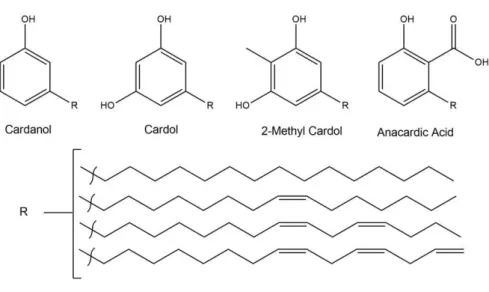
Figure 1 - Cashew nut shell liquid constituents ... 17
Figure 2 - Two types of benzoxazine molecules ... 18
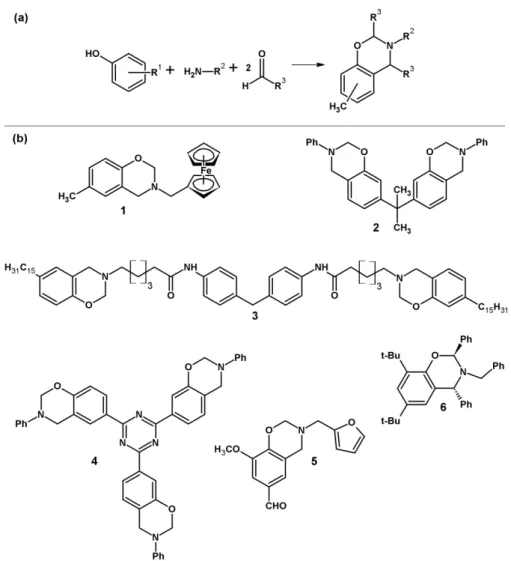
Figure 3 - Molecular design flexibility (a); and examples of some varieties of benzoxazines (b) ... 19
Figure 4 - Mechanism of the benzoxazine synthesis ... 20
Figure 5 - Basic polymerization mechanism of benzoxazines. ... 22
Figure 6 – Thermal performance/cost comparison of benzoxazine with traditional resins ... 22
Figure 7 - Chemical structures of benzoxazine brands of Huntsman ... 23
Figure 8 - Main structure of saturated cardanol-based benzoxazine ... 32
Figure 9 - 1H NMR spectrum of CA-a ... 34
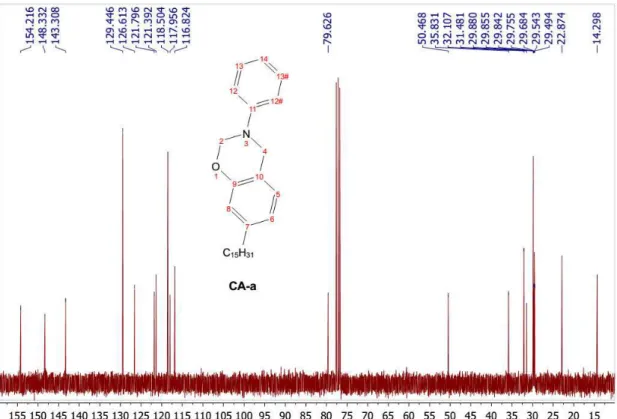
Figure 10 - 13C NMR spectrum of CA-a ... 35
Figure 11 - 1H NMR spectrum of CA-ch ... 36
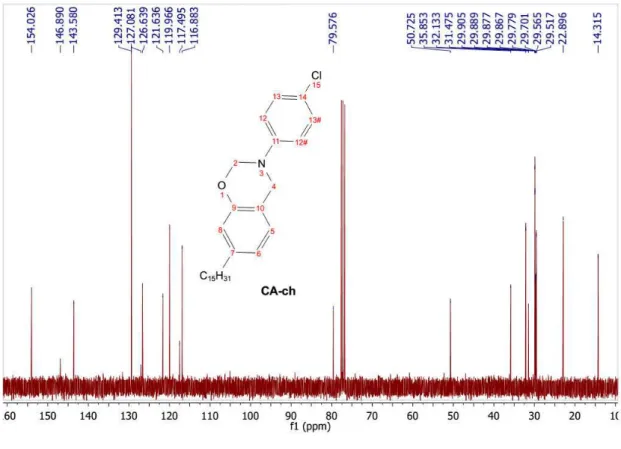
Figure 12 - 13C NMR spectrum of CA-ch ... 37
Figure 13 - 1H NMR spectrum CA-cy ... 38
Figure 14 - 13C NMR spectrum of CA-cy ... 39
Figure 15 - 1H NMR spectrum CA-fu ... 40
Figure 16 - 13C NMR spectrum of CA-fu ... 41
Figure 17 - 1H NMR spectrum CA-thf ... 42
Figure 18 - 13C NMR spectrum of CA-thf ... 43
Figure 19 - 1H NMR spectra of the cardanol-based benzoxazines ... 44
Figure 20 - 13C NMR spectrum of the cardanol-based benzoxazines ... 45
Figure 21 - FT-IR spectra of the cardanol-based benzoxazines in fingerprint region. ... 46
Figure 22 - Non-isothermal DSC curves of the cardanol-based benzoxazines. ... 48
Figure 23 - The anomeric effect on 1,3-oxazine ring ... 50
Figure 24 – TGA curves of saturated benzoxazines and cardanol: TGA (a) and DTGA (b) ... 50
Figure 25 - DSC thermograms of CA-a without and with catalyst (1% mol/mol) ... 52
Figure 26 - DSC thermograms of CA-a with MgCl2 ... 53
Figure 27 - DSC thermograms of cardanol-based benzoxazines with MgCl2 (1% mol/mol) ... 54
Figure 29 - DSC thermograms of CA-ch under different polymerization times ... 56
Figure 30 - DSC thermograms of CA-cy under different polymerization times ... 56
Figure 31 - DSC thermograms of CA-fu under different polymerization times ... 57
Figure 32 - DSC thermograms of CA-thf under different polymerization times ... 57
Figure 33 - FT-IR spectra of CA-a with MgCl2 (1% mol/mol) with different polymerization time at 150 oC. ... 60
Figure 34 - FT-IR spectra of CA-ch with MgCl2 (1% mol/mol) with different polymerization time at 150 oC. ... 61
Figure 35 - FT-IR spectra of CA-cy with MgCl2 (1% mol/mol) with different polymerization time at 150 oC ... 62
Figure 36 - FT-IR spectra of CA-fu with MgCl2 (1% mol/mol) with different polymerization time at 150 oC. ... 63
Figure 37 - FT-IR spectra of CA-thf with MgCl2 (1% mol/mol) with different polymerization time at 150 oC. ... 64
Figure 38 - Proposed structure of Poly(CA-a) ... 67
Figure 39 - Proposed structure of Poly(CA-ch) ... 67
Figure 40 - Proposed structure of Poly(CA-cy) ... 68
Figure 41 - Proposed structure of Poly(CA-fu) ... 68
LIST OF TABLES
Table 1 - Summary of the IR vibration modes of the cardanol-based benzoxazines. .... 47 Table 2 - Exact Mass expected and found for of the cardanol-based benzoxazines. ... 48 Table 3 - Values obtained from the non-isothermal DSC thermograms of the
benzoxazines. ... 49 Table 4 - Values obtained from the non-isothermal DSC thermograms of CA-a without
and with catalyst (1% mol/mol) ... 52 Table 5 - Values obtained from the non-isothermal DSC thermograms of benzoxazines
with MgCl2 (1% mol/mol) ... 54 Table 6 - Values obtained from isothermal DSC thermograms of benzoxazines with
MgCl2 (1% mol/mol) at 150 oC ... 58 Table 7 - Summary of the values of the GPC analysis of the latest polymerized
RESUMO
Uma nova classe de polímeros que vem chamado atenção da indústria e da academia são as polibenzoxazinas, que podem ser obtidos após a polimerização térmica do seus monômeros, as benzoxazinas. Devido à grande versatilidade de síntese destes monômeros, que utiliza um composto fenólico e amina primária, possibilita-se o uso de fontes renováveis como o cardanol e a manipulação das propriedades do monômero e do polímero. Porém uma área pouco explorada é a compreensão da relação do tipo do material de partida utilizado com a síntese e polimerização das benzoxazinas. Desta forma, o objetivo deste estudo foi investigar como diferentes estruturas de aminas primárias influenciam na síntese e polimerização de novas benzoxazinas à base de cardanol. Os monômeros foram caracterizados e comparados utilizando RMN (1H e 13C), FT-IR, DSC e TGA. Demonstraram-se como aminas primárias influenciam na estabilidade do anel de oxazina, que se relaciona com a temperatura onset de
polimerização (Te). Benzoxazinas do tipo anilina proporcionam maior Te do que as alifáticas. Sabendo que a alta Te, cerca de 230 a 295 °C, poderia degradar a longa cadeia alquílica do cardanol, foram avaliados também a utilização de catalisadores, demonstrando o inócuo MgCl2 ser um catalisador bastante promissor. A polimerização destes monômeros com MgCl2 (1%) foi estudada utilizando FT-IR, DSC e GPC, mostrando que, de acordo com o comportamento de polimerização de cada benzoxazina, esta abordagem pode ser aplicada para uma melhor síntese de polibenzoxazinas à base de cardanol.
Abstract
A new class of polymers that is gaining attention of industry and academia are the polybenzoxazines, which can be obtained after the thermal polymerization of their monomers, benzoxazines. Due to the great versatility of the synthesis of these monomers, which uses a phenolic compound and primary amine, it is possible to use renewable sources such as cardanol and the manipulation of the monomer and polymer properties. However, an unexplored area is the understanding of the type of starting material used with the synthesis and polymerization of benzoxazines. Therefore, the aim of this study was to investigate how different primary amines structures influence on the synthesis and polymerization of novel cardanol-based benzoxazines. The monomers were characterized and compared using NMR(1H and 13C), FT-IR, DSC and TGA. It was demonstrated how primary amines influence on the stability of the oxazine ring, which relates to the onset polymerization temperature (Te). Aniline-type benzoxazines provided higher Te than aliphatic ones. Knowing that elevate Te, around 230 to 295 oC, could degrade the long alkyl chain of cardanol, the use of catalysts was also evaluated, showing the innocuous MgCl2 as very promising catalyst. The polymerization of these monomers with MgCl2 (1%) were studied using FT-IR, DSC and GPC, showing that according to the polymerization behaviour of each benzoxazine, this approach can be applied successfully for a more effective synthesis of cardanol-based polybenzoxazines.
LIST OF ABREVIATIONS AND SYMBOLS
CNSL Cashew Nut Shell Liquid TGA Thermogravimetric Analysis DSC Differential Scanning Calorimetry
FT-IR Fourier Transform Infrared Spectroscopy ROP Ring Opening Polymerization
TLC Thin Layer Chromatography Te Onset Polymerization Temperature Tp Peak Polymerization Temperature ∆Hp Enthalpy of Polymerization
�̅nNumber Average Molecular Weight
�̅w Weight Average Molecular Weight
PDI Polydispersity Index
SUMMARY
1. INTRODUCTION ... 15
1.1. Green Chemistry ... 15
1.2. Cashew Nut Shell Liquid ... 16
1.3. Benzoxazines ... 18
1.4. Polybenzoxazines ... 21
1.4.1. Available benzoxazines for polymer and composite industries ... 22
1.4.2. “Green” polybenzoxazines ... 23
2. OBJECTIVES ... 25
2.1. General objective ... 25
2.2. Specific objectives ... 25
3. EXPERIMENTAL ... 26
3.1. Materials ... 26
3.2. General synthesis of benzoxazines ... 26
3.3. Analytical methods ... 26
3.3.1. 13C and 1H Nuclear Magnetic Resonance Spectroscopy (1H NMR and 13C NMR) ... 26
3.3.2. Fourier Transformed Infrared Spectroscopy (FT-IR) ... 27
3.3.3. Mass Spectrometry Analysis ... 27
3.3.4. Differential Scanning Calorimetry Analysis (DSC) ... 27
3.3.5 Thermogravimetry ... 27
3.3.6 Polymerization of the benzoxazines ... 28
3.3.7 Gel Permeation Chromatography (GPC). ... 28
3.3.8 Chromatographic Analysis ... 28
4. RESULTS AND DISCUSSION ... 31
4.1. Synthesis of cardanol-based benzoxazines ... 31
4.2. Structure characterization of cardanol-based benzoxazines ... 32
4.2.1. 1H and 13C Nuclear Magnetic Resonance ... 32
4.2.2. Fourier transform infrared spectroscopy (FT-IR) ... 45
4.2.3. Mass Spectrometry Analysis ... 47
4.3. Thermal characterizations of the cardanol-based benzoxazines ... 48
4.3.1. Differential Scanning Calorimetry (DSC) ... 48
4.3.2. Thermogravimetric Analysis (TGA) ... 50
4.4.1. Isothermal polymerizations of cardanol-based benzoxazines by DSC ... 55
4.4.2. Isothermal polymerizations of cardanol-based benzoxazines by FT-IR ... 58
4.4.3. Isothermal polymerizations of cardanol-based benzoxazines by GPC ... 65
4.4.4. Proposed oligomeric structures ... 66
5. CONCLUSION ... 70
1. INTRODUCTION 1.1. Green Chemistry
Chemistry demonstrated to be very important for the development of the human civilization by satisfying their growing need of new sophisticated chemical products. From 1963 to 2013, the great development in medicine (pharmaceutical products) and in agriculture (crop protection products and fertilizers) made it possible to increase the world population from 3.2 to 7.2 billion people, combined with an increased life expectancy from 54 to 71 years (THE WORLD BANK, 2016)
On the other hand, Chemistry was also (or sometimes still is) seen by some of the society as the “science of toxic materials”, causing great damage on the human health and the environment. This is understandable due the fact that in the past, there wasn’t enough knowledge concerning the unfavourable consequences of chemicals. Nowadays, with the advancement of science in the last decades, there is a large collection of information of the malicious effects of a vast quantity of chemicals, which provides us to design a better process or product of our choice, minimizing as much as possible to harm the human health and environment.
Considering the environmental impacts and the finite resource of oil and petrochemical products, many efforts are being made to develop a more sustainable economy. Seeking this goal, Green Chemistry came as a new way of thinking for the development of chemical products and processes using its twelve principles (ANASTAS; WARNER, 1998), which are:
1. Waste prevention: waste must be prevented during the synthesis, leaving no residue to be cleaned or to be treated;
2. Designing safer products: designed product must be effective as possible for the desired function, possessing little or no toxicity;
3. Maximize energy efficiency: chemical reactions must be processed at room temperature and pressure when possible;
4. Less hazardous chemical syntheses: design syntheses were used reactants and generated products have low toxicity;
6. Atom economy: synthesize that the final product has the maximum proportion of the starting reagents;
7. Use of catalysts: catalyst is required in small amounts for chemical reactions and they also avoid waste production;
8. Designing products to be degraded: the synthesized product should be degraded into harmless substances when discarded;
9. Analyse in real time to prevent pollution: monitor and control in real time to avoid all synthetic products;
10.Minimize the potential for accident: design a synthesis to prevent accidents; 11.Avoid chemical derivatives: avoid the most protective groups or other temporary
modifiers, because they require additional steps which will generate more waste; 12.Use of renewable raw materials: using renewable materials instead of materials
that are running out.
The use of renewable materials without hampering the food chain production is an ongoing concern around the globe. For this reason, agriculture residues are interesting feedstocks for the generation of “green” products that can possess similar or even better properties than its fossil origin. An already known renewable raw material which comply with these requirements is the Cashew Nut Shell Liquid (CNSL)
1.2. Cashew Nut Shell Liquid
Cashew nutshell liquid (CNSL) is the main by-product of the cashew nut (Anacardium occidentale L.) industries. Found in the honeycomb mesocarp of the
Figure 1 - Cashew nut shell liquid constituents
Source: The Author
Being aware that CNSL represent around 25% of weight of the nut, it was estimated that in 2013 (Graph 1) more than 1,000,000 tonnes of CNSL could be produced with the maximum total world production of 4,439,960 tonnes (FAO, 2015).
Graph 1 - World production of cashew nuts from 1993 to 2013
Source: FAO, 2015 0
1 2 3 4 5
1992 1994 1996 1998 2000 2002 2004 2006 2008 2010 2012 2014
Produc
ti
on
(Mi
ll
ion
tons)
Year
Besides the biodegradability and its low cost, this enormous amount of natural phenolic compounds showed to be a very promising renewable feedstock for a variety of applications in the polymer industries where usually the fossil based phenols are used (MOHAPATRA; NANDO, 2014). Cardanol is already being used for the production of polyesters, polyurethanes (KATHALEWAR; SABNIS; D’MELO, 2014; TAWADE et al., 2014), phenolic resins, epoxy resins, polyols, (VOIRIN et al., 2014) and other bio-based polymers, like polybenzoxazines.
1.3. Benzoxazines
Benzoxazine is a benzene ring fused to an oxazine ring, a six-membered heterocycle constituted of one oxygen atom and one nitrogen atom. There are different kinds of isomeric benzoxazines which can vary on the oxidation of the oxazine ring and the positions of the heteroatoms. The 3,4-dihydro-2H-1,3-benzoxazine (Figure 2),
which is commonly called among the academic and industrial communities as benzoxazine.
Figure 2 - Two types of benzoxazine molecules
Source: The Author
Benzoxazines can be also synthesized with increased oxazine functionalities producing for example bis-benzoxazine (2 and 3) (LI et al., 2010) (SETHURAMAN; ALAGAR, 2015) or even multifunctional benzoxazine (4) (WANG et al., 2013b). Bio-based benzoxazines can also be generated from starting biochemicals, like Va-Bz (5), which was synthesized using as phenolic compound vanillin and as primary amine furfurylamine, derivate of furfural (SINI; BIJWE; VARMA, 2014). It is also possible to use different aldehydes for benzoxazine synthesis (6) (BARROSO et al., 2010), however, the use of formaldehyde has been reported more extensively (DENG et al., 2014a; DUMAS et al., 2013; LIU et al., 2011, 2015; LIU; ISHIDA, 2014; LOCHAB; VARMA; BIJWE, 2011; RUSSELL et al., 1998; SHARMA et al., 2014; WANG et al., 2014).
Figure 3 - Molecular design flexibility (a); and examples of some varieties of benzoxazines (b)
Mechanism of the benzoxazine synthesis is a Mannich-type reaction (Figure 4) that goes as follow. The primary amine reacts with the aldehyde to form a hemiaminal. Since the whole reaction is in equilibrium, the available protons from the reaction system is sufficient to catalyse the hemiaminal to form the imine. This imine will suffer an electrophilic aromatic substitution with the phenolic compound to form a Mannich bridge. The secondary amine group forms another imine, which is more electrophilic than the former, letting the hydroxyl group of the phenol be used as a nucleophile, generating the oxazine ring.
Figure 4 - Mechanism of the benzoxazine synthesis
Benzoxazines are receiving a lot of attention for biological systems because of the wide range of biological activities. Garg and co-workers synthesized benzoxazines derivatives as promising anticancer agents (GARG et al., 2013). Akhter and co-workers produced benzoxazines as anti-inflammatory and analgesic agents (AKHTER et al., 2011). Other biological activities of benzoxazines has also been reported to be used as fungicidal, antibacterial, antituberculosis, antihypertensive and many more (WANG et al., 2010). But in the last four decades, benzoxazines has attracted more attention as a promising resin precursor for the polymer industries.
1.4. Polybenzoxazines
The first reported syntheses of a benzoxazine monomer was in 1944 by Holly and Cope (HOLLY; COPE, 1944), not being studied as possible polymer precursor. Only in 1973, Schreiber noticed the formation of a hard and brittle material from benzoxazine, without studying the properties and the structure of the phenolic resin (ISHIDA; RODRIGUEZ, 1995). As the years pass by, more information was gathered of this new class of polymer, also known as polybenzoxazine.
Polybenzoxazines or benzoxazine resins have drawn a lot of attention due its unique advantages when compared with traditional phenolic resins, like: low dielectric constant; low water absorption; good thermal stability and chemical resistance; high mechanical properties; and no release of by-products during its thermal ring-opening polymerization (LOCHAB; VARMA; BIJWE, 2011; ZHANG et al., 2014).
Figure 5 - Basic polymerization mechanism of benzoxazines.
Source: The Author
1.4.1. Available benzoxazines for polymer and composite industries
Even though that many research already has been conducted in polybenzoxazines, they are still not easily available in the market. But some companies, like Huntsman, already provides a wide assortment of benzoxazines for a variety of applications in electronics, automotive, oil/gas and aerospace. Being one of the high performance components by the company, polybenzoxazines showed to be a very good alternative to the traditional epoxy, phenolic and bismaleimide (BMI) resins (Figure 6) (HUNTSMAN, 2016).
Figure 6 – Thermal performance/cost comparison of benzoxazine with traditional resins
The polybenzoxazines are 50% stiffer than the epoxy resins, reaching flexural moduli in the range of 4,5 to 5,3 GPa. Using mainly bis-benzoxazines (Figure 7), there is no release of by-products during the curing process of the monomer, producing high quality laminates without voids. This makes the benzoxazine resins a better option than the phenolic resin, which are usually obtained by condensation reactions. Despite the fact that BMI resins possess the highest glass temperature (Tg), the use of autoclave with higher curing time make its producing cost much higher than that for polybenzoxazines (HUNTSMAN, 2016).
Figure 7 - Chemical structures of benzoxazine brands of Huntsman
Source: The Author.
1.4.2. “Green” polybenzoxazines
Looking forward for the “green” benzoxazines production, the use of renewable phenolic compounds has been reported, such as urushiol, eugenol, guaiacol, vanillin and also cardanol, (CHIOU; ISHIDA, 2013; SINI; BIJWE; VARMA, 2014; THIRUKUMARAN; SHAKILA; MUTHUSAMY, 2014; WANG et al., 2012).
developed the first cardanol-based benzoxazine and polybenzoxazine (CALÒ et al., 2007). Since then, cardanol was used as a fine bio-chemical for the synthesis of polybenzoxazines, proving that this phenolic compound is a very promising for this class of polymers (LI; LUO; GU, 2015; SETHURAMAN; ALAGAR, 2015; ZHANG et al., 2015).
2. OBJECTIVES 2.1. General objective
Study the synthesis and the polymerization behaviour of bio-based benzoxazines by using cardanol as the main starting material, for a better design of cardanol-based benzoxazines for novel applications.
2.2. Specific objectives
• Synthesize five cardanol-based benzoxazines using the “solvent-free” method by using five different primary amines;
• Develop a purification method for cardanol-based benzoxazines by recrystallization using methanol as solvent;
• Characterize the benzoxazines by spectroscopic techniques like nuclear magnetic resonance (1H NMR and 13C NMR), by Fourier transformed infrared spectroscopy (FT-IR) and by mass spectrometry (MS);
• Analyse the thermal properties of the benzoxazines using differential scanning calorimetry (DSC) and thermogravimetric analysis (TGA);
• Study the thermal behaviour of the benzoxazines with different catalysts using differential scanning calorimetry (DSC);
3. EXPERIMENTAL 3.1. Materials
The 3-n-pentadecylphenol (90-95%) was used as received from Acros Organics.
Paraformaldehyde (95%), 4-chloroaniline (98%), tetrahydrofurfurylamine (97%), furfurylamine (> 99%), cyclohexylamine (99%) were used as received from Aldrich. Aniline (99%) and methanol (99,8%) were used from Vetec Química Fina.
3.2. General synthesis of benzoxazines
The method used for the cardanol-benzoxazine syntheses was an adapted method described by Attanasi and co-workers (ATTANASI et al., 2012).In a round bottom flask (125 mL) fitted with a condenser, 3-n-pentadecylphenol (2.96 mmol) and
the primary amine (2.96 mmol) were heated under magnetic stirring at 70 °C. Paraformaldehyde (6.81 mmol) was added to this homogeneous molten mixture and then refluxed for three hours at 100 oC. The progress of the reaction was followed by thin layer chromatography (TLC). After the completion of the reaction, the product was recrystallized using two different solvents. In the round bottom flask was added 20 mL of methanol and the mixture was stirred for 5 min. After stopping the magnetic stirrer, the supernatant was transferred to a 125 mL erlenmeyer. This procedure was repeated another four times. After collecting the supernatants, 1 mL of distilled water was added to this mixture and was put slowly to cool down till -4 °C for 90 minutes. After vacuum filtration, followed by washing with 5 mL of cold methanol, the obtained white product was placed inside the fumehood for 24 h for solvent evaporation.
3.3. Analytical methods
3.3.1. 13C and 1H Nuclear Magnetic Resonance Spectroscopy (1H NMR and 13C
NMR)
3.3.2. Fourier Transformed Infrared Spectroscopy (FT-IR)
The FT-IR spectra were obtained on a Perkin Elmer spectrometer, model FT-IR / NIR FRONTIER. Coaddition of four scans were recorded, using KBr windows with a resolution of 4 cm-1, in the range of wavenumbers of 4000 to 400 cm-1.
3.3.3. Mass Spectrometry Analysis
Mass spectrometry analysis were performed using an LC mass spectrometer Agilent 6540 Accurate-Mass Q-TOF equipped with an electrospray ionization interface working in positive ionization mode. The samples dissolved in a chloroform/acetonitrile solution were introduced in the mass spectrometer injected by an auto sampler using as eluent solution water (with added 0.1% HCOOH)/acetonitrile 10:90 (v/v) at a flow rate of 0.3 mL/min.
3.3.4. Differential Scanning Calorimetry Analysis (DSC)
The DSC thermograms were performed in a device of Mettler-Toledo, model DSC 823e, conducted under N2 atmosphere (flow rate of 50 mL/min). For the characterization of monomers, the non-isothermal thermograms were obtained with a heating rate of 10° C/min, in a temperature range of 30 to 400° C, using approximately 5 mg of samples. All the analyses were performed using aluminium crucibles.
3.3.5 Thermogravimetry
3.3.6 Polymerization of the benzoxazines
Approximately 50 mg of monomers were put in separate aluminium crucibles and then put simultaneously in an oven at 150 oC under air for different polymerization times (1, 3, 5 and 7 h).
3.3.7 Gel Permeation Chromatography (GPC).
The molecular weight of the synthesized products was estimated by gel permeation chromatography using a Shimadzu LC-20AD chromatograph with refractive index detector RID-10A. The analyses were performed using Phenogel Linear column (7.8 × 300 mm), flow 1.0 mL / min, with toluene as the eluent, maintained in oven at 40 ° C. The injected sample volume was 20 µL. To construct the calibration curve, polystyrene Shodex SM-105 samples were used as standards.
3.3.8 Chromatographic Analysis
The thin layer chromatography (TLC) were carried out using silica gel plates supported on aluminium 60F254 manufactured by Merck, being revealed by exposure to ultraviolet (UV) irradiation at two wavelengths (254 and 365 nm) emitted by lamp model VL -4.LC of Vilber Lourmat. One benzoxazine was purified by column chromatography, using as stationary phase silica gel 60 (63 - 200 mm), manufactured by Vetec Química and as mobile phase eluent mixtures of hexane and ethyl acetate.
3-phenyl-7-pentadecyl-3,4-dihydro-2H-1,3-benzoxazine (CA-a)
1H NMR (300 MHz, CDCl3) δ 7.29 (dt, J =7.3Hz, J = 2.0 Hz, 2H), 7.15 (dd, J = 8.7 Hz, J = 1.1 Hz 2H), 6.96 (m, 1H), 6.94 (d, J = 7.9, 1H), 6.75 (dd, J = 7,7 Hz, J = 1.5 Hz,
1H), 6.67 (d, J = 1.4 Hz, 1H), 5.36 (s, 2H), 4.63 (s, 2H), 2.53 (t, J = 7.7 Hz, 2H), 1.59
(m, 2H), 1.28 (s,25H), 0.91 (t, J = 6.7 Hz, 3H). 13C NMR (75 MHz, CDCl3) δ 154.24, 148.35, 143.33, 129.47, 126.64, 121.82, 121.41, 118.53, 117.98, 116.85, 79.65, 50.49, 35.85, 32.13, 31.50, 29.90, 29.87, 29.78, 29.70, 29.57, 29.52, 22.90, 14.32. FT-IR (cm
-1): 3029, 2956, 2917, 2849, 1622, 1602, 1576, 1499,1480, 1367, 1228, 1199, 1174, 1033, 942. m.p.: 64,6 – 66,3 oC. m/z: 422.3417 (M + H)+
3-(4-chlorophenyl)-7-pentadecyl-3,4-dihydro-2H-1,3-benzoxazine (CA-ch)
1H NMR (300 MHz, CDCl3) δ 7.23 (d, J =9 Hz, 2H), 7.09 (d, J = 9 Hz, 2H), 6.93(d, J = 7.7, 1H), 6.76 (d, J = 7.7 Hz, J = 1.4 Hz, 1H), 6.67 (s, 1H), 5.30 (s, 2H), 4.60 (s, 2H),
(75 MHz, CDCl3) δ 153.92, 147.01, 146.55, 143.74, 126.68, 121.83, 120.20, 117.28, 116.94, 79.73, 50.79, 35.88, 32.15, 31.49, 29.92, 29.90, 29.80, 29.72, 29.59, 29.54, 22.92, 14.34. FT-IR (cm-1): 3033, 2955, 2918, 2850, 1622, 1597, 1579, 1497,1463,
1365, 1265, 1209, 1185, 1179, 1146, 1100, 1049, 1033, 942. m.p.: 72,2 - 73,2 oC. m/z: 456.3024 (M + H)+
3-cyclohexyl-7-pentadecyl-3,4-dihydro-2H-1,3-benzoxazine (CA-cy)
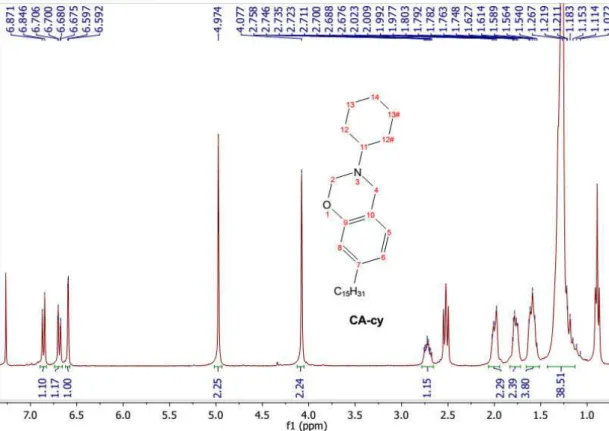
1H NMR (300 MHz, CDCl3) δ 6.86 (d, J = 7.7, 1H), 6.69 (d, J = 7.7 Hz, 1H), 6.59 (s, 1H), 4.98 (s, 2H), 4.08 (s, 2H), 2.72 (m, 1H), 2.52 (t, J = 7.5 Hz, 2H), 1.98 (m, 2H),
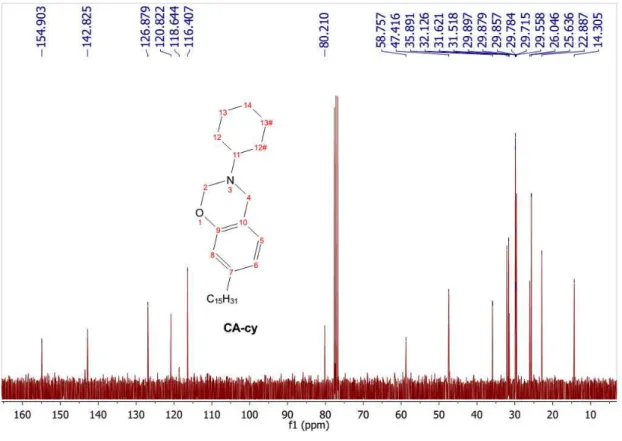
1.78 (m, 2H), 1.59 (m, 3H), 1.27 (s, 30H), 0.89 (t, J = 5.9 Hz, 3H). 13C NMR (75 MHz, CDCl3) δ 154.93, 142.85, 126.90, 120.84, 118.68, 116.43, 80.23, 58.78, 47.44, 35.91, 32.12, 31.64, 31.54, 29.92, 29.90, 29.81, 29.74, 29.58, 26.07, 25.66, 22.91, 14.33. FT-IR (cm-1): 3009, 2956, 2918, 2850, 1620, 1574, 1505, 1470, 1330, 1261, 1242, 1230,
1127, 1113, 1105, 940. m.p.: 45,0 – 46,2 oC. m/z: 428.3887 (M + H)+
3-furfuryl-7-pentadecyl-3,4-dihydro-2H-1,3-benzoxazine (CA-fu)
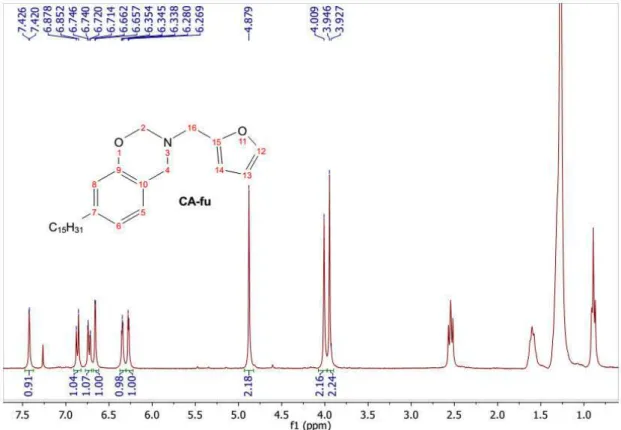
1H NMR (300 MHz, CDCl3) δ 7.42 (d, J = 0.8 Hz, 1H), 6.87(d, J = 7.7, 1H), 6.73 (d, J = 7.6 Hz, 1H), 6.66 (s, 1H), 6.35 (dd, J = 2.6 Hz, J = 1,9 Hz, 1H), 6.28 (d, J = 2.9 Hz,
1H), 4.88 (s, 2H), 4.01 (s, 2H), 3.95 (s, 2H), 2.54 (t, J = 7.6 Hz, 2H), 1.60 (m, 2H), 1.27
(s,25H), 0.89 (t, J = 6.0 Hz, 3H). 13C NMR (75 MHz, CDCl3) δ 153.85, 151.70, 143.31, 142.84, 127.59, 121.38, 116.74, 116.44, 110.43, 109.31, 81.88, 49.63, 48.39, 35.93, 32.16, 31.57, 29.92, 29.89, 29.83, 29.76, 29.59, 29.58, 22.92, 14.34. FT-IR (cm-1):
3024, 2957, 2917, 2849, 1621, 1578, 1506, 1471, 1445, 1247, 1170, 1143, 1128, 1113,1106, 944. m.p.: 78,2 – 81,6 oC. m/z: 426.3368 (M + H)+
3-tetrahydrofurfuryl-7-pentadecyl-3,4-dihydro-2H-1,3-benzoxazine (CA-thf)
1H NMR (300 MHz, CDCl3) δ 6.86 (d, J = 7.5, 1H), 6.69 (d, J = 7.5 Hz, 1H), 6.62 (s, 1H), 4.98 (s, 2H), 4.90 (m, 1H), 4.07 (s, 2H), 3.90 (q, J = 7.0 Hz, 1H), 3.78 (q, J = 7.0
Hz, 1H), 2.91 (dd, J = 13.5 Hz, J = 3.4 Hz, 1H), 2.79 (dd, J = 13.5 Hz, J = 8.0 Hz, 1H),
2.52 (t, J = 7.5 Hz, 2H), 1.97 (m, 2H), 1.88 (m, 2H), 1.59 (m, 2H), 1.27 (s, 25H), 0.89
2914, 2848, 1622, 1577, 1507, 1467, 1329, 1244, 1170, 1133, 1144, 1064, 1031, 940.
4. RESULTS AND DISCUSSION
4.1. Synthesis of cardanol-based benzoxazines
The monomers were obtained under solvent free conditions from saturated cardanol, paraformaldehyde and their respective primary amine as shown on Scheme 1. Due heat and using primary amine as base, the paraformaldehyde decomposes rapidly into formaldehyde. Once this carbonyl compound is available in the reaction media, the oxazine ring on the cardanol is formed through a Mannich-type reaction. For the best of our knowledge, among the synthesized benzoxazines, the ones derived from 4-chloroaniline (CA-ch), tetrahydrofurfurylamine (CA-thf), furfurylamine (CA-fu), and cyclohexylamine (CA-cy) are still unpublished compounds.
For purification of benzoxazines was designed, primarily, the use of column chromatography techniques. 1.53 g of the crude CA-a was purified by gravitational column chromatography using 1.4 L of total solvent mixture in different ratios (hexane / ethyl acetate) to give 0.963 g of CA-a (69%). Looking forward to reduce the use of large amounts of solvents to purify benzoxazines, an eco-friendlier purification method was sought. The recrystallization of benzoxazines proved to be a very effective method (BARROSO et al., 2010; SINI; BIJWE; VARMA, 2014; WANG et al., 2013b). However, as far as we know, it has not been reported recrystallization of cardanol-based benzoxazines. In this work, recrystallizations of these benzoxazines were performed using methanol as solvent.
The purification of the CA-a by recrystallization gave a yield of 61% which is slight lower than that obtained of column chromatography, but, the purity of the recrystallized monomer was higher than the other. This recrystallization showed to be a very efficient way to purify the monomer, since the amount of solvent used was greatly reduced from 1.4 L to approximately 100 mL.
After using the same purification method for the other benzoxazines, it is important to point out that the aliphatic benzoxazines, CA-cy and CA-thf, gave low yields of 41 and 43%. However, other benzoxazines containing aromatic amines, CA-ch and CA-fu, were better recrystallized giving yields of 72 and 74 %, respectively. This higher yield may be due the pi-stacking of the aromatic groups, which leads to better
Scheme 1 - Reaction of cardanol-based benzoxazines
Source: The Author
4.2. Structure characterization of cardanol-based benzoxazines
4.2.1. 1H and 13C Nuclear Magnetic Resonance
Before comparing the 1H and 13C NMR spectra of the five cardanol-based benzoxazines between them, it is necessary to identify first the peaks that are common with each other (Figure 8).
Figure 8 - Main structure of saturated cardanol-based benzoxazine
In the 1H NMR spectra of the benzoxazines, three aromatic protons are quite similar or the same which are protons 8, 6 and 5. Proton 8 appears as a singlet at 6.62 ppm; proton 6 appears as a doublet at 6.69 ppm; and proton 5 appears also as a doublet at 6.86 ppm. The following peaks are attributed to the long alkyl chain of cardanol. The triplet at 2.53 ppm and the multiplet at 1.60 ppm refer to the methylene group attached to the phenolic ring and to the next methylene group, respectively. The terminal methyl group is represented as a triplet at 0.91 ppm and the long singlet at 1.28 ppm is attributed for the other methylene groups of the alkyl chain (LOMONACO et al., 2009). After identifying their similar peaks, two peaks are of most interest when it concerns to characterization of benzoxazines, which represents the two methylene groups of the oxazine ring.
In the 13C NMR spectra of the benzoxazines, there were found similar peaks between them referring to the carbons of the phenolic ring of the monomers. The oxygenated aromatic carbon 9 was found at 154.13 ppm and the C15-alkyl substituted aromatic carbon 7 was attributed at 143.01 ppm. The peaks at 127.47, 120.95, 117.37 and 116.27 ppm are related to carbon 5, 6, 10 and 8. The signals regarding the alkyl chain are found between 36.00 and 13.00 ppm (LOMONACO et al., 2009).
The chemical shifts of the oxazinic methylenes, O-CH2-N and Ar-CH2-C, are found in the 1H NMR in the region of 5.5 to 3.8 ppm and in the 13C NMR in the region of 85 to 49 ppm (ISHIDA; AGAG, 2011).
After understanding the main signals of the 1H NMR and 13C NMR spectra of the cardanol-based benzoxazine, the following interpretation of spectra will be simplified.
3-phenyl-7-pentadecyl-3,4-dihydro-2H-1,3-benzoxazine (CA-a)
In the 1H NMR spectrum (Figure 9) of the CA-a , it was observed the aromatic hydrogen absorption by the following chemical shifts: the doublet of triplet at 7.29 ppm (J = 7.3 Hz, J = 2.0 Hz) is assigned to the hydrogen 13; a doublet of doublet at 7.15
ppm (J = 8.7 Hz, J = 1.1 Hz) represents hydrogen12; the multiplet at 6.96 ppm refers to
hydrogen 14; the doublet at 6.94 ppm (J = 7.9 Hz) refers to hydrogen 5; a doublet of
doublet at 6.75 ppm (J = 7.7 Hz, J = 1.5 Hz) attributed to hydrogen is 6; the doublet at
and 4.63 ppm, which are related to the oxazinic methylenes, O-H2-N and Ar- H2-C, respectively.
Figure 9 - 1H NMR spectrum of CA-a
Source: The Author
Figure 10 - 13C NMR spectrum of CA-a
Source: The Author
3-(4-chlorophenyl)-7-pentadecyl-3,4-dihydro-2H-1,3-benzoxazine (CA-ch)
In the 1H NMR spectrum (Figure 11) of CA-ch, it was observed the aromatic hydrogen absorption by the following chemical shifts: the doublet at 7.23 ppm (J = 9
Hz) refers to hydrogen 13; the doublet at 7.09 ppm (J = 9 Hz) attributed to hydrogen is
12; the absorption of hydrogen 5 was found as a doublet at 6.93 ppm (J = 7.7 Hz); a
doublet of doublet at 6.76 ppm (J = 7.7 Hz, J = 1.4 Hz) is attributed to hydrogen 6; a
Figure 11 - 1H NMR spectrum of CA-ch
Source: The Author
Figure 12 - 13C NMR spectrum of CA-ch
Source: The Author
3-cyclohexyl-7-pentadecyl-3,4-dihydro-2H-1,3-benzoxazine (CA-cy)
In the 1H NMR spectrum (Figure 13) of CA-cy, it was observed the aromatic hydrogen absorption by the following chemical shifts: the doublet at 6.86 ppm (J = 7.7 Hz) refers
to hydrogen 5; the doublet at 6.69 ppm (J = 7.7 Hz) refers to hydrogen 6; singlet at 6.59
Figure 13 - 1H NMR spectrum CA-cy
Source: The Author
Figure 14 - 13C NMR spectrum of CA-cy
Source: The Author
3-furfuryl-7-pentadecyl-3,4-dihydro-2H-1,3-benzoxazine (CA-fu)
In the 1H NMR spectrum (Figure 15) of CA-fu, it was observed the aromatic hydrogen absorption by the following chemical shifts: the doublet at 7:42 ppm (J = 0.8
Hz) refers to protons 12; the doublet at 6.87 ppm (J = 7.7 Hz) refers to proton 5; the
doublet at 6.73 ppm (J = 7.6 Hz) refers to the proton 6; the singlet at 6.66 ppm refers to
the proton 8; the doublet of doublet at 6:35 ppm (J = 2.6 Hz, J = 1.9 Hz) is attributed to
the hydrogen 13 and the doublet at 6.28 ppm (J = 2.9 Hz) refers to hydrogen 14. It was
Figure 15 - 1H NMR spectrum CA-fu
Source: The Author
Figure 16 - 13C NMR spectrum of CA-fu
Source: The Author
3-tetrahydrofurfuryl-7-pentadecyl-3,4-dihydro-2H-1,3-benzoxazine (CA-thf)
In the 1H NMR spectrum (Figure 17) CA-thf, it was possible to observe the aromatic hydrogen absorptions by the following chemical shifts: the doublet at 6.86 ppm (J = 7.5 Hz) refers to the proton 5; the doublet at 6.69 ppm (J = 7.5 Hz) refers to
Figure 17 - 1H NMR spectrum CA-thf
Source: The Author
Figure 18 - 13C NMR spectrum of CA-thf
Source: The Author
The oxazinic methylene groups, O-CH2-N and the Ar-CH2-N, of the cardanol-based benzoxazines were found at around 5,40 to 4,80 (a) and 4,65 to 3,99 ppm (b),
Figure 19 - 1H NMR spectra of the cardanol-based benzoxazines
Source: The Author
Figure 20 - 13C NMR spectrum of the cardanol-based benzoxazines
Source: The Author
4.2.2. Fourier transform infrared spectroscopy (FT-IR)
Another widely used spectral characterization method to study benzoxazines is Fourier transform infrared spectroscopy (FT-IR), being more specific in the fingerprint region. This range is usually of most interest, especially when analysing the polymerization behaviour of the monomers.
relative to the aryl C-Cl bond of CA-ch occurred in 1049 cm-1 (BARANEK et al., 2012; DUNKERS; ISHIDA, 1995; LIU; ISHIDA, 2014; WANG et al., 2014).
Figure 21 - FT-IR spectra of the cardanol-based benzoxazines in fingerprint region.
Table 1 - Summary of the IR vibration modes of the cardanol-based benzoxazines.
CA-a CA-ch CA-cy CA-fu CA-thf Vibrational
mode cm-1 Int. cm-1 Int. cm-1 Int. cm-1 Int. cm-1 Int.
1622 m 1622 w 1620 m 1621 m 1622 m C=C stretching
of benzene ring
1602 m 1597 m
C=C stretching of aniline- derivatives
1576 m 1579 m 1574 m 1578 m 1577 s C=C stretching
of benzene ring
1499 s 1498 s 1505 m 1506 m 1507 m
C=C stretching of tri-substituted aromatic ring
1228 m 1262 s 1242 m 1247 m 1245 s
=C-O-C asymmetric stretching
1049 s C-Cl stretching
1063 s
C-O-C asymmetric stretching
Source: The Author
4.2.3. Mass Spectrometry Analysis
Table 2 - Exact Mass expected and found for of the cardanol-based benzoxazines.
Benzoxazine Molecular Formula
[M+H]+ Expected (amu)
[M+H]+ Found (amu)
CA-a C29H43NO 422.3417 422.3417
CA-ch C29H42ClNO 456.3028 456.3024
CA-cy C29H49NO 428.3887 428.3887
CA-fu C28H43NO2 426.3367 426.3368
CA-thf C28H47NO2 430.3685 430.3683
Source: The Author
4.3. Thermal characterizations of the cardanol-based benzoxazines
4.3.1. Differential Scanning Calorimetry (DSC)
The polymerization behaviour of the monomers was analysed by performing non-isothermal differential scanning calorimetry (DSC) (Figure 22) and their data were summarized on Table 3.
Figure 22 - Non-isothermal DSC curves of the cardanol-based benzoxazines.
Table 3 - Values obtained from the non-isothermal DSC thermograms of the benzoxazines.
Monomer Tm (oC) Te (oC) Tp (oC) ∆H(Jg-1)
CA-a 66.2 260.6 271.6 -90.9
CA-ch 74.9 269.4 282.3 -90.3
CA-cy 49.0 233.7 250.3 -46.2
CA-fu 83.2 236.1 259.3 -40.1
CA-thf 40.5 241.3 259.6 -38.9 Source: The Author
The melting points (Tm) presented by the endothermic events of the benzoxazines containing aromatic amine groups were higher than those containing aliphatic amine groups. This observation is due to the pi-pi interactions of aromatic groups (e.g., parallel
stacking off-centre interactions end-to-face) (MARTINEZ; IVERSON, 2012), which are stronger intermolecular forces than London forces.
of CA-ch, performs an electron withdrawing effect on the nitrogen atom, stabilizing even more the oxazine ring than of the CA-a.
Figure 23 - The anomeric effect on 1,3-oxazine ring
Source: The Author
4.3.2. Thermogravimetric Analysis (TGA)
In order to evaluate if the initial polymerization temperatures were too harsh to obtain the polybenzoxazines as intact as possible (without oxidation of alkyl chains), thermogravimetric analysis (TGA) of the saturated benzoxazines and cardanol were performed (Figure 24).
Figure 24 – TGA curves of saturated benzoxazines and cardanol: TGA (a) and DTGA (b)
In general, three defined events were observed in the thermograms of benzoxazines, being the first the most important.
In the temperature range of 120 to 320 °C, were observed mass losses about 23 to 30% of benzoxazines. These losses may indicate the degradation of the alkyl chains of the monomers, whereas in this same temperature range, cardanol (CA) is totally degraded (Figure 24). The reason why these first degradations of the benzoxazines occurs at higher temperatures than the saturated cardanol may be that, in these conditions, the monomers has already started the ring-opening polymerization to form a network, hindering further breakage of the long alkyl chains.
4.4. Polymerization of cardanol-based benzoxazines with catalysts
The use of catalyst for the polymerization of benzoxazines in lower temperatures has been studied. Caló and co-workers used phosphorus pentachloride (PCl5) to polymerize at room temperature the first reported cardanol-based benzoxazine (CALÒ et al., 2007). Nevertheless, using PCl5 as a catalyst is not easy to handle, as this compound is highly reactive with wet air and/or oxygen, making this catalyst not suitable for large-scale production. Other catalysts, like p-toluenesulfonates and lithium
iodide, have been demonstrated to be very useful to polymerize benzoxazines at lower temperature without concerning about the use of inert atmosphere (LIU et al., 2011; WANG et al., 2013a).
As it was observed from TG analysis, the polymerization of cardanol-based benzoxazines needed to be conducted at lower temperature in order to obtain an intact cardanol moiety in the polymeric structure, in this sense, other catalysts were studied to increase the scope of choice. Using a concentration of 1% mol/mol of catalyst with the benzoxazine, DSC’s were performed to understand the influences of the following polymerization promoters, which were: p-toluenesulfonic acid (p-TsOH), zinc chloride
(ZnCl2) and magnesium chloride (MgCl2).
heat absorption of the C-O bond and the heat release of the C-O cleavage. The catalyst could coordinate with oxygen atom, making the C-O bond more susceptible to be broken by a small amount of heat absorption. Combining the lower heat absorption with the same heat release explains the higher ∆H.
Figure 25 - DSC thermograms of CA-a without and with catalyst (1% mol/mol)
Source: The Author
Table 4 - Values obtained from the non-isothermal DSC thermograms of CA-a without and with catalyst (1% mol/mol)
Monomer Te (oC) Tp (oC) ∆H(Jg-1) no catalyst 260.6 271.6 -90.9
MgCl2 193.1 206.9 -146.1
ZnCl2 207.1 228.7 -112.4
Among these catalysts, it was observed that the most suitable promoter is the cheap, abundant and innocuous MgCl2, since this catalyst provided the highest ∆H with the lowest onset polymerization temperature. Higher concentrations of MgCl2 were studied to analyse if the onset polymerization can be reduced even more. This was not the case as the DSC´s curves of the samples containing 3 and 5% of catalyst (Figure 26) showed that their initial polymerization temperatures and ∆H´s were almost the same as of the sample containing 1% of the catalyst.
Figure 26 - DSC thermograms of CA-a with MgCl2
Source: The Author
Figure 27 - DSC thermograms of cardanol-based benzoxazines with MgCl2 (1% mol/mol)
Source: The Author
Table 5 - Values obtained from the non-isothermal DSC thermograms of benzoxazines with MgCl2 (1% mol/mol)
Monomer Te (oC) Tp (oC) ∆H(Jg-1) CA-a 192,8 207,1 -146,1 CA-ch 202,3 218,2 -163,9 CA-cy 185,6 207,3 -50,6 CA-fu 200,1 222,9 -80,2 CA-thf 217,1 246,3 -48,0
Source: The Author
effective to interact with the oxygen atom of the oxazine ring. This could also explain why the Te of CA-fu was lower than of CA-cy and higher than of CA-thf, since the lone electron pair of the oxygen of the furan group participates in the aromaticity, turning this oxygen less basic. It was also noticed a relaxation process in the range of 230 to 270 oC, right after the polymerization of CA-cy with MgCl
2.
The enthalpy of polymerization (∆H) of these catalysed benzoxazines were overall higher than their blank ones. The ∆H of the aromatic benzoxazines, a, CA-ch and CA-fu, increased by 55.2, 73.6 and 40.1 J/g, respectively. The aliphatic benzoxazines, CA-thf and CA-cy, showed a slightly increase, 9.1 and 4.4 J/g, respectively. This small reduction of the ∆H of CA-cy could be due the heat absorption of the relaxation process.
4.4.1. Isothermal polymerizations of cardanol-based benzoxazines by DSC
Since the onset polymerization temperatures are relatively close, isothermal polymerizations of these catalysed benzoxazines were performed at 150 oC, in order to analyse in details the polymerization behaviour of each monomer by DSC, FT-IR and GPC.
The DSC thermograms of the polymerization study of the cardanol-based benzoxazines are shown on Figure 28 to 32 and their data are summarized in Table 6.
Figure 28 - DSC thermograms of CA-a under different polymerization times
Figure 29 - DSC thermograms of CA-ch under different polymerization times
Source: The Author
Figure 30 - DSC thermograms of CA-cy under different polymerization times
Figure 31 - DSC thermograms of CA-fu under different polymerization times
Source: The Author
Figure 32 - DSC thermograms of CA-thf under different polymerization times
Table 6 - Values obtained from isothermal DSC thermograms of benzoxazines with MgCl2 (1% mol/mol) at 150 oC
Benzoxazine Monomer 1h 3h 5h 7h
Te ∆H Te ∆H Te ∆H Te ∆H Te ∆H
CA-a 193 -146 224 -75 224 -35 230 -5 220 -10
CA-ch 202 -164 230 -62 236 -36 229 -16 231 -13
CA-cy 186 -51 191 -25 --- --- --- --- --- ---
CA-fu 200 -80 214 -60 200 -49 204 -10 204 -5
CA-thf 217 -48 207 -44 200 -36 203 -16 176 -8
Source: The Author
According to the DSC curves of CA-a, as the time increases during the isothermal polymerization of CA-a, it was observed that the Te and the Tp also increased. The displacement of this exothermic event may be due the fact that the first formed oligomers have different heat capacity in relation to the monomers, and furthermore, with the increasing size of the oligomers, the interactions between oxazine units become more difficult, requiring much more energy to polymerize even further. As noted on the polymerization of CA-a, the DSC thermograms of CA-ch also showed the displacement of the exothermic event to higher temperatures. The DSC thermograms of CA-cy didn’t show the displacement of the exothermic event, but demonstrated that at 3 hours the monomer was completely polymerized. The DSC thermograms of CA-fu showed a displacement of Te to higher temperatures after 1 h of heating. But on the other hand, Te of the 3h, 5h and 7h samples were reduced when compared with the 1h sample. This could mean that the first oligomers work as a thermal barrier for the other monomers, but from 3h and beyond the polymerization kinetic remained the same. The DSC thermograms of CA-thf, demonstrated that the exothermic event was generally maintained at the same temperature range as the time increased.
4.4.2. Isothermal polymerizations of cardanol-based benzoxazines by FT-IR
In the spectra of CA-a, the aniline derivative, (Figure 33), the absence of a broad band in the range of 3700 to 3100 cm-1, as the polymerization time increases, indicated that the majority of the oligomers didn’t possess a phenolic structure. The decrease of the band at 1228 cm-1 as the polymerization time increases indicated the partial cleavage of the C-O bond of the oxazine ring. The displacement of the band at 1499 cm-1 to 1488 cm-1 was also observed, indicating the transformation of the trisubstituted to the tetrasubstituted benzene ring as the polymerization time increased. It was also observed the disappearance of the band at 1576 cm-1 and the appearance of a signal at 1563 cm-1, as the polymerization time increased. This displacement may be also related to the transformation of the trisubstituted to the tetrasubstituted ring.
Another interesting observation was the disappearance and the appearance of the bands at 1600 and 1590 cm-1, respectively. According to the Spectral Database for
organic compounds SDBS (NATIONAL INSTITUTE OF ADVANCED INDUSTRIAL
SCIENCE AND TECHNOLOGY, 2015), most of the ortho alkyl-substituted aniline
rings possess a C=C stretching band (e.g. o-ethylaniline, N-ethyl-o-toluidine and N,N
-diethyl-o-toluidine) at around 1580 to 1590 cm-1, while for the para alkyl substituted
aniline rings (e.g. p-toluidine, N,N-diethyl-p-toluidine, N-ethyl-p-toluidine, and N,N
-dimethyl-p-toluidine) it wasn´t found any band or sometimes it was found a very low
intense band at this region. However, in the spectra of o-(phenyliminomethyl)phenol, a
Schiff base analogue of CA-a, there is a very intense band at 1590 cm-1. Thus, as it was mentioned before that the band at 1602 cm-1 indicated the C=C stretching of aniline groups among these benzoxazines, this displacement, from 1600 to 1590 cm-1, could indicate an electrophilic substitution in ortho position of aniline ring. The selectivity for
this position in an electrophilic substitution of aniline is also in line with Hehre and co-workers who demonstrated that, based on STO-3G calculations, the distribution of π -electrons of the orbitals at ortho position is higher than the distribution at para position
(HEHRE; RADOM; POPLE, 1972). In any case, this same displacement can also be attributed to the conversion of CA-a into a Schiff base during the ring-opening polymerization (ROP) mechanism, reducing the C=C bond strength of the aniline group due the increase of its conjugation.
It was also observed the appearance of a band at 1658 cm-1 on the 1h sample and thereafter, which could indicate a C=O stretching of aryl carboxylic acid in ortho
ADVANCED INDUSTRIAL SCIENCE AND TECHNOLOGY, 2015). Due to the intramolecular hydrogen bonding, bands of carbonyl groups in ortho position of phenols
are of lower energy when compared in para position. This suggests that Ar-CH2-N methylenes of some monomers may be susceptible to oxidation. The 3h sample showed also a band at 1671 cm-1, which could be a characteristic of a C=O stretching of aryl aldehyde in ortho position of a phenol, e.g. salicylaldehyde (NATIONAL INSTITUTE
OF ADVANCED INDUSTRIAL SCIENCE AND TECHNOLOGY, 2015). This explains why this band didn’t remain at the 5h and 7h samples, indicating a possible conversion of an aryl aldehyde oxidating to an aryl carboxylic acid. The band at 1658 cm-1 was also observed by Yanfang and co-workers (LIU et al., 2013), but they related this band to the imine group of a Schiff base, which is, most likely, not the case, since no bands are observed in the range of 2700 to 1620 cm-1 on the spectra of o -(phenyliminomethyl)phenol and o-((p-chlorophenylimino)methyl)phenol (LIU et al.,
2012, 2013).
Figure 33 - FT-IR spectra of CA-a with MgCl2 (1% mol/mol) with different polymerization time at 150 oC.
As seen on the polymerization of CA-a, the FT-IR spectra of CA-ch (Figure 34) showed the progress of the polymerization by the cleavage of the oxazine ring observed at 1262 cm-1, and the transformation of the trisubstituted to a tetrasubstituted benzene ring by bands at 1498 cm-1 and 1487 cm-1, respectively. In addition, the C=C aniline-type band at 1597 cm-1 didn’t suffer a displacement, but disappeared as the polymerization time increased. This could indicate that this aniline group didn’t suffer an electrophilic substitution, which is understandable since the chlorine atom at para
position deactivates the benzene ring. Another remark was the disappearance of the band at 1049 cm-1, indicating that the C-Cl bond is being broken as the polymerization time increases. The sample of 5 hours of polymerization and thereafter didn´t show any presence of this bond. Here again, it was observed the oxidation of the Ar-CH2-N methylenes by the appearance of bands at 1658 cm-1 and at 1671 cm-1, in all the polymerized samples (1h-7h). As no bands are visualized at the hydroxyl region even after 7h, the polymer obtained should present a phenoxy structure.
Figure 34 - FT-IR spectra of CA-ch with MgCl2 (1% mol/mol) with different polymerization time at 150 oC.
The complete polymerization of CA-cy was also confirmed on the FT-IR spectra (Figure 35), showing that the sample of 3 hours of polymerization didn’t had any presence of the C-O-C group at 1242 cm-1, and the trisubstituted benzene ring at 1505 cm-1. The disappearance of this band with the appearance of a “shoulder” was also shown on the spectra of the polymerization of benzoxazines containing aliphatic amines of Wang and co-workers, considering it as a tetrasubstituted benzene ring (WANG et al., 2014). It was also noticed that no bands were observed at around 1700 cm-1, which would indicate any evidence of oxidation. This could mean that fast thermal polymerization can prevent oxidation on alkyl and Ar-CH2-N methylene groups. The analysis of the 3h sample showed a broad band at around 3400 cm-1, indicating that, in this case, the phenolic structure of the polymer is formed preferentially.
Figure 35 - FT-IR spectra of CA-cy with MgCl2 (1% mol/mol) with different polymerization time at 150 oC
Even though the DSC confirms that only a little quantity of the CA-fu monomers remained in the 7 h sample, it was observed on the FT-IR spectra (Figure 36), that as the polymerization time increases, the decreasing of the C-O-C group by the band at 1247 cm-1 wasn’t so easy to track. This band is near another one at 1242 cm-1, which remained intact until the 7 h sample, and which could represent the C-O-C group of the furan ring. Unlike the previous benzoxazines containing aromatic amines, the band regarding the trisubstituted benzene ring didn’t disappear. The band at 1506 cm-1 is maintained throughout the polymerization time, which can be assumed that the electrophilic substitution occurred directly on the furan ring instead of the phenolic ring. Since the furfuryl group possesses different conformers, the furan is favoured to suffer electrophilic substitution than the cardanol’s phenolic ring, which is less reactive due the steric hindrance by the long alkyl side-chain. Due the small intensity of the hydroxyl region and the integrity of the tri-substituted band, the polymer can also possess phenoxy structure. The oxidation of the Ar-CH2-N methylenes was also observed from the 1h to the 7h samples by the appearance of a new band at 1658 cm-1.
Figure 36 - FT-IR spectra of CA-fu with MgCl2 (1% mol/mol) with different polymerization time at 150 oC.
In the FT-IR spectra of CA-thf (Figure 37), the decrease of the band at 1245 cm -1 indicated the opening the oxazine ring. The decrease of the band at 1507 cm-1 was observed as the polymerization time increased, meaning that the monomers (trisubstituted benzene rings) are being consumed during this process. The band at 1063 cm-1, which refers to the C-O-C asymmetric stretching of the tetrahydrofuran group, remained during the whole polymerization. A broad band region at around 1700 to 1650 cm-1 indicated different kinds of oxidation reactions occurring during the polymerization of the benzoxazine. Even though that the five benzoxazines were polymerized simultaneously at the same temperature, it was clear that the temperature employed was too harsh to polymerize the monomer. As the onset polymerization temperature of this monomer with catalyst was the highest, the polymerization occurred slower, making this polymer more exposed to oxidation.
Figure 37 - FT-IR spectra of CA-thf with MgCl2 (1% mol/mol) with different polymerization time at 150 oC.
4.4.3. Isothermal polymerizations of cardanol-based benzoxazines by GPC
Since one of the objectives of this work was to evaluate the profile of thermoplastic cardanol-based polybenzoxazines, a gel permeation chromatography analysis was fundamental to know the distribution size/weight of the oligomers obtained.
The molecular weight distributions of the latest polymerized benzoxazines (3 h for CA-cy and 7 h for the rest) were obtained using GPC analysis and their data were summarized on Table 7.
Table 7 - Summary of the values of the GPC analysis of the latest polymerized benzoxazines.
Polymer Polym.
Time (h) �̅n (g/mol) �̅w (g/mol)
PDI
(�̅w/�̅n)
xn xw
Poly(CA-a)
1 1093 1692 1.5 2.6 4.0
3 968 1331 1.4 2.3 3.2
5 1341 4588 3.4 3.2 10.9
7 1404 4041 2.9 3.3 9.6
Poly(CA-ch)
1 985 1352 1.4 2.2 3.0
3 994 1438 1.4 2.2 3.2
5 1498 4508 3.0 3.3 9.9
7 1447 4125 2.9 3.2 9.1
Poly(CA-cy) 1 1260 2053 1.6 2.9 4.8
3 2313 20302 8.8 5.4 47.5
Poly(CA-fu)
1 1059 1511 1.4 2.5 3.6
3 1378 2619 1.9 3.2 6.2
5 2833 11687 4.1 6.7 27.5
7 1770 8185 4.6 4.2 19.2
Poly(CA-thf)
1 811 906 1.1 1.9 2.1
3 1199 2176 1.8 2.8 5.1
5 1468 3163 2.2 3.4 7.4
7 1183 3782 3.2 2.8 8.8
According to the polydispersity indices (PDI), these polymers showed to be very polydispersed. Poly(CA-a), Poly(CA-ch) and Poly(CA-thf) demonstrated to possess similar chain lengths, in which the number-average degree of polymerization (xn)
suggest the formation of trimeric structures, while weight-average (Mw) and degree of
polymerization (xw) indicate the formation of nonomers. But in these parameters, the
influence of high molar mass molecules is higher and the xw values can be
overestimated. To the calculation of �̅n, the influence of each molecule is the same,
independent on it dimension, and the xn is a more representative value. The
number-average molar mass of poly(CA-thf) is slightly lower than �̅n values for poly(CA-a)
and poly(CA-ch). Those three oligomers showed similar polydispersity index. For Poly(CA-fu), the average oligomer molecule is constituted of about four units. Poly(CA-cy) demonstrated a very high PDI with a chain length composed by approximately five monomers. The PDI value of CA-cy is the highest among the benzoxazines, indicating that this polymer is more heterogeneous than the others.
These discrepant molecular weight values of Poly(CA-cy), could be related to the fast polymerization of the monomer (3h), as seen on the DSC thermograms (Figure 13), and also to the absence of oxidative processes, as seen on the FT-IR spectra (Figure 16), making it clear that the low Te under catalysed conditions enabled an effective and mild polymerization of the monomer.
4.4.4. Proposed oligomeric structures
Figure 38 - Proposed structure of Poly(CA-a)
Source: The Author
Figure 39 - Proposed structure of Poly(CA-ch)
Figure 40 - Proposed structure of Poly(CA-cy)
Source: The Author
Figure 41 - Proposed structure of Poly(CA-fu)
Figure 42 - Proposed structure of Poly(CA-thf)