Resistance of Human Spermatozoa to Cryoinjury in Repeated
Cycles of Thaw-Refreezing
Sidney Verza Jr., Cinthia M. Feijo, Sandro C. Esteves
ANDROFERT, Referral Center for Male Reproduction, Campinas, Sao Paulo, Brazil
ABSTRACT
Objective: To study the resistance of human spermatozoa to cryoinjury in repeated cycles of thaw-refreezing by using the fast liquid nitrogen vapor method.
Materials and Methods: Semen specimens were obtained from sixteen normal and oligozoospermic individuals who required disposal at the sperm bank. Five of them had testicular cancer. Specimens were thawed and an aliquot was removed for analysis. The remaining specimens were refrozen without removing the cryomedia. Repeated freeze-thaw cycles were performed until no motile sperm were observed. Sperm motility, number of motile spermatozoa and viability were determined after thawing. Resistance to cryoinjury was compared between groups and also after each refreezing cycle within groups.
Results: Motile spermatozoa were recovered after ive and two refreeze-thawing cycles in normozoospermic and oligo
-zoospermic specimens, respectively. There were no signiicant differences in the recovery of motile spermatozoa between
thaws within each group of normal and oligozoospermic specimens, but percentage motility and total number of motile
spermatozoa were signiicantly lower in the oligozoospermic one. Specimens from men with cancer were exposed to six refreeze-thawing cycles. Although recovery of motile spermatozoa was signiicantly impaired after each thawing, there were no signiicant differences in the recovery of motile sperm between thaws in cancer and non-cancer groups.
Conclusions: Human spermatozoa resist repeated cryopreservation using the fast liquid nitrogen vapor method. Normo-zoospermic specimens withstand refreezing for an average two cycles longer than oligoNormo-zoospermic ones. Specimens from cancer patients seem to resist repeated cryoinjury similarly to non-cancer counterparts. Resistance to repeated cryoinjury was related to the initial semen quality.
Key words: sperm; fertility; cryopreservation; oligozoospermia; cancer Int Braz J Urol. 2009; 35: 581-91
INTRODUCTION
Since the 1960´s, sperm banking has been successfully used to preserve male fertility (1). Efforts have been made to improve cryopreservation of human spermatozoa and to obtain better gametes after thawing. It is well known that the freeze-thawing process affects the fertile potential of human sperm on several aspects. The freeze and thawing process decrease sperm motility
intracytoplasmic sperm injection (ICSI) using both frozen-thawed and fresh motile spermatozoa (10).
Indications for sperm banking have expanded in the recent years, but the group of cancer patients in reproductive age deserves special attention. Che-motherapy and radiation are often gonadotoxic and although fertility restoration occurs in about 50% of cancer survivors, permanent sterility is common (11,12). Therefore, sperm cryopreservation is recom-mended before therapy (13,14). The main concern, however, is that cancer patients are often urged to start treatment and in most individuals only very few specimens preserved.
Even using modern assisted reproductive techniques (ART), pregnancy rates per attempt are below the 50% rate (10,15,16). Then, many couples require multiple ART attempts in order to achieve a live birth. When frozen-thawed sperm are used for ART, one or more vials have to be thawed until an adequate number of viable sperm are obtained. However, ART procedures require very few gametes, especially ICSI, and the remaining ones are left over and ultimately dis-charged. Refreezing thawed specimens would provide additional opportunities for conception in men who have banked a limited number of sperm specimens, such as cancer patients and those who have a small supply of donor semen left from a previous pregnancy and wish to use it for siblings.
The objective of this study was to assess the resistance of human spermatozoa to cryoinjury in repeated cycles of thaw-refreezing.
MATERIALS AND METHODS
Specimens
Frozen semen specimens were obtained from 16 subjects who requested disposal from our sperm bank. We included all eligible patients who requested disposal over a 6-year period. Specimens remained in storage for an average time of 2.3 years (interval: 1-6 years). According to the pre-freeze sperm count at the time of banking, specimens were divided as normozoospermic (≥ 20X106/mL; n = 7) or
oligozoo-spermic (< 20X106/mL; n = 9). Reasons for sperm
banking were: (i) enrollment in our ART egg donation program, in which sperm cryopreservation is manda-tory to facilitate patient treatment synchronization (n = 8); (ii) vasectomy (n = 3), and cancer (n = 5). All cancer patients had testicular malignancies. Two of them have previously had unilateral orchiectomy at the time of banking and were oligozoospermic, while three banked sperm before surgery and were normo-zoospermic. We have also divided the specimens according to the existence of cancer (n = 5) or not (n = 11), in order to compare the resistance of repeated freezing and thawing between them. The study was approved by our Institutional Review Board and in-formed consent was obtained from all subjects.
Cryopreservation and Thawing Procedures
At the time of initial freezing, specimens were collected by masturbation after 2-3 days of ejaculatory abstinence into sterile containers. An aliquot of each liqueied specimen was analyzed according to the WHO guidelines (17). Specimens were cryopreserved by the liquid nitrogen vapor method, using TEST-yolk buffer with glycerol as a freezing media, as previously described (4). In brief, a vial of the freezing agent (TEST-yolk buffer with 12% glycerol, Irvine Scientiic, USA) was thawed by incubation at 37°C. An aliquot of the medium equal to 25% of the original specimen volume was then added to the specimen. The specimen was gently mixed for 5 minutes using an aliquot mixer. This process was repeated until the ratio of freezing me-dium to ejaculate was 1:1 v/v. The mixture was loaded into 1.0-mL cryovials, which were placed at -20°C for 8 minutes and submerged in liquid nitrogen vapor at -79°C for 2 hours. The vials were then plunged into liquid nitrogen for long-term storage at -196°C. For thawing, all cryovials from each subject were removed from liquid nitrogen storage dewars and were thawed at room temperature for 5 minutes. Then, cryovials were transferred to a 37°C incubator for 20 minutes (4).
Assessment of Sperm Parameters
an aliquot was removed for analysis of sperm mo-tility and total number of motile sperm. Recovery percentages of motile spermatozoa were calculated after each thaw as the ratio between post-thaw and pre-freeze percentages of motile sperm X100. If only immotile sperm were seen after thawing, testing for sperm viability was performed using eosin exclusion dye (17).
Refreeze Procedure
After removing an aliquot for analysis, the remaining specimen was refrozen by the same freez-ing method described above, neither removfreez-ing the cryoprotectant used in the original freezing cycle nor adding new one. The specimens were then stored in liquid nitrogen for at least 48 hours and thawed using the method previously described. The thaw-refreeze cycles were repeated until no motile sperm were obtained.
Statistical Analysis
Data are expressed as mean ± SD. The Student’s unpaired t-test was used to analyze statisti-cal differences in pre-freeze sperm parameters and in percentage motility, percentage recovery of motile
sperm and total number of motile spermatozoa in normozoospermic and oligozoospermic groups, and also in cancer and non-cancer specimens after each thaw. The Student’s paired t-test was used to compare percentage motility, percentage recovery of motile sperm and total number of motile spermatozoa before and after each refreezing cycle within groups. Data were tested for homogeneity and normality by the Kolmogorov-Smirnov test. An alpha level of 0.05 or less was considered signiicant. Statistical analysis was performed using the Statistica® software pack-age (USA).
RESULTS
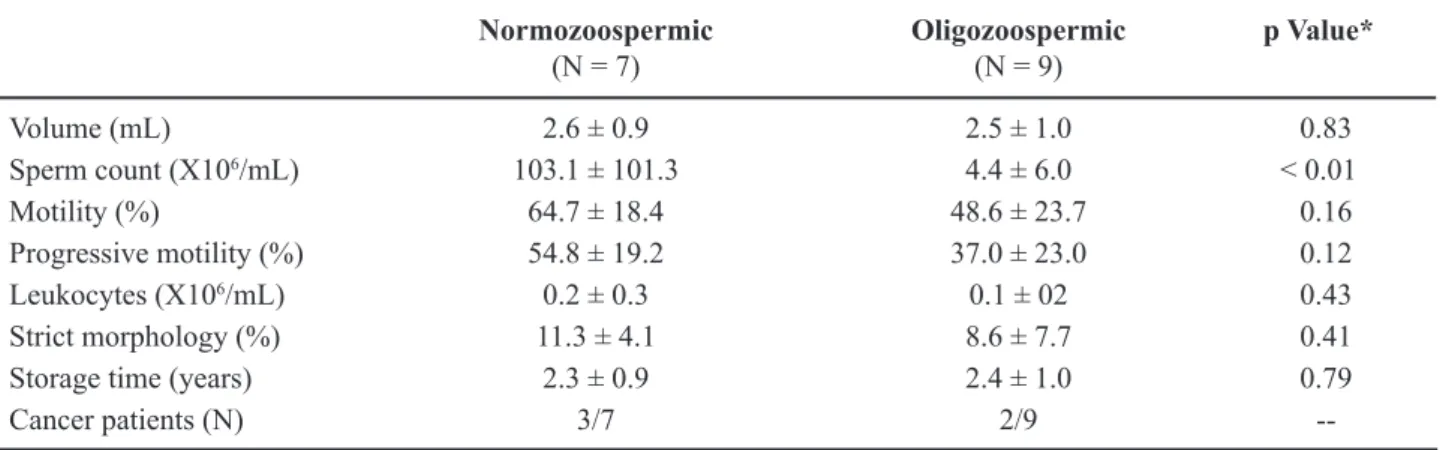
The mean ± SD age of normozoospermic and oligozoospermic individuals were 36.0 ± 8.0 and 29.9 ± 4.2 years, respectively (P = 0.52). The length of time samples remained in storage prior to use was not different between groups (Table-1). Pre-freeze sperm parameters are shown in Table-1. Recovery of motile spermatozoa was observed through 5 and 2 refreeze-thawing cycles in normozoospermic and oligozoospermic specimens, respectively (Table-2). A signiicant decrease in sperm motility and number of total motile spermatozoa was observed after each refreeze-thawing cycle in both normozoospermic and oligozoospermic groups (Table-2, p < 0.05). There
Table 1 – Pre-freeze sperm parameters, length of time samples remained in storage prior to use and number of cancer patients in each group of normozoospermic and oligozoospermic sperm specimens. Values are mean ± SD.
Normozoospermic
(N = 7)
Oligozoospermic
(N = 9)
p Value*
Volume (mL) 2.6 ± 0.9 2.5 ± 1.0 0.83
Sperm count (X106/mL) 103.1 ± 101.3 4.4 ± 6.0 < 0.01
Motility (%) 64.7 ± 18.4 48.6 ± 23.7 0.16
Progressive motility (%) 54.8 ± 19.2 37.0 ± 23.0 0.12
Leukocytes (X106/mL) 0.2 ± 0.3 0.1 ± 02 0.43
Strict morphology (%) 11.3 ± 4.1 8.6 ± 7.7 0.41
Storage time (years) 2.3 ± 0.9 2.4 ± 1.0 0.79
Cancer patients (N) 3/7 2/9
were no signiicant differences in percentage recovery of motile sperm between thaws within each group of normozoospermic and oligozoospermic specimens (Table-2). However, percentage motility, percentage recovery of motile sperm and total number of motile
spermatozoa were signiicantly lower in the oligo -zoospermic group when compared to the normozoo-spermic one (Table-2, p < 0.001). Motile spermatozoa were found in all normozoospermic specimens up to the third refreeze-thawing cycle. Approximately Table 2 – Percentage motility, percentage recovery for motility between thaws and number of total motile sperm after each thaw in both normozoospermic and oligozoospermic groups after repeated thaw-refreezing. Values are mean ± SD.
Normozoospermic
(N = 7)
Oligozoospermic
(N = 9)
p1 Value
1st Thaw
motility (%) 50.6 ± 17.5a 11.9 ± 14.1g < 0.01
recovery (%) 78.0 ± 10.0j 20.7 ± 18.0p < 0.001
motile count (X106) 88.3 ± 27.6s 1.3 ± 2.0α < 0.001
2ndThaw
motility (%) 26.9 ± 16.0b 2.4 ± 4.0h < 0.01
recovery (%) 55.0 ± 23.0k 15.0 ± 17.8q < 0.001
motile count (X106) 50.1 ± 31.6t 0.3 ± 0.6β < 0.001
3rd Thaw
motility (%) 11.4 ± 7.8c 0.4 ± 0.9i 0.01
recovery (%) 47.0 ± 28.0l 11.3 ± 17.5r < 0.001
motile count (X106) 20.8 ± 13.8w 0.1 ± 0.0γ < 0.001
4th Thaw
motility (%) 5.0 ± 6.9d NA
recovery (%) 41.0 ± 34.0m NA
motile count (X106) 8.5 ± 12.2x NA
5th Thaw
motility (%) 3.0 ± 5.0e NA
recovery (%) 48.0 ± 47.0n NA
motile count (X106) 5.3 ± 9.0y NA
6th Thaw
motility (%) 0.6 ± 1.1f NA
recovery (%) 12.0 ± 13.0o NA
motile count (X106) 0.9 ± 2.0z NA
50% and 25% of all normozoospermic specimens had motile sperm after the 4th and 5th refreeze-thawing, respectively. However, only 55% of the specimens had motile spermatozoa after the irst refreeze-thaw -ing cycle in the oligozoospermic group (Table-3). Viable spermatozoa were still detected in 71.4% (5/7) normozoospermic and 22.2% (2/9) oligozoospermic specimens when only immotile gametes were found after thawing (Table-3).
The mean ± SD age of cancer and non-can-cer patients were 26.4 ± 6.0 and 32.7 ± 8.3 years, respectively (p = 0.03). Pre-freeze sperm parameters of cancer and non-cancer specimens were not statis-tically different, except for sperm motility that was higher in the cancer group (62.5 ± 18.4 versus 51.9 ± 21.4, p = 0.04). A signiicant decrease in sperm motil -ity and number of total motile spermatozoa was seen after each refreeze-thawing cycle in both groups, but there were no signiicant differences in percentage recovery of motile sperm between thaws within each group of cancer and non-cancer specimens (Table-4). Moreover, percentage motility, motility recovery and total number of motile spermatozoa were comparable in cancer and non-cancer groups (Table-4). Recovery of motile spermatozoa was seen through six and ive refreeze-thawing cycles in specimens from individuals with and without cancer, respectively (Tables 4 and 5).
COMMENTS
Cryosurvival of human sperm depends mainly on the cryoprotectant, the freezing technique and the initial quality of the specimen. The use of glycerol to prevent injury to human spermatozoa dur-ing cryopreservation is well established (18), and its association with buffers, such as Tris (hydroximethyl amino metano) and TES (n-Tris [hydroximethyl] methyl-2-amino-ethane sulphonic acid), and egg-yolk yield optimal cryosurvival rates (19). Slow freezing using programmable freezing machines or fast freezing, as used in this study, seems to have no direct effect on thaw survival both in normal and poor quality sperm (20). It has been demonstrated that, independently from the freezing technique, motility from poor quality sperm is kept constant during the irst 3 hours after thawing, but it is drastically reduced by the end of an incubation period of 24 hours (20). In this study, we used a rapid vapor freezing method because it is less expensive, time-consuming and labor-intensive, and it has proven equally effective in the recovery of post-thaw motile sperm (20,21).
Studies focusing on the resistance of human spermatozoa to cryoinjury after repeated thaw-re-freezing cycles are scarce. Polcz et al., studying only normozoospermic men, irst demonstrated the ability of human spermatozoa to resist cryoinjury in succes-Table 3 – Frequency of recovery of motile spermatozoa after each thaw in both normozoospermic and oligozoospermic specimens, and percentage of viable spermatozoa after recovery of no motile sperm.
Normozoospermic
(N = 7)
Oligozoospermic
(N = 9)
Specimens with motile sperm after each thaw
1st thaw, N (%) 7/7 (100.0%) 9/9 (100.0%)
2nd thaw, N (%) 7/7 (100.0%) 5/9 (55.5%)
3rd thaw, N (%) 7/7(100.0%) 2/9 (22.2%)
4th thaw, N (%) 7/7 (100.0%) 0/9 (0.0%)
5th thaw, N (%) 4/7 (57.2%) NA
6th thaw, N (%) 2/7 (28.6%) NA
7th thaw, N (%) 0/7 (0.0%) NA
Specimens with viable sperm after recovery of no motile sperm; N (%) 5/7 (71.4) 2/9 (22.2)
sive thaw-refreeze cycles (22). They observed that spermatozoa were able to withstand ive thaw-refreeze cycles and still maintain motility and vitality, although a marked reduction in motility occurred. After the 3rd, 4th and 5th thaw-refreeze cycle, only 3.5%, 1.5% and
1.8% motile sperm were seen, respectively. In another study, it has been shown that spermatozoa could re-sist up to seven cycles thaw-refreeze (23), although a linear decrease of motility per cycle was observed. These authors also compared slow and fast freezing Table 4 – Percentage motility, percentage recovery of motile sperm between thaws and number of total motile sperm after each thaw in both cancer and non-cancer patients after repeated thaw-refreezing. Values are mean ± SD.
Cancer
(N = 5) Non-cancer(N = 11)
p1 Value
1st Thaw
motility (%) 49.0 ± 21.3ª 29.6 ± 21.3g NS
recovery (%) 72.7 ± 27.1l 49.3 ± 41.4r NS
motile count (X106) 17.9 ± 13.01 17.9 ± 29.47 NS
2nd Thaw
motility (%) 24.2 ± 22.0b 11.1 ± 10.9h NS
recovery (%) 45.6 ± 29.7m 36.2 ± 26.5s NS
motile count (X106) 9.6 ± 10.52 9.6 ± 16.38 NS
3rd Thaw
motility (%) 12.0 ± 9.9c 5.2 ± 3.4i NS
recovery (%) 51.0 ± 30.9n 38.9 ± 22.4t NS
motile count (X106) 5.0 ± 4.73 3.7 ± 7.09 NS
4th Thaw
motility (%) 5.8 ± 8.3d 2.1 ± 0.8j NS
recovery (%) 27.3 ± 33.0o 38.4 ± 41.4u NS
motile count (X106) 2.5 ± 3.64 0.6 ± 1.010 NS
5th Thaw
motility (%) 3.6 ± 6.0e 1.3 ± 0.6k NS
recovery (%) 45.6 ± 38.5p 66.7 ± 57.7w NS
motile count (X106) 1.6 ± 1.55 0.3 ± 0.711 0.02
6th Thaw
motility (%) 0.8 ± 1.3f NA
recovery (%) 23.2 ± 22.3q NA
motile count (X106) 0.3 ± 0.36 NA
techniques, and concluded that fast freezing preserved motility for an average of 2.75 cycles more than slow refreezing. However, their study differs from ours because no information was provided regarding the quality of sperm specimens and slow controlled-freez-ing was used for the initial freezcontrolled-freez-ing cycle instead of the fast liquid nitrogen vapor method. Bandularatne & Bongso (21) evaluated the extent of sperm cryoinjury up to three repeated freezing in normozoospermic and oligozoospermic men using both slow and fast freez-ing techniques. They observed a signiicant reduction in the recovery of motile and viable sperm after each thaw independent of the freezing method. Differences in the recovery of motile and viable sperm between oligozoospermic and normozoospermic specimens were not observed (21).
We also evaluated the resistance to cryoinjury in normozoospermic and oligozoospermic sperm samples, as did Bandularatne & Bongso (21), but we performed repeated freeze-thawing until absence of post-thaw motile sperm was seen. We observed that recovery of motile spermatozoa was signii -cantly impaired after each refreeze-thawing cycle, but motile sperm was still found after ive and two refreezing cycles in normozoospermic and oligozoo-spermic groups, respectively. Therefore, sperm from normozoospermic men withstood repeated freezing longer than oligoozoospermic ones. Also, there were significant differences in the recovery of motile
sperm between thaws when normozoospermic and oligozoospermic groups were compared. We foundWe found that the percentage of motile spermatozoa dropped nearly to half after each subsequent freeze-thawing process in normozoospermic specimens, but dropped considerably greater in oligozoospermic ones. A pos-A pos-sible explanation for the different results between Bandularatne and Bongso’s study and ours may be the fact that they used higher glycerol concentra-tion. In a previous report, we have shown that sperm cryosurvival may be optimized when cryomedia containing 15% glycerol was used when compared to the standard 12% (21). In addition, there was a marked difference in the degree of oligozoospermia between studies. Our oligozoospermic group had very low sperm counts (mean count 4.4 million/mL) while theirs had only mild oligozoospermia (mean 15.7 million/mL). Moreover, mean pre-freeze sperm motility was 48.6% in our group when compared to 73.4% in theirs. Given that sperm cryosurvival is partially dependent on the semen quality before freez-ing (13,25,26), we speculate that sperm produced by men with severely defective spermatogenesis is more sensitive to cryoinjury than their normal counterpart is.
Pre-freeze motility of ≥ 15% can predict a post-thaw motility of > 10% with > 75% accuracy (27). Based on these indings, along with the effective -ness of ICSI to achieve successful fertilization with Table 5 – Frequency of recovery of motile spermatozoa after each thaw in specimens from patients with and without cancer, and percentage of viable spermatozoa after recovery of no motile sperm.
Cancer
(N = 5) Non-cancer(N = 11)
Specimens with motile sperm after each thaw
1st thaw, N (%) 5/5 (100.0%) 11/11 (100.0%)
2nd thaw, N (%) 5/5 (100.0%) 7/11 (63.6%)
3rd thaw, N (%) 5/5 (100.0%) 4/11 (36.3%)
4th thaw, N (%) 3/5 (60.0%) 4/11 (36.3%)
5th thaw, N (%) 2/5 (40.0%) 2/11(18.2%)
6th thaw, N (%) 2/5 (40.0%) NA
7th thaw, N (%) NA NA
very few sperm, cryopreservation is recommended even when a limited number of motile sperm is avail-able (27). In our study, post-thaw recovery of motile sperm that would be adequate for ICSI was obtained even with pre-freeze motility < 12%. Interestingly, all normozoospermic specimens with pre-freeze motility > 10% had motile sperm after thawing, and pre-freeze motility of 5% and 3% yielded recovery of motile sperm after thawing in 50% and 25% of the specimens, respectively. Using the same cutoff point of > 10%, only 50% of oligozoospermic specimens had motile sperm after thawing.
From a clinical standpoint, it would be ideal to compare the results of normal and abnor-mal samples from men with and without cancer to determine whether cancer patients do indeed fare worse than normozoospermic/oligozoospermic non-cancer patients do. Although our sample size did not allow such comparisons, we have grouped all cancer and non-cancer patients and compared the resistance to repeat freeze-thawing. We found that semen specimens from men with cancer withstood repeated cryoinjury similarly to their counterparts without cancer. Although the recovery of motile spermatozoa was signiicantly impaired after each refreeze-thawing cycle, there were no signiicant differences in the recovery of motile sperm between thaws when cancer and non-cancer groups were compared. From our data, it seems that the resistance for repeated cryoinjury is related to the initial semen quality before cryopreservation. However, these results should be interpreted with caution because our cancer population consisted of only ive men, and three of them had very good quality semen at the time of banking.
Although it is clear from this study and oth-ers that human sperm can resist repeated freezing, the fertilizing ability of such gametes to produce a viable and healthy offspring has not yet been prop-erly addressed. To date, function of refrozen and thawed human spermatozoa has been assessed only by microinjection into zona-intact hamster oocytes (Hamster Intracytoplasmic Sperm Injection test [HICSI test]) (21). Similar fertilization rates were obtained up to the third refreezing cycle when re-frozen and fresh spermatozoa were compared (22.2% versus 27.3%, respectively) (21). HICSI assay seems
to be a reliable indicator for fertilization, but it is not appropriate to predict the occurrence of a vi-able pregnancy (28). It has been demonstrated that the cryopreservation process induces DNA damage, and that DNA fragmentation is higher in poor qual-ity specimens, such as from oligozoospermic men, when compared to normal ones (7). Oocyte ability to repair double-strand sperm DNA fragmentation is limited, and this type of fragmentation may lead to genomic mutation with consequent embryo altera-tion. A recent study has shown a signiicant increase in the percentage of spermatozoa exhibiting DNA fragmentation following the irst cycle of refreezing and thawing (29). This study examined the resistance of human sperm up to three refreezing cycles using a slow controlled rate method, and concluded that up to three refreezing cycles can be performed with a level of risk to sperm DNA comparable to that following a single cycle of freezing and thawing, provided that samples are refrozen in their original cryoprotectant and not washed. Therefore, great caution is needed if ICSI is to be performed with thaw-refrozen sperm, and the safety of this procedure has to be extensively studied.
the cryoprotectant plays no role in the generation of DNA damage during cryopreservation. On the other hand, the washing steps, which involve dilution and centrifugation, subject the already compromisedalready compromised thawed spermatozoa to many cycles of osmotic shockto many cycles of osmotic shock that may cause mechanical damage to cellular struc-tures and possibly to the DNA molecule (27,29,30). The observed increase in the level of sperm DNA damage and decrease in motility and viability after the freeze-thawing process may be due to a combination of factors, such as the oxidative stress generated via lipid peroxidation, the depletion of protective seminal and spermatozoa antioxidants or the process of cryo-preservation itself (27). Removal of seminal luid via washing steps following the freeze-thawing process may thus deplete protective seminal antioxidants and increase the susceptibility of spermatozoa to oxidative stress.
CONCLUSION
Human spermatozoa can resist cryoinjury after repeated cycles of cryopreservation using the fast vapor freezing method. Normozoospermic specimens withstand refreezing for an average 2 cycles longer than oligozoospermic ones. Specimens from cancer patients seem to resist repeated cryoinjury similarly to non-cancer counterparts. Sperm ability to resist injury due to the thawing-refreeze process appears to be related to the initial semen quality. Due to the low number of motile sperm and reduced post-thaw mo-tility, gametes that survived repeated freezing would be suitable for intracytoplasmic sperm injection only. Refreezing leftover frozen-thawed specimens may be recommended for patients who were not able to freeze multiple specimens, such as cancer patients and those individuals who have limited supply of donor semenwho have limited supply of donor semen left from a previous pregnancy and wish to use it for siblings. Further studies are required to assess theFurther studies are required to assess the fertility potential and safety of the use of refrozen human semen for assisted reproduction.
ACkNOwLEDgEMENT
Mrs. Fabiola Bento edited the manuscript.
CONFLICT OF INTEREST
None declared.
REFERENCES
1. Sherman JK: Low temperature research on
spermato-zoa and eggs. Cryobiology. 1964; 1: 103-29.
2. Centola GM, Raubertas RF, Mattox JH: Cryopreserva -tion of human semen. Comparison of cryopreserva-tives, sources of variability, and prediction of post-thaw survival. J Androl. 1992; 13: 283-8.
3. Fjällbrant B, Ackerman DR: Cervical mucus pen-etration in vitro by fresh and frozen-preserved hu-man semen specimens. J Reprod Fertil. 1969; 20:
515-7.
4. Esteves SC, Sharma RK, Thomas AJ Jr, Agarwal A:
Suitability of the hypo-osmotic swelling test for as-sessing the viability of cryopreserved sperm. Fertil
Steril. 1996; 66: 798-804.
5. Esteves SC, Sharma RK, Thomas AJ Jr, Agarwal A. Evaluation of acrosomal status and sperm viability in fresh and cryopreserved specimens by the use of luorescent peanut agglutinin lectin in conjunction with hypo-osmotic swelling test. Int Braz J Urol. 2007; 33: 364-74.
6. Cross NL, Hanks SE: Effects of cryopreservation on human sperm acrosomes. Hum Reprod. 1991; 6: 1279-83.
7. de Paula TS, Bertolla RP, Spaine DM, Cunha MA, Schor N, Cedenho AP: Effect of cryopreservation on
sperm apoptotic deoxyribonucleic acid fragmentation in patients with oligozoospermia. Fertil Steril. 2006;
86: 597-600.
8. Peterson EP, Alexander NJ, Moghissi KS: A.I.D. and AIDS--too close for comfort. Fertil Steril. 1988; 49:
209-10.
9. Szczygiel MA, Kusakabe H, Yanagimachi R,
Whit-tingham DG: Intracytoplasmic sperm injection is more eficient than in vitro fertilization for generating
mouse embryos from cryopreserved spermatozoa. Biol
Reprod. 2002; 67: 1278-84.
10. Kuczynski W, Dhont M, Grygoruk C, Grochowski
D, Wolczynski S, Szamatowicz M: The outcome of intracytoplasmic injection of fresh and cryopreserved ejaculated spermatozoa--a prospective randomized study. Hum Reprod. 2001; 16: 2109-13.
cryopreservation for patients with malignant disease in a tertiary infertility centre: lessons from 8 years’
experience. Hum Reprod. 1998; 13: 3256-61. 12. Naysmith TE, Blake DA, Harvey VJ, Johnson NP: Do
men undergoing sterilizing cancer treatments have a
fertile future? Hum Reprod. 1998; 13: 3250-5. 13. Hallak J, Kolettis PN, Sekhon VS, Thomas AJ Jr,
Agarwal A: Cryopreservation of sperm from patients with leukemia: is it worth the effort? Cancer. 1999;
85: 1973-8.
14. Agarwal A, Ranganathan P, Kattal N, Pasqualotto
F, Hallak J, Khayal S, et al.: Fertility after cancer: a prospective review of assisted reproductive outcome
with banked semen specimens. Fertil Steril. 2004; 81: 342-8.
15. Esteves SC, Schneider DT, Verza S Jr. Inluence of antisperm antibodies in the semen on intracytoplasmic sperm injection outcome. Int Braz J Urol. 2007; 33: 795-802.
16. Verza Jr S, Esteves SC: Sperm defect severity rather than sperm source is associated with lower fertilization rates after intracytoplasmic sperm injection. Int Braz J Urol. 2008; 34: 49-56.
17. World Health Organization (WHO): Laboratory Manual for the examination of human semen and
sperm-cervical mucus interaction. 4th ed., Cambridge, Cambridge University Press. 1999; pp. 68-70. 18. Hammitt DG, Walker DL, Williamson RA: Concentra
-tion of glycerol required for optimal survival and in vitro fertilizing capacity of frozen sperm is dependent
on cryopreservation medium. Fertil Steril. 1988; 49:
680-7.
19. Hallak J, Sharma RK, Wellstead C, Agarwal A: Cryo-preservation of human spermatozoa: comparison of TEST-yolk buffer and glycerol. Int J Fertil Womens
Med. 2000; 45: 38-42.
20. Esteves SC, Spaine DM, Cedenho AP, Srougi M:
Effects of the technique of cryopreservation and dilu-tion/centrifugation after thawing on the motility and vitality of spermatozoa from oligozoospermic men Int
Braz J Urol. 2003; 29: 133-140.
21. Bandularatne E, Bongso A: Evaluation of human sperm function after repeated freezing and thawing. J Androl.
2002; 23: 242-9.
22. Polcz TE, Stronk J, Xiong C, Jones EE, Olive DL, Huszar G: Optimal utilization of cryopreserved hu -man semen for assisted reproduction: recovery and maintenance of sperm motility and viability. J Assist
Reprod Genet. 1998; 15: 504-12.
23. Rofeim O, Brown TA, Gilbert BR: Effects of serial
thaw-refreeze cycles on human sperm motility and
viability. Fertil Steril. 2001; 75: 1242-3.
24. Verza Jr. S, Feijo CM, Schneider DT, Esteves SC:
Human cryopreservation: Comparison of three cryo-protectant solutions. Fertil Magazine. 2007; 7: 26-8.
25. Esteves SC, Spaine DM, Cedenho AP: Effects of
pentoxifylline treatment before freezing on motility, viability and acrosome status of poor quality human spermatozoa cryopreserved by the liquid nitrogen
va-por method. Braz J Med Biol Res. 2007; 40: 985-92.
26. Donnelly ET, McClure N, Lewis SE: Cryopreserva-tion of human semen and prepared sperm: effects on motility parameters and DNA integrity. Fertil Steril. 2001; 76: 892-900.
27. Padron OF, Sharma RK, Thomas AJ Jr, Agarwal A:
Effects of cancer on spermatozoa quality after cryo-preservation: a 12-year experience. Fertil Steril. 1997; 67: 326-31.
28. Gvakharia MO, Lipshultz LI, Lamb DJ: Human sperm
microinjection into hamster oocytes: a new tool for
training and evaluation of the technical proiciency of
intracytoplasmic sperm injection. Fertil Steril. 2000;
73: 395-401.
29. Thomson LK, Fleming SD, Barone K, Zieschang JA, Clark AM: The effect of repeated freezing and thaw-ing on human sperm DNA fragmentation. Fertil Steril. 2009 [Epub ahead of print].
30. Thomson LK, Fleming SD, Schulke L, Barone K, Zie-schang JA, Clark AM: The DNA integrity of cryopreserved spermatozoa separated for use in assisted reproductive technology is unaffected by the type of cryoprotectant used but is related to the DNA integrity of the fresh separated preparation. Fertil Steril. 2009; 92:991-1001.
Correspondence address:
Dr. Sandro C. Esteves
Av. Dr. Heitor Penteado, 1464 Campinas, SP, 13075-460, Brazil Fax: + 55 19 3294-6992
E-mail: [email protected]
EDITORIAL COMMENT
This is an interesting study with the most signiicant inding being that spermatozoa from can -cer patients is capable of withstanding 6 freeze-thaw cycles using the fast liquid nitrogen vapor method. This is important for those cancer patients who are only able to freeze a small amount of semen prior to undergoing treatment, providing more hope for fathering children in their future. The authors also report that the spermatozoa from oligozoospermic
men is capable of withstanding signiicantly fewer freeze-thaw cycles than normozoospermic men and conclude that repeated freezing and thawing is a feasible practice using their method of freezing and that the resistance to cryoinjury is related to the initial semen quality. The main limitation of this study is the relatively low sample size studied and further studies involving cancer patients are needed to conirm these promising results.