Article
ISSN 0102-695X
doi: 10.1590/S0102-695X2011005000064 Received 23 Dec 2010
Accepted 22 Jan 2011 Available online 20 Apr 2011
secondary metabolites and their biological
activities related to human health of the
Laurencia complex (Ceramiales, Rhodophyta)
from Brazil
Mutue T. Fujii,
*,1Valéria Cassano,
2Érika M. Stein,
3Luciana R.
Carvalho
11Núcleo de Pesquisa em Ficologia, Instituto de Botânica, Brazil, 2Departamento de Botânica, Universidade de São Paulo, Brazil,
3Programa de Pós-graduação, Departamento de Botânica, Universidade de São Paulo, Brazil.
Abstract: In Brazil, the Laurencia complex is represented by twenty taxa: Laurencia s.s. with twelve species, Palisada with four species (including Chondrophycus furcatus now that the proposal of its transference to Palisada is in process), and Osmundea and Yuzurua with two species each. The majority of the Brazilian species of the Laurencia complex have been phylogenetically analyzed by 54 rbcL sequences, including five other Rhodomelacean species as outgroups. The analysis showed that the Laurencia complex is monophyletic with high posterior probability value. The complex was separated into five clades, corresponding to the genera: Chondrophycus, Laurencia, Osmundea, Palisada, and Yuzurua. A bibliographical survey of the terpenoids produced by Brazilian species showed that only six species of Laurencia and five of Palisada (including C. furcatcus) have been submitted to chemical analysis with 48 terpenoids (47 sesquiterpenes and one triterpene) isolated. No diterpenes were found. Of the total, 23 sesquiterpenes belong to the bisabolane class and eighteen to the chamigrene type, whose biochemical precursor is bisabolane, two are derived from lauranes and four are triquinols. Despite the considerable number of known terpenes and their ecological and pharmacological importance, few experimental biological studies have been performed. In this review, only bioactivities related to human health were considered.
Keywords: biodiversity biological activities Laurencia complex seaweeds
taxonomy terpenoids
Introduction
The red algae of the
Laurencia
complex
comprehend 430 species (and infraspecific taxa) listed in
the database at present, of which 134 have been flagged
as currently accepted taxonomically. They are reported
worldwide from the temperate to tropical shores of the
world, occurring from the intertidal to the subtidal zone
up to 65 m in depth (Guiry & Guiry, 2010).
Laurencia
sensu lato
is an extremely rich source of halogenated
secondary metabolites with diverse structural features
(Fenical, 1975; Erickson, 1983) that can be divided
into two groups according to their biogenetic origin.
The first one is the nonterpenoid group, which contains
the acetogenins derived from the metabolism of fatty
acids. The other one is the terpenoid group, in which
the sesquiterpenes are the most abundant, but also
containing diterpenes and triterpenes (Fernández et al.,
2005).
The taxonomy of the
Laurencia
complex
has undergone several changes based on the use of
new vegetative morpho-anatomical and reproductive
features, cladistic analyses of morphological characters
and molecular approaches based on the plastidial
rbc
L
gene (Nam et al., 1994; Garbary & Harper, 1998; Nam,
1999, 2006, 2007; Martin-Lescanne et al., 2010). These
changes include the resurrection of the genus
Osmundea
Stackhouse (Nam et al., 1994), the elevation of the
subgenus
Chondrophycus
Tokida & Saito (in Saito,
1967) to the generic rank (Garbary & Harper, 1998),
the new delineations of the genera
Chondrophycus
,
Laurencia
and
Osmundea
(Nam, 1999), the definition
of the proposal of the genus
Palisada
(Yamada) K.W.
Nam based on Yamada’s (1931) section
Palisadae
Martin-Lescanne based on Nam’s (1999) subgenus
Yuzurua
(Martin-Lescanne et al., 2010). Thus, five
genera are currently assigned to the
Laurencia
complex:
Laurencia
J.V. Lamouroux itself,
Osmundea,
Chondrophycus, Palisada
and
Yuzurua
. Several
morpho-anatomical and reproductive characters used
in the taxonomy of the complex have been shown to
have diagnostic value at the generic level only (Saito,
1967; Nam et al., 1994; Garbary & Harper, 1998; Nam,
1999, 2006). Many species have no defined taxonomic
boundaries and present extensive morphological
plasticity, making their taxonomic delimitation difficult.
In this context, the use of molecular markers has proven
to be useful for delimiting the taxa and inferring their
phylogenetic relationships and has corroborated the
current classification system (Nam et al., 2000; McIvor
et al., 2002; Abe et al., 2006; Fujii et al., 2006;
Díaz-Larrea et al., 2007; Cassano et al., 2009; Gil-Rodríguez
et al., 2009; Martin-Lescanne et al., 2010; Rocha-Jorge
et al., 2010).
The genera are distinguished by a combination
of both vegetative and reproductive characteristics:
number of pericentral cells per vegetative axis, position
of the first pericentral cell relative to the trichoblast,
origin of the tetrasporangia, absence or presence of
fertility of the second pericentral cell, number of sterile
pericentral cells in the tetrasporangial axis, origin of
the spermatangial branches, formation pattern of the
spermatangial branches on trichoblasts, the number of
pericentral cells in procarp-bearing segments of female
trichoblasts, and probably post-fertilization features
associated with the formation time of the auxiliary
cell. Many of these characters overlap among the
genera. Effectively, the genus
Laurencia
is distinct from
the other four genera by the presence of four pericentral
cells per axial segment; two pericentral cells occur in
Osmundea, Chondrophycus, Palisada
and
Yuzurua
(Nam
et al., 1994; Garbary & Harper, 1998; Nam, 1999, 2006;
Martin-Lescanne et al., 2010). The genus
Osmundea
is
distinct from the other genera by the tetrasporangial
production from random cortical cells rather than from
particular pericentral cells and filament-type rather than
trichoblast-type spermatangial development (Nam et
al., 1994). The genus
Chondrophycus
is characterized
by spermatangial branches produced from two laterals
on the suprabasal cell of trichoblasts, but remaining
partly sterile, and a tetrasporangial axis with the first
and second pericentral cells never fertile (Nam, 1999).
In the genus
Palisada
, the spermatangial branches are
produced from one of two laterals on the suprabasal
cells of trichoblasts and the second pericentral cell in
the tetrasporangial axis is always fertile; the resulting
axis has one sterile pericentral cell (Nam, 2006). The
genus
Yuzurua
shares the majority of the morphological
characters of
Palisada
, from which it was recently
segregated, but differs by not having palisade-like cells,
by the presence of secondary pit-connections between
cortical cells, and by procarp-bearing segments with
five pericentral cells rather than four (Fujii et al.,
1996).
The species of the
Laurencia
complex are
widely distributed along the Brazilian coast from Ceará
(Pinheiro-Joventino et al., 1998) to Rio Grande do Sul
(Baptista, 1977), growing in different types of habitats
(Fujii & Sentíes, 2005) and constituting an important
element of Brazilian phycological flora (Oliveira Filho,
1977).
The members of this complex, in particular
and their biological activities of relevance to human
health.
Materials and Methods
The present work is a compilation of the data
on the
Laurencia
complex from Brazil, including the
current results on the taxonomy and phylogeny of
the group, secondary metabolites and their biological
activities related to human health.
We performed a phylogenetic analysis using
54
rbc
L sequences, with seventeen samples from Brazil
(Table 1). Multiple alignments for sequences were
constructed using the computer program BioEdit 7.0.4.1
(Hall, 1999). A total of 250 nucleotides were removed
from all
rbc
L sequences at the beginning and end of the
sequences because many sequences from the GenBank
were incomplete, producing a data set of 1217 base
pairs. Phylogenetic relationships were inferred with
MrBayes v.3.0 beta 4 (Huelsenbeck & Ronquist, 2001).
The model used in the Bayesian analysis was selected
based on maximum likelihood ratio tests implemented
by the software Modeltest version 3.06 (Posada &
Crandall, 1998) with a significance level of 0.01 by the
Akaike information criterion. For the Bayesian analysis,
four chains of the Markov chain Monte Carlo (one hot
and three cold) were used, sampling one tree every ten
generations for 1,000,000 generations starting with a
random tree. The 50,000 generations were discarded
as ‘burn in’. The model used in the Bayesian analysis
for
rbc
L sequences was the general-time-reversible
model of nucleotide substitution with invariant sites
and gamma distributed rates for the variable sites
(GTR+I+G).
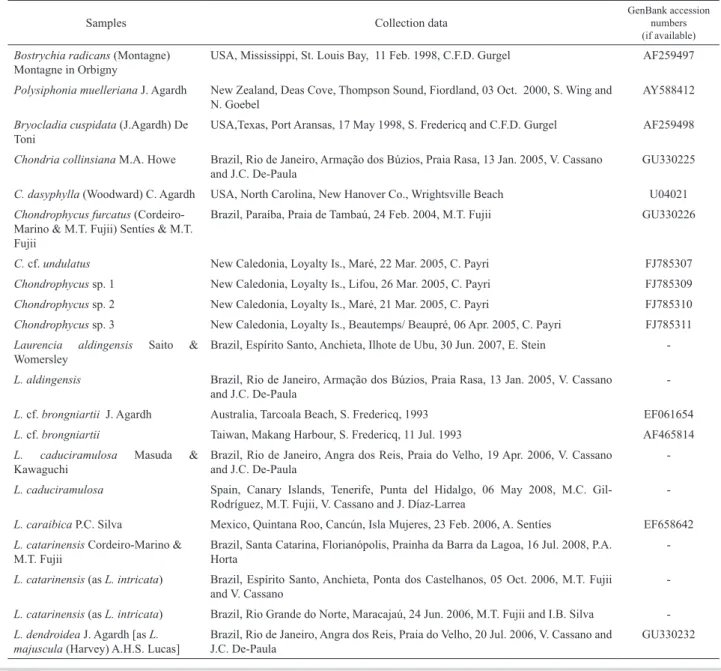
Table 1. Taxa used in this study for phylogenetic analysis.
Samples Collection data
GenBank accession numbers (if available) Bostrychia radicans (Montagne)
Montagne in Orbigny
USA, Mississippi, St. Louis Bay, 11 Feb. 1998, C.F.D. Gurgel AF259497
Polysiphonia muelleriana J. Agardh New Zealand, Deas Cove, Thompson Sound, Fiordland, 03 Oct. 2000, S. Wing and N. Goebel
AY588412
Bryocladia cuspidata (J.Agardh) De Toni
USA,Texas, Port Aransas, 17 May 1998, S. Fredericq and C.F.D. Gurgel AF259498
Chondria collinsiana M.A. Howe Brazil, Rio de Janeiro, Armação dos Búzios, Praia Rasa, 13 Jan. 2005, V. Cassano and J.C. De-Paula
GU330225
C. dasyphylla (Woodward) C. Agardh USA, North Carolina, New Hanover Co., Wrightsville Beach U04021
Chondrophycus furcatus (Cordeiro-Marino & M.T. Fujii) Sentíes & M.T. Fujii
Brazil, Paraíba, Praia de Tambaú, 24 Feb. 2004, M.T. Fujii GU330226
C. cf. undulatus New Caledonia, Loyalty Is., Maré, 22 Mar. 2005, C. Payri FJ785307
Chondrophycus sp. 1 New Caledonia, Loyalty Is., Lifou, 26 Mar. 2005, C. Payri FJ785309
Chondrophycus sp. 2 New Caledonia, Loyalty Is., Maré, 21 Mar. 2005, C. Payri FJ785310
Chondrophycus sp. 3 New Caledonia, Loyalty Is., Beautemps/ Beaupré, 06 Apr. 2005, C. Payri FJ785311
Laurencia aldingensis Saito & Womersley
Brazil, Espírito Santo, Anchieta, Ilhote de Ubu, 30 Jun. 2007, E. Stein
-L. aldingensis Brazil, Rio de Janeiro, Armação dos Búzios, Praia Rasa, 13 Jan. 2005, V. Cassano and J.C. De-Paula
-L. cf. brongniartii J. Agardh Australia, Tarcoala Beach, S. Fredericq, 1993 EF061654
L. cf. brongniartii Taiwan, Makang Harbour, S. Fredericq, 11 Jul. 1993 AF465814
L. caduciramulosa Masuda & Kawaguchi
Brazil, Rio de Janeiro, Angra dos Reis, Praia do Velho, 19 Apr. 2006, V. Cassano and J.C. De-Paula
-L. caduciramulosa Spain, Canary Islands, Tenerife, Punta del Hidalgo, 06 May 2008, M.C. Gil-Rodríguez, M.T. Fujii, V. Cassano and J. Díaz-Larrea
-L. caraibica P.C. Silva Mexico, Quintana Roo, Cancún, Isla Mujeres, 23 Feb. 2006, A. Sentíes EF658642
L. catarinensis Cordeiro-Marino & M.T. Fujii
Brazil, Santa Catarina, Florianópolis, Prainha da Barra da Lagoa, 16 Jul. 2008, P.A. Horta
-L. catarinensis (as -L. intricata) Brazil, Espírito Santo, Anchieta, Ponta dos Castelhanos, 05 Oct. 2006, M.T. Fujii and V. Cassano
-L. catarinensis (as -L. intricata) Brazil, Rio Grande do Norte, Maracajaú, 24 Jun. 2006, M.T. Fujii and I.B. Silva
-L. dendroidea J. Agardh [as -L. majuscula (Harvey) A.H.S. Lucas]
Brazil, Rio de Janeiro, Angra dos Reis, Praia do Velho, 20 Jul. 2006, V. Cassano and J.C. De-Paula
L. dendroidea (as L. arbuscula) Brazil, São Paulo, Ubatuba, Praia do Felix, 31 Aug. 2000, M.T. Fujii AF465810
L. dendroidea (as L. majuscula) Spain, Canary Islands, Tenerife, Puerto de la Cruz, 13 Jul. 2006, M.C. Gil-Rodríguez, M.T. Fujii and A. Sentíes
EF686000
L. lexuosa Kützing South Africa, S. KwaZulu-Natal, Palm Beach, 07 Feb. 2001, S. Fredericq AF465815 L. intricata J.V. Lamouroux Mexico, Yucatan, Campeche Bay, 14 Feb. 1999, C.F.D. Gurgel AF465809
L. intricata USA, Florida, Long Key, Channel 5, 10 Dec. 1998, B. Wysor and T. Frankovich AY588410
L. intricata Cuba, Ciego de Ávila, Cayo Coco, 25 Sep. 2005, M.T. Fujii GU330238
L. marilzae Gil-Rodríguez, Sentíes, Díaz-Larrea, Cassano & M.T. Fujii
Spain, Canary Islands, Tenerife, Punta del Hidalgo, M.C. Gil-Rodríguez, 12 Jul. 2006
EF686002
L. marilzae Brazil, São Paulo, Laje de Santos Marine State Park, Parcel do Sul, 25 Mar. 2007, R. Rocha-Jorge
GU938189
L. obtusa (Hudson) J.V. Lamouroux Ireland, County Donegal, Fanad Head, 06 Jul. 1998, C.A. Maggs AF281881
L. oliveirana Yoneshigue Brazil, Rio de Janeiro, Arraial do Cabo, Ponta da Cabeça, 07 Jul. 2008, V. Cassano and J.C. De-Paula
-L. translucida M.T. Fujii & Cordeiro-Marino
Brazil, Espírito Santo, Marataízes, 15 Sep. 2001, M.T. Fujii AY588408
L. venusta Yamada Mexico, Quintana Roo, Puerto Morelos, Punta Brava, J. D. Larrea and A. Sentíes, 18.04.2004
EF061655
L. viridis Gil-Rodríguez & Haroun Spain, Canary Islands, Tenerife, Punta del Hidalgo, Roca Negra, 06 Oct. 2005, M.C. Gil-Rodríguez
EF685999
Laurencia sp. 1 Brazil, Rio de Janeiro, Armação dos Búzios, Praia Rasa, 13 Jan. 2005, V. Cassano and J.C. De-Paula
-Osmundea blinksii (Hollenberg & Abbott) K.W. Nam
USA, California, San Mateo Co., Año Nuevo, Greyhound Rock, 17 Jul. 1996, M.H. Hommersand
AY172575
O. oederi (Gunnerus) G. Furnari [as O. ramosissima (Oeder) Athanasiadis]
Ireland, Co. Donegal, St. John´s Point, 12 Oct. 1999, C.A. Maggs AF281880
O. osmunda (S.G. Gmelin) K.W. Nam Ireland, County Donegal, St. John´s Point, 12 Oct. 1999, C.A. Maggs AF281877
O. pinnatiida France, Brittany, Penmarch AF259495
O. sinicola (Setchell & Gardner) K.W. Nam
USA, California, Orange Co., Crescent Beach, 28 May 2002, S. Murray AY588407
O. spectabilis (Postels & Ruprecht) K.W. Nam var. spectabilis
Mexico, Baja California, Punta Santo Thomas, 2 Jul. 1996, M.H. Hommersand AY172574
O. splendens (Hollenberg) K.W. Nam Mexico, Baja California, Bahia Colnett, Drift, 2 Jul. 1996, M.H. Hommersand and J. Hughey
AY172576
O. truncata (Kützing) K.W. Nam & Maggs
Ireland, Lough Hyne, Co. Cork, 11 Nov. 1999, C.A. Maggs AF281879
Palisada corallopsis (Montagne) Sentíes, M.T. Fujii & Díaz-Larrea
Mexico, Quintana Roo, Cancún, Chaac-Mol Beach, 21 Aug. 2005, J. Díaz-Larrea and A. Sentíes
EF061646
P. lagellifera (J. Agardh) K.W. Nam Brazil, Rio de Janeiro, Rio das Ostras, Areias Negras, 03 Aug. 2005, V. Cassano and M.B. Barros-Barreto
GU330221
P. patentiramea (Montagne) Cassano, Sentíes, Gil-Rodríguez & M.T. Fujii
Philippines AF489862
P. perforata (Bory) K.W. Nam Brazil, Rio de Janeiro, Parati, Praia Vermelha, 30 Dec. 2005, V. Cassano EU256331
P. perforata Brazil, Rio de Janeiro, Areias Negras, Rio das Ostras, 03 Aug. 2005, V. Cassano and M.B. Barros-Barreto
EU256330
Palisada cf. robusta New Caledonia, Lifou, 23 Mar. 2005, C. Payri FJ785321
P. thuyoides (Kützing) Cassano, Sentíes, Gil-Rodríguez & M.T. Fujii
Philippines AF489863
Yuzurua poiteaui (J.V. Lamouroux) Martin-Lescanne var. gemmifera (Harvey) M. J. Wynne
Mexico, Quintana Roo, Puerto Morelos, Ojo de Agua, 16 Apr. 2004, J. Díaz-Larrea and A. Sentíes
EF061648
Y. poiteaui var. gemmifera Cuba, La Habana, Rincon de Guanabo, 29 Jul. 2005, J. Díaz-Larrea and A. A. Mallea
EF061650
Y. poiteaui var. poiteaui USA, Florida, Long Key, Ocean Side, 1998, S. Fredericq EF061652
Table 2. Species of the Laurencia complex referred from Brazil and their regional geographic distribution.
Taxa Regional distribution along the
Brazilian coast References
Laurencia aldingensis Saito & Womersley
Northeastern and Southeastern Carvalho et al., 2003; 2006; Guimarães, 2006; Cassano, 2009; Torrano Silva, 2010; Silva, 2010.
L. caduciramulosa Masuda & Kawaguchi
Northeastern and Southeastern Cassano et al., 2006; Torrano Silva, 2010.
L. caraibica P.C. Silva Northeastern Oliveira Filho & Ugadim, 1974; 1976) and Oliveira Filho, 1977 as L. pygmaea Weber-van Bosse; Fujii & Villaça, 2003; Silva, 2010.
L. catarinensis Cordeiro-Marino & M.T. Fujii
Northeastern, Southeastern, and South Baptista, 1977 as L. nana Howe; Cordeiro-Marino & Fujii, 1985; Fujii & Sentíes, 2005; Széchy et al., 2005 as L. intricata J.V. Lamouroux; Guimarães, 2006; Silva, 2010.
L. dendroidea J. Agardh Northeastern, Southeastern, and South Joly, 1965; Oliveira Filho, 1969; Cordeiro-Marino, 1978; Pinheiro-Joventino et al., 1998; Figueiredo et al., 2004 as L. microcladia Kützing; Joly, 1965; Oliveira Filho, 1969; Pedrini, 1980; Paes e Mello & Pereira, 1990; Figueiredo-Creed & Yoneshigue-Valentin, 1997; Pinheiro-Joventino et al., 1998 as L. obtusa (Hudson) J.V. Lamouroux; Oliveira Filho, 1969 as L. composita Yamada pro parte; Oliveira Filho, 1969 as L. heteroclada Harvey; Oliveira Filho, 1977, Fujii, 1990; Széchy & Nassar, 2005; Amado Filho et al., 2006 as L. scoparia J. Agardh; Fujii, 1990; Figueiredo-Creed & Yoneshigue-Valentin, 1997 as L. catarinensis pro parte, Nunes, 1998; Széchy & Nassar, 2005 as Laurencia arbuscula Sonder; Fujii, 1998, Pinheiro-Joventino et al., 1998; Pereira et al., 2002; 2005 as L. iliformis (C. Agardh) Montagne); Széchy & Nassar, 2005 as L. majuscula (Harvey) A.H.S. Lucas; Cassano, 2009; Rocha-Jorge, 2010; Torrano Silva, 2010; Silva, 2010.
L. marilzae Gil-Rodríguez, Sentíes, Díaz-Larrea, Cassano & M.T. Fujii
Southeastern Rocha-Jorge et al., 2010.
L. oliveirana Yoneshigue Southeastern and South Joly, 1965 as Laurencia sp.; Baptista, 1977 as Laurencia sp.; Yoneshigue, 1985; Fujii, 1990; Nunes, 1998; Amado Filho et al., 2006; Cassano 2009.
L. translucida M.T. Fujii & Cordeiro-Marino
Northeastern and Southeastern Oliveira Filho, 1969 as L. composita Yamada pro parte; Fujii, 1990 as Laurencia sp.1; Fujii & Cordeiro-Marino, 1996; Fujii, 1998; Nunes, 1998; Pereira et al., 2002; Fujii & Sentíes, 2005 as Chondrophycus translucidus; Silva, 2010.
L. venusta Yamada Southeastern Fujii et al., 2005.
Laurencia sp. 1 Southeastern Oliveira Filho, 1969 as L. clavata Sonder; Cassano, 2009.
Laurencia sp. 2 (taxon
previously identiied as L. intricata)
Northeastern and Southeastern Oliveira Filho, 1969 as Laurencia sp.; Nunes, 1998, Guimarães, 2006; Fujii & Sentíes, 2005 as L. intricata.
Laurencia sp. 3 (previously
misidentiied as L. implicata/L. intricata)
Northeastern and Southeastern Fujii, 1990; Széchy & Paula; 1997 as L. implicata J. Agardh; Amado Filho et al., 2006 as L. intricata.
*Osmundea hybrida (A.P. de Candole) K.W. Nam
Oliveira Filho, 1977 as Laurencia hybrida.
O. lata (M. Howe & W.R. Taylor) Yoneshigue-Valentin, M.T. Fujii & Gurgel
Northeastern and Southeastern Howe & Taylor, 1931; Horta, 2000 as Laurencia lata; Yoneshigue-Valentin et al., 2003; Fujii & Sentíes, 2005; Nunes, 2005.
*O. pinnatiida (Hudson) Stackhouse
Southeastern Oliveira Filho, 1977 as Laurencia pinnatiida.
Osmundea sp. Southeastern Rocha-Jorge, 2010.
Palisada corallopsis (Montagne) Sentíes, M.T. Fujii & Díaz-Larrea
Northeastern and Southeastern Fujii, 1990; Nunes, 1998 as Laurencia corallopsis.
P. lagellifera (J. Agardh) K.W. Nam
P. perforata (Bory) K.W. Nam
Northeastern, Southeastern, and South Joly, 1965; Oliveira Filho, 1969; Pedrini, 1980; Pedrini et al., 1989; Széchy et al., 1989; Fujii, 1990; Paes e Mello & Pereira, 1990; Cocentino, 1994; Figueiredo-Creed & Yoneshigue-Valentin, 1997 as L. catarinensis pro parte, Nunes, 1998; Pinheiro-Joventino et al., 1998; Brito et al., 2002; Pereira et al., 2002; Széchy & Nassar, 2005 as Laurencia papillosa (C. Agardh) K.W. Nam; Széchy et al., 1989, Nunes, 1998; Pereira et al., 2002 as Laurencia perforata; Torrano Silva, 2010 as Chondrophycus papillosus; Cassano et al., 2009.
Chondrophycus furcatus (Cordeiro-Marino & M.T. Fujii) M.T. Fujii & Sentíes (the proposal for transference to Palisada is in process)
Northeastern and Southeastern Cordeiro-Marino et al., 1994; Fujii, 1998; Nunes, 1998, Pinheiro-Joventino et al., 1998; Pereira et al., 2002 as Laurencia furcata; Fujii & Sentíes, 2005; Silva, 2010.
*Yuzurua poiteaui (J.V. Lamouroux) Martin-Lescanne var. poiteaui
Southeastern Oliveira Filho, 1977 as Laurencia poitei.
Y. poiteaui var. gemmifera (Harvey) M. J. Wynne
Northeastern Taylor, 1960 as Laurencia gemmifera; Cocentino et al., 2006 as Chondrophycus gemmiferus.
Northeastern: from State of Ceará to Bahia, Southeastern: from State of Espírito Santo to São Paulo, and South: from State of Paraná to Rio Grande
do Sul. * need to be conirmed.
Results and Discussion
In Brazil, the red algae of the
Laurencia
complex are represented by four of the five genera
that integrate the complex:
Laurencia
itself,
Palisada
,
Osmundea
, and
Yuzurua
. The first is the most diverse
with twelve species, followed by
Palisada
(including
Chondrophycus furcatus
) with four species and
Osmundea
and
Yuzurua
with two species each (Table
2). The habit of several representatives of the
Laurenci
a
complex from Brazil and some generic morphological
diagnostic characters are displayed in Figures 1-25.
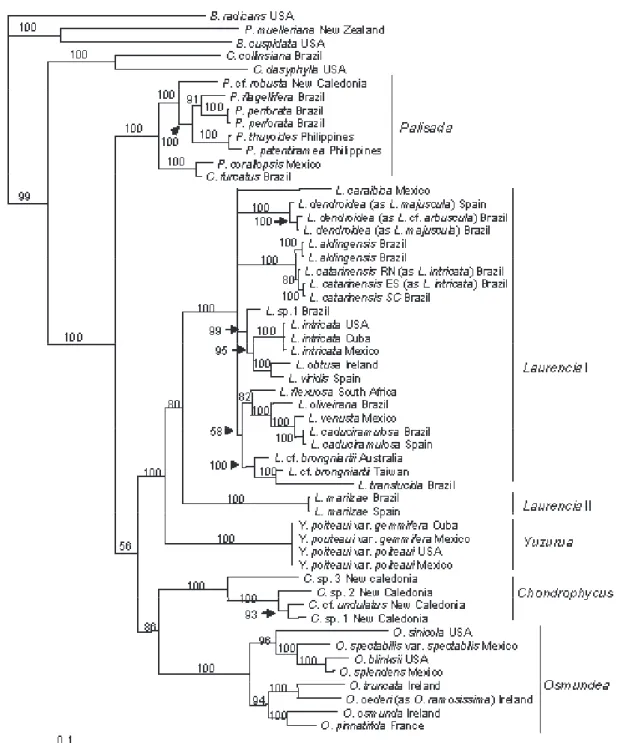
The topology of the Bayesian tree with
corresponding Bayesian posterior probabilities values
(PP) is shown in Figure 26. The phylogenetic analysis
shows a monophyletic
Laurencia
complex with high PP
support (100%) in relation to the members of the outgroup,
corroborating the previous results veriied for the group
(Abe et al., 2006; Fujii et al., 2006; Martin-Lescanne et
al., 2010). The
Laurencia
complex was separated into
ive clades, corresponding to the genera:
Laurencia,
Osmundea, Palisada, Chondrophycus,
and
Yuzurua.
The
earliest diverging clade was the genus Palisada with six
species and high support (100% PP), which included
also
Chondrophycus furcatus
, an endemic species from
Brazil. This result shows clearly that
C. furcatus
must
be transferred to the genus
Palisada
and, with its future
nomenclatural change, there will be no more representatives
of
Chondrophycus
in Brazil. The monophyletic genera
Chondrophycus
and
Osmundea
were sister groups with a
posterior probability of 86%. The monophyletic clade that
corresponds to the genus
Yuzurua
showed higher molecular
afinity with
Laurencia
than
Palisada
, from which it was
recently segregated. The genus
Laurencia included ifteen
taxa with a posterior probability of 80%.
Laurencia
marilzae
formed a monophyletic clade with high support
(100% PP) and was separated from all other
Laurencia
s.s.
, forming a distinct lineage, suggesting that
L.
marilzae
represents a new genus within the
Laurencia
complex.
The bibliographical survey on the terpenoids
produced by species of the
Laurencia
complex from the
Brazilian coast shows that only ive species of Laurencia
and three of
Palisada
(including
C. furtactus
) have
been submitted to chemical analysis and that, so far, 48
terpenoids have been isolated: 47 sesquiterpenes and one
triterpene. Diterpenes have not been found in Brazilian
species (Table 3).
The compounds isolated from the native algae
include 21 sesquiterpenes belonging to the bisabolane
class, seventeen belonging to the chamigrane type, whose
biochemical precursor is bisabolane, and four triquinols,
that posses a rare structure but are derived from the same
biogenetic origin as the bisabolane- and
chamigrane-derived terpenoids [2E,6E-farnesylpyrophosphate (FPP)].
Besides bisabolane and chamigrane terpenoids, the
introduced seaweed
Laurencia caduciramulosa
produces
two laurane-type compounds not found in Brazilian native
algae (Table 3).
With respect to
Palisada
perforata
and
P.
lagellifera,
they generally do not produce sesquiterpenoids
or acetogenins, classical metabolites produced by
Laurencia
. Although the presence of sesquiterpenes
was not expected in this group, triquinane alcohols
(compounds 47 and 26) were found in
P. perforata
by
using a high sensitivity extraction method (HS-SPME)
(Gressler et al., 2011). These compounds were not active
against bacterial strains or the yeast
Candida albicans,
microcladia,
and
L. obtusa
[denominations that, in
Brazil, refer to the same botanical species (Cassano,
2009)] are derived from chamigrane, with very similar
or even identical structures, such as elatol found in
L.
dendroidea
and
L. microcladia
;
L. scoparia produces ive
sesquiterpenoids from bisabolane and two triquinols. Both
L. aldingensis
and
L. catarinensis
synthesize metabolites
whose precursor is bisabolane, exhibiting a high degree
of similarity between them, as can be seen in Figure 26.
Although species of the
Laurencia
complex
are known to produce interesting active metabolites that
possess important pharmacological potential, experimental
biological activity assays have been performed with only
Figures 1-12. Habits of plants. 1. Osmundea lata. 2. Chondrophycus furcatus. 3. Laurencia aldingensis. 4. L. caduciramulosa. 5. L. catarinensis. 6. L. oliveirana. 7. L. dendroidea. 8. L. translucida. 9. L. marilzae. 10. Laurencia sp. 1. 11. Palisada lagellifera. 12. P. perforata.
by producing only triterpenoids (Rodriguez-Concepción,
2006) that are synthesized via the same precursor (FPP)
as the sesquiterpenoids from Brazilian
Laurencia
species.
However, on the basis of morphology, it does not it
perfectly into either
Laurencia
or
Palisada
due to the
presence of secondary pit-connections between adjacent
cortical cells, a characteristic more related to
Laurencia
,
and to the production of two pericentral cells, instead of
four per each axial segment, a characteristic shared by
Chondrophycus, Palisada, Yuzurua
and
Osmundea
(Fujii
& Sentíes, 2005).
Figures 13-25. Vegetative and reproductive characteristics of the Laurencia complex. 13-19. Characteristics of Laurencia. 20-23. Characteristics of Palisada. 24-25. Characteristics of Osmundea. 13. Transverse section of a thallus of Laurencia. Note the lenticular thickenings (arrow). 14. Transverse section of a thallus showing four pericentral cells (p) and an axial cell (a), typical of the genus Laurencia. 15. Transverse section near the apex of a branchlet of Laurencia showing the tetrasporangial axial segment
formed by four pericentral cells: the irst and the second pericentral cells remain vegetative (p1 and p2), the third and fourth become fertile (p3 and p4, arrows), axial cell (a). 16. Procarp-bearing segment with ive pericentral cells, the ifth becoming the supporting
cell (SU) of the carpogonial branch, central cell of procarp-bearing segment (c), lateral sterile group initial (lsi). 17. Longitudinal section through an apical portion of a tetrasporangial branchlet showing the origin of the tetrasporangia (te) from the axial cell (arrow), fertile pericentral cells (fp) and pre-sporangial cover cells (pr). 18. Longitudinal section through a male branchlet showing trichoblast-type spermatangial branches in cup-shaped tips. 19. Detail of trichoblast-type spermatangial branches; spermatangial branches on trichoblast (bt) with two laterals, sterile (arrow) and fertile (arrowhead) branches on its suprabasal cell (sbt). 20. Transverse section of a thallus of Palisada. 21. Transverse section of a thallus showing two pericentral cells (p) and an axial cell (a). 22. Transverse section near the apex of a branchlet of Palisada showing the tetrasporangial axial segment formed by two pericentral
cells: the irst (p1) remains vegetative, the second (p2) becomes fertile, and two additional fertile pericentral cells are formed in
the opposite position (arrows). 23. Procarp-bearing segment with four pericentral cells, the fourth becoming the supporting cell (SU) of the carpogonial branch, central cell of procarp-bearing segment (c), lateral sterile group initial (lsi). 24. Longitudinal
section through a male branchlet showing ilament-type spermatangial branches in cup-shaped tips. 25. Detail of ilament-type
Figure 26. Bayesian phylogram inferred from analyses of rbcL sequences. Numbers on branches correspond to support values for Bayesian inference posterior probability.
with six species:
Laurencia catarinensis, L. dendroidea,
L. translucida, L. aldingensis, L. caduciramulosa,
and
Palisada lagellifera.
The three former are native
Brazilian species and the most studied of these is
L.
dendroidea. More than twenty compounds were identiied
in this species and several of them showed biological
activities such as anthelmintic activity against the parasitic
stage of
Nippostrongilus brasiliensis
(Davyt, 2003;
2006), antileishmanial activity against the insect-stage
promastigotes of
Leishmania amazonensis
(Machado et
al., 2011), human pathogenic antifungal properties (Stein
et al., 2011), and signiicant levels of toxicity towards
a model tumor cell line (human uterine sarcoma,
MES-SA) (Stein et al., 2011). Thus, studies on the biological
activities of the secondary metabolites isolated from the
Laurencia
complex should be encouraged with the goal of
Table 3. Structural formulas, names and origin of terpenoids isolated from Brazilian species of the Laurencia complex, and biological activities related to human health.
Species Structural formula Name Structural
class
Human health related
activity tests References
Laurencia aldingensis O O Br O 1 O O Br 2 O O O Br 3 OH HH O O Br 4 H H OH H AcO H
1 Aldingenin A 2 Aldingenin B 3 Aldingenin C 4 Aldingenin D
1-4
α-Bisabolane
Polar and non-polar extracts showed no cytotoxic effects
toward primary model tumor cell line
(MES-SA)
Carvalho et al., 2003; 2006; Stein
et al., 2011
L. caduciramulosa* O Br 5 O 6 OH H 7 OH H 8 O Cl Br HO Br 9
5 Filiformin 6 Debromoiliformin 7 Allolaurinterol 8 Debromoallo- laurinterol 9 Pacifenol
5, 6
δ-Bisabolene
7, 8 Laurane
9 Chamigrane NB Cassano et al., 2008
L. catarinensis O R1 Br Br R2 Cl
10-13,17-19
O
Br Br
Cl
R
15,16,22
Br Cl 14 O R2 R1 O O Br Br Cl R
20,21
O Br
O Cl
23
10 R1=OAc, R2=OH 11 R1=OH, R2=OAc
12 R1=OAc, R2=OAc
13 R1=OAc, R2=H 17 R1=H, R2=OH
18 R1=H, R2=OAc 19 R1=R2=H
15 R1=Me, R2=OMe
16 R1=OMe, R2=Me 22 R1=Me, R2=OH
20 R=OH 21 R=H
10-23 Bisabolane
in vitro cytotoxicity using HT29, MCF7, and A431 cell lines: 17 = IC50<10 µM;
10,18,19 and 23 = IC50<20 µM for all
cell lines
Non-polar extracts showed high level
(≥80% of cell kill)
of cytotoxic effects toward primary model tumor cell line
(MES-SA)
Lhullier et al., 2010
Stein et al., 2011
L. dendroidea
1) as L. obtusa
2) as L. microcladia
HO Br Cl 24 Cl Br Br 25 HO H 26 Cl Br Br 27 HO Br Cl Br 28 HO HO OH 29 OH 30 Br HO
31,32
Br R2
R1
24 Elatol 25 Obtusane 26 Triquinane 27 Obtusol 28 Cartilagineol
24 Elatol
24, 25, 27, 28 Chamigrane 24 Chamigrane 29 -39 Chamigrane Antileishmanial test 24, 25=IC50 ranging
from 3.9 to 9.7 μg/
mL1
24=IC50 of 4.0 μM and 0.45 μM 2for
promastigote and the amastigote forms
Non-polar extracts showed high level
(≥80% of cell kill)
of cytotoxic effects toward primary model tumor cell line
(MES-SA)
In vitro anthelmintic essay using Nippostrongylus
brasiliensis:
1) Santos et al., 2010 Machado et al.,
2011 Stein et al., 2011
3) as L. scoparia
33,34
Br R2
R1
HO
35 Br
O
HO
36 O
O
37 Br
HO
Cl
Br Br
R
38,39
Br
Cl OH
HO
40 Br
Cl OH
41 OH
Br
Cl
OH OH Br
Cl O
OH
H
OH
H
45 46
40-42
β-bisabolane
43, 44, oxa-bicyclic stereoisomers
45, 46, triquinanes
30, 33, 34, 35, 36, 37 and 11 - moderate
activity (lower than 100 µM), 31 and 33 demonstrated higher
activity than 32 and 34
Compounds 40-42, 44, and 46 were tested in vitro using
Nippostrongylus brasiliensis
Compound 40 EC50=0.11 mM
3) Davyt et al., 2001; 2006
L. translucida Absence of terpenes and acetogenins
Non-polar extracts showed high level
(≥80% of cell kill)
of cytotoxic effects toward primary model tumor cell line
(MES-SA)
Fistarol & Carvalho, 2002; Stein et al., 2011
Chondrophycus.
furcatus Triterpenes NB
Estevam & Carvalho, 2002 as Laurencia furcata
Palisada perforata
1. Absence of terpenes and acetogenins
HO
H
47
NB
Human pathogenic antimicrobial properties absent
1) Estevam & Carvalho, 2001 as
Chondrophycus papillosus
2) Gressler et al., 2011
P. lagellifera Absence of terpenes and acetogenins
“Crude” methanol extracts showed
moderate level (50-79% of cell kill)
of cytotoxic effects toward primary model tumor cell line
(MES-SA)
Carvalho et al., 2000 as C. lagelliferus; Stein
et al., 2011
NB: none biological activity essay was performed; *introduced algae.
42 43
2.
Acknowledgements
This study was supported by the Conselho
Nacional de Desenvolvimento Cientíico e Tecnológico
Government (CGL 2010-14881). MT Fujii thanks the
CNPq for a Research Productivity Fellowship (Proc.
301438/2009-9) and EM Stein thanks FAPESP for a
Master´s Student Fellowship (Proc. 2008/07775-0).
Beneiciary of inancial support from CAPES-Brazil.
References
Abe T, Kurihara A, Kawaguchi S, Terada R, Masuda M 2006. Preliminary report on the molecular phylogeny of the Laurencia complex (Rhodomelaceae). Coast Mar Sci 30: 209-213.
Amado Filho GM, Horta PA, Brasileiro PS, Barros-Barreto MB, Fujii MT 2006. Subtidal benthic marine algae of the Marine State Park of Laje de Santos (São Paulo, Brazil). Braz J Oceanogr 54: 225-234.
Baptista LRM 1977. Flora marinha de Torres (Chlorophyta, Xanthophyta, Phaeophyta, Rhodophyta). Bol Inst Biociências, Univ Federal do Rio Grande do Sul (Bot) 37: 1-244.
Brito LVR, Széchy MTM, Cassano V 2002. Levantamento taxonômico das macroalgas da zona das marés de costões rochosos adjacentes ao Terminal Marítimo Almirante Maximiano Fonseca, Baía da Ilha Grande, RJ. Atlântica 24: 17-26.
Carvalho LR, Fujii MT, Barbizan DS 2000. Estudo químico dos metabólitos de Laurencia flagellifera (Ceramiales, Rhodophyta) como subsídio à quimiossistemática In XIII Congresso da Sociedade Botânica de São Paulo. São Paulo, Brazil. p. 184.
Carvalho LR, Fujii MT, Roque NF, Kato MJ, Lago JHG 2003. Aldingenin A, new brominated sesquiterpene from red algae Laurencia aldingensis. Tetrahedron Lett 44: 2637-2640.
Carvalho LR, Fujii MT, Roque NF, Lago JHG 2006. Aldingenin derivatives from the red alga Laurencia aldingensis. Phytochemistry 67: 1331-1335.
Cassano V 2009. Taxonomia e filogenia do complexo Laurencia (Ceramiales, Rhodophyta), com ênfase no estado do Rio de Janeiro, Brasil. São Paulo, 328 p. Tese de Doutorado, Instituto de Botânica de São Paulo.
Cassano V, Széchy MTM, Fujii MT 2006. Laurencia caduciramulosa (Ceramiales, Rhodophyta) from Ilha Grande Bay, Rio de Janeiro, Brazil: a recently introduced species into the Atlantic Ocean? Cryptogamie, Algol 27: 265-277.
Cassano V, De-Paula JC, Fujii MT, Teixeira VL 2008. Sesquiterpenes from the introduced red seaweed Laurencia caduciramulosa (Rhodomelaceae, Rhodophyta). Biochem Syst Ecol 36: 223-226. Cassano V, Díaz-Larrea J, Sentíes A, Oliveira MC,
Gil-Rodriguez MC, Fujii MT 2009. Evidence for the conspecificity of Palisada papillosa with P. perforata (Ceramiales, Rhodophyta) from the western and
eastern Atlantic Ocean on the basis of morphological and molecular analyses. Phycologia 48: 86-100. Cocentino ALM. 1994. Família Rhodomelaceae
(Ceramiales, Rhodophyta) na Praia de Serrambi – Ipojuca-PE - Brasil. Recife, 193 p. Dissertação de Mestrado, Programa de Pós-Graduação em Botânica, Universidade Federal Rural de Pernambuco.
Cocentino ALM, Fujii MT, Guimarães NCL 2006. A descoberta de Chondrophycus gemmiferus (Ceramiales, Rhodophyta) na Plataforma continental da bacia potiguar, RN, confirma a ocorrência da espécie na flora ficológica brasileira. XI congresso Brasileiro de Ficologia & Simpósio Latino-americano sobre algas nocivas. Itajaí, Brazil.
Cordeiro-Marino M 1978. Rodofíceas bentônicas marinhas do estado de Santa Catarina. Rickia 7: 1-243. Cordeiro-Marino M, Fujii MT 1985. Laurencia catarinensis
(Rhodomelaceae, Rhodophyta), a new species from Ilha de Santa Catarina, Brazil. Rev Bras Bot 8: 47-53.
Cordeiro-Marino M, Fujii MT, Pinheiro-Joventino F 1994. Morphological and cytological studies of Laurencia furcata Cordeiro-Marino and Fujii (Rhodophyta, Rhodomelaceae): a new species from Brazil. Cryptogamic Bot 4: 373-380.
Da Gama BAP, Pereira RC, Carvalho AGV, Coutinho R, Yoneshigue-Valentin Y 2002. The effects of seaweed secondary metabolites on biofouling. Biofouling 18: 13-20.
Davyt D, Fernandez R, Suescun L, Mombrú AW, Saldaña J, Dominguez L, Coll J, Fujii M T, Manta E 2001. New sesquiterpene derivatives from the red alga Laurencia scoparia. Isolation, structure determination, and anthelmintic activity. J Nat Prod 64: 1552-1555. Davyt D, Fernandez R, Suescun L, Mombrú AW, Saldaña
J, Dominguez L, Coll J, Fujii M T, Manta E 2006. Bisabolanes from the red alga Laurencia scoporia. J Nat Prod 69: 1113-1116.
Díaz-Larrea J, Sentíes A, Fujii MT, Pedroche FF, Oliveira MC 2007. Molecular evidence for Chondrophycus poiteaui var. gemmiferus comb. et stat. nov. (Ceramiales, Rhodophyta) from the Mexican Caribbean Sea: implications for the taxonomy of the Laurencia complex. Bot Mar 50: 250-256.
Erickson KL 1983. Constituents of Laurencia. In Scheuer PJ (ed.) Marine natural products: chemical and biological perspectives vol. 5. New York: Academic Press, p. 131-257.
Estevam C, Carvalho LR, Fujii MT 2001. Estudos morfológicos e quimiotaxomicos comparativos em Laurencia papillosa e L. perforata (Ceramiales, Rhodophyta) do litoral brasileiro. V Encontro de Iniciação Científica do Instituto de Botânica. São Paulo, Brazil, p. 31. Estevam C, Carvalho LR 2002. Estudo químico dos
Cord.-Marino et Fujii (Ceramiales, Rhodophyta). VI Encontro de Iniciação Científica do Instituto de Botânica. São Paulo, Brazil, p. 32.
Fenical W 1975. Halogenation in the Rhodophyta, a review. J Phycol 11: 245-259.
Fernández JJ, Souto ML, Gil LV, Norte M 1998. Evaluation of the cytotoxic activity of the polyethers isolated from Laurencia. Bioorg Med Chem 6: 2237-2243. Fernández JJ, Souto ML, Gil LV, Norte M 2005. Isolation
of naturally occurring dactylomelane metabolites as Laurencia constituents. Tetrahedron 61: 8910-8915. Figueiredo-Creed MA de O, Yoneshigue-Valentin Y 1997.
Chlorophyta, Phaeophyta e Rhodophyta. In Marques MCM (ed.). Mapeamento da cobertura vegetal e listagens das espécies ocorrentes na Área de Proteção Ambiental de Cairuçu, Município de Parati, RJ. Série Estudos e Contribuições, Instituto de Pesquisas do Jardim Botânico do Rio de Janeiro, Rio de Janeiro, Brasil, p. 30-36.
Figueiredo MA de O, Barros-Barreto MBB, Reis RP 2004. Caracterização das macroalgas nas comunidades marinhas da Área de Proteção Ambiental de Cairuçú, RJ - subsídios para futuros monitoramentos. Rev Bras Bot 27: 11-17.
Fistarol Z, Carvalho LR 2002. Estudos químicos de Laurencia translucida (Ceramiales, Rhodophyta). São Paulo, 48 p. Monografia de Conclusão de Curso, Faculdade de Ciências da Saúde de São Paulo.
Fujii MT 1990. Gênero Laurencia (Rhodomelaceae, Rhodophyta) no Estado de São Paulo: aspectos biológicos e taxonômicos. Rio Claro, 145 p. Dissertação de Mestrado, Universidade Estadual Paulista.
Fujii MT 1998. Estudos morfológicos, quimiotaxonômicos e citogenéticos em quatro espécies selecionadas de Laurencia (Ceramiales, Rhodophyta) do litoral brasileiro. Rio Claro, 176 p. Tese de Doutorado, Universidade Estadual Paulista.
Fujii MT, Cordeiro-Marino M 1996. Laurencia translucida sp. nov. (Ceramiales, Rhodophyta) from Brazil. Phycologia 35: 542-549.
Fujii MT, Sentíes A 2005. Taxonomia do complexo Laurencia (Rhodomelaceae, Rhodophyta) do Brasil, com ênfase nas espécies dos estados de São Paulo e do Espírito Santo. In Sentíes A, Dreckmann KM (eds) Monografias Ficológicas. II. Universidad Autônoma Metropolitana–Iztapalapa, México e Instituto de Botânica, São Paulo, Brasil, p. 69-135.
Fujii MT, Villaça R 2003. On the occurrence of Laurencia caraibica (Ceramiales, Rhodophyta) in Atol das Rocas, Brazil. Hidrobiológica 13: 33-38.
Fujii MT, Collado-Vides L, Cordeiro-Marino M 1996. Morphological studies of Laurencia gemmifera and Laurencia poiteaui (Rhodomelaceae, Rhodophyta) from the Nichupté Lagoon System, Quintana Roo,
Mexico. Bot Mar 39: 317-326.
Fujii MT, Guimarães SMPB, Alves JP 2005. Ocorrência de Laurencia venusta (Ceramiales, Rhodophyta) no Espírito Santo, Brasil: distribuição biogeográfica disjunta ou introdução recente? In Pereira RC et al. (orgs). Formação de Ficólogos: um compromisso com a sustentabilidade dos recursos aquáticos. Rio de Janeiro: Museu Nacional, p. 527-536.
Fujii MT, Guimarães SMPB, Gurgel CF, Fredericq S 2006. Characterization and phylogenetic affinities of the red alga Chondrophycus flagelliferus (Rhodomelaceae, Ceramiales) from Brazil on the basis of morphological and molecular evidence. Phycologia 45: 432-441. Garbary DJ, Harper JT 1998. A phylogenetic analysis of the
Laurencia complex (Rhodomelaceae) of the red algae. Cryptogamie, Algol 19: 185-200.
Gil-Rodríguez MC, Sentíes A, Díaz-Larrea J, Cassano V, Fujii MT 2009. Laurencia marilzae sp. nov. (Ceramiales, Rhodophyta) from the Canary Islands, Spain, based on morphological and molecular evidence. J Phycol 45: 264-271.
Gressler V, Stein EM, Dörr F, Fujii MT, Colepicolo P, Pinto E 2011. Sesquiterpenes from the essential oil of Laurencia dendroidea (Ceramiales, Rhodophyta): isolation, biological activities and distribution among seaweeds. Rev Bras Farmacogn 21: 248-254.
Gross H, König GM 2006. Terpenoids from marine organisms: unique structures and their pharmacological potential. Phytochem Rev 5: 115-141.
Guimarães SMPB 2006. Checklist of Rhodophyta from the State of Espírito Santo. Bolm Inst Bot 17: 143-194. Guiry MD, Guiry GM 2010. AlgaeBase. World-wide
electronic publication, National University of Ireland, Galway. http://www.algaebase.org, access December 2010.
Hall TA 1999. BioEdit: a user-friendly biological sequence alignment editor and analysis program for Windows 95/98/NT. Nucl Acids Symp Ser 41: 95-98.
Hay ME, Fenical W, Gustafson K 1987. Chemical defense against diverse coral-reef herbivores. Ecology 68: 1581-1591.
Hay ME, Steinberg PD 1992. The chemical ecology of plant– herbivore interactions in marine versus terrestrial communities. In Rosenthal J, Berenbaum M (eds) Herbivores: Their Interaction with Secondary Plant Metabolites, vol. II, Evolutionary and Ecological Processes. New York: Academic Press, p. 371-413. Horta PA 2000. Macroalgas do infralitoral do sul e sudeste
do Brasil: taxonomia e biogeografia. São Paulo, 301 p. Tese de doutorado, Universidade de São Paulo. Howe MA, Taylor WR. 1931. Notes on new or little-known
marine algae from Brazil. Brittonia 1: 7-33.
DC, Swersey JC 2000. Bioactive compounds from the sea. In Martin RE, Carter EP, Davis LM (eds.) Marine and freshwater products handbook. Lanceaster: Technomic Publishing, p. 641-661.
Joly AB 1965. Flora marinha do litoral norte do estado de São Paulo e regiões circunvizinhas Fac Fil Ciênc Letr Univ S Paulo (Bot) 21: 1-393.
König GM, Wright AD 1997. Sesquiterpene content of the antibacterial dichloromethane extract of the marine red alga Laurencia obtusa. Planta Med 63: 186-187. Lhullier C, Donnangelo A, Caro M, Palermo JA, Horta PA,
Falkenberg M, Schenkel EP 2009. Isolation of elatol from Laurencia microcladia and its palatability to the sea urchin Echinometra lucunter. Biochem Syst Ecol 37: 254-259.
Lhullier C, Falkenberg M, Ioannou E, Quesada A, Papazafiri P, Horta PA, Schenkel EP, Vagias C, Roussis V 2010. Cytotoxic halogenated metabolites from the Brazilian red alga Laurencia catarinensis. J Nat Prod 73: 27-32.
Machado FL, Pacienza-Lima Wallace, Rossi-Bergmann B, Gestinari LMS, Fujii MT, De-Paula JC, Costa SS, Lopes NP, Kaiser CR, Soares AR 2011. Antileishmanial sesquiterpenes from the Brazilian red alga Laurencia dendroidea. Planta Med 77: 733-735.
Martín JD, Darias J 1978. Algal sesquiterpenoids. In Schevev PJ (ed.). Marine Natural Products vol 1. New York: Academic Press, p. 125-173.
Martin-Lescanne J, Rousseau F, De Reviers B, Payri C, Couloux A, Cruaud C, Le Gall L 2010. Phylogenetic analyses of the Laurencia complex (Rhodomelaceae, Ceramiales) support recognition of five genera: Chondrophycus, Laurencia, Osmundea, Palisada and Yuzurua stat. nov. Eur J Phycol 45: 51-61.
McIvor L, Maggs CA, Guiry MD, Hommersand MH 2002. Phylogenetic analysis of the geographically disjunct genus Osmundea Stackhouse (Rhodomelaceae, Rhodophyta). Constancea 83.9 [online publication of the Jepson Herbarium, UC, Berkeley: http://ucjeps. berkeley.edu/constancea/83/mcivor_etal/osmundea. html.
Mohammed KA, Hossain CF, Zhang L, Bruick RK, Zhou YD 2004. Laurediterpineol, a new diterpene from the tropical marine alga Laurencia intricata that potently inhibits HIF-1 mediated hypoxic signaling in breast tumor cells. J Nat Prod 67: 2002-2007.
Morales JL, Cantillo-Ciau ZO, Sanchez-Molina I, Mena-Rejon GJ. 2006. Screening of antibacterial and antifungal activities of six marine macroalgae from coasts of Yucatan peninsula. Pharm Biol 44: 632-635.
Nam KW 1999. Morphology of Chondrophycus undulata and C. parvipapillata and its implications for the taxonomy of the Laurencia (Ceramiales, Rhodophyta) complex. Eur J Phycol 34: 455-68.
Nam KW 2006. Phylogenetic re-evaluation of the Laurencia complex (Rhodophyta) with a description of L. succulenta sp. nov from Korea. J Appl Phycol 18: 679-697.
Nam KW 2007. Validation of the generic name Palisada (Rhodomelaceae, Rhodophyta). Algae 22: 53-55. Nam KW, Maggs CA, Garbary DJ 1994. Resurrection of the
genus Osmundea with an emendation of the generic delineation of Laurencia (Ceramiales, Rhodophyta). Phycologia 33: 384-395.
Nam KW, Maggs CA, McIvor L, Stanhope MJ 2000. Taxonomy and phylogeny of Osmundea (Rhodomelaceae, Rhodophyta) in Atlantic Europe. J Phycol 36: 759-772.
Nunes JMC 1998. Catálogo de algas marinhas bentônicas do estado da Bahia, Brasil. Acta Bot Malac 23: 5-21. Nunes JMC 2005. Rodofíceas marinhas bentônicas do estado
da Bahia, Brasil. São Paulo, 410 p. Tese de doutorado, Instituto de Biociências, Universidade de São Paulo. Oliveira Filho EC 1969. Algas marinhas do sul do estado do
Espirito Santo (Brasil). I. Ceramiales. Bolm Fac Fil Ciênc Letr Univ S Paulo (Bot) 26: 1-277.
Oliveira Filho E C 1977. Algas marinhas bentônicas do Brasil. São Paulo, 407 p. Tese de Livre Docência, Instituto de Biociências, Universidade de São Paulo. Oliveira Filho EC, Ugadim Y 1974. New references of
benthic marine algae to Brazilian flora. Bol Bot Univ São Paulo 2: 71-91.
Oliveira Filho EC, Ugadim Y 1976. A survey of the marine algae of Atol das Rocas (Brazil). Phycologia 15: 41-44.
Paes e Mello LB, Pereira SMB 1990. Estudos taxonômicos sobre a Família Rhodomelaceae (Rhodophyta - Ceramiales) no litoral Oriental do Estado do Rio Grande do Norte. I. Gênero Laurencia Lamouroux. Trab Oceanogr, Univ. Federal de Pernambuco 21: 165-185.
Pedrini AG. 1980. Algas marinhas bentônicas da Baía de Sepetiba e arredores. Rio de Janeiro, 379 p. Dissertação de Mestrado, Museu Nacional, Universidade Federal do Rio de Janeiro.
Pedrini AG de, Gonçalves JEA, Fonseca MCS, Zaú AS, Lacorte CC 1989. A survey of the marine algae of Trindade Island, Brazil. Bot Mar 32: 97-99.
Pereira RC, Teixeira VL 1999. Sesquiterpenos das algas marinhas Laurencia Lamouroux (Ceramiales, Rhodophyta). 1. Significado ecológico. Quim Nova 22: 369-374.
Ambiente, Editora Massangana, v. 1, p. 97-124. Pereira SMB, Bandeira-Pedrosa ME, Burgos DC 2005.
Macroalgae from the Saint Peter’s and Saint Paul’s Archipelago (Brazil). Phycologia suppl 36: 80. Pinheiro-Joventino F, Dantas NP, Maraschin CDH 1998.
Distribuição de algas marinhas no litoral de Fortaleza, Ceará, Brasil. Arq Cien Mar 31: 29-40.
Posada D, Crandall KA 1998. Modeltest: testing the model of DNA substitution. Bioinformatics 14: 817-818. Rocha-Jorge R 2010. Diversidade de macroalgas do Parque
Estadual Marinho da Laje de Santos, SP, Brasil. São Paulo, 176 p. Dissertação de Mestrado, Programa de Pós-Graduação em Biodiversidade Vegetal e Meio Ambiente, Instituto de Botânica.
Rocha-Jorge R, Cassano V, Oliveira MC, Fujii MT 2010. The occurrence of Laurencia marilzae (Ceramiales, Rhodophyta) in Brazil based on morphological and molecular data. Bot Mar 53: 143-162.
Rodriguez-Concepción M 2006. Early steps in isoprenoid biosynthesis: multilevel regulation of the supply of common precursors in plant cells. Phytochem Rev 5: 1-15.
Saito Y 1967. Studies on Japanese species of Laurencia, with special reference to their comparative morphology. Mem Fac Fish Hokkaido Univ 15: 1-81.
Sakemi S, Higa T, Jefford CW, Bernardinelli G. Venustatriol 1986. A new, antiviral, triterpene tetracyclic ether from Laurencia venusta. Tetrahedron Lett 27: 4287-4290.
Santos AO, Veiga-Santos P, Ueda-Nakamura T, Dias Filho BP, Sudatti DB, Bianco EM, Pereira RC, Nakamura CV 2010. Effect of elatol, isolated from red seaweed Laurencia dendroidea on Leishmania amazonensis. Mar Drugs 8: 2733-2743.
Silva IB 2010. Diversidade de algas marinhas bentônicas dos recifes e ambientes adjacentes de Maracajaú, APA dos Recifes de Corais, RN, Brasil. São Paulo, 334 p. Tese de Doutorado, Programa de Pós-Graduação em Biodiversidade Vegetal e Meio Ambiente, Instituto de Botânica.
Stein EM, Andreguetti DX, Sousa C, Fujii MT, Baptista M, Colepicolo P, Indig GL 2011. Search for citotoxic agents in multiple Laurencia sensu lato seaweed species (Ceramiales, Rhodophyta) harvested from the Atlantic Ocean zone that bates the Brazilian State of Espírito Santo. Rev Bras Farmacogn 21: 239-243. Széchy MTM, Paula EJ de 1997. Macroalgas epífitas em
Sargassum (Phaeophyta – Fucales) do litoral dos estados do Rio de Janeiro e São Paulo, Brasil. Leandra 12: 1-10.
Széchy MTM, Nassar CAG 2005. Flora ficológica bentônica da Baía da Ribeira, sul do estado do Rio de Janeiro: Avaliação após duas décadas de operação da Central Nuclear Almirante Álvaro Alberto. In Pereira RC et al. (orgs). Formação de Ficólogos: um compromisso com a sustentabilidade dos recursos aquáticos. Rio de Janeiro: Museu Nacional, p. 373-397.
Széchy MTM, Nassar CAG, Falcão C, Maurat MCS 1989. Contribuição ao inventário das algas marinhas bentônicas de Fernando de Noronha. Rodriguésia 67: 53-61.
Széchy MTM, Amado Filho GM, Cassano V, De-Paula JC, Barros-Barreto MBB, Reis RP, Marins-Rosa BV, Moreira FM 2005. Levantamento florístico das macroalgas da Baía de Sepetiba e adjacências, RJ: ponto de partida para o Programa GloBallast no Brasil. Acta Bot Bras 19: 587-596.
Taylor WR 1960. Marine algae of the eastern tropical and subtropical coasts of the Americas. Michigan: Ann Arbor, The University of Michigan Press.
Torrano Silva BN 2010. Flora de macrófitas marinhas do Arquipélago de Abrolhos e do Recife Sebastião Gomes (BA). São Paulo, 422 p. Dissertação de Mestrado, Programa de Pós-Graduação em Botânica, Universidade de São Paulo.
Vairappan CS, Kawamoto T, Miwa H, Suzuki M 2004. Potent antibacterial activity of halogenated compounds against antibiotic-resistant bacteria. Planta Med 70: 1087-1090.
Yamada Y 1931. Notes on Laurencia, with special reference to the Japanese species. Univ Calif Publ Bot 16: 185-310.
Yoneshigue Y 1985. Taxonomie et ecologie des algues marines dans la region de Cabo Frio, (Rio de Janeiro), Brésil. Marseille, France, 466 p. Tese de Doutorado, Faculte des Sciences de Luminy, Uníverisité d' Aix-Marseille II.
Yoneshigue-Valentin Y, Fujii MT, Gurgel F D 2003. Osmundea lata (Howe & Taylor) comb. nov. (Ceramiales, Rhodophyta) from southeastern Brazilian continental shelf. Phycologia 42: 301-307.
*Correspondence
Mutue T. Fujii
Núcleo de Pesquisa em Ficologia, Instituto de Botânica Av. Miguel Estéfano, 3687, 04301-902 São Paulo-SP, Brazil [email protected]