1004
Original Articles
Factors associated with the institutionalization of the elderly:
a case-control study
Ezequiel Vitório Lini1
Marlene Doring1
1 Universidade de Passo Fundo (UPF), Programa de Pós-Graduação em Envelhecimento Humano. Passo
Fundo, RS, Brasil.
Correspondence Ezequiel Vitório Lini
E-mail: [email protected]
Abstract
Objective: to identify the factors associated with the institutionalization of the elderly.
Method: a case-control, population-based study was performed with 387 elderly people. The study considered cases of elderly people (n=191) living in long-term care facilities, and a control group (n=196) who lived in homes in urban areas of the city. Both groups were identified from the records of the Family Health Strategy and were randomly selected. Institutionalization was considered a dependent variable, and sociodemographics, clinical factors, functional status, and cognitive impairment were considered independent variables. Comparison between groups was analyzed using the Chi-squared and Pearson tests and the logistic regression model was used in adjusted analysis, with measurements of effect expressed as odds ratio with a 95% confidence interval. Variables with p≤0.20 were
considered for entry in the multiple model. Results: variables that remained associated with institutionalization in multiple analysis were: not having a partner (OR=9.7), not having
children (OR=4.0), presenting cognitive impairment (OR=11.4), and depending on others to perform basic activities of daily living (OR=10.9). Conclusion: cognitive impairment and dependency for basic activities of daily living were more strongly associated with institutionalization. Home care strategies and preventive actions for risk factors should be stimulated to delay the referral of elderly people to Long Term Care Facilities for the Elderly, and to develop strategies that allow the elderly to remain socially active.
Keywords: Elderly. Homes for the Aged. Risk Factors. Dementia. Activities of Daily Living.
1005
INTRODUCTION
The prolongation of life has become a reality in Brazil due to the reduction of mortality rates and infectious diseases and a significant evolution in health care. However, with a greater proportion of elderly people, the importance of conditions of dependency, which will at some point require greater care, increases1.
A number of complications, such as the presence of chronic diseases and limitations in activities of daily living, mean there is a need for professional monitoring of health, including referral to long-term care facilities for the elderly (LTCFE)2.
Today, LTCFE operate with practically all their
beds occupied, and growth of between 100% and 500% in the number of elderly people in need of
non-family care can be expected in the next decade. Therefore, institutions will have to absorb much of this demand3. The need for care outside the
home is due to the installation of chronic diseases and their complications and the unavailability of family members to provide the continuous support that elderly dependents need, either because of the difficulty of staying at home full time or due to the impossibility of hiring specialized professionals4.
A number of reasons for institutionalization have been reported. In a study by Perlini et al.5,
the factors most cited by relatives when deciding to institutionalize an elderly person were the reduced number of family members, the absence of physical, financial and psychological conditions for the provision of home care and the desire of the elderly to not disturb their family members. Relationship problems with relatives, widowhood, multiple diseases and dementia syndrome were the reasons identified by Fonseca et al.6.
Understanding the factors that lead to institutionalization are fundamental if family members and health professionals are to be aware of prevention possibilities and can identify when institutionalization is truly required. The administrators, legislators and supervisory bodies of the LTCFE can, through greater knowledge of indicators of institutionalization, organize measures to better receive and manage this population. The present study therefore aimed to identify the main factors associated with the institutionalization of the elderly.
METHOD
A population-based case-control study with 387 elderly residents was carried out in a medium-sized municipality, located in the north of Rio Grande do
Sul, 293 km from the state capital. The estimated population was 187,298 thousand inhabitants. Of
these, 22,222 were elderly, being aged 60 years or over7.
The case group was represented by 191 individuals
aged ≥60 years living in an LTCFE, and a control group made up of 196 individuals aged ≥60 years
living in urban households of the municipality. Institutionalized elderly people from other municipalities were excluded in order to maintain the same origins for cases and controls.
At the time of collection, the municipality had 16 LTCFE, which housed 363 elderly persons. Of
these, 13 of those selected agreed to participate (288
elderly), of which three were philanthropic and ten were private. The sample calculation indicated that 186 elderly people would be needed for the case
group, plus 10% to compensate for possible losses (refusals and ineligibility), totaling 205 interviews. Individuals aged ≥60 years were selected from each
LTCFE based on the proportion that each facility represented of the total.
Controls were selected from the urban territorial division demarcated by the Coordenadoria de Proteção Social Básica (Basic Social Protection Coordination) of the municipality of Passo Fundo, Rio Grande do Sul. This body divides the municipality into four major sectors: Sector I: northeast region; Sector II: northwest region; Sector III: southeast region; Sector IV: southwest region. Based on these territorial divisions, a Unidade Básica de Saúde (Basic Health Unit) (UBS) was drawn from each of the sectors, from which the records (name and address) of all
individuals aged ≥60 years were obtained. From the list of these elderly persons, 52 subjects were drawn
from each quadrant, to ensure one control for each
case, giving a total of 208 elderly people.
The data was collected from April to August
2014 in households and the LTCFE by a trained
1006
The elderly were interviewed individually, in specifically reserved locations, both in the LTCFE and in their homes. If it was the randomly selected elderly person was unable to respond, the information was obtained from the caregiver or guardian in the household and by the responsible staff member in the LTCF.
Elderly persons who were hospitalized on the day of the interview were excluded. The losses were individuals who were not found in the household after three attempts by the interviewers on alternate days and times.
The defined outcome was institutionalization. The following variables were investigated to identify the possible factors associated with institutionalization in an LTCFE: gender; age; skin color/ethnicity; marital status; schooling; monthly income; number of children; practice of physical activity and self-reported health status; use of medication; presence of cognitive impairment and disability for basic activities of daily living (BADV). We investigated the presence of chronic diseases, including dementias. Among the possible dementias, Alzheimer's and other unspecified dementias (cases in which dementia was diagnosed but not classified) were found in medical records.
In order to investigate the presence of cognitive impairment, the Mini mental State Exam (MMSE) was used with the following cutoff points: 13 points for illiterate elderly people, 18 points for those with low and medium schooling (up to eight years of
schooling) and 26 points for elderly persons with high
levels of schooling (above eight years of schooling)8. The Pfeffer functional activities questionnaire (PFAQ)9, a scale applied to the caregiver/responsible person when the elderly person is unable to respond, whether due to severe dementia, aphasia, deafness, etc., was also used. This consists of verifying the presence of cognitive impairment from the capacity of the individual to perform certain functions, for example: if they are able to heat water, make a cup of coffee and turn off the stove after use; if they are able to greet friends properly; or pay attention to and discuss a television or radio program, among other activities. There are 11 questions with a maximum score of 33 points and a higher score represents a greater degree of dependence, which suggests the presence of cognitive impairment. The answers must
conform to the standard of: yes, is capable (0); never did but could do now (0); has difficulty but does by
self (1); never did and would have difficulty doing
now (1); requires assistance (2); dependent (3). Scores greater or equal to 6 suggest cognitive impairment10.
The Katz Index11 was used to evaluate the performance of BADL. This evaluates the functional capacity to perform some basic daily activities, such as bathing, dressing, going to the bathroom, transferring from bed to chair and vice-versa, sphincter control and unassisted feeding. The elderly with a classification of A were considered independent, or in other words, independent for all activities, while those classified as B, C, D, E, F, G and Other, or in other words dependent for at least one activity, were considered dependent.
Pearson's Chi-squared and Fisher's exact tests were used to compare the groups. In the multivariate analysis, logistic regression was used, with measures of effect expressed in odds ratio (OR) and 95%
confidence intervals (95% CI). Variables with p≤0.20
were considered for entry into the model.
The research project was approved by the Research Ethics Committee of the Universidade
de Passo Fundo, under opinion nº 504.100/2014.
The elderly individuals or their carers signed a Free and Informed Consent Form before the interviews were carried out.
RESULTS
A total of 387 people aged ≥60 years old were
divided into 191 (49.4%) elderly people living in
LTCFE and 196 (50.6%) elderly persons living in
areas covered by the BHU. The majority were between
70 and 79 years old (34.6%). The mean age was 75.1
years (± 9.9), and 64.6% were female, 81.1% were white/Caucasian and 69.6% lived without partners
(Table 1). In 27.9% of the interviews, help from third
parties was necessary to complete the questionnaire.
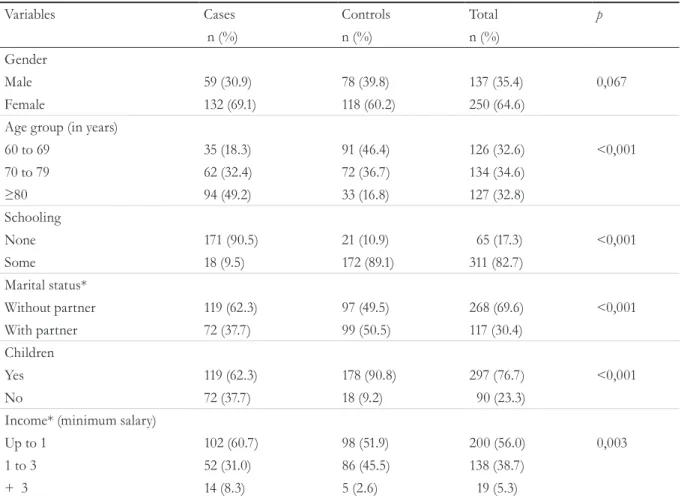
Distribution by gender was similar between the institutionalized and non-institutionalized groups. In terms of income, the proportion of those earning above three minimum wages was four times greater
in the institutionalized group (p=0.003). The
1007
school was higher in the institutionalized group (p
<0.001) (Table 1).
A total of 90.5% of the institutionalized elderly
and 49.5% of the elderly who lived in their homes
had no partner (p<0.001). When analyzing age group, 49.2% of the institutionalized elderly persons were over 80 years old, compared to 16.8% (p<0.001) of
the elderly who lived at home. Of the institutionalized
elderly, 37.7% had no children, compared with 9.2% of the elderly who lived in households (p<0.001)
(Table 1).
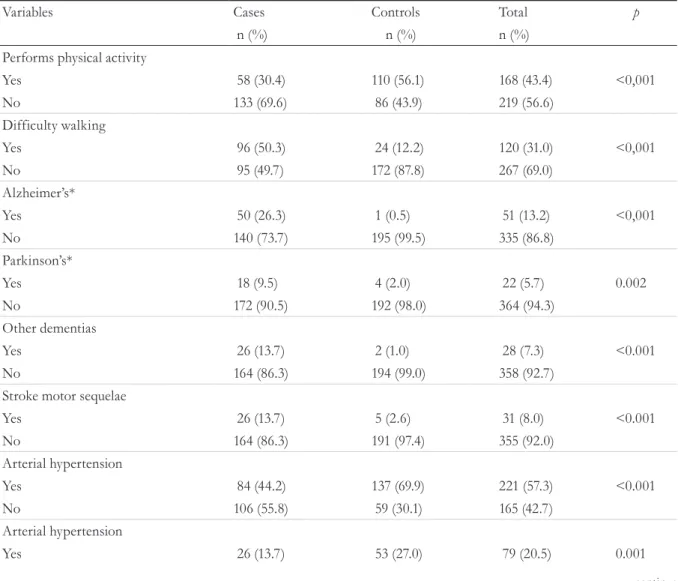
The practice of physical activity was significantly
lower among the institutionalized elderly (30.4%). In the institutionalized group, 50.3% needed support
when walking or did not walk, while among those who
lived at home the proportion was 12.2% (p<0.001) (Table 2). Among the difficulties or disabilities
for walking, those who used wheelchairs or were
bedridden (65.7%) prevailed in the institutionalized
group (p=0.003).
In the search for chronic diseases and disabilities, the institutionalized elderly persons had higher and
more significant percentages of Alzheimer's (26.3%),
Parkinson's (9.5%), other unspecified dementias (13.7%) and stroke motor sequelae (13.7%). Of those who lived at home, hypertension (69.9%), heart
disease (27.0%) and cancers (10.7%) were the most common (Table 2).
There were symptoms suggestive of dementia
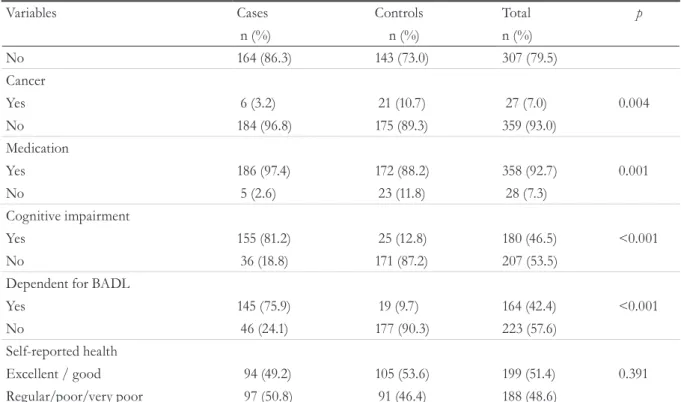
(using the MMSE and PFAQ tests) in 81.2% of the institutionalized elderly and 12.8% of those resident in households (p<0.001). At least one basic activity
of daily living was dependent (75.9% among the institutionalized and 9.7% among the elderly living
in households) (p<0.001) (Table 2).
Table 1. Distribution of institutionalized elderly persons (cases) and elderly persons resident in households
(controls) for sociodemographic variables (N=387). Passo Fundo, Rio Grande do Sul, 2014.
Variables Cases Controls Total p
n (%) n (%) n (%)
Gender
Male 59 (30.9) 78 (39.8) 137 (35.4) 0,067
Female 132 (69.1) 118 (60.2) 250 (64.6)
Age group (in years)
60 to 69 35 (18.3) 91 (46.4) 126 (32.6) <0,001
70 to 79 62 (32.4) 72 (36.7) 134 (34.6)
≥80 94 (49.2) 33 (16.8) 127 (32.8)
Schooling
None 171 (90.5) 21 (10.9) 65 (17.3) <0,001
Some 18 (9.5) 172 (89.1) 311 (82.7)
Marital status*
Without partner 119 (62.3) 97 (49.5) 268 (69.6) <0,001
With partner 72 (37.7) 99 (50.5) 117 (30.4)
Children
Yes 119 (62.3) 178 (90.8) 297 (76.7) <0,001
No 72 (37.7) 18 (9.2) 90 (23.3)
Income* (minimum salary)
Up to 1 102 (60.7) 98 (51.9) 200 (56.0) 0,003
1 to 3 52 (31.0) 86 (45.5) 138 (38.7)
+ 3 14 (8.3) 5 (2.6) 19 (5.3)
1008
A total of 2.6% of the institutionalized elderly
persons did not use medication, while among those
living at home the proportion was 11.8% (p=0.001) (Table 2). The percentage of institutionalized elderly
persons that used six or more drugs was 57.4,
compared to 22.5% (p<0.001) of those who lived
at home. There was no significant difference in self-reported health between institutionalized and non-institutionalized elderly.
In terms of estimated risk, crude analysis showed that as age advances, the chance of institutionalization increases. Elderly people who did not have a partner, who were illiterate, who did not have children, who did not practice physical activity, who needed assistance to walk or did not
walk, who used medication, who had been diagnosed with Alzheimer's disease, other non-specified dementias, Parkinson’s, or stroke motor sequelae had greater chances of institutionalization. The elderly persons who exhibited cognitive impairment (in the MMSE and PFAQ Tests) and were dependent for BADL presented a statistically greater risk of institutionalization (Table 3).
The following variables remained significant after adjusted analysis: without a partner (single, separated,
widowed) (OR=9.7 – CI95%: 4.03-23.46), absence of children (OR=4.0 - CI95%:1.73-9.28). Cognitive impairment (OR=11.4 – CI95%: 5.59-23.40) and dependence in BADL (OR=10.9 - CI95%: 5.26-22.72) (Table 3).
continua
Table 2. Distribution of institutionalized elderly (cases) and those living at home (control) for clinical variables
(N=387). Passo Fundo, Rio Grande do Sul, 2014.
Variables Cases Controls Total p
n (%) n (%) n (%)
Performs physical activity
Yes 58 (30.4) 110 (56.1) 168 (43.4) <0,001
No 133 (69.6) 86 (43.9) 219 (56.6)
Difficulty walking
Yes 96 (50.3) 24 (12.2) 120 (31.0) <0,001
No 95 (49.7) 172 (87.8) 267 (69.0)
Alzheimer’s*
Yes 50 (26.3) 1 (0.5) 51 (13.2) <0,001
No 140 (73.7) 195 (99.5) 335 (86.8)
Parkinson’s*
Yes 18 (9.5) 4 (2.0) 22 (5.7) 0.002
No 172 (90.5) 192 (98.0) 364 (94.3)
Other dementias
Yes 26 (13.7) 2 (1.0) 28 (7.3) <0.001
No 164 (86.3) 194 (99.0) 358 (92.7)
Stroke motor sequelae
Yes 26 (13.7) 5 (2.6) 31 (8.0) <0.001
No 164 (86.3) 191 (97.4) 355 (92.0)
Arterial hypertension
Yes 84 (44.2) 137 (69.9) 221 (57.3) <0.001
No 106 (55.8) 59 (30.1) 165 (42.7)
Arterial hypertension
1009
Variables Cases Controls Total p
n (%) n (%) n (%)
No 164 (86.3) 143 (73.0) 307 (79.5)
Cancer
Yes 6 (3.2) 21 (10.7) 27 (7.0) 0.004
No 184 (96.8) 175 (89.3) 359 (93.0)
Medication
Yes 186 (97.4) 172 (88.2) 358 (92.7) 0.001
No 5 (2.6) 23 (11.8) 28 (7.3)
Cognitive impairment
Yes 155 (81.2) 25 (12.8) 180 (46.5) <0.001
No 36 (18.8) 171 (87.2) 207 (53.5)
Dependent for BADL
Yes 145 (75.9) 19 (9.7) 164 (42.4) <0.001
No 46 (24.1) 177 (90.3) 223 (57.6)
Self-reported health
Excellent / good 94 (49.2) 105 (53.6) 199 (51.4) 0.391
Regular/poor/very poor 97 (50.8) 91 (46.4) 188 (48.6)
* Missing information was excluded (interviewees who could not respond); CVA: Cardiovascular Accident (stroke); BADL: basic activity of daily living.
Continued from Table 2
Table 3. Gross and adjusted analysis of factors associated with the institutionalization of elderly persons. Passo
Fundo, Rio Grande do Sul, 2014.
Variables OR* (IC95%) p OR┼ (IC95%) p
Gender 0.067
Male 1.00
Female 1.47 (0.96-2.25)
Age (year) <0.001
60-69 1.00
70-79 2.23 (1.32-3.79)
≥80 7.40 (3.95-13.88)
Marital status <0.001 <0.001
Partner 1,00 1.00
Without partner 9.69 (5.17-18.15) 9.72 (4.03-23.46)
Schooling <0.001
With schooling 1.00
Without schooling 2.59 (1.45-4.60)
Children <0.001 0.001
Yes 1.00 1.00
No 5.98 (2.38-6.70) 4.01 (1.73-9.28)
Physical activity <0.001
Yes 1.00
No 2.93 (1.90-4.52)
1010
whether due to physical or mental decline, frailties, or a greater chance of presenting chronic noncommunicable diseases and their complications, which often motivates the process of institutionalization14.
In terms of marital situation, the institutionalized group had a high proportion of elderly people without
a partner (90.5%), a common finding in surveys carried
out in institutions15-17. The absence of children was also
relevant in the process of institutionalization. In such situations, when the elderly confront difficulties in daily living or have other dependencies, they also face difficulties in receiving care at home due to changes in family profile (absence of children or children
DISCUSSION
When the groups of institutionalized and non-institutionalized elderly persons were compared, a higher concentration of elderly individuals aged over
80 years was observed in the care facilities, a finding that
corroborates those in literature12,13. One survey reported that the risk of institutionalization is 9.5 times greater
among elderly persons aged over 80 years12. However, the
analyzes of the present study allowed us to conclude that advanced age is not associated with institutionalization, but rather with the dependencies that accompany it. Factors that may explain this finding are that, with increasing age, situations of dependence increase,
Continued from Table 3
Variables OR* (IC95%) p OR┼ (IC95%) p
Independent gait <0.001
Yes 1.00
No 7.24 (4.12-12.72)
Medication <0.001
No 1.00
Yes 4.97 (1.81-13.60)
Alzheimer’s <0.001
No 1.00
Yes 69.64 (8.06-601.81)
Other dementias
No 1.00 <0.001
Yes 15.37 (3.42-68.94)
Parkinson’s 0.001
No 1.00
Yes 4.50 (1.52-13.29)
Stroke motor sequelae <0.001
No 1.00
Yes 6.05 (2.22-16.49)
Cognitive impairment <0.001 <0.001
No 1.00 1.00
Yes 29.45 (13.73-63.15) 11.43 (5.59-23.40)
BADL Independence <0.001 <0.001
Yes 1.00 1.00
No 29.36 (13.46-64.01) 10.94 (5.26-22.72)
1011
who emigrated). The decision to remain single, the absence, whether by widowhood, separation or divorce, of a spouse, who are traditionally shown to be the main caregivers at home, increases the risk of institutionalization17. There are reports in literature
that people living alone have a greater chance of
institutionalization, with men having a 70% greater chance, and women a 30% greater chance. Those with
spouses are protected from institutionalization by the fact that, on average, they have a higher education and income, their own home and better housing conditions18.
The proportion of physical inactivity identified in the institutionalized elderly was in agreement with other studies13,15. However, the physical activity variable
lost significance when the walking related variable was entered in the multiple model. This is because, for the performance of most physical activities, it is necessary for the individual to be able to walk, with proper functioning of the cardiovascular, respiratory, neuromotor and metabolic systems, among others19.
The main diseases and complications initially associated with institutionalization in the gross analysis were Alzheimer's disease, Parkinson's disease, other unspecified dementias and stroke motor sequelae, or in other words, cognitive and functional impairments. However, in multiple analysis, these variables lost their significance when BADL dependence and cognitive impairment entered the model. This is because the sequelae of a stroke can interfere strongly with performing the basic activities of daily life20, which can be extended to diseases that damage neuromuscular function, such as Parkinson's and the advanced stages of Alzheimer's.
Joint wear and loss of muscle strength often occur during the aging process, and can impede stable mobility. Diseases of the central nervous system and musculoskeletal and cardiovascular diseases also make walking difficult21. Therefore, difficulty in walking due to chronic diseases and complications reduces the practice of physical activity and directly interferes in the performance of BADL. It is worth emphasizing that physical activity can promote benefits at any age, leading to improvements in quality of life and the maintenance of functional capacity and
preserving the physical and mental abilities acquired throughout life22; Thus, the practice of physical activity reduces the installation of several factors related to institutionalization, mainly dependence in BADL.
The identification of cognitive impairment was associated with institutionalization. In a comparative study of cognitive impairment and functional capacity with institutionalized and non-institutionalized elderly people, MMSE performance was lower and there was greater impairment of functional capacity in the institutionalized group23.
Diagnosed dementia affects between 2 and 8% of
the population over 60 years of age24, which is close to
the proportion found in the community in the present study (1.5% of individuals had dementia recorded in their medical records). However, the results in institutions are substantially higher. One of the reasons that explains the higher percentage of dementias diagnosed in LTCFE is advanced age, as after 65 years of age the proportion doubles with each five year incremement24. Moreover, the factor of dementia is strongly associated with institutionalization25,26 as the proportion of this disease tends to be higher in such settings.
In a longitudinal study in Hong Kong27, it was
observed that of the 749 individuals aged ≥65 years, 80 were institutionalized, and that cognitive
impairment was indicative of institutionalization, which corroborates the findings of this study. The occurrence of institutionalization practically triples when associated with functional disability27.
1012
As for dependence in BADL, the institutionalized group displayed significantly higher proportions than the group of elderly persons residing at home. The percentage of 75.9% is close to that found in other studies12,14,30. Some factors contribute to dependence, such as the advanced ages found in LTCFE, which is accompanied by motor deficit, muscle weakness, cognitive impairment and the presence of chronic non-communicable diseases30. In a Brazilian cross-sectional study31 performed in LTCFE of the southeast
and center-west regions, it was found that functional dependence is associated with chronic diseases (hypertension, diabetes, joint problems), walking difficulties and cognitive impairment. The authors identified that, among the institutionalized elderly
with BADL dependency, 82.2% had severe mobility
loss. Furthermore, 86.5% of those dependent for BADL had a low MMSE score.
As in the findings of the present study, other studies have demonstrated the association between BADL dependence and cognitive impairment in institutions23,31,32. Another study33 states that, both in
the community and in LTCFE, cognitive impairment demonstrates a direct association with dependencies in daily activities. Elderly persons with cognitive impairment, therefore, have a greater dependency in BADL and, consequently, are more likely to be institutionalized34.
Moreover, the results of a Brazilian study on the factors associated with institutionalization12 showed that the variables gender, age, marital status, schooling, functional disability and physical activity were associated with referral to LTCFE. The present study differed in its findings for gender, age, schooling and physical activity but agreed in finding an association with marital situation and functional incapacity, and added the risk factor of not having children. This study also adds to the investigation of cognitive impairment, which has become an important factor in predisposing individuals to institutionalization.
Among the limitations of the study, it is believed that the possibility of the underreporting of chronic diseases, especially among elderly persons living in households, was ameliorated by the consultation of the records of the Basic Health Unit and the patient's medical records in the LTCFE.
CONCLUSION
The present study found that the factors that predispose the elderly to institutionalization were the absence of a spouse, not having children, exhibiting cognitive impairment and dependence for basic activities of daily living.
REFERENCES
1. Floriano LA, Azevedo RCS, Reiners AAO, Sudré MRS. Cuidado realizado pelo cuidador familiar ao idoso dependente, em domicílio, no contexto da Estratégia de Saúde da Família. Texto Contexto
Enferm. 2012;21(3):543-8.
2. Michel T, Lenardt MH, Betiolli SE, Neu DKM. Significado atribuído pelos idosos à vivência em uma instituição de longa permanência: contribuições para o cuidado de enfermagem. Texto Contexto Enferm.
2012;21(3):495-504.
3. Camarano AA, organizadora. Cuidados de longa duração para a população idosa: um novo risco
social a ser assumido? Rio de Janeiro: IPEA; 2010.
Conclusão. p. 337-49.
4. Küchemann BA. Envelhecimento populacional, cuidado e cidadania: velhos dilemas e novos desafios.
Soc Estado. 2012;1(27):165-80.
5. Perlini NMO, Leite MT, Furini AC. Em busca de uma instituição para a pessoa idosa morar: motivos apontados por familiares. Rev Esc Enferm USP.
2007;41(2):229-36.
6. Fonseca ACC, Scoralick F, Silva CL, Bertolino A, Palma D, Piazzolla L. Perfil epidemiológico de idosos e fatores determinantes para a admissão em instituições de longa permanência do Distrito Federal.
Brasília Méd. 2011;48(4):366-71.
7. Instituto Brasileiro de Geografia e Estatística.
Censo Demográfico 2010 [Internet]. Rio de Janeiro: IBGE; 2010 [acesso 14 out. 2014]. Disponível em:
http://www.sidra.ibge.gov.br/bda/tabela/protabl.
asp?c=1378&z=t&o=25&i=P
8. Bertolucci PHF, Brucki SMD, Campacci SR, Juliano Y. O mini-exame do estado mental em uma população geral: impacto da escolaridade. Arq.
1013
9. Pfeffer RI, Kurosaki TT, Harrah Jr CH, Chance JM, Filos S. Measurement of functional activities in older adults in the community. J Gerontology.
1982;37(3):323-9.
10. Brasil. Ministério da Saúde, Secretaria de Atenção à Saúde, Departamento de Atenção Básica.
Envelhecimento e saúde da pessoa idosa. Brasília, DF:
MS; 2006.
11. Katz S, Ford AB, Moskowitz RW, Jackson BA, Jaffe MW. Studies of illness in the aged. The index of ADL: a standardized measure of biological and
psychosocial function. JAMA. 1963;185(12):914-9. 12. Del Duca GF, Silva SG, Thumé E, Santos IS, Hallal
PC. Indicadores da institucionalização de idosos: estudo de casos e controles. Rev Saúde Pública.
2012;46(1):147-53.
13. Menezes RL, Bachion MM, Souza JT, Nakatani AYK. Estudo longitudinal dos aspectos multidimensionais da saúde de idosos institucionalizados. Rev Bras
Geriatr Gerontol. 2011;14(3):485-96.
14. Sousa KT, Mesquita LAS, Pereira LA, Azeredo CM. Baixo peso e dependência funcional em idosos institucionalizados de Uberlândia (MG), Brasil. Ciênc
Saúde Coletiva. 2014;19(8):3513-20.
15. Oliveira MPF, Novaes MRCG. Perfil
socioeconômico, epidemiológico e farmacoterapêutico de idosos institucionalizados de Brasília, Brasil. Ciênc
Saúde Coletiva. 2013;18(4):1069-78.
16. Alencar MA, Bruck NNS, Pereira BC, Câmara TMM, Almeida RDS. Perfil dos idosos residentes em uma instituição de longa permanência. Rev Bras Geriatr
Gerontol. 2012;15(4):785-96.
17. Lisboa CR, Chianca TCM. Perfil epidemiológico, clínico e de independência funcional de uma
população idosa institucionalizada. Rev Bras Enferm.
2012;65(3):482-7.
18. Nihtilä E, Martikainen P. Why older people living with a spouse are less likely to be institutionalized: the role of socioeconomic factors and health characteristics.
Scand. J. Public Health. 2008;36(1):35-43.
19. Conselho Federal De Educação Física. Nota técnica
CONFEF n° 002/2012 [Internet]. Rio de Janeiro: CONFEF; 2012 [acesso 11 out. 2014]. Disponível em:
http://www.confef.org.br/extra/conteudo/default. asp?id=837
20. Dantas CMHL, Bello FA, Barreto KL, Lima LS. Capacidade funcional de idosos com doenças crônicas residentes em instituições de longa permanência. Rev
Bras Enferm. 2013;66(6):914-20.
21. Paixão Júnior CM, Heckman MF. Distúrbios da postura, marcha e quedas. In: Freitas EV, Py L. Tratado de Geriatria e Gerontologia. 3. ed. São Paulo:
Guanabara Koogan; 2011. p.1062-74.
22. Mazini Filho ML, Zanella AL, Aidar FJ, Silva AMS, Salgueiro RS, Matos DG. Atividade física e envelhecimento humano: a busca pelo envelhecimento saudável. Rev Brasi Ciênc Envelhec
Hum. 2010;7(1):97-106.
23. Trindade APNT, Barboza MA, Oliveira FB, Borges APO. Repercussão do declínio cognitivo na capacidade funcional em idosos institucionalizados e não
institucionalizados. Fisioter Mov. 2013;26(2):281-9. 24. World Health Organization. Media Centre. Fact
Sheets: Dementia [Internet]. Genebra: WHO; 2012. [acesso 14 nov. 2014]. Disponível em: www.who.int/ mediacentre/factsheets/fs362/en/
25. Gnjidic D, Stanaway FF, Cumming R, Waite L, Blyth F, Naganathan V, et al. Mild cognitive impairment predicts institutionalization among older men: a population-based cohort study. PLoS One.
2012;7(9):1-8.
26. Mello BLD, Haddad MCL, Dellaroza MSG. Avaliação cognitive de idosos institucionalizados.
Acta Sci Health Sci. 2012;34(1):95-102.
27. Chau PH, Woo J, Kwok T, Chan F, Hui E, Chan KC. Usage of community services and domestic helpers predicted institutionalization of elders having
functional or cognitive impairments: a 12-month
longitudinal study in Hong Kong. J Am Med Dir
Assoc. 2012;13(2):169-75.
28. Mclennon SM, Habermann B, Davis LL. Deciding to institutionalize: why do family members cease
caregiving at home? J Neurosci Nurs. 2010;42(2):95-103. 29. Cohen-mansfield J, Wirtz PW. Predictors of entry to
the nursing home: Does length of follow-up metter?
Arch Gerontol Geriatr. 2011;53(3):309-15. 30. Smanioto FN, Haddad MCFL. Índice de Katz
aplicado a idosos institucionalizados. Rev Rene
1014
Received: March 6, 2016 Reviewed: October 3, 2016 Accepted: October 31, 2016
31. Mattos IE, Carmo CN, Santiago LM, Luz LL. Factors associated with functional incapacity in elders living in long stay institutions in Brazil: a
cross-sectional study. BMC Geriatr. 2014;14(47):1-9. 32. Oliveira PH, Mattos IE. Prevalência e fatores associados à incapacidade funcional em idosos institucionalizados no município de Cuiabá, Estado
de Mato Grosso, Brasil, 2009-2010. Epidemiol Serv Saúde. 2012;21(3):395-406.
33. Yoshida D, Ninomiya T, Doi Y, Hata J, Fukuhara M, Ikeda F, et al. Prevalence and causes of functional disability in an elderly general population of japanese:
The Hisayama Study. J Epidemiol. 2012;22(3):222-9.
34. Nogueira D, Reis E, Atalaia R, Raposo P,
Serrasqueiro R. Ageing, disability and long-term care.
No artigo “Factors associated with the institutionalization of the elderly: a case-control study””, publicado em Revista Brasileira de Geriatria e Gerontologia, v. 19, n. 6, p. 1004-1014, 2016, DOI: http://dx.doi. org/10.1590/1981-22562016019.160043, na página 1004, o nome da segunda autora está errado.
Onde se lê:
Marilene Rodrigues1
Leia-se:
Marilene Rodrigues Portella1