Article
Printed in Brazil - ©2017 Sociedade Brasileira de Química0103 - 5053 $6.00+0.00*e-mail: [email protected]
Biodiesel Glycerides from the Soybean Ethylic Route Incomplete Conversion on the
Diesel Engines Combustion Process
Renato Cataluña,*,a Zeban Shah,a Leidimara Pelisson,a Nattan R. Caetano,c
Rosângela da Silvab and Carla M. N. Azevedob
aUniversidade Federal do Rio Grande do Sul, Av. Bento Gonçalves 9500,
91501-970 Porto Alegre-RS, Brazil
bPontifícia Universidade Católica do Rio Grande do Sul,
Av. Ipiranga 6681, 90619-900 Porto Alegre-RS, Brazil
cUniversidade Federal de Santa Maria, 97105-900 Santa Maria-RS, Brazil
An evaluation was made to determine the effect of the glycerides presence resulting from the incomplete conversion of soybean biodiesel produced via alkaline catalysis and ethylic route on engine performance, and emissions in formulations containing 10 and 20% (m/m) of biodiesel used as additives in base diesel with low sulfur content and cetane ratings of 45 and 50. By way of comparison, similar formulations were used with soybean biodiesel methyl route with low concentration of glycerides. Tests on a diesel cycle engine with a mechanical fuel injection system indicated that the presence of glycerides decreases the volatility of biodiesel and increase the cetane number of fuels. The higher the cetane number, the higher the particulate matter emissions and the lower the unburned hydrocarbon emissions. Formulations with cetane number 50 showed higher emissions of particulate matter. The presence of glycerides in biodiesel reduces the fuel’s vapor pressure, thereby increasing the cetane number and emissions of particulate matter and lower emissions of unburned hydrocarbons. The specific consumption of fuels formulated with biodiesel increases due to its lower enthalpy of combustion and to the presence of glycerides in fuels formulated with soybean biodiesel produced via the ethanol route.
Keywords: soybean biodiesel, specific fuel consumption, emissions
Introduction
The main biofuel used in diesel fuel formulations is biodiesel, a derivative of mono-alkyl esters of long chain fatty acids. Biodiesel is usually obtained through a transesterification reaction of vegetable oils, in which a triglyceride reacts with a short-chain alcohol such as methyl alcohol, ethyl alcohol or isopropanol by means of acid, base or enzyme catalysis from different vegetable
oils, waste cooking oils and animal fats.1-7 In some cases,
formulations with biodiesel increase the formation of deposits in the engine, causing injectors to deteriorate and piston rings to become clogged. It is known that most diesel cycle engines are designed to run on mineral oil diesel and
not on biodiesel or blends of biodiesel and mineral diesel.8-10
In view of this fact, efforts have focused on improving the characteristics of the engine that influence the quality of
combustion.11 Due to the properties of biodiesel, the agents
most frequently employed in the transesterification process
are methyl and ethyl alcohols.2-12 Brazil today is the world’s
largest producer of sugarcane ethanol, which is the fuel
alcohol most widely used in this country.13
Biodiesel quality is usually determined based on fuel quality standards, such as the American standards
ASTM D97514 and D746715 and the European standard
EN 14214.16 The molecular structure of biodiesel renders
it highly miscible in the hydrocarbon fractions of crude oil, enabling diesel formulations to be obtained in any proportions for use in diesel cycle engines without
the need of cosolvents.16-18 When biodiesel is used in
diesel cycle engines, its physicochemical properties such as composition, cetane number (CN), viscosity, density, volatility, carbon-hydrogen ratio, lubricity,
and biodegradability,19-25 as well as the type of engine,
air pollutant emissions.24-27 A homogeneous mixture in
the combustion chamber contributes to reduce emissions of particulate matter (PM), unburned hydrocarbons
(HCs) and nitrogen oxides (NOx), as well as lower fuel
consumption.28,29 Although studies have focused on soybean
biodiesel produced via the methanol and ethanol routes, the performance and emissions of soybean biodiesel-diesel blends in diesel cycle engines with mechanical injection still require evaluation, since the Brazilian fleet of cars and light commercial vehicles is considered to be an average age of
about eight years.30 Moreover, studies that use mechanical
injection enable relevant parameters to be obtained to evaluate fuels and exhaust emission treatment systems in real operating conditions at low operating costs. The difficulty of complete conversion of the biodiesel obtained by ethylic
route and basic catalysis is another factor to be considered.31,32
Although Brazil is the largest producer of ethanol obtained from sugar cane, biodiesel is produced exclusively via base catalysis and methylic route mainly due to the difficulty of obtaining high conversion levels using ethanol as reagent. The polar characteristic of the methanol and ethanol make them immiscible in triglycerides at room temperature, and the mixtures are usually mechanically agitated to provide the mass transfer, which produces emulsions during the reaction. These emulsions are, in part, caused by the formation of intermediates as mono and diacylglycerol, which have hydroxyl groups and non-polar hydrocarbon chains. In high concentrations they are strongly reactive surface-active agents, which could prevent mass transfer as expected according to homogeneous reaction kinetics. However, the ethyl esters production given by basic catalysis becomes harder compared to the methyl esters production, due to stable and undesirable emulsion formation during the ethanolysis process. However, in methanolysis, the emulsions are easily separated into two layers, one lower (glycerol) and one higher ester-rich. Instead, in ethanolysis, they are more stable and severe, making it tough to separate
and purify the esters.33 In this context, this study evaluates the
effect of soybean biodiesel produced via base catalysis and via the methanol and ethanol routes (hereinafter referred to as MR and ER, respectively) on the performance and emissions of formulations containing 10 and 20% (m/m) of biodiesel, using base diesel with low sulfur content and CN of 45 and 50. The soybean biodiesel composition produced via MR and ER was analyzed by gas chromatography with flame ionization detector (GC-FID) and by mass spectrometry. The effect of glyceride presence on soybean biodiesel obtained ER was compared with soybean biodiesel MR when used in formulations for performance tests in a single-cylinder diesel engine with mechanical fuel injection and fixed angle injection, based on parameters such as specific fuel
consumption (SFC), emissions of particulate matter and
unburned hydrocarbons. The NOx emissions were estimated
based on data reported in the literature.10,34-37
Experimental
Base fuels and formulations
The base diesel fuel used was a brand sold in Brazil (S10) with low sulfur content (10 ppm), and CN 50, which was modified with the secondary standard (U17) supplied by Chevron-Phillips to obtain base diesel fuel with CN 45. Starting from the base fuels CN 50 and CN 45, formulations were prepared containing 10 and 20% (m/m) of soybean biodiesel produced via the methanol route (MR) and the ethanol route (ER) to evaluate their effect on engine performance and emissions. The formulations were dubbed 10MR and 20MR for the methanol route and 10ER and 20ER for the ethanol route.
Analysis of biodiesel composition
The soybean biodiesel was diluted in dichloromethane for a qualitative analysis of the esters it contained, using a gas chromatograph (Shimadzu model 2010, Kyoto, Japan) coupled to a mass spectrometer with electron-impact ionization detector (Shimadzu, Kyoto, Japan). The chromatographic column was a DB-5 capillary column (methyl silicone with 5% phenyl groups), 60 m in length, with 0.25 mm internal diameter and 0.25 µm thick stationary phase. Helium was employed as carrier gas at
a flow rate of 1.0 mL min-1. Split injection mode of 1:10
was applied. The injector and transfer line were kept at a temperature of 280 °C. The GC temperature programming
was as follows: 4 min at 40 °C, 5 °C min-1 ramp-up to
190 °C, holding for 4 min, 2 °C min-1 ramp-up to 240 °C,
holding for 5 min, and 10 °C min-1 ramp-up to a final
temperature of 280 °C, and holding for 15 min (analysis time: 87 min). The system was operated in the SCAN mode (mass scanning) to produce a mass spectrum of each scanned chromatographic peak, enabling comparisons to be made of the recorded spectra against the spectra in the Mass
Spectral Libraries (NIST 14 and Wiley Libraries)38 of the
device, and the use of chromatographic patterns obtained under the same conditions as the sample.
Analysis of glycerides
Biodiesel samples were diluted in n-hexane for the
qualitative and quantitative analysis of glycerides, using a Shimadzu GC-17 gas chromatograph (Shimadzu, Kyoto, Japan) coupled to a flame ionization detector (FID). The DB-5 capillary column (methyl silicone with 5% phenyl groups) was 30 m long, with 0.25 mm internal diameter
and 0.10 µm stationary phase thickness. N2 was used as
auxiliary gas and hydrogen as carrier gas, applying an
average linear speed of 22.5 cm s-1. Injection was performed
in splitless mode in 0.5 min, and a 1:10 split ratio was used throughout the analysis, while the temperature of the injector was kept at 350 °C and that of the detector at 370 °C. The oven temperature was programmed as follows:
initial temperature 50 °C, holding for 3 min, 7 °C min-1
ramp-up to 200 °C, holding for 5 min, 5 °C min-1 ramp-up
to 297 °C, holding for 2 min, and final 5 °C min-1 ramp-up
to 360 °C, and holding for 15 min (analysis time: 79 min). Glycerides were qualified by comparing the retention times of standards injected under the same chromatographic conditions. The glycerides were quantified by comparison against an external calibration curve.
Engine performance tests
Engine tests were performed using the base fuels (CN 45 and CN 50) and their formulations with 10 and 20% of soybean biodiesel via MR and ER to determine the specific fuel consumption (SFC) and PM and HC emissions. These tests were performed in a Toyama 7.0 Hp
single-cylinder engine, 250 cm3, with mechanical fuel
injection, operating at 70% of maximum power, an injection
pressure of 150 bar (fixed injection angle of −18°), a
compression ratio of 21:1, 3600 rpm and 10% O2 in the
exhaust gases. The PM in the exhaust gas was quantified gravimetrically by direct filtration of the gas through a glass Microfiber filter (Macherey-Nagel) with 47 mm diameter. The gas was pumped through the filter element using a vacuum pump, and after cooling, its flow rate was measured
using a Sensirion® mass flow meter with a maximum rated
capacity of 20 mL min-1. The quantification of PM in mg m-3
was based on the mass of PM retained in the filter divided by the volume of the sampled gas. The average temperature of the filter element was set at 470 °C to keep the collected PM dry. The condensable volatile hydrocarbons (HCs) present in the diesel engine exhaust gases were collected, along with the water generated in the combustion process, after separating the PM.
The HCs were quantified based on their oxidation in the
condensed fraction of the exhaust gases to CO2 in an oxygen
atmosphere, using a technique similar to that described
by ASTM D6594-11.39 The condensed fraction, which
was collected using an infusion pump (Samtronics), was
transferred to a quartz reactor with a γ-alumina catalyst bed
containing 1.0 wt.% of Pt at 700 °C. Carbon dioxide (CO2)
was quantified in a GC equipped with a thermal conductivity detector (TCD-17A, Shimadzu, Japan), using a packed
column (Porapak Q, 8.5 m × 1.6 mm) and H2 as the
carrier gas at a flow of 5 mL min-1. The temperatures of
the column oven, injector and detector were 40, 200 and 240 °C, respectively. Quantification was performed using
a calibration curve for CO2 generated by injection of an
aqueous solution of ethanol (0.5%) as the external standard.
Results and Discussion
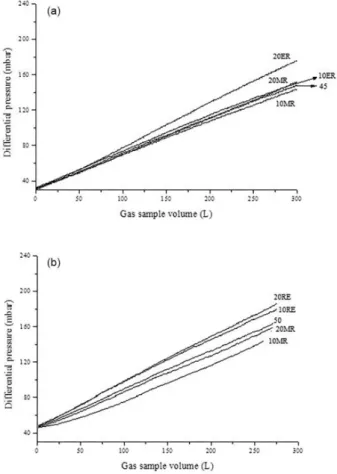
Figure 1 illustrates the differential pressure (DP) profiles in the filter element caused by the retention of PM as a function of sampled gas volume of CN 45 and CN 50 diesel fuels and their respective formulations with 10MR, 20MR, 10ER and 20ER. Lower differential pressure according to the gas volume indicates lower retention of
Figure 1. Pressure differential in the filter element resulting from the
PM. Figure 2 depicts the PM emission levels in mg m-3 for
CN 45 and CN 50 diesel fuels and their formulations with 10 and 20% of MR and ER soybean biodiesel.
A comparison of the differential pressure profiles in the filter element (Figure 1) and the amount of particulate matter measured gravimetrically (see Figure 2) reveals that they show the same tendency, i.e., the formulations with CN 50 present higher differential pressures corresponding
to the accumulation of PM. Cataluña and Silva40 reported
similar results in their discussion of the effect of ignition
delay of different diesel formulations in engines with mechanical injection. However, a comparison of the CN 45 and CN 50 fuels formulated with MR and with ER indicates that the former produce lower PM emissions than the latter. PM emissions usually increase with increasing CN21,40,41 and with the size of droplets obtained during the
fuel atomization process before combustion.42,43
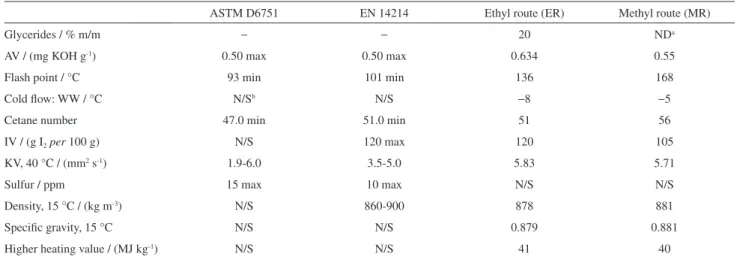
Table 1 describes the main characteristics of the soybean biodiesels produced via MR and ER. As it can be seen, the glycerides parameter for soybean biodiesel produced by the ER indicate the presence of 20% (m/m) of glycerides in the biodiesel, while the biodiesel MR showed no trace of glycerides. The presence of high glyceride concentrations in the end product directly affects the distillation curve by taking the product out of specification. The other parameters are within the values established by international standards.
The presence of glycerides is an important parameter for the characterization of biodiesel samples, not only because it enables the transesterification process to be assessed, but also because glycerides reduce the quality of the end product by increasing PM emissions. This is because unreacted glycerides hinder vaporization due to their higher boiling temperature and because they increase the viscosity of the fuel, thereby reducing combustion efficiency, and may also cause fuel filters to become clogged and deposits formation on engine parts such as pistons, valves and
injector nozzles.11,44 In this regard, when the formulations
evaluated in this study were assessed in a correlated study, they presented different responses.
In vacuum distillation tests performed according to
the ASTM D6751-02 standard,45 ER biodiesel showed
low volatility, since its vaporization was slow. This fuel left behind large amounts of residue, whose upper limit Figure 2. Amount of particulate matter (PM, in mg m-3) for the diesel
CN (a) 45 and (b) 50, and their formulations with 10MR, 20MR, 10ER and 20ER.
Table 1. Physical-chemical characteristics of biodiesel from soybean oil via ER and MR
ASTM D6751 EN 14214 Ethyl route (ER) Methyl route (MR)
Glycerides / % m/m − − 20 NDa
AV / (mg KOH g-1) 0.50 max 0.50 max 0.634 0.55
Flash point / °C 93 min 101 min 136 168
Cold flow: WW / °C N/Sb N/S −8 −5
Cetane number 47.0 min 51.0 min 51 56
IV / (g I2 per 100 g) N/S 120 max 120 105
KV, 40 °C / (mm2 s-1) 1.9-6.0 3.5-5.0 5.83 5.71
Sulfur / ppm 15 max 10 max N/S N/S
Density, 15 °C / (kg m-3) N/S 860-900 878 881
Specific gravity, 15 °C N/S N/S 0.879 0.881
Higher heating value / (MJ kg-1) N/S N/S 41 40
specified by the aforementioned standard is 0.05% (m/m), and which was increased by the presence of glycerides.
From the chromatographic profiles of the MR and ER biodiesels, the composition of the biodiesels produced by the two routes showed similar concentrations of saturated fatty acid esters, since they originate from soybean oil. Biodiesel that is too rich in saturated fatty acids may cause
problems in the combustion process.11
Some properties of biodiesel, such as CN (ignition quality), enthalpy of combustion, cold flow, oxidative stability, kinematic viscosity, etc., are in large part determined by the composition and molecular structures
of their constituent alkyl esters.15,24,25,44,45 For example, the
melting point, kinematic viscosity and oxidative stability of unsaturated fatty acid methyl esters (FAMEs) increase with the length of the carbon chain and decrease with the
increasing number of double bonds.46-48 As an indicator
of ignition quality, the CN is one of the most important indicators of quality of diesel fuel for compression-ignition engines. The CN decreases with shorter fatty acid (FA) chains, higher degrees of unsaturation, and
branched chain carbons.49 A lower degree of branching
in the molecular structure of fuel can reduce the ignition delay (higher cetane number), and thus, the ignition timing
advance. These conditions favor NOx formation in the
combustion chamber due to the increased residence time of combustion products at high temperatures. Unsaturated fuels change the temperature of the flame front (the higher the degree of unsaturation the higher the adiabatic flame temperature), altering the formation of NO through fast mechanisms, since it is highly influenced by intermediate combustion products. Although it is widely accepted
that the concentration of free radicals such as HO• are
determining factors for NOx formation, the importance
of their effect is secondary to that caused by the increase in temperature. Double bonds have high binding energy, and the large amounts of energy they release contribute to the formation of higher levels of certain free radicals during fuel premixing, resulting in faster NO formation
during combustion.50
Fuel composition affects the engine’s cold start
performance, noise levels and exhaust emissions.51 Fuels
with CN between 45 and 60 are more suitable for use in
diesel engines.52 According to Van Gerpen et al.,53 fuels with
high CNs will have small ignition delays and small amounts of fuel will be present in the premixed combustion phase because of the short preparation time of the mixture for combustion. The CN is determined according to a standard test methodology described by the American Society for
Testing and Materials (ASTM),54 whereby fuels are tested
and compared to the ignition delay of standards established
in international standards using a single-cylinder engine with electronic injection.
In this study, tests were performed using a single-cylinder engine with mechanical injection, which was monitored
with Optrand® pressure sensors in the combustion chamber
and in the hose before it meets the injector. The pressure profiles monitored with an oscilloscope indicated that the angle of injection of the fuel was regular. Modifications of the fuel composition using formulations of up to 20% m/m were found not to cause significant variations in the pressure profiles in the injector hose. Also, modifying the bulk modulus of the fuel did not appear to cause perceptible changes with the use of this type of equipment. The most significant and easily detectable change was in the pressure profile in the combustion chamber. The greater the concentration of fractions with higher boiling points, which is the case of the biodiesel obtained by the ethanol route, the higher the maximum pressure inside the chamber,
increasing the formation of PM and NOx.
The combustion enthalpy and cetane number of fuels formulated with biodiesel for diesel cycle engines are comparable to those of the fossil fuel, and their sulfur content is low. Because biodiesel has a higher bulk modulus and a higher pressure wave propagation velocity, it causes an advance in fuel injection timing. In engines with electronic injection, this effect is easily circumvented by modifying the injection timing. In engines with mechanical injection, a significant change in the modulus of elasticity alters the fuel injection angle. The higher the pressure wave propagation velocity of the fuel pump, the faster the fuel injector opens, causing an advance in the injection timing. This increases the amount of fuel injected before the upper dead point during the premixing phase, which in turn raises the maximum
pressure in the chamber and consequently increases NOx
emissions. NOx formation is strictly related to the flame
front and combustion chamber temperature. Fuels with a branched molecular structure have a lower boiling point and a greater tendency to cool the surroundings of the fuel droplet, reducing the flame front temperature and thus increasing the ignition delay. Paraffinic fuels exhibit the opposite behavior. In other words, because their enthalpy of vaporization is higher than that of fuels with a branched molecular structure, they have low bulk modulus, low ignition delay, lower fuel injection during premixing, and
lower NOx emissions.10
According to reports in the literature,34-37 NO
x
affect the combustion process, altering the NOx emissions.
Unsaturated fatty acids (methyl linoleate, C18:2; > 50%) predominated, which favors the oxidative process,
according to the literature.34 However, to date there are no
data that demonstrate the influence of fatty acids on PM emissions. On the other hand, an analysis of the iodine value (IV) indicated that the IV of the ER biodiesel additive was higher. The IV indicates the fuel unsaturation content and hence the tendency of the fuel to oxidize, which favors the occurrence of polymerization and formation of gum
deposits in diesel cycle engines.51,55-57
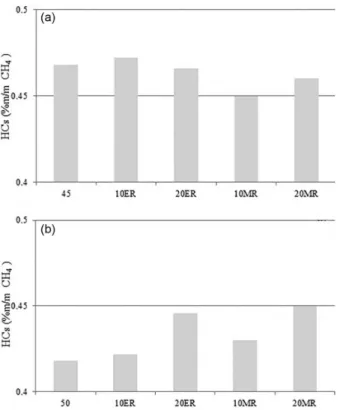
Figure 3 presents the values of HC emissions (in the
form of CH4) in % m/m of the base fuels and their respective
formulations with MR and ER soybean biodiesel. It should be noted that diesel fuel with CN 50 produces lower HC emissions than diesel with CN 45. However, HC emissions gradually increased in response to increasing proportions of both ER and MR biodiesel. On the other hand, the amount of HC in diesel CN 45 and in its formulations with ER biodiesel was practically the same, and decreased in its formulations with MR, indicating better combustion quality.
The higher HC emissions of the formulations of diesel CN 50 with biodiesel can be attributed to physicochemical properties such as viscosity, surface tension and volatility. These properties lead to increased fuel droplet size and
extinguish the flame in the cold areas of the combustion chamber adjacent to the cylinder walls, favoring the condensation of unreacted hydrocarbon radicals on their surfaces. The kinematic viscosity (40 °C) specified for diesel S10, herein referred to as CN 50 and CN 45, should
range from 2.0 to 4.5 mm2 s-1,58 but since the ER and
MR biodiesels showed values of 5.83 and 5.71 mm2 s-1,
respectively (Table 1), the kinematic viscosity was expected to be higher in their formulations with the base diesel.
Figure 4 illustrates the results of specific fuel
consumption (SFC), in g kW-1 h-1, as a function of test time
for CN 45 and 50 fuels and their respective formulations with 10MR, 20MR, 10ER and 20ER. Engine fuel consumption with the formulations is higher than with the base diesel (CN 45 and 50), particularly when the biodiesel content in the mixture is increased. The CN is
Figure 3. Concentration of HCs (% m/m CH4), in diesel CN: (a) 45 and (b) 50, and their formulations with 10MR, 20MR, 10ER and 20ER.
one of the determining factors of SFC in diesel engines with a constant injection angle, which is the case of
engines with mechanical fuel injection.34,59 The increase
in consumption of the formulations of 20% ER and MR with diesel CN 45 showed a linear relationship with the heat of combustion. The base fuels (CN 45 and 50)
show higher combustion enthalpy (45 MJ kg-1) than the
biodiesels ER (41 MJ kg-1) and MR (40 MJ kg-1); hence,
it is expected that any increase in the concentration of these biodiesels will lead to a proportional increase in consumption. Increasing the percentage of biodiesel in the formulation may slow down its atomization in the system, making combustion difficult and reducing its efficiency. In the case of formulations with ER, one of the probable causes of the increase in fuel consumption can be attributed to the decrease in combustion enthalpy due to the presence of 20% of glycerides in its composition.
Conclusions
This study assessed the combustion properties, such as PM and HC emissions, DP and SFC, using a single-cylinder diesel engine with mechanical fuel injection. The CN was found to have an influence on PM and HC emissions with this type of engine. The formulations with diesel CN 50 showed higher values of DP, indicating higher PM emissions. On the other hand, HC emissions with this formulation were lower than with the formulation with diesel CN 45. This study also showed that increasing the MR and ER content in the formulations increased their SFC when compared to that of the base diesels, a fact that was attributed mainly to the reduction of the combustion enthalpy of the mixture in response to the addition of the biodiesels. It was also found that the SFC of the CN 45 diesel formulated with ER was higher than that formulated with MR, indicating that the presence of 20% of glycerides in its composition and its lower CN exerted a more marked influence on the SFC. Based on the results of this study, both PM and SFC increase in response to increasing ER. In addition, biodiesel formulations containing up to 10% MR for diesel engines with mechanical injection also showed lower pollutant emissions.
The restriction on ER biodiesel industrial production process is mainly due to the difficulty to reach high conversion levels, resulting in a product out of specification according to the international quality standards. Although the ER biodiesel additive offers environmental advantages in production, its quality in terms of the production of particulate matter is lower than that of the MR biodiesel additive.
References
1. Guldhe, A.; Singh, B.; Mutanda, T.; Permaul, K.; Bux, F.; Renewable Sustainable Energy Rev. 2015, 41, 1447.
2. Menegazzo, M. L.; Lucas, B. F.; Alcade, L. B.; Petenucci, M. E.; Fonseca, G. G.; J. Environ. Chem. Eng. 2015, 3, 150.
3. Singh, B.; Guldhe, A.; Rawat, I.; Bux, F.; Renewable Sustainable Energy Rev. 2014, 29, 216.
4. Kucek, K. T.; Cesar-Oliveira, M. A. F.; Wilhelm, H. M.; Ramos, L. P.; J. Am. Oil Chem. Soc. 2007, 84, 385.
5. Pinto, A. C.; Guarieiro, L. L. N.; Rezende, M. J. C.; Ribeiro, N. M.; Torres, E. A.; Lopes, W. A.; Pereira, P. A. P.; de Andrade, J. B.; J. Braz. Chem. Soc. 2005, 16, 1313.
6. Mazivila, S. J.; Mitsutake, H.; de Santana, F. B.; Gontijo, L. C.; Santos, D. Q.; Borges Neto, W.; J. Braz. Chem. Soc. 2015, 26, 642.
7. da Silva, W. L. G.; de Souza, P. T.; Shimamoto, G. G.; Tubino, M.; J. Braz. Chem. Soc. 2015, 26, 1745.
8. Verma, P.; Sharma, M. P.; Renewable Sustainable Energy Rev.
2016, 62, 1063.
9. Nabi, N.; Shahadat, M. Z.; Rahman, S.; Beg, R. A.; SAE Tech. Pap. 2004, 01, 3034.
10. Wang, Y.; Liu, H.; Lee, C.-F. F.; Renewable Sustainable Energy Rev. 2016, 64, 569.
11. Kegl, B.; Energy Fuels 2016, 20, 1460.
12. Barnwal, B. K.; Sharma, M. P.; Renewable Sustainable Energy Rev. 2005, 9, 363.
13. Filoso, S.; Carmo, J. B.; Mardegan, S. F.; Lins, S. R M.; Gomes, T. F.; Martinelli, L. A.; Renewable Sustainable Energy Rev.
2015, 52, 1847.
14. American Society for Testing and Materials (ASTM) D975-16a; Standard Specification for Biodiesel Fuel Oils; ASTM International: West Conshohocken, PA, 2016.
15. American Society for Testing and Materials (ASTM) D7467-17; Standard Specification for Biodiesel Fuel Oil, Biodiesel Blend (B6 and B20); ASTM International: West Conshohocken, PA, 2017.
16. EN 14214: Automotive Fuels - Fatty Acid Methyl Esters (FAME) for Diesel Engines - Requirements and Test Methods; European Committee for Standardization, Berlin, 2008. Available at http:// agrifuelsqcs-i.com/attachments/1598/en14214.pdf, accessed in May 2017.
17. Pimentel, M. F.; Ribeiro, M. G. S.; Cruz, R. S.; Stragevitch, L.; Pacheco, J. G.; Teixeira, L. S. G.; Microchem. J. 2006, 82, 201.
18. Srivastava, A.; Prassad, R.; Renewable Sustainable Energy Rev.
2000, 4, 111.
19. Knothe, G.; Fuel Process. Technol. 2005, 86, 1059.
20. Atadashi, I. M.; Aroua, M. K.; Aziz, A.; Renewable Sustainable Energy Rev. 2010, 14, 1999.
22. Mudge, S. M.; Pereira, G.; Spill Sci. Technol. Bull. 1999, 5, 353. 23. Pinzi, S.; Rounce, P.; Herreros, J. M.; Tsolakis, A.; Dorado,
M. P.; Fuel 2014, 104, 170.
24. Knothe, G.; Energy Fuels 2008, 22, 1358.
25. Ramos, M. J.; Fernández, C. M.; Casas, A.; Rodríguez, L.; Pérez, Á.; Bioresour. Technol. 2009, 100, 261.
26. Makareviciene, V.; Janulis, P.; Renewable Energy 2003, 28, 2395.
27. Paulo, A. A.; Costa, R. S.; Rahde, S. B.; Vecchia, F. D.; Seferin, M.; Santos, C. A.; Appl. Therm. Eng. 2016, 98, 288.
28. Park, S. H.; Kim, H. J.; Suh, H. K.; Lee, C. S.; Int. J. Heat Fluid Flow 2009, 30, 960.
29. He, C.; Ge, Y.; Tan, J.; Han, X.; Int. J. Energy Res. 2008, 32, 1329.
30. Confederação Nacional da Indústria (CNI); Associação Nacional dos Fabricantes de Veículos Automotores; Indústria Automobilística e Sustentabilidade; CNI: Brasília, 2012. Available at https://static-cms-si.s3.amazonaws.com/media/ filer_public/a3/27/a3276293-13eb-4210-9316-696ff6d94950/ 20131002175420378115i.pdf, accessed in May 2017. 31. Altamirano, C. A. A.; Yokoyama, L.; Medeiros, J. L.; Araújo,
O. Q. F.; Appl. Energy 2016, 184, 1246.
32. Dermibas, A.; Energy Convers. Manage. 2008, 49, 125. 33. Refaat, A. A.; Int. J. Environ. Sci. Technol. 2010, 7, 183.
34. Knothe, G.; Matheaus, A. C.; Ryan, T. W.; Fuel 2003, 82, 971. 35. Ruina, L.; Zhong, W.; Peiyong, N.; Yang, Z.; Mingdi, L.; Lilin,
L.; Fuel 2014, 128, 180.
36. Lapuerta, M.; Armas, O.; Rodriguez-Fernández, J.; SAE Int. J. Fuels Lubr. 2009, 1, 1150.
37. Puhan, S.; Saravanan, N.; Nagarajan, G.; Vedaraman, N.; Biomass Bioenergy 2010, 34, 1079.
38. http://www.sisweb.com/software/ms/wiley.htm, accessed in June 2017.
39. American Society for Testing and Materials (ASTM) D6591-11; Standard Test Method for Determination of Aromatic Hydrocarbon Types in Middle Distillates-High Performance
Liquid Chromatography Method with Refractive Index Detection; ASTM International: West Conshohocken, PA, 2011. 40. Cataluña, R.; Silva, R.; J. Combust. 2012, 1.
41. Owen, K.; Coley, T.; Automotive Fuels Reference Book; Society of Automotive Engineers Inc.: Warrendale, USA, 1995. 42. Elkobt, M. M.; Prog. Energy Combust. Sci. 1982, 8, 61.
43. Kim, H. J.; Park, S. H.; Lee, C. S.; Fuel Process. Technol. 2010, 91, 354.
44. Bowman, M.; Hilligoss, D.; Rasmussen, S.; Hydrocarbon Process. 2006, 103.
45. American Society for Testing and Materials (ASTM) D6751-02; Standard Specification for Biodiesel Fuel (B100) Blend Stock for Distillate Fuels; ASTM International: West Conshohocken, PA, 2002.
46. Demirbas, A.; Fuel 2008, 87, 1743.
47. Knothe, G.; Energy Environ. Sci. 2009, 2, 759.
48. Knothe, G.; Dunn, R. O.; J. Am. Oil Chem. Soc. 2009, 86, 843. 49. Knothe, G.; Steidley, K. R.; Fuel 2005, 84, 1059.
50. Moser, B. R.; J. Am. Oil Chem. Soc. 2009, 86, 699. 51. Knothe, G.; J. Am. Oil. Chem. Soc. 2002, 9, 847.
52. Knothe, G.; Gerpen, J. V.; Krahl, J.; The Biodiesel Handbook, 2nd ed.; Elsevier: Champaign, 2010.
53. Van Gerpen, J.; Shanks, B.; Pruszko, R.; Clements, D.; Knothe, G.; Biodiesel Analytical Methods: August 2002-January 2004, NREL/SR-510-36240; National Renewable Energy Laboratory (NREL): Golden, Colorado, USA, 2004.
54. American Society for Testing and Materials (ASTM) D 613-05; Standard Test Method for Cetane Number of Diesel Fuel Oil; ASTM International: West Conshohocken, PA, 2005. 55. Bunjumea, P.; Agudelo, J. R.; Agudelo, A. F.; Energy Fuels
2011, 25, 77.
56. Lang, X.; Dalai, A. K.; Bakhshi, N. N.; Reaney, M. J.; Hertz, P. B.; Bioresour. Technol. 2001, 80, 53.
57. Wagner, H.; Luther, R.; Mang, T.; Appl. Catal., A 2001, 221,
429.
58. Agência Nacional do Petróleo, Gás Natural e Biocombustíveis (ANP), Resolução ANP No. 50, de 23/12/2013, Diário Oficial da União (DOU) 24/12/2013. Available at http://pesquisa.in.gov. br/imprensa/jsp/visualiza/index.jsp?data=24/12/2013&jornal= 1&pagina=104, accessed in May 2017.
59. Caetano, N. R.; Cataluña, R.; Vielmo, H. A.; Int. Rev. Mech. Eng. 2015, 9, 124.
Submitted: January 12, 2017
Published online: June 5, 2017