Combined Effect of the PGR
þ
331C
>
T,
CYP17A1 -34A
>
G and CYP19A1 1531G
>
A
Polymorphisms on the Risk of Developing
Endometriosis
Efeito combinado dos polimor
fi
smos PGR
þ
331C
>
T,
CYP17A1 -34A
>
G e CYP19A1 1531G
>
A no risco de
desenvolvimento da endometriose
Jéssica Vilarinho Cardoso
1,2Daniel Escorsim Machado
1Renato Ferrari
3Mayara Calixto da Silva
1Plínio Tostes Berardo
4Jamila Alessandra Perini
1,21Research Laboratory of Pharmaceutical Sciences, Pharmacy Unit, Centro Universitário Estadual da Zona Oeste, Rio de Janeiro, Rio de Janeiro, Brazil
2Post-graduation in Public Health and Natural Environment Program, Escola Nacional de Saúde Pública Sergio Arouca, Fundação Oswaldo Cruz (National School of Public Health, Oswaldo Cruz Foundation), Rio de Janeiro, Rio de Janeiro, Brazil
3Gynecology Institute, Universidade Federal do Rio de Janeiro, Hospital Moncorvo Filho, Rio de Janeiro, Rio de Janeiro, Brazil 4Gynecology Service, Hospital Federal dos Servidores do Estado,
Rio de Janeiro, Rio de Janeiro, Brazil
Rev Bras Ginecol Obstet 2017;39:273–281.
Address for correspondence Jamila Alessandra Perini, PhD, Research
Laboratory of Pharmaceutical Sciences, Pharmacy Unit, Centro Universitário Estadual da Zona Oeste, Av. Manoel Caldeira de Alvarenga, 1203 - Campo Grande, 23070-200 - Rio de Janeiro, RJ, Brazil (e-mail: [email protected]; [email protected]).
Keywords
►
polymorphisms
►
estrogens
►
endometriosis
►
biomarkers
Abstract
Purpose
To evaluate the magnitude of the association of the polymorphisms of the
genes
PGR, CYP17A1
and
CYP19A1
in the development of endometriosis.
Methods
This is a retrospective case-control study involving 161 women with
endometriosis (cases) and 179 controls. The polymorphisms were genotyped by
real-time polymerase chain reaction using the TaqMan system. The association of
the polymorphisms with endometriosis was evaluated using the multivariate logistic
regression.
Results
The endometriosis patients were signi
fi
cantly younger than the controls
(36.0
7.3 versus 38.0
8.5 respectively,
p
¼
0.023), and they had a lower body
mass index (26.3
4.8 versus 27.9
5.7 respectively,
p
¼
0.006), higher average
duration of the menstrual
fl
ow (7.4
4.9 versus 6.1
4.4 days respectively,
p
¼
0.03), and lower average time intervals between menstrual periods (25.2
9.6
versus 27.5
11.1 days respectively,
p
¼
0.05). A higher prevalence of symptoms of
dysmenorrhea, dyspareunia, chronic pelvic pain, infertility and intestinal or urinary
changes was observed in the case group when compared with the control group. The
received August 23, 2016 accepted March 23, 2017 published online June 14, 2017
DOIhttps://doi.org/ 10.1055/s-0037-1604097. ISSN 0100-7203.
Copyright © 2017 by Thieme Revinter Publicações Ltda, Rio de Janeiro, Brazil
Introduction
Endometriosis is a benign gynecological estrogen-depen-dent disease characterized by the presence of endometrial tissue out of the uterine cavity, affecting nearly 10% of women of reproductive age. Symptoms may include dysme-norrhea, dyspareunia, chronic pelvic pain and infertility.1 The pathogenesis and the molecular mechanisms that are involved in the development of endometriosis are not yet
clear, and hereditary susceptibility is an area of growing investigation for the identification of genetic polymorphisms that may lead to an increased risk of developing the disease.2,3
Estrogen performs a fundamental role in endometriosis, which predominantly occurs in women of reproductive age who have high estrogen production.4,5An increase in en-zyme expression is responsible for the estrogen synthesis and reduction of progesterone receptor (PGR) expression
interval between the onset of symptoms and the de
fi
nitive diagnosis of endometriosis
was 5.2
6.9 years. When comparing both groups, signi
fi
cant differences were not
observed in the allelic and genotypic frequencies of the polymorphisms
PGR
þ
331C
>
T
,
CYP17A1 -34A
>
G
and
CYP19A1 1531G
>
A
, even when considering the
symp-toms, classi
fi
cation and stage of the endometriosis. The combined genotype
PGR
þ
331TT/CYP17A1 -34AA
/
CYP19A11531AA
is positively associated with endometriosis
(odds ratio [OR]
¼
1.72; 95% con
fi
dence interval [95%CI]
¼
1.09
–
2.72).
Conclusions
The combined analysis of the polymorphisms
PGR-CYP17A1-CYP19A1
suggests a gene-gene interaction in the susceptibility to endometriosis. These results
may contribute to the identi
fi
cation of biomarkers for the diagnosis and/or prognosis of
the disease and of possible molecular targets for individualized treatments.
Resumo
Objetivo
Avaliar a magnitude de associação de polimor
fi
smos nos genes
PGR,
CYP17A1
e
CYP19A1
no desenvolvimento da endometriose.
Métodos
Este é um estudo retrospectivo do tipo caso-controle, envolvendo 161
mulheres com endometriose (casos) e 179 controles. Os polimor
fi
smos foram
ge-notipados pela reação em cadeia da polimerase em tempo real utilizando o sistema
TaqMan. A associação dos polimor
fi
smos estudados com a endometriose foi avaliada
pela regressão logística multivariada.
Resultados
As pacientes com endometriose eram signi
fi
cativamente mais jovens do
que os controles (36,0
7,3 versus 38,0
8,5, respectivamente,
p
¼
0,023),
apre-sentaram um índice de massa corporal menor (26,3
4,8 versus 27,9
5,7,
respec-tivamente,
p
¼
0,006), maior tempo médio de duração do
fl
uxo menstrual (7,4
4,9
versus 6,1
4,4 dias, respectivamente,
p
¼
0,03) e menor tempo médio do intervalo
entre as menstruações (25,2
9,6 versus 27,5
11,1 dias, respectivamente,
p
¼
0,05). Uma maior prevalência dos sintomas de dismenorreia, dispareunia, dor
pélvica crônica, infertilidade, alterações intestinais e urinárias foi observada no grupo
casos comparado ao grupo controle. O tempo médio entre o início dos sintomas e o
diagnóstico de
fi
nitivo de endometriose foi de 5,2
6,9 anos. Comparando os dois
grupos, não foram observadas diferenças signi
fi
cativas nas frequências alélicas e
genotípicas dos polimor
fi
smos
PGR
þ
331C
>
T
,
CYP17A1 -34A
>
G
e
CYP19A1 1531G
>
A
, e nem considerando os sintomas, a classi
fi
cação e o estadiamento da
endo-metriose. O genótipo combinado
PGR
þ
331TT/CYP17A1 -34AA
/
CYP19A11531AA
está
associado positivamente com a endometriose (razão de possibilidades [RP]
¼
1,72;
intervalo de con
fi
ança de 95% [IC95%]
¼
1,09
–
2,72).
Conclusões
A análise combinada dos polimor
fi
smos
PGR-CYP17A1-CYP19A1
sugere
uma interação gene-gene na susceptibilidade à endometriose. Estes resultados podem
contribuir para a identi
fi
cação de biomarcadores para o diagnóstico e/ou prognóstico
da doença, assim como de possíveis alvos moleculares para um tratamento
individualizado.
Palavras-chave
observed in samples of endometrial injuries, but these phenomena are not found in controls.6,7As endometriosis is an estrogen-dependent disease, genetic polymorphisms involved in the biosynthesis and regulation of estrogens could be considered possible biomarkers for its diagnosis and/or prognosis. Cytochrome P450 17A1 (CYP17A1) is involved in the initial stages of estrogen synthesis, convert-ing pregnenolone into 17α-hydroxypregnenolone and, sub-sequently, into dehydroepiandrosterone. Furthermore, cytochrome P450 19A1 (CYP19A1) acts in the final stage by converting androstenedione into estrone, and testoster-one into estradiol.4,8The enzyme CYP17A1, also known as 17
α-hydroxylase, is encoded by the gene with the same name, located in chromosome 10q24.3.8 The single nucleotide polymorphism (SNP)CYP17A1 -34A>Gis located in the 5′
untranslated region (UTR) of theCYP17A1gene, and it causes a significant increase in the expression of 17α-hydroxylase.8 A different gene product, the aromatase enzyme, is encoded by the gene CYP19A1, which is located in chromosome 15q21. The SNPCYP19A1 1531G>Ais found in the 3′UTR
of this gene, and it causes a significant change in the levels of circulating estradiol.8Progesterone is also involved in the pathogenesis of endometriosis, as it is a strong antagonist of estrogen, and thus plays an essential role in the regulation of endometrial cell proliferation.6 The PGR gene, located in chromosome 11q22–q23, is responsible for encoding both progesterone receptor isoforms (PR-A and PR-B) by tran-scribing from alternative promoters.9The SNPPGRþ331C/T, located in the gene promoter region, creates an additional TATA box, and causes higher transcription of PR-B.9
As the SNPs PGR þ331C>T, CYP17A1 -34A>G and
CYP19A1 1531G>A are located near potential elements
that regulate their respective genes, interfering with the levels of expression of the corresponding proteins, it be-comes relevant to evaluate the influence of these SNPs in the development of endometriosis. To date, 12 studies have evaluated the association of the SNPs PGR þ331C>T,
CYP17A1 -34A>GandCYP19A1 1531G>Ain the
develop-ment of endometriosis in different populations. However, the results of the analyses are controversial.10–21 In this context, the objective of this study was to evaluate the magnitude of the association of the SNPsPGR þ331C>T,
CYP17A1 -34A>GandCYP19A1 1531G>Awith the
devel-opment of endometriosis in women treated in two public reference hospitals in Brazil.
Methods
Study Design
This was a retrospective, case-control study approved by the Human Research Ethics Committees of two of our institu-tions (under protocols number 414/11 and 1.244.29 respec-tively), both located in the city of Rio de Janeiro, Brazil. All participating patients (n¼340) provided written informed consent, and visited one of the two institutions between March 2011 and October 2015. The research was conducted in accordance with the Declaration of Helsinki, which was revised in 2008. Patients with a surgical diagnosis (after
laparoscopy or laparotomy) of endometriosis with histologi-cal confirmation of the disease, as well as those diagnosed by magnetic resonance imaging (MRI), were considered the case group (n¼161). The control group (n¼179) consisted of women with a negative diagnosis of endometriosis, after laparoscopy or laparotomy for tubal ligation (n¼48) or for the treatment of benign diseases, such as myoma (n¼52), ovarian cysts (n¼30), hydrosalpinx (n¼5), or for other reasons (n¼44). Women with any history or diagnosis of cancer or adenomyosis were excluded.2
The stage of the endometriosis was determined according to the revised American Fertility Society classification, which divides the disease into four stages: I (minimum), II (mild), III (moderate) and IV (severe).22Regarding the classification of the endometriosis, we considered the proposal of Nisolle and Donnez:23superficial endometriosis (SUP), ovarian endome-trioma (OMA), and deep infiltrative endometriosis (DIE). Superficial endometriosis and ovarian endometrioma may be found in association with deep endometriosis,24and the cases in which this association was observed were consid-ered DIE.
The body mass index (BMI) was calculated as the weight (kg) divided by the height squared (m2). Only severe and
incapaci-tating symptoms of pain were included. Women who failed to conceive after one year of regular, contraceptive-free inter-course were considered infertile. Cyclical intestinal or urinary symptoms were defined as bowel and/or urinary pain and/or bleeding coinciding with menstrual periods.
Genotyping
Genomic DNA was extracted from the peripheral blood sample using a genomic DNA extraction kit (Genomic DNA Extraction, Real Biotech Corporation, Banqiao City, Taiwan), according to the manufacturer’s instructions.
Genotyping ofPGRþ331C>T(rs10895068),CYP17A1 -34A >G(rs743572) andCYP19A1 1531G>A(rs10046) SNPs was
performed by real-time polymerase chain reaction (PCR) using the TaqMan system. Oligonucleotides and probes specific to each SNP were obtained from Applied Biosystems: rs10895068 (C_27858738_10), rs743572 (C_2852784_30) and rs10046 (C_8234731_30). For all SNPs, PCRs were per-formed with 30 ng of template DNA, 1TaqMan Universal Master Mix (Applied Biosystems, Foster City, CA, US), and with each primer and probe assay at 1dilution, and H2O to 8μL. The PCR conditions were: 95°C for 10 minutes, followed by 40 cycles of denaturation at 92°C for 15 seconds, and annealing at 60°C for 1 minute. Allele-detection was performed on a 7500 Real-Time System (Applied Biosystems, Foster City, CA, US), and the genotypes were then determined directly.
Statistical Analyses
The continuous variables were expressed as the mean
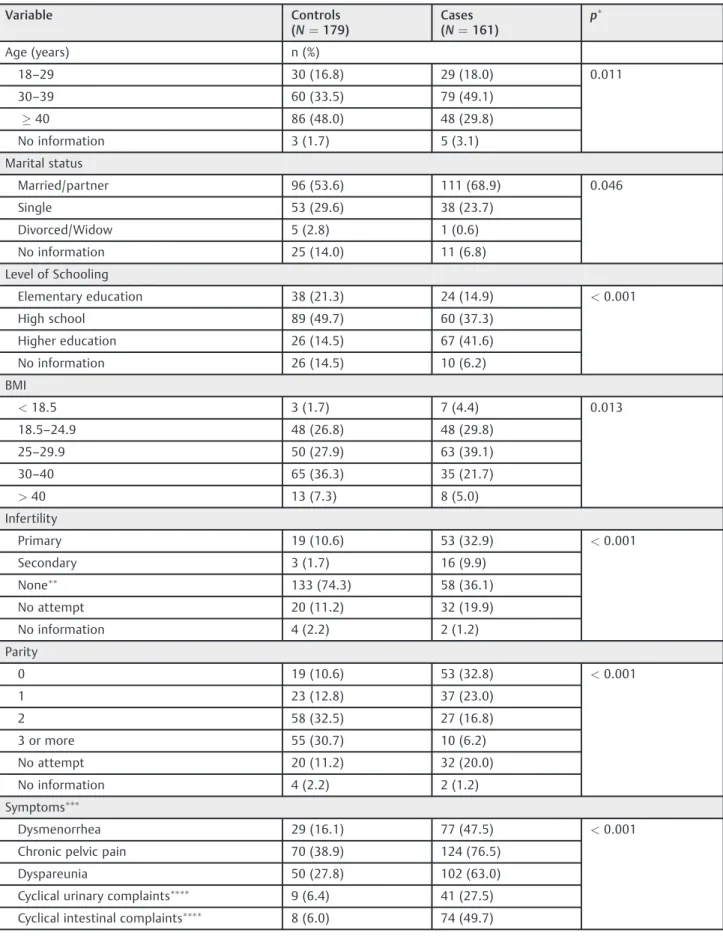
Table 1 Demographic and clinical characteristics of the study population (N¼340)
Variable Controls
(N¼179)
Cases (N¼161)
p
Age (years) n (%)
18–29 30 (16.8) 29 (18.0) 0.011
30–39 60 (33.5) 79 (49.1)
40 86 (48.0) 48 (29.8)
No information 3 (1.7) 5 (3.1)
Marital status
Married/partner 96 (53.6) 111 (68.9) 0.046
Single 53 (29.6) 38 (23.7)
Divorced/Widow 5 (2.8) 1 (0.6)
No information 25 (14.0) 11 (6.8)
Level of Schooling
Elementary education 38 (21.3) 24 (14.9) <0.001
High school 89 (49.7) 60 (37.3)
Higher education 26 (14.5) 67 (41.6)
No information 26 (14.5) 10 (6.2)
BMI
<18.5 3 (1.7) 7 (4.4) 0.013
18.5–24.9 48 (26.8) 48 (29.8)
25–29.9 50 (27.9) 63 (39.1)
30–40 65 (36.3) 35 (21.7)
>40 13 (7.3) 8 (5.0)
Infertility
Primary 19 (10.6) 53 (32.9) <0.001
Secondary 3 (1.7) 16 (9.9)
None
133 (74.3) 58 (36.1)
No attempt 20 (11.2) 32 (19.9)
No information 4 (2.2) 2 (1.2)
Parity
0 19 (10.6) 53 (32.8) <0.001
1 23 (12.8) 37 (23.0)
2 58 (32.5) 27 (16.8)
3 or more 55 (30.7) 10 (6.2)
No attempt 20 (11.2) 32 (20.0)
No information 4 (2.2) 2 (1.2)
Symptoms
Dysmenorrhea 29 (16.1) 77 (47.5) <0.001
Chronic pelvic pain 70 (38.9) 124 (76.5)
Dyspareunia 50 (27.8) 102 (63.0)
Cyclical urinary complaints
9 (6.4) 41 (27.5)
Cyclical intestinal complaints 8 (6.0) 74 (49.7)
Abbreviation: BMI, body mass index. Notes:p-value obtained by Pearson
distributions were compared between cases and controls by theχ2 test or Fisher’s exact test. To evaluate the association between the SNPs and the development of endometriosis, as well as the presence of symptoms, the classification and staging of the disease were used to estimate the odds ratios (ORs) and their respective 95% confidence intervals (95% CIs), with adjustment for possible confounding factors, using a multivariate logistic regression. Values ofp<0.05
were considered statistically significant. All analyses were performed using the Statistical Package for the Social Sciences (SPSS, IBM Corp., Armonk, NY, US) software, version 20.0.
Results
The endometriosis cases were diagnosed through laparosco-py (n¼90, 55.9%), laparotomy (n¼27, 16.8%) or MRI (n¼44, 27.3%), and 87 (54%) were classified as DIE. Of the 117 surgery cases, 37 (31.6%) presented stages I-II diseases, and 80 (68.4%) presented stages III-IV. The most common locations of the endometriotic lesions were in the ovary (31%), followed by the intestine (19%), and the uterosacral ligaments (15%). The average age of the endometriosis patients at the time of diagnosis was 31.57.5, and the average time for disease diagnosis, which was the time since the beginning of the symptoms until the definitive diagnosis, was 5.26.9 years.
In►Table 1, the demographic and clinical data from the
study population are described. The patients with endometri-osis were significantly younger than the controls (36.07.3 versus 38.08.5 respectively,p¼0.023), and presented a higher education level (41.6% versus 14.5%), as well as a lower BMI (26.34.8 versus 27.95.7 respectively, p¼0.006). The number of infertile women (primary or secondary) was significantly higher in the case group (42.9%) than in the control group (12.3%), and nearly 63% of the women from the control group had 2 or more children. The patients with endometriosis presented a higher prevalence (p<0.001) of
symptoms, including dysmenorrhea, dyspareunia, chronic pelvic pain, and urinary and intestinal changes. Considering the characteristics of the menstrual cycle, a significant differ-ence was detected between cases and controls in relation to the average duration of the menstrualflow (7.44.9 versus 6.14.4 days respectively,p¼0.03) and the average interval between menstrual periods (25.29.6 versus 27.511.1 days respectively,p¼0.05).
When comparing the allelic and genotypic frequencies of the SNPs PGRþ331C>T,CYP17A1 -34A>Gand CYP19A1
G>Abetween the cases and controls (►Fig. 1), no signifi
-cant differences were detected, even when considering the staging and endometriosis classification (data not shown). The allelic distribution of the SNPsPGRþ331C>T,CYP17A1
-34A>GandCYP19A1 G>Ain relation to the absence or
presence of symptoms (dysmenorrhea, pelvic pain, dyspar-eunia, infertility, and urinary and intestinal problems, for example) in the endometriosis patients is summarized in ►Fig. 2. Considering the symptoms of the disease, no
significant differences were found.
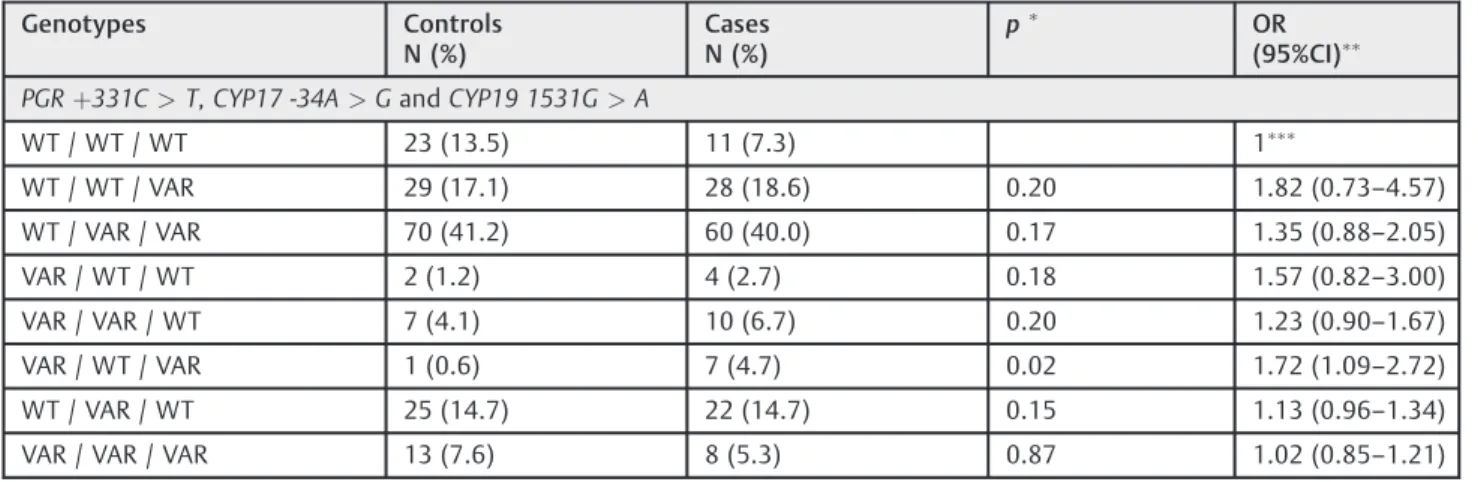
A combined analysis of the three studied SNPs (PGR þ331C>T, CYP17A1 -34A>G and CYP19A1 G>A),
com-pared between the endometriosis cases and controls, was performed to investigate whether the presence of more than 1 SNP would increase the risk of developing the disease (►Table 2). It has been observed that relative to the
com-bined wild-type genotype (PGR þ331CC/CYP17A1 -34AA/ CYP19A11531GG), the combined genotype PGR þ331TT/ CYP17A1 -34AA/CYP19A11531AA is associated with an in-creased risk of developing endometriosis. A combined anal-ysis of thePGRþ331C>T,CYP17A1 -34A>GandCYP19A1
G>A genotypes was also performed in relation to the
absence or presence of symptoms (dysmenorrhea, pelvic pain, dyspareunia, infertility, and urinary and intestinal problems, for example) in the endometriosis patients. How-ever, no significant differences were found (data not shown). In►Table 3, we describe the variant allele frequencies of
the SNPs PGR þ331 T, CYP17A1 -34 G and CYP19A1A in
Fig. 1 Allelic and genotypic frequencies of the polymorphismsPGR
þ331C>T,CYP17A1 -34A>GandCYP19A1 G>Ain the study
different populations. The allele frequencyPGRþ331 Tvaried between 2% and 10% and 5% and 10% in the cases and controls respectively, based on 3 studies that have evaluated this SNP, including the present one. The SNP rs743572 has been evaluated in 7 studies, in addition to the present study, and the frequency of theCYP17A1 -34 Gallele varied between 35% and 58% in the cases and between 31% and 63% in the controls. In addition to our study, 4 other studies also evaluated the SNP rs10046, and the allele frequency of CYP19A1 1531Avaried between 35% and 58% and between 41% and 60% in the cases and controls respectively.
Discussion
Endometriosis is a complex multifactorial gynecological disease caused by the combination of hormonal, genetic and environmental factors, as well as immunological pro-cesses. Estrogen and progesterone are essential in the
regu-lation of endometrial tissue growth, and, as such, they may play a central role in the pathogenesis of endometriosis.5,6In this study, a positive association between the combined genotype PGR þ331TT/CYP17A1 -34AA/CYP19A1 1531AA and the development of endometriosis was observed.
Supporting our results, neither Lamp et al,18in Estonia, nor Trabert et al,19 in the United States, could find an association with only thePGR þ331Tallele. However, van Kaam et al,15in the Netherlands, observed a protective effect (OR¼0.22; 95%CI¼0.06–0.77) for the development of en-dometriosis. In agreement with ourfindings, 5 studies from China,13 Japan,10 Turkey,17 Italy16 and the United States19 failed to observe an association between the SNPCYP17A1 -34Gand endometriosis. However, 2 studies in the Chinese population11,12found a positive association between endo-metriosis and the CYP17A1 -34A allele (p¼0.046 and p¼0.009). With relation to the SNP CYP19A1 1531G>A,
none of the studies found an association with endometriosis,
Table 2 Combined genotype frequencies of the polymorphismsPGRþ331C>T, CYP17 -34A>GandCYP19 1531G>Abetween
controls and cases, and their association with the risk of endometriosis
Genotypes Controls
N (%)
Cases N (%)
p OR
(95%CI)
PGRþ331C>T, CYP17 -34A>GandCYP19 1531G>A
WT / WT / WT 23 (13.5) 11 (7.3) 1
WT / WT / VAR 29 (17.1) 28 (18.6) 0.20 1.82 (0.73–4.57)
WT / VAR / VAR 70 (41.2) 60 (40.0) 0.17 1.35 (0.88–2.05)
VAR / WT / WT 2 (1.2) 4 (2.7) 0.18 1.57 (0.82–3.00)
VAR / VAR / WT 7 (4.1) 10 (6.7) 0.20 1.23 (0.90–1.67)
VAR / WT / VAR 1 (0.6) 7 (4.7) 0.02 1.72 (1.09–2.72)
WT / VAR / WT 25 (14.7) 22 (14.7) 0.15 1.13 (0.96–1.34)
VAR / VAR / VAR 13 (7.6) 8 (5.3) 0.87 1.02 (0.85–1.21)
Abbreviations: 95%CI, 95% confidence interval; OR, odds ratio.
Notes: WT/WT/WT,CC/AA/GG; WT/WT/VAR,CC/AA/GAorCC/AA/AA; WT/VAR/VAR,CC/GG/AAorCC/AG/GAorCC/AG/AAorCC/GG/GA; VAR/WT/WT,CT/ AA/GGorTT/AA/GG; VAR/VAR/WT,CT/AG/GGorCT/GG/GGorTT/AG/GGorTT/GG/GG; VAR/WT/VAR,CT/AA/GAorCT/AA/AAorTT/AA/GAorTT/AA/AA; WT/VAR/WT,CC/GG/GGorCC/AG/GG; VAR/VAR/VAR,TT/GG/AA;
p-value obtained through the Chi-squared test (PearsonP-value) or Fisher’s exact test.
Adjusted by age and BMI.
Reference group.
Table 3 Frequency of the studied polymorphisms among different populations (endometriosis patients and controls)
Polymorphism Population N
Frequency among the controls (%)
Frequency among the cases (%)
Association with endometriosis
Reference
PGRþ331 C>T
(rs10895068)
PGRþ331 T
Estonia 349 8.8 6.7 No association Lamp et al18
United States 823 4.8 5.1 No association Trabert et al19
Netherlands 165 9.7 2.3 Protective (T allele) van Kaam et al15
Brazil 179 6.6 10.1 No association Present study
CYP17A1 -34 A>G
(rs743572)
CYP17A1 -34 G
Turkey 93 30.8 57.6 No association Bozdag et al17
China 247 60.2 50.8 Risk (A allele) Hsieh et al11
China 227 62.9 50.8 Risk (A allele) Hsieh et al12
China 510 54.3 58.2 No association Juo et al13
Japan 317 39.8 42.9 No association Kado et al10
United States 823 39.3 34.8 No association Trabert et al19
Italy 190 37.2 42.3 No association Vietri et al16
Brazil 180 42.7 44.4 No association Present study
CYP19A1 1531 G>A
(rs10046)
CYP19A1 1531 A
Korea 412 55.9 55.8 No association Hur et al14
Estonia 349 59.8 55.0 No association Lamp et al18
China 371 56.4 57.5 No association Wang et al20
China 202 41.0 35.3 No association Yang et al21
Brazil 180 39.4 40.6 No association Present study
Abbreviations: CYP17A1, cytochrome P450 17A1; CYP19A1, cytochrome P450 19A1; PGR, progesterone receptor. Note:N total number of individuals included in the study (cases
which is similar to our results.14,18,20,21To date, no study has investigated the combined effect of the SNPsPGRþ331TT/ CYP17A1 -34AA/CYP19A1 1531AA on the development of endometriosis.
The strength of the present study is that it is thefirst study performed in the Brazilian population that evaluated the SNPsPGRþ331C>T,CYP17A1 -34A>GandCYP19A1 1531G >Ain terms of endometriosis development, while
consider-ing the symptoms of the disease. All control patients were surgically evaluated to confirm a negative diagnosis of endometriosis; 27% of them had previously undergone ster-ilization, and 63% had already had 2 or more children. A limitation of this study was that the controls also included women with other gynecological diseases, providing lower risk estimations. Furthermore, considering the endometri-osis patients, 27% were diagnosed by MRI. However, this has been a specific and accurate method for the detection of deep endometriosis.25–28
In conclusion, the combined analysis of the polymor-phismsPGR-CYP17A1-CYP19A1suggests a gene-gene inter-action in the susceptibility to endometriosis. The results may contribute to the identification of genetic biomarkers that are able to help in disease diagnosis and/or prognosis, as well as in the identification of possible molecular targets for individualized treatments.
Conflicts of Interest
The authors have no conflicts of interest to disclose.
Acknowledgment
The authors would like to thank Lucas Rafael Lopes and Caroline Passos from Centro Universitário Estadual da Zona Oeste, Rio de Janeiro, Brazil, for their technical assistance. This study was supported by the Brazilian agencies Conselho Nacional de Desenvolvimento
Cientí-fico e Tecnológico (CNPq), Fundação de Amparo à Pesquisa do Estado do Rio de Janeiro (FAPERJ) and Fundação Ary Frauzino - Oncobiologia.
References
1 Acién P, Velasco I. Endometriosis: a disease that remains enig-matic. ISRN Obstet Gynecol 2013;2013:242149
2 Perini JA, Cardoso JV, Berardo PT, et al. Role of vascular endothelial growth factor polymorphisms (-2578C>A, -460 T>C, -1154G >A,þ405G>C andþ936C>T) in endometriosis: a
case-con-trol study with Brazilians. BMC Womens Health 2014;14:117
3 Zondervan KT, Rahmioglu N, Morris AP, et al. Beyond endome-triosis genome-wide association study: from genomics to phe-nomics to the patient. Semin Reprod Med 2016;34(04):242–254
4 Bell DW, Brannigan BW, Matsuo K, et al. Increased prevalence of EGFR-mutant lung cancer in women and in East Asian popula-tions: analysis of estrogen-related polymorphisms. Clin Cancer Res 2008;14(13):4079–4084
5 Barcelos ID, Donabella FC, Ribas CP, et al. Down-regulation of the CYP19A1 gene in cumulus cells of infertile women with endome-triosis. Reprod Biomed Online 2015;30(05):532–541
6 Bedaiwy MA, Dahoud W, Skomorovska-Prokvolit Y, et al. Abun-dance and Localization of Progesterone Receptor Isoforms in Endometrium in Women With and Without Endometriosis and in Peritoneal and Ovarian Endometriotic Implants. Reprod Sci 2015;22(09):1153–1161
7 Lafay Pillet MC, Schneider A, Borghese B, et al. Deep infiltrating endometriosis is associated with markedly lower body mass index: a 476 case-control study. Hum Reprod 2012;27(01): 265–272
8 Ghisari M, Eiberg H, Long M, Bonefeld-Jørgensen EC. Polymorph-isms in phase I and phase II genes and breast cancer risk and relations to persistent organic pollutant exposure: a case-control study in Inuit women. Environ Health 2014;13(01):19
9 De Vivo I, Huggins GS, Hankinson SE, et al. A functional poly-morphism in the promoter of the progesterone receptor gene associated with endometrial cancer risk. Proc Natl Acad Sci U S A 2002;99(19):12263–12268
10 Kado N, Kitawaki J, Obayashi H, et al. Association of the CYP17 gene and CYP19 gene polymorphisms with risk of endometriosis in Japanese women. Hum Reprod 2002;17(04):897–902
11 Hsieh YY, Chang CC, Tsai FJ, Lin CC, Tsai CH. Cytochrome P450c17alpha 5′-untranslated region
T/C polymorphism in en-dometriosis. J Genet 2004;83(02):189–192
12 Hsieh YY, Chang CC, Tsai FJ, Lin CC, Tsai CH. Estrogen receptor alpha dinucleotide repeat and cytochrome P450c17alpha gene polymorphisms are associated with susceptibility to endome-triosis. Fertil Steril 2005;83(03):567–572
13 Juo SH, Wang TN, Lee JN, Wu MT, Long CY, Tsai EM. CYP17, CYP1A1 and COMT polymorphisms and the risk of adenomyosis and endometriosis in Taiwanese women. Hum Reprod 2006;21(06): 1498–1502
14 Hur SE, Lee S, Lee JY, Moon HS, Kim HL, Chung HW. Polymorph-isms and haplotypes of the gene encoding the estrogen-metabo-lizing CYP19 gene in Korean women: no association with advanced-stage endometriosis. J Hum Genet 2007;52(09): 703–711
15 van Kaam KJ, Romano A, Schouten JP, Dunselman GA, Groothuis PG. Progesterone receptor polymorphismþ331G/A is associated with a decreased risk of deep infiltrating endometriosis. Hum Reprod 2007;22(01):129–135
16 Vietri MT, Cioffi M, Sessa M, et al. CYP17 and CYP19 gene polymorphisms in women affected with endometriosis. Fertil Steril 2009;92(05):1532–1535
17 Bozdag G, Alp A, Saribas Z, Tuncer S, Aksu T, Gurgan T. CYP17 and CYP2C19 gene polymorphisms in patients with endometriosis. Reprod Biomed Online 2010;20(02):286–290
18 Lamp M, Peters M, Reinmaa E, et al. Polymorphisms in ESR1, ESR2 and HSD17B1 genes are associated with fertility status in en-dometriosis. Gynecol Endocrinol 2011;27(06):425–433
19 Trabert B, Schwartz SM, Peters U, et al. Genetic variation in the sex hormone metabolic pathway and endometriosis risk: an evaluation of candidate genes. Fertil Steril 2011;96(06): 1401–1406.e3
20 Wang L, Lu X, Wang D, et al. CYP19 gene variant confers suscept-ibility to endometriosis-associated infertility in Chinese women. Exp Mol Med 2014;46:e103
21 Yang X, Chen SQ, Liu M. [Association of the CYP19 gene poly-morphism with genetic susceptibility to endometriosis]. Zhon-ghua Yi Xue Yi Chuan Xue Za Zhi 2010;27(06):692–696
22 Revised American Society for Reproductive Medicine classifi ca-tion of endometriosis: 1996. Fertil Steril 1997;67(05):817–821
23 Nisolle M, Donnez J. Peritoneal endometriosis, ovarian endome-triosis, and adenomyotic nodules of the rectovaginal septum are three different entities. Fertil Steril 1997;68(04):585–596
25 Bianek-Bodzak A, Szurowska E, Sawicki S, Liro M. The importance and perspective of magnetic resonance imaging in the evaluation of endometriosis. BioMed Res Int 2013;2013:436589
26 Ma K, Majumder K, Clayton R, Rajashanker B, Ed-Osagie E. Correlation between magnetic resonance imaging results and
findings at surgery for cases of severe endometriosis. J Minim Invasive Gynecol 2015;22(6S):S55
27 Barcellos MB, Lasmar B, Lasmar R. Agreement between the preoperativefindings and the operative diagnosis in patients with deep endometriosis. Arch Gynecol Obstet 2016;293(04): 845–850