Licenciada
Polyhydroxyalkanoates production by
photosynthetic mixed cultures
Dissertação para obtenção do Grau de Doutor em Engenharia Química e Bioquímica
Orientador:
Adrian Michael Oehmen,
Investigador Auxiliar, FCT-UNL
Co-orientadora:
Maria da Ascensão C. F. Miranda Reis,
Professora Catedrática, FCT-UNL
Dezembro, 2013 Júri:
Arguentes: Doutor Bruno Sommer Ferreira
Prof. Doutora Maria Manuela Regalo Fonseca
Vogais: Doutora Ana Maria Nobre
i
Polyhydroxyalkanoates production by photosynthetic mixed cultures
Copyright © Joana Costa Fradinho, Faculdade de Ciências e Tecnologia, Universidade Nova de Lisboa.
iii
Para o meu Pai
v
Agradecimentos
Em primeiro lugar, eu gostaria de agradecer aos meus orientadores, Doutor Adrian Oehmen e Professora Maria Ascensão Reis por todo o apoio que me deram durante o meu doutoramento, pelas reuniões estimulantes e por todos os ensinamentos que me passaram, mas especialmente,
eu gostaria de agradecer a total confiança que sempre senti da vossa parte e que me deu sempre alento para experimentar mais, para testar coisas diferentes e para fazer sempre algo novo.
Queria também agradecer à Doutora Gilda Carvalho pelo apoio que meu durante as análises microbiológicas e por ter transmitido o entusiasmo da observação/identificação dos “bichinhos”.
Agradeço também à Joana Domingos e à Mafalda Cardoso pela ajuda que me deram com o trabalho laboratorial. Foi sempre um prazer trabalhar com alunas tão dedicadas e um grande
orgulho ver a sua evolução ao longo do estágio.
Agradeço o apoio financeiro da Fundação para a Ciência e Tecnologia através de minha bolsa
de doutoramento SFRH/BD/42085/2007.
A todos os meus colegas do grupo BPEG, agradeço a entreajuda, os momentos de boa
disposição e a disponibilidade que por vezes conseguiam tirar da cartola entre duas amostras de uma cinética. Em particular, gostaria de agradecer à Mónica e ao Ricardo, colegas da bancada
em frente, pela entreajuda de prestarmos sempre atenção aos reactores uns dos outros sempre que nos ausentávamos.
Um grande agradecimento também para as minhas colegas de gabinete: à Rita Ricardo pela sua
inesgotável energia e pelas conversas na boleia para casa; à Andreia pela boa disposição e pela disponibilidade; à Cláudia pelo constante apoio em todas as situações; à Filipa pela sua calma; à
Bárbara pela sua espontaneidade e à Margarida por todo o seu entusiasmo e alegria. Em especial, gostaria de agradecer à Ana, pela amizade, e por ter mostrado que é sempre possível
alcançar um amanhã mais feliz desde que se tenha coragem para lutar por aquilo em que se acredita.
Queria também agradecer ao meu marido Pedro pelo apoio infindável e à minha filhota por toda a sua alegria.
vii
Abstract
Polyhydroxyalkanoates (PHAs) are natural biologically synthesized polymers that have been the subject of much interest in the last decades due to their biodegradability. Thus far, its microbial
production is associated with high operational costs, which increases PHA prices and limits its marketability. To address this situation, this thesis’ work proposes the utilization of photosynthetic mixed cultures (PMC) as a new PHA production system that may lead to a reduction in operational costs. In fact, the operational strategies developed in this work led to
the selection of PHA accumulating PMCs that, unlike the traditional mixed microbial cultures, do not require aeration, thus permitting savings in this significant operational cost. In particular,
the first PHA accumulating PMC tested in this work was selected under non-aerated illuminated conditions in a feast and famine regime, being obtained a consortium of bacteria and algae,
where photosynthetic bacteria accumulated PHA during the feast phase and consumed it for growth during the famine phase, using the oxygen produced by algae. In this symbiotic system,
a maximum PHA content of 20% cell dry weight (cdw) was reached, proving for the first time, the capacity of a PMC to accumulate PHA. During adaptation to dark/light alternating conditions, the culture decreased its algae content but maintained its viability, achieving a PHA
content of 30% cdw. Also, the PMC was found to be able to utilize different volatile fatty acids
for PHA production, accumulating up to 20% cdw of a PHA co-polymer composed of 3-hydroxybutyrate (3HB) and 3-hydroxyvalerate (HV) monomers. Finally, a new selective approach for the enrichment of PMCs in PHA accumulating bacteria was tested. Instead of
imposing a feast and famine regime, a permanent feast regime was used, thus selecting a PMC that was capable of simultaneously growing and accumulating PHA, being attained a maximum
PHA content of 60% cdw, the highest value reported for a PMC thus far. The results presented in this thesis prospect the utilization of cheap, VFA-rich fermented wastes as substrates for PHA
production, which combined with this new photosynthetic technology opens up the possibility for direct sunlight illumination, leading to a more cost-effective and environmentally
sustainable PHA production process.
ix
Resumo
Polihidroxialcanoatos (PHAs) são polímeros naturais sintetizados biologicamente que nas últimas décadas têm sido alvo de grande interesse devido à sua biodegradabilidade. Actualmente os PHAs são produzidos microbiologicamente com custos operacionais elevados que inflaccionam o seu preço e limitam a sua comercialização. Em resposta a esta situação, o trabalho desenvolvido nesta tese propõe a utilização de culturas mistas fotossintéticas (CMF) como um novo sistema de produção de PHAs que poderá levar a uma redução dos custos operacionais. De facto, as estratégias operacionais desenvolvidas neste trabalho levaram à selecção de CMFs acumuladoras de PHA que, ao contrário das culturas mistas tradicionais, não necessitam de arejamento, permitindo uma redução de custos em relação a este aspecto. Em concreto, a primeira CMF acumuladora de PHAs que foi testada neste trabalho foi seleccionada através de um regime de fome e fartura na presença de luz e sem arejamento, tendo-se obtido um consórcio de bactérias e algas em que as bactérias fotossintéticas acumulavam PHAs durante a fase de fartura e consumiam-no para crescimento durante a fase de fome, usando, para tal, o oxigénio produzido pelas algas. Neste sistema simbiótico foi possível alcançar um conteúdo máximo em PHA de 20% em peso seco celular (psc), demonstrando, pela primeira vez, a capacidade de acumulação de PHA de uma CMF. Durante a adaptação para condições alternadas luz/escuro, ocorreu uma diminuição na quantidade de algas da cultura, que manteve no entanto a sua viabilidade, atingindo um conteúdo em PHA de 30% psc. Verificou-se também que a CMF poderia utilizar diferentes ácidos gordos voláteis (AGVs) para produção de PHA, conseguindo acumular até 20% psc de um co-polímero de PHA composto por monómeros de 3-hidroxibutiraro (3HB) e 3-hidroxivalerato (HV). Por último, testou-se um novo método de selecção para enriquecimento de CMFs em bactérias acumuladoras de PHA. Em vez de se impor um regime de fome e fartura, utilizou-se um regime de fartura permanente, selecionando-se deste modo uma CMF que era capaz de crescer e acumular PHA simultaneamente, tendo-selecionando-se alcançado um conteúdo máximo em PHA de 60% psc, o maior valor descrito até ao momento para CMFs. Os resultados apresentados neste trabalho prenunciam a utilização de resíduos baratos fermentados, ricos em AGVs, como substratos para produção de PHAs, o que combinado com a nova tecnologia fotossintética proposta neste trabalho, abrem a possibilidade de uma utilização directa de iluminação solar, levando à criação de um processo de produção de PHAs menos oneroso e mais ambientalmente sustentável.
xi
Contents
1 Introduction 1
1.1 Plastics . . . 3
1.2 Biodegradable plastics . . . 5
1.3 Polyhydroxyalkanoates . . . 6
1.4 PHA biosynthesis . . . 7
1.5 PHA production in pure culture systems . . . 8
1.6 PHA production with mixed microbial cultures . . . 10
1.7 PHA production in photosynthetic bacteria . . . 14
1.8 Motivation and thesis outline . . . 19
References . . . 20
2 Polyhydroxyalkanoates production by a mixed photosynthetic consortium of bacteria and algae 27
2.1 Introduction . . . 29
2.2 Materials and methods . . . 30
2.2.1 Mixed photosynthetic culture enrichment . . . 30
2.2.2 Batch tests under different illumination and aeration conditions . . . 31
2.2.3 PHA accumulation tests . . . 31
2.2.4 Analytical methods . . . 31
2.2.5 Microbial characterization of the PMC . . . 32
xii
2.3.1 Mixed photosynthetic culture enrichment . . . 33
2.3.2 Oxygen contribution to the PMC feast and famine profile . . . 35
2.3.3 PMC carbohydrate metabolism . . . 37
2.3.4 PMC microbial characterization . . . 39
2.3.5 PMC PHB accumulation capacity . . . 40
2.4 Conclusions . . . 43
References . . . 43
3 Effect of dark/light periods on the polyhydroxyalkanoate production of a photosynthetic mixed culture 47
3.1 Introduction . . . 49
3.2 Materials and methods . . . 50
3.2.1 Photosynthetic mixed culture operation under dark/light cycles . . . 50
3.2.2 PHA accumulation test . . . 51
3.2.3 Analytical methods . . . 52
3.2.4 Microbial characterization of the PMC . . . 52
3.2.5 Calculation of kinetic and stoichiometric parameters . . . 53
3.3 Results and discussion . . . 53
3.3.1 Photosynthetic mixed culture operation under dark/light cycles . . . 53
3.3.2 PMC microbial characterization . . . 58
3.3.3 PMC PHB accumulation capacity . . . 60
3.4 Conclusions . . . 62
xiii
substrate uptake 65
4.1 Introduction . . . 67
4.2 Materials and methods . . . 69
4.2.1 Photosynthetic mixed culture operation . . . 69
4.2.2 PMC feeding with individual organic acids . . . 69
4.2.3 PMC feeding with VFA mixture . . . 70
4.2.4 Analytical methods . . . 70
4.2.5 Calculation of kinetic and stoichiometric parameters . . . 71
4.3 Results and discussion . . . 71
4.3.1 PMC feeding with individual organic acids . . . 71
4.3.2 PMC feeding with VFA mixtures . . . 76
4.3.2.1 Influence of acetate presence in propionate and butyrate consumption rates . . . 78
4.3.3 Prospecting PMC enrichment with VFA mixtures . . . 81
4.4 Conclusions . . . 82
References . . . 82
5 Beyond feast and famine: selecting a PHA accumulating photosynthetic mixed culture in a permanent feast 85
5.1 Introduction . . . 87
5.2 Materials and methods . . . 88
5.2.1 Photosynthetic mixed culture operation . . . 88
5.2.2 PMC operation at higher light availability . . . 89
5.2.3 Analytical methods . . . 89
xiv
5.3 Results and discussion . . . 91
5.3.1 Photosynthetic mixed culture operation . . . 91
5.3.2 PMC operation at higher light availability . . . 96
5.3.3 Microbial characterization . . . 100
5.3.4 Feast and Famine vs Feast . . . 101
5.4 Conclusions . . . 104
References . . . 105
Appendix . . . 106
xv
List of Figures
1.1 European plastics demand by segment in 2012 . . . 3
1.2 Plastic pollution . . . 4
1.3 General structure of PHAs . . . 6
1.4 Biosynthetic pathway for the production of P3HB . . . 8
1.5 Three-step PHA production process with MMCs using waste streams as feedstock 11
1.6 Cycle profile of MMCs selected under a FF strategy . . . 11
1.7 Light reactions of photosynthesis occurring in the chloroplast of microalgae and cyanobacteria . . . 14
1.8 Tentative scheme of light reactions of photosynthesis occurring in the chlorosomes of green bacteria and in membrane systems of purple bacteria . . . 15
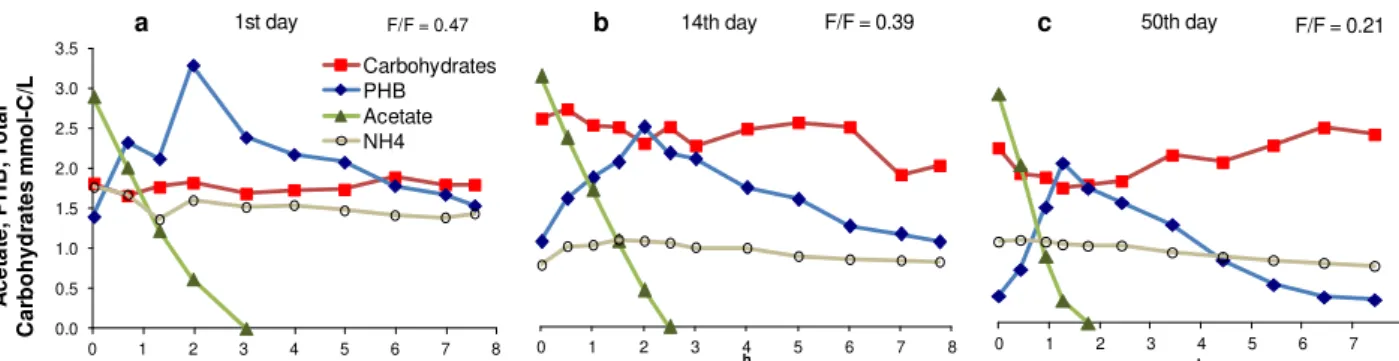
2.1 Evolution of the culture’s behavior during its enrichment in an 8h cycle SBR ted to a feast and famine regime with acetate as carbon source under illuminated, non-aerated conditions . . . 34
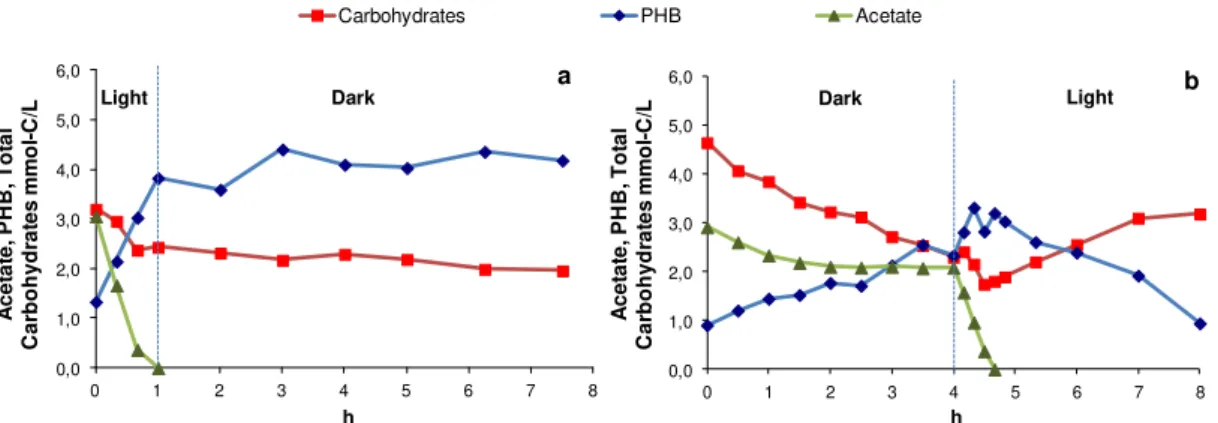
2.2 Batch tests in: a) Dark-Aerated conditions, b) Light-Argon conditions . . . 35
2.3 Batch tests in: a) Light-Argon conditions in the feast followed by Dark-Argon in the famine; b) Dark-Argon conditions in the feast, followed by Light-Argon conditions during the consumption of the remaining acetate and during the famine . . . 37
2.4 PHB accumulation batch tests in Light-Argon conditions: a) addition of a ted single pulse of acetate; b) addition of multiple pulses of acetate . . . 41
3.1 Evolution of the cultures’ behavior during the adaptation period to dark/light periods in an 8h cycle SBR when subjected to feeding in the dark phase (grey area) and famine during the light phase (white area) . . . 54
xvi
S) observed during the culture’s adaptation period . . 57
3.4 Microscopic images of the PMC initial sludge (a) and after the adaptation period (b) 59
3.5 PHB accumulation batch test under constant illuminated conditions with addition of multiple pulses of acetate . . . 60
4.1 Substrate consumption profile and polymers transformation in batch tests with PMC individual feeding of six organic acids: acetate, propionate, lactate, butyrate, malate
and citrate . . . 72
4.2 Proposed metabolic pathways of the PMC . . . 74
4.3 Batch test with pulse-wise addition of a solution containing a mixture of acetate,
propionate and butyrate in a proportion of 4:1:1 of Acet:Prop:But on a C molar base 77
4.4 Batch test with pulse-wise addition of a VFA solution containing a mixture of acetate,
propionate and butyrate (1st, 2nd and 4th pulses), a mixture of butyrate and propionate (3rd pulse), and only butyrate in the 5th pulse and acetate in the 6th pulse . . . 79
5.1 Evolution of the biomass concentration and specific light intensity of the photosyn-thetic mixed culture during the four months of operation . . . 91
5.2 Variation of the acetate (A) and phosphate (B) concentrations in the beginning and end of the cycles during the selector SBR operation . . . 92
5.3 Evolution of the PMC polymer content (PHB and carbohydrates) during the PMC operation . . . 93
5.4 Microscopic images of the PMC of the selector SBR taken during operation at the low
biomass concentration . . . 94
5.5 Culture performance during a 24h cycle of the selector SBR conducted during the
stable operational period . . . 95
5.6 Overall operational profile of SBR 1 and SBR 2 during the 4 days test . . . 97
5.7 Microscopic images of the PMC of SBR 1 (A) and SBR 2 (B) . . . 98
xvii
List of Tables
1.1 P3HB and polypropylene physico-chemical properties . . . 7
2.1 Kinetic and stoichiometric parameters of batch tests performed with the PMC in
different experimental conditions . . . 36
3.1 Kinetic and stoichiometric parameters of the PMC performance during the tion period and in the PHA accumulation batch test . . . 55
4.1 Kinetic and stoichiometric parameters of the batch tests performed with the PMC sludge individually fed with six organic acids: acetate, propionate, lactate, butyrate,
malate and citrate . . . 73
5.1 Kinetic and stoichiometric parameters of the PMCs performances of the selector
SBR, of SBR 1 and of SBR 2 . . . 96
5.2 Volumetric intensity, maximum PHB productivity, maximum PHB production
efficiency and PHB content obtained with PMCs operated in SBR 1 and SBR 2 of the present work and obtained in accumulation tests with PMCs selected in feast and famine regimes under continuous illumination (Fradinho et al., 2013a) and under
xix
List of Abbreviations and Variables
3H2MB 3-hydroxy-2-methylbutyrate
3H2MV 3-hydroxy-2-valerate
3HB 3-hydroxybutyrate
3HHx 3-hydroxyhexanoate
3HV 3-hydroxyvalerate
4HB 4-hydroxybutyryl
ADF Aerobic Dynamic Feeding
ATP Adenosine Triphosphate
Cdw Cell dry weight
CoA Coenzime A
D Dextrorotatory
EBPR Enhanced Biological Phosphorus Removal
F/F Feast to Famine ratio
FF Feast and Famine
FISH Fluorescence in situ Hybridisation
GAO Glycogen Accumulating Organisms
Gly Glycogen
HPLC High-Performance Liquid Chromatography
HRT Hydraulic Retention Time
k
pKinetic coefficient of PHB consumption
xx
MMC Mixed Microbial Cultures
NADH Nicotinamide Adenine Dinucleotide
NADPH Nicotinamide Adenine Dinucleotide Phosphate
OLR Organic Loading Rate
P(3HB-3HV ) Poly(3- hydroxybutyrate-co-3-hydroxyvalerate)
P3HB Poly(3-hydroxybutyrate)
P3HV Poly(3-hydroxyvalerate)
PAO Polyphosphate Accumulating Organisms
PCL Poly(ε-caprolactone)
PHA Polyhydroxyalkanoate
PLA Polylactic acid
PMC Photosynthetic Mixed Culture
PNS Purple Non-Sulfur
PVA Polyvinyl alcohol
qCarbs Maximum specific carbohydrate utilization rate
qP Maximum specific PHA production rate
-qPO4 Maximum specific phosphate consumption rate
-qS Maximum specific substrate uptake rate
SBR Sequencing Batch Reactor
SCL Short-Chain- Length
SRT Sludge Retention Time
TCA Tricarboxylic Acid Cycle
xxi
X Active biomass
YCarbs/PHA Yield of carbohydrates per PHA consumed
YCarbs/S Yield of carbohydrates per substrate consumed
YPHA/Carbs Yield of PHA per carbohydrates consumed
YPHA/S Yield of PHA per substrate consumed
YX/S Yield of biomass per substrate consumed
xxiii
“When I was a child, I used to go with my mother to the supermarket and she would always take
with her, her own cloth bag to carry groceries home. Back then, plastic bags were rare and
many products were conditioned in glass jars, card boxes and cans. But in few years, plastic
became easily accessible and industries rapidly adopted this material. Soon, plastic bags were
being given at every shop and consumers could take as many as they wanted…
Plastics are now everywhere: cars are no longer heavy and solely made of iron, but are lighter
and faster… We have flat screen televisions, smartphones, tablets… We have plastic prostheses, hearing devices, new medical tools… Plastic became an essential commodity that increased societies’ comfort and quality of life. However, we cannot look just to the bright side of the
1
1
3
1.1 PLASTICS
Plastics are polymeric materials with versatile qualities of strength, lightness, resistance and durability that can be molded into a variety of products (Hopewell et al., 2009). They can be
used in innumerous applications, and as a result, the plastic industry has been growing almost 5% per year in the last 20 years. In 2012, the global plastic production was estimated at 290
million tons (PlasticsEurope, 2013). This is a market with sales evaluated in 300 billion Euros in Europe alone, where the plastics demand reached 46 million tons in 2012 (PlasticsEurope,
2013). Most of these were used for packaging (39%) and building & construction (20%) (Figure 1.1).
Figure 1.1 – European plastics demand by segment in 2012 (PlasticsEurope, 2013).
Though a considerable amount of the plastics was used in long-life applications, 25 million tons
of plastics ended up in the waste stream. A great part of these were still recovered for recycling (26%) and energy production (36%), but more than one third (38%) was eventually disposed in
landfills (PlasticsEurope, 2013). Worldwide, it is expected that a much higher percentage of plastics are discarded and directly disposed in nature. Moreover, most types of plastics are
nondegradable and even the degradable ones may persist for a considerable time, accumulating in the natural environment and contaminating soils and water resources (Hopewell et al., 2009).
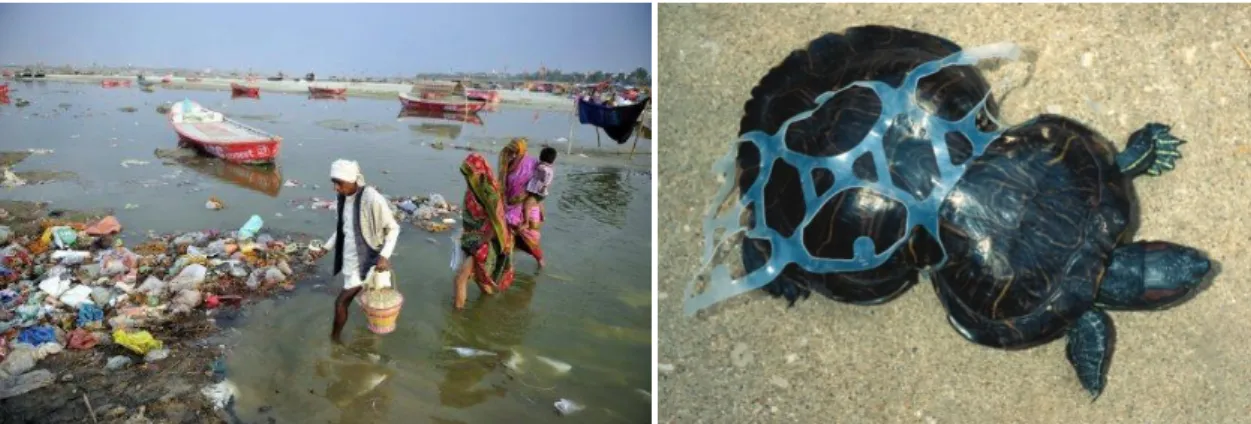
This plastic pollution has become a worldwide problem, causing harmful effects not only in human populations but especially, in the animal kingdom (Figure 1.2).
Packaging 39,4%
Others 22.4%
Automative 8.2%
Agriculture 4.2% Electrical & Electronic 5.5%
Building & Construction
20.3%
4
Figure 1.2 – Plastic pollution. A – Devotees cross the polluted waters of the Ganges river, April 2013 (AFP, 2013). B – Red-eared slider turtle, found with a discarded plastic around her shell (CCM, 2010)
Furthermore, concerns with environmental sustainability are not restricted to the final end-use
of plastics. They extend back to the initial production steps of the plastic. Indeed, most of the currently produced plastics are derived from petrochemicals that are produced from fossil oil
and gas, which present continuously rising prices that fluctuate at each geo-political crisis. Additionally, these resources are also known for their contribution to environmental pollution.
In fact, not only can petrochemicals have a devastating effect during oil spills, but they are also important contributors to global warming during combustion for energy production (Houghton,
2005). Another aspect of the petrochemical-based plastics is that the plastic industry takes up an important part of the extracted fossil resources. Around 4% of the world oil and gas production is used as feedstock for plastics and a further 3 – 4% is expended to provide energy for their manufacturing (Hopewell et al., 2009). These resources are finite and will become depleted, which added to the plastic related pollution observed in the natural habitats indicates
that the current production of plastics is not environmentally sustainable.
A positive note is that society is becoming more aware of this problem and the growing public
concern regarding the environment, climate change and fossil fuel resources is pressing governments, companies, and researchers to discover and promote sustainable alternatives to
petrochemical-based plastics. This will necessarily imply a compromise between the utilization of new and environmentally sustainable feedstocks, and the production of biodegradable
5
1.2 BIODEGRADABLE PLASTICS
By definition, biodegradable plastics are polymeric materials that can be decomposed through the action of enzymes and chemicals associated with living organisms and/or through abiotic
reactions, like photodegradation, oxidation and hydrolysis (Albertsson and Karlsson, 1994).
Great interest has been placed in the development of these plastics in an attempt to address societies’ request for more ecological biopolymers. Consequently, several materials have surged as candidates for the production of biodegradable plastics, but thus far, they have only been
used in very specific areas, like in the medical field (e.g. drug delivery applications, surgical implants), in agriculture (e.g. mulch fields) and in packaging (Amass et al., 1998).
The polymeric materials currently used in the production of biodegradable plastics can be divided into three categories: chemically synthesized polymers, starch-based biodegradable materials and polyhydroxyalkanoates (PHAs) (Mumtaz et al., 2010).
The first category includes for example polylactic acid (PLA), poly(ε-caprolactone) (PCL) and polyvinyl alcohol (PVA). All these polymers are currently used for biodegradable plastics production (Nair and Laurencin, 2007). However, they don’t comprise all the properties of conventional plastics and their utilization is limited to specific applications (Khanna and
Srivastava, 2005). Therefore, they are not a viable alternative for a large-scale replacement of traditional plastics.
In relation to the starch-based plastics, these materials are produced by melting starch and blending it on a molecular level with a conventional plastic. The starch fraction remains accessible for microbial degradation and the plastic becomes porous after the starch is degraded.
These pores can then facilitate further plastic degradation (Chandra and Rustgi, 1998). Although
this strategy can be used to reduce the polymer degradation time, the petrochemical fraction of the plastic will still require a long degradation period (Khanna and Srivastava, 2005).
In the case of PHAs, they are natural polyesters produced by many different microorganisms
(Chandra and Rustgi, 1998). They can be synthesized from renewable resources and because they are completely biodegradable biopolymers, they compromise all the ecological
requirements for the production of sustainable biodegradable plastics. Also, they present physico-chemical characteristics similar to conventional plastics, which makes them a viable
6
1.3 POLYHYDROXYALKANOATES
Polyhydroxyalkanoates (PHAs) are biopolymers synthesized by numerous microorganisms and internally accumulated as carbon and energy reserves. This accumulation occurs in the presence
of excess carbon and, in most of the cases, under growth limiting conditions and leads to the formation of intracellular PHA granules. Figure 1.3 shows the general structure of PHAs.
Figure 1.3 – General structure of PHAs. p – Number of monomers in the polymer; x – Variable number of carbon atoms in the linear structure; R – alkyl radical; n – Variable number of carbon atoms in the alkyl radical.
These polyesters are composed of a linear carbon branch with variable size, but that typically varies from 3 to 4 carbons (x = 1 and 2, respectively), and an alkyl radical, R, that can incorporate more than 9 carbons in the case of longer alkyl substitutes (Chandra and Rustgi,
1998). Depending on the number of constituent carbon atoms of the monomer units, PHAs can be divided in two groups. They can be short-chain- length (SCL) polymers with monomers containing 3 – 5 carbon atoms, or medium-chain-length (MCL) with monomers containing 6 –
18 carbon atoms (Philip, et al., 2007). With such a variety of sizes and possibilities, more than 150 different monomer units have already been observed in biologically formed PHA.
However, the PHAs that are most commonly produced by bacteria are the homopolymer poly(3-hydroxybutyrate) (P3HB) and the co-polymer poly(3- hydroxybutyrate-co-3-hydroxyvalerate)
(P(3HB-3HV)) (Laycock et al., 2013).
P3HB is a SCL polymer that presents mechanical properties comparable to polypropylene
(Table 1.1), which is an important aspect since polypropylene is one of the most important plastics used worldwide and that presents an average annual production growth rate of 4.4%
(Ceresana, 2012).
C
R
(CH
2)
xCH
O
O
p
7
Table 1.1 – P3HB and polypropylene physico-chemical properties (Amass et al., 1998; Laycock et al., 2013).
Property P3HB Polypropylene
Molecular weight (g/mol) 5 × 10⁵ 2 × 10⁵
Crystallinity (%) 80 70
Melting temperature (°C) 175 176 Glass transition temperature (°C) 5 - 10
Tensile strength (MPa) 37 38
Extension at break (%) 4 400
Density (g/cm3) 1.25 0.91
However, some P3HB properties, like high crystallinity and low elongation to break, originate films and plastics that are very stiff and brittle, with poor impact strength. In contrast,
P(3HB-3HV) co-polymers are less crystalline, have lower melting and glass transition temperatures and as a result, they can be more flexible and ductile, improving the material’s thermoplastic
properties (Chandra and Rustgi, 1998). Besides 3HV monomers, and depending on the organism, other small and medium-chain monomers may also be incorporated in the polymer,
like hydroxy-2-methylbutyrate (3H2MB), hydroxy-2-methylvalerate (3H2MV) and 3-hydroxyhexanoate (3HHx). The polymer properties will then vary accordingly to the percentage
of these units and therefore, they can be tuned, increasing the co-polymers range of applications (Philip et al., 2007).
Considering that PHAs mechanical properties are so dependent on the constituent monomers, it
is important to understand the mechanisms of its synthesis.
1.4 PHA BIOSYNTHESIS
The microbial PHA biosynthesis has been extensively studied and several biosynthetic pathways are reported for PHA production. Pathway I for example (Figure 1.4) starts with the
condensation of two acetyl-CoA molecules to form acetoacetyl-CoA in a reaction catalysed by
the enzyme β-ketothiolase. Then, acetoacetyl-CoA reductase acts on acetoacetyl-CoA, forming
8
Figure 1.4 – Biosynthetic pathway for the production of P3HB (Braunegg et al., 1998).
There are however other pathways used by some organisms for the production of PHAs. For example, pathway II involves the fatty acid β-oxidation pathway that generates acyl-CoA
molecules that can be converted to 3-hydroxyacyl-CoA and then be polymerized by PHA synthase to produce MCL PHA. Subsequent pathways involve the transformation of different
molecules derived from other metabolic pathways into 3-,4-,5-,6- hydroxyacyl-CoA units, leading to the formation of alternative co-polymers containing for example, 4-hydroxybutyryl
(4HB) monomers (Laycock et al., 2013).
Regardless of whether the PHA producing organism presents all or just some of these pathways,
PHA production is subject to internal regulation and can therefore be promoted through activation of specific enzymes involved in PHA synthesis and/or through the inhibition of
metabolic pathways that compete for PHA precursors. Consequently, many strategies and different microbial systems can be used to maximize PHA production.
1.5 PHA PRODUCTION IN PURE CULTURE SYSTEMS
In the last decades, PHA production in pure culture systems experienced an extraordinary
development with researchers utilizing new substrates, discovering new organisms or even genetically altering existing ones, thus achieving impressive results in terms of PHA productivity, PHA content and diversity of PHA monomer composition (Khanna and
Srivastava, 2005; Ienczak et al., 2013).
Several bacteria have long been studied and used for PHA production and the culture conditions
for PHA synthesis are carefully adjusted according to the selected organism. Some bacteria have a non-growth-associated PHA production (e.g. Cupriavidus necator) and they require the
limitation of an essential nutrient like nitrogen or phosphorous, for the synthesis of PHA from an excess carbon source. Cultures of these bacteria usually occur in a two-stage batch
production process, where in the first stage cells are grown until a desired concentration (growth phase) followed by a second stage where an essential nutrient is kept limited to allow efficient
PHA accumulation (production phase) (Ienczak et al., 2013). β-Ketothiolase
CH3C-SCoA O
CH3CCH2C-SCoA
O O
CH3CHCH2C-SCoA O OH
CHCH2CO O CH3
n Acetoacetyl-CoA
reductase PHA synthase
Acetyl-CoA 2x
9
Other bacteria can continuously produce PHA while growing, i.e. they have growth-associated
PHA production, and do not require any nutrient limitation. Alcaligenes latus and Burkholderia
sacchari are examples of such bacteria, which are joined by numerous strains of recombinant bacteria (e.g. E. coli). In cultivations of these bacteria an optimal ratio between the carbon source and other nutrients is essential to simultaneously enhance cell growth and PHA
accumulation in a balanced way (Khanna and Srivastava, 2005).
In all of these pure culture systems, sugars are usually used as the carbon source (e.g. glucose,
sucrose, fructose) and typically P3HB is the resultant accumulated polymer. In the case of this polymer, high productivities have been reported with 4.0 g P3HB/L h being produced with sucrose-fed Alcaligenes latus (Yamane et al., 1996) and high contents being attained, up to
80%, in glucose fed Cupriavidus necator (Ryu et al., 1997). However, as previously referred, PHA co-polymers present better mechanical properties and are therefore preferred in relation to
pure P3HB. In general, the production of PHA co-polymers requires media supplementation
with substrates like propionic acid for the production of HV monomers (Lee et al., 2008) or γ
-butyrolactone for 4HB monomer production (Cavalheiro et al., 2012).
Currently, several PHA plastics produced from pure cultures are already commercialized:
BiopolTM (P(3HB-co-3HV)), NodaxTM (P(3HB-co-3HHx)), EnmatTM (P(3HB-co-3HV) and SogreenTM (P(3HB-co-4HB). They are sold with a price four times higher than conventional plastics, around $5/Kg (Digregorio, 2009), while the cost of polyolefins like polyethylene and polypropylene is situated at $1.3/kg (Platts, 2013). The public may be willing to pay more for
products that are considered environmentally friendly, but only to a certain extent. Therefore, PHA prices must decrease in order to promote their marketability, a feature that can only be achieved if production costs decrease.
Considering that the chemically defined media used in pure systems can account by up to 50% of the total production process costs (Choi and Lee, 1997), researchers are now focusing in the
utilization of cheaper substrates, like whey (Koller et al., 2008), palm and soybean oil (Singh and Mallick, 2009), biodiesel waste glycerol (Cavalheiro et al., 2012) and lignocellulosic
hydrolysates (Cesário et al., 2013). However, the obtained PHA content and productivity is typically lower than those obtained using purified carbon substrates (Khanna and Srivastava,
2005). Also, supplementation of expensive vitamins and co-factors may sometimes be required for polymer production, and due to the ‘pure’ nature of these systems, media and equipment must be sterilized and operated under strict control. All of these factors contribute to an increase in production costs, but they may be overcome if open mixed cultures are used for PHA
10
1.6 PHA PRODUCTION WITH MIXED MICROBIAL CULTURES
The utilization of mixed microbial cultures (MMCs) for PHA production has been proposed as a means of decreasing PHA production costs due to the possibility of operation under open
conditions (no sterility requirements) and utilization of cheap complex feedstocks. Indeed, life cycle assessment and financial analysis have indicated that MMCs PHA production can be
financially attractive in comparison to pure culture PHA production (Gurieff and Lant, 2007). But besides the economical perspectives, PHA production with MMCs can positively contribute
to the reduction of our environmental footprint, because it presents the double benefit of enabling the production of biodegradable plastics while treating waste streams. Indeed, MMCs can use complex agro-industrial wastes as feedstock for PHA production. Unlike pure culture
bacteria that typically use carbohydrates as carbon source, volatile fatty acids (VFAs) (e.g. acetate, propionate and butyrate) are the best precursors for PHA production in MMCs, and they
can be easily obtained by fermentation of the waste stream (Reis et al., 2011).
But before the actual PHA production takes place, the MMC commonly undergoes a microbial
selection in order to enrich the culture in PHA accumulating bacteria. This is carried out by subjecting the culture to transient feeding conditions in a strategy designated as Feast and
Famine (FF). This consists in alternating periods with excess of external carbon (Feast), where organisms take up the carbon and accumulate it as PHA, with periods with no substrate addition
(Famine), where only the organisms that accumulated PHA will have carbon reserves and will thus be able to grow. Repeated FF cycles will favor the cell growth on storage products, thus creating a selection pressure for organisms with high PHA-storing capacity. It must be referred
however, that in addition to alternating the two phases, studies have shown the importance of
imposing long famine phases and short feast phases, i.e. low feast to famine ratio (F/F) values (Dionisi et al., 2006; Albuquerque et al., 2010). It seems that during a long famine phase, there may be a decrease in the cellular synthesis of growth enzymes that leads to an internal growth
limitation. As a result, during the following feast phase, cells are not able to grow immediately after substrate supply but are capable to store VFA as PHA, since the latter metabolism does not
require physiological adaptation. Bacteria that can physiologically adapt and impose this internal growth limitation will accumulate high PHA contents and will be able to survive during
the long famine phase. This physiological adaptation is the key factor that enables the selection of PHA accumulating bacteria with the FF strategy.
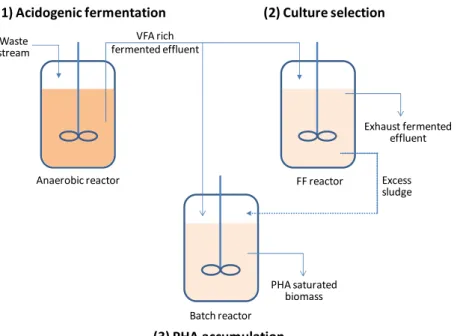
The PHA production systems with MMCs can then be described as a process that commonly comprises three-steps (Figure 1.5): (1) waste water or agro-industrial waste acidogenic
11
PHA accumulation in a batch reactor using sludge from the selected culture fed with the
fermented effluent (Albuquerque et al., 2007).
Figure 1.5 – Three-step PHA production process with MMCs using waste streams as feedstock (adapted from Albuquerque et al. 2007)
During the selection step, different approaches of the FF strategy have been used to select distinct PHA accumulating organisms. When carried out completely under aerobic conditions,
the process is referred to as aerobic dynamic feeding (ADF), where aerobic bacteria are selected (Figure 1.6 A). When the feast phase is conducted in anaerobiosis, the process consists of
repeated cycles of anaerobic feast/aerobic famine that can lead to the selection of polyphosphate and glycogen accumulating organisms (PAOs and GAOs) (Figure 1.6 B).
Figure 1.6 – Cycle profile of MMCs selected under a FF strategy. A – Aerobic dynamic feeding with substrate consumption and PHA accumulation during the feast phase, and NH4+ and PHA consumption for growth during the famine phase. B –Anaerobic/aerobic alternating conditions with polyphosphate being used by PAOs (dotted line indicates the phosphate release to the exterior) and glycogen being used by both GAOs and PAOs in the anaerobic feast phase as energy source for substrate consumption and PHA accumulation. In the aerobic famine phase, NH4+ and PHA are consumed for growth and glycogen is replenished from PHA. PAOs take up external phosphate and re-store it as polyphosphate.
(1) Acidogenic fermentation (2) Culture selection
(3) PHA accumulation
Waste stream
VFA rich fermented effluent
Exhaust fermented effluent
Excess sludge Anaerobic reactor FF reactor
Batch reactor
PHA saturated biomass
Anaerobic feast
Aerobic famine
VFAs
PHA NH4
Glycogen
X
PO4
Feast Famine
VFAs
PHA
NH4
X
12
In the particular case of PAOs and GAOs, these organisms can accumulate other internal
polymers that are used as an energy source for external carbon uptake during the anaerobic periods, where cells cannot use oxidative phosphorylation for ATP production. PAOs can use
both glycogen and polyphosphate while GAOs can only use glycogen. These organisms have been extensively studied due to PAOs applicability for phosphorous removal in wastewater
treatment (in the so called enhanced biological phosphorus removal (EBPR) systems), while GAOs are studied because they grow in EBPR systems and compete with PAOs for carbon and
nutrients, but they do not contribute to phosphorous removal (Oehmen et al., 2006). More recently, GAOs potential for PHA production was thoroughly examined in several works using VFA containing defined media (Dai et al., 2007; Bengtsson, 2009) but also, using
agro-industrial wastes, like paper mill wastewater (Bengtsson et al., 2008) and sugar cane molasses (Pisco et al., 2009; Bengtsson et al., 2010). In this last case, up to 37% PHA content was
achieved with varied monomer composition that included SCL monomers (3HB, 3HV, 3H2MB, 3H2MV) and MCL monomers (3HHx). These PHA copolymers can be achieved by GAOs even
when acetate is fed as the sole carbon source, unlike in the ADF process. This is because a portion of their glycogen is diverted to propionyl-CoA during the generation of ATP for VFA
uptake, in order to balance their internal cell levels of NADH.
In the case of aerobic MMCs selected in ADF processes, P(3HB) accumulation levels up to
89% have thus far been achieved with an acetate-fed culture (Johnson et al., 2009). This is a PHA content comparable to the best accumulation values reported in pure cultures. But the utilization of fermented agro-industrial wastes as feedstock have also led to very interesting
PHA accumulation values with 75% PHA content using sugar cane molasses (Albuquerque et
al., 2010) and 77% using paper mill wastewater (Jiang et al., 2012). Moreover, the accumulated PHAs were composed of P(3HB-3HV) co-polymers with a 3HV content of 39% and 14% (Cmol base), respectively. Currently, many other fermented agro-industrial wastes have been
successfully tested as potential feedstock for PHA production, like olive oil mill pomace (Waller et al., 2012), olive oil mill effluent (Dionisi et al., 2005; Beccari et al., 2009), waste
activated sludge (Morgan-Sagastume et al., 2010), palm oil mill effluent (Mumtaz et al., 2010) and mixtures of sludge and food waste (Chen et al., 2013). The resultant PHAs were also
composed of co-polymers that displayed a diverse monomeric composition.
This diversity in the final polymer composition is dependent on several interlinked factors, like
the type of feedstock used, the selected microbial species and the operational conditions. During the feedstock fermentation, different VFAs can be produced with variable relative proportions,
13
numbered VFAs (e.g. propionate and valerate) allow the production of 3HV monomers, since a
greater number of propionyl-CoA precursors are formed in the latter case. So, by tuning the substrate VFA composition, it is possible to tailor the produced PHA into the desirable
co-polymer. However, this possibility is also dependent on the microbial species present in the MMC (Carvalho et al., 2013). As previously referred, different bacteria present specific
metabolic pathways for PHA production, so the substrate conversion into different precursors is species-dependent and consequently, so is the production of different PHA monomers.
The selection of different microbial species is also dependent on the substrate composition and on operational parameters (Jiang et al., 2011a, 2011b). Several studies using different feedstocks and operational conditions (synthetic and real) obtained MMCs with diverse
microbial communities. Amaricoccus, Thauera, Azoarcus, Paracoccus, Zoogloea, Comamonas, are examples of the variety of bacteria genus and Plasticicumulansacidivorans an example of a
bacterial species, that can be found/selected in PHA accumulating aerobic MMCs (Dionisi et al., 2006; Lemos et al., 2008; Beccari et al., 2009; Villano et al., 2010; Jiang et al., 2011a). Recently, insight on these organisms’ substrate preferences and the resultant PHA that is produced has been reported (Jiang et al., 2011b; Albuquerque et al., 2013; Carvalho et al., 2013;
Marang et al., 2013) providing important information that may be used for manipulation of the microbial community structure and consequently lead to optimization of the PHA production.
Finally, it is important to refer that the system’s operational conditions can also be adjusted in order to tune the polymer properties. Thus far, temperature (Jiang et al., 2011a), pH (Villano et
al., 2010; Chen et al., 2013), feeding regime (Albuquerque et al., 2011; Chen et al., 2013) organic loading rate (Dionisi et al., 2006; Carvalho et al., 2013), sludge retention time (Johnson et al., 2009) and feast to famine ratio (Albuquerque et al., 2010) have all been shown to
influence the PHA content and composition, whether directly, or indirectly, through its influence on the microbial species selection of the culture.
All of these studies that have been conducted thus far have led to a greater awareness of the potential of MMCs as PHA producers and have revealed important information for the design of
strategies and systems that can maximize PHA production. Research in this field is continuously occurring and new feedstocks and new operating conditions are tested in order to bring forward this sustainable polymer production process. In spite of the researchers’ dedicated efforts, PHA production with MMCs has been mainly restricted to the utilization of aerobic organisms, while
in fact, the diversity of bacterial species that can produce and accumulate PHA is much wider. Other organisms present alternative means of producing energy besides oxidative
14
1.7 PHA PRODUCTION IN PHOTOSYNTHETIC BACTERIA
Photosynthesis is one of the first and oldest processes that organisms have used for energy production. It was this process that millions of years ago transformed the Earth’s reductive atmosphere (CO2, H2, H2S) into the oxidative atmosphere that we know today, and that
influenced evolution by giving rise to the development of a whole new microbial diversity of
aerobic organisms.
Photosynthesis consists in converting light energy into a usable form of chemical energy and is
a process that can be used by a great diversity of organisms, both eukaryotic and prokaryotic. For simplicity, the photosynthetic microorganisms can be divided into four groups: microalgae, cyanobacteria, green bacteria and purple bacteria. The first two groups perform an oxygenic
photosynthesis (i.e. oxygen is produced) in a process that occurs in two distinct stages. The first stage includes light dependent reactions and takes place in specialized structures (chloroplasts)
where light energy is absorbed, driving the synthesis of ATP and NADPH in a process coupled to the formation of oxygen from water (Figure 1.7). The second stage includes the dark
reactions (independent of light) where the produced ATP and NADPH are used for CO2 fixation
into carbohydrates through the Calvin cycle.
Figure 1.7 – Light reactions of photosynthesis occurring in the chloroplast of microalgae and cyanobacteria (Cooper, 2000; Prescott et al., 1999). Photons are absorbed in the pigments associated to photosystems I and II (PS I and PS II) and the energy derived from the photon absorption is used in PS II to split water to oxygen. Electrons from the water are carried by plastoquinones (PQ) into the cytochrome
bf complex, and their transference to a lower energy state is coupled with protons pumping to the thylakoid lumen. Electrons are then transferred to PS I by plastocyanin (PC), where photon absorption again generates high energy electrons that are transferred to ferrodoxin (FD) and used to reduce NADP+ to NADPH in the stroma. The energy stored in the proton gradient created during the electron transport is used by ATP synthase to convert ADP to ATP.
ATP ADP + Pi
hn
H+ PS II
H2O ½ O2+ 2H+
PS I ATP synthase H+ H+ H+ H+ PQ
e
-e
-Fd Cytbf 2 PC 2H++ NADP+
15
In the case of green bacteria and purple bacteria, these organisms perform an anoxygenic
photosynthesis (Figure 1.8). Photosystem II is absent and therefore they cannot use water and evolve oxygen. They only have photosystem I and they use it for ATP synthesis. Because this
occurs with a cyclic electron flow, no NADPH is synthesized. Instead, these bacteria use electron donors like hydrogen, hydrogen sulfide and organic molecules to regenerate NADH
and NADPH. Then, they can use the produced ATP and NADPH to fixate CO2 or, depending on
the external conditions, they may use ATP to take up external organic molecules as carbon
source (heterotrophic metabolism).
Figure 1.8 – Tentative scheme of light reactions of photosynthesis occurring in the chlorosomes of green bacteria and in membrane systems of purple bacteria (Cooper, 2000; Prescott et al., 1999). In these organisms, photosynthesis occurs in a cyclic electron flow pathway. High energy electrons are generated by photon absorption in PS I and are transferred to the cytochrome bc complex via an electron mediator and a quinone (Q). At the cytochrome bc complex, electrons are transferred to a lower energy state and protons are pumped to the periplasm. The electrons then return to PS I, carried by cytochrome c. The energy stored in the proton gradient created during the cyclic electron flow is used by ATP synthase to convert ADP to ATP.
Another important aspect of green and purple bacteria, is that they possess bacteriochlorophylls (a or b for purple bacteria, a or c, d, e for green bacteria), which are photosynthetic pigments
slightly different than the chlorophylls of microalgae and cyanobacteria. Though the two types of pigments share an absorption spectra around 350 to 500 nm, bacteriochlorophylls can also
absorb longer wavelengths, far-red light, around 850-910 in the case of bacteriochlorophyll a and 1020-1035 in the case of bacteriochlorophyll b. This gives green and purple bacteria the
possibility of using other wavelength ranges when competing with microalgae and cyanobacteria for light energy. The four groups share, however, a common photosynthetic pigment, carotenoides (e.g. β-caroten), that have an absorption range around 400-600 nm, in the middle of the visible light range (Prescott et al, 1999).
ATP ADP + Pi
h
n
H
+PS I
ATP synthase
H+
H+
H+
H+
e
-e-mediator Cytbc
Cytc
Photon
Q
e
16
From the four mentioned groups, PHA production only occurs among the prokaryotic
organisms. Microalgae do not accumulate PHA (thus far no observation has been reported in Eukaryotes (Shively, 2006)), but it is also important to consider these organisms, because they
are easily adaptable to different environments and therefore, they are frequently present in photosynthetic mixed cultures.
The preferred mode of growth of microalgae is photoautrotophy, but they are also capable of photoheterotrophy, taking up organic molecules like glucose, acetate, glycerol and ethanol as
carbon source (Chen and Johns, 1996; Muñoz and Guieysse, 2006; Perez-Garcia et al., 2011). For this reason, several works have discussed the microalgae potential for wastewater treatment with bacterial-algae consortiums (Ogbonna et al., 2000; Safonova et al., 2004; Perez-Garcia et
al., 2010). Microalgae have also been thoroughly studied due to their hydrogen production capacity (Ghirardi et al., 2000; Rashid et al., 2011), and though they do not accumulate PHA,
they can produce and accumulate other commercially attractive molecules like antioxidants,
carotenoides for β-carotene production and lipids for biofuel production (Iersel, 2009).
As previously referred, photosynthetic PHA production has only been reported in organisms of cyanobacteria, green bacteria and purple bacteria. A brief description will be given forthwith.
PHA production in cyanobacteria has drawn great attention in recent years due to their ability to accumulate PHB under photoautothrophic conditions with just some requirements of simple
inorganic nutrients (e.g. phosphate, nitrate) and micronutrients (Balaji et al., 2013). Thus far, several PHA accumulating cyanobacteria species have been identified (e.g. Anabaena spp.,
Spirulina spp., Synechococcus spp., Synechocystis spp., Nostoc spp. and Oscillatoria spp.) (Miyake et al., 1996; Wu et al., 2001; Balaji et al., 2013) but typically, their PHA content is quite low, around 2 - 6 % of cell dry weight (cdw) (Bhati et al., 2010). Higher PHA contents
have been reported (40-45% dcw) but they were only achieved by multi-stage cultivation processes with additives supplementation (Wang et al., 2013). Currently, metabolic engineering
is being used to improve cyanobacteria accumulation capacity, monomer diversity and utilization of alternative substrates (Balaji et al., 2013; Wang et al., 2013). Considering this last
case of substrate alternatives for cyanobacteria, though cyanobacteria are unique in their ability of utilizing CO2 for PHA production, with great potential for CO2 recovery during off-gas
streams treatment, they are very limited when utilizing organic molecules as carbon source, presenting a slow growth under heterotrophy (Smith et al., 1982). This restricts their substrate
utilization range, hampering the utilization of wastewaters and solid wastes as feedstock. However, this is a recent field of research and the CO2 fixation capacity of cyanobacteria seems
17
In the case of the green bacteria, PHA production has, thus far, been only reported for the genus
Chloroflexus (Pierson and Castenholz, 1974; Fuller, 1995; Sirevåg, 1995). Besides autotrophy,
Chloroflexus are capable of utilizing several organic compounds like acetate, lactate, butyrate, alcohols, and sugars for growth under anaerobic illuminated conditions and in aerobic dark
conditions. Though these organisms present a versatile metabolism, not much research has been done to explore the potential of these organisms for PHA production. Possibly this is due to the
fact that Chloroflexus present an optimal growth at high pH and temperatures between 50 – 60 º
C, thus being commonly found in alkali hot springs, which is their natural habitat (Sirevåg et al., 1995).
The most well studied PHA accumulating photosynthetic microorganisms are the purple bacteria. This group contains some of the most versatile bacteria that exist, being capable of
growing under phototrophic conditions in the light and under chemotrophic conditions in the dark, either autotrophically (fixating CO2) or heterotrophically using oxygen or inorganic
molecules as terminal electron acceptors in respiratory processes (Imhoff, 2006a). Though they have so many possible metabolic combinations, they still have a preferred mode of growth. Consequently, these organisms can be divided in two groups: the purple sulfur bacteria (γ-proteobacteria) and the purple non-sulfur bacteria, which are mostly α-proteobacteria with the exception of one genus that is β-proteobacteria (Prescott et al., 1999).
Purple sulfur bacteria typically grow photosynthetically under anaerobic conditions using
hydrogen, sulfide and sulfur as electron donors, producing sulfur granules that can be deposited internally or externally, depending on the organism family. Several species like Chromatium spp., Lamprocystis spp., Amoebobacter spp., Thiosystis spp., and Ectothiorhodospira spp. were
found to be capable of accumulating PHA. Particularly, Thiosystis spp., Ectothiorhodospira spp.
and Chromatium spp. attained PHB contents of 83 %, 57 % and 58 % cdw, respectively, when fed with acetate under illumination (Liebergesell et al., 1991).
As for the purple non-sulfur bacteria (PNS bacteria), these organisms also typically grow under
anaerobic conditions in the light, but they present a much more highly diverse and flexible metabolism in relation to the purple sulfur bacteria. In fact, their preferred mode of growth is
photoorganoheterotrophy, using organic molecules both as electron donors and carbon source. Nevertheless, many species can also use hydrogen and reduced sulfur compounds as
photosynthetic electron donors. Besides phototrophy, some PNS can grow equally well in the dark, in aerobic conditions or anaerobically, using fermentative processes for energy production.
18
widely distributed in nature, being found in lakes, ponds, sediments, moist soils and paddy
fields (Imhoff, 2006b).
The most representative and well studied genus of the PNS bacteria are the Rhodospirillum,
Rhodobacter and Rhodopseudomonas. Numerous species of these genus have been reported as PHA accumulators, and in a study of Liebergesell et al, 1991, some Rhodobacter spp.
organisms were capable of accumulating P3HB up to 70% cdw using acetate as carbon source in anaerobic illuminated conditions. Moreover, 3HV monomers production could be observed in
organisms from the three refereed genus, when cells were cultivated in the presence of odd-carbon-numbered organic acids (e.g. propionate and valerate). Other works have studied the effect of various carbon and nitrogen substrates on the PHA production of Rhodobacter
sphaeroides (Khatipov et al., 1998) and even the utilization of an agro-industrial waste (fermented palm oil mill effluent) was also tested as feedstock for PHA production in that same
species, being obtained a PHA content around 60% cdw (Hassan et al., 1997).
Despite the fact that PNS have great potential as PHA producers, they have been the subject of
intensive research not because of their polymer accumulation capacity, but because of their ability for hydrogen production (Basak and Das, 2006; Kapdan and Kargi, 2006). It must be
referred that when PNS bacteria are cultivated in anaerobic illuminated conditions and are fed with lower energetic organic acids like acetate, propionate, malate, succinate and lactate, cells
use the photosynthetically produced ATP to take up these organic molecules, but they need an electron acceptor to dissipate the reducing power (e.g. NADH, NADPH) produced during the
cells metabolism. PNS bacteria can dissipate this energy by two means: by hydrogen production and by PHA accumulation. In the case of hydrogen, PNS bacteria use their nitrogenase enzyme that catalyses hydrogen production in the absence of molecular nitrogen (Eq. 1).
2 H+ + 2 e− + 4 ATP → H2 + 4 ADP + 4 Pi (Eq. 1)
Since nitrogenase is an enzyme with the primary function of N2 fixation for NH4+ production, its
utilization for reducing power dissipation through hydrogen production is highly dependent on the presence of N2 and NH4+. With N2 present, the nitrogen fixation reaction dominates. With
NH4+ present (which is a salt frequently used as a nitrogen source in bacteria cultivation) the
nitrogenase synthesis is repressed and its activity is inhibited (Koku et al., 2002). Furthermore,
this is a highly energy demanding reaction, so cells must consume large amounts of energy (ATP) in order to re-oxidize reduced molecules like NADH, avoiding their accumulation and
maintaining cell homeostasis. Alternatively, if cells produce PHA , no ATP is required and cells can directly re-oxidize the reduced agents by, for example, reducing acetoacetyl-CoA molecules
19
accumulated as a carbon reserve, but most importantly, it is used as a reducing power sink. The
utilization of one pathway or the other by the cells is then dependent on the amount of ATP available, on the nitrogenase enzyme requirements, but also, on the type of organic acids that
are fed (Wu et al., 2012). It is more likely that cells use the PHA synthesis pathway when they are fed with molecules that are easily converted to this polymer, like acetate, propionate and
butyrate. In the case of other organic acids, and particularly in the case of the ones from the tricarboxylic acids cycle (TCA) like malate and succinate, it is then more likely that cells use
the hydrogen production pathway, since PHA production is more inaccessible (Han et al., 2012). Taking all of this into consideration, PHA production with PNS bacteria seems to have a great potential as long as VFA-rich and ammonium-containing streams are used as feedstocks.
Indeed, this is the case for most fermented feedstocks from wastes.
In summary, many different types of photosynthetic bacteria present interesting characteristics
for PHA production. Cyanobacteria can fixate CO2 for PHA production, green bacteria
Chloroflexus are thermophilic PHA producers and purple bacteria are versatile photoheterotrophic bacteria that use VFAs as the best organic molecules for PHA synthesis. The selection of organisms from one group or the other will depend on the type of stream that is to
be used/treated and on the chosen operational conditions. Previous studies have not focused on achieving photosynthetic PHA production in MMCs, despite the potential advantages in MMC
PHA production over pure cultures that were stated previously.
1.8 MOTIVATION AND THESIS OUTLINE
The growing public concern with traditional plastics and their negative impact on the
environment, has led to an increasing demand for biodegradable plastics. Researchers and
industries have answered this demand with new biodegradable polymers, and PHA, which is one of the top candidates for the replacement of conventional plastics, is already on the market. However, its current prices are far from competitive, and researchers are putting their efforts
into devising new strategies that may lead to a decrease in PHA production costs.
The objective of this Thesis work was precisely to propose a new system for PHA production
that has the potential to lower operational costs and decrease the cost of PHA production to more affordable levels. From the introduction that is given in Chapter 1, it can be affirmed that
MMC systems have potential to lower costs through facilitating the use of waste feedstocks under non-aseptic conditions. However, the potential for photosynthetic PHA production was
20
photosynthetic mixed culture for PHA production. This photosynthetic mixed culture (PMC) is
proposed as an alternative to the utilization of common MMCs by presenting the advantage of not requiring any aeration, thus potentiating reduced operational costs. Also, the PMC system
uses light as its energy source, opening up the possibility of a sunlight driven PHA production system and thus reducing even more the energy costs.
Chapter 3 addresses the impact of alternating the PMC process operation between light and dark periods, since in order to enable the future use of sunlight in this PHA production system, the
PMC must be capable of enduring dark periods. Chapter 3 shows the first results from subjecting the PMC to alternating dark/light periods and the potential advantages that can be realized from this change in operation.
Since achieving a sustainable PHA production process is only possible if cheap residues are used as feedstock, Chapter 4 shows the results obtained from testing the capacity of a PMC to
use substrates that are commonly found in fermented agro-industrial residues. The tests were conducted with synthetic substrates for a better understanding of the synergistic effects between
them, creating a base of knowledge for future utilization of real feedstocks.
The PMCs studied in Chapters 2, 3 and 4, were all selected and operated using the feast and
famine regime, adopting the strategy that has been commonly applied for the selection of PHA accumulating bacteria. However, a completely new approach for selecting PHA accumulating
photosynthetic bacteria was tested in Chapter 5. A permanent feast regime was used and bacteria were no longer selected due to their ability to grow on stored PHA, but due to their
unique ability of using PHA as an electron sink.
Finally, a summary of the most important results and major conclusions of this thesis are
provided in Chapter 6, along with suggestions for future research work.
REFERENCES
AFP, 2013. Urban Indians growing concerned about pollution. Assoc. Fr. Press. URL
http://uk.news.yahoo.com/urban-indians-growing-concerned-pollution-102717824.html#JNJ6tqE
21
Albuquerque, M., Eiroa, M., Torres, C., Nunes, B., Reis, M., 2007. Strategies for the
development of a side stream process for polyhydroxyalkanoate (PHA) production from sugar cane molasses. J. Biotechnol. 130, 411–421.
Albuquerque, M.G.E., Torres, C.A. V, Reis, M.A.M., 2010. Polyhydroxyalkanoate (PHA) production by a mixed microbial culture using sugar molasses: effect of the influent substrate concentration on culture selection. Water Res. 44, 3419–3433.
Albuquerque, M.G.E., Martino, V., Pollet, E., Avérous, L., Reis, M. a M., 2011. Mixed culture
polyhydroxyalkanoate (PHA) production from volatile fatty acid (VFA)-rich streams: effect of substrate composition and feeding regime on PHA productivity, composition and properties. J. Biotechnol. 151, 66–76.
Albuquerque, M.G.E., Carvalho, G., Kragelund, C., Silva, A.F., Crespo, M.T.B., Reis, M.A.M., Nielsen, P.H., 2013. Link between microbial composition and carbon substrate-uptake preferences in a PHA-storing community. ISME J. 7, 1–12.
Amass, W., Amass, A., Tighe, B., 1998. A review of biodegradable polymers : uses, current developments in the synthesis and characterization of biodegradable polyesters, blends of biodegradable polymers and recent advances in biodegradation studies. Polym. Int. 47, 89–
144.
Balaji, S., Gopi, K., Muthuvelan, B., 2013. A review on production of poly β hydroxybutyrates from cyanobacteria for the production of bio plastics. Algal Res. 2, 278–285.
Basak, N., Das, D., 2006. The prospect of Purple Non-Sulfur (PNS) photosynthetic bacteria for hydrogen production: the present state of the art. World J. Microbiol. Biotechnol. 23, 31– 42.
Beccari, M., Bertin, L., Dionisi, D., Fava, F., Lampis, S., Majone, M., Valentino, F., Vallini, G.,
Villano, M., 2009. Exploiting olive oil mill effluents as a renewable resource for production of biodegradable polymers through a combined anaerobic-aerobic process. J. Chem. Technol. Biotechnol. 84, 901–908.
Bengtsson, S., Werker, A., Welander, T., 2008. Production of polyhydroxyalkanoates by
glycogen accumulating organisms treating a paper mill wastewater. Water Sci. Technol. 58, 323–330.
Bengtsson, S., 2009. The utilization of glycogen accumulating organisms for mixed culture production of polyhydroxyalkanoates. Biotechnol. Bioeng. 104, 698–708.
Bengtsson, S., Pisco, A.R., Reis, M.A.M., Lemos, P.C., 2010. Production of polyhydroxyalkanoates from fermented sugar cane molasses by a mixed culture enriched in glycogen accumulating organisms. J. Biotechnol. 145, 253–63.