Relevance of Non-communicable
Comorbidities for the Development of the
Severe Forms of Dengue: A Systematic
Literature Review
Joao Toledo
1, Leyanna George
2, Eric Martinez
3, Adhara Lazaro
4, Wai Wai Han
5, Giovanini
E. Coelho
6, Silvia Runge Ranzinger
7, Olaf Horstick
8*
1Consultant in Public Health, Ministry of Health, Brasilia, Brazil,2Department of Community Medicine, Amrita School of Medicine, Amrita Vishwa Vidyapeetham University, Kochi, India,3Instituto Pedro Kouri, La Habana, Cuba,4Consultant in Public Health, Institute of Public Health, University of Heidelberg, Heidelberg, Germany,5Ministry of Health, Rangoon, Myanmar,6Coordinator of the Brazilian Dengue Programme, Ministry of Health, Brasilia, Brazil,7Consultant in Public Health, Ludwigsburg, Institute of Public Health, University of Heidelberg, Heidelberg, Germany,8Institute of Public Health, University of Heidelberg, Heidelberg, Germany
Abstract
Patients with dengue fever and comorbidities seem to be at higher risk of developing
com-plications and/or severe dengue compared to healthier individuals. This study
systemati-cally reviews the evidence related to comorbidities and dengue. A systematic literature
review was performed in five databases (EMBASE, PUBMED, Global Health, SciELO,
Cochrane) and grey literature for full-text articles since its inceptions until October 10, 2015.
A total of 230 articles were retrieved. Sixteen studies were analysed after applying all
inclu-sion and excluinclu-sion criteria. Seven case control studies and nine retrospective cohort studies
showed that comorbidities may contribute to severe dengue, especially 1) cardiovascular
disease, 2) stroke, 3) diabetes, 4) respiratory disease and 5) renal disease, as well as old
age. However, due to heterogeneity in studies, the real estimate effect of comorbidities as
modifiers of dengue severity could not be established. Further research in regions with high
prevalence of dengue infection would contribute to a better understanding of the relevance
of comorbidities in severe dengue, especially with a standardised protocol, for outcomes,
specific comorbidities, study design
—
best using prospective designs
—
and sample sizes.
Author Summary
Dengue fever is a viral disease, transmitted by
Aedes
mosquitoes. Although for most cases
of dengue fever the illness is self-limiting or asymptomatic, severe dengue can occur.
Severe dengue is now classified by 1) plasma leakage, and/or 2) severe haemorrhage and/
or 3) organ failure. Complications and deaths occur in this group of cases with severe
den-gue. Patients with dengue fever and comorbidities seem to be at higher risk of developing
OPEN ACCESS
Citation:Toledo J, George L, Martinez E, Lazaro A, Han WW, Coelho GE, et al. (2016) Relevance of Non-communicable Comorbidities for the Development of the Severe Forms of Dengue: A Systematic Literature Review. PLoS Negl Trop Dis 10(1): e0004284. doi:10.1371/journal.pntd.0004284
Editor:Audrey Lenhart, Centers for Disease Control and Prevention, UNITED STATES
Received:January 5, 2015
Accepted:November 16, 2015
Published:January 4, 2016
Copyright:© 2016 Toledo et al. This is an open access article distributed under the terms of the Creative Commons Attribution License, which permits unrestricted use, distribution, and reproduction in any medium, provided the original author and source are credited.
Data Availability Statement:All relevant data are within the paper and its Supporting Information files.
Funding:The authors received no specific funds for this study.
complications and/or severe dengue compared to healthier individuals. This study
system-atically reviews the evidence related to comorbidities and the severe forms of dengue fever.
Sixteen studies were analysed after applying all inclusion and exclusion criteria. Seven case
control studies and nine retrospective cohort studies assessed comorbidities and
develop-ment of severe forms of dengue. The results showed that comorbidities are relevant to
severe dengue, especially 1) cardiovascular disease, 2) stroke, 3) diabetes, 4) respiratory
disease and 5) renal disease, as well as old age. The study of comorbidities in dengue fever
is fundamental for improved patient outcome by differential case management of patients,
reducing the burden of the disease. Further research in regions with high prevalence of
dengue infection would contribute to a better understanding of the relevance of
comorbid-ities with severe forms of dengue fever. An agreed protocol for such studies is urgently
needed.
Introduction
Dengue fever is an acute systemic infectious disease affecting mainly people in tropical and
subtropical regions [
1
]. Dengue virus (
Flaviviridae
family,
Flavivirus
genus) has four different
subtypes (DENV-1, DENV-2, DENV-3, DENV-4) and it is transmitted by infected
Aedes spp
mosquitoes
(Aedes aegypti
and
albopictus
) [
2
,
3
,
4
] According to estimates of Bhatt et al [
5
],
there are around 390 million dengue fever infections per year.
There is no specific treatment for dengue fever [
2
,
3
,
4
,
6
]. The gold standard therapy of
clin-ical management of severe cases of dengue
—
mostly related to plasma leakage or severe
bleed-ing, but also to organ failure
—
is fluid replacement, both orally and intravenously (crystalloids
and/or colloids) [
7
]. Intensive care monitoring and assessment of plasma leakage are vital. As
the pathophysiology of dengue fever involves an increase in vascular permeability, rapid fluid
replacement is needed
—
however, fluid replacement in excess might lead to hypervolaemia,
pulmonary oedema and respiratory distress. This is an aspect to be carefully evaluated and
observed especially in elderly patients, due to their reduction in cardiovascular output,
pulmo-nary compliance and renal output, resulting in clinical complications [
3
,
4
,
6
,
7
].
During the 1950
’
s and 1960
’
s, the majority of dengue cases were described in children, in
South East Asian countries [
8
]. Introduction of the transmitting vector in wild environments
and urban areas, human migration and the presence of artificial egg reservoirs (described for
example in used tires) have facilitated the spread the disease in many different regions, from
the Caribbean islands to Brazil and from the Pacific islands to other South Asian countries
causing major epidemics [
2
,
6
,
9
,
10
]. From a disease initially affecting children and young
adults, dengue began to affect older people [
2
,
7
]. At the same time, many of these countries
and regions where dengue is highly prevalent began to face the phenomenon of
epidemiologi-cal transition [
11
]. The niche occupied by communicable diseases in the overall mortality rate
has given space to non-communicable diseases, such as hypertension, diabetes and
malignan-cies, with the ageing of population. As a result, dengue now affects older adults, an age group
with inherently more comorbidities.
Thus, the understanding of the relevance of comorbidities in the development of severe
den-gue is fundamental in order to better target clinical monitoring and interventions for improved
clinical outcome.
The objective of this study is to systematically review the existing literature on the relevance
of non-communicable comorbidities, such as hypertension, diabetes mellitus, allergies, and
also old age, for the development of severe dengue and to evaluate the association between
these specific comorbidities and the severity of clinical dengue expression. The scope of this
review is intentionally very broad, to highlight the importance of comorbidities in relation to
dengue and to stimulate a discussion about further research and its directions.
Methods
The systematic review was performed in six databases (Cochrane Library, EMBASE, Global
Health, MEDLINE, SciELO and Google Scholar) from their inceptions until October 10, 2015.
Reference lists and grey literature were also searched for relevant articles.
Using the PICO format (acronym for
“
population or problem
”
, intervention or exposure of
interest
”
,
“
comparison
”
and
“
outcome
”
) [
13
], the research question was framed as:
“
is the
severity of dengue influenced by comorbidities?
”
.
The categories for the search included: (a) Population: adults aged 15 years or older; (b)
Intervention or Exposure: dengue and comorbidities; (c) Comparison: comparison of dengue
severity in individuals with and without comorbidities (this included the terms dengue fever
(DF), dengue haemorrhagic fever (DHF) and dengue shock syndrome (DSS) of the 1997 WHO
case classification and severe dengue (SD), for the 2009 WHO dengue case classification); (d)
Outcomes: mortality and length of hospital stay.
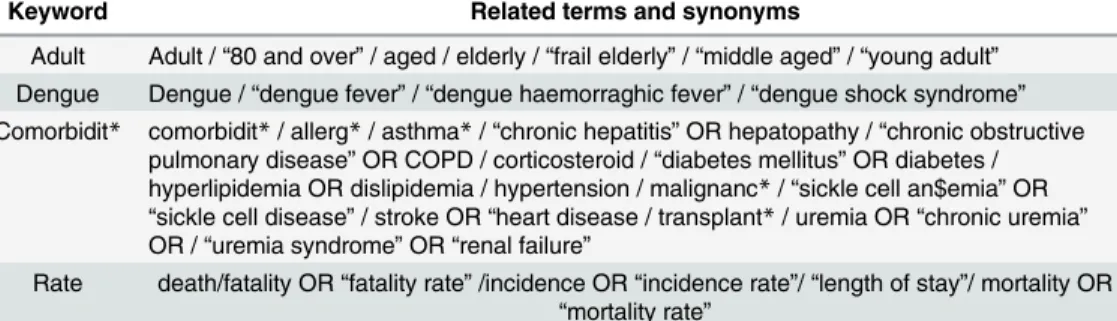
MeSH terms, Boolean operators AND and OR and truncation ($) were inserted in the
OvidSP platform (
EMBASE
,
MEDLINE
and
Global Health
articles), the
Cochrane Librar
y and
in the
SciELO
database (
Table 1
for the search terms). Because the
SciELO
database has a
sim-plified search interface, the only keywords used with that database were DENGUE and
COMORBIDIT
.
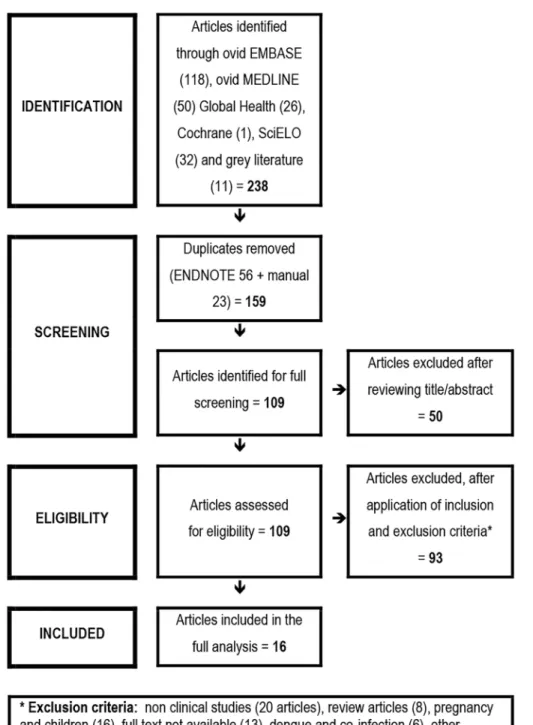
The process to identify potentially eligible studies was based on the
Preferred Reporting
Items for Systematic Reviews and Meta-Analyses
(PRISMA) flowchart [
14
], comprising four
steps: (a) identification, (b) screening, (c) eligibility and (d) inclusion of studies. The articles
obtained from that search were exported to the software
EndNote X6
.
0
.
1 (Bld 8432
,
Thomson
Reuters)
. An additional search of records identified through grey literature was performed and
included in the set. All duplicates were excluded through
EndNote
and manually as well. Then,
articles that did not mention the word dengue or its variations in neither the title nor the
Table 1. Keywords for the search related terms and synonyms.
Keyword Related terms and synonyms
Adult Adult /“80 and over”/ aged / elderly /“frail elderly”/“middle aged”/“young adult”
Dengue Dengue /“dengue fever”/“dengue haemorraghic fever”/“dengue shock syndrome”
Comorbidit* comorbidit*/ allerg*/ asthma*/“chronic hepatitis”OR hepatopathy /“chronic obstructive pulmonary disease”OR COPD / corticosteroid /“diabetes mellitus”OR diabetes / hyperlipidemia OR dislipidemia / hypertension / malignanc*/“sickle cell an$emia”OR
“sickle cell disease”/ stroke OR“heart disease / transplant*/ uremia OR“chronic uremia”
OR /“uremia syndrome”OR“renal failure”
Rate death/fatality OR“fatality rate”/incidence OR“incidence rate”/“length of stay”/ mortality OR
“mortality rate”
abstract were excluded from the remaining articles. The remaining pool of articles was carefully
reviewed to identify those that might be relevant to the question.
Inclusion criteria for studies in this review were: clinical studies in humans, studies about
dengue fever and non-communicable comorbidities, adults aged
>
15 years old, any of the
out-comes: death, fatality rate, mortality and length of hospital stay, cohort studies and case-control
studies and studies in English, French, Portuguese and Spanish.
Articles were excluded based on the following exclusion criteria: non clinical studies,
non-communicable comorbidities not mentioned, dengue and other non-communicable diseases,
stud-ies restricted to pregnancy and children, review articles, case serstud-ies and case reports, other
lan-guages than English, French, Portuguese or Spanish, and full text not available.
An Excel spread sheet was developed to extract data from studies. Information collected
were based on the PICO approach and included: general information about the article, studies
designs and hypothesis, participants
’
features, outcome data, results and main findings. The
studies were analysed using a comparative approach of the extracted details. Because of the
paucity and relatively low level of evidence of the identified studies, no quality assessment has
been performed for further exclusion of articles, however the quality of the studies has been
discussed in the discussion section.
Results
Study selection process
A total of 238 potentially relevant articles were initially identified, 129 were excluded after
screening the title and abstract. 109 articles were retrieved as full articles. A further 93 articles
were excluded after applying all inclusion and exclusion criteria. 16 articles were included
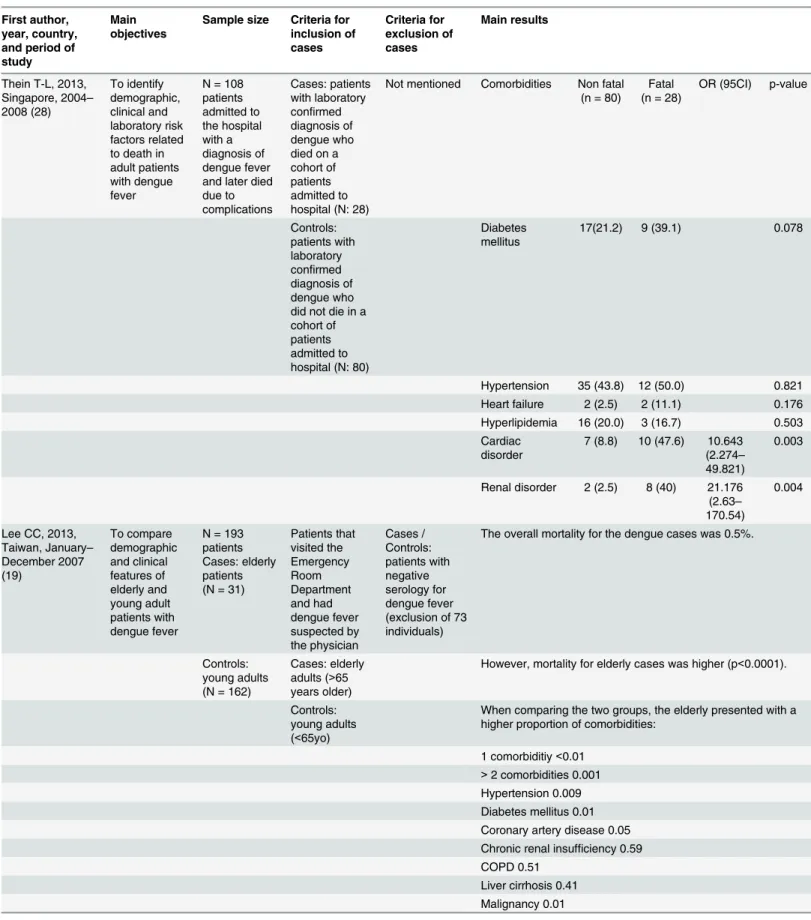
in the analysis (
Fig 1
for the flowchart of the selection process;
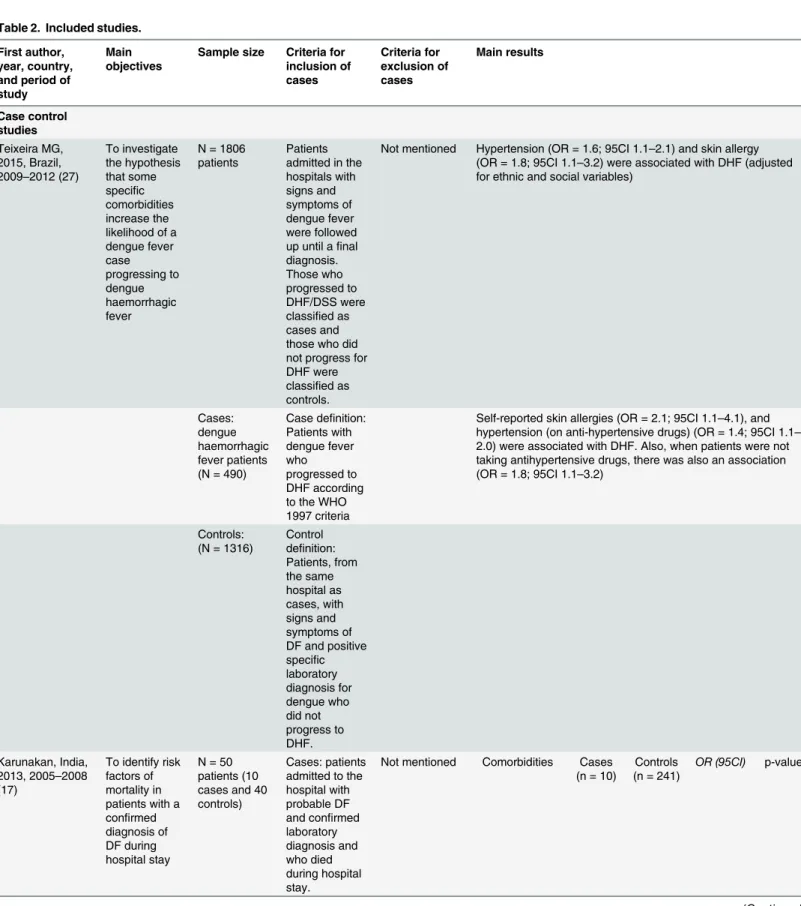
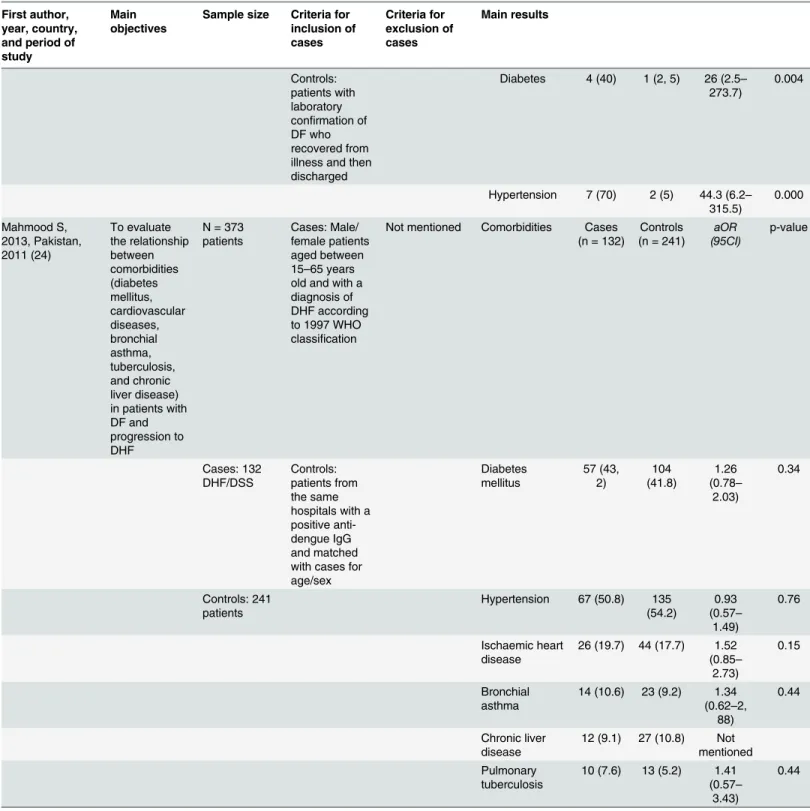
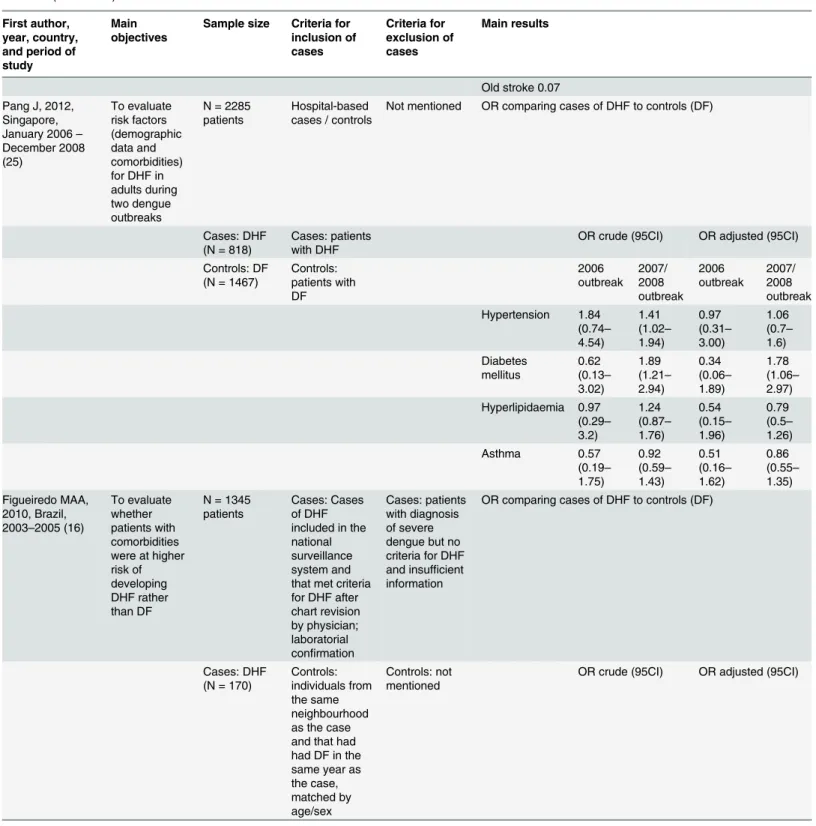
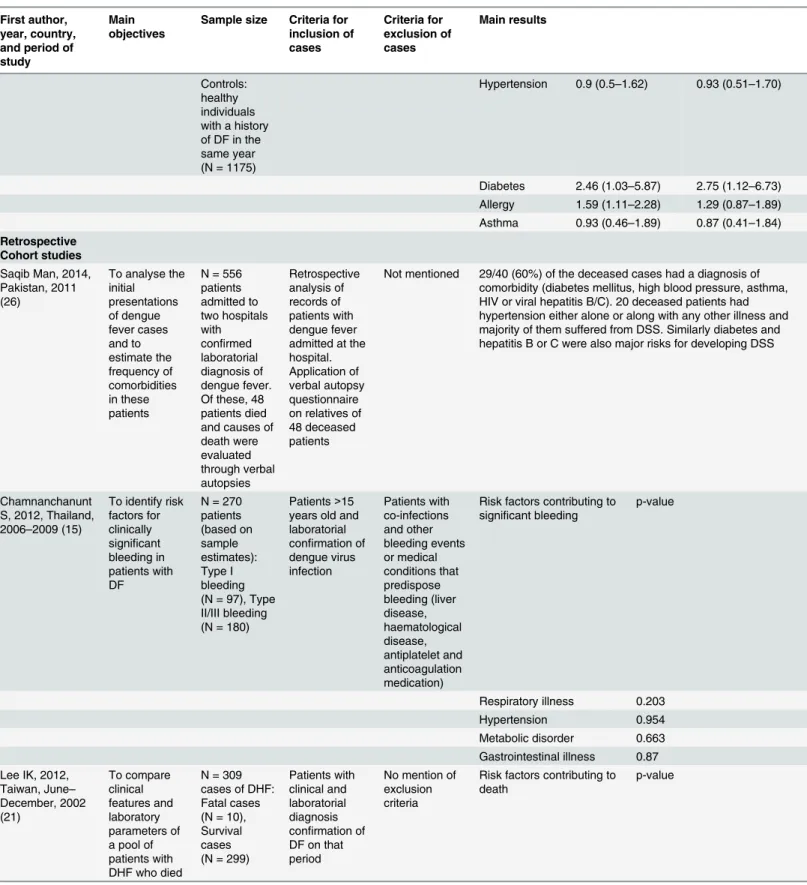
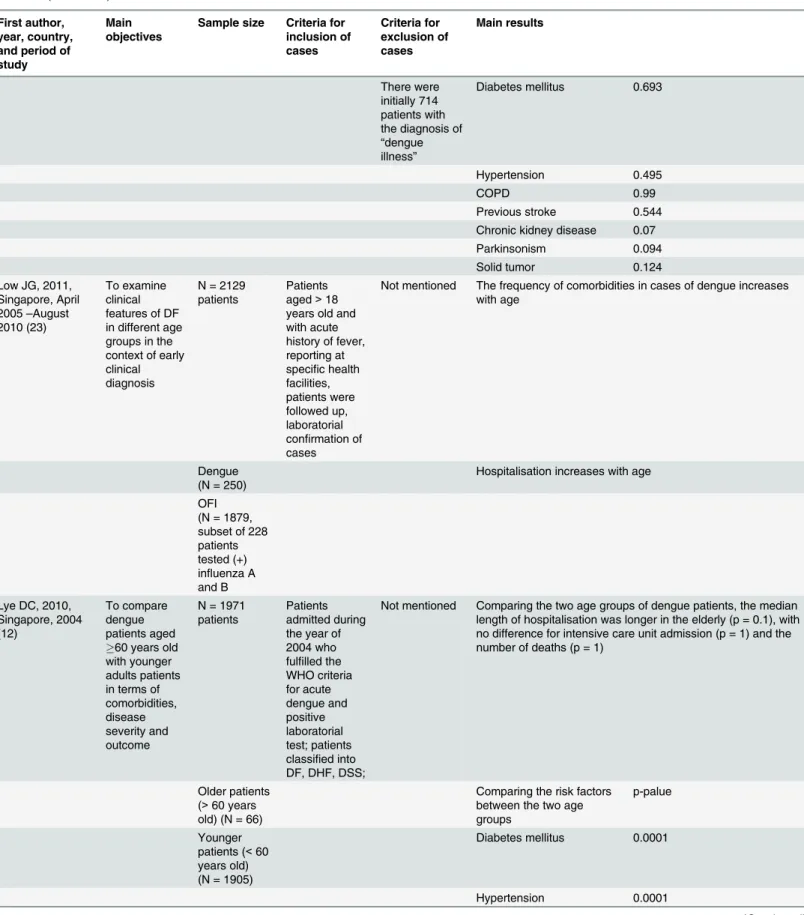
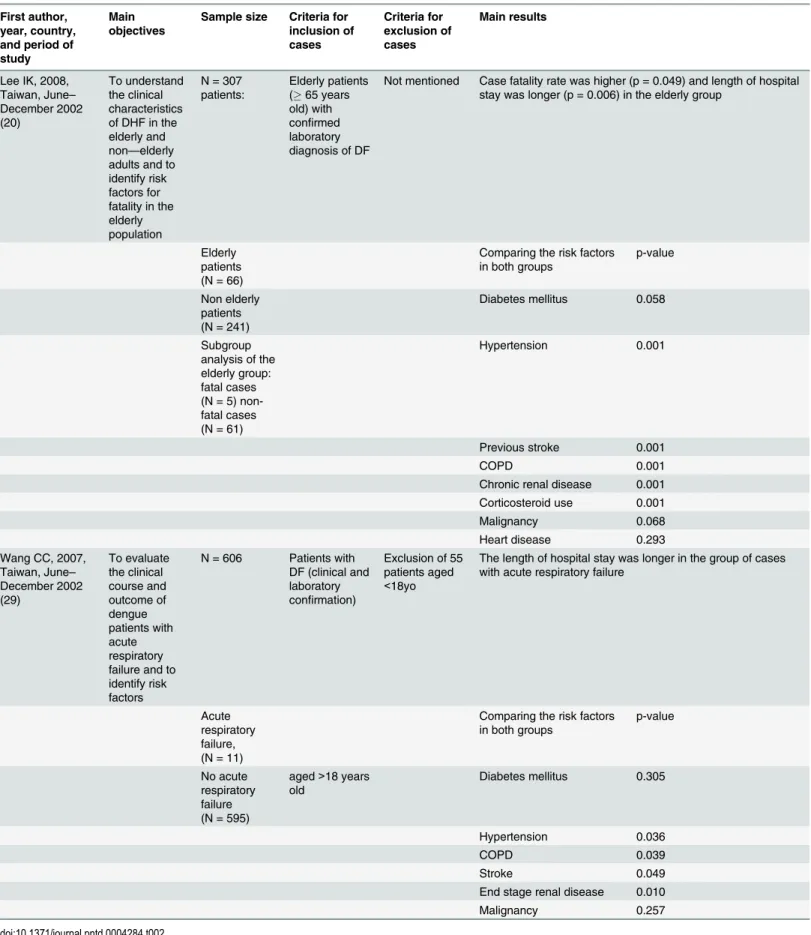
Table 2
provides an overview
of the studies). A meta-analysis was not performed, due to the heterogeneity of outcome
measures.
Descriptive analysis of the studies
Study designs, settings and objectives.
Sixteen articles, describing studies conducted
from 2002 to 2012 met the eligibility criteria [
12
,
15
,
16
,
17
,
18
,
19
,
20
,
21
,
22
,
23
,
24
,
25
,
26
,
27
,
28
,
29
]. All studies included in the analysis were observational studies: nine retrospective
cohort studies [
12
,
15
,
18
,
20
,
21
,
22
,
23
,
26
,
29
] and seven case-control studies [
16
,
17
,
19
,
24
,
25
,
27
,
28
]. Geographically, six studies were conducted in Taiwan [
18
,
19
,
20
,
21
,
22
,
29
], four
in Singapore [
12
,
23
,
25
,
28
], two each in Brazil and Pakistan [
16
,
24
,
26
,
27
] and one in India
and Thailand [
15
,
17
].
The studies had a wide range of objectives. Eight studies analysed hypertension, diabetes
mellitus and allergies as risk factors [
15
,
16
,
17
,
24
,
25
,
26
,
27
,
28
]. Four studies had as main
objectives the study of old age as a risk factor for the development of the severe forms of dengue
[
12
,
19
,
20
,
23
] and two studies focused on risk factors for renal failure [
18
,
21
]. One study
assessed risk factors for mortality in patients with DHF [
22
]. One study focused on risk factors
and comorbidities linked to the development of acute respiratory failure in dengue cases [
29
].
In order to report on the outcome measures DF, DHF, DSS and SD, in this systematic
review
“
severe forms of dengue
”
is used to describe dengue severity in more general terms;
however, for the specific reporting of the studies, the case definitions and classifications as
described in the studies are maintained.
for only two of the studies. All nine retrospective cohort studies reported inclusion criteria;
common to all studies was laboratory (serology or molecular biology) confirmation of DENV
infection. Of the cohort studies, only three studies reported exclusion criteria [
15
,
18
,
29
].
Exposure, outcome and measures of association.
All studies measured different risk
fac-tors and also considered different outcomes.
Fig 1. Flowchart of the study selection process.
Table 2. Included studies.
First author, year, country, and period of study
Main objectives
Sample size Criteria for inclusion of cases Criteria for exclusion of cases Main results Case control studies Teixeira MG, 2015, Brazil, 2009–2012 (27)
To investigate the hypothesis that some specific comorbidities increase the likelihood of a dengue fever case progressing to dengue haemorrhagic fever
N = 1806 patients
Patients admitted in the hospitals with signs and symptoms of dengue fever were followed up until afinal diagnosis. Those who progressed to DHF/DSS were classified as cases and those who did not progress for DHF were classified as controls.
Not mentioned Hypertension (OR = 1.6; 95CI 1.1–2.1) and skin allergy (OR = 1.8; 95CI 1.1–3.2) were associated with DHF (adjusted for ethnic and social variables)
Cases: dengue haemorrhagic fever patients (N = 490)
Case definition: Patients with dengue fever who progressed to DHF according to the WHO 1997 criteria
Self-reported skin allergies (OR = 2.1; 95CI 1.1–4.1), and hypertension (on anti-hypertensive drugs) (OR = 1.4; 95CI 1.1–
2.0) were associated with DHF. Also, when patients were not taking antihypertensive drugs, there was also an association (OR = 1.8; 95CI 1.1–3.2)
Controls: (N = 1316)
Control definition: Patients, from the same hospital as cases, with signs and symptoms of DF and positive specific laboratory diagnosis for dengue who did not progress to DHF. Karunakan, India,
2013, 2005–2008 (17)
To identify risk factors of mortality in patients with a confirmed diagnosis of DF during hospital stay
N = 50 patients (10 cases and 40 controls)
Cases: patients admitted to the hospital with probable DF and confirmed laboratory diagnosis and who died during hospital stay.
Not mentioned Comorbidities Cases (n = 10)
Controls (n = 241)
OR (95CI) p-value
Table 2. (Continued) First author, year, country, and period of study
Main objectives
Sample size Criteria for inclusion of cases
Criteria for exclusion of cases
Main results
Controls: patients with laboratory confirmation of DF who recovered from illness and then discharged
Diabetes 4 (40) 1 (2, 5) 26 (2.5–
273.7)
0.004
Hypertension 7 (70) 2 (5) 44.3 (6.2–
315.5)
0.000 Mahmood S,
2013, Pakistan, 2011 (24)
To evaluate the relationship between comorbidities (diabetes mellitus, cardiovascular diseases, bronchial asthma, tuberculosis, and chronic liver disease) in patients with DF and progression to DHF
N = 373 patients
Cases: Male/ female patients aged between 15–65 years old and with a diagnosis of DHF according to 1997 WHO classification
Not mentioned Comorbidities Cases (n = 132)
Controls (n = 241)
aOR (95CI)
p-value
Cases: 132 DHF/DSS
Controls: patients from the same hospitals with a positive anti-dengue IgG and matched with cases for age/sex
Diabetes mellitus
57 (43, 2)
104 (41.8)
1.26 (0.78–
2.03)
0.34
Controls: 241 patients
Hypertension 67 (50.8) 135 (54.2)
0.93 (0.57–
1.49)
0.76
Ischaemic heart disease
26 (19.7) 44 (17.7) 1.52 (0.85–
2.73)
0.15
Bronchial asthma
14 (10.6) 23 (9.2) 1.34 (0.62–2,
88)
0.44
Chronic liver disease
12 (9.1) 27 (10.8) Not mentioned Pulmonary
tuberculosis
10 (7.6) 13 (5.2) 1.41 (0.57–
3.43)
0.44
Table 2. (Continued) First author, year, country, and period of study
Main objectives
Sample size Criteria for inclusion of cases Criteria for exclusion of cases Main results
Thein T-L, 2013, Singapore, 2004–
2008 (28) To identify demographic, clinical and laboratory risk factors related to death in adult patients with dengue fever
N = 108 patients admitted to the hospital with a diagnosis of dengue fever and later died due to complications
Cases: patients with laboratory confirmed diagnosis of dengue who died on a cohort of patients admitted to hospital (N: 28)
Not mentioned Comorbidities Non fatal (n = 80)
Fatal (n = 28)
OR (95CI) p-value
Controls: patients with laboratory confirmed diagnosis of dengue who did not die in a cohort of patients admitted to hospital (N: 80)
Diabetes mellitus
17(21.2) 9 (39.1) 0.078
Hypertension 35 (43.8) 12 (50.0) 0.821
Heart failure 2 (2.5) 2 (11.1) 0.176
Hyperlipidemia 16 (20.0) 3 (16.7) 0.503 Cardiac
disorder
7 (8.8) 10 (47.6) 10.643 (2.274–
49.821)
0.003
Renal disorder 2 (2.5) 8 (40) 21.176 (2.63–
170.54)
0.004
Lee CC, 2013, Taiwan, January–
December 2007 (19) To compare demographic and clinical features of elderly and young adult patients with dengue fever
N = 193 patients Cases: elderly patients (N = 31)
Patients that visited the Emergency Room Department and had dengue fever suspected by the physician Cases / Controls: patients with negative serology for dengue fever (exclusion of 73 individuals)
The overall mortality for the dengue cases was 0.5%.
Controls: young adults (N = 162)
Cases: elderly adults (>65 years older)
However, mortality for elderly cases was higher (p<0.0001).
Controls: young adults (<65yo)
When comparing the two groups, the elderly presented with a higher proportion of comorbidities:
1 comorbiditiy<0.01 >2 comorbidities 0.001 Hypertension 0.009 Diabetes mellitus 0.01 Coronary artery disease 0.05 Chronic renal insufficiency 0.59 COPD 0.51
Liver cirrhosis 0.41 Malignancy 0.01
Table 2. (Continued) First author, year, country, and period of study
Main objectives
Sample size Criteria for inclusion of cases Criteria for exclusion of cases Main results
Old stroke 0.07 Pang J, 2012,
Singapore, January 2006–
December 2008 (25) To evaluate risk factors (demographic data and comorbidities) for DHF in adults during two dengue outbreaks
N = 2285 patients
Hospital-based cases / controls
Not mentioned OR comparing cases of DHF to controls (DF)
Cases: DHF (N = 818)
Cases: patients with DHF
OR crude (95CI) OR adjusted (95CI) Controls: DF
(N = 1467)
Controls: patients with DF 2006 outbreak 2007/ 2008 outbreak 2006 outbreak 2007/ 2008 outbreak Hypertension 1.84 (0.74– 4.54) 1.41 (1.02– 1.94) 0.97 (0.31– 3.00) 1.06 (0.7– 1.6) Diabetes mellitus 0.62 (0.13– 3.02) 1.89 (1.21– 2.94) 0.34 (0.06– 1.89) 1.78 (1.06– 2.97) Hyperlipidaemia 0.97 (0.29– 3.2) 1.24 (0.87– 1.76) 0.54 (0.15– 1.96) 0.79 (0.5– 1.26) Asthma 0.57 (0.19– 1.75) 0.92 (0.59– 1.43) 0.51 (0.16– 1.62) 0.86 (0.55– 1.35) Figueiredo MAA, 2010, Brazil, 2003–2005 (16)
To evaluate whether patients with comorbidities were at higher risk of developing DHF rather than DF
N = 1345 patients
Cases: Cases of DHF included in the national surveillance system and that met criteria for DHF after chart revision by physician; laboratorial confirmation
Cases: patients with diagnosis of severe dengue but no criteria for DHF and insufficient information
OR comparing cases of DHF to controls (DF)
Cases: DHF (N = 170)
Controls: individuals from the same neighbourhood as the case and that had had DF in the same year as the case, matched by age/sex
Controls: not mentioned
OR crude (95CI) OR adjusted (95CI)
Table 2. (Continued) First author, year, country, and period of study
Main objectives
Sample size Criteria for inclusion of cases Criteria for exclusion of cases Main results Controls: healthy individuals with a history of DF in the same year (N = 1175)
Hypertension 0.9 (0.5–1.62) 0.93 (0.51–1.70)
Diabetes 2.46 (1.03–5.87) 2.75 (1.12–6.73) Allergy 1.59 (1.11–2.28) 1.29 (0.87–1.89) Asthma 0.93 (0.46–1.89) 0.87 (0.41–1.84) Retrospective
Cohort studies Saqib Man, 2014, Pakistan, 2011 (26)
To analyse the initial presentations of dengue fever cases and to estimate the frequency of comorbidities in these patients
N = 556 patients admitted to two hospitals with confirmed laboratorial diagnosis of dengue fever. Of these, 48 patients died and causes of death were evaluated through verbal autopsies Retrospective analysis of records of patients with dengue fever admitted at the hospital. Application of verbal autopsy questionnaire on relatives of 48 deceased patients
Not mentioned 29/40 (60%) of the deceased cases had a diagnosis of comorbidity (diabetes mellitus, high blood pressure, asthma, HIV or viral hepatitis B/C). 20 deceased patients had hypertension either alone or along with any other illness and majority of them suffered from DSS. Similarly diabetes and hepatitis B or C were also major risks for developing DSS
Chamnanchanunt S, 2012, Thailand, 2006–2009 (15)
To identify risk factors for clinically significant bleeding in patients with DF
N = 270 patients (based on sample estimates): Type I bleeding (N = 97), Type II/III bleeding (N = 180)
Patients>15 years old and laboratorial confirmation of dengue virus infection Patients with co-infections and other bleeding events or medical conditions that predispose bleeding (liver disease, haematological disease, antiplatelet and anticoagulation medication)
Risk factors contributing to significant bleeding
p-value
Respiratory illness 0.203
Hypertension 0.954
Metabolic disorder 0.663 Gastrointestinal illness 0.87 Lee IK, 2012,
Taiwan, June–
December, 2002 (21) To compare clinical features and laboratory parameters of a pool of patients with DHF who died
N = 309 cases of DHF: Fatal cases (N = 10), Survival cases (N = 299)
Patients with clinical and laboratorial diagnosis confirmation of DF on that period
No mention of exclusion criteria
Risk factors contributing to death
p-value
Table 2. (Continued) First author, year, country, and period of study
Main objectives
Sample size Criteria for inclusion of cases
Criteria for exclusion of cases
Main results
There were initially 714 patients with the diagnosis of
“dengue illness”
Diabetes mellitus 0.693
Hypertension 0.495
COPD 0.99
Previous stroke 0.544
Chronic kidney disease 0.07
Parkinsonism 0.094
Solid tumor 0.124
Low JG, 2011, Singapore, April 2005–August 2010 (23)
To examine clinical features of DF in different age groups in the context of early clinical diagnosis
N = 2129 patients
Patients aged>18 years old and with acute history of fever, reporting at specific health facilities, patients were followed up, laboratorial confirmation of cases
Not mentioned The frequency of comorbidities in cases of dengue increases with age
Dengue (N = 250)
Hospitalisation increases with age
OFI (N = 1879, subset of 228 patients tested (+) influenza A and B Lye DC, 2010,
Singapore, 2004 (12)
To compare dengue patients aged 60 years old with younger adults patients in terms of comorbidities, disease severity and outcome
N = 1971 patients
Patients admitted during the year of 2004 who fulfilled the WHO criteria for acute dengue and positive laboratorial test; patients classified into DF, DHF, DSS;
Not mentioned Comparing the two age groups of dengue patients, the median length of hospitalisation was longer in the elderly (p = 0.1), with no difference for intensive care unit admission (p = 1) and the number of deaths (p = 1)
Older patients (>60 years old) (N = 66)
Comparing the risk factors between the two age groups
p-palue
Younger patients (<60 years old) (N = 1905)
Diabetes mellitus 0.0001
Hypertension 0.0001
Table 2. (Continued) First author, year, country, and period of study
Main objectives
Sample size Criteria for inclusion of cases
Criteria for exclusion of cases
Main results
Ischemic heart disease 0.0001
Hyperlipidemia 0.0001
Lee IK, 2009, Taiwan, June–
December, 2002 (21)
To study the clinical characteristics and outcomes of DHF patients with acute renal failure (ARF) and to identify risk factors for development of ARF in patients with DHF
N = 304 patients:
Patients>18 years old with laboratory confirmation of DF
Not mentioned Case fatality was higher in cases of DHF with ARF (p<0.0001)
DHF and ARF (N = 10)
Comparing the risk factors contributing to DHF with ARF
p-value
DHF and non ARF (N = 294)
Diabetes mellitus 0.693
Hypertension 0.071
Previous stroke 0.005
Chronic renal disease 0.046 Kuo MC, 2008,
Taiwan, January 2002–January 2003 (18)
To evaluate whether dengue viral infections in patients with renal failure have different clinical presentations and disease outcome
N = 519 patients with dengue fever: Renal failure (N = 21), Non renal failure (N = 498)
Patients with clinical and laboratory diagnosis of DF
Cases without clinical confirmation or detailed clinical history
Case fatality was higher with dengue and renal failure (p<0.0001)
28 of the 549 were excluded because of incomplete information (clinical charts and baseline serum creatinine)
Comparing the risk factors contributing to a different clinical presentation and outcome between dengue cases with or without renal failure
p-value
Previous renal failure <0.01
Cancer 0.24
Diabetes 0.03
Hypertension <0.01
Cardiovascular disease 0.13 Pulmonary diseases 1.0 Rheumatological diseases <0.01 Gastrointestinal disease 0.8
Table 2. (Continued) First author, year, country, and period of study
Main objectives
Sample size Criteria for inclusion of cases
Criteria for exclusion of cases
Main results
Lee IK, 2008, Taiwan, June–
December 2002 (20)
To understand the clinical characteristics of DHF in the elderly and non—elderly adults and to identify risk factors for fatality in the elderly population
N = 307 patients:
Elderly patients (65 years old) with confirmed laboratory diagnosis of DF
Not mentioned Case fatality rate was higher (p = 0.049) and length of hospital stay was longer (p = 0.006) in the elderly group
Elderly patients (N = 66)
Comparing the risk factors in both groups
p-value
Non elderly patients (N = 241)
Diabetes mellitus 0.058
Subgroup analysis of the elderly group: fatal cases (N = 5) non-fatal cases (N = 61)
Hypertension 0.001
Previous stroke 0.001
COPD 0.001
Chronic renal disease 0.001 Corticosteroid use 0.001
Malignancy 0.068
Heart disease 0.293
Wang CC, 2007, Taiwan, June–
December 2002 (29)
To evaluate the clinical course and outcome of dengue patients with acute respiratory failure and to identify risk factors
N = 606 Patients with DF (clinical and laboratory confirmation)
Exclusion of 55 patients aged <18yo
The length of hospital stay was longer in the group of cases with acute respiratory failure
Acute respiratory failure, (N = 11)
Comparing the risk factors in both groups
p-value
No acute respiratory failure (N = 595)
aged>18 years old
Diabetes mellitus 0.305
Hypertension 0.036
COPD 0.039
Stroke 0.049
End stage renal disease 0.010
Malignancy 0.257
For the case control studies, two studies [
16
,
25
] considered severity of dengue (DHF) as the
primary outcome, assessing comorbidities as risk factors. The comorbidities evaluated included
hypertension, diabetes mellitus, hyperlipidaemia, asthma and allergy. In the study by Pang et al
[
25
], diabetes and diabetes and hypertension were analysed in relation to DHF. Figueiredo et al
[
16
] analysed diabetes and allergy.
Lee et al [
19
], assessed the influence of age on the length of hospital stay and mortality rate
on day 14 from the initial visit to the Emergency Department. The authors compared also
comorbidities between the two age groups.
For the retrospective cohort studies, five of eight studies evaluated case fatality rates /
mor-tality rates / deaths as outcome measures in patients with dengue [
12
,
18
,
20
,
21
,
22
]. Evaluation
of comorbidities included cardiovascular disease and stroke, respiratory illnesses such as
chronic obstructive pulmonary disease (COPD), renal disease, cancer, diabetes, Parkinsonism,
but also hypertension and hyperlipidaemia (see
Table 2
for the full list).
Summary of the main results of the studies
Case control studies (Table 2).
Pang et al [
25
] conducted a case control study in
Singa-pore to evaluate the role of comorbidities in the development of DHF. The findings showed
that diabetes and hypertension were associated with an elevated risk of DHF in the 2007/2008
outbreak: crude Odds Ratio (OR) 1.41 (1.02
–
1.94) for hypertension and 1.89 (1.21
–
2.94) for
diabetes mellitus. However, results in other years and also the adjusted ORs did not confirm
these results. Figueiredo et al [
16
] found in a study in Brazil an association between DHF and
diabetes and allergies (crude ORs: 2.46 (1.03
–
5.87) and 1.59 (1.11
–
2.28) respectively). Similar
results were found by Teixeira et al [
27
], who found an association between hypertension
(adjusted OR 1.6; 95% Confidence Interval (95CI) 1.1
–
2.1), skin allergy (adjusted OR 1.8; 95CI
1.1
–
3.2) and progression to DHF. In addition to that, findings by Karunakan et al [
17
] showed
that diabetes (crude OR 26 (2.5
–
273.7) and hypertension (crude OR 44.3 (6.2
–
315.5) increased
the risk of mortality amongst DHF cases admitted to hospital. Conversely, despite its relevant
sample size, Mahmood et al [
24
] did not find an association between comorbidities and
devel-opment of DHF.
Lee CC et al [
19
] compared elderly versus younger patients, with DHF as the outcome
mea-sure. The authors concluded that the former were more prone to present DHF, higher disease
severity and more comorbidities than the latter. Older age, as a risk factor, was related to longer
length of hospital stay. Thein T-L et al [
28
] found that cardiac and renal disorder were related
to fatality in DHF cases admitted to a hospital in Singapore.
Retrospective cohort studies (Table 2).
These studies presented several exposures and
outcomes. Of the nine retrospective cohort studies, six studies [
12
,
18
,
20
,
21
,
23
,
26
] showed
findings in favour of comorbidities as risk factors for the severe forms of dengue whereas three
[
15
,
22
,
29
] found no relationship.
Chamnanchanunt et al [
15
] compared types of bleeding (type I, clinically significant
bleed-ing
versus
type II/III bleeding) in relation to comorbidities. None of the analysed comorbidities
appeared to be related to the severity of bleeding (respiratory illness, hypertension, metabolic
disorder, gastrointestinal illness).
Two studies evaluated renal impairment in the development of severe forms of dengue. Kuo
et al [
18
] studied the impact of chronic renal failure on dengue severity. Their findings showed
that patients with dengue and severe renal function impairment had a higher risk of mortality
and higher possibility of having DHF/DSS compared to the control group (p
<
0.0001). The
patients with dengue who developed acute renal failure, concluded that there was good
evi-dence that age, male sex, previous stroke, chronic renal disease and fatality rate were associated
with DHF and acute renal failure, but not hypertension and diabetes. The case fatality rate of
dengue was high once acute renal failure developed.
Two studies [
12
,
23
], assessed the length of hospitalisation of dengue infected patients, with
opposite findings in relation to the role of comorbidities. Low et al [
23
] concluded that older
adults less frequently reported clinical symptoms of dengue than younger adults, delaying the
diagnosis. However, hospitalisation increased with age. Lye et al [
12
] observed that patients
aged
60 years presented with more comorbidities (hypertension, diabetes mellitus, ischaemic
heart disease and hyperlipidaemia) than patients aged
<
60 years. When comparing the two
groups for intensive care unit admission and death, no differences were noted.
Lee et al [
20
] studied risk factors for dengue death in the elderly population. The authors
concluded that elderly patients had a higher mortality rate of dengue compared to younger
patients and that DSS is an independent risk factor for death (p = 0.006) in elderly patients
with DHF. In this study diabetes mellitus was not a risk factor for DHF, but hypertension,
stroke, COPD, chronic renal disease and corticosteroid use.
A study set in Taiwan [
22
] evaluated clinical and laboratory risk factors of patients who
developed DHF and subsequently died and there was no statistical difference in the frequency
of comorbidities with patients who survived.
Wang et al [
29
] analysed cases of dengue who developed acute respiratory failure. This
group of cases presented more often with hypertension, COPD, stroke and renal disease.
Mor-tality rate in this cohort was very high with 73%.
A study by Saqib et al [
26
] performed verbal autopsies on deceased cases of DF admitted to
tertiary hospitals in Pakistan. The authors concluded that 29/40 (60%) of the deceased cases
had a diagnosis of comorbidity (diabetes mellitus, high blood pressure, asthma, HIV or viral
hepatitis B/C). About 20 deceased patients had hypertension either alone or along with any
other illness and the majority of them suffered from DSS. Similarly diabetes and hepatitis B or
C were also another major risks for developing DSS.
Discussion
The studies retrieved in this review measured different outcomes (DHF, DSS and SD
—
with
dif-ferent definitions for severity), making results challenging to compare. Since 2009, WHO has
adopted a new dengue case classification (dengue and severe dengue: D/SD) [
3
] to improve
clinical management. In this systematic review, despite the fact that all studies were conducted
and published after 2002, only Low JG et al [
23
] designed their study based on the most recent
classification of dengue. One of the implications is that future studies should use similar
end-point measures, to ensure an improved comparability.
Similarly, when assessing comorbidities, the studies showed that many different
comorbidi-ties have been analysed. An agreed set of comorbidicomorbidi-ties should be analysed in future studies.
No clear analysis of the influence of comorbidities on the development of severe dengue can be
shown from this analysis, but recurrently 1) cardiovascular disease 2) stroke, 3) diabetes, 4)
respiratory disease and 5) renal disease were associated with the severe forms of dengue, as well
as old age. A recent systematic literature review and meta-analysis by Htun NS et al [
30
] about
the causal effect of diabetes on severe clinical presentations of dengue fever was inconclusive;
however the authors suggest that glycaemic triage in patients with suspicion of DF should be
performed.
primary care facilities, where the vast majority of dengue cases are seen. Only case-control and
retrospective studies were identified in the systematic review, furthermore, often with very
small study populations, with the inherent limitations for the interpretation of findings [
31
].
These features also identify the need for bigger and especially prospective studies, assessing
the role of comorbidities in dengue severity with standardised protocols.
This systematic literature review has its limitations, since the presence of comorbidities in
individuals with dengue is a subject underexplored in the scientific literature. Furthermore,
most of the clinical data are not recorded as risk factors and thus retrieving this information
becomes difficult in databases. The studies retrieved were heterogeneous for exposures and
outcomes, making it difficult to extrapolate results. The problems were addressed by including
all studies related to the research question in the analysis, and not excluding because of lack of
quality
—
as a result, the analysis permitted only for a descriptive analysis.
Conclusion
The results presented highlight that comorbidities might influence the development of severe
forms of dengue. Further research including standardised prospective cohort studies in regions
with high prevalence of DENV infection would contribute to a better understanding of the
rele-vance of comorbidities in severe dengue.
Supporting Information
S1 Checklist. PRISMA Checklist.
(DOCX)
Author Contributions
Conceived and designed the experiments: OH JT LG. Performed the experiments: JT LG.
Ana-lyzed the data: OH JT LG. Contributed reagents/materials/analysis tools: OH JT LG. Wrote the
paper: JT LG EM AL WWH GEC SRR OH.
References
1. Rigau-Pérez JG, Clark GG, Gubler DJ, Reiter P, Sanders EJ, Vorndam AV (1998) Dengue and dengue haemorrhagic fever. The Lancet, 1998. 352 (9132): p. 971–977
2. Simmons CP, Farrar JJ, van Vinh Chau N, Wills B. Dengue. New England Journal of Medicine. 2012; 366(15):1423–32. doi:10.1056/NEJMra1110265PMID:22494122
3. World Health Organization. Dengue guidelines for diagnosis, treatment, prevention and control: new edition. Geneva: World Health Organization; 2009. x, 147 p. p
4. Mandell GL, Douglas RG, Bennett JE, Dolin R. Mandell, Douglas, and Bennett's principles and practice of infectious diseases. 6th ed. New York: Elsevier/Churchill Livingstone; 2005.2133–2157.
5. Bhatt S, Gething PW, Brady OJ, Messina JP, Farlow AW, Moyes CL, et al. The global distribution and burden of dengue. Nature. 2013 Apr 25; 496(7446):504–7. Epub 2013/04/09. eng. doi:10.1038/ nature12060PMID:23563266
6. Halstead SB. Dengue. Lancet. 2007 Nov 10; 370(9599):1644–52. Epub 2007/11/13. eng. PMID:
17993365
7. Brasil. Ministério da Saúde. Dengue: diagnóstico e manejo clínico: adulto e criança. 4. ed. Brasília: Min-istério da Saúde; 2013. 80 p
8. Halstead SB. Dengue: The Syndromic Basis to Pathogenesis Research. Inutility of the 2009 WHO Case Definition. The American Journal of Tropical Medicine and Hygiene. 2013 February 6, 2013; 88 (2):212–5. doi:10.4269/ajtmh.12-0197PMID:23390220
10. Halstead SB. Dengue: the syndromic basis to pathogenesis research. Inutility of the 2009 WHO case definition. Am J Trop Med Hyg. 2013 Feb; 88(2):212–5. Epub 2013/02/08. eng. doi: 10.4269/ajtmh.12-0197PMID:23390220
11. Porta MS, International Epidemiological A. A dictionary of epidemiology. 5th / edited for the Interna-tional Epidemiological Association by Miquel Porta; associate editors, Sander Greenland, John M. Last. ed. Oxford: Oxford University Press; 2008. xxiv, 289 p. p.47.
12. Lye DC, Lee VJ, Sun Y, Leo YS. The benign nature of acute dengue infection in hospitalized older adults in Singapore. International Journal of Infectious Diseases. 2010 May; 14(5):e410–e3. doi:10. 1016/j.ijid.2009.06.026PMID:19854667
13. Higgins JPT GSe,. The Cochrane Collaboration, 2011. Available fromhttp://www.cochrane-handbook. org. Cochrane Handbook of Systematic Reviews of Intervention. Version 5.1.0 (updated March 2011). O’Connor D GS, Higgins JPT (editors). editor2011.
14. Liberati A, Altman DG, Tetzlaff J, Mulrow C, Gotzsche PC, Ioannidis JP, et al. The PRISMA statement for reporting systematic reviews and meta-analyses of studies that evaluate healthcare interventions: explanation and elaboration. Bmj. 2009; 339:b2700. doi:10.1136/bmj.b2700PMID:19622552
15. Chamnanchanunt S, Kanagaraj D, Thanachartwet V, Desakorn V, Rojnuckarin P. Early predictors of clinically significant bleeding in adults with dengue infection. The Southeast Asian journal of tropical medicine and public health. 2012 Jul; 43(4):890–9. Epub 2012/10/20. eng. PMID:23077811
16. Figueiredo MAA, Rodrigues LC, Barreto ML, Lima JWO, Costa MCN, Morato V, et al. Allergies and dia-betes as risk factors for dengue hemorrhagic fever: Results of a case control study. PLoS neglected tropical diseases. 2010 June; 4(6).
17. Karunakaran A, Ilyas WM, Sheen SF, Jose NK, Nujum ZT. Risk factors of mortality among dengue patients admitted to a tertiary care setting in Kerala, India. Journal of infection and public health. 2014 Mar-Apr; 7(2):114–20. Epub 2013/12/03. eng. doi:10.1016/j.jiph.2013.09.006PMID:24290074
18. Kuo MC, Lu PL, Chang JM, Lin MY, Tsai JJ, Chen YH, et al. Impact of renal failure on the outcome of dengue viral infection. Clinical Journal of the American Society of Nephrology. 2008 September; 3 (5):1350–6. doi:10.2215/CJN.00020108PMID:18667746
19. Lee CC, Hsu HC, Chang CM, Hong MY, Ko WC. Atypical presentations of dengue disease in the elderly visiting the ED. American Journal of Emergency Medicine. 2013 May; 31(5):783–7. doi:10.1016/j. ajem.2013.01.011PMID:23399333
20. Lee IK, Liu JW, Yang KD. Clinical and laboratory characteristics and risk factors for fatality in elderly patients with dengue hemorrhagic fever. American Journal of Tropical Medicine and Hygiene. 2008 August; 79(2):149–53. PMID:18689614
21. Lee IK, Liu JW, Yang KD. Clinical characteristics, risk factors, and outcomes in adults experiencing dengue hemorrhagic fever complicated with acute renal failure. The American journal of tropical medi-cine and hygiene. 2009 Apr; 80(4):651–5. PMID:19346394
22. Lee IK, Liu JW, Yang KD. Fatal dengue hemorrhagic fever in adults: emphasizing the evolutionary pre-fatal clinical and laboratory manifestations. PLoS neglected tropical diseases. 2012; 6(2):e1532. doi:
10.1371/journal.pntd.0001532PMID:22363829
23. Low JG, Ong A, Tan LK, Chaterji S, Chow A, Lim WY, et al. The early clinical features of dengue in adults: challenges for early clinical diagnosis. PLoS neglected tropical diseases. 2011; 5(5):e1191. doi:
10.1371/journal.pntd.0001191PMID:21655307
24. Mahmood S, Hafeez S, Nabeel H, Zahra U, Nazeer H. Does Comorbidity Increase the Risk of Dengue Hemorrhagic Fever and Dengue Shock Syndrome? ISRN Tropical Medicine. 2013; 2013:5.
25. Pang J, Salim A, Lee VJ, Hibberd ML, Chia KS, Leo YS, et al. Diabetes with Hypertension as Risk Fac-tors for Adult Dengue Hemorrhagic Fever in a Predominantly Dengue Serotype 2 Epidemic: A Case Control Study. PLoS neglected tropical diseases. 2012; 6(5):e1641. doi:10.1371/journal.pntd.0001641
PMID:22563519
26. Saqib MA, Rafique I, Bashir S, Salam AA. A retrospective analysis of dengue fever case management and frequency of co-morbidities associated with deaths. BMC research notes. 2014; 7:205. Epub 2014/ 04/03. eng. doi:10.1186/1756-0500-7-205PMID:24690140
27. Teixeira MG, Paixao ES, Costa Mda C, Cunha RV, Pamplona L, Dias JP, et al. Arterial hypertension and skin allergy are risk factors for progression from dengue to dengue hemorrhagic fever: a case con-trol study. PLoS neglected tropical diseases. 2015 May; 9(5):e0003812. Epub 2015/05/23. eng. doi:10. 1371/journal.pntd.0003812PMID:25996882
29. Wang CC, Liu SF, Liao SC, Lee IK, Liu JW, Lin AS, et al. Acute respiratory failure in adult patients with dengue virus infection. The American journal of tropical medicine and hygiene. 2007 Jul; 77(1):151–8. PMID:17620647
30. Htun NS, Odermatt P, Eze IC, Boillat-Blanco N, D'Acremont V, Probst-Hensch N. Is diabetes a risk fac-tor for a severe clinical presentation of dengue?—review and meta-analysis. PLoS neglected tropical diseases. 2015 Apr; 9(4):e0003741. Epub 2015/04/25. eng. doi:10.1371/journal.pntd.0003741PMID:
25909658