(1) Departamento de Fonoaudiologia da Faculdade de Medicina da Universidade Federal do Rio de Janeiro, Rio de Janeiro, RJ, Brasil.
(2) Instituto Fernandes Figueira/Fiocruz, Rio de Janeiro, RJ, Brasil.
(3) Unidade de Terapia, Educação e Comunicação (UNITEC) na área de linguagem em educação especial, Rio de Janeiro, RJ, Brasil.
Conlict of interest: non-existent
Characterization of the elderly health in a Speech
and Language Therapy perspective
Caracterização da saúde de idosos numa perspectiva fonoaudiológica
Lívia Maria Santiago(1)
Cláudia Maria de Lima Graça(1)
Monique Coelho de Oliveira Rodrigues(2)
Gislene Barbosa dos Santos(3)
Received on: May 10, 2016 Accepted on: July 19, 2016 Mailing address: Livia Maria Santiago
Hospital Universitário Clementino Fraga Filho / UFRJ
Rua: Rodolpho Paulo Rocco, 255, sala 9E11, Coordenação de Fonoaudiologia, Cidade Universitária, Rio de Janeiro, RJ, Brasil
CEP: 21941-913
E-mail: [email protected]
ABSTRACT
Purpose: to estimate the prevalence of oral communication, memory, reading and writing, voice and oral
motor skills problems in elderly people.
Methods: cross-sectional study with 75 older people registered in a Family Clinic of Rio de Janeiro. It was
estimated the prevalence, in all cases and by sex. The presence of differences between the sexes was veriied by statistical tests t and chi-square.
Results: the problems most frequently related to oral communication and memory were the avoidance to
communicate (20.5%), dificulty in remembering recent and past events (34.7% and 26.4% respectively). There was a high prevalence of dificulty in reading and writing. According to hearing, 43.10% reported “watching television and listening to radio too loud.” Related to voice perception, 71.2% referred “speak loudly or shouting” and 23.6% to “get hoarse frequently.” As far as Myofunctional oral motor skill, 24.7% had “dificulties in chewing in general” and 54.8% “snoring while sleeping.”
Conclusion: in this study, there was a large proportion of elderly people who referred dificulties related
to language, hearing, speech and chewing skills, which are functions related to socialization, welfare and maintenance of functional autonomy and can directly interfere with their quality of life and health.
Keywords: Speech and Language Pathology; Health of Elderly; Prevalence
RESUMO
Objetivo: estimar a prevalência de problemas da comunicação oral, memória, leitura, escrita, voz, audi
-ção e motricidade orofacial em idosos.
Métodos: estudo transversal, com 75 idosos cadastrados em uma Clínica da Família carioca. Foram
esti-madas as prevalências por sexos e conjuntamente. Veriicou-se a presença de diferenças entre os sexos por meio dos testes t e qui-quadrado.
Resultados: os principais problemas de comunicação oral e memória foram “evita se comunicar”
(20,5%) e “diiculdades em lembrar fatos recentes e passados” (34,7% e 26,4%, respectivamente). Observou-se elevada prevalência de diiculdade na leitura e escrita. Em relação à audição, 43,1% relata-ram “ver televisão e ouvir rádio muito alto”. Quanto à voz, 71,2% referiam “falar alto ou gritando” e 23,6% “icar roucos com frequência”. Na motricidade orofacial, 24,7% apresentavam “diiculdades na mastiga-ção em geral” e 54,8% “roncavam ao dormir”.
Conclusão: neste estudo, observou-se uma grande parcela de idosos que referia diiculdades
relacio-nadas às habilidades de linguagem, audição, fonação e mastigação, que são funções relaciorelacio-nadas à socialização, bem-estar e manutenção da autonomia funcional, podendo interferir diretamente na sua qualidade de vida e saúde.
INTRODUCTION
Population ageing – which means a senior popula-tion’s increase higher than the other age groups’1 – is
a prominent phenomenon. Such process has become stronger at full speed, especially in the so-called ‘devel-oping countries’ like Brazil. It is believed that, in the year of 2025, our country will be the sixth in the world’s
senior population’s igures2. Ageing is a period of life
that affects the individual’s internal organic stability and reduces his/her ability to responding to environmental stressors; therefore, he/she becomes more vulnerable3.
In a present perspective, one can conceive ‘healthy ageing’ as long as life quality is granted throughout an individual’s age increases4.
It is widely acknowledged that the maintenance of the functional capacity is of paramount importance to seniors’ life quality5-7. In order to guarantee that people
have life quality8, a general physical health – through
the control of chronic diseases and their symptoms – is also of great importance. Moreover, social participation (in activities that promote interaction with relatives, friends and other people) is capital for the seniors’ emotional and cognitive health9-11.
Language, phonation, hearing and myofunctional oral motor skills motor functions are intimately related to the way people communicate; thus, they can play their social roles, an extremely important factor as far as a population’s better life quality is concerned.
Language (oral and/or written) is considered a device of the thought. One organizes, plans his/her actions, understands, learns, gives his/her opinion and constructs himself/herself as a subject through language. Ageing-related problems may limit senior’s autonomy and their exchange of social experiences, worsening, then, their life quality3,12,13.
Regarding phonation, the changes caused by ageing in one’s body also affect his/her voice. As the
vocal folds naturally age, it rises a gradual calciication and ossiication of the laryngeal structures. Such
processes, in their turn, damage one’s vocal quality (presbyphonia). Nonetheless, concerning the seniors, dysphonia might be related to other factors, such as nodular lesions, congenital organic changes, tumors and laryngeal stenosis. These factors cause varied levels of disabilities and put one’s life at risk; therefore, they should be investigated14. If we consider that the
voice is an important instrument towards communi-cation, thus, we can assume that any changes in its
Regarding hearing, it is noticed a gradual acuity loss throughout the passing of the years. Such loss is considered a consequence of ageing and it is called presbycusis. This condition means a lot in relation to a better integration of the elder in the community where he/she lives, since not only does it affect his/her capacity of noticing and distinguishing sounds, it inter-feres in the understanding of language as well, conse-quently affecting his/her capacity of socialization16.
The myofunctional oral motor skills are related to mastication, swallowing, respiration and speaking. If these functions are somewhat impaired, problems may rise in important aspects of a person’s life for most of such functions are related to the maintenance of life17.
The present study aims at estimating problem prevalence in seniors’ in oral communication, memory, reading and writing, voice, hearing and Myofunctional oral motor. The seniors studied are registered in one of the city of Rio de Janeiro’s Family Clinic.
METHODS
Data source
The development of this cross-sectional study was developed based on the data gathered for the research project entitled: “Health communication situational
assessment and ‘Dona Zica’ Family Clinic’s staff and
community workers’ training”. This research was
conducted in Mangueira (a shantytown in the city of
Rio de Janeiro) throughout the irst semester of 2014.
The inquiry involved a convenience sampling made of 223 families registered by Family Health Strategy in the ‘Dona Zica’ Family Clinic, a milestone in the Mangueira
community (Rio de Janeiro, Brazil), encompassing 811 people. In order to gather data, an instrument
was constructed and it was based on the scientiic
literature in the speech therapy area. The instrument was structured to include the following: sociodemo-graphic variables, issues concerning the screening of communication characteristics and related functions (mastication, swallowing and respiration), behaviors and risk factors as well as protection against possible health problems (smoking, onycophagia, mouth breathing etc.). Therefore, the presented instrument encompasses pieces of information on family
sociode-mographic, health and development speciic for each
age group. This research was supported by The
Educational Program for Health Work (Programa de
at the root institution. The PET-Saúde’s scholarship students were in charge of the interviews, which were conducted at the clinic itself or the interviewees’ homes. A member of the registered families – who should be 18 years old or over – was invited to take part in the research by one of the interviewers. Once this person accepted the invitation, he/she supplied information on himself/herself and on his/her relatives, besides signing the informed consent form.
The study was submitted to the Research Ethics Committee of Federal University of Rio de Janeiro’s
Clementino Fraga Filho University Hospital (HUCFF).
It was deferred and it holds the Certiicate of
Presentation for Ethical Consideration (CAAE number
21897513.5.0000.5257).
Inclusion criteria
In this investigation, we followed the approach set by The Senior Citizen Statute11, which considers an ‘elder’
whoever is 60 years old or over. Therefore, in order to comply with the objective of the present inquiry, we singled out 75 people whose ages were equal or
superior to 60 years old. This igure represents 9.2%
of the total number of participants in the Educational
Program for Health Work (PET-Saúde) – Speech and
Language Therapy.
Exclusion criteria
For the PET-Saúde (Educational Program for Health Work) research, community dwellers unregistered in the Family Health Strategy were ruled out. For the present study, interviewees under 60 years were excluded.
Study variables
The following variables were taken into consider-ation: sociodemographic (age, age group, sex, educa-tional level, labor, retirement); health and life habits (pieces of information on hearing screening and the use of hearing aids; on vision screening and the use of glasses; on the use of dental prosthesis; on the use of prosthetic/orthotic device(s) for upper/lower limbs; on history of referral to a Speech and Language therapist; on health problems – kinds of problems, treatment, medication use –; on smoking and engagement in any kind of sports); besides those concerning oral commu-nication and memory, writing and reading, voice, hearing and orofacial motor functions.
Statistical analysis
For the descriptive analysis of the population study, we used absolute and percentage frequencies towards the categorical variable, and measures of central tendency and dispersion towards the continuous variable ‘age’.
The existence of statistically signiicant differences between the sexes was veriied through statistical tests (t-test and chi-squared test), considering the signii
-cance level of 5%.
The prevalence ratio of the different phonoau-diological characteristics was estimated separately by sexes and all together.
The statistical analyses were conducted by using the SPSS (Statistical Package Social Science) 21.0.
RESULTS
The mean age of the 75 people who agreed to participate in the research was 68.7 years old (median = 68.0, standard deviation = 6.9).
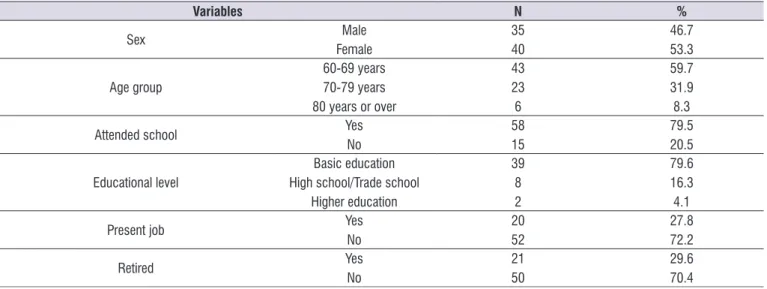
Table 1 presents the characterization of the sociode-mographic variables of the sample. It is noticeable the
predominance of the female sex (53.3%), in the 60 to 69 year-old age group (59.7%), with average/below average education (79.6%) and not working (72.2%), although a small number of them were retired (29.6%).
Table 2 presents the characterization of the inter-viewees’ health and life habits. It is noticeable that most of the study population had never undergone a
hearing screening (68.9%); however, they had already undergone a vision screening (87.8%), and almost 60% wore glasses. Most of the elders wore dental prosthesis (70.3%) and did not have a history of referral to a Speech Therapist (88.9%). Although most of them presented health problems (87.7%), almost 90% were
independent in their daily life activities. Systemic arterial
hypertension and diabetes were high (64.9% and 31.1%, respectively). Most of the seniors stated that they have been under health treatment (78.4%) and use regular medication (82.2%). More than 50% had a
smoking history (current or previous).
Table 1. Sociodemographic characterization of the elderly participating in the survey PET-Saúde Speech Therapy, Mangueira, Rio de Janeiro/RJ, 2014
Variables N %
Sex FemaleMale 3540 46.753.3
Age group
60-69 years 70-79 years 80 years or over
43
23
6
59.7 31.9 8.3
Attended school Yes No
58
15 79.520.5
Educational level
Basic education High school/Trade school
Higher education
39 8
2
79.6 16.3 4.1
Present job YesNo 2052 27.872.2
Retired Yes
No
21
50 29.670.4
Table 2. Health and life habits’ characterization of the elderly participating in the survey PET-Saúde Speech Therapy, Mangueira, Rio de Janeiro/RJ, 2014
Variables N %
Hearing screening Yes No
23
51
31.1
68.9
Hearing aids No Yes
72
2
97.3 2.7
Vision screening YesNo 659 87.812.2
Glasses No
Yes
30
44 40.559.5
Dental prosthesis No Yes
22
52 29.770.3
History of referral to a Speech Therapist YesNo 648 88.911.1
Prosthetic/orthotic device(s) (upper or lower limbs) YesNo 731 98.61.4
Wheelchair No Yes
73
1
98.6 1.4 Independent in daily activities YesNo 658 89.011.0
Health problem No Yes
9 65
12.3
87.7
Arterial hypertension YesNo 2648 35.164.9
Diabetes No
Yes
51
23
68.9
31.1 Health treatment No
Yes
16
58 21.678.4
Regular medication No Yes
13
60 17.882.2
Smoking
Never smoked Smoked Still smoking
32
27
13
44.4 37.5 18.1
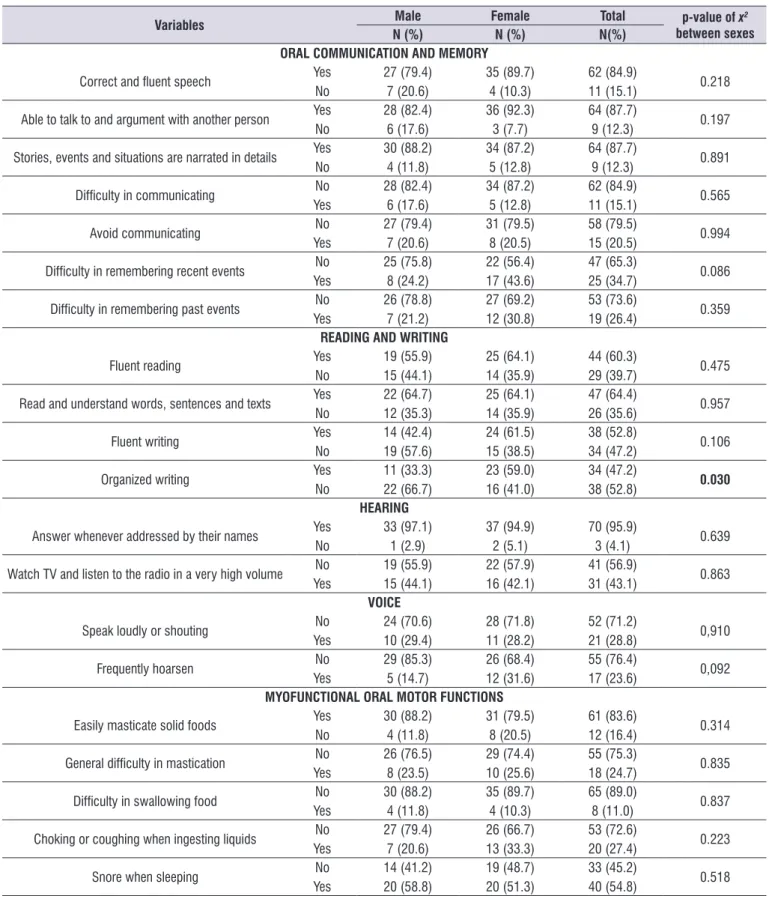
Table 3. Distribution of the ‘sex’ variables of the elderly participating in the survey PET-Saúde Speech Therapy, Mangueira, Rio de Janeiro/RJ, 2014
Variables Male Female Total p-value of x
2 between sexes
N (%) N (%) N(%)
ORAL COMMUNICATION AND MEMORY
Correct and luent speech YesNo 27 (79.4)7 (20.6) 35 (89.7)4 (10.3) 62 (84.9)11 (15.1) 0.218
Able to talk to and argument with another person YesNo 28 (82.4)6 (17.6) 36 (92.3)3 (7.7) 64 (87.7)9 (12.3) 0.197
Stories, events and situations are narrated in details Yes No
30 (88.2)
4 (11.8) 34 (87.2)5 (12.8) 64 (87.7)9 (12.3) 0.891 Dificulty in communicating YesNo 28 (82.4)6 (17.6) 34 (87.2)5 (12.8) 62 (84.9)11 (15.1) 0.565
Avoid communicating No Yes
27 (79.4)
7 (20.6) 31 (79.5)8 (20.5) 58 (79.5)15 (20.5) 0.994 Dificulty in remembering recent events YesNo 25 (75.8)8 (24.2) 22 (56.4)17 (43.6) 47 (65.3)25 (34.7) 0.086
Dificulty in remembering past events YesNo 26 (78.8)7 (21.2) 27 (69.2)12 (30.8) 53 (73.6)19 (26.4) 0.359
READING AND WRITING
Fluent reading Yes No
19 (55.9)
15 (44.1) 25 (64.1)14 (35.9) 44 (60.3)29 (39.7) 0.475 Read and understand words, sentences and texts YesNo 22 (64.7)12 (35.3) 25 (64.1)14 (35.9) 47 (64.4)26 (35.6) 0.957
Fluent writing YesNo 14 (42.4)19 (57.6) 24 (61.5)15 (38.5) 38 (52.8)34 (47.2) 0.106
Organized writing YesNo 11 (33.3)22 (66.7) 23 (59.0)16 (41.0) 34 (47.2)38 (52.8) 0.030 HEARING
Answer whenever addressed by their names YesNo 33 (97.1)1 (2.9) 37 (94.9)2 (5.1) 70 (95.9)3 (4.1) 0.639
Watch TV and listen to the radio in a very high volume YesNo 19 (55.9)15 (44.1) 22 (57.9)16 (42.1) 41 (56.9)31 (43.1) 0.863
VOICE
Speak loudly or shouting YesNo 24 (70.6)10 (29.4) 28 (71.8)11 (28.2) 52 (71.2)21 (28.8) 0,910
Frequently hoarsen YesNo 29 (85.3)5 (14.7) 26 (68.4)12 (31.6) 55 (76.4)17 (23.6) 0,092
MYOFUNCTIONAL ORAL MOTOR FUNCTIONS
Easily masticate solid foods YesNo 30 (88.2)4 (11.8) 31 (79.5)8 (20.5) 61 (83.6)12 (16.4) 0.314
General dificulty in mastication YesNo 26 (76.5)8 (23.5) 29 (74.4)10 (25.6) 55 (75.3)18 (24.7) 0.835
Dificulty in swallowing food YesNo 30 (88.2)4 (11.8) 35 (89.7)4 (10.3) 65 (89.0)8 (11.0) 0.837
Choking or coughing when ingesting liquids YesNo 27 (79.4)7 (20.6) 26 (66.7)13 (33.3) 53 (72.6)20 (27.4) 0.223
Snore when sleeping YesNo 14 (41.2)20 (58.8) 19 (48.7)20 (51.3) 33 (45.2)40 (54.8) 0.518
Regarding oral communication and memory, most
of the study population displayed “correct and luent speech” (84.9%); was “able to talk to and argument
with another person” (87.7%); narrated “stories, events and situations in details” (87.7%), and did not present “dificulty in communicating” (84.9%). The problems
most reported in this category of variables were: “avoid
communicating” (20.5%), “dificulty in remembering recent events” (34.7%), and “dificulty in remembering past events” (26.4%).
It was also noted a high prevalence of dificulty in reading and writing. Around 40% of the study population did not present “luent reading”, and 35.6% were not
able to “read and understand words, sentences and
texts” (64.4%). Almost 50% did not present “luent
writing” and “organized writing”.
In relation to hearing issues, most of the study
population did not present dificulty in answering whenever they were addressed by their names (95.9%). Nevertheless, more than 40% stated that they “watch
TV and listen to the radio in a very high volume”.
As to ‘voice’, the prevalence of “speak loudly or
shouting” was of more than 70%, and almost 25% of
the elders said that they “frequently hoarsen”.
Regarding the myofunctional oral motor skill aspects, most of the study population stated that they
“easily masticate solid foods” (83.6%), though around 25% of the same study population stated that they had “general dificulty in mastication”. There was a low
prevalence of problems related to swallowing, since
only 11% of the seniors stated they had “dificulty in
swallowing food”. Even so, the high prevalence of
“snore when sleeping” (54.8%) might indicate respi -ratory problems.
DISCUSSION
Both the presence of chronical diseases and the taking of various medicines are considered ordinary conditions among seniors. Nevertheless, the concept of ‘health’ in such phase of life overcomes the notion of ‘absence of morbidity’: it reinforces the importance of the seniors’ autonomy, that is, their capacity of self-management, of maintenance towards socialization, and of engaging in leisure and labor (be it domestic
or economic)7 activities. In 2006, Ordinance GM n°
2.528/2006 – which established the National Policy for the Aged – acknowledged that one of the main problems that a senior citizen might face is the impairment of his/ her functional capacity. Any impairment represents
indispensable for a good performance in daily activities, in an independent fashion18.
When people grow old, most of them modify their habits and their daily routine because of the commu-nicative functions change. This causes a great impact in their lives. Such impact may be seen in their
communication, for example, in the general dificulty
in speaking, in correctly pronouncing the names of the objects, in recalling stories or names, and, in a general perspective, in expressing themselves and in making themselves clear. These abilities are related to memory, which is very often changed in senior citizens
and, consequently, it makes their socialization dificult. These dificulties may cause social isolation, loneliness,
sadness, depression and stress, and they modify the elders’ daily autonomy and quality of life19.
Among the oral communication abilities surveyed for this study, the central issue was “avoid
commu-nicating”, referred to by more than a ifth of the sample. Such issue may indicate dificulties in oral
understanding and expression, as well as a decrease of hearing acuity or even emotional and/or humor problems, which should be better investigated for they limit the elders’ social participation. As for memory, it
was observed a high prevalence of dificulties, both
in recalling past events and in remembering recent ones, with a greater reference to the latter. Changes in memory might negatively interfere in the accom-plishment of tasks related to the executive functions and to the working memory. This happens because they compromise the recording and the accessing of pieces of information previously stored, which are tasks that depend on the consolidation of recent pieces of information12. For all practical purposes, the elder faces dificulties in locating objects, in giving messages, and
in taking medicine at the right time and correct dosage. These are fundamental activities for the senior’s autonomy.
In this study, we noticed that the surveyed seniors
presented high prevalence of dificulties in reading and
writing, which might be due to the low educational level
– identiied in the sample and very common in such
age group20. We believe that a growing-old person’s
rights, thus, these constitute in one of the main factors of social exclusion21.
The reduction of hearing acuity is considered a frequent condition in a population of seniors. In population-based survey – conducted among 238
senior in Rio de Janeiro city – it was identiied a preva -lence of hearing loss (measured by audiometry) in
42.9% of the women and in 64.3% of the men22. Among
the 343 seniors of a population survey in Londrina (Paraná, a southern Brazilian state), there was a prevalence of hearing loss or lowering frequencies
at 87.7%23. We consider hearing self-assessment a
possibly useful hearing health indicator, and we do recommend its use in epidemiological studies in case
audiometry – taken as a golden standard test24 – is
impracticable. In another survey conducted among 35 elders, who participated in cultural projects at a university in Juiz de Fora (Minas Gerais, a southeastern Brazilian state), there was a prevalence of hearing
problems in the sample at 31.4%. The main problems
reported were these: understanding speech throughout
communicative acts; dificulty in understanding the
speeches from TV and/or radio; low tolerance to intense sounds25. For this present study, most of the
seniors in the sample stated that they did not have any
dificulties in “answering whenever addressed by their
names”; however, almost half of them said that they “watch TV and listen to the radio in a very high volume”. Among the damages caused by hearing acuity loss in elders, we can point out these: they miss information
in personal contacts; they ind it hard to keep updated by the usual means of communication, and they ind it
hard to use them (radio, TV etc.) for leisure activities26
as well.
Most of the participants in this survey reported that they “speak loudly or shouting” and that they “frequently hoarsen”. Such habits might cause serious
vocal changes, for example: dysphonia27, a voice
disorder intimately related to the vocal production. In this case, phonation happens with great effort, no harmony and consequently limits the person whenever he/she conveys verbal and emotional messages.
Regarding seniors, researches show that dysphonia related to nodule formation, for example, may be caused by voice misusing, especially shouting, speaking with great effort, speaking with great intensity for long periods. For the same reason, one may notice that elders tend to present voice disorders especially those who belong to big families and live in a noisy family atmosphere. Speaking with effort and without
pausing, as well as speaking with high intensity, are vocal habits related to a family dynamic that tends to promote a noisy atmosphere. This means that the greater the voice disorder, the bigger the impact in the quality of life related to the voice28. In another survey
conducted among 50 women whose ages varied from 60 to 87, in the countryside of São Paulo (a south-eastern Brazilian state), there was a clear relationship between the quality of voice and the quality of life, considering parameters such as physical functioning, vitality, general health, mental health, body pain and physical role in life29.
Regarding orofacial motor functions, some of the
surveyed seniors reported “general dificulty in masti
-cation” and “dificulty in swallowing food”. Among the
factors that cause changes in seniors’ mastication, we may point out these two: the decrease of the elder’s neuromuscular quality and the loss of teeth, which derail good occlusion and damage an appropriate mastication, and/or the use of medicines that may change some of the senses, such as taste and smell;
therefore, damaging salivation30, for example. The
quality of mastication, with balance control of the bolus, is of great importance, especially because it is the phase before swallowing. This is an important function for nourishment and for life maintenance. However, as one grows older, one might experience dysphagia,
which means dificulty in swallowing food caused
by slower or uncoordinated motor actions. Besides lowering the pleasure one gets out of eating, this health condition may become a serious risk for the senior for he/she becomes susceptible to accidentally aspirating the food to the lower airways, leading him/her to death. These problems might strongly interfere in a senior’s life quality for they may lead him/her to isolate himself/ herself from socialization17.
Snoring is another important fact worth discussing since many seniors reported such problem in our survey. Snoring when sleeping may trigger changes in the quality of sleep, and they can bring about problems for general life quality. There are several conse-quences regarding snoring, such as one may wake up feeling tired and in a bad mood; one may experience drowsiness throughout the day; one may choke while sleeping; one may also experience a restless sleep and
attention, memory and concentration deicit. Moreover,
snoring might cause marital disorders31. According to
Oliveira et al (2010), the low quality of sleep is one of the most frequent complaints among seniors, being sleep
Therapy perspective because it may promote improve-ments towards health care practices regarding senior citizens. Therefore, the different professionals engaged in the Family Health Strategy may take several courses of action, such as passing on pieces of information and guidelines, creating workshops and even offering therapy services, so that the impact of the aforemen-tioned problems is lessened.
REFERENCES
1. Camarano AA. Envelhecimento da população
brasileira: uma contribuição demográica.
Texto para discussão número 858. Instituto de Pesquisa Econômica Aplicada (IPEA). Ministério do Planejamento, Orçamento e Gestão. Rio de Janeiro; 2002. Disponível em: http://www.ipea.gov. br/pub/td/2002/td_0858.pdf
2. World Health Organization (WHO). Men, ageing and health-achieving health across the life span. Genebra; Who, Noncommunicable Diseases Prevention and Health Promotion Department; 2001.
3. Gamburgo LJL, Monteiro MIB, Chun RYS. Questões sobre a atenção à saúde no envelhecimento no âmbito da fononoaudiologia. Distúrb Comum. 2006;18(1):111-7.
4. Veras R. Envelhecimento populacional
contemporâneo: demandas, desaios e inovações.
Rev Saude Publica. 2009;43(3):548-54.
5. Parahyba MI, Veras R, Melzer D. Incapacidade funcional entre as mulheres idosas no Brasil. Rev Saude Publica. 2005;39(3):383-91.
6. Jefferson AL, Paul RH, Ozonoff A, Cohen RA. Evaluating elements of executive functioning as predictors of instrumental activities of daily living (IADLs). Arch Neuropsychol. 2006;21(4):311-20.
7. Ramos LR. Fatores determinantes do
envelhecimento saudável em idosos residentes em centro urbano: Projeto Epidoso, São Paulo. Cad Saúde Pública. 2003;19(3):793-8.
8. Alves LC, Leimann BCQ, Vasconcelos MEL, Carvalho MS, Vasconcelos AGG, Fonseca
TCO, Lebrão ML et al. A inluência das doenças
crônicas na capacidade funcional dos idosos do Município de São Paulo, Brasil. Cad Saúde Pública. 2007;23(8):1924-30.
9. Alencar NA, Souza Júnior JV, Aragão JCB, Ferreira MA, Dantas E. Nível de atividade física, autonomia funcional e qualidade de vida em idosas ativas e
the second most prevalent disorder32. Snoring is one
of the main symptoms of apnea, and such disorder tends to increase with the turning of the ages, due to anatomical changes in the respiratory tract, which are ageing-related33.
The sampling method utilized in this inquiry – namely, convenience sampling – may indicate a restriction regarding the extrapolation of results towards the whole community where data were gathered.
Nevertheless, we should not ignore the signiicance of
the high prevalence of some negative characteristics related to oral communication and writing, memory, hearing and respiration.
The present study has collaborated to the identii -cation of possible problems in the aforementioned phonoaudilogical functions, which in their turn might bring a negative impact in the seniors’ physical and mental health, sociability and quality of life. We suggest that accurate researches be conducted in order to check such pieces of information, by using screening methods, for example.
It is of paramount importance that training processes be conducted for the Family Health Staff, especially for the Community Health Workers, so that they are able to provide quality hearing of the seniors’ health complaints that are not restricted to those related to getting sick. Such feeling-ill-related complaints must be better investigated in order to change the seniors’ adverse health situations. We do believe in the major role that Speech Therapists play in the training process for Community Health Workers, as long as the former guide their practices towards a wider and complete idea of ‘health’.
CONCLUSION
In this study, we noticed that a great part of the
surveyed seniors reported dificulties related to
language abilities, hearing, phonation and mastication, which are functions associated to socialization, well-being and maintenance of functional autonomy. These functions may directly interfere both in the quality of life
and in the quality of health. Our indings become even more important when identiied in seniors who were
interviewed at home and who, at least in theory, did not have any complaints. We suspect that the prevalence found in our research may be underestimated; thus, we do believe that the problem may even be more
signiicant.
charac-23. Meneses C, Peretti Mário MP, Marchori LLM, Melo
JJ, Freitas ERFS. Prevalência de perda auditiva
e fatores associados na população idosa de Londrina, Paraná: estudo preliminar. Rev. CEFAC. 2010;12(3):384-92.
24. Valete-Rosalino CM, Rozenfeld S. Triagem
auditiva emidosos: comparação entreauto-relato e audiometria. Rev Bras Otorrinolaringol. 2005;71(2):193-200.
25. Santiago LM, Novaes CO. A auto-avaliação
da audição em idosos. Rev. CEFAC. 2009;11(Supl1):98-105.
26. Mansur LL, Viúde A. Aspectos Fonoaudiológicos no envelhecimento. In: Papaléo Netto M. Gerontologia. São Paulo: Atheneu, 2002. p.284-95.
27. Teixeira MZM, Trezza EMC, Behlau M. Opinião dos
pais sobre a voz de seus ilhos de 5 a 12 anos. Rev
Paul Pediatria. 2003;21(2):68-75.
28. Paixão CLB, Silvério KCA, Berberian AP, Mourão LF, Marques JM. Disfonia infantil: hábitos prejudiciais à voz dos pais interferem na saúde vocal de seus
ilhos?. Rev. CEFAC. 2012;14(4):705-13.
29. Costa HO, Matias C. O impacto da voz na qualidade da vida da mulher idosa. Rev Bras Otorrinolaringol. 2005;71(2):172-8.
30. Silva LG, Goldenberg M. A matisgação no processo de envelhecimento. Rev. CEFAC. 2001;3:27-35. 31. Soares EB, Pires JB, Menezes MA, Santana SKS,
Fraga J. Fonoaudiologia x Ronco/Apneia do sono. Rev. CEFAC. 2010;12(2):317-25.
32. Oliveira BHD, Yassuda MS, Cupertino APFB,
Neri AL. Relações entre padrão do sono, saúde percebida e variáveis socioeconômicas em uma amostra de idosos residentes na comunidade
- Estudo PENSA. Ciênc Saúde Coletiva.
2010;15(3):851-60.
33. Ancoli-Israel S. Sleep disorders care guide to assessing 4 common sleep problems in geriatric patients. Geriatrics.2004;59(1):37-40.
10. Picollo GM. Os caminhos dialéticos do
envelhecimento e sua relação com a educação física contemporânea. Rev Bras Geriatr Gerontol. 2011;14(1):169-77.
11. Pegorari MS, Dias FA, Santos NMF, Tavares DMS. Prática de atividade física no lazer entre idosos de área rural: condições de saúde e qualidade de vida. Rev Educ Fís. 2015;26(2):233-41.
12. Moraes EN, Moraes FL, Lima SPP. Características biológicas e psicológicas do envelhecimento. Rev Med Minas Gerais. 2010;20(1):67-73.
13. Massi G, Torquato R, Guarinello AC, Berberian AP, Santana AP, Lourenço RC. Práticas de letramento no processo de envelhecimento. Rev Bras Geriatria e Gerontonlogia. 2010;13(1):59-71.
14. Nicollas R, Giovanni A, Triglia JM. Dysphonia in children. Arch Pediatr. 2008;15(6):1133-8.
15. Soares EB, Borba DT, Barbosa TK, Medved DM, Montenegro ACA. Hábitos vocais em dois grupos de idosos. Rev CEFAC. 2007;9(2):221-7.
16. Ribas A, Kozlowski L, Almeida G, Marques
JM, Silvestre RAA, Mottecy CM. Qualidade de vida: comparando resultados em idosos com e sem presbiacusia. Rev Bras Geriatr Gerontol. 2014;17(2):353-62.
17. Souza A, Oda AL. A importância do levantamento de queixas de idosos institucionalizados durante a entrevista para o planejamento da reabilitação fonoaudiológica. O mundo da saúde. 2008;32(2):157-69.
18. Brasil. Ministério da Saúde. Portaria no. 2.528/2006. Aprova a Política Nacional da Pessoa Idosa.
Diário Oicial República Federativa do Brasil.
2006;237(20):4.
19. Monteiro I. Diiculdade de memorização e retenção
na terceira idade. Disponível em: www.escrita.com.
br/escrita/leitura.asp?Texto_ID=5242. Acesso em:
22/Out/2014.
20. Camarano AA, Beltrão KI, Pascom ARP, Medeiros M, Carneiro IG, Goldani, AM et al. Como vai o idoso
brasileiro? Texto para discussão. 1999;10(2):1-63.
21. Oliveira M. Escolaridade dos idosos no Brasil é muito baixa. Disponível em: http://www.cobap.org.
br/capa/lenoticia.asp?ID=56306. Acesso em: 04/
Nov/2014
22. Mattos LC, Veras RP. A prevalência da perda