FREE THEMES
1 Secretaria Municipal de Saúde de Aparecida de Goiânia. R. Gervásio Pinheiro, Residencial Solar Central Park. 74968-500 Aparecida de Goiânia GO Brasil. alessandro.leonardo@ gmail.com
2 Departamento de Saúde Coletiva, Instituto de Patologia Tropical e Saúde Pública, UniversidadeFederal de Goiás. Goiânia GO Brasil.
Intra-urban differences in rates of admissions for ambulatory
care sensitive conditions in Brazil’s Center-West region
Abstract Admissions for ambulatory care sensitive conditions (ACSCs) represent a useful indicator of assess to and the effectiveness of primary health care. This article examined rates of admissions for ACSCs and the main causes of admissions in intra-urban areas of the municipality of Goiânia, capital of the State of Goiás. An ecological study was conducted to determine rates of admissions in Goiânia’s seven health districts between 2008 and 2013 using data from Hospital Admission Autho-rization forms obtained from the municipality’s Hospital Information System. Admissions were georeferenced throughout the seven health districts. Age-adjusted rates of admissions for ACSCs were calculated and the most common causes of admis-sions were identified for each age group. A 95% confidence interval was calculated as a measure of precision of the rates. The average overall rate of admissions for ACSCs was 155.5 per 10,000 popu-lation. Rates were highest in the Southern District and lowest in the Southwest District. Rates were highest in the youngest and oldest age groups. The Northwest District showed the highest rates in nine groups of causes, notably chronic non-communi-cable diseases among adults. Our findings showed that there are major differences in rates across health districts, pointing to shortfalls in primary health coverage, quality problems and an inade-quate care model in districts with high coverage. Key words Primary Health Care, Health evalua-tion, Hospitalization
Alessandro Leonardo Alvares Magalhães 1
M
ag
alhães
AL
A,
M
or
ais N
Introduction
Hospital activity indicators have been pro-posed as an indirect measure of the quality of primary health care1. In 1993, Billings et al.2
un-dertook a pioneering study of the use of “ambu-latory care sensitive conditions”(ACSCs) as an indicator of access to and the effectiveness of primary health care1,3. In Brazil, this indicator
is called admissions for primary care sensitive conditions (Internações por Condições Sensíveis à
Atenção Primária – ICSAP)4.
This indicator is a sign of the capacity of pri-mary health care systems to intervene in a time-ly manner to prevent health problems, diagnose and treat acute episodes of diseases, control and provide follow up for chronic diseases, manage diseases, reduce hospital readmissions and length of hospital stay, and thus respond to 85% of the population’s health problems1,4-6.
Studies have reported varying rates of admis-sions for ACSCs across different countries. In Ita-ly, Agabiti et al.7 observed rates of 26.1 per 10,000
population, while in Switzerland, Eggli et al.8
found rates of 10 per 1,000 population among patients with private health insurance. The most common causes of ACSC admissions described in the national and international literature are gastroenteritis, kidney and urinary tract infec-tions, heart failure, angina, asthma, and diabetes mellitus9-15.
In Brazil, ecological studies have obtained the following findings: in 2006, the rate of ad-missions for ACSCs was 150 per 10,000 popula-tion and these condipopula-tions accounted for 28.5% of all hospital admissions; the main causes of ACSC admissions were gastroenteritis, heart failure, asthma, angina, and urinary tract infec-tions4,5,16; the risk of hospitalization was highest
in the youngest and oldest age groups and among people with low levels of income and education, confirming findings from international studies; reductions in admissions for ACSCs were associ-ated with increased primary care coverage4,16.
There is scarce research into ACSCs in Brazil’s Center-West Region, particularly in intraurban areas. The municipality of Goiânia is an ideal re-search setting for studies examining rates of ad-missions for ACSCs as a potential indicator of the effectiveness of primary health care in intraur-ban areas. The city’s primary health care system is divided into seven health districts with vary-ing levels of service coverage and the medium and high complexity care services benefit from a large supply of beds and well-organized bed
reg-ulation mechanisms17. Quality of infrastructure
and socioeconomic status vary across districts18.
The municipality’s hospital information system encompasses the primary health care network and is overseen by a municipal regulator that as-sesses demand for hospital admission, referring cases to the most appropriate bed available in the accredited healthcare network. The municipality also has a digital urban map that provides georef-erenced health data across districts17.
Rates of admissions for ACSCs are often a sign of inequalities in health care provision and therefore constitute an important input into the reorganization of primary health care to ensure that health planning effectively incorporates re-gional specificities.
The present article therefore analyses the magnitude, profile and spatial distribution pat-tern of rates of admissions for ACSCs in the health districts of the municipality of Goiânia.
Methodology
An ecological study was undertaken to deter-mine rates of admissions for ACSCs in the health districts of the municipality of Goiânia between 2008 and 2013. This time period was chosen be-cause the volume of admissions during the period was sufficient to allow a stable estimate of rates; 2013 was used as the period end date because it was the most recent year for which data was available at the time of the study, considering the deadline for resubmission of Hospital Admission Authorization (Autorização de Internação
Hospi-talar – AIH) forms set by the Ministry of Health.
The municipality of Goiânia, capital of the State of Goiás, located in the country’s Cen-ter-West Region, covers an area of 739.5 km2 and has a population of 1,302,001 (2010 Census - IBGE). The municipality is divided into seven health districts.
Sociodemographic characteristics vary across districts. The South District performs better against socioeconomic indicators and has a larg-er proportion of oldlarg-er people and smalllarg-er plarg-er- per-centage of children in its population, while the Northeast District is characterized by lower aver-age incomes, higher illiteracy rates and a younger population age structure18.
The Family Health Strategy (Estratégia Saúde
da Família – ESF) coverage rate in each district
North-e C
ole
tiv
a,
22(6):2049-2062,
2017
east District, 90.9%; West District, 70.4%; North District, 49.1%; East District, 43.5%; Southeast District, 34.0%; Campinas Centro District, 8.1%; and South District, zero percent.
Admissions data was obtained from the ad-missions database of the Hospital Information System (Sistema de Informações Hospitalares
– SIH), which includes information contained in the AIH forms provided by the Regulation, Evaluation and Control Board (Diretoria de
Reg-ulação, Avaliação e Controle) of the Municipal
Health Department.
According to the National Register of Health Establishments (Sistema de Cadastro Nacional de
Estabelecimentos de Saúde – SCNES), Goiânia has
forty-two hospitals with Unified Health System
(Sistema Única de Saúde – SUS) beds, six (14%)
of which are philanthropic, 25 (60%) private, and 11 (25%) public. The overall number of beds per 1,000 population is 4.99; however, only 49% of these are accredited to the local SUS, 38% are public, 34% private, and 27% philathropic19. This
study encompasses admissions in the 42 hospi-tals contracted by the municipal SUS.
The place of residence (neighborhood) field of the AIH form was used to georeference indi-vidual service users on the Basic Digital Urban Map of the Municipality of Goiânia (Mapa
Urba-no Básico Digital do Município de Goiânia -
MUB-DG)17, which provides an identification code for
lot, block and neighborhood. After neighbor-hood coding, the AIHs were then grouped ac-cording to health district using a table provided by the Department of Science, Technology and Innovation (Secretaria Municipal de Ciência,
Tec-nologia e Inovação – SECTEC). In the absence of
a completed place of residence (neighborhood) field, the zip code informed on the AIH form was used.
It was not possible to georeference cases in only 235 (0.05%) of the 502,908 admissions. In accordance with other studies, admissions with the following procedure codes associated with deliveries without complications, and there-fore without any associated pathology, were excluded from the analysis: assisted birth with-out obstruction (0310010012); normal delivery (0310010039); normal delivery in a high-risk pregnancy (0310010047); normal delivery in a normal delivery center (0310010055); caesarian delivery in a high-risk pregnancy (0411010026); caesarian delivery (0411010034); caesarian with tubal ligation (0411010042). These exclusion criteria resulted in the removal of 58,525 admis-sions, resulting in a total sample of 441,330
ad-missions.
Admissions were categorized into ACSCs causes and non-ACSCs causes using the list of causes contained in Directive Nº 221/MS/SAS of 17 April 200820.
The principal diagnosis field of the AIH form was used to identify and categorize the cause of admission into the 19 groups of causes included in the Brazilian list of ACSCs. The cause of ad-mission code was defined in accordance with the International Statistical Classification of Diseases and Related Health Problems – ICD-10.
The population base used to estimate admis-sions rates was calculated by subtracting the total population covered by private health insurance, provided by the National Supplementary Health Agency (Agência Nacional de Saúde Suplementar
– ANS), from the overall 2010 Census population estimate18.
The number of SUS service users in each health district was calculated in the following stages: (i) census population - population census tracts were grouped into neighborhoods, which in turn were grouped into health districts; (ii) population with private health insurance - based on the table obtained from the ANS, the num-ber of users per neighborhood with health plans including hospital coverage was determined and aggregated to obtain the number for each health district; (iii) the final population base, used as the denominator to calculate rates of admissions for ACSCs, was calculated by subtracting the pop-ulation with private health insurance from the census population. The population covered by the State of Goiás and Municipality of Goiânia Civil Servants’ Welfare Institute (Instituto de Previdência dos Servidores Públicos do Estado de
Goiás e do Município de Goiânia) was not
exclud-ed from the final population.
The arithmetic mean of admissions for ACSCs between 2008 and 2013 was used as the numerator in the formula used to calculate rates of admissions for ACSCs. Choropleth maps were then elaborated using ArcGIS Desktop Advanced® to visualize rates across the different
health districts21.
M
ag
alhães
AL
A,
M
or
ais N
and to compare the rates of different health dis-tricts. Data analysis was performed using SPSS® Statistics 2022 and Epi info23.
Results
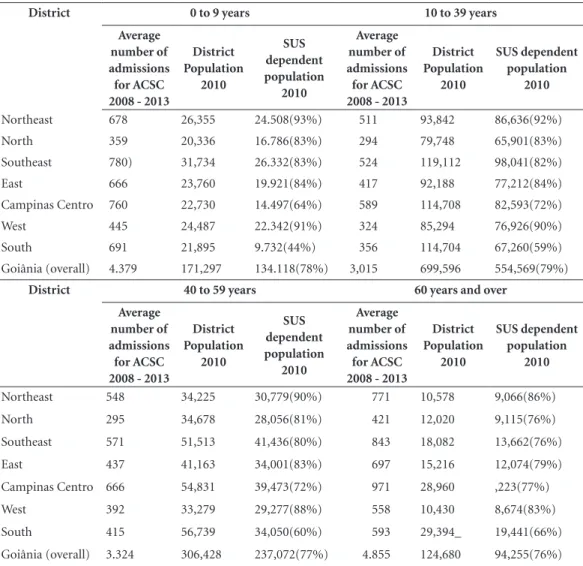
Absolute numbers of admissions for ACSCs were highest in the Campinas Centro and Southeast districts and lowest in the North and West dis-tricts. The zero to nine years and 60 years and over age groups showed the highest overall rates of ad-missions. The Northwest and South districts had the highest and lowest proportions of SUS service users: 92% and 59%, respectively (Table 1).
The average rate of admissions for ACSCs during the period 2008 to 2013 was 152.7 per 10,000 population (CI 95% 157.0 – 162.0). The
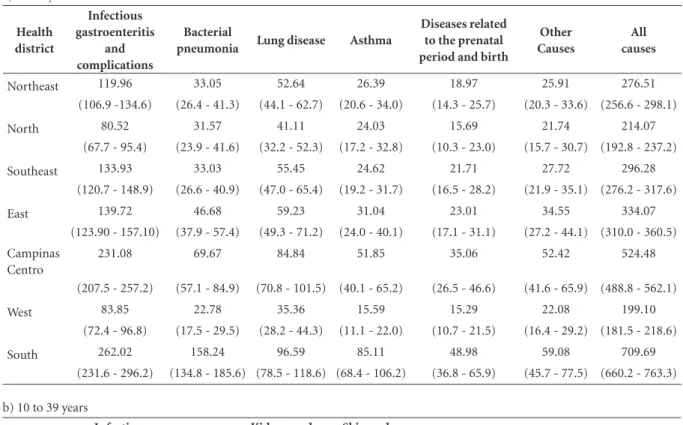
five most common groups of causes were infec-tious gastroenteritis and complications, kidney ad urinary tract infection, heart failure, lung dis-ease, and angina, while the least common were nutrient deficiencies, diseases related to the pre-natal period and birth, ear, nose and throat infec-tions, pelvic inflammatory disease, and anemia (Table 2).
The districts can be divided into four groups based on the adjusted rates of admissions for ACSCs considering all groups of causes: the South District (232.8; CI95%: 224.7–241.1), where rates are highest; the Northeast District (212.1; CI 95%: 205.0–219.6) and Campinas Centro District (200.6; CI 95% 193.8–207.6); the East District (185.8; CI 95% 178.9–193.0), West District (173.0; CI 95% 166.2–180.1) and North District (169.5; CI 95% 162.3–177.0); and the
Table 1. Number of admissions for ACSC by health district - overall population and SUS dependent population.
Goiânia, 2008 to 2013.
District 0 to 9 years 10 to 39 years
Average number of admissions for ACSC 2008 - 2013
District Population
2010
SUS dependent population
2010
Average number of admissions for ACSC 2008 - 2013
District Population
2010
SUS dependent population
2010
Northeast 678 26,355 24.508(93%) 511 93,842 86,636(92%)
North 359 20,336 16.786(83%) 294 79,748 65,901(83%)
Southeast 780) 31,734 26.332(83%) 524 119,112 98,041(82%)
East 666 23,760 19.921(84%) 417 92,188 77,212(84%)
Campinas Centro 760 22,730 14.497(64%) 589 114,708 82,593(72%)
West 445 24,487 22.342(91%) 324 85,294 76,926(90%)
South 691 21,895 9.732(44%) 356 114,704 67,260(59%)
Goiânia (overall) 4.379 171,297 134.118(78%) 3,015 699,596 554,569(79%)
District 40 to 59 years 60 years and over
Average number of admissions for ACSC 2008 - 2013
District Population
2010
SUS dependent population
2010
Average number of admissions for ACSC 2008 - 2013
District Population
2010
SUS dependent population
2010
Northeast 548 34,225 30,779(90%) 771 10,578 9,066(86%)
North 295 34,678 28,056(81%) 421 12,020 9,115(76%)
Southeast 571 51,513 41,436(80%) 843 18,082 13,662(76%)
East 437 41,163 34,001(83%) 697 15,216 12,074(79%)
Campinas Centro 666 54,831 39,473(72%) 971 28,960 ,223(77%)
West 392 33,279 29,277(88%) 558 10,430 8,674(83%)
South 415 56,739 34,050(60%) 593 29,394_ 19,441(66%)
Goiânia (overall) 3.324 306,428 237,072(77%) 4.855 124,680 94,255(76%)
e C
ole
tiv
a,
22(6):2049-2062,
2017
Southeast District (148.8; CI 95%: 143.2–154.5), where rates are lowest.
The analysis of the adjusted rates of
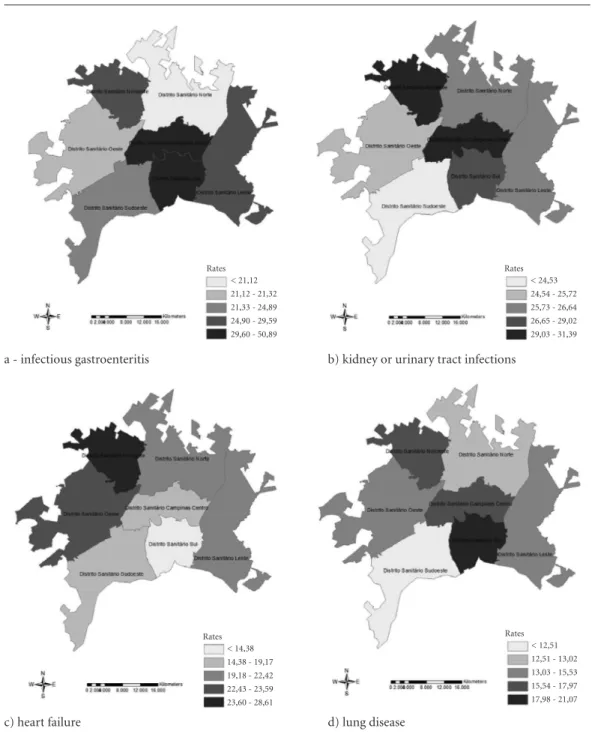
admis-sions for ACSCs of greater magnitude in each district showed the following spatial distribution pattern: the East District showed the highest rate
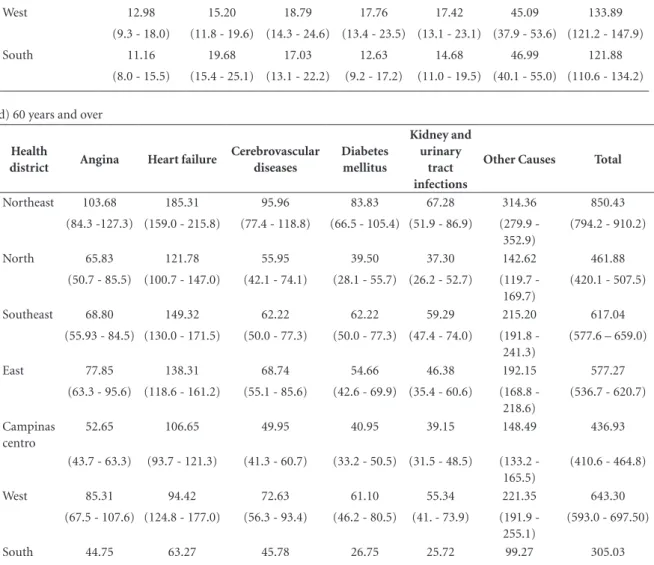
Table 2. Rate of Admissions for ACSCs (per 10,000 population) and respective CI 95% of the most common groups of causes of
admissions by age group and health district. Goiânia, 2010.
a) 0 to 9 years
Health district
Infectious gastroenteritis
and complications
Bacterial
pneumonia Lung disease Asthma
Diseases related to the prenatal period and birth
Other Causes
All causes
Northeast 119.96 33.05 52.64 26.39 18.97 25.91 276.51
(106.9 -134.6) (26.4 - 41.3) (44.1 - 62.7) (20.6 - 34.0) (14.3 - 25.7) (20.3 - 33.6) (256.6 - 298.1)
North 80.52 31.57 41.11 24.03 15.69 21.74 214.07
(67.7 - 95.4) (23.9 - 41.6) (32.2 - 52.3) (17.2 - 32.8) (10.3 - 23.0) (15.7 - 30.7) (192.8 - 237.2)
Southeast 133.93 33.03 55.45 24.62 21.71 27.72 296.28
(120.7 - 148.9) (26.6 - 40.9) (47.0 - 65.4) (19.2 - 31.7) (16.5 - 28.2) (21.9 - 35.1) (276.2 - 317.6)
East 139.72 46.68 59.23 31.04 23.01 34.55 334.07
(123.90 - 157.10) (37.9 - 57.4) (49.3 - 71.2) (24.0 - 40.1) (17.1 - 31.1) (27.2 - 44.1) (310.0 - 360.5)
Campinas Centro
231.08 69.67 84.84 51.85 35.06 52.42 524.48
(207.5 - 257.2) (57.1 - 84.9) (70.8 - 101.5) (40.1 - 65.2) (26.5 - 46.6) (41.6 - 65.9) (488.8 - 562.1)
West 83.85 22.78 35.36 15.59 15.29 22.08 199.10
(72.4 - 96.8) (17.5 - 29.5) (28.2 - 44.3) (11.1 - 22.0) (10.7 - 21.5) (16.4 - 29.2) (181.5 - 218.6)
South 262.02 158.24 96.59 85.11 48.98 59.08 709.69
(231.6 - 296.2) (134.8 - 185.6) (78.5 - 118.6) (68.4 - 106.2) (36.8 - 65.9) (45.7 - 77.5) (660.2 - 763.3)
b) 10 to 39 years
Health district
Infectious gastroenteritis
and complications
Diabetes mellitus
Kidney and urinary
tract infections
Skin and subcutaneous
tissue infections
Diseases related to the prenatal period and birth
Other Causes Total
Northeast 4.62 2.77 25.05 3.23 6.23 17.20 58.98
(3.3 - 6.3) (1.8 - 4.2) (21.9 - 28.7) (2.2 - 4.7) (4.7 - 8.2) (14.6 - 20.2) (54.0 - 64.3)
North 3.79 2.73 17.91 3.95 3.34 13.35 44.61
(2.5 - 5.7) (1.7 - 4.4) (14.9 - 21.5) (2.6 - 5.9) (2.1 - 5.1) (10.8 - 16.5) (39.7. - 50.0)
Southeast 5.92 4.28 23.56 3.37 1.43 14.99 53.45
(4.5 - 7.7) (3.1 - 5.8) (20.7 - 26.8) (2.7 - 4.8) (0.8 - 2.5) (12.7 - 17.7) (49.0 – 59.5)
East 4.66 3.24 21.11 3.63 3.50 17.87 54.01
(3.3 - 6.5) (2.1 - 4.9) (18.0 - 24.7) (2.5 - 5.3) (2.3 - 5.2) (15.1 - 21.2) ( 49.0 - 59.5)
Campinas Centro
6.30 5.81 28.69 5.69 3.39 21.55 71.31
(4.7 - 8.3) (4.3 - 7.8) (25.2 - 32.6) (4.2 - 7.6) (2.3 - 5.0) (18. 6 - 25.0) (65.7 - 77.3)
West 3.38 1.94 17.55 2.99 2.21 13.91 42.12
(2.2 - 5.0) (1.5 - 3.9) (14.8 - 20.8) (1.9 - 4.6) (1.3 - 3.6) (11.4 - 16.9) (37.7 - 47.0)
South 4.76 3.57 18.58 3.42 2.23 20.52 54.37
(3.3 - 6.8) (2.3 - 5.4) (15.5 - 22.2) (2.2 - 5.2) (1.3 - 3.8) (17.3 - 24.3) (52.5 - 56.3)
M
ag
alhães
AL
A,
M
or
ais N
c) 40 to 59 years
Health district Hypertension Angina Heart failure Diabetes
mellitus
Kidney and urinary
tract infections
Other
Causes Total
Northeast 20.47 28.92 31.19 21.12 24.04 52.63 178.04
(15.9 - 26.4) (23.4 - 35.7) (25.4 - 38.2) (16.4 - 27.1) (19.0 - 30.3) (45.0 - 61.5) (163.7 - 193.6)
North 11.41 16.40 14.97 13.54 14.97 33.50 105.15
(7.9 - 16.3) (12.1 - 22.1) (10.9 - 20.4) (9.7 - 18.8) (10.9 - 20.4) (27.2 - 41.2) (93.7 - 118.0)
Southeast 12.55 18.82 21.24 18.10 20.51 46.58 137.80
(9.5 - 16.6) (15.0 - 23.6) (17.1 - 26.3) (14.3 - 22.8) (16.5 - 25.5) (40.3 - 53.7) (126.9 - 149.6)
East 13.82 21.18 18.23 15.29 15.88 44.12 128.53
(10.3 - 18.5) (16.7 - 26.8) (14.1 - 23.5) (11.5 - 20.2) (12.0 - 20.9) (37.5 - 51.9) (117.0 - 141.2)
Campinas centro 16.97 24.07 26.85 20.01 22.29 58.52 168.72
(13.7 - 21.7) (19.6 - 29.5) (22.1 - 32.6) (15.9 - 25.0) (18.0 - 27.6) (51.3 - 66.7) (156.4 - 182.0)
West 12.98 15.20 18.79 17.76 17.42 45.09 133.89
(9.3 - 18.0) (11.8 - 19.6) (14.3 - 24.6) (13.4 - 23.5) (13.1 - 23.1) (37.9 - 53.6) (121.2 - 147.9)
South 11.16 19.68 17.03 12.63 14.68 46.99 121.88
(8.0 - 15.5) (15.4 - 25.1) (13.1 - 22.2) (9.2 - 17.2) (11.0 - 19.5) (40.1 - 55.0) (110.6 - 134.2)
d) 60 years and over
Health
district Angina Heart failure
Cerebrovascular diseases
Diabetes mellitus
Kidney and urinary
tract infections
Other Causes Total
Northeast 103.68 185.31 95.96 83.83 67.28 314.36 850.43
(84.3 -127.3) (159.0 - 215.8) (77.4 - 118.8) (66.5 - 105.4) (51.9 - 86.9) (279.9 -
352.9)
(794.2 - 910.2)
North 65.83 121.78 55.95 39.50 37.30 142.62 461.88
(50.7 - 85.5) (100.7 - 147.0) (42.1 - 74.1) (28.1 - 55.7) (26.2 - 52.7) (119.7 -
169.7)
(420.1 - 507.5)
Southeast 68.80 149.32 62.22 62.22 59.29 215.20 617.04
(55.93 - 84.5) (130.0 - 171.5) (50.0 - 77.3) (50.0 - 77.3) (47.4 - 74.0) (191.8 -
241.3)
(577.6 – 659.0)
East 77.85 138.31 68.74 54.66 46.38 192.15 577.27
(63.3 - 95.6) (118.6 - 161.2) (55.1 - 85.6) (42.6 - 69.9) (35.4 - 60.6) (168.8 -
218.6)
(536.7 - 620.7)
Campinas centro
52.65 106.65 49.95 40.95 39.15 148.49 436.93
(43.7 - 63.3) (93.7 - 121.3) (41.3 - 60.7) (33.2 - 50.5) (31.5 - 48.5) (133.2 -
165.5)
(410.6 - 464.8)
West 85.31 94.42 72.63 61.10 55.34 221.35 643.30
(67.5 - 107.6) (124.8 - 177.0) (56.3 - 93.4) (46.2 - 80.5) (41. - 73.9) (191.9 -
255.1)
(593.0 - 697.50)
South 44.75 63.27 45.78 26.75 25.72 99.27 305.03
(36.1 - 55.4) (52.8 - 75.7) (37.0 - 56.6) (20.2 - 35.3) (19.3 - 34.2) (86.0 - 114.5) (281.5 - 330.4)
Source: SIHD – authors’ elaboration.
e C
ole
tiv
a,
22(6):2049-2062,
2017
a - infectious gastroenteritis b) kidney or urinary tract infections
c) heart failure d) lung disease
of admissions for vaccine-preventable diseases and sensitive conditions; the Northwest District showed higher rates in nine groups – kidney and urinary tract infections, heart failure, angina, di-abetes mellitus, cerebrovascular diseases, hyper-tension, nutrient deficiencies, diseases related to the prenatal period and birth, and pelvic inflam-matory disease; the South District showed higher
rates in eight groups of causes – infectious gas-troenteritis and associated complications, lung disease, bacterial pneumonia, asthma, epilepsy, gastrointestinal ulcers, ear, nose and throat in-fections, and anemia; and the Campinas Centro District showed the highest rate of admissions for skin and subcutaneous tissue infections (Fig-ure 1).
Figure 1. Spatial distribution pattern of adjusted rates of admissions for ACSC considering the 10 most common
groups of sensitive conditions by health district. Goiânia, 2008 to 2013.
it continues
< 24,53 24,54 - 25,72 25,73 - 26,64 26,65 - 29,02 29,03 - 31,39 Rates
< 21,12 21,12 - 21,32 21,33 - 24,89 24,90 - 29,59 29,60 - 50,89 Rates
< 12,51 12,51 - 13,02 13,03 - 15,53 15,54 - 17,97 17,98 - 21,07 Rates
M
ag
alhães
AL
A,
M
or
ais N
e) angina f) diabetes mellitus
g) cerebrovascular diseases h) bacterial pneumonia
The following results show that rates of ad-missions for ACSCs were highest in the youngest and oldest age groups: zero to nine years, 326.5 per 10,000 population (CI 95%: 317.1–336.2); 10 to 39 years. 54.4 per 10,000 population (CI 95%: 52.4–56.3); 40 to 59 years, 140.2 per 10,000 population (CI 95% 135.5–145.0); and 60 years
and over, 515.1 per 10,000 population (CI 95%: 501.1–529.4).
The prevalence of specific groups of causes also varies according to age group: the prevalence of admissions for infectious gastroenteritis was greater among the zero to nine years age group, while the prevalence of admissions for kidney
Figure 1. continuation
it continues
< 10,34 10,34 - 11,99 12,00 - 12,98 12,99 - 14,08 14,09 - 16,23 Rates
< 7,20 7,20 - 7,99 8,00 - 10,15 10,16 - 11,07 11,08 - 12,80 Rates
5,70 - 6,19 6,20 - 8,44 8,45 - 9,82 9,83 - 12,37 12,38 - 29,53 Rates
e C
ole
tiv
a,
22(6):2049-2062,
2017
Figure 1. continuation
Source: SIHD – authors’ elaboration.
i) hypertension j) skin and subcutaneous tissue infections
and urinary tract infection and angina was high-er in the 10 to 39 years and 40 to 59 years age groups, respectively. The prevalence of heart fail-ure was greatest among the elderly (Table 2).
In the zero to nine years age group, the most common group of causes of ACSC admissions across all districts was infectious gastroenteritis and complications. In this respect, the districts can be separated into three groups according to magnitude, as follows: the South and Campinas Centro districts, which showed higher rates; the Southeast, Northwest and East districts, which showed intermediate rates, and the North and West districts, which showed lower rates. It is in-teresting to note that the rate shown by the South District is 3.3 times greater than that of the North District (Table 2).
In the 10 to 39 years age group, the most common group of causes was kidney and urinary tract infections. Rates were highest in the Campi-nas Centro and Northwest districts and lowest in the North and West districts (Table 2).
In the 40 to 59 years age group, the main causes were heart failure, angina, arterial hyper-tension, and diabetes mellitus. The most com-mon cause of admissions for ACSCs acom-mong this group was heart failure, in the Northwest,
South-east, Campinas Centro and West districts and an-gina, in the North and South districts. The rate of admissions due to heart failure in the Northwest District was 1.8 times greater than that shown by the South District, while rates of admissions due to hypertension and diabetes mellitus in the Northwest District were, respectively, 1.8 and 1.7 times greater than those shown by the South Dis-trict (Table 2).
Among the 60 years and over age group, the most common cause of admissions across all districts was heart failure. However, the rate of admissions due to heart failure in the Northwest District was 2.9 times greater than that of the South District. It is also interesting to note that there was a threefold difference between the rate of admissions due to diabetes mellitus in these two districts (Table 2).
Discussion
This present study may be considered innovative in that it analyzes intraurban differences in rates of admissions for ACSCs and excludes the pop-ulation with private health insurance from the base population. The latter is justified given that
< 6,69 6,69 - 7,81 7,82 - 8,08 8,09 - 8,82 8,83 - 10,40 Rates < 6,72
M
ag
alhães
AL
A,
M
or
ais N
the objective of this study was to assess the provi-sion of primary health care via the public health care system.
Studies conducted both inside and outside Brazil have shown that epidemiological indi-cators built upon ACSCs data, such as the rates of admission examined in this article, provide a quick and simple way of monitoring and evalu-ating access to and the effectiveness of primary health care services provided by universal public health systems such as the SUS24-29. Despite their
usefulness, other studies have suggested that the use of ACSCs as indicators is limited due to the following reasons: (i) they do not consider the severity of a patient’s medical condition and the fragility of the individual; (ii) they do not consid-er specific patient charactconsid-eristics and diffconsid-erences in admission criteria between different hospital services; (iii) they do not directly consider the so-cioeconomic profile of a given population, level of education and cultural characteristics1,3,30-34.
Our findings show that the average rate of admissions for ACSCs in Goiânia in the period 2008 to 2013 was 152.7 per 10,000 population and that rates were highest among the zero to nine years and 60 years and over age groups.
These findings are consistent with the re-sults of other studies conducted both inside and outside Brazil. Studies undertaken in Bra-zil, for example, have shown rates of between 143.3 and 149.6 per 10,000 population4,5: 14.5
per 1,000 population in the State of Rio Grande do Sul; 10.8 per 1,000 population in the State of São Paulo26,30; and 154.0 per 10,000 population
in Belo Horizonte, capital of the State of Minas Gerais35. However, the results of the present study
differ from those found by studies carried out in Italy and Spain, which reported rates of 26.1 per 10,000 population7 and 11 per 1,000 population,
respectively13.
The highest rates of admissions for ACSCs were found in the youngest and oldest age groups (under 10 years and over 60 years), which is con-sistent with the findings described in the litera-ture5,6,13,27-29,36. The most common ACSCs in the
youngest and oldest age groups were infectious diseases and cardiovascular diseases, respective-ly37.
Another finding of the present study that is corroborated by other studies is the variation in rates across districts despite the fact that the region is covered by the same universal public health system subject to the same policies and underlying principles38. This situation can be
ex-plained by differences in health service
organiza-tion and provision and in levels of literacy and income among the local population39-41.
Our findings concerning rates of admissions for ACSCs by groups of causes and age are con-sistent with the findings described in the litera-ture. The most common group of causes among the zero to nine years age group was infectious gastroenteritis and complications, followed by pneumonia, lung disease, including acute bron-chitis, and asthma. A national study found that asthma was the third most common condition in this age group42. One possible explanation for
this finding is that bronchitis is still common-ly used as a synonym for asthma, particularcommon-ly among children43.
The main determining factors for ACSCs among this age group are socioeconomic con-ditions (basic sanitation and levels of education and income) and existing health care services43. It
is important to note, however, that in the South District, despite generally better socioeconom-ic conditions, the rate of admission for ACSCs is 262.02 per 10,000 population. This finding suggests a lack of access to primary health care services, reflecting the fact that the district has only two primary health care units for SUS pa-tients. On the other hand, the rate of admissions for infectious gastroenteritis and complications in the Northwest District, which has the worst socioeconomic conditions and yet enjoys wide primary care coverage, was 2.2 lower than that of the South District.
The five most common causes of admissions among the 10 to 39 years age group are the same as those reported by the literature: kidney and urinary tract infections, infectious gastroenteritis and complications, skin and subcutaneous tissue infections, diabetes mellitus, and diseases related to the prenatal period and birth12,44.
Rates of admissions for ACSCs in this age group were highest in the Campinas Centro and Northwest districts and lowest in the North and West districts. The rate of admissions due to kid-ney and urinary tract infections in the Campinas Centro District was 1.6 times higher than that shown by the West District.
e C
ole
tiv
a,
22(6):2049-2062,
2017
district against socioeconomic indicators and has the highest illiteracy rate.
Several hypotheses may explain this high rate: (i) quality of prenatal care is still compromised despite the coverage rate45; (ii) studies have
re-ported that sociodemographic factors such as low income levels associated with low levels of maternal education can have a negative impact on a woman’s ability to seek health care and therefore lead to an increased risk of hospital ad-mission45; and (iii) supply-induced hospital
ad-missions due to the number of existing available beds in the region. Similar results were found by Burgdof & Sunddmacher6 and Pazo et al.46, who
reported a positive association between number of beds and rates of admissions for ACSCs. This finding contradicts several studies that found an association between increased primary health care coverage and reduced rates of admissions for ACSCs29,31,47-49.
The most common group of causes among the 40 to 59 years age group was chronic disease, comprised of angina and heart failure, diabetes mellitus and hypertension. Kidney and urinary tract infections were the third most common cause of admissions. These findings are consis-tent with the findings described in the literature, which show that rates of admissions for ACSCs are higher among this age group5,7,49-52.
The most prevalent conditions among the 60 years and over age group were circulatory system diseases, the most common of which were heart failure, angina and cerebrovascular diseases. Rates of admissions for all groups of causes were highest in the Northwest District and lowest in the South District. The rate of admission due to heart failure in the Northwest District was three times greater than that of the South District. In contrast to other studies, diseases of the respira-tory system were not among the five most com-mon causes of admission for ACSCs52.
The difference in rates of admissions due to chronic diseases across districts are particularly important. This disparity may be explained by socioeconomic differences between districts: the population of the South District, for example, enjoys better socioeconomic conditions than that of the Northwest District, which has particularly low levels of education and income and is there-fore more exposed to risk factors for hospital admissions due chronic disease, such as smoking and inadequate diet53-55.
The higher rates of admissions for ACSCs among the 60 years and over age group also
suggest that this group experiences difficulty in accessing health services due to several factors, including mobility, socioeconomic vulnerability and inability of the primary care services to effec-tively address the health needs of older persons and the aging process44,50.
The results show that there are significant dif-ferences across health districts in rates of poten-tially preventable hospitalizations. The high rates of admissions due to chronic disease in districts with high ESF coverage rates point towards an inadequate health care model and quality prob-lems. High rates of admissions due to infectious diseases among children in districts with general-ly good sanitation and socioeconomic conditions are probably due to social inequalities within dis-tricts. These inequalities go unidentified by the health care services, which in turn fail to assume a leading role in mobilizing the different sectors responsible for tackling these problems.
One of the limitations of this study is that it used secondary data obtained from the SIH, which is oriented towards billing hospital admis-sions funded by the SUS. When filling out the AIH form, health facilities are often induced to enter a primary and/or secondary diagnosis code that matches the code of the procedure that was performed in order to avoid nonpayment46.
How-ever, studies have shown that admissions entered into the SIH have a good diagnostic validity, with adequate sensitivity (between 70.1% and 81.9%) and specificity (between 88.4% and 95.2%)56-58.
Another limitation is that it is necessary to up-date the Brazilian list of ACSCs to reflect changes in epidemiological profiles and patterns of mor-bidity among the Brazilian population.
Conclusions
M
ag
alhães
AL
A,
M
or
ais N
References
1. Caminal Homar J, Casanova Matutano C. La evalu-ación de la atención primaria y las hospitalizaciones por ambulatory care sensitive conditions. Marco con-ceptual. Aten Primaria 2003; 31(1):61-65.
2. Billings J, Zeitel L, Lukomnik J, Carey TS, Blank E, Newman L. Impact of socioeconomic status on hos-pital use in New York City. Health Aff [Internet]. 1993 Feb 1 [cited 2013 Jun 7]; 12(1):162-173. Available from: http://content.healthaffairs.org/cgi/doi/10.1377/ hlthaff.12.1.162
3. Nedel FB, Facchini LA, Martín M, Navarro A. Carac-terísticas da atenção básica associadas ao risco de inter-nar por condições sensíveis à atenção primária : revisão sistemática da literatura. Epidemiol e Serviços Saude
2010; 19(1):61-75.
4. Alfradique ME, Bonolo PF, Dourado I, Lima-Costa MF, Macinko J, Mendonça CS, Oliveira VB, Sampaio LF, Simoni CD, Turci MA. Internações por condições sensíveis à atenção primária : a construção da lista bra-sileira como ferramenta para medir o desempenho do sistema de saúde (Projeto ICSAP – Brasil). CadSaude
Publica 2009; 25(6):1337-1349.
5. Dourado I, Oliveira VB, Aquino R, Bonolo P, Lima-cos-ta MF, Medina MG, MoLima-cos-ta E, Turci MA, Macinko J. Trends in Primary Health Care-sensitive Conditions in Brazil The Role of the Family Health Program (Project ICSAP - Brazil). Med Care 2011; 49(6):577-584. 6. Burgdorf F, Sundmacher L. Potentially avoidable
hos-pital admissions in Germany: an analysis of factors influencing rates of ambulatory care sensitive hospital-izations. Dtsch Arztebl Int 2014; 111(13):215-223. 7. Agabiti N, Pirani M, Schifano P, Cesaroni G, Davoli
M, Bisanti L, Caranci N, Costa G, Forastiere F, Mari-nacci C, Russo A, Spadea T, Perucci CA; Italian Study Group on Inequalities in Health Care. Income level and chronic ambulatory care sensitive conditions in adults: a multicity population-based study in Italy. BMC Pub-lic Health 2009; 9:457.
8. Eggli Y, Desquins B, Seker E, Halfon P. Comparing po-tentially avoidable hospitalization rates related to am-bulatory care sensisitve conditions in Switzerland: the need to refine the definition of health conditions and to adjust for population health status. BMC Health Serv Res 2014; 14(25):1-10.
9. Park J, Lee K-H. The association between managed care enrollments and potentially preventable hospitaliza-tion among adult Medicaid recipients in Florida. BMC Health Serv Res 2014; 14(1):247.
10. Bindman AB, Chattopadhyay A, Osmond DH, Huen W, Bacchetti P. The impact of Medicaid managed care on hospitalizations for ambulatory care sensitive con-ditions. Health Serv Res 2005; 40(1):19-38.
11. Homar JC, Espinoza MM, Ruiz ES, Larrosa MJC, Po-blet MB. Hospitalizaciones prevenibles mediante una atención primaria oportuna y efectiva. Aten Primaria
2003; 31(1):6-17.
12. Bermúdez-Tamayo C, Márquez-Calderón S, Águila MMR del, López EP-M, Espinosa JO. Características organizativas de la atención primaria y hospitalización por los principales ambulatory care. Aten Primaria
2004; 33(6):305-311. Collaborations
e C
ole
tiv
a,
22(6):2049-2062,
2017
13. Márquez-Calderón S, Águila MMR, Perea-Milla E, Or-tiz J, Bermúdez-Tamayo C. Factores asociados a la hos-pitalización por procesos sensibles a cuidados ambu-latorios en los municipios. Gac Sanit 2003; 17(5):360-367.
14. Rizza P, Bianco A, Pavia M, Angelillo IF. Preventable hospitalization and access to primary health care in an area of Southern Italy. BMC Health Serv Res [Internet]. 2007 Jan [cited 2014 May 24];7:134. Available from: http://www.pubmedcentral.nih.gov/articlerender.fc- gi?artid=2045098&tool=pmcentrez&rendertype=ab-stract
15. Roos LL, Walld R, Uhanova J, Bond R. Physician Vis-its , Hospitalizations , and Socioeconomic Status : Ambulatory Care Sensitive Conditions in a Canadian Setting. Health Serv Res [Internet]. 2005 Aug [cited 2014 Dec 19];40(4):1167-1185. Available from: http:// www.pubmedcentral.nih.gov/articlerender.fcgi?ar-tid=1361193&tool=pmcentrez&rendertype=abstract 16. Boing AF, Vicenzi RB, Magajewski F, Boing ACA,
Moretti-Pires RO, Peres KG, Lindner SR, Peres MA. Redução das Internações por Condições Sensíveis à Atenção Primária no Brasil entre 1998- 2009. Rev
Saude Publica 2012; 46(2):359-366.
17. Instituto Brasileiro de Geográfia e Estatística (IBGE).
Base de informações do Censo Demográfico 2010: re-sultados da Sinopse por setor censitário. Rio de Janeiro: IBGE; 2011.
18. Prefeitura de Goiânia. Mapa Urbano Básico Digital
de Goiânia, MUBDG. Goiânia: Prefeitura de Goiânia;
2011. v.23.
19. Brasil. Ministério da Saúde (MS). Cadastro Nacional de Estabelecimentos de Saúde [Internet]. Brasília: MS; 2016 [acessado 2016 jun 1]. Disponível em: http://cnes. datasus.gov.br/
20. Brasil. Ministério da Saúde (MS). Portaria nº 221/SAS/ MS, de 17 de abril de 2008. Diário Oficial da União
2008; 18 abr.
21. ESRI. Institute Environmental Systems Research. Arcgis
for Desktop Advanced. Redlands: ESRI; 2014.
22. IBM Corp. IBM SPSS Statistics for Windows, versão 20.0. Armonk: IBM Corp; 2011.
23. Centers for Disease Control and Prevention (CDCP).
Epi Info 7. Atlanta: CDCP; 2011.
24. Turci MA, Costa MFFL, Bonolo PF. Avaliação do Impac-to das ações do Programa Saúde da Família na Redução das Internações Hospitalares por condições Sensíveis à Atenção Básica em Adultos e Idosos. 262p. 2012. [cited 2014 May 25]. Available from: https://www.nescon.me-dicina.ufmg.br/biblioteca/imagem/3261.pdf
25. White BM, Ellis Junior C, Simpson KN. Preventable hospital admissions among the homeless in California: A retrospective analysis of care for ambulatory care sensitive conditions. BMC Health Services Research
2014; 14(1):511.
26. Rehem TCMSB, Egry EY. Internações por Condições Sensíveis à Atenção Primária no Estado de São Paulo.
Cien Saude Colet 2011; 16(12):47515-4766.
27. Gusmano MK, Rodwin VG, Weisz D. A new way to compare health systems: avoidable hospital condi-tions in Manhattan and Paris. Health Aff (Millwood)
[Internet]. 2006 [cited 2014 May 25];25(2):510-520. Available from: http://www.ncbi.nlm.nih.gov/ pubmed/16522605
28. Bardsley M, Blunt I, Davies S, Dixon J. Is secondary preventive care improving? Observational study of 10-year trends in emergency admissions for conditions amenable to ambulatory care. BMJ Open [Internet]. 2013 Jan [cited 2014 Dec 12];3(1):1-12. Available from: http://www.pubmedcentral.nih.gov/articlerender.fc- gi?artid=3549201&tool=pmcentrez&rendertype=ab-stract
29. Macinko J, Dourado I, Aquino R, Bonolo PDF, Li-ma-Costa MF, Medina MG, Mota E, de Oliveira VB, Turci MA. Major expansion of primary care in Brazil linked to decline in unnecessary hospitalization. Health
Aff (Millwood) [Internet]. 2010 Dec [cited 2015 Jan
11];29(12):2149-2160. Available from: http://www. ncbi.nlm.nih.gov/pubmed/21134915
30. Santos VCF, Ruiz ENF, Roese A, Kalsing A, Gerhardt TE. Internações por condições sensíveis a atenção primária (ICSAP): discutindo limites à utilização deste indicador na avaliação da Atenção Básica em Saúde.
Reciis [Internet]. 2013 Jun 28 [cited 2014 May 25];7(2). Available from: http://www.reciis.icict.fiocruz.br/in-dex.php/reciis/article/view/779/1570
31. Melo MD, Egry EY. Social determinants of hospi-talizations for ambulatory care sensitive conditions in Guarulhos, São Paulo. Rev Esc Enferm USP [In-ternet]. 2014 Aug [cited 2014 Dec 18];48(spe):129-136. Available from: http://www.ncbi.nlm.nih.gov/ pubmed/25517846
32. Nedel FB, Facchini LA, Bastos JL, Martín-Mateo M. Conceptual and methodological aspects in the study of hospitalizations for ambulatory care sensitive con-ditions. Cien Saude Colet 2011; 16(1):1145-1154. 33. Losina E, Katz JN. Ambulatory care-sensitive
hospi-talizations: does one size fit all? Arthritis Rheum [In-ternet]. 2008 Feb 15 [cited 2014 May 25];59(2):159-161. Available from: http://www.ncbi.nlm.nih.gov/ pubmed/18240178
34. Rosano A, Loha CA, Falvo R, van der Zee J, Ricciar-di W, Guasticchi G, Belvis AG. The relationship be-tween avoidable hospitalization and accessibility to primary care: a systematic review. Eur J Public Health
[Internet]. 2012 Jun [cited 2014 May 25];23(3):356-360. Available from: http://www.ncbi.nlm.nih.gov/ pubmed/22645236
35. Mendonça CS, Harzheim E, Duncan BB, Nunes LN, Leyh W. Trends in hospitalizations for primary care sensitive conditions following the implementation of Family Health Teams in Belo Horizonte, Brazil. Health Policy Plan [Internet]. 2012 Jul [cited 2014 May 25];27(4):348-55. Available from: http://www.ncbi. nlm.nih.gov/pubmed/21666271
36. Fernandes VBL, Caldeira AP, Faria AA de, Neto JFR. Internações sensíveis na atenção primária como indi-cador de avaliação da Estratégia Saúde da Família. Rev
M
ag
alhães
AL
A,
M
or
ais N
37. Marques AP, Montilla DER, Almeida WDS, Andrade CLT. Hospitalization of older adults due to ambula-tory care sensitive conditions. Rev Saude Publica 2014; 48(5):817-826.
38. Magan P, Otero A, Alberquilla A, Ribera JM. Geo-graphic variations in avoidable hospitalizations in the elderly, in a health system with universal cover-age. BMC Health Serv Res [Internet]. 2008 Jan [cit-ed 2014 May 25];8(42):1-11. Available from: http:// www.pubmedcentral.nih.gov/articlerender.fcgi?ar-tid=2265697&tool=pmcentrez&rendertype=abstract 39. Gibbons DC, Bindman AB, Soljak M, Millett C, Majeed
A. Defining primary care sensitive conditions: a neces-sity for effective primary care delivery? J R Soc Med [In-ternet]. 2012 Oct;105(10):422-8. Available from: http:// www.ncbi.nlm.nih.gov/pubmed/23104945
40. Gibson OR, Segal L, McDermott R. A systematic review of evidence on the association between hospitalisation for chronic disease related ambulatory care sensitive conditions and primary health care resourcing. BMC
Health Serv Res [Internet]. BMC Health Services
Re-search; 2013 Jan [cited 2014 May 25];13(1):336. Avail-able from: http://www.pubmedcentral.nih.gov/arti- clerender.fcgi?artid=3765736&tool=pmcentrez&ren-dertype=abstract
41. Freund T, Campbell SM, Geissler S, Kunz CU, Mahler C, Peters-Klimm F, Szecsenyi J. Strategies for reducing potentially avoidable hospitalizations for ambulatory care-sensitive conditions. Ann Fam Med [Internet]. [cited 2014 Dec 1];11(4):363-370. Available from: http://www.pubmedcentral.nih.gov/articlerender.fc- gi?artid=3704497&tool=pmcentrez&rendertype=ab-stract
42. Wandalsen NF, Gonzalez C, Wandalsen GF, Solé D. Aval-iação de critérios para o diagnóstico de asma através de um questionário epidemiológico. J Bras Pneumol [Inter-net]. 2009 Mar [cited 2016 Jun 2];35(3):199-205. Avail-able from: http://www.scielo.br/scielo.php?script=sci_ arttext&pid=S1806-37132009000300002&lng=pt&n-rm=iso&tlng=pt
43. Moura BLA, Cunha RC da, Aquino R, Medina MG, Mota ELA, Macinko J, Dourado I. Principais causas de internação por condições sensíveis à atenção primária no Brasil : uma análise por faixa etária e região. Rev
Bras Saúde Matern Infant 2010; 10(1):83-91.
44. Cardoso CS, Pádua CM, Rodrigues-Júnior AA, Guim-arães DA, Carvalho SF, Valentin RF, Abrantes R, Olivei-ra CDR. Contribuição das internações por condições sensíveis à atenção primária no perfil das admissões pelo sistema público de saúde. Rev Panam Salud Publi-ca 2013; 34(4):227-2234.
45. Campos AZ, Theme-Filha MM. Internações por condições sensíveis à atenção primária em Campo Grande, Mato Grosso do Sul, Brasil, 2000 a 2009. Cad
Saude Publica 2012; 28(5):845-855.
46. Pazo RG, Frauches DO, Molina MCB, Cade NV. Mod-elagem hierárquica de determinantes associados a in-ternações por condições sensíveis à atenção primária no Espírito Santo, Brasil. Cad Saude Publica 2014; 30(9):1891-1902.
47. Macinko J, Oliveira VB, Turci MA, Guanais FC, Bonolo PF. The Influence of Primary Care and Hospital Sup-ply on Ambulatory Care – Sensitive Hospitalizations Among Adults in Brazil, 1999 – 2007. Am J Public
Health 2011; 101(10):1963-1970.
48. Lavoie JG, Forget EL, Dahl M, Martens PJ, O’Neil JD. Is it worthwhile to invest in home care? Health Policy [In-ternet]. 2011 May; 6(4):35-48. Available from: http:// www.pubmedcentral.nih.gov/articlerender.fcgi?ar-tid=3107116&tool=pmcentrez&rendertype=abstract 49. Ciapponi A, Glujovsky D, Daray F, López A. Serie sobre
hospitalizaciones evitables y fortalecimento de la atención
primaria en salud. Washington: BID, IECS; 2012.
50. Ferreira JBB, Borges MJG, Santos LL, Forster AC. In-ternações por condições sensíveis à atenção primária à saúde em uma região de saúde paulista, 2008 a 2010. Epidemiol e Serviços Saúde [Internet]. 2014 Mar [cited 2014 Dec 30];23(1):45-56. Available from: http://scielo.iec.pa.gov.br/scielo.php?script=sci_art- text&pid=S1679-49742014000100005&lng=en&n-rm=iso&tlng=en
51. Harrison MJ, Dusheiko M, Sutton M, Gravelle H, Doran T, Roland M. Effect of a national primary care pay for performance scheme on emergency hospi-tal admissions for ambulatory care sensitive condi-tions: controlled longitudinal study. BMJ Open [In-ternet]. 2014 Nov 11 [cited 2014 Nov 12];349(nov11 1):g6423-g6423. Available from: http://www.bmj.com/ cgi/doi/10.1136/bmj.g6423
52. Marques AP, Montilla DER, Almeida WS, Andrade CLT. Internação de Idosos por condições sensíveis à atenção primária à saúde. Rev Saude Publica 2014; 48(5):817-826.
53. Tavares LR, Victer H, Linhares JM, Barros CM, Oliveira MV, Pacheco LC, Viana CH, Pereira SB, Silva GP, Mes-quita ET. Epidemiologia da insuficiência cardíaca des-compensada em Niterói: Projeto EPICA - Niterói. Arq
Bras Cardiol 2004; 82(2):121-124.
54. Instuto Brasileiro de Geografia e Estatística (IBGE).
Pesquisa Nacional de Saúde. Rio de Janeiro: IBGE; 2014.
55. Brasil. Ministério da Saúde (MS). Vigitel Brasil 2013 [Internet]. 2014. [cited 2015 Feb 4]. Available from: http://bvsms.saude.gov.br/bvs/publicacoes/vigitel_ brasil_2013.pdf
56. Cavalcante DM. Internações sensíveis à atenção primária: estudo descritivo com foco em doenças infec-ciosas e validação do sistema de informações hospitalares,
no Hospital Regional do Paranoá, Distrito Federal
[dis-sertação]. Brasília: Universidade de Brasília; 2014. 57. Rehem TCMSB, Oliveira MRF, Ciosak SI, Egry EY.
Reg-istro das internações por condições sensíveis à atenção primária: validação do sistema de informação hospita-lar. Rev Latino-Am Enferm 2013; 21(5):[6 telas]. 58. Abaid RA. Análise da Confiabilidade dos Diagnósticos de
Condições Seníveis à Atenção Primária nas autorizações
de internação hospitalares [dissertação]. Santa Cruz do
Sul: Universidade de Santa Cruz do Sul; 2012.
Article submitted 26/01/2016 Approved 27/07/2016