Influence of obstructive sleep apnea on serum
butyrylcholinesterase activity and ischemia-modified
albumin levels
Liu-Xue Yang,I,IIShao-Gang Ma,III*Hong Liu,IIIWei XuIII
IGuangxi Medical University Graduate School, Guangxi/China.IIHospital of Guilin Medical College, Department of Endocrinology and Metabolism, Guangxi/China.IIIHuai’an Hospital of Xuzhou Medical College, Department of Endocrinology and Metabolism, Jiangsu/China.
OBJECTIVE: To investigate the effect of obstructive sleep apnea and continuous positive airway pressure treatment on serum butyrylcholinesterase activity and ischemia-modified albumin levels.
METHODS: Thirty-two patients with obstructive sleep apnea and 30 age- and sex-matched controls were enrolled and underwent a diagnostic polysomnogram. The serum butyrylcholinesterase activity, ischemia-modified albumin levels, metabolic parameters, and polysomnography scores were detected and evaluated. Nine patients were studied before and after treatment with continuous positive airway pressure.
RESULTS:The serum ischemia-modified albumin levels were significantly higher and the butyrylcholinesterase activity was significantly lower in patients with obstructive sleep apnea than in the controls (p,0.001). The continuous positive airway pressure treatment decreased the modified albumin levels and elevated the buthrylcholinesterase activity (p= 0.019 andp= 0.023, respectively). The modified albumin levels were positively
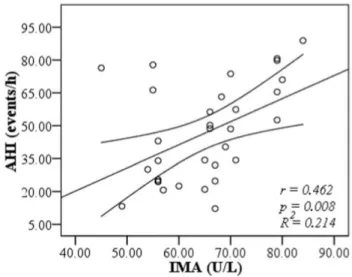
correlated with the apnea-hypopnea index (r= 0.462, p= 0.008) at baseline. Elevated ischemia-modified
albumin levels can be more accurate than butyrylcholinesterase activity at reflecting the presence of obstructive sleep apnea. Receiver operating characteristic curves revealed a significant difference between the areas under the curve 0.916 for ischemia-modified albumin and 0.777 for butyrylcholinesterase (z= 2.154,p= 0.031). CONCLUSION:The elevated ischemia-modified albumin level was significantly associated with obstructive sleep apnea and was more sensitive than butyrylcholinesterase activity in reflecting obstructive sleep apnea. The continuous positive airway pressure treatment helped to ameliorate the imbalance.
KEYWORDS: Ischemia-Modified Albumin; Butyrylcholinesterase; Obstructive Sleep Apnea; Biomarker.
Yang LX, Ma SG, Liu H, Xu W. Influence of obstructive sleep apnea on serum butyrylcholinesterase activity and ischemia-modified albumin levels. Clinics. 2013;68(7):968-973.
Received for publication onDecember 24, 2012;First review completed onJanuary 14, 2013;Accepted for publication onMarch 18, 2013 E-mail: [email protected]
Tel.: 86 517 8087-1820 *corresponding author
& INTRODUCTION
Obstructive sleep apnea (OSA) is a common disorder characterized by recurrent obstructions of the upper airways associated with snoring, disrupted sleep and intermittent hypoxia. OSA is frequently associated with several symp-toms including excessive daytime somnolence, fatigue, reduced quality of life as well as increased risk of cardiovascular disease (1,2). Previous studies have shown that OSA is associated with increased levels of inflammatory
mediators (3) and oxidative stress (2,4). Increased oxidative stress is secondary to the process of repeated oxygen desaturation and resaturation. Nasal continuous positive airway pressure (nCPAP) is an effective therapy for reducing apnea-related hypoxia and the levels of oxidative stress and pro-inflammatory factors (5-7).
Butyrylcholinesterase (BChE) is present in the serum and is synthesized by the liver (8). BChE may have a role in a number of metabolic functions and could affect the expression of insulin resistance and type 2 diabetes. Butyrylcholinesterase may be a predictor of diabetes and may reduce oxidative stress in diabetic patients (9,10). The levels of butyrylcholinesterase activity could serve as a marker of low-grade systemic inflammation in some clinical conditions (11). To our knowledge, the influence of OSA on butyrylcholinesterase activity is poorly understood.
Elevated ischemia-modified albumin (IMA) levels have been demonstrated in patients with various diseases (12,13) Copyrightß2013CLINICS– This is an Open Access article distributed under
the terms of the Creative Commons Attribution Non-Commercial License (http:// creativecommons.org/licenses/by-nc/3.0/) which permits unrestricted non-commercial use, distribution, and reproduction in any medium, provided the original work is properly cited.
No potential conflict of interest was reported.
and been advocated as a non-specific risk marker for evaluating the oxidative stress status or atherosclerotic burden (14,15). The oxidative balance is impaired in patients with OSA, leading to the increased production of free radicals and pro-inflammatory cytokines. Such imbalances are the root of oxidative damage at the cellular and sub-cellular levels (2). Although the potential roles for serum butyrylcholinesterase activity and modified albumin levels are well established in clinical disorders except OSA, the influence of apnea-related hypoxia on the two markers remains unclear. To the best of our knowledge, no studies have investigated this topic. This prospective study was designed to evaluate the potential role of the two markers in OSA patients. We aimed to observe the effect of nCPAP treatment on serum butyrylcholinesterase activity and ischemia-modified albumin levels.
& METHODS
Patients and Study Design
This controlled study was performed at the pulmonary medicine center of two medical college-affiliated hospitals from January 2011 to January 2012. The participants were selected from consecutive subjects who were seen at the sleep unit and fulfilled the study inclusion criteria. Non-smoking subjects aged 25-65 who were suspected of OSA were screened and underwent a diagnostic polysomnogram. All of the participants underwent overnight polysomnography at the sleep unit. The studies were performed with a computerized system (Somno-ScreenTM, SomnoMedics, Randersacker, Germany). The test began at 11:30 PM and finished at 7:00 AM. An electroencephalogram registered with two channels (C4/A1 and C3/A2), an electroculogram, a submental and tibial electromyogram and airflow by pressure signal were conducted. Snoring, thoracic and abdominal effort, electrocar-diographic derivation (V2) and SaO2by digital pulse oximetry
were monitored. Manual scoring of each polysomnography was set, and the criteria for OSA and the polysomnography technique were previously developed (16,17).
The apnea-hypopnea index (AHI) is the total number of apneas and hypopneas per hour of actual sleep time. OSA was defined as AHI$5 events per hour of sleep. The OSA was graded as follows: mild, 5#AHI,20; moderate, 20#AHI,40; and severe, AHI$40 (16). The oxygen desa-turation index was defined as the total number of dips in SpO2$4% per hour of sleep. The lowest SpO2 (%) was
calculated and recorded.
All of the subjects underwent a physical examination, including a review of the clinical records, systolic and diastolic blood pressure, and body mass index (BMI). After a 10-hour fast, blood samples were drawn at 7:30 AM to 8:00 AM from the subjects by venipuncture into Vacutainer tubes. An electrocardiogram and digital chest radiography were performed.
Continuous Positive Airway Pressure
The OSA patients were recommended for a four-week nasal CPAP treatment, as needed. The nCPAP treatment was performed with a specific instrument (ResMed, Abingdon, UK) on the nine OSA patients. The most optimal treatment pressure for each OSA patient was established during the first night of nCPAP treatment, followed by four weeks of successive nCPAP treatment during sleep. The treatment lasted 6-8 hours per night with pressure levels
ranging from 7.6-15.6 cm H2O (18). Samples of peripheral
venous blood were collected as described above before the initiation of therapy and four weeks after the administration of treatment.
The controls that did not exhibit clinical evidence of a major disease underwent a routine medical check-up. The patients suffering from acute alcohol intoxication, chronic renal failure, congestive heart failure, inflammatory condi-tions, or ischemic events were excluded from the study. Thirty age-, gender-, and BMI-matched controls screened from ninety-three non-smoking subjects and thirty-two OSA patients participated in the study.
Biochemical Assays
After an overnight fast, blood samples were drawn by venipuncture into Vacutainer tubes. The serum ischemia-modified albumin levels were measured using a commercially available kit (Co-Health (Beijing) Laboratories Co., Ltd., Beijing, China) on an Olympus AU 2700 autoanalyzer (Olympus, Tokyo, Japan). The serum butyrylcholinesterase activity was measured on the identical autoanalyzer with a commercially available kit (Whitman (Nanjing) Biotech Co., Ltd, Nanjing, China). The intra-assay variability for ischemia-modified albumin and butyrylcholinesterase was below 4.0%. The glycated hemoglobin A1c (HbA1c) levels were measured using an HbA1c Meter from Bio-Rad Laboratories, Ltd. (Shanghai, China). Blood tests, including cardiac enzymes, fasting plasma glucose, lipid profiles, and routine biochemical detection, were performed for all of the participants.
Statistical Analyses
The quantitative data are presented as the mean ¡
standard deviation. The statistical analyses were conducted with the SPSS 18.0 package for Windows (SPSS Inc., Chicago, IL). A comparative analysis between the two groups was carried out using Student’s t-test. Chi-squared tests were utilized for the comparison of other clinical features. Paired Student’st-tests were utilized to determine the significance of the changes in the OSA cases before and after the nCPAP treatment. The correlations between the variables were examined by Pearson’s correlation test and a multiple linear regression analysis. The risk markers for OSA were examined by multiple logistic analyses. To determine the diagnostic performance of the variables, a receiver operating characteristic (ROC) curve analysis was performed using MedCalcH version 12.1.4.0. A two-tailed p-value,0.05 was considered statistically significant. Ethical Issues
The study was approved by the ethics committee of Xuzhou Medical College. The study was carried out in accordance with the principles of the Declaration of Helsinki as revised in 2001. Upon acceptance into the study, written informed consent was obtained from the participants.
& RESULTS
Clinical Characteristics
in the OSA group than in the control group (allp,0.05). The differences in the percentage of diabetes, dyslipidemia, and hypertension presentation between the OSA and control group did not reach statistical significance. There were no significant differences in the age, gender, or body mass index between the two groups.
Eighteen patients presented with severe OSA, 12 patients exhibited moderate OSA, and 2 patients had mild OSA. The clinical and laboratory characteristics observed before the initiation of treatment were grouped according to the severity of AHI, and the oxygen desaturation index is shown in Table 2. The body mass index, blood pressure, and polysomnography parameters were significantly different in the severe OSA patients compared with the mild/ moderate OSA patients (allp,0.05). There was a significant difference in the ischemia-modified albumin levels between the severe and the mild/moderate OSA cases (p =0.015). No difference was found in the serum butyrylcholinesterase activity between the two groups (p =0.311).
Serum Biomarkers Levels
The mean butyrylcholinesterase activity was lower in the OSA group than in the control group (p,0.001). The serum modified albumin levels were significantly higher in the OSA group compared with the control group (p,0.001). The butyrylcholinesterase activity and modified albumin levels were significantly altered in the nine OSA patients after nCPAP treatment (final mean concentrations of 54.56¡7.50 U/L and
7403.44¡1077.98 U/L, respectively) compared with the bio-marker concentrations observed upon admission (p= 0.019 and p= 0.023, respectively). The alterations are shown in Figure 1. The lipid levels and blood pressure were reduced to varying degrees after nCPAP treatment as shown in Table 3.
Correlation and Regression Analyses
Bivariate correlation analyses were performed to assess the relationships between the baseline serum butyrylcholi-nesterase activity and the ischemia-modified albumin
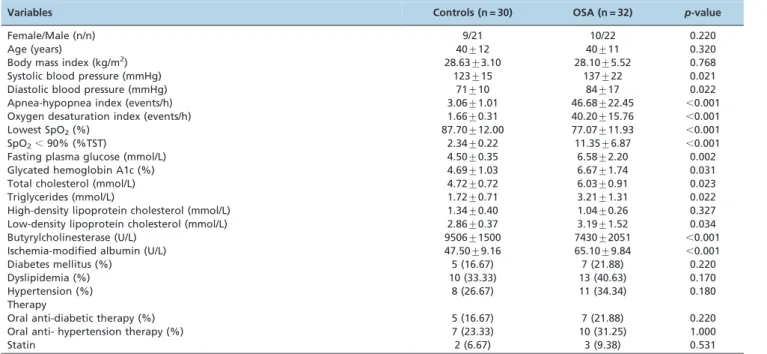
Table 1 -Clinical and biochemical characteristics of the study participants.
Variables Controls (n = 30) OSA (n = 32) p-value
Female/Male (n/n) 9/21 10/22 0.220
Age (years) 40¡12 40¡11 0.320
Body mass index (kg/m2) 28.63¡3.10 28.10¡5.52 0.768
Systolic blood pressure (mmHg) 123¡15 137¡22 0.021
Diastolic blood pressure (mmHg) 71¡10 84¡17 0.022
Apnea-hypopnea index (events/h) 3.06¡1.01 46.68¡22.45 ,0.001
Oxygen desaturation index (events/h) 1.66¡0.31 40.20¡15.76 ,0.001
Lowest SpO2(%) 87.70¡12.00 77.07¡11.93 ,0.001
SpO2,90% (%TST) 2.34¡0.22 11.35¡6.87 ,0.001
Fasting plasma glucose (mmol/L) 4.50¡0.35 6.58¡2.20 0.002
Glycated hemoglobin A1c (%) 4.69¡1.03 6.67¡1.74 0.031
Total cholesterol (mmol/L) 4.72¡0.72 6.03¡0.91 0.023
Triglycerides (mmol/L) 1.72¡0.71 3.21¡1.31 0.022
High-density lipoprotein cholesterol (mmol/L) 1.34¡0.40 1.04¡0.26 0.327
Low-density lipoprotein cholesterol (mmol/L) 2.86¡0.37 3.19¡1.52 0.034
Butyrylcholinesterase (U/L) 9506¡1500 7430¡2051 ,0.001
Ischemia-modified albumin (U/L) 47.50¡9.16 65.10¡9.84 ,0.001
Diabetes mellitus (%) 5 (16.67) 7 (21.88) 0.220
Dyslipidemia (%) 10 (33.33) 13 (40.63) 0.170
Hypertension (%) 8 (26.67) 11 (34.34) 0.180
Therapy
Oral anti-diabetic therapy (%) 5 (16.67) 7 (21.88) 0.220
Oral anti- hypertension therapy (%) 7 (23.33) 10 (31.25) 1.000
Statin 2 (6.67) 3 (9.38) 0.531
All of the values in the table are given as the mean¡standard deviation.
Table 2 -Demographic information and laboratory values for obstructive sleep apnea patients at admission (n = 32).
Variable OSA p-value
Mild/Moderate OSA Severe OSA
Female/Male (n/n) 5/9 5/13 0.270
Age (years) 48¡19 45¡14 0.612
Body mass index (Kg/m2) 25.82¡3.50 30.30¡6.53 0.023
Systolic blood pressure (mmHg) 135¡15 151¡17 0.039
Diastolic blood pressure (mmHg) 84¡7 99¡6 0.031
Apnea-hypopnea index (events/h) 25.26¡7.18 63.34.87¡14.42 ,0.001
Lowest SpO2(%) 85.09¡6.27 71.88¡11.96 ,0.001
SpO2,90% (%TST) 9.76¡4.55 15.09¡8.09 0.004
Butyrylcholinesterase (U/L) 7854¡2272 7101¡1861 0.311
Ischemia-modified albumin (U/L) 60.43¡6.47 68.74¡10.61 0.015
concentrations and metabolic parameters in the OSA patients. As shown in Figure 2, the serum modified albumin level was positively correlated with AHI (r= 0.462,p= 0.008) and was not correlated with other variables in the OSA patients. The correlations between butyrylcholinesterase and ischemia-modified albumin, AHI and other metabolic parameters reached no difference.
In the correlation test, there was no other variable with a p-value ,0.1. Only AHI was an independent factor influencing the baseline modified albumin levels. To determine which variable was independently associated with OSA, multiple logistic regression analyses were performed with the two significant clinical markers (butyr-ylcholinesterase and ischemia-modified albumin). The odds ratios (ORs) and 95% confidence intervals (CIs) were calculated (OR= 1.000, p= 0.067, 95% CI: 0.999-1.004; and OR= 1.195, p= 0.001, 95% CI: 1.077-1.326 for butyrylcholi-nesterase and ischemia-modified albumin, respectively).
ROC Analyses
As shown in Figure 3, an ROC analysis was used to identify the optimal serum ischemia-modified albumin level
and butyrylcholinesterase activity cutoff values for reflect-ing OSA. The optimal diagnostic cutoff that maximally increased the sensitivity and specificity in the estimation of OSA was 54.00 U/L for ischemia-modified albumin (for a sensitivity and specificity of 90.6% and 83.3%, respectively). For the butyrylcholinesterase activity, this point was calculated as 7890.08 U/L (for a sensitivity and specificity of 59.4% and 93.3%, respectively). We observed significant differences between the AUCs for the modified albumin (0.916¡0.038) and butyrylcholinesterase (0.777¡0.059)
(z= 2.154,p= 0.031). Compared to the butyrylcholinesterase activity, the modified albumin levels had a higher diag-nostic value.
& DISCUSSION
The potential role of ischemia-modified albumin in ischemic and non-ischemic diseases has been confirmed in previous studies (11-15). The higher modified albumin levels observed in non-ischemic disease patients confirms that it may be of non-cardiac origin and reflect oxidative stress and systemic inflammation (13-15). In this study, the serum butyrylcholinesterase activity and ischemia-modified Figure 1 -Changes in the serum butyrylcholinesterase activity
and ischemia-modified albumin levels in nine obstructive sleep apnea patients at baseline and after treatment with continuous positive airway pressure.
Table 3 -Demographic information and laboratory values for obstructive sleep apnea patients at baseline and after nasal continuous positive airway pressure treatment (n = 9).
Variable Baseline CPAP p-value
Female/Male (n/n) 1/8 1/8 /
Age (years) 55¡4 / /
Body mass index (Kg/m2) 28.56
¡1.92 28.10¡1.12 0.563
Systolic blood pressure (mmHg) 140¡6 135¡8 0.120
Diastolic blood pressure (mmHg) 93¡9 83¡4 0.035
Apnea-hypopnea index (events/h) 51.5¡29.0 N/A N/A
Fasting plasma glucose (mmol/L) 6.73¡0.67 5.80¡0.38 0.045
Total cholesterol (mmol/L) 4.12¡1.06 4.02¡0.68 0.215
Triglycerides (mmol/L) 1.65¡0.55 1.52¡0.61 0.034
High-density lipoprotein cholesterol (mmol/L) 1.34¡0.19 1.53¡0.42 0.531
Low-density lipoprotein cholesterol (mmol/L) 2.43¡0.86 2.20¡0.16 0.087
Butyrylcholinesterase (U/L) 6788¡1537 7403¡1077 0.023
Ischemia-modified albumin (U/L) 61.33¡8.77 54.56¡7.52 0.019
All of the values in the table are given as the mean¡standard deviation.
albumin levels were significantly different between the OSA patients and the non-OSA controls. Treatment with nCPAP had a favorable effect on the patient’s hypoxia and the two biomarkers (butyrylcholinesterase and ischemia-modified albumin). The elevated modified albumin levels were more sensitive than butyrylcholinesterase activity at reflecting OSA. Our results indicated that the modified albumin may act as a valuable oxidative stress biomarker for OSA.
Butyrylcholinesterase has been shown to be elevated in obesity, hypertension, dyslipidemia, diabetes and metabolic syndrome (9-11). These cardiovascular risk factors are commonly found in OSA patients. One could predict that butyrylcholinesterase would be higher among the OSA patients. The findings of this study showed the contrary. The apnea-related hypoxia is a significant characteristic for OSA patients. The hypoxia would be an inhibition factor of liver function for this apparent paradox. This investigation provided reliable information to explore the unknown relationship.
Previous research indicates that OSA is associated with increased cardiovascular morbidity and mortality (1). While the underlying mechanisms are not entirely understood, release of pro-inflammatory factors and increased oxidative stress are commonly cited (18). The repeated apnea-related hypoxic events in OSA initiate oxidative stress. A limited number of studies have directly substantiated this hypothesis by demonstrating increased free radical production in the OSA leukocytes and increased plasma lipid peroxidation (17). A previous study investigated a variety of oxidative stress biomarkers, such as malondialdehyde (17) and soluble receptors for the advanced glycation end-products (19) in OSA. The indices of sleep apnea severity, the apnea-hypopnea index and minimum oxygen saturation, were independently associated with increased levels of triglycer-ides, glucose, the cholesterol/HDL ratio, uric acid and C-reactive protein (20), which is correlated with decreased
oxygen perfusion in the capillary vessels. An elevation in the reactive oxygen species level triggers albumin modification. Modification of the N-terminal peptide of human albumin inhibits the ability of cobalt to bind to the protein. The elevated ischemia-modified albumin levels in the OSA patients may indicate increased oxidative stress but the reduced butyrylcholinesterase activity reveals the hydrolysis of oxidants and antioxidant depletion.
The majority of the patients in this study exhibited moderate and severe obstructive sleep apnea syndrome. The severe OSA patients were characterized by higher levels of the apnea-hypopnea index, cardiovascular risk factors, and ischemia-modified albumin. The serum modified albumin levels were positively correlated with the apnea-hypopnea index, suggesting a correlation between the modified albumin levels and the severity of OSA. The logistic regression and ROC analysis showed that modified albumin levels may be a more suitable risk marker than butyrylcholinesterase for reflecting the presence of OSA. These results were in accord with the biomarkers’ potential role. The levels of butyrylcholinesterase activity reached no difference between the severe and the mild/moderate OSA cases. The modified albumin had the ability to distinguish the OSA severity.
It is hypothesized that there are other biological mechan-isms involved in cellular dysfunction, including reduced antioxidant capacity, inflammation, and cellular apoptosis, which are activated during sleep apnea (18). Circulating butyrylcholinesterase volatility was significantly correlated with cardiovascular risk factors and antioxidant activity in another direction (9,10). The serum butyrylcholinesterase activity has previously been associated with insulin resis-tance, type 2 diabetes, and BMI (8,21,22). We presented the first data showing the alteration of serum butyrylcholines-terase activity in OSA. The results from our study provided further evidence for the imbalance of oxidation-antioxida-tion in OSA. This study indicated a close relaoxidation-antioxida-tionship between OSA-linked biomolecules and tissue dysfunction. OSA is characterized by varying degrees of hypoxia. The nCPAP treatment had a beneficial effect on the cardiovas-cular risk factors and oxidative stress markers and increased the serum butyrylcholinesterase activity of the nine OSA patients while decreasing their modified albumin levels. Previous studies demonstrated that the use of CPAP to treat OSA in elderly patients reduced oxidative stress and improved the quality of life (6,23). It is important to develop a therapy that could prevent the development of cardiovas-cular disease in OSA.
There are some limitations in our study. First, the results represent preliminary evidence from a small study, and the low number of mild OSA participants would not allow for statistical calculation. Second, the altered modified albumin levels and butyrylcholinesterase activity are common observations in various illnesses, and the value of utilizing this phenomenon in diagnosing OSA is very limited because OSA has a well-established diagnostic criterion. Though our results cannot replace the traditional diagnostic criterion, this study adds complementary laboratory data and the alteration patterns of both biomarkers. Future studies are necessary to elucidate whether the modified albumin levels could be utilized in monitoring varying degrees of OSA.
This study confirmed the changes of the serum modified albumin levels and butyrylcholinesterase activity in OSA patients. It was demonstrated that the serum Figure 3 -The ROC plots show the significant difference between
ischemia-modified albumin levels could act as a better biomarker than butyrylcholinesterase activity for reflecting the presence of OSA.
& ACKNOWLEDGMENTS
We acknowledge and thank all the participants for their cooperation and sample contributions.
& AUTHOR CONTRIBUTIONS
Ma SG and Yang LX designed and conducted the study. Ma SG wrote the manuscript. Liu H, Yang LX, Xu W collected and analyzed the data.
& REFERENCES
1. Fava C, Montagnana M, Favaloro EJ, Guidi GC, Lippi G. Obstructive sleep apnea syndrome and cardiovascular diseases. Semin Thromb Hemost. 2011;37(3):280-97, http://dx.doi.org/10.1055/s-0031-1273092. 2. Lindberg E, Berne C, Franklin KA, Svensson M, Janson C. Snoring and
daytime sleepiness as risk factors for hypertension and diabetes in women—a population-based study. Respir Med. 2007;101(6):1283-90, http://dx.doi.org/10.1016/j.rmed.2006.10.015.
3. Lavie L, Lavie P. Molecular mechanisms of cardiovascular disease in OSAHS: the oxidative stress link. Eur Respir J. 2009;33(6):1467-84, http://dx.doi.org/10.1183/09031936.00086608.
4. Tamaki S, Yamauchi M, Fukuoka A, Makinodan K, Koyama N, Tomoda K, et al. Production of inflammatory mediators by monocytes in patients with obstructive sleep apnea syndrome. Intern Med. 2009;48(15):1255-62, http://dx.doi.org/10.2169/internalmedicine.48.2366.
5. Lee SD, Ju G, Choi JA, Kim JW, Yoon IY. The association of oxidative stress with central obesity in obstructive sleep apnea. Sleep Breath. 2012;16(2):511-7, http://dx.doi.org/10.1007/s11325-011-0536-7. 6. Alzoghaibi MA, Bahammam AS. The effect of one night of continuous
positive airway pressure therapy on oxidative stress and antioxidant defense in hypertensive patients with severe obstructive sleep apnea. Sleep Breath 2012;16(2):499-504.
7. Alonso-Ferna´ndez A, Garcı´a-Rı´o F, Arias MA, Hernanz A, de la Pen˜a M, Pie´rola J, et al. Effects of CPAP on oxidative stress and nitrate efficiency in sleep apnea: a randomised trial. Thorax. 2009;64(7):581-6, http://dx. doi.org/10.1136/thx.2008.100537.
8. Massoulie´ J, Pezzementi L, Bon S, Krejci E, Vallette FM. Molecular and cellular biology of cholinesterases. Prog Neurobiol. 1993;41(1):31-91, http://dx.doi.org/10.1016/0301-0082(93)90040-Y.
9. Stojanov M, Stefanovic´ A, Dzˇingalasˇevic´ G, Mandic´-Radic´ S, Prostran M. Butyrylcholinesterase activity in young men and women: association with cardiovascular risk factors. Clin Biochem. 2011;44(8-9):623-6, http://dx.doi.org/10.1016/j.clinbiochem.2011.03.028.
10. Omu AE, Al-Azemi MK, Omu FE, Fatinikun T, Abraham S, George S, et al. Butyrylcholinesterase activity in women with diabetes mellitus in
pregnancy: correlation with antioxidant activity. J Obstet Gynaecol. 2010;30(2):122-6, http://dx.doi.org/10.3109/01443610903443913. 11. Das UN. Acetylcholinesterase and butyrylcholinesterase as possible
markers of low-grade systemic inflammation. Med Sci Monit. 2007;13(12):RA214-21.
12. Ma SG, Xu W, Wei CL, Wu XJ, Hong B, Wang ZJ, et al. Role of ischemia-modified albumin and total homocysteine in estimating symptomatic lacunar infarction in type 2 diabetic patients. Clin Biochem. 2011;44(16):1299-1303, http://dx.doi.org/10.1016/j.clinbiochem.2011.08. 1136.
13. Chen CY, Tsai WL, Lin PJ, Shiesh SC. The value of serum ischemia-modified albumin for assessing liver function in patients with chronic liver disease. Clin Chem Lab Med. 2011;49(11):1817-21.
14. Turedi S, Cinar O, Yavuz I, Mentese A, Gunduz A, Karahan SC, et al. Differences in ischemia-modified albumin levels between end stage renal disease patients and the normal population. J Nephrol. 2010;23(3):335-40.
15. Ma SG, Wei CL, Hong B, Yu WN. Ischemia-modified albumin in type 2 diabetic patients with and without peripheral arterial disease. Clinics. 2011;66(10):1677-80.
16. Ma J, Zhang C, Zhang J, Hu J, Fang J, Zhang J, et al. Prospective study of first night effect on 2-night polysomnographic parameters in adult Chinese snorers with suspected obstructive sleep apnea hypopnea syndrome. Chin Med J. 2011;124(24):4127-31.
17. Jurado-Gamez B, Cabrera CB, Ballesteros LC, Hinojosa CM, Cabrera LM, Perez-Jimenez F, et al. Association of cellular adhesion molecules and oxidative stress with endothelial function in obstructive sleep apnea. Intern Med. 2012;51(4):363-8, http://dx.doi.org/10.2169/internal medicine.51.6571.
18. Lavie L. Obstructive sleep apnea syndrome—an oxidative stress disorder. Sleep Med Rev. 2003;7(1):35-51, http://dx.doi.org/10.1053/ smrv.2002.0261.
19. Volna´ J, Kemlink D, Kalousova´ M, Va´vrova´ J, Majerova´ V, Mestek O, et al. Biochemical oxidative stress-related markers in patients with obstructive sleep apnea. Med Sci Monit. 2011;17(9):CR491-7, http://dx. doi.org/10.12659/MSM.881935.
20. Drager LF, Lopes HF, Maki-Nunes C, Trombetta IC, Toschi-Dias E, Alves MJ, et al. The impact of obstructive sleep apnea on metabolic and inflammatory markers in consecutive patients with metabolic syndrome. PLoS One; 2012;5(8):e12065.
21. Randell EW, Mathews MS, Zhang H, Seraj JS, Sun G. Relationship between serum butyrylcholinesterase and the metabolic syndrome. Clin Biochem. 2005;38(9):799-805, http://dx.doi.org/10.1016/j.clinbiochem. 2005.04.008.
22. Wiernsperger N, Nivoit P, Bouskela E. Obstructive sleep apnea and insulin resistance: a role for microcirculation? Clinics. 2006;61(3):253-66, http://dx.doi.org/10.1590/S1807-59322006000300011.